

Quick Answer: The best sunroom kitchen ideas usually center on a bright breakfast nook rather than a full kitchen build. Plan the layout around the light, anchor a nook with a bench or bistro set, manage glare and heat with shades, and layer in plants and warm lighting. Done right, a sunroom kitchen becomes the brightest, most-used spot to eat in the home.
A sunroom and a kitchen are a natural pair, all that light pouring over a breakfast table is one of the genuine pleasures of a home. The catch is that most people imagine a full kitchen build when really the best version is far simpler, and far more achievable, than that.
A bright breakfast nook is the heart of most sunroom kitchens. A bench or a bistro set, a small table, plants, good light management, and the sunroom becomes the spot the whole household drifts to for coffee and meals. It is a flexible, multifunctional use of the space that makes a home live larger.
Seventeen ideas are coming, grouped by planning the layout and function, styling the breakfast nook, managing light and climate, then plants and color. A four-season sunroom or a bright glassed-in corner, the nook-first approach scales. For the broader room around it, our sunroom aesthetic ideas set the tone.

Recommended Sunroom Kitchen Products


Recommended blogs to read:
- Sunroom breakfast nook ideas
- Sunroom dining room ideas
- Sunroom decorating ideas
- Sunroom furniture ideas
- Kitchen counter decor ideas
Plan the Layout and Function
1. Decide What the Sunroom Kitchen Actually Does
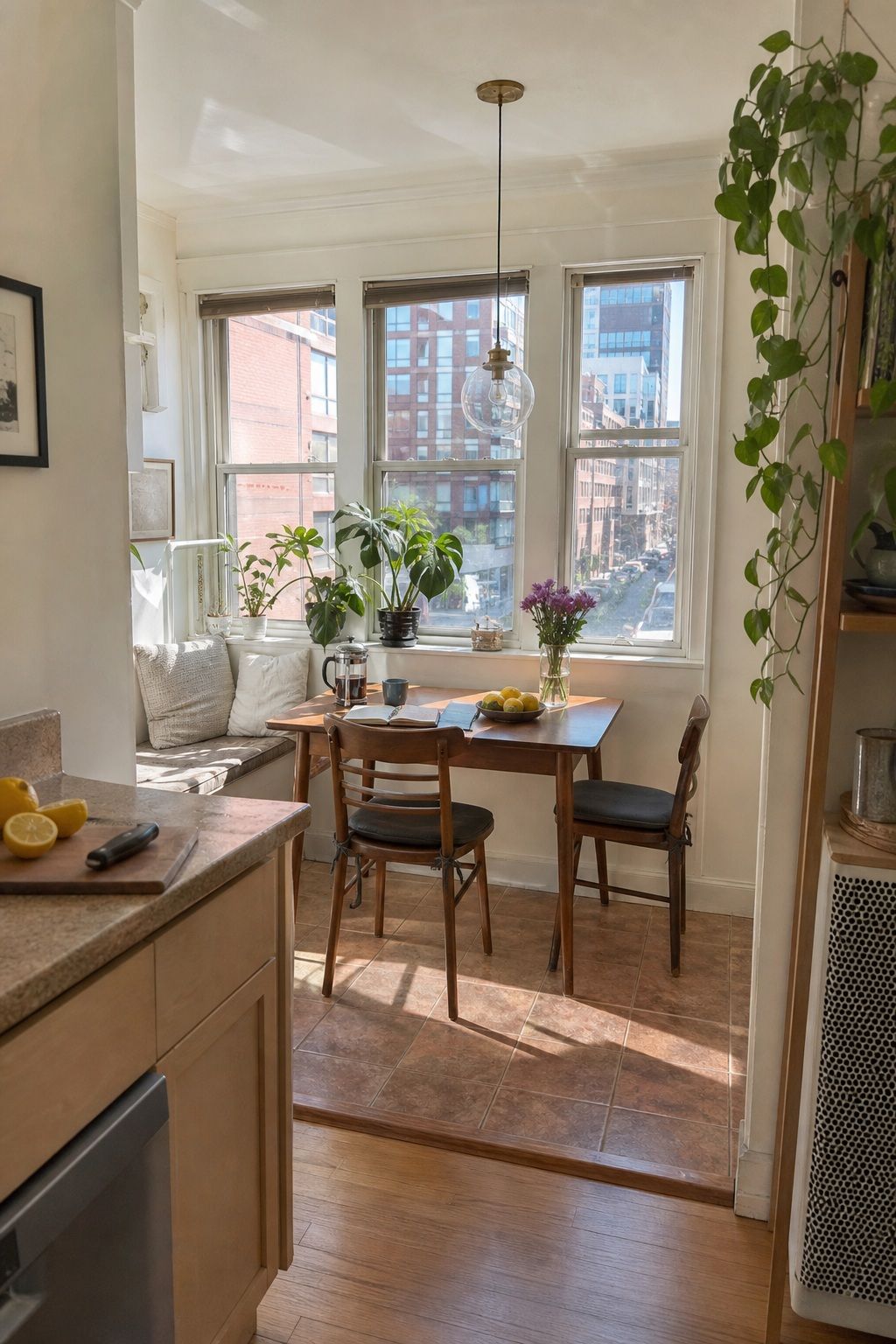


Before any styling, decide the real function. Most sunroom kitchens are a breakfast nook and casual eating space rather than a full cooking kitchen, and being honest about that shapes every later decision about furniture and layout.
A nook needs a table and seating; a fuller kitchen function needs a counter or cart and storage. Pick the role the space will genuinely play, and the rest of the planning gets simple. The honest function decision is the foundation. It is a small move, but it is the kind that quietly makes the whole space feel more considered and intentional. None of it costs much, and the payoff in how the finished room reads is well worth the small bit of effort.
Read more: Top 15 Open Cabinet Kitchen Decor Ideas to Style Your Shelves
2. Plan the Layout Around the Light


A sunroom’s defining feature is light, so the layout works with it, not against it. Place the table where the morning light is best for breakfast, and keep the seating positioned so nobody is squinting into direct glare at the table.
Notice where the sun actually falls through the day before committing the furniture. A layout planned around the real light is what makes the sunroom kitchen genuinely pleasant to sit in, the same light-first thinking in our sunroom color palette ideas. It is a small move, but it is the kind that quietly makes the whole space feel more considered and intentional. None of it costs much, and the payoff in how the finished room reads is well worth the small bit of effort.
3. Keep the Furniture Flexible and Multifunctional


A sunroom kitchen earns its keep when the furniture flexes. A drop-leaf table, a bench with storage, stackable or folding chairs, all let the space shift between breakfast nook, workspace, and overflow seating as the day needs.
This is the 2026 sunroom principle, flexible layouts that help a home live larger. Every piece that does two jobs is one less piece crowding a bright room. Flexible furniture is what keeps a sunroom kitchen from being a single-use space. It is a small move, but it is the kind that quietly makes the whole space feel more considered and intentional. None of it costs much, and the payoff in how the finished room reads is well worth the small bit of effort.
Read more: Top 15 Kitchen Corner Cabinet Ideas to Maximize Every Inch
4. Scale Everything to the Room


A sunroom kitchen lives or dies on scale. An oversized table swallows a small sunroom and blocks the light; furniture too small floats and reads as temporary. Measure the usable floor and account for the door swing before buying.
A round table in particular suits a small sunroom, softening the straight window lines and keeping traffic flowing. Matching the furniture to the actual room is what separates a styled sunroom kitchen from a crowded one. It is a small move, but it is the kind that quietly makes the whole space feel more considered and intentional. None of it costs much, and the payoff in how the finished room reads is well worth the small bit of effort.
Read more: Top 15 Kitchen Cabinet Organization Ideas for a Streamlined Kitchen
Style the Breakfast Nook
5. Anchor the Nook With a Bench


A built-in or freestanding bench is the classic breakfast nook anchor, and it does the most for a small sunroom, seating more people in less floor space than separate chairs and tucking neatly against the glass or a wall.
A bench with storage underneath solves the where-does-it-go problem a sunroom always has. Top it with a cushion and a few pillows in the room’s palette. The bench is what makes a nook read as a real, settled eating spot. It is a small move, but it is the kind that quietly makes the whole space feel more considered and intentional. None of it costs much, and the payoff in how the finished room reads is well worth the small bit of effort.
Read more: Top 15 Outdoor Kitchen Patio Decor Ideas to Enhance Your Backyard
6. Add a Round Table for Flow


A round table is the breakfast nook’s best friend in a sunroom. It softens the room full of straight window and frame lines, seats people comfortably without hard corners, and keeps foot traffic moving around it rather than into it.
A small round table runs $80 to $250, and a secondhand one refinished costs far less. Size it so there is a clear path around it. The round table is the shape that makes a sunroom nook feel easy and unfussy. It is a small move, but it is the kind that quietly makes the whole space feel more considered and intentional. None of it costs much, and the payoff in how the finished room reads is well worth the small bit of effort.
7. Layer in Comfortable Seating


The nook seating has to be genuinely comfortable, since the whole point is a spot people want to linger in over coffee. A cushioned bench, padded bistro chairs, a mix of bench and chairs, all work as long as the seats invite staying.
Bistro chairs run $40 to $100 a pair. Add cushions and a couple of pillows for real comfort. Comfortable seating is what turns a sunroom nook from a place to grab breakfast into a place to actually sit a while. It is a small move, but it is the kind that quietly makes the whole space feel more considered and intentional. None of it costs much, and the payoff in how the finished room reads is well worth the small bit of effort.
Read more: Top 17 Kitchen Cabinet Color Ideas to Refresh Your Space
8. Add a Pendant Light Over the Table


A pendant light over the nook table anchors the eating zone and gives it a warm pool of light for early mornings and evenings, when the sunroom would otherwise go dark. It also defines the nook as its own space within the room.
A kitchen pendant runs $40 to $120, and plug-in or battery versions work for renters. Hang it low enough to feel intimate over the table. The pendant is what makes the nook usable past daylight and finished as a zone. It is a small move, but it is the kind that quietly makes the whole space feel more considered and intentional. None of it costs much, and the payoff in how the finished room reads is well worth the small bit of effort.
Read more: Top 15 Kitchen Lamps on Counter Ideas for a Warm and Lit Workspace
9. Style the Table Simply


A sunroom nook table wants light, simple styling, a small vase of stems, a bowl of fruit, a runner, nothing that has to be cleared every meal. The light and the view are doing most of the work, so the table styling stays minimal.
Keep one small, easily-moved centerpiece. Over-styling a nook table just means clearing it constantly. Simple styling is what keeps the sunroom nook practical and lets the bright room itself be the feature. It is a small move, but it is the kind that quietly makes the whole space feel more considered and intentional. None of it costs much, and the payoff in how the finished room reads is well worth the small bit of effort.
Light, Glare, and Climate
10. Manage Glare on the Table and Counters


A sunroom’s glory is its light, but direct glare on a breakfast table or a counter is genuinely unpleasant. Sheer curtains, bamboo shades, or top-down shades soften the harsh direct sun while keeping the bright, open feel.
Adjustable shades are the most flexible, letting you fine-tune the light through the day. Managing glare is the practical detail most sunroom ideas skip, and it is what makes the space comfortable to actually use for meals. It is a small move, but it is the kind that quietly makes the whole space feel more considered and intentional. None of it costs much, and the payoff in how the finished room reads is well worth the small bit of effort.
Read more: Top 17 Breakfast Counter in Kitchen Ideas for a Welcoming Eat-In Space
11. Plan for Heat in Summer


A glass room heats up fast, and a sunroom kitchen has to plan for it or it goes unused half the year. A ceiling fan, exterior or top-down shades that cut heat before it hits the glass, and cross-ventilation keep the nook usable in summer.
A ceiling fan can make the room feel several degrees cooler. Planning the cooling is what turns a sunroom kitchen from a three-season space into one used all year. It is a small move, but it is the kind that quietly makes the whole space feel more considered and intentional. None of it costs much, and the payoff in how the finished room reads is well worth the small bit of effort.
Read more: Top 18 Kitchen Counter Organization Ideas for a Clutter-Free Cook Zone
12. Plan for Cold in Winter


The flip side is winter, and a sunroom kitchen needs a heat plan to be a true year-round eating spot. A small space heater, a heated throw on the bench, cellular shades for insulation, all keep the nook usable on cold, bright mornings.
Those cold, bright winter mornings are often when the sunroom light is most worth having. A little heat is what lets you actually enjoy it rather than admire it from the warmer kitchen. It is a small move, but it is the kind that quietly makes the whole space feel more considered and intentional. None of it costs much, and the payoff in how the finished room reads is well worth the small bit of effort.
13. Light It Warmly for After Dark

A sunroom kitchen is effortless in daylight and turns into a dark glass box once the sun drops. Layered warm lighting, the pendant over the table, a small lamp on a console, warm bulbs around 2700K, keeps the nook inviting into the evening.
Put the lights on dimmers or smart plugs so the room shifts gently from bright day to soft evening. Warm layered light is what makes a sunroom kitchen a place you stay after dark, not just a daytime spot. It is a small move, but it is the kind that quietly makes the whole space feel more considered and intentional. None of it costs much, and the payoff in how the finished room reads is well worth the small bit of effort.
Read more: Top 16 Corner Sink Kitchen Decor Ideas for the Best Seat in the
Plants, Color, and Final Touches
14. Bring In Plants as Living Texture


A sunroom kitchen is one of the best spots in the home for plants, and they do more than decorate, they soften the hard window and frame lines and make the nook feel like a garden-side spot to eat.
Match the plants to the sunroom’s strong light. A tall plant beside the nook gives the seating a gentle sense of enclosure. The plants are what give a sunroom kitchen its bright, garden-like 2026 atmosphere. It is a small move, but it is the kind that quietly makes the whole space feel more considered and intentional. None of it costs much, and the payoff in how the finished room reads is well worth the small bit of effort.
Read more: Top 17 Kitchen Counter Corner Decor Ideas for Functional Beauty
15. Keep a Light, Warm Color Palette

A sunroom kitchen suits a light, warm palette, soft neutrals, warm woods, a quiet accent, that works with all that light rather than competing with it. Heavy dark pieces pull against the bright, easy feeling the room is built on.
Bring the palette in through the cushions, the runner, the table styling. A light warm palette is what keeps a sunroom kitchen reading as the bright, calm spot it should be. It is a small move, but it is the kind that quietly makes the whole space feel more considered and intentional. None of it costs much, and the payoff in how the finished room reads is well worth the small bit of effort.
Read more: Top 16 Christmas Kitchen Decor Ideas for a Warm Holiday Heart of the
16. Add a Small Surface for Coffee and Storage


A breakfast nook works better with a small surface nearby, a slim console, a cart, a little sideboard, to hold the coffee things, the napkins, the bits a nook needs without cluttering the table.
A slim console runs $50 to $150, and a cart is just as good and rolls away. The small surface is what makes the sunroom kitchen self-sufficient, so meals do not mean trips back to the main kitchen. It is a small move, but it is the kind that quietly makes the whole space feel more considered and intentional. None of it costs much, and the payoff in how the finished room reads is well worth the small bit of effort.
17. Keep the Nook Calm and Uncluttered


The thread tying a sunroom kitchen together is calm. The light and the view are the real features, so the styling stays restrained, a few plants, simple table styling, comfortable seating, and breathing room around it all.
Resist filling a bright room just because the light makes everything look good. A calm, uncluttered sunroom nook is one people actually want to sit in, the same restraint our sunroom living room ideas are built on. It is a small move, but it is the kind that quietly makes the whole space feel more considered and intentional. None of it costs much, and the payoff in how the finished room reads is well worth the small bit of effort.
Read more: Top 16 Spring Decor Ideas for the Kitchen That Feel Bright and Clean
Frequently Asked Questions
Can you put a kitchen in a sunroom?
Yes, though the best version is usually a bright breakfast nook and casual eating space rather than a full cooking kitchen. Plan the layout around the light, anchor a nook with a bench and a round table, manage glare and heat with shades, and add a small surface for coffee and storage so the space is self-sufficient.
How do you make a breakfast nook in a sunroom?
Anchor it with a bench, which seats more people in less space and can hide storage, add a round table to keep traffic flowing, and layer in comfortable cushioned seating. Hang a pendant light over the table for early mornings and evenings, style the table simply, and position it where the morning light is best.
How do you decorate a sunroom kitchen?
Keep a light, warm palette that works with the strong light, anchor the breakfast nook with a bench and round table, and add a pendant light over the table. Bring in plants as living texture, manage glare with sheer curtains or bamboo shades, and keep the styling calm so the light and the view stay the features.
What furniture works in a sunroom kitchen?
Flexible, multifunctional, appropriately scaled furniture, a drop-leaf or round table, a bench with storage, stackable or folding chairs. A round table in particular suits a small sunroom by softening the straight lines and keeping traffic flowing. Add a slim console or cart for coffee things and a pendant light over the table.
How do I keep a sunroom kitchen comfortable year-round?
Plan for both heat and cold. Use a ceiling fan and shades that cut heat before it hits the glass for summer, and a small heater, a heated throw, and cellular shades for winter. Manage glare on the table with sheer curtains or bamboo shades, and light it warmly for after dark so the nook is usable in every season.
Key Takeaways
- Decide the real function first, most sunroom kitchens are a bright breakfast nook rather than a full cooking kitchen.
- Plan the layout around the light and keep the furniture flexible, multifunctional, and scaled honestly to the room.
- Anchor the nook with a bench and a round table, layer in comfortable seating, and hang a pendant light over the table.
- Manage glare with sheer curtains or shades, and plan for both summer heat and winter cold so the nook works year-round.
- Bring in plants as living texture, keep a light warm palette, and keep the nook calm so the light and view stay the features.
Final Thoughts
A sunroom kitchen does not need a full build to be one of the best spots in the home, it needs a bright breakfast nook done well. Plan the layout around the light, anchor the nook with a bench and a round table, manage the glare and the climate, and bring in plants and warm light. Done that way, the sunroom becomes the spot the whole household drifts to for coffee and meals, all year round.
Last update on 2026-10-05 / Affiliate links / Images from Amazon Product Advertising API
