
Quick Answer: The best Easter table decorations build around a low floral centerpiece, pastel tableware, and a few seasonal accents like decorative eggs and bunny details. Keep the centerpiece low enough to see across, choose one soft palette, and layer in linens, candles, and personalized place settings. The goal is a table that feels fresh and celebratory without ever looking cluttered.
The Easter table is where the whole holiday gathers, set with the good plates, a burst of spring flowers in the middle, and the soft pastel colors that say the season has finally turned. A beautifully decorated table is half the celebration before a single dish is served.
Decorating an Easter table does not require a designer’s eye or a big budget, just a low centerpiece, a soft palette, and a few thoughtful touches at each place. The 19 ideas below cover centerpieces, tableware, linens, and the small details that make a table feel special, with notes on keeping it elegant. They pair naturally with bright Easter flower arrangements.
Want your whole home styled for spring, not just your Easter table?
The Aesthetic Apartment Makeover Guide is a 60-page playbook for small-space styling, seasonal decorating, and hosting. It is currently just $17 before the price goes up to $27 soon.
Recommended Easter Table Decor


Read this also:
- Easter Tablescapes
- Easter Decorating Ideas
- Spring Tablescape Ideas
- Spring Table Decor Ideas
- Spring Centerpiece Ideas
Easter table decorations come together in layers: the centerpiece, the tableware and linens, the place settings, and the small seasonal accents. These 19 ideas move through each layer so you can build a table that feels fresh, elegant, and genuinely celebratory.
1. Build a Low Floral Centerpiece
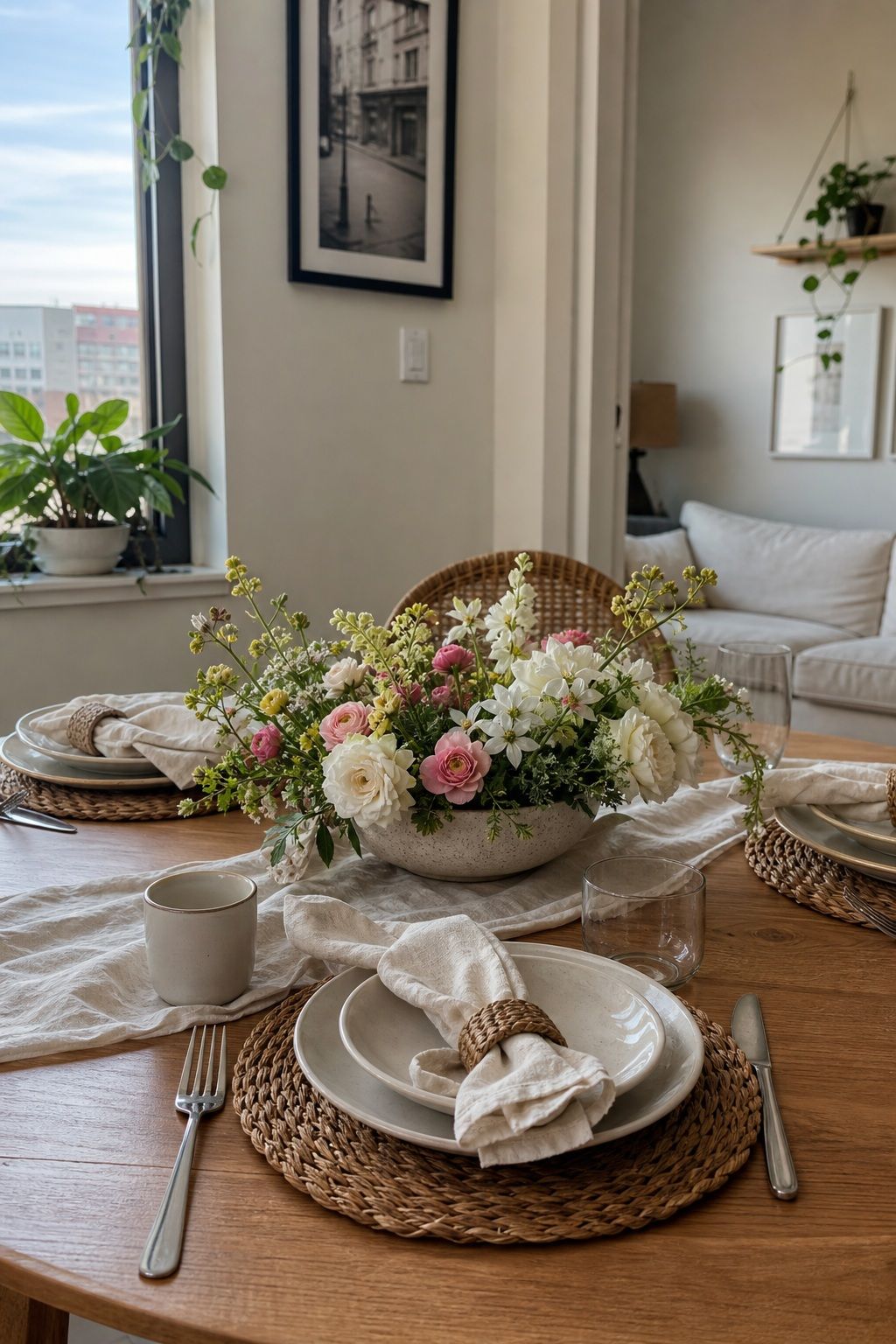


A floral centerpiece is the heart of an Easter table. Tulips, daffodils, ranunculus, and hyacinths in a low vase or trough bring instant spring color and set the whole tone.
Keep the centerpiece low so guests can see and talk across it, since a table is for conversation as much as decoration. A long, low arrangement feels lush without blocking sightlines.
Choose a soft, harmonious palette and add a few sprigs of greenery for fullness. A low floral centerpiece is the single most effective Easter table decoration.
2. Add a Spring Wreath as a Centerpiece
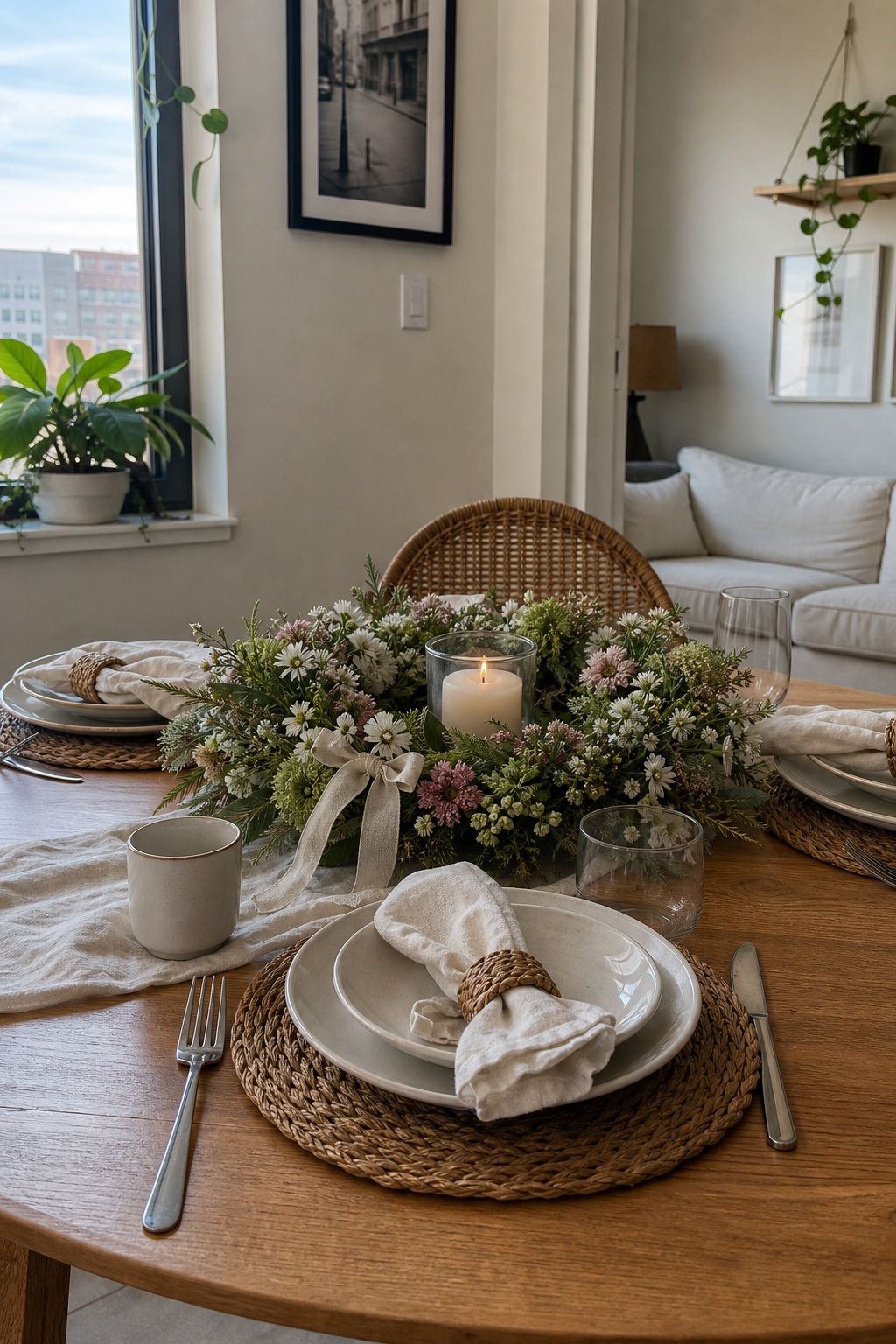


A small wreath laid flat on the table makes an unexpected, charming centerpiece. Set a candle, a small vase, or a cluster of eggs in the center of the wreath.
A wreath centerpiece brings texture and a natural, garden feel to the table. It also reuses a wreath you may already own.
Greenery, faux florals, or pastel eggs all make lovely wreath centerpieces. It is an easy way to anchor the middle of the table.
3. Set the Table With Pastel Tableware


Pastel plates, bowls, and serving dishes instantly signal Easter. Soft pink, mint, pale yellow, and sky blue create a fresh, springy table.
You do not need a whole new set, since a few pastel salad plates layered over white dinner plates carry the color. Mixing two or three soft shades adds depth.
Pastel tableware photographs beautifully and feels gentle rather than loud. It is a simple way to make the table feel seasonal.
4. Scatter Bunny and Egg Accents
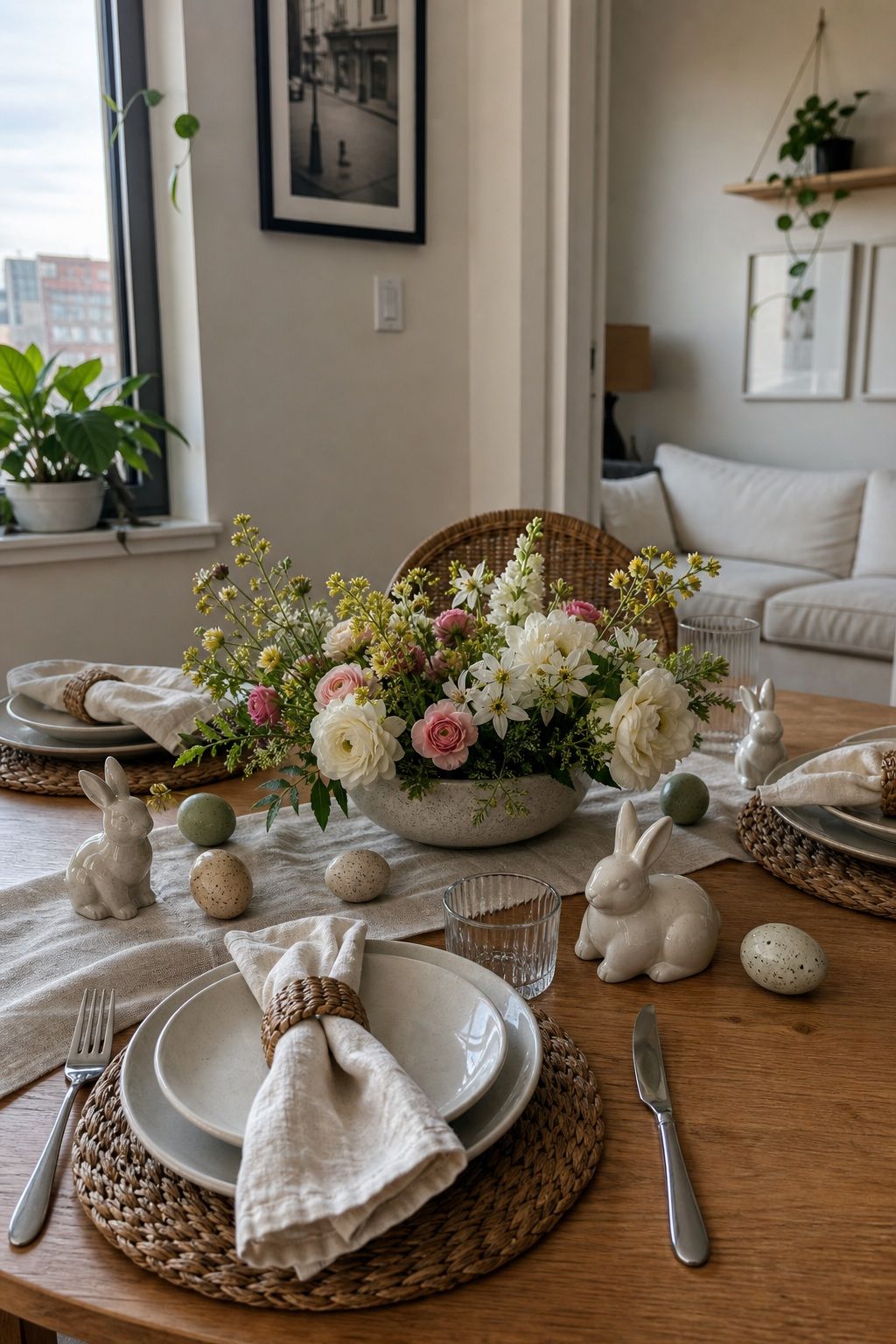


Small bunny figures and decorative eggs are the clearest Easter signals. A few placed along the table or among the centerpiece bring the holiday to life.
Keep the accents restrained, since a few read as styled while too many read as cluttered. Natural-material bunnies and muted eggs feel more elegant than bright plastic.
Tuck eggs into the greenery and set one or two bunnies near the centerpiece. Small touches are enough to make the theme clear.
5. Use a Tiered Dessert Stand
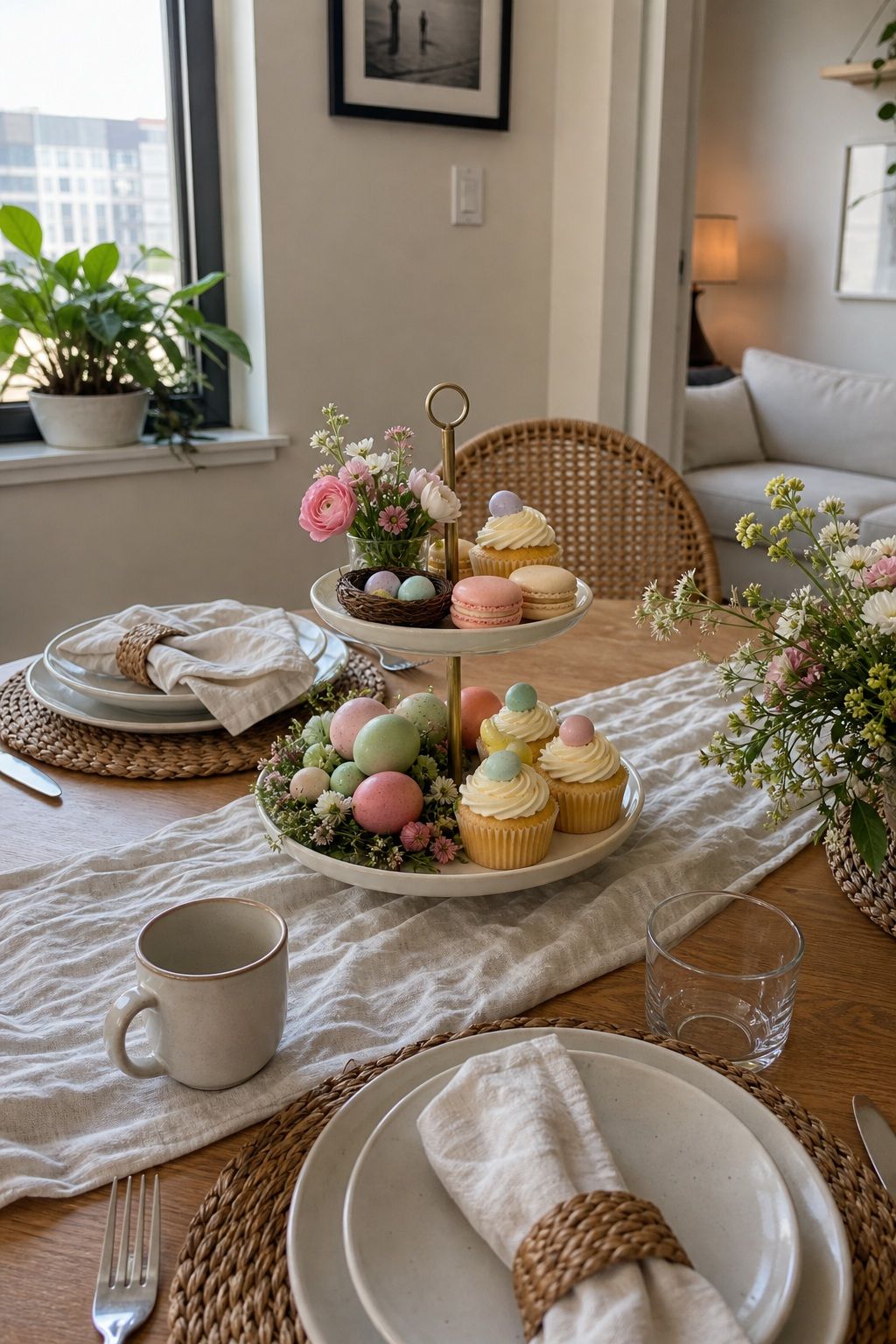


A tiered stand adds height and a focal point to the Easter table. Filled with small cakes, cookies, or chocolate eggs, it is both decoration and dessert.
Height is welcome on a table of low arrangements, and a tiered stand draws the eye upward. It also frees up flat surface space.
Style the stand in your table’s palette with pastel treats and a few flowers. It is a decoration guests get to enjoy eating.
6. Personalize the Place Settings
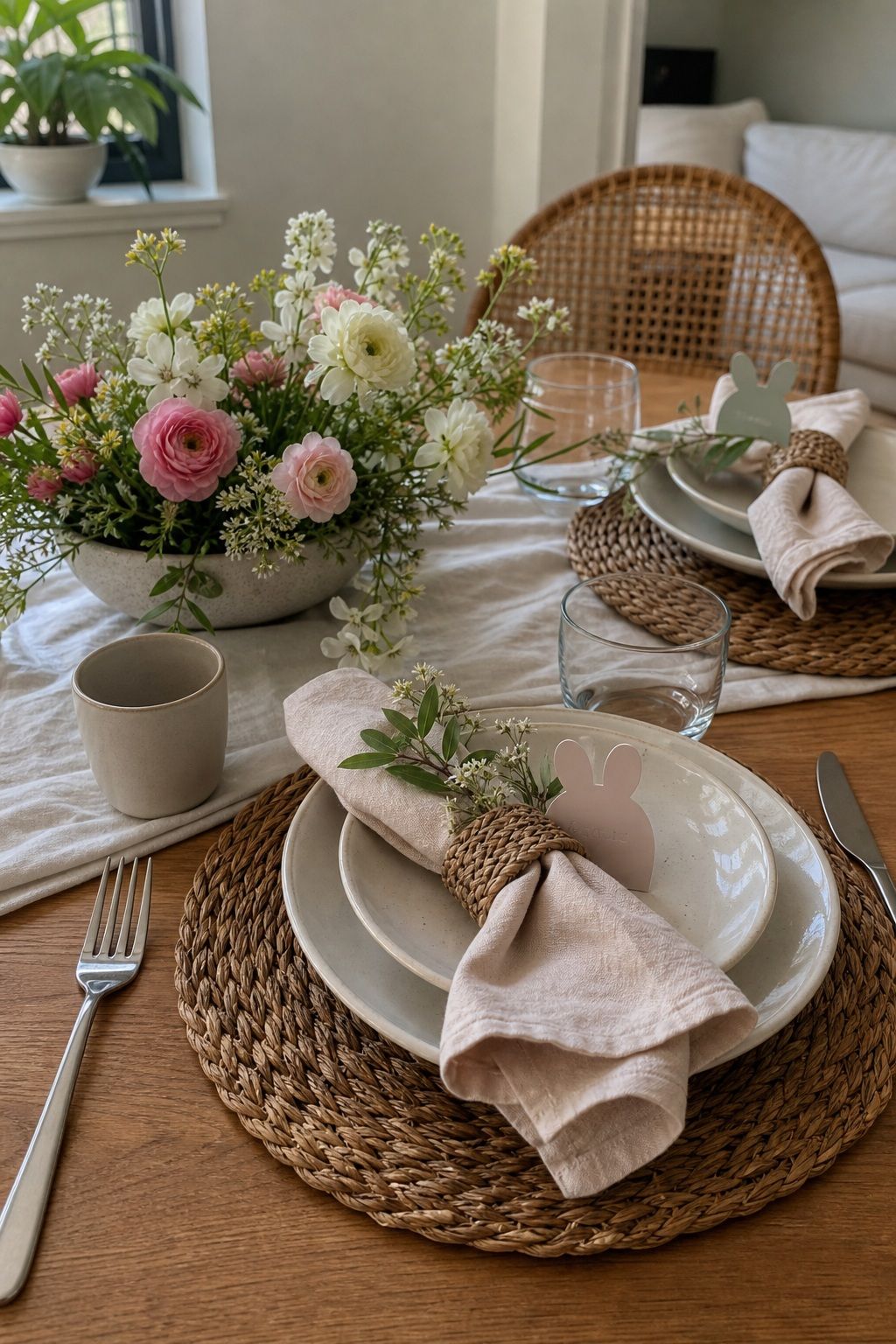


A personalized place setting makes each guest feel expected and welcomed. A handwritten place card, a tiny favor, or a name tag tied to the napkin does the job.
Place cards also quietly solve the seating shuffle. The personal touch turns a meal into an occasion.
Use kraft, clay, or wooden tags for a natural, cozy look. It is a small detail that guests genuinely appreciate.
7. Choose Elegant Glassware
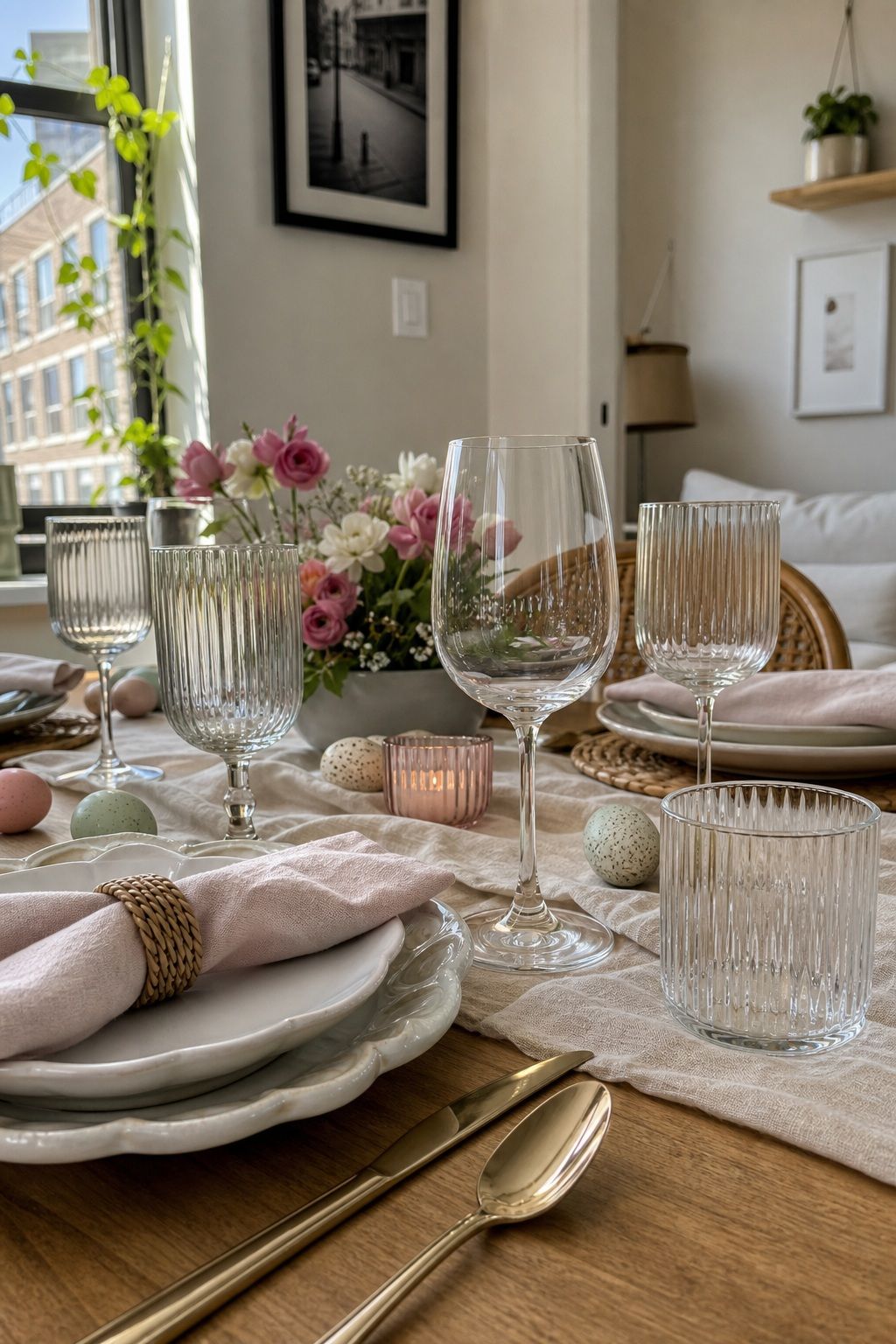


Pretty glassware is part of the table decor. Pastel-tinted, vintage, or gold-rimmed glasses catch the light and feel celebratory.
Glassware does not need to match, since a charming mix reads as collected and relaxed. Thrifted glasses are an affordable way to add character.
A colored or detailed glass at each place adds a small jewel-like sparkle. It is an easy way to dress up the table.
8. Add Hanging Decorations Above the Table
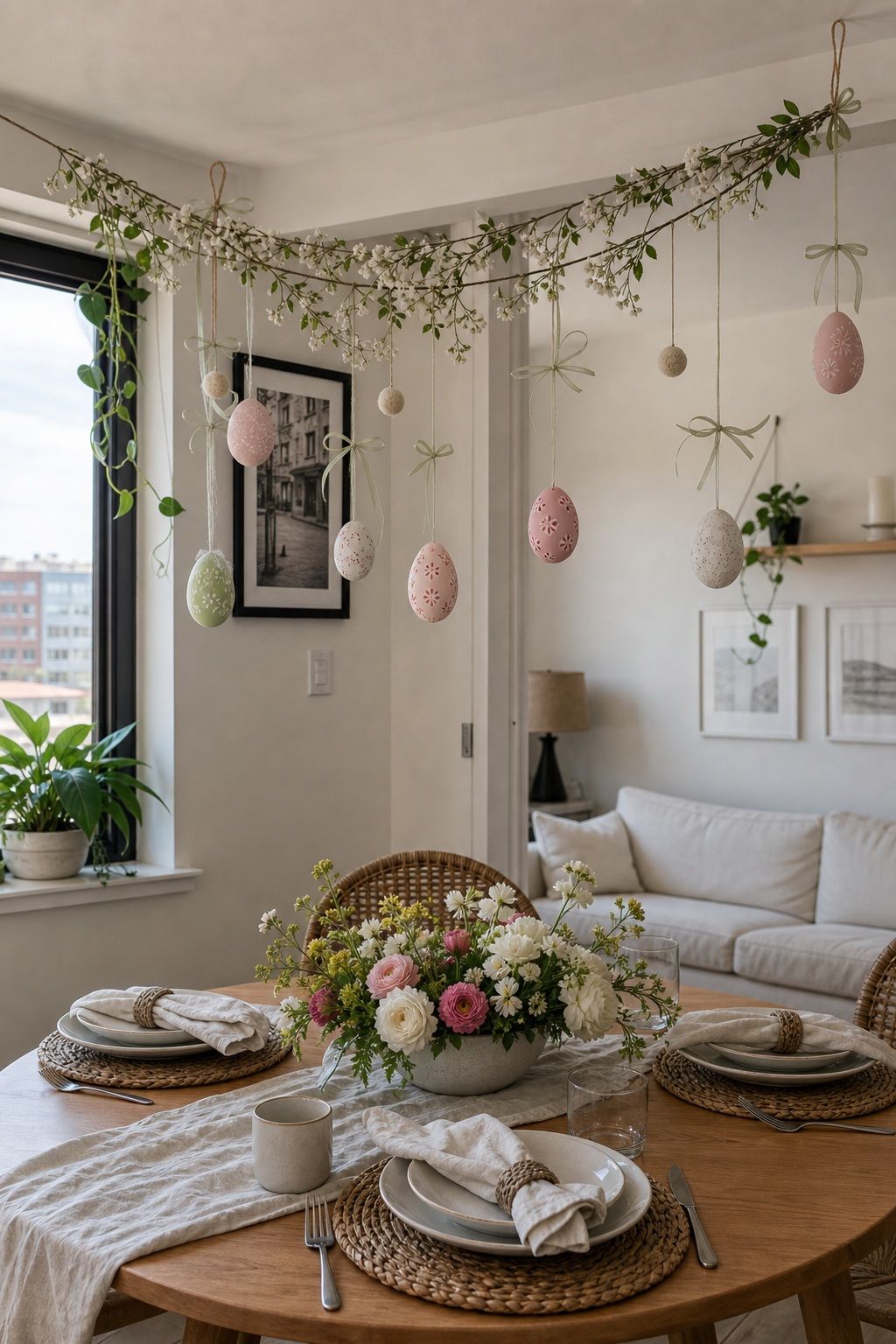


Decorations do not have to stay on the tabletop. A garland, hanging eggs, or a small floral installation above the table adds a magical, layered touch.
Hanging decorations draw the eye upward and make the table feel like a true setting. They also free up surface space below.
Keep hanging pieces light and well above head height. They photograph beautifully and make the table feel special.
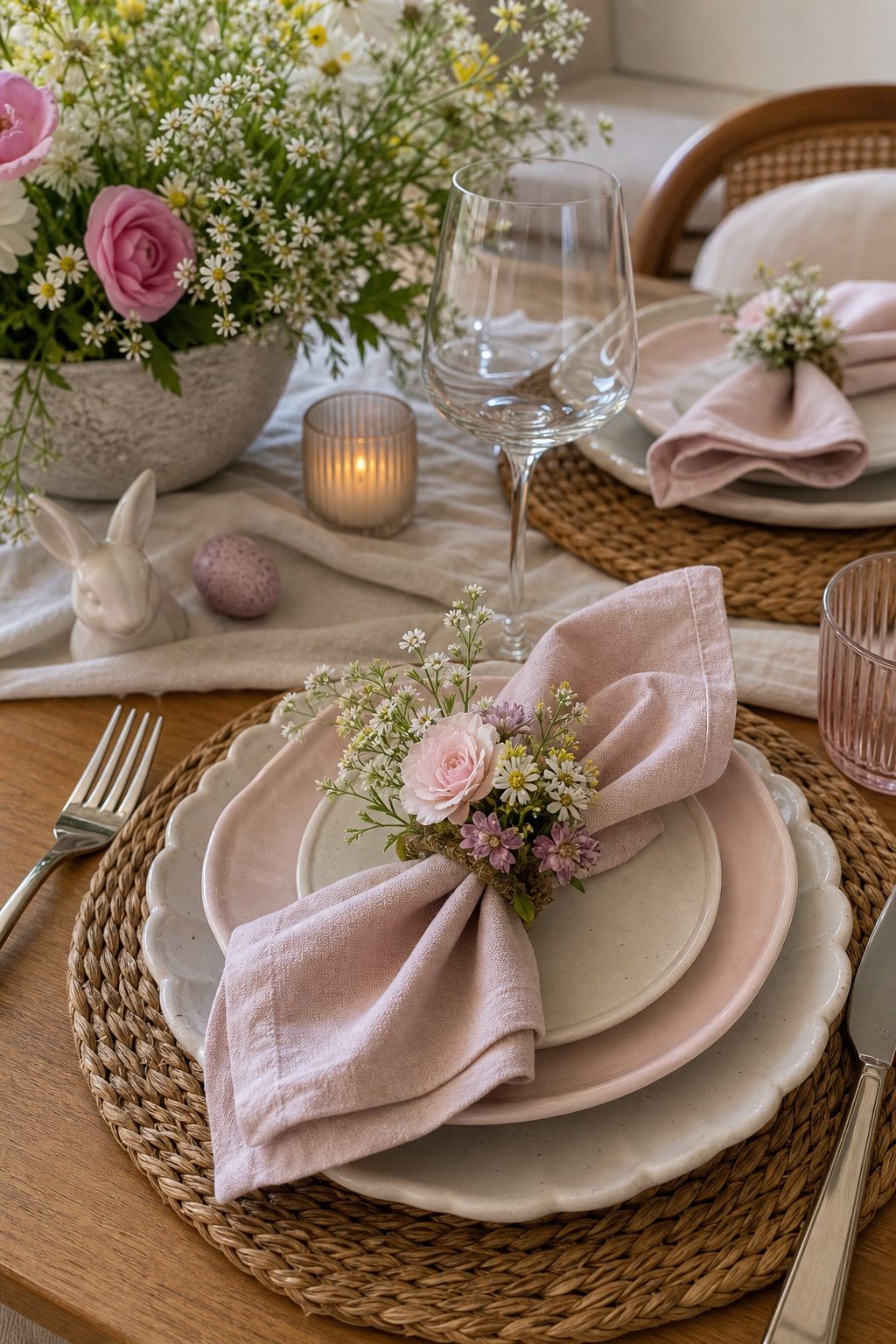
9. Tie Floral Napkin Rings

![Utopia Home [24 Pack, White] Cloth Napkins 17x17 Inches, 100% Polyester](https://soliaavenue.com/wp-content/plugins/aawp/public/image.php?url=YUhSMGNITTZMeTl0TG0xbFpHbGhMV0Z0WVhwdmJpNWpiMjB2YVcxaFoyVnpMMGt2TXpGWmNXczNhMnRGUVV3dVgxTk1NVFl3WHk1cWNHYz18MTc4Nzk1MDc1NA=)

A floral napkin ring is a small detail that lifts every place setting. A sprig of fresh greenery, a tiny faux bloom, or a ribbon around each napkin carries the theme to each seat.
Napkin rings are inexpensive and quick, yet they make the table look finished. A natural sprig feels like a tiny gift.
Repeat the same napkin treatment at every place for a cohesive look. It is one of the easiest ways to add a polished touch.
10. Use Egg Place Card Holders
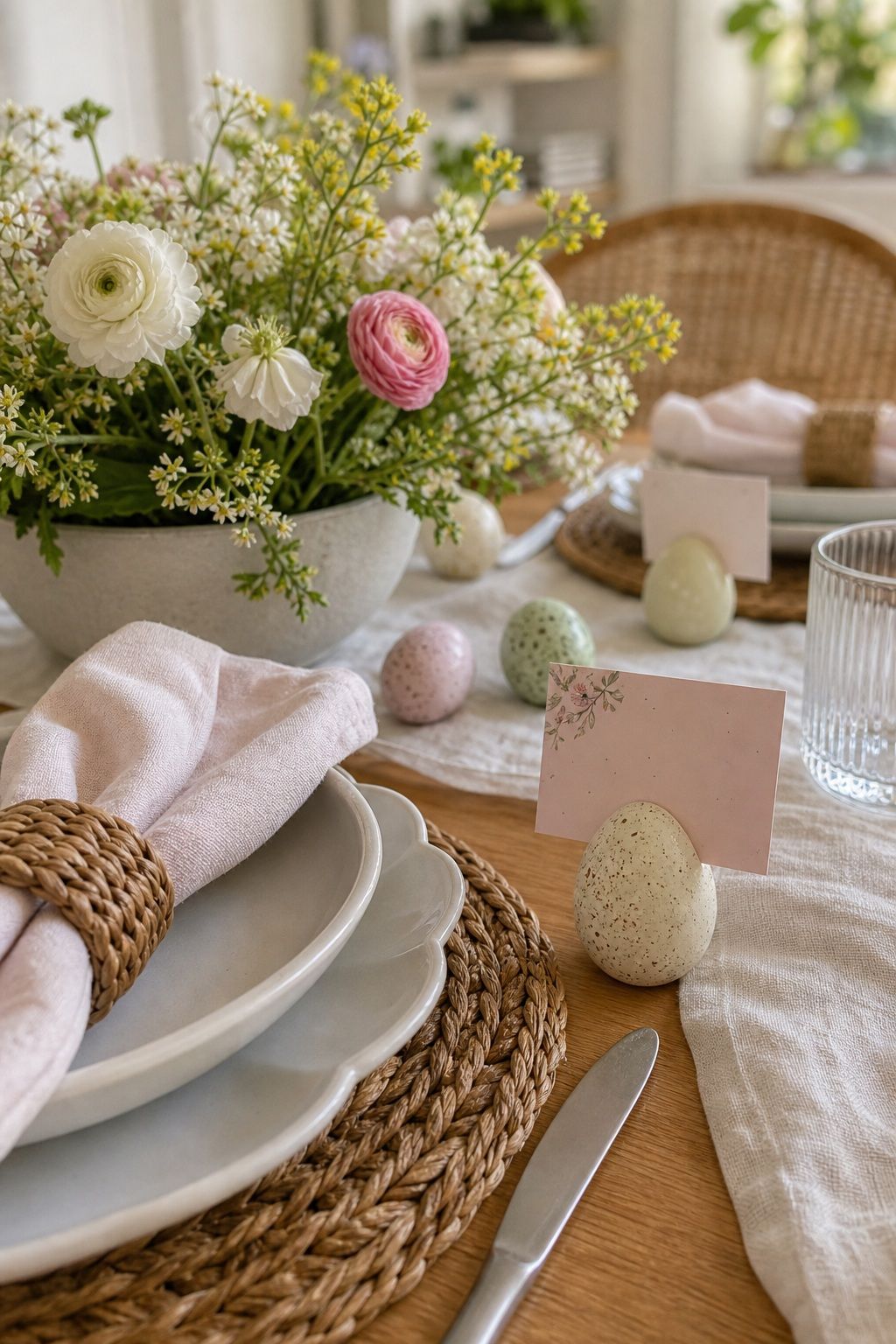


A decorated egg can double as a place card holder. Hollowed or wooden eggs with a small slit hold a name card, combining two Easter touches in one.
Egg place card holders are charming, functional, and unmistakably seasonal. They make each setting feel thought-through.
Speckled or naturally toned eggs keep the look elegant. It is a creative detail that guests always notice.
11. Lay a Soft Linen Runner


A linen runner gives the table a defined center and a soft texture. A neutral or pastel runner under the centerpiece anchors the whole setting.
Fabric softens hard plates and glass and adds depth without clutter. Natural linen with a little wrinkle reads relaxed and inviting.
A runner is also a simple way to introduce color or pattern. It is the foundation layer that the rest of the table builds on.
12. Group Candles for a Soft Glow
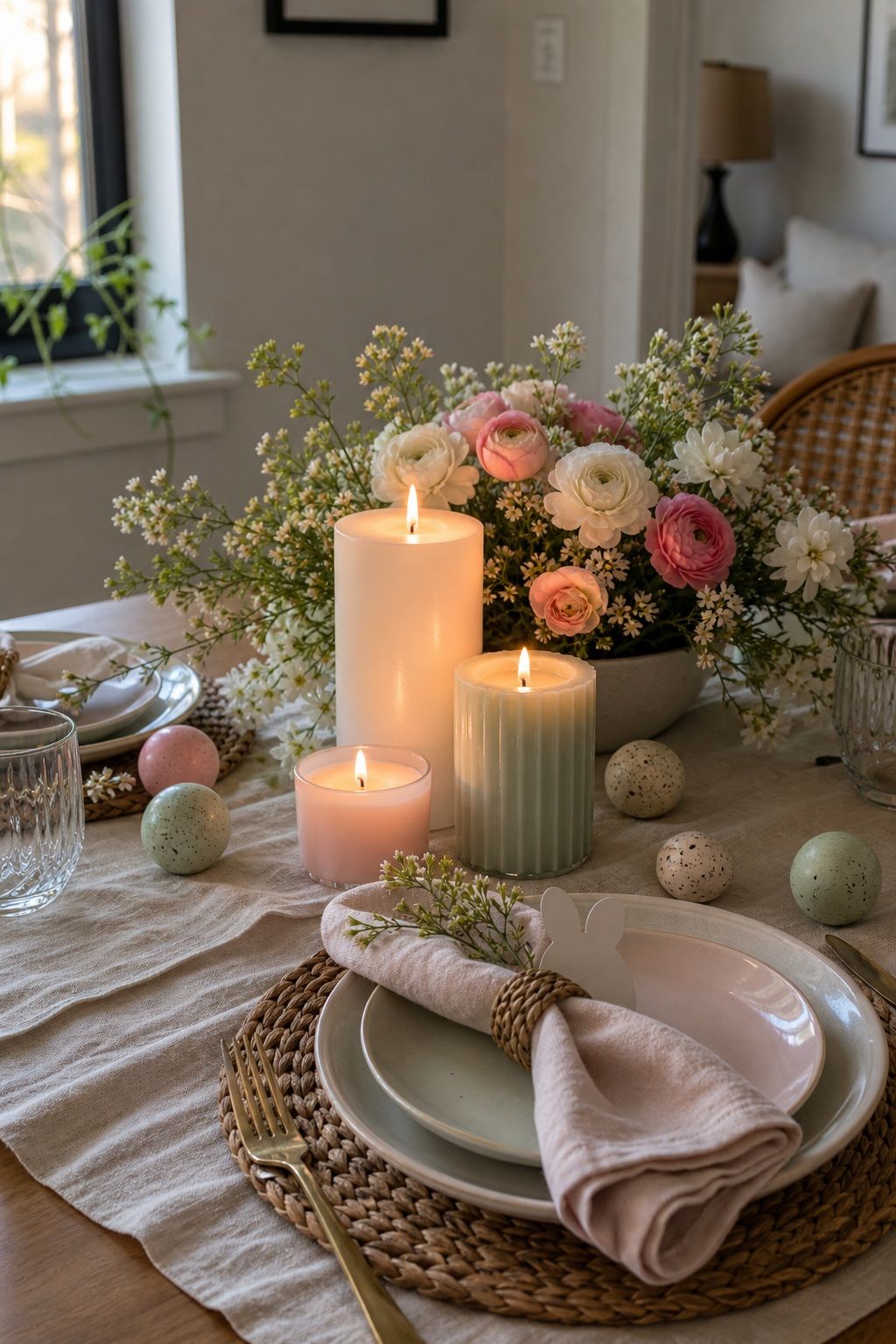


Candles bring warmth and a gentle glow to an Easter table. Group taper candles in pretty holders or scatter small votives down the center.
With a low centerpiece, taper candles add elegant height without blocking views. Their soft light flatters the whole table.
Choose candles in colors that match the palette. Candlelight is what makes an evening Easter table feel warm and special.
13. Add Fresh Greenery Down the Table
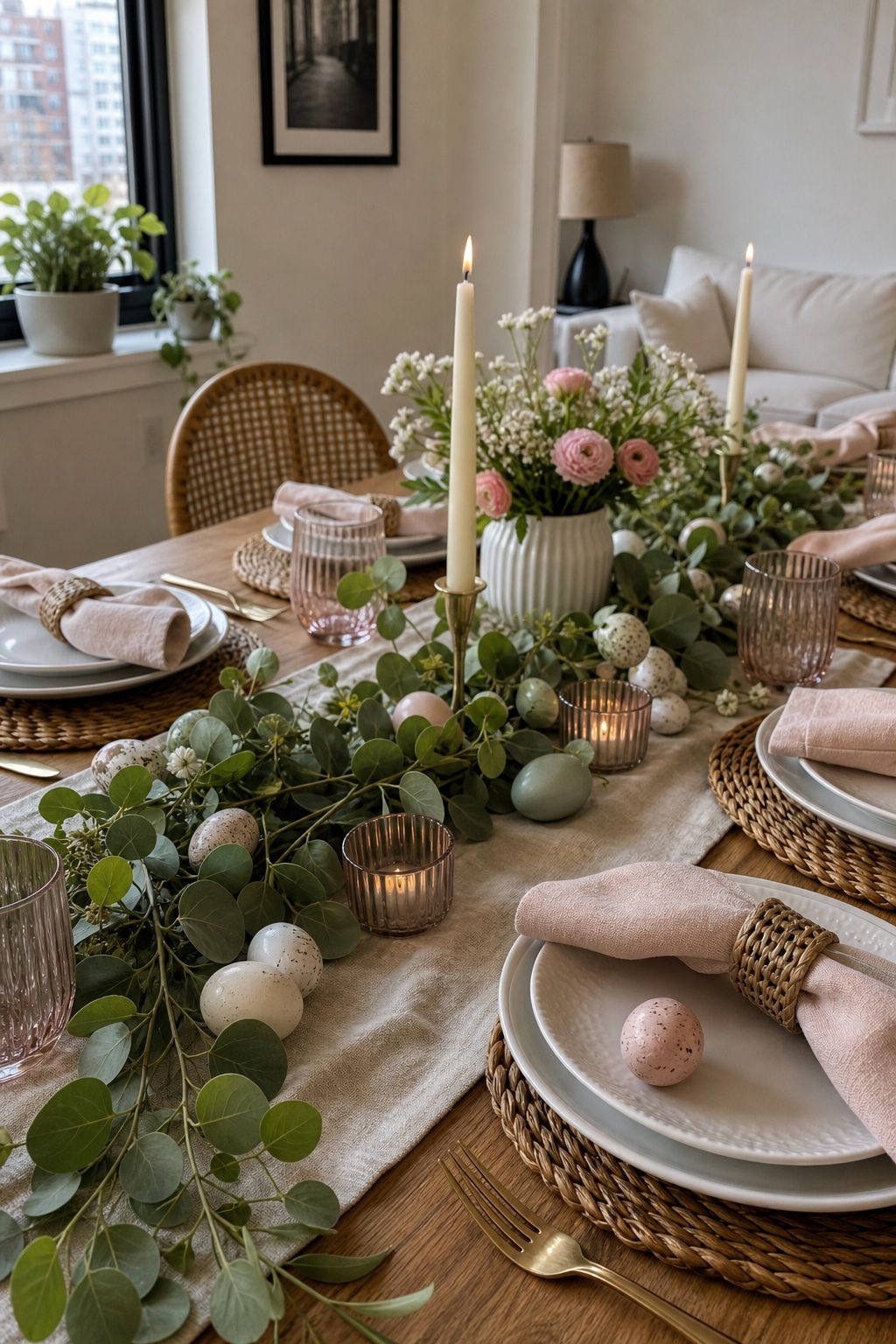


A simple run of fresh greenery down the center is an easy, beautiful base. Eucalyptus, ivy, or olive branches laid loosely create a lush green band.
Greenery is affordable and forgiving, since it needs no arranging skill. It also connects the table to the season.
Tuck candles, eggs, or small blooms into the greenery for a layered look. It is the simplest path to a finished-looking table.
14. Style a Charger Plate at Each Setting
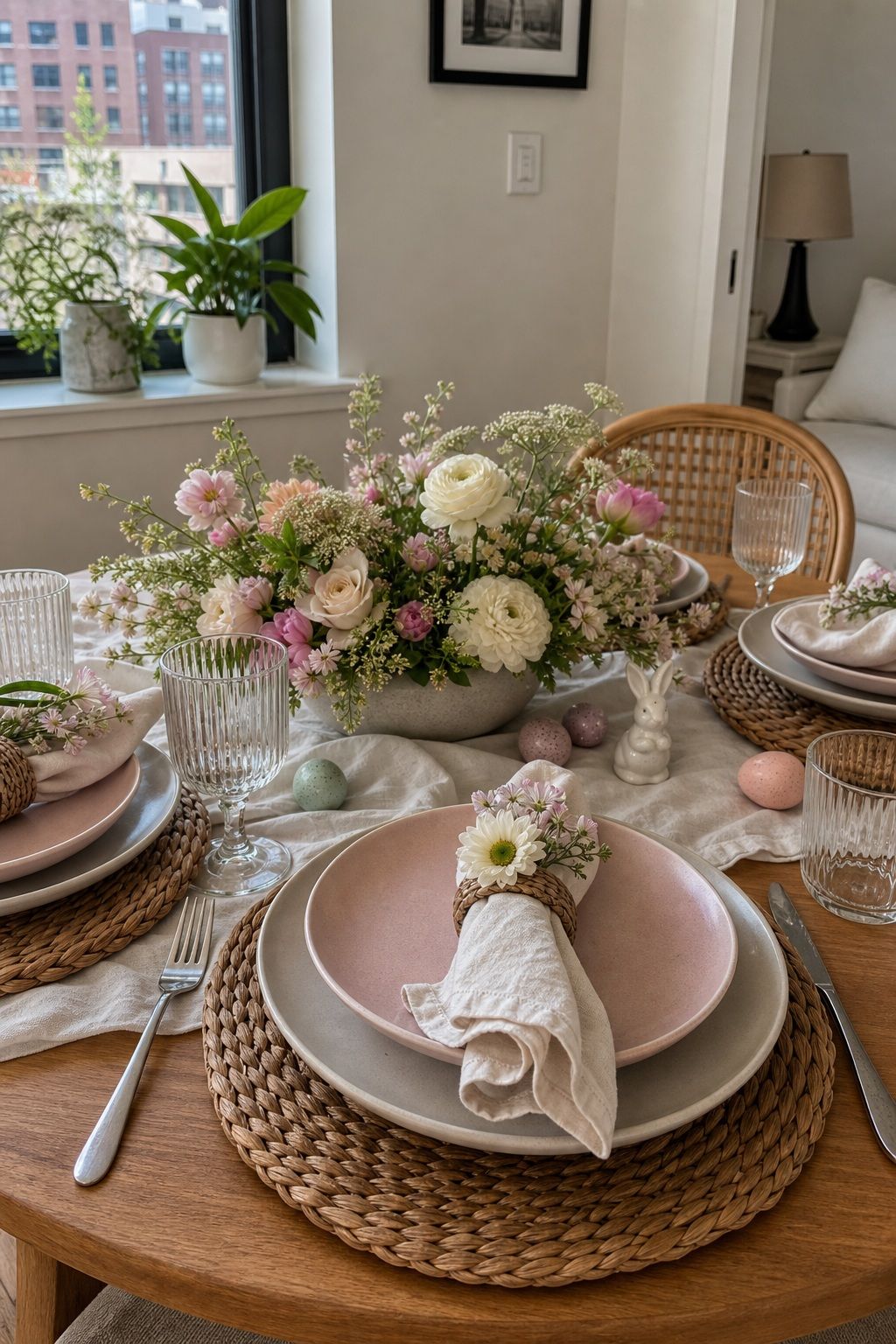


A charger plate under the dinner plate adds a polished, layered look to each setting. A woven, gold, or pastel charger frames the place beautifully.
Chargers give the table instant depth and make a simple plate look more elegant. They also protect the table from spills.
Choose chargers in a natural or soft material to suit a spring table. It is a small layer that makes a big difference.
15. Add Mini Potted Plants as Favors
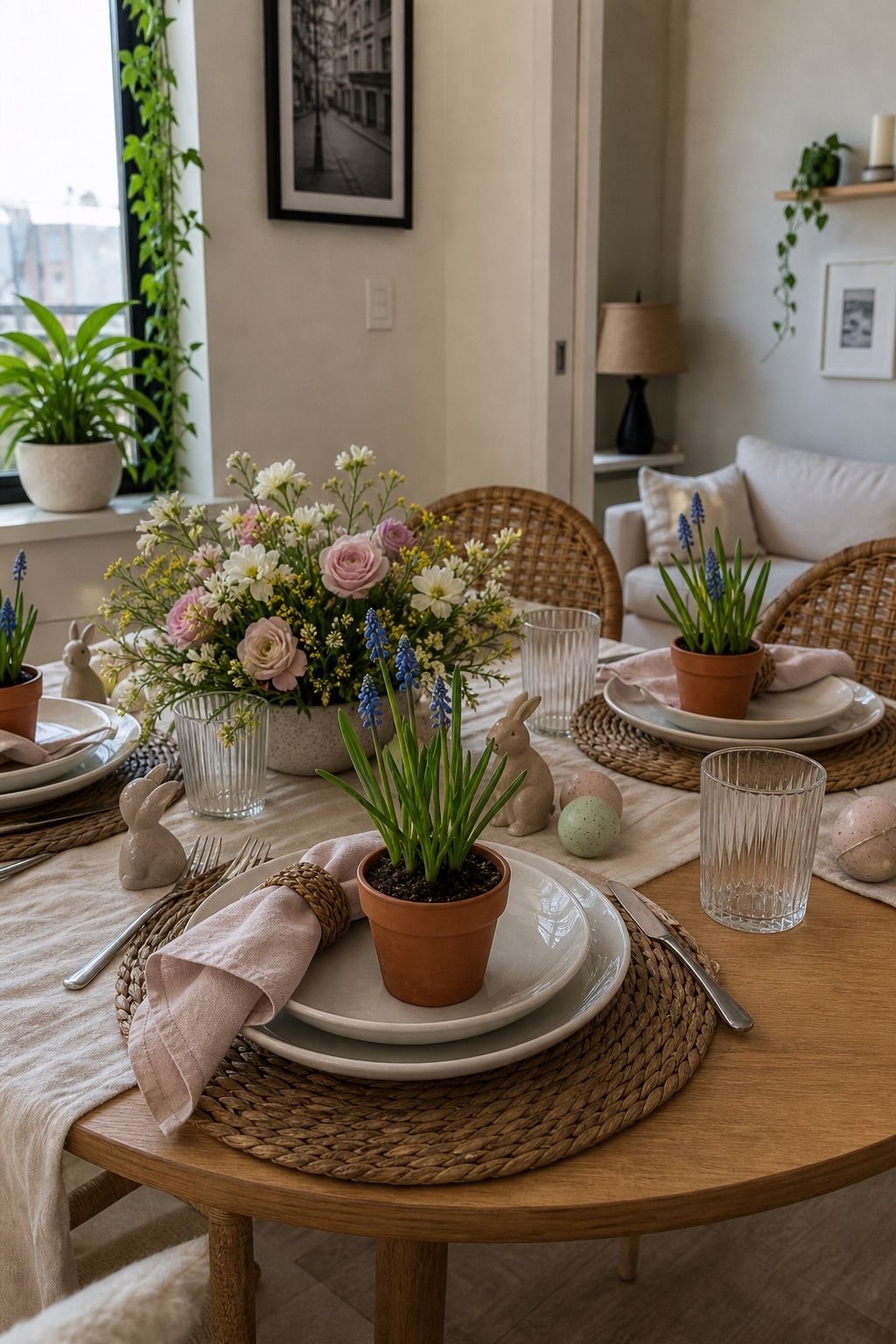


A tiny potted plant at each place works as both decoration and a parting favor. Small herbs, succulents, or spring bulbs in neutral pots look sweet down the table.
Guests take their plant home, so the decoration does double duty. Lined up, the little pots create a charming rhythm.
Wrap the pots in linen or kraft paper to dress them up. It is a thoughtful touch that guests remember.
16. Decorate With a Spring Color Palette
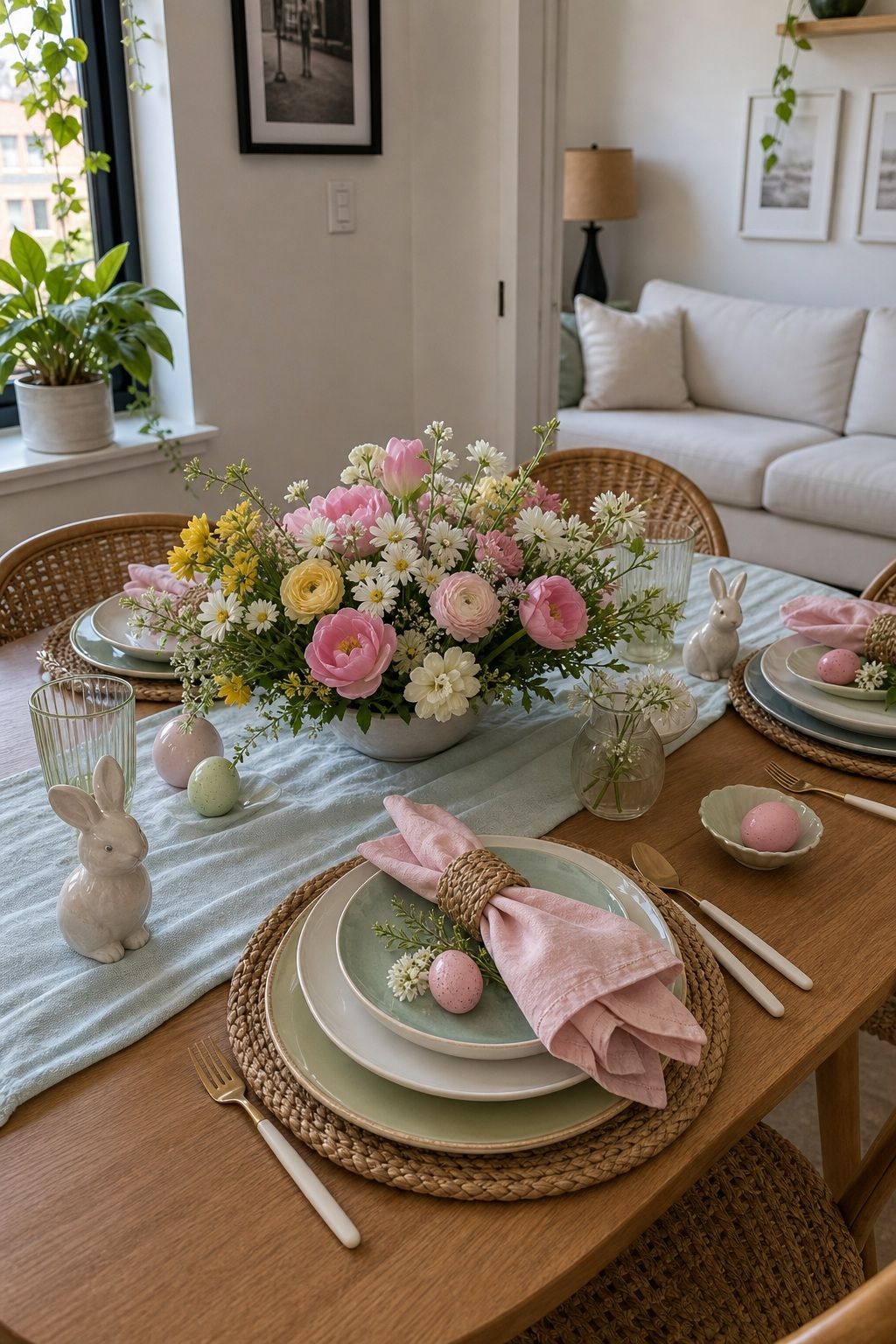


Choosing one cohesive palette is what separates a styled Easter table from a cluttered one. Soft pastels, fresh white and green, or a natural neutral mix all work beautifully.
Carry the palette through linens, flowers, tableware, and accents so the table reads as one connected look. A scattered mix of every color feels busy.
A restrained palette also makes everything easier to combine. It is the single decision that most affects the finished table.
17. Add a Decorative Egg Display Bowl
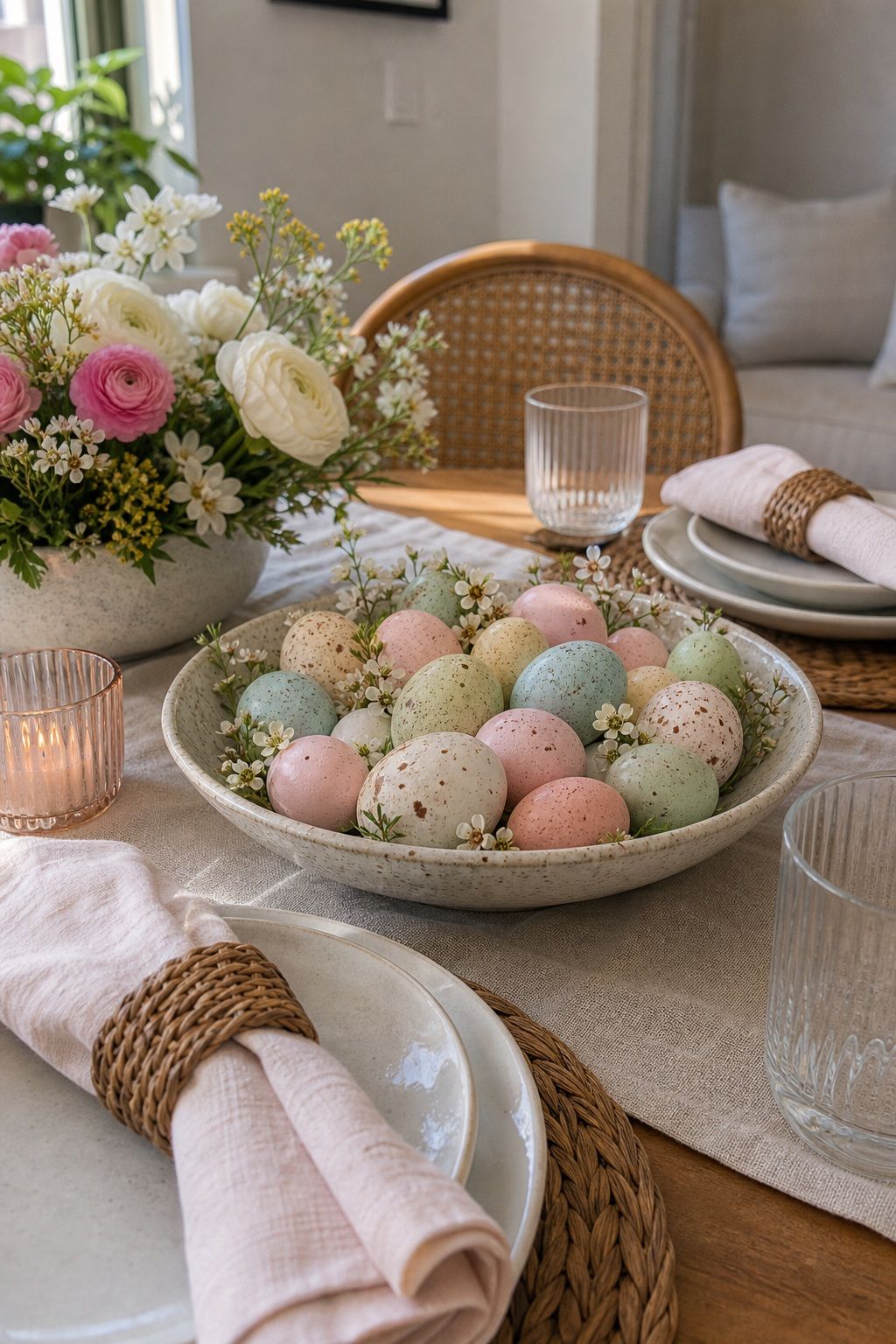
A simple bowl of decorative eggs makes an easy secondary centerpiece or accent. Speckled, wooden, or pastel eggs gathered in a vessel are instantly seasonal.
An egg bowl fills space on a long table or anchors a sideboard. It takes minutes to put together.
Choose eggs in muted, natural tones for an elegant look. It is a five-minute decoration that reads as intentional styling.
18. Fold Napkins With a Seasonal Touch
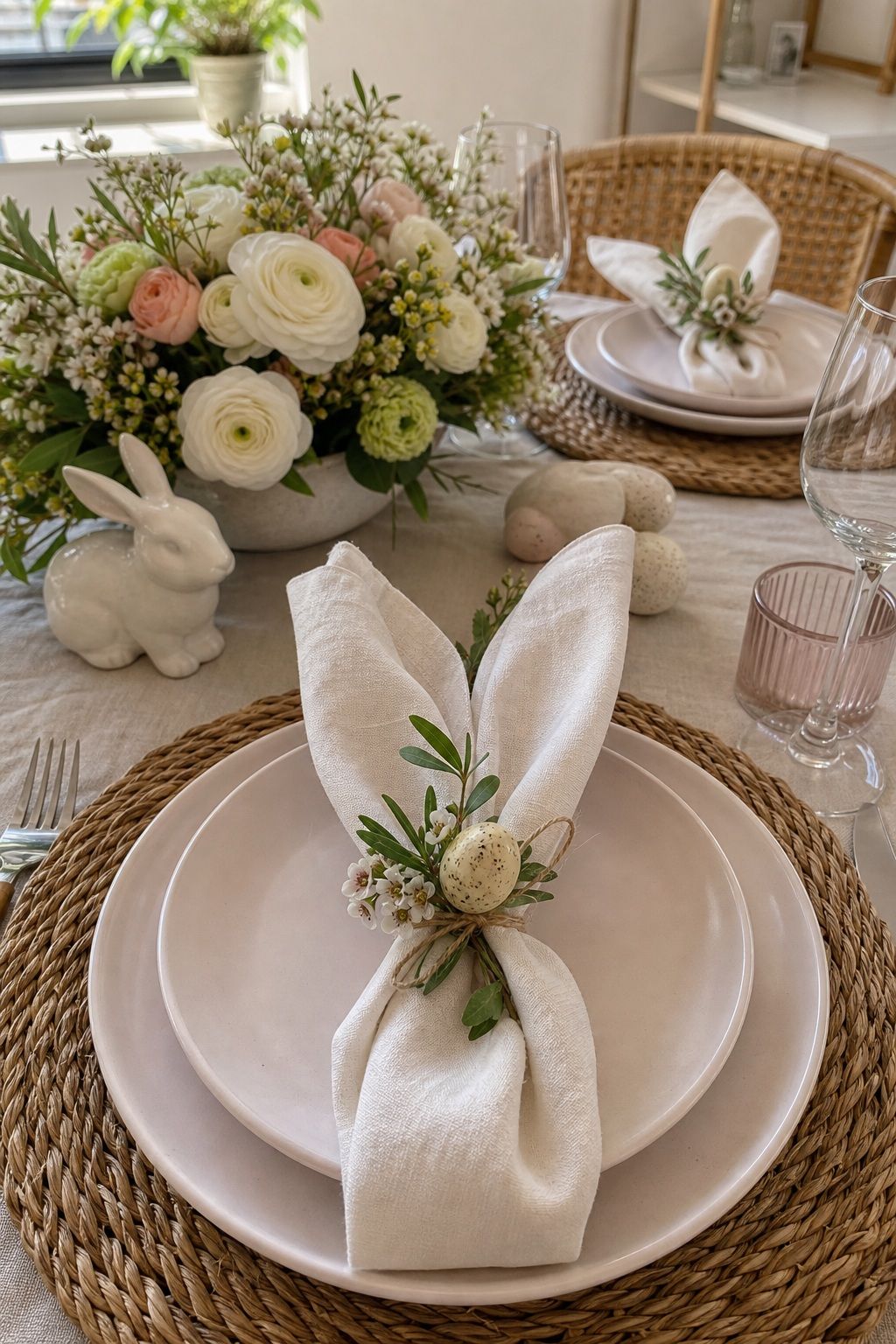
The napkin is a small canvas, and a simple fold with a natural accent lifts it. A bunny-ear fold, or a napkin tied with twine and a sprig of greenery, suits the table.
It costs almost nothing and takes seconds, yet it makes each place look finished. Choose one fold and repeat it at every seat.
A playful bunny fold suits a family table, while a tied linen napkin reads more grown-up. Either way, it adds a thoughtful detail.
19. Dress the Chairs With Greenery or Bows
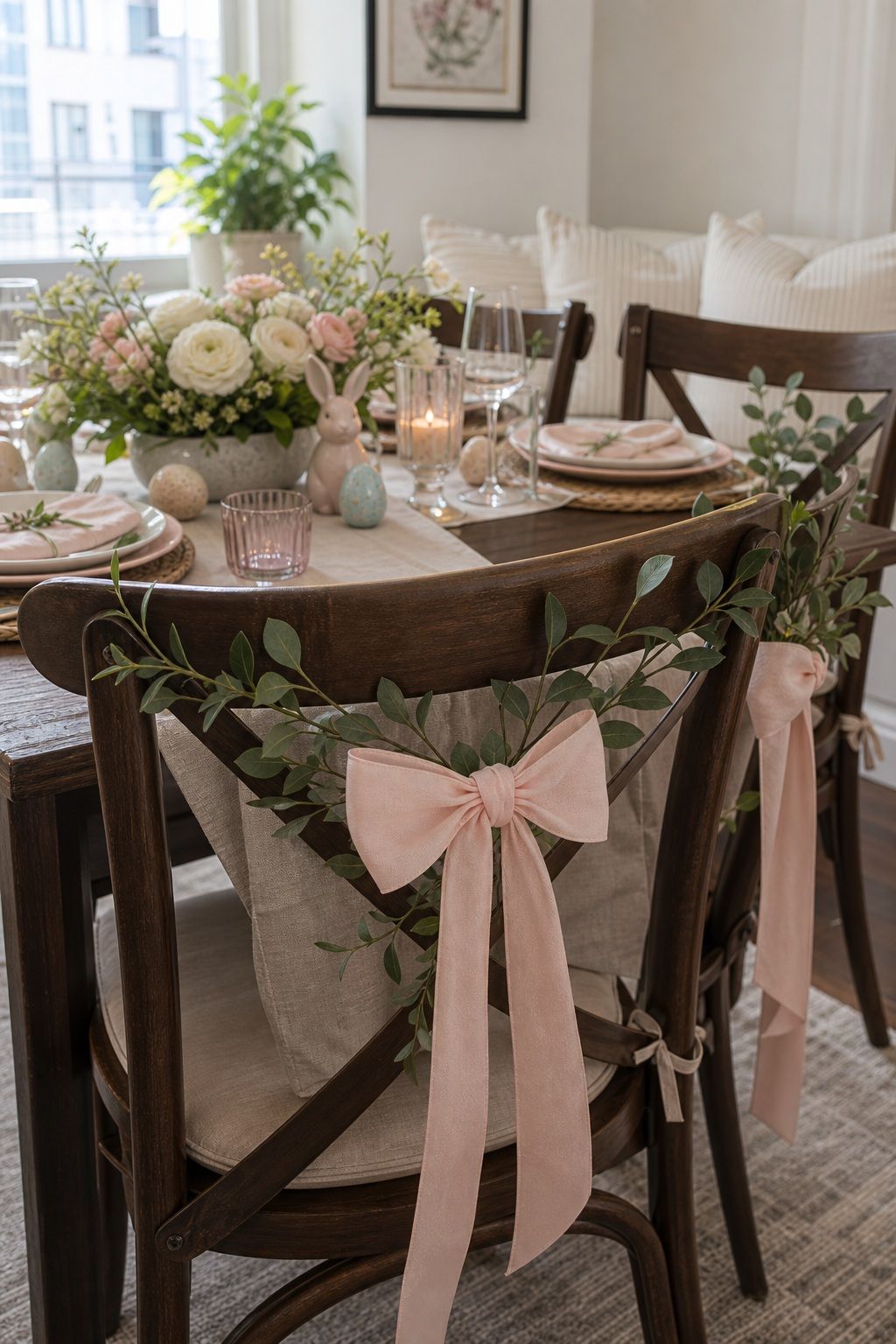
The table does not end at the tabletop. A sprig of greenery, a small bow, or a mini wreath tied to the back of each chair carries the decoration around the whole setting.
Decorated chair backs are a detail guests notice as they sit down. They make the whole dining area feel intentional.
Keep the chair accent small so it does not get in the way. It looks lovely alongside an Easter garland draped nearby.
Quick Tips for Decorating an Easter Table
Keep the centerpiece low enough to see across, since a table is for conversation as much as decoration. Choose one cohesive palette, soft pastels, fresh white and green, or a natural neutral mix, and carry it through linens, flowers, tableware, and accents. Lean on fresh greenery and florals for an affordable, seasonal base, layer in linens and candles for warmth, and add a personal touch at each place so guests feel welcomed. Most of all, keep the table restrained, a few well-chosen pieces with room to breathe always reads as more elegant than a table crowded with decorations.
Ready to bring this same fresh, styled feeling to every room of your home?
The Aesthetic Apartment Makeover Guide walks you room by room through styling, color, and seasonal decorating, with real budget-friendly ideas. It is currently just $17 before the price goes up to $27.
Frequently Asked Questions
Frequently Asked Questions
How do I decorate an Easter table?
Start with a low floral centerpiece, set the table with pastel tableware and a soft linen runner, and add a few seasonal accents like decorative eggs and bunny details. Personalize each place setting and keep one cohesive palette for an elegant, seasonal look.
How tall should an Easter table centerpiece be?
A centerpiece should sit low enough that guests can see and talk across the table. Use a low floral arrangement or a run of greenery for the main centerpiece, and add height with slim taper candles, which do not block sightlines.
What colors are best for an Easter table?
Soft pastels, blush, mint, lavender, and pale yellow, are classic, while fresh white and green or a natural neutral mix feel more modern. Choose one cohesive palette and carry it through every layer of the table.
How do I decorate an Easter table on a budget?
Lean on affordable fresh greenery and a few flowers, layer pastel salad plates over white dinner plates, and make your own place cards and napkin rings. A run of greenery down the center is an inexpensive, beautiful base.
How do I make an Easter table look elegant?
Choose muted, natural tones over bright primary colors, lean on real greenery and linen, limit novelty accents like bunnies to one or two, and keep one cohesive palette. Restraint and a low centerpiece keep the table refined.
What should I put at each Easter place setting?
Layer a charger, a pretty plate, and a folded napkin tied with greenery or in a floral napkin ring. Add a personalized place card or a small potted-plant favor for a setting that feels thoughtful and complete.
Key Takeaways
- Build the Easter table around a low floral centerpiece you can see across, and add height only with slim taper candles.
- Choose one cohesive palette of soft pastels or natural neutrals and carry it through linens, flowers, tableware, and accents.
- Lean on affordable fresh greenery and florals for a seasonal base, and layer in linens and candles for warmth.
- Add a personal touch at each place, a place card, a floral napkin ring, or a small potted-plant favor, so guests feel welcomed.
- Keep the table restrained, a few well-chosen pieces with room to breathe always reads as more elegant than a crowded table.
Wrapping Up
An Easter table is where the whole holiday gathers, so it deserves a little thought. The good news is that the most beautiful tables are also the simplest, a low band of flowers or greenery, a soft palette, and a few thoughtful touches.
Choose a handful of these ideas, keep the centerpiece low, tie everything together with one palette, and add a personal detail at each place. Your Easter table will feel fresh, welcoming, and beautifully ready for the celebration.
Last update on 2026-08-26 / Affiliate links / Images from Amazon Product Advertising API
