

The best Easter wreaths for 2026 lean calm and natural rather than glitter-heavy and over-themed. Build them on a twig, grapevine, or eucalyptus base in muted pastels and natural tones, then add tulips, hydrangeas, speckled eggs, or a small nest. Aim for a handmade, personal feel, and the wreath gives your front door a fresh, welcoming spring focal point.
A wreath is the first thing a visitor sees at your front door, the small introduction your home gives before anyone steps inside. For Easter, it is also the easiest way to announce that spring has arrived: one circle of flowers, greenery, and soft color, and the whole entrance feels fresh and welcoming.
The 2026 direction for Easter wreaths is a clear move away from the overly themed, glitter-heavy designs of the past. The new look is calmer and more personal, natural textures, muted pastels, and pieces that feel handmade rather than mass-produced. The 18 ideas below cover that range, from lush floral wreaths to minimalist eucalyptus designs, and they pair naturally with Easter flower arrangements for a coordinated spring entrance.

Recommended Easter Wreath Products


Read this also:
- Easter Decorating Ideas
- Easter Front Porch Decor
- Easter Garland Ideas
- Easter Mantel Decor Ideas
- Spring Mantle Decor Ideas
Easter wreaths fall into a few clear styles: lush florals, natural egg-and-nest designs, and calm minimalist greenery, with a range of bases and finishing touches in between. These 18 ideas move through those styles so you can find or build the one that suits your door.
1. Build a Lush Tulip Wreath
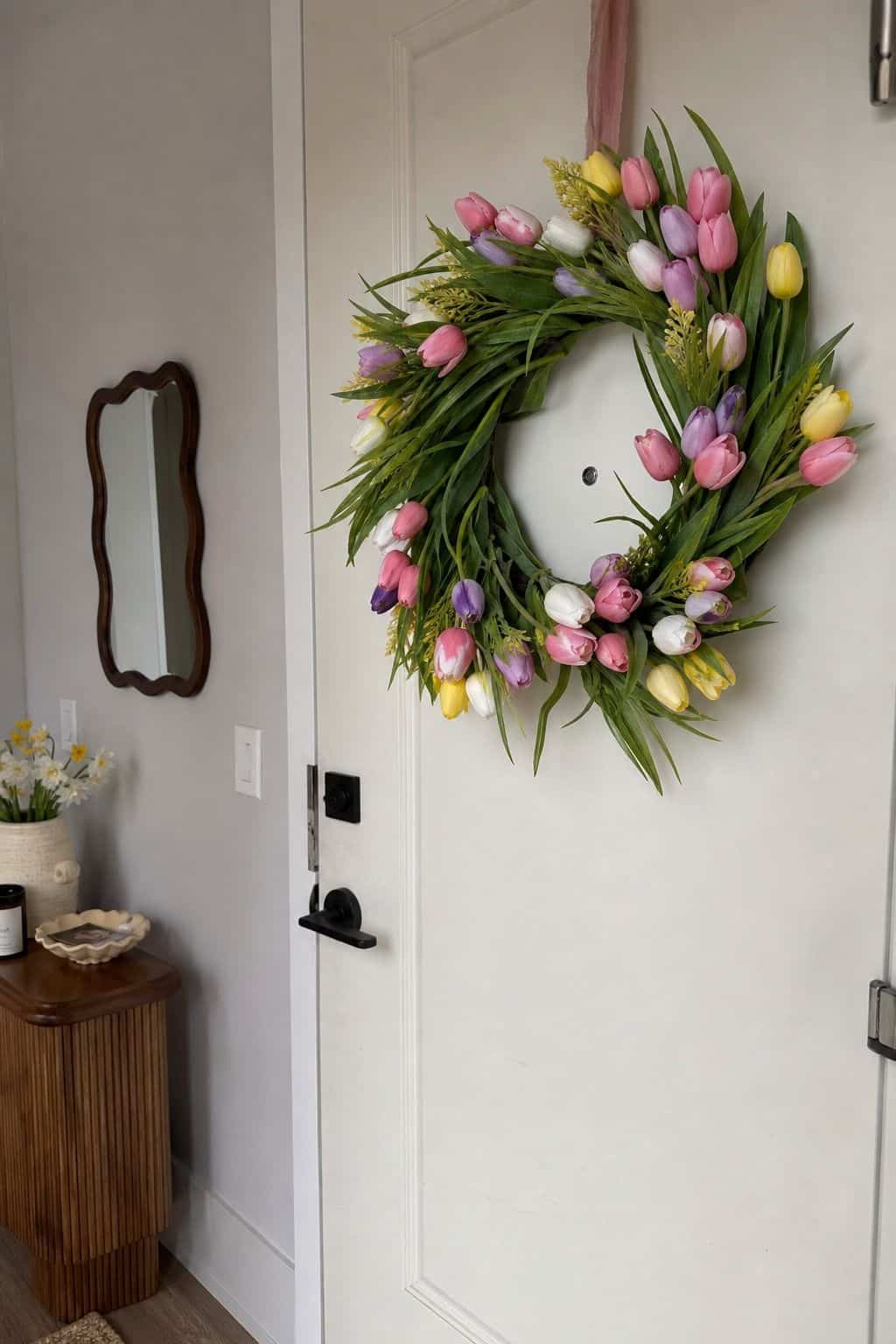


Tulips are the signature flower of spring, and a wreath made of them is a bright, joyful Easter focal point. A full circle of pink, white, or yellow tulips with soft greenery worked between the stems reads fresh and cheerful the moment a visitor approaches.
Add a layered ribbon bow in pastel stripes for a seasonal accent, or leave it unadorned for a cleaner look. Faux tulips hold their shape through the season and store for next year, while fresh ones offer a few days of real spring beauty for a special weekend. A tulip wreath is the classic, unmistakable Easter choice.
2. Make a Hydrangea Wreath for Lush Fullness
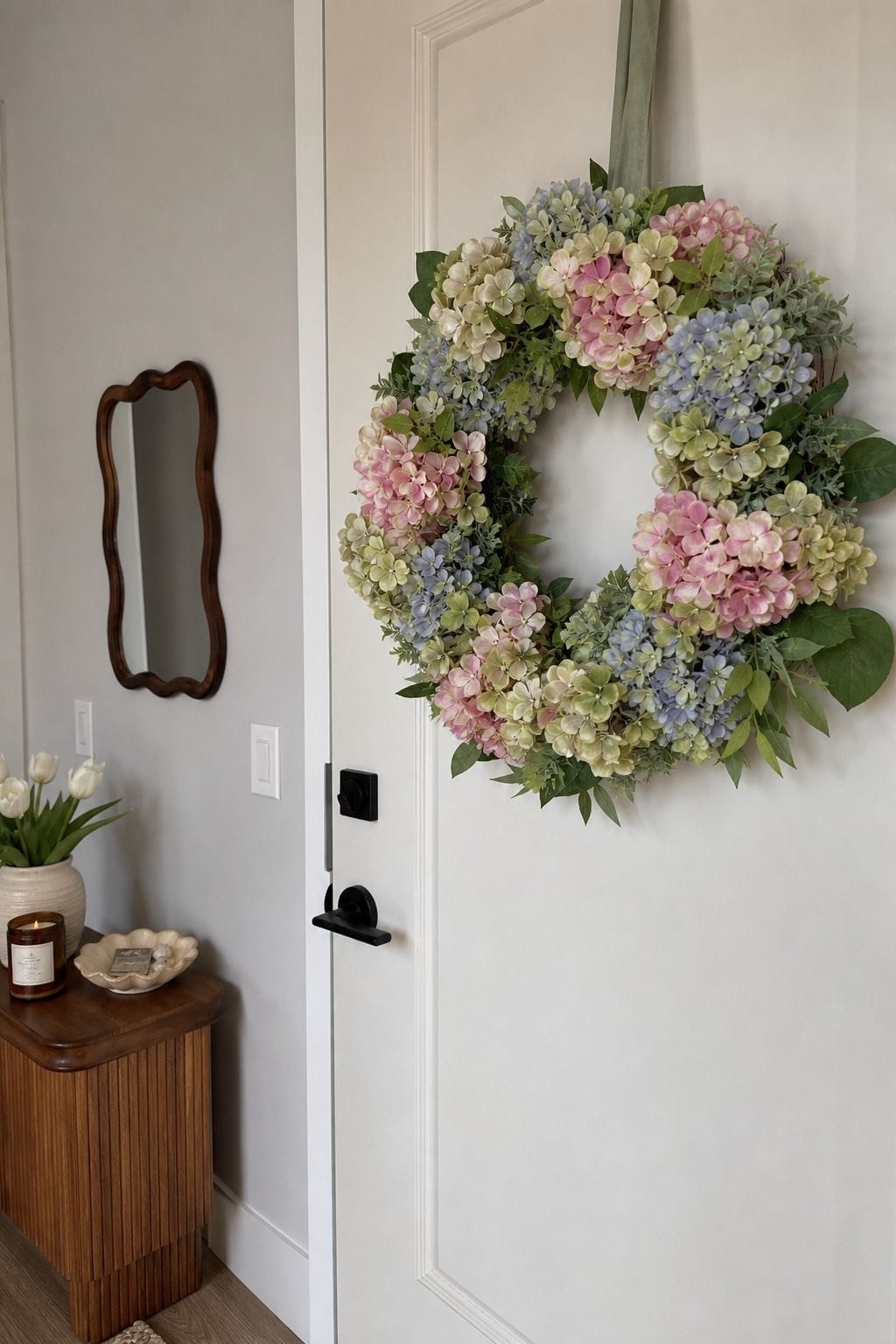


Hydrangeas offer full, rounded blooms that create a lush, luxurious wreath in soft spring colors. Their dense, generous heads fill a wreath form quickly, so even a few blooms read as abundant and full.
Choose hydrangeas in baby blue, pale pink, or creamy white for a soft spring palette, and tuck a little greenery around them for contrast. A hydrangea wreath has a romantic, slightly old-fashioned charm that suits a cottage or traditional home. Dried hydrangeas in particular hold beautifully and give the wreath a soft, textured quality that lasts well beyond Easter.
3. Create a Twig Wreath With Pastel Eggs
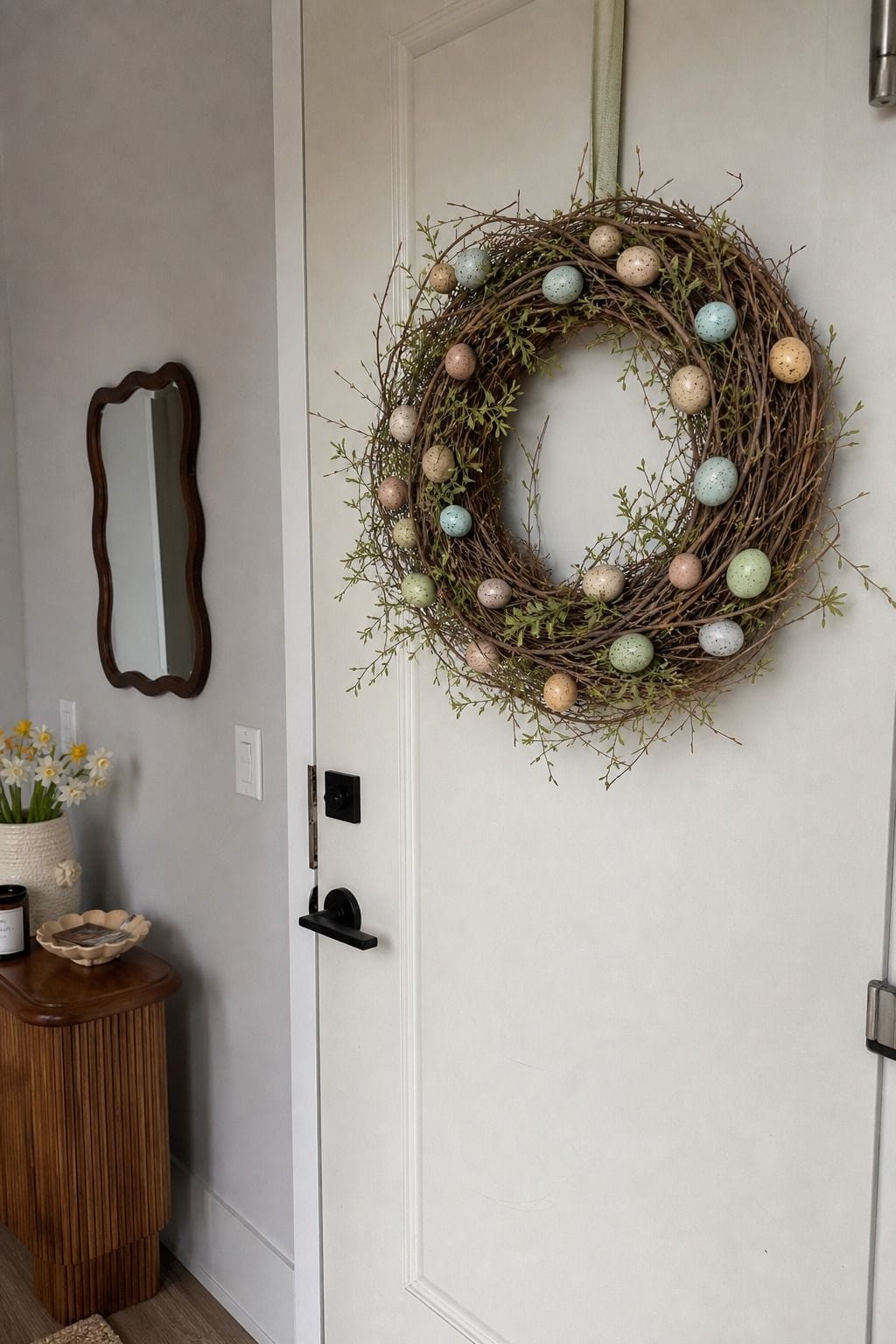


A natural twig wreath decorated with pastel eggs is one of the simplest, most charming Easter designs. The bare twig base reads organic and handmade, and a scattering of pink, blue, and cream eggs gives it a clear, gentle seasonal signal.
Wire the eggs on at irregular intervals rather than evenly spaced for a natural look, and add a white or soft ribbon bow as a finishing detail. This style especially suits a soft mint, sage, or pale door color. A twig-and-egg wreath is inexpensive, easy to make yourself, and captures the calm, natural direction Easter wreaths are taking for 2026.
4. Design a Natural Nest Wreath
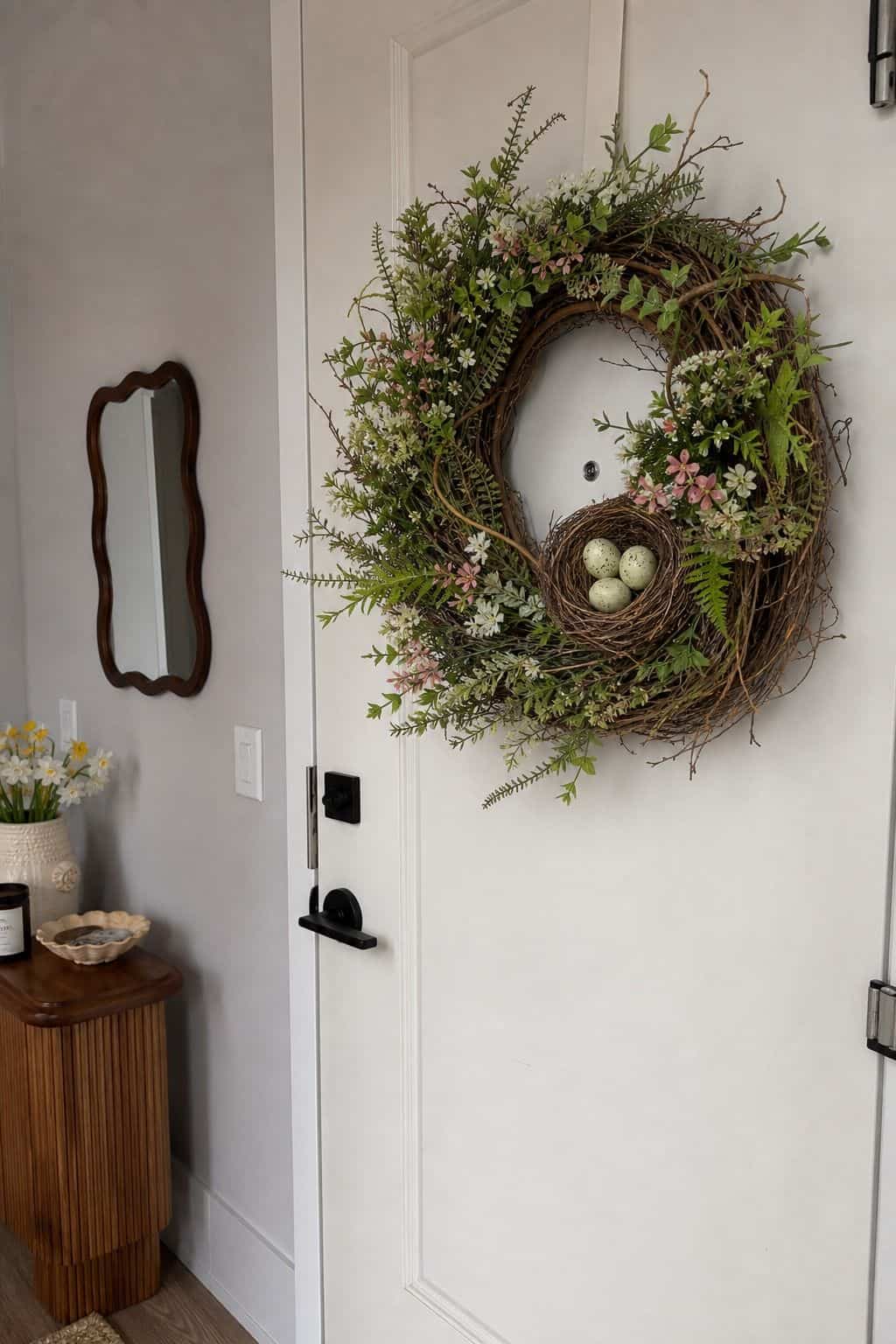


A nest wreath is the design guests tend to pause at, because it feels genuinely thoughtful. Create or buy a small twig nest, settle a few speckled eggs inside it, and mount it onto a wreath base surrounded by greenery or soft florals.
The nest gives the wreath a focal point and a quiet story, the promise of spring and new life. Keep the rest of the wreath natural and understated so the nest stands out. This is a wreath that rewards a closer look, and it has the handmade, personal quality that the best 2026 Easter wreaths share. It is simple to assemble yet looks special.
5. Choose a Minimalist Eucalyptus Wreath
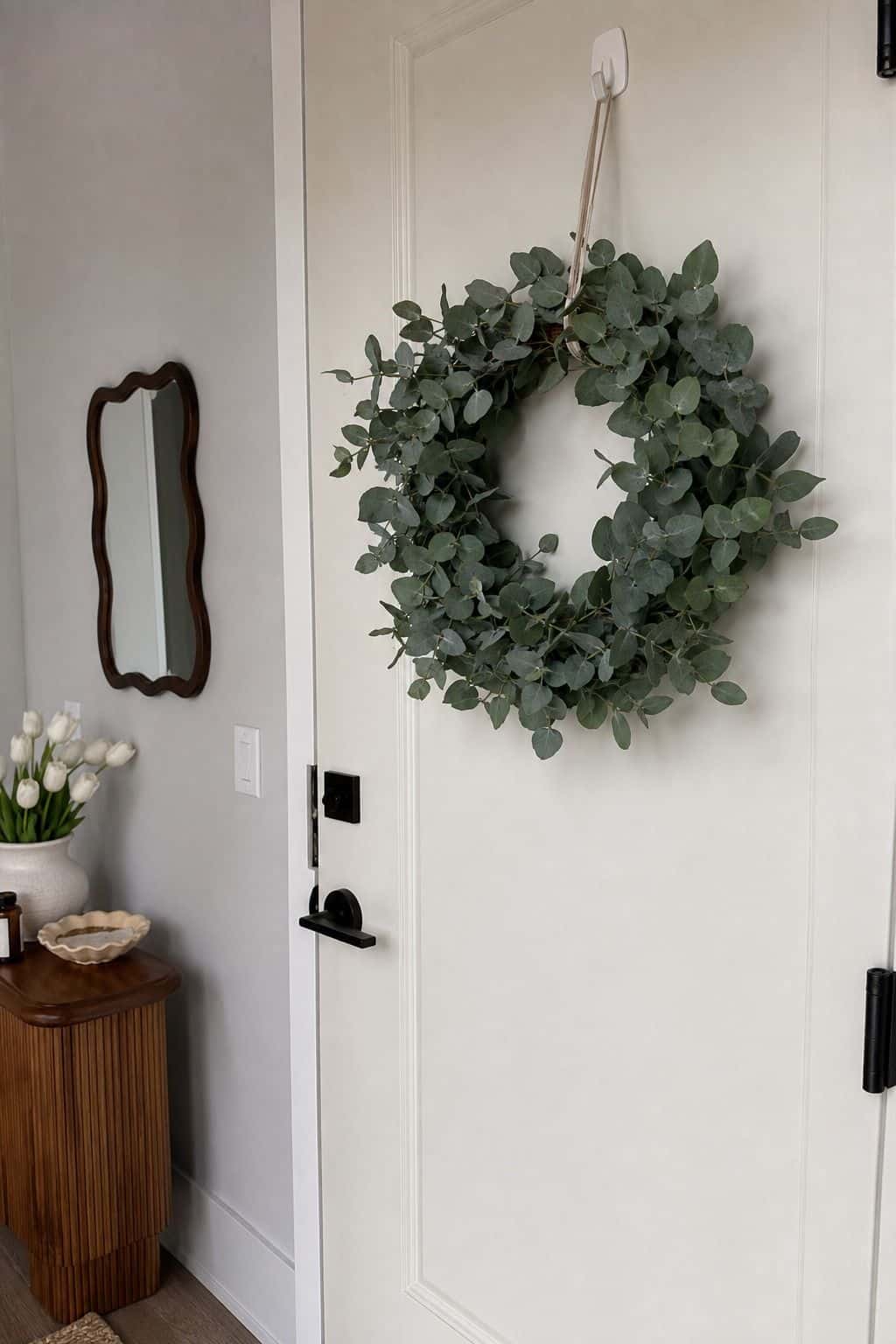


For a calm, elevated look, a eucalyptus wreath is hard to beat. Soft greens paired with beige, ivory, and pale pink textures feel modern and serene, and a eucalyptus-based wreath is understated enough to stay on the door all spring.
Add just a few subtle touches, a small cluster of eggs, a single bloom, a slim ribbon, or leave it purely green for the most minimalist version. This style suits a modern or neutral home and reads as quietly elegant rather than boldly seasonal. A eucalyptus wreath is the choice for anyone who wants spring at the door without anything that feels overly themed.
6. Mix Bold Spring Flowers for a Full Look
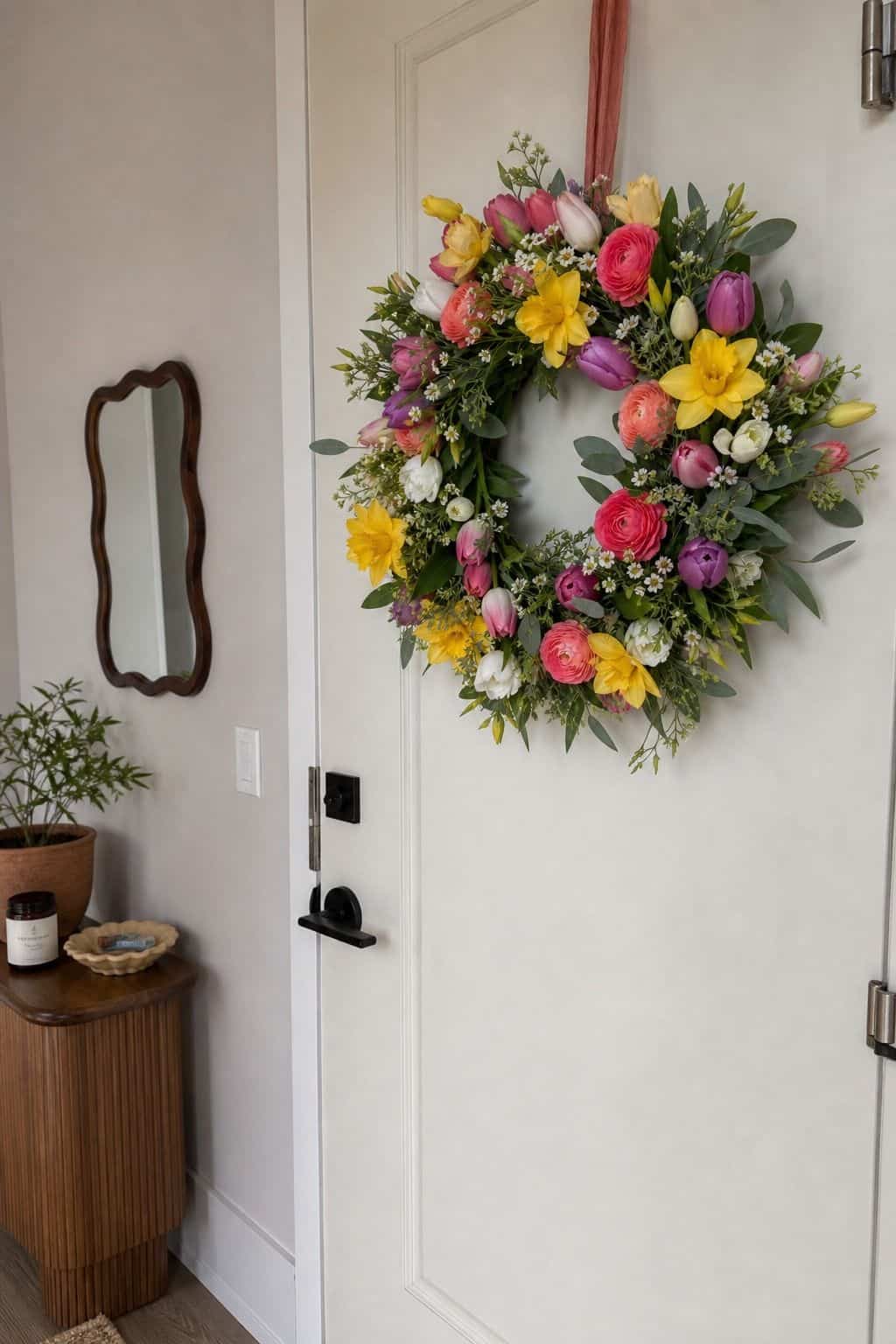


For a wreath with real impact, mix bold spring flowers in a dense, layered arrangement. Orange gerbera daisies, pink roses, and yellow mimosa stems together with thick greenery and small filler flowers create a full, joyful design.
The key to this look is density, packing the blooms and filler close so no gaps of the base show through. A bold mixed-flower wreath is cheerful and attention-grabbing, perfect for a home that loves color. Keep the flowers within a loosely related palette so the mix reads as designed rather than random, and the wreath becomes a striking spring statement.
7. Add Dried Florals for Texture and Longevity
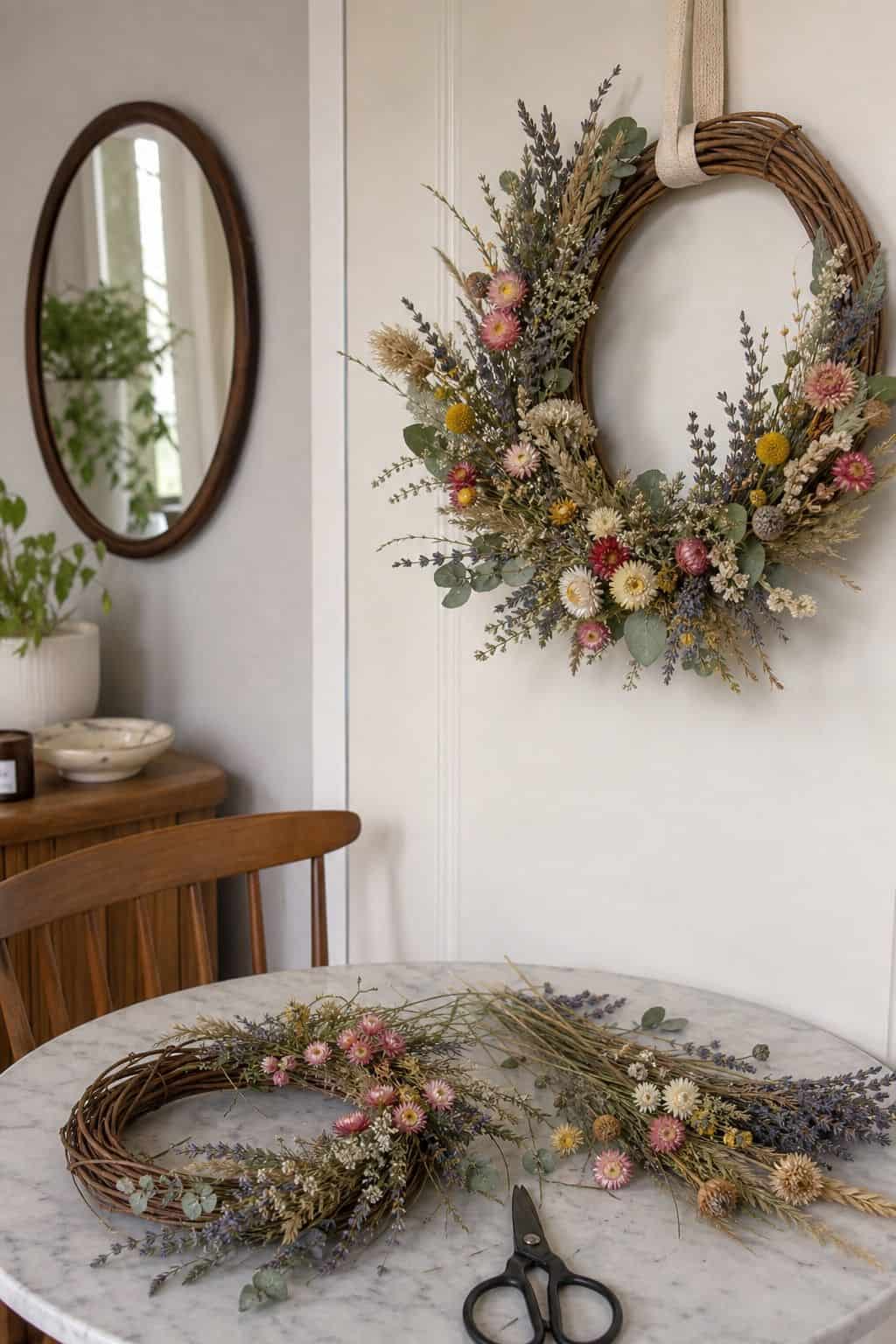


Dried florals bring a soft, textured, long-lasting quality to an Easter wreath. Dried billy buttons, bunny tails, statice, lavender, and grasses in muted tones add the natural, slightly faded texture that suits the 2026 calm-and-natural direction.
A dried-floral wreath holds up far longer than a fresh one and has a gentle, understated beauty. Pair the dried elements with a eucalyptus or twig base for a cohesive natural look. The same dried, textural approach carries into spring decor throughout the home, where lasting natural material is a smart, low-maintenance choice.
8. Pick the Right Wreath Base
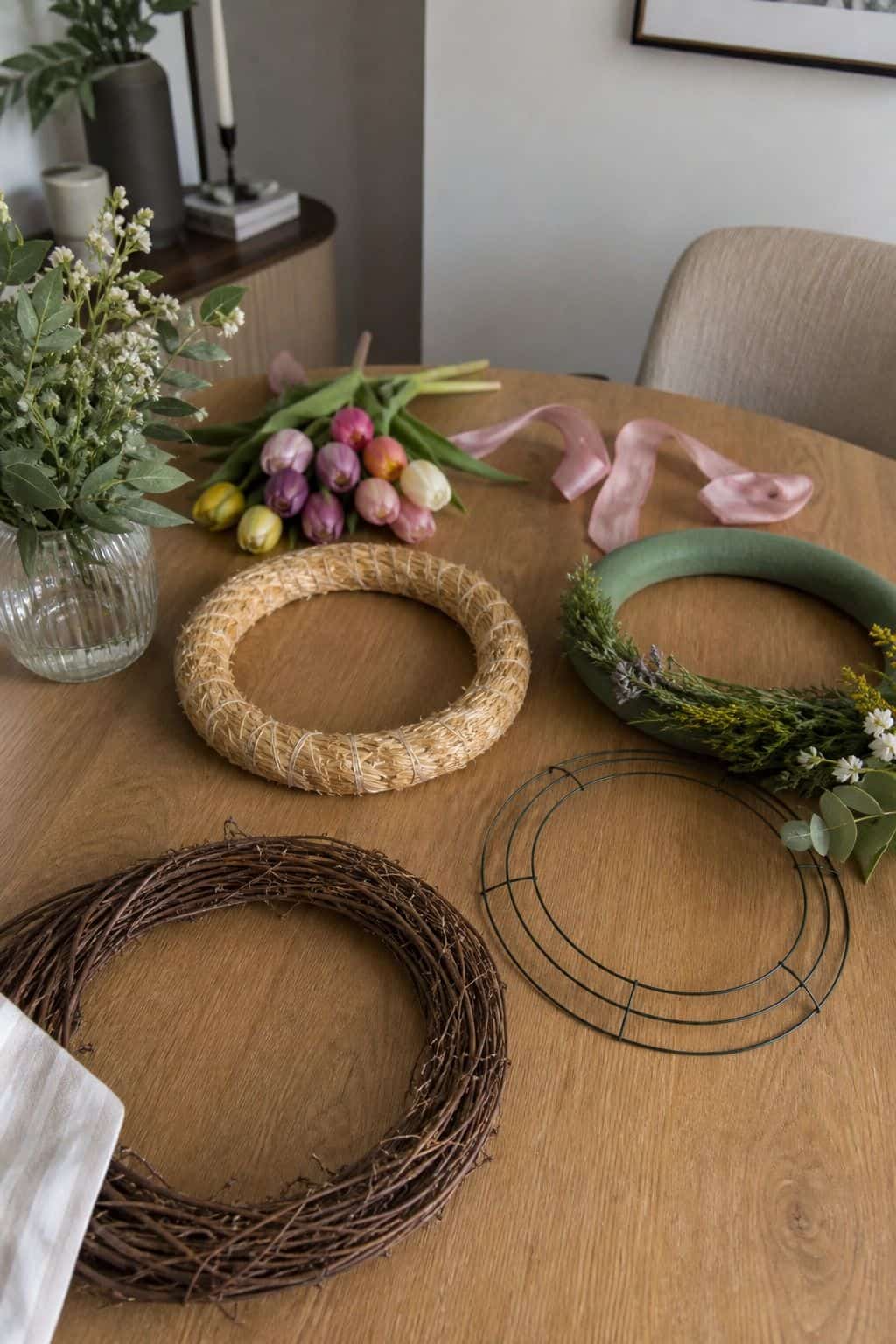
The base shapes the whole character of an Easter wreath. A grapevine base reads rustic and natural and is sturdy for attaching florals. A twig or birch base looks organic and handmade. A foam or wire base disappears under dense florals for a full look. A moss-covered base adds soft green texture.
Choose the base to match the style you want: rustic and natural, or lush and full. A grapevine base is the most versatile all-rounder and works for nearly every Easter wreath style. Getting the base right makes building the rest of the wreath easier and gives the finished piece a cohesive foundation.
9. Use a Muted Pastel Color Palette
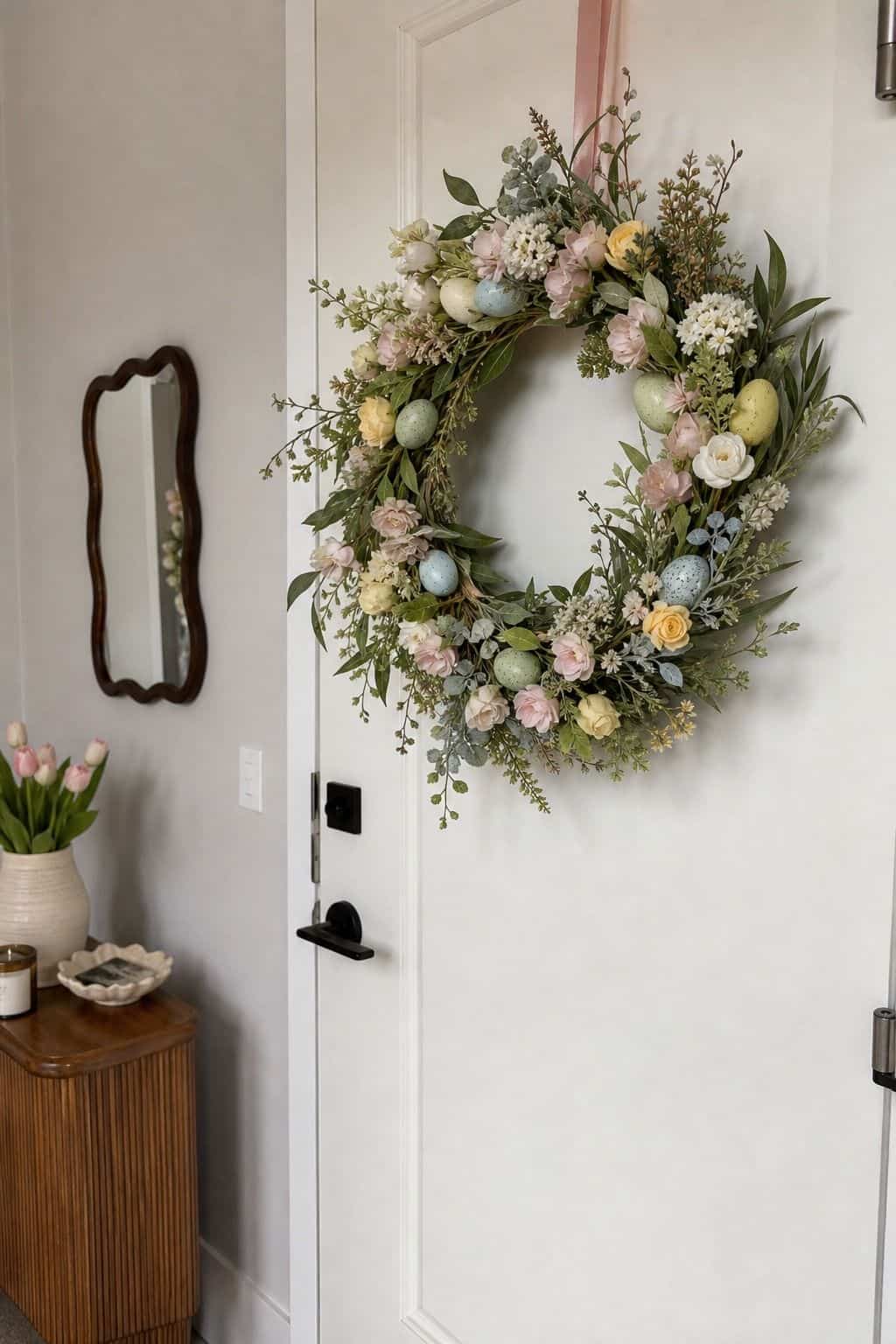


The 2026 Easter wreath palette is soft and muted rather than candy-bright. Pastel pink, lavender, pale yellow, baby blue, mint green, and soft peach all work beautifully, joined by natural tones like moss green, ivory, and light wood.
Choose two or three of these and repeat them across the flowers, eggs, and ribbon so the wreath reads cohesive. Muted pastels feel calm and modern, and they complement spring porch decor without shouting. A restrained, soft palette is a large part of what gives the new generation of Easter wreaths their elegant, personal feel rather than a mass-produced one.
10. Add a Soft Ribbon Bow as a Finishing Touch
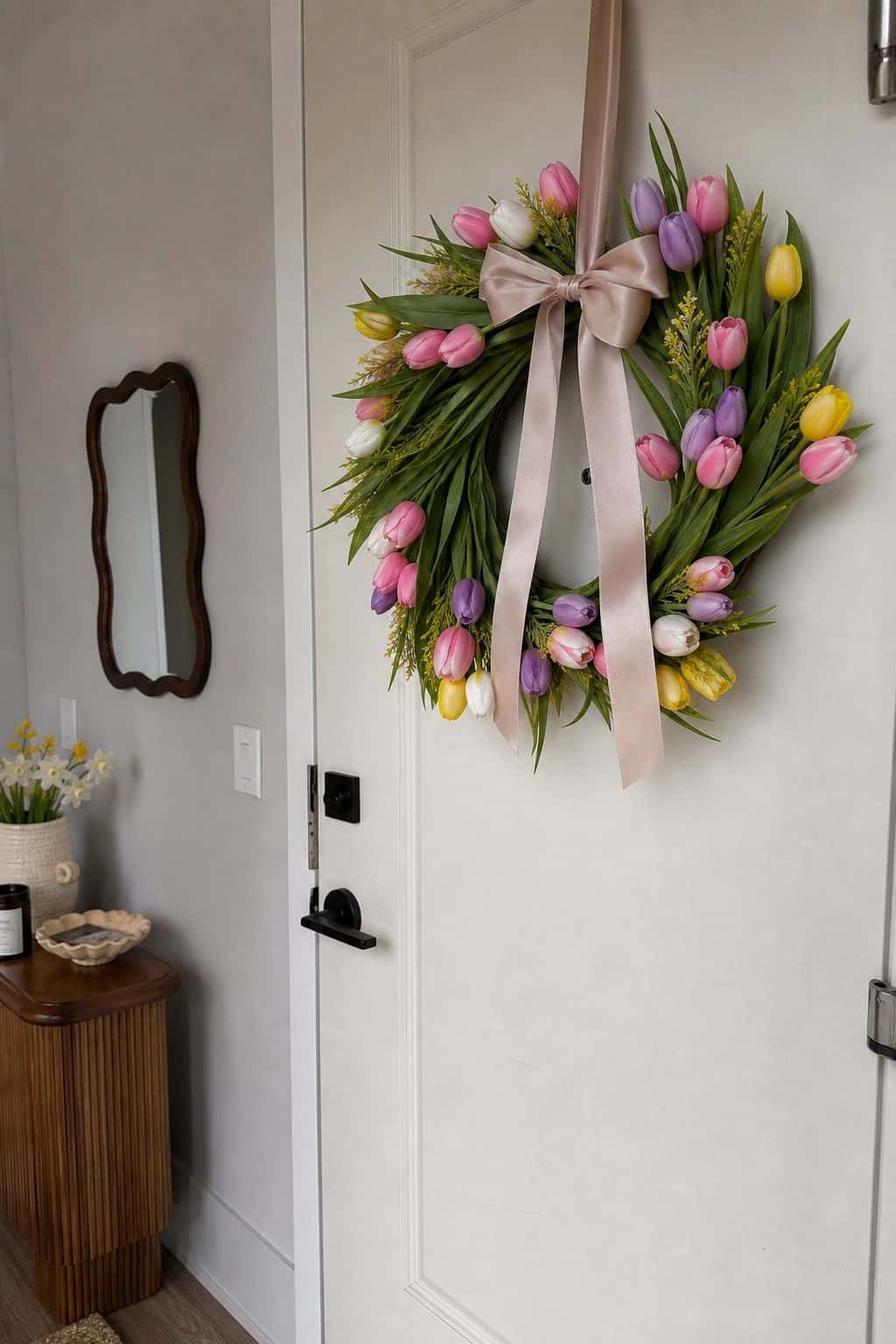


A ribbon bow is the classic finishing detail on an Easter wreath, and the right one ties the whole design together. For 2026, keep it soft: a white bow, a pale pastel, a layered striped bow in muted tones, rather than anything glittery or stiff.
Linen, cotton, or soft satin ribbon suits the natural direction better than wired metallic ribbon. Place the bow at the bottom, the top, or to one side for a slightly asymmetric look. A gentle ribbon bow adds a finished, considered touch, and it is an easy element to swap if you want to refresh the wreath.
11. Decorate With Speckled and Natural Eggs
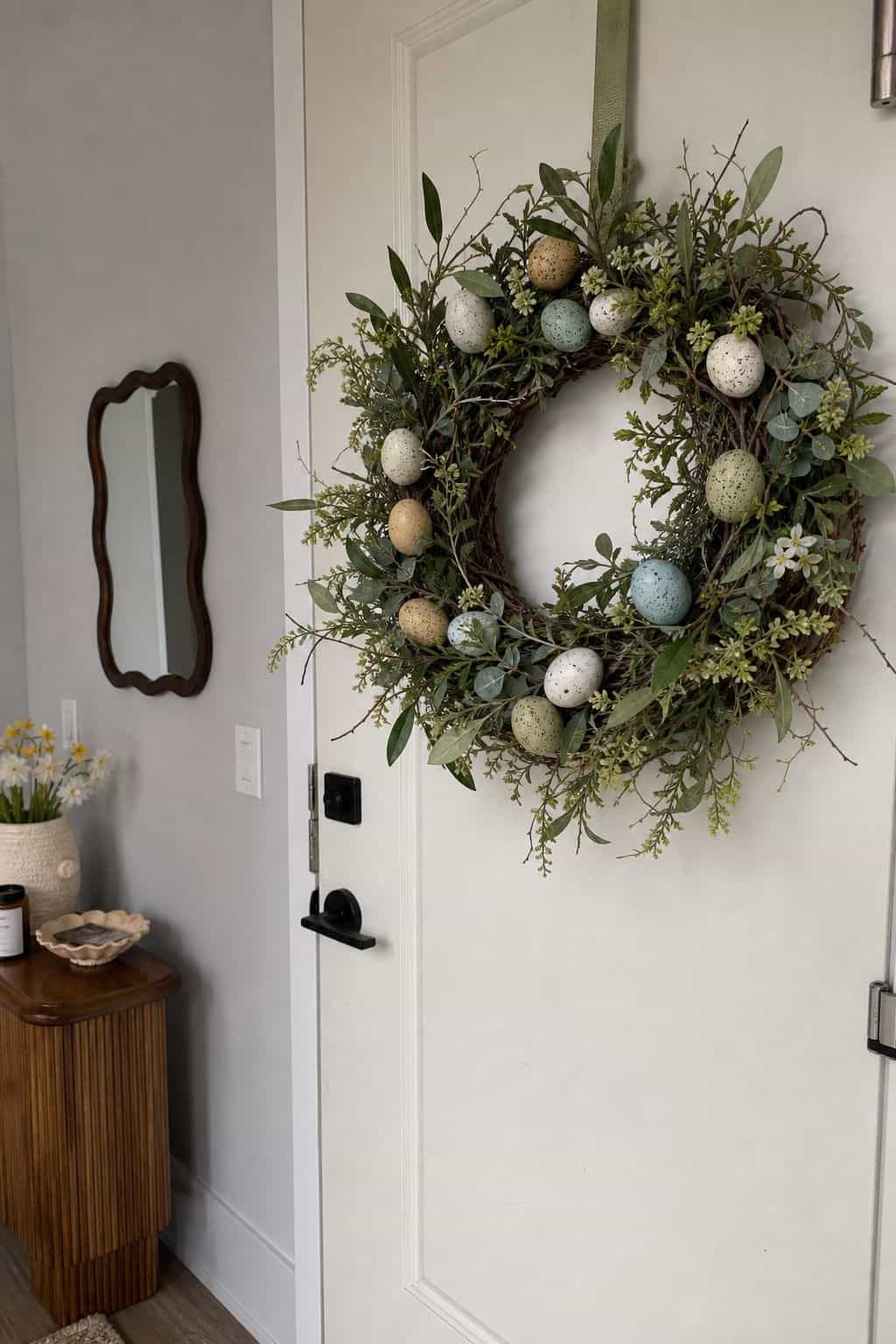
Eggs are the most direct Easter symbol, and speckled or natural-toned eggs suit the calm 2026 look far better than bright plastic ones. Choose eggs in soft cream, pale blue, sage, or hand-painted speckled finishes.
Cluster a few together on one part of the wreath rather than dotting them evenly all the way around, the cluster reads as more intentional. Wooden, ceramic, or natural-finish eggs look more refined than glossy plastic. A handful of speckled eggs is often all a natural wreath needs to read clearly as Easter while keeping the understated, handmade quality.
12. Add a Small Bunny or Subtle Figure
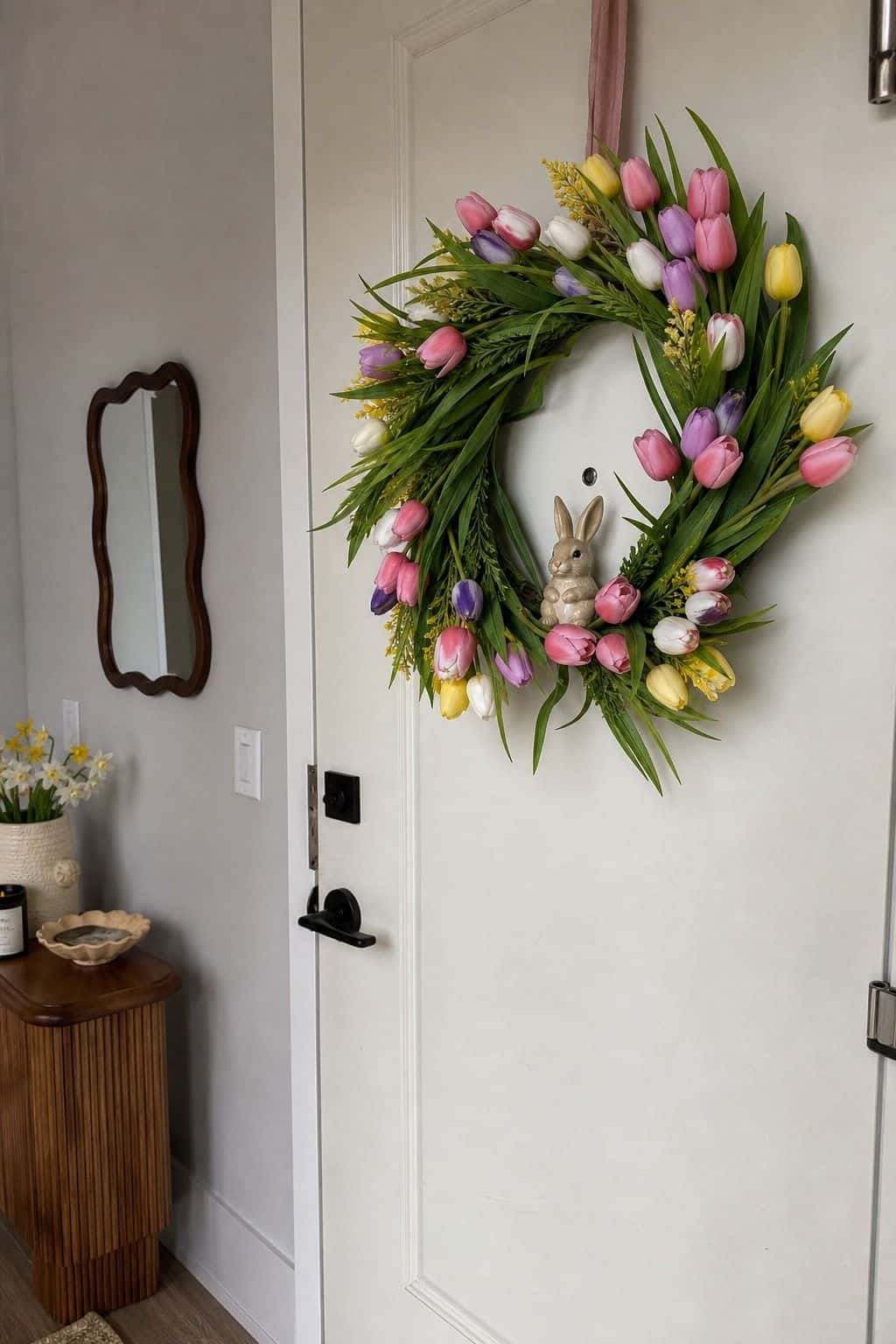


A single small figure can add gentle Easter charm to a wreath without tipping into kitsch. A little wooden or ceramic bunny, a small bird, or a tiny carved animal tucked among the greenery reads as a sweet, subtle nod to the holiday.
The rule is restraint: one small figure, in a natural or muted finish, not a parade of bright plastic characters. Tuck it low among the florals so it feels discovered rather than displayed. A single charming figure is the kind of personal detail that makes a wreath feel handmade and thoughtful, exactly the quality the best Easter wreaths have.
13. Make a DIY Wreath for a Personal Touch
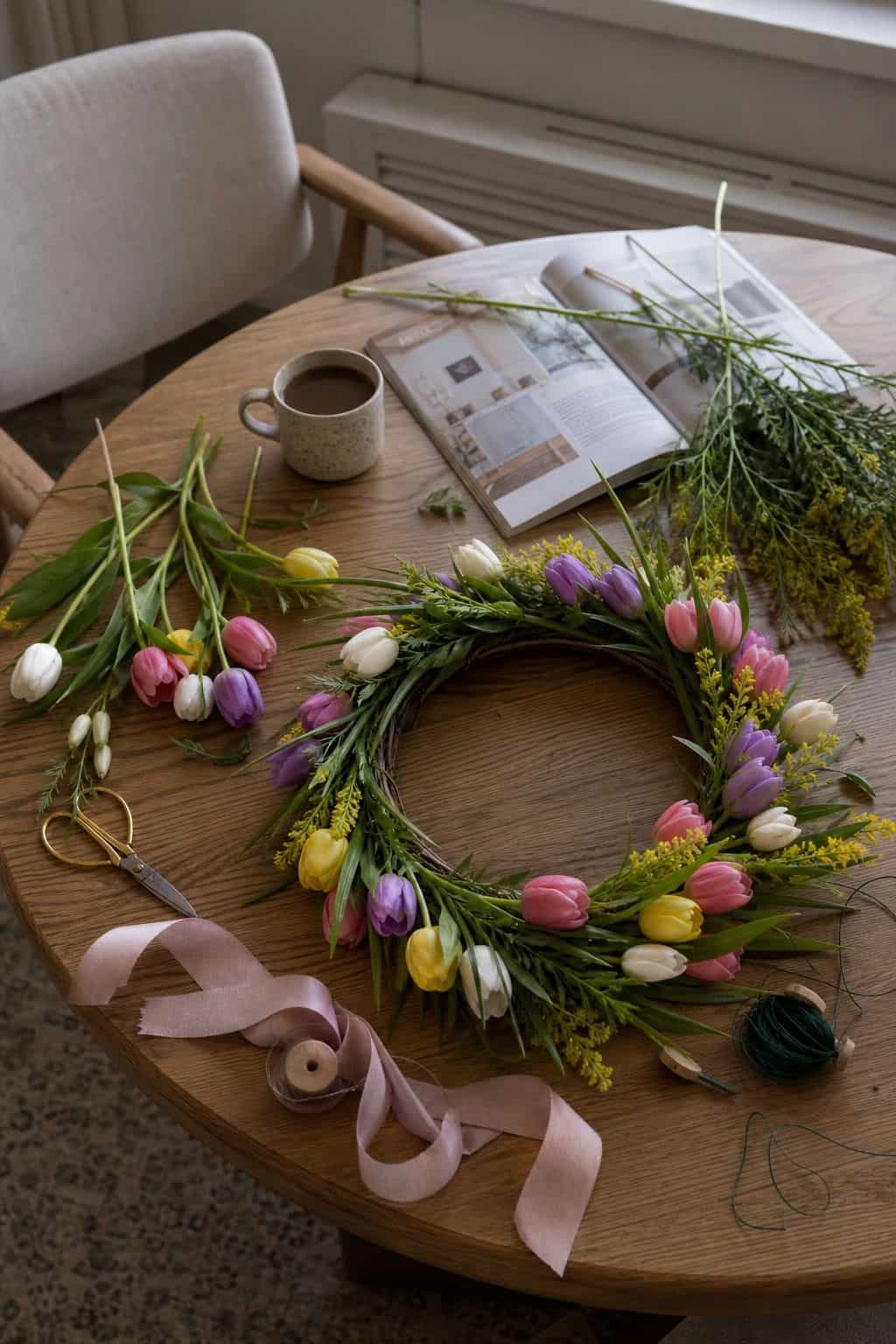


A handmade wreath has a character no store-bought one can match, and Easter wreaths are forgiving enough for a first-time DIY. Start with a grapevine base, gather faux florals, greenery, eggs, and ribbon, and wire or hot-glue the elements on in clusters.
Work in odd numbers, build from larger elements to smaller filler, and step back often to check the balance. A DIY wreath lets you match your exact door color and palette, and the slight imperfection of handmade is part of its charm. Making your own is also the most affordable route and the most in keeping with the personal, handmade 2026 direction.
14. Style a Grapevine Wreath With Minimal Decoration
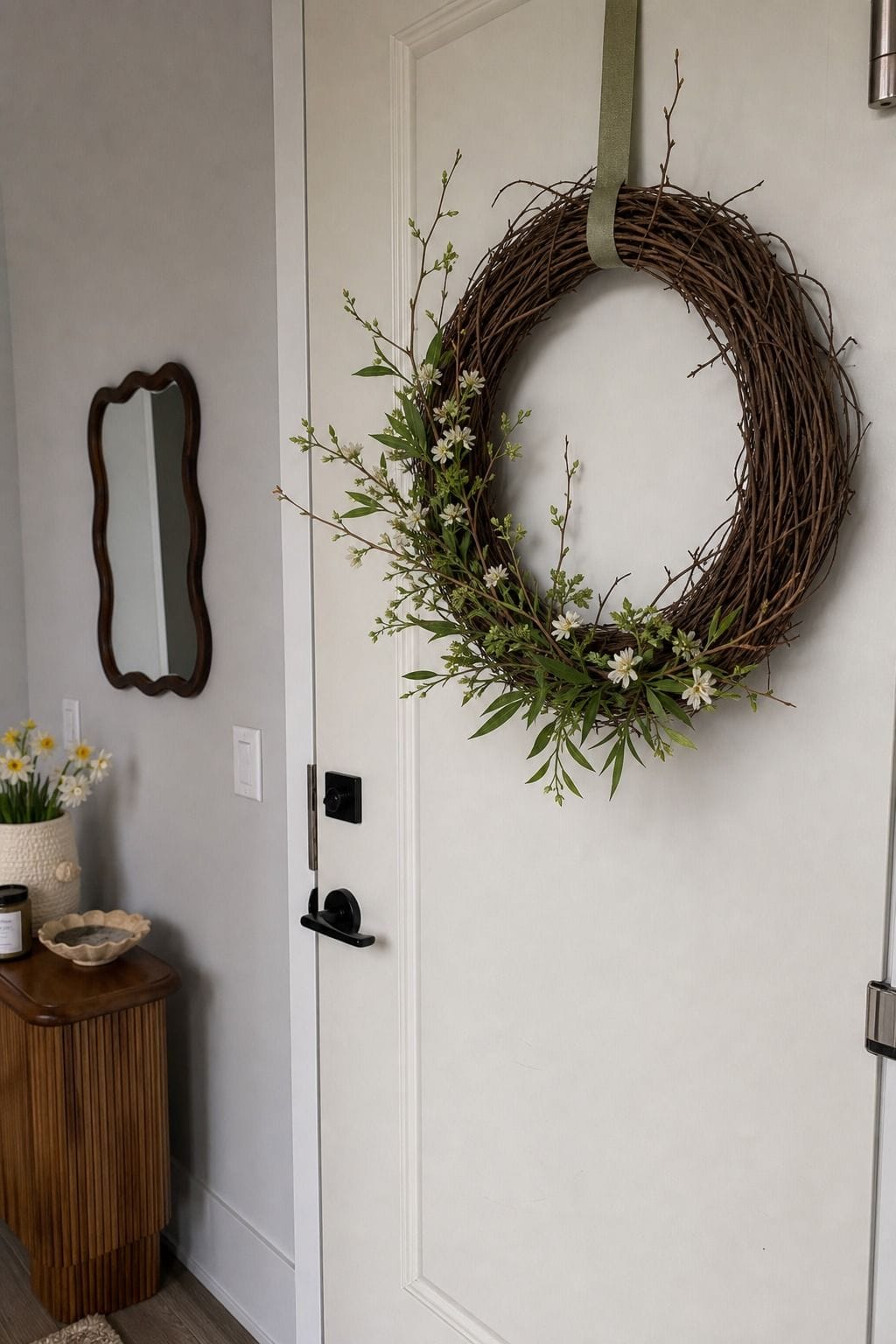


Sometimes the most elegant Easter wreath is the simplest. A plain grapevine wreath, left mostly bare with just a small cluster of eggs, a single floral accent, or a slim ribbon, has a quiet, modern charm.
This pared-back approach suits a minimalist or contemporary home and reads as intentional rather than unfinished. The natural texture of the grapevine itself becomes part of the design. A minimally decorated grapevine wreath is also the easiest to make and the most versatile, a small change of accent and the same base carries from Easter into the rest of spring.
15. Coordinate the Wreath With Your Door Color
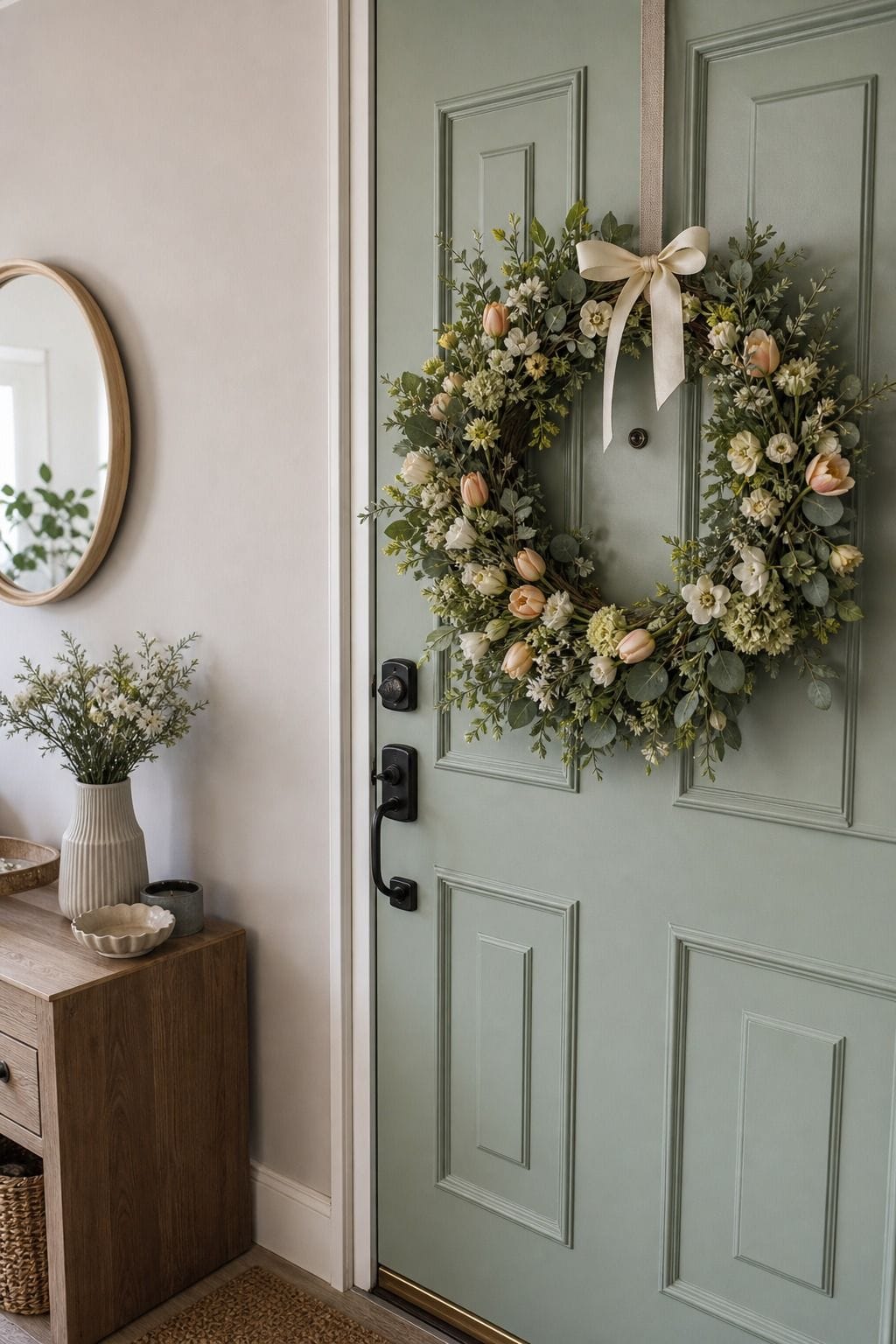


A wreath looks its best when it works with the door behind it. A soft mint or sage door pairs beautifully with pink, blue, and cream eggs. A crisp white door lets a bold floral wreath pop. A dark door makes pale pastels and ivory stand out brightly.
Consider the door color before choosing the wreath’s palette, and pick wreath tones that contrast enough to be seen clearly. A wreath that disappears against a similarly colored door loses its impact. Coordinating the two, even loosely, is a small consideration that makes the whole front entrance look deliberately styled.
16. Add Greenery for a Fresh, Garden-Gathered Feel
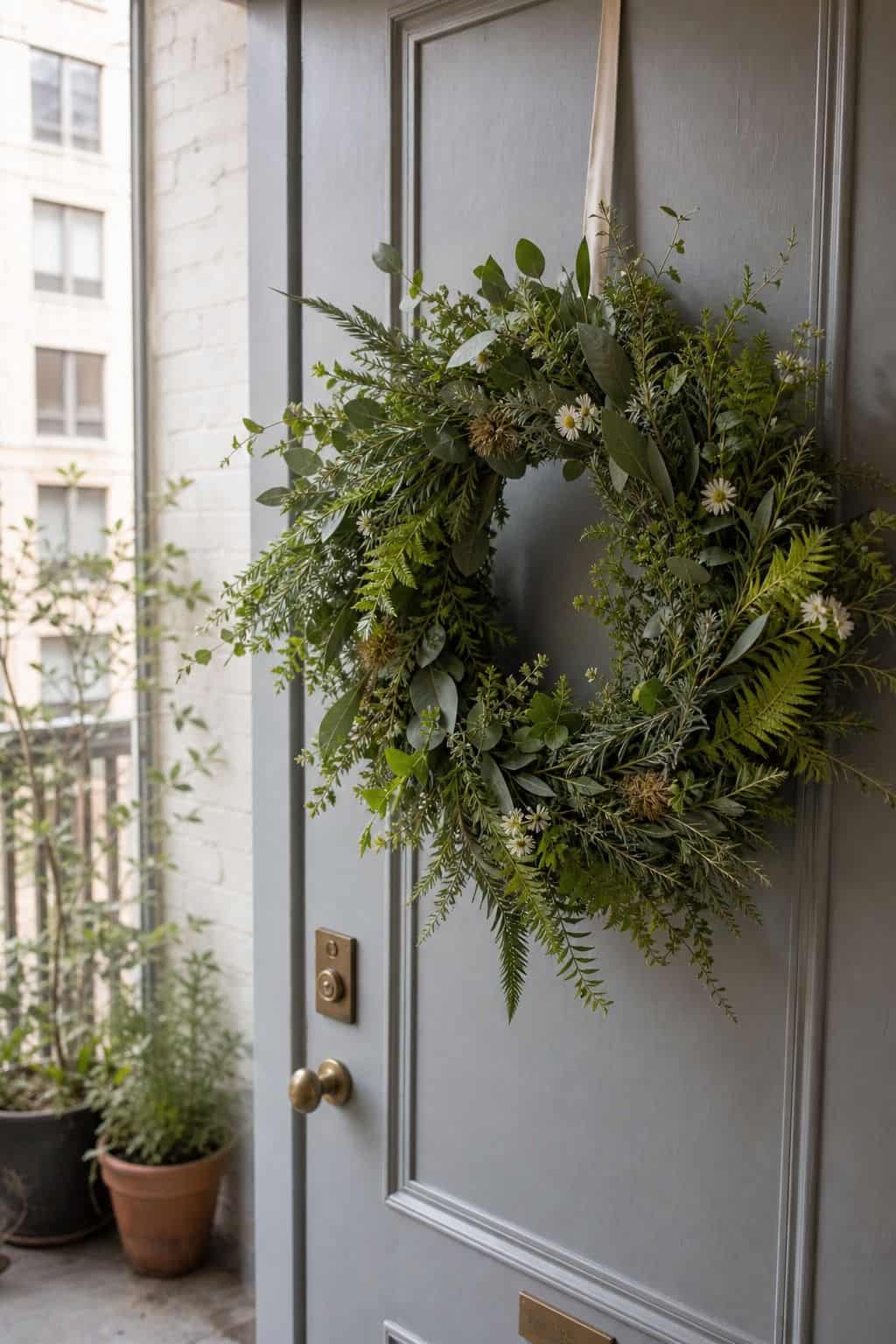

Greenery is what gives an Easter wreath its fresh, alive quality. Whether the wreath is floral, egg-based, or minimalist, a layer of greenery, eucalyptus, ivy, ferns, soft trailing stems, adds lushness and a garden-gathered look.
Let some of the greenery trail loosely off the wreath rather than keeping it all tightly contained, the slight wildness reads as natural and modern. Greenery also bridges the gap between bare base and decorative elements, filling space softly. A well-greened wreath feels like spring itself, which is exactly the welcome an Easter front door should offer.
17. Keep It Calm and Natural, Not Over-Themed
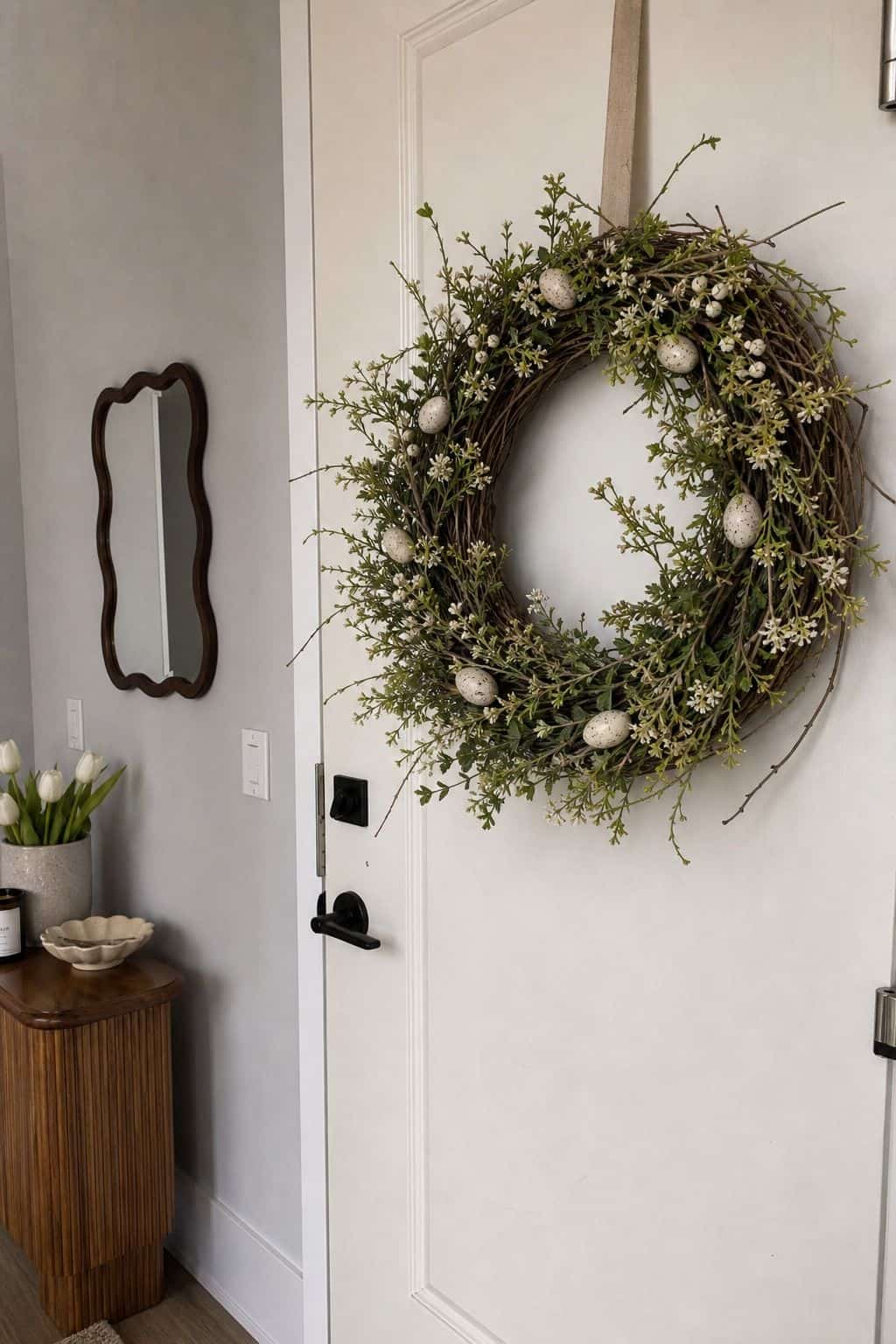


The single most important 2026 principle for Easter wreaths is restraint. The trend is firmly away from glitter-heavy, busy, over-themed designs and toward something calmer, more natural, and more personal.
That means choosing natural materials over plastic and glitter, muted pastels over neon, and a few well-placed elements over a crowded wreath. A calm, natural Easter wreath has an elegance and a handmade charm that a busy one never achieves. The same understated approach shapes spring entry table decor just inside the door, so the whole entrance feels cohesive.
18. Choose a Wreath That Carries Through Spring
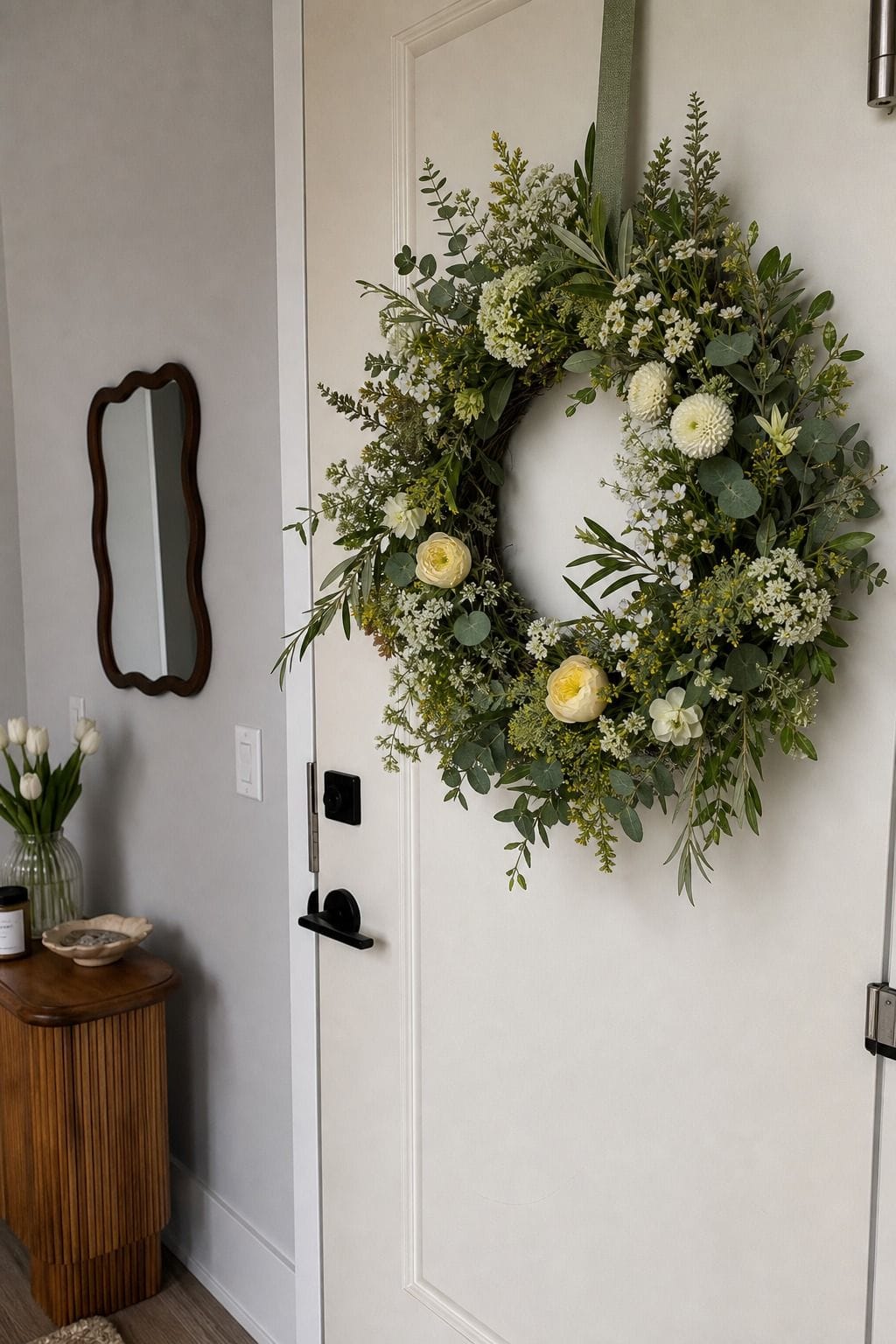


The most practical Easter wreath is one that does not have to come down on Easter Monday. A wreath built on natural greenery, dried florals, or a simple grapevine base, with eggs and bunnies kept subtle or removable, can stay on the door through the whole spring season.
Choosing or building a wreath with this longevity in mind gives you months of use from one piece. If you want a clearly Easter-specific element, make it removable, a small cluster of eggs you can take off, so the wreath transitions easily. A spring-long wreath is the smartest, most sustainable choice for a front door.
Quick Tips for a Beautiful Easter Wreath
Choose the right base, grapevine is the versatile all-rounder, and a muted pastel palette of two or three colors. Lean on natural materials over glitter and plastic. Cluster eggs and accents rather than spacing them evenly, and coordinate the wreath with your door color. And build it to carry through the whole spring season. Your front door sets the tone, and these Easter decorating ideas carry that same fresh spring feeling inside the apartment. When the wreath comes down, these small apartment wall decor ideas help every wall inside your home feel just as welcoming.
Frequently Asked Questions
What makes a good Easter wreath?
A good Easter wreath for 2026 leans calm and natural rather than glitter-heavy. It uses a sturdy base like grapevine, a muted pastel palette, natural materials, and a few well-placed elements, tulips, hydrangeas, speckled eggs, or a nest, with a handmade, personal feel.
What colors should an Easter wreath be?
Soft, muted pastels work best: pastel pink, lavender, pale yellow, baby blue, mint green, and soft peach, joined by natural tones like moss green, ivory, and light wood. Choose two or three and repeat them so the wreath reads cohesive.
How do I make a DIY Easter wreath?
Start with a grapevine base, gather faux florals, greenery, eggs, and ribbon, then wire or hot-glue the elements on in clusters. Work in odd numbers, build from larger elements to smaller filler, and step back often to check the balance.
What is the 2026 trend for Easter wreaths?
The 2026 direction moves firmly away from glitter-heavy, over-themed designs toward something calmer and more personal: natural textures, muted pastels, and wreaths that feel handmade rather than mass-produced. Eucalyptus, twig, and dried-floral wreaths lead the look.
Can an Easter wreath stay up all spring?
Yes, and the most practical wreaths are built to. A wreath based on natural greenery, dried florals, or a simple grapevine base, with eggs and bunnies kept subtle or removable, transitions easily and can stay on the door through the whole spring season.
Where should I hang an Easter wreath?
The front door is the classic spot, where it greets every visitor. Coordinate the wreath’s palette with the door color so it stands out. Easter wreaths also work on an interior door, above a mantel, or on a large mirror to bring spring inside.
Key Takeaways
- The 2026 Easter wreath look is calm and natural, moving away from glitter-heavy, over-themed designs toward handmade, personal pieces.
- Build on a sturdy base, grapevine is the versatile all-rounder, in a muted pastel palette of two or three colors.
- Choose a style that suits your home: lush tulip or hydrangea florals, a natural egg-and-nest design, or a minimalist eucalyptus wreath.
- Use natural materials, speckled eggs, dried florals, real greenery, over plastic and glitter, and cluster accents rather than spacing them evenly.
- Coordinate the wreath with your door color and build it to carry through the whole spring season for the most use.
Wrapping Up
An Easter wreath is the small, welcoming introduction your home gives at the front door, and the 2026 approach makes it calmer and more personal than ever. Natural textures, muted pastels, and a handmade feel are what set the new generation of wreaths apart.
Choose a base and a soft palette, pick the style that suits your door, whether lush florals or minimalist greenery, and lean on natural materials over glitter. Build it to last through the season, and your front door will offer every visitor a fresh, welcoming taste of spring all the way through Easter.
Last update on 2026-10-23 / Affiliate links / Images from Amazon Product Advertising API
