
Quick Answer: The smartest fall and thanksgiving decor ideas build a neutral autumn base in early October, then swap small elements as Thanksgiving approaches. Keep the runner, the candles, the dried botanicals, and the layered textiles. Trade Halloween accents for white pumpkins and wheat, deepen the palette, and add place settings. The transition takes 20 minutes, not a full redecoration.
The in-between season is the one nobody plans for. Halloween ends, the jack-o-lanterns get tossed, and there is a four-week stretch before Thanksgiving where most homes look half-decorated and uncertain. The fix is not more decor. It is a base that transitions.
A home styled for the swap is the goal. The right fall and Thanksgiving decor sets a neutral autumn foundation in October that you then deepen and refine as November arrives, rather than two separate redecorations. The 17 ideas below cover the base layers, the swap-friendly pieces, and the small November additions.
Trying to style the whole apartment for the full autumn stretch?
The Aesthetic Apartment Makeover Guide covers seasonal styling room by room. Currently $17 before it returns to $27.

Recommended Fall and Thanksgiving Products
Five pieces form the transitional base: a neutral runner that works for both seasons, a swap-friendly garland, white pumpkins, dried wheat, and a set of warm-scented candles to carry the mood from October into November.


Read this also:
- Top 17 Modern Fall Decor Ideas
- Top 18 Thanksgiving Tablescape Ideas
- Top 17 Fall Mantle Decor Ideas
- Top 17 Thanksgiving Front Porch Decor Ideas
- Top 16 Elegant Fall Decor Ideas
Build a Neutral Autumn Base
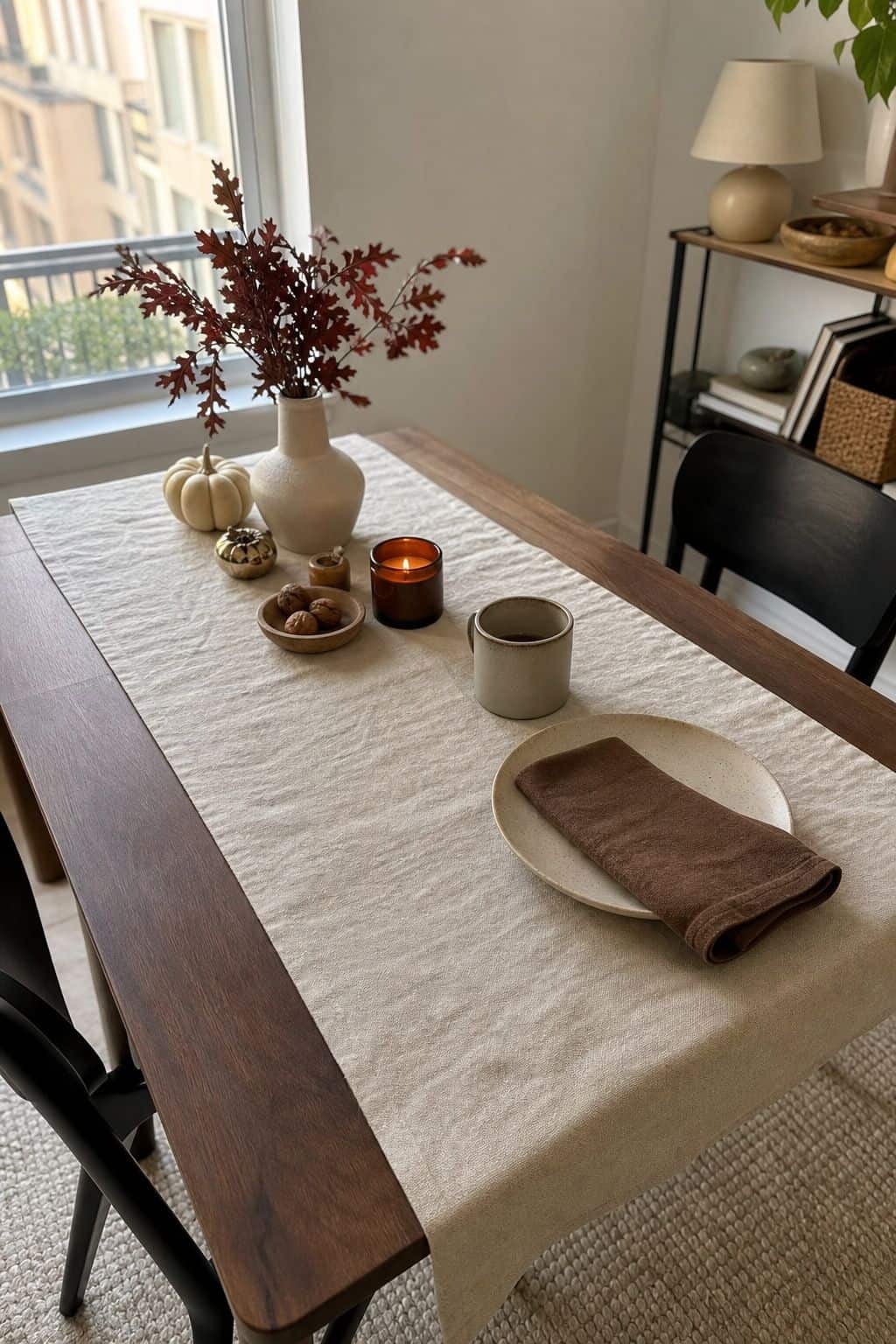
1. Start With a Neutral Linen Runner
No products found.
A natural linen runner in oat, cream, or warm flax is the foundation that works from early October through Thanksgiving. The neutral base means you never have to swap the runner itself.
During October you top it with lighter dried botanicals. As Thanksgiving approaches, you add deeper elements and place settings.
One runner, two seasonal modes. The neutral base is the entire transitional strategy in a single piece.
2. Layer Textiles in Warm Earth Tones
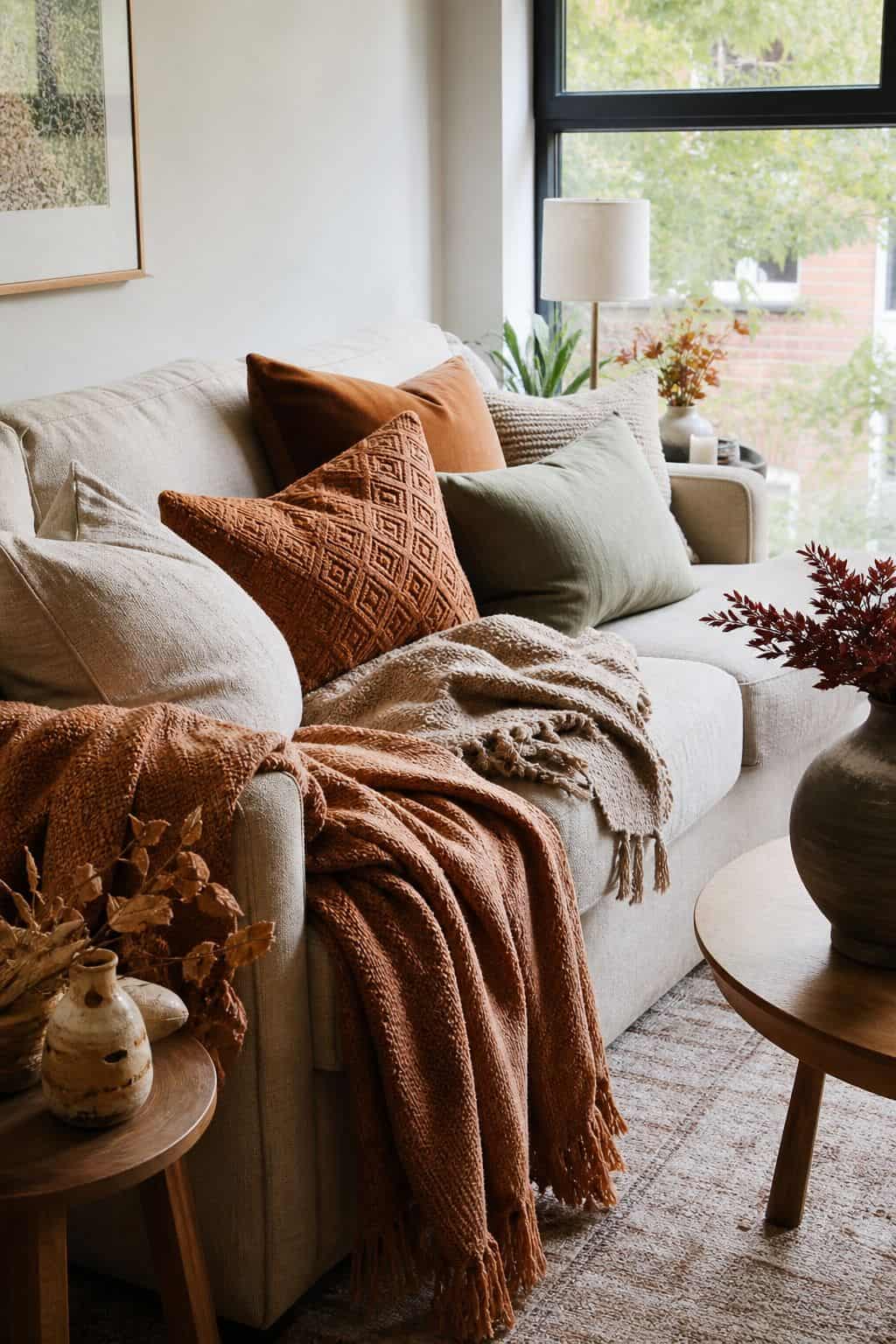


Swap summer-bright pillows and throws for warm earth tones (rust, ochre, walnut, cream). These work for the whole autumn stretch.
Mix textures: a chunky knit, a finer woven throw, a velvet pillow. The texture variation carries the seasonal mood.
The textile layer is the cheapest, fastest way to shift a room into autumn and it never needs a mid-season change.
Store the off-season textiles in cotton bags so the wool does not attract moths between years.
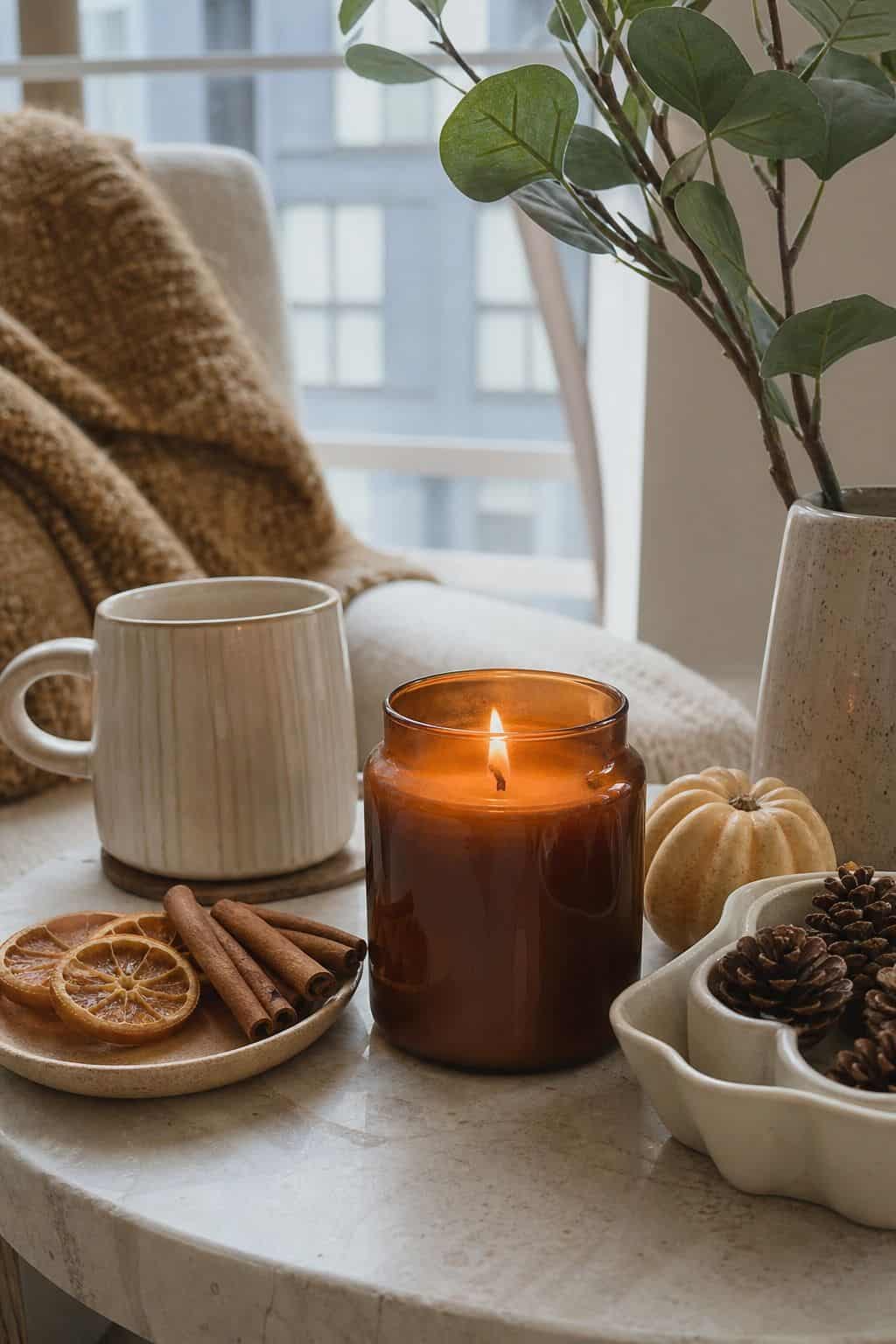
3. Choose a Candle Scent That Bridges Both Seasons
No products found.
Pick a warm scent that works for October and November: cedarwood, spiced vanilla, chai, sandalwood, or amber. Skip anything that locks you into one specific holiday.
Buy three of the same scent and place one in each main room for a cohesive feel.
The consistent scent ties the whole home together through the entire fall stretch.
Swap-Friendly Wreaths and Garlands
4. Use a Wreath Base You Can Re-Dress
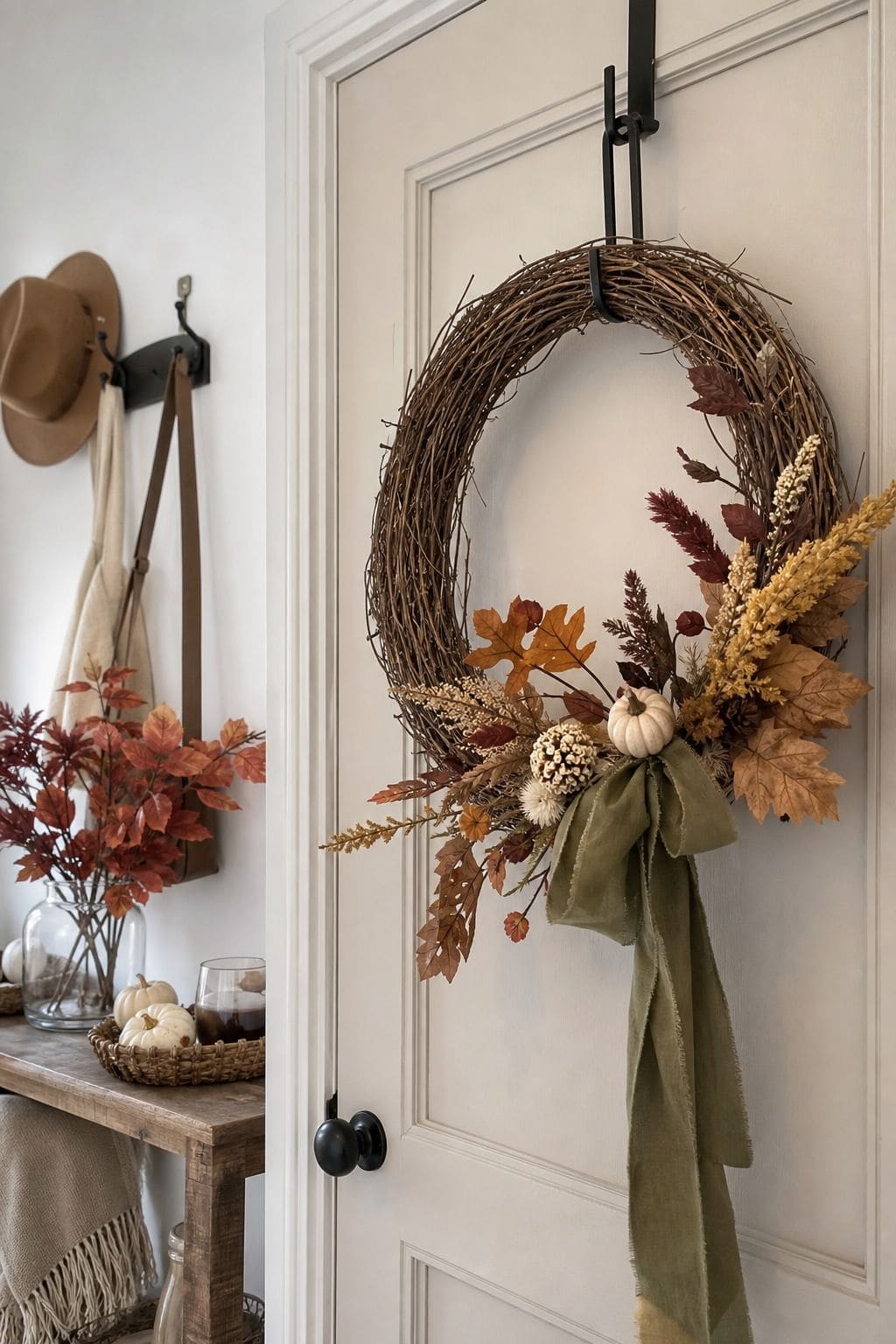


Start with a simple grapevine or dried eucalyptus wreath base. In October, add a few faux leaves or a small sign. As Thanksgiving nears, swap to white pumpkins, cotton stems, and wheat.
The wreath base stays; only the accents change. The re-dress takes 5 minutes.
This swap approach saves buying two complete wreaths.
5. Drape a Garland That Works for Both
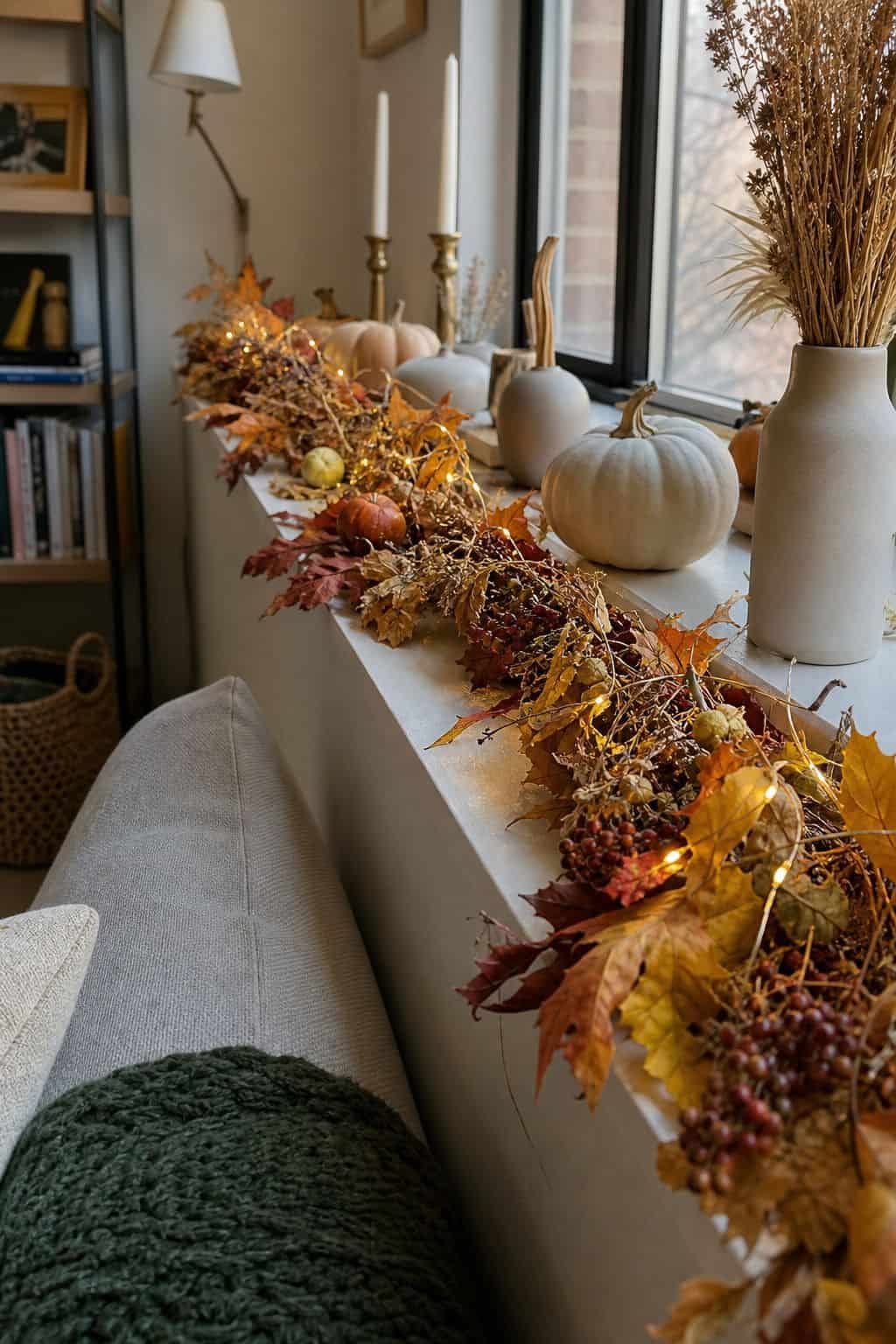


A faux eucalyptus or mixed-green garland on the mantle or staircase works from October through Thanksgiving. The neutral green is not season-specific.
In October, tuck in a few small pumpkins. In November, add dried wheat and deepen with dark florals.
One garland, layered differently for each phase.
Wire the garland in place rather than just draping it, so it holds the shape through a busy season.
6. Add a Door Element That Transitions
No products found.
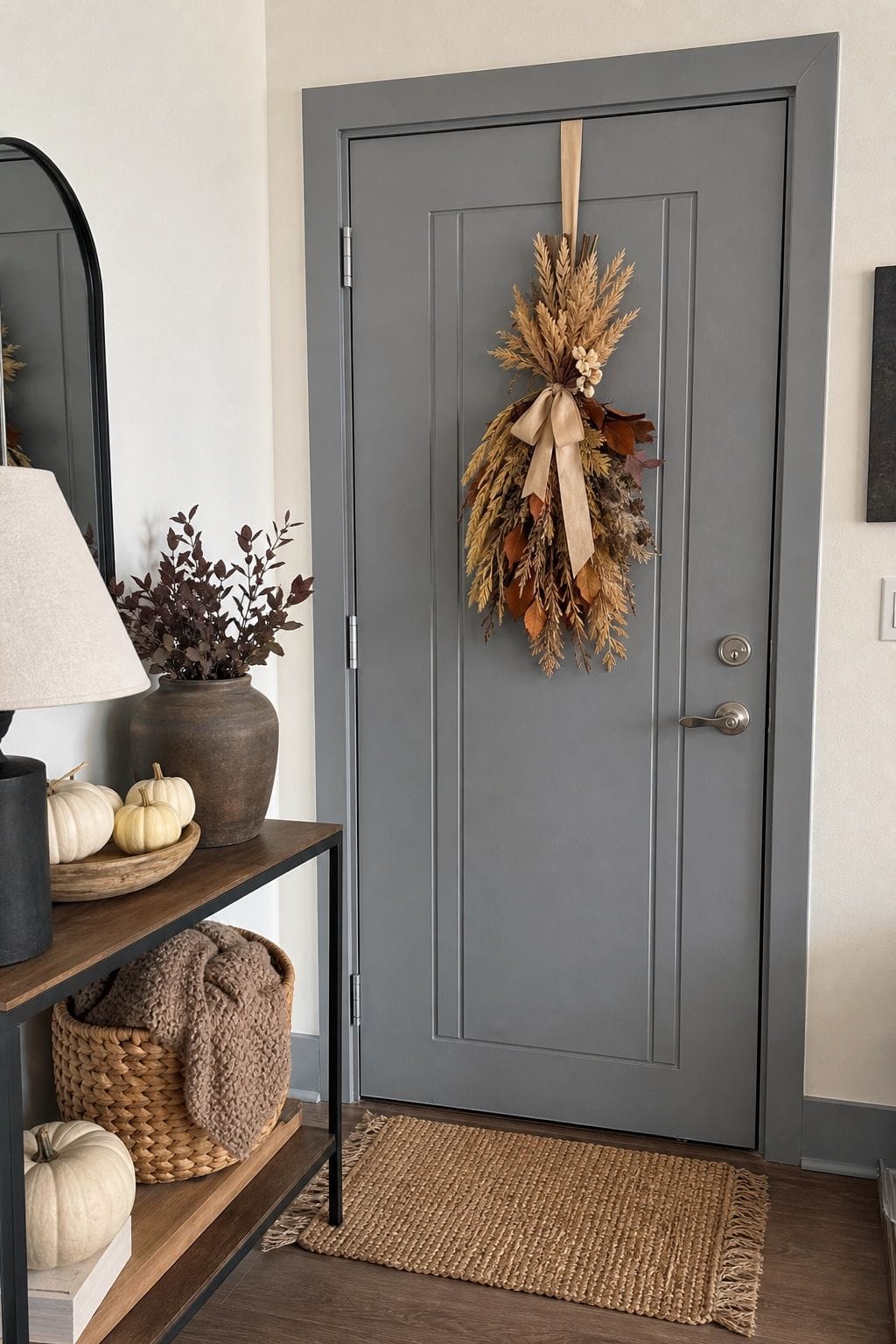
On the front door, start with a dried botanical wreath in October. For Thanksgiving, add a burgundy ribbon or swap in a few heirloom pumpkins at the base.
The transition keeps the entry feeling current rather than stuck in early fall.
Avoid anything explicitly Halloween or explicitly Thanksgiving so the door bridges cleanly.
The October-Specific Touches
7. Lean Into Lighter Dried Botanicals Early
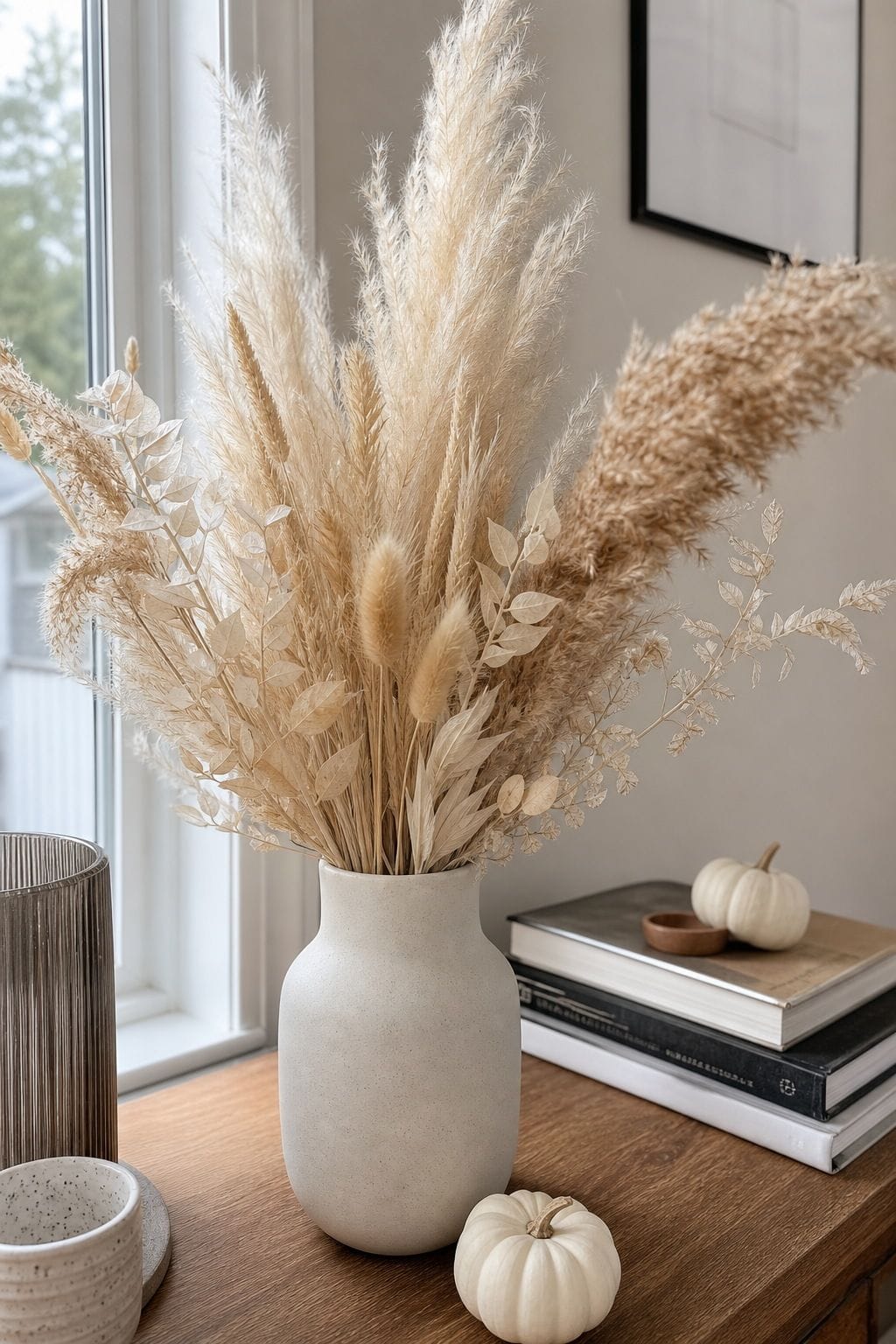


In early October, use lighter dried botanicals: pale pampas, cream wheat, dried bunny tails. The lighter tones suit the warmer early-autumn light.
Display them in vases around the living room, the mantle, and the entry.
As November arrives, you will swap or supplement these with deeper elements.
8. Add a Few Heirloom Pumpkins in Pale Tones
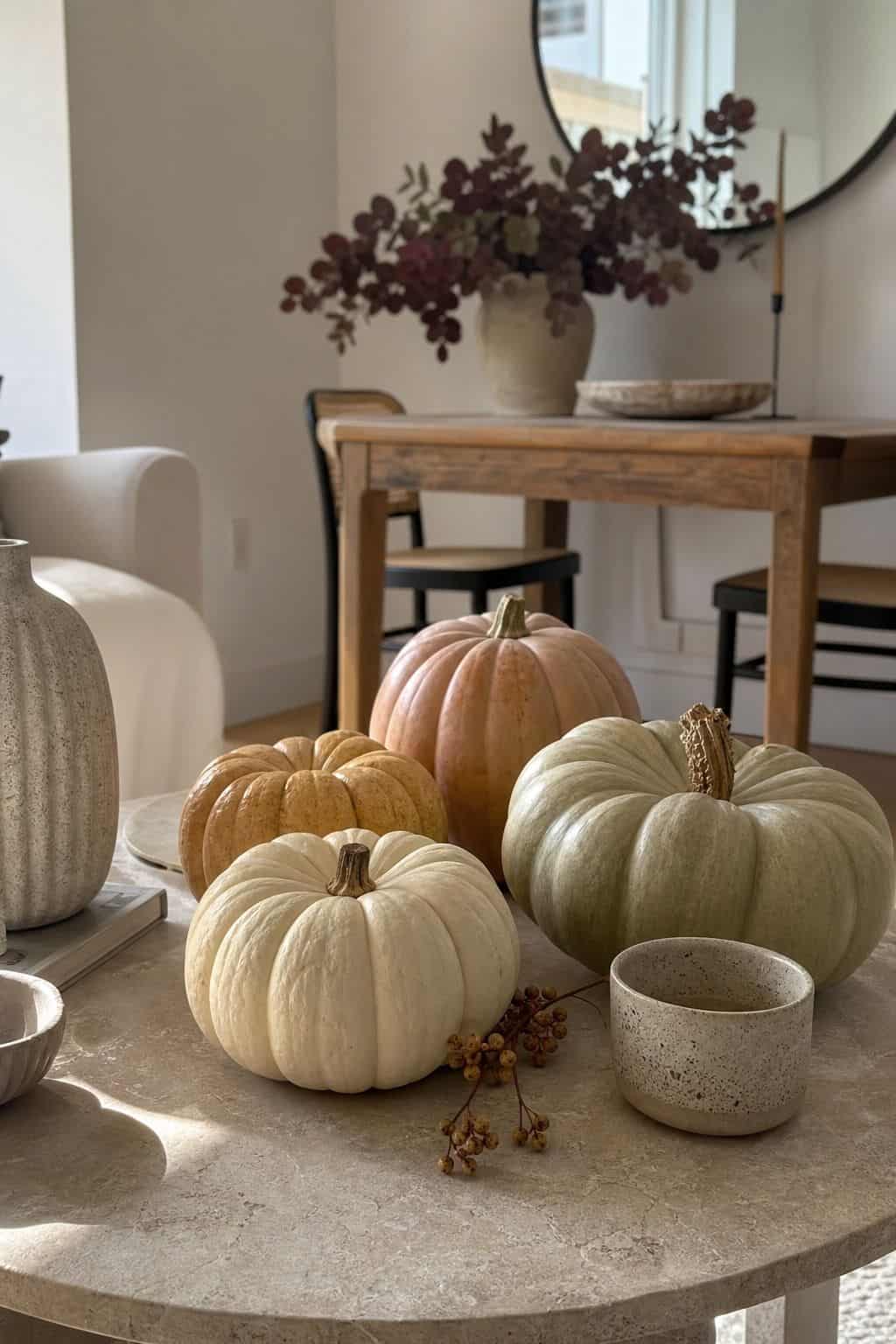


White, pale green, and pale peach heirloom pumpkins clustered on the coffee table, the mantle, and shelves. The pale tones read modern and early-fall.
Heirloom pumpkins last 6 to 8 weeks, so the ones you place in October carry into November.
Cluster in odd numbers and vary the sizes.
Bring heirloom pumpkins inside on freezing nights to stretch their life well into Thanksgiving week.
9. Use Warm Lamp Light Over Overhead Light
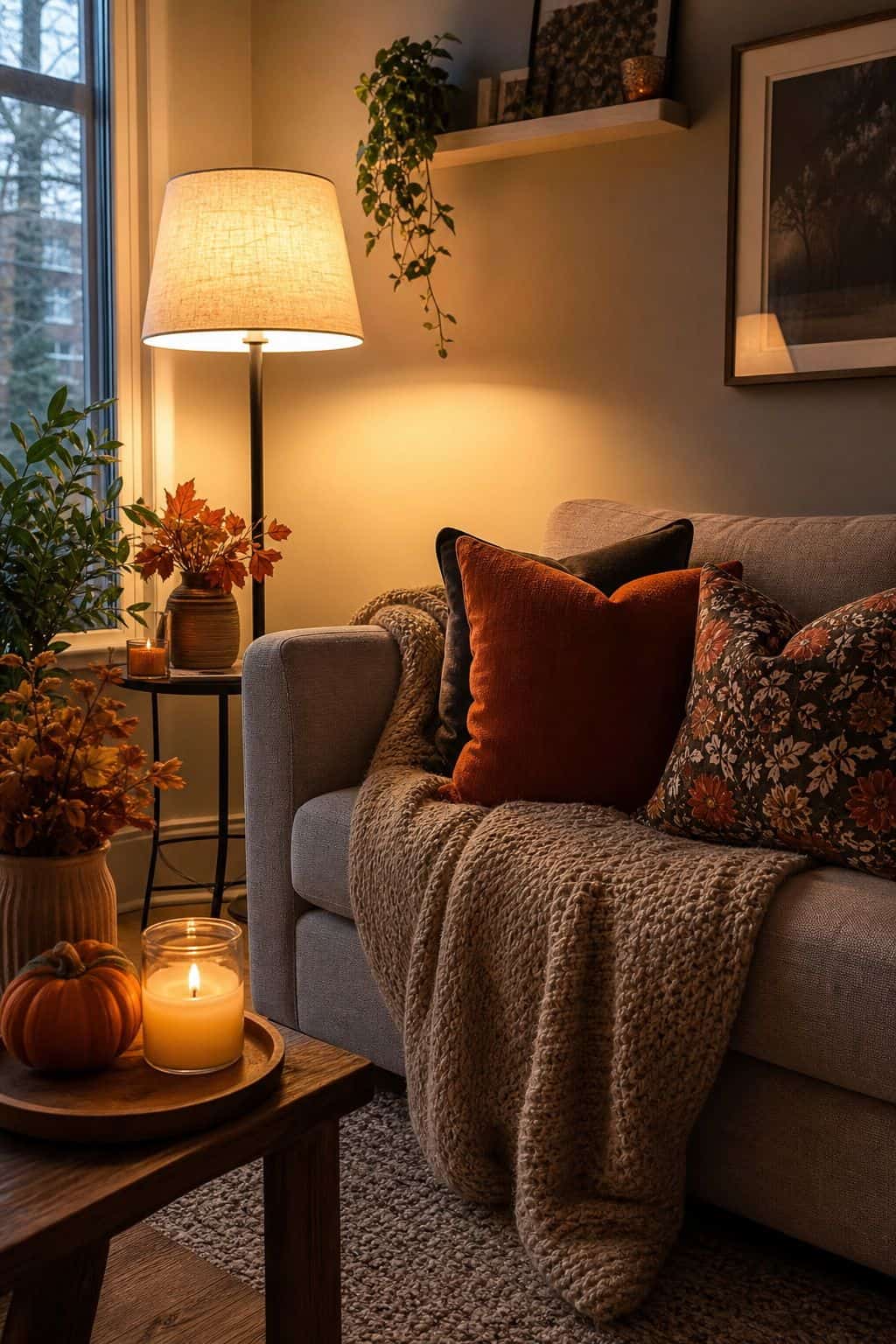


Shift from overhead lighting to layered lamp light as the days shorten. The warm pools of light read autumn and carry through both seasons.
Add a table lamp or two if the room is short on light sources.
The lighting shift is invisible during the day and dramatically warmer at night.
The November Additions for Thanksgiving
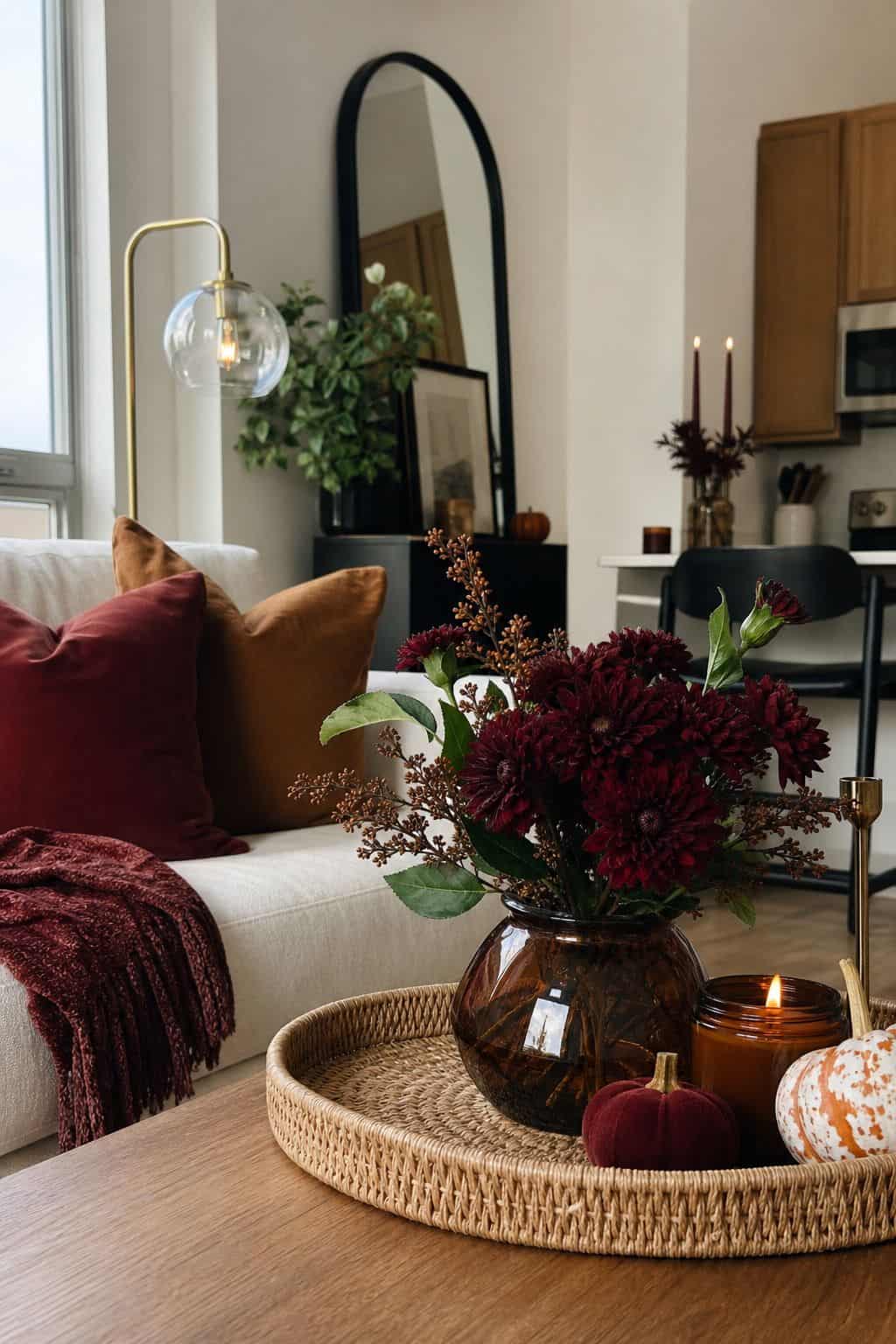
10. Deepen the Palette With Burgundy and Rust
No products found.
As Thanksgiving approaches, add deeper accents: a burgundy velvet pillow, rust-toned candles, dark florals. The deepening signals the shift toward the holiday.
You are not replacing the neutral base, just adding richer layers on top.
The deepened palette reads more formal and more festive for the Thanksgiving table.
11. Add Place Settings and Table Styling
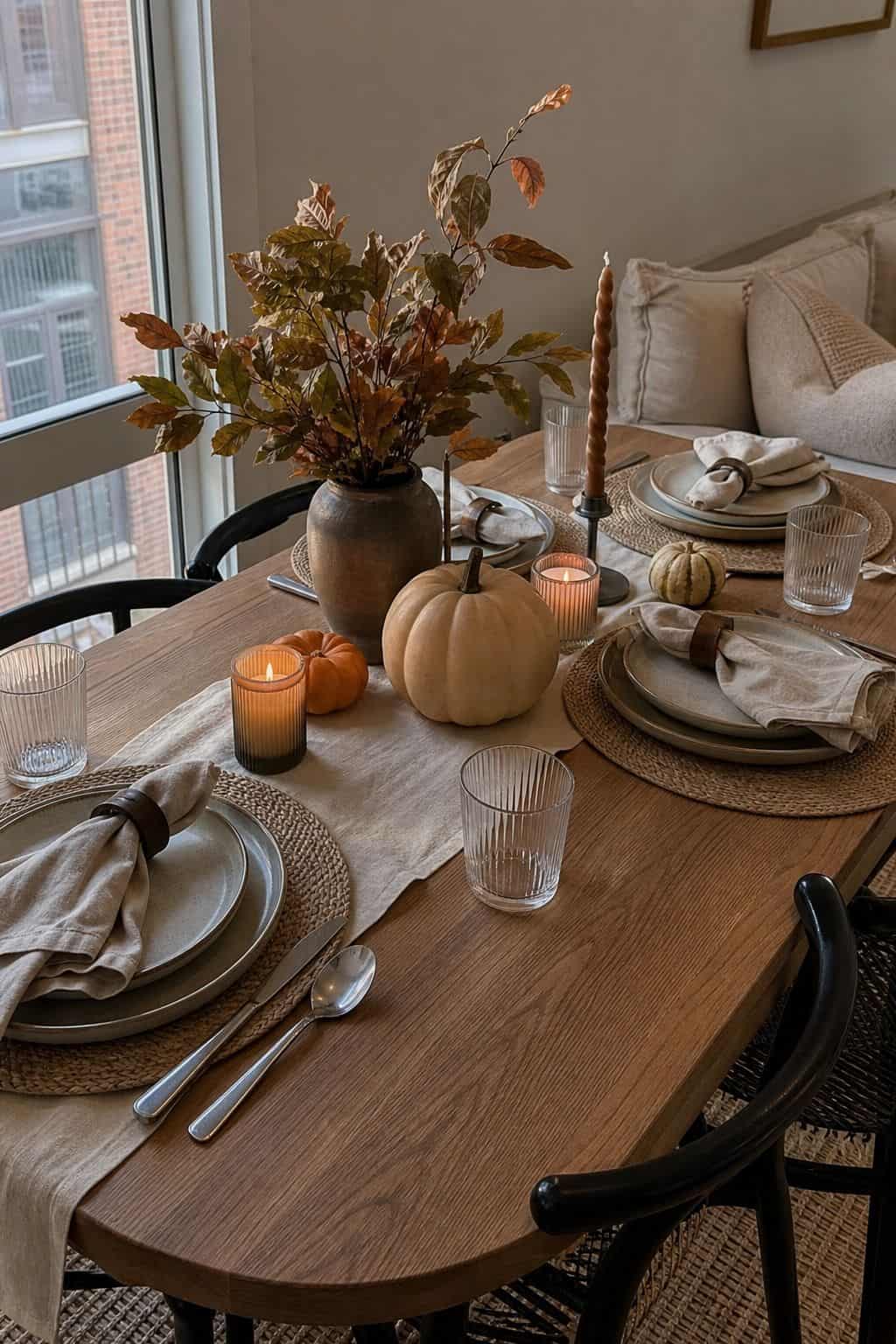


In November, the dining table gets the full treatment: chargers, cloth napkins, place cards, a low centerpiece. October left the table simple; Thanksgiving formalizes it.
Build the centerpiece on the same neutral runner you set in October.
The place settings are the clearest signal the home has shifted into Thanksgiving mode.
Iron the cloth napkins the night before. Wrinkled napkins undercut an otherwise formal table.
12. Bring In Wheat, Cranberries, and Fall Fruit
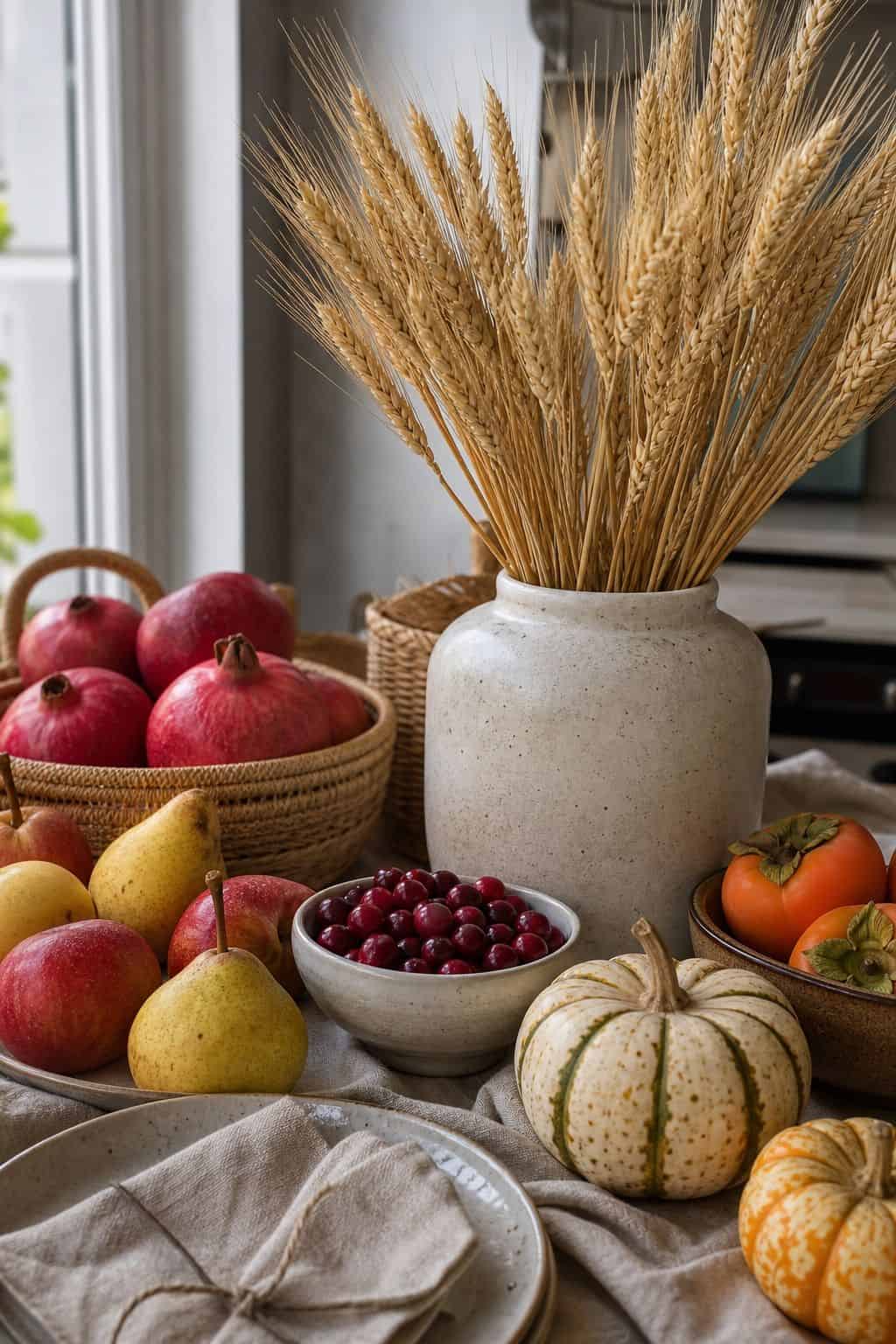


Dried wheat bundles, bowls of fresh cranberries, and clusters of pears and pomegranates added in November. The harvest elements read distinctly Thanksgiving.
Tuck them into the existing garland and centerpiece rather than building a whole new arrangement.
The fall fruit also doubles as a fresh, edible element on the table.
13. Add a Gratitude or Gather Element
No products found.
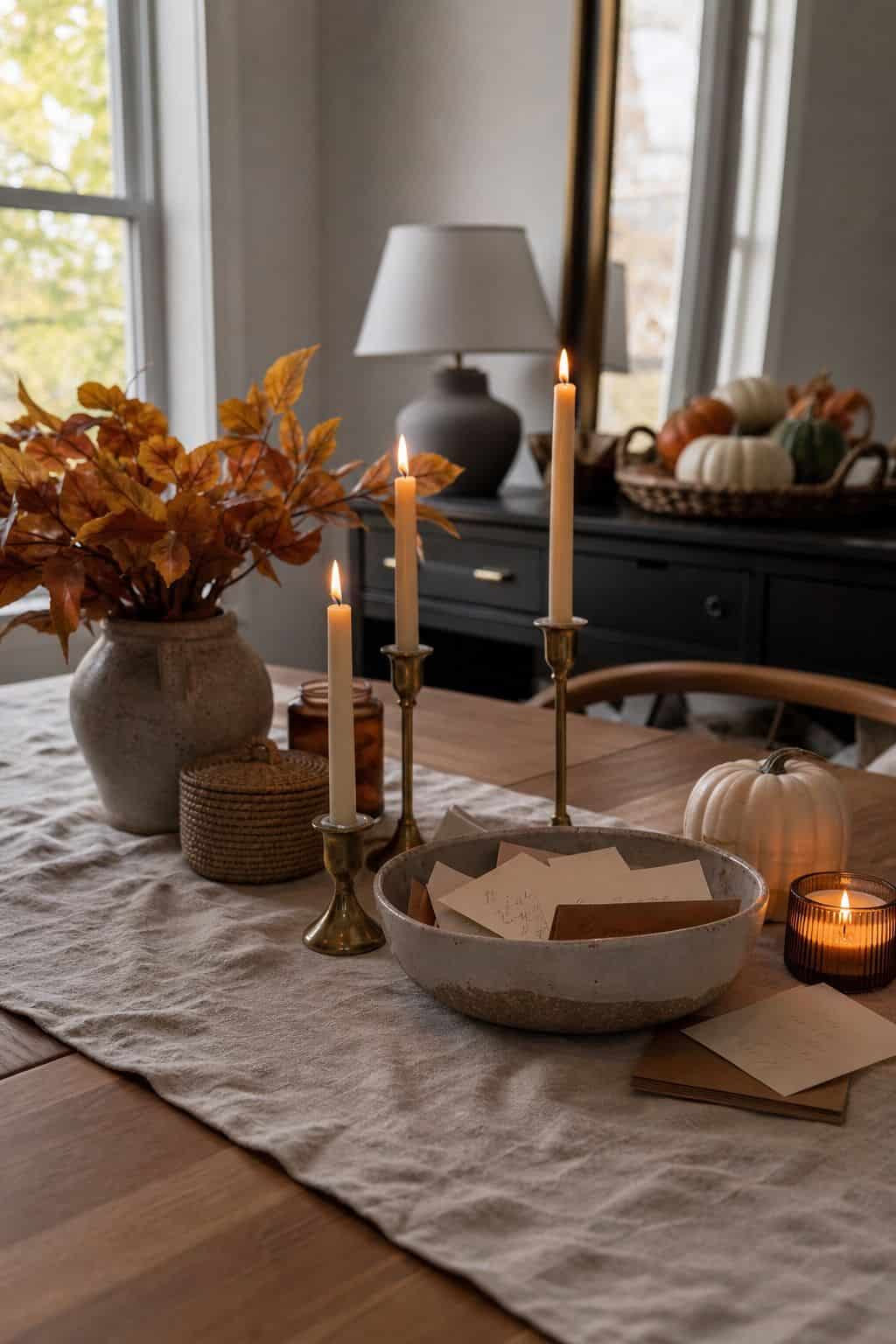
A small Gather or grateful sign, a gratitude tree branch where guests tie notes, or hand-lettered place cards. The personal touch is the Thanksgiving-specific layer.
Keep it subtle. One small gratitude element, not a craft-store explosion of themed signs.
This is the layer that gives the November home its emotional warmth.
Lighting, Scent, and the Final Transition
14. Layer Candlelight as Days Get Shorter
No products found.
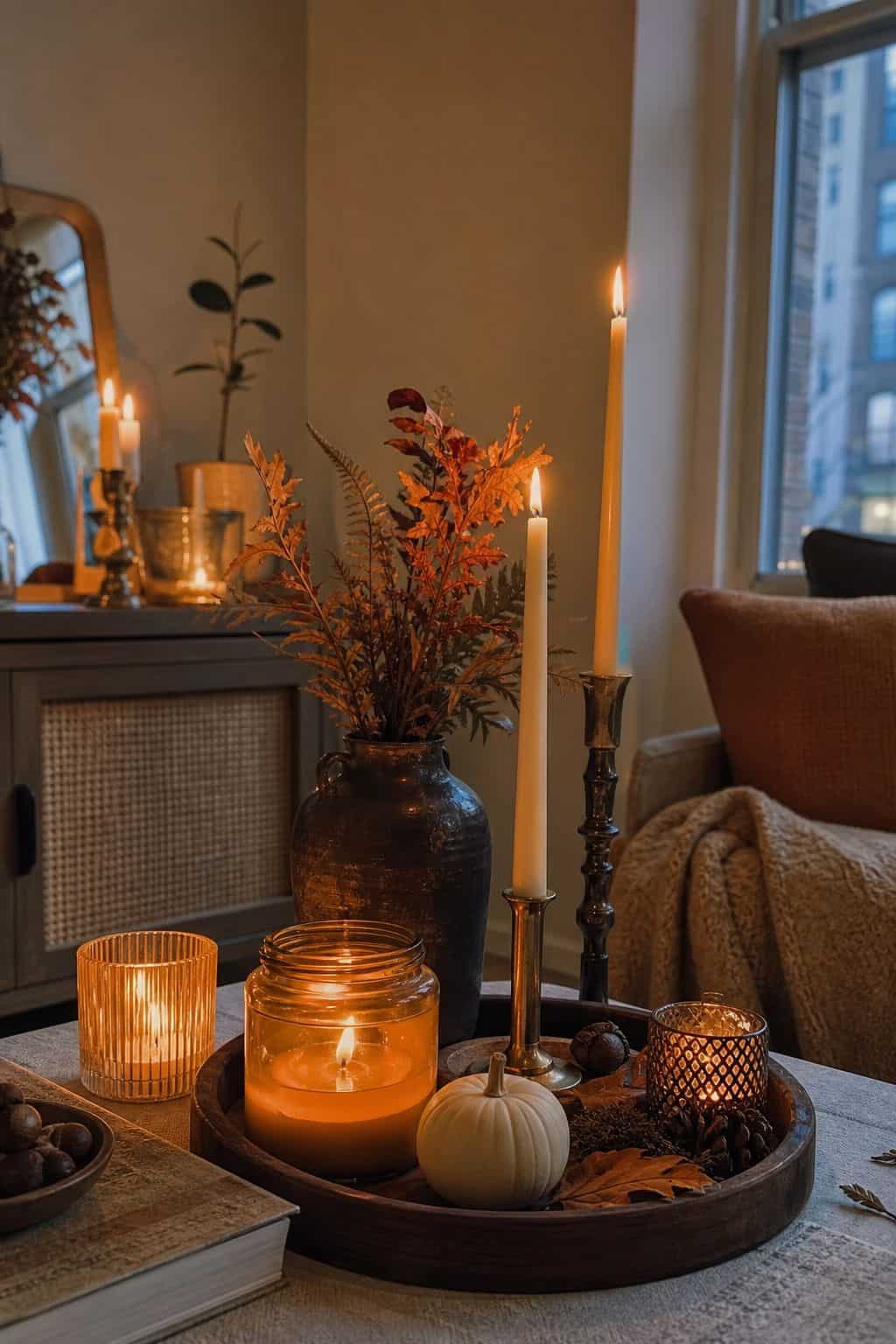
By November, daylight ends by 5 pm. Add more candles: tapers on the table, pillars on the mantle, votives scattered through the living room.
The increased candlelight is what makes the November home feel cozy through the dark afternoons.
Light them in the late afternoon, not just for dinner.
Light candles twenty minutes before guests arrive so the wicks are already burned in.
15. Refresh Anything That Has Aged
No products found.
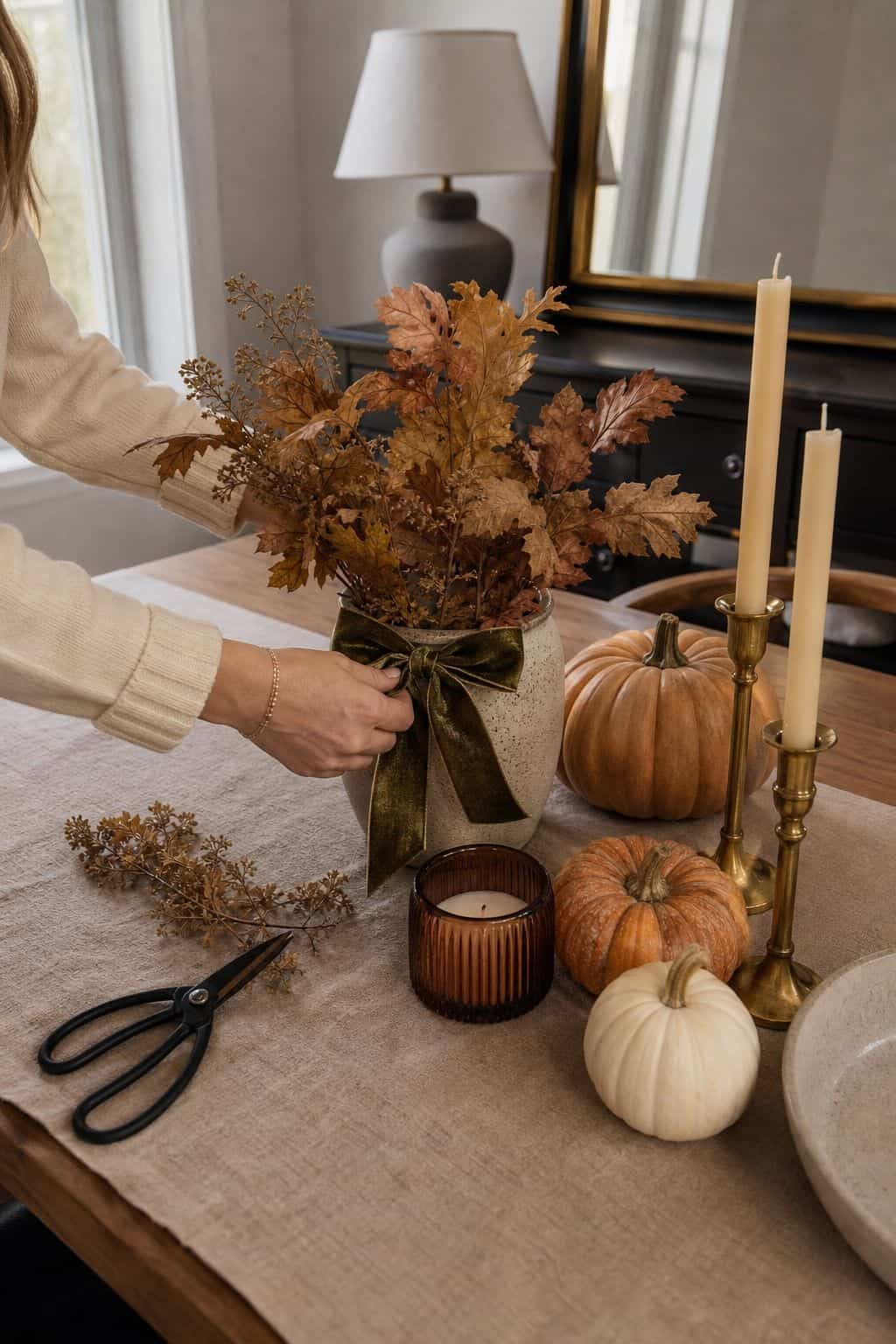
By mid-November, replace ragged mums, browned wreaths, and dried-out botanicals. Fresh elements keep the home from reading stale.
The refresh takes about 30 minutes and carries the home cleanly through Thanksgiving.
This is the single most-skipped step in transitional decorating.
16. Plan the Transition Into Christmas
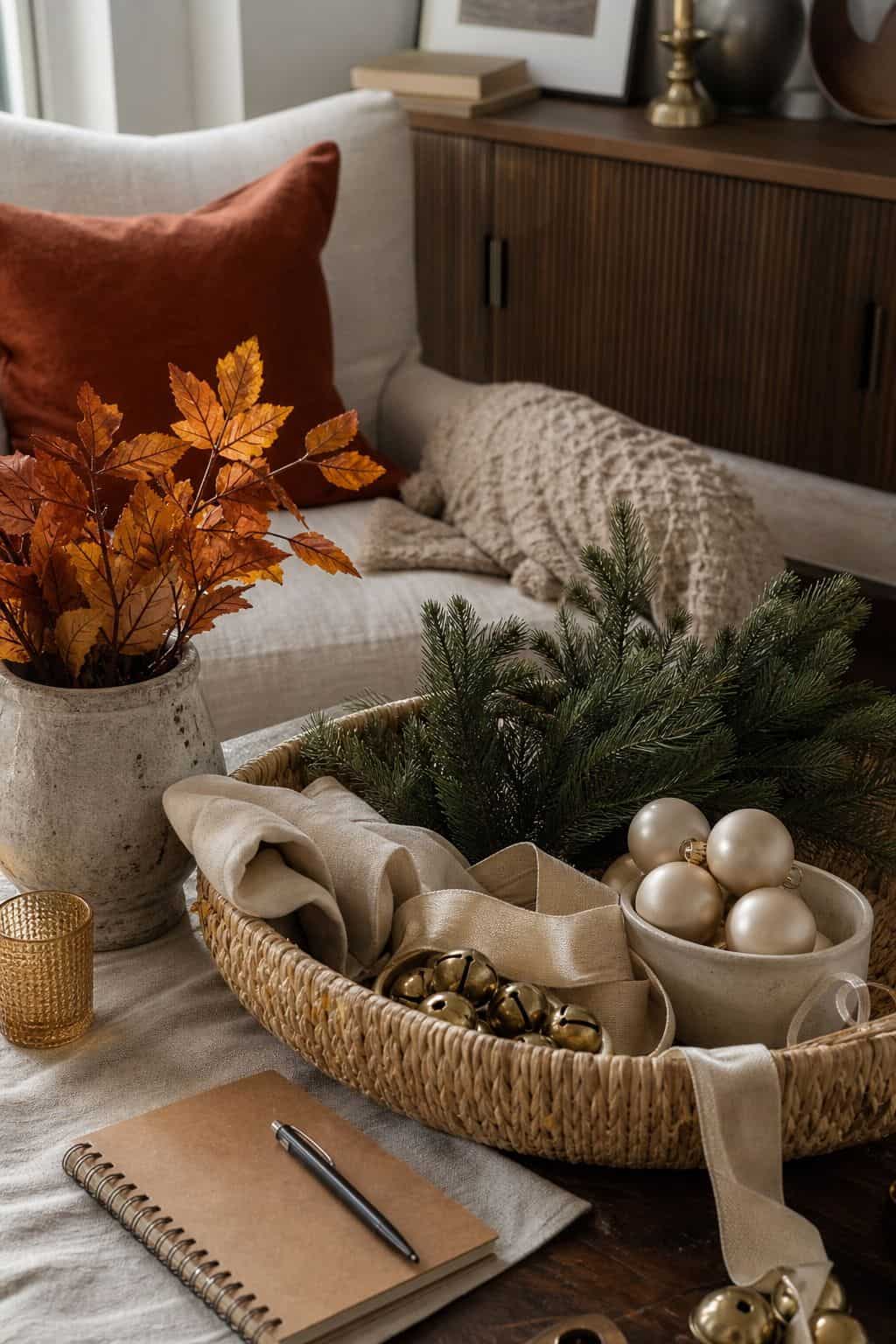


Choose pieces that bridge into December. The neutral runner stays. The candles stay. The garland base stays. Only the pumpkins and wheat come down after Thanksgiving.
Gold, copper, and cream accents work for both Thanksgiving and Christmas, easing the next transition.
Thinking one season ahead keeps the home from ever feeling abruptly redecorated.
Take a photo of the finished October version so you have a reference when you rebuild next year.
17. Keep One Cohesive Palette Throughout
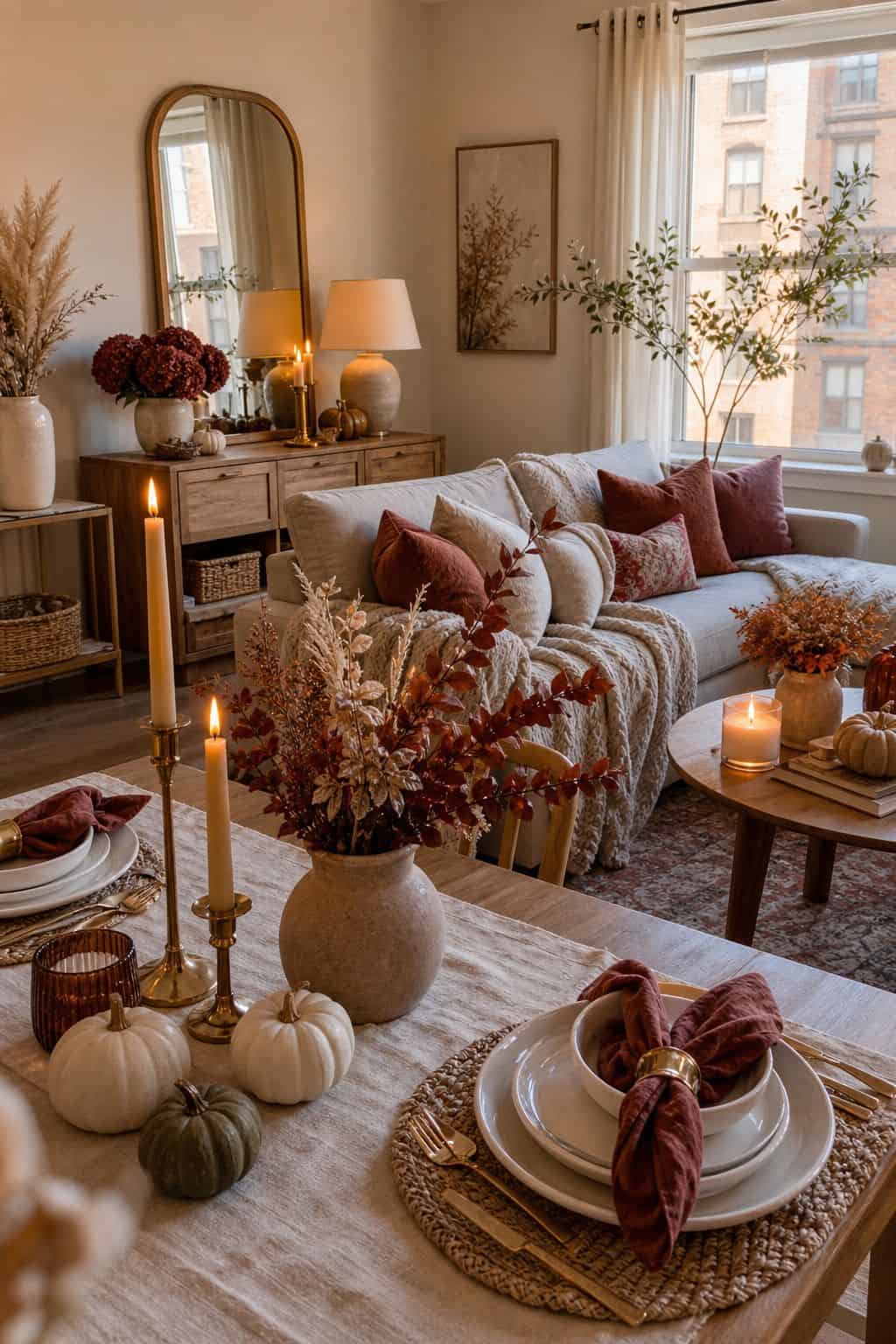


The whole transition works because the palette stays disciplined: warm neutrals as the base, with the accent colors deepening from pale to rich as the season progresses.
Cream, oat, rust, burgundy, and copper carry from October through Thanksgiving and into December.
The same palette discipline carries our elegant fall decor approach.
Transitional Decorating Mistakes Worth Skipping
Skip the full October-to-November redecoration (the transition should be a swap, not a teardown), skip Halloween-specific accents that strand you on November 1, skip overly themed Thanksgiving signs, and skip palettes that lock you into one holiday. The home that transitions cleanly is built on a neutral base with accents that deepen gradually. Two complete redecorations a month is exhausting and unnecessary when one good base does the work.
Why the Neutral Base Saves You Time and Money
A neutral autumn base, the linen runner, the earth-tone textiles, the bridging candle scent, the simple garland, costs less than two separate seasonal sets and takes a fraction of the time to maintain. You buy the base once, then add a small handful of swap pieces. The October version and the Thanksgiving version share 80 percent of the same decor. The transition is genuinely a 20-minute job, not a weekend project, and that ease is what keeps the home looking intentional all autumn.
Want the transitional approach for every room and season?
The Aesthetic Apartment Makeover Guide is a complete small-space seasonal styling reference.
Frequently Asked Questions
How do I transition my home from fall to Thanksgiving decor?
Build a neutral autumn base in October (linen runner, earth-tone textiles, simple garland, white pumpkins). As Thanksgiving approaches, deepen the palette with burgundy and rust, add place settings, and bring in wheat and fall fruit. The transition is a 20-minute swap, not a redecoration.
What decor works for both fall and Thanksgiving?
Neutral linen runners, eucalyptus garlands, white and pale heirloom pumpkins, dried wheat, warm earth-tone textiles, and candles in bridging scents like cedarwood or spiced vanilla. These carry from October through November without any swap.
What should I add specifically for Thanksgiving?
Place settings (chargers, cloth napkins, place cards), a deeper palette with burgundy and rust accents, fresh cranberries and fall fruit, dried wheat bundles, and one small gratitude element like a Gather sign or place cards.
How do I avoid my home looking half-decorated in the in-between season?
Build a complete neutral autumn base in early October so the home always looks intentional. The base carries the in-between weeks. You then add Thanksgiving-specific layers in November rather than leaving the home half-styled.
What candle scents bridge fall and Thanksgiving?
Cedarwood, spiced vanilla, chai, sandalwood, and amber all work for the full autumn stretch. Skip scents locked to one specific holiday. Pick one and use it across the home for a cohesive feel.
How early should I start fall decorating?
Early to mid-October for the neutral base. Add the Thanksgiving-specific layers (place settings, deeper accents, harvest elements) in early November. The base carries the four-week in-between stretch cleanly.
Key Takeaways
- Build a neutral autumn base in October that carries through Thanksgiving without a teardown
- Use swap-friendly wreaths and garlands you can re-dress as the season deepens
- October leans pale (white pumpkins, light botanicals); November deepens (burgundy, rust, wheat)
- Add place settings, fall fruit, and one gratitude element as the Thanksgiving-specific layer
- Keep one cohesive palette and choose pieces that bridge into Christmas too
Wrapping Up
A home that transitions from fall to Thanksgiving cleanly is built on a neutral base and a handful of swap pieces, not two separate redecorations. Set the linen runner, the earth-tone textiles, and the simple garland in October. Deepen the palette and add place settings as November arrives. The home that always looks intentional through the long autumn stretch is the one styled to evolve, not the one stripped and rebuilt every few weeks.
Last update on 2026-09-07 / Affiliate links / Images from Amazon Product Advertising API
