
Quick Answer: The graduation poses that photograph best are the ones that feel natural – walking forward, looking off into the distance, seated on steps with the cap in hand, mid-laugh with family, or a candid cap toss. Static, straight-on poses work too when the light is good, but the photos people actually hang on their walls tend to come from movement and genuine emotion rather than held positions. Plan a mix of both for the most versatile set of photos.
Graduation poses make all the difference between photos that feel like a DMV appointment and ones that actually capture the energy of finishing something significant. Most people walk into a graduation shoot with no plan for posing, stand awkwardly in front of the camera, and end up with technically fine photos that feel empty. A little preparation goes a long way.
The good news is that great graduation poses aren’t complicated – they’re mostly about being intentional with body position, knowing where to look, and creating the conditions for candid moments to happen naturally. Whether you’re working with a professional photographer or a friend with a good camera, having a mental list of poses you want to try gives you a structure to work within while leaving room for the spontaneous moments that produce the best shots.
Planning a graduation celebration too? The Aesthetic Apartment Makeover Guide has room-by-room styling ideas and party setup tips for creating a beautiful space for any milestone celebration.
Recommended Products


Read this also:
- Graduation Shoot Ideas
- Graduation Backdrop Ideas
- Graduation Outfit Ideas
- Graduation Party Theme Ideas
Standing Poses That Flatter Every Body
1. The Angled Stance With Weight Shifted to One Leg
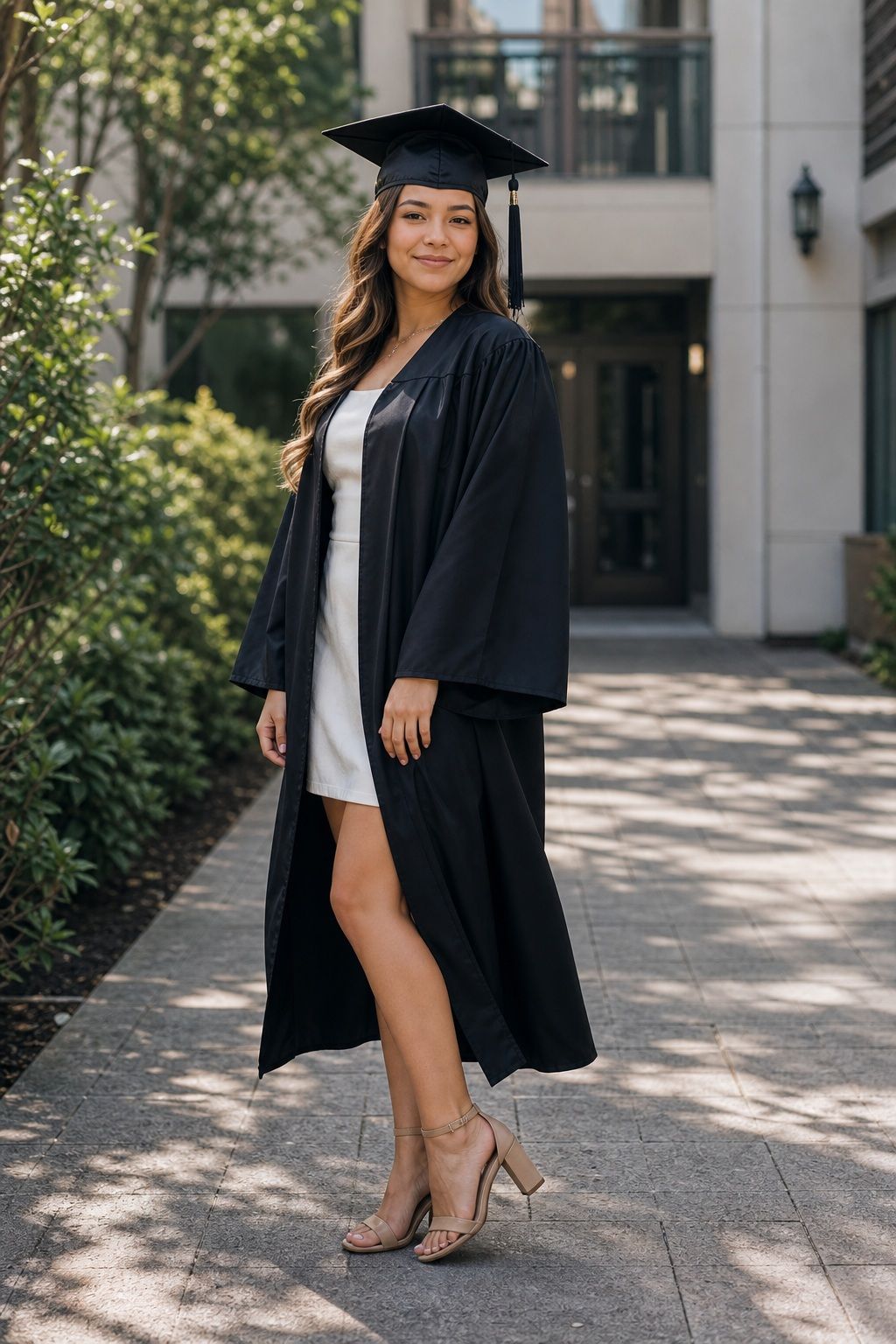


Standing directly facing the camera is the fastest way to look stiff and wide. Professional portrait photographers almost always position subjects at a 45-degree angle to the camera with one foot slightly in front of the other. Shift your weight onto your back leg, let the front knee bend slightly, and your posture immediately becomes more relaxed and your silhouette more interesting. This angle works for every body type because it creates natural dimension and avoids the flat, two-dimensional look that straight-on poses produce. Pair this with shoulders back and chin slightly forward to prevent the dreaded jawline shadow.
Read more: Top 18 Graduation Party Decor Ideas That Make Your Event Unforgettable
2. Confident Hands-on-Hips With Elbows Out
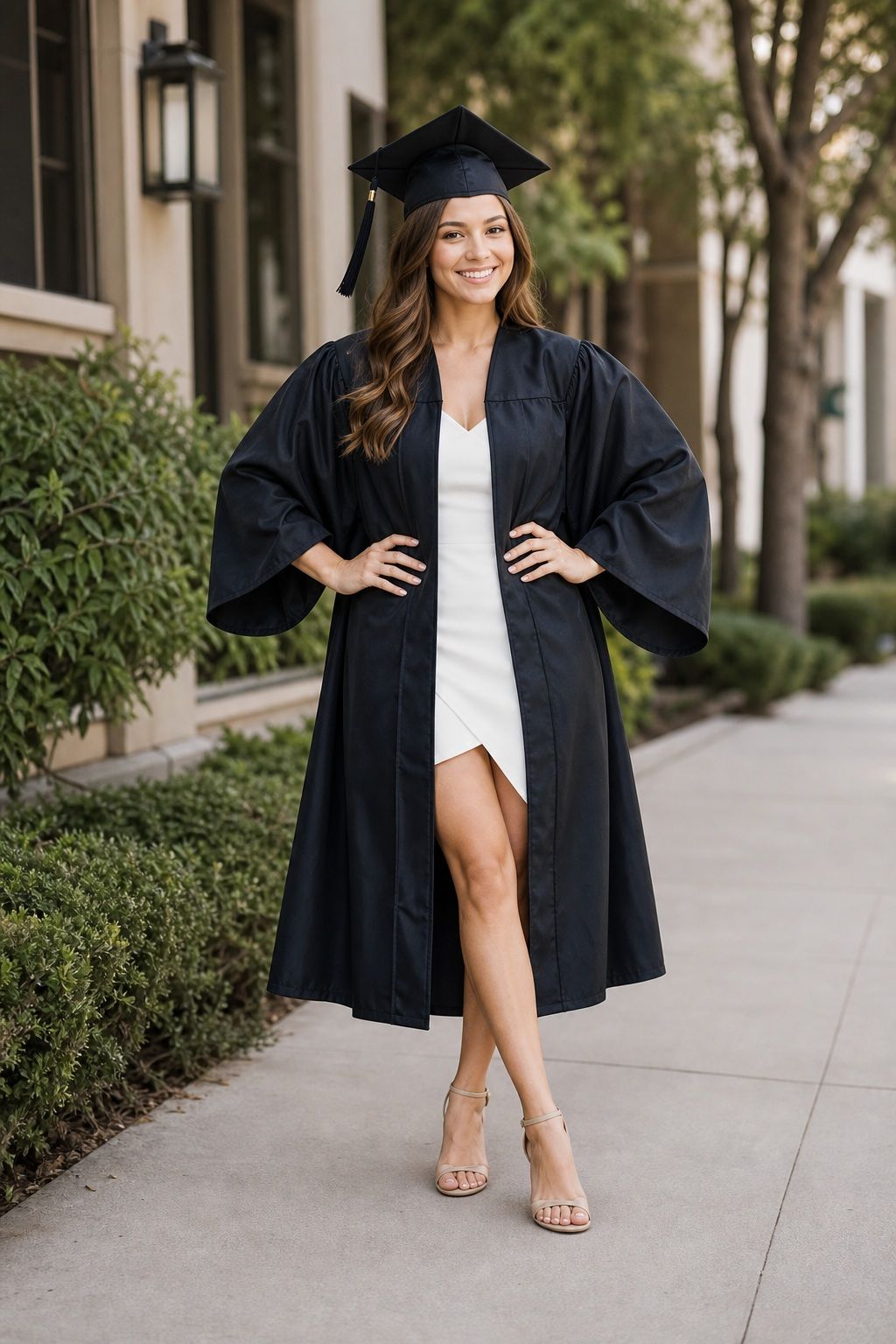


The hands-on-hips pose reads as confident and assertive in a way that arms hanging at your sides never can. Place both hands on your hips with your elbows pointed slightly outward to create space between your arms and your body. This prevents the arms from pressing against your torso, which can make them look larger than they are. Keep the pose from feeling aggressive by softening your expression, tilting your head slightly, and letting your weight rest on one hip rather than distributing it evenly. This is one of the most universally flattering standing poses for graduation portraits.
3. One Hand Adjusting the Cap for a Natural Candid Look
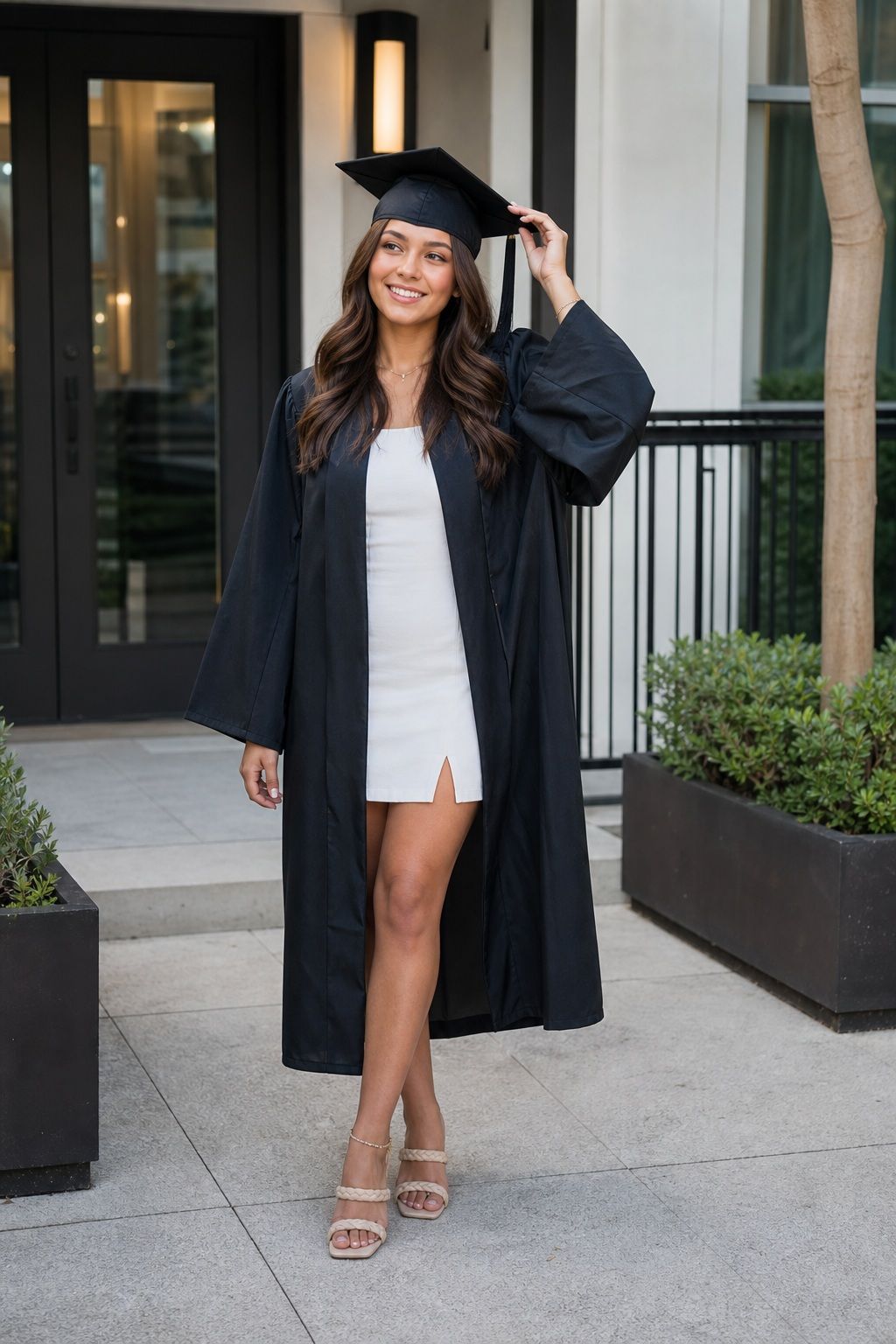


Giving your hands something to do instantly reduces self-consciousness and creates images that feel candid rather than posed. Reaching up to adjust your cap with one hand, tilting it slightly, or holding the tassel between your fingers all give you a natural focal point that releases tension from your arms and shoulders. Photographers from Candid Studios specifically recommend this pose because it captures an authentic moment of the graduation experience itself, rather than just the formal portrait. The slight upward reach also elongates the torso and draws the eye upward toward your face.
Read more: Top 18 Graduation Gift Ideas for the Class of 2026 They Will Actually
4. Gown Open, Walking Toward Camera
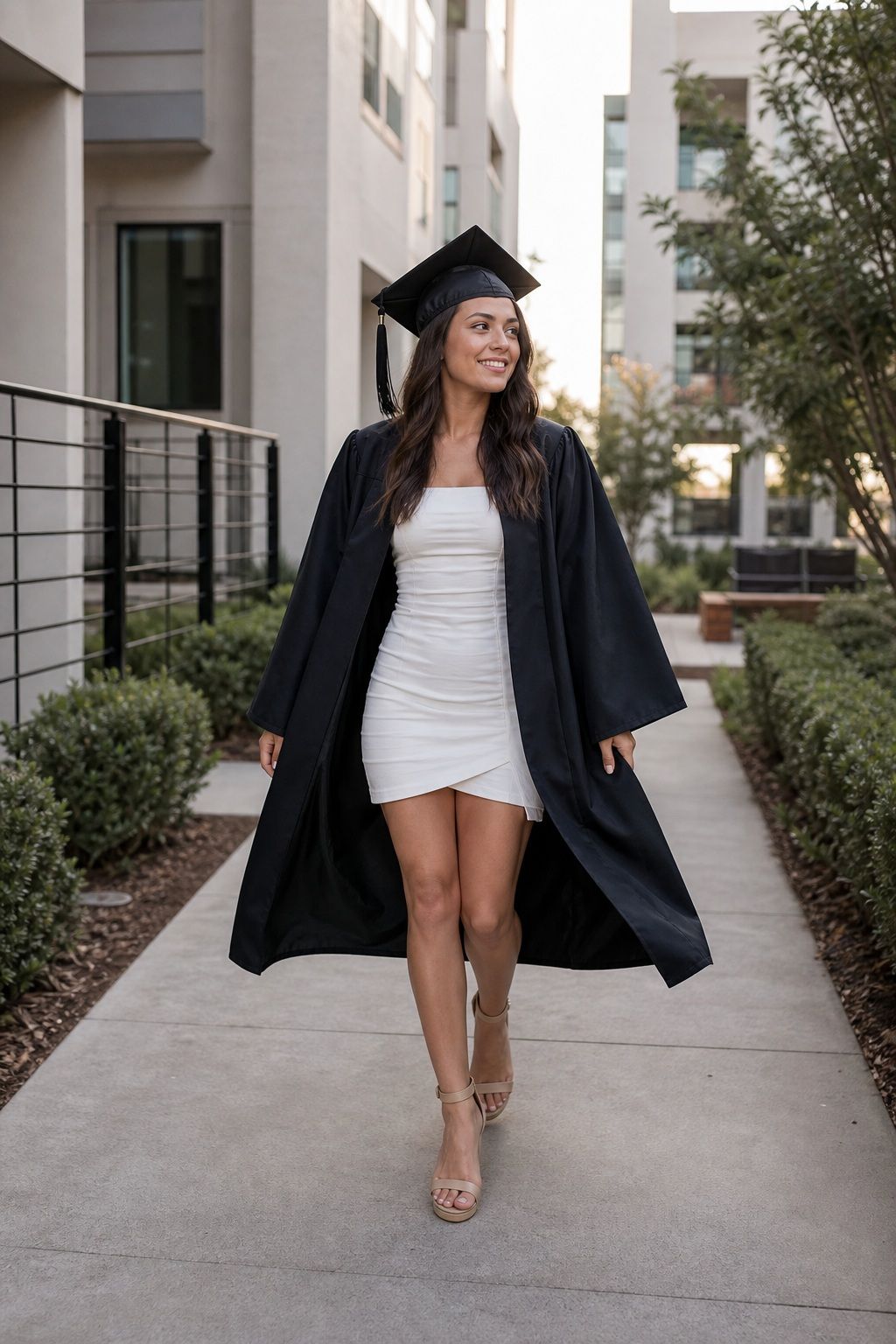


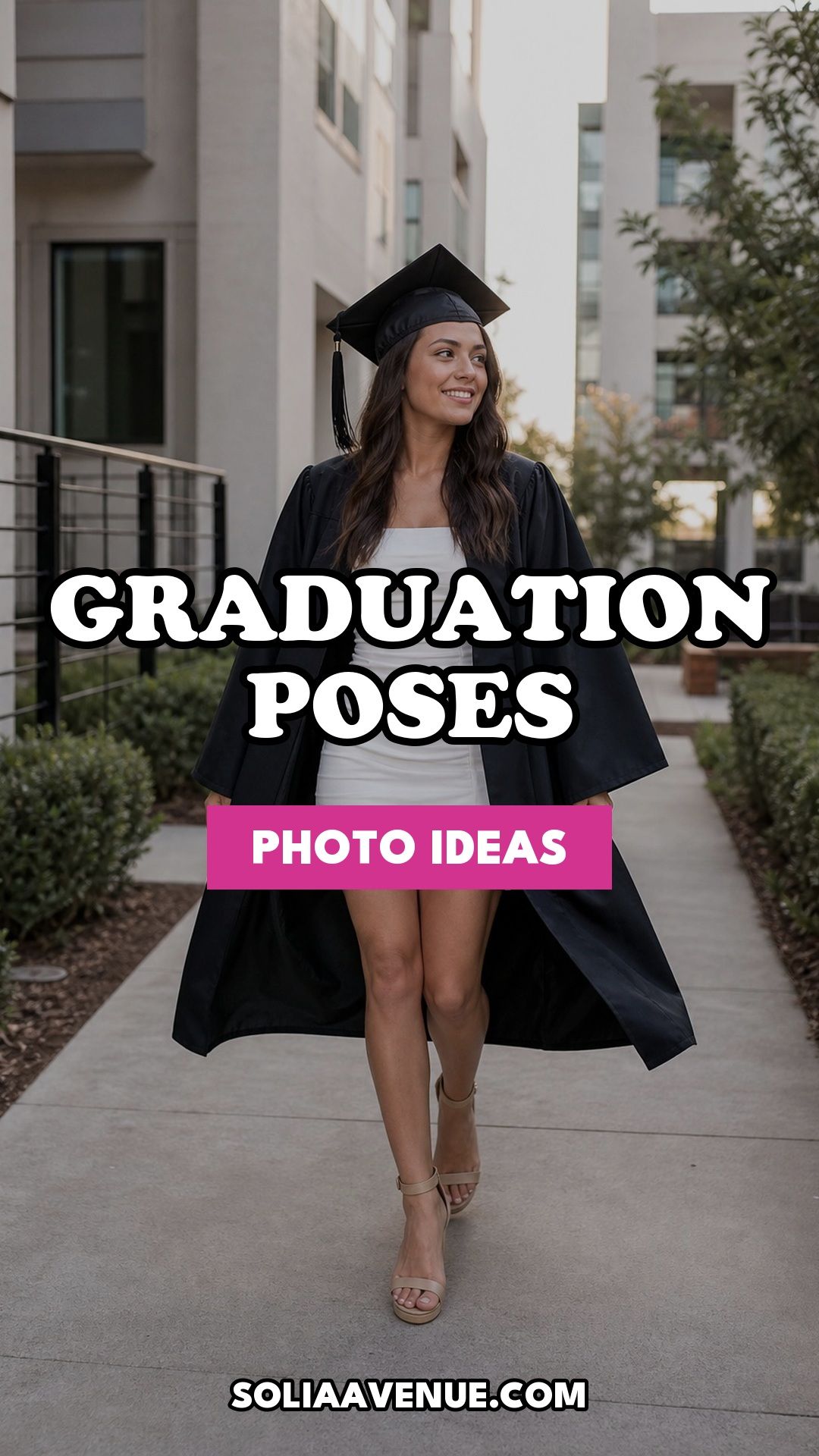
Holding your gown open on both sides as you walk toward the camera creates a framing effect that draws attention to your outfit underneath while still showcasing the academic regalia. This pose works especially well on a long path, hallway, or open walkway where the lines of the environment echo your forward momentum. Walk at a natural pace, keep your chin up, and look directly into the lens or slightly past it. The movement prevents the frozen quality that plagues many formal graduation portraits and gives the image a sense of occasion and purposeful direction.
Read more: Top 18 Graduation Invitation Ideas That Feel Personal Without the
5. Stole Draped Over One Shoulder With a Side Glance
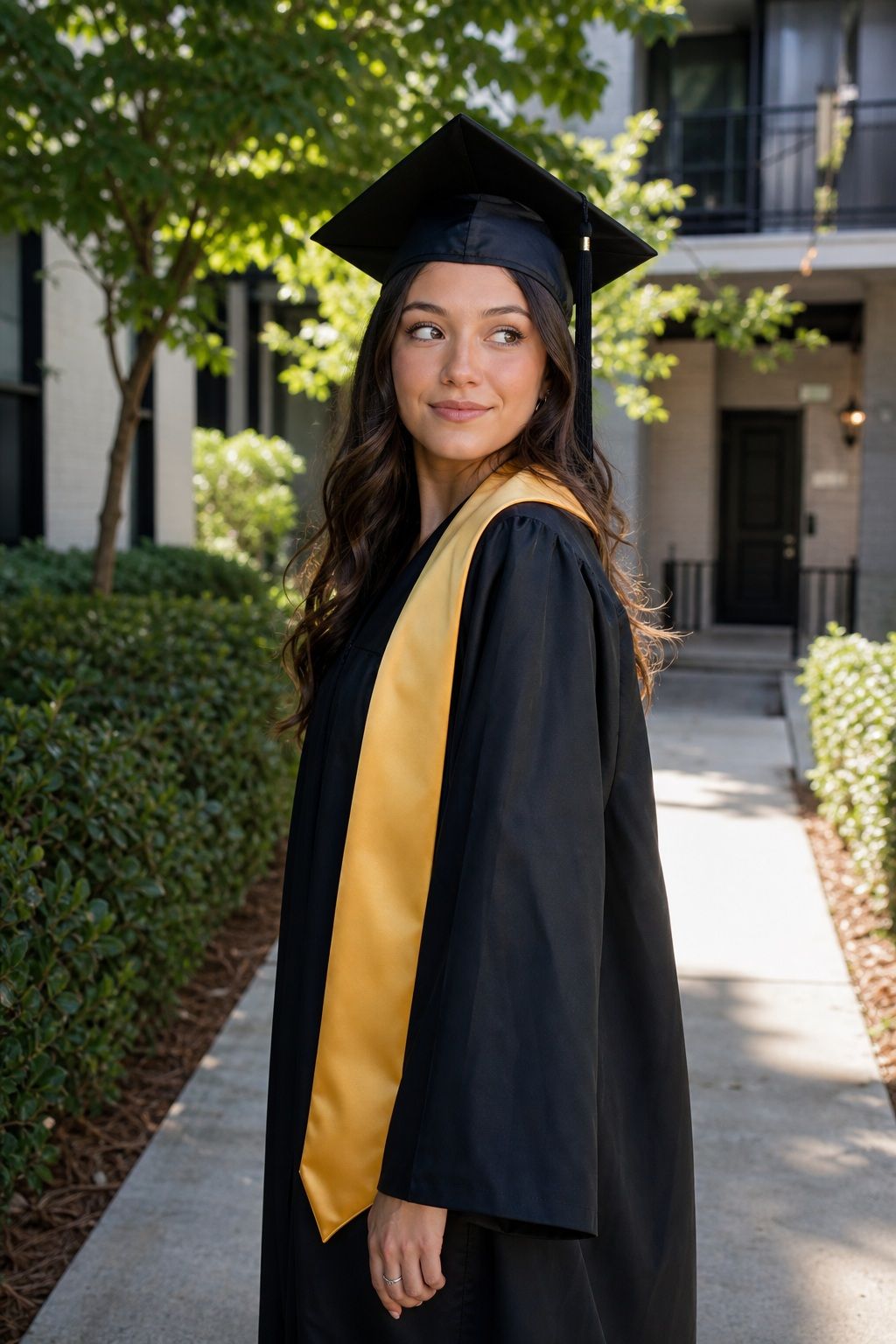

Draping your academic stole or honor cord over one shoulder and glancing back toward the camera creates one of the most flattering angles in portrait photography. The over-the-shoulder look elongates the neck, defines the jawline, and captures three-quarter profile angles that photograph more dynamically than a straight-on face shot. Let the stole hang naturally and look back with a relaxed expression, a slight smile, or a direct, intense gaze depending on the mood you want. This pose is particularly effective against a long path or staircase where the background creates leading lines toward the camera.
Read more: Top 17 Graduation Aesthetic Ideas for Simple Styling on Ceremony Day
Seated and Low-to-Ground Poses
6. Sit on a Staircase and Look Back Over Your Shoulder
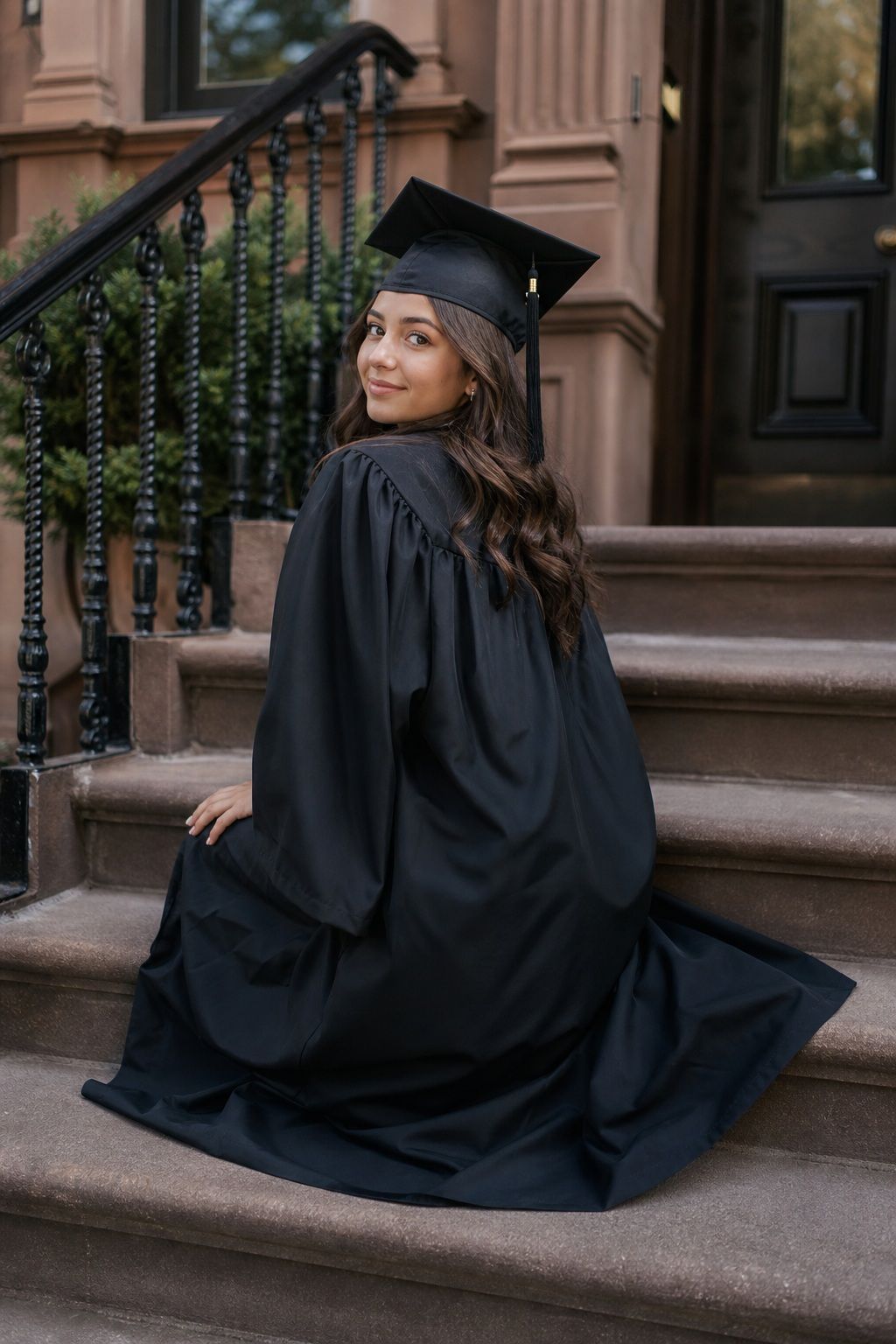


Staircases are among the most versatile props available on any campus because they offer built-in depth, geometric lines, and multiple height options for both subject and photographer. Sit sideways on a step, drape your arm casually over the bannister, and look back toward the camera over your shoulder. The slight turn creates a flattering angle through the upper body while the seated position relaxes your posture naturally. The staircase lines draw the viewer’s eye toward you from the background and give the composition structure without requiring elaborate staging.
7. Seated on Grass With Arms Resting on Knees
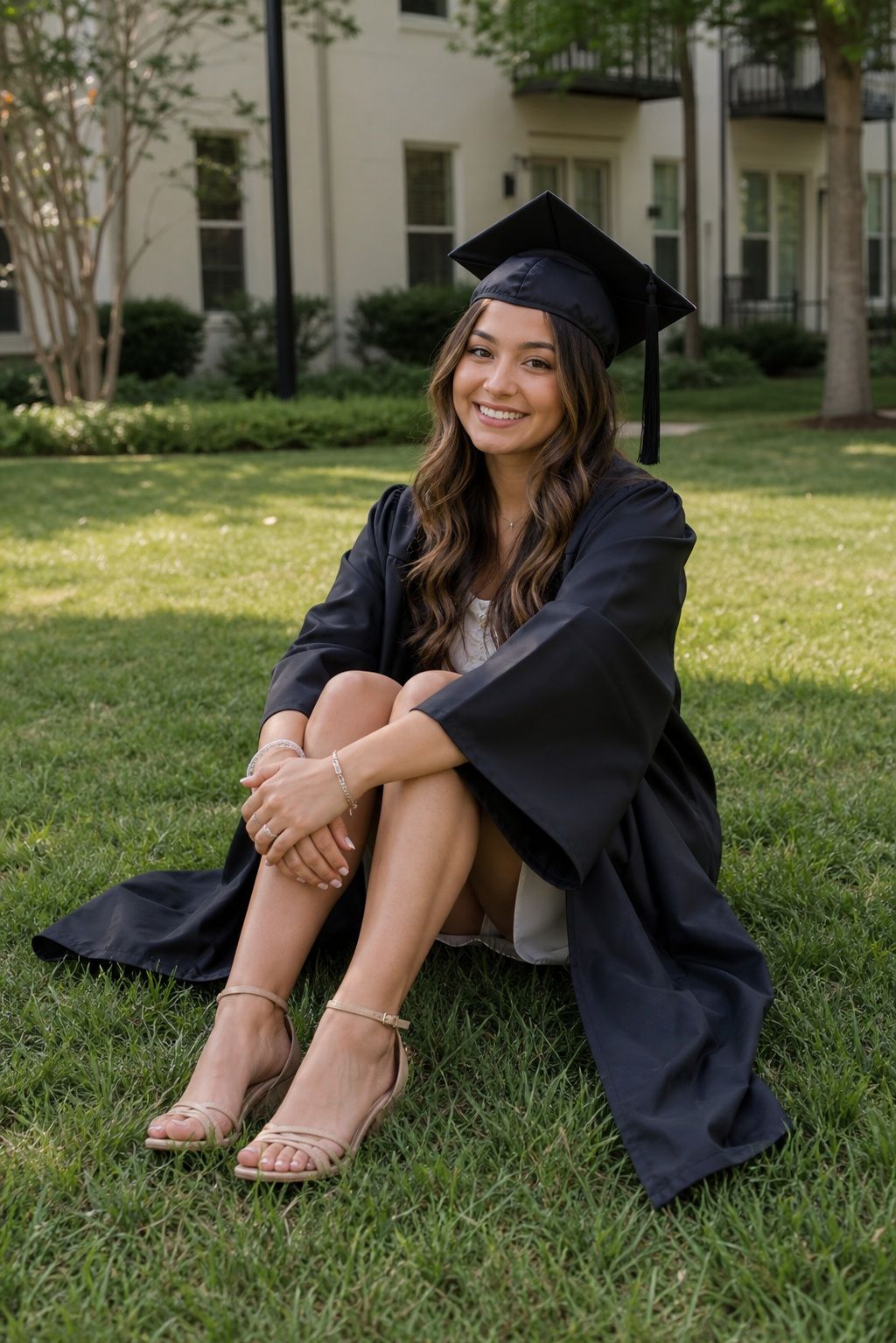


Sitting directly on the grass with your gown spread around you creates a relaxed, editorial quality that formal standing poses cannot replicate. Rest your elbows on your knees, lean slightly forward, and look toward the camera with a natural expression. This works particularly well in botanical gardens, open lawns, or wildflower meadows where the surrounding environment adds texture and color to the image. Bring a small blanket or sit on your gown’s extra fabric to avoid grass stains. The low camera angle shooting slightly upward will prevent this pose from looking compressed or awkward.
Read more: Top 16 Best White Graduation Dresses for Every Style and Ceremony
8. Lean Against a Wall or Pillar With Arms Crossed or at Sides
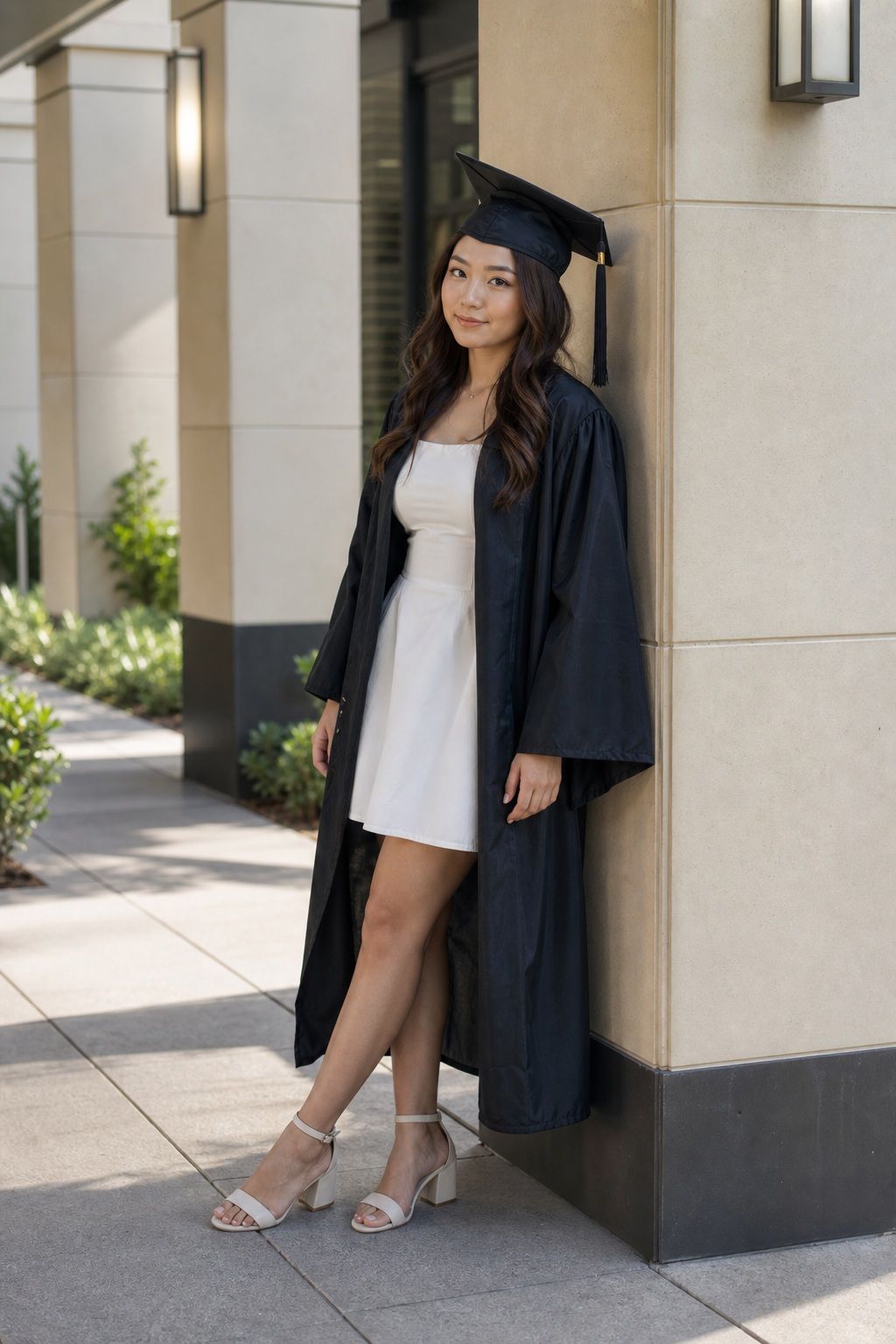


Leaning against an architectural element, whether a stone pillar, brick wall, or library column, creates a naturally relaxed posture because you have something to support your weight. Cross your arms loosely at chest height, or let one arm hang while the other hand rests in a pocket. Look directly into the lens for a confident, direct portrait, or glance off to one side for a more contemplative editorial look. The architectural element you lean against also becomes part of the story, connecting your portrait to the physical space of your academic experience.
Read more: Top 17 Creative Graduation Balloon Decorations to Lift Your Party
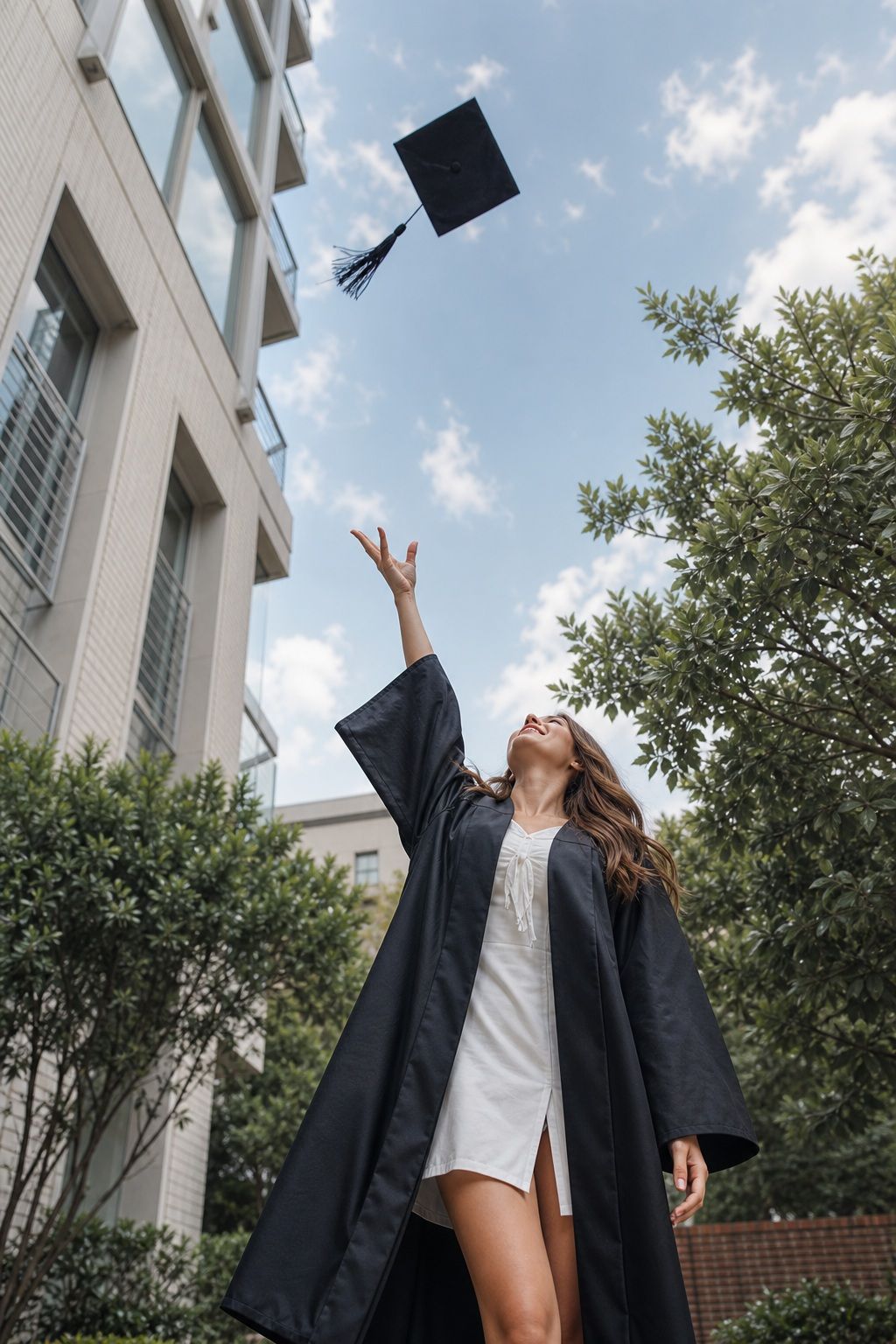
9. Low-Angle Cap Toss Shot From the Ground
![Confetti Sky [6 Pack] 12 Inch Confetti Cannons | Multicolor Confetti Poppers for Wedding Celebration...](https://soliaavenue.com/wp-content/plugins/aawp/public/image.php?url=YUhSMGNITTZMeTl0TG0xbFpHbGhMV0Z0WVhwdmJpNWpiMjB2YVcxaFoyVnpMMGt2TlRGaFJYSTVjSGc1Ymt3dVgxTk1NVFl3WHk1cWNHYz18MTc4OTk0NTk4MA=)


The cap toss photographed from a low angle angled upward is dramatically more impactful than the same shot taken at eye level. Position your photographer crouching low or lying on the ground, pointing the camera upward toward the sky. When you throw your cap, the sky becomes the background and the cap appears to soar. Use burst mode to capture 10 to 15 frames in quick succession because the perfect shot is rarely the one where the cap is at its peak. It is usually the frame where your expression is mid-laugh, arms still extended, completely unguarded. Practice the toss a few times so the release is clean.
Read more: Top 15 Stylish Graduation Outfit Ideas for Men That Strike the Right
Poses With Props and People
10. Hold Your Diploma at Your Side While Looking Away
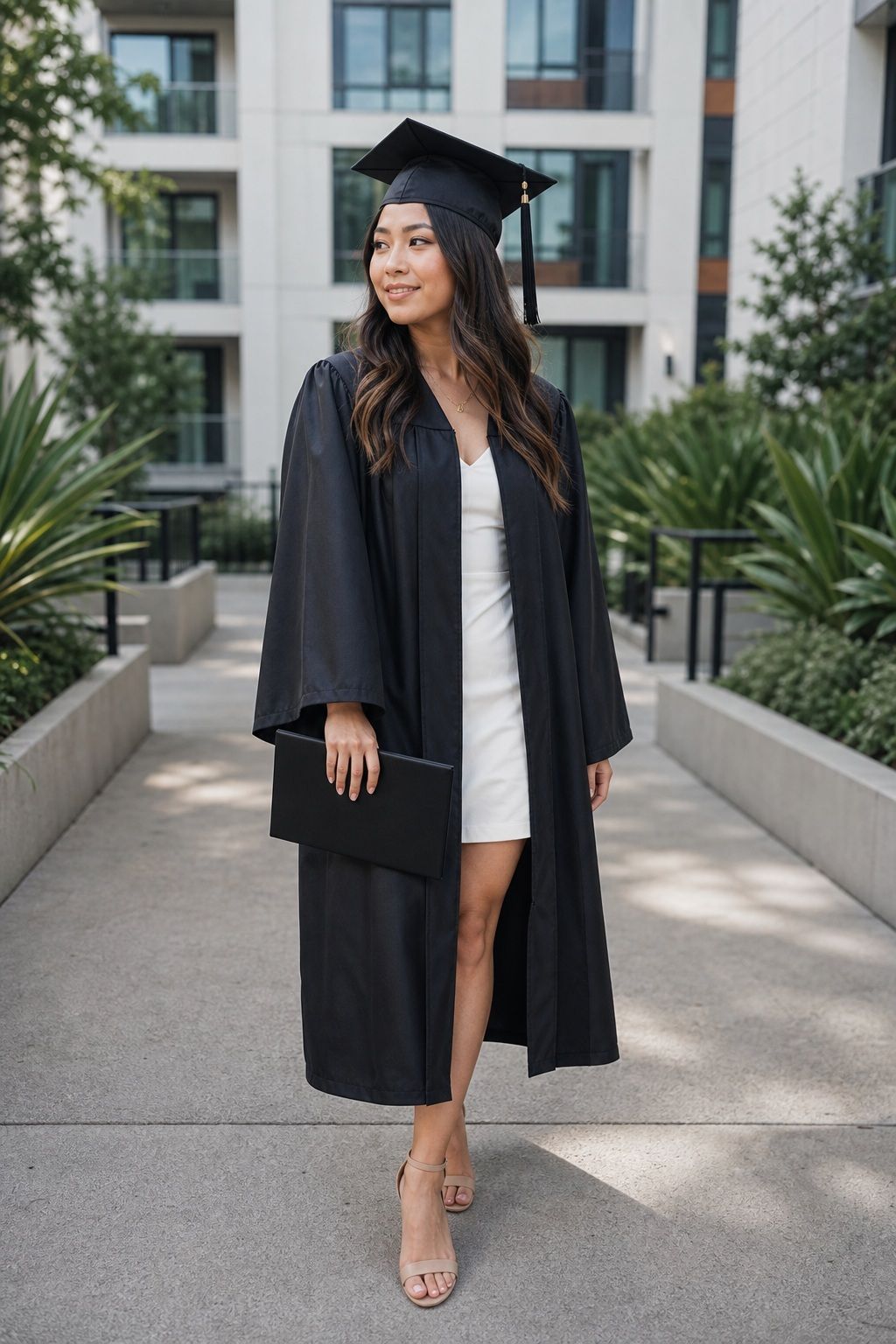


Holding your diploma loosely at your side while your gaze is directed off into the distance creates a portrait that communicates achievement without forcing you to perform happiness directly at a lens. The diploma is visible and present, confirming the accomplishment, while your expression and gaze convey the emotional complexity of the transition. This pose works beautifully in black and white conversion because the composition, the person, the diploma, and the negative space come forward without distraction from color. Ask your photographer to shoot from slightly below eye level to give this pose its full sense of stature.
Read more: Top 20 Creative Graduation Cap Designs to Celebrate Your Big Day
11. Hold Diploma Overhead With Both Arms Extended
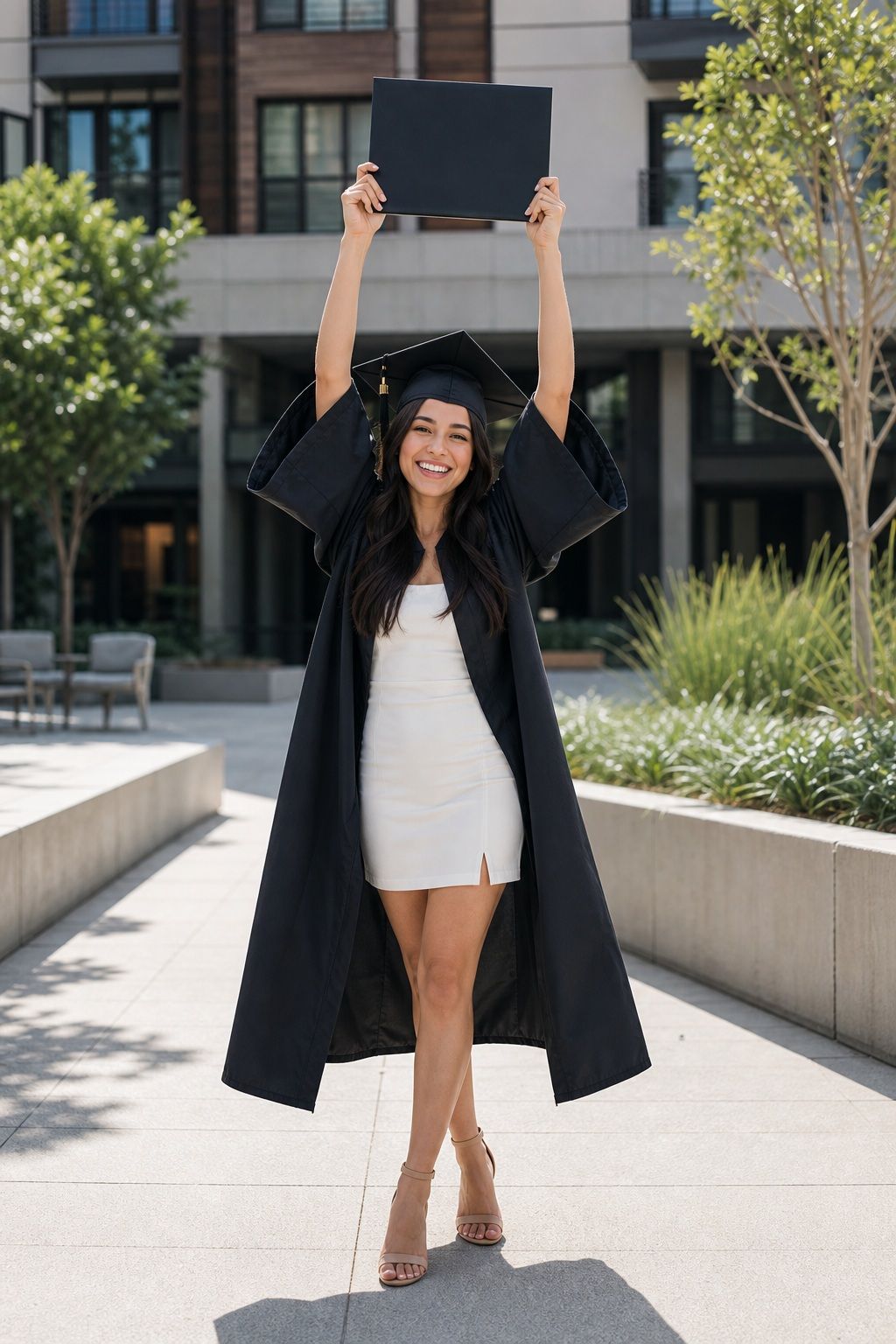


This triumphant pose communicates pure celebration and is one of the most energetic shots in any graduation gallery. Extend both arms overhead holding your diploma open, throw your head back slightly, and let your expression be completely uninhibited. Shot from below with an interesting sky or architectural backdrop behind you, this image has cover-photo energy. It works best at the end of a session when you are warmed up and fully relaxed, not at the beginning when self-consciousness tends to make the gesture look performed rather than genuine. Let yourself feel actually proud and the camera will read it.
12. Piggyback or Jump Shot With Friends
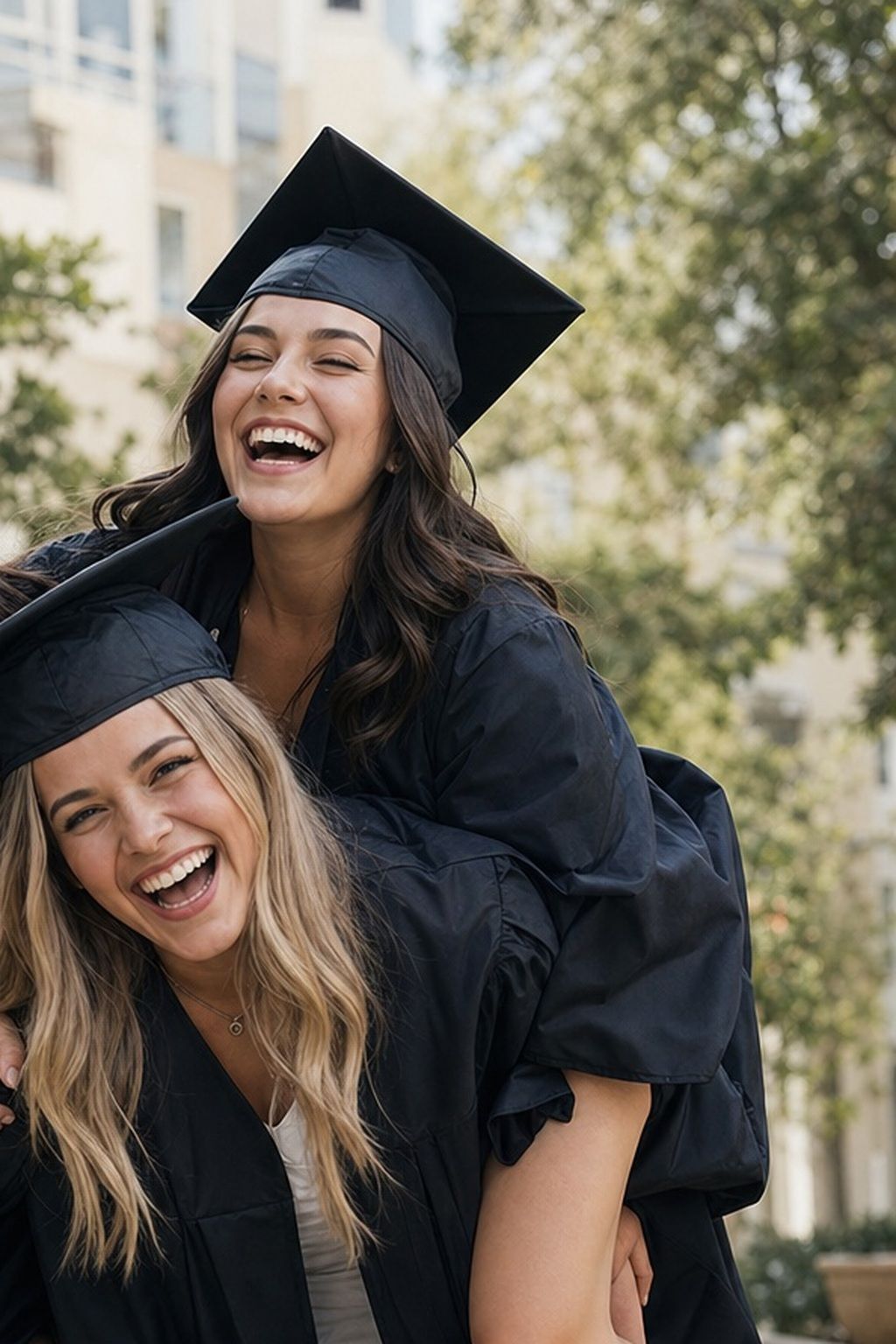

Group shots work best when they capture genuine interaction rather than everyone lined up facing the camera. A piggyback ride, a group jump on the count of three, or everyone running toward the camera laughing produces images that feel alive. These are the photos that end up framed on mantels because they capture what graduation actually felt like: ridiculous, joyful, slightly chaotic, and completely irreplaceable. The key is to do these shots at the end of the session when the group has relaxed and the energy is genuine rather than performative.
Read more: Top 18 Graduation Cupcake Ideas to Sweeten Your Celebration
13. Parent Hug Captured Candid From the Side
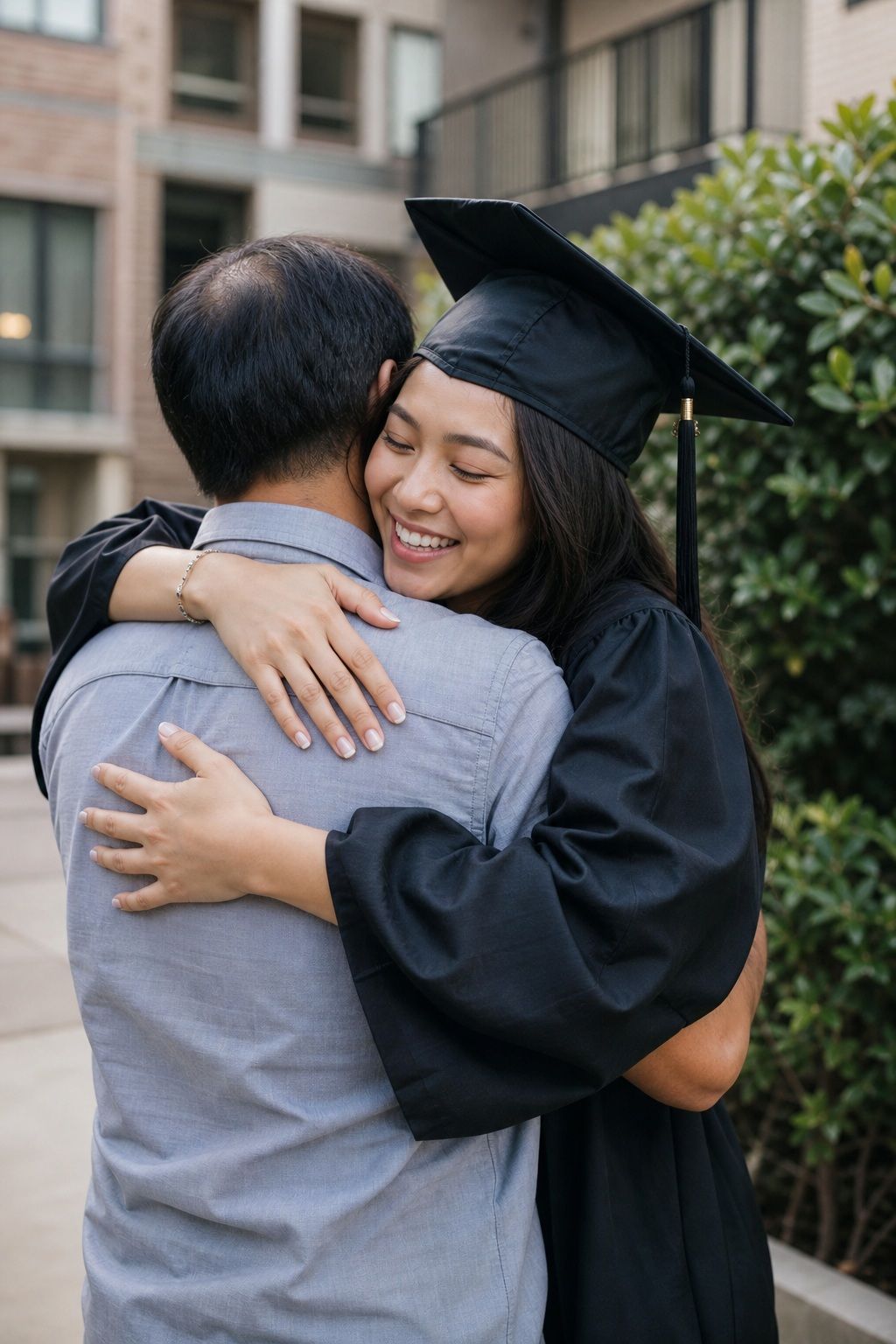


Ask your photographer to stand off to the side and capture the moment of a genuine hug with a parent, grandparent, or close family member without anyone looking at the camera. The subjects should focus entirely on each other while the photographer shoots from a 45-degree angle or from slightly behind one person. These candid connection shots carry more emotional weight than any formal family portrait taken with everyone lined up and smiling at the lens. Brief your photographer on which family members are the most important to capture in genuine moments so they are watching for those opportunities throughout the session.
Read more: Top 20 Graduation Decoration Ideas That Make Any Party Feel Special
Lighting and Angle Techniques That Make Every Pose Better
14. Manage the Cap Brim Shadow by Angling Your Face Up
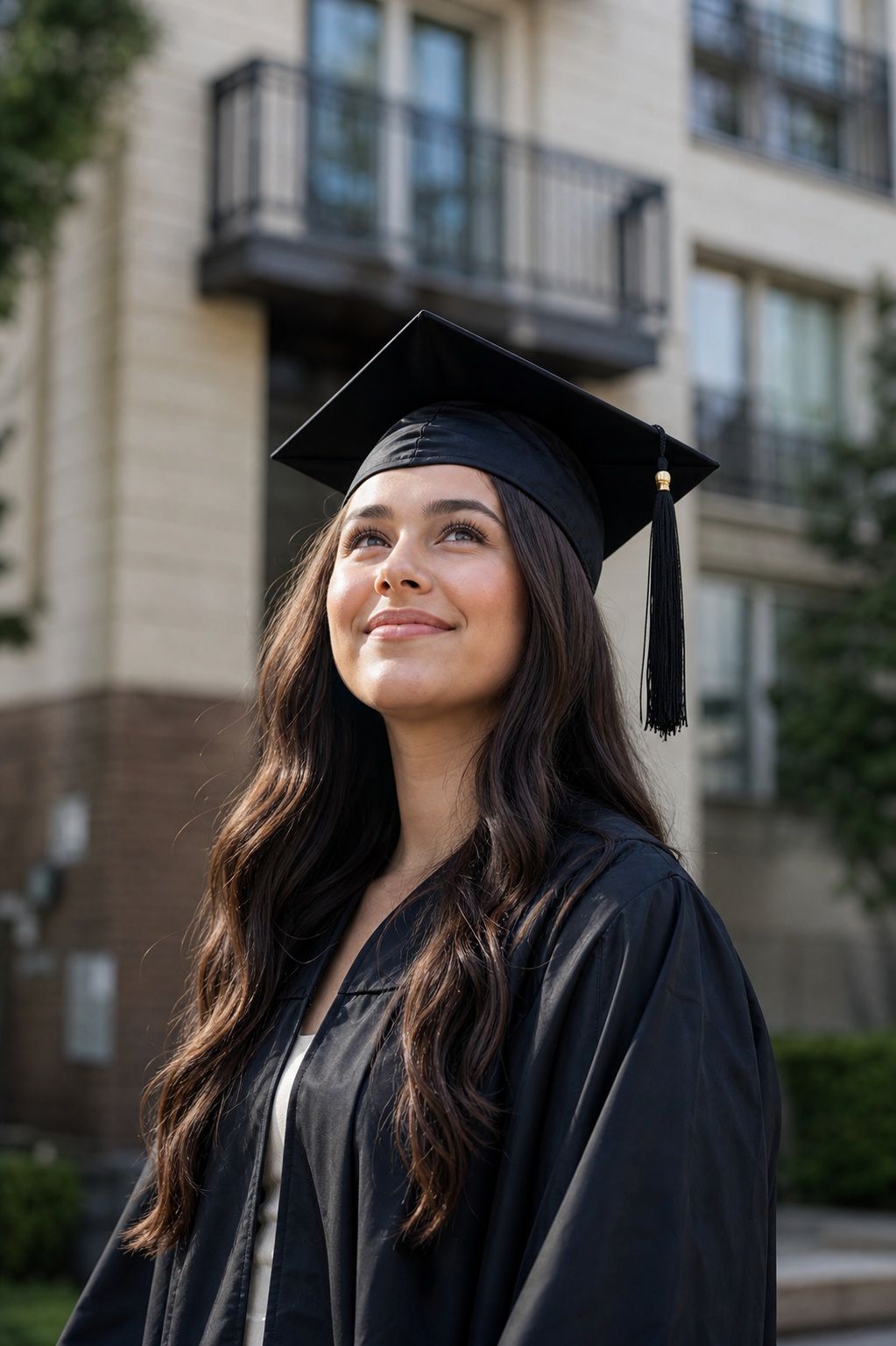


The mortarboard cap is one of the most recognizable symbols of graduation and also one of the most challenging props for portrait photography. The flat brim casts a deep shadow across the forehead and eyes in direct sunlight, which can make the face look dark and flat in photos. The fix is simple: tilt your face slightly upward toward the light source so the shadow from the brim falls behind you rather than across your features. If you are shooting at golden hour with a low sun, positioning yourself so the light comes from in front and slightly to the side will illuminate your face without the brim interfering.
Read more: Top 18 Trendy Graduation Nails Ideas for Every Taste
15. Find Open Shade for Flattering Midday Light
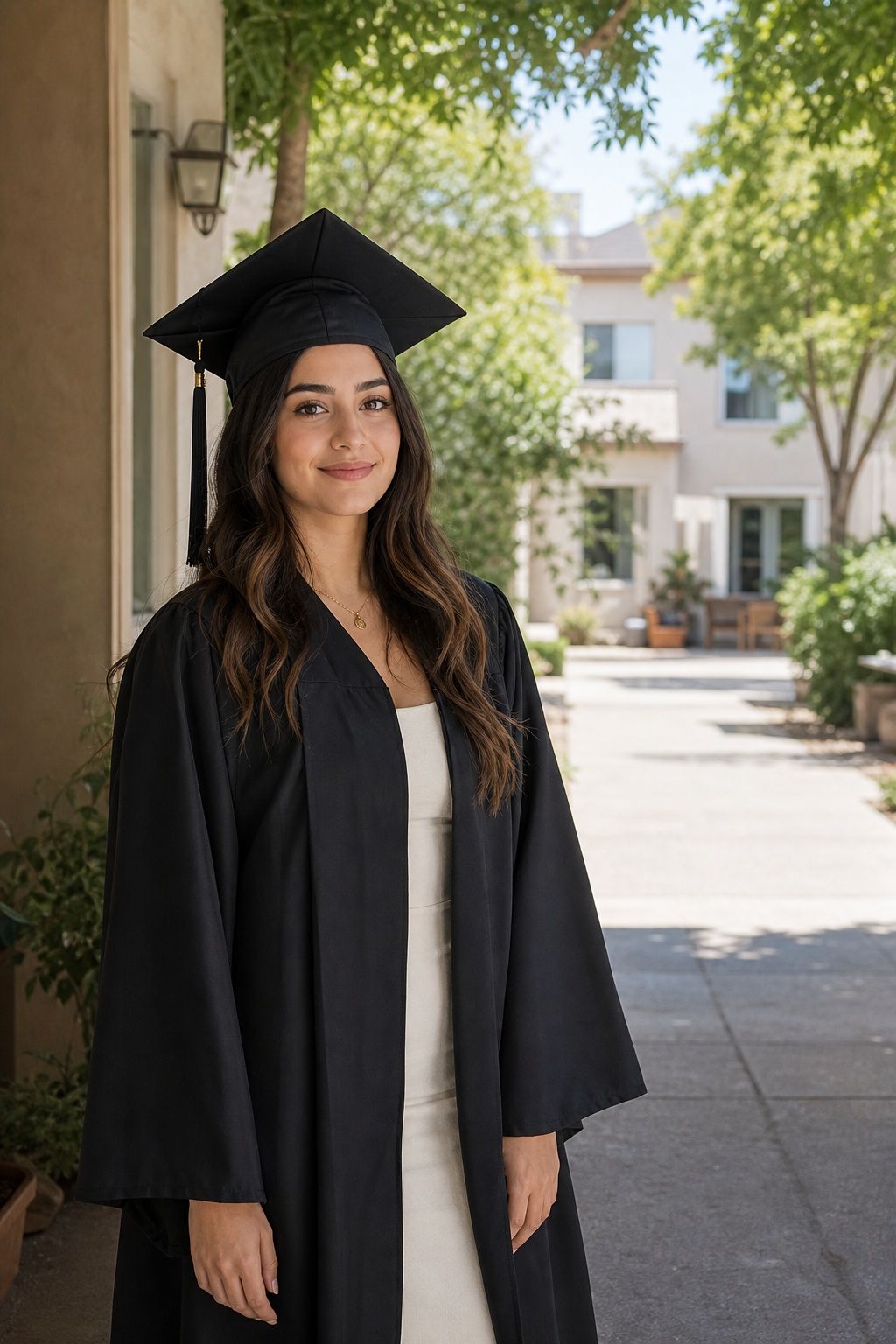
If you cannot shoot at golden hour and your session falls during midday, open shade is your best friend. Open shade means you are in a shadowed area, under a tree or on the shaded side of a building, but with unobstructed sky in front of you. The sky acts as a large diffused light source that wraps around your face without the harshness of direct sun. Colors render accurately, shadows are soft, and you do not need to squint. Avoid closed shade where you are surrounded by shadows on all sides, as this produces flat, lifeless portraits. Open shade with sky in front gives you soft, directional, flattering light at any time of day.
16. Use Movement Between Poses to Find Natural Expression
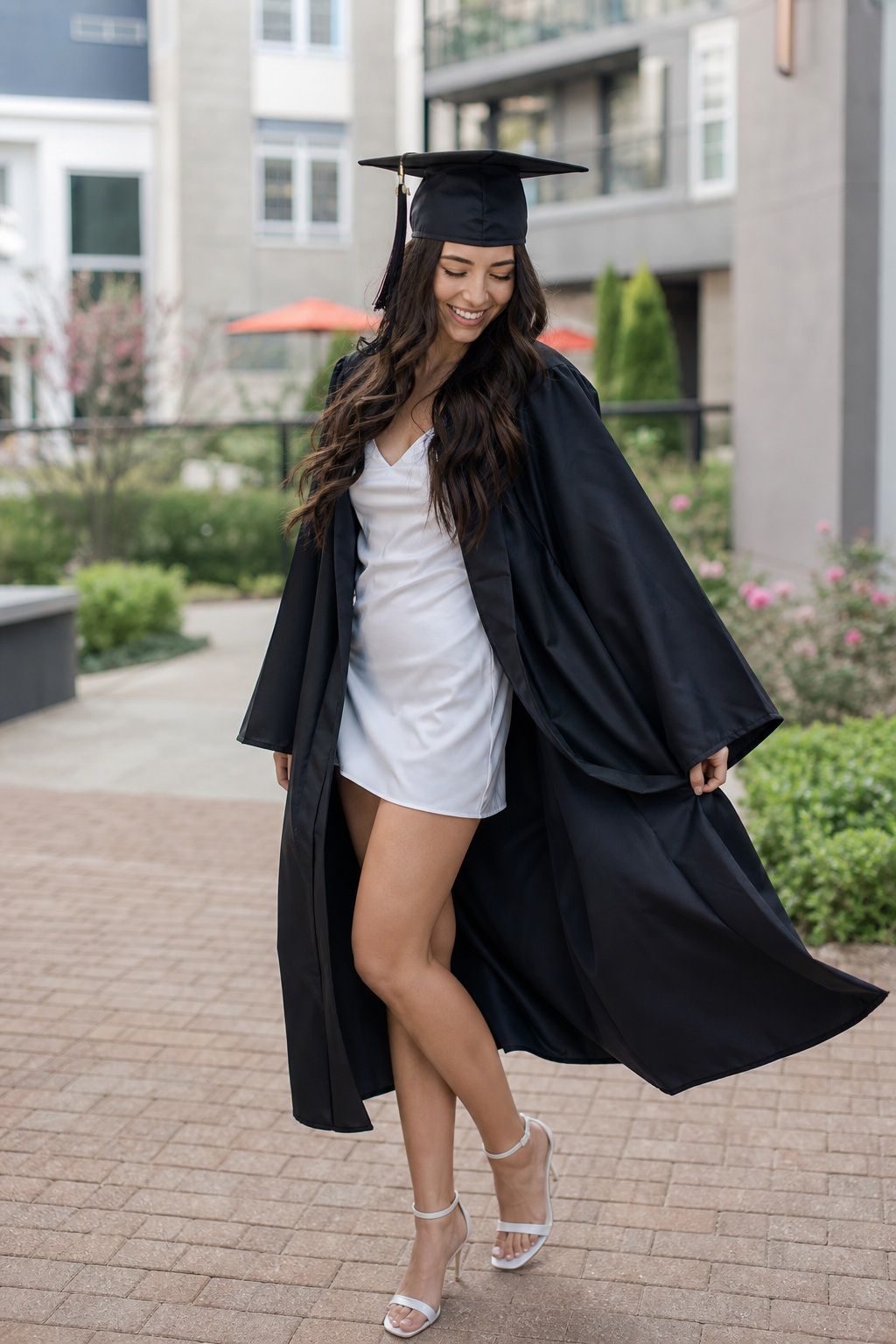


The best expression in almost every portrait session is captured not during a posed hold but in the transition between poses. When a photographer says “now shake it out” or “turn around and come back,” the few steps of movement reset your face from a forced expression to a natural one. Ask your photographer to shoot continuously during these transitions and you will likely find that the most authentic images in your gallery come from the moments you were not trying. Walk a short distance, spin around, take a deep breath and roll your shoulders. These micro-resets produce the images that look most like you.
Read more: Top 15 Easy Graduation Cake Ideas for a Memorable Sweet Treat
Frequently Asked Questions
What are the most popular graduation photo poses?
The most popular graduation photo poses include the cap toss, the walk-toward-the-camera full-length portrait, sitting on steps with the cap in hand, the three-quarter angle standing portrait with diploma, and group hugs with family. Candid moments – mid-laugh, looking at family rather than the camera – consistently outperform posed shots in emotional impact. Plan a list of both posed and candid-style options before your shoot.
How do I not look awkward in graduation photos?
Awkwardness in photos usually comes from stillness – standing rigid with no natural movement. The antidote is to be in motion between shots, let your photographer catch you transitioning from one pose to another, and focus on where you’re looking rather than how you’re smiling. Practice a few poses in front of a mirror so they feel familiar. Talk to your photographer during the shoot – conversation naturally relaxes the face and shoulders. The best frames are almost always captured while you were moving or reacting, not while holding a still pose.
What props should I use for graduation photos?
The most useful graduation photo props are the diploma or degree scroll, a bouquet of flowers, and a meaningful personal item from your time as a student. Books from your field, a jersey from a sport or club you participated in, or a small item that represents where you’re headed next all add personal storytelling to the photos. Keep props simple – one or two per setup is enough. Over-propping makes the photos look cluttered and takes focus off the graduate.
How many poses should I plan for a graduation shoot?
Plan for eight to twelve distinct poses or setups across a one-to-two hour shoot. This gives you enough variety without rushing through locations. A typical breakdown: three to four solo portrait setups (standing, seated, walking), two to three poses with a bouquet or diploma prop, two to three family or friend groupings, and one or two high-energy shots like a cap toss or jump. Leave room in the plan for unexpected candid moments, which often become favorites.
Can I plan graduation poses if I’m camera-shy?
Absolutely – and planning actually helps more for camera-shy people than for those who are naturally comfortable on camera. Knowing exactly what you’re going to do next eliminates the anxiety of not knowing what’s expected of you. Start with the easiest poses (seated, candid, walking) and save the bigger, more performative shots (cap toss, jumping) for later in the shoot when you’re warmed up. A good photographer will guide you through the process so you’re never standing still wondering what to do next.
Key Takeaways
The best graduation poses mix static portraits with movement-based shots. Stand at a three-quarter angle rather than straight-on. Walk toward the camera in burst mode for natural full-length portraits. Sit on steps with the cap in hand for a contemplative look. Plan for family poses that show connection rather than just proximity. Include a cap toss for joyful energy. Look in three directions – at the camera, just past it, and off to the side – for portrait variety. Genuine smiles come from genuine moments, not held expressions.
Conclusion
Graduation poses work best when they’re planned enough to give you confidence but loose enough to allow for the candid moments that produce the most memorable photos. Come with a mental list, work through it with your photographer, and leave space between setups for the real expressions and interactions that no amount of posing direction can manufacture.
The photos you’ll love most in ten years probably aren’t going to be the most technically perfect posed portrait – they’re going to be the one where you were laughing at something real, or looking at someone you love, or caught mid-step toward whatever comes next.
Last update on 2026-09-18 / Affiliate links / Images from Amazon Product Advertising API
