

Quick Answer: The best outdoor kitchen patio decor ideas combine a sturdy dining table sized for the cooking zone, weatherproof rugs to define the space, ambient lighting (string lights plus pendant or sconce task light), pergola or shade structure for protection, and the small details (planters, beverage station, decorative trays) that turn it from a cooking spot into an actual room.
It is 6:30 on a Saturday in July, the air smells like charcoal and lime, somebody is laughing in the pool, and you are standing at the grill flipping things while also reaching back into the kitchen every two minutes because the cutting board, the salt, the tongs, the cold drinks, everything you need lives indoors. An outdoor kitchen ends that back-and-forth.
Once the prep, the storage, and the cold drinks all live outside with you, the whole rhythm of the night changes. You stop missing the conversation while you run inside for tongs. The food comes out hotter because nothing crosses a threshold to get to the plate. And the cook is no longer trapped in the kitchen alone while everybody else is laughing in the yard.
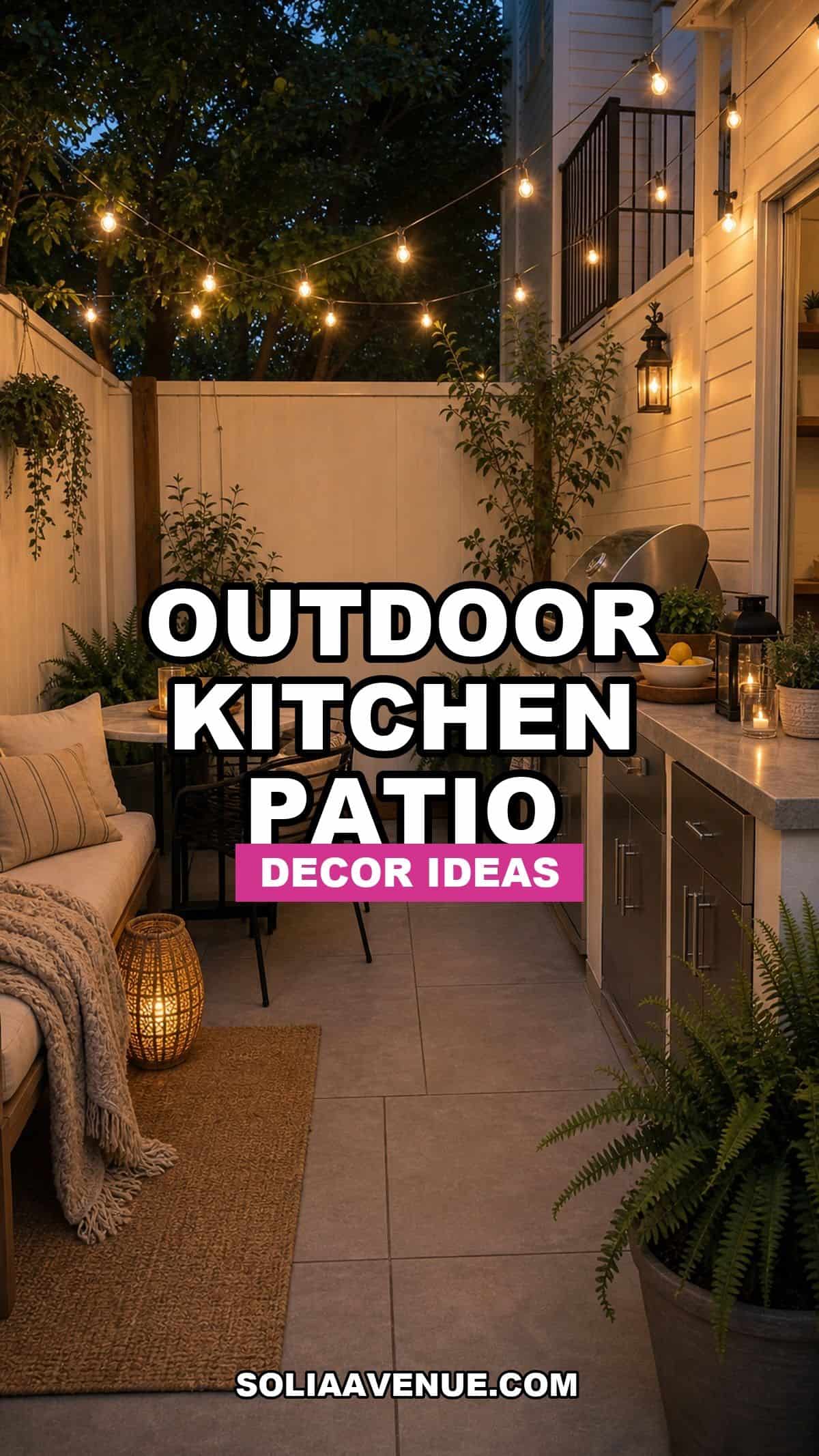
Recommended Outdoor Kitchen Patio Essentials
The pieces that anchor an outdoor kitchen patio, dining table, pergola, weatherproof rug, lighting, and styled accessories.


Recommended blogs to read:
- Boho outdoor patio ideas
- Small apartment patio ideas
- Summer front porch decorating ideas
- Fall patio decor ideas
- Spring yard decor ideas
Lighting and Atmosphere
1. Add String Lights or Lanterns for Warm, Ambient Lighting
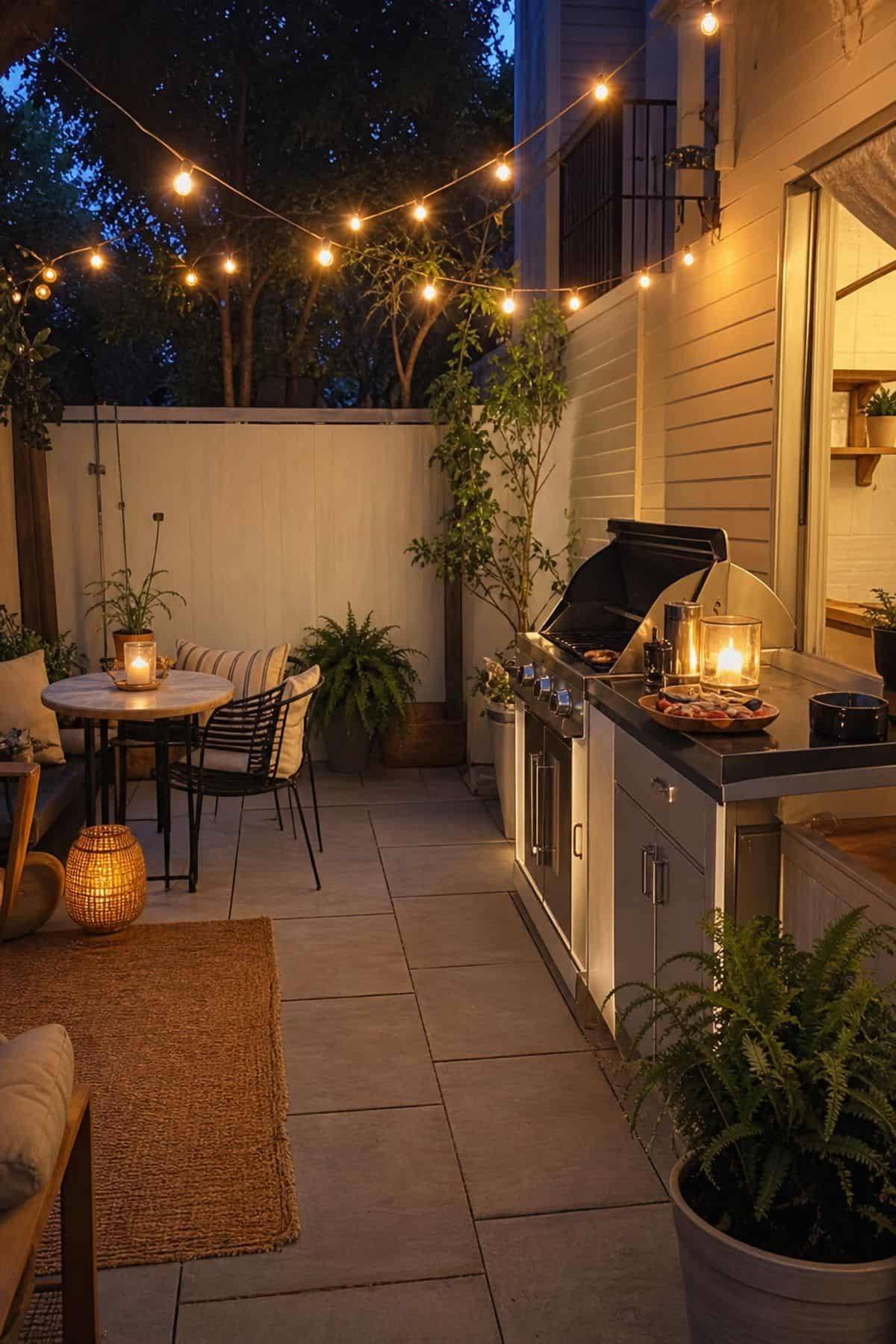


Outdoor kitchen patios need two distinct lighting layers, task light for actual cooking and ambient light for the dining and lounging zone. Skip the bare bulb floodlight and string warm-white edison-style bulbs (2200K-2700K) across the patio, draped from corner posts or hooks installed in the eaves of the house.
For a 200 square foot patio, two 25-foot strands run in parallel across the dining area give enough light to eat by. Add three to five candle lanterns or LED pillar candles at table level for the warm glow that string lights alone cannot deliver. The combination of overhead string and table-level candle is what makes the patio read magical instead of merely lit at 8 p.m.
Putting the string lights on a dimmer or a smart plug lets the patio shift from bright task lighting for grilling to a soft glow once everyone is seated. Hanging the strands in gentle swags rather than a taut line gives the lighting a more relaxed, festive feel. Shatterproof bulbs are the smart pick outdoors, since a glass bulb dropped on a paver is a hazard nobody wants near bare feet.
Read more: Top 15 Outdoor Fireplace Patio Decor Ideas to Elevate Your Backyard
2. Display Decorative Jars or Lanterns on Countertops
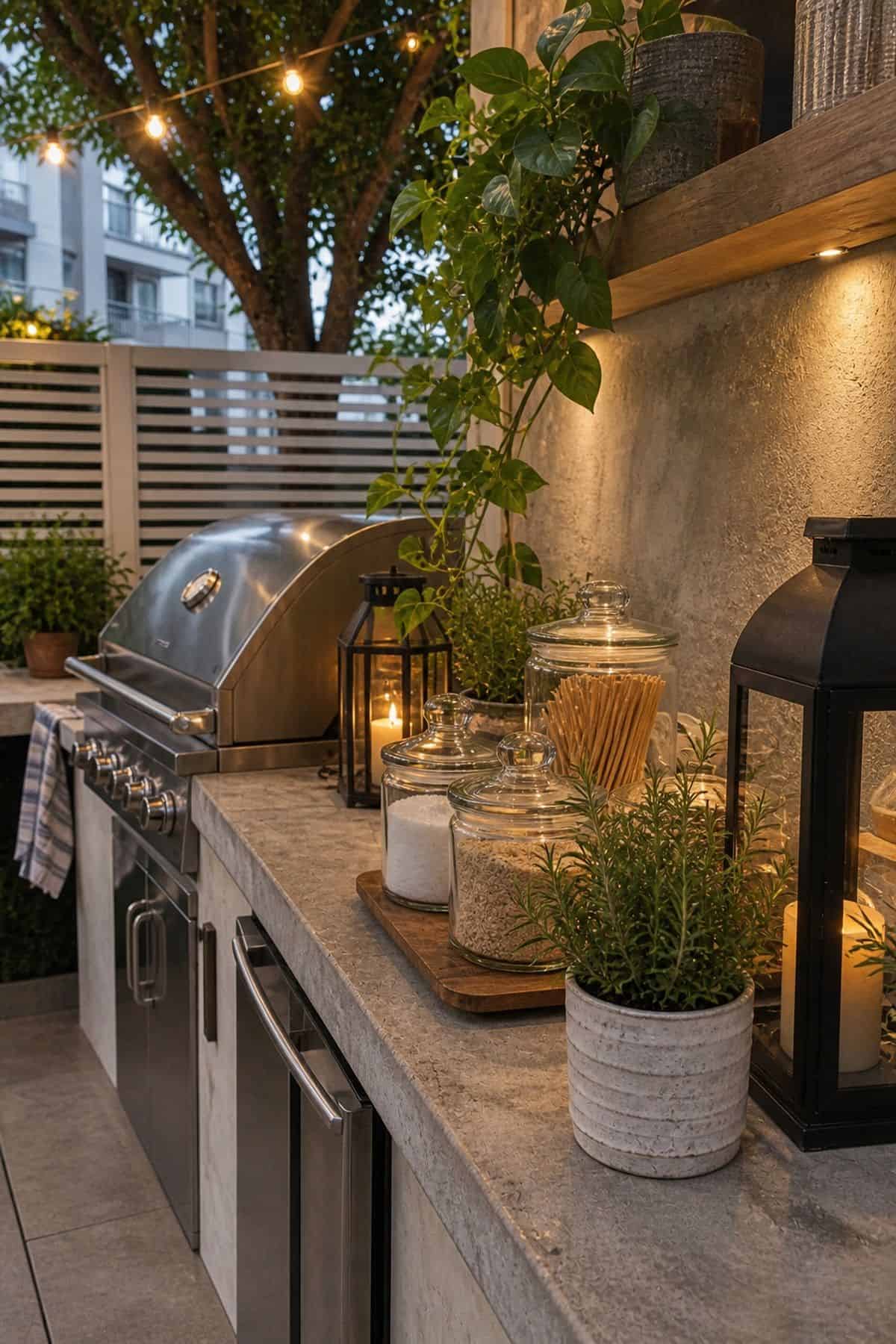


Outdoor kitchen counters tend to read utilitarian unless intentionally styled. A row of three matching apothecary jars (clear glass with cork or wood tops) holding citronella tea lights, salt cellars, or grilling spices turns the counter into a styled vignette.
Pair with one or two larger lanterns (12-18 inches tall, in brass, distressed black, or natural wood frame with glass panes) at the corners of the counter. Light the candles 30 minutes before guests arrive so the lanterns are glowing by the time everyone sits down. Battery-operated LED flicker candles work as a safer alternative around food prep.
Filling the jars with something useful, salt, dried chilies, skewers, herb sprigs, means the styling earns its counter space rather than just sitting there. The glass enclosure of a lantern also keeps the flame steady on a breezy night, so the glow holds rather than guttering out. Keeping the jars near the edge rather than the center leaves the working part of the counter clear for actual prep.
3. Incorporate Citronella Candles or Tiki Torches to Repel Insects
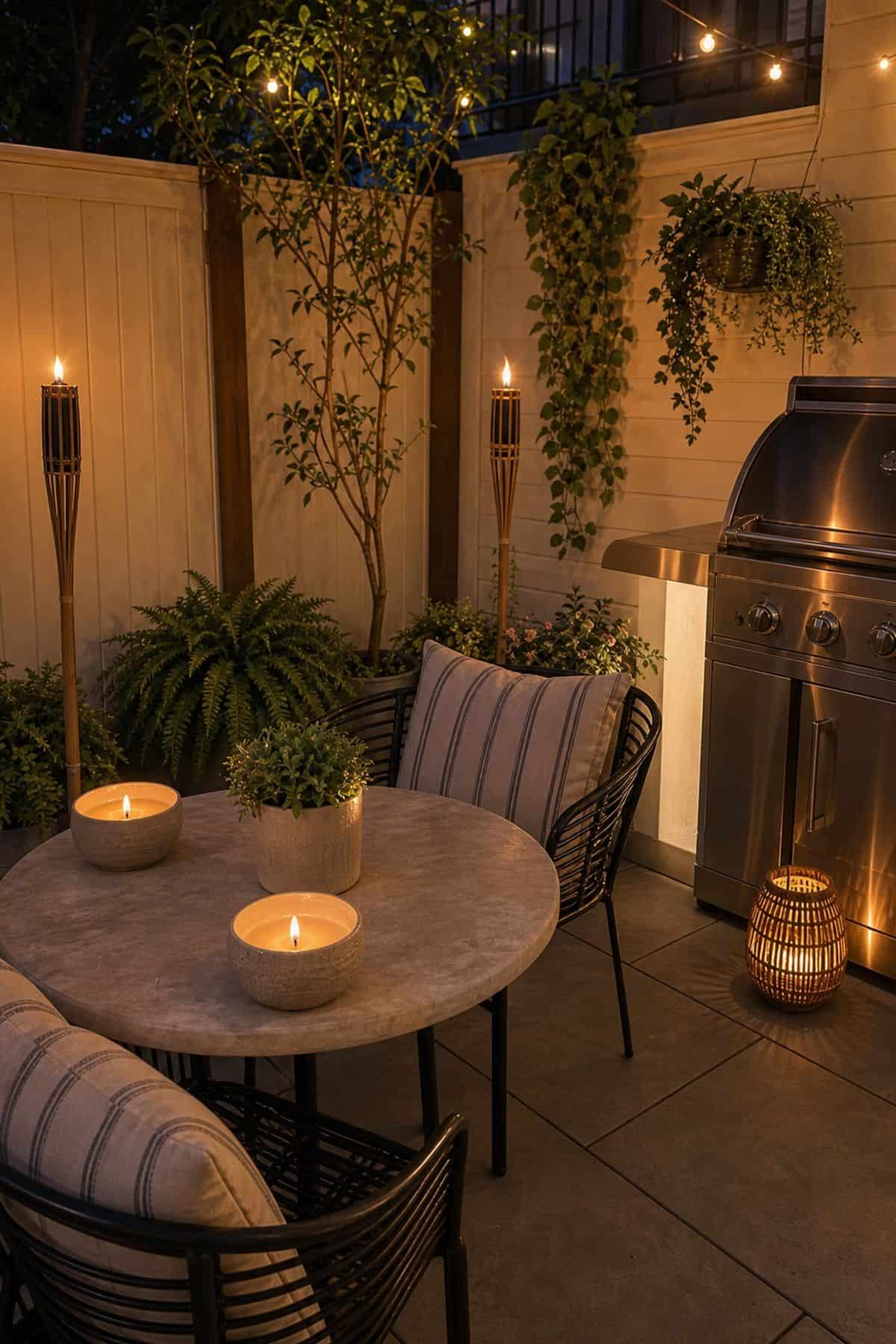


Mosquitoes can ruin an outdoor dinner faster than rain. Place three to five citronella candles in heavy ceramic or terracotta holders at the perimeter of the dining zone, with one taller tiki torch at each corner of the patio. The combination creates a vapor barrier that genuinely reduces mosquito activity in the 8-10 foot radius around the table.
Choose citronella products from reputable brands (Murphy’s Mosquito Sticks, Cutter, Repel) and skip the dollar-store versions that use weak essential oil dilutions. Replace candles every 2-3 months because the citronella oil evaporates from the wax over time even when unlit.
A standing fan blowing gently across the dining table is one of the most effective tricks of all, since mosquitoes are weak fliers and steady air keeps them off. Citronella plants like lemongrass and rosemary in pots around the seating zone reinforce the barrier and double as decor and cooking herbs. Putting the candles a little upwind of the table lets the scent drift over the seats rather than away from them.
Read more: Top 15 Open Cabinet Kitchen Decor Ideas to Style Your Shelves
Furniture and Seating
4. Incorporate a Rustic Wooden Dining Table with Comfortable Chairs
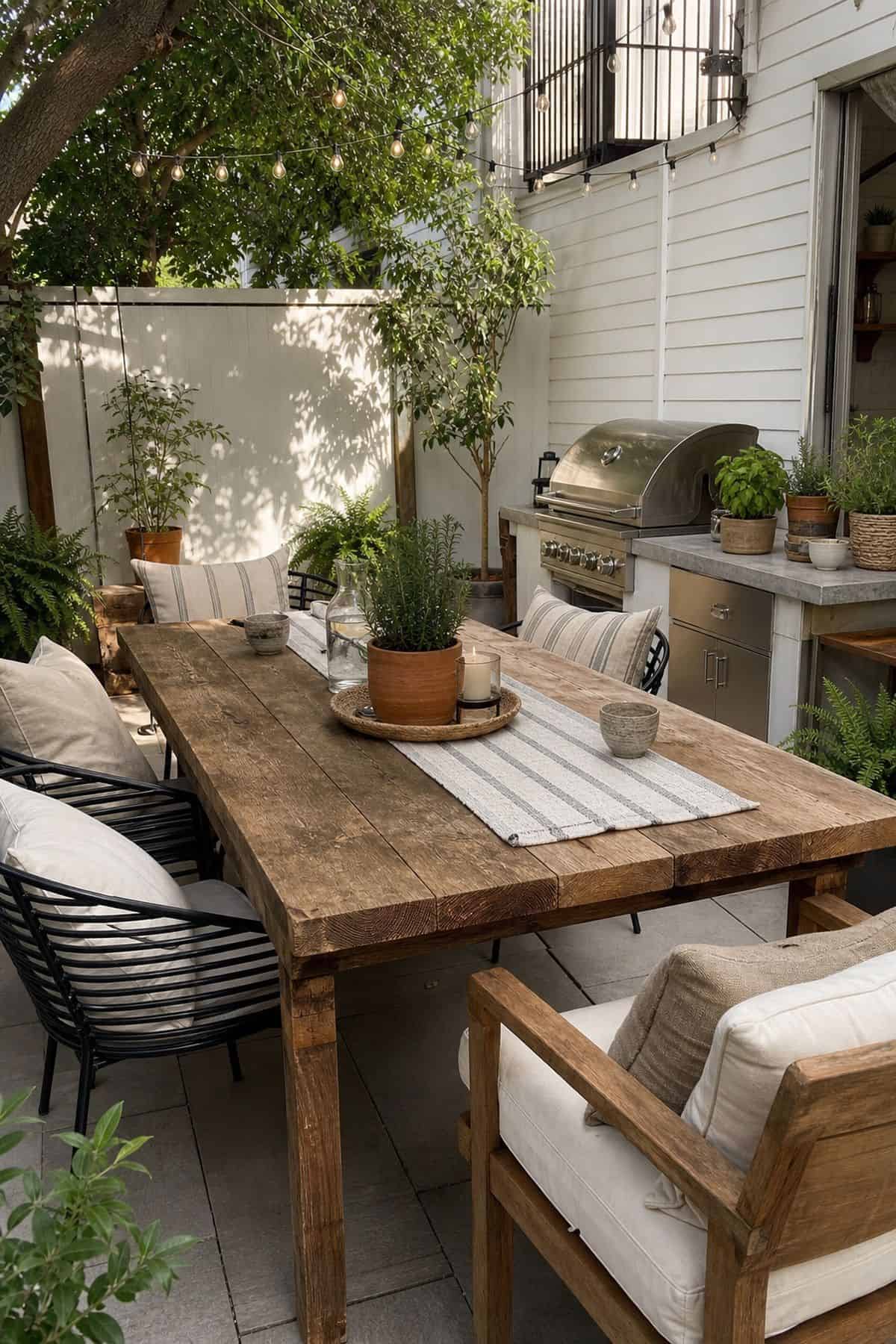


The dining table anchors the whole outdoor kitchen, so size and material both matter. Reclaimed teak, eucalyptus, or polywood (recycled plastic that looks like wood) all survive direct sun and rain without rotting. For a family of four to six, look for a 72-84 inch table; for entertaining ten or more, a trestle-base 96-inch model gives the most usable surface.
Pair with eight matching chairs or, for a more collected look, four wood chairs plus a bench on one side. Cushions in stain-resistant performance fabric (Sunbrella or similar) make long dinners genuinely comfortable. Skip metal mesh chairs for primary seating, they get too hot in summer afternoons.
A bench on one side seats more people in less space and slides fully under the table when not in use, which keeps the patio open. A table with an umbrella hole gives you a no-build shade option for the dining spot before any pergola goes up. Sealing or oiling a wood table once a season keeps it from drying out and graying faster than you would like.
Read more: Top 16 Corner Sink Kitchen Decor Ideas for the Best Seat in the
5. Place Colorful Outdoor Cushions and Throws for Comfort
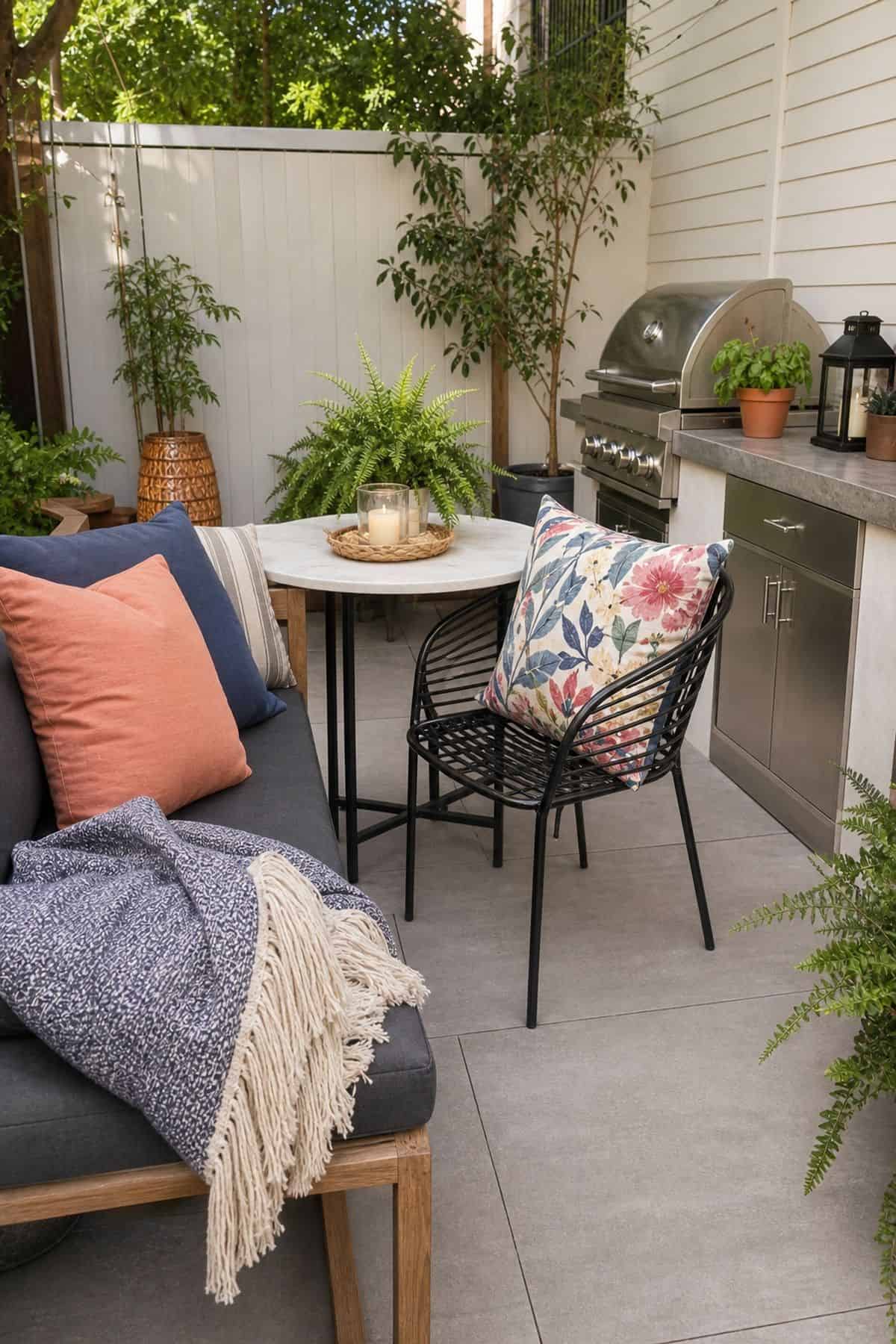


Cushions are the fastest way to inject color and texture into an outdoor kitchen patio. Pick a tight palette of three colors that pull from one element already in the space (the grill housing, the dining chair finish, a plant pot tone) and source cushions in stripes, geometric prints, or solid jewel tones in that palette.
Sunbrella performance fabric holds up to spilled wine and direct sun for 5-7 years before fading. Add a couple of woven outdoor throws folded over the chair backs for evening dinners when the temperature drops; soft acrylic-knit blends survive light rain without mildewing if hung to dry afterward.
Cushions and throws are the fastest, cheapest way to refresh the patio with the seasons, since new covers cost a fraction of new furniture. Removable, washable covers also keep the dining zone looking clean through a long grilling season. A weatherproof deck box near the table gives the cushions a dry home so they are not hauled indoors every night.
Read more: Top 17 Kitchen Counter Corner Decor Ideas for Functional Beauty
6. Use Weather-Resistant Rugs to Define the Space
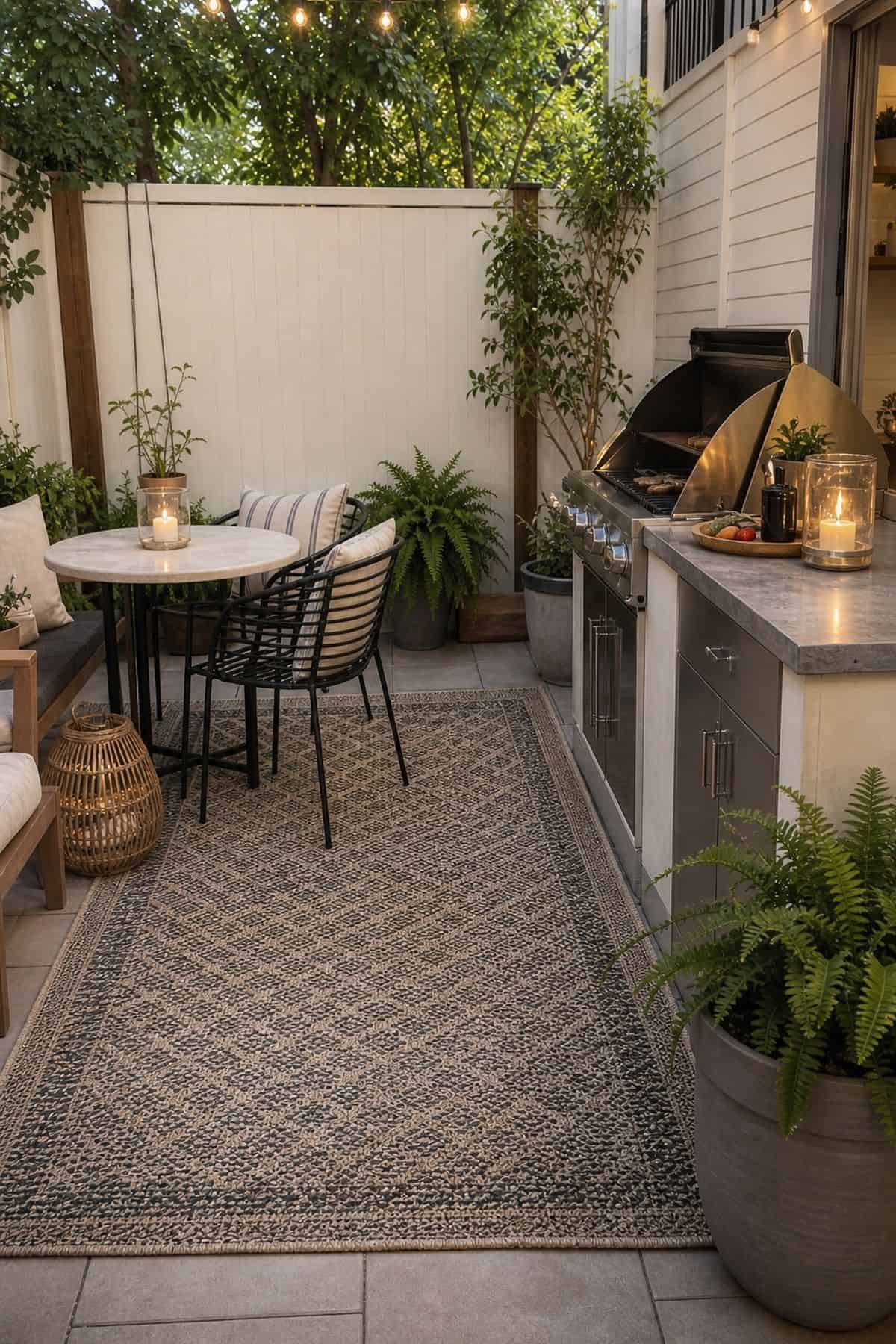


An outdoor rug under the dining table turns the cooking patio into a real outdoor room by giving it a visual floor. Look for indoor-outdoor polypropylene weaves from Ruggable, Loloi, or Safavieh in a flatweave construction that hoses clean.
Size matters, the rug should extend at least 24 inches past the chair edges on all sides so chairs stay on the rug when pulled out from the table. For a 72-inch round table that means an 8×10 rectangular or 8-foot round rug. Pick patterns with built-in forgiveness, geometric, vintage Persian, or kilim prints hide stains better than solid colors.
A non-slip pad underneath keeps the rug from sliding on a smooth paver or deck surface as chairs scrape in and out. Lifting and shaking the rug now and then, and rolling it up before heavy rain, keeps trapped moisture from staining the patio below. A washable rug is the easy answer near a cooking zone, since grease splatter and dropped food simply hose or machine-wash out.
7. Install a Pergola or Shade Sail for Sun Protection
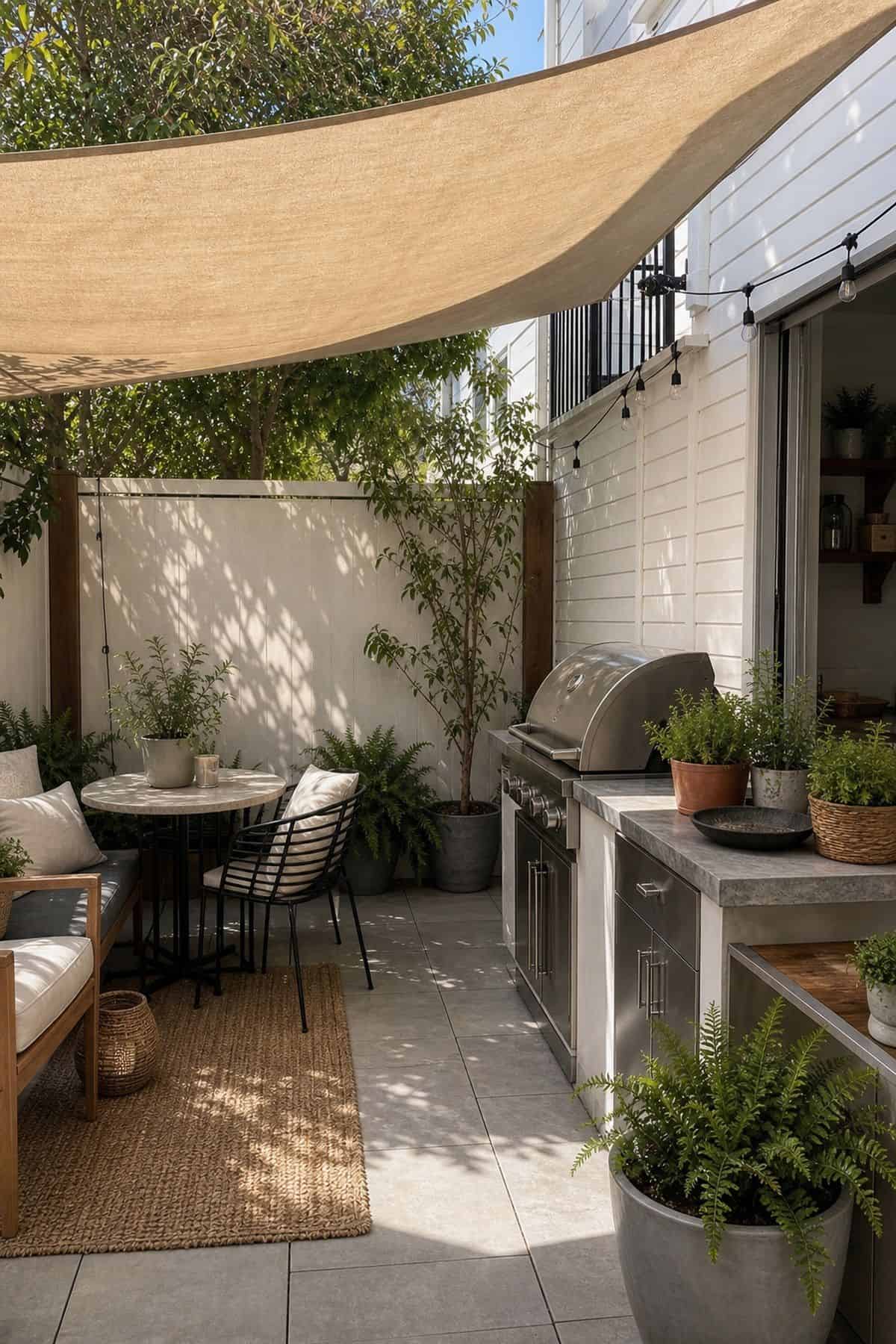


Direct overhead sun makes outdoor dining miserable from late morning to mid-afternoon, and a pergola or shade sail solves that without permanent construction. A wood pergola (cedar, redwood, or pressure-treated pine) with retractable canopy fabric gives full control over sun versus shade.
For a more budget option, triangular shade sails (10-13 feet per side) mounted to existing posts or eaves block 90-95 percent of UV. Aim for at least 8 feet of clearance below the structure so the dining table fits comfortably underneath without crouching.
Mount the sail’s corners at slightly different heights so rain runs off cleanly rather than pooling in the middle and stretching the fabric. With a grilling zone underneath, leave the area directly over the cooktop open so smoke and heat rise away rather than collecting under the cover. A solid pergola roof is also sturdy enough to hang pendant lights or a fan, which a fabric sail cannot support.
Read more: Top 16 Christmas Kitchen Decor Ideas for a Warm Holiday Heart of the
Greenery and Decorative Layers
8. Use Potted Plants and Herbs for Greenery and Freshness
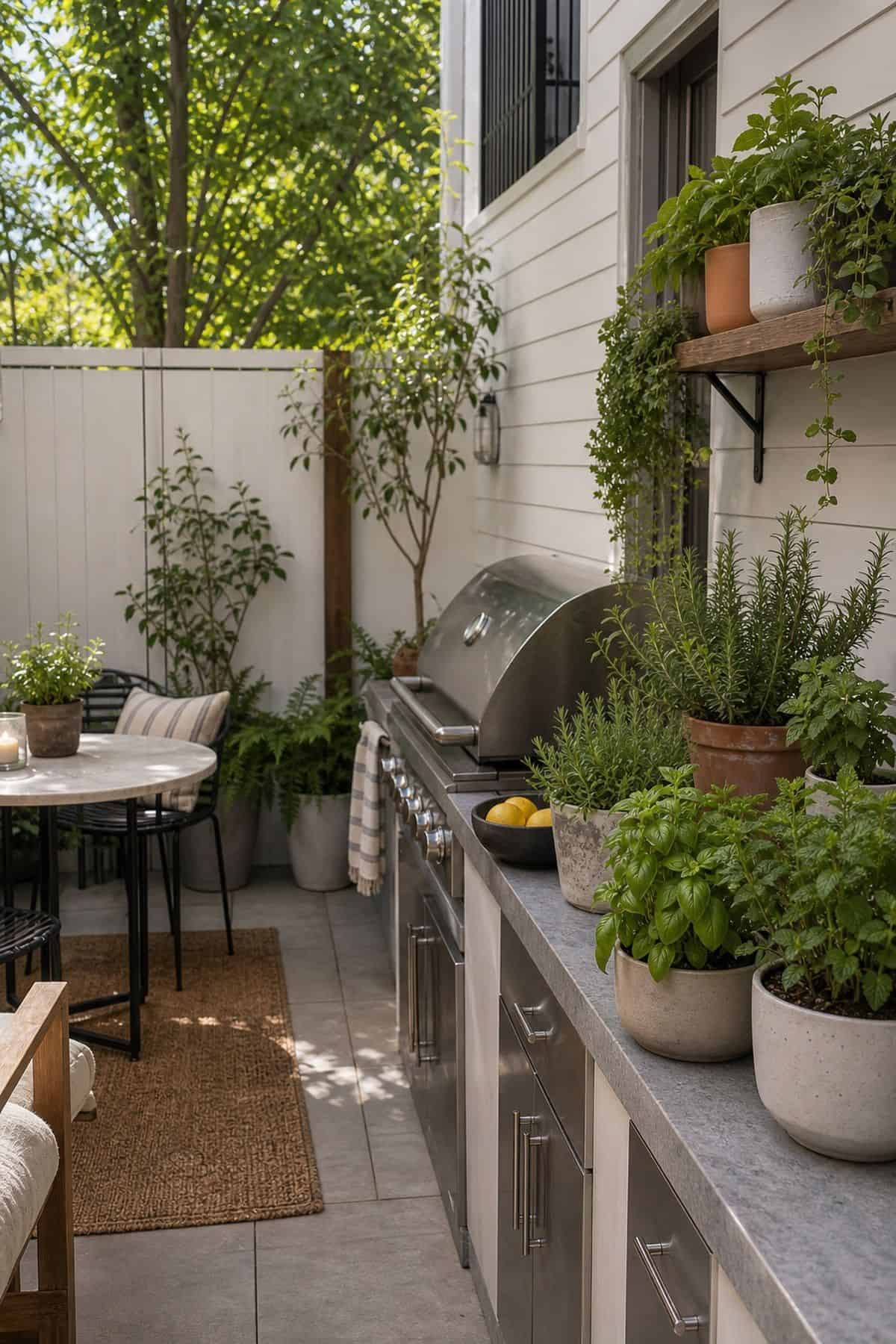


Edible herbs in pots near the cooking station do double duty as decor and pantry. A 6-pot cluster with basil, rosemary, thyme, oregano, mint, and parsley gives every common grilling herb fresh on the patio. Place the cluster on a tiered plant stand or a long narrow planter box at the edge of the counter.
For larger plantings, add two or three statement potted plants (a small olive tree, a fig in a glazed ceramic pot, a tall ornamental grass) at the corners of the patio. Match the pot finishes (matte terracotta, white-glazed ceramic, or weathered concrete) for visual cohesion.
Keeping the herb cluster within arm’s reach of the grill means a few snipped sprigs go straight onto the food with no trip indoors. Tall plants at the patio corners also do quiet screening work, softening the view past the dining zone and giving the space a sense of enclosure. Setting heavy planters on rolling caster bases lets you chase sun or clear a path without straining your back.
Read more: Top 16 Spring Decor Ideas for the Kitchen That Feel Bright and Clean
9. Add a Fire Pit or Outdoor Heater for Cooler Evenings
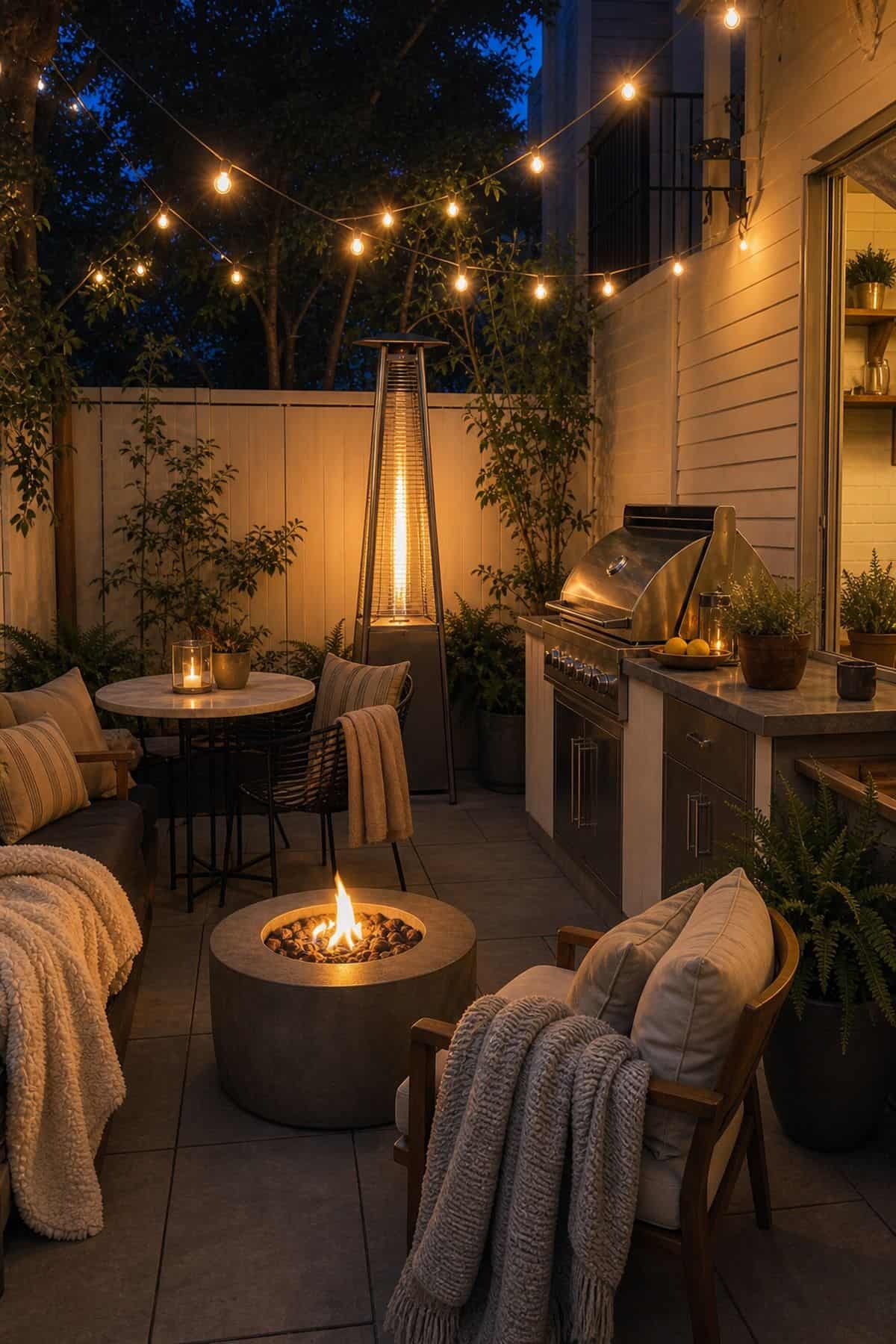


A fire pit or propane patio heater extends the outdoor kitchen season into spring and fall when nights drop into the 50s. Propane fire pits in concrete or steel housings give the warmth and ambiance of a wood fire without the smoke or ash cleanup, run 5-7 hours on a 20-pound tank.
Tall freestanding patio heaters (the mushroom-shaped pyramid versions) put out 40,000 BTU and warm a 12-15 foot radius. Place fire features at least 8 feet away from the dining table and the pergola posts for safe clearance. Add weather-resistant covers when not in use to extend the unit’s life past one season.
A propane fire pit lights instantly and shuts off the moment dinner ends, with no smoke, ash, or wood to deal with. Be mindful of the smoke path under a covered patio, since an open flame and a low ceiling do not mix well. A fire feature genuinely extends the season, pushing usable patio nights well into spring and fall when the air turns cool.
Read more: Top 18 Halloween Kitchen Decor Ideas for a Spooky, Stylish Space
10. Use Ceramic or Stone Planters with Seasonal Flowers
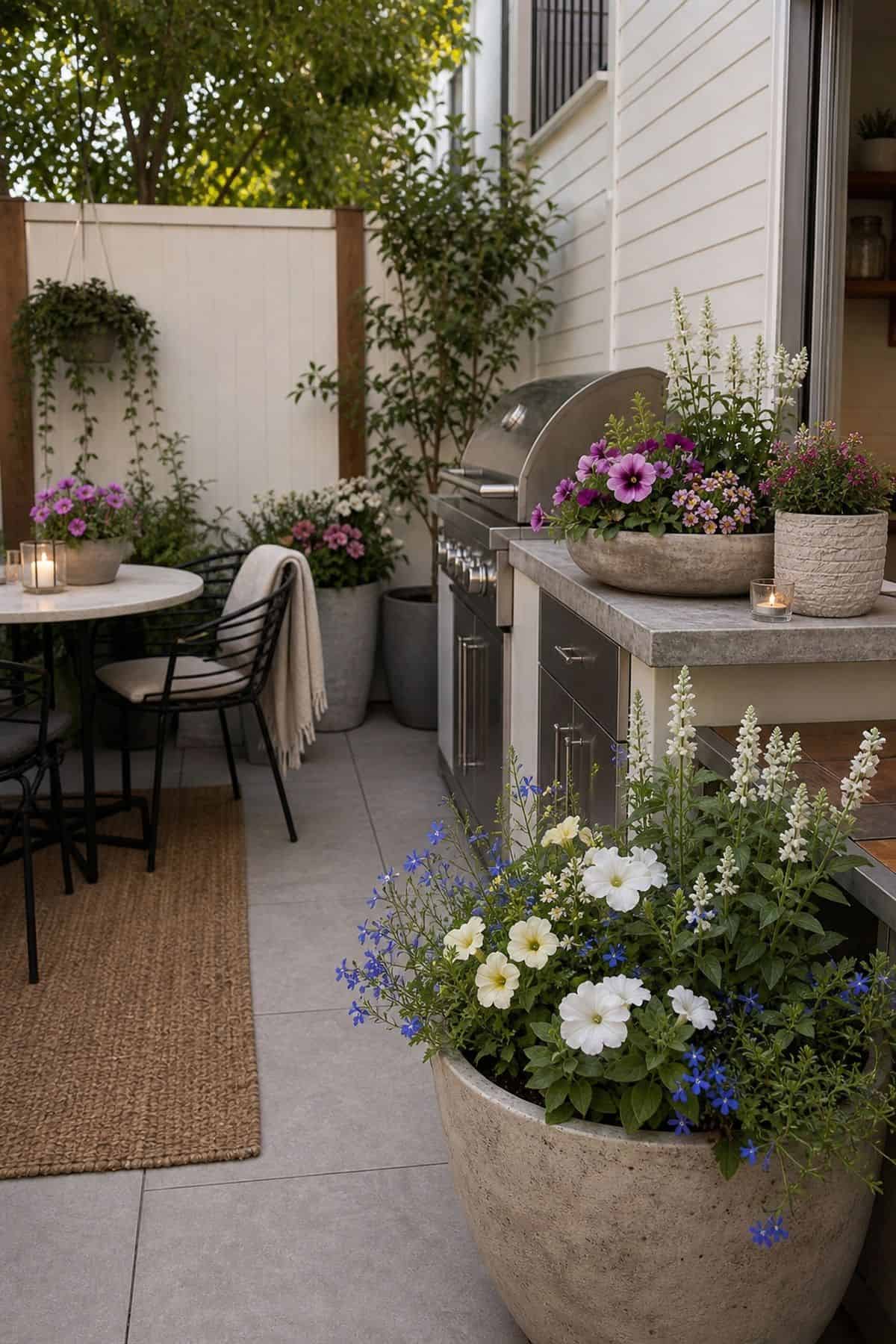


Beyond the herbs, two or three flowering pots near the dining area shift the whole mood of the patio. Spring lean into tulips, daffodils, and ranunculus. Summer favor lavender, geraniums, dahlias, and zinnias. Fall switch to mums, ornamental kale, and pansies.
Pick large planters (16-24 inches in diameter) in matte terracotta, glazed stoneware, or weathered fiberglass that survives frost. Group three in varying heights at the corner of the patio rather than scattering small ones across the space, the cluster reads more designed than spread-out singles.
Slipping plain plastic nursery pots inside prettier cachepots makes the seasonal swap a five-minute job, since you lift one pot out and drop the next one in. Deadheading the spent flowers every few days keeps the blooms coming hard rather than fizzling out early. A planter with a drainage hole and saucer keeps water from pooling and staining the patio after a rain or a watering.
Read more: Top 19 Kitchen Counter Decor Ideas That Make the Most of Your Space
Smart Outdoor Kitchen Details
11. Incorporate Wall-Mounted Shelves for Easy Storage and Display


An outdoor kitchen always lacks storage. Wall-mounted shelves on the back wall of the cooking zone (cedar or polywood, 10-12 inches deep) hold serving platters, cookbooks specific to grilling, and decorative jars without taking floor space.
Install two parallel shelves about 12-14 inches apart, anchored to studs or masonry with corrosion-resistant brackets. Style the top shelf with decorative items (lanterns, a framed botanical print sealed against humidity, a small clock) and reserve the lower shelf for working items (serving platters, salt cellars, a few cookbooks).
Leaving a little open space on the shelves rather than packing them is what makes the styling read deliberate instead of cluttered. Adding a couple of small hooks underneath a shelf gives grill tools and oven mitts a tidy home right where they are used. A slim LED strip tucked along the shelf underside turns it into a quiet task light over the counter for evening cooking.
12. Use Metal or Wicker Baskets to Organize Utensils and Napkins


Open baskets on the counter or shelving keep the working tools accessible without making the patio look like a hardware store. A galvanized metal caddy holds grilling tools (tongs, spatula, brush, thermometer) handle-up for grab-and-go.
A separate woven seagrass basket with a soft liner holds napkins, paper towels, and outdoor placemats. Pick baskets with handles for easy lifting and lids if humidity is heavy in your region, the lids keep insects out of cloth napkins between uses.
Giving each basket a clear job, one for tools, one for linens, one for condiments, means setup and cleanup happen in one trip rather than several. Handled baskets also let you carry the whole station inside at the end of the night, which protects the contents from dew and rain. A liner that lifts out for a shake or a wash keeps the basket itself clean through a long grilling season.
Read more: Top 18 Winter Kitchen Decor Ideas That Make Cooking Season Feel
13. Hang Outdoor Artwork or Weatherproof Signs on Nearby Walls
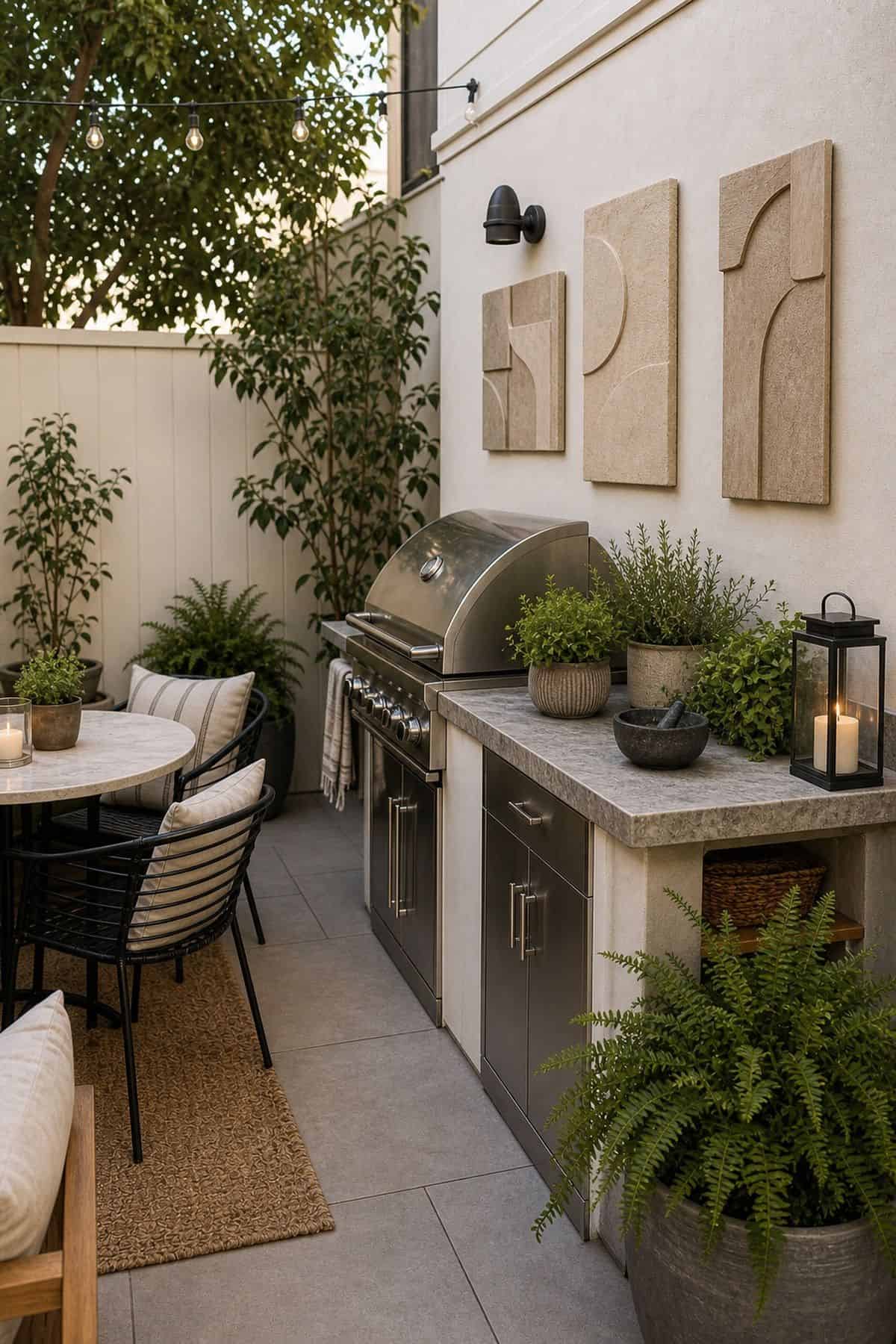


Outdoor kitchen walls (the side of the house, a fence, the pergola back panel) work as gallery space when treated like indoor walls. Metal signs (vintage advertisements, monogrammed letters, a single statement word like ‘Eat’ or ‘Gather’) in distressed finishes survive rain and sun for years.
Larger weatherproof canvas prints (treated with UV-resistant ink and waterproof coating) work above the dining area. Hang two or three pieces grouped at eye level when seated, around 56-58 inches from the floor to the center, with 8-12 inches between pieces.
Oxidized or distressed metal art only looks better as the patina deepens with weather, so it is one decor choice that ages in your favor. Securing each piece firmly to the wall matters outdoors, where wind can lift and rattle anything loosely hung. A piece with a little wit, a food-related word or a vintage market sign, suits a cooking patio better than something serious or formal.
Read more: Top 18 Easy Kitchen Summer Decor Ideas for Renters
14. Place a Beverage Cart or Bar Station for Entertaining


A dedicated beverage station prevents the dining table from getting cluttered with bottles and glasses during a party. A 3-tier rolling cart with brass or matte black hardware holds bottles on the bottom shelf, glassware on the middle, and ice bucket plus garnishes on top.
Position the cart near the dining table but not in the main walking path. Stock with one or two specialty cocktail kits (a pre-batched bottled margarita, mint and lime for mojitos), plus sparkling water and a soft option for non-drinkers. Roll back inside between uses to protect from weather.
A self-serve drink station also frees the host from playing bartender all night, since guests simply help themselves. Locking casters keep the cart from drifting on an uneven patio while still rolling easily when you want to move it. Styling the top shelf with a small plant or a folded bar towel makes the cart read as decor even before the first guest arrives.
Read more: Top 16 Summer Kitchen Tray Decor Ideas to Style in Minutes
15. Use Stylish Serving Trays and Dishware for a Cohesive Look


Match the serving pieces across the patio for the most-designed read. Pick a hero material (matte black ceramic, bamboo, hammered brass) and use it consistently for the serving platters, the salad bowls, the appetizer trays, and the salt cellars.
The match does not need to be brand-perfect, just family-consistent. The visual repetition is what tells the eye, this patio was set up on purpose. Shop estate sales for vintage outdoor dishware sets or buy from CB2, Crate and Barrel, or Williams Sonoma for matching modern pieces.
Melamine and enamelware are the practical choices for an outdoor table, since they shrug off a drop on a stone patio that would shatter ceramic. A few large serving trays also double as carriers, ferrying food and drinks out from the kitchen in one trip instead of several. Pieces in a warm neutral or earthy tone tend to flatter grilled food and tie back to the rest of the patio palette.
16. Add a Water Feature Like a Small Fountain for Soothing Sounds
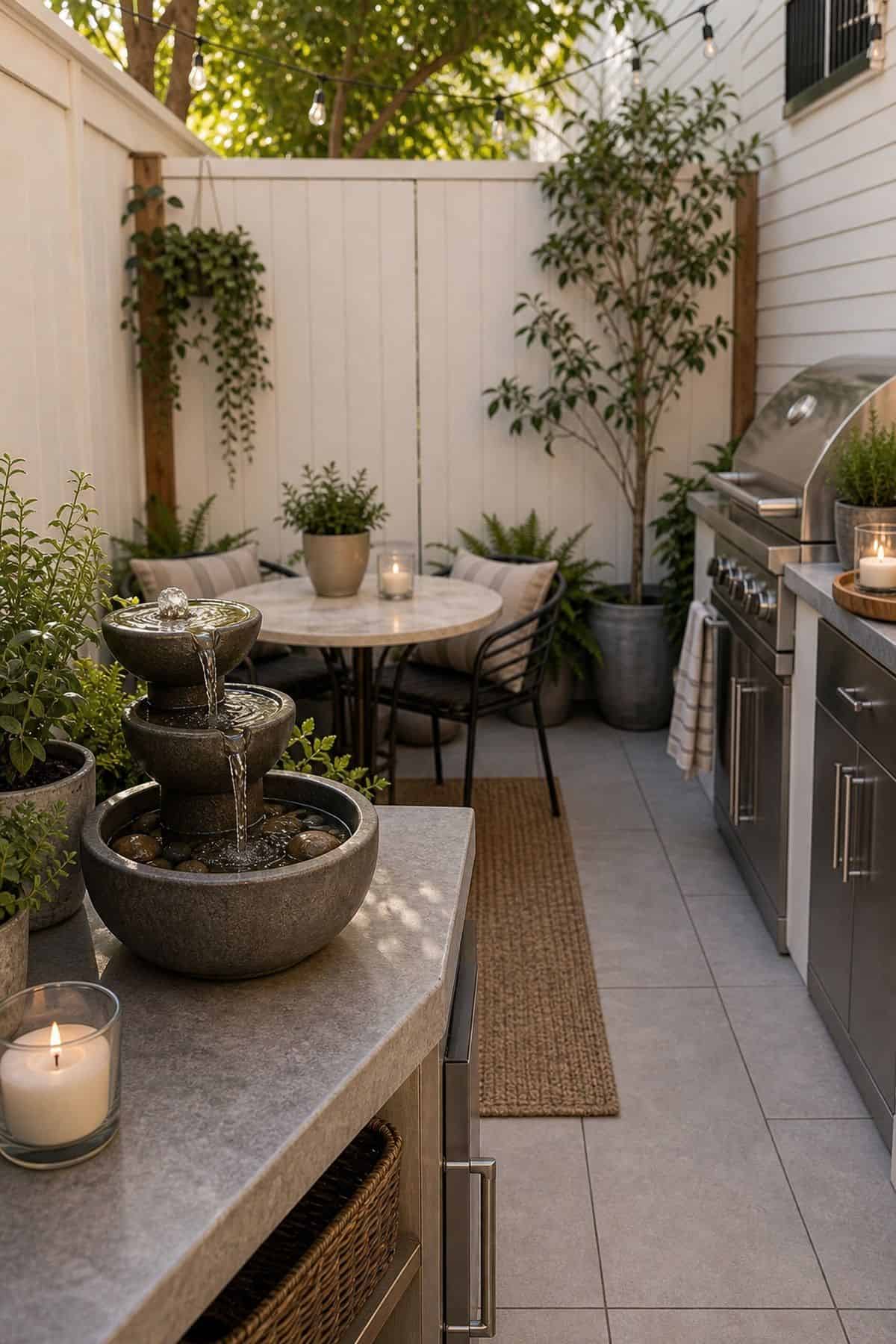


Running water masks neighborhood noise (cars, neighbor conversations, HVAC units) and adds a meditative undertone to outdoor dining. A self-contained tabletop fountain (12-18 inches tall, ceramic or stone basin) plugs in or runs on solar and recirculates 1-2 gallons of water.
Place it on the patio bar or on a side table near the dining zone, not directly on the table. Keep it covered or empty during freezing months to prevent ceramic cracks. The sound is most noticeable when the fountain runs at about 80 percent capacity, allowing the water to fall about 6-10 inches before hitting the basin.
A solar-powered fountain skips the cord hunt, though it pauses when a cloud passes over the panel. Topping off the water every few days keeps a small basin from running dry and burning out the pump in summer heat. The gentle moving water also tends to draw birds, adding a little daytime life to the patio between meals.
Read more: Top 17 Warm Thanksgiving Kitchen Decor Ideas for Your Holiday Cooking
Frequently Asked Questions
What is the most important element of an outdoor kitchen patio?
Shade structure (pergola, shade sail, or covered roof) and the dining table sized for your usual crowd. Without shade the patio is unusable in midday summer; without a properly sized table the gathering zone never works as intended.
What rug works best on an outdoor kitchen patio?
An indoor-outdoor polypropylene flatweave from Ruggable, Loloi, or Safavieh. Pick a patterned weave (geometric, kilim, Persian-style) that hides stains, sized to extend 24 inches past the dining chairs on all sides. For a 72-inch round table, an 8×10 or 8-foot round.
How do I keep mosquitoes away from the patio?
Citronella candles in ceramic holders at the table perimeter, plus tiki torches at the corners of the dining zone. Replace citronella products every 2-3 months as the active oils evaporate. A standing fan blowing across the dining area also disrupts mosquito flight paths.
What plants work best on an outdoor kitchen patio?
Culinary herbs (basil, rosemary, thyme, oregano, mint) in a 6-pot cluster near the cook station, plus 2-3 large statement plants (olive tree, fig, ornamental grass) at the patio corners in matched-finish pots. Seasonal flowering pots cycle through the year.
How do I light an outdoor kitchen at night?
Two layers, task light over the cooking zone (a pendant or sconce at 2700K, 800-1000 lumens) and ambient string lights over the dining zone (warm-white 2200K-2700K edison bulbs). Add candle lanterns at table level for the cozy evening glow.
Key Takeaways
- Pergola or shade sail is the first foundation piece for any outdoor kitchen patio.
- Reclaimed teak or polywood dining table in the right size handles weather and family meals.
- Indoor-outdoor polypropylene rug defines the dining zone and hides stains.
- Two lighting layers (task plus ambient) make the patio usable from afternoon into night.
- Herb cluster plus statement plants in matched pots add greenery without crowding.
- Beverage cart and serving pieces in matching material keep the patio reading designed.
Final Thoughts
An outdoor kitchen patio works when every layer (shade, table, rug, lighting, plants, accessories) supports a clear use case (cooking, gathering, lingering). Build out the foundation first (pergola, table, rug), layer in lighting and seating comfort, then add the small details that make guests want to stay. The patio becomes the room everyone migrates to whenever the weather cooperates.
Last update on 2026-10-07 / Affiliate links / Images from Amazon Product Advertising API
