
Quick Answer: The throw pillow combinations that always work follow one rule: mix a solid, a subtle pattern, and a bolder print, all within the same color family, in varied textures. From there, the right combination depends on your couch color, your style, and the season. Stick to odd numbers, vary the textures, and even a few inexpensive pillow covers can make a couch look styled rather than random.
Throw pillows are the easiest, fastest way to change how a whole living room feels, and also the easiest thing to get wrong. The difference between a couch that looks styled and one that looks like a random pile of cushions almost always comes down to one simple rule.
Mix a solid, a subtle pattern, and a bolder print, all in the same color family, in varied textures. That formula works on any couch, and from there the perfect combination just depends on your couch color, your style, and the season. This list breaks it down by all three, and the best part is that pillow covers are cheap and easy to swap, so even a small budget can transform a couch. Our winter coffee table decor ideas use the same layering logic on the coffee table.
Want a living room that looks styled with just a few easy swaps?
The Aesthetic Apartment Makeover Guide walks through the room-by-room styling and the budget-friendly swaps that make a home feel intentional. Currently just $17 before it goes up to $27.

Recommended Throw Pillow Products


Recommended blogs to read:
- Bar ideas for home living rooms
- Winter living room decor ideas
- Living room zen home decor
- Modern apartment decor ideas
- Small apartment living room ideas
The Rule of Three
1. Mix a Solid, a Subtle Pattern, and a Bolder Print


This is the rule that makes any throw pillow combination work. One solid color pillow as the anchor, one subtle pattern like a stripe or a small geometric, and one bolder print as the statement. The three together read as intentional and layered rather than random.
The reason it works is balance, the solid grounds the group, the subtle pattern adds quiet interest, and the bold print gives the eye a focal point. Skip any one of the three and the combination feels incomplete or flat. This formula is the foundation every other combination on this list builds on.
Read more: Top 15 Gallery Wall Above Couch Decor Ideas for a Layered Living Room
2. Keep Everything in the Same Color Family
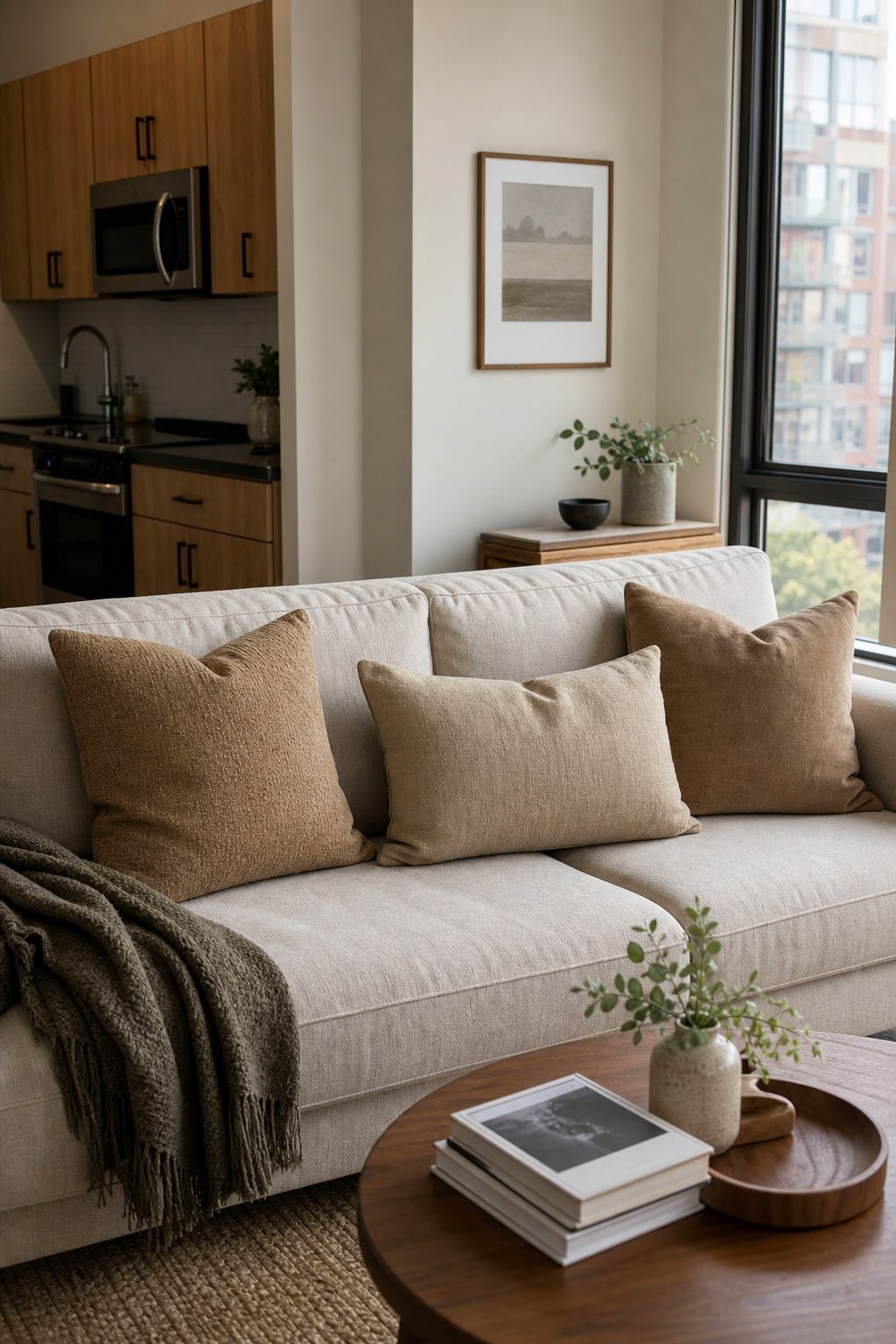
The three pillows can have different patterns, but they all need to live in the same color family. A combination in warm neutrals, or in blues, or in earth tones, reads as cohesive. A combination that mixes unrelated colors reads as a jumble.
This single discipline is what holds the rule of three together. The patterns can vary as much as you like as long as the palette stays tight. It is a free constraint, just a choice in which covers to buy, and it does more for a cohesive look than anything else.
3. Vary the Textures, Not Just the Patterns


Beyond pattern, the combination needs varied texture. A chunky knit, a smooth velvet, a woven linen, a boucle, the mix of textures is what gives the pillow group depth and a styled, layered feeling, especially when the colors are tight.
Texture is doing quiet work, it adds interest the eye registers even when the colors are all similar. Three pillows in the same tone but in three different textures still reads as a styled, intentional combination. It is the layer most people forget, and the one that separates a flat couch from a rich one.
Read more: Top 16 Shelves Above Couch Decor Ideas to Inspire Your Space
4. Stick to Odd Numbers


Throw pillow combinations almost always look better in odd numbers, three on a loveseat, five on a standard sofa, seven on a large sectional. Odd numbers feel intentional and a little asymmetric; even numbers can feel stiff and matched.
The odd-number rule pairs naturally with the rule of three, three pillows is the baseline combination. For a larger couch, simply repeat elements of the formula to get to five or seven without breaking the palette. It is a small structural rule that makes the whole arrangement read as styled.
Read more: Top 15 Table Behind Couch Decor Ideas to Enhance Your Living Space
Combinations by Couch Color
5. For a Gray Couch


A gray couch is a neutral canvas, which means it takes almost any palette. The combinations that work best add warmth to balance gray’s coolness: a solid in mustard, terracotta, or warm cream, a subtle pattern in the same warm family, and a bolder print tying them together.
Gray also takes a cool palette beautifully, blues and deeper greens, if the room leans cool. The key is picking a direction, warm or cool, and committing to it. A gray couch is the most forgiving base there is, so the rule of three does all the work, the same flexible-base thinking our Thanksgiving living room decor ideas rely on.
Read more: Top 17 Living Room Wall Decor Ideas Above Couch for a Real Focal Point
6. For a Beige or Cream Couch


A beige or cream couch is warm and soft, and the pillow combinations that work lean into that. A solid in a deeper earth tone, a subtle pattern in warm neutrals, and a bolder print in terracotta, rust, or a warm geometric keep the whole couch feeling cohesive and inviting.
A beige couch can also take a soft contrast, muted sage, dusty blue, warm gray, as long as the tones stay gentle rather than sharp. The warmth of the base is the guide. It is a couch color that rewards a layered, textural combination since the base itself is so soft.
7. For a Navy or Dark Blue Couch


A navy couch is a statement base, and the pillow combinations that work give the eye places to land. A solid in cream or warm white, a subtle pattern that bridges navy and the lighter tones, and a bolder print in mustard, rust, or a warm pattern create a rich, balanced look.
Navy pairs especially well with warm metallics and earthy accents, which keep the dark base from feeling heavy. The lighter solid is essential here, it breaks up the depth of the navy. It is a couch color that looks genuinely sophisticated with the right combination layered against it.
Read more: Top 15 Console Table Behind Sofa Decor Ideas to Elevate Your Living
8. For a Green Couch


A green couch, sage, olive, or forest, is having a moment, and the pillow combinations that work depend on the green’s tone. For a sage or olive couch, warm neutrals and terracotta read beautifully. For a deep forest couch, cream, mustard, and warm patterns balance the richness.
Green is a natural color, so combinations that lean earthy and organic, warm neutrals, browns, rust, feel the most cohesive. The rule of three keeps it from looking matchy. It is a couch color with real personality, and the right combination lets that personality read as styled rather than loud.
Read more: Top 17 Sofa Corner Decor Ideas to Style the Spot Beside the Couch
9. For a White Couch


A white couch is a clean, bright canvas, and the pillow combinations that work can go almost any direction. A monochrome combination in textured whites and creams reads as serene and modern; a combination with one bold color reads as fresh and intentional.
White especially rewards a textural combination, since the tight palette lets the chunky knit, the velvet, and the linen do the visual work. A white couch is the blank slate that lets the rule of three shine in whatever palette suits the room, the same clean-base flexibility our best Christmas decor ideas for the living room builds on.
10. For a Bold or Patterned Couch

A bold or already-patterned couch needs pillow combinations that calm rather than compete. Pull one color from the couch itself and build the combination around it, mostly solids and very subtle patterns in that pulled color, with at most one gentle print.
The couch is already the statement, so the pillows support rather than fight it. Pulling a color directly from the couch is what ties the whole arrangement together. It is the one case where the rule of three flexes toward more solids, because the couch is providing the bold print itself.
Read more: Top 18 Bed Throw Pillow Ideas That Will Transform Your Bedroom
Combinations by Style
11. A Modern Minimalist Combination


A modern minimalist combination keeps the palette tight and the patterns quiet. Two or three pillows in a near-monochrome palette, varied mostly by texture, a clean linen, a smooth knit, a subtle geometric, read as calm and intentional.
The minimalist combination leans hard on texture since the colors and patterns are restrained. Odd numbers and clean shapes keep it modern. It is the combination for a living room that wants the styled, layered feeling without any visual noise, the same restraint our Easter living room decor applies throughout.
Read more: Top 17 Hidden Bar Ideas for Home to Make Drinks Without Cluttering
12. A Cozy Boho Combination


A cozy boho combination layers warm, earthy tones and rich textures. Macrame, woven fabrics, chunky knits, tassels, and fringe in terracotta, mustard, cream, and warm browns create the gathered, layered boho feeling.
Boho is the one style where the rule of three can stretch a little, more pillows, more texture, more layering, as long as the warm earthy palette holds it together. The textures are the heart of the look. It is the combination for a living room that wants warmth, softness, and a collected feeling.
13. A Classic Traditional Combination


A classic traditional combination uses richer patterns and a more formal palette. A solid in a deep tone, a subtle pattern like a small damask or a refined stripe, and a bolder traditional print, in jewel tones or rich neutrals, read as polished and timeless.
The traditional combination still follows the rule of three, just with more formal patterns and a richer palette. Velvet and refined woven textures suit it well. It is the combination for a living room that leans classic and wants the couch to feel settled and elegant.
Read more: Top 18 Bar Ideas for Home Living Rooms That Actually Look Good
14. A Coastal or Casual Combination


A coastal or casual combination keeps things light, airy, and relaxed. Blues, whites, and natural tones, with textures like linen, soft cotton, and woven natural fibers, create the easy, breezy coastal feeling.
The coastal combination follows the rule of three with a light, fresh palette and casual textures rather than formal ones. Stripes work especially well as the subtle pattern. It is the combination for a living room that wants to feel relaxed and unfussy, the same easy-breezy direction our coffee table summer decor ideas take.
Read more: Top 17 Modern Small Bar Ideas for Home That Actually Fit
Seasonal Swap Strategies
15. Swap Covers, Not Pillows, for the Season


The smartest seasonal strategy is swapping pillow covers, not whole pillows. Keep the same inserts year-round and change only the covers, which makes seasonal updates a small storage project rather than a full pillow replacement.
Covers store flat in a bin, so a full set for each season takes almost no space. This single approach turns seasonal pillow swapping from an expensive habit into a $40-to-$80 set of covers that lasts for years. It is the foundation of any seasonal swap strategy.
Read more: Top 17 Autumn Decor Ideas for Windows That Make Sills Feel Warm and
16. Shift the Palette, Keep the Formula


Seasonal swapping does not mean relearning how to style a couch, it means shifting the palette while keeping the rule of three. Warm rusts and deep tones for fall and winter, soft pastels and brights for spring and summer, the same solid-subtle-bold formula in a seasonal color family.
Because the formula stays constant, the seasonal swap is genuinely easy, just pick the season’s palette and apply the rule of three to it. The couch transforms with the season while the underlying styling logic never changes. It is the strategy that makes seasonal updates feel effortless.
17. Layer in One Seasonal Texture

Beyond color, one texture swap can carry a season. A chunky knit or a faux fur cover reads as fall and winter; a crisp linen or a light woven cover reads as spring and summer. Swapping even one cover for a seasonal texture shifts the whole couch.
The seasonal texture works alongside the palette shift, or even on its own if a full palette swap feels like too much. It is the lowest-effort seasonal update there is, one cover, one texture, and the couch feels right for the time of year. It is the same one-element-shifts-everything thinking our autumn decor ideas for living rooms use across the room.
Read more: Top 18 Rustic Autumn Decor Ideas for Living Rooms to Bring Nature
Want to transform your living room with just a few easy swaps?
The Aesthetic Apartment Makeover Guide breaks down the room-by-room styling and the budget-friendly swaps so the whole home comes together affordably. Currently $17 before the price goes up to $27.
Frequently Asked Questions
What is the rule for throw pillow combinations?
Mix a solid color, a subtle pattern, and a bolder print, all within the same color family, in varied textures. Stick to odd numbers, three on a loveseat, five on a sofa, seven on a sectional. This formula makes any throw pillow combination read as intentional rather than random.
How do I pick throw pillows for my couch color?
A gray couch takes almost any palette and benefits from warm tones to balance its coolness. A beige couch leans warm and earthy. A navy couch needs a lighter solid to break up the depth. A bold or patterned couch needs mostly solids in a color pulled from the couch itself.
How many throw pillows should I put on a couch?
Odd numbers always look better: three on a loveseat, five on a standard sofa, seven on a large sectional. Odd numbers feel intentional and a little asymmetric, while even numbers can read stiff and matched. Repeat elements of the rule of three to scale up without breaking the palette.
How do I swap throw pillows for the seasons?
Swap the covers, not the whole pillows, keeping the same inserts year-round. Shift the palette to seasonal tones while keeping the solid-subtle-bold formula, and layer in one seasonal texture like a chunky knit for winter or crisp linen for summer. Covers store flat and last for years.
How do I make throw pillows look styled, not random?
Follow the rule of three, keep everything in the same color family, vary the textures as much as the patterns, and stick to odd numbers. The combination of a tight palette and varied texture is what separates a styled couch from a random pile of cushions.
Key Takeaways
- Follow the rule of three: a solid, a subtle pattern, and a bolder print.
- Keep every pillow in the same color family for a cohesive look.
- Vary the textures, not just the patterns, to add depth.
- Stick to odd numbers: three, five, or seven depending on couch size.
- Match the combination to your couch color, gray, beige, navy, green, or white.
- Adapt the rule of three to your style, modern, boho, traditional, or coastal.
- Swap covers, not pillows, and shift the palette while keeping the formula.
Final Thoughts
Throw pillows are the fastest way to change how a living room feels, and the difference between styled and random comes down to one simple rule: a solid, a subtle pattern, and a bolder print, in one color family, in varied textures. From there, the perfect combination just depends on your couch color, your style, and the season. Pillow covers are cheap and easy to swap, so once you know the formula, even a small budget can make any couch look genuinely intentional.
Last update on 2026-09-15 / Affiliate links / Images from Amazon Product Advertising API
