
Quick Answer: Japanese zen home decor is a whole-home aesthetic built on calm, simplicity, and natural materials. The 2026 framing is Japandi, Japanese minimalism softened with Scandinavian warmth, so the look leans on light wood, low furniture, linen and cotton, paper lanterns, shoji screens, and a soft harmonious palette. The mindset is wabi-sabi, finding beauty in the simple and imperfect. Applied across the home, it is less about a single room and more about a consistent, peaceful way of decorating everywhere.
There is a particular calm to a Japanese zen interior, and it is not emptiness. It is the sense that everything in the room was chosen on purpose, that the space is doing exactly what it needs to and nothing more. That feeling is a style, and it can be learned.
This post is the style umbrella, the whole-home approach, not a single-room walkthrough. Japanese zen decor is a philosophy and an aesthetic applied across an entire space: the wabi-sabi mindset of finding beauty in the simple and imperfect, the natural materials, the low furniture, the soft light, the restraint. The 2026 framing for it is Japandi, the mash-up of Japanese simplicity and Scandinavian warmth that is leading interiors right now, light wood, low silhouettes, quiet luxury, craftsmanship, soft harmonious palettes. It is the warm, livable version of zen.
Because this is the umbrella, it links down to the room-by-room work rather than redoing it, the living room, the bedroom, the bathroom, the kitchen each have their own deep guides, and a dedicated practice space has our zen and serene home gym decor. The 17 ideas ahead move from the foundations of the style, to natural materials and furniture, to light and plants and calm details, to applying it room by room, including in a small apartment, so you have one consistent, peaceful way of decorating the whole home.
Want a calm, intentional aesthetic running through your whole apartment, not just one room?
The Aesthetic Apartment Makeover Guide walks you through applying a consistent, peaceful style across every room, with real, budget-friendly ideas you can actually use. Grab it now for just $17, the price goes up to $27 soon.


Recommended blogs to read:
- Living room zen home decor
- Bedroom zen home decor
- Bathroom zen home decor
- Kitchen zen home decor
- Zen curtains home decor
The Foundations of Japanese Zen Style
1. Start With the Wabi-Sabi Mindset
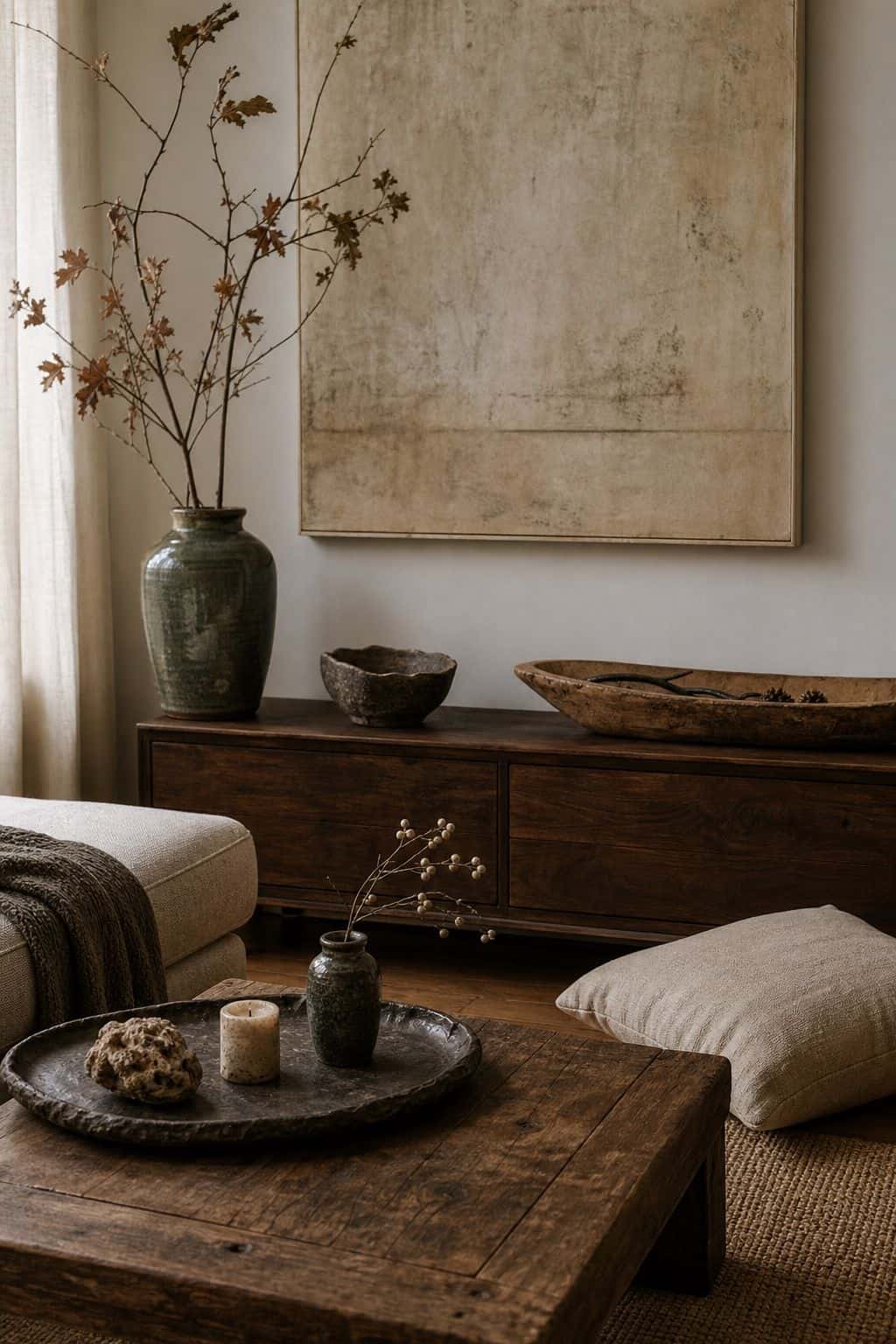


Japanese zen decor starts as a mindset before it is a shopping list, and the mindset is wabi-sabi: finding beauty in the simple, the natural, and the imperfect. It is the opposite of the flawless, matched, showroom impulse.
Wabi-sabi means a handmade ceramic with a slight wobble is more beautiful than a perfect factory one, that a worn wood surface has more warmth than a flawless laminate, that a room does not need to be full or finished to be right. Adopting this mindset changes every decision that follows, you start choosing the simple, the natural, the characterful. The wabi-sabi mindset is the true foundation of the style, and it is free, it is a way of seeing, not a thing to buy.
Read more: Top 17 Zen Chic Home Decor Ideas for a Refined Minimalist Home
2. Build a Soft, Natural Color Palette
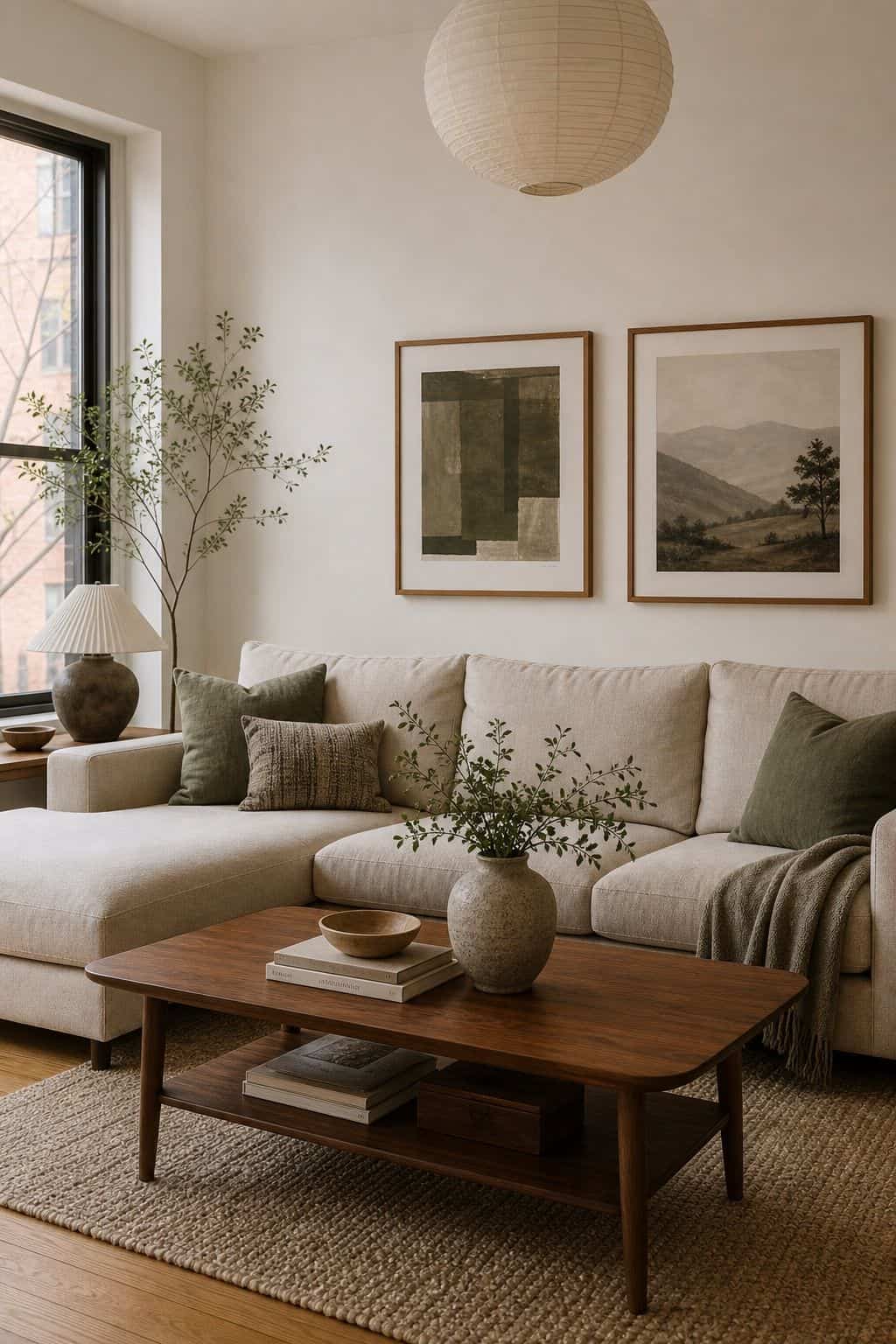


Japanese zen decor lives in a soft, natural, harmonious palette, warm whites, soft beiges, muted greens, the grey-browns of stone and wood, the colors of nature rather than the colors of a paint deck.
The 2026 Japandi direction warms this further, the cold all-white version is out, the soft warm version is in, a palette anchored by light wood tones and gentle neutrals. Keep the whole home in this close, low-contrast range so it reads as one continuous calm space. The palette is the second foundation after the mindset, it is the visual decision that ties every room together, and it is what makes a whole-home zen approach feel cohesive rather than like a series of separate rooms.
3. Declutter and Simplify Everything
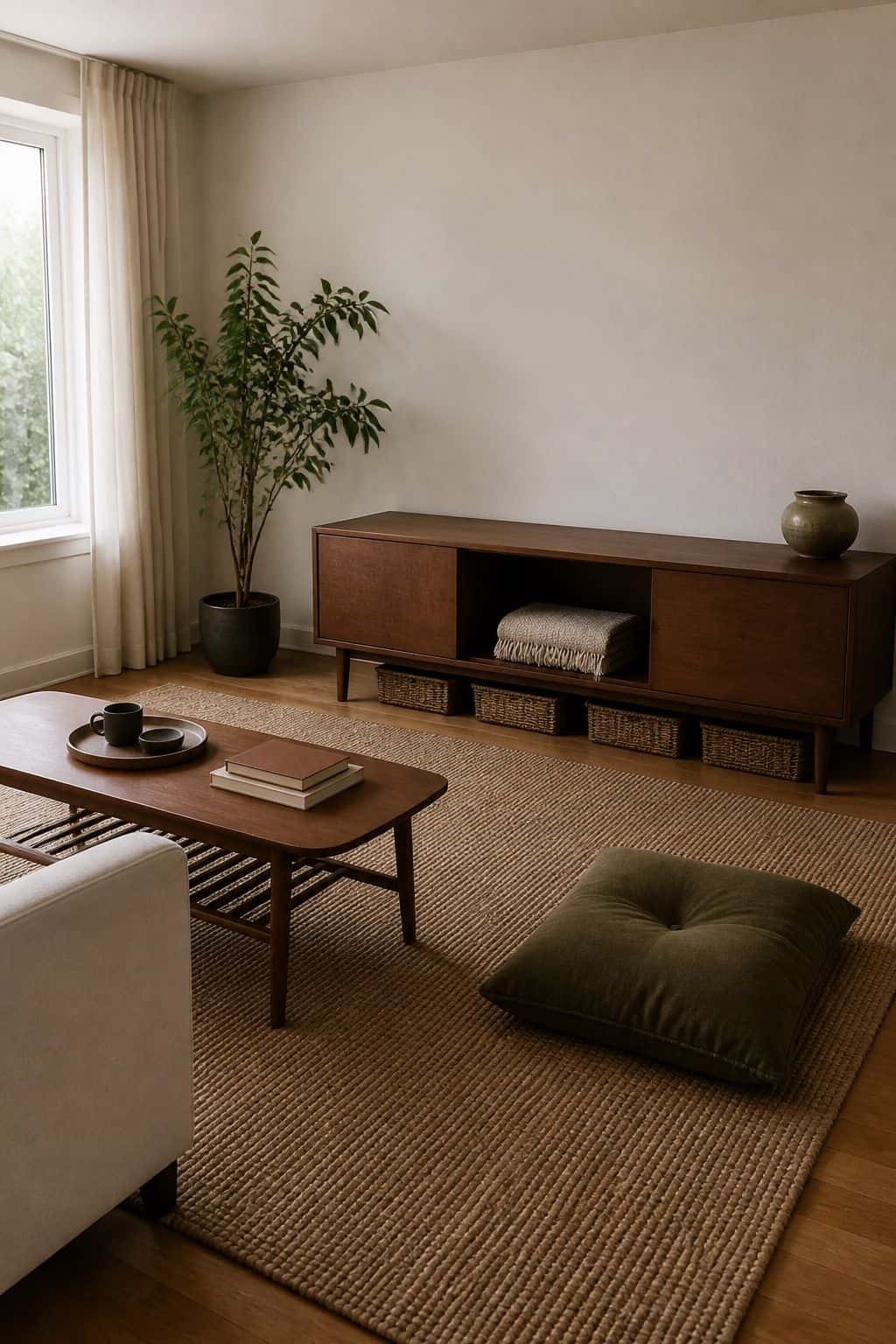


There is no Japanese zen home without decluttering, simplicity is structural to the style, not a finishing touch. The work is honest editing: every room reduced to what is genuinely useful or genuinely loved, and the excess cleared out.
This is not about a stark, empty home, wabi-sabi is warm, not bare, it is about the things that stay having room to be seen and the surfaces being mostly calm. Closed storage over open clutter, clear surfaces, negative space treated as part of the design. Decluttering is the foundation that costs nothing and matters most, a zen palette in a cluttered room still reads as chaos. Simplify first, and everything else in the style has room to work.
Read more: Top 16 Zen Home Office Decor Ideas for a Focused Calming Workspace
4. Embrace the Japandi Warmth
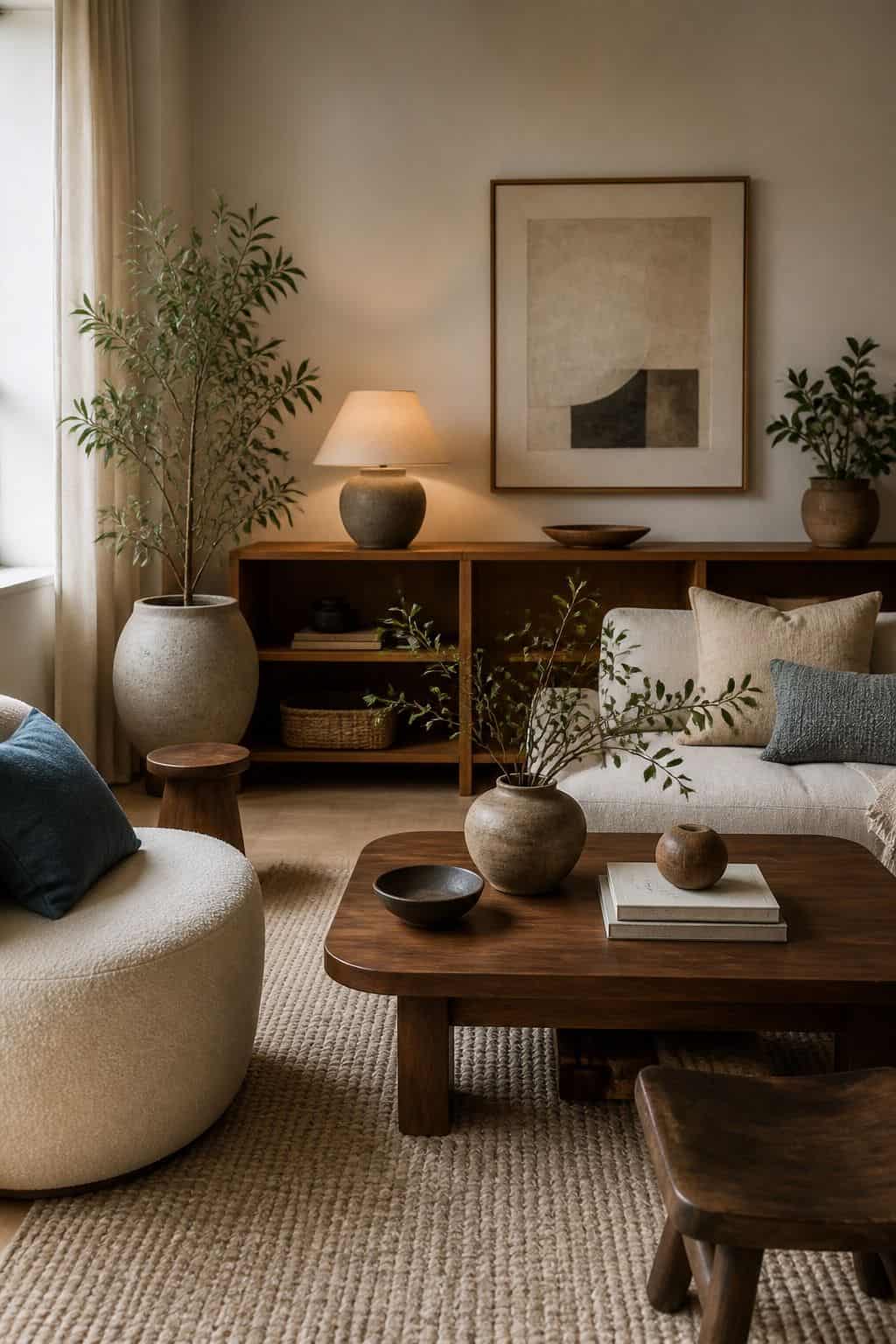


The defining 2026 move in Japanese zen decor is leaning into Japandi, the blend of Japanese minimalism with Scandinavian warmth. It is what keeps the style from feeling cold or austere, and it is the version of zen most people actually want to live in.
Japandi means the Japanese restraint and natural materials stay, but they are softened with Scandinavian coziness, light woods, soft textiles, gentle curves, a hygge-adjacent comfort. It is quiet luxury, simple but warm, minimal but inviting. Embracing the Japandi warmth is the framing decision that makes the whole-home zen approach feel livable, and it is the thread that runs through every idea ahead, the same warm-minimalist instinct behind a good small apartment modern design.
Read more: Top 17 Zen Boho Home Decor Ideas for Calm Bohemian Living
Natural Materials and Furniture
5. Bring in Wood and Bamboo Throughout
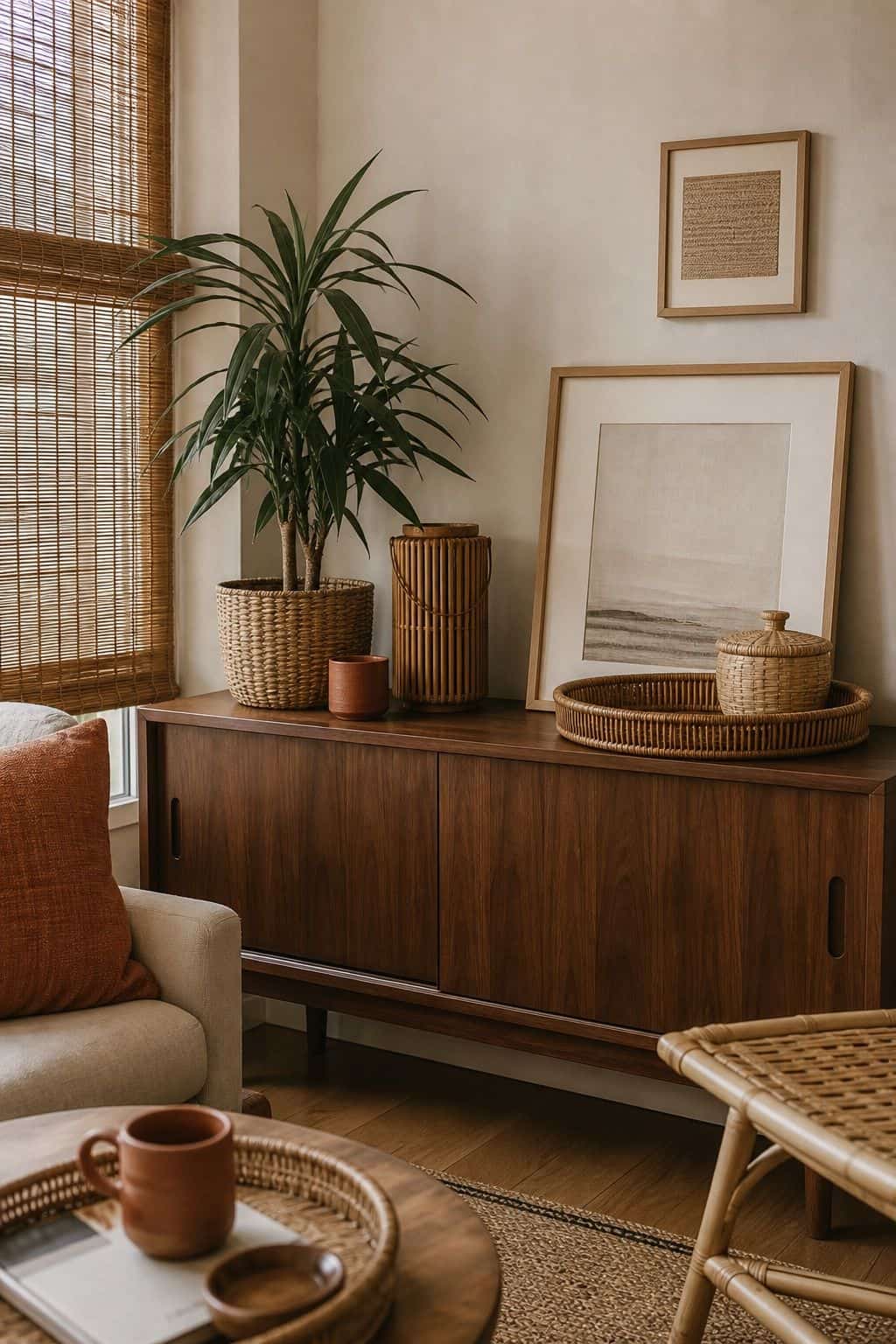


Wood and bamboo are the structural materials of Japanese zen decor, they carry the warmth and the connection to nature the whole style depends on. Light wood especially, the Japandi tone, in furniture, shelving, frames, small objects, repeated across the home.
Bamboo brings the same natural quality at a lighter, more affordable, more renter-friendly scale, in blinds, accessories, plants, small furniture. Stick to a consistent wood tone across rooms so the home reads as one cohesive space. Wood and bamboo are the materials that make a zen home feel grounded and alive rather than synthetic and flat, and using them consistently is what gives the whole-home approach its through-line.
Read more: Top 16 Zen Yoga Room Home Decor Ideas for a Calm Practice Space
6. Choose Low, Simple Furniture
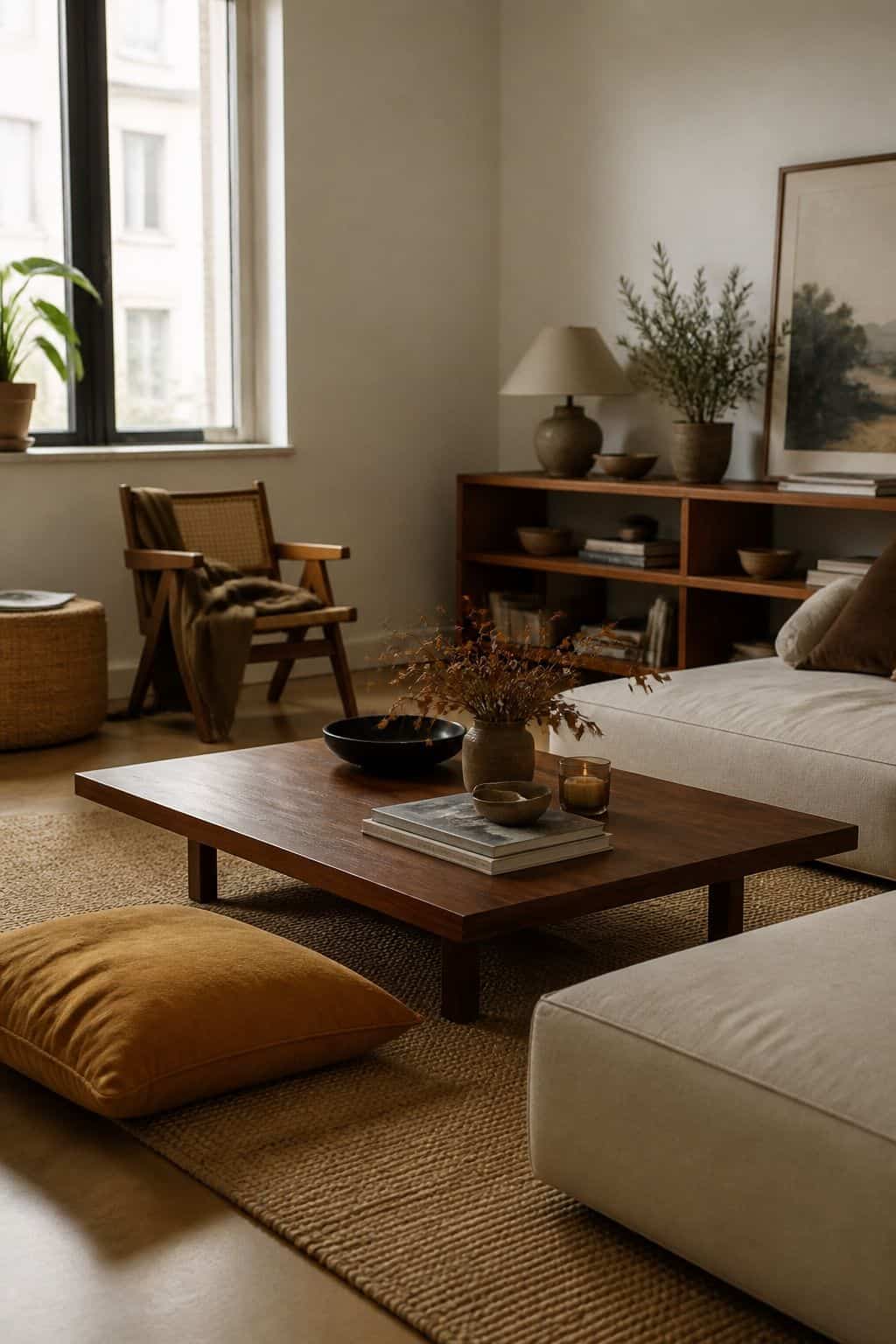


Japanese zen interiors sit low, a low platform bed, a low coffee table, low seating, low shelving, and the low horizon line is a big part of why the spaces feel calm and the ceilings feel high.
The furniture is also simple, clean lines, no ornate carving or fussy hardware, the shape doing the work quietly. Low and simple does not mean uncomfortable, a low sofa with deep cushions is genuinely cozy. In a small apartment, low furniture also opens the space up, the eye travels over it. Low, simple furniture is the foundational furniture choice of the style, and applied across the home it is one of the clearest markers of a Japanese zen interior.
7. Add Tatami, Floor Cushions, and Floor-Level Living
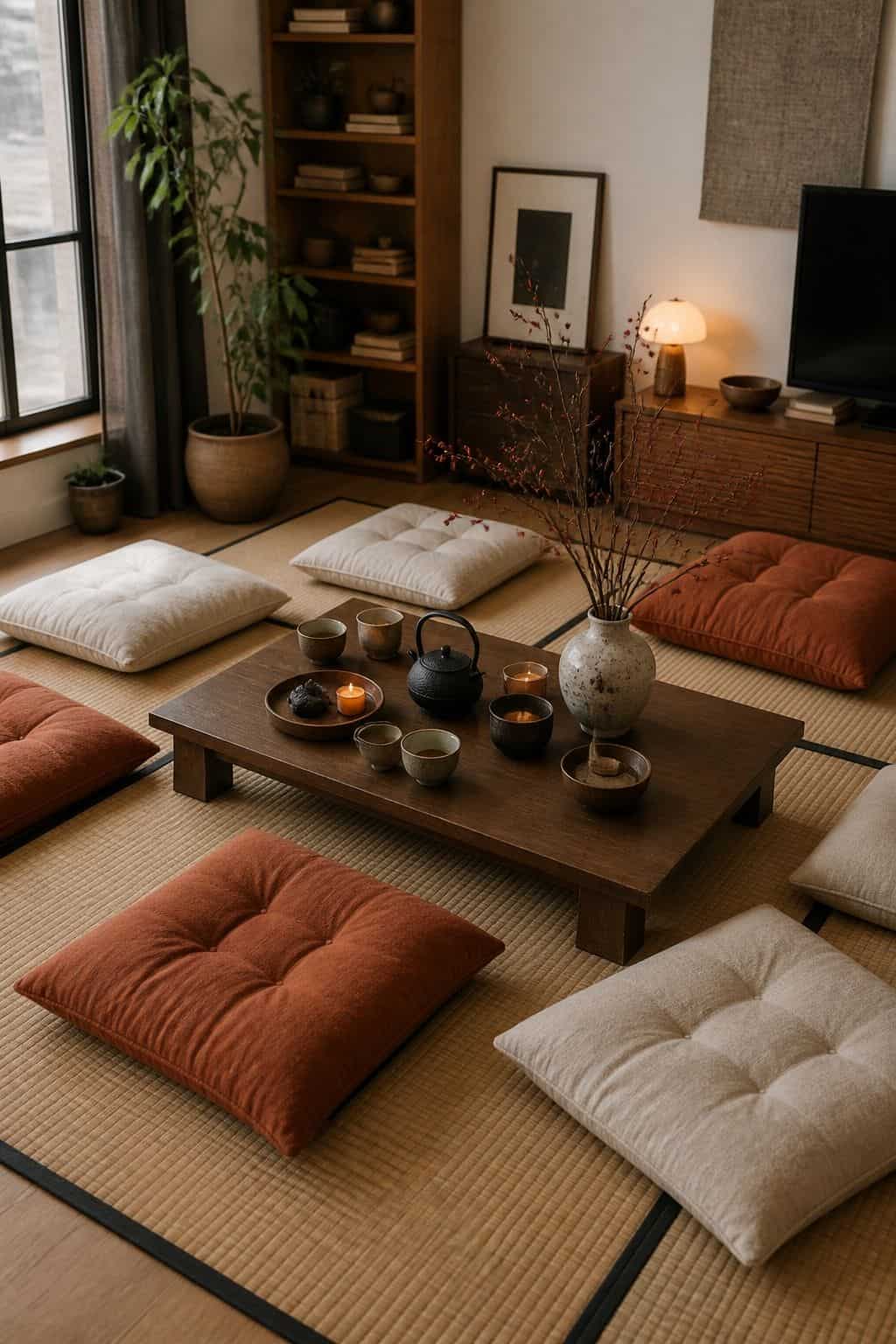


Japanese zen decor embraces floor-level living in a way Western interiors usually do not, tatami mats, floor cushions, low tables, the option to sit and gather closer to the ground. It brings the room’s energy down and makes it feel grounded and intimate.
You do not need a full tatami room, a tatami mat as a defined zone, a few floor cushions around a low table, a reading corner at floor level, all bring the element in at an apartment scale. Floor cushions also flex, they store easily and pull out for guests. Floor-level living is one of the more distinctly Japanese elements of the style, and even a small dose of it shifts a room toward the zen aesthetic.
Read more: Top 16 Zen Home Entrance Decor Ideas for a Welcoming First Impression
8. Layer in Linen and Cotton Textiles
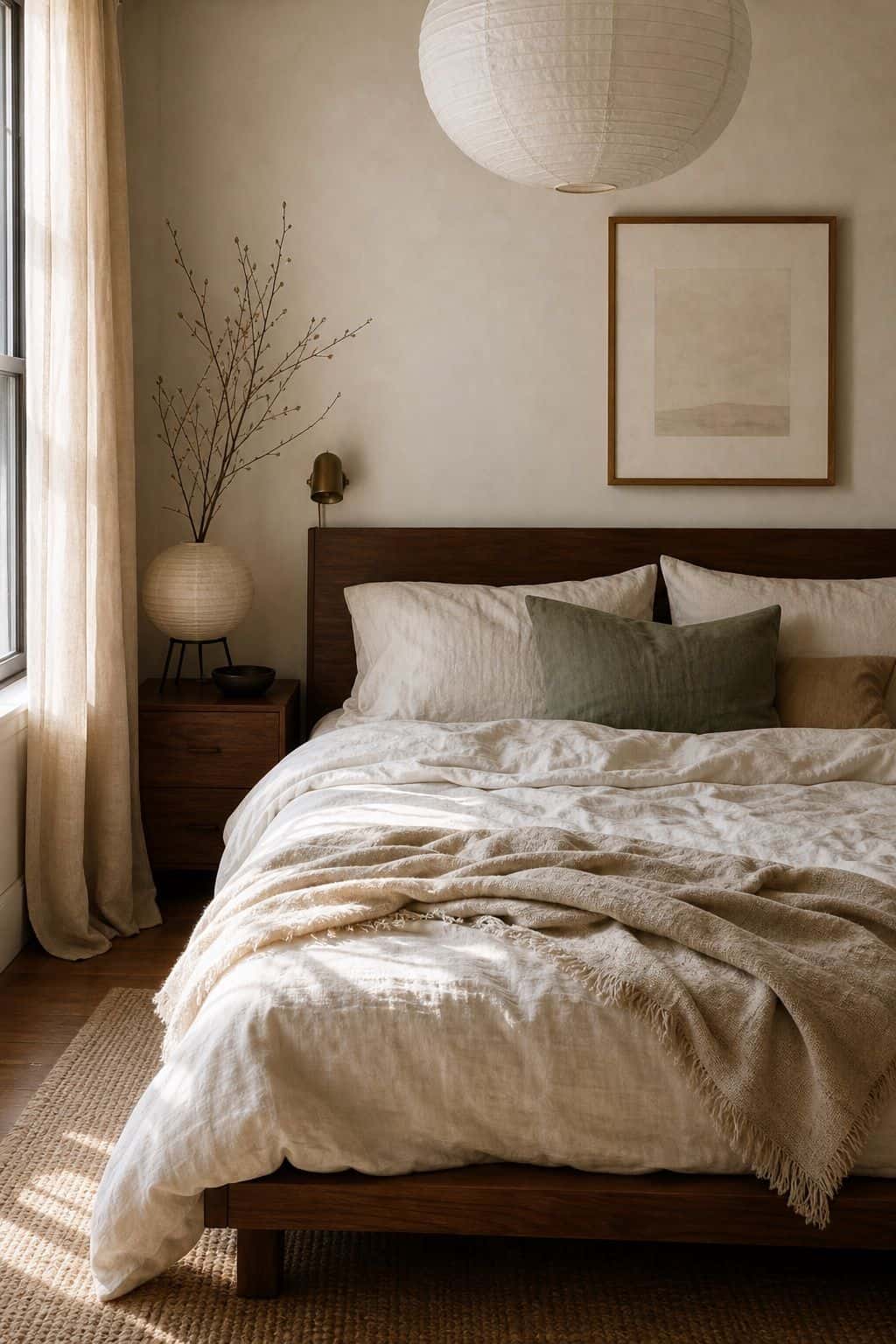


Natural-fiber textiles are what give a Japanese zen home its softness and keep the minimalism from going cold. Linen and cotton, in the bedding, the curtains, the cushion covers, the throws, the slightly rumpled, breathable, natural fabrics that age gracefully.
Linen especially suits the wabi-sabi spirit, it has a soft imperfection that looks intentional and gets better with use. Keep the textiles in the soft natural palette and let the textures vary gently. Natural-fiber textiles are the comfort layer of the whole-home zen approach, they soften the wood and the clean lines, and they are an easy, renter-friendly way to bring the style into any room.
Read more: Top 17 Cozy Zen Modern Home Decor Ideas for a Calm Home
9. Use Shoji Screens and Room Dividers
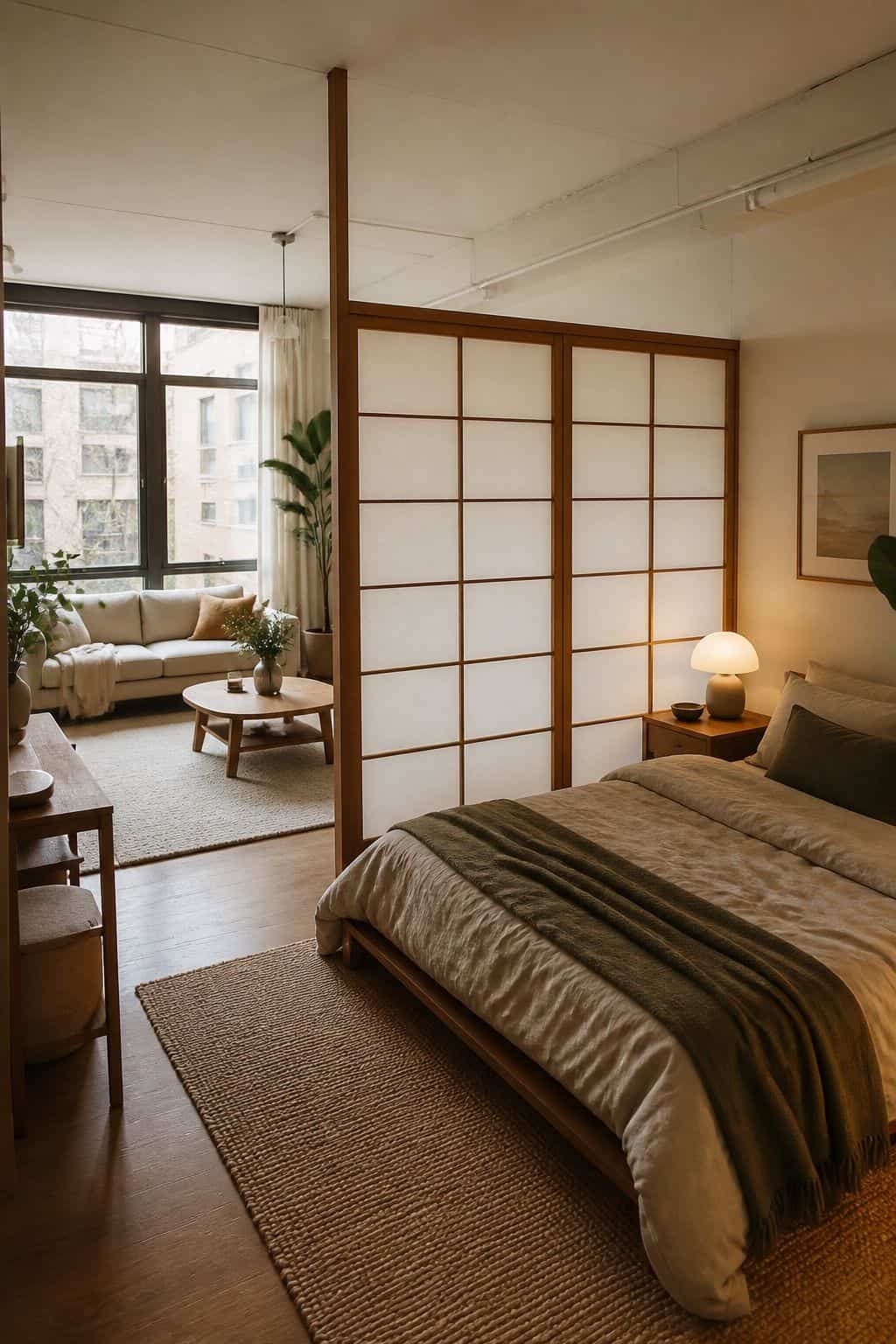


Shoji screens, the light wood-framed paper panels, are one of the most recognizably Japanese elements, and they do real work in a home, dividing space softly, filtering light into a gentle glow, adding architectural calm.
A freestanding shoji-style screen can divide a studio, screen a sleeping area, soften a corner, all without permanence, which suits a renter. Even shoji-inspired pieces, a paper-and-wood lamp, a slatted divider, bring the quality in. They diffuse light beautifully, which is central to the zen feel. Shoji screens are the architectural signature of Japanese zen decor, and a freestanding one is the renter-friendly way to bring that structural calm into the home.
Light, Plants and Calm Details
10. Prioritize Diffused, Natural Light
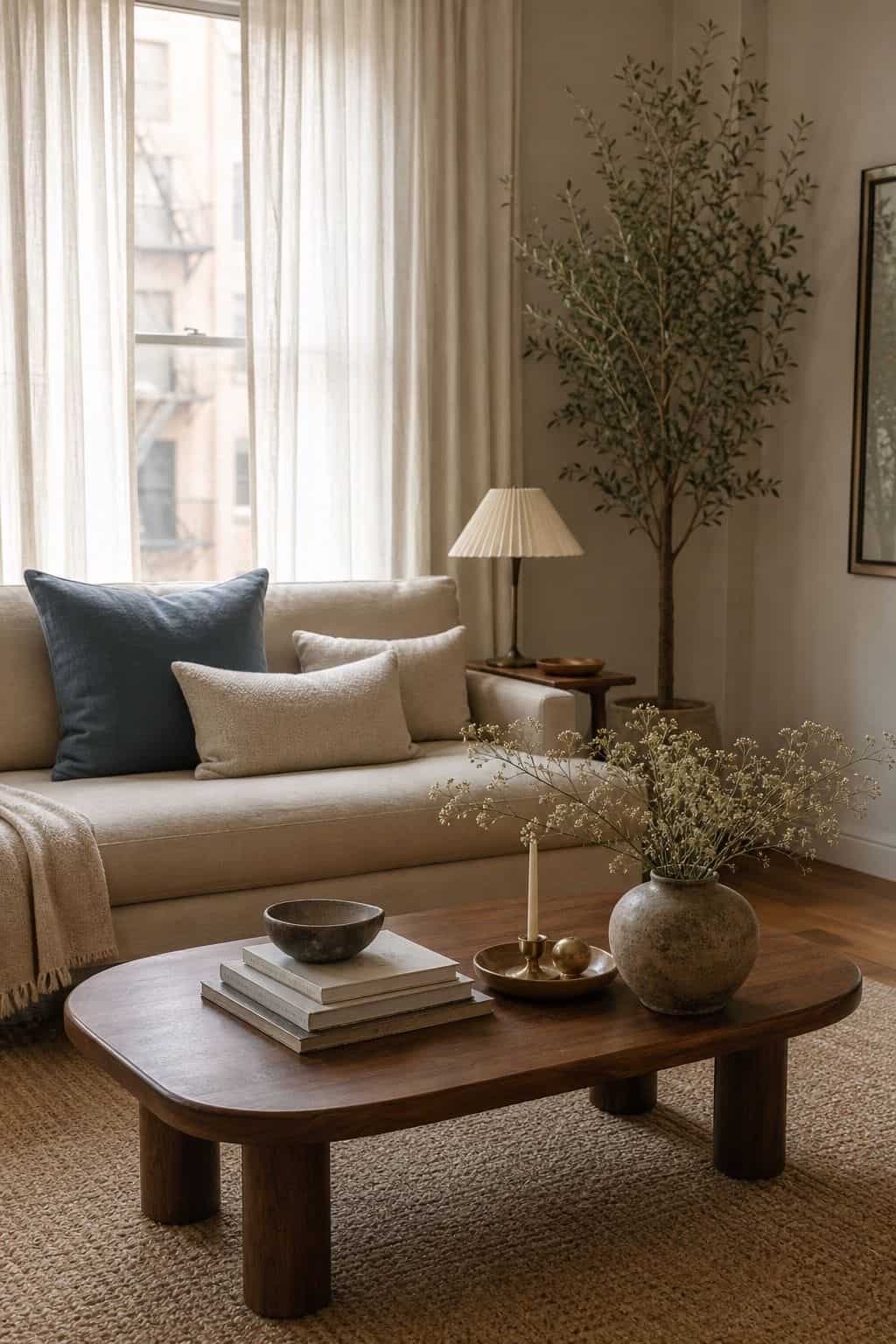


Light is central to Japanese zen decor, and the goal is always diffused and soft rather than bright and direct. Natural daylight filtered through sheer panels or shoji screens, the harsh edges softened into a gentle glow.
Where artificial light is needed, it follows the same principle, warm, low, layered, never a single harsh overhead. Swap cool bulbs for warm ones, add soft lamp light, let the home be gently lit rather than floodlit. Diffused, soft light is what makes every other element of the style read the way it should, the wood, the textiles, the calm palette all need soft light to feel right. Prioritizing diffused light is a whole-home decision that quietly shapes the entire space.
Read more: Top 17 Zen Porch Home Decor Ideas for a Calm Outdoor Retreat
11. Add Paper Lanterns and Soft Lighting
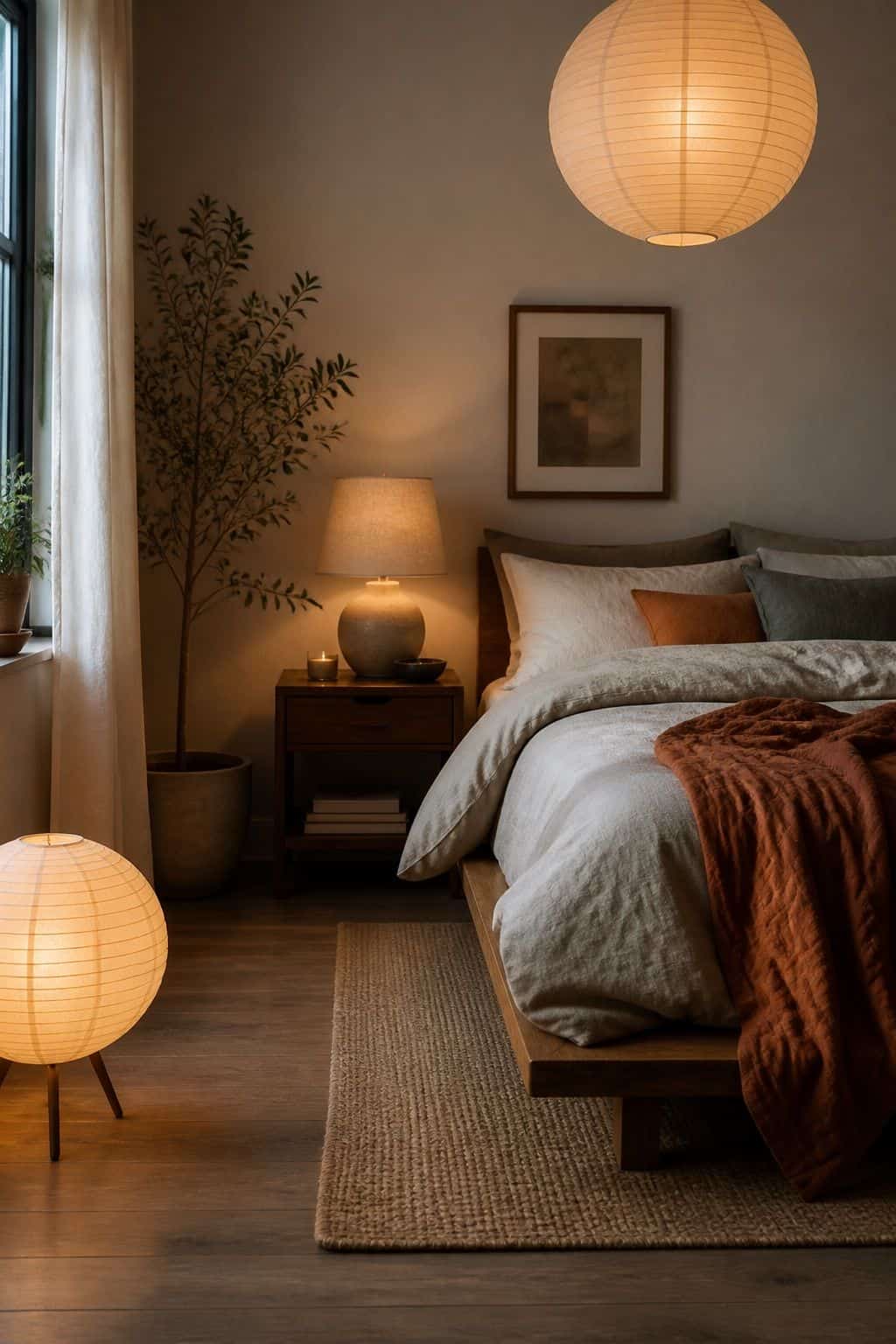


Paper lanterns are the lighting signature of Japanese zen decor, a paper lantern pendant, a floor lantern, a small table lantern, casts exactly the soft, warm, diffused glow the style wants, and the form itself is quietly beautiful.
They are also affordable and renter-friendly, a paper lantern is one of the cheapest ways to bring an authentic zen element into a room. Pair them with warm bulbs and use them as the layered, soft sources that replace the harsh overhead. A few paper lanterns through the home tie the lighting together in the zen language. Paper lanterns are the accessible, characterful lighting choice that makes the whole-home zen approach feel cohesive and authentic.
Read more: Top 16 Zen Fireplace Mantel Home Decor Ideas for a Quietly Beautiful
12. Bring in Greenery and Bonsai
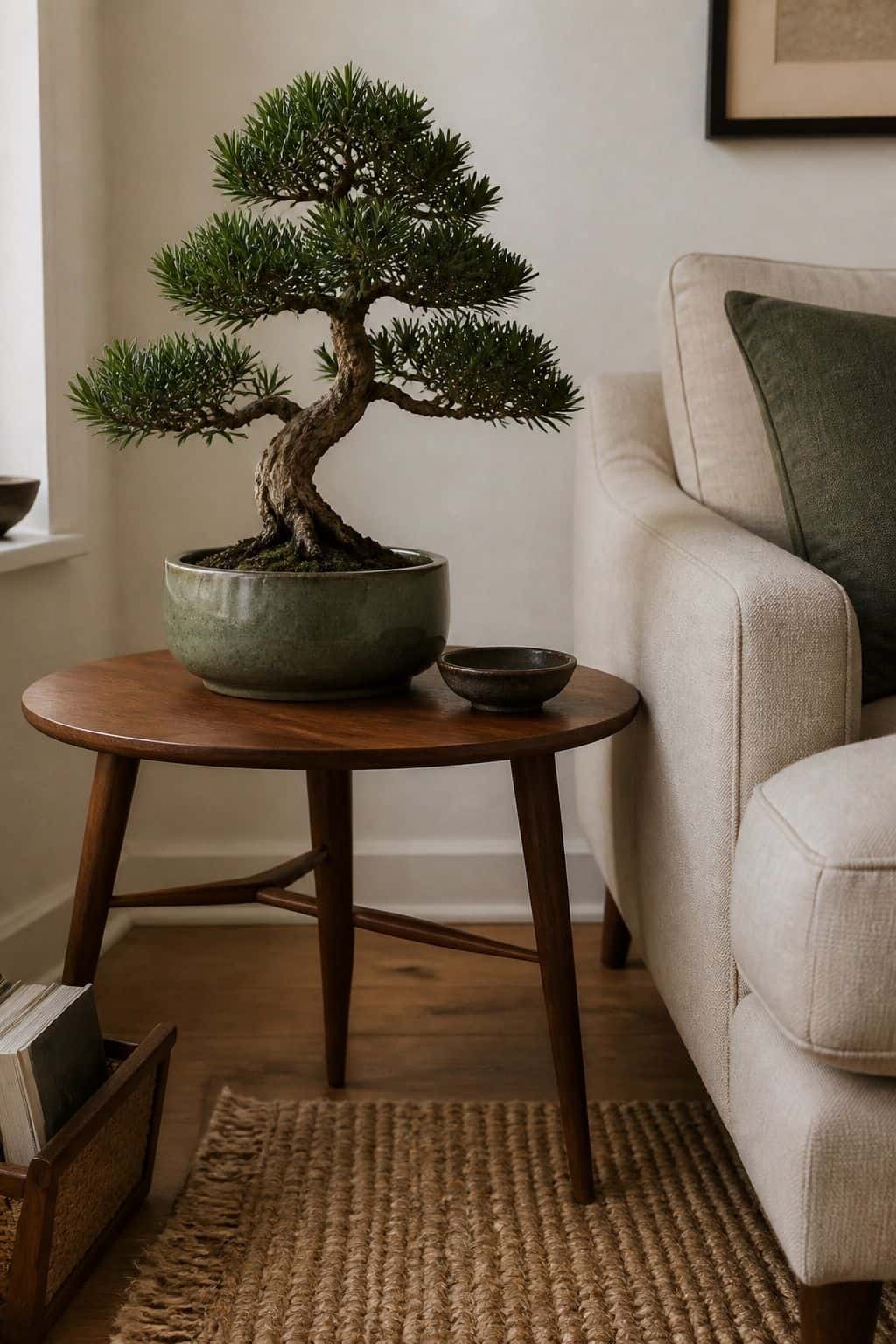


A Japanese zen home needs living green, but the approach is restrained, one carefully placed plant rather than a jungle. A bonsai, a single sculptural branch, a bamboo plant, a simple potted green, chosen and placed deliberately.
The restraint is the point, in wabi-sabi, one well-placed plant has more presence than many scattered ones. A bonsai in particular embodies the style, it is nature, simplicity, patience, and imperfection in one small living object. Set the greenery in natural pots, ceramic, stoneware, woven, that fit the palette. Greenery and bonsai are the living element of the whole-home zen approach, and the deliberate, restrained way they are used is as important as the plants themselves.
13. Choose Minimalist, Meaningful Decor
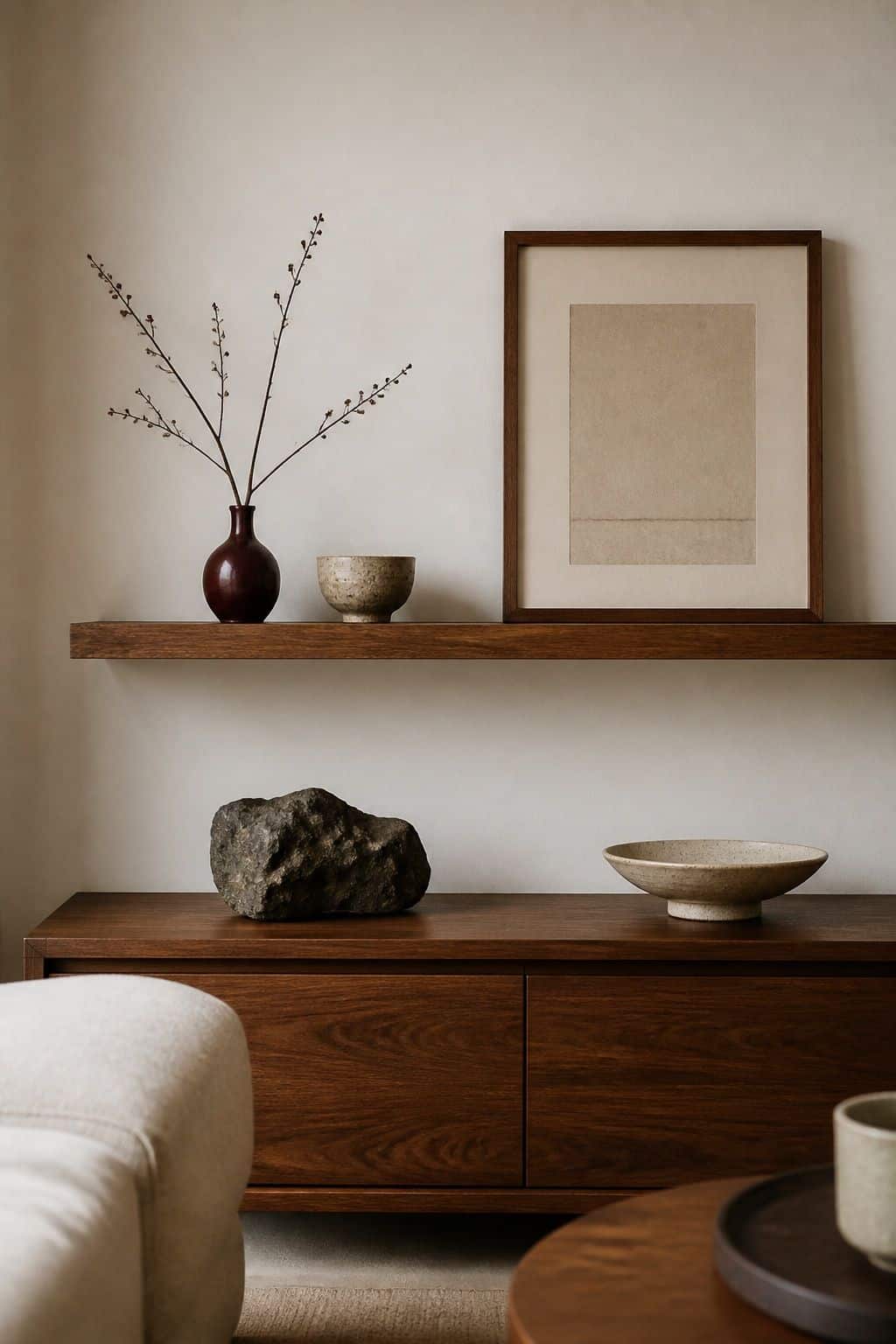


Japanese zen decor is sparing with decorative objects, and what does appear is minimalist and meaningful. A single piece of calm art, a beautiful handmade ceramic, one sculptural object, a small arrangement, each given space.
The wabi-sabi spirit favors the simple, the handmade, the slightly imperfect over the polished and the plentiful. Negative space around an object is part of the composition, not a gap. Across the home, this means most surfaces stay calm and the few objects that stay carry real weight. Minimalist, meaningful decor is the finishing discipline of the style, and it is the difference between a Japanese zen home and a merely minimal one, the zen version has soul in the few things it keeps.
Read more: Top 16 Entryway Zen Home Decor Ideas for a Calm Landing Spot
Room-by-Room and Small-Space Application
14. Apply the Style Room by Room
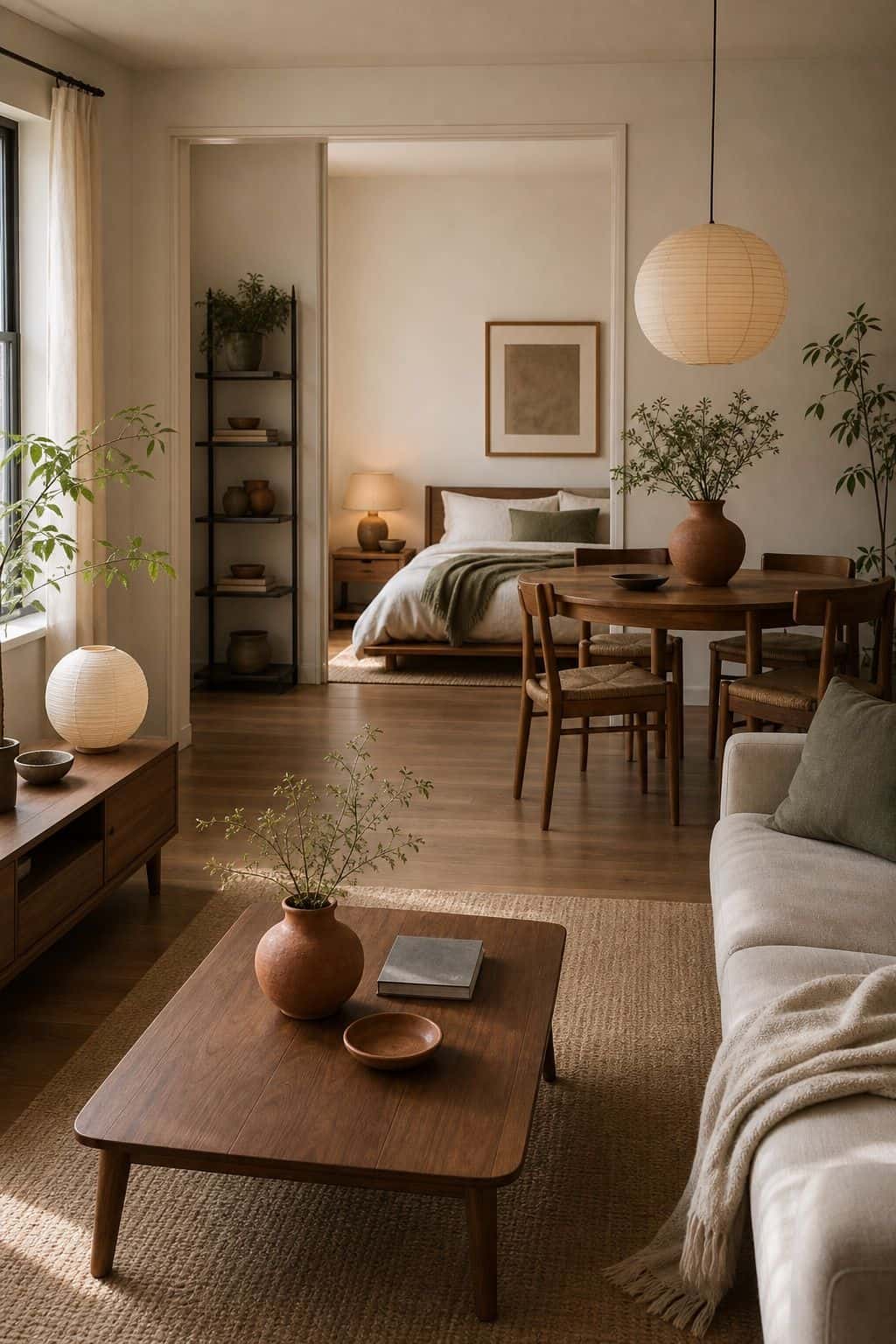


Japanese zen decor is a whole-home style, but it is applied one room at a time, and each room translates the same principles a little differently. The living room leans on low seating and a soft palette, the bedroom on the low platform bed and linen, the bathroom on natural materials and calm, the kitchen on clear surfaces and wood.
The foundations stay constant, the mindset, the palette, the materials, the light, and each room expresses them in its own way. The deep, room-specific work has its own guides for the living room, bedroom, bathroom, and kitchen, this umbrella post is the consistent thread that ties them together. Applying the style room by room, with the same foundations throughout, is what turns separate zen rooms into one cohesive Japanese zen home.
Read more: Top 17 Zen Garden Home Decor Ideas for a Calm, Serene Space
15. Adapt Japanese Zen for a Small Apartment
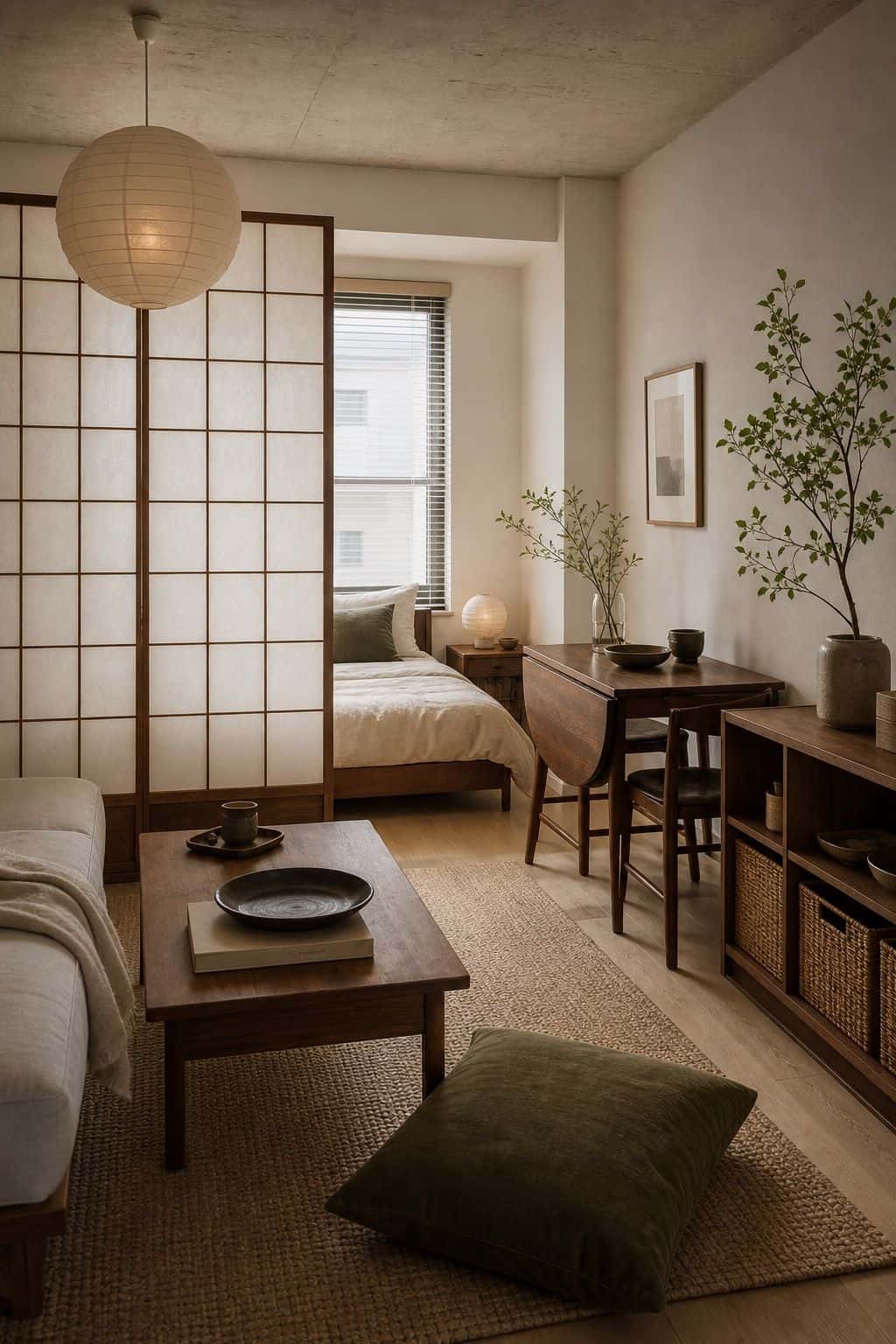


Japanese zen decor suits a small apartment exceptionally well, the whole style is about simplicity, restraint, and making a space feel calm and intentional rather than full. The low furniture opens the space, the editing keeps it uncluttered, the soft palette makes it feel larger.
Scale the elements down, a freestanding shoji screen instead of a tatami room, a paper lantern instead of an elaborate fixture, one bonsai instead of a garden. The small footprint is an advantage here, not a limitation, zen is easier to achieve in a small edited space than a large full one. Adapting Japanese zen for a small apartment is genuinely one of the best style choices a small space can make, and it pairs naturally with a cozy small apartment decorating ideas.
Read more: 18 Neutral Home Decor Essentials From Amazon That Work in Any Space
16. Use Renter-Friendly Zen Swaps
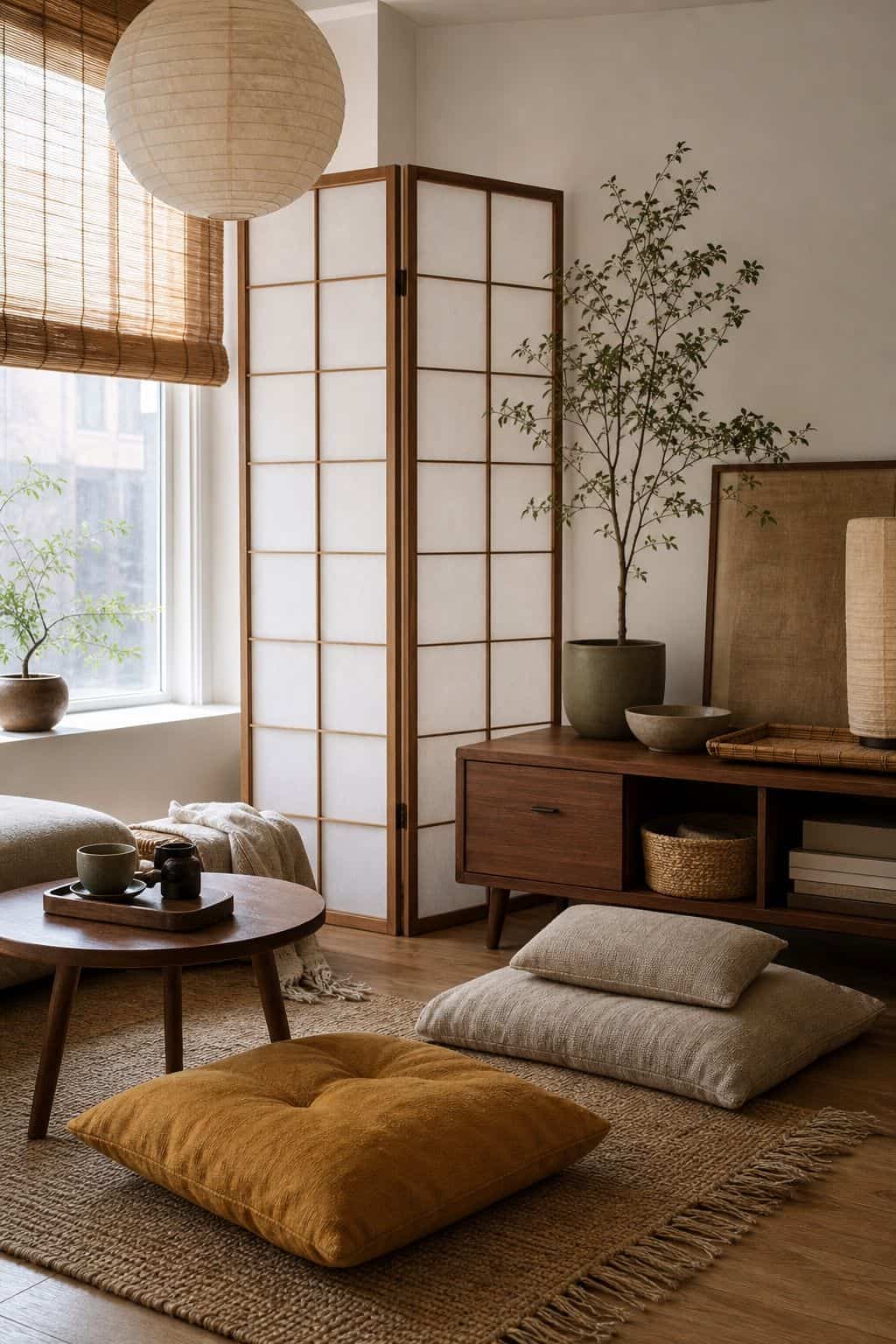


Most of Japanese zen decor is renter-friendly by nature, the style is about objects, materials, and editing rather than construction. A freestanding shoji screen, paper lanterns, low furniture, bamboo blinds, linen textiles, floor cushions, none of it needs drilling or permanent changes.
Where you cannot change the walls or the floors, the materials and the light do the work, natural-fiber textiles, soft lamp light, wood and bamboo accessories, a decluttered space. The wabi-sabi mindset also helps, you are not chasing a perfect renovation, you are finding calm in the simple and the imperfect. Renter-friendly zen swaps mean the whole-home style is genuinely available to anyone, in any apartment, the same way good modern apartment decor ideas work around what cannot change.
17. Decide Where to Start
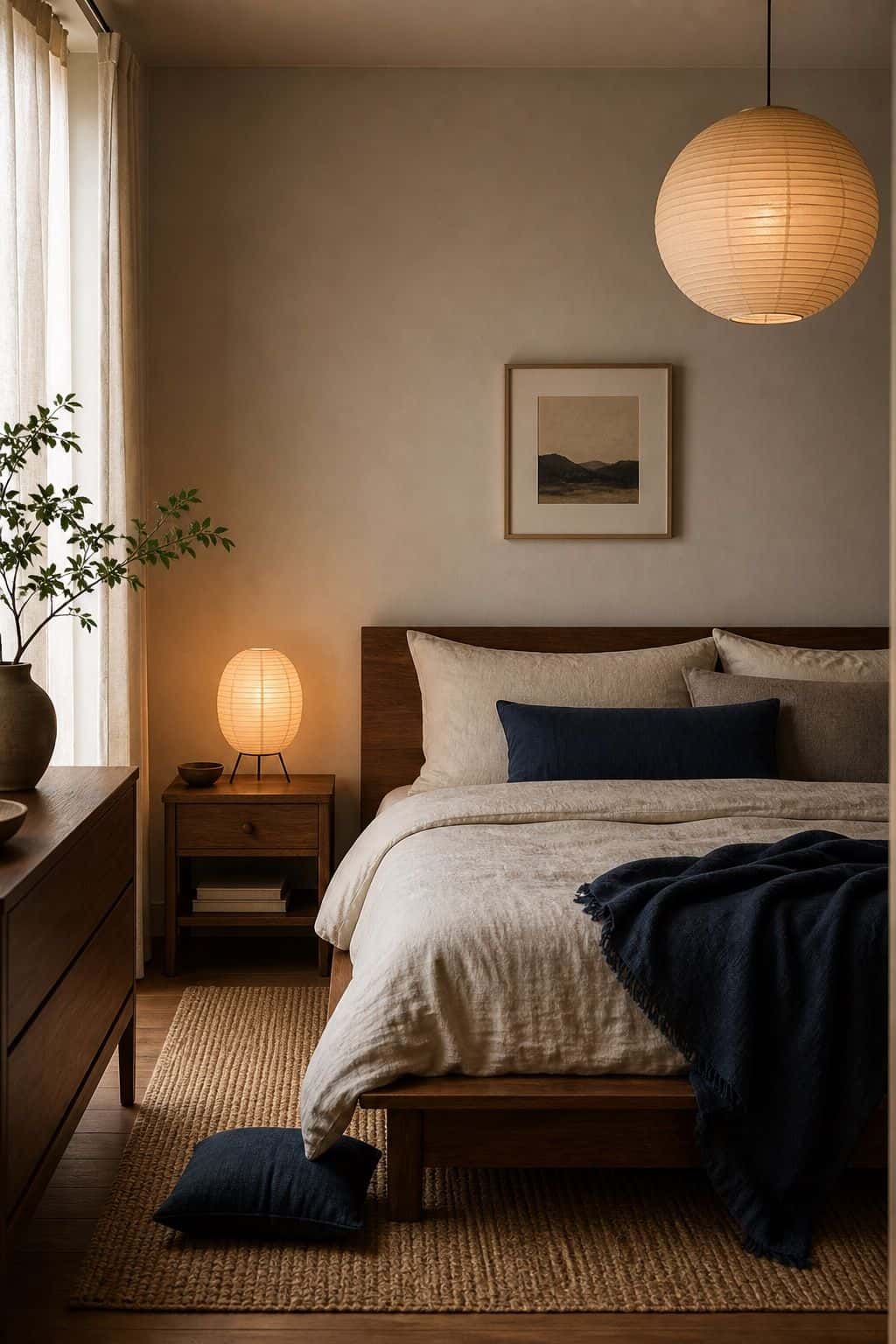


A whole-home style can feel like a lot, so the last idea is the practical one: decide where to start. The best starting point is usually the room where you most want calm, often the bedroom or the living room, applied with the full set of foundations.
Begin with the free moves, the decluttering and the mindset, then the palette, then the materials and light, then the few meaningful objects. Get one room right as the proof of concept, and the rest of the home follows the same template. You do not transform a whole home in a weekend, you do it room by room with one consistent style. Deciding where to start is what turns the umbrella idea into actual progress, and the same one-zone-at-a-time approach makes any small apartment ideas feel achievable.
Read more: Top 17 Easter Home Decor Ideas to Style Your Space for Spring
Ready to take this calm, intentional style into every room of your home?
The Aesthetic Apartment Makeover Guide breaks the whole-home approach down room by room, with the layouts and budget picks that make a small space feel consistently considered. It is currently just $17 before the price goes up to $27.
Frequently Asked Questions
What is Japanese zen decor?
Japanese zen decor is a whole-home aesthetic built on calm, simplicity, and natural materials, rooted in the wabi-sabi mindset of finding beauty in the simple and imperfect. The 2026 version is Japandi, Japanese minimalism softened with Scandinavian warmth, so it leans on light wood, low furniture, linen, paper lanterns, and a soft harmonious palette.
How do you make your home zen Japanese style?
Make a home Japanese zen style by starting with the wabi-sabi mindset and a soft natural palette, then decluttering thoroughly. Add wood and bamboo, low simple furniture, linen and cotton textiles, shoji screens, paper lanterns, diffused soft light, and one or two meaningful plants. Apply the same foundations room by room across the whole home.
What colors are used in Japanese zen decor?
Japanese zen decor uses a soft, natural, harmonious palette: warm whites, soft beiges, muted greens, and the grey-browns of stone and wood. The 2026 Japandi direction warms it further, anchored by light wood tones and gentle low-contrast neutrals rather than the cold all-white minimalism of the past.
What is the difference between zen and Japandi?
Zen, in the Japanese sense, is the broader aesthetic and philosophy of calm, simplicity, and natural materials. Japandi is the specific 2026 style framing, Japanese zen minimalism blended with Scandinavian warmth and coziness. Japandi is the warmer, more livable, more current expression of Japanese zen decor.
How do you decorate a small apartment in Japanese zen style?
Japanese zen style suits a small apartment well because it is about simplicity and restraint. Scale the elements down, a freestanding shoji screen instead of a tatami room, a paper lantern instead of a big fixture, one bonsai instead of a garden, and lean on the low furniture, soft palette, and decluttering that make a small space feel calm and larger.
Key Takeaways
- Japanese zen decor is a whole-home style, not a single room, built on the wabi-sabi mindset, a soft natural palette, and thorough decluttering.
- The 2026 framing is Japandi, Japanese minimalism softened with Scandinavian warmth, light wood, low silhouettes, soft textiles, quiet luxury.
- Bring in wood and bamboo, low simple furniture, tatami and floor cushions, linen and cotton textiles, and shoji screens throughout the home.
- Prioritize diffused soft light, add paper lanterns, keep greenery restrained to one bonsai or plant, and choose minimalist, meaningful decor.
- Apply the same foundations room by room, adapt it down for a small apartment, use renter-friendly swaps, and start with the room where you most want calm.
Final Thoughts
Japanese zen decor is not a room you build, it is a way of decorating you carry through the whole home. Start with the wabi-sabi mindset and the soft natural palette, declutter honestly, then layer in the wood, the low furniture, the linen, the shoji screens, the paper lanterns, the diffused light, and the few meaningful objects. Lean into the Japandi warmth so it feels livable, not austere. Apply the same foundations room by room, scale it down for a small apartment, and the home becomes one consistent, peaceful space. Start with the room where you most want calm, get it right, and let the rest of the home follow.
Last update on 2026-09-25 / Affiliate links / Images from Amazon Product Advertising API
