

Quick Answer: The best kitchen zen home decor starts by clearing the surfaces, then builds calm through natural materials, a neutral earthy palette, hidden storage, and soft layered lighting. Lean into Japandi minimalism, wood, stone, bamboo, clean lines, only what you use kept out, and the kitchen becomes a genuinely calm room rather than the busiest, most cluttered space in the home.
A kitchen is the hardest room to keep calm, because it is the room that does the most work. Every appliance, every ingredient, every tool wants to live on the counter, and before long the busiest room in the home is also the most visually noisy.
A zen kitchen pushes back against that. It is not about a renovation or a particular aesthetic, it is about clear surfaces, natural materials, a quiet palette, and storage that actually hides things. Japandi minimalism is the reference, calm, warm, and uncluttered, and most of getting there is subtraction, not shopping.
Seventeen ideas follow, beginning with clearing the surfaces, then natural materials and a neutral palette, hidden storage, and soft lighting. A large kitchen or a tiny galley, the calm comes from the same principles. For the room-wide version of this same quiet, our zen home entrance decor sets the tone the moment you walk in.

Recommended Kitchen Zen Decor Products


Recommended blogs to read:
- Japanese zen home decor
- Zen modern home decor
- Living room zen home decor
- Bedroom zen home decor
- Kitchen counter decor ideas
Start by Clearing the Surfaces
1. Clear the Counters to Almost Nothing
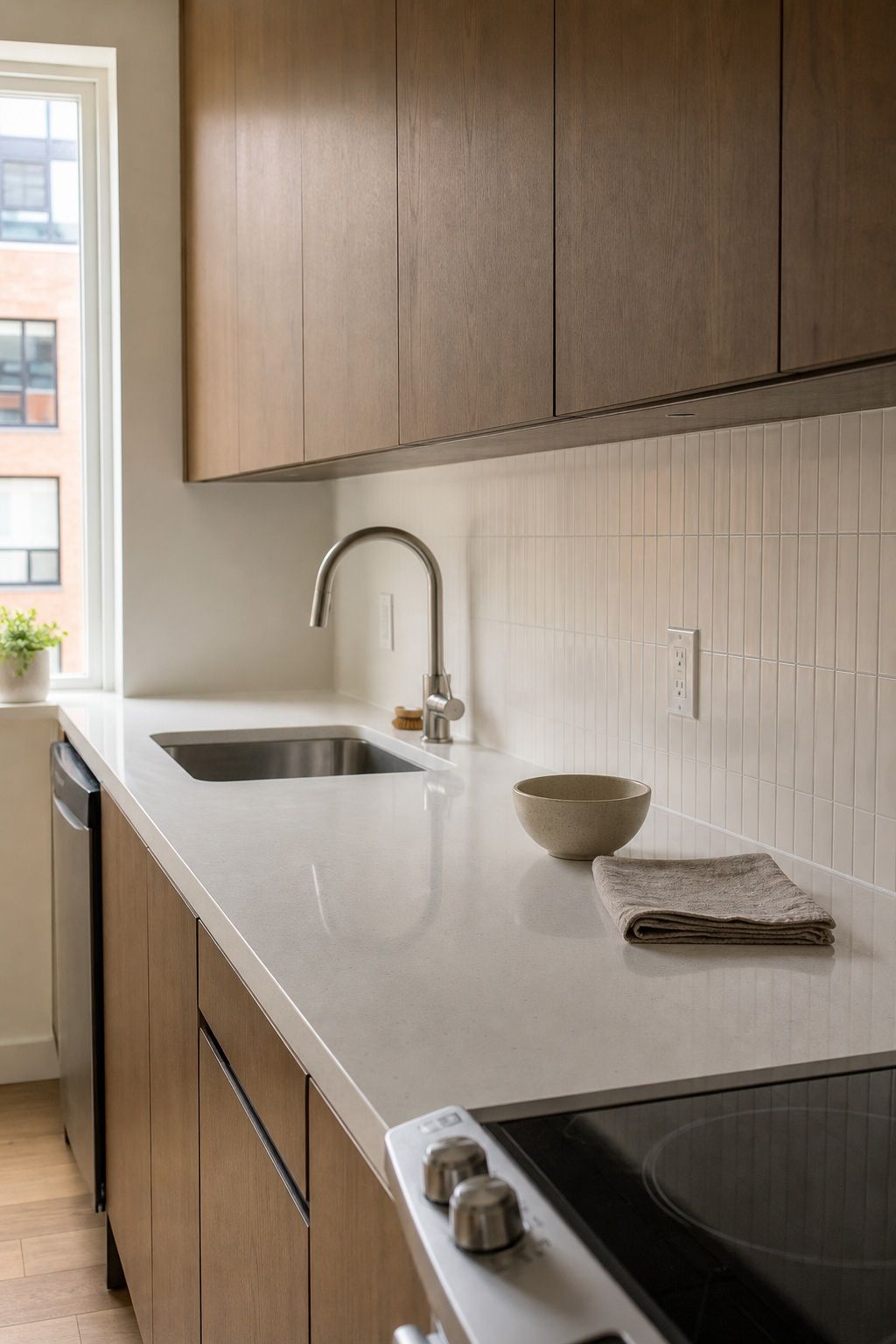


The foundation of a zen kitchen is clear counters, so this is where to start, not with shopping. Take everything off the counters, then add back only the few things you genuinely use every single day. Everything else finds a home in a cabinet or a drawer.
This costs nothing and it is the single biggest move toward a calm kitchen. A counter holding three daily-use items reads as serene; one holding fifteen reads as chaos. The cleared counter is the blank, quiet base that every other zen kitchen idea builds on, and the difference is immediate. It is a small move, but it is the kind that quietly makes the whole space feel more considered.
Read more: Top 15 Open Cabinet Kitchen Decor Ideas to Style Your Shelves
2. Edit the Appliances Down
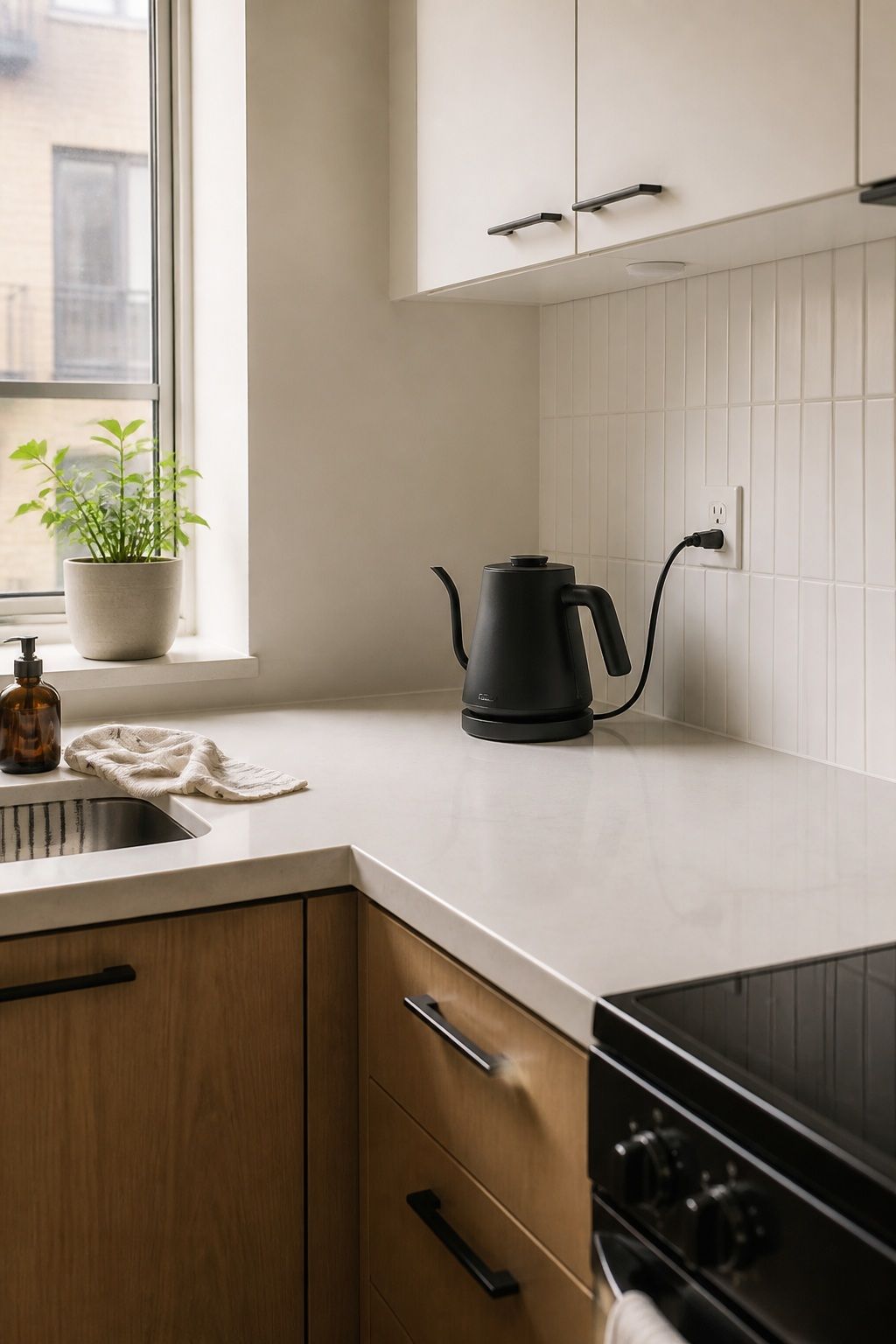


Appliances are the biggest counter-cloggers, and a zen kitchen keeps only the ones earning their space through daily use. The coffee maker and the kettle can stay; the bread maker, the stand mixer, the air fryer used monthly go into cabinets.
Be honest about real frequency, not aspirational use. An appliance used twice a month does not deserve permanent counter space in a calm kitchen. Editing the appliances is subtraction that costs nothing and instantly quiets the room, and it is the move most people resist and most need. None of it costs much, and the payoff in how the room reads is well worth the small effort.
3. Pare Down What You Own
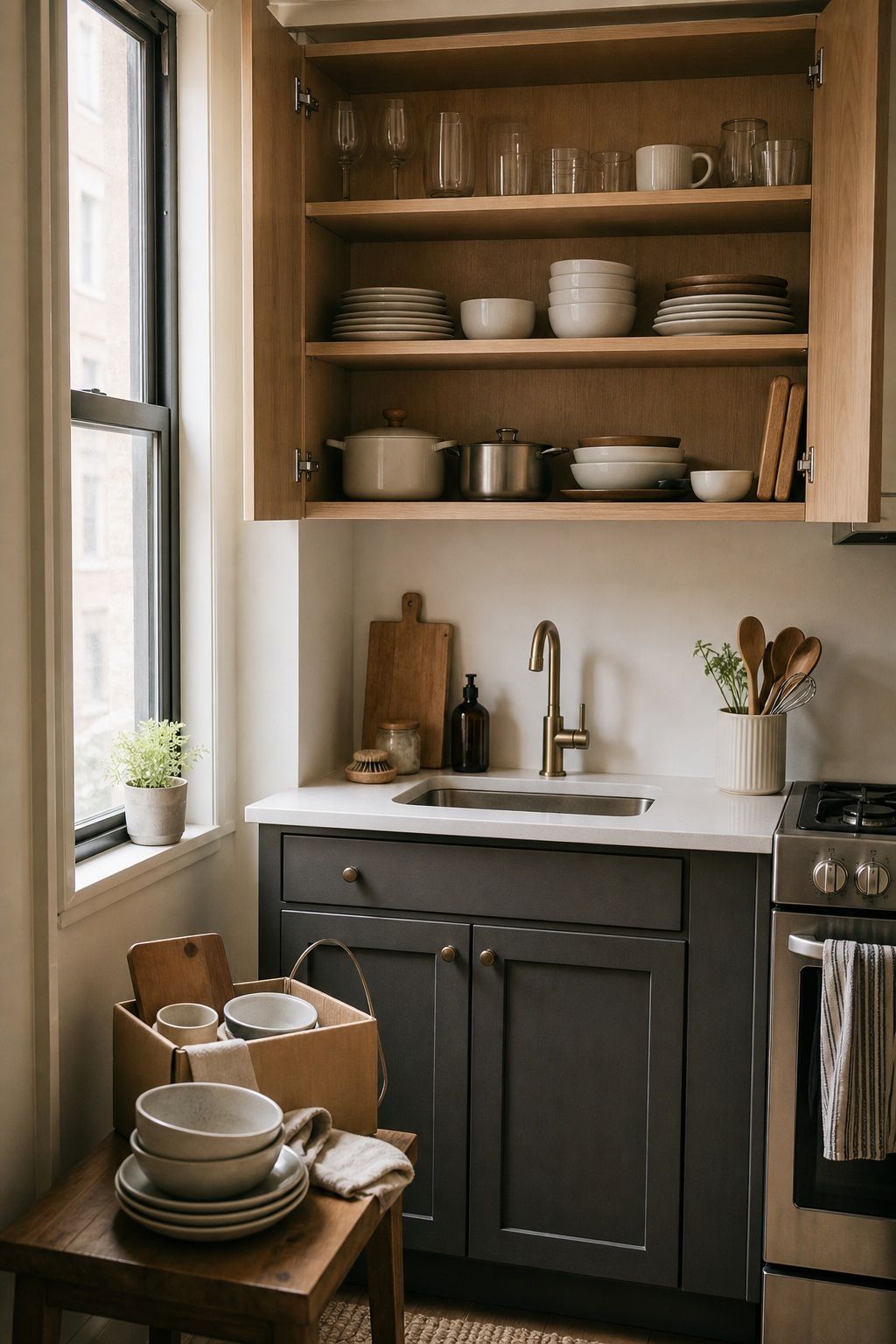


A calm kitchen is hard to maintain when the cabinets are overflowing, because overflow inevitably spills onto the counters. Paring down the actual contents, the duplicate utensils, the unused gadgets, the chipped mugs, is what makes clear surfaces sustainable.
Work through one cabinet or drawer at a time and be genuinely ruthless. A kitchen with less in it is easier to keep calm, easier to clean, and easier to cook in. The decluttering is unglamorous, but it is the work that makes every other zen kitchen idea actually hold. Done once and kept up lightly, it is the sort of detail that holds long after the initial work.
Read more: Top 15 Outdoor Kitchen Patio Decor Ideas to Enhance Your Backyard
4. Keep Only Daily Tools Within Reach
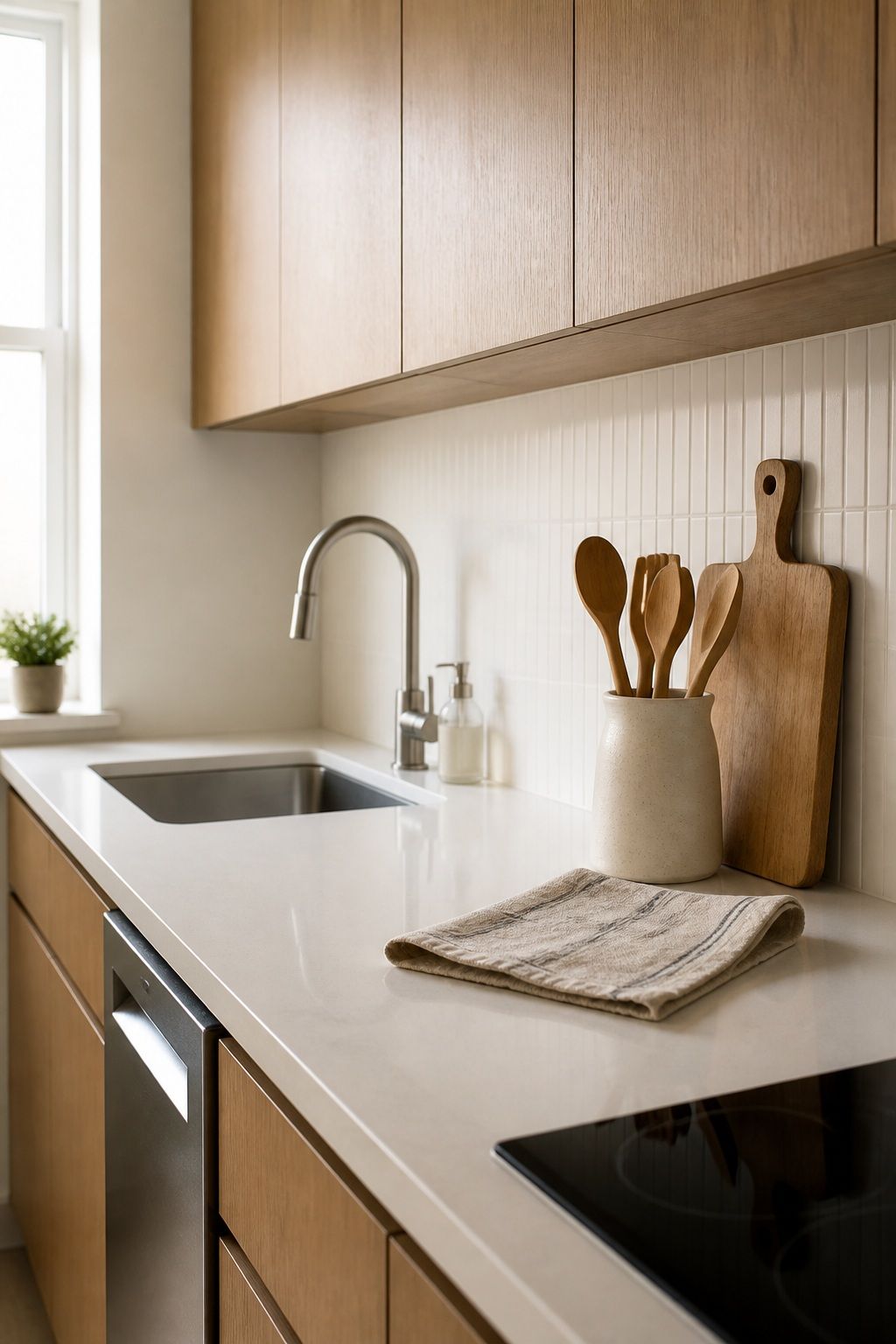


Once the kitchen is pared down, the organizing principle is frequency. The handful of tools used every day live in the easiest spots, in a wood utensil holder by the stove or the top drawer; everything occasional goes further away. The counter only ever holds the daily few.
This frequency sorting is what keeps the cleared surfaces cleared, because the things you reach for constantly have an easy home that is not the countertop. It costs nothing, it is just thoughtful placement, and it is what makes a zen kitchen practical rather than precious. Keep it simple and intentional, and it will earn its place rather than becoming one more thing to manage.
Read more: Top 18 Kitchen Counter Organization Ideas for a Clutter-Free Cook Zone
Natural Materials and Neutral Palette
5. Build on a Neutral, Earthy Palette
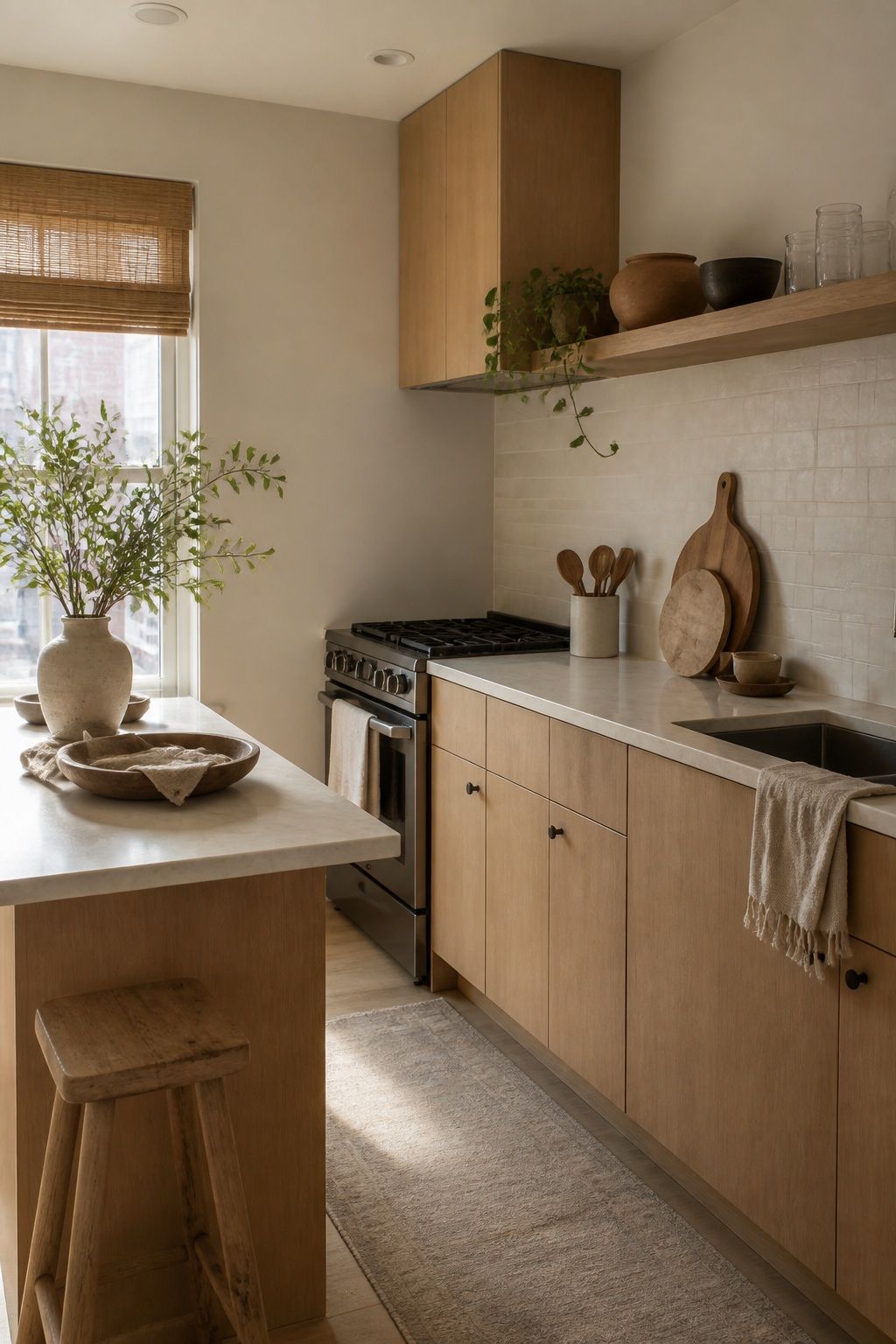


A zen kitchen lives on a quiet palette, whites, beiges, soft grays, muted earth tones, with nothing loud or high-contrast. The calm comes partly from the eye never catching on a jarring color, so the base of the room stays soft and warm.
Bring the palette in through the changeable layers first, the towels, the canisters, a small rug, before anything permanent. Warm neutrals also make a small kitchen feel more open. The quiet palette is a discipline more than a purchase, and it is one of the biggest factors in whether the kitchen actually feels serene. It is worth getting right early, since it sets the tone for everything else in the space.
Read more: Top 16 Corner Sink Kitchen Decor Ideas for the Best Seat in the
6. Add Wood for Warmth
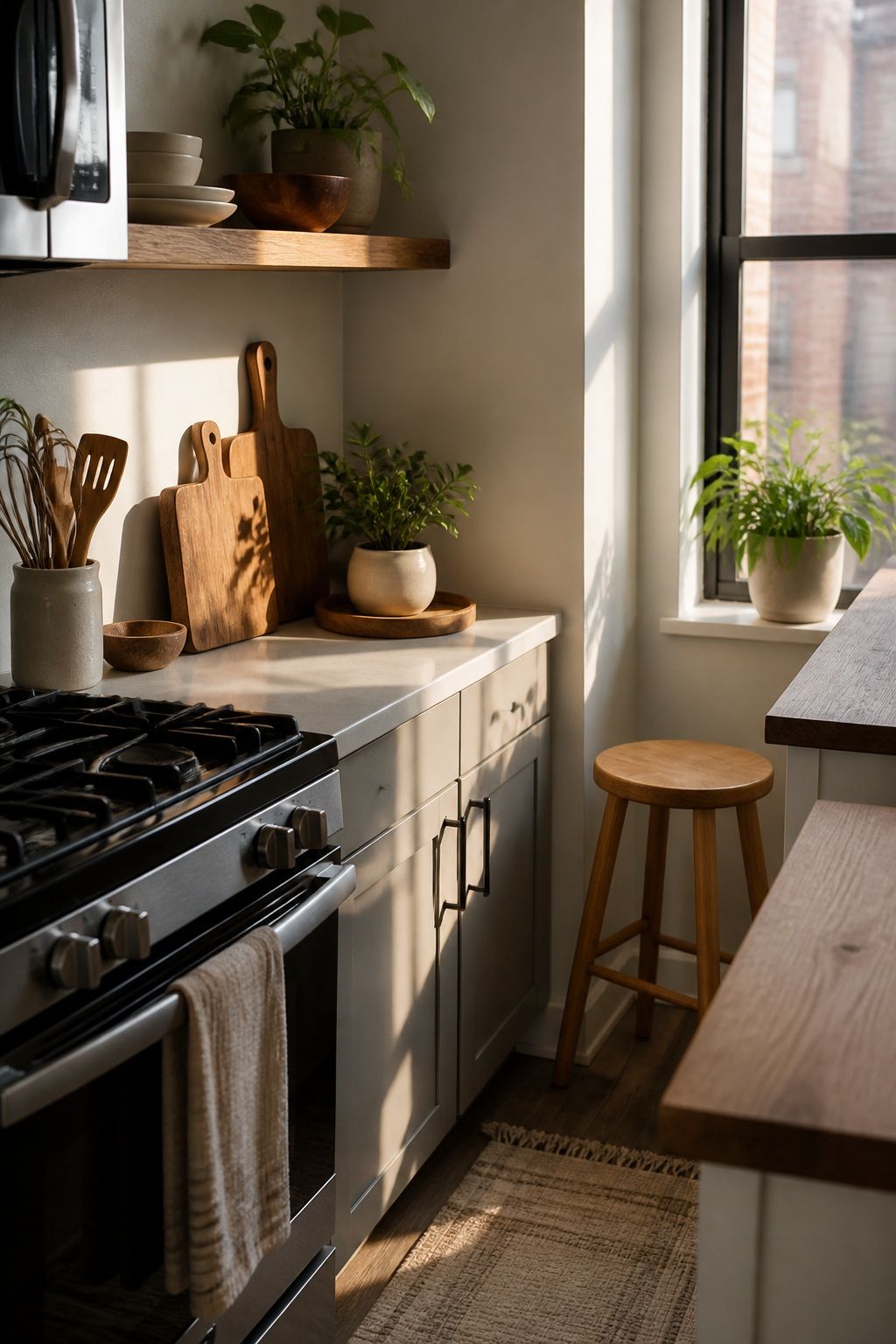


Natural wood is what keeps a neutral kitchen from feeling cold or clinical. A wood cutting board, a wood utensil holder, wood-handled tools, a wood tray, each piece adds organic warmth and a handmade quality against the hard kitchen surfaces.
Most of this you likely own already or can thrift cheaply. Keep the wood tones in one family, all warm or all cool, so the mix reads as collected. Wood is the single most important natural material in a zen kitchen, and it is what makes Japandi calm feel warm rather than stark. Small as it sounds, it is one of those choices that separates a styled room from a merely tidy one.
7. Mix in Stone, Bamboo, and Ceramic
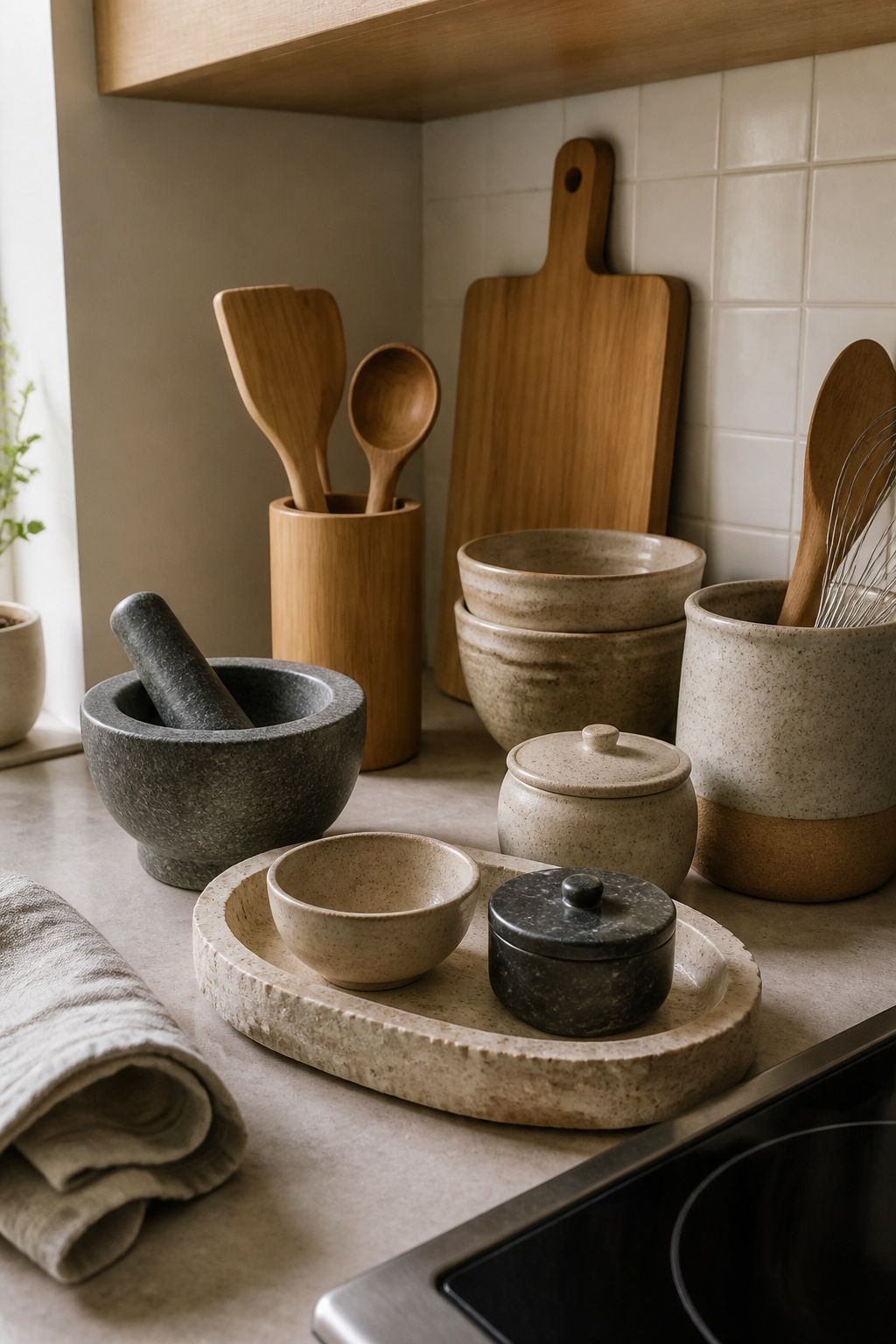


Beyond wood, a zen kitchen layers other natural materials, a stone or marble board, bamboo organizers, ceramic canisters and crocks. Each material catches light differently and gives the calm palette depth without adding any visual noise or color.
These materials are widely available and inexpensive, and bamboo organizers in particular do double duty as storage. Keep the materials in conversation with each other so the kitchen reads as one cohesive, natural space. The layered natural texture is what gives a zen kitchen its quiet richness. It is a small move, but it is the kind that quietly makes the whole space feel more considered.
Read more: Top 17 Kitchen Counter Corner Decor Ideas for Functional Beauty
8. Choose Matching, Minimal Canisters
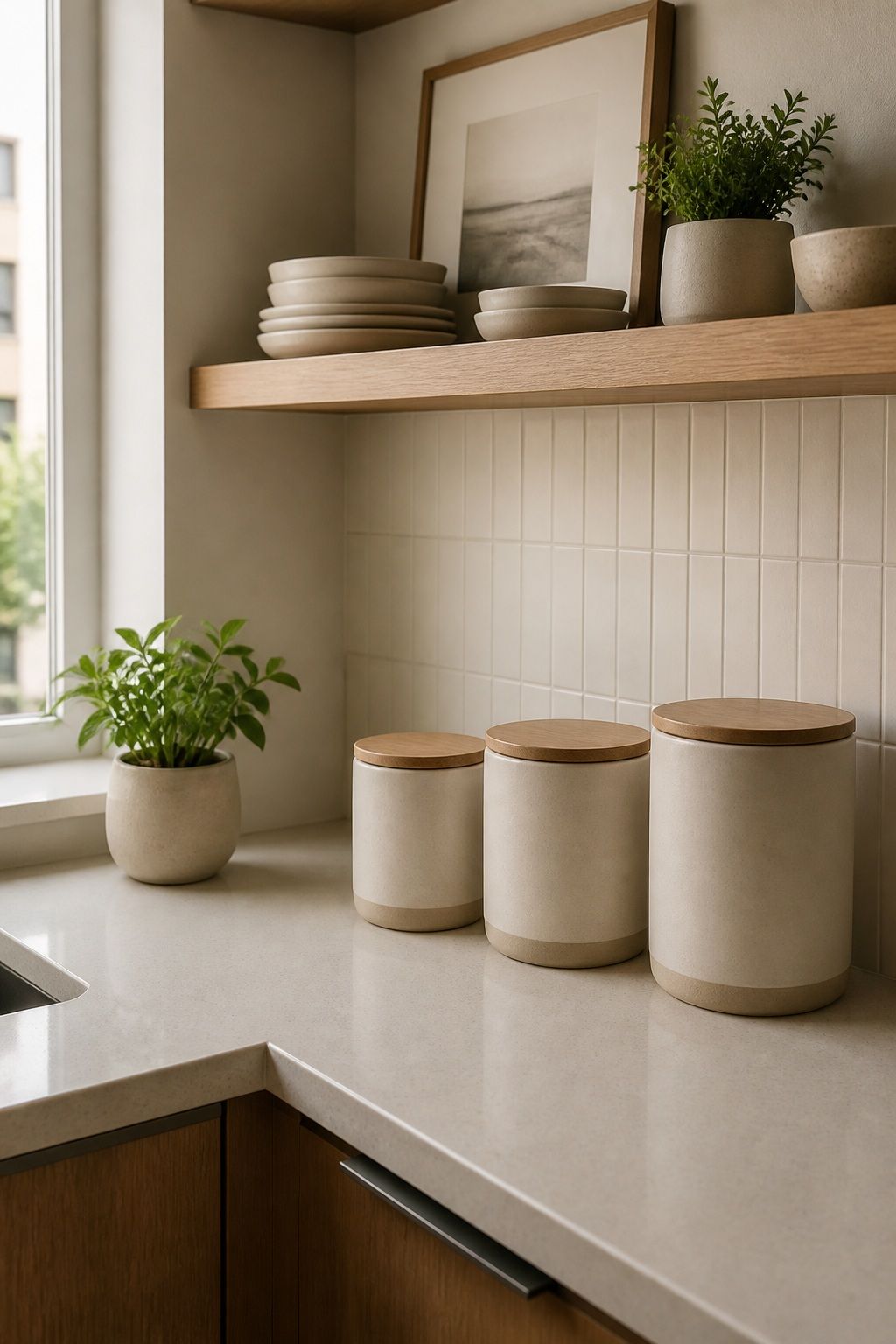


The flour, coffee, sugar, and pasta that have to be out look like visual clutter in their packaging and like calm, intentional storage decanted into matching minimal canisters. Simple ceramic or glass canisters in the kitchen’s palette pull everything together.
A minimal canister set runs $25 to $50, and plain shapes in neutral tones suit a zen kitchen best. Group them rather than spreading them out. The canisters are the move that turns necessary out-on-the-counter storage into part of the calm rather than against it, the same logic our kitchen counter coffee bar ideas use. None of it costs much, and the payoff in how the room reads is well worth the small effort.
Read more: Top 16 Christmas Kitchen Decor Ideas for a Warm Holiday Heart of the
9. Add One Quiet Living Element
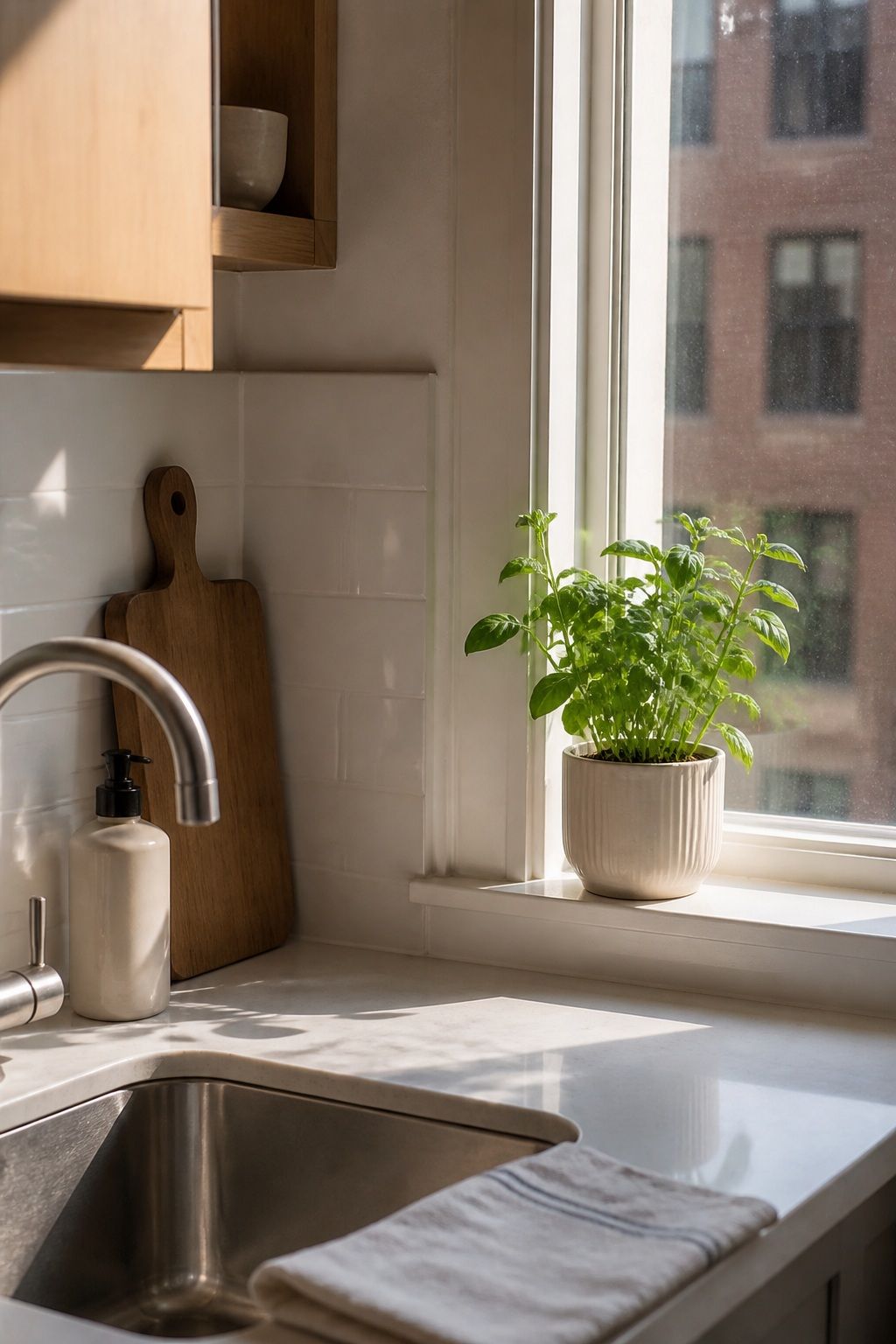


A single living element keeps a zen kitchen from feeling sterile. One small potted herb, a simple plant, or a few stems in a plain vase brings a soft, living shape into the room, but the key word is one, restraint matters as much here as anywhere.
Keep the plant simple and the pot in the kitchen’s palette. The single living element is the breath of life that warms the minimalism, and keeping it to one is what stops a zen kitchen from drifting into a cluttered plant collection. Done once and kept up lightly, it is the sort of detail that holds long after the initial work.
Hidden Storage and Organization
10. Move Storage Behind Closed Doors
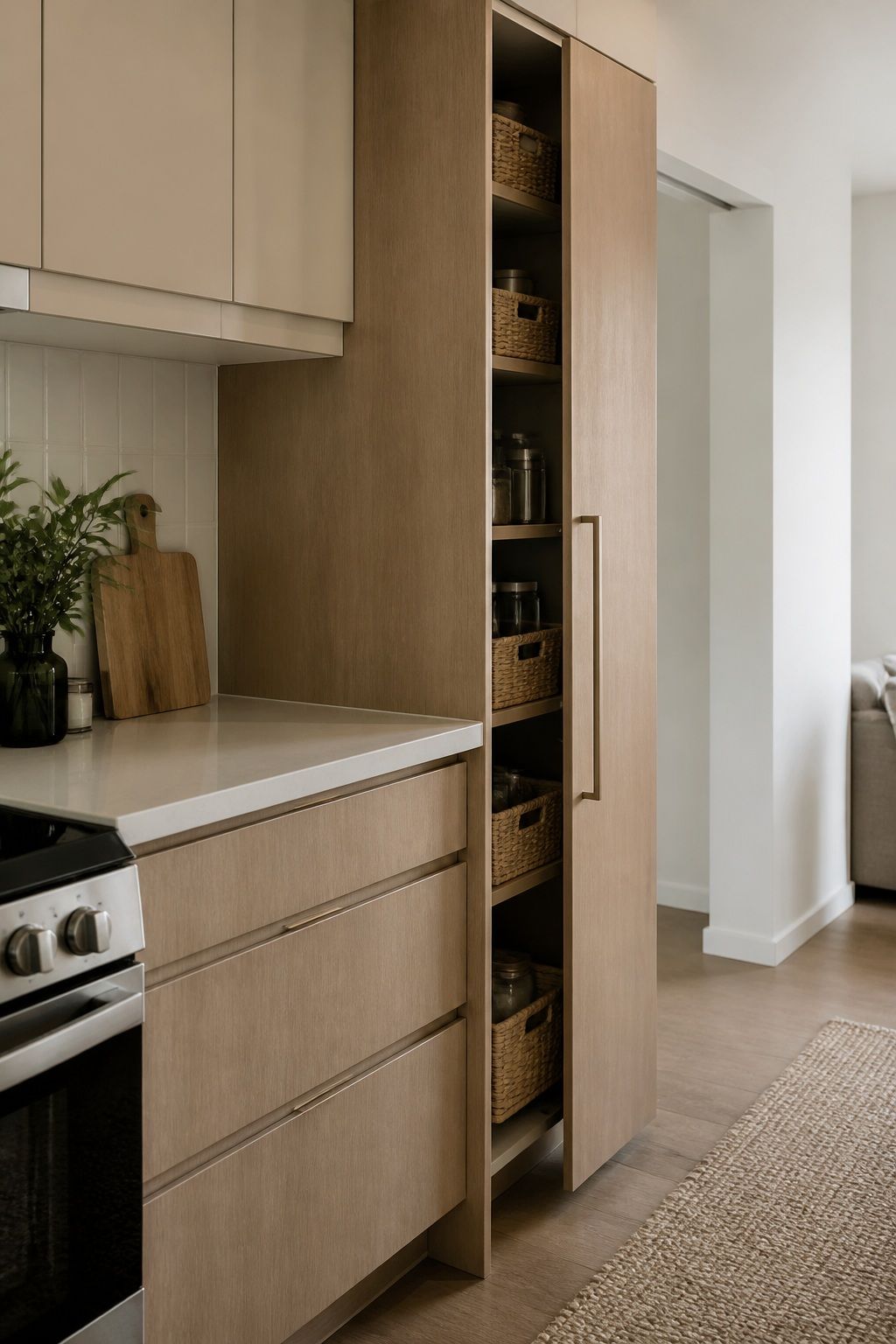


The core of a zen kitchen is that the working clutter lives behind closed doors, not on open display. Where most kitchens lean on open shelving and visible storage, a zen kitchen keeps cabinets and drawers doing the heavy lifting so the surfaces stay quiet.
If you have open shelving, keep what is on it minimal and intentional, or curtain it off. The closed-storage principle is what makes the calm sustainable, because the daily mess of a working kitchen has somewhere to disappear to. Hidden storage is the quiet engine of a zen kitchen. Keep it simple and intentional, and it will earn its place rather than becoming one more thing to manage.
Read more: Top 16 Spring Decor Ideas for the Kitchen That Feel Bright and Clean
11. Use Drawer Organizers for Every Drawer
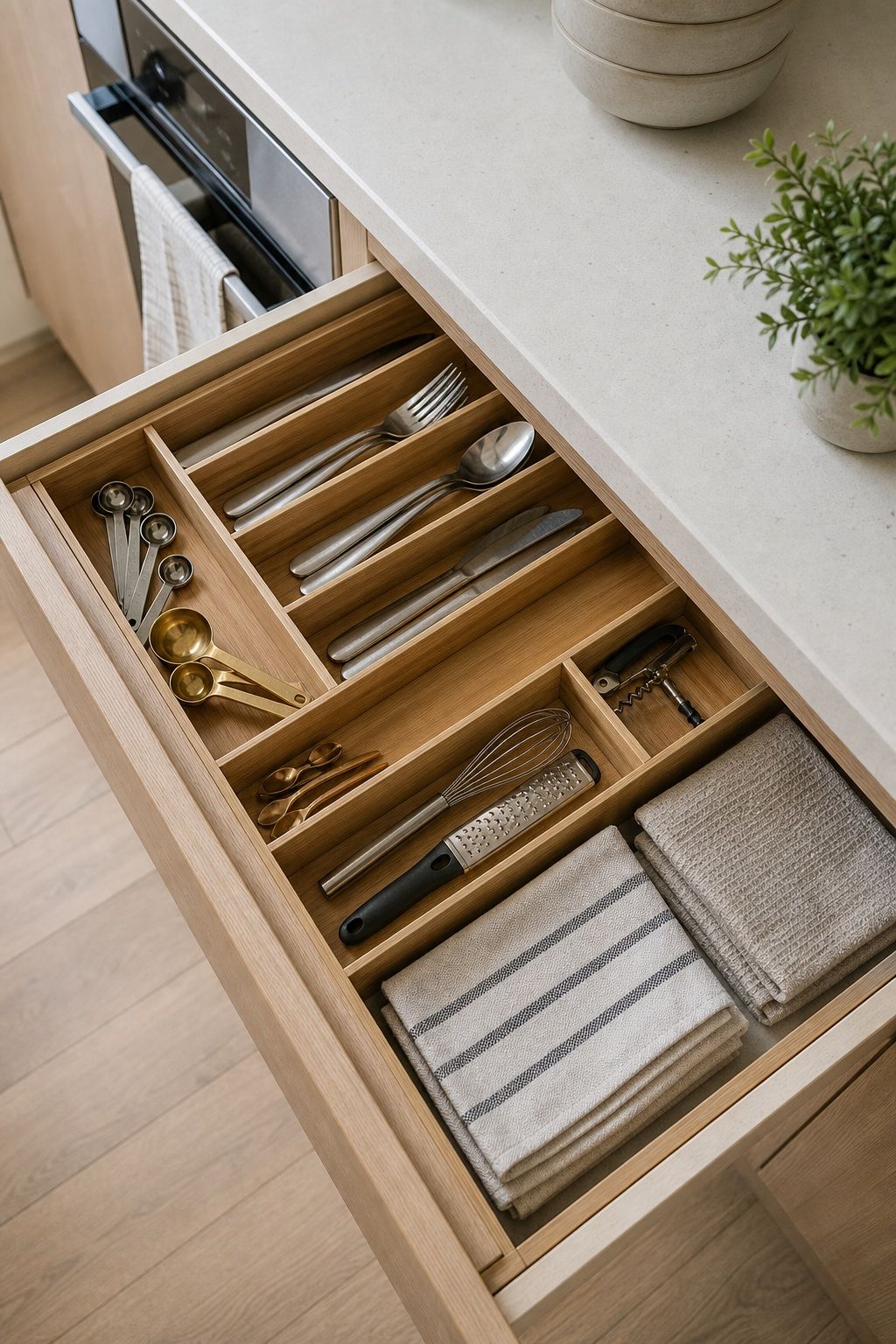


A zen kitchen is calm inside the drawers too, because a chaotic drawer means things end up on the counter instead. Bamboo or adjustable drawer organizers give every utensil, tool, and gadget a defined slot, so the drawers stay sorted and genuinely usable.
Drawer organizers run $10 to $25 a set and take minutes to fit. A drawer you can actually find things in is a drawer you actually use, which keeps the counter clear. The organized interiors are invisible, but they are what makes the visible calm hold up day to day. It is worth getting right early, since it sets the tone for everything else in the space.
Read more: Top 18 Halloween Kitchen Decor Ideas for a Spooky, Stylish Space
12. Contain the Pantry in Clear or Neutral Bins
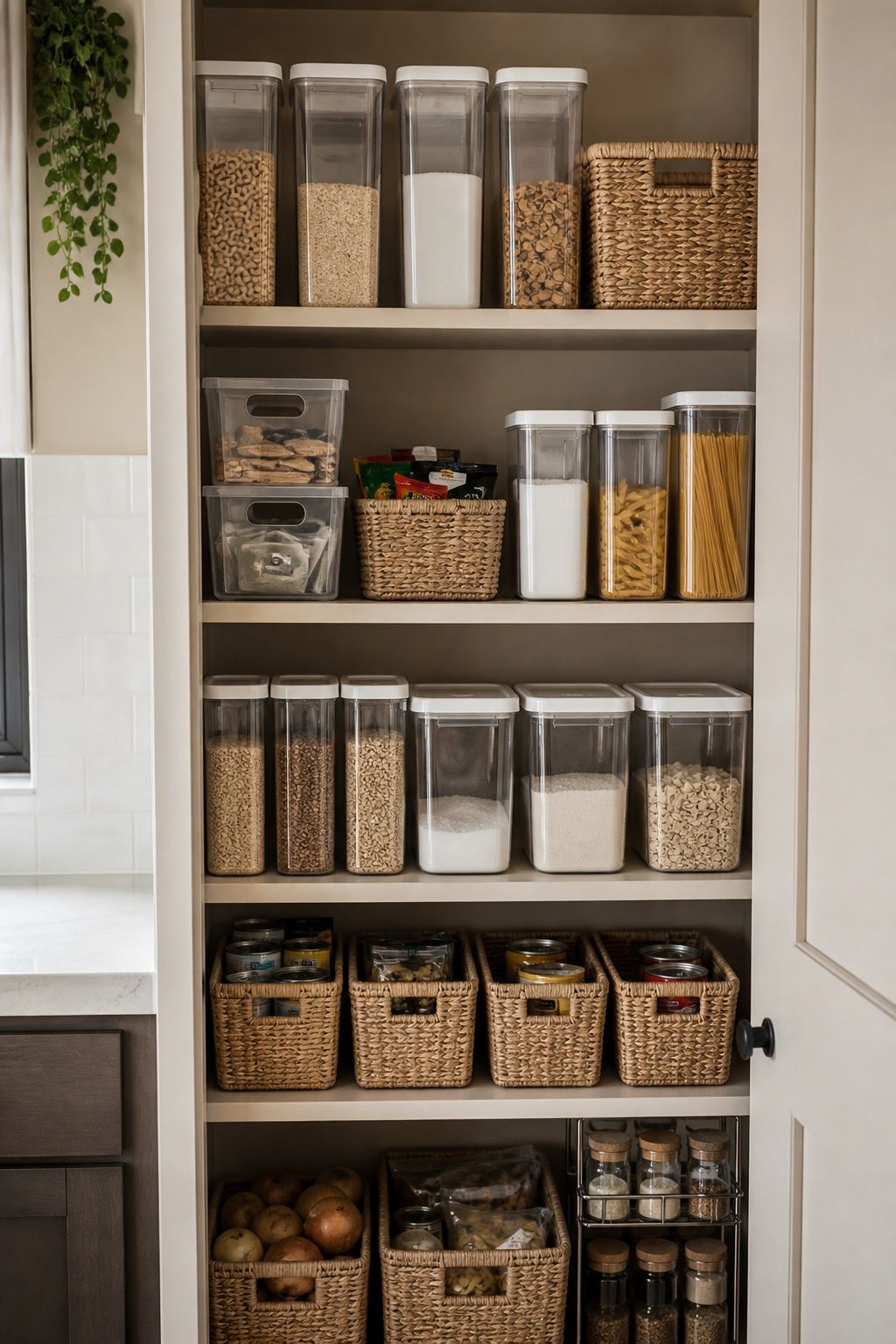


Pantry chaos spills outward, so a zen kitchen contains the pantry in clear or neutral matching bins. Grouping like with like, baking, snacks, grains, in defined bins makes the pantry calm, findable, and easy to keep that way.
Pantry bins run $5 to $15 each, and consistency matters more than the exact type. A contained pantry means restocking the counter canisters is quick and the overflow never creeps out. The pantry is out of sight, but a calm pantry is what supports a calm kitchen. Small as it sounds, it is one of those choices that separates a styled room from a merely tidy one.
13. Give Everything a Defined Home
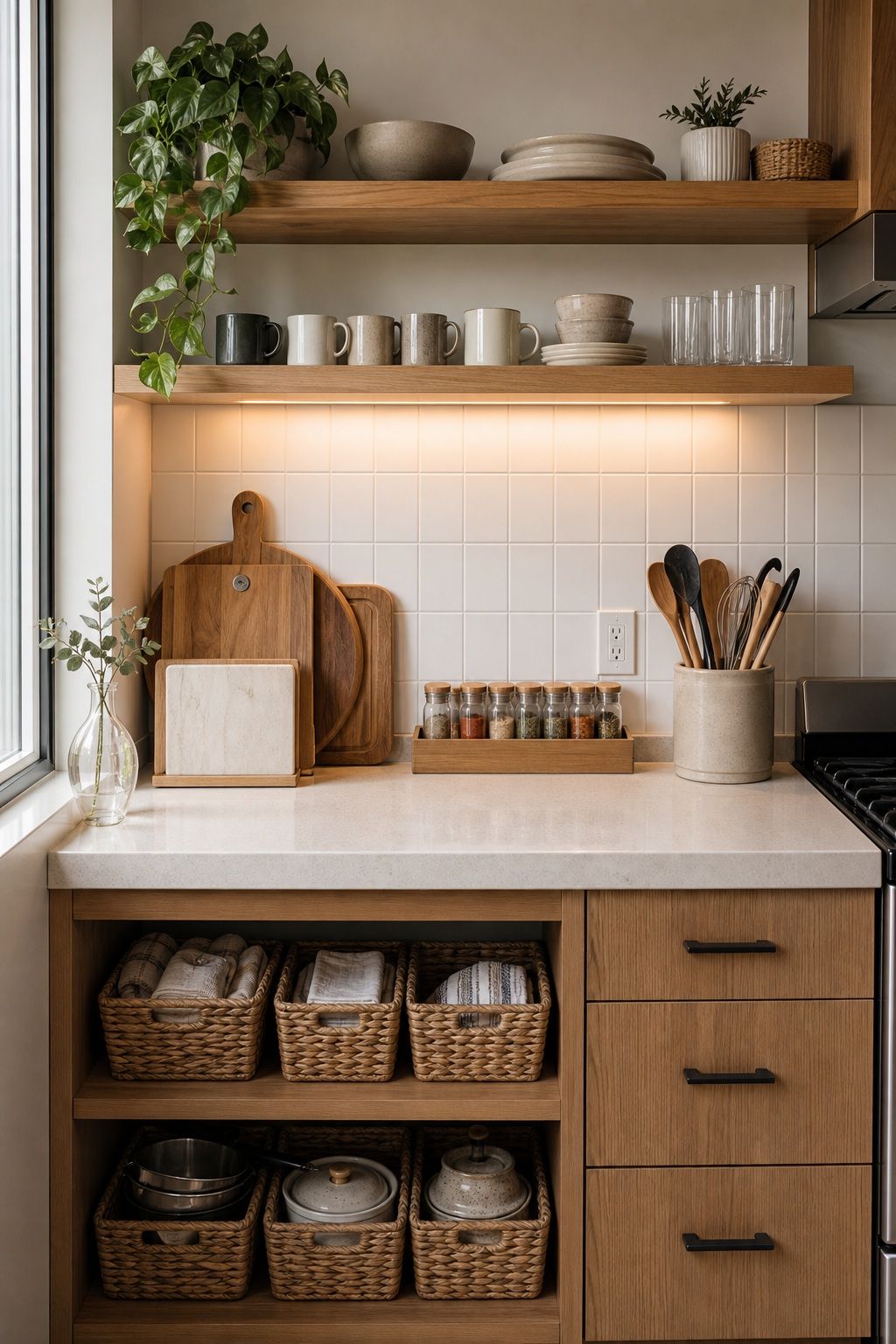


The principle underneath all zen kitchen storage is that every single thing has one defined home. When everything has a place, tidying is just returning things rather than deciding where they go, which is what makes a calm kitchen genuinely maintainable.
Walk the kitchen and check, does the colander have a home, the spare bags, the takeout menus? Anything without one is future clutter. Defined homes for everything is the unglamorous organizing backbone of a zen kitchen, and it is what makes the calm a habit rather than a one-time clean. It is a small move, but it is the kind that quietly makes the whole space feel more considered.
Read more: 15 Kitchen Decor Essentials From Amazon for a Beautiful, Functional
Lighting and Calm Final Touches
14. Layer in Soft, Warm Lighting
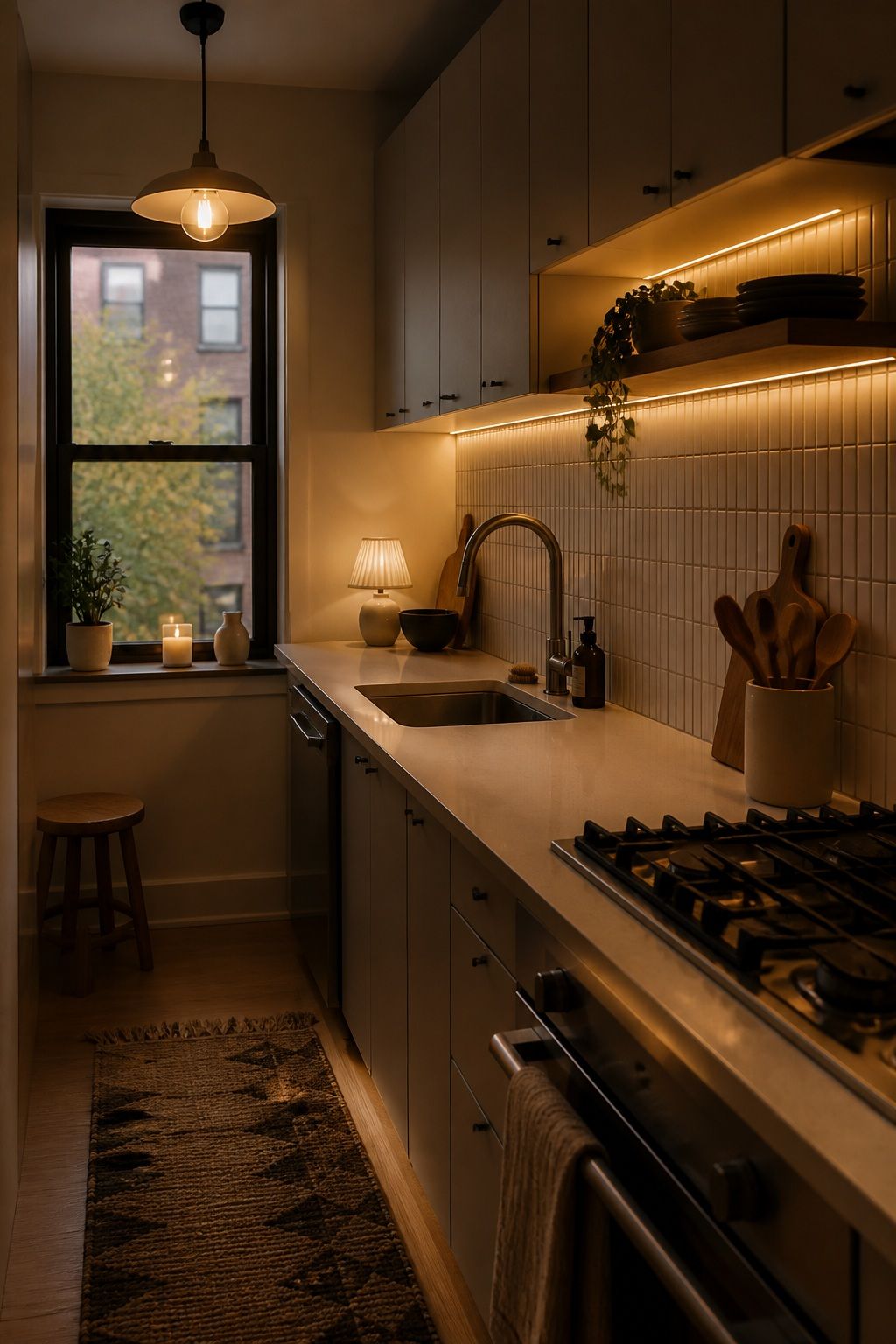


Harsh overhead light is the enemy of a calm kitchen. A zen kitchen layers softer, warmer light, under-cabinet LEDs, a small lamp on the counter, a warm bulb in the overhead, all around 2700K, so the room glows rather than glares.
Under-cabinet warm LED strips run $15 to $30 and many need no wiring. Put lighting on a dimmer where you can. Soft layered light is one of the biggest and cheapest contributors to a kitchen feeling calm, and it transforms how the room feels in the early morning and the evening. None of it costs much, and the payoff in how the room reads is well worth the small effort.
Read more: Top 18 Winter Kitchen Decor Ideas That Make Cooking Season Feel
15. Keep Décor to a Few Intentional Pieces
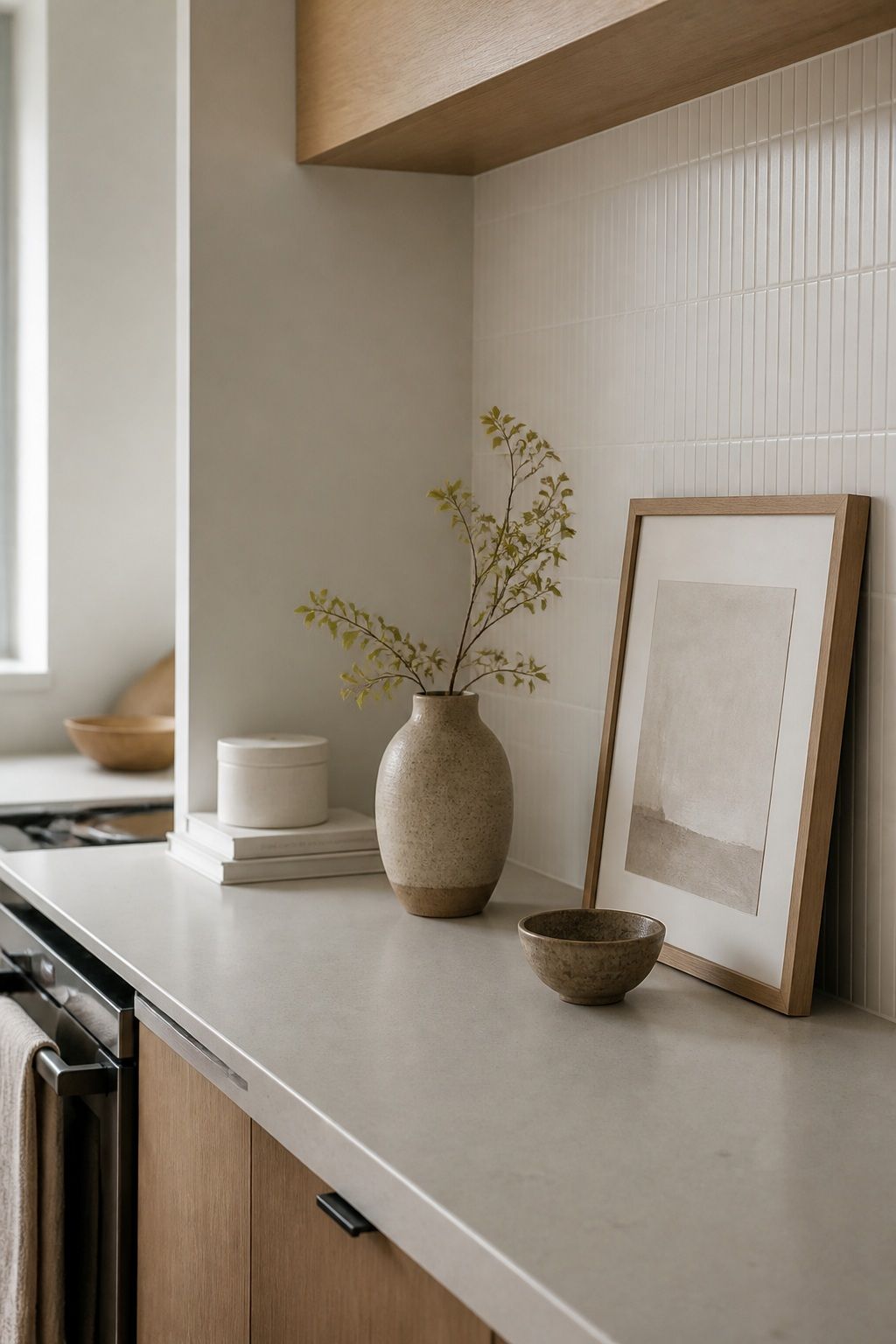


A zen kitchen is decorated, just barely. A few intentional pieces, one bowl, one piece of art, the single plant, a wood board leaned upright, are enough, and the empty space between them is doing as much work as the objects.
Resist the urge to fill the cleared surfaces back up with decor, that just trades one kind of clutter for another. A few quiet, well-chosen pieces with breathing room around them is the whole zen kitchen styling approach, the same restraint our bathroom zen home decor is built on. Done once and kept up lightly, it is the sort of detail that holds long after the initial work.
Read more: Top 17 Autumn Decor Ideas for the Kitchen to Try This Fall
16. Add Calm Through Scent and Sound
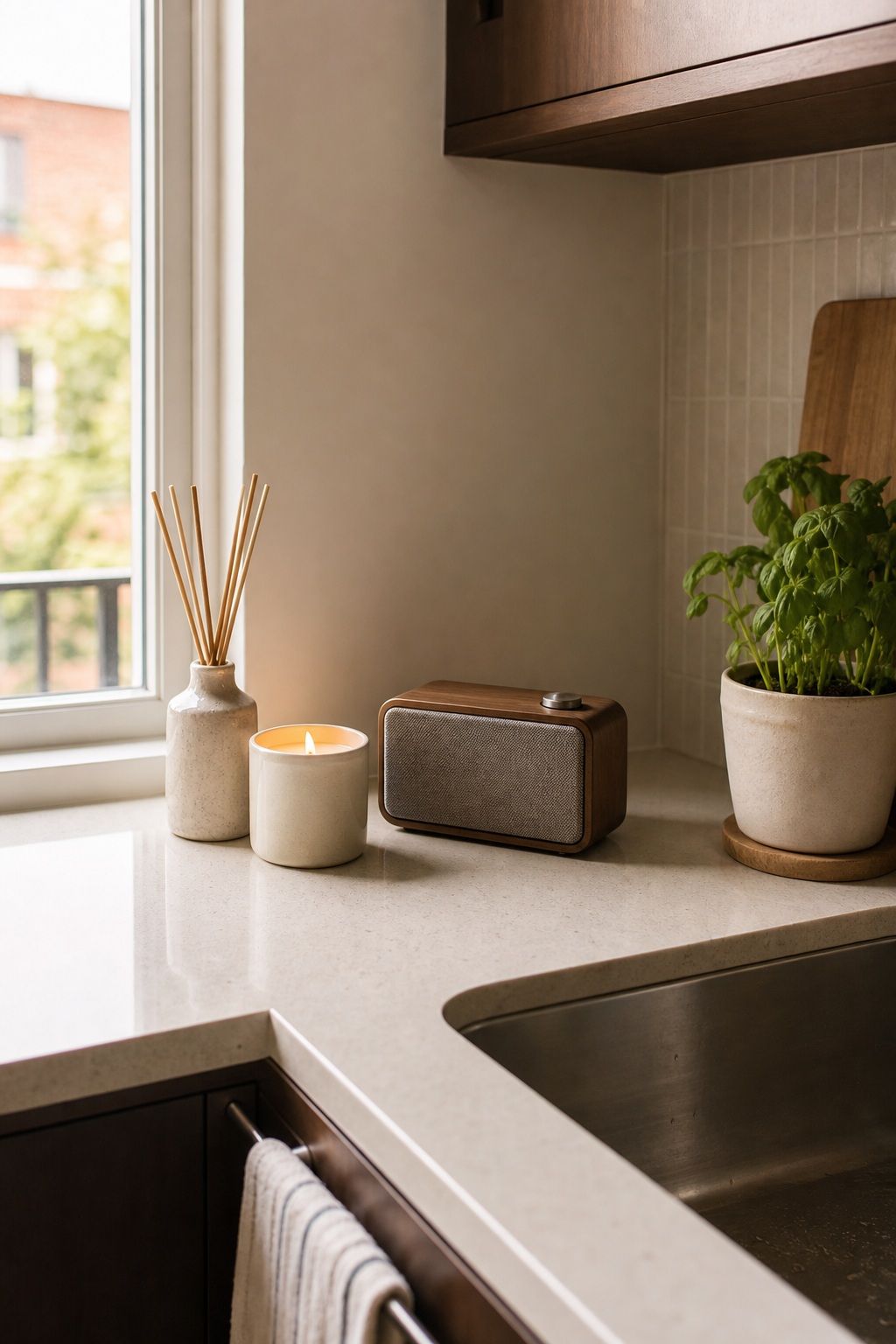


A zen kitchen reaches more than the eyes. A subtle scent, a simmer pot, a quiet diffuser, a natural soap by the sink, and the soft sounds of a calm space, an unhurried kettle, music kept low, complete the sense of the kitchen as a restful room.
None of this costs much, and it is the layer most kitchen styling forgets. The sensory calm is what makes a zen kitchen feel like a retreat rather than just a tidy work surface, and it is the finishing touch that the visual decluttering sets the stage for. Keep it simple and intentional, and it will earn its place rather than becoming one more thing to manage.
17. Maintain It With a Daily Reset
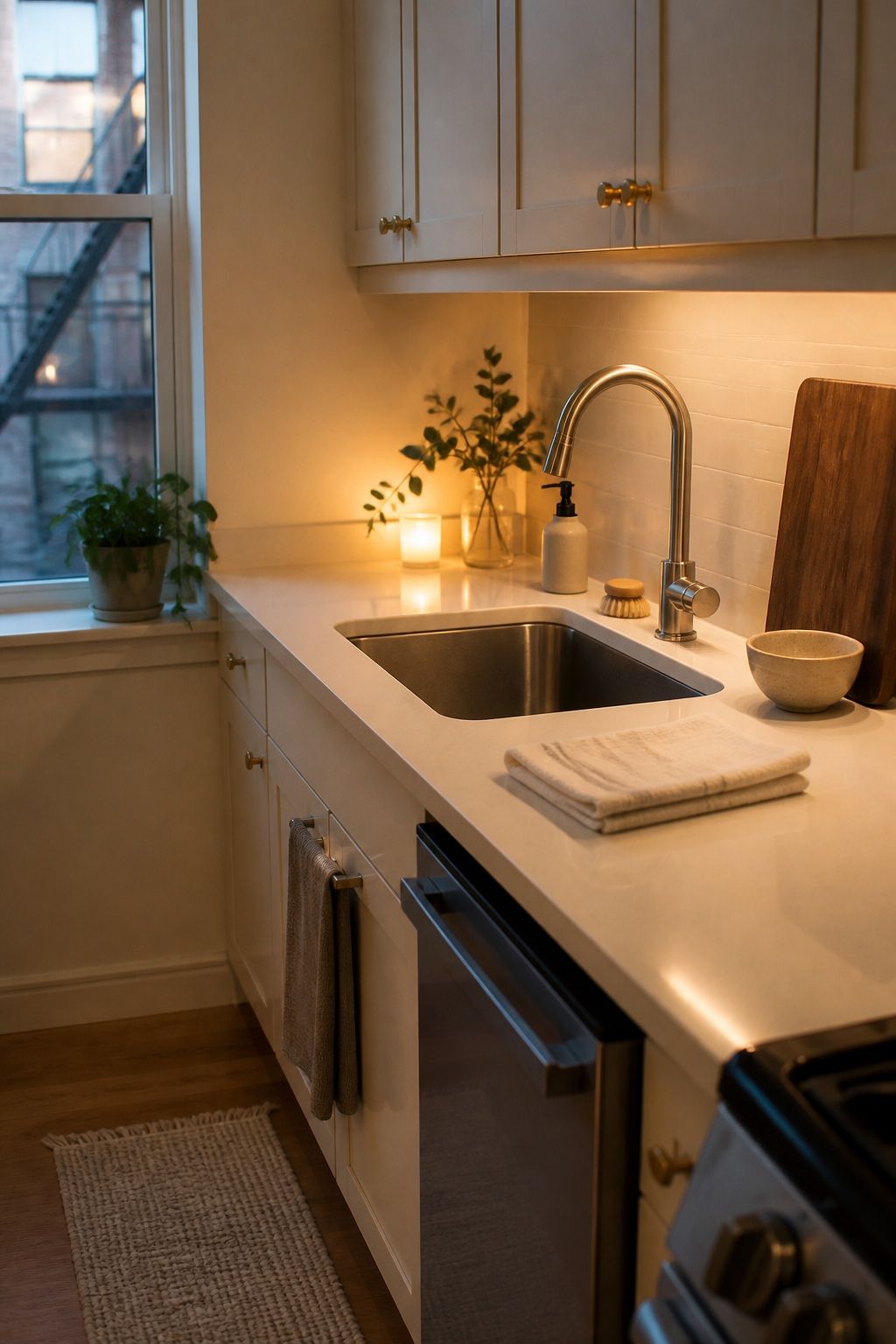


A zen kitchen is not a one-time project, it is a daily habit, and the habit is a short reset. A few minutes at the end of each day, clearing the counters, returning things to their defined homes, wiping the surfaces, is what keeps the calm from eroding.
Because everything has a home, the reset is quick, it is returning, not deciding. The daily reset costs nothing but a few minutes, and it is the practice that keeps a zen kitchen calm long after the initial declutter, the way the upkeep itself becomes part of the calm. It is worth getting right early, since it sets the tone for everything else in the space.
Read more: Top 18 Easy Kitchen Summer Decor Ideas for Renters
Frequently Asked Questions
How do I make my kitchen zen?
Start by clearing the counters to almost nothing and editing the appliances down to daily-use only. Build on a neutral earthy palette, layer in natural materials like wood, stone, and bamboo, move storage behind closed doors, and add soft warm layered lighting. Keep decor to a few intentional pieces and maintain it with a daily reset.
What is a zen kitchen?
A zen kitchen is a calm, clutter-free kitchen built on Japandi minimalism, clear surfaces, a neutral earthy palette, natural materials, hidden storage, and soft warm lighting. It is less an aesthetic to buy than a set of principles, keeping only what you use out, giving everything a home, and letting empty space and natural texture do the work.
How do you declutter a kitchen for a calm look?
Clear all the counters and add back only daily-use items, edit the appliances down to what truly earns its space, and pare down the actual contents of the cabinets and drawers. Give everything a defined home, use drawer organizers and pantry bins so storage is sustainable, and maintain it with a short daily reset.
What colors are best for a zen kitchen?
A neutral, earthy palette, whites, beiges, soft grays, and muted earth tones, with nothing loud or high-contrast. The calm comes partly from the eye never catching on a jarring color. Bring the palette in through changeable layers like towels and canisters first, and warm neutrals also make a small kitchen feel more open.
How do you keep a zen kitchen clutter-free?
Give every single item one defined home so tidying is just returning things, not deciding where they go. Keep storage behind closed doors, use drawer organizers and pantry bins, and edit ruthlessly so there is simply less to manage. Then maintain it with a short daily reset, clearing and wiping the surfaces each evening.
Key Takeaways
- Start by clearing the counters to almost nothing and editing the appliances down to daily-use only, subtraction comes before shopping.
- Build on a neutral earthy palette and layer in natural materials, wood, stone, bamboo, ceramic, for warmth without visual noise.
- Move storage behind closed doors and use drawer organizers and pantry bins so a calm kitchen is genuinely sustainable.
- Layer in soft warm lighting around 2700K and keep decor to a few intentional pieces with breathing room between them.
- Give everything a defined home and maintain the calm with a short daily reset, the upkeep becomes part of the calm.
Final Thoughts
A zen kitchen is the calmest version of the busiest room in the home, and the path to it is mostly subtraction. Clear the surfaces, edit what you own, build on natural materials and a quiet palette, hide the working clutter, and light it softly. Then keep it with a short daily reset. Done that way, the hardest-working room in the house becomes one of the most restful, which is a quietly remarkable thing for a kitchen to be.
Last update on 2026-10-06 / Affiliate links / Images from Amazon Product Advertising API
