

Quick Answer: The best sunroom flooring handles strong sun, big temperature swings and some damp. Waterproof luxury vinyl plank and porcelain tile are the safest all-round choices. Engineered wood works only in a heated, climate-controlled sunroom. Add a jute or indoor-outdoor rug for warmth, consider underfloor heating for year-round use and pick pale colours that hide fading.
Sunroom flooring quietly decides how the whole room works. The wrong floor fades, warps or turns icy in winter, and then the sunroom becomes the room nobody sits in.
These 16 sunroom flooring ideas cover hard floors, tile, rugs, underfloor heating and UV-safe choices. In Finland, where a glazed terrace can go from hot to near freezing in the same week, the temperature question matters as much as the look.

Sunroom flooring products worth looking at


Vinyl Plank and Engineered Hardwood
1. Waterproof Luxury Vinyl Plank for Year-Round Sunrooms
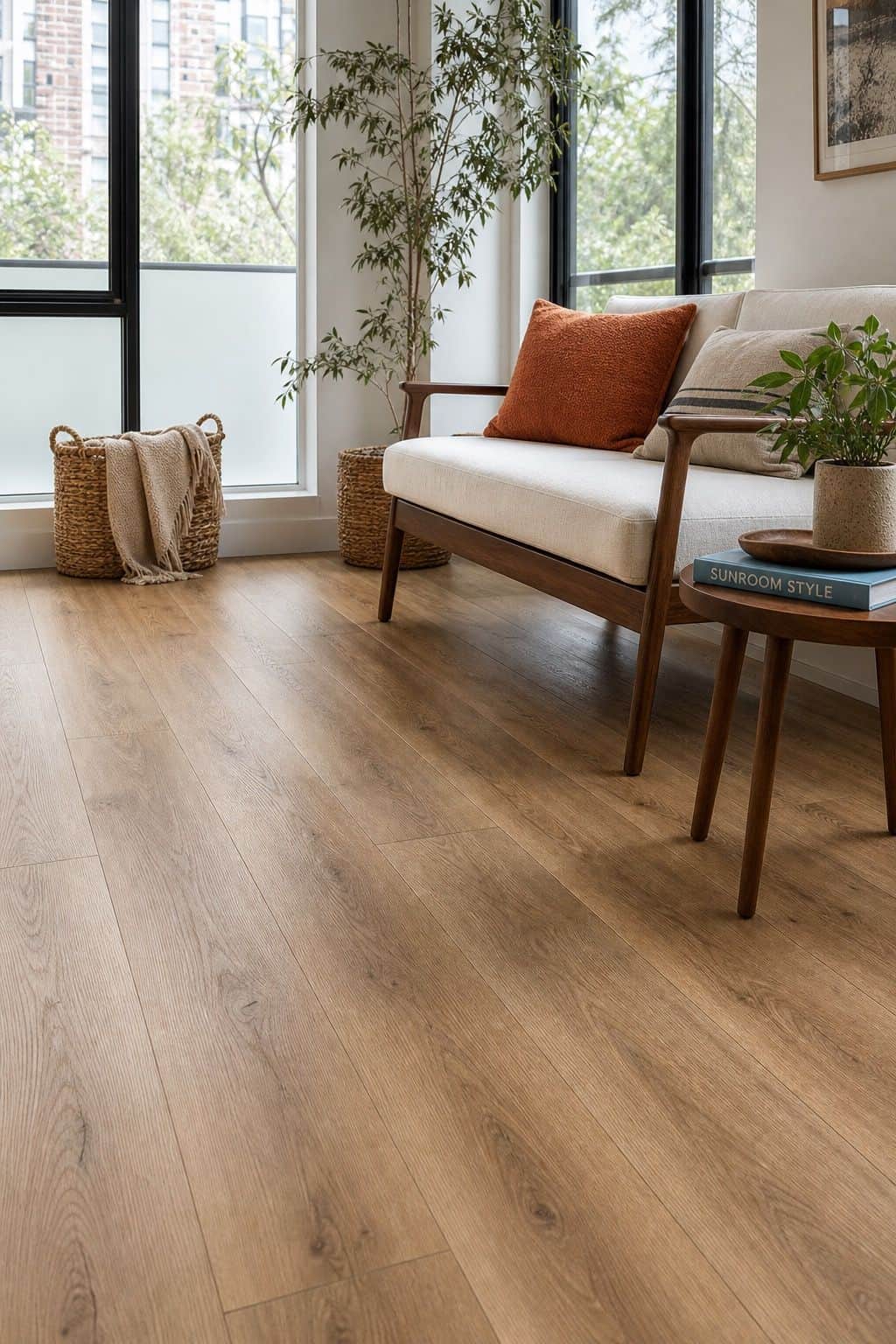


Waterproof luxury vinyl plank is the floor that survives wet boots, plant water and spilled coffee. It looks like wood, it doesn’t swell, and it handles temperature changes better than real wood.
Look for planks at least 6 mm thick with a wear layer of 0.3 to 0.5 mm. A rigid core holds up better in a room that heats up and cools down every day.
Planning the rest of the room? See my sunroom decorating ideas.
2. Engineered Hardwood for Climate-Controlled Sunrooms
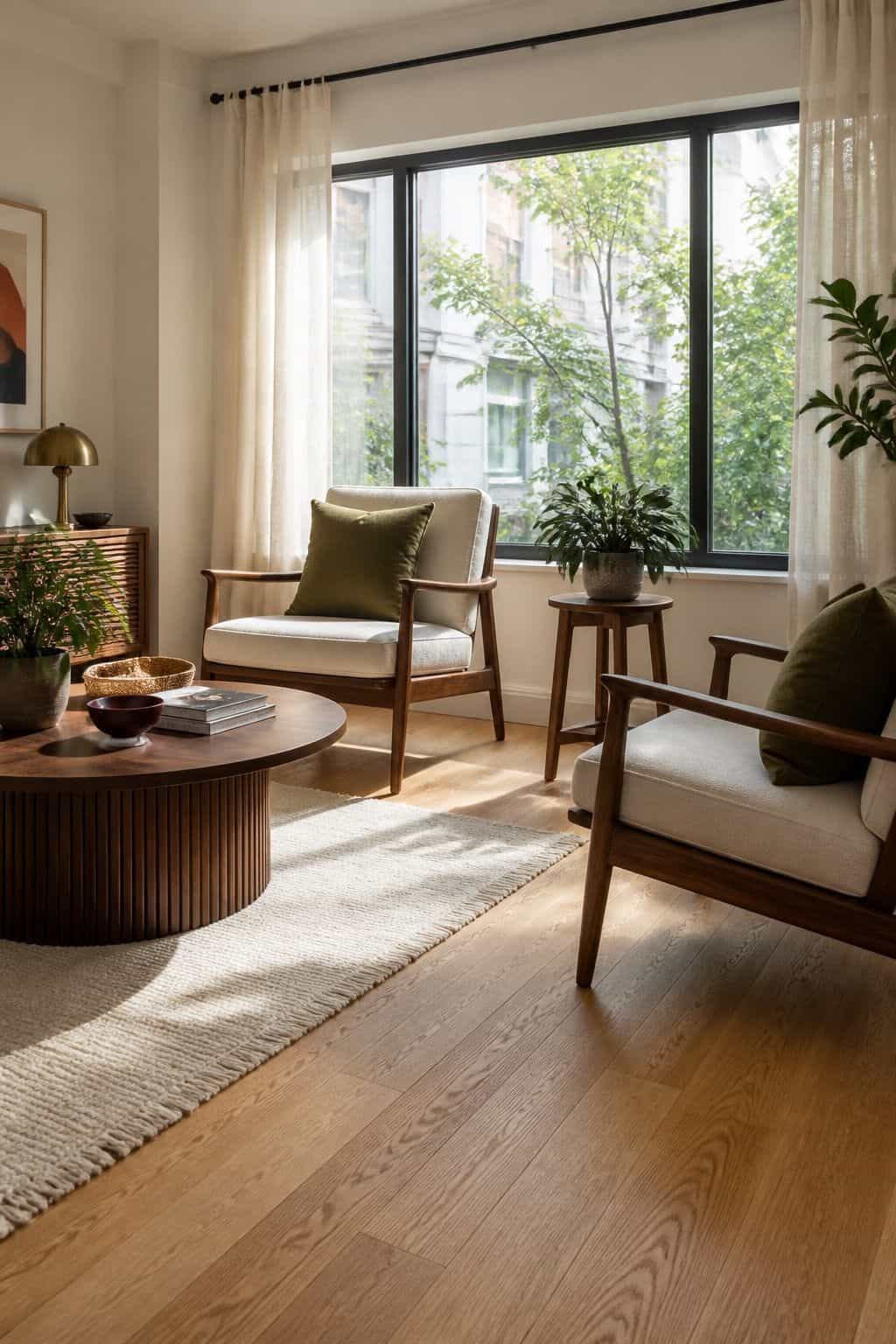


Engineered wood is the better choice if you want real wood in a sunroom. Its layered core moves less than solid wood when temperature and humidity change.
Only use it in a sunroom that’s heated and climate-controlled all year. In an unheated glazed room, it will gap and cup.
3. Wide-Plank Painted Wood for Cottage Charm
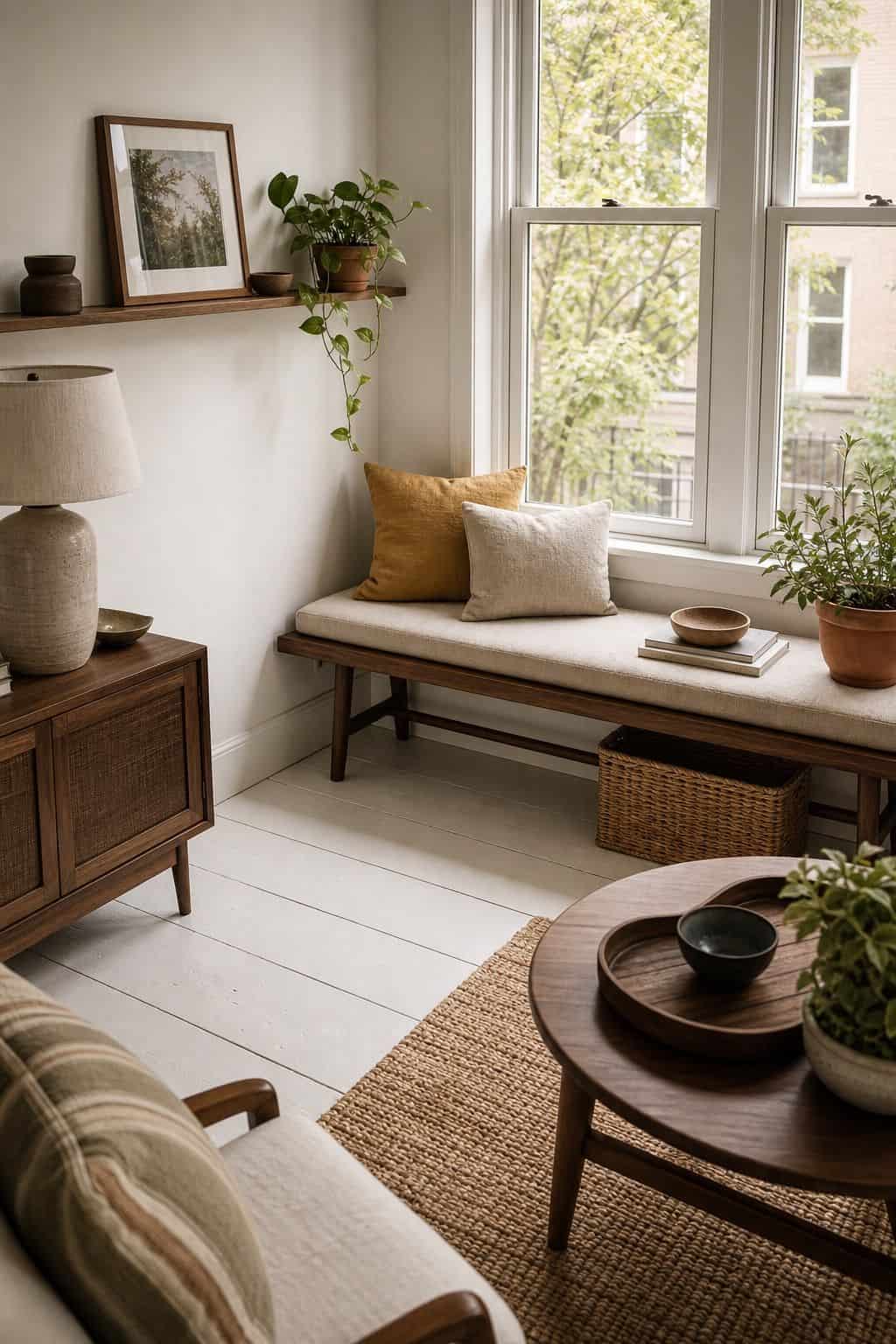


Painted wide-plank wood floors give a sunroom a relaxed cottage feel. White, pale grey or soft blue paint reflects light and hides fading.
Planks 15 to 20 cm wide look rustic, and 10 to 12 cm planks look neater. Use a hard-wearing floor paint and add a clear topcoat in high-traffic areas.
Pair the floor with the right window treatments. Here are my sunroom curtain ideas.
Tile Flooring Options
4. Large-Format Porcelain Tile in Soft Gray
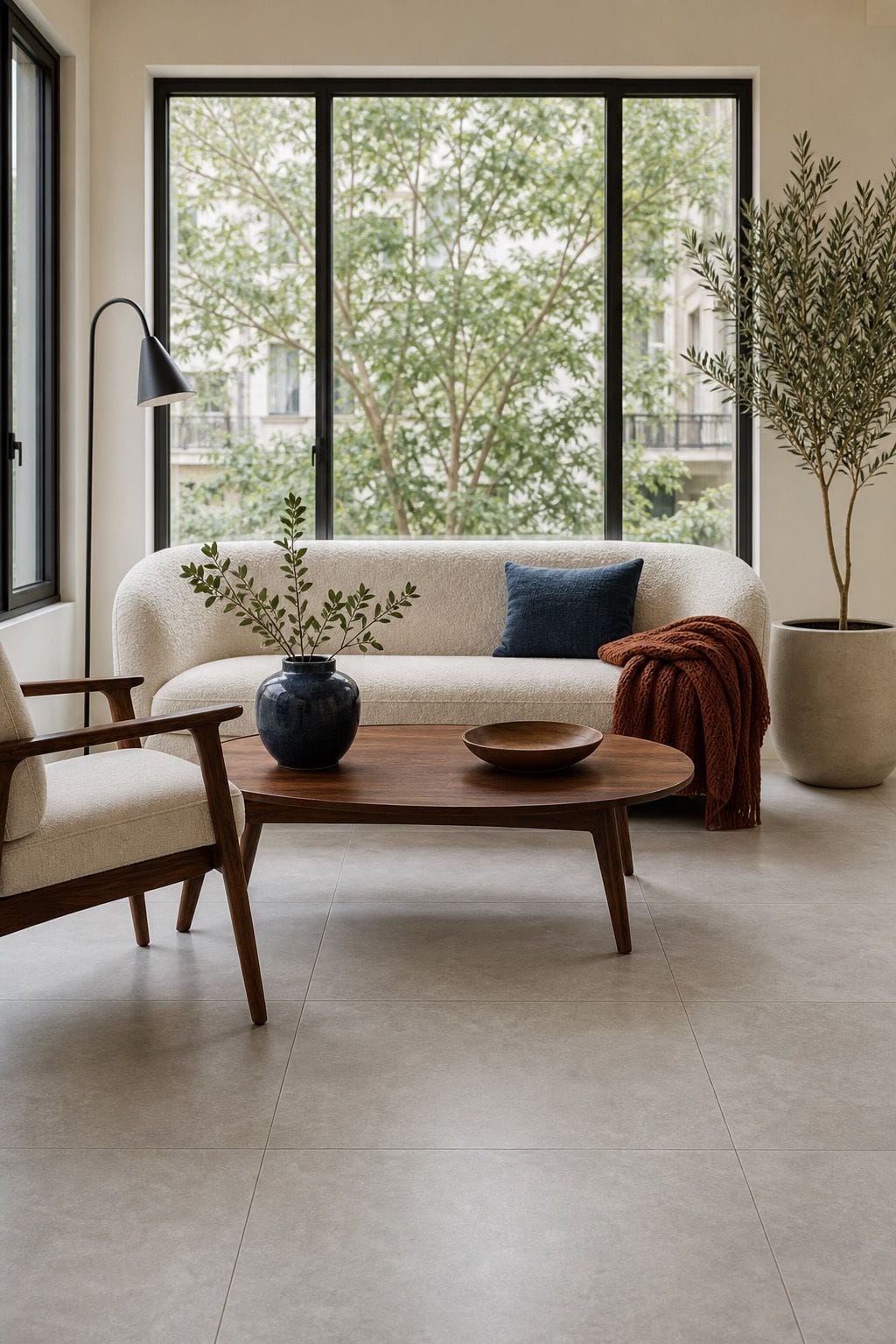


Large-format porcelain tile in soft grey makes a small sunroom look bigger, because fewer grout lines mean the floor reads as one surface.
Choose porcelain with a PEI rating of 4 or 5 and colour that runs all the way through, so chips don’t show. Porcelain shrugs off sun, water and cold.
To match the walls, see these sunroom wall colour ideas.
5. Terracotta Tile for Warm Mediterranean Sunrooms


Terracotta tile brings warm earth tones that look great in strong light, with a Mediterranean feel.
Seal raw terracotta with two coats of penetrating sealer before grouting and reseal every year or two. Unsealed terracotta stains easily.
6. Patterned Cement Tile as a Statement Floor


Patterned cement tile turns the floor into the main feature. Black and white or soft colour patterns both work.
Use it in lower-traffic sunrooms, since the surface needs sealing and can stain. Keep the rest of the room simple so the floor stands out.
Natural Fiber Rugs
7. Large Jute Rug as the Base Layer


A jute rug is the best first rug for most sunrooms. It adds warmth and texture over hard floors and doesn’t mind sun.
Leave about 30 to 45 cm of bare floor around the edges so the room doesn’t feel covered. Jute isn’t great with water, so keep it away from plants you water a lot.
8. Sisal for a Tighter Weave and Refined Look


Sisal looks like jute at first but has a tighter, smoother weave that feels more refined.
It works best in sunrooms without pets, since the tight weave is hard to clean if there’s an accident.
9. Seagrass for Coastal Sunrooms


Seagrass rugs suit a coastal or cottage sunroom. They’re naturally a bit water-resistant and very hard-wearing.
They’re good for casual sunrooms and family spaces, because spills bead on the surface for a moment before soaking in.
Once the floor is in, choose seating with my sunroom furniture ideas.
Indoor-Outdoor Rugs
10. Polypropylene Flat-Weave for Easy Cleaning


Polypropylene indoor-outdoor rugs are the practical pick for sunrooms with kids, pets or plants. They don’t fade quickly and you can hose them down.
Choose a flat weave with a pile of 6 mm or less so chairs slide easily and dirt shakes out.
11. Layered Indoor-Outdoor Over Tile or Vinyl


Layering a smaller patterned indoor-outdoor rug over a bigger jute rug adds colour and softness without hiding the natural base.
Put the smaller rug in the seating area, under the coffee table or in front of a sofa, so it marks the zone.
Radiant Heated Floors
12. Electric Radiant Mats Under Tile


Electric underfloor heating mats under porcelain or terracotta turn a cold sunroom into a room you’ll use in winter. They’re common in Finnish bathrooms for the same reason.
Choose a mat system designed for tile and have an electrician connect it. A thermostat with a timer keeps running costs down.
For winter evenings, see my sunroom lighting ideas.
13. Hydronic Radiant Heat for Whole-Room Comfort


Water-based underfloor heating circulates warm water through pipes in the floor. It heats the whole room evenly and is efficient for large spaces.
It needs a heating contractor and is best put in during a build or a full renovation, not as a quick upgrade.
14. Wool Area Rug Over Radiant Heat


A wool rug over a heated floor gives you warmth from below and softness on top.
Choose a low-pile, flat-weave wool rug so heat still rises through. Thick rugs can trap heat and reduce the effect.
UV-Resistant Materials
15. UV-Stabilized Vinyl Plank for South-Facing Sunrooms


South-facing sunrooms in strong sun need flooring rated for UV. Standard vinyl can fade or discolour within a few years.
Look for vinyl rated for outdoor or porch use, which includes UV stabilisers. UV-filtering window film helps protect the floor too.
16. Pale Color Choices to Hide UV Fade


If UV-rated flooring isn’t in the budget, choose a pale floor. Fading on light colours is much harder to see than on dark ones.
Keep floors in the same light tones as your walls and window frames. Avoid dark walnut and espresso finishes in a sunny room.
Sunroom flooring FAQ
What flooring is best for a sunroom?
Waterproof luxury vinyl plank and porcelain tile are the two best all-round choices. Both handle sun, damp and temperature changes.
Will sun damage hardwood floors in a sunroom?
Yes, especially solid wood. Direct sun bleaches and dries wood, and temperature swings cause gaps. Engineered wood in a heated sunroom is safer.
Can you put carpet in a sunroom?
Wall-to-wall carpet isn’t a good idea. It traps damp and fades in the sun. Use a washable rug on a hard floor instead.
What about radiant floor heating in a sunroom?
It turns a sunroom into a year-round room. Electric mats under tile are the easiest option, and water-based systems suit bigger rooms or renovations.
How much does sunroom flooring cost?
Prices vary a lot by country and installer. Vinyl plank is usually the cheapest option, porcelain tile sits in the middle, and engineered wood and underfloor heating cost the most.
Key takeaways
- Waterproof vinyl plank and porcelain tile handle sunroom conditions best.
- Engineered wood works only in heated, climate-controlled sunrooms.
- A jute or sisal rug adds warmth on hard floors and handles sun well.
- Electric underfloor heating under tile makes a sunroom usable in winter.
- Pale floors hide UV fading. Dark walnut and espresso show it fast.
Final thoughts
The right sunroom floor is the one you never have to think about. Start with how the room is heated and which way it faces, then choose from these sunroom flooring ideas. A tough base floor plus a rug you can swap is the combination that works almost everywhere.
Last update on 2026-10-03 / Affiliate links / Images from Amazon Product Advertising API
