
Quick Answer: The freshest spring Easter decor ideas start from a neutral base, beige, linen, stone, off-white, then add color through blush, sage, and muted lavender rather than primary pastels. Lean on sculptural, organic centerpieces over literal bunny-and-egg symbols, bring in living elements like potted ferns, spring bulbs, and fresh eucalyptus, and choose pieces that transition into general spring styling once Easter passes. The 2026 look is editorial and elevated, less Easter basket, more a home that quietly turned the season.
Easter decor has an image problem. Say the words and most people picture plastic grass, neon eggs, and a cardboard bunny taped to the door, decor that looks like it came from a party aisle and goes straight back in the bin on Monday.
The 2026 version is a different thing entirely. It starts from a neutral base, beige, linen, stone, off-white, and layers color in softly through blush, sage, and muted lavender. The centerpieces are sculptural and organic instead of literal symbols. The decor is alive: potted ferns, spring bulbs, air plants, fresh eucalyptus and pussy willow. And it is built to transition, the pieces that decorate for Easter quietly become your general spring styling once the holiday passes. Less Easter basket, more editorial.
The test every piece here has to pass is simple: will it still look right on May 1st. If a decoration only works for Easter weekend, it is the old approach, and almost everything that follows earns its place well past the holiday. That carry-through thinking extends outdoors too, our front porch spring decor ideas take the same elevated, transitional approach to the entrance.
Want a beautiful spring refresh without the seasonal-decor spending spiral?
The Ultimate Budget Planner helps you plan exactly what to spend on seasonal decor so a fresh-looking home does not drain the account every holiday. It is currently just $4.99 before the price goes up to $19.99.

Recommended Spring Easter Decor Products


Recommended blogs to read:
- Spring decor ideas
- Spring table decor ideas
- Spring centerpiece ideas
- Easter living room decor
- Best Easter nail designs
Set the Neutral Spring Base
1. Start From a Neutral Foundation
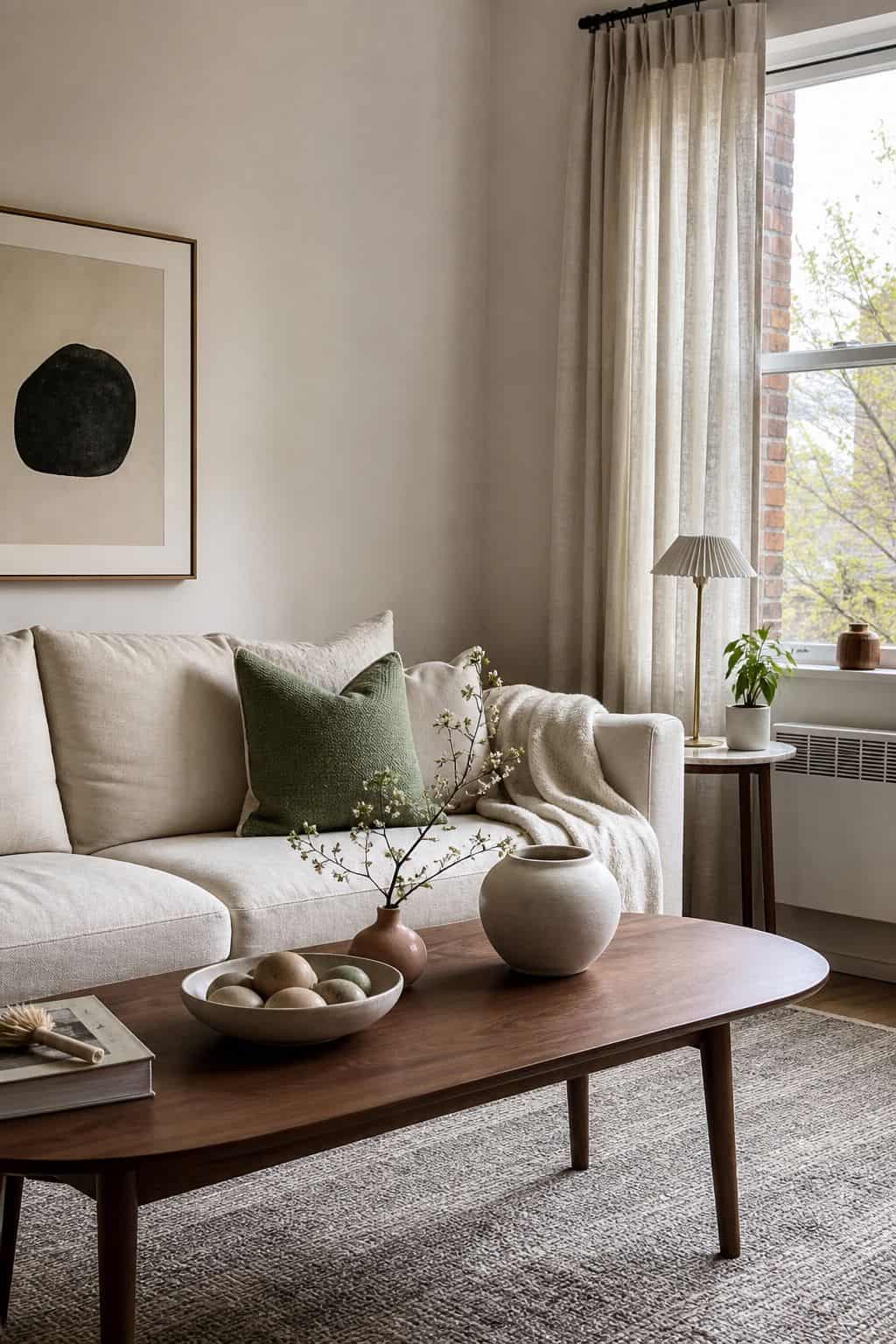


The whole elevated-spring look rests on this one decision: build from neutrals first. Beige, linen, stone, off-white, warm white. A neutral foundation, a runner, the larger surfaces, the base textiles, lets every soft spring color you add later actually read instead of competing in a sea of bright.
This is the opposite of the party-aisle approach, which starts with the loudest possible color and never recovers. Starting neutral also means most of your base layer is already year-round, so the spring decor is a light layer on top, not a full swap. It costs less, stores less, and looks more expensive, and it is the move every other idea here builds on.
Read more: Top 17 Easter Home Decor Ideas to Style Your Space for Spring
2. Add Color Through Blush, Sage, and Muted Lavender
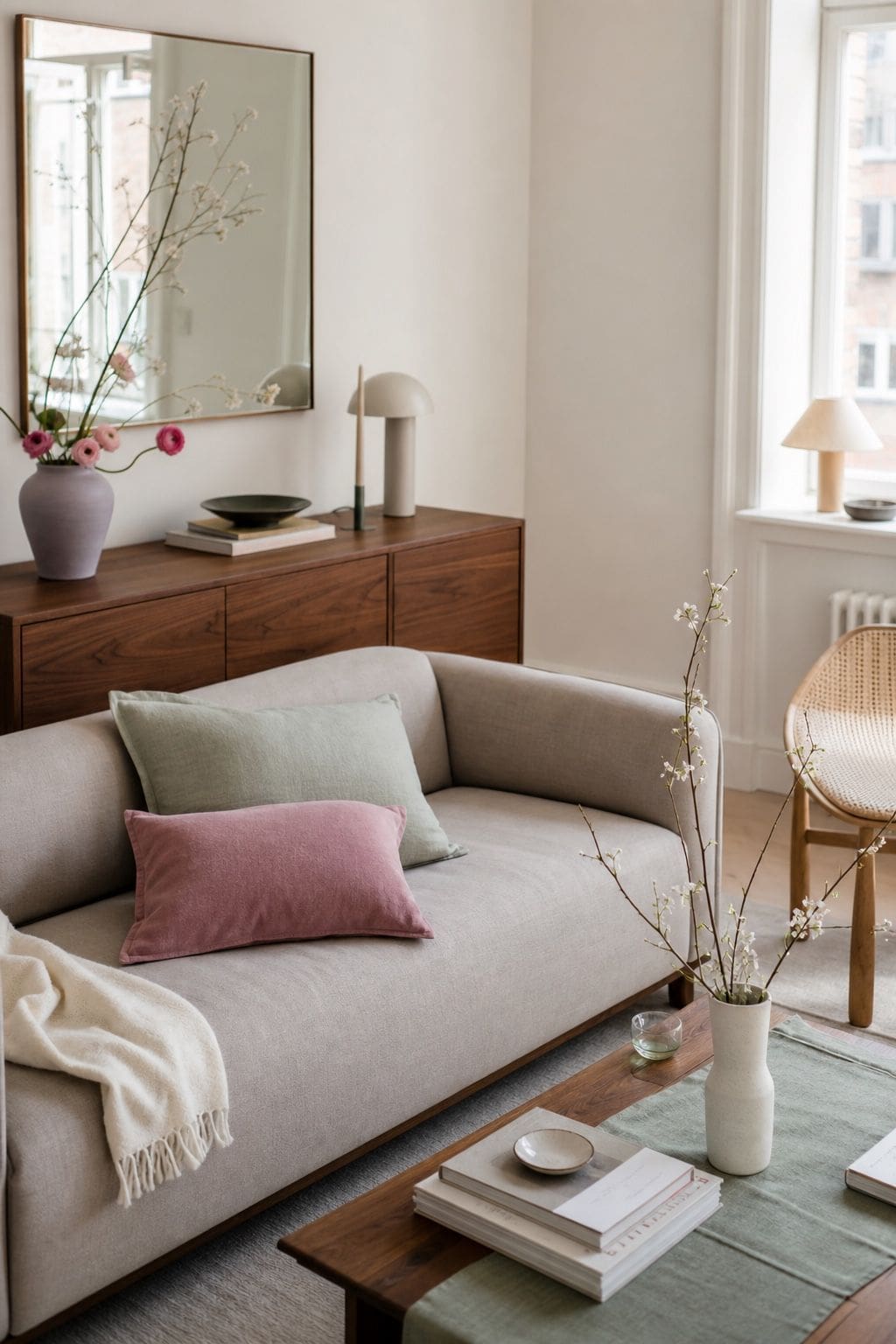


Once the base is neutral, the color comes in soft. The 2026 spring palette is blush, sage, and muted lavender, dusty, grayed-down, grown-up versions of the pastels, not the primary candy tones.
Bring these in through small, swappable things: a few stems, a runner, a couple of cushions, some ceramics. Keep the colors muted and close in softness so they read as a gentle wash rather than a clash. The difference between a sophisticated spring room and a juvenile one is almost entirely in this palette choice, dusty and soft reads as editorial, bright and saturated reads as the egg-dye kit.
3. Layer in Natural Spring Textures
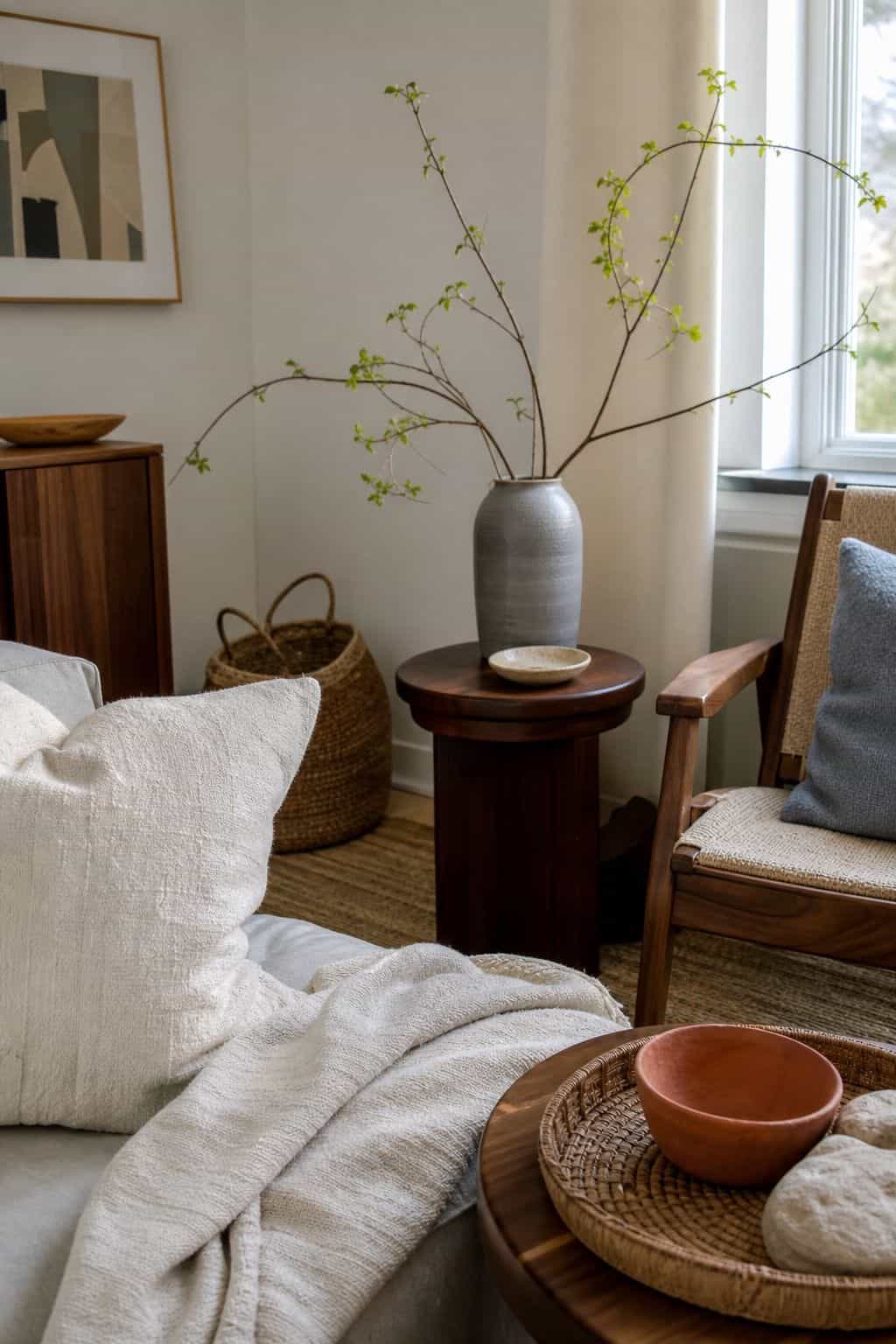


Spring is a texture season as much as a color one. Linen, raw cotton, rattan, light woods, woven grasses, ceramic, these natural textures carry the lightness and freshness of the season without relying on color at all.
Swap a heavy winter throw for a light linen one, set a rattan tray on the table, add a stoneware vase. The textures do quiet work, signaling the season has turned even before the eye registers a single pastel. Keep to a few materials repeated rather than many at once. Natural texture is the layer that makes a neutral spring base feel intentional and full rather than plain.
Read more: Top 16 Easter Mantel Decor Ideas for a Spring Fireplace Display
4. Refresh the Entry First
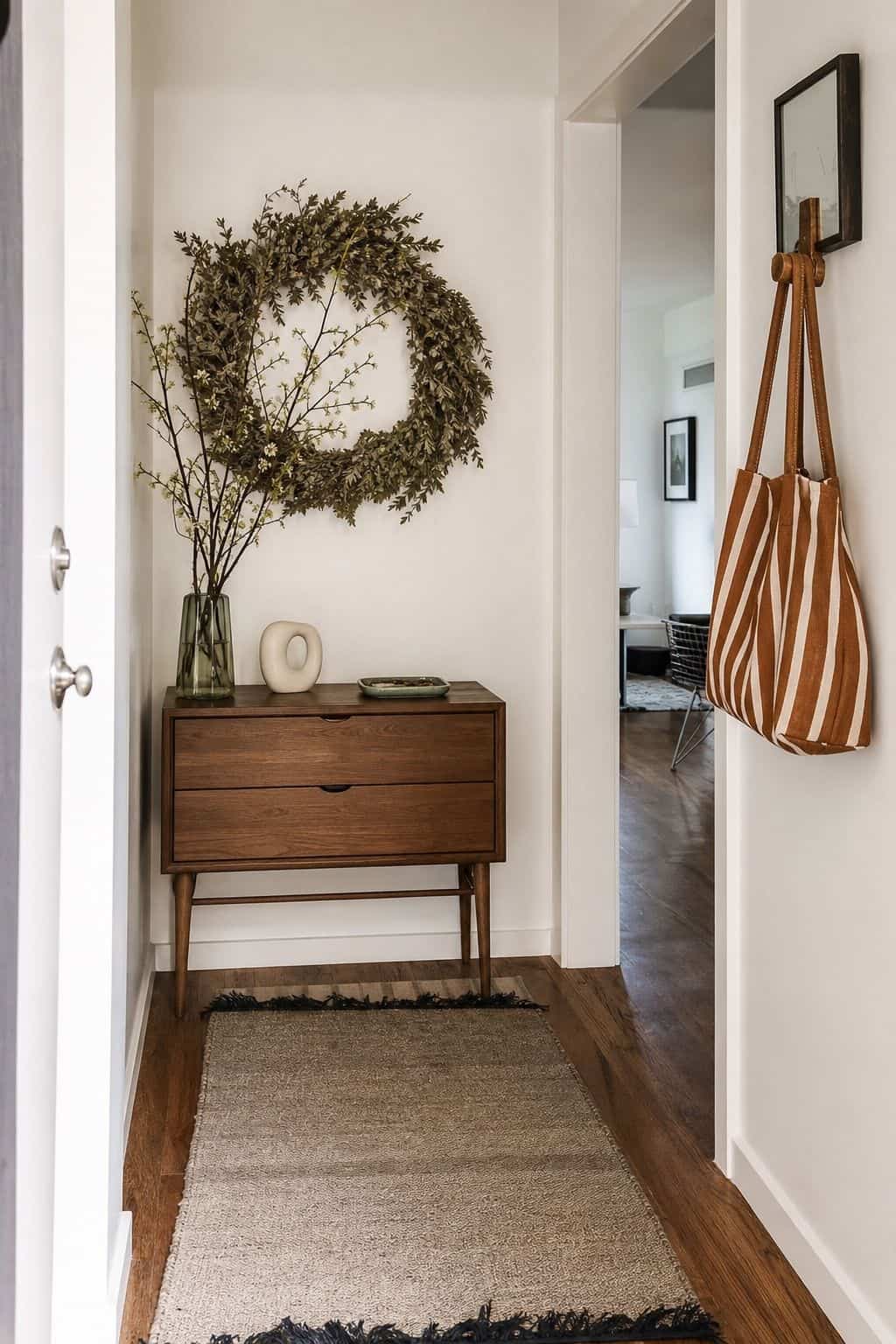


The entry is the highest-impact place to start, it sets the tone for the whole home and it is a small, contained space to refresh. A spring wreath in dried or faux greenery on the door, a neutral runner, a small arrangement on the console, a single sculptural object.
Keep it restrained, an entry reads cluttered fast. The point is a clear, fresh signal that the season changed, the moment someone walks in. Refreshing the entry is the same logic whatever the season, the principle behind a good best autumn decor for the entryway applies equally to spring, start at the threshold and let it set the tone.
Read more: Top 16 Easter Flower Arrangement Ideas for a Fresh Spring Look
5. Swap Textiles for Lighter Weights
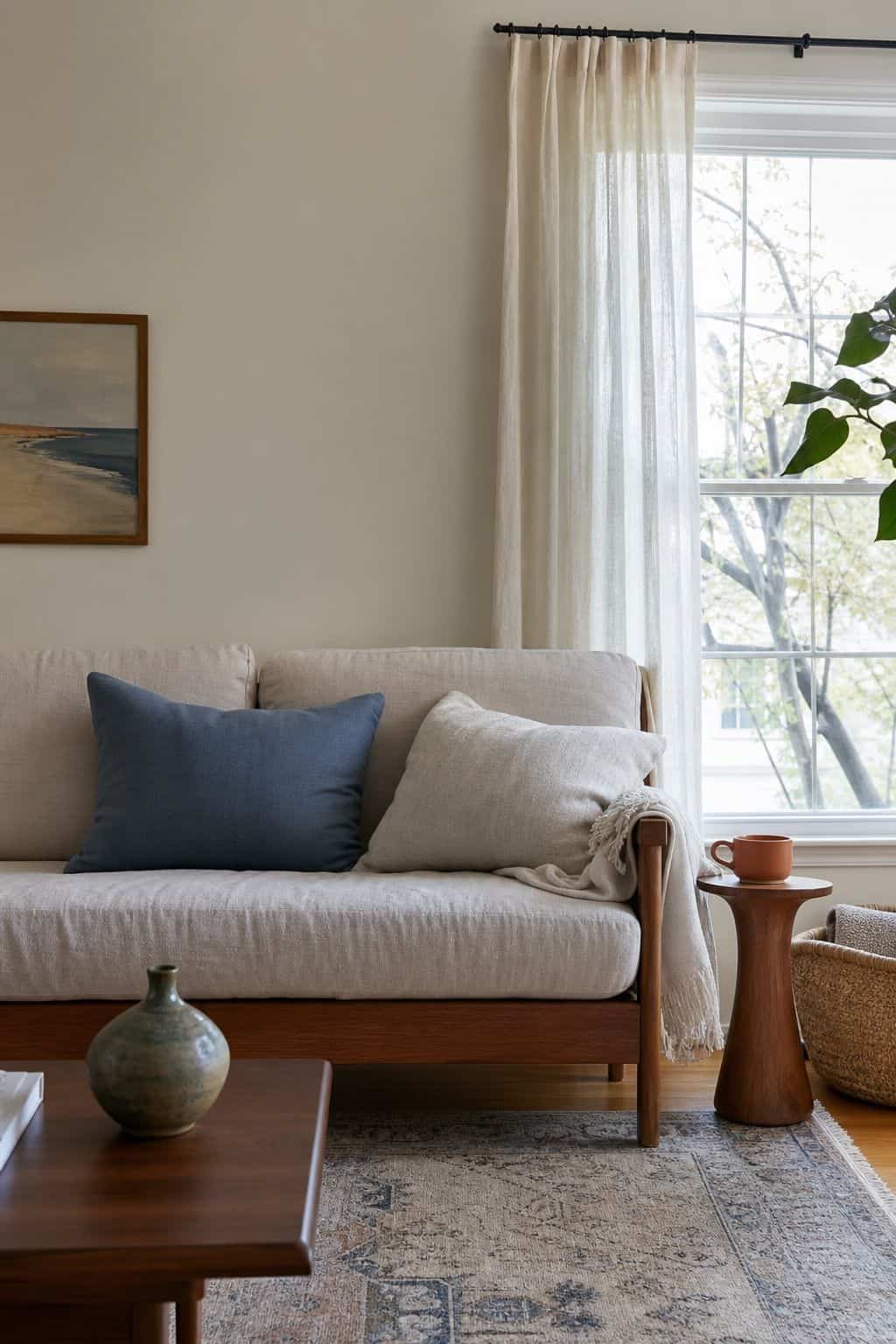


One of the cheapest, most effective spring moves is purely about weight. The heavy winter textiles, the dense throws, the dark cushion covers, the weighty curtains, come down, and lighter ones go up: linen, light cotton, an airy weave.
The colors can stay mostly neutral, it is the lightness that signals spring. A room with lighter textiles simply feels like the season changed, even before any decorative object is added. This is a swap, not a purchase if you already own both sets, and it is the foundation layer that makes the whole home feel seasonally current with almost no effort.
Living Elements and Fresh Greenery
6. Bring in Potted Spring Bulbs
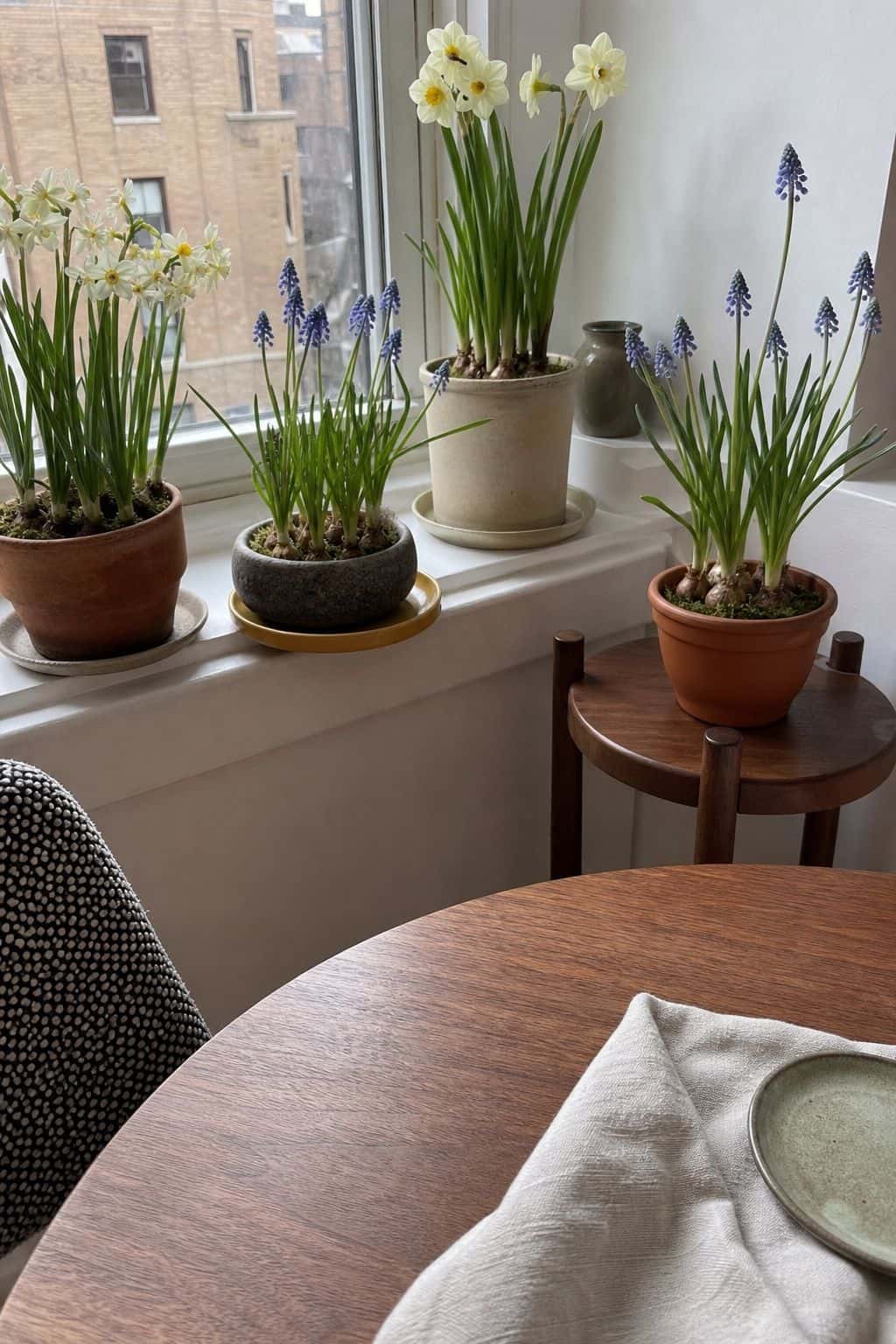


Nothing says spring like bulbs, and potted ones, tulips, daffodils, hyacinths, grape hyacinths, are the most alive piece of decor you can put out. They are seasonal, they are real, and they cost a few dollars at the grocery store.
Set them in simple stoneware or terracotta pots that fit the neutral base, and group a couple together for impact. As they bloom and fade, they mark the season passing in a way no static decor can. Potted bulbs are the clearest example of the living-decor principle, the freshness is literal, not styled, and that is exactly what makes the 2026 look feel fresh.
Read more: Top 18 Easter Wreath Ideas for a Fresh Spring Front Door
7. Add Fresh Eucalyptus and Pussy Willow
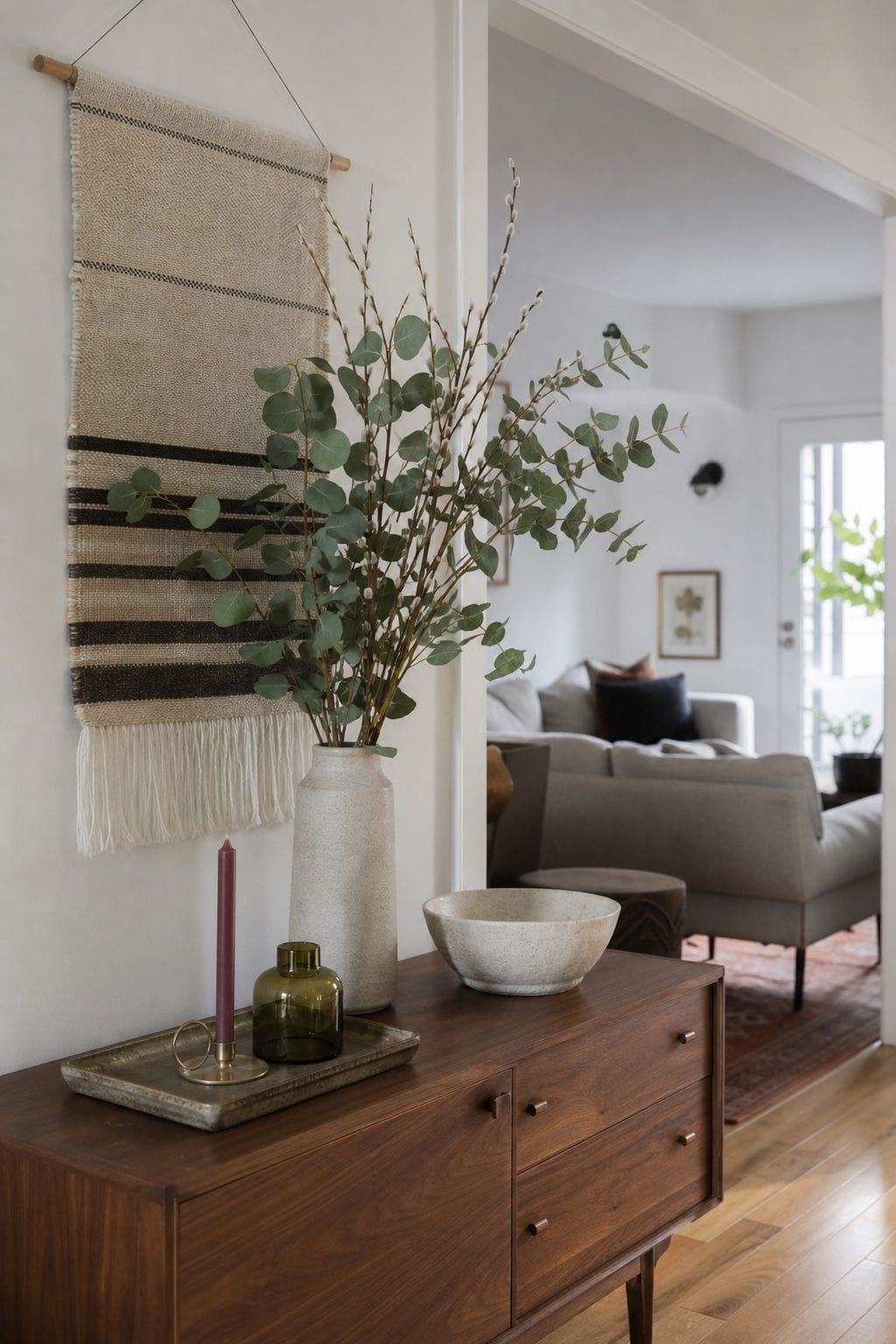


Cut stems are the easiest living element to work into a room. Fresh eucalyptus, pussy willow, and other spring branches in a tall vase add height, organic texture, and a quiet freshness, with no color commitment at all.
Pussy willow in particular reads as early spring and lasts for weeks even as it dries. Eucalyptus brings scent along with the green. A few stems in a simple vase on the table or console is one of the most reliable elevated-spring moves there is, it looks like a florist did it and costs the price of a grocery bunch. Keep the arrangement loose, the stems are the point.
Read more: Top 19 Easter Basket Ideas for Every Age and Style
8. Use Ferns and Air Plants for Lasting Green
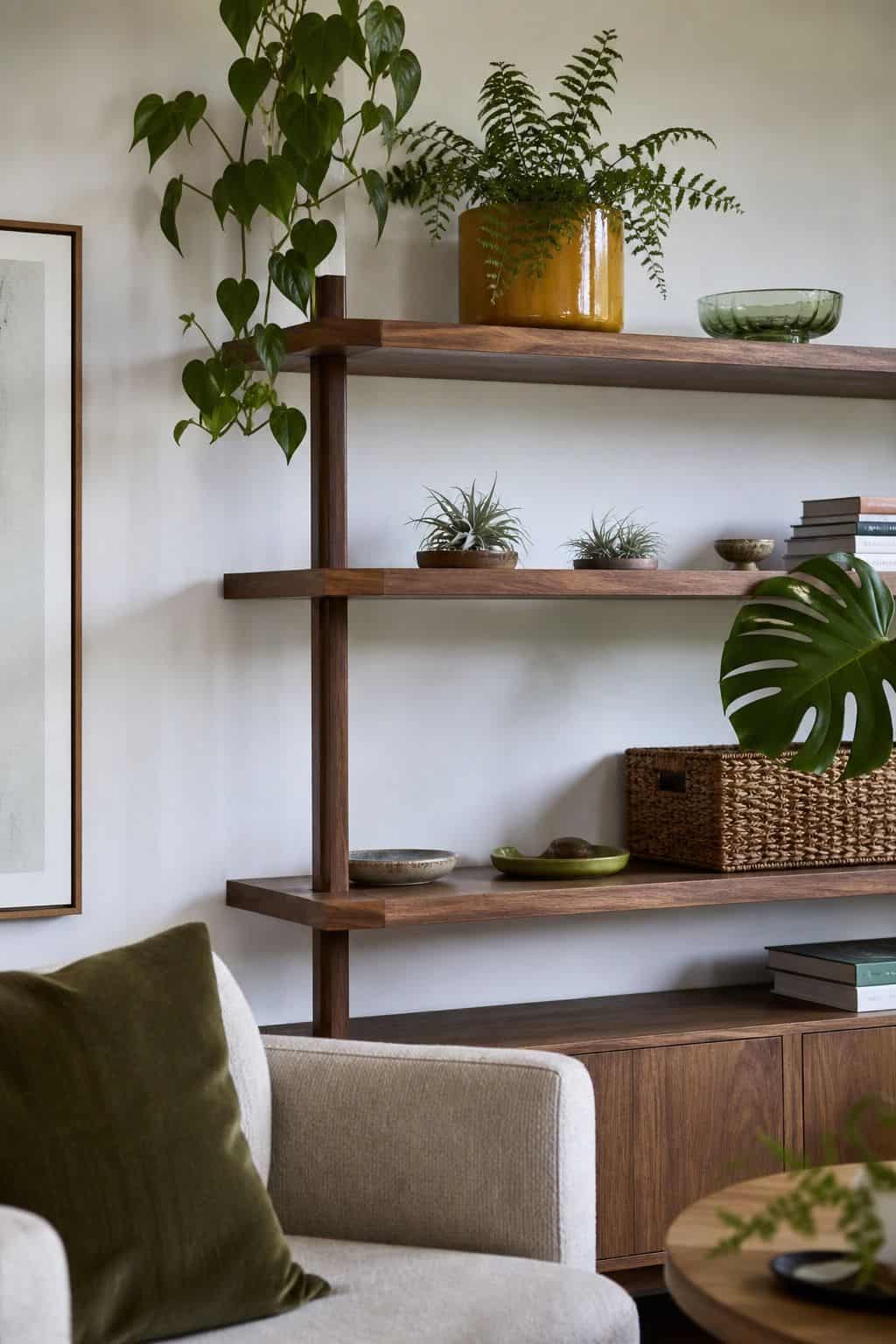


Where cut stems are temporary, potted ferns and air plants give you lasting living green that carries spring all the way through to summer. A fern on a shelf or stand, a few air plants in small dishes, real, low-maintenance, and seasonally right.
Ferns especially read as fresh, soft, and a little wild, exactly the spring mood. Place them where they get the light they need and let them be a permanent part of the spring-into-summer styling. Living green that lasts is the backbone of the transitional approach, the decor does not get packed away in April, it simply keeps growing into the next season.
9. Style a Simple Spring Branch Arrangement
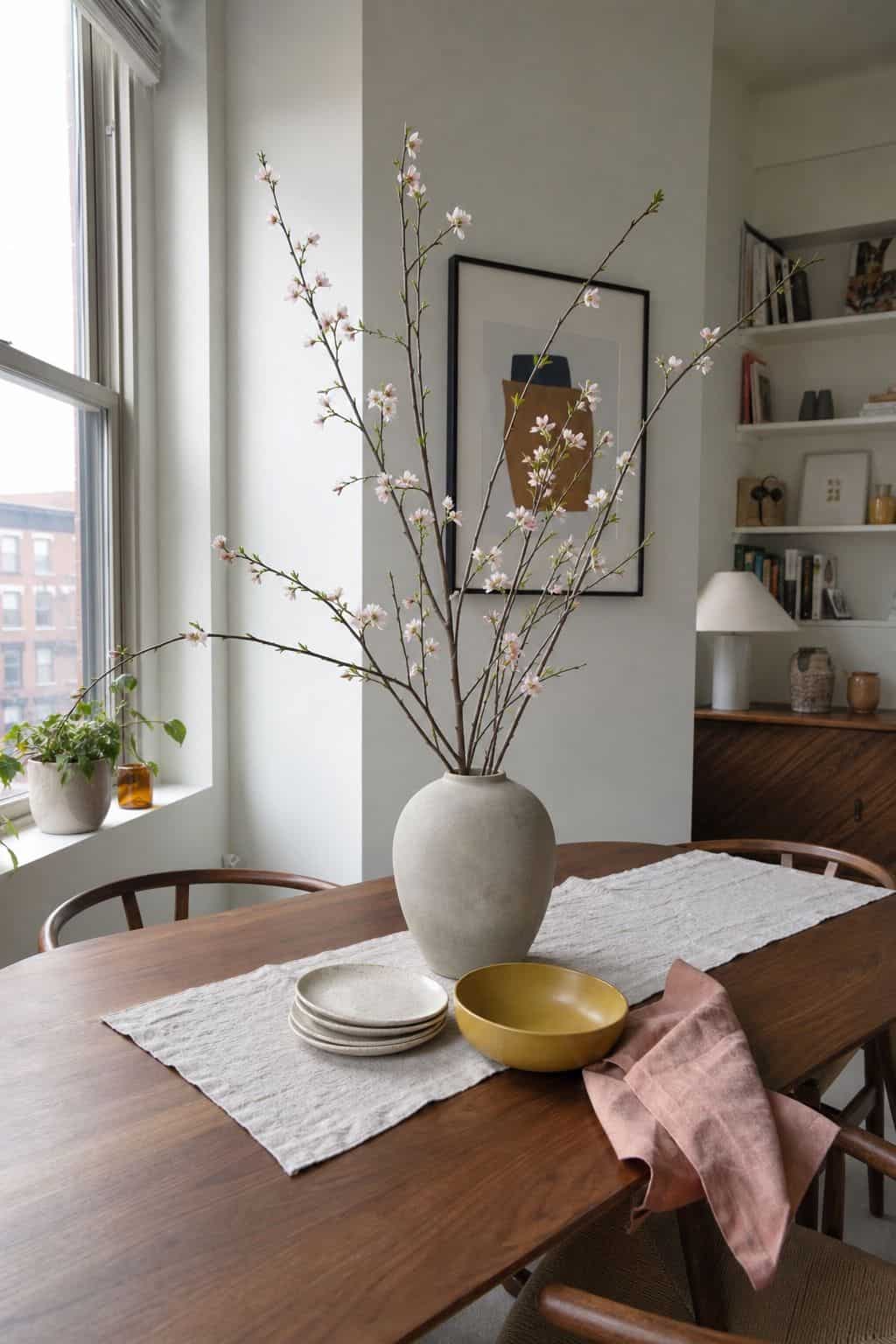


For a single statement piece, a tall arrangement of flowering or budding branches, cherry, forsythia, magnolia, quince, is hard to beat. One vessel, a few branches, and you have a sculptural, seasonal centerpiece with real height and presence.
Flowering branches are dramatic and elegant in a way a basket of eggs never is, and they shift over a week or two as buds open. Choose a heavy, simple vase that can hold the weight, and keep the branch count low, three to five, so it stays architectural rather than busy. Set it where it gets indirect light and away from a heat source, and the buds open slowly instead of all at once. This is a centerpiece that earns the editorial label, and it costs the price of a few grocery-store stems.
Read more: Top 18 Easter Dinner Ideas for a Beautiful Holiday Feast at Home
10. Add a Few Stems of Soft Spring Florals
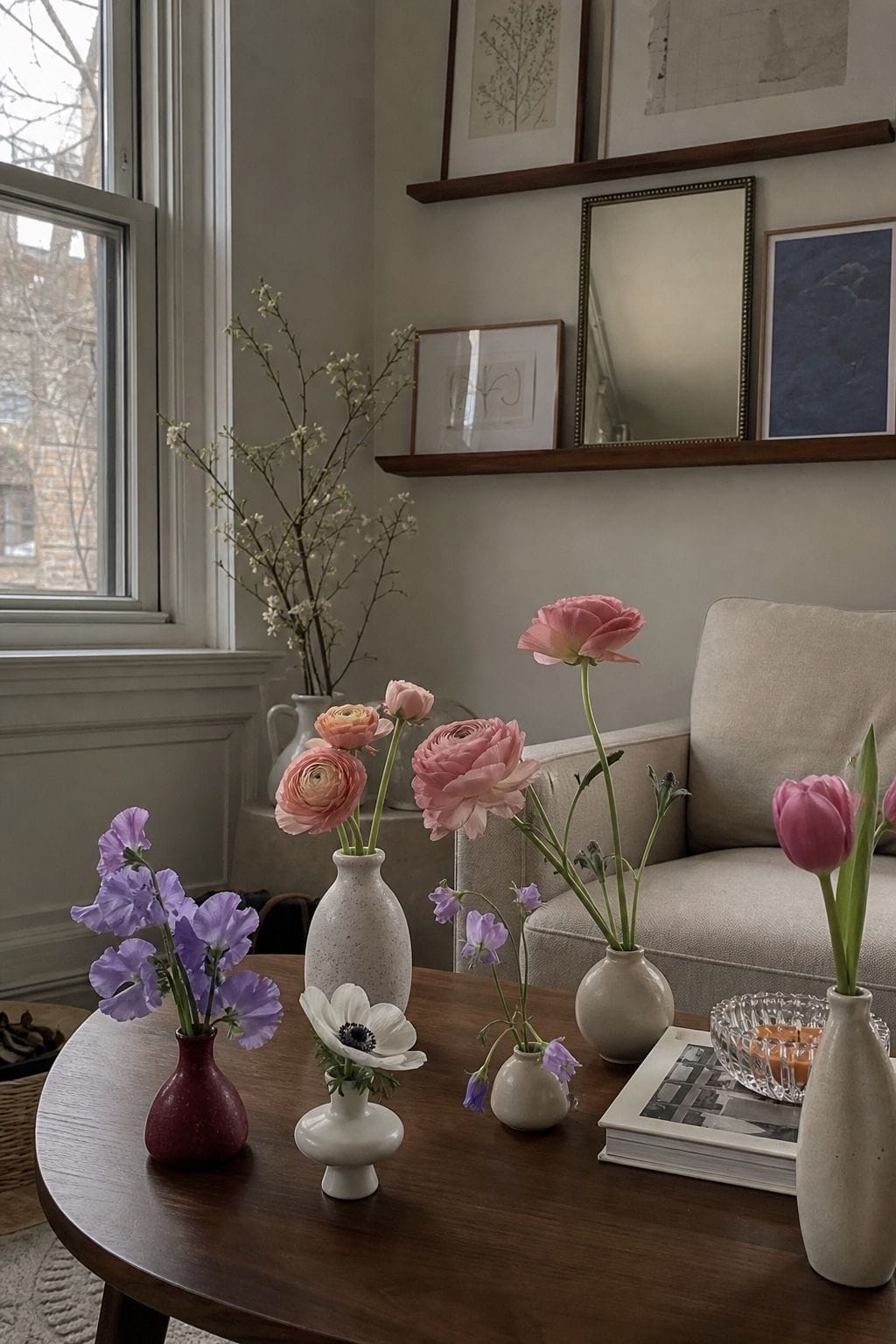


Beyond branches and greenery, a few soft floral stems bring the palette in living form. Ranunculus, tulips, sweet peas, anemones, fresh if you will refresh them, high-quality faux if you want them to last the season.
Keep the colors in the muted blush-sage-lavender range and the arrangements loose and low-key, a small bunch in a bud vase, a slightly larger one on the table. The goal is casual and gathered, not a stiff formal bouquet. Soft florals are the gentlest way to bring the spring palette into a room, and a couple of small vases scattered through the home do more than one big arrangement.
Read more: Top 18 Easter Snacks and Appetizers for an Easy Spring Spread
Sculptural Centerpieces and Table Styling
11. Choose Sculptural Over Literal Centerpieces
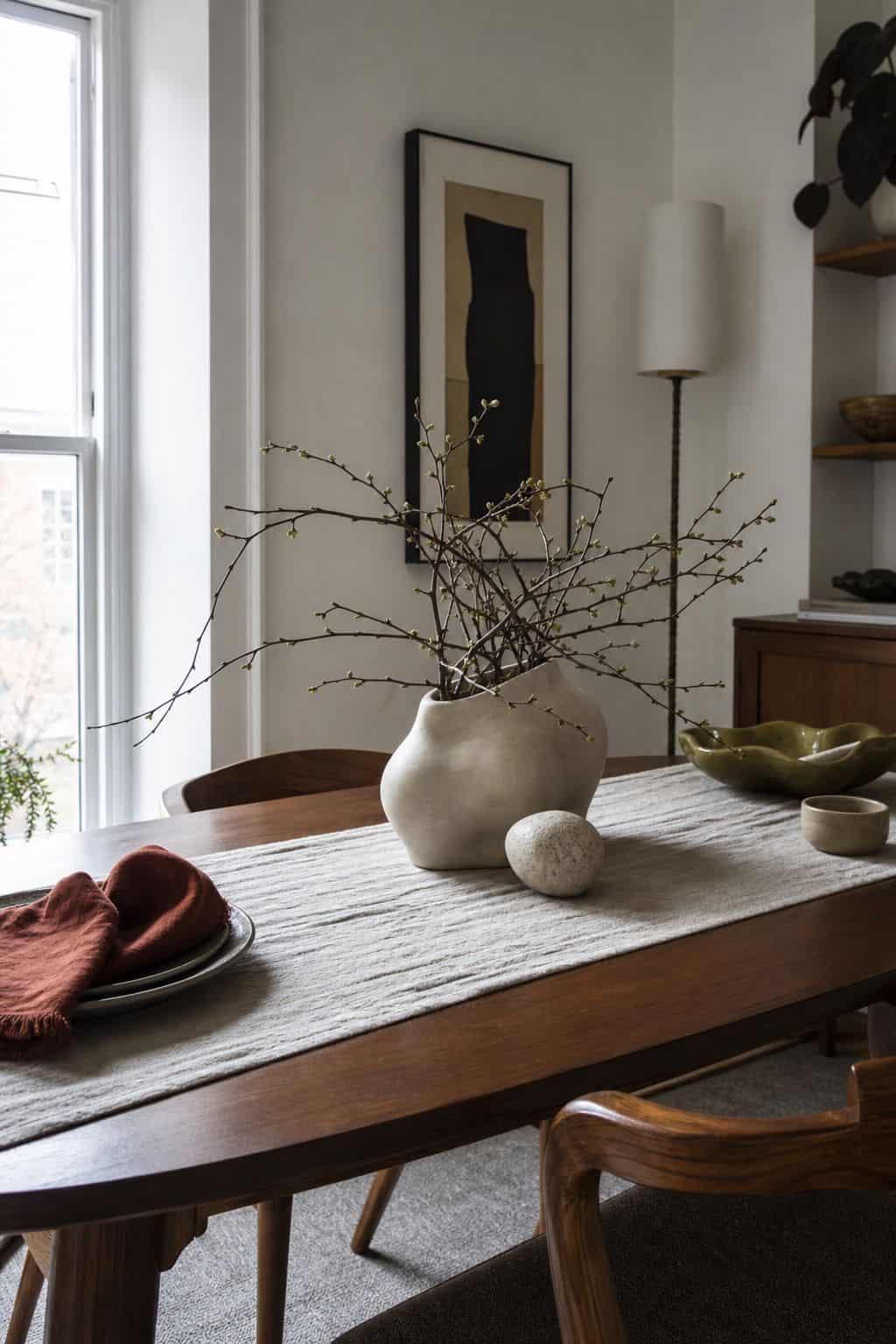


This is the idea that most separates 2026 Easter decor from the old version. Instead of a literal centerpiece, a basket of eggs, a ceramic bunny scene, go sculptural: an organic shape, an interesting vessel, a branch arrangement, a textural object.
Sculptural centerpieces read as art and design, literal ones read as a holiday display. The sculptural piece also does not announce Easter, so it stays out through all of spring rather than coming down on Monday. If you change one thing about how you do Easter decor, change this, it is the single move that takes the whole look from cute to elevated.
12. Style Eggs Subtly, if at All
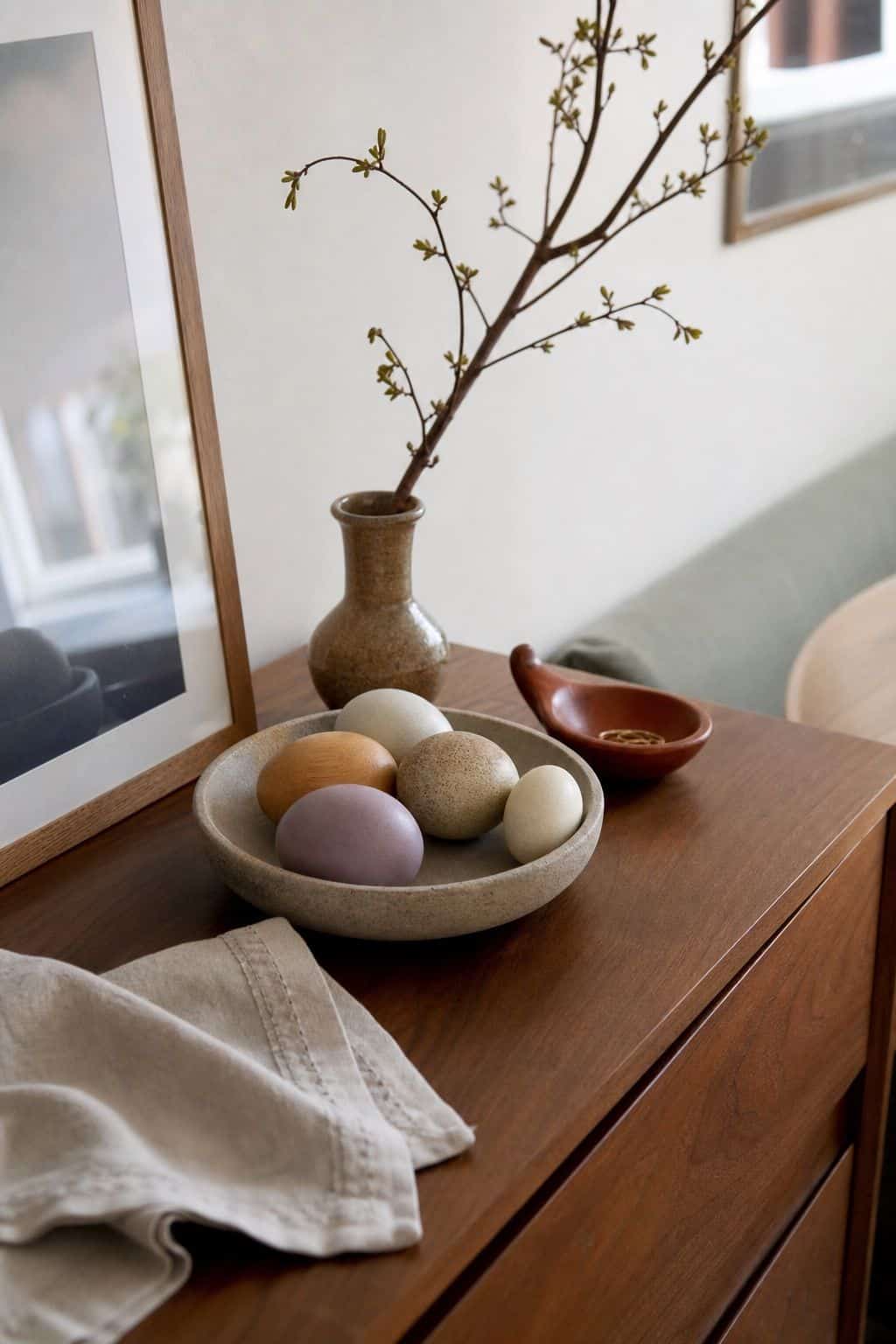


Eggs can still appear, the trick is restraint and finish. Skip the dyed-neon plastic and choose eggs in natural materials and muted tones, matte ceramic, wood, marbled, speckled in soft colors, and use just a few as accents rather than filling a bowl.
A small cluster of beautiful natural-toned eggs in a stoneware dish reads as a considered still life. A dozen bright plastic ones in a basket reads as the party aisle. The egg is not the problem, the saturation and the quantity are. Used sparingly and chosen well, a few eggs are a quiet nod to the holiday inside an otherwise grown-up spring scheme.
Read more: Top 16 Easter Decorating Ideas for Every Room of Your Home
13. Set a Layered Neutral Spring Table
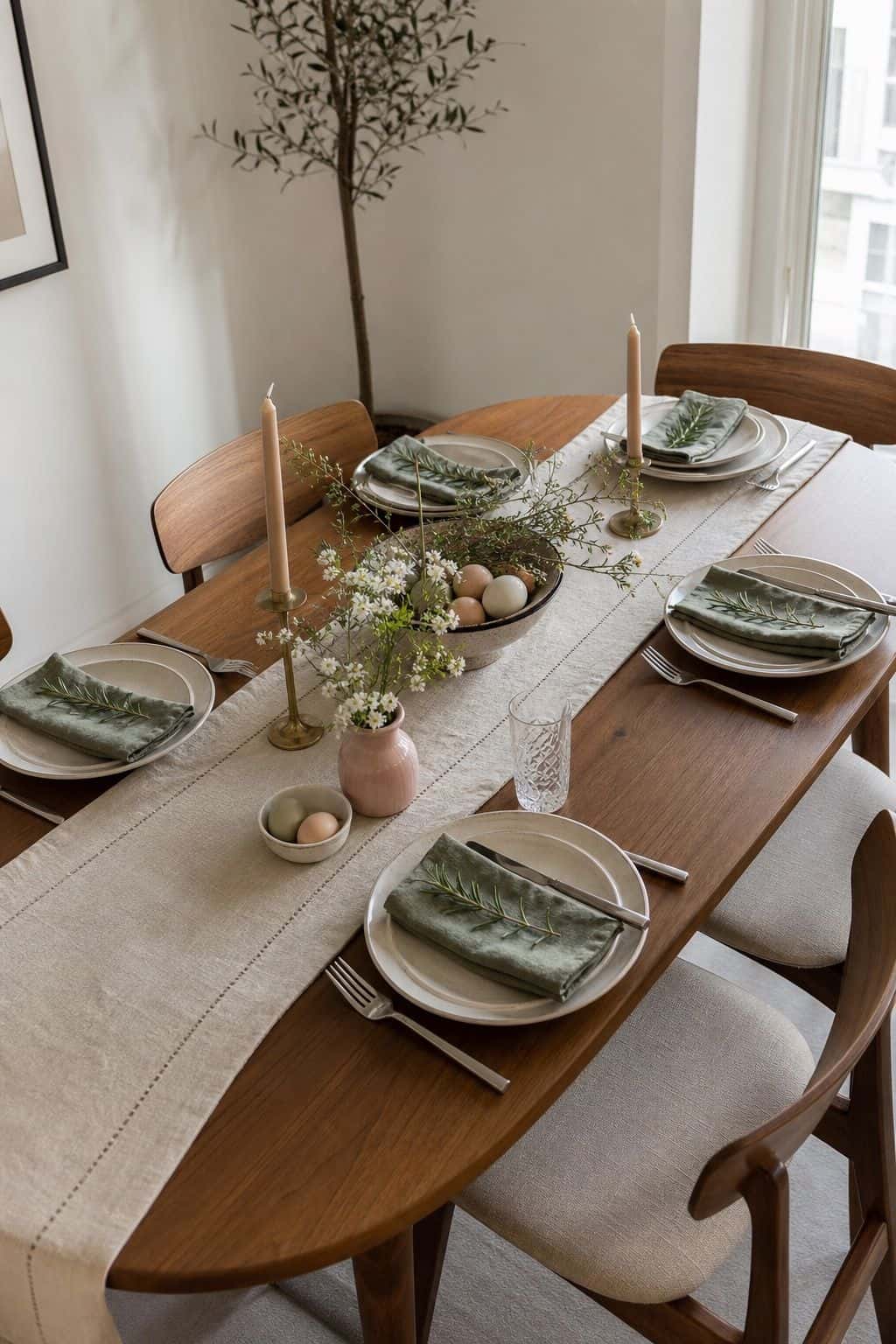


For an Easter gathering, the table follows the same rules as the rest of the home: a neutral linen base, soft muted color in the napkins or a runner, real greenery down the center instead of a themed centerpiece, simple ceramics.
Layer the place settings, a charger, a plate, a folded linen napkin, a single sprig, so the table has depth without a literal holiday motif anywhere on it. A few natural-toned eggs or a small floral at each setting is plenty of seasonal nod. The result is a table that photographs like a magazine and works for any spring meal, not just Easter, the same transitional thinking behind a good spring party decoration ideas.
Read more: Top 17 Easter Outfit Ideas for Women to Wear This Spring
14. Add Candlelight and Soft Height
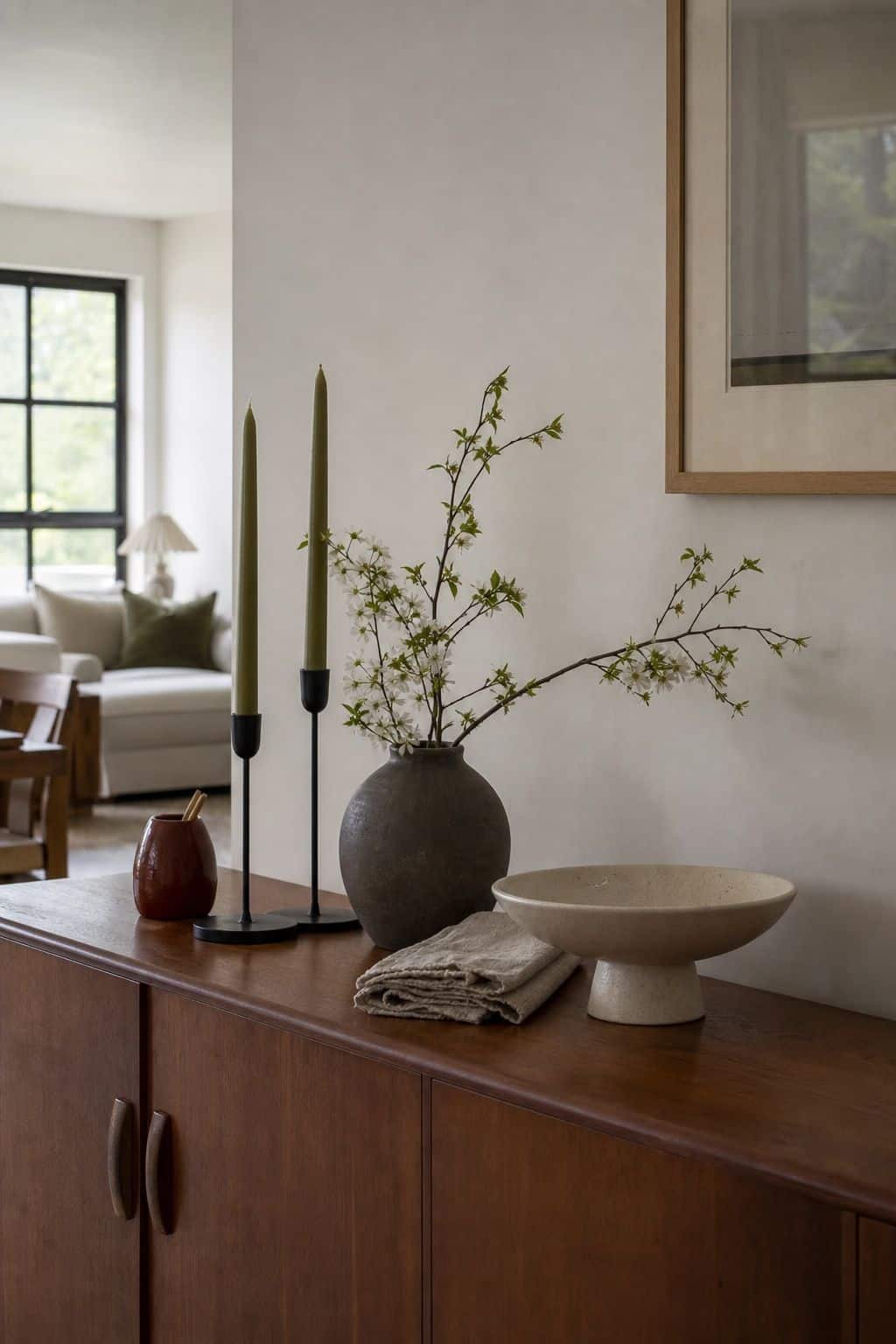


Spring decor skews light and low, so a little height and warmth keeps a table or console from going flat. Tapered candles in simple holders, a few stems with some lift, a footed bowl, these add vertical interest and a soft glow.
Keep the candles in neutral or soft muted tones, the unscented kind for a dining table so they do not fight the food. The mix of low elements and a few taller ones gives the eye somewhere to travel and the styling some structure. Candlelight also makes a spring gathering feel like an occasion, the warm glow against the fresh greens is a small, reliable bit of magic.
Room-by-Room Spring-Transitional Touches
15. Refresh the Living Room With Light Layers
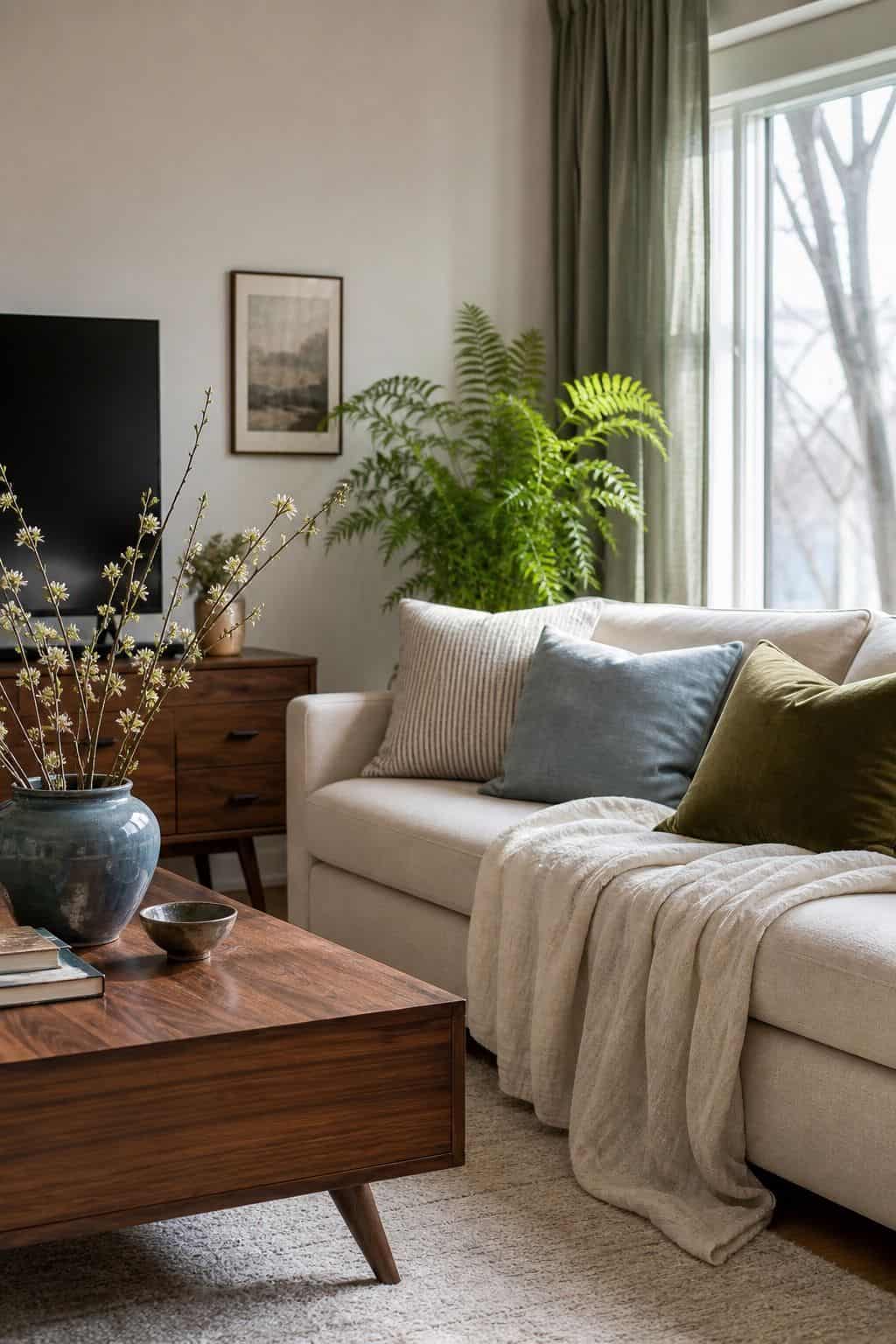


The living room takes spring well with just a few light touches over the neutral base: a linen throw, a couple of muted cushions, a vase of branches or florals, a fern in the corner. No literal Easter motifs needed.
Because everything is soft and transitional, the living room does not get un-decorated after Easter, it simply stays spring and then eases into summer. This is the whole transitional philosophy in one room, you are not putting up holiday decor, you are turning the season, and the difference is that nothing has to come back down on a specific Monday. It pairs with the same restraint behind good Christmas decor ideas for the living room, just in the opposite, lighter direction.
Read more: Top 17 Easter Garland Ideas to Drape Through Your Home
16. Bring Spring to the Kitchen and Dining Area
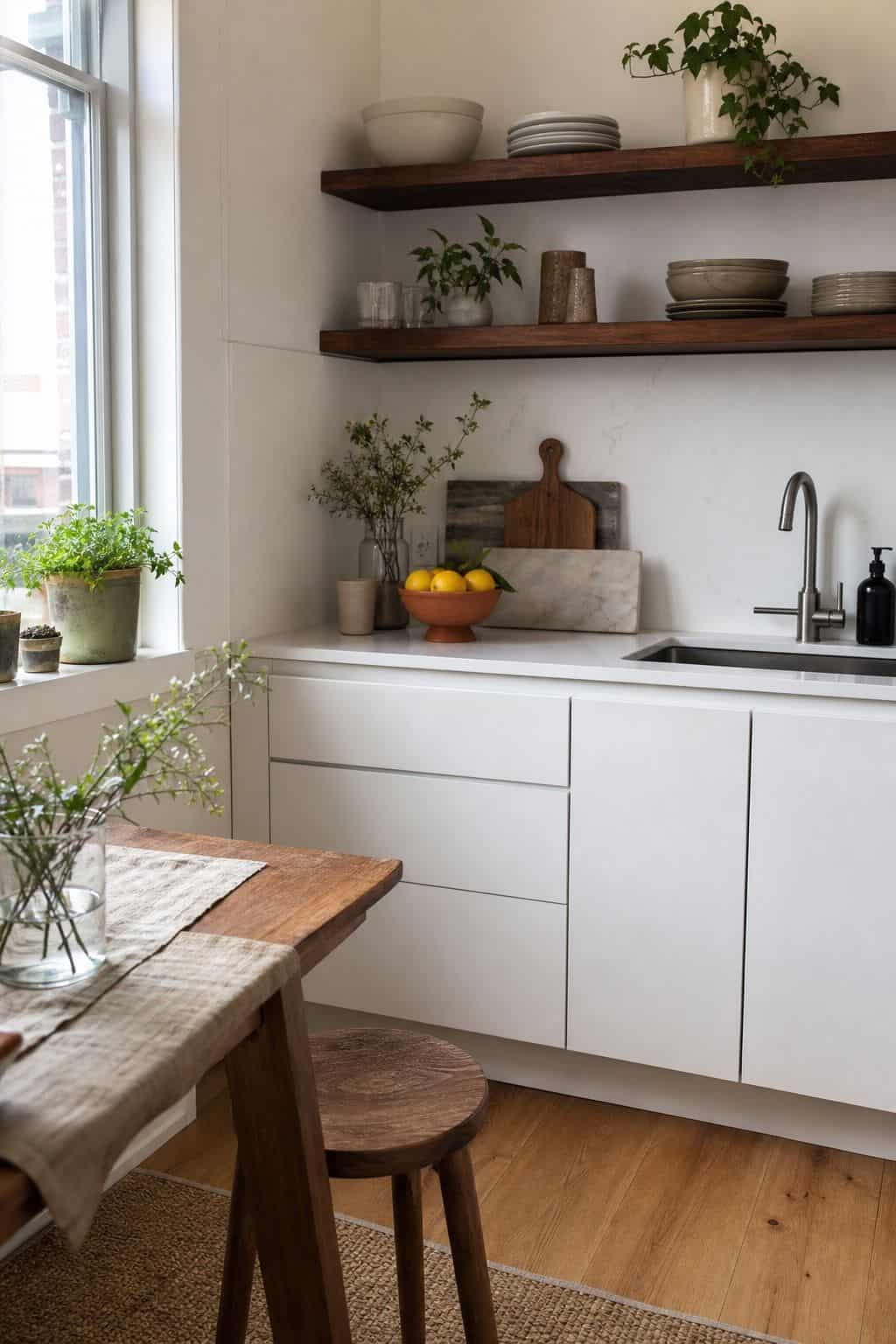


The kitchen and dining area refresh easily and cheaply. A bowl of lemons or fresh produce on the counter, a small herb pot on the windowsill, a linen runner, a jar of cut greenery, the everyday surfaces dressed lightly for the season.
These touches are functional as well as pretty, the herbs get used, the produce gets eaten, which suits the practical, lived-in spirit of the 2026 look. Keep it to a few elements so the working surfaces stay working. The kitchen is often the most-used room in a small apartment, so a light seasonal refresh there is felt every single day.
Read more: Top 16 Easter Food Ideas for a Full Holiday Menu
17. Add Soft Spring Touches to the Bedroom
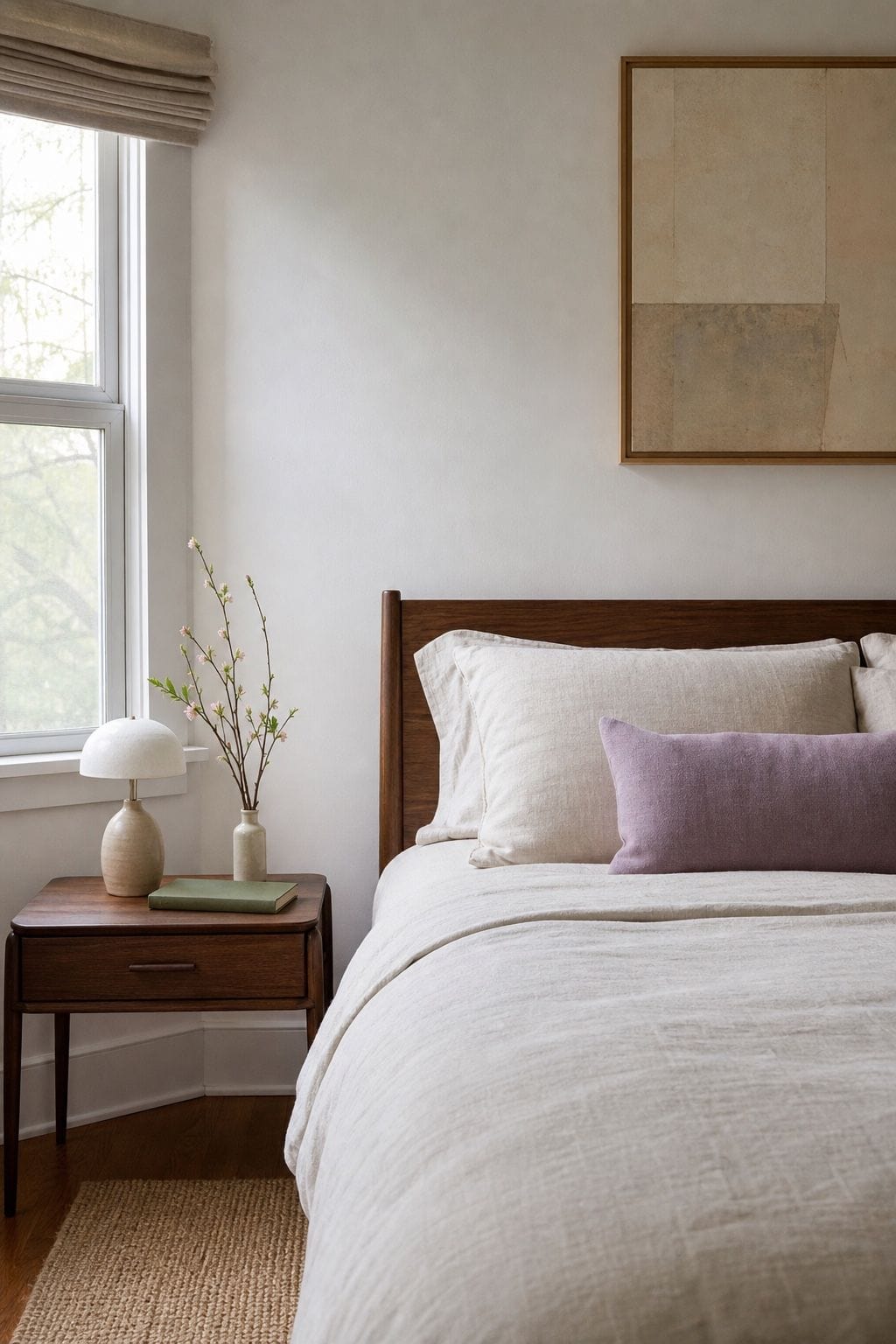


The bedroom turns spring with the lightest possible touch. Swap heavy winter bedding for lighter linens, add a muted cushion or two, set a small vase of stems on the nightstand, let in more light.
It does not need decorative objects, the shift in textile weight and a single living element does the whole job. A bedroom that feels lighter and fresher is one of the quieter pleasures of the season change, and it costs nothing if you already own the lighter bedding. Keep it calm and minimal, the bedroom is the room that benefits most from restraint. The same easy, low-effort spring spirit carries over to getting ready, the relaxed looks behind good Easter hairstyles for women match the season’s whole unfussed mood.
18. Choose Decor That Transitions Past Easter
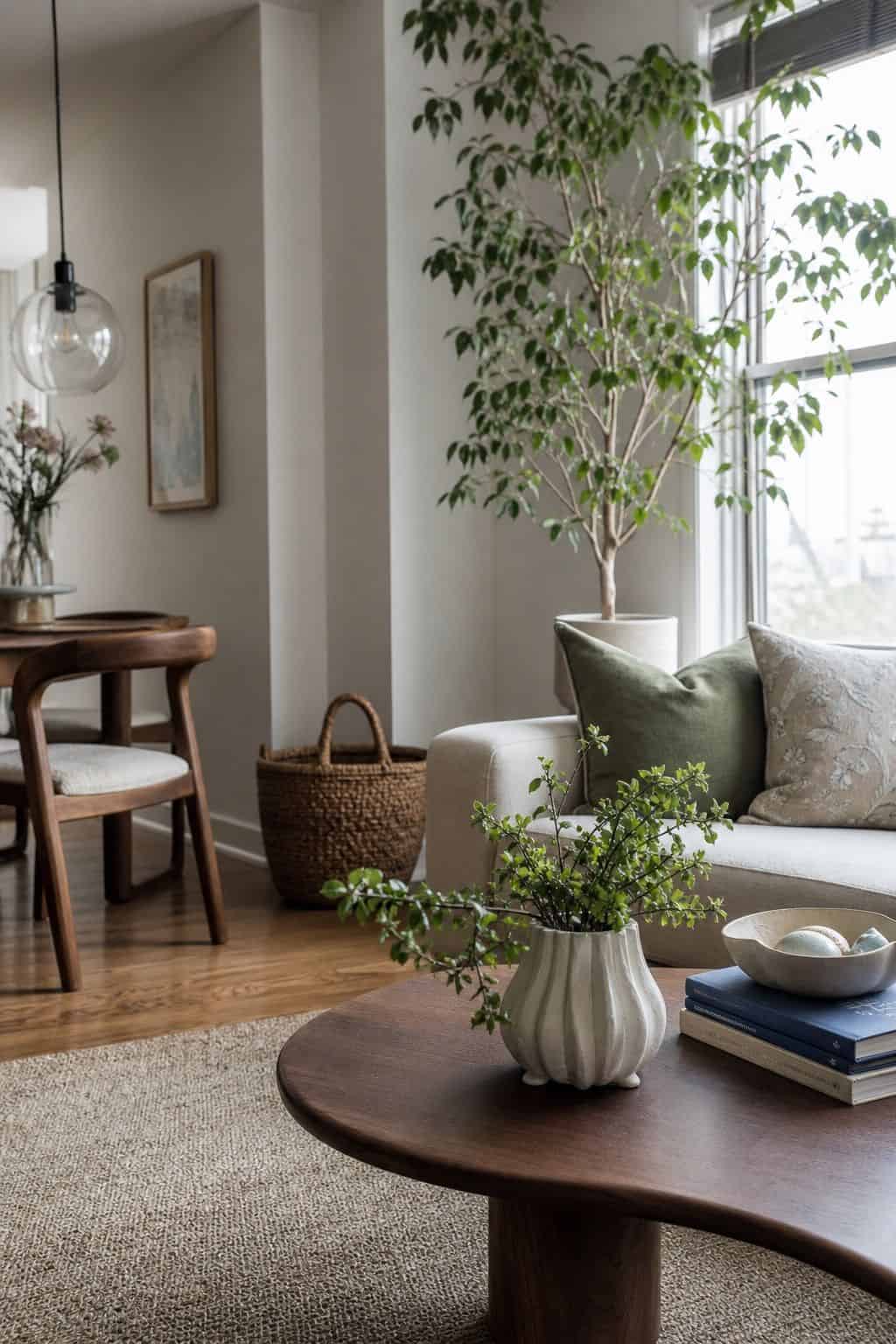


The final idea is the test every other piece should pass: will it still look right on May 1st. If a decoration only works for Easter weekend, it is the old approach. If it works through all of spring and eases toward summer, it is the 2026 approach.
Living greenery, sculptural pieces, neutral bases, soft muted color, all transition. Plastic eggs and cartoon bunnies do not. Buying and styling with the transition in mind means you decorate once for a long season instead of twice for two short ones, which is cheaper, lower-effort, and the reason the elevated look is also the practical one. Decorate for spring, and let Easter be a soft note inside it.
Read more: Top 17 Easter Cake Ideas for a Beautiful Dessert Table
Want your home to feel current every season without the spending adding up?
The Ultimate Budget Planner gives you a simple system for seasonal-decor spending, so you can refresh for spring, summer, and beyond without the costs piling up. It is currently just $4.99 before the price goes up to $19.99.
Frequently Asked Questions
How do I decorate for Easter?
Decorate for Easter by starting from a neutral base, beige, linen, stone, then layering in soft muted color through blush, sage, and lavender. Use sculptural, organic centerpieces instead of literal bunnies and eggs, bring in living elements like potted bulbs and fresh greenery, and choose pieces that transition into general spring styling.
What are the Easter decor trends for 2026?
The 2026 Easter decor trends are a neutral base with muted blush, sage, and lavender accents, sculptural and organic centerpieces over literal symbols, living elements like potted ferns, spring bulbs, and fresh eucalyptus, and decor designed to transition seamlessly into general spring styling. The overall look is editorial, less Easter basket.
How do you decorate for spring and Easter?
Decorate for spring and Easter together by treating Easter as a soft note inside a broader spring refresh: swap to lighter textiles, add living greenery and bulbs, use sculptural centerpieces, and keep the palette neutral with muted accents. Choosing transitional pieces means the decor lasts the whole season, not just the holiday weekend.
How do you make Easter decor look elevated?
Make Easter decor look elevated by starting neutral, using muted dusty pastels instead of bright primary ones, choosing sculptural centerpieces over literal bunny-and-egg displays, leaning on real living greenery, and styling eggs subtly in natural materials. Restraint and a grown-up palette are what separate elevated from the party aisle.
How do you decorate a small apartment for Easter?
Decorate a small apartment for Easter by keeping it light and transitional: refresh the entry, swap textiles for lighter weights, add a few potted bulbs and cut stems, and use one sculptural centerpiece rather than many small themed objects. Transitional pieces mean nothing extra has to be stored in a tight space.
Key Takeaways
- Start from a neutral base (beige, linen, stone, off-white), then add color softly through muted blush, sage, and lavender, not bright primary pastels.
- Lean on living elements, potted bulbs, ferns, air plants, fresh eucalyptus and pussy willow, the freshness should be literal, not styled.
- Choose sculptural, organic centerpieces over literal bunny-and-egg displays, this is the single move that takes the look from cute to elevated.
- Style eggs subtly if at all, natural materials and muted tones, a few as accents, never a bowl of bright plastic.
- Choose decor that transitions past Easter weekend into general spring, you decorate once for a long season instead of twice for two short ones.
Final Thoughts
Easter decor does not have to look like the party aisle. Start neutral, add color soft and muted, bring in real living greenery, and choose sculptural pieces over literal symbols, and you get a home that feels like spring genuinely arrived rather than like a holiday got taped up for a weekend. The best part is that the elevated approach is also the practical one, transitional pieces mean you decorate once for the whole season, spend less, and store less. Start with the neutral base and a few potted bulbs, the easiest and cheapest moves, and let the rest of the season build from there.
Last update on 2026-09-25 / Affiliate links / Images from Amazon Product Advertising API
