

The best friendsgiving tablescape ideas start with a neutral linen runner, layer in tapers and votives at three heights, and add one organic centerpiece like dried wheat, foraged branches, or mini pumpkins in a low bowl. Keep place settings simple, then personalize each one with a handwritten name card so the table feels set for these specific people.
There is a particular kind of tired magic to friendsgiving. Nobody is trying to recreate their mother’s china pattern. The plates do not match. Two people brought wine, three brought desserts, and yet somehow when you light the candles and pour something into a real glass instead of plastic, the room transforms. That transformation almost always starts at the table.
No registry required. What a friendsgiving tablescape actually needs is a clear color story, one organic element repeated down the table, and enough candlelight to flatter everyone after the second pour. None of the 17 ideas below ask you to buy a single new dish.
Recommended Friendsgiving Table Products
The pieces below cover the foundation layers of a beautiful friendsgiving table: runner, candles, dried elements, and the place-card paper. Hand-pick the rest from what you already own.


Read this also:
- Top 18 Thanksgiving Tablescape Ideas for a Beautiful Holiday Table
- Top 16 Thanksgiving Tablescape Ideas for Small Apartments
- Top 18 Mother’s Day Tablescape Ideas
- Top 18 Small Apartment Dining Table Ideas
- Top 18 Best Hosting Lunch Ideas for Effortless Entertaining
Set the Foundation: The Linens and the Base
1. Skip the Tablecloth, Use a Long Linen Runner


A natural flax linen runner down the center of a bare wood table is the editorial move. The exposed wood reads warmer than any tablecloth ever does and gives the runner something to play against. Choose oatmeal, mushroom, or undyed linen. Iron it before guests arrive, then bunch it lightly at the ends. The wrinkles are intentional, not lazy.
2. Layer Two Runners for Dimension
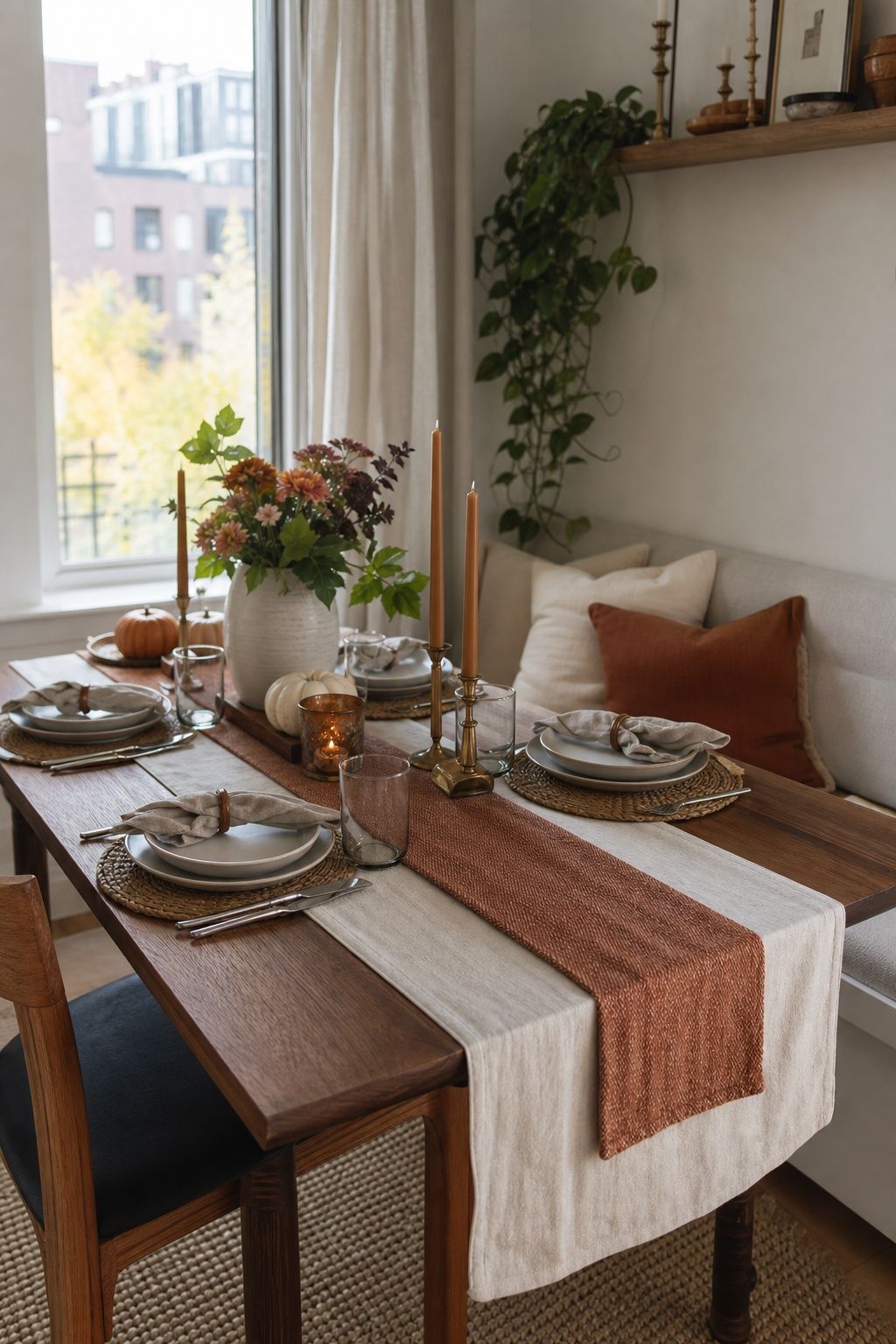
If one runner reads flat, lay a narrower jute or burlap runner under the linen one. The pop of texture under the smoother layer makes the table feel composed rather than just set. Bonus, it hides any table scratches you have been pretending not to see all year.
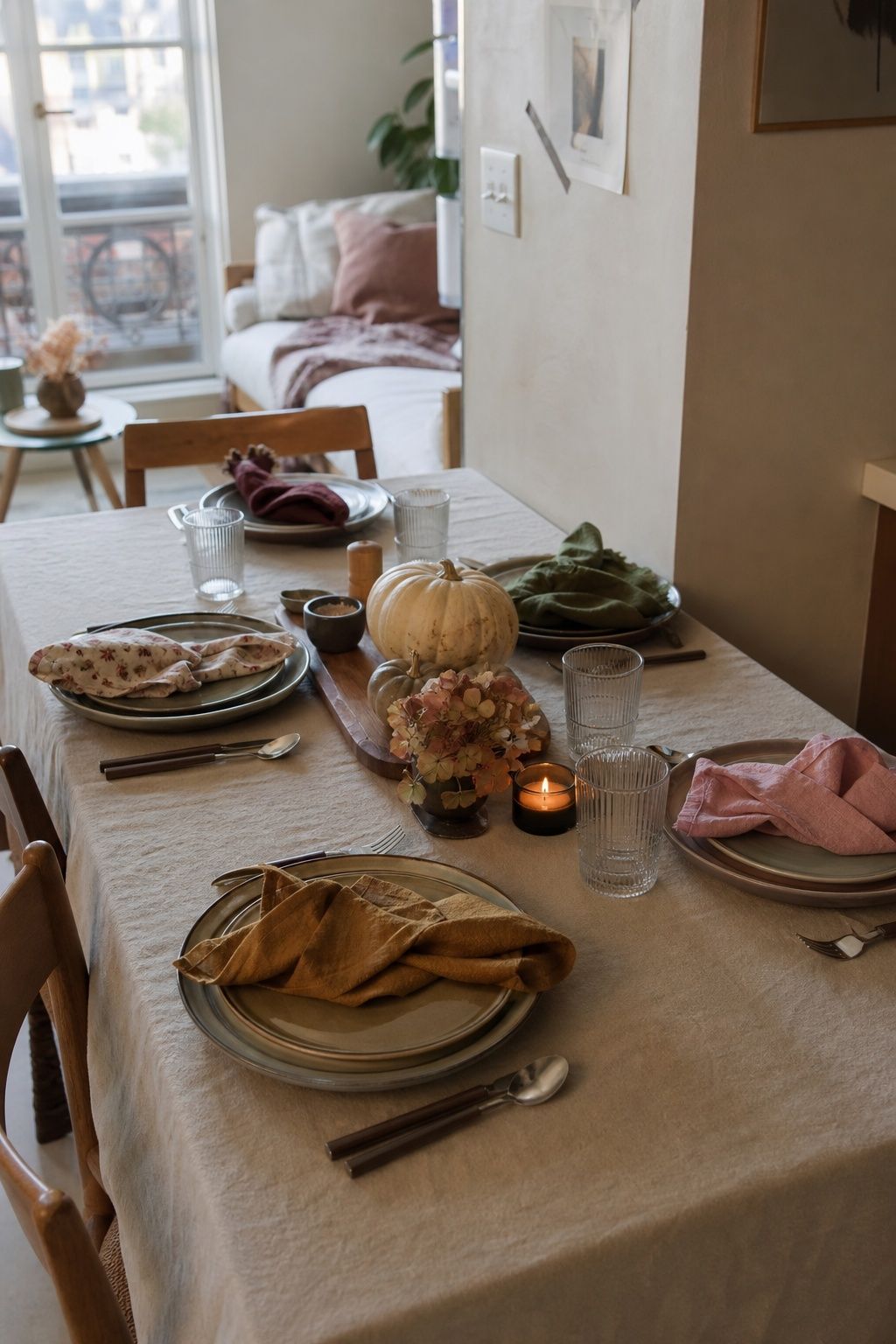
3. Use Real Cloth Napkins, Even Mismatched


![Utopia Home [24 Pack, White] Cloth Napkins 17x17 Inches, 100% Polyester | Hemmed Edges, Washable and...](https://soliaavenue.com/wp-content/plugins/aawp/public/image.php?url=YUhSMGNITTZMeTl0TG0xbFpHbGhMV0Z0WVhwdmJpNWpiMjB2YVcxaFoyVnpMMGt2TXpGWmNXczNhMnRGUVV3dVgxTk1NVFl3WHk1cWNHYz18MTc5MjkwODQ4MQ=)
Paper napkins quietly kill an otherwise great tablescape. A stack of vintage linen napkins from a thrift store, even if they do not match, will look more lifted than a brand new matching set. Tie each with a piece of natural twine and slip in a sprig of rosemary or a single dried wheat stalk.
Build the Centerpiece: Low, Long, Organic
4. Run a Low Centerpiece, Never a Tall One
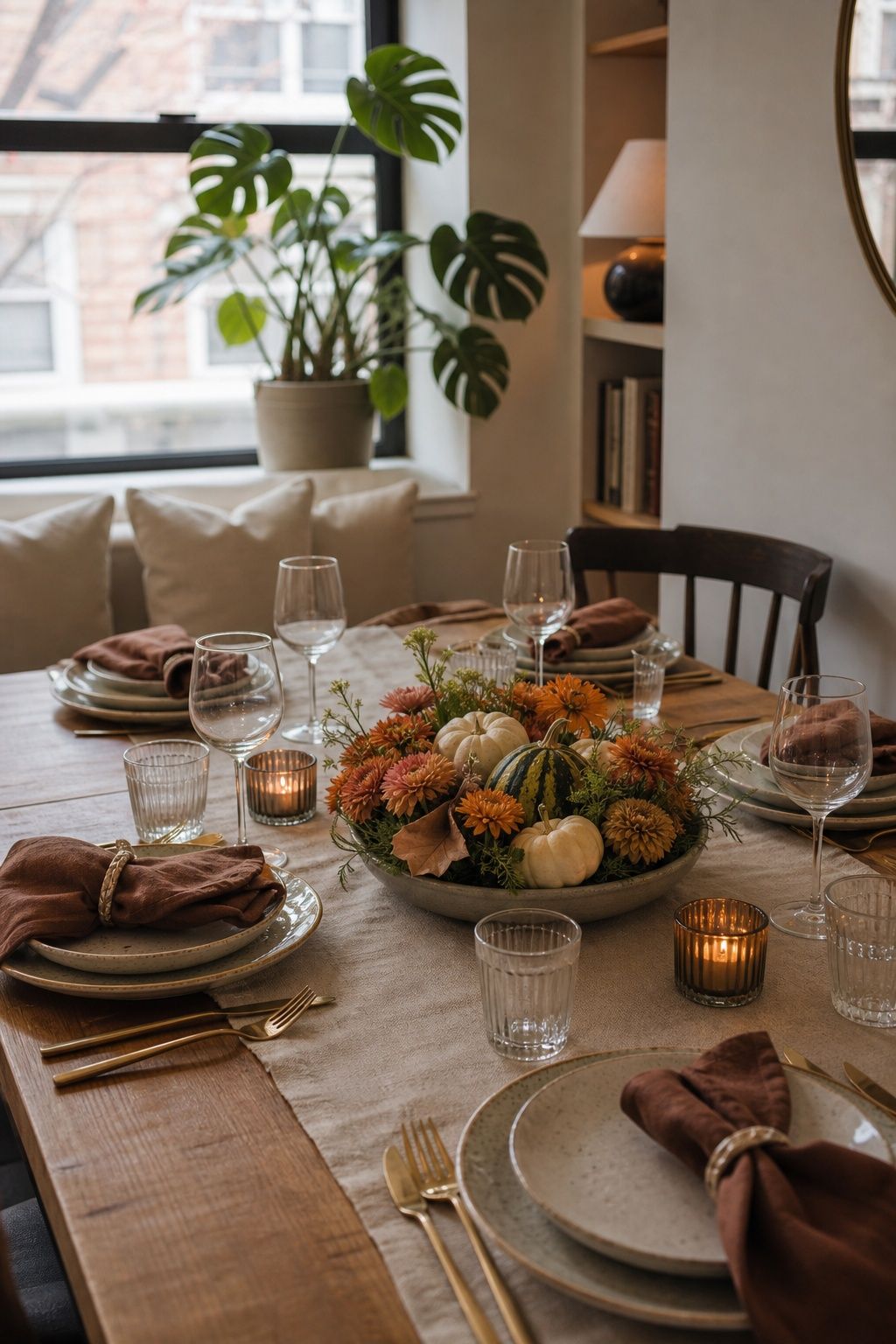


Tall centerpieces block faces. Replace any vase over 9 inches with a series of low arrangements that run the length of the table. Think footed bowls of pears, low ceramic compotes with dried hydrangeas, or a shallow vintage trough filled with mini pumpkins. Conversation flows when guests can see each other.
5. Make a Dried Wheat and Branch Garland
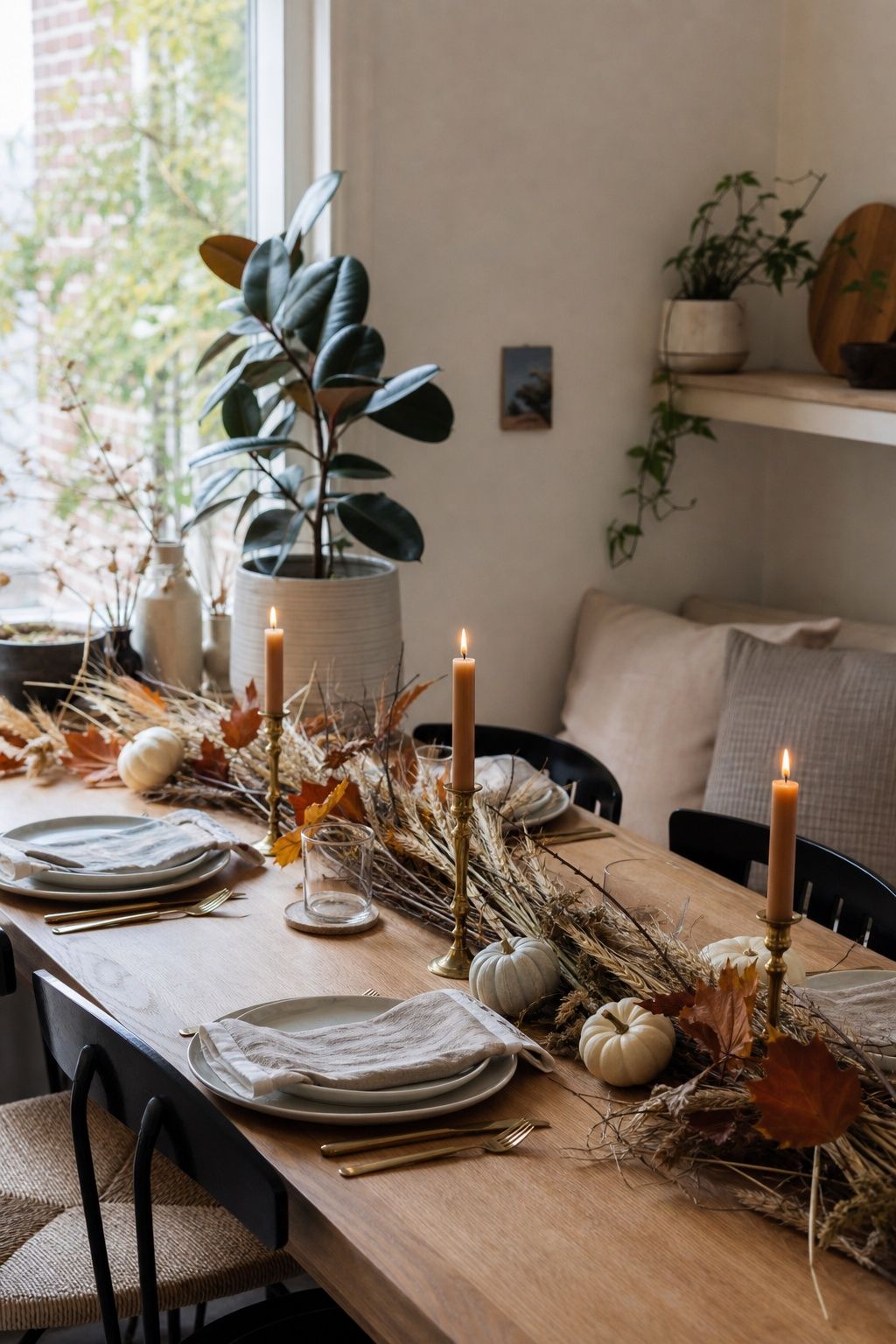


Lay 6 to 10 dried wheat bundles end to end down the runner. Tuck in a few branches of dried hydrangea or eucalyptus to fill the gaps. The whole arrangement reads like you spent two hours and cost under $30 from Trader Joes plus a craft store. This is the single move that gets the most “where did you get that” questions.
6. Cluster Mini Pumpkins and Gourds in Odd Numbers
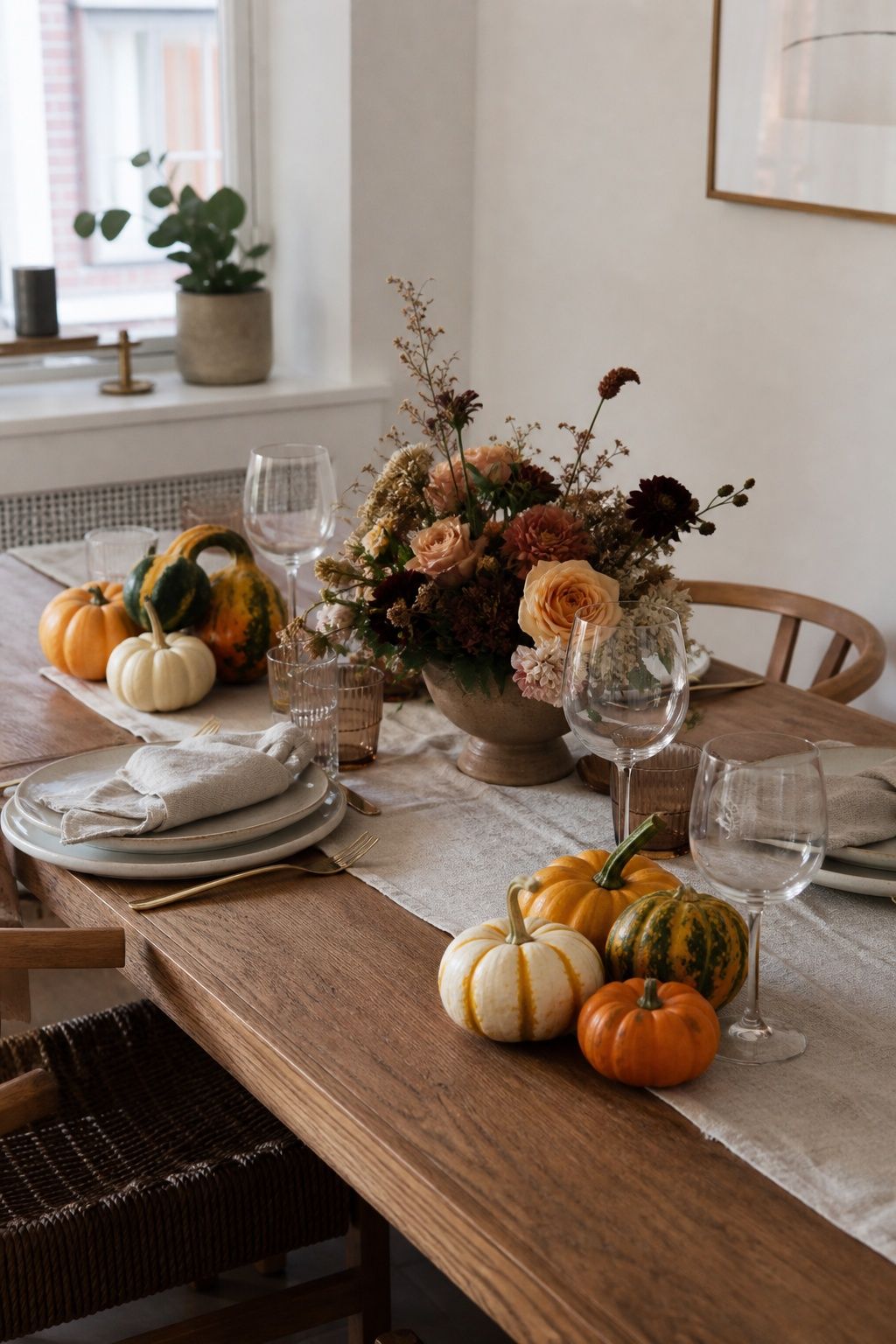


Skip the orange pumpkin pile. Use white, peach, or pale green heirloom varieties grouped in threes or fives along the runner. A few halved pomegranates between them add a deep ruby color that photographs beautifully against neutral linen.
7. Add One Foraged Branch Element
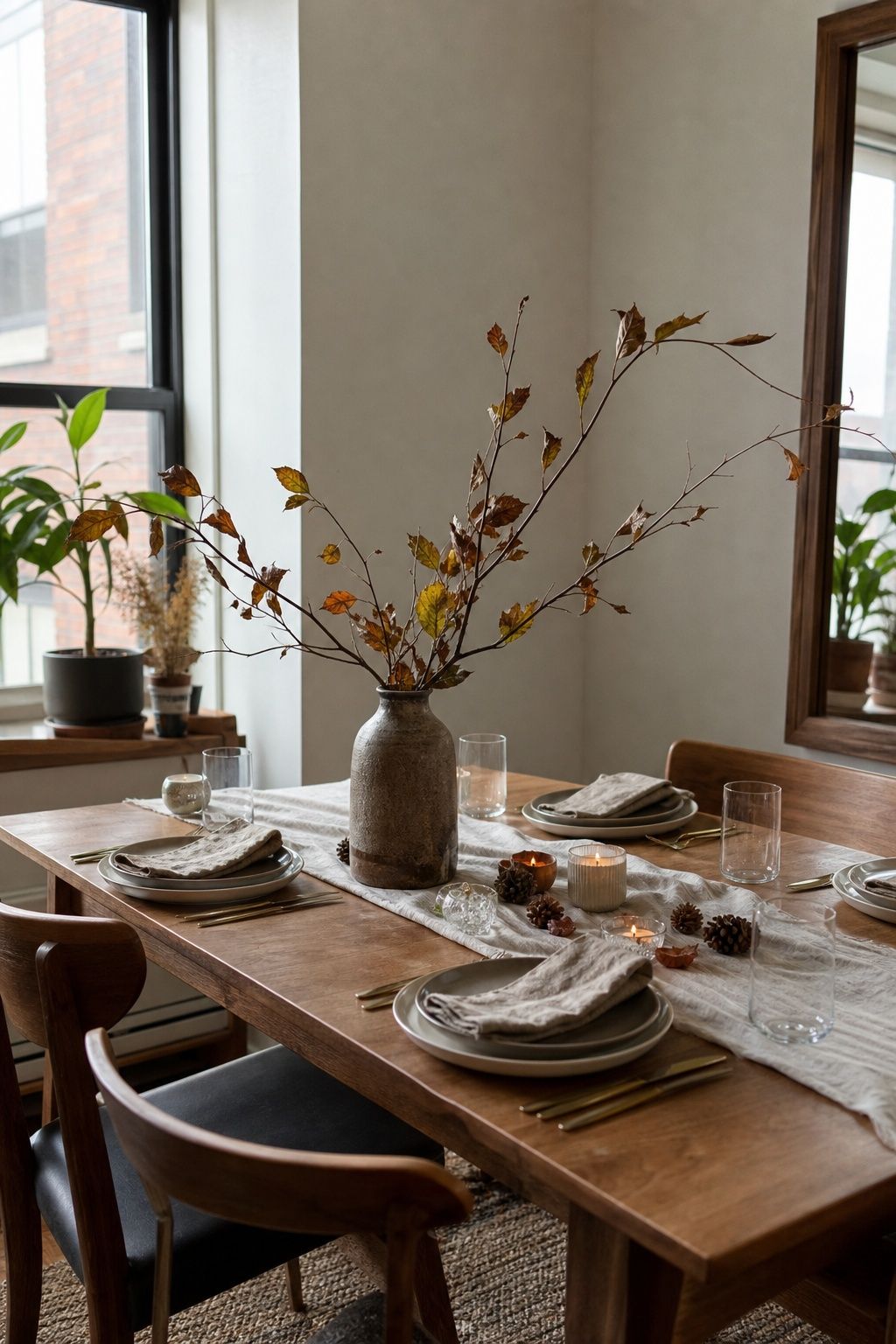
Walk outside before guests arrive and grab one thing: a sprig of bittersweet, a single olive branch, a fallen oak leaf cluster. Drop it on the table without fuss. Foraged elements signal that the table is for tonight, not a Pinterest archive.
The Candles: Where Most People Underdo It
8. Use Three Heights of Candles Across the Table
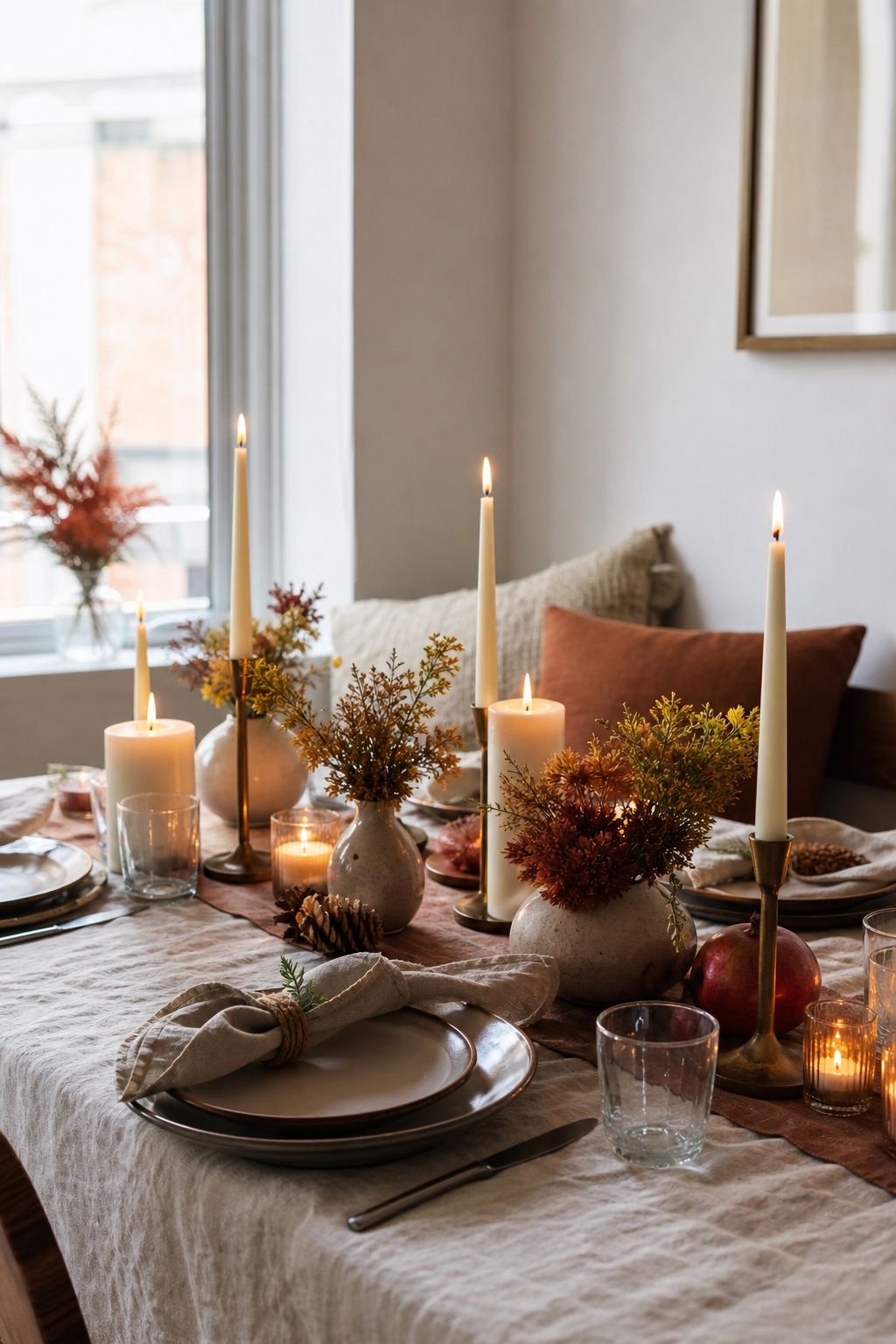


Tapers (8 to 10 inches), pillars (3 to 6 inches), and votives (under 3 inches), all unscented because the food smells. Vary the heights as you go down the table. Twelve to fifteen candles total on a six-person table is the right amount. Two looks lonely. Twenty looks like a séance.
9. Choose Brass Holders, Not Silver
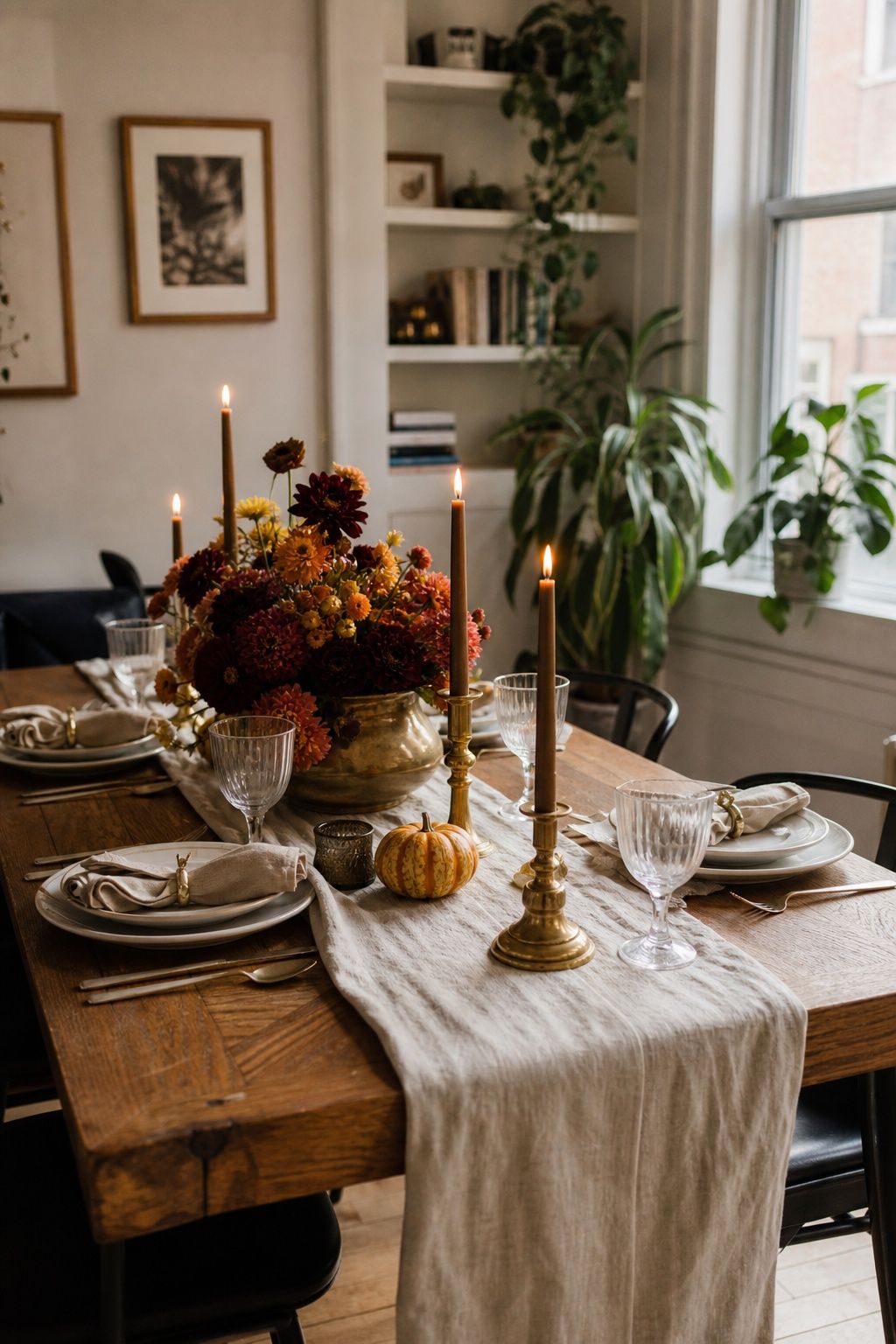


Brass and antique gold candleholders warm up the light. Silver and chrome go cold and harsh, especially in November when guests already look pale from daylight savings. Mismatched brass thrifted from estate sales reads richer than a matched set every time.
10. Light the Candles 20 Minutes Before Guests Arrive
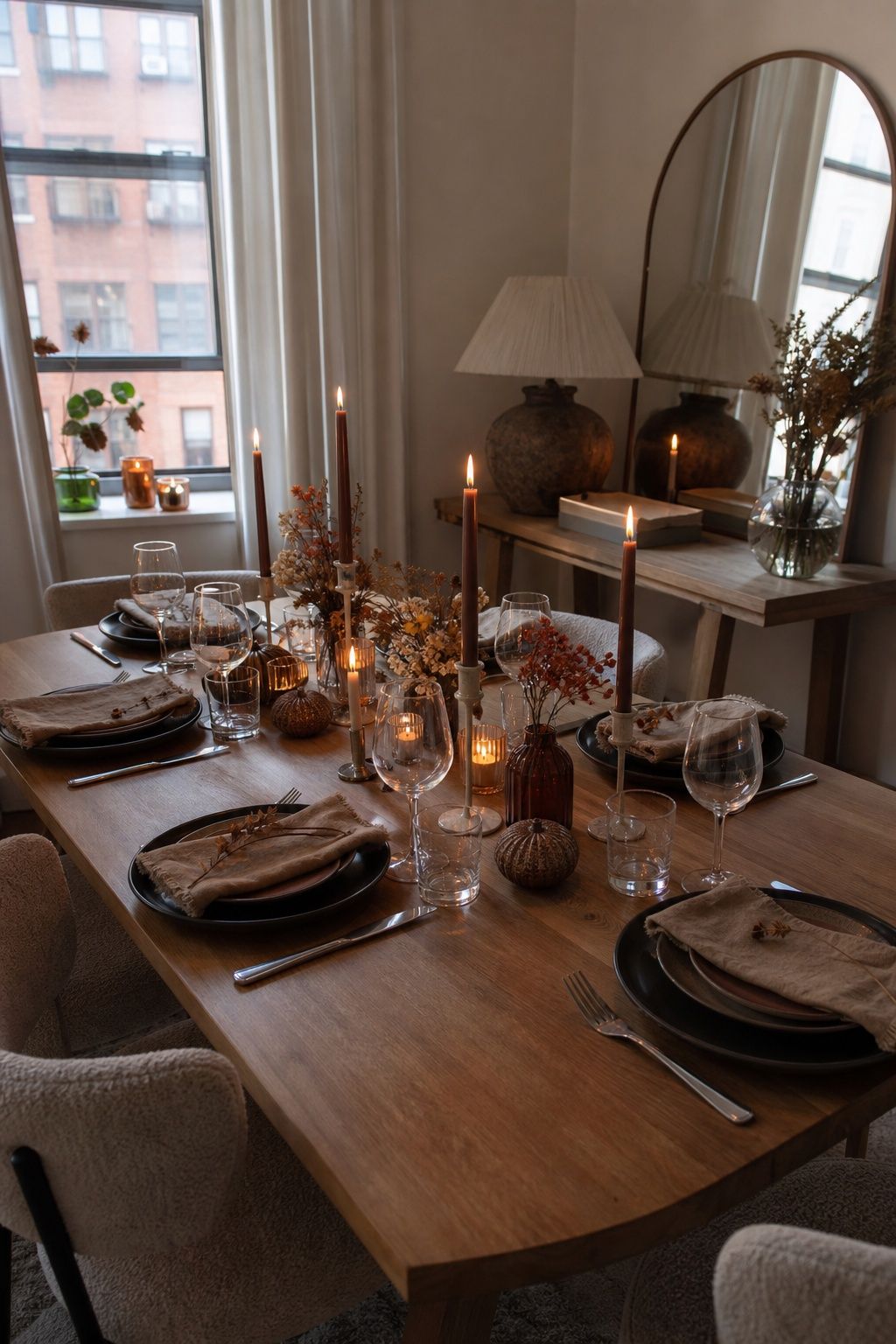
Wick tips need to be black before guests sit down. A row of pristine white wicks reads catalog, not lived-in. Light them, blow them out, light them again right before everyone sits down. The candles already look like the night is underway.
Personalize Every Seat
11. Write Place Cards by Hand on Kraft Paper
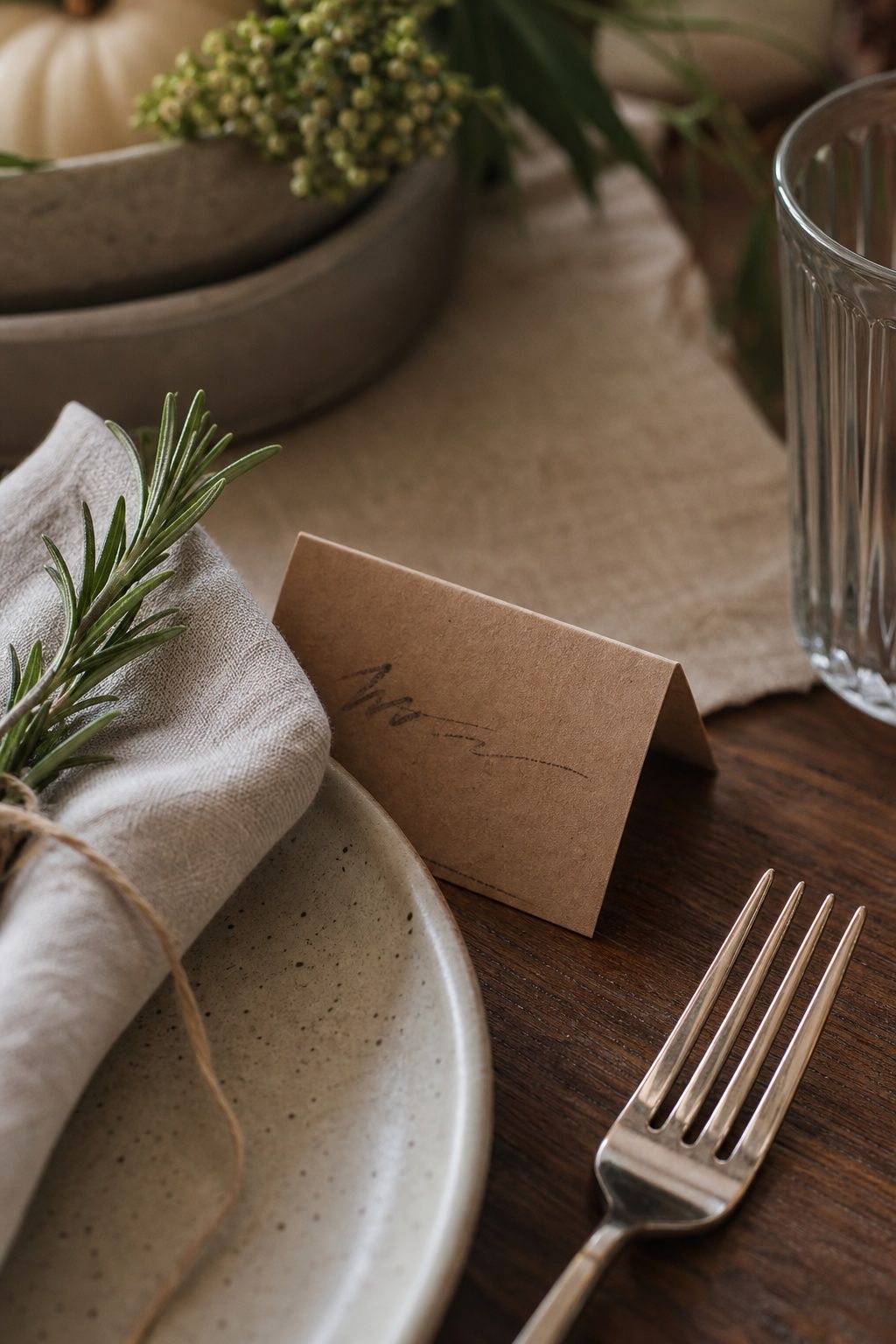


Cut small rectangles of kraft paper or cardstock, write each name in real handwriting (no calligraphy pen needed), and lean each one against a plate or tuck into a napkin. Handwritten cards say someone thought about who was coming. Printed cards say copy machine.
12. Add a Tiny Thank-You Note Under Each Plate
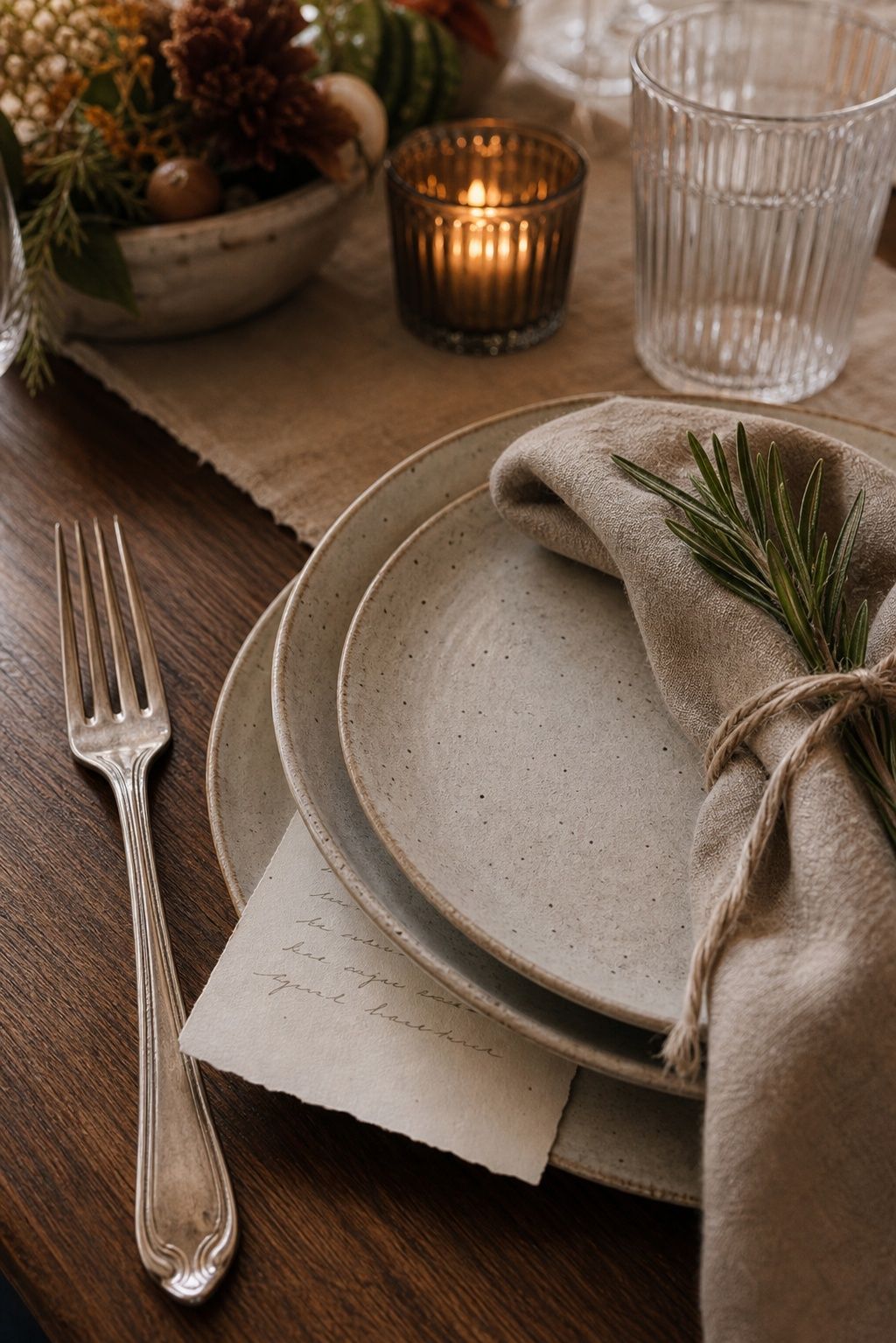


A single sentence on the back of the place card, telling each friend one specific thing you are grateful for. They will find it when they pick up the plate. It is the move that turns a nice dinner into the one everyone references next year.
13. Tuck a Sprig of Rosemary or a Dried Flower Into Each Napkin
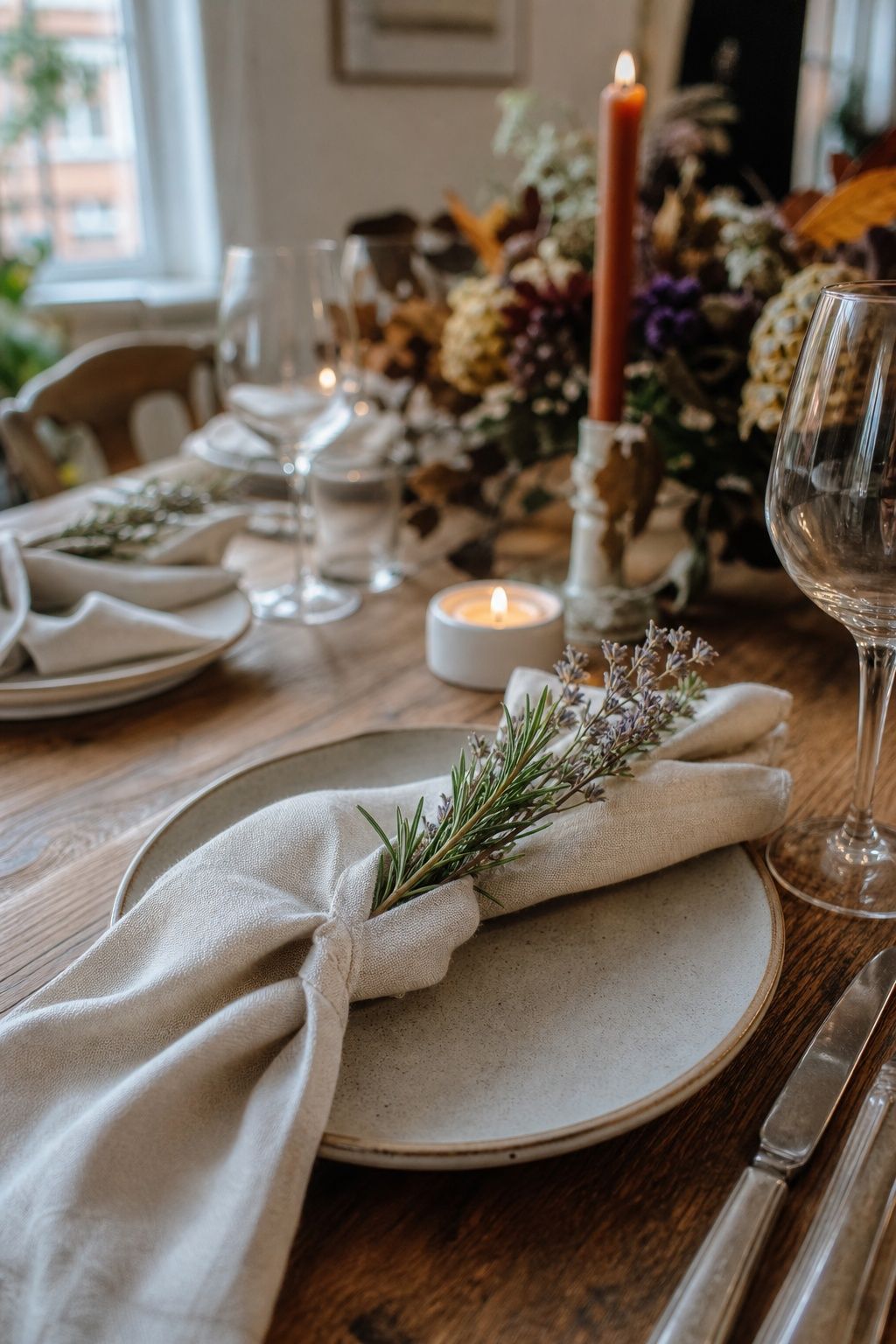
A single organic element on each napkin ties every place setting to the centerpiece. Rosemary stays fragrant for the whole meal. A small bundle of lavender works too. Avoid anything pollen-heavy, the asthmatic friend will not thank you.
Plates, Glasses, and the Final Layer
14. Use Mixed Plates That Share One Color
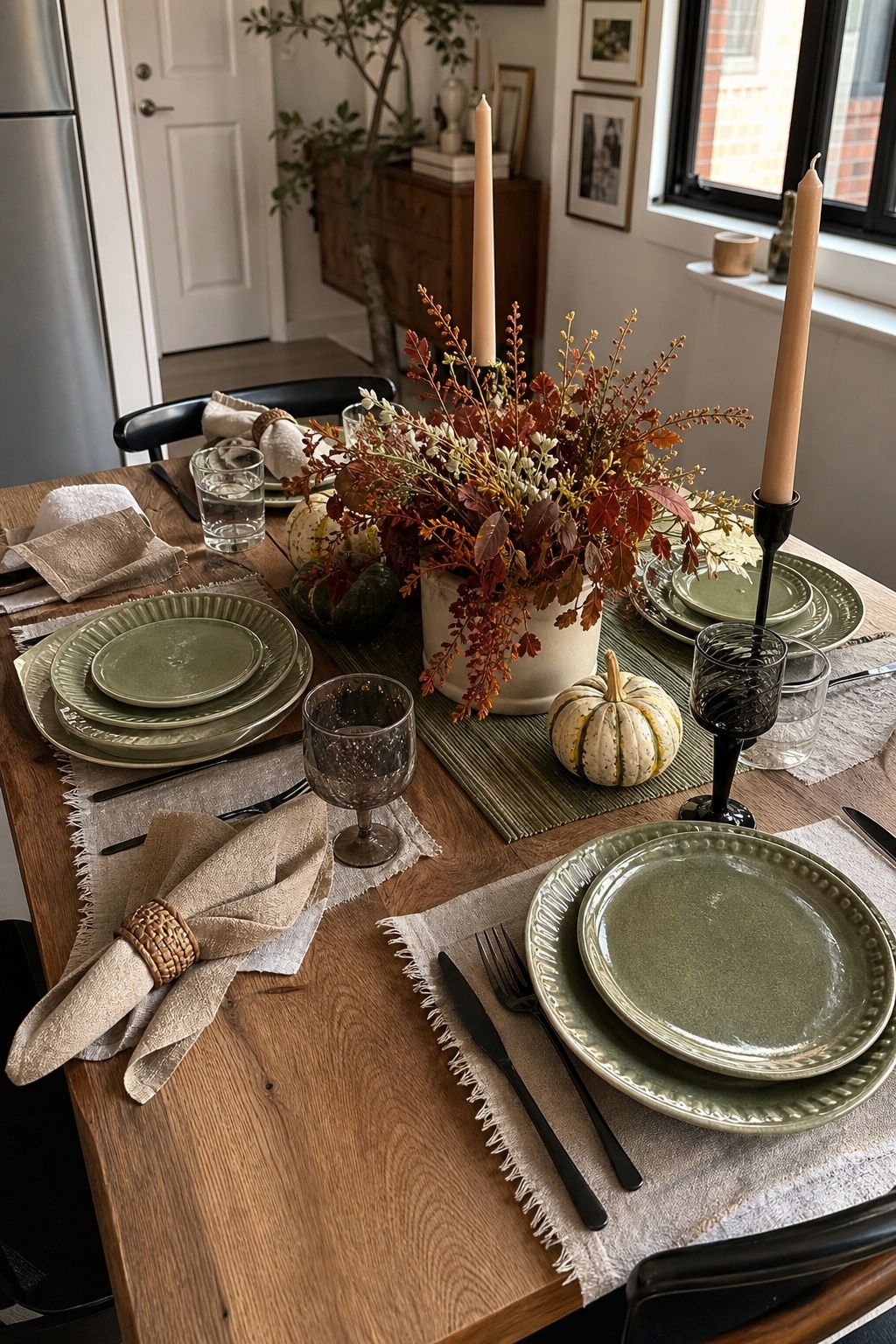


Friendsgiving plates do not need to match. Pull from your cabinet, your roommates, your neighbors. As long as they all share one color (cream, white, or a warm earthen tone), the mismatch reads collected. The plates that fight each other are the bright primary ones. Keep those for picnics. The same principle applies to our small apartment dining setups when you are short on matching pieces.
15. Use Stemmed Glasses, Even for Water
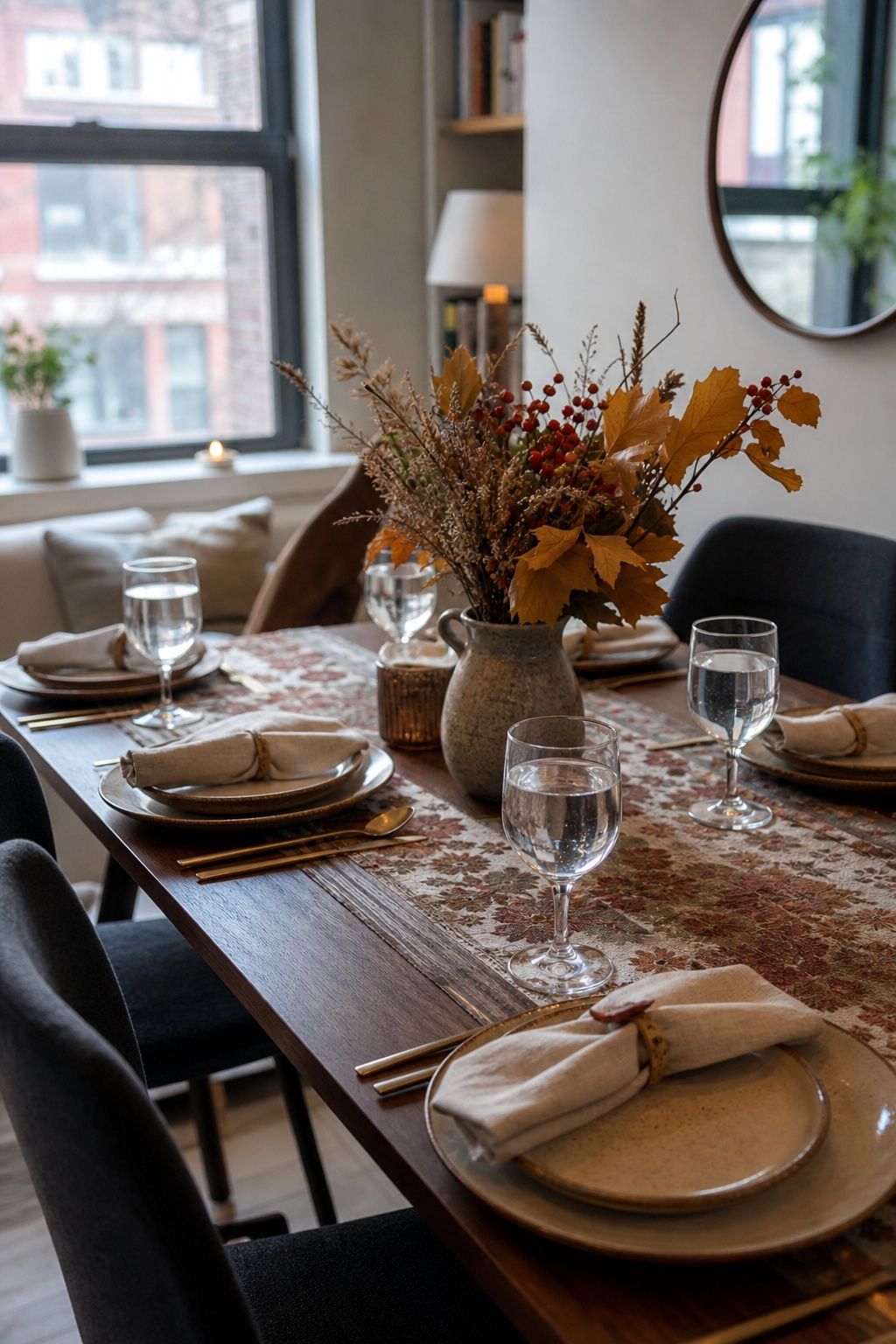


A stemmed wine or water glass at every place setting lifts the table without spending a dollar. If you do not have enough, ask friends to bring two glasses each. Mismatched stems look more design-magazine than a matching set ever does.
16. Set Out Bread and Butter Before Guests Sit Down
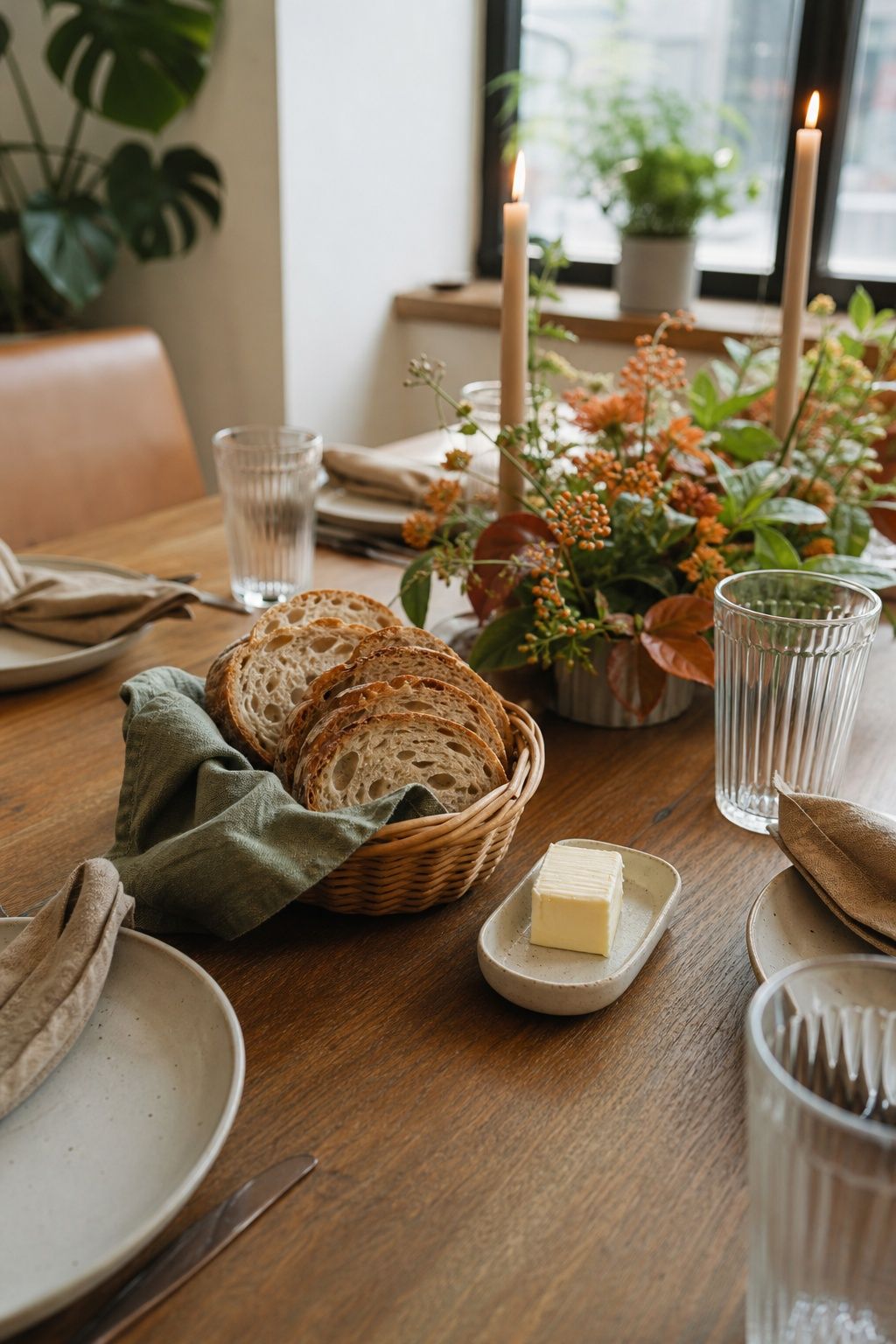


A small wood board with a loaf of sourdough and a dish of softened butter, placed in the middle of the table before anyone arrives, signals abundance and warmth. Add flaky salt in a small ramekin. People relax the moment they see food already waiting.
17. Dim the Overhead, Add a Side Lamp
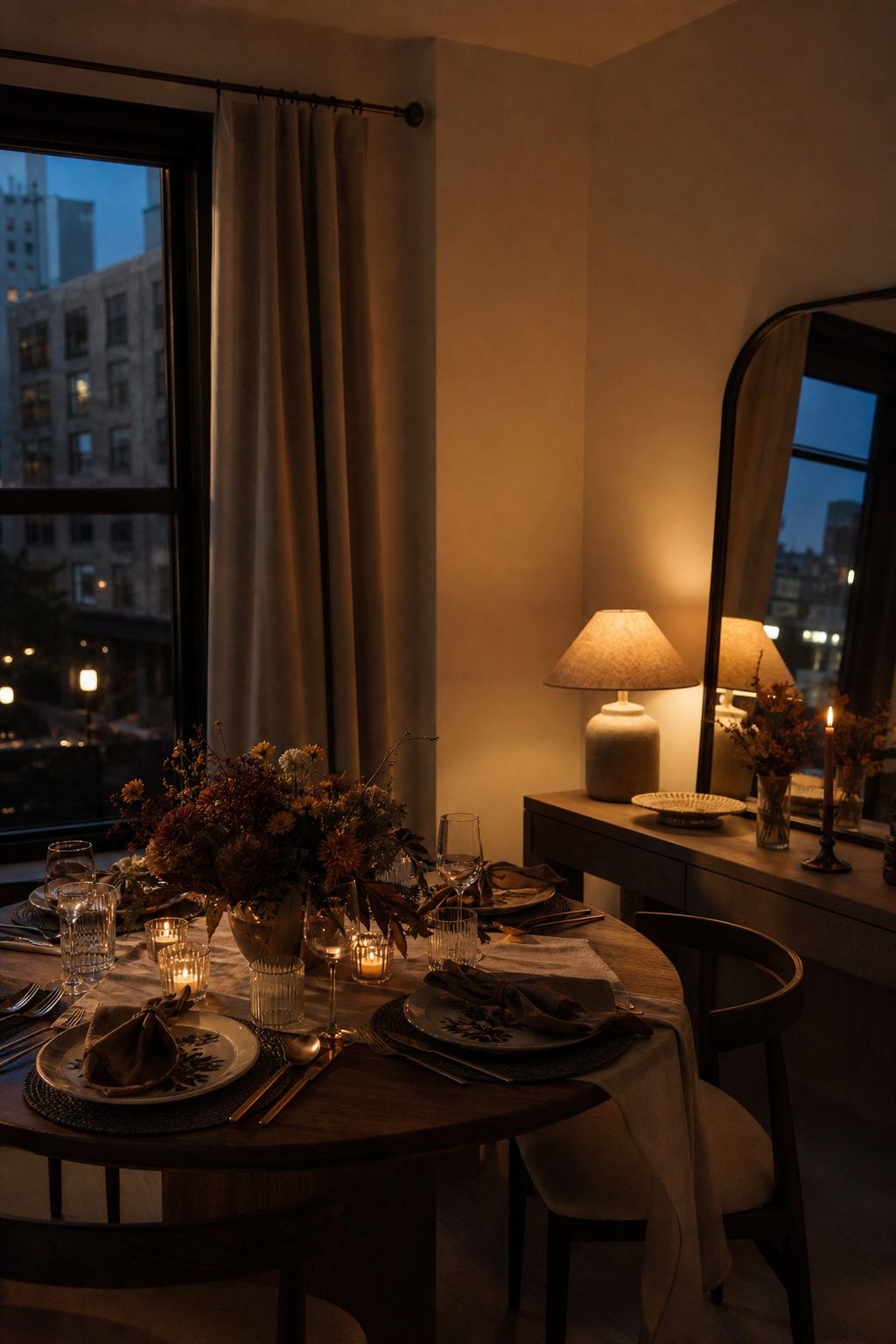


Turn the overhead light off or down to 20 percent and bring in a side lamp from the living room. The table candles do the rest. Harsh overhead light from a single fixture is what turns a beautiful tablescape into a cafeteria. Layered light is the entire game.
Why These Friendsgiving Choices Work
The reason a friendsgiving tablescape lands harder than a traditional Thanksgiving one is intimacy. Thanksgiving leans formal, registry-china, multi-generational. Friendsgiving leans personal, eclectic, the friends you actually choose. The styling should follow the same logic. Match the registry-china version to the registry-Thanksgiving setup. Match the foraged, mismatched, candle-heavy version to the chosen-family dinner. They are different events and different table strategies entirely. With a clear table strategy, these Friendsgiving ideas help you plan the rest of a cozy, memorable night with your people.
Plan for a long meal. Friendsgiving usually runs three to four hours, longer if the wine flows. That means your tablescape has to survive being lived in. Candles that drip on linen will leave marks. Tightly arranged centerpieces will get knocked askew. Build the table for elegance at the start and graceful disarray by hour two. Skip anything that has to look perfect the whole night. Loose, organic arrangements age into the meal better than tight ones do.
Lighting is the part most hosts underestimate. The overhead pendant or chandelier in most dining rooms is calibrated for visibility, not for ambiance. Even dimmed, it casts the wrong shadow on faces and food. Bring in one floor lamp from the living room, turn it on, and dim the overhead. The candles do the rest. This single switch is the difference between a dinner that feels like a meal and one that feels like an event.
Texture beats color every time on a fall friendsgiving table. A monochrome table in five different textures (linen, jute, ceramic, wood, dried botanical) photographs richer than a colorful table with one texture. If you only remember one rule this year, remember that. The most-photographed friendsgiving tables on Pinterest are almost always tone-on-tone in the neutral family with one organic accent. Burgundy and copper read seasonal but they fight more than they help.
Send guests home with something tactile. A handwritten place card they take with them. A small jar of leftover cranberry sauce. A wrapped piece of pie. The takeaway turns the meal into a memory they have on the counter the next morning. Hosting is a long game. The friendsgiving where guests left with something in hand is the one that gets group-text-celebrated all the way to Thanksgiving the next year. Need more ways to stretch a compact surface? These small dining table ideas help a small table work harder on hosting nights.
Frequently Asked Questions
What is the difference between a Friendsgiving tablescape and a Thanksgiving one?
Friendsgiving leans more personal, casual, and eclectic. A traditional Thanksgiving tablescape often uses matching china and formal florals. Friendsgiving works better with mismatched plates, handwritten place cards, foraged greenery, and a less polished overall feel. The intimacy is the point.
How long does it take to set a Friendsgiving tablescape?
About 45 minutes if you have your linens, candles, and centerpiece elements pulled the day before. Lay the runners and place plates first, build the centerpiece second, set candles last. Light them 20 minutes before guests arrive so the wicks are already burned in.
What is the cheapest way to make a tablescape look expensive?
Three things: real linen napkins (thrifted around $1 each), brass candleholders from estate sales (under $5 each), and one foraged branch element. Skip the matching paper goods. Buy unscented taper candles in bulk from a discount store. The total cost is usually under $40.
Can I do this on a small apartment dining table?
Yes. A six-seat round table or a small rectangular one works better with a single low centerpiece in the middle and place settings around it. Skip the long runner garland and use a circular wreath of dried wheat as a base. Less table real estate forces a cleaner, more collected look.
What colors should I avoid for a Friendsgiving table?
Bright orange-only palettes (too literal), pure white only (too sterile), and anything with cartoon turkeys. Stick to a warm neutral base with one or two natural accent tones: terracotta, sage, plum, or pale gold. The table should feel like late autumn, not a craft store.
Do I need to send the centerpiece home with guests?
Not the whole thing, but small touches like the place card, a single dried flower stem, or a wrapped piece of dessert sent home is a hosting move worth keeping. It turns the night into something tangible they remember the next day.
Key Takeaways
- A long linen runner on a bare wood table beats any tablecloth for editorial feel
- Three heights of candles, twelve to fifteen total, in mismatched brass holders is the lighting sweet spot
- Handwritten place cards on kraft paper are the single highest-impact personalization move
- Dried wheat bundles end to end down the center is the cheapest way to make a long centerpiece
- Dim the overhead and add a side lamp, the table candles do the rest
Wrapping Up
A friendsgiving tablescape is supposed to feel like the night is already in motion the moment guests walk in. Keep the palette tight, the centerpiece low, the candles plentiful, and the personalization specific. Skip anything that requires a glue gun. The table that gets remembered is always the one where the host clearly thought about the people sitting at it, not the table that tried to impress them.
Last update on 2026-10-23 / Affiliate links / Images from Amazon Product Advertising API
