

Quick Answer: The easiest way to host lunch is to serve two or three shareable mains, one really good side and a simple dessert, all made ahead so the morning is for assembly. Pour one batched drink plus sparkling water, keep the centerpiece low and let daylight do the decorating. Plan on about 90 minutes at the table.
Picture a Saturday in October. Four friends are at your table by half past twelve, the light is coming in sideways, and you’re actually sitting down with them instead of hovering over the stove. That’s the lunch worth aiming for.
I spent years cooking in fine-dining kitchens, and the thing that carried over to hosting at home is this: the calm happens before anyone arrives. Lunch is the easiest meal to host because guests expect less, the light is free and everyone goes home before you’re tired. These 17 hosting lunch ideas cover the menu, the drinks and the table, in that order.
What I keep on hand for hosting lunch
These are the pieces I reach for every time. Nothing fancy, just things that make serving family-style easier.


What makes a good lunch menu for guests?
1. The Two-to-Three Shareable Mains Rule
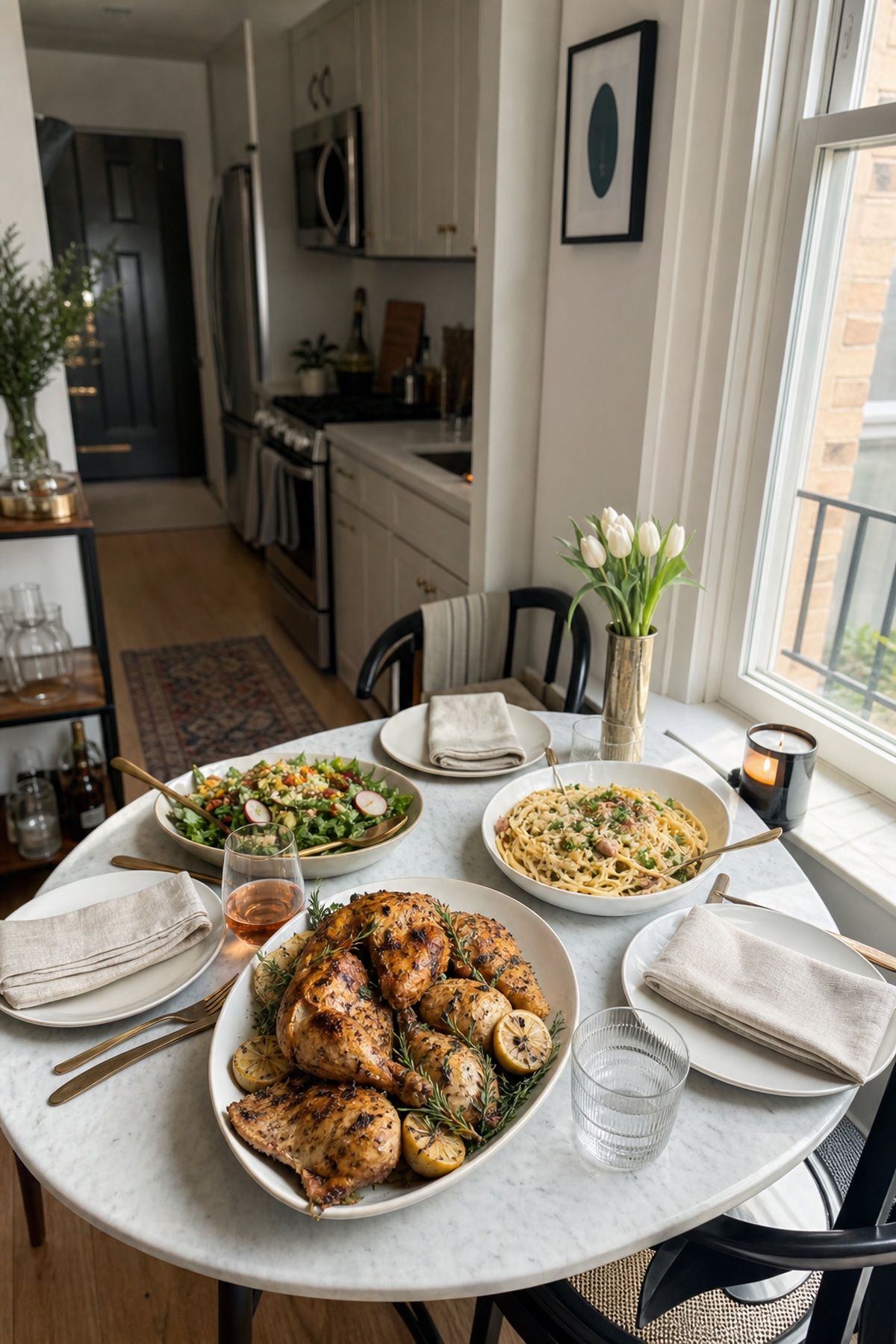


Build lunch around two or three dishes that go in the middle of the table, not individual plates. A big tart, a roast chicken salad, a tray of baked pasta. Everyone serves themselves and you get to sit.
Three is the ceiling. Past that you’re running a buffet, the fridge fills up and you spend the morning juggling oven times. Two strong mains plus a side feels generous at lunch in a way it doesn’t at dinner.
Hosting the evening version too? My dinner hosting ideas use the same rule with a few extra courses.
2. The One Good Side, Not Four Mediocre Ones
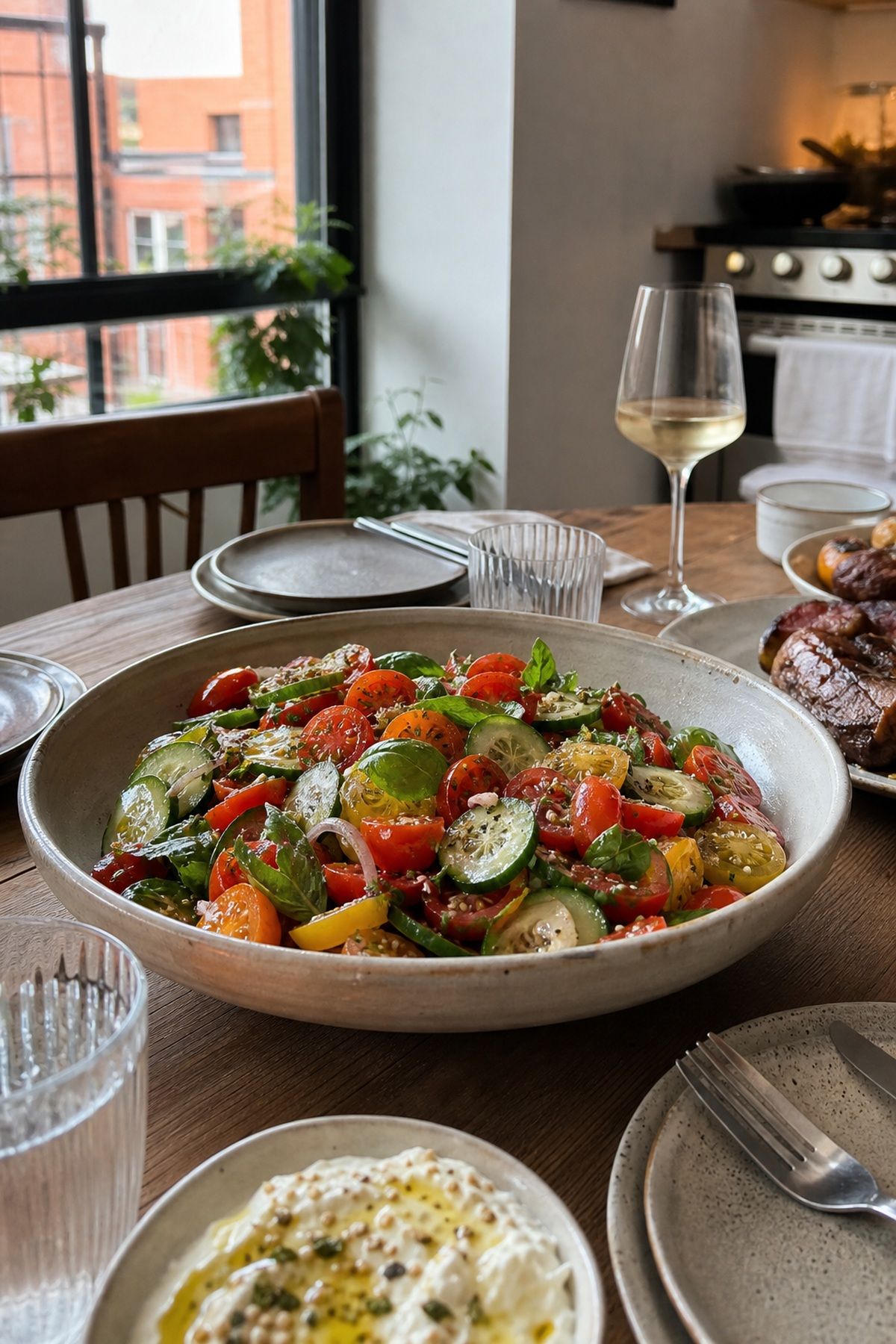


It’s tempting to fill the table with four sides. Don’t. One side you’ve thought about, say charred green beans with lemon and toasted almonds, does more than four bowls of things nobody remembers.
In restaurant kitchens we’d cut dishes from a menu before we’d let one go out average. Same idea here. Fewer things, done properly.
3. The 90-Minute Table Window
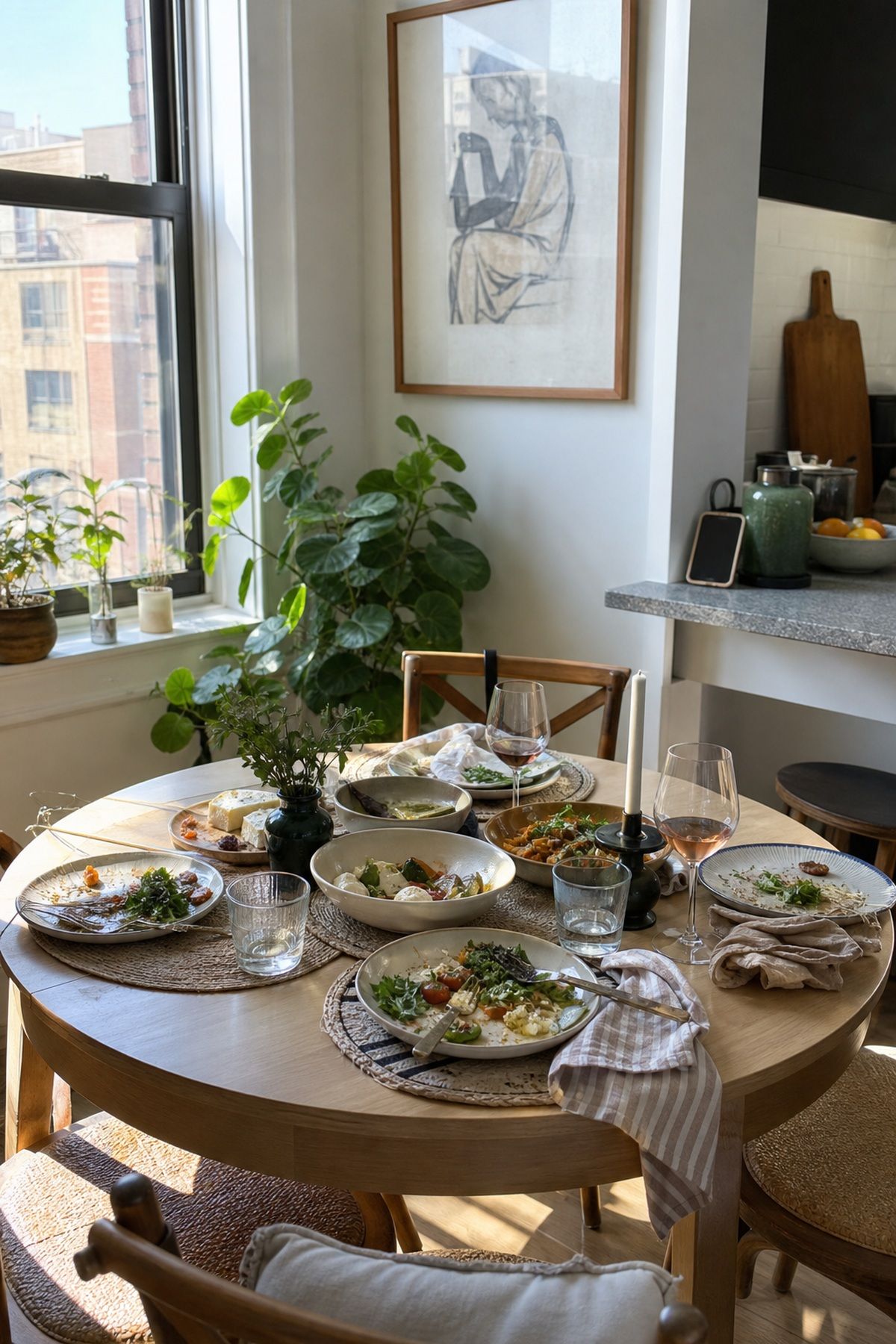


Lunch works best at around 90 minutes from first bite to dessert. That’s long enough to talk properly and short enough that nobody’s checking the time.
If it drifts past three hours, it’s become an afternoon party, which is lovely, but you’ll want snacks and a second round of drinks ready. Know which one you’re hosting before you shop.
4. The Daylight-First Table Setting
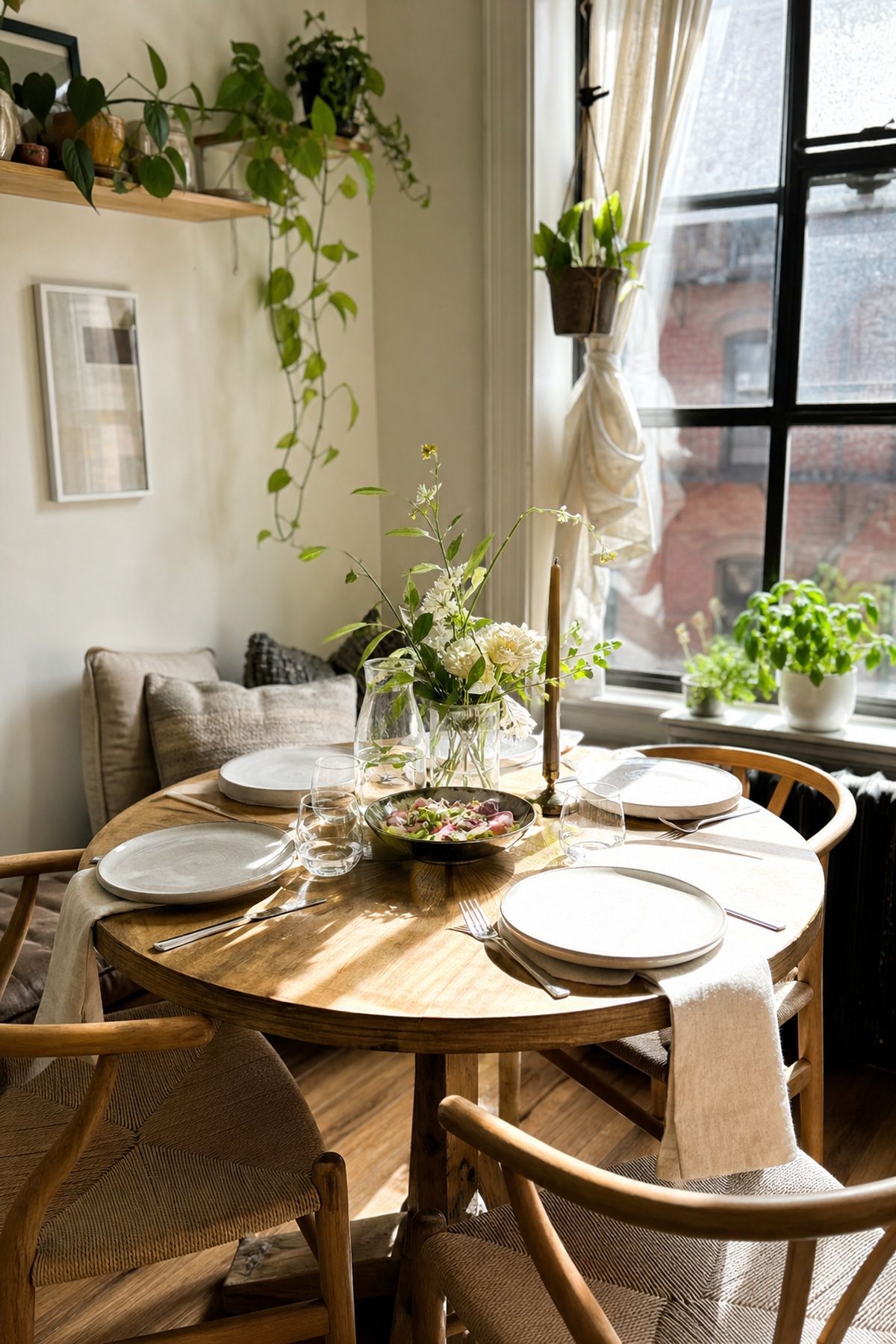


Lunch has one big advantage over dinner: daylight. Put the table near the window if you can, skip the candles and let pale linen and clear glass catch the light.
It’s also why weekend lunches are easier to host than weekday ones. A Saturday at 12:30 gives you the morning to prep, and guests leave with the rest of the day still free.
Why do make-ahead dishes work best?
5. The Grain-Bowl Toppings Bar
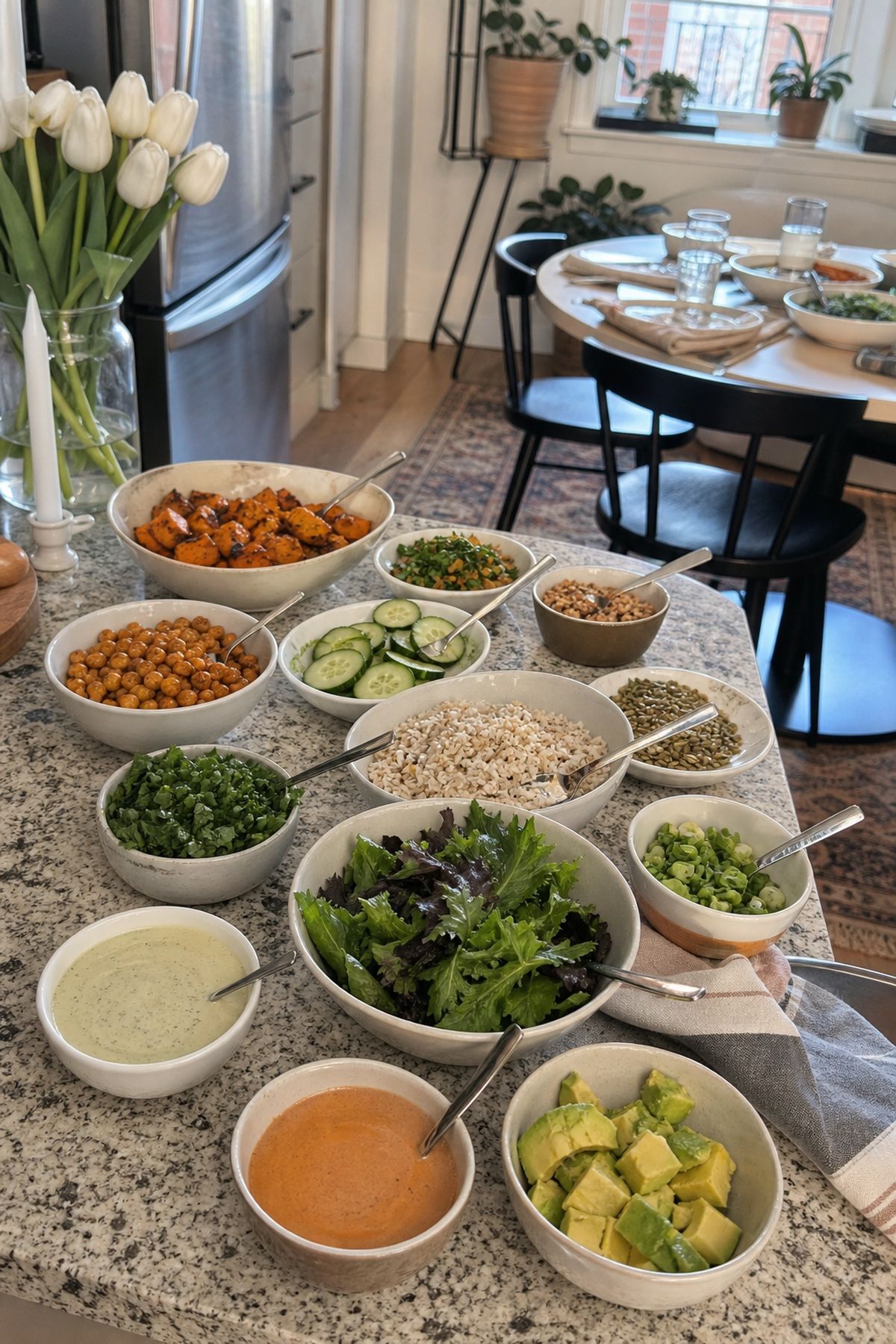


A grain-bowl bar is the most forgiving lunch setup I know. Cook a big pot of farro or rice in the morning, then put out roasted vegetables, a protein, pickled onions, herbs and two sauces. Guests build their own bowls.
It also handles mixed diets without extra work. Vegetarians skip the chicken, the gluten-free guest picks rice, and nobody has to explain themselves.
For the basics I’d buy before hosting anything, I put together a list of hosting essentials that earn their cupboard space.
6. The Build-Your-Own Salad Station
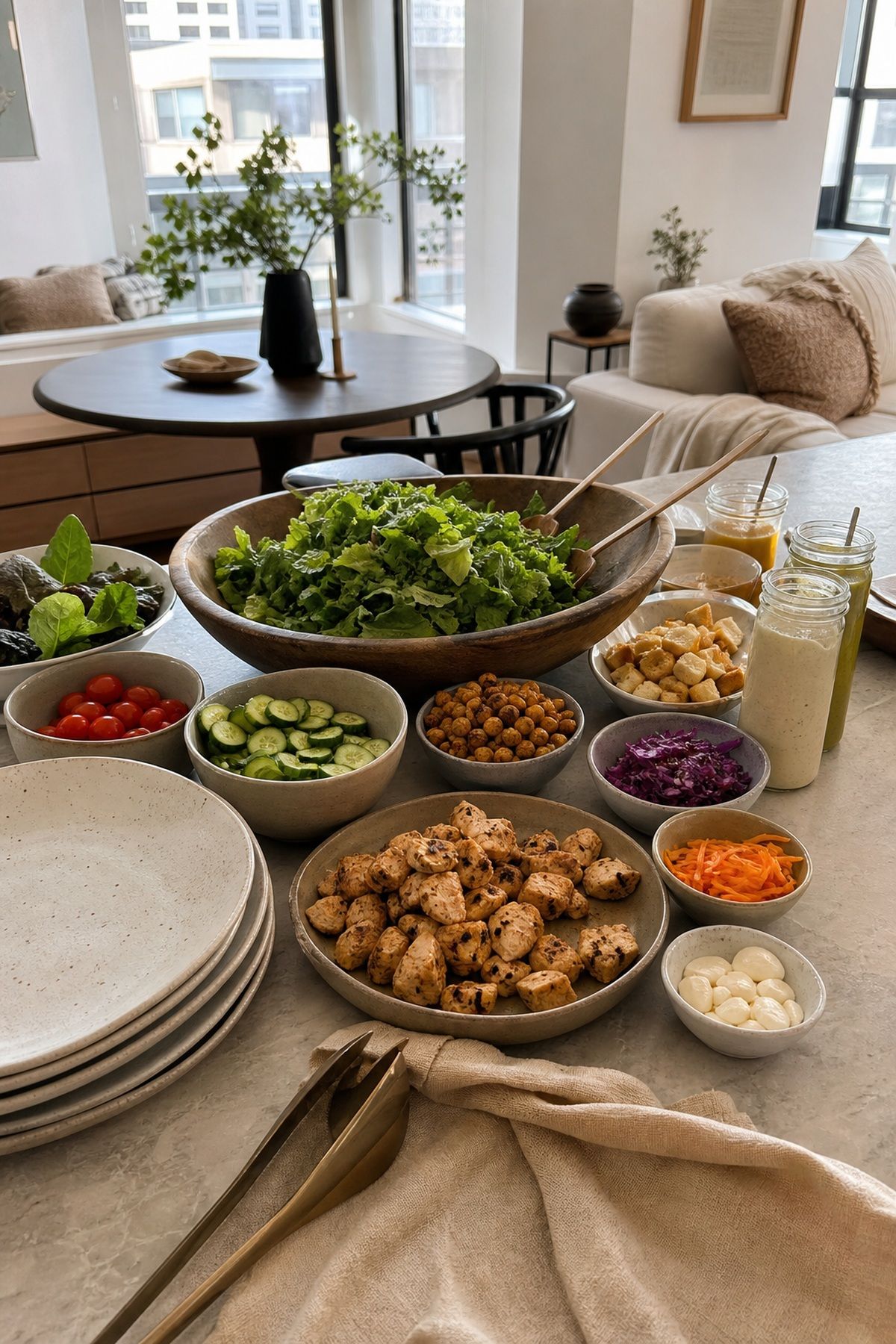


Same idea as the grain bowl but lighter. One or two bases, like butter lettuce and shaved fennel, then toppings in small bowls and the dressings on the side.
The dressing is what makes a salad station feel like an event. Make two from scratch, a sharp mustard vinaigrette and something creamy with herbs, and put them in small jugs. Homemade dressing is the cheapest way to make guests think you cooked all morning.
7. The Sandwich Board
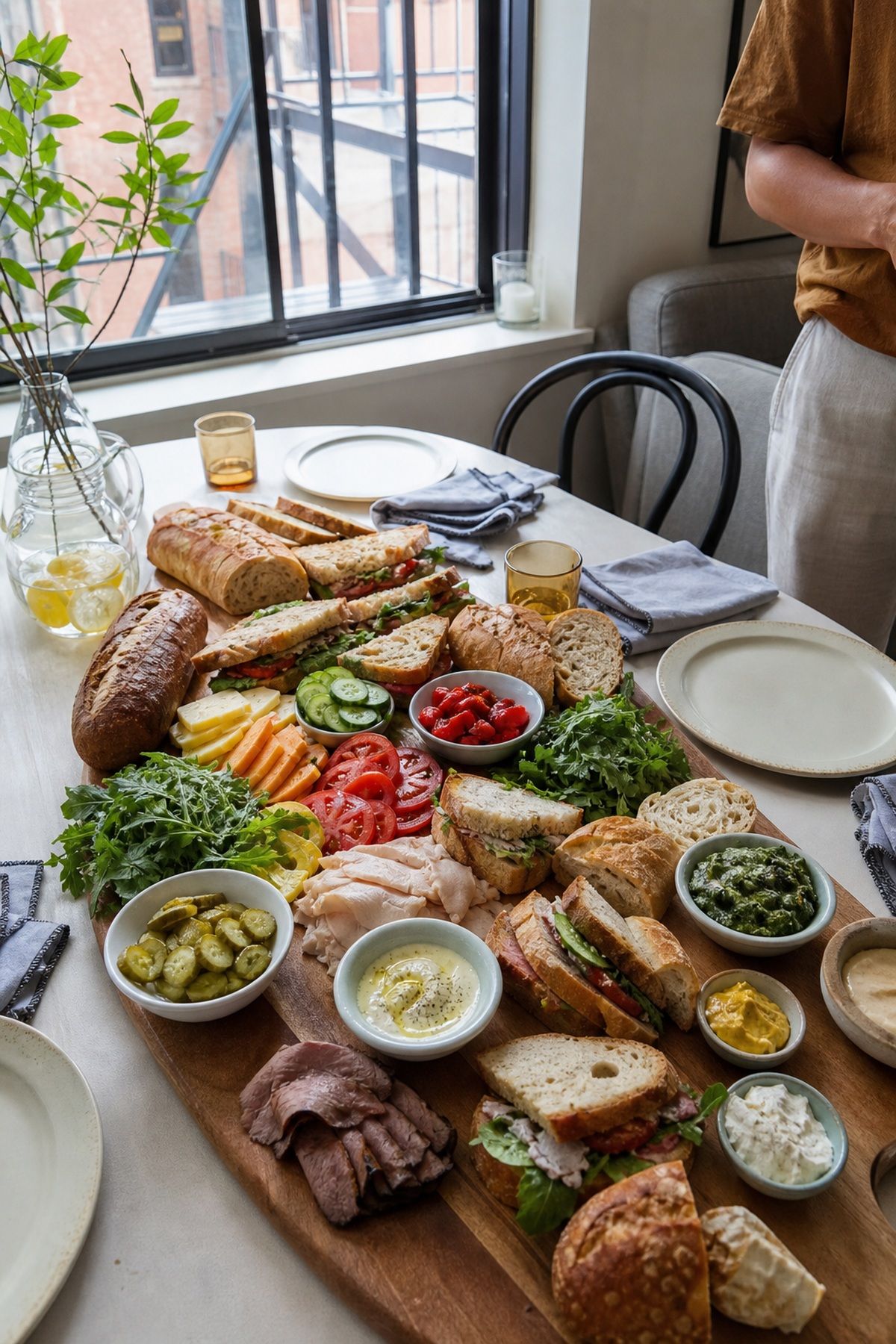


A sandwich board is a charcuterie board scaled up into lunch: good bread sliced thick, two or three cheeses, cured meats, roasted peppers, a pesto and something pickled. Guests assemble their own.
Lay it out in rows rather than piles so it looks generous even when it’s half eaten. A board that’s 60 cm long covers four to six people.
If you need the board itself, here are the charcuterie board essentials I’d actually buy.
8. The Sheet-Pan Family-Style Main
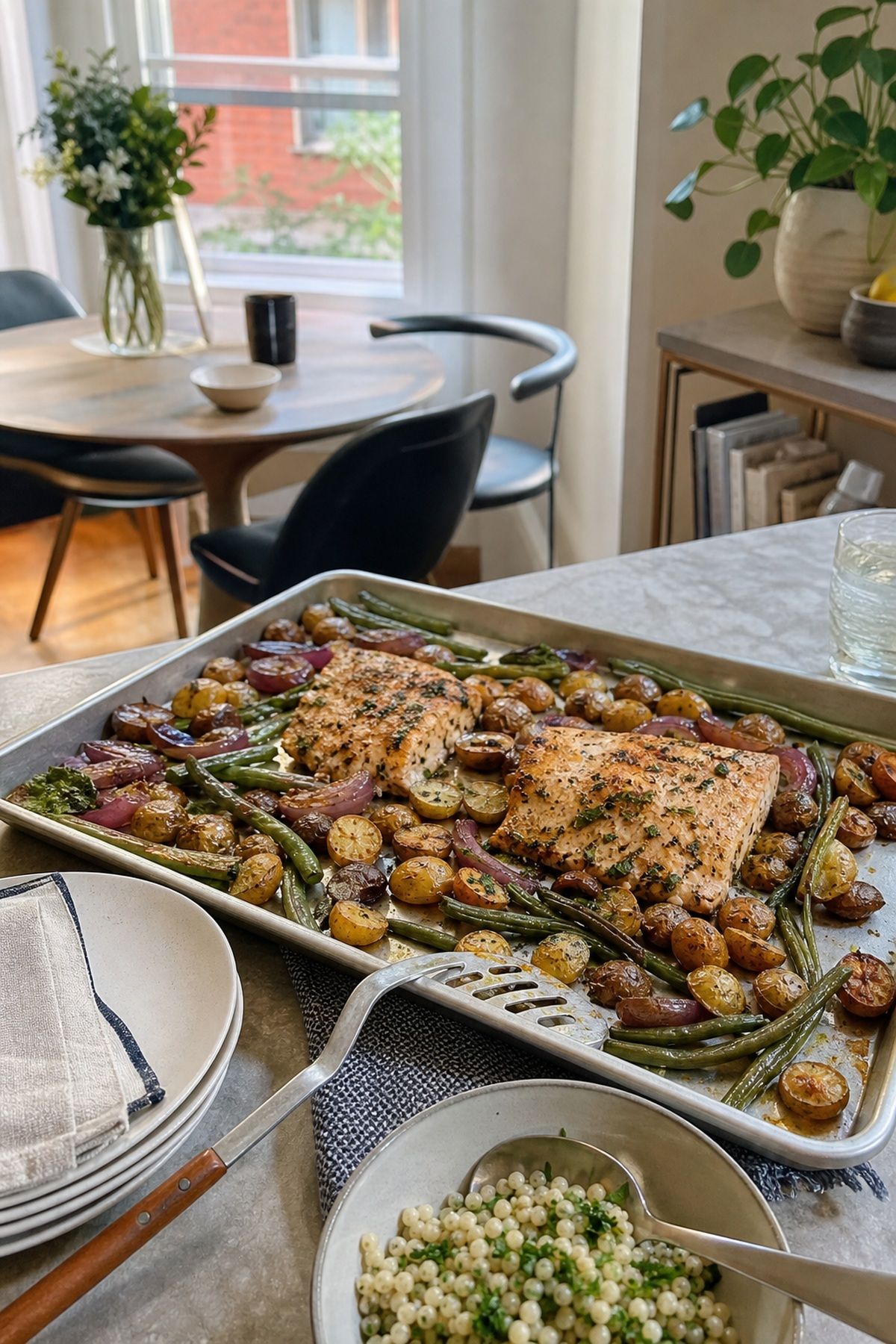


A sheet-pan main is my shortcut when I want one hot dish without stress. Chicken thighs with potatoes and lemon, or sausages with peppers and red onion. Everything roasts together in about 40 minutes.
It works well for lunch because it can go into the oven as the doorbell rings and come out just as everyone sits down. Serve it straight from the pan on a board.
9. The Tea-Sandwich Tower
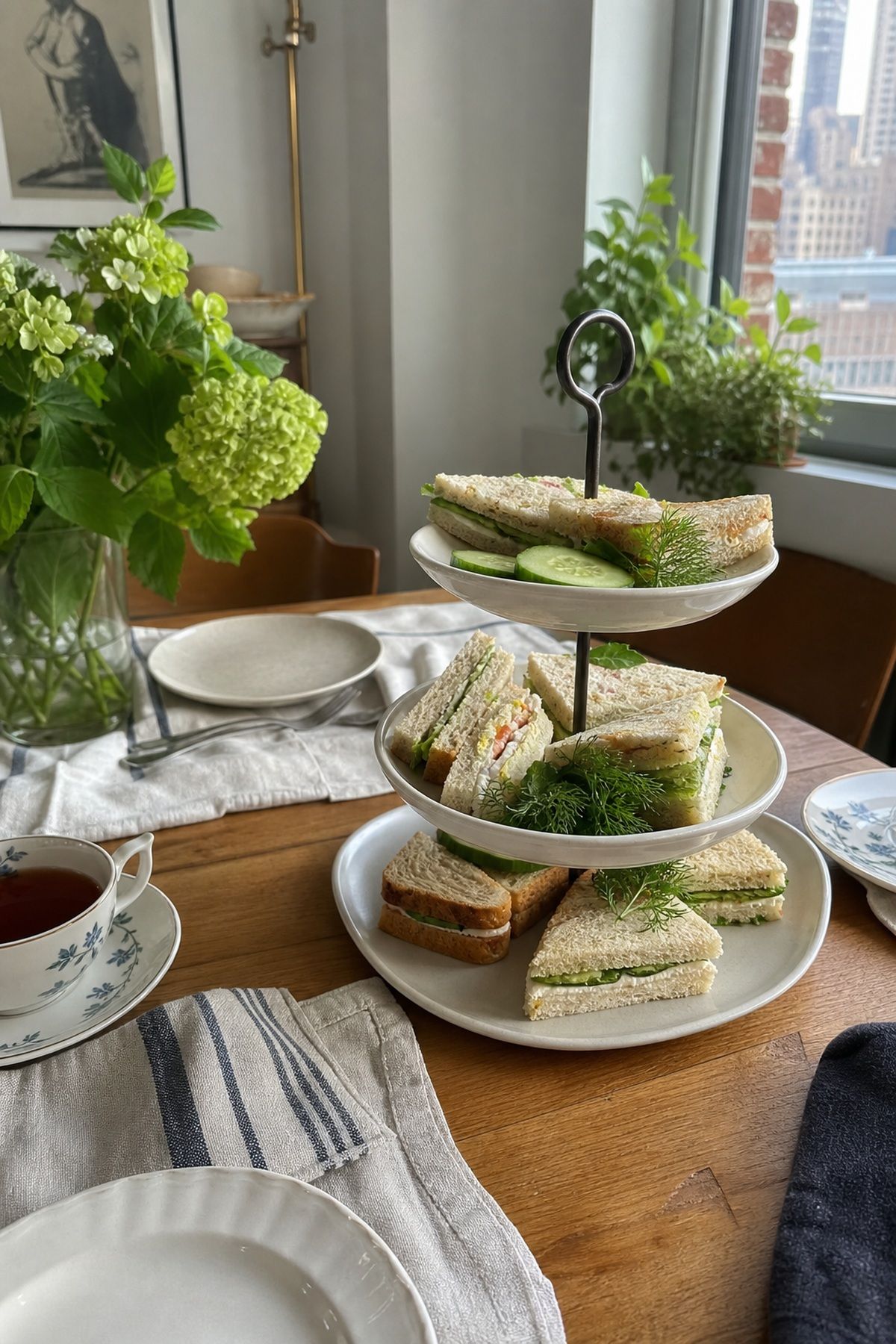


For a more formal lunch, like a baby shower or a lunch with grandparents, a tiered stand of small sandwiches looks special with little effort. Cucumber and cream cheese, egg salad, smoked salmon with dill.
Pair it with a pot of tea, a bowl of berries with a little sugar and lemon, and a simple cake. Cut the crusts off and wrap the sandwiches in a damp tea towel until serving so they don’t dry out.
What drinks should you serve at lunch?
10. A Single Signature Cocktail
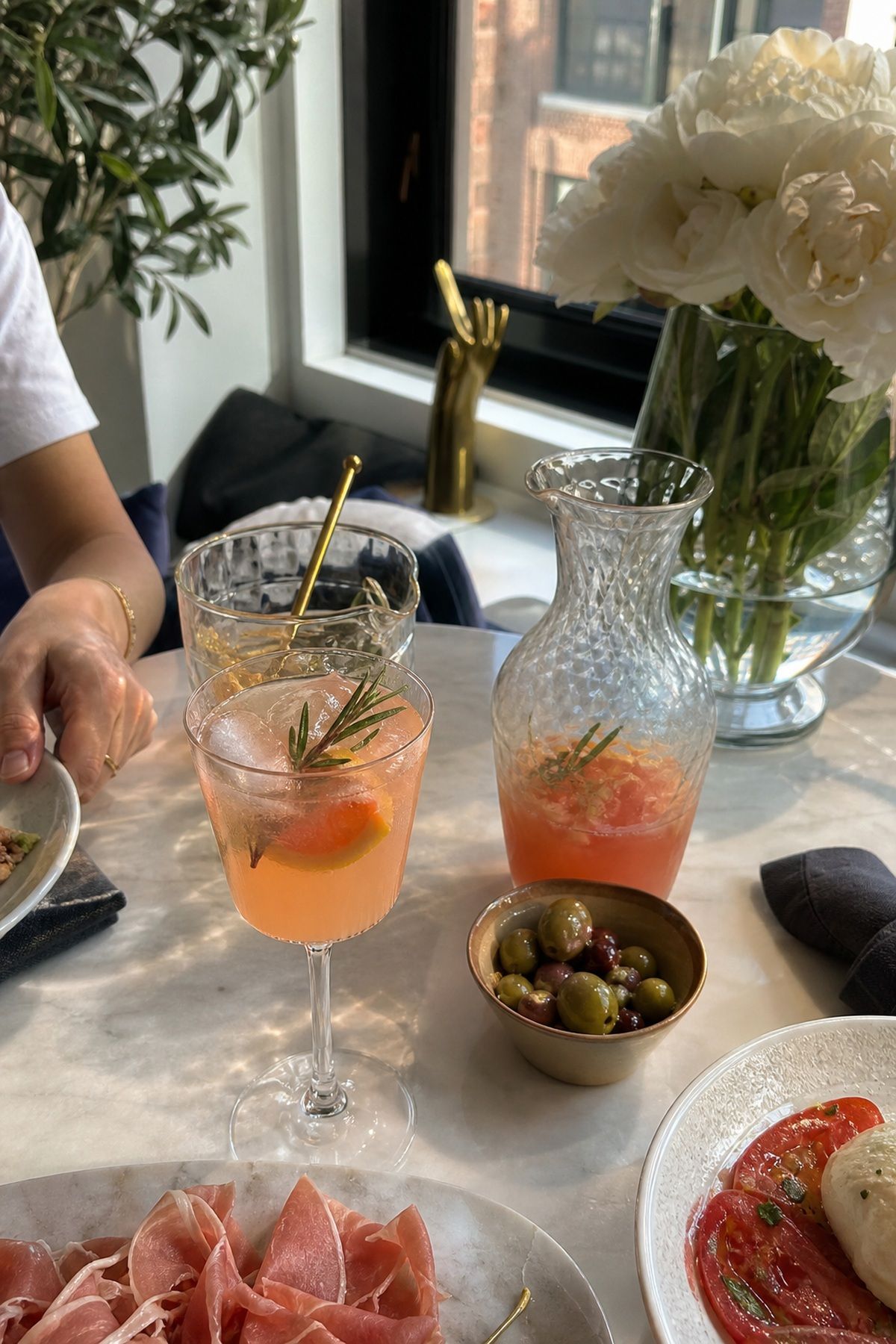


Lunch doesn’t need a full bar. One drink made in a pitcher is easier and feels more thought through. An Aperol spritz, a gin and grapefruit, or a white wine sangria.
Plan on two drinks per person for a 90-minute lunch. One 1.5-litre pitcher covers about four people for the first round. Make the base ahead and add the bubbles at the table.
11. The Sparkling-Water Bar


Next to the cocktail, set out a few bottles of sparkling water, a bowl of ice and sliced citrus, cucumber and mint. It looks pretty and costs very little.
It matters more at lunch than at dinner, because plenty of guests are driving or have plans later. Giving them something nice to drink that isn’t alcohol is just good hosting.
12. The Coffee and Tea Service for the End


Coffee and tea at the end tell everyone lunch is winding down without anyone having to say it. Set up the cups and a plate of small biscuits before guests arrive so it takes two minutes.
If you have a sofa, move there for coffee. The change of seats gives the meal a natural ending and frees the table for clearing.
13. The No-Mimosa Lunch Choice


Lunch isn’t brunch with a later start time. Mimosas and pancakes belong to the morning. At lunch, serve a crisp white wine, a spritz or a good lemonade instead.
The food follows the same logic: savoury mains, a proper salad, and dessert at the end instead of sweet things all the way through.
If you do want the morning version, my guide to hosting brunch at home covers mimosas and all.
How should you set a lunch table?
14. The Daylight-Friendly Linen Palette

Pick linens in pale colours like cream, sand, soft sage or blush. They reflect daylight and make the whole table look fresh. Dark linens are better saved for evening.
Napkins can match the tablecloth or sit one shade off. Real cloth napkins cost about 15 to 25 euros for a set of four and make the table look finished in a way paper never does.
15. The Low Centerpiece Rule


At lunch the centerpiece has to stay low, under 20 cm, so people can see each other across the table. A row of bud vases with single stems, a bowl of lemons or a few small herb pots all work.
Save tall arrangements and candle clusters for dinner, when the room is darker and the table needs height.
For more low arrangements, these summer centerpiece ideas work at lunch any time of year.
16. Place Cards for Casual Lunch


For six people or fewer, skip the place cards and wave guests to a seat as they arrive. It feels relaxed, which is the whole point of lunch.
For eight or more, simple place cards help mix people who don’t know each other. A folded white card with names written by hand is enough.
17. The Dessert Plate Switch


One small move that makes lunch feel considered: clear the main plates and bring out smaller dessert plates. It takes two minutes and resets the table for the last course.
Add a fresh fork and a small spoon, and serve dessert from a cake stand in the middle of the table. A lemon olive oil cake made the day before is an easy choice because it gets better overnight.
Hosting in a small space? These tips for hosting in a small apartment help when the table only just fits everyone.
Hosting lunch FAQ
How long should a hosting lunch last?
About 90 minutes at the table, from the first bite to dessert. Add 30 minutes for coffee if people want to linger.
How many dishes should I serve at a hosting lunch?
Two or three shareable mains, one really good side and one easy dessert. That’s plenty for a lunch and keeps the prep manageable.
What is the difference between a hosting lunch and a hosting brunch?
Brunch is mid-morning, usually 10 a.m. to 1 p.m., with sweet and savoury dishes and morning drinks like mimosas. Lunch starts around noon or later and leans savoury, with a proper main and dessert at the end.
What should I serve for drinks at a hosting lunch?
One batched cocktail or wine, a sparkling-water bar with citrus and herbs, and coffee and tea at the end. That covers drinkers, drivers and everyone in between.
How do I keep a lunch host calm during the meal?
Build the menu around dishes you can make the day before or in the morning, so the hour before guests arrive is only for assembly. Set the table the night before.
Do I need place cards for a hosting lunch?
For six or fewer, no. For eight or more, simple handwritten place cards help mix the group.
Key takeaways
- Two or three shareable mains work better than plated food at lunch.
- Make everything ahead so the morning is for assembly, not cooking.
- One batched drink and a sparkling-water bar cover every guest.
- A low centerpiece and pale linens let daylight do the decorating.
- About 90 minutes at the table keeps lunch relaxed for you and your guests.
- Real cloth napkins and a dessert plate switch make a simple lunch feel special.
Final thoughts
Lunch is the most underrated way to host. It asks less of you than dinner, the light is free and everyone goes home with the afternoon still ahead. Pick one main from this list of hosting lunch ideas, one drink and one side, and you’ve got a menu. The rest is setting the table by the window and remembering to sit down.
Last update on 2026-10-08 / Affiliate links / Images from Amazon Product Advertising API
