
Quick Answer: The best graduation shoot ideas combine a meaningful location – the campus, a favorite spot in the city, somewhere that reflects the graduate’s personality – with a mix of posed portraits, candid moments, and detail shots of the cap, diploma, and gown. Good natural light (early morning or the hour before sunset) and an outfit change to add variety are the two choices that make the biggest difference in graduation photos.
Graduation shoot ideas have expanded far beyond the cap-and-gown campus portrait. Today’s graduation photos tell a story – the person behind the degree, where they’re headed, what this chapter meant to them. The most memorable graduation shoots are the ones that feel specific to this graduate rather than a generic version of the milestone.
Whether you’re hiring a photographer or asking a friend with a good camera to help, planning your graduation shoot in advance makes a significant difference in the quality and variety of photos you’ll come away with. These graduation shoot ideas cover locations, poses, timing, outfits, and details, so you can walk into your shoot knowing exactly what you want.
Even a great shoot location falls flat without poses that feel natural, graduation poses to make your photos unforgettable breaks down the ones that look good on camera rather than just feeling comfortable in the moment.
Celebrating a milestone worth remembering? The Aesthetic Apartment Makeover Guide has everything you need to style your space for a beautiful graduation party, photo backdrop, or celebration setup.
Recommended Products


Read this also:
- Graduation Backdrop Ideas
- Graduation Pose Ideas
- Graduation Outfit Ideas
- Graduation Centerpiece Ideas
Campus and Iconic Location Shoots
1. Use Your School’s Most Recognizable Architecture
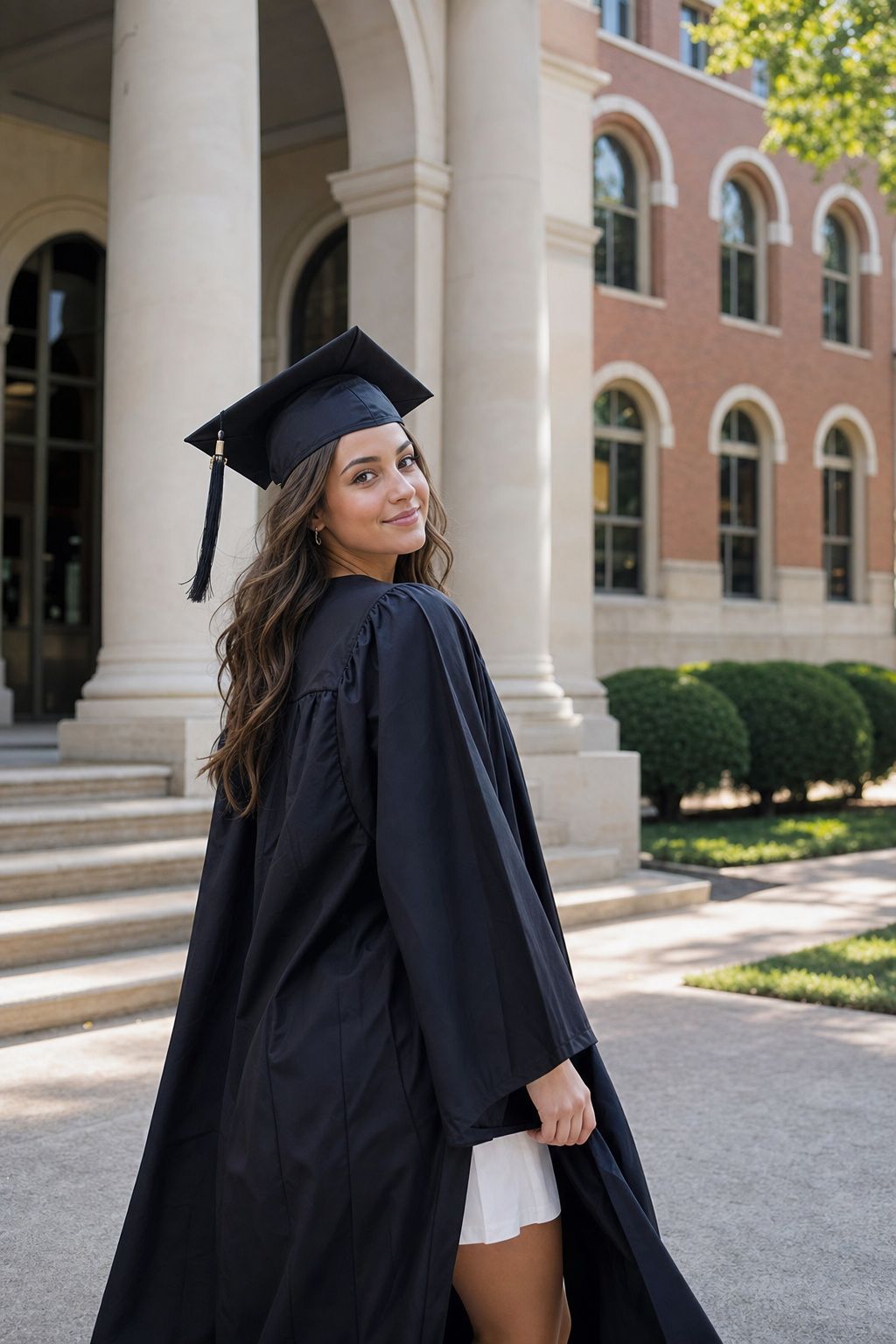


Grand arched gates, historic libraries, and iconic campus buildings are graduation photo backdrops for a reason. They place you in context, telling a complete story without a single word of explanation. The architecture of your school carries four years (or more) of meaning, and that weight shows up in photos in a way that a random pretty park simply cannot replicate. Scout the location ahead of your session so you know exactly where the light hits best and which angles avoid crowds.
Read more: Top 18 Graduation Gift Ideas for the Class of 2026 They Will Actually
2. Shoot Along a Tree-Lined Path or Botanical Garden
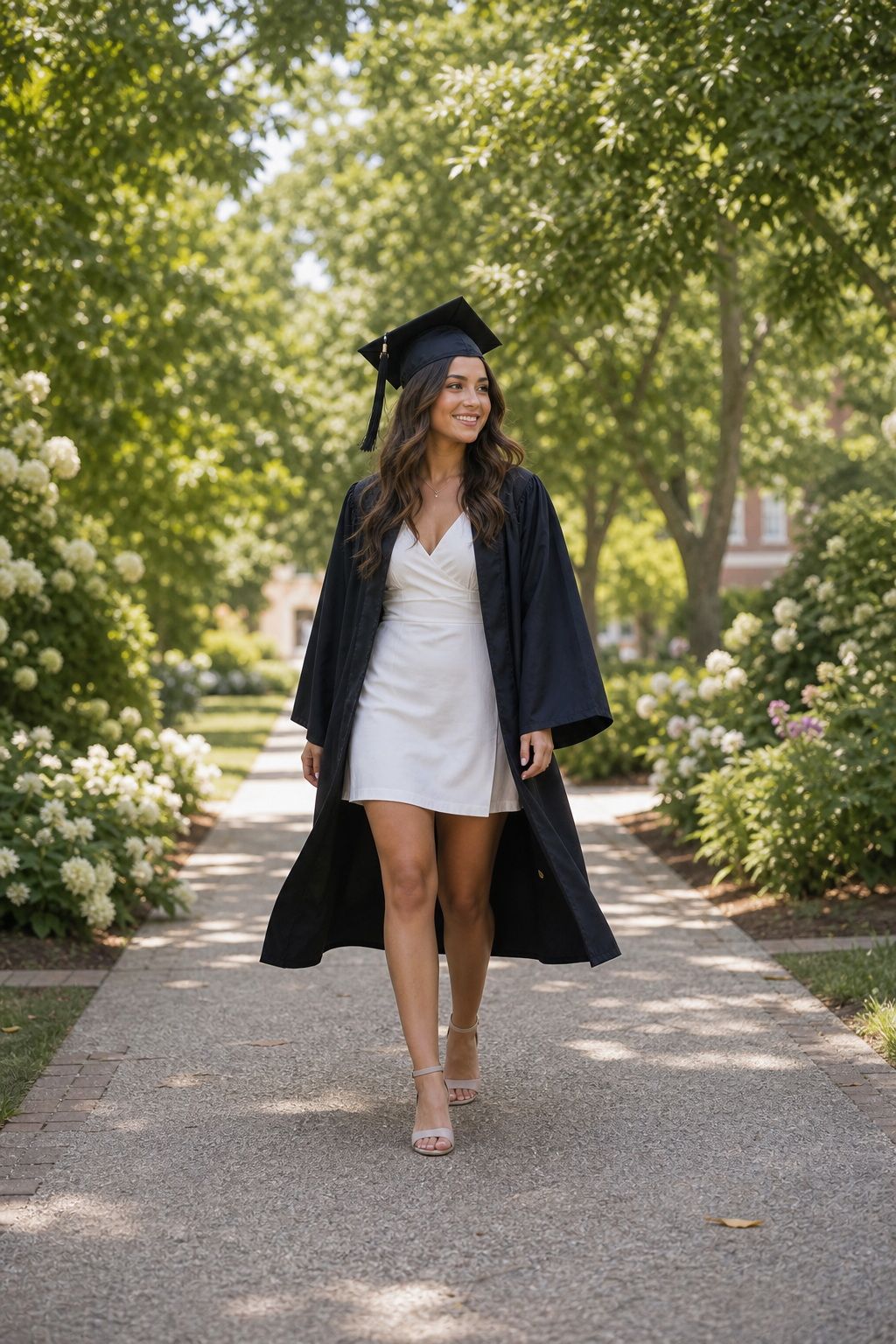
A canopy of trees creates natural framing that professional photographers charge premium rates to recreate in studios. Walk toward the camera along a tree-lined path with your gown flowing behind you and the result is effortlessly editorial. Many university campuses have a botanical garden or formal garden area that gets overlooked in favor of the obvious spots. These quieter corners tend to have less foot traffic, better light filtering through the leaves, and a softness that works beautifully for this kind of shoot.
3. Try an Urban Setting for a Bold, Modern Look
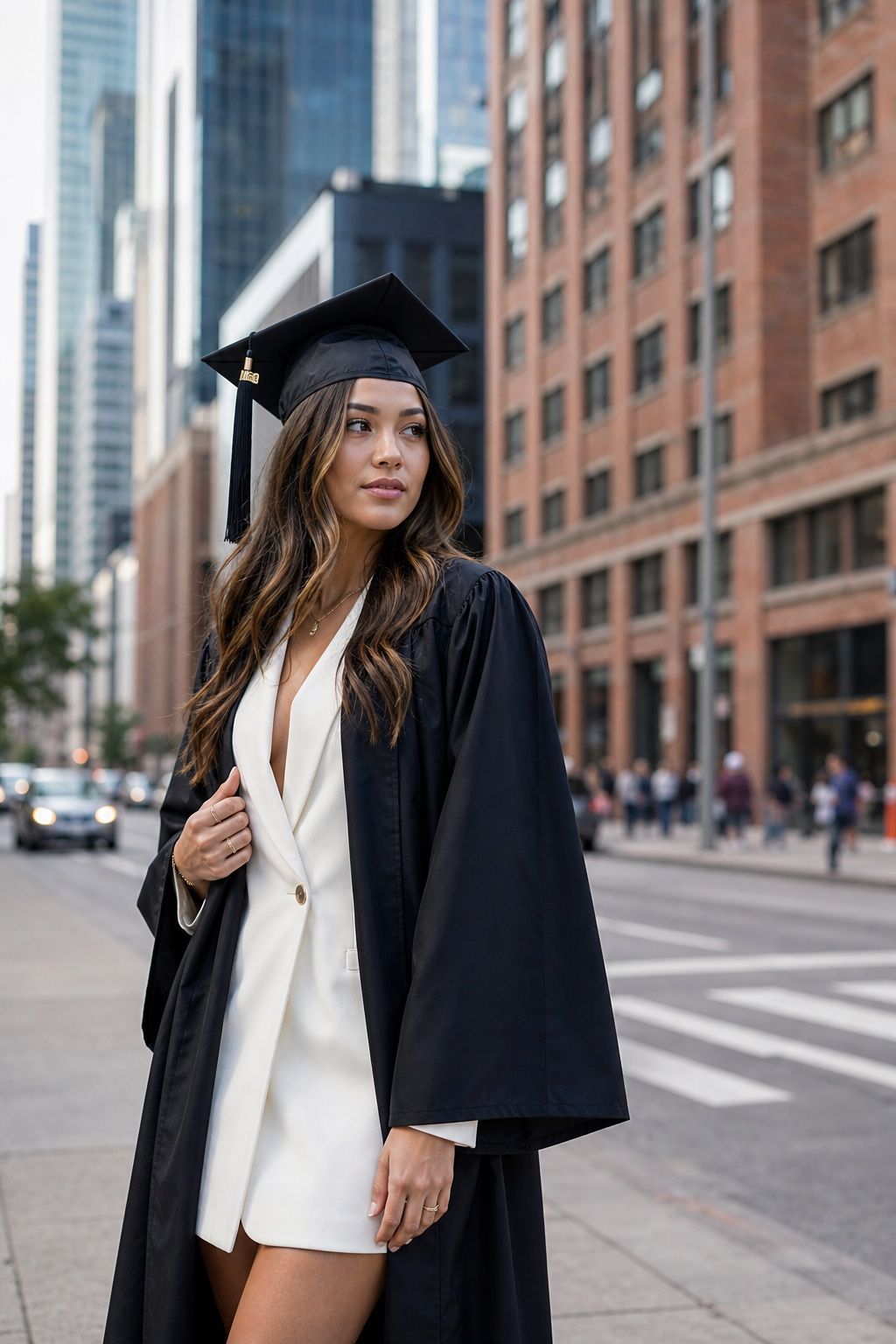
Rooftops, parking garages, city streets, and industrial walls have become increasingly popular for graduation photoshoots because they contrast the formality of a cap and gown with raw, interesting textures. The unexpected pairing is exactly what makes these images stand out on social media. Look for a rooftop with a city skyline behind you, or a painted mural wall that ties into your school colors or personality. Urban locations also tend to offer more interesting light plays, with reflective glass buildings and concrete surfaces bouncing light in flattering directions.
Read more: Top 15 Stylish Graduation Outfit Ideas for Men That Strike the Right
4. Return to a Personal Meaningful Spot on Campus
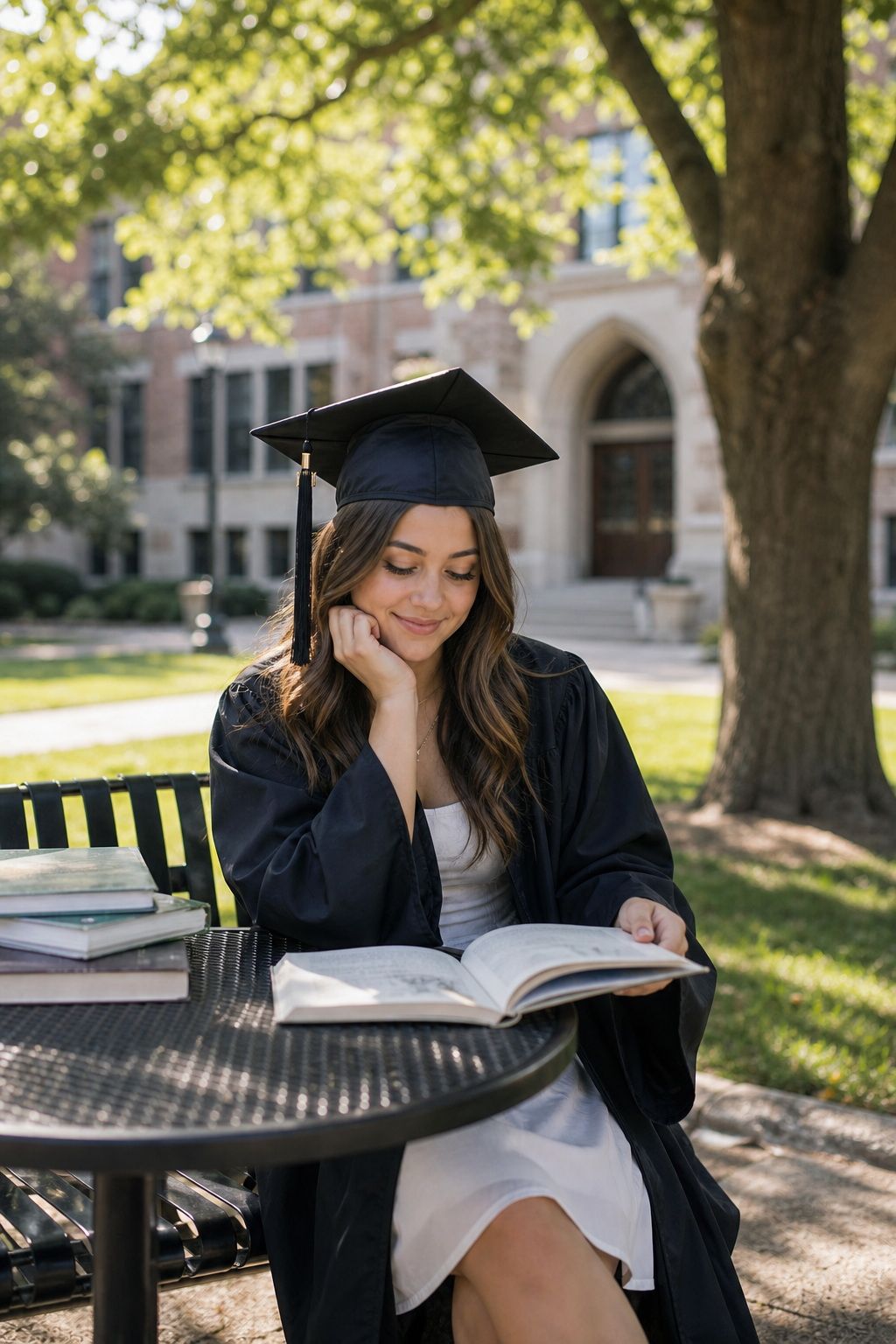
The bench where you studied every finals week, the coffee shop you practically lived in, the exact hallway outside the classroom where something clicked for the first time. These hyper-personal locations might not look impressive on their own, but they carry enormous emotional charge in a photo. When you shoot somewhere that genuinely matters to you, it shows in your expression, in how relaxed your posture is, in the natural smile that comes without prompting from a photographer. Consider doing one or two shots in your most meaningful campus spot alongside the more traditionally beautiful locations.
Read more: Top 16 Graduation Party Themes That Go Beyond the Basics
5. Use a Natural Landscape for a Fresh, Airy Feel
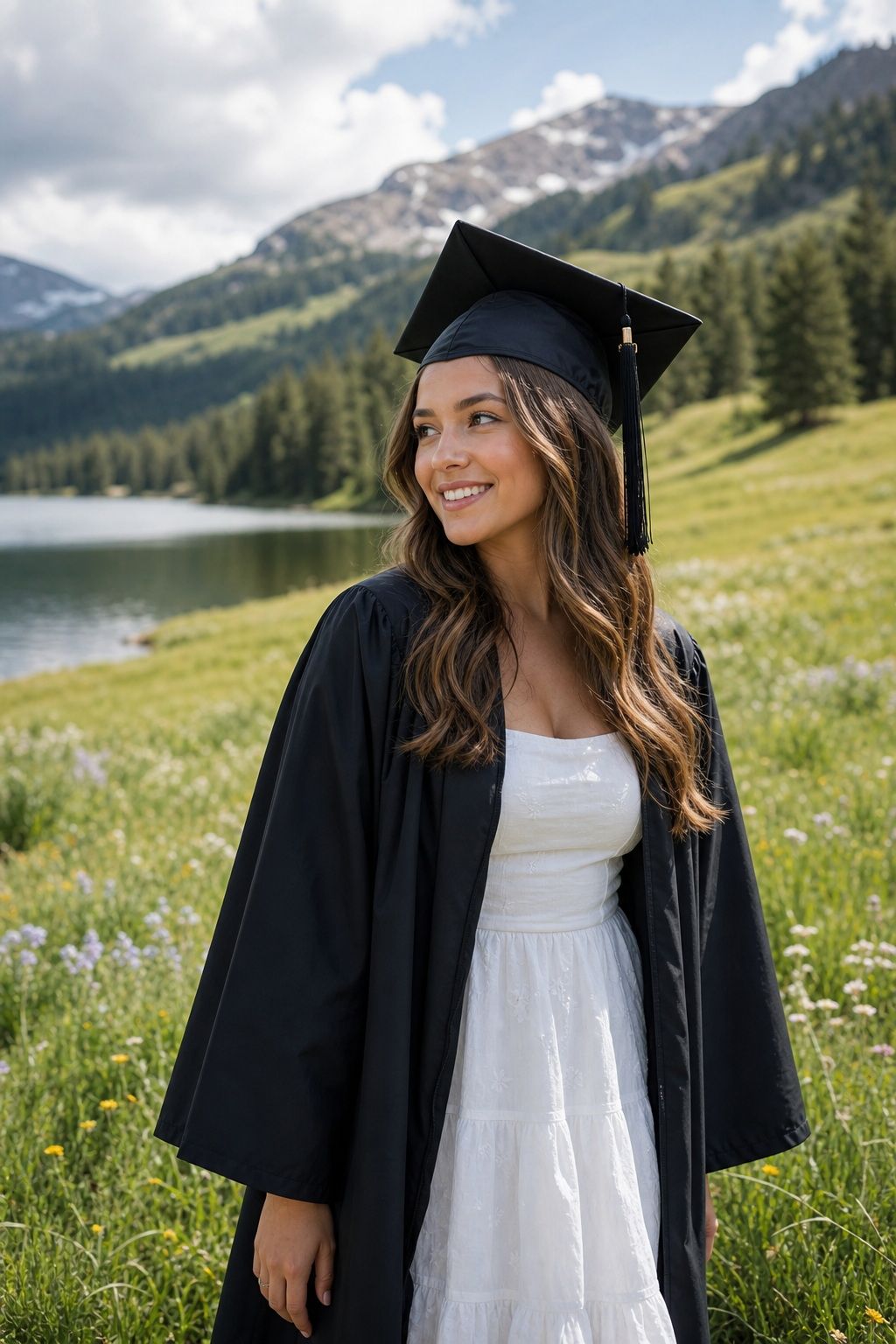


Beaches, open fields, wildflower meadows, and lakesides have a timeless quality that campus architecture cannot always offer. If your school is near a beautiful natural area, take advantage of it for at least part of your session. Tall grass and wildflowers add movement and texture, especially when caught by a slight breeze. Open water creates a clean, uncluttered background that keeps the focus entirely on you. Research photographers in your area whose portfolios feature natural landscapes to find someone skilled at working with outdoor light and movement rather than relying on posed, static compositions.
Props and Styling That Actually Elevate Your Photos
6. Throw Your Cap for the Classic Action Shot
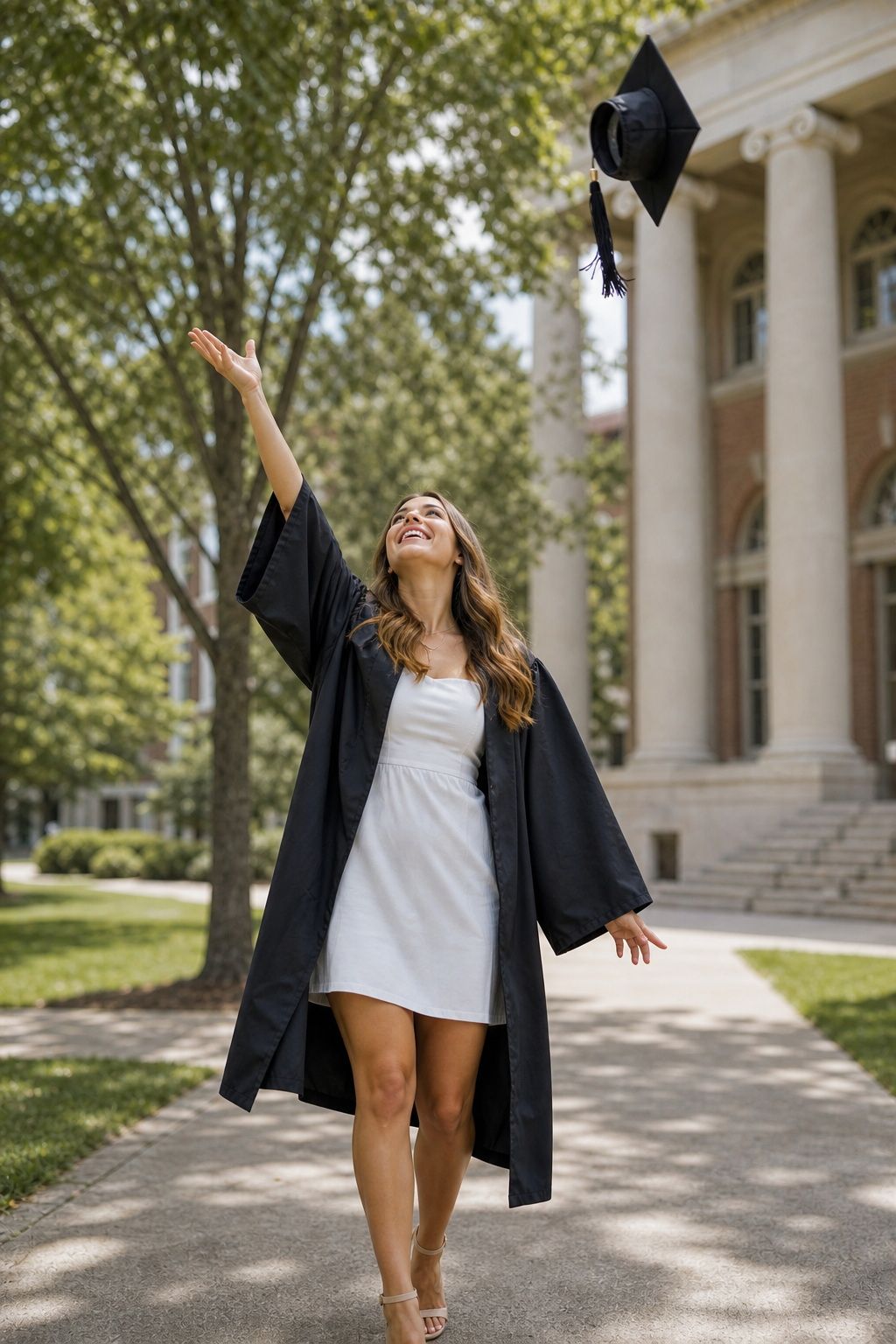


The cap toss is iconic for a reason. There is something genuinely joyful and unrepeatable about that split second of flight, and when shot from a low angle against a clear sky or a dramatic backdrop, it becomes one of the most striking images from any graduation session. Ask your photographer to use burst mode to capture the sequence, because the best shot is rarely the one where the cap is highest. It is usually the moment just after release, when your arms are still outstretched and your face carries pure, unguarded happiness. Do two or three tosses to give yourself options in editing.
Read more: Top 20 Graduation Decoration Ideas That Make Any Party Feel Special
7. Bring Balloons, Confetti, or Champagne for Celebratory Energy
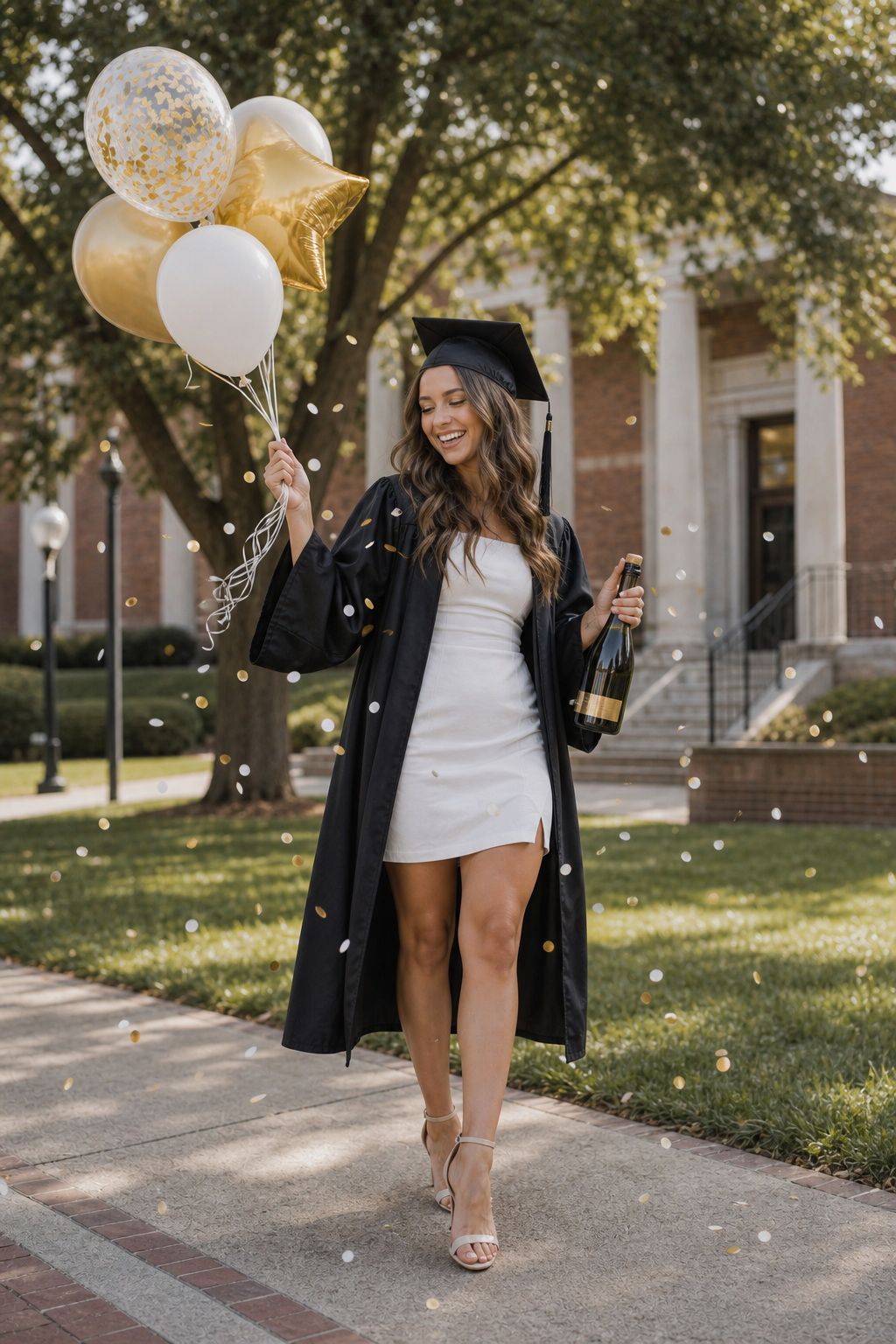


Oversized letter balloons spelling out your graduation year, a handful of confetti tossed toward the camera, a champagne spray caught mid-burst. Each of these props adds kinetic energy to photos that would otherwise be static. Metallic balloons in gold or silver read well in outdoor light. Confetti works best shot in burst mode at a fast shutter speed, and biodegradable options mean you are not leaving a mess behind. If you are going for a more editorial look, a single oversized balloon in a muted tone adds visual interest without looking like a party supply store exploded.
Read more: Top 18 Trendy Graduation Nails Ideas for Every Taste
8. Incorporate Props From Your Field of Study

A stethoscope for nursing or pre-med graduates. A gavel for pre-law. A sketchbook and paint-stained brushes for fine arts. A laptop with code on the screen for computer science. These field-specific props immediately communicate who you are and what you worked toward, which turns a beautiful photo into a meaningful one. They also give you something natural to do with your hands, which solves one of the most common issues in posed photography. Prop-based shots tend to look more candid and relaxed because there is a point of focus beyond just looking good for the camera.
9. Add Fresh Flowers or Greenery for a Soft Editorial Look
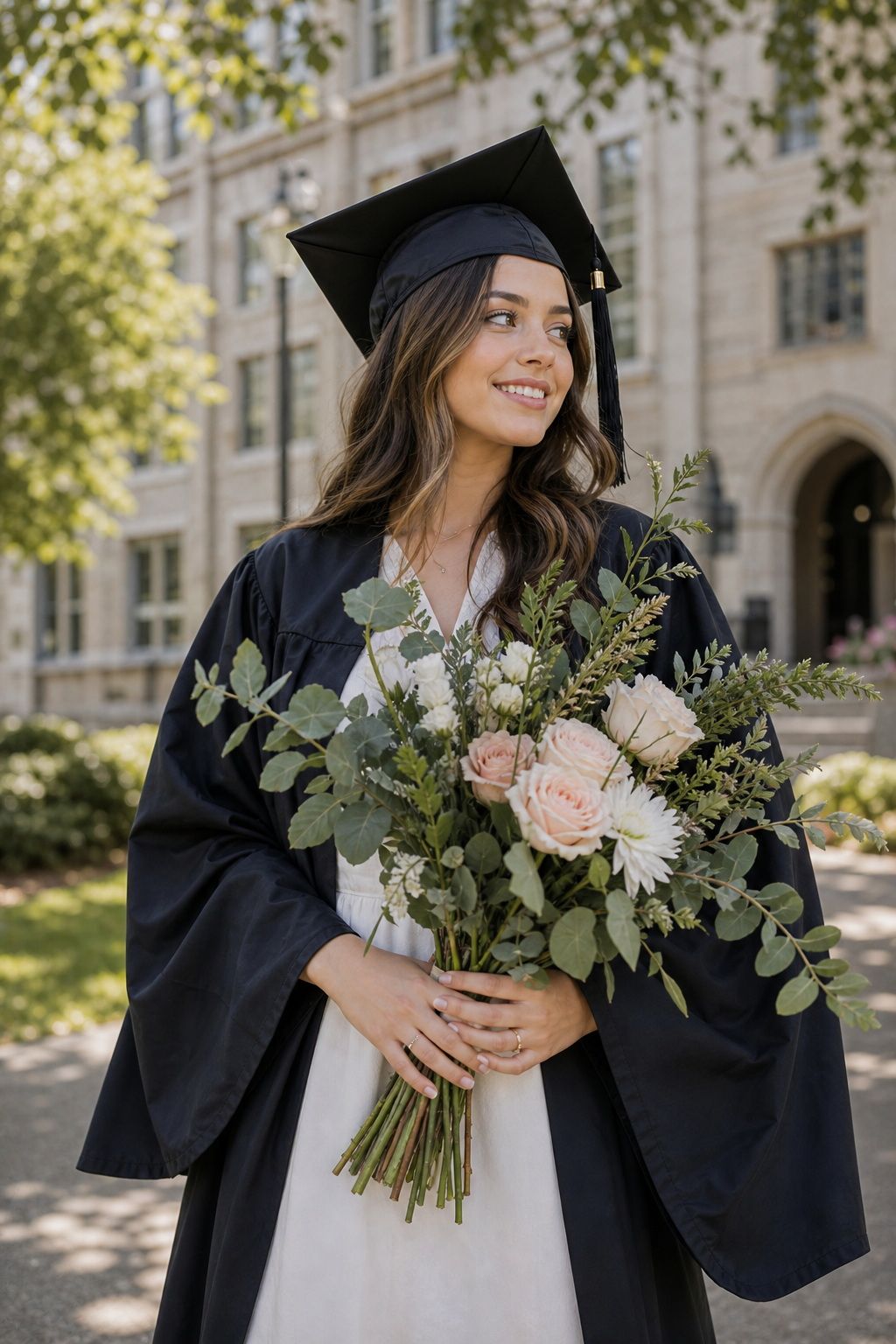
A simple bouquet of white ranunculus, blush peonies, or eucalyptus sprigs adds softness and color without overwhelming the composition. Flowers in hand give you a natural prop that photographs beautifully at every angle, and they pair elegantly with both formal gowns and more casual graduation outfits. Look for seasonal blooms at a local farmers market the morning of your shoot for the freshest options at a fraction of florist prices. Dried pampas grass and preserved botanicals also work well and hold their shape throughout a full shoot without wilting.
Read more: Top 15 Easy Graduation Cake Ideas for a Memorable Sweet Treat
10. Hold or Display Your Diploma for a Proud, Intentional Shot
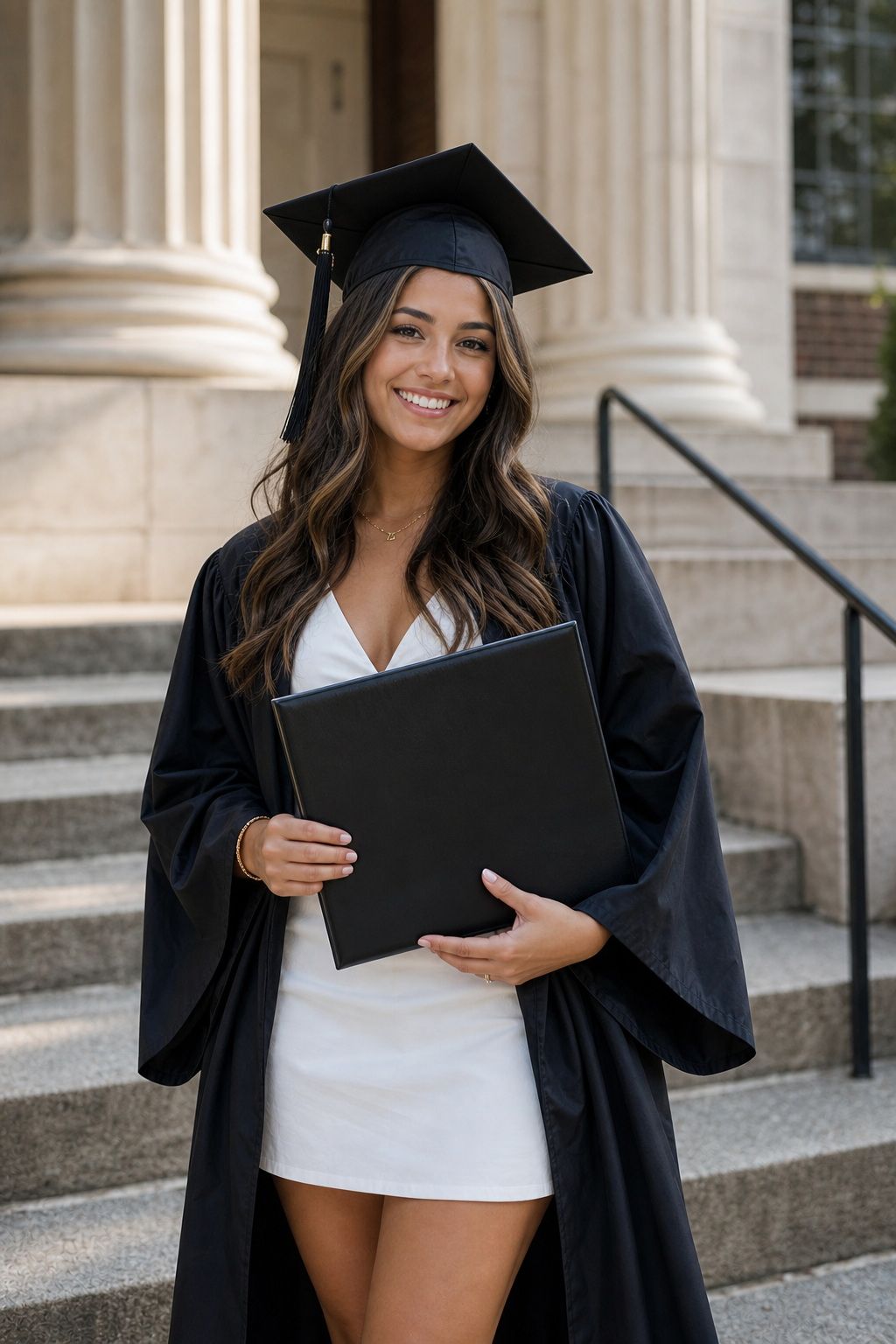


Not every school hands out actual diplomas at the ceremony, but a diploma cover or a mock-up works just as well visually. Holding your diploma while looking directly into the camera is one of those shots that seems simple but ends up being one of the most meaningful. It is tangible proof of what you accomplished. Try holding it open at your side while looking off into the distance for a more contemplative version, or hold it overhead with both hands for a triumphant, celebratory shot that works well when framed against an interesting sky or architectural backdrop.
Read more: Top 17 Best Graduation Yard Sign Ideas to Celebrate at Home
Poses and Compositions That Photograph Well
11. Walk Confidently Toward the Camera
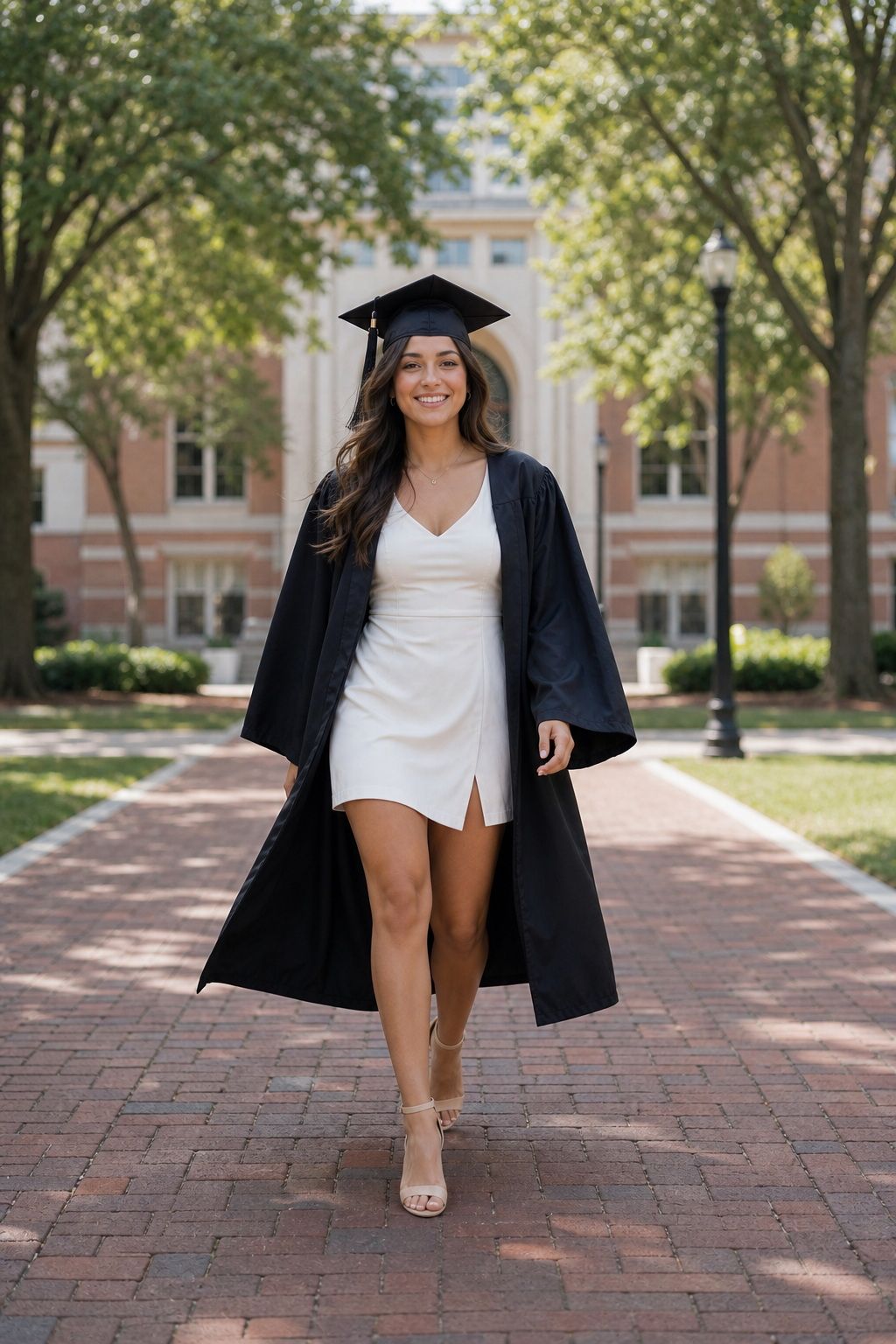


The walking shot is consistently one of the most flattering and dynamic poses in any photoshoot because movement prevents the stiffness that comes with standing still and being photographed. Walk at a relaxed, natural pace toward the camera, hold your gown open slightly, and let your arms swing naturally. The key is not to look at the lens while walking but slightly past it, as if you are heading somewhere important. This creates a purposeful, forward-looking energy that fits graduation perfectly. Shoot on a path or sidewalk rather than open space so there is a natural line leading the viewer’s eye toward you.
12. Look Away From the Camera for a Contemplative Feel
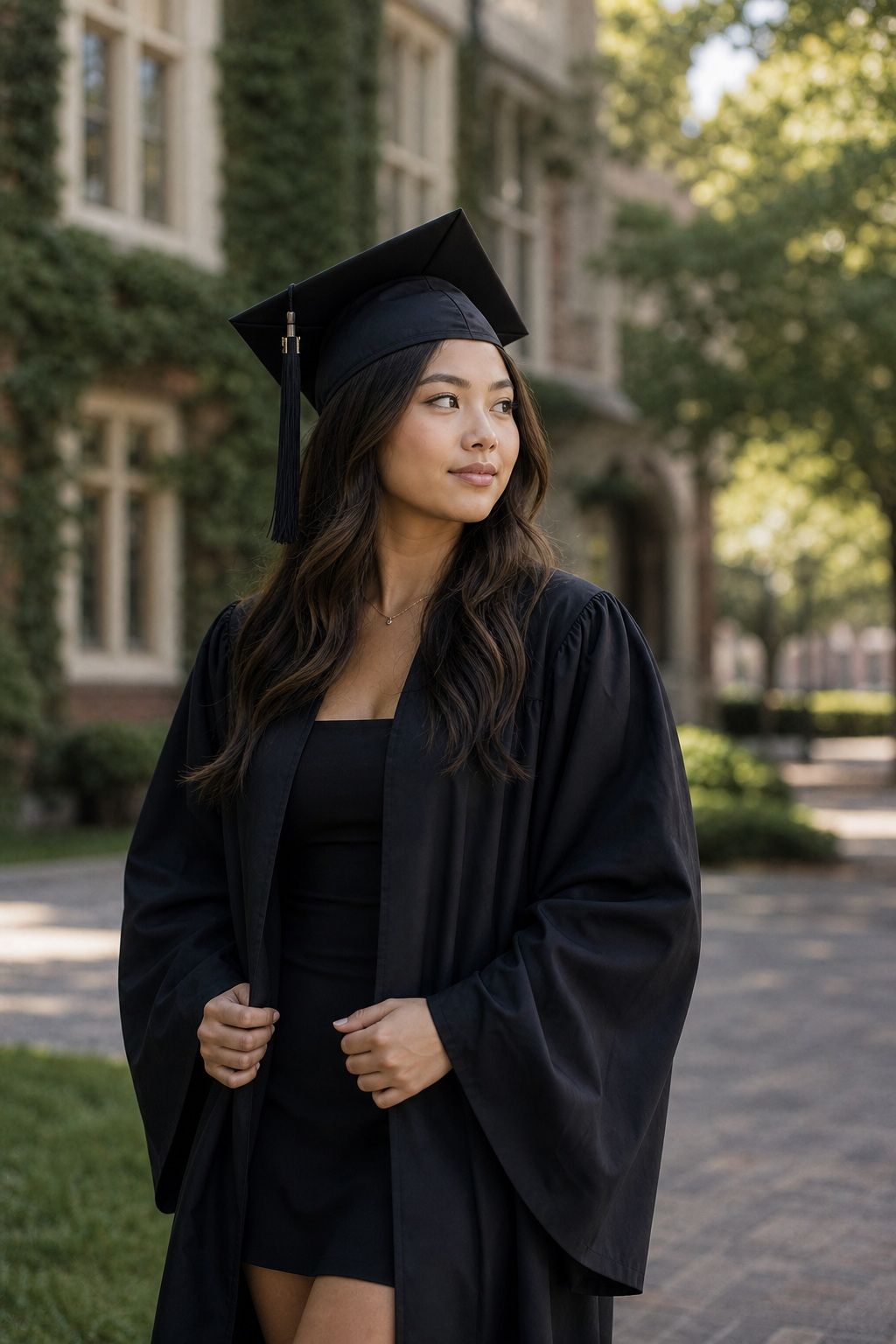


Some of the most powerful graduation photos are not smiling directly at the lens. Looking off into the distance with a thoughtful expression communicates something that a direct gaze cannot: anticipation, reflection, the weight of a transition. This pose works especially well at the end of a long path, on a rooftop overlooking a city, or seated at the edge of a meaningful location. Ask your photographer to shoot from slightly behind and to the side, so the viewer sees you looking toward something just outside the frame. The ambiguity is the point.
Read more: Top 17 Graduation Outfit Ideas for High School Students to Look Their
13. Sit or Lean Casually for a Relaxed, Natural Shot

Seated poses on staircases, low walls, fountain edges, or grassy lawns produce some of the most natural-looking graduation photos because sitting encourages your body to relax in a way that standing rarely does. Lean slightly forward, rest your elbows on your knees, or drape your arms loosely to avoid the stiff, portrait-studio look. Sitting also allows your photographer to shoot from eye level or slightly above, which tends to be the most universally flattering angle. For a more dynamic seated shot, sit sideways on a staircase and look back over your shoulder toward the camera.
Read more: Top 20 Graduation Gift Ideas for Boys That Make a Lasting Impact
14. Include Your People for Group Shots That Feel Real

Solo shots dominate most graduation galleries, but the group photos are often the ones you return to most in twenty years. Friends laughing together, a genuine hug with a parent, a sibling pile on the lawn. These candid group moments carry emotional weight that posed solo portraits cannot. Reserve time in your session specifically for group shots, and give your photographer at least 15 unstructured minutes to capture candid moments between formal poses. The photos where everyone is looking at each other instead of the camera are almost always the best ones.
Lighting, Timing, and Outfit Strategies
15. Schedule Your Shoot During Golden Hour


Golden hour, the 30 to 60 minutes before sunset, produces the warm, soft, diffused light that makes every subject look their best. Harsh midday sun creates unflattering shadows under eyes and noses, washes out colors, and forces subjects to squint. Golden hour light falls at a low angle, wrapping around faces and creating a gentle warmth that no editing preset can fully replicate. Most experienced photographers book graduation sessions specifically for golden hour slots. Check the sunset time for your shoot date in advance and plan your location accordingly so you are set up and ready when the light hits its peak quality.
Read more: Top 18 Simple and Inviting Spring Graduation Party Decor Tips
16. Do Not Dismiss Overcast Days for Soft, Even Light

Overcast skies function as a giant natural softbox, diffusing sunlight evenly across your face and eliminating the harsh shadows that sunny days create. Colors photograph more accurately in overcast conditions, skin tones are more consistent, and you do not have to squint. Many portrait photographers actually prefer shooting on cloudy days for exactly these reasons. The sky itself may look flat in photos, but this is easily managed by framing compositions to minimize how much sky is visible. If you have been dreading the forecast on your shoot day, this might reframe how you think about it.
Read more: Top 18 Graduation Invitation Ideas That Feel Personal Without the
17. Wear Multiple Outfits to Create Variety Across Your Gallery


A satin slip dress in a neutral or blush tone is one of the most photographed graduation outfits right now because it reads as both elegant and modern. Wide-leg trousers with a fitted top give a polished but relaxed look that photographs especially well in urban settings. A classic white dress against the formality of academic architecture creates a clean, timeless contrast. Bringing two or three outfit changes allows you to cover different aesthetics for different platforms and different audiences, from LinkedIn announcements to Instagram posts to something more personal for yourself. Coordinate with your photographer before the shoot so you are switching efficiently and not losing light.
18. Book Your Photographer Early and Communicate a Clear Vision


The best graduation photographers in any market book out months in advance. Once you have a graduation date confirmed, start searching for photographers immediately and look specifically for portfolios that match the aesthetic you want, whether that is bright and airy, moody and editorial, or candid and documentary-style. Send your photographer a Pinterest board of images you love before the shoot so they understand your vision without you having to articulate it on the day. Discuss locations, timing, outfit changes, and specific shots you absolutely want. A well-prepared session produces far better results than showing up with vague ideas and hoping for the best.
Read more: Top 17 Graduation Aesthetic Ideas for Simple Styling on Ceremony Day
Frequently Asked Questions
When should I schedule my graduation photos?
Schedule graduation photos either before the ceremony (a few days to a week in advance when you have time to relax and prepare) or on graduation day itself shortly after the ceremony when you’re still in your gown and the location is meaningful. For a more relaxed editorial-style shoot, a few days after graduation gives you flexibility on timing and location. Book your photographer early – graduation season fills photographers’ schedules quickly, particularly in May and June.
What should I bring to a graduation photo shoot?
Bring your cap and gown, a second outfit if you’re planning an outfit change, accessories (earrings, necklace, watch), and any meaningful props – a bouquet, a book from your field, a sports jersey or item from an extracurricular you were passionate about. A small mirror for last-minute hair and makeup checks, blotting papers, and a neutral lip color for touch-ups are worth having in a bag. If you wear glasses, bring them even if you plan to shoot without them – both options give you more variety.
How do I look confident in graduation photos?
Confidence in photos comes from familiarity with the process. Practice a few expressions and angles in the mirror before the shoot so you know what feels and looks natural on you. Ask your photographer to talk to you during the shoot rather than just counting down to a shutter click – being in conversation naturally relaxes the face and body. Move between poses rather than freezing in each one. The best portraits almost always come from movement transitions rather than held static poses.
What is the best background for graduation photos?
The best background for graduation photos is clean, contrasting, and contextually meaningful. A blurred (bokeh) background from a telephoto lens with a natural setting makes the graduate the clear subject. Architectural elements – brick walls, stone arches, columns – add texture without being distracting. Avoid busy backgrounds with lots of foot traffic or visual clutter that pulls attention away from the graduate. For the strongest photos, the background should support the subject rather than compete with them.
Can I do graduation photos myself without a photographer?
Yes – a smartphone with portrait mode or a friend with a DSLR can produce beautiful graduation photos with good light and a clear location. Use a tripod and self-timer for solo photos, or ask a friend to shoot in burst mode so you have lots of frames to choose from. Good light (golden hour, open shade, overcast day) makes up for most technical limitations. The main difference between amateur and professional graduation photos is usually lighting and posing direction, both of which you can research and prepare for.
Key Takeaways
The best graduation shoot ideas combine a meaningful location, good light (golden hour or open shade), an outfit that feels like you alongside the cap and gown, and a mix of posed and candid shots. Plan an outfit change for more variety. Bring a bouquet as a natural prop. Avoid midday sun. Practice a few expressions and poses in the mirror before the shoot. The photos that feel most authentic are almost always the transitional, in-between moments rather than the rigid poses.
Conclusion
A graduation photo shoot is one of the few times in life where you have a photographer, a meaningful milestone, and the specific visual language of the cap and gown all in one place. Making the most of it is mostly a matter of planning: the right location, the right time of day, a few outfit options, and an idea of the poses and moments you want to capture.
Come prepared, come loose, and trust the process. The best graduation photos are the ones that look like you at your best – not a generic graduate, but the specific person who earned this.
Last update on 2026-08-19 / Affiliate links / Images from Amazon Product Advertising API
