
Quick Answer: The shower tile combinations that make a small bathroom feel bigger pair one large-format tile (12×24 inches or larger) across the floor, walls, and shower in a single continuous tone, then add quiet contrast through texture instead of color. Run tiles vertically to pull the eye up, keep grout close to the tile color so the surface reads as one plane, and stay in warm neutrals like beige, clay, mushroom, and sage. Fewer grout lines and one calm color field is what tricks the eye into reading the room as larger than it is.
A small bathroom shows you exactly where it gives up. You stand in the shower, look at the wall, and there it is, the busy little mosaic strip, the bright white grid chopped into a dozen pieces, the accent row that felt like a good idea on a showroom board. Every one of those choices is a seam, and seams are what make four walls feel like they are closing in.
The fix is not a renovation or a bigger footprint. It is a quieter set of pairings. The 2026 direction for tiny shower tile leans on three specific moves, large-format tiles that cut the grout count in half, vertical orientation that borrows ceiling height the room does not actually have, and tile drenching, where the same tile wraps the floor, the walls, and the shower so there is no visible line where one zone stops and the next begins. Warm tones do the rest, because clay and mushroom and sage hold light softer than cool gray ever did.
Not every combination here is a renovation. A few are peel-and-stick swaps you can do in a weekend, and one is just a smarter grout color away from working with the tile you already have. The bathroom is also one of the trickiest rooms to get right when you are how to decorate a small apartment, so it is worth solving the shower first, since that is the surface your eye lands on the moment you walk in.
Tired of staring at a bathroom that feels half a size too small?
The Aesthetic Apartment Makeover Guide walks you through every room with real, budget-friendly ideas you can actually use, including the small swaps that make a tight bathroom breathe. Grab it now for just $17, the price goes up to $27 soon.
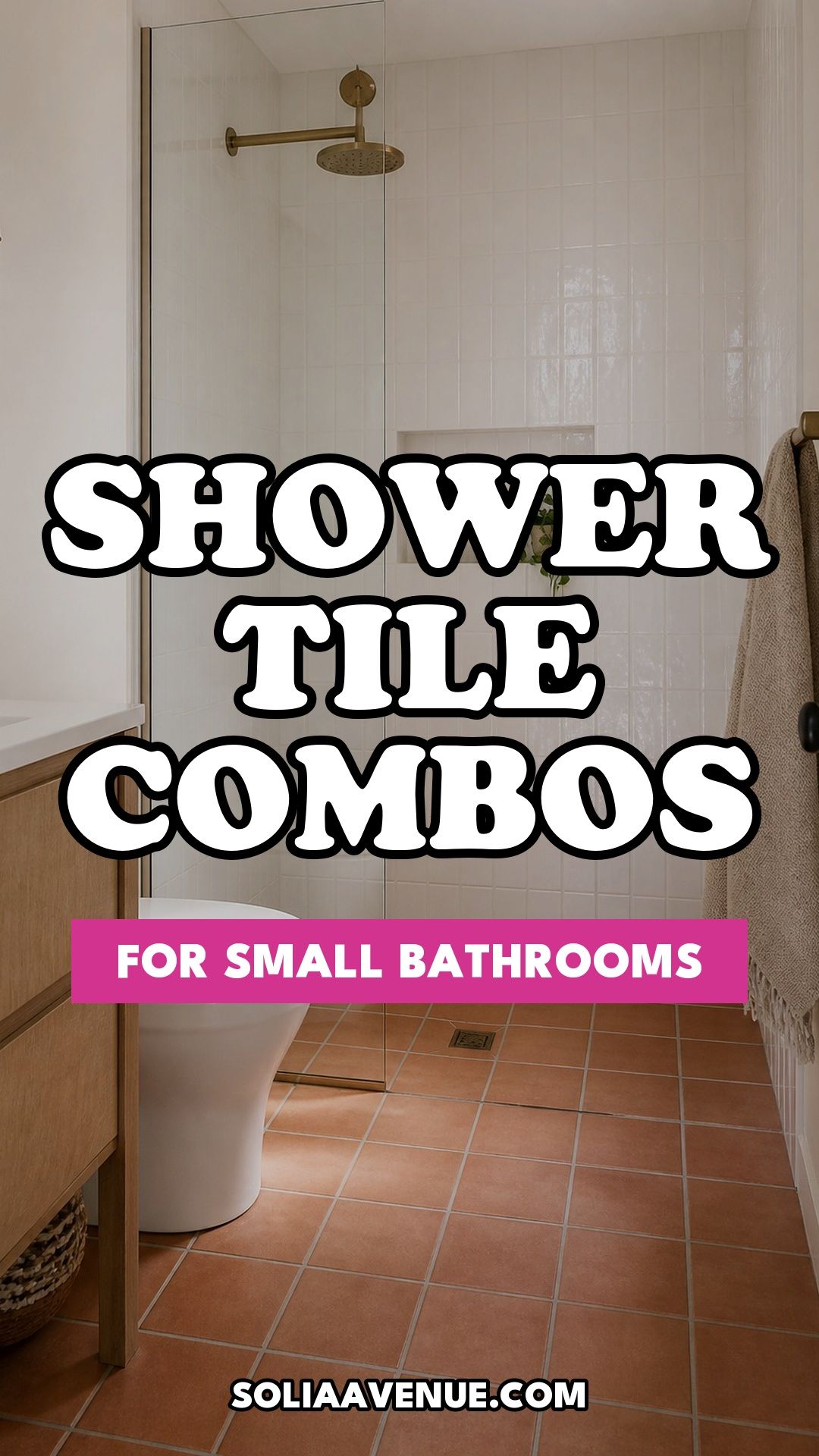
Recommended Small Bathroom Tile Products


Recommended blogs to read:
- Small apartment bathroom ideas
- Winter bathroom decor ideas
- Bathroom zen home decor
- Small apartment ideas
- Small apartment design ideas
Large-Format Tile Combinations
1. Large-Format Beige Walls With a Matching Beige Floor
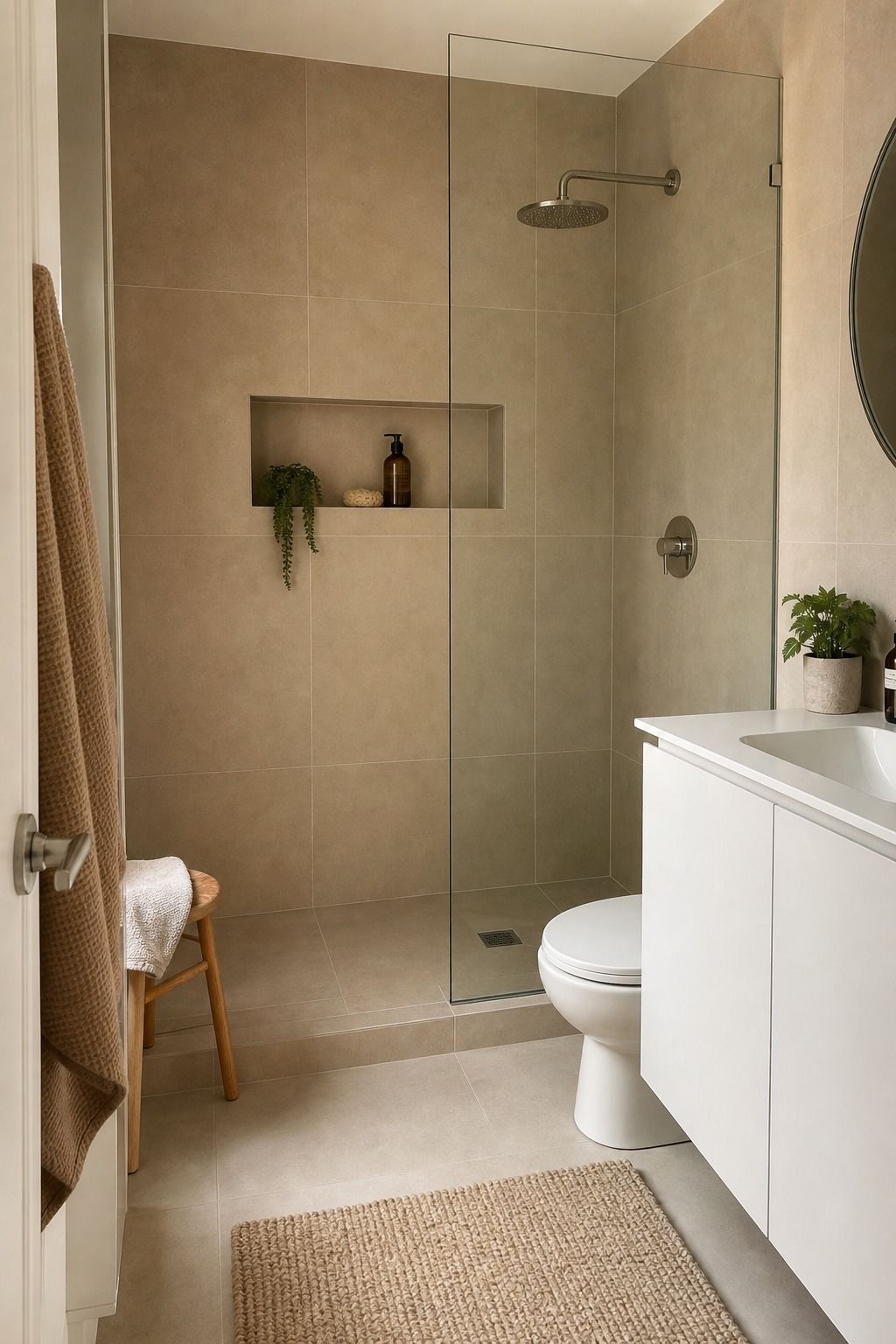


Start with the combination that does the most work for the least effort. A single warm beige tile in a 12×24 or 24×24 format, run across both the shower walls and the bathroom floor, erases the line your eye usually trips over. There is no color change at the threshold, so the room reads as one continuous surface instead of a box with a separate wet zone bolted on.
Go with a honed or matte finish rather than polished, because glare from a glossy tile in a tight room actually shrinks it. Keep the grout within one or two shades of the tile, a soft greige works under most beiges, so the joints disappear at arm’s length. A 36-square-foot shower that took roughly 200 small mosaic pieces will take closer to 30 large tiles, and that math is exactly why the wall stops looking busy.
Read more: Top 15 Towel Rack Bathroom Ideas That Mix Style and Function
2. Greige Tile Drenched Floor to Ceiling
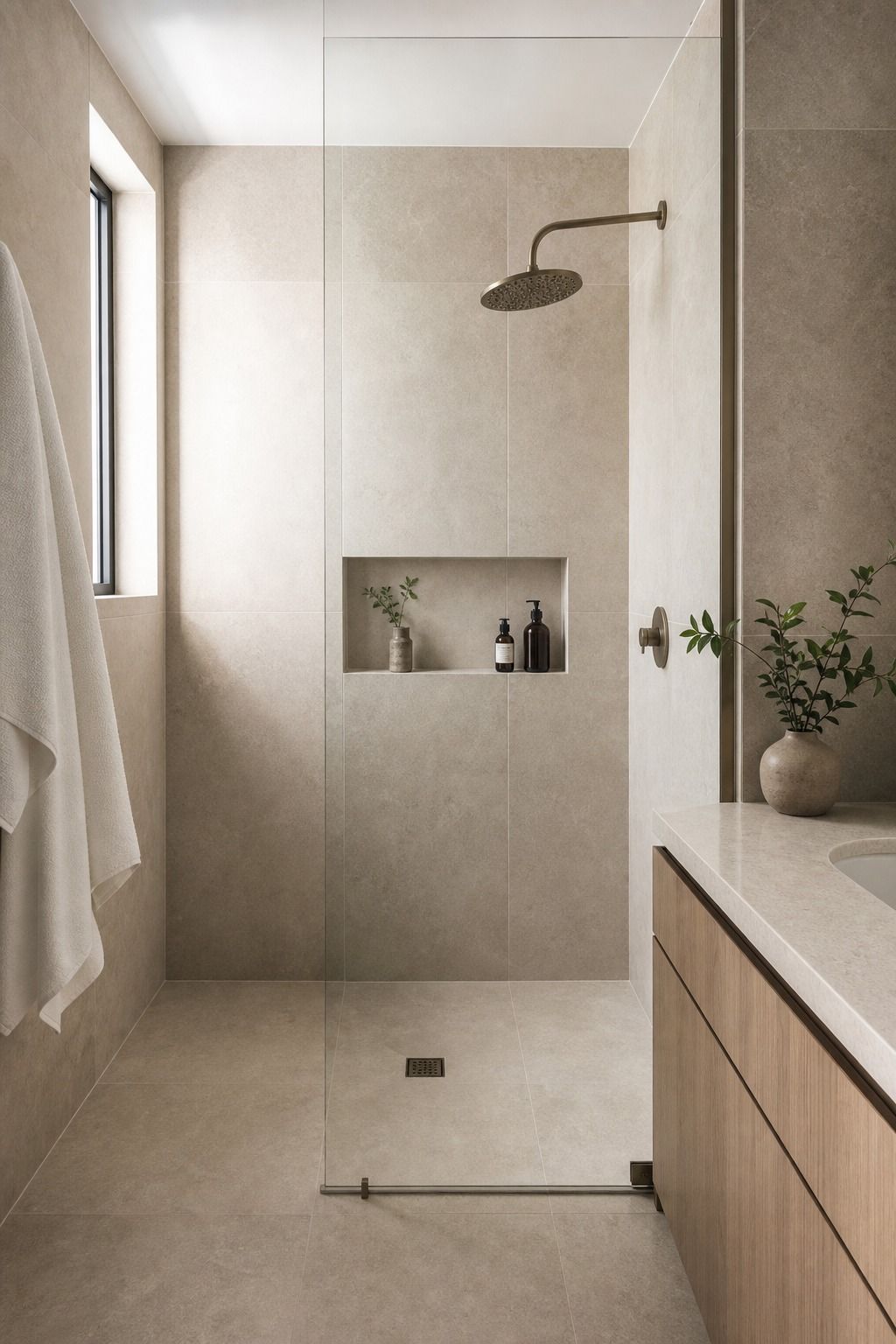


Greige, the beige-gray hybrid, is the most forgiving large-format color for a small shower because it shifts with the light instead of fighting it. Take one greige tile and carry it from the floor up every wall to the ceiling line. The shower stops being a separate room and becomes a quiet alcove inside a larger calm field.
This works best when you commit fully. A half-tiled wall with a painted strip above it puts a horizontal cut right where you do not want one. Tile to the ceiling, or at least to a tall consistent height across every wall, and let a frameless glass panel handle the shower enclosure so nothing visually chops the space. If you are pulling a whole apartment palette together, our notes on building a small apartment color palette help you keep the bathroom in the same family as the rooms around it.
3. Warm White Large Tile With Tone-on-Tone Grout
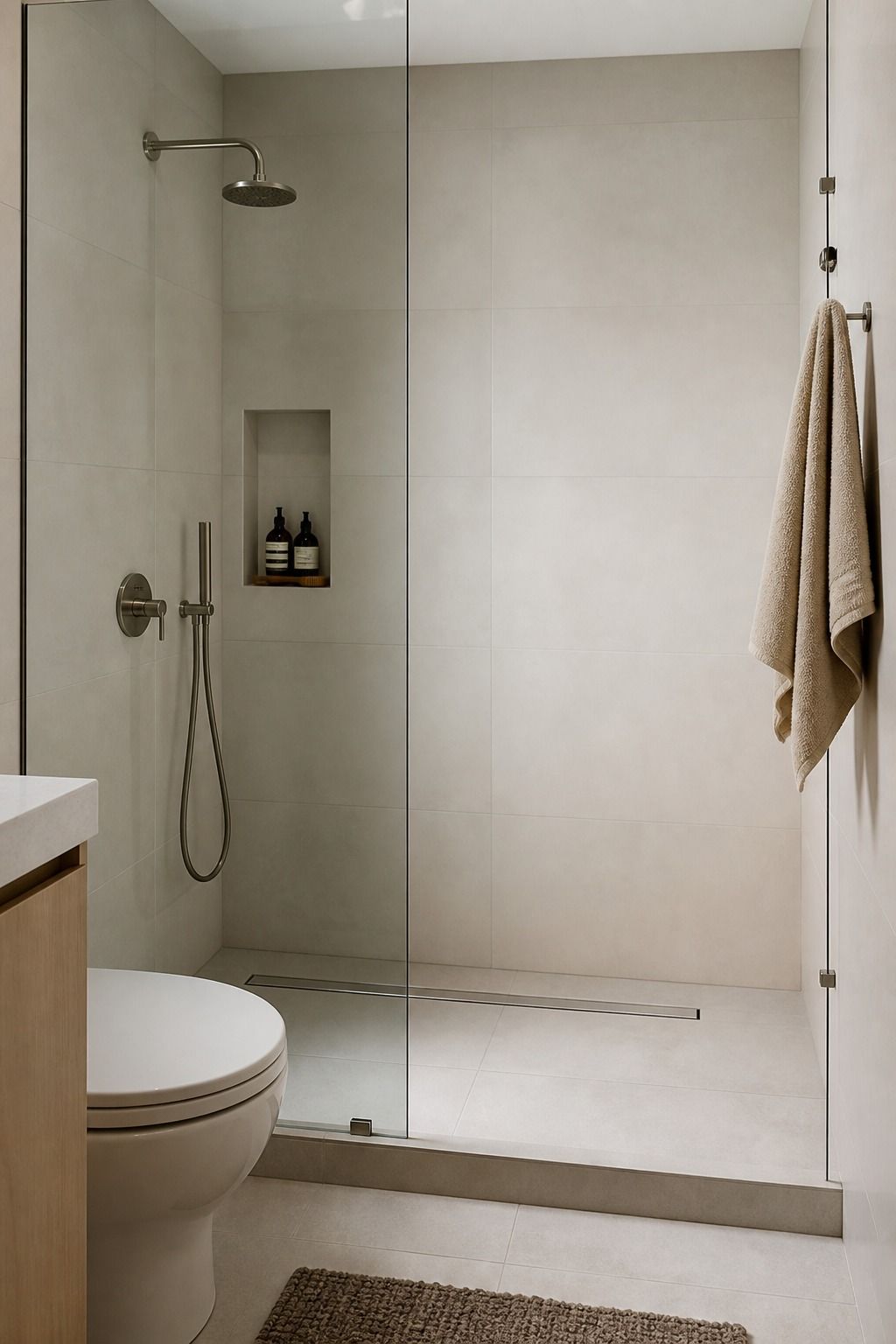


Warm white still works, the trick is the grout. A bright white tile with stark gray grout draws a grid on your wall, and a grid is the fastest way to make a small shower feel compartmentalized. Swap to a warm white or pale ivory grout that sits right next to the tile color and the grid quietly vanishes.
Pick a large-format white with the barest warm undertone, think soft chalk rather than printer paper, so it pairs with brass or warm-toned fixtures instead of clashing with them. This is the combination to reach for if you want light and air without the room feeling clinical. A clinical white bathroom reads small because it reads like a hospital, and nobody relaxes in a hospital.
Read more: Top 15 Guest Half Bathroom Decor Ideas for a Hosted-Feeling Powder
4. Clay Large-Format Tile With a Continuous Floor
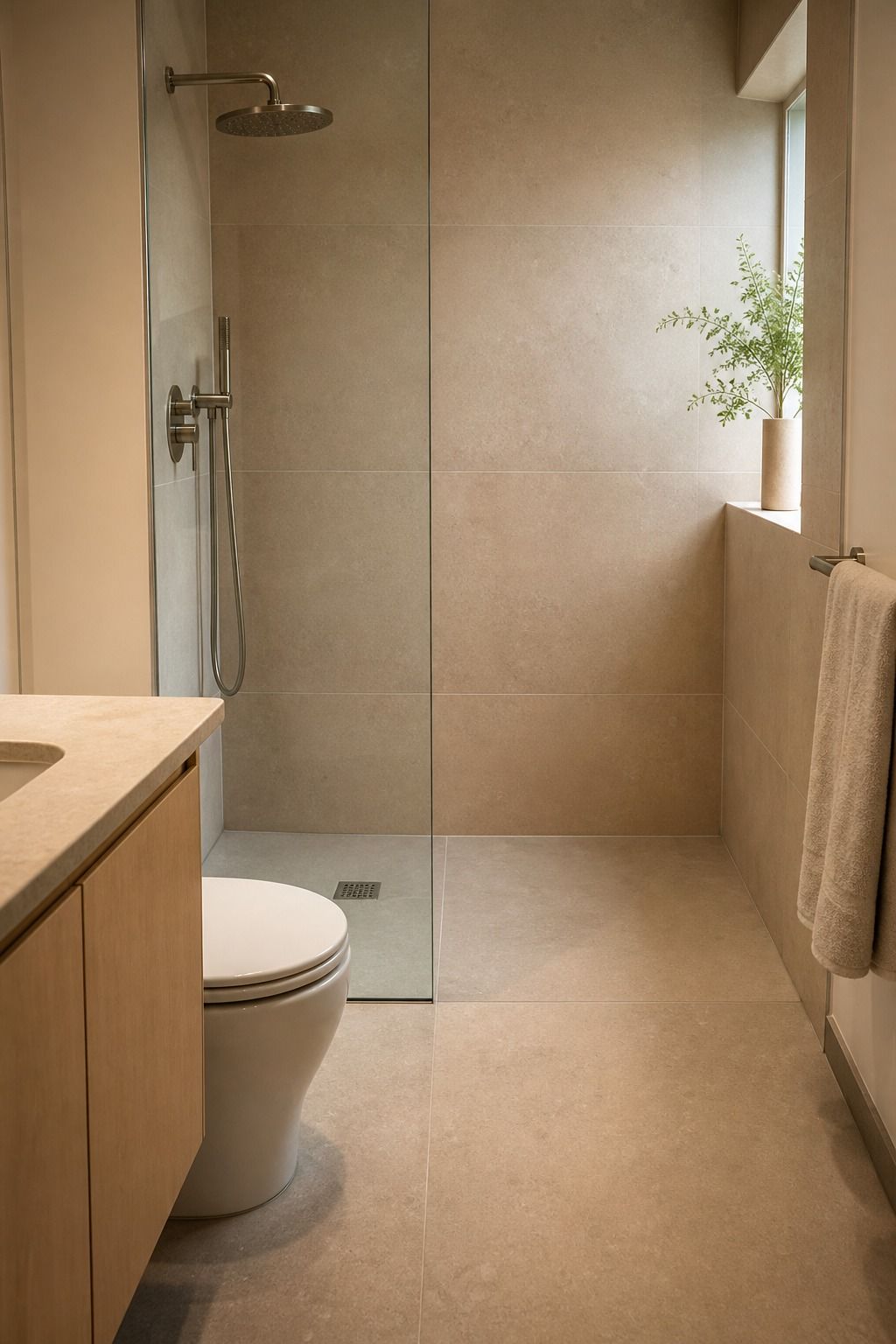


Clay is the warmest end of the 2026 neutral range, a terracotta-adjacent tone that has been softened and grayed down so it never reads loud. In a large-format tile, run across the shower walls and out onto the main bathroom floor, it gives a small space the cocooning quality of a boutique hotel rather than the chill of a builder-grade box.
The continuous floor is the non-negotiable part. The second the shower floor switches to a different tile, the eye registers two rooms. Keep the same clay tile underfoot everywhere, use a linear drain so you can run full tiles right up to it, and let the warmth carry. Pair it with off-white or unlacquered brass fixtures and the room feels intentional, not tight.
Read more: Top 15 Half Bathroom Decor Ideas for a Jewel-Box Powder Room
Vertical Layouts That Lift the Ceiling
5. Vertical Subway Tile in a Warm Neutral
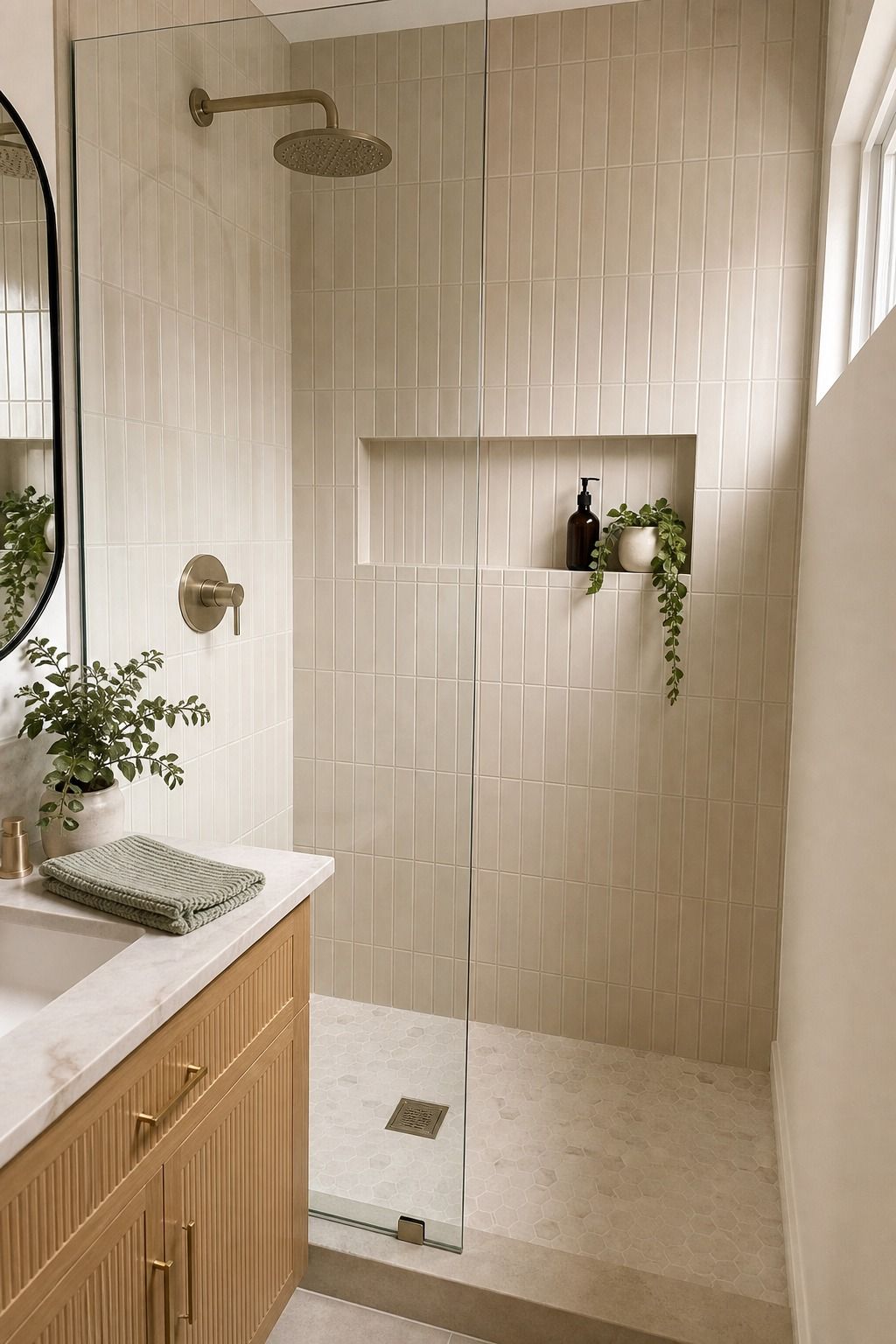


Subway tile is not the problem. Horizontal subway tile in a short room is the problem. Turn the same tile 90 degrees so it stacks vertically, and every joint line now runs up the wall instead of across it. Your eye follows those lines toward the ceiling, and a 7-foot wall starts behaving like an 8-foot one.
Stack them in a straight vertical column rather than offsetting the joints, because a clean stacked grid reads taller and more deliberate than a running bond in this orientation. Choose a warm greige or soft taupe subway instead of bright white, keep the grout tight to the tile tone, and you get the height trick without the cafeteria look. This is one of the cheapest shower tile combinations on this list, and one of the most effective.
Read more: Top 17 Bathroom Vanity with Makeup Counter Ideas for a Dream Setup
6. Vertical Fluted Tile as a Feature Wall
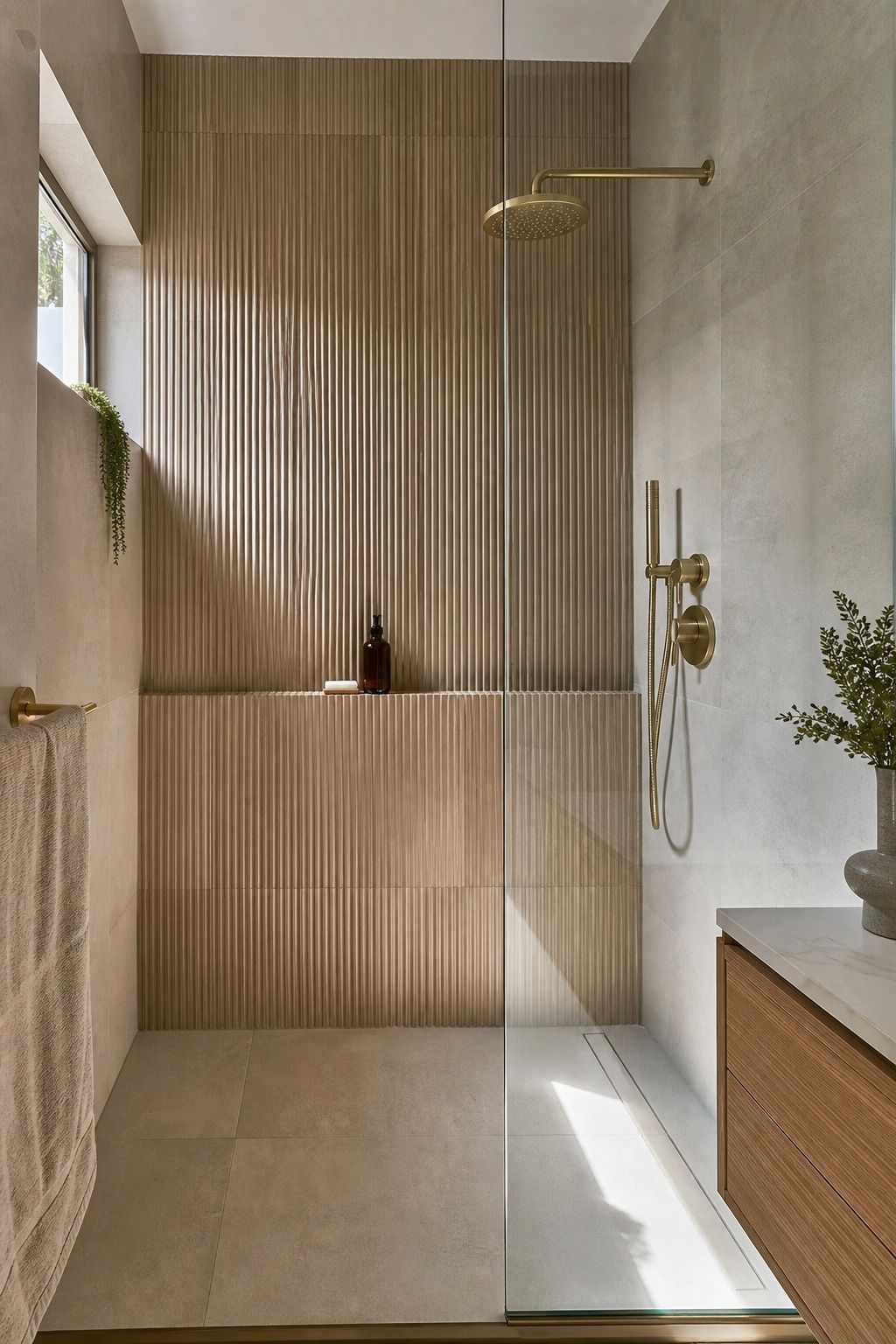


Fluted, or ribbed, tile has a series of soft vertical channels molded into its face. Run it up the back wall of the shower and it does two jobs at once, the ribs pull the eye upward like vertical tile does, and the texture catches light and shadow so the wall has depth without needing a second color.
Keep it to one wall. Fluted tile on all four surfaces of a small shower tips from calm into busy fast. Use it as the feature behind the showerhead, then run a smooth large-format tile of the same color on the side walls so the texture has somewhere quiet to land. A sage or mushroom fluted wall against matching smooth tile is the combination that looks designed rather than decorated.
7. Vertical Stacked Tile With a Tall Niche
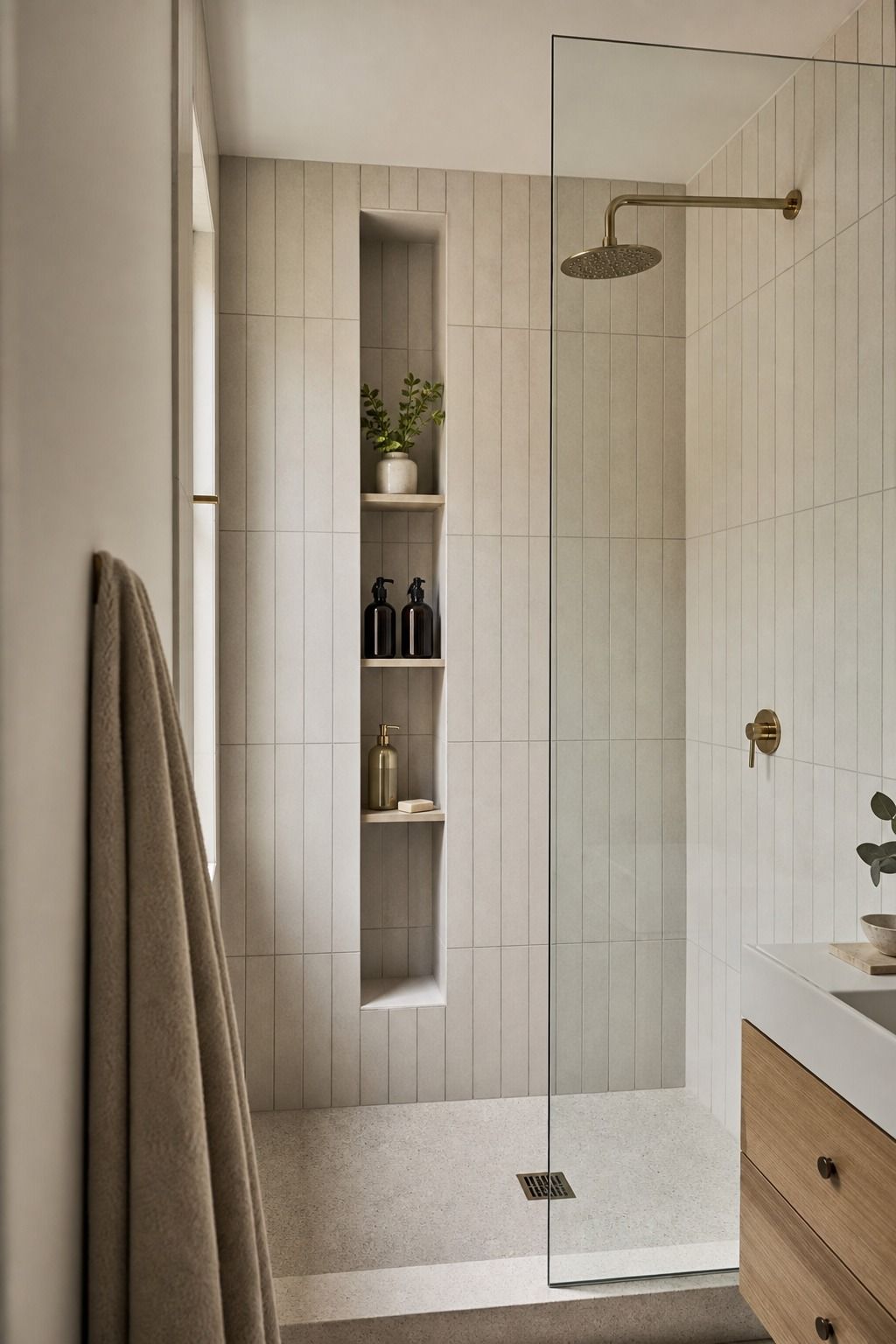
A recessed shower niche is usually styled as a wide horizontal slot. In a small shower, build it tall and narrow instead. A vertical niche, roughly 12 inches wide and 30 or more inches tall, echoes the vertical tile around it and adds one more upward line for the eye to climb.
Line the back of the niche in the same tile as the walls, not a contrasting mosaic, so it reads as a carved-out part of the surface rather than a decorative inset. This keeps the wall calm while still giving you a real home for shampoo and soap. Smart vertical storage like this is the same logic behind good small apartment storage hacks, you build up the wall instead of out into the floor space you do not have.
Read more: Top 17 Double Sink Bathroom Counter Decor Ideas for a Polished Vanity
8. Vertical Tile With a Continuous Vertical Accent Strip
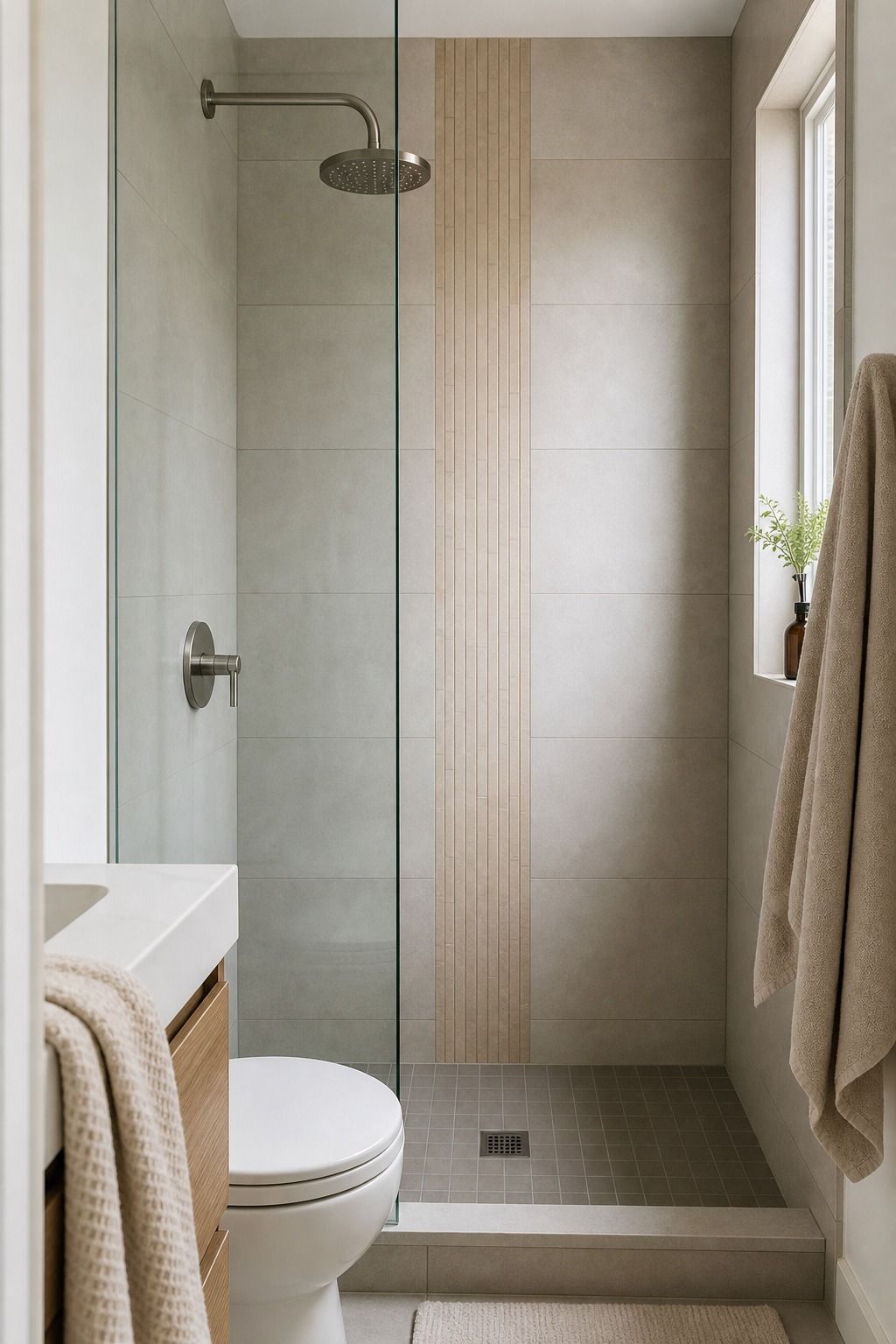


If you want one moment of contrast, make it vertical too. Run a single narrow column of a slightly different tile, a deeper tone of the same color, or a subtle textured version, from the shower floor straight up to the ceiling. One unbroken vertical line acts like a pin stretching the wall taller.
The rule is one strip, and it has to run the full height. A short accent band floating in the middle of the wall does the opposite of this, it cuts the wall in half horizontally. Place the strip in a corner or behind the fixtures, keep it the same warm family as the field tile, and it lifts the room instead of dividing it. This is contrast used as a tool, not decoration.
Read more: Top 17 Bathroom Counter Organization Ideas for a Clutter-Free Vanity
9. Vertical Zellige in a Soft Warm Tone
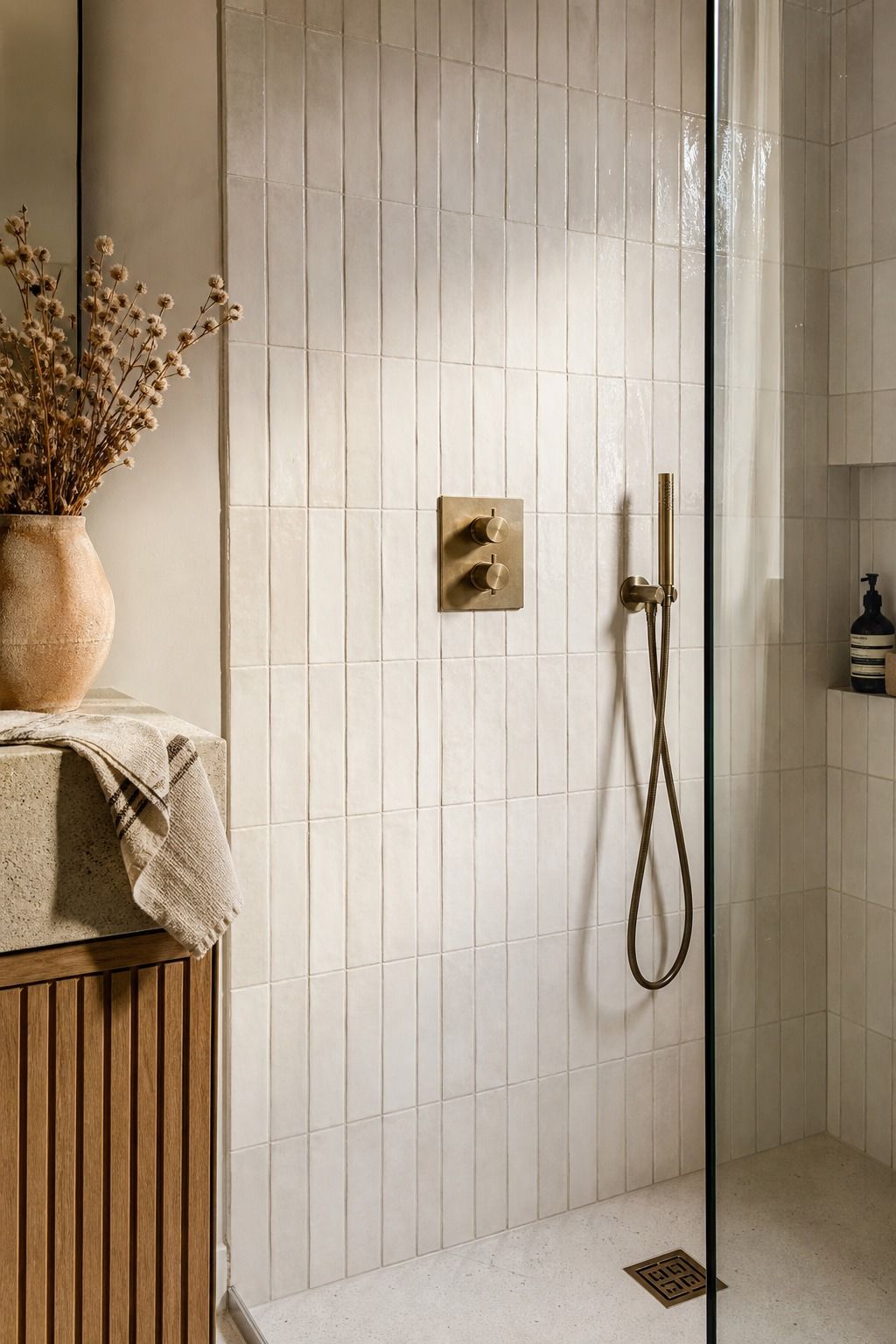


Zellige is the handmade Moroccan tile with a slightly uneven surface and a glaze that pools and varies from piece to piece. Set it vertically in a small shower and you get the height benefit plus a gentle, light-catching irregularity that keeps a single-color wall from ever looking flat or cheap.
Because zellige already carries visual interest in its surface, you do not need a second tile anywhere. Wrap the shower in one soft tone, warm white, pale clay, or a muted sage, run it vertically, and let the natural variation be the whole story. The finish reads as quietly expensive, which is the opposite of what most people expect a small bathroom to feel like.
Tile-Drenching Combinations
10. Full Mushroom Tile Drench, Floor and Walls
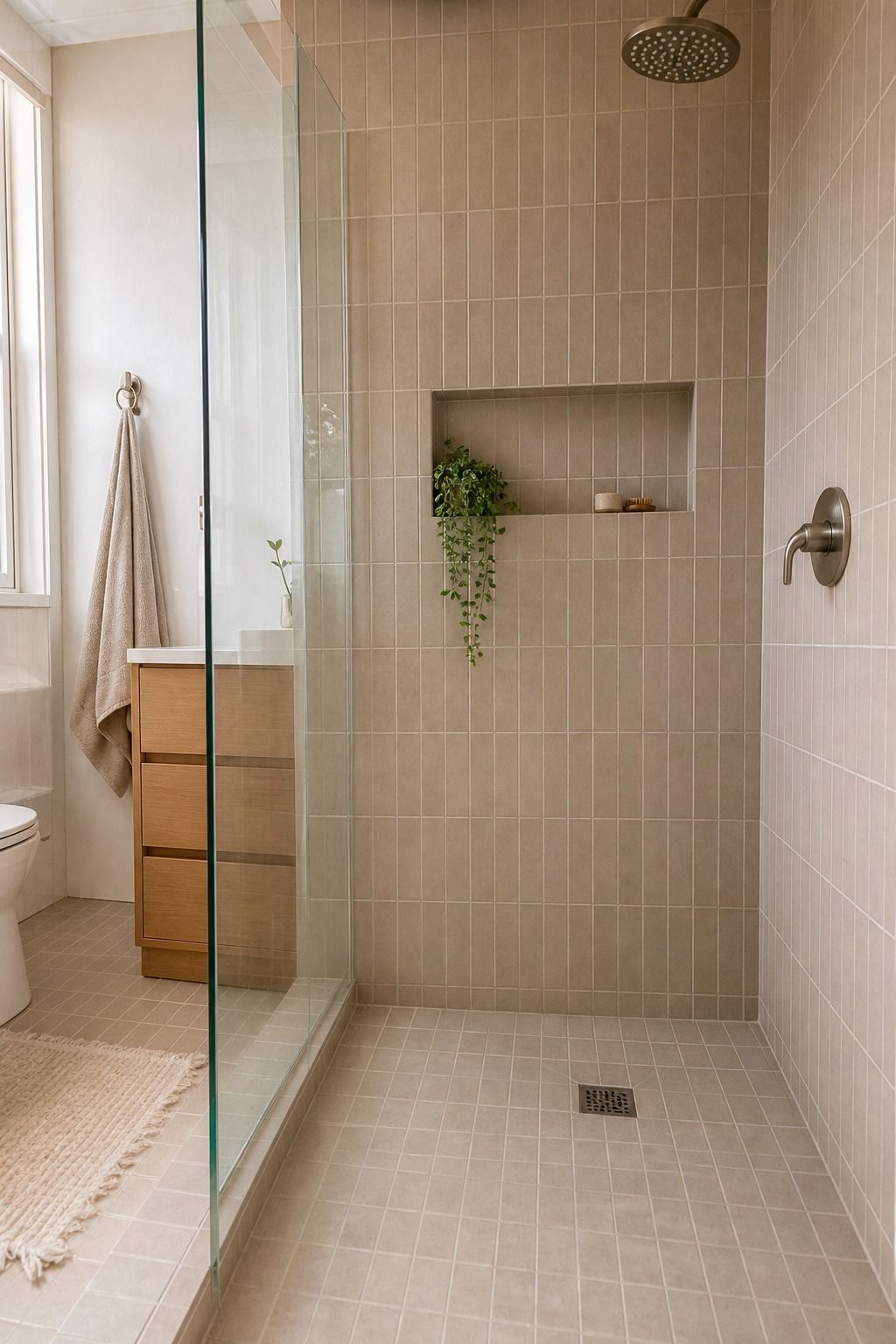

Tile drenching means one tile, everywhere, the shower floor, the shower walls, the main bathroom floor, sometimes the walls beyond the shower too. Mushroom, a warm gray-brown, is the ideal drench color because it is dark enough to feel grounded and warm enough to feel soft. With no color breaks anywhere, the eye has nothing to measure the room’s edges against, so it stops trying.
Use the same tile size throughout and keep the grout matched tightly to the mushroom tone. The effect is a small bathroom that feels like a single carved volume rather than a box with a shower added. It sounds bold on paper. In the room, a full warm drench is one of the calmest combinations you can choose.
Read more: Top 18 Bathroom Counter Decor Ideas for a Spa-Like Vanity
11. Sage Drench With Texture Instead of Color Contrast
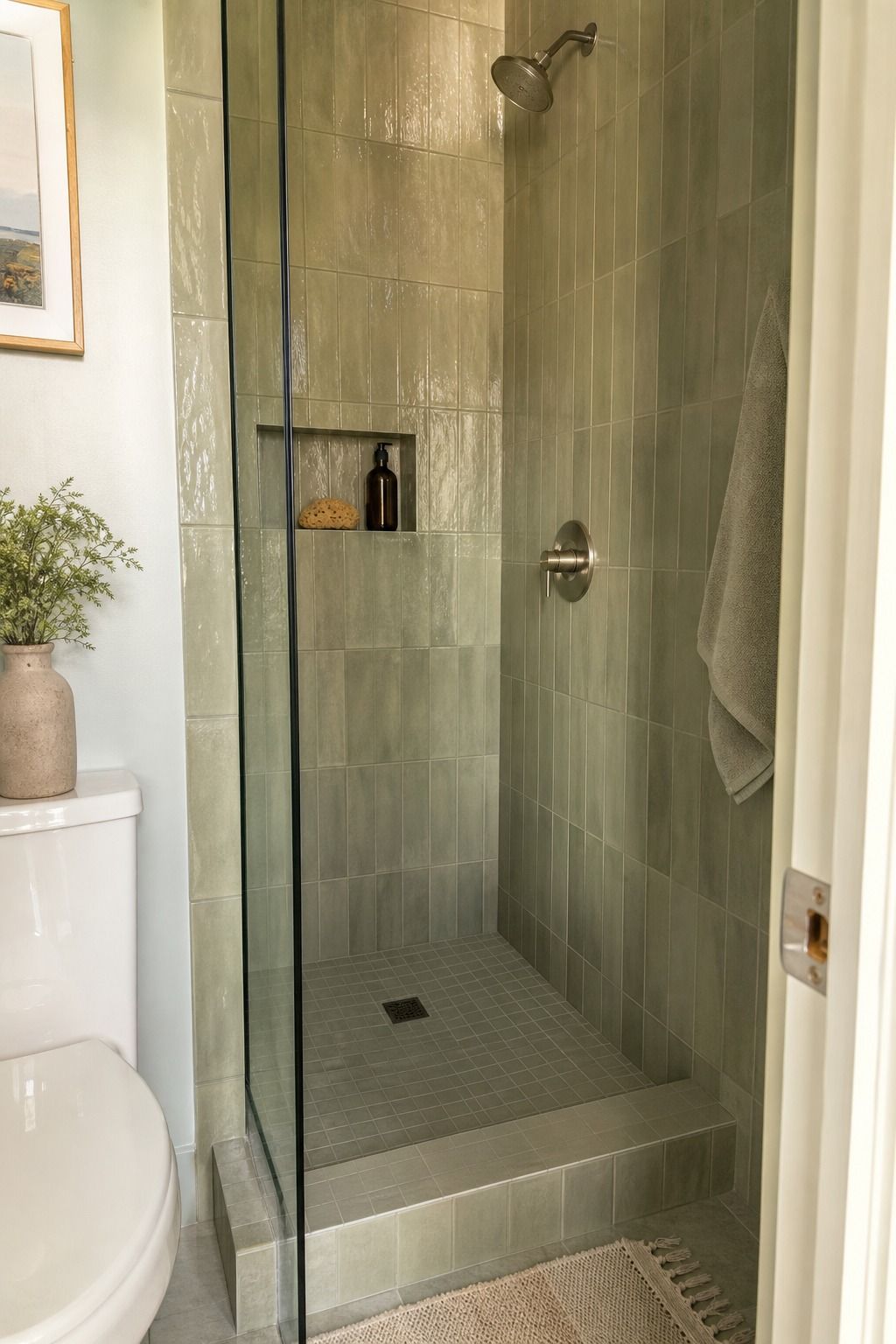


If a single-color room worries you, here is the move, drench the whole shower in one sage tone, then introduce variety through finish, not hue. A smooth sage on three walls, a fluted or fluted-look sage on the feature wall, a small-format sage on the shower floor for grip. Three different textures, one continuous color.
This gives the eye something to explore without ever giving it a hard line to stop at. Sage also happens to be one of the most flexible 2026 neutrals, it shifts greener in daylight and grayer at night, so the room never feels static. It is the combination for anyone who finds an all-beige bathroom too quiet but a multicolor one too busy.
Read more: Top 18 Above Toilet Storage Ideas to Transform Your Bathroom
12. Warm Greige Drench With a Single Brass Line
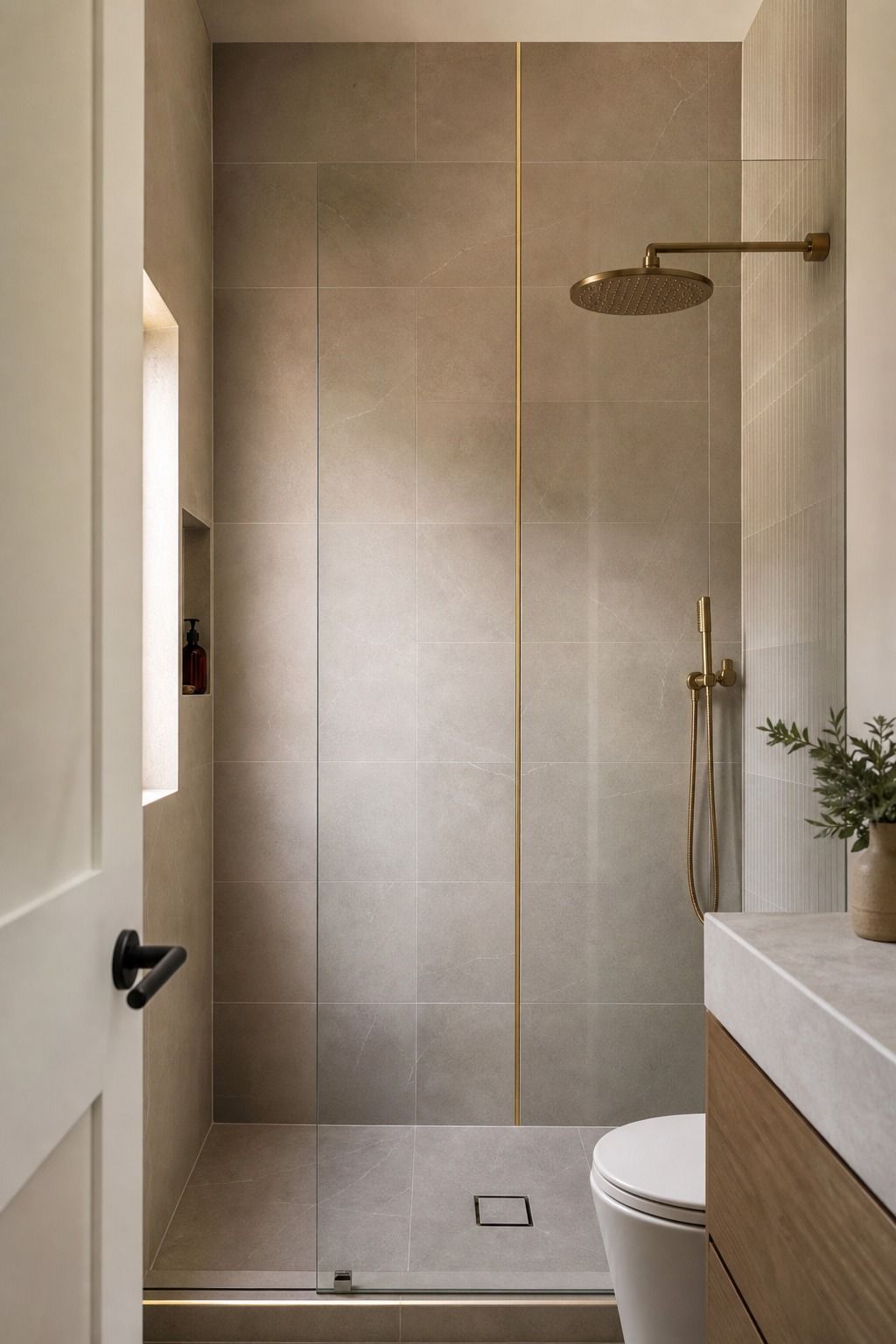
A full greige drench is calm to the point of needing one deliberate accent, and the best accent is not another tile. It is metal. Run the entire shower and floor in one greige tile, then let an unlacquered brass linear drain, a brass shower frame, or a slim brass shelf draw the only contrasting line in the room.
Because the tile field is completely uninterrupted, that single warm metal line reads as intentional and quietly luxurious rather than busy. The drench does the space-expanding work, the brass does the personality work, and the two never compete. This is the combination that makes a small rental bathroom look like it was actually designed.
13. Clay Drench With a Tonal Floor Shift
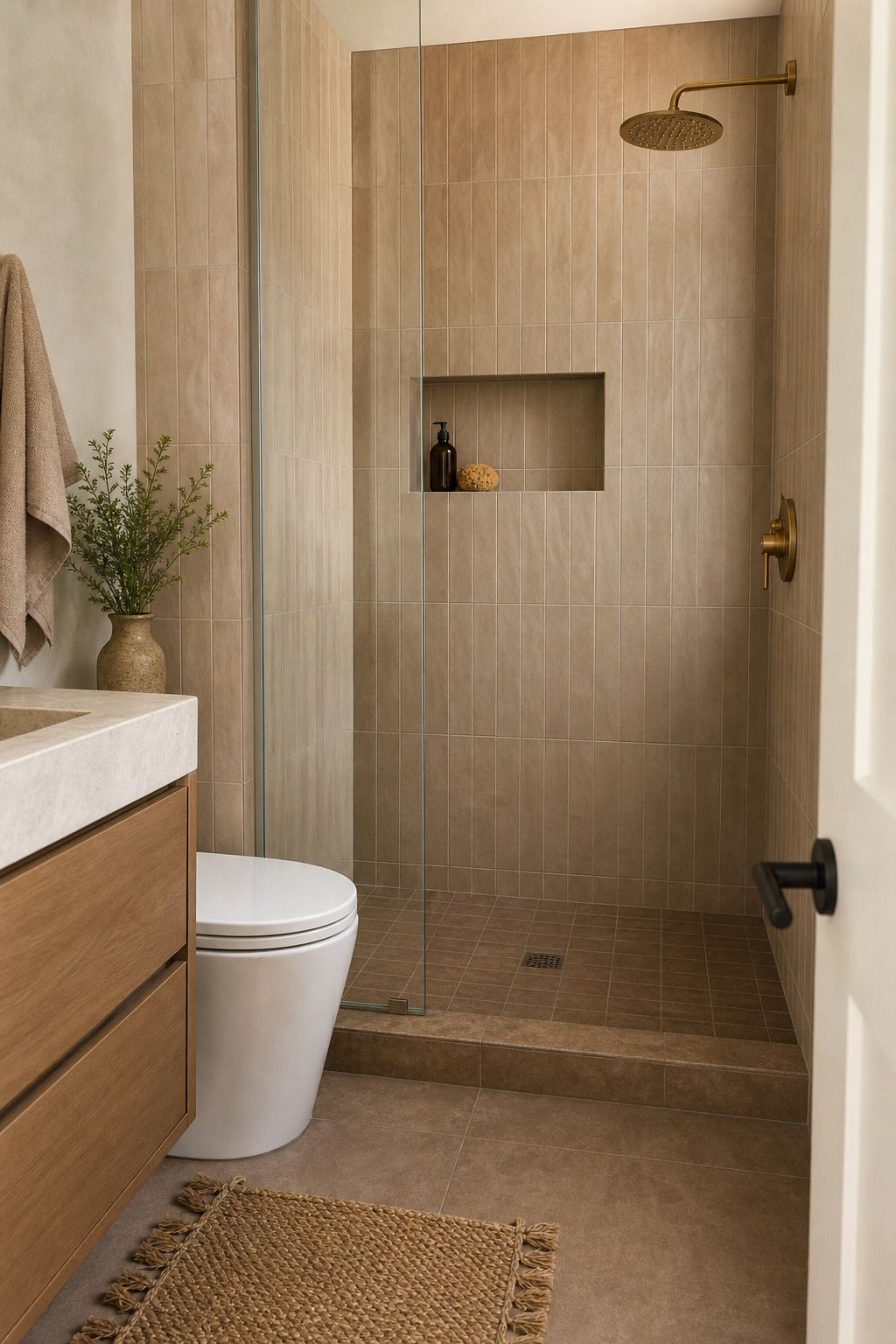
A near-drench, technically. Wrap the shower walls and the main floor in one clay tile, then let the shower floor be a small-format version of nearly the same clay, just half a shade deeper for slip resistance. The color barely shifts, so the continuity holds, but the floor has the grip a wet zone needs.
The key word is tonal. The shower floor is not a different color, it is the same color expressed in a smaller, grippier tile. Your eye still reads one continuous warm surface. This is the practical person’s version of tile drenching, all the visual payoff, none of the standing-on-a-slick-large-tile compromise.
Read more: Top 18 Bathroom Mirror Ideas for a Spa-Worthy Vanity
Color, Texture, and Renter-Friendly Options
14. Peel-and-Stick Large-Format Tile for Renters


You do not own the bathroom, but you can still fake the large-format trick. Peel-and-stick tile now comes in genuinely convincing 12×12 and larger panels in warm stone and concrete looks. Applied over existing tile or a clean wall, they cover the busy old grid with one calm surface, and they come down when your lease does.
Stick to the same warm neutrals you would choose for real tile, beige, greige, clay, and run the panels in a clean grid with the seams tight. Keep them out of the direct-spray zone of the shower itself unless the product is specifically rated for it, and use them on the surrounding walls instead. Renter-friendly swaps like this are the backbone of any good small studio apartment ideas plan, where you cannot renovate but you can absolutely restyle.
Read more: Top 17 Bathroom Corner Decor Ideas for Spa-Like Quiet Moments
15. Warm Terracotta Floor With Soft White Walls
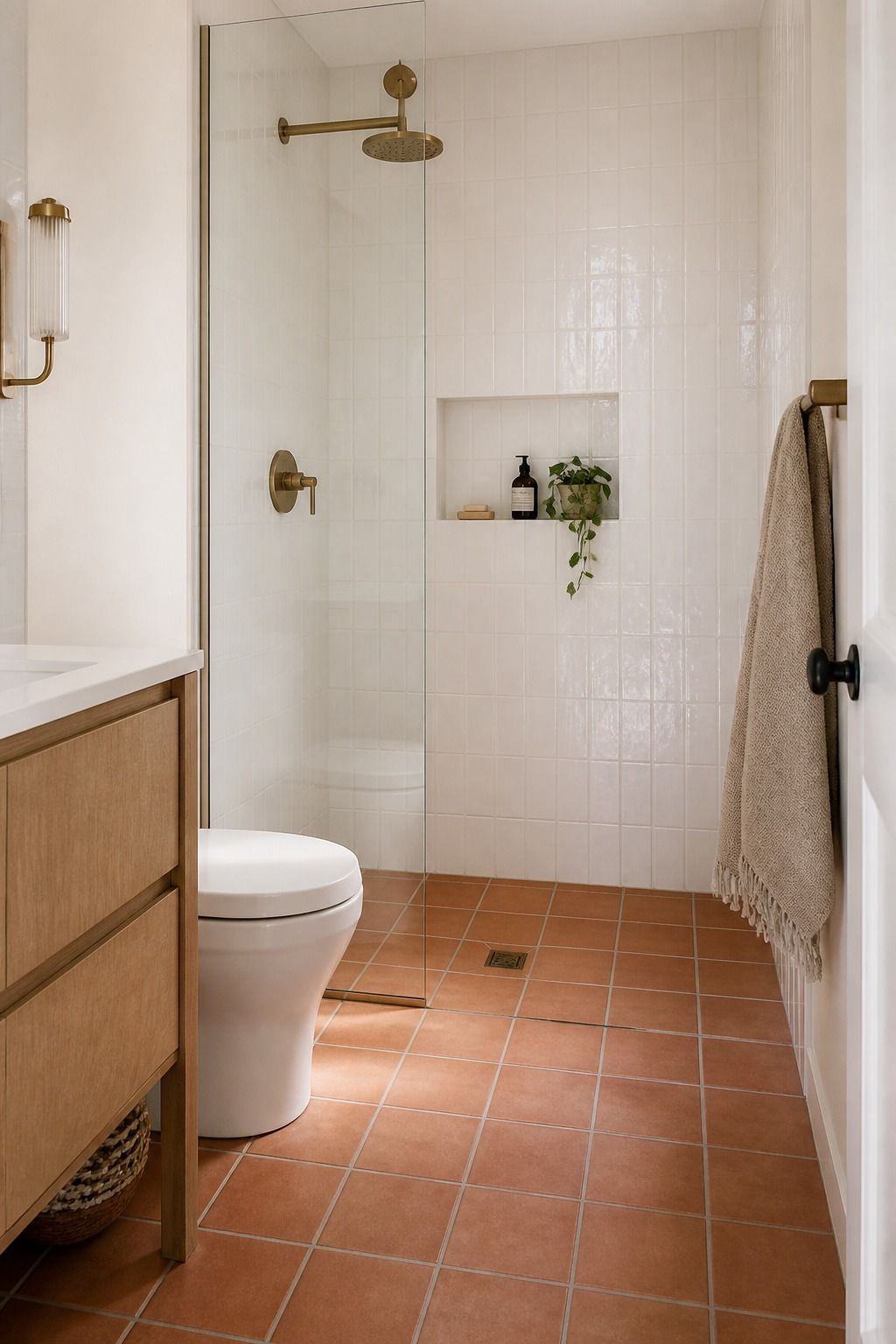


One controlled contrast, done right. A warm terracotta or clay floor tile paired with soft warm white walls gives you depth without busyness, because the contrast is grounded, the darker tone is on the floor where the eye expects weight, and the walls stay light and open above it.
Carry the terracotta floor straight into the shower with no threshold change, that continuity is what keeps this from reading as two rooms. Keep the white walls genuinely warm, not gray-white, so the floor and walls feel like the same family. This is the combination for anyone who wants a small bathroom with a little character but is not ready to commit to a full color drench.
Read more: Top 16 Spring Decor Ideas for the Bathroom That Feel Spa-Fresh
16. Textured White Tile, Wall to Wall
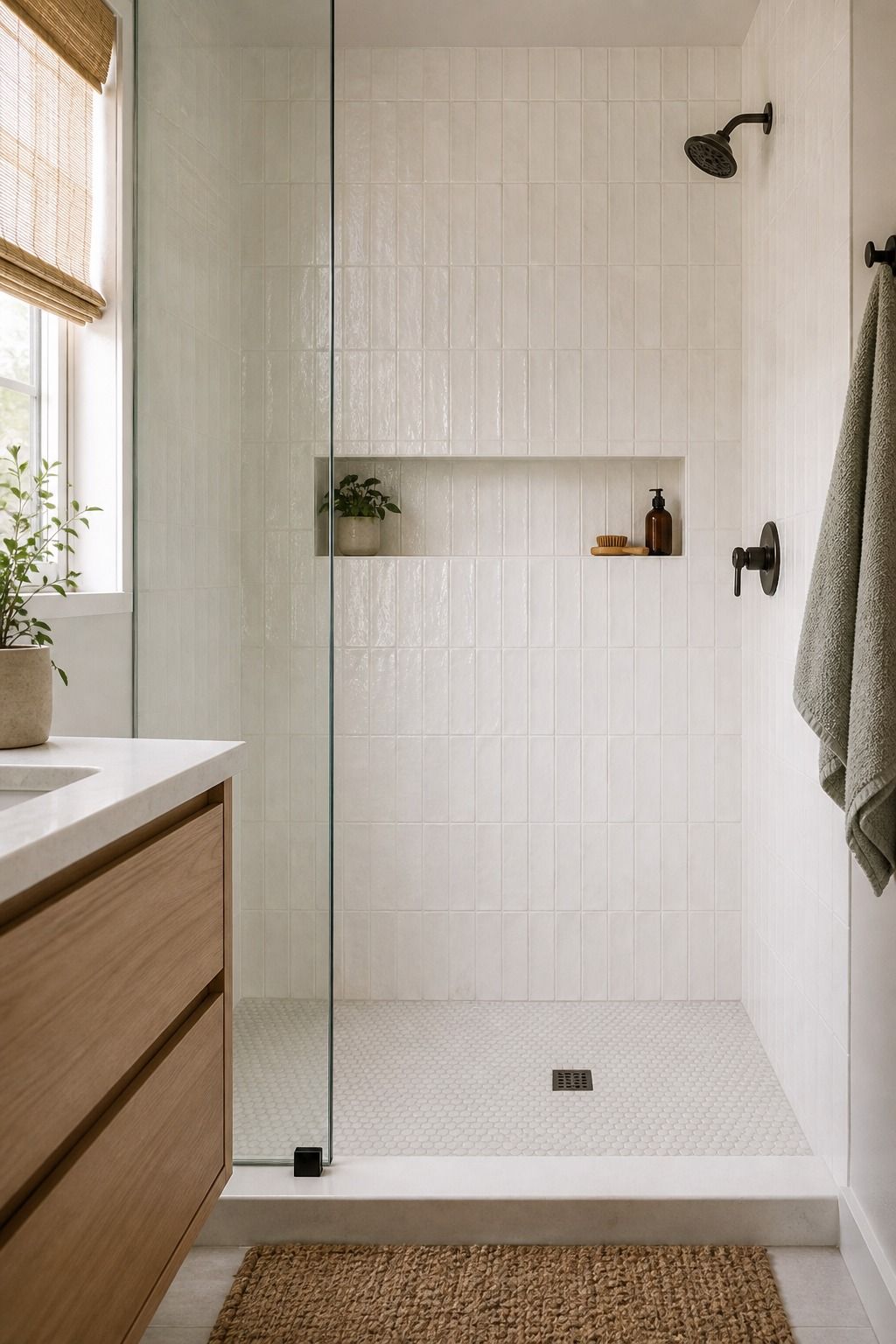


All-white can read tiny and flat, or calm and airy. The difference is texture. Choose a white tile with something happening on its surface, a soft handmade waver, a subtle relief pattern, a fluted face, and run it across every wall. The color stays light and expansive, the texture keeps it from feeling like a blank box.
Match the grout to the tile so the only thing your eye picks up is the gentle play of light across the textured surface. Pair with warm metal fixtures and a wood vanity to keep the whole thing from going cold. This is the white bathroom that feels intentional, the kind you see in a well-styled autumn decor ideas for bathrooms roundup, soft, layered, and warm rather than stark.
17. Matched Grout as the Whole Combination
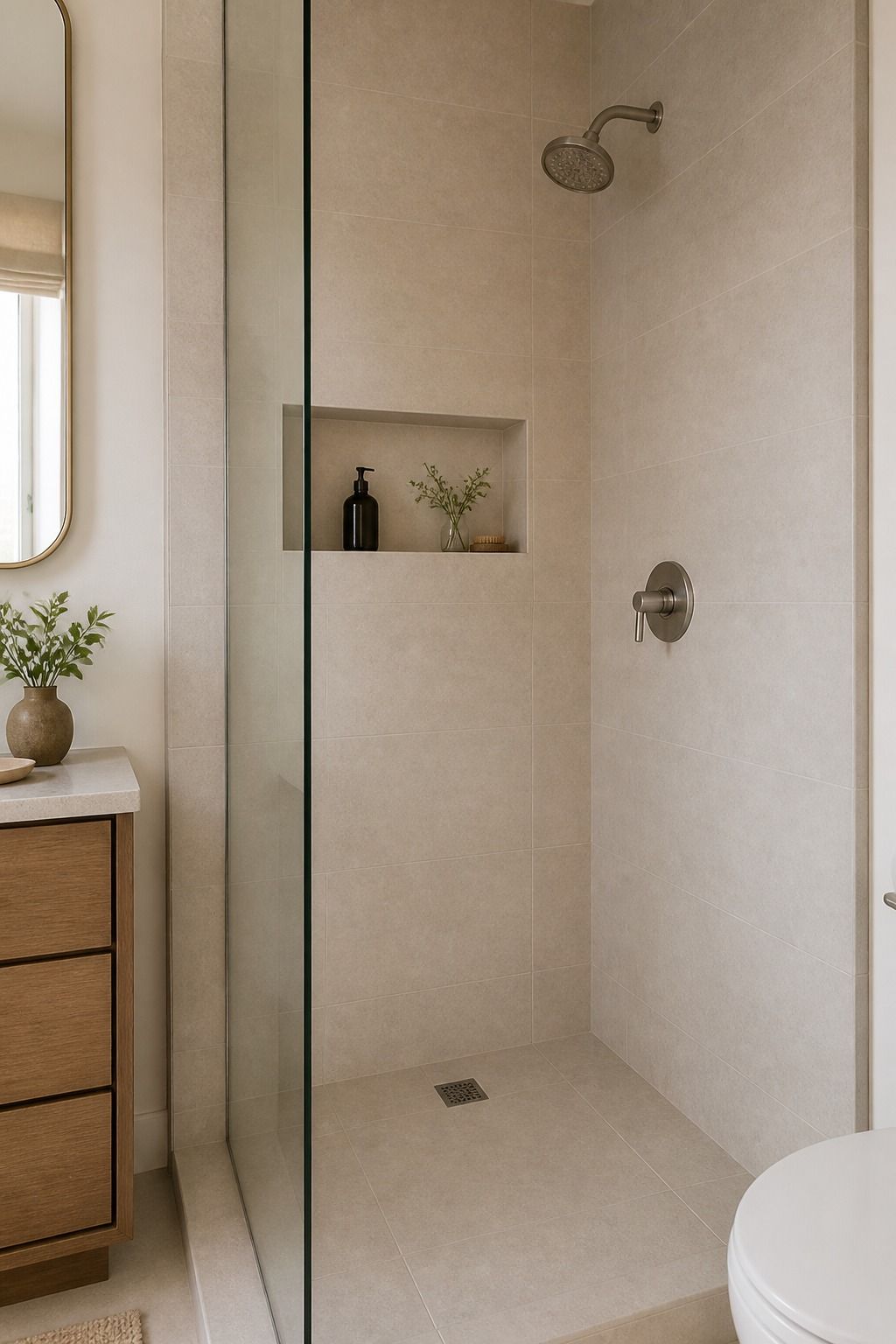


The smallest possible change, and sometimes the only one you need. If your small shower already has a decent neutral tile but feels chopped up, the culprit is almost always the grout. Stark contrasting grout turns any tile into a hard grid. Matching the grout to the tile turns that same wall into one soft plane.
A grout pen or grout refresh in a color one shade off your tile costs very little and takes an afternoon. It is the highest-impact, lowest-effort move on this entire list. Before you plan a full retile, look hard at your grout, you may already own the right tile and just be outlining every piece of it in the wrong color.
Read more: Top 17 Halloween Bathroom Decor Ideas for the Most Forgotten Room
Want the rest of your apartment to feel as calm and pulled-together as a well-tiled shower?
The Aesthetic Apartment Makeover Guide takes the same small-space thinking into every room, the swaps, the layouts, and the budget-friendly picks that make a tight apartment feel considered. It is currently just $17 before the price goes up to $27.
Frequently Asked Questions
What tile makes a small bathroom look bigger?
Large-format tile in a warm neutral makes a small bathroom look bigger because it cuts down the number of grout lines, and fewer visible joints means the wall reads as one calm plane instead of a busy grid. Pair it with grout matched closely to the tile color, and keep the same tile running across the floor and shower so there are no hard color breaks.
Should shower tile be vertical or horizontal in a small bathroom?
Vertical, in most small bathrooms. Running tile vertically sends the grout lines up the wall, which pulls the eye toward the ceiling and makes a low room feel taller. Horizontal tile does the opposite, it emphasizes width the room does not need and visually lowers the ceiling.
What is tile drenching?
Tile drenching is using one single tile across every surface, the shower floor, the shower walls, and often the main bathroom floor and walls too. With no color or material breaks, the eye has nothing to measure the room’s edges against, so a small bathroom reads as one continuous volume rather than a box with a separate wet zone.
What color tile is best for a small bathroom?
Warm neutrals work best, beige, greige, clay, mushroom, and sage. They hold light softly and feel calm rather than clinical. Cool bright white can make a small bathroom feel sterile and smaller, while warm tones give the same light, open quality with more depth and comfort.
Can renters make a small shower feel bigger without retiling?
Yes. Renters can use peel-and-stick large-format tile panels on the surrounding walls to cover a busy old grid, and a grout pen to match existing grout closer to the tile color. Both come out at lease-end, cost very little, and deliver most of the space-expanding effect of a real retile.
Key Takeaways
- Fewer grout lines is the whole game, large-format tile in a warm neutral makes a small shower read as one calm surface instead of a busy grid.
- Run tile vertically to borrow ceiling height, and keep grout matched close to the tile so the joints disappear.
- Tile drenching, one tile across floor, walls, and shower, removes the visual edges that make a small bathroom feel boxed in.
- Stay in warm tones, beige, greige, clay, mushroom, and sage, because they hold light softer than cool gray and never read clinical.
- Renters get most of the effect with peel-and-stick large-format panels and a grout pen, no renovation required.
Final Thoughts
A small shower does not need more tile, it needs quieter tile. Almost every combination on this list works by removing something, a grout line, a color break, a horizontal seam, rather than adding decoration. Pick the warm neutral you actually want to stand in every morning, run it as continuously as your budget allows, and match the grout so the surface reads as one plane. Whether you are doing a full retile or just refreshing the grout you already have, the room will feel bigger the moment it stops looking divided. Start with one change, see how much lighter the space feels, and build from there.
Last update on 2026-09-15 / Affiliate links / Images from Amazon Product Advertising API
