
Quick Answer: The best small apartment design ideas work by making the space feel intentional rather than cramped. Use light colors and large mirrors to open up a room visually, choose furniture with built-in storage so every piece earns its footprint, float your sofa away from the wall to define zones, and go vertical with shelving to draw the eye up. Small apartments feel spacious when every design decision has a reason behind it.
A small apartment does not have to feel like a compromise. The difference between a space that feels tight and one that feels curated comes down to a handful of design decisions, the kind that are easy to make once you know what you are looking for. Small apartment design ideas work best when they address the actual problems: not enough light, furniture that blocks flow, no sense of zones, and walls that feel like they are closing in.
Whether you are working with a studio, a one-bedroom, or a compact rental you cannot permanently alter, these strategies will make your space feel bigger, more livable, and genuinely yours.
Getting the bedroom to feel designed rather than just functional is its own challenge, small apartment bedroom ideas for a space that actually feels like a retreat tackles the specific choices that make it work in a small footprint.
The living room is usually where design choices have the biggest visible effect, small apartment living room ideas that actually make it feel bigger breaks down the layouts and styling approaches that open the space up.
Want the complete apartment styling system?
Grab The Aesthetic Apartment Makeover Guide, a 60-page guide covering small space styling, hosting, DIY weddings, and seasonal decorating. Everything you need to make your apartment feel intentional and beautiful.

Recommended Products for Small Apartment Design


A small apartment does not have to feel small. The difference between a space that feels cramped and one that feels genuinely inviting usually comes down to a handful of intentional design decisions: color, scale, light, and visual flow. These 17 design ideas draw from what interior designers actually apply in tight spaces, and most of them cost nothing beyond a change in approach.
Read this also:
- Small Apartment Living Room Ideas
- Small Apartment Bedroom Ideas
- Small Apartment Furniture Ideas
- Small Apartment Interior Design Ideas
Color and Light Strategy
1. Paint Walls and Ceiling the Same Color


Painting the ceiling the same color as the walls, or even one shade lighter, eliminates the visual “lid” that makes low-ceilinged rooms feel compressed. When wall and ceiling color blend together, the eye cannot pinpoint where the room ends, and the space reads as taller and more open than it is. This works especially well in small bedrooms and studios where standard ceiling heights already feel limiting. Soft whites, warm creams, and light greiges are the most universally effective colors for this technique. The effect is subtle in photos but immediately noticeable in person.
Read more: Top 15 Small Apartment Shelf Decor Ideas That Look Styled, Not
2. Use One Dominant Neutral Throughout
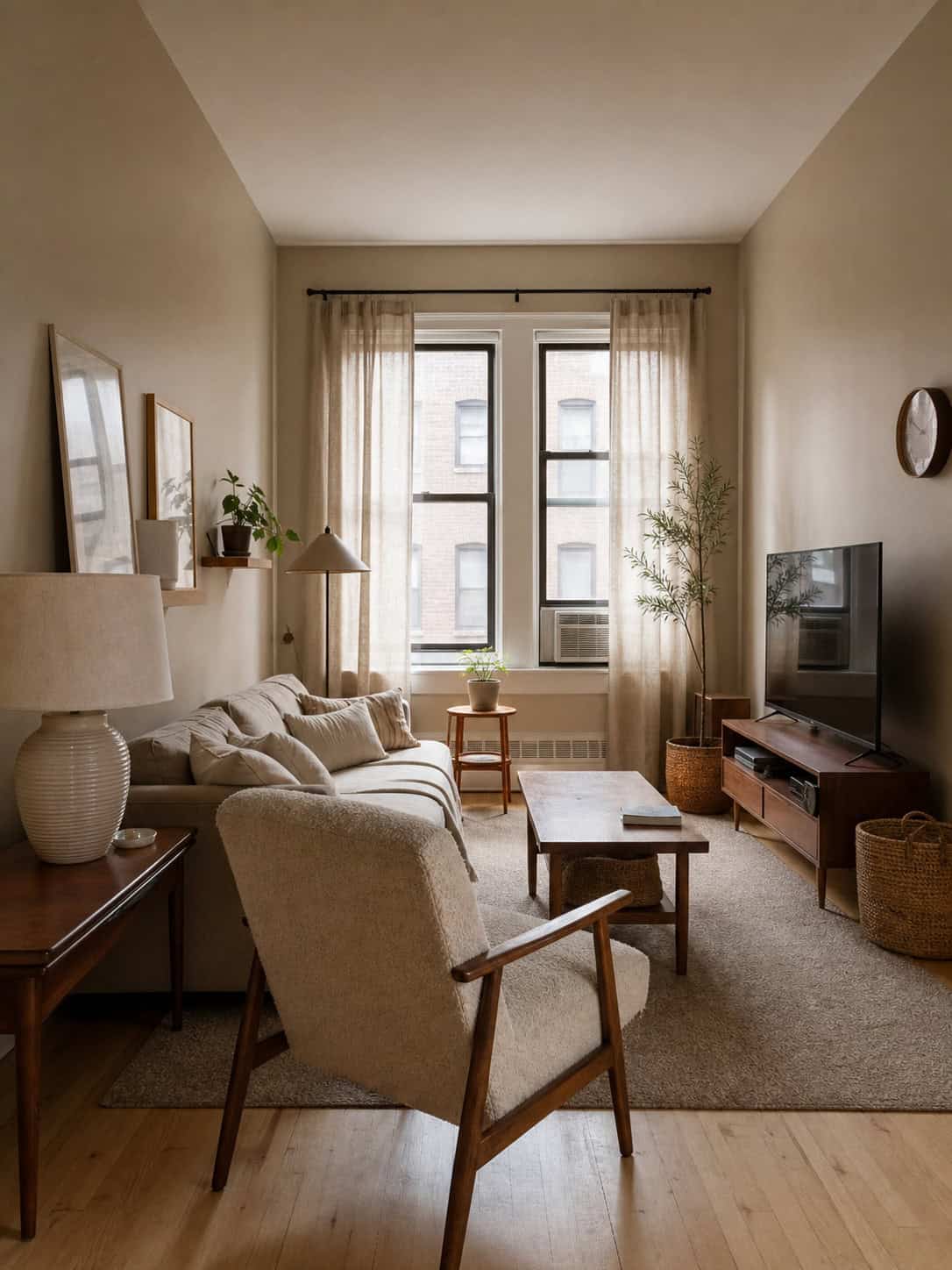


Visual clutter from too many competing colors makes a small apartment feel busier and smaller than it is. Anchoring the space in one dominant neutral, such as warm white, soft beige, or light greige, and pulling in two or three accent tones from that base creates visual calm. The neutral palette reflects light around the room, which is the single most effective design tool for making a space feel larger. The accent colors can shift seasonally through pillows, throws, and small objects without disrupting the overall sense of spaciousness that the neutral base provides. This approach is what designers consistently use in small apartments with high-end results.
3. Maximize Every Source of Natural Light
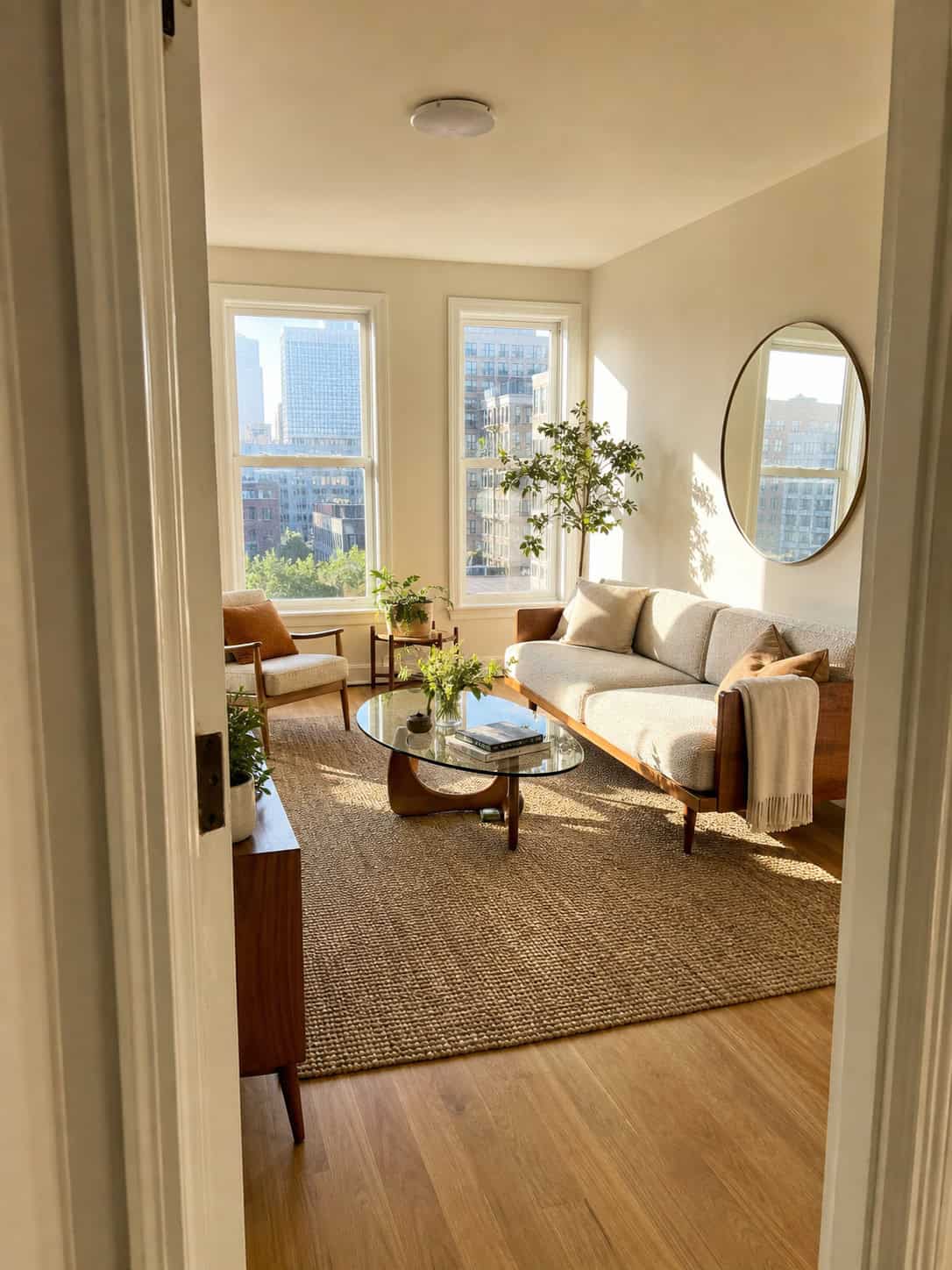
Natural light is the most powerful tool in a small apartment, and blocking it with heavy window treatments is one of the most common small-space mistakes. Sheer linen panels or cellular shades that sit inside the window frame maintain privacy while letting in the maximum amount of light. If your windows are small, mounting curtain rods several inches above the frame and letting panels fall to the floor creates the impression of larger windows. Keeping window sills clear of objects also lets light travel farther into the room. In dark apartments without great natural light, mirrors placed across from or adjacent to windows amplify whatever light exists.
Read more: Top 18 Small Apartment Wall Decor Ideas That Make Every Wall Count
4. Add a Large Mirror to Visually Double the Space


A large mirror placed opposite a window reflects both light and the view, creating the impression of a second window or even an additional room. In a small living room or bedroom, a full-length leaner mirror or a wide wall mirror is one of the highest-impact additions per dollar spent. The size matters: a small mirror creates a small effect, while a mirror that reads as architectural gives a genuinely spacious result. Frameless or thin-framed mirrors read as lighter and less furniture-like. In a narrow entryway, a floor-to-ceiling mirror makes the space feel twice as wide in seconds.
Read more: Top 18 Small Apartment Modern Design Ideas That Make Every Inch Count
Furniture Scale and Placement
5. Choose Furniture with Visible Legs

Furniture that sits directly on the floor blocks sightlines at the lowest level of the room and makes floors feel smaller. Sofas, chairs, beds, and consoles with visible legs lift the eye level and allow the floor to read as continuous beneath the furniture, which gives the impression of more floor space than actually exists. This is a core principle in Scandinavian design and why it translates so well to small apartments. If your existing sofa has no legs or sits on a skirted base, raised furniture legs that screw into the existing mounting points are available for $20 to $40 at most furniture stores and online retailers.
Read more: Top 20 Small Apartment Decorating Ideas That Work in Any Space
6. Use One Anchor Piece of Scale Instead of Multiple Small Pieces

One of the most counterintuitive principles in small-space design is that a single large sofa looks better than two small ones, and a single oversized rug looks better than a small rug that only fits under the coffee table. Scale consistency creates visual order. When furniture is too small for the room, the space reads as cluttered and unresolved. A full-sized sofa facing a defined wall gives a small living room a clear focal point. Filling the remaining space with one or two accent chairs and a coffee table of appropriate scale creates a complete, grounded room rather than a collection of undersized pieces that makes the space feel random.
7. Define Zones with a Large Area Rug


In a studio or open-plan apartment, a large area rug is the most effective way to define zones without walls. The rug anchors the living area, creates a visual boundary between sitting and sleeping or dining, and adds warmth and texture that makes the space feel finished. The most common mistake is choosing a rug that is too small: the front legs of all seating should sit on the rug, not beside it. An 8×10 rug is the minimum for a standard living area in a small apartment, and a 9×12 often looks more proportional than expected. A rug that is the right size ties the whole room together in a way that nothing else does.
Read more: Top 20 Small Apartment Christmas Decor Ideas for a Cozy Holiday in
8. Float Furniture Away from Walls

Pushing all furniture against the walls in a small apartment is an instinctive response to creating space, but it usually produces the opposite result. Rooms where all furniture hugs the perimeter feel empty in the center and lack any sense of intimacy. Floating the sofa a few inches from the wall, or angling a chair away from the corner, creates a more defined and intentional seating arrangement. The visual effect of furniture with space behind it reads as more curated and spacious, not more crowded. This is a consistent recommendation from interior designers who work specifically in small spaces, and the difference is immediately visible.
Read more: Top 18 Cozy Small Apartment Decorating Ideas for a Warm, Inviting Home
Visual Flow and Vertical Design
9. Hang Curtains High and Wide


Curtain placement has a larger effect on perceived room height and window size than most people realize. Mounting the curtain rod as close to the ceiling as possible, rather than just above the window frame, draws the eye upward and makes the ceiling feel higher. Extending the rod six to twelve inches beyond the window on each side makes the window appear wider and lets more light in when the curtains are open. Use curtain panels that reach the floor even if the window only comes to mid-wall. This combination of high and wide placement is one of the most consistently used design tricks in small spaces and costs nothing beyond the rod placement itself.
10. Use Vertical Lines to Draw the Eye Up

Vertical stripes on textiles, vertical wood slat panels, tall narrow bookshelves, and vertically stacked art arrangements all direct the eye upward, which makes walls feel taller and rooms feel less compressed. A tall narrow bookcase is more effective in a small space than a wide low one because it uses vertical rather than horizontal space. Vertical stripe wallpaper or a removable peel-and-stick version on a single accent wall creates significant perceived height gain. Even arranging art in a vertical gallery configuration on one wall contributes to the upward visual draw. The goal is to give the eye a reason to move up rather than across.
Read more: 25 Small Apartment Essentials From Amazon That Actually Make Small
11. Choose Low-Profile Furniture in the Bedroom

A low-profile platform bed frame in a small bedroom creates more visual space between the mattress and ceiling, which is exactly what makes the room feel open rather than crowded. Standard box spring heights can push the top of the bed close to eye level, which makes the room feel like it is mostly bed. A platform frame that sits ten to twelve inches off the floor solves this and gives the room more breathing space above. Low-profile nightstands and a dresser at a similar height keep the sightlines consistent. The room reads as more intentional and more spacious when all the furniture shares a horizontal logic.
Read more: Top 18 Apartment Summer Decor Ideas to Refresh Every Room
12. Add Plants at Different Heights


Plants at multiple heights, from a trailing pothos on a high shelf to a tall fiddle leaf fig on the floor to a small succulent on a windowsill, add visual layering that makes a small apartment feel more dimensional and alive. In 2025, biophilic design is a consistent feature of well-designed small spaces because it brings texture, color, and warmth without adding furniture. Plants also soften hard architectural lines in rental apartments that tend to feel boxy and institutional. If you have low light, snake plants, ZZ plants, and pothos thrive in almost any condition and require minimal maintenance. One large plant in a statement planter does more for a room than five small ones scattered without intention.
Multifunctional Design Choices
13. Murphy Beds and Wall Beds in Studios


A Murphy bed reclaims the full floor space of a studio during the day, which is the difference between having a bedroom and having a living room that also sleeps. Modern Murphy bed systems integrate shelving, desks, and sofa configurations that fold in and out with the bed, so the studio functions as a genuine multi-room apartment. The investment is higher than standard furniture, but the livability gain in a studio under 600 square feet is significant. IKEA’s PAX system can be configured to approximate a Murphy bed setup at a lower price point, though dedicated Murphy bed systems from brands like Resource Furniture offer more sophisticated results.
Read more: Top 20 Modern Apartment Decor Ideas That Make Your Space Feel
14. A Drop-Leaf or Folding Dining Table


A dining table that is always fully extended in a small apartment consumes floor space that the room cannot spare. A drop-leaf table or a folding wall-mounted table solves this by providing full dining functionality when needed and collapsing to almost nothing when not in use. A wall-mounted fold-down table takes up about four inches of depth when closed and opens to seat two to four people for meals, work, or projects. This is especially relevant in studio apartments and small kitchen areas where a dedicated dining zone feels impossible. Paired with folding chairs that hang or stack out of the way, the combination adds real functionality with minimal footprint.
Read more: Top 20 Small Apartment Essentials Every Renter Needs
15. A Daybed or Sleeper Sofa Instead of Two Separate Pieces


In a studio apartment, a well-chosen daybed or sleeper sofa eliminates the need for both a sofa and a separate bed, which is the most significant furniture reduction possible in a small space. Modern sleeper sofas have improved significantly from the original thin-mattress fold-out design; many now include memory foam mattresses and mechanisms that open in seconds. A daybed with trundle works well in a reading nook or second sleeping area. The key is choosing a piece with clean lines and good proportions, since a bulky sleeper sofa defeats the space-saving purpose. Brands like Burrow and Article offer well-designed sleeper options that look like proper sofas, not compromises.
Read more: Top 18 Rental-Friendly Apartment Decor Ideas That Won’t Cost Your
16. Nesting Tables Instead of a Single Coffee Table


A set of nesting tables gives you the footprint of one small coffee table when stacked together and the surface area of three tables when pulled apart for entertaining or projects. They slide under each other completely, leaving almost no visual weight in the room when not in use. This is significantly more versatile than a standard coffee table in a small apartment where the living space has to adapt between daily life and having people over. Choose nesting tables in materials that are light visually, such as glass tops, acrylic, or thin metal frames, to avoid adding perceived weight to the room.
17. Use Glass or Acrylic Furniture to Reduce Visual Weight


Transparent furniture takes up physical space but almost no visual space, which is why interior designers consistently use acrylic and glass pieces in small rooms. An acrylic coffee table, a glass side table, or a transparent ghost chair allows the eye to pass through the piece and see the floor and wall behind it, which keeps the space feeling open. Replacing one opaque piece of furniture with a transparent version often has an immediate impact on how spacious a room feels. Acrylic furniture is available at a range of price points, and even a single acrylic accent chair in a small bedroom creates noticeably more perceived space than its upholstered equivalent.
Read more: 20 First Apartment Essentials From Amazon Every New Renter Actually
Frequently Asked Questions About Small Apartment Design
How do you make a small apartment look bigger?
Use light neutral colors on walls and ceilings, hang large mirrors opposite windows to reflect light and create depth, choose furniture with exposed legs so light passes underneath, float furniture slightly away from walls, and use vertical storage to draw the eye upward. Each of these creates the visual impression of more space without changing the actual square footage.
What colors make a small apartment feel spacious?
Light neutrals like warm white, soft cream, pale greige, and light sage all make small rooms feel more open. Keep wall, ceiling, and trim tones in the same value range so the room reads as one continuous space rather than several chopped-up surfaces. Avoid high contrast between walls and trim, it makes a room feel more divided and smaller.
How do you design a studio apartment to feel like separate rooms?
Use area rugs to define each zone, float furniture to create soft dividers, and use a bookcase or open shelving unit as a physical separator between the sleeping and living areas. Lighting also helps, a floor lamp in the living zone and a table lamp in the sleeping zone give each area its own atmosphere without any construction.
What furniture works best in a small apartment?
Multi-functional furniture works best: storage ottomans, beds with built-in drawers, nesting tables, benches with hidden storage, and sofa tables that double as room dividers. Pieces with legs rather than solid bases make rooms feel lighter. Scale down where possible, a loveseat reads as designed in a small living room; an oversized sectional reads as overwhelming.
Can you make a rental apartment look designed without permanent changes?
Yes. Curtains hung high and wide, removable wallpaper, large area rugs, freestanding shelving, and gallery walls using damage-free hanging strips all transform a rental without touching the walls permanently. The biggest impact often comes from removing what does not fit the aesthetic rather than adding more.
Key Takeaways
- Light colors, large mirrors, and layered lighting make a small space feel significantly more open without structural changes
- Every piece of furniture should serve more than one purpose, storage ottomans, beds with drawers, and nesting tables earn their footprint
- Floating furniture away from walls and using area rugs creates zones in an open floor plan without physical dividers
- Walls are prime real estate, mounted shelving, high-hung curtains, and wall-mounted lighting free up floor and surface space
- Cohesion in color palette and materials makes a small apartment feel intentionally designed rather than crowded
Design Decisions That Change How a Small Space Feels
Small apartment design ideas work because they change perception, not just function. The same room with the right mirror placement, the right rug, and furniture at the right scale feels completely different from the same room without those things. None of these changes require a renovation. They require paying attention to how light moves, how furniture relates to other furniture, and how visual weight is distributed across a room.
Start with one zone and apply two or three of these ideas. The results compound quickly, and once you see how much a small space can shift with intentional design decisions, the rest of the apartment follows naturally.
Last update on 2026-09-25 / Affiliate links / Images from Amazon Product Advertising API
