

Quick Answer: The best sunroom living room ideas treat the space as a true year-round room, not a seasonal afterthought. Anchor a real seating layout with a sofa and accent chairs, choose furniture that handles sun and temperature swings, layer in dimmable warm lighting for after dark, and bring in plants and texture so the room feels finished. Done right, a sunroom becomes the coziest living room in the house.
Most sunrooms get stuck halfway. There is a wicker chair, maybe a side table, a few plants that came with good intentions, and then the room just sits there being bright and a little useless. It is the prettiest room in the house and nobody actually goes in it.
The thing holding it back is almost always the same: it was furnished like a porch, not a living room. A real sofa, a layout built for conversation instead of staring at the yard, lighting that works after the sun drops, and furniture that can take the heat without fading. That is the whole gap, and none of it requires knocking down a wall.
The 18 ideas that follow walk that gap shut, starting with the seating and ending at the small finishing touches that make a room feel done. A wide four-season addition or a glassed-in corner off the kitchen, the moves are the same. If the cold-weather version of the room needs help too, our winter living room decor ideas cover what to layer in once it turns.

Recommended Sunroom Living Room Products


Recommended blogs to read:
- Sunroom decorating ideas
- Sunroom furniture ideas
- Sunroom color palette ideas
- Sunroom lighting ideas
- Sunroom aesthetic ideas
Anchor the Seating Layout
1. Start With a Real Sofa, Not Just Chairs


Put a proper sofa in the room. It is the one move that flips a sunroom from waiting area to living room, because a sofa says stay and a couple of chairs say perch for a minute. A loveseat or apartment sofa in the 60 to 72 inch range fits most sunrooms without crowding the glass or blocking the door.
Set it against the solid wall if your sunroom has one, or float it a few inches off the glass so air moves behind it and the cushions are not pressed against a hot window all afternoon. Go with performance fabric in a warm neutral like oatmeal or clay, since dark and saturated dyes can fade visibly in a single bright season.
Read more: Top 17 Living Room Wall Mirror Ideas for Light and Depth
2. Build a Conversation Layout, Not a Row


Angle the seating toward itself, not the windows. Sunrooms tempt you to line everything up facing the view, but a row of furniture all staring outward kills conversation before anyone sits down. Turn two accent chairs toward the sofa so the group forms a loose U or L. The view is still right there, it just stops running the whole room.
Leave at least 18 inches between the coffee table and every seat, and keep a clear 30 inch path through the room. That sense of room to move is what makes even a small sunroom read as a real living space. Sketch it on paper before you drag anything heavy across the floor.
3. Ground the Room With a Large Rug


Lay down a big rug. Bare tile or concrete is the fastest way for a sunroom to feel unfinished, and it is cold underfoot exactly when you most want to use the room. A rug around 8 by 10 feet, or sized so the front legs of every seat land on it, pulls the seating into one defined zone instead of a scatter of pieces.
Indoor-outdoor weaves are the smart call here since they shrug off sun fading and the occasional spilled drink. A low-pile jute, wool blend, or flatweave in a warm tone adds the texture a bright room needs without weighing it down. You can always layer a smaller textured rug on top later for more depth.
Read more: Top 17 Living Room Wall Decor Ideas Above Couch for a Real Focal Point
4. Add a Coffee Table That Works Hard


Give the seating group a coffee table with low visual weight. A glass top, an open base, or woven materials hold the center of the room without blocking light or eating up floor space. Anything you can see through or under keeps the whole room feeling airy, which is the point of a sunroom in the first place.
A lift-top or storage version earns its spot twice, hiding throws, books, and remotes when the room doubles as a reading nook or guest space. Round and oval shapes also soften all the straight window and frame lines, and they keep foot traffic flowing instead of forcing everyone around a hard corner.
Read more: Top 17 Living Room Corner Decor Ideas for an Intentional Empty Spot
5. Define the Room With a Console or Daybed


Draw an edge where the sunroom begins. When the space flows off another room with no wall between them, it can feel like it has no real boundaries. A low console table or a narrow daybed along that open edge gives the eye a clear stopping point without blocking light or the sight line into the rest of the house.
A daybed pulls double duty as overflow seating and an afternoon nap spot, the kind of flexible piece that makes a sunroom live bigger than its footprint. If your sunroom leans more toward eating than lounging, our sunroom dining room ideas walk through that version, and the zoning logic carries over either way.
Furniture That Works Year-Round
6. Choose Fade-Resistant, Sun-Friendly Fabrics


Pick fabrics built for sun. A sunroom puts upholstery under more direct light than any other room, and standard fabric fades faster than people expect. Solution-dyed performance fabrics, outdoor-rated linens, and tight weaves in mid-tone colors hold their color far longer than dark or heavily saturated dyes that show uneven fading within a year.
Stay in a palette of warm neutrals, clay, mushroom, sand, soft sage, so the bit of fading that does happen reads as gentle patina instead of obvious damage. Washable slipcovers are the renter-friendly version of the same idea, easy to pull off and launder when the seasons turn or one cushion takes the brunt of the afternoon sun.
Read more: Top 19 Halloween Living Room Decor Ideas for a Cozy, Spooky Space
7. Mix Rattan and Wood for Warmth


Work natural materials in among the soft seating. All-upholstered furniture can make a bright glass room feel oddly flat, and all-metal feels cold no matter how much sun pours in. A rattan accent chair, a wood-framed bench, a woven side table, each one catches the light a little differently and breaks up the room.
These textures bring the organic warmth that sunrooms lean on, and they keep the space from reading like a showroom. Keep the wood tones in one family, all warm or all cool, so the mix feels collected rather than mismatched. One or two woven pieces per seating group is usually enough to shift the whole mood.
Read more: Top 17 Spring Living Room Decor Ideas for a Light-and-Airy Refresh
8. Bring in Multifunctional Pieces


Buy furniture that does two jobs. A sunroom living room rarely does just one thing, so the pieces inside it should not either. Storage ottomans, nesting tables, a bench that seats guests and hides blankets, a slim desk that turns the room into a sunny office by day, all of it helps the space stretch past its actual square footage.
This is the practical core of styling a small sunroom: flexible layouts that let a home live larger than the floor plan suggests. Every piece that quietly does two jobs is one less piece crowding the floor and blocking the light. Before buying anything new, ask what second job it could do, because in a sunroom that answer matters.
9. Keep the Furniture Low and Light


Stay low to the ground. Tall, heavy furniture blocks the light and the view that make a sunroom worth having. Lower-profile seating, open-base tables, and pieces with legs you can see under all let light travel across the floor, so the room keeps its open feel even fully furnished.
Visible legs and open frames make a small sunroom feel far less packed than solid, floor-skimming pieces. If you want to borrow the trick for an adjoining space, the same low-and-light thinking runs through our home living room bar ideas, which lean on open shelving and slim frames to keep compact rooms breathing.
Read more: Top 19 Best College Dorm Living Room Ideas on a Budget
10. Plan for Temperature Swings


Make the room comfortable, not just pretty. A sunroom that bakes in July and chills in January will not get used no matter how good it photographs. A ceiling fan to move warm air, a slim space heater or electric throw for cold mornings, and cellular shades that cut heat gain do most of the work here.
Keep a basket of throws within arm’s reach so the room is always ready for a sudden shift, which in a glass room can happen inside an hour. Comfort, more than any single decor choice, is what turns a good-looking sunroom into one you genuinely live in across all four seasons instead of just the mild ones.
Read more: Top 17 Cozy Thanksgiving Living Room Decor Ideas to Warm Your Space
Light, Warmth, and Climate Comfort
11. Layer Lighting for After Dark


Light it for the evening, not just the afternoon. A sunroom is effortless in daylight and turns into a dark glass box the second the sun drops. Layered lighting fixes it: an arc floor lamp reaching over the sofa, a table lamp on the console, a small accent light in a corner, all fitted with warm bulbs around 2700K so the room glows instead of glares.
Put the lamps on dimmers or cheap smart plugs so the room shifts gently from bright afternoon to soft evening without anyone reaching for a harsh overhead. Warm, dimmable, layered light is what keeps a sunroom inviting after sunset, and it is the cheapest upgrade on this whole list. Aim for three light sources at three different heights.
12. Soften the Glass With Curtains or Shades
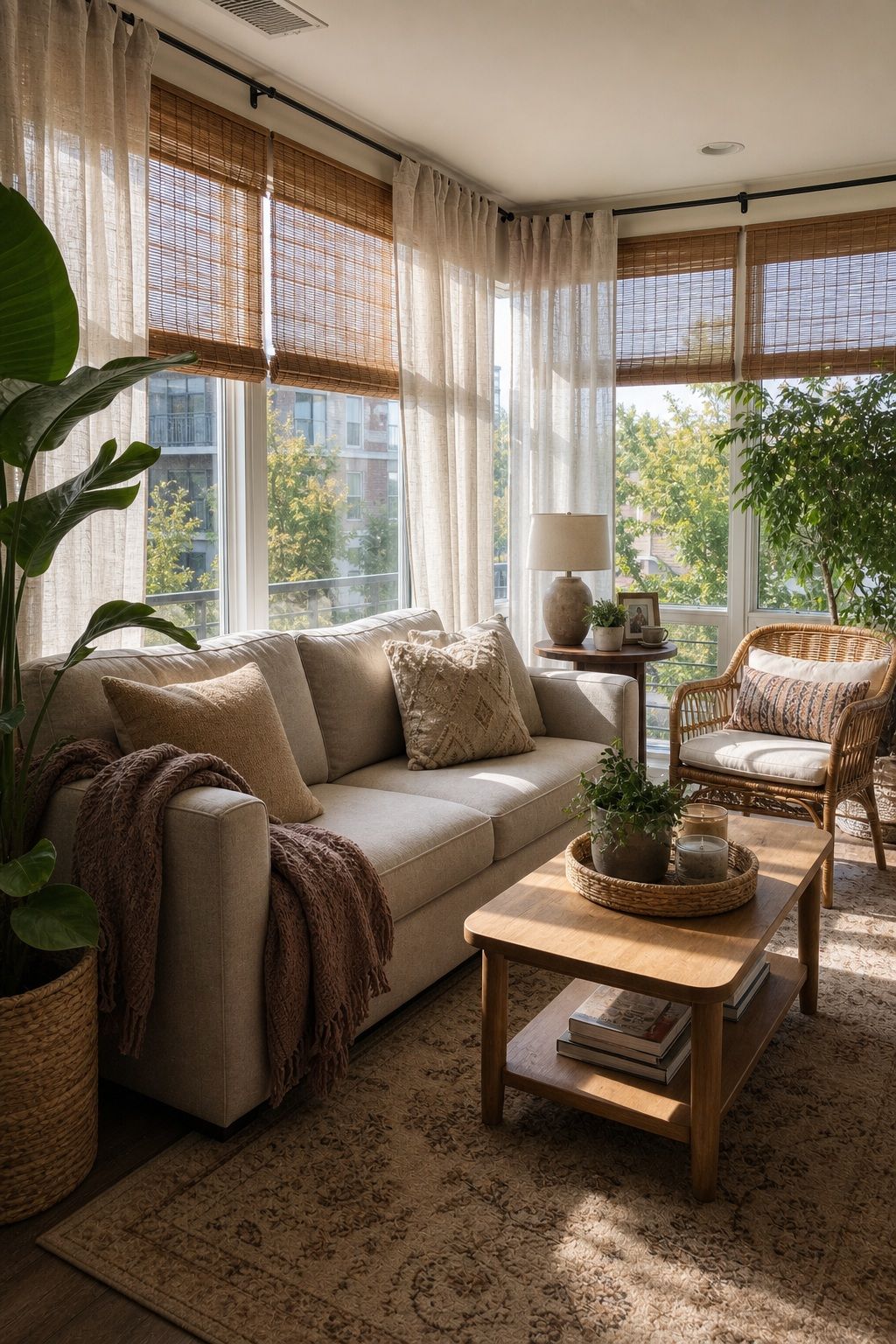


Add a fabric layer to the windows. Bare glass walls feel exposed once it is dark out, and they let heat pour in or out all day depending on the season. Light linen curtains on a simple track soften the hard window lines and add quiet insulation, while cellular shades fold away almost invisibly when you want the full view back.
Choose pale, breathable fabrics that filter light rather than block it, so the room keeps its signature glow even with everything drawn. Floor-length panels make the ceiling feel taller and the whole room more finished. This one change does as much for everyday comfort as it does for how the room photographs.
Read more: Top 19 Christmas Decor Ideas for the Living Room to Try This Year
13. Add a Heat Source for Cold Months


Give the room its own heat. A small dedicated heat source is what stretches a sunroom into a true four-season living room instead of a three-season one. A freestanding electric fireplace, a slim tower heater, or a good heated throw keeps the room usable on the coldest, grayest mornings, which is often when its light is most worth having.
An electric fireplace earns its keep twice, working as a visual anchor and a cozy focal point the way a real hearth would. For more ways to build warmth into the space, our sunroom fireplace ideas cover built-in and freestanding options, including versions that suit a rental.
Read more: Top 18 Living Room Summer Decor Ideas That Feel Fresh Without a Full
14. Use a Fan and Shades for Summer


Plan the cooling as carefully as the heating. Cooling a sunroom matters every bit as much, and it is the part people tend to underplan. A ceiling fan keeps air moving and can make the room feel several degrees cooler than the thermostat reads, while exterior or top-down shades cut the heat gain before it reaches the glass and turns the room into a greenhouse.
Cross-ventilation helps too, so plan for at least one window or door that opens on each side of the room if the layout allows it. A sunroom that stays genuinely comfortable in August is one that gets used all summer, not just admired through the doorway from the cooler kitchen.
Plants, Texture, and Final Touches
15. Treat Plants as Living Furniture


Go big with a couple of plants instead of small with a dozen. A sunroom is the best room in the house for them, and the styling that works treats plants as architecture, not clutter. One or two real statement plants, a bird of paradise, a large monstera, a potted olive tree, do far more for the room than scattered pots along the windowsills.
Set a tall plant beside the sofa to soften that corner and give the seating group a gentle sense of enclosure, almost like a living side table. For picks that actually thrive in all that direct light, our best plants for a sunroom guide breaks down the easy-care options by light level so nothing you buy struggles.
Read more: Top 20 Small Apartment Living Room Ideas That Actually Make Your
16. Layer Texture Through Textiles


Build in texture so the light has something to land on. A bright room can read flat and a little hard without it. Layer a chunky knit throw over the sofa arm, mix linen and boucle pillow covers in a couple of sizes, and set out a woven basket or two so the eye finds something soft and tactile beyond all that glass.
Keep the palette tight, warm neutrals with one quiet accent color, so the layering reads calm and collected instead of busy. Texture, more than pattern, is what gives a sunroom living room the same lived-in depth as the rest of the house, and it costs very little to add gradually over time.
Read more: 20 Cozy Living Room Essentials From Amazon You’ll Actually Use
17. Style the Surfaces With Intention


Style the surfaces, but edit hard. Empty surfaces make a room feel unfinished and crowded ones make a sunroom feel small. The middle path is small, considered groupings on the coffee table and console: a short stack of books, a low bowl, a single candle, a slim vase holding a few stems clipped from the yard.
Work in odd-numbered groupings at varied heights and leave clear breathing room around each one so nothing competes. The goal is a room that looks lived in and quietly calm, the same restraint our zen living room decor guide leans on, and it is what separates styled from staged.
18. Add a Personal, Cozy Final Layer


End with the layer that makes the room yours. A favorite piece of art leaned against the solid wall, a small side table sized for a morning coffee, a soft pouf that pulls in as extra seating, a throw blanket that just lives on the sofa now. None of it is planned the way the furniture is, and that is exactly why it works.
These are the touches that turn a well-planned sunroom into one that genuinely feels like a living room. A space that quietly invites you to sit down and stay a while is the whole point, and this cozy final layer, more than any big-ticket purchase, is what gets you there.
Read more: Top 16 Sunroom Bar Ideas for Small Spaces That Pack Style and Function
Sunroom Living Room FAQ
Can a sunroom be used as a living room?
Yes, a sunroom makes an excellent living room when you treat it as a real room rather than a transitional space. Anchor it with a proper sofa and a defined seating layout, choose sun-friendly furniture, and add layered lighting so it works after dark. Many homes find the sunroom becomes their favorite living space.
How do I make my sunroom cozy year-round?
Year-round comfort comes from planning for temperature swings. Add a ceiling fan and shades for summer heat, a small electric fireplace or heater for winter, and a basket of throws within reach. Layer in warm lighting, soft textiles, and plants so the room feels finished in every season.
What furniture is best for a sunroom living room?
Choose low-profile, light-framed furniture in fade-resistant fabrics. A performance-fabric sofa, rattan or wood accent chairs, and multifunctional pieces like storage ottomans work best. Keep the palette in warm neutrals so any sun fading reads as patina rather than damage.
How do you decorate a small sunroom living room?
In a small sunroom, use a loveseat instead of a full sofa, keep furniture low and open-based so light travels, and float the layout slightly off the glass. A large rug grounds the seating into one zone, and one statement plant does more than several small ones.
How do I keep a sunroom from getting too hot or cold?
Use cellular or top-down shades to cut heat gain in summer and add insulation in winter, run a ceiling fan to move air, and add a slim heater or electric fireplace for cold months. Light linen curtains soften the glass and help regulate temperature without blocking the view.
Key Takeaways
- Treat a sunroom as a true year-round living room, not a seasonal afterthought, by anchoring it with a real sofa and a defined seating layout.
- Choose fade-resistant fabrics, low and light furniture, and multifunctional pieces so the room handles sun, temperature swings, and double duty.
- Layer warm dimmable lighting and soften the glass with curtains or shades so the room stays inviting after dark.
- Plan for both heat and cold with a fan, shades, and a small heat source so the sunroom is comfortable in every season.
- Finish with statement plants, layered textiles, and intentional surface styling so the room feels as considered as the rest of the home.
Final Thoughts
A sunroom has more potential than almost any other room in the house, and the difference between a pretty bonus space and a real living room comes down to treating it like one. Anchor the seating, choose furniture that can handle the light, plan for the temperature, and layer in warmth through lighting, plants, and texture. Do that, and the sunroom stops being the room you walk past and becomes the one you cannot wait to settle into, in January just as much as in June.
Last update on 2026-10-09 / Affiliate links / Images from Amazon Product Advertising API
