

Zen home office decor strips a workspace down to what helps you focus: a clutter-free desk holding only a few essentials, a soft palette of whites, warm beiges, and muted green, natural materials like wood and bamboo, and a couple of low-maintenance plants. Layer the lighting, hide the clutter in closed storage, and choose one or two pieces of art that genuinely calm you. The goal is a room that feels quiet the moment you sit down.
Most home offices are where clutter goes to live. Cables, paperwork, three half-empty mugs, and a corkboard nobody has looked at since spring. A zen office is the opposite proposition. It is a room designed to lower your shoulders the moment you sit down, where nothing on the desk competes for your attention except the work in front of you.
There is real evidence behind it: research cited by workspace designers found that a calming work environment can cut stress noticeably within about fifteen minutes of sitting in it. The zen approach for 2026 leans on soft neutral color, natural wood and stone, hidden storage, and a desk pared back to a few meaningful objects. The 16 ideas below build that calm room piece by piece, and the same principles shape zen boho home decor in the rest of the house too.

Recommended Zen Home Office Products


Read this also:
- Living Room Zen Home Decor
- Small Apartment Office Ideas
- Japanese Zen Home Decor
- Zen Chic Home Decor Ideas
- Fall Home Office Decor Ideas
A zen office is built by subtraction as much as addition. You clear the surface, soften the palette, bring in nature, and light it gently, then add only what genuinely earns its place. These 16 ideas move through that process, from the desk itself out to the walls and the air in the room.
1. Clear the Desk Down to Three Essentials
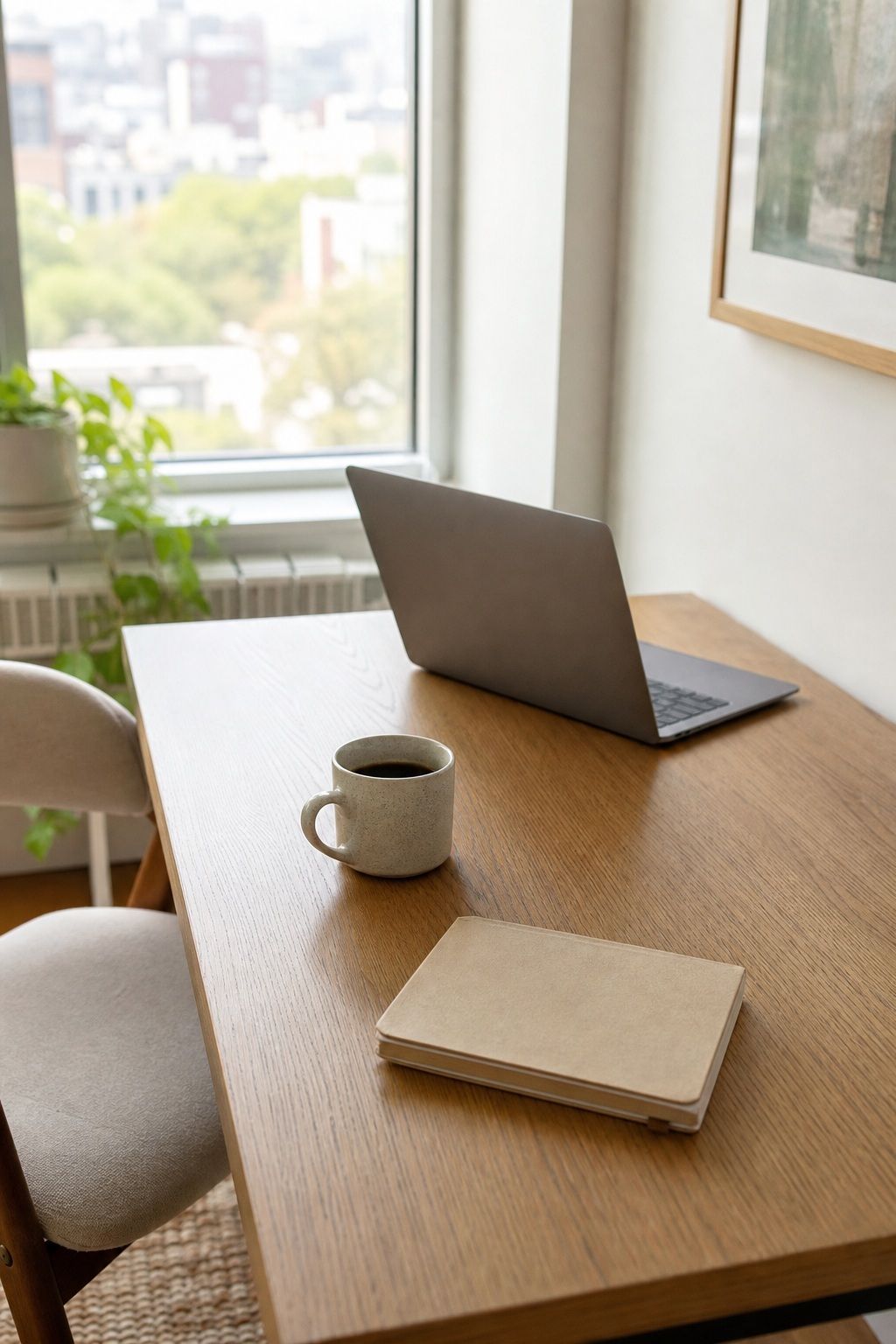


A zen office starts with an almost empty desk. The principle is simple: keep only what you reach for constantly within arm’s reach, and store everything else out of sight. For most people that means a computer, a notebook, and perhaps one meaningful object, and nothing more.
An empty surface is not a styling failure, it is the point. Visual breathing room on the desk translates directly into mental breathing room while you work, because your eye is not constantly snagging on clutter. Start every zen office by clearing the desk completely, then return only the few things that genuinely belong there. Everything else gets a home elsewhere.
2. Choose a Soft, Neutral Color Palette
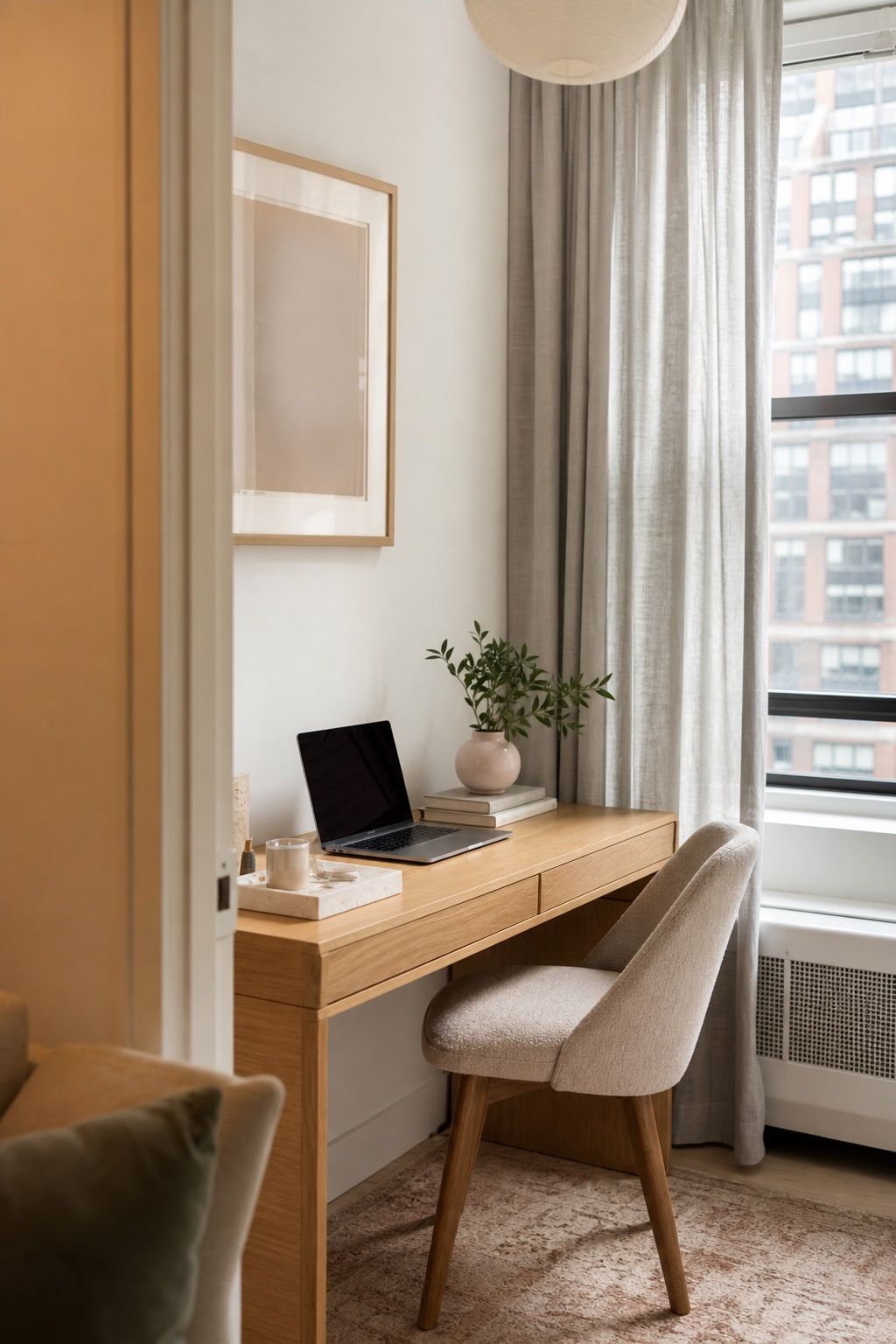


Color sets the nervous-system tone of a room before you have done anything else. For a zen office, soft whites, warm beiges, and muted greys create a serene base that does not overstimulate. Bright or neon colors do the opposite, they pull attention and raise the visual volume of the room.
If you want one accent, reach for a calming green, which research links to better focus and creative performance. Keep that green soft and earthy, sage or olive, rather than bright. Paint, textiles, and storage should all stay within this quiet palette so the room reads as one calm field rather than a collection of competing colors. The restraint is the whole effect.
3. Bring In Natural Wood, Stone, and Bamboo
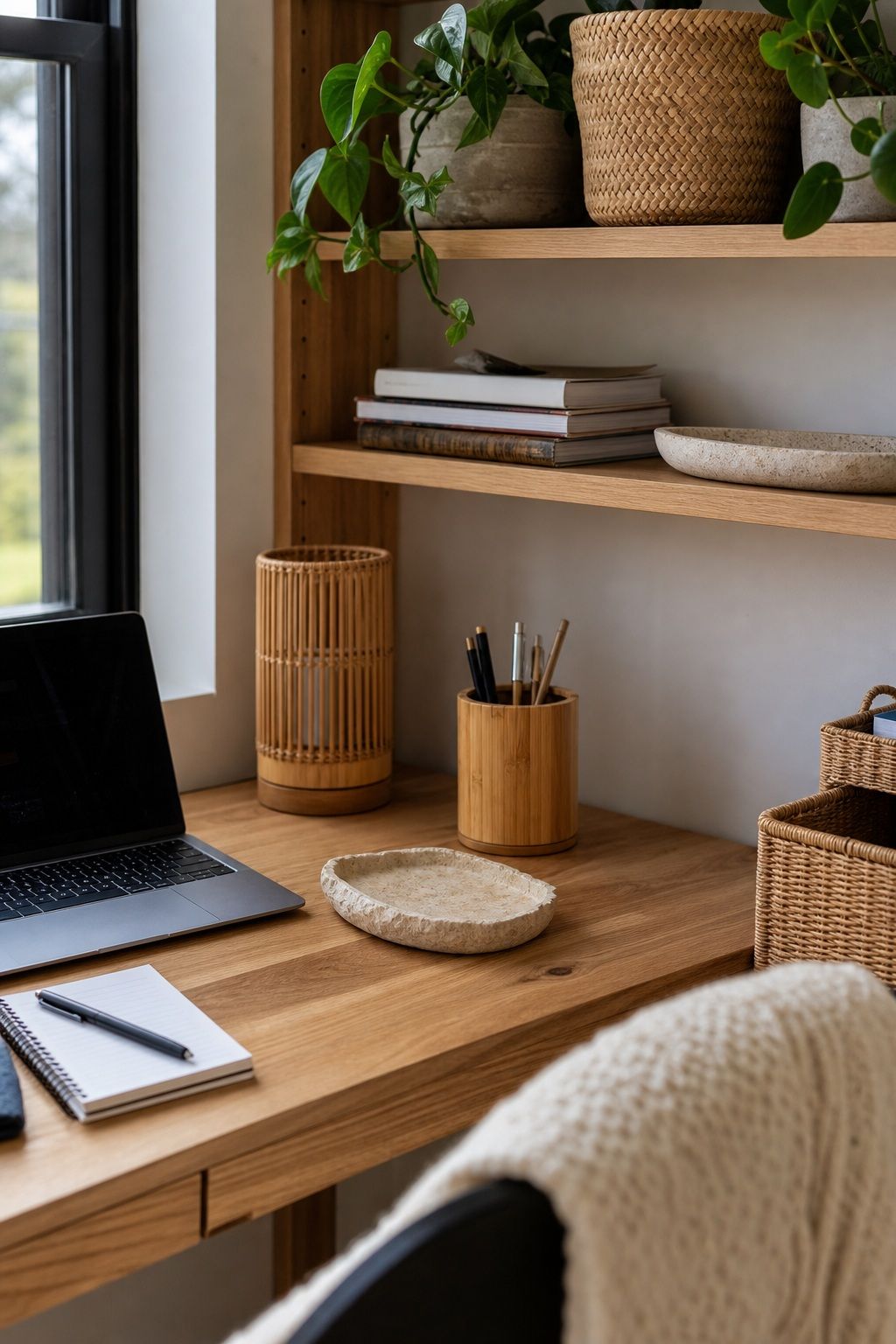


Natural materials are what give a minimalist room warmth instead of coldness. Wood, stone, and bamboo add organic texture and a quiet connection to nature that plastic and laminate never manage. The difference is real even at a small scale.
Swap a plastic pen holder for a bamboo one, choose a wood-topped desk over a laminate one, set a small stone or a wooden bowl on a shelf. Each natural material you bring in nudges the room toward calm. Wood tones also pair beautifully with the soft neutral palette, so they reinforce the serene base rather than fighting it. Natural texture is what keeps a pared-back office from feeling sterile.
4. Maximize Natural Light, Then Soften It
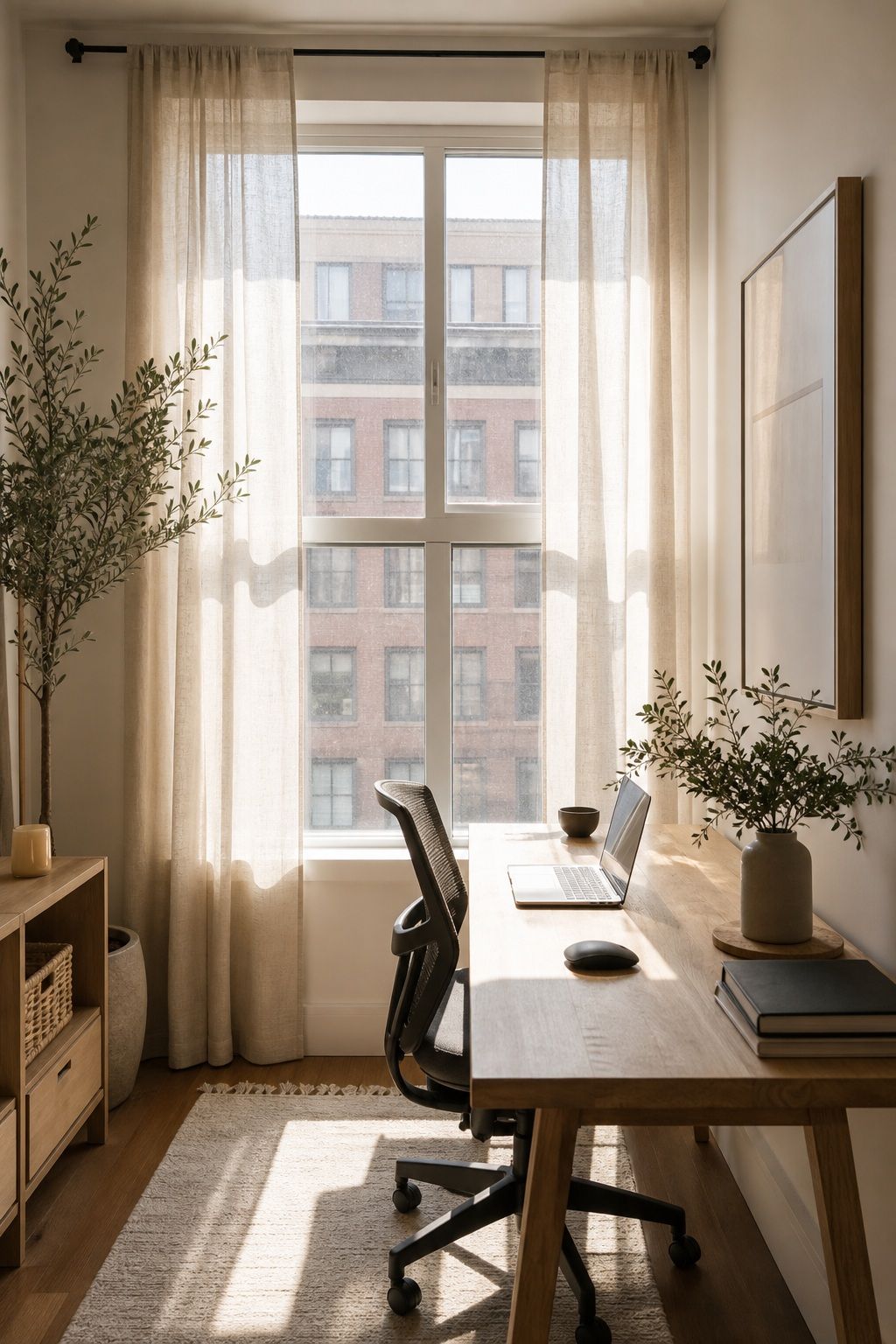


Natural light is one of the strongest mood regulators a room has, so a zen office should let in as much as possible. Where you can, leave windows uncovered and place the desk to catch good daylight without screen glare.
When you do need privacy or light control, flat Roman shades in a textured natural fabric are the zen choice, they filter light softly and add a quiet layer rather than blocking the window with heavy drapes. The same soft-filtering logic runs through zen curtain ideas across the home. Good, gently softened daylight makes a workspace feel open and calm in a way no lamp can replicate.
5. Add Low-Maintenance Plants for Living Calm
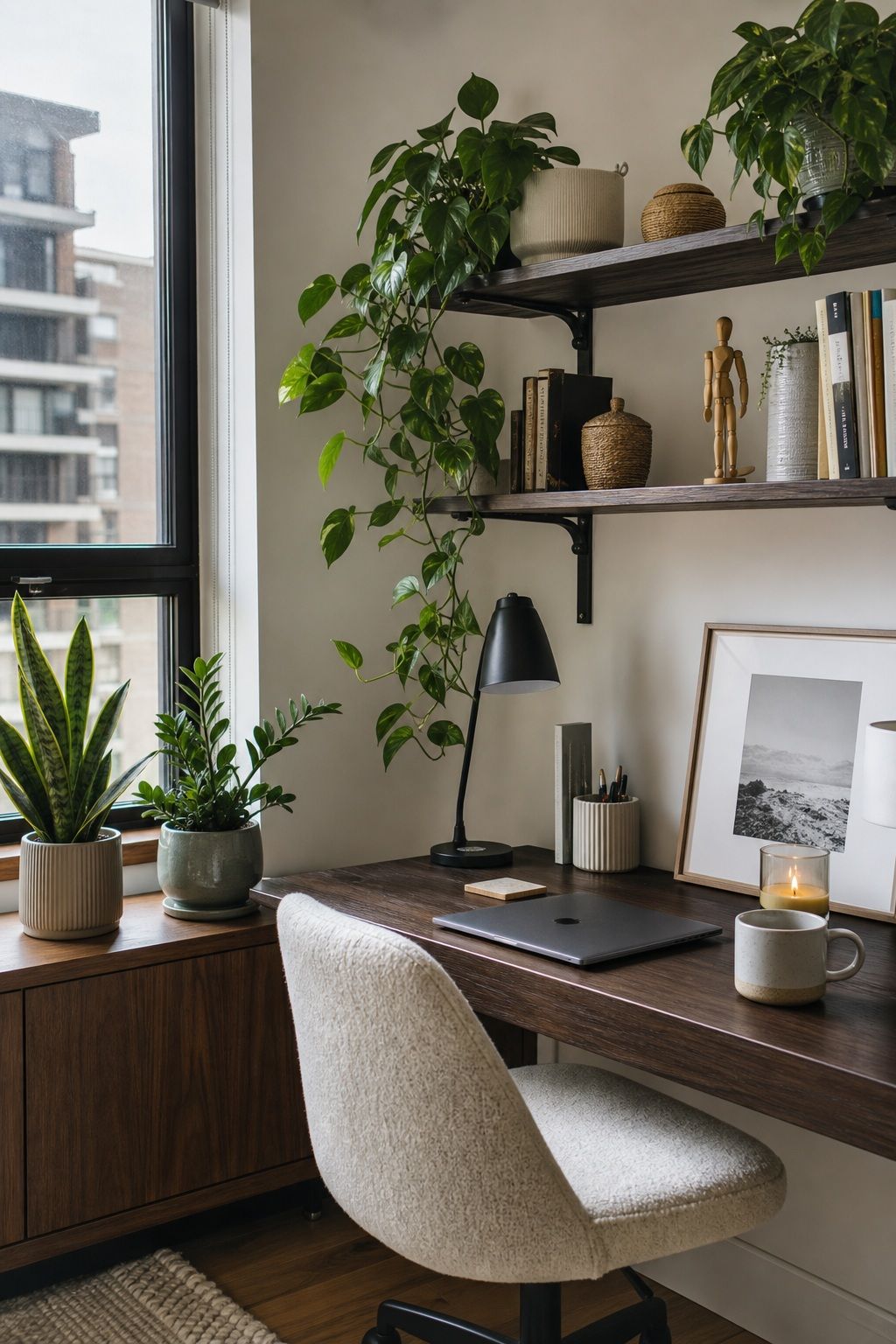


A zen office should feel alive, and a few plants are the easiest way to do it. Greenery purifies the air, softens the hard lines of furniture, and adds a small daily ritual of care that itself is grounding.
Start with low-maintenance plants that forgive a busy schedule: snake plants, succulents, ZZ plants, or a peace lily. Two or three placed thoughtfully, one on the desk, one on a shelf, one on the floor in a corner, are plenty. Avoid crowding the room into a jungle, which works against the calm. A few healthy plants make the office feel fresh, natural, and quietly tended.
6. Layer the Lighting Instead of One Overhead


A single harsh overhead light flattens a room and strains the eyes. A zen office wants layered light from several gentle sources instead: a warm-toned desk lamp for task lighting, a floor lamp for a soft ambient pool, and perhaps a safely placed candle for evening warmth.
Choose warm-white bulbs over cool blue-white ones, which feel clinical. Layered, warm light lets you adjust the room to the time of day and the task, bright and focused for deep work, soft and low for winding down. The lighting is one of the fastest changes you can make, and it shifts the entire feel of the workspace from office to retreat.
7. Hide Clutter in Closed, Sleek Storage
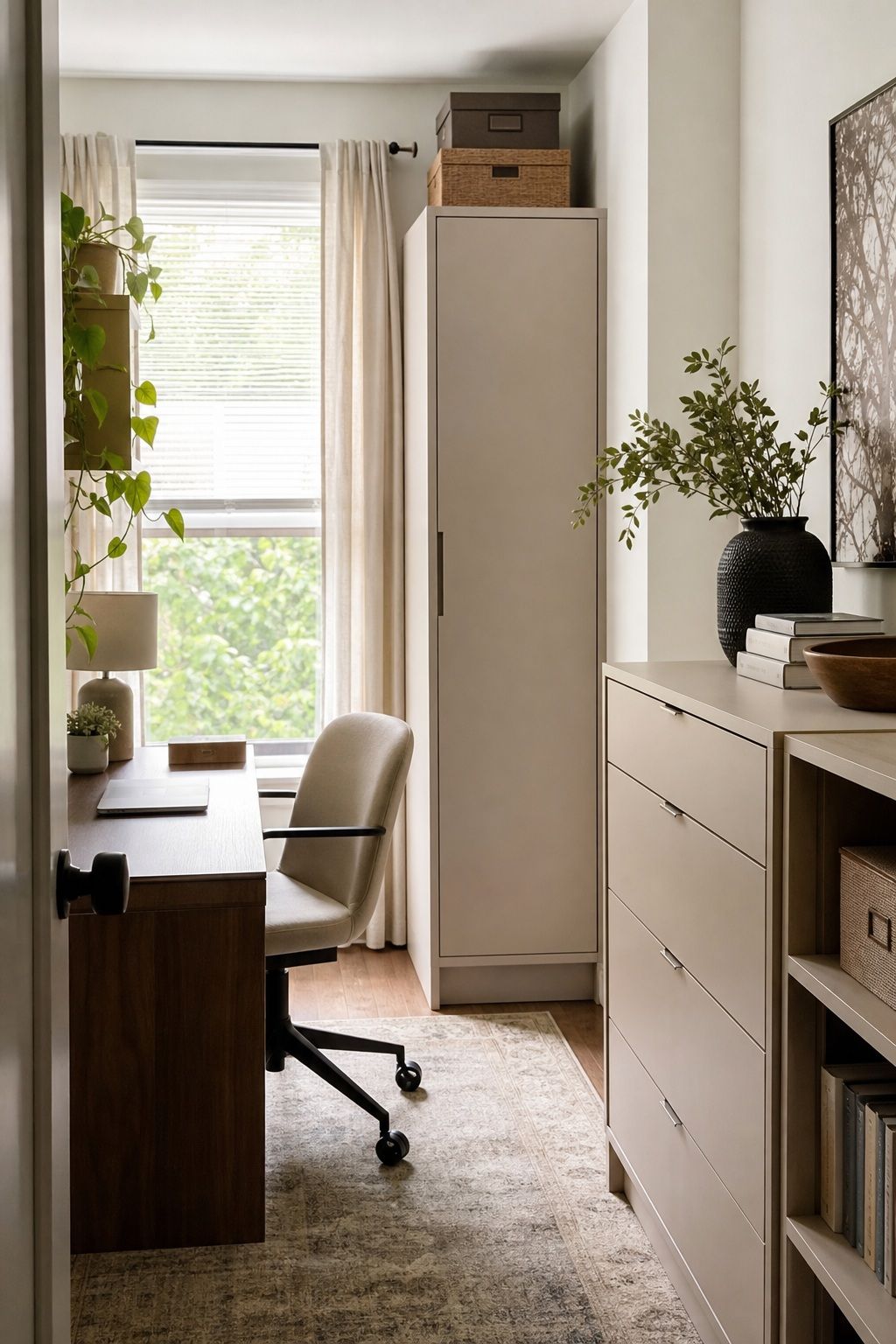


Clutter is the enemy of a zen office, and the fix is not endless tidying, it is closed storage. Sleek cabinets, under-desk drawers, or simple lidded boxes give every loose item a home out of sight, so the visible surfaces stay calm.
The principle is that what you cannot see does not add to your mental load. Open shelving has its place, but for the bulk of office supplies, paperwork, and cables, closed storage wins. Choose pieces in the room’s neutral palette with clean lines so the storage itself disappears into the calm. A zen office is organized in a way you never have to think about.
8. Manage the Cables Out of Sight
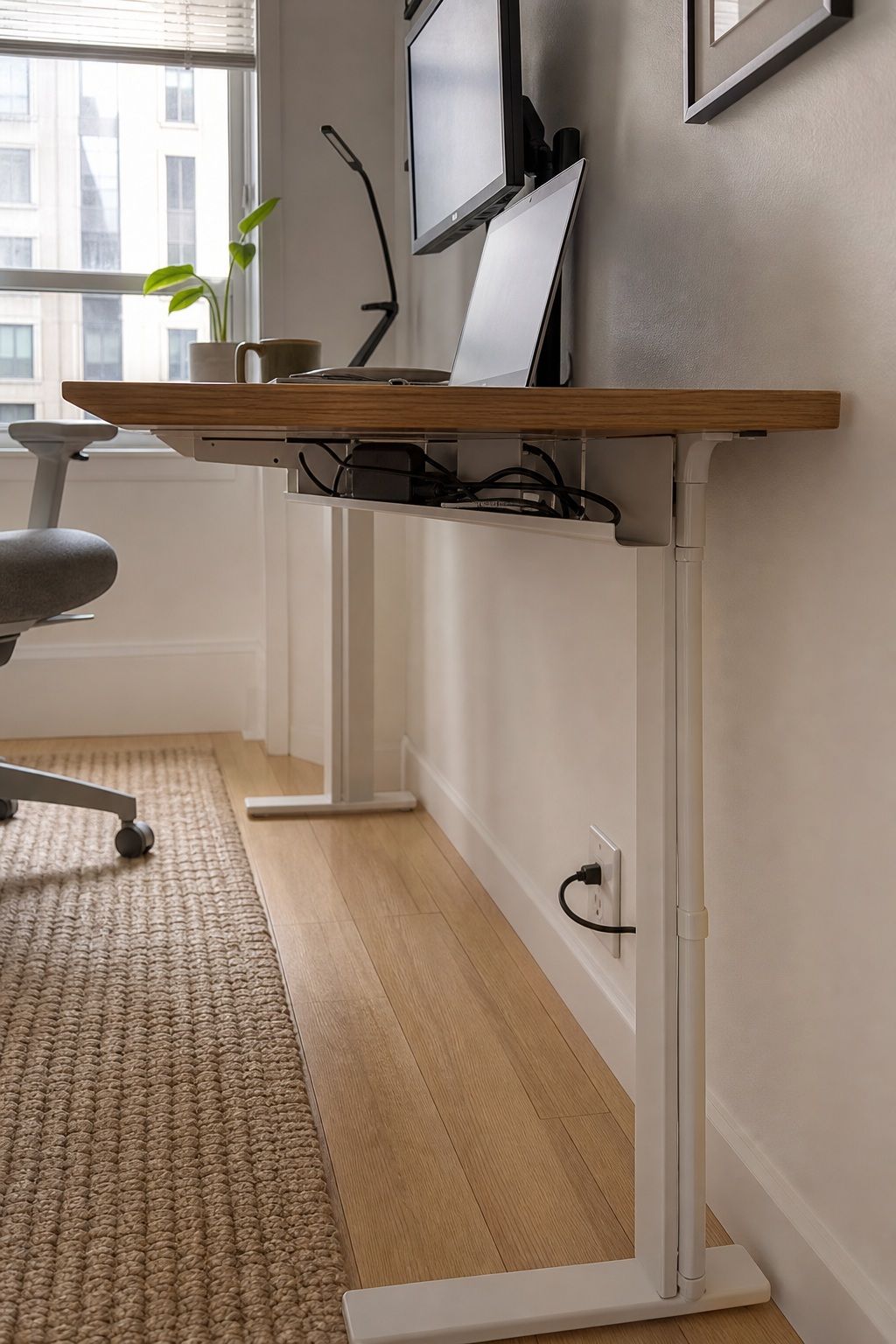


Nothing breaks the calm of a minimalist desk faster than a tangle of cables. Cable management is unglamorous but it is one of the highest-impact zen office moves, because a clean, wire-free surface reads as genuinely intentional.
Run cables through a desk grommet, clip them along the back edge with adhesive clips, gather them into a sleeve, or tuck a power strip into a cable box. Cordless accessories help too. The goal is for the desk to look like the cables simply do not exist. This single fix does more for the serene look than almost any decorative object you could add.
9. Choose One or Two Pieces of Meaningful Art
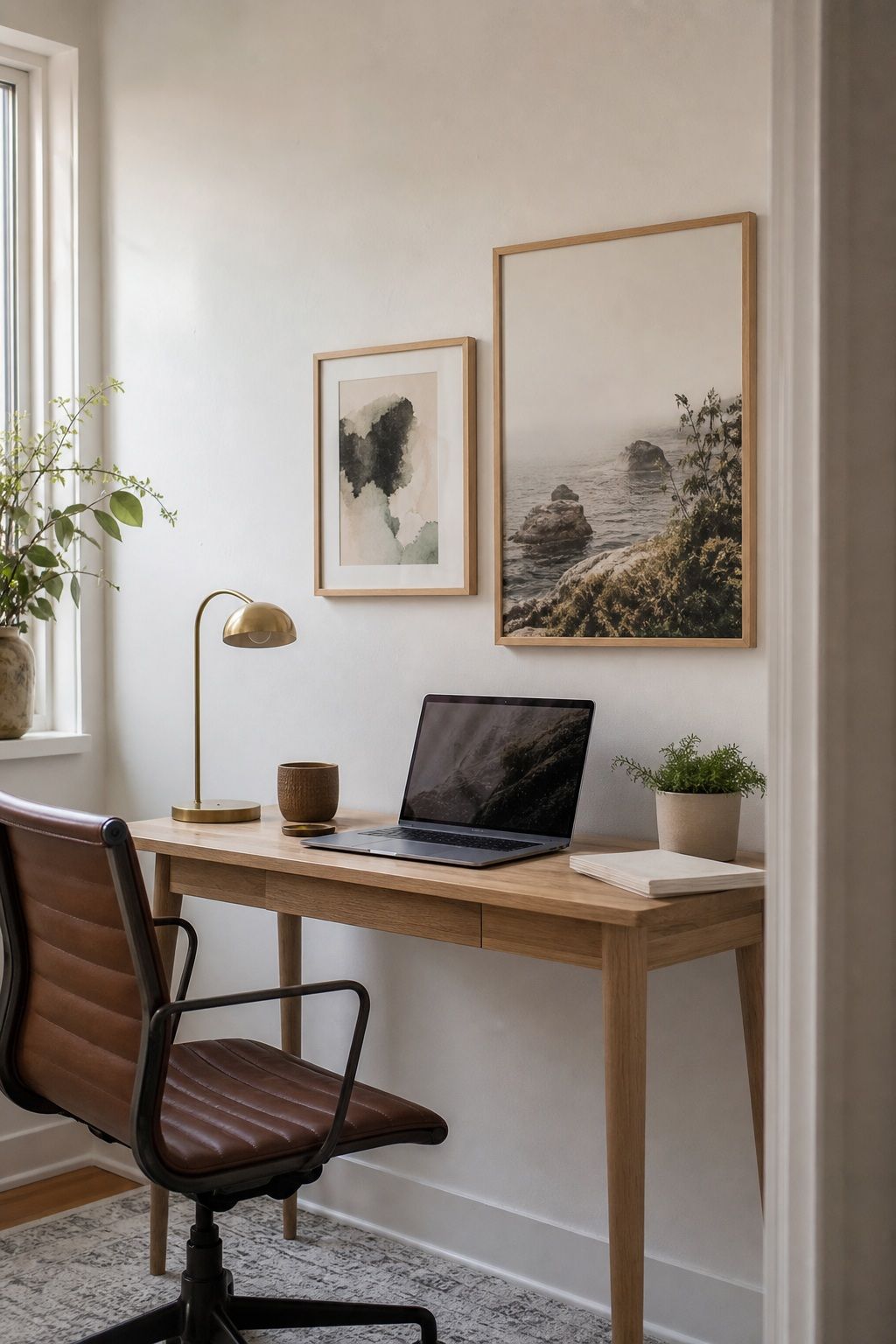


Wall decor in a zen office should be deliberate, not filler. Instead of covering the walls, choose just one or two pieces of art that genuinely move you, nature photography, a calm abstract, a meaningful symbol, and give each one generous white space around it.
The empty wall around a piece is part of the design, it lets your eye rest. A single well-chosen image you actually love does more for the room than a gallery wall of generic prints. Hang it where you will see it from the desk, so it offers a quiet visual break when you look up. Meaningful, spare, and intentional is the zen approach to walls.
10. Add a Soft Rug Underfoot for Grounding
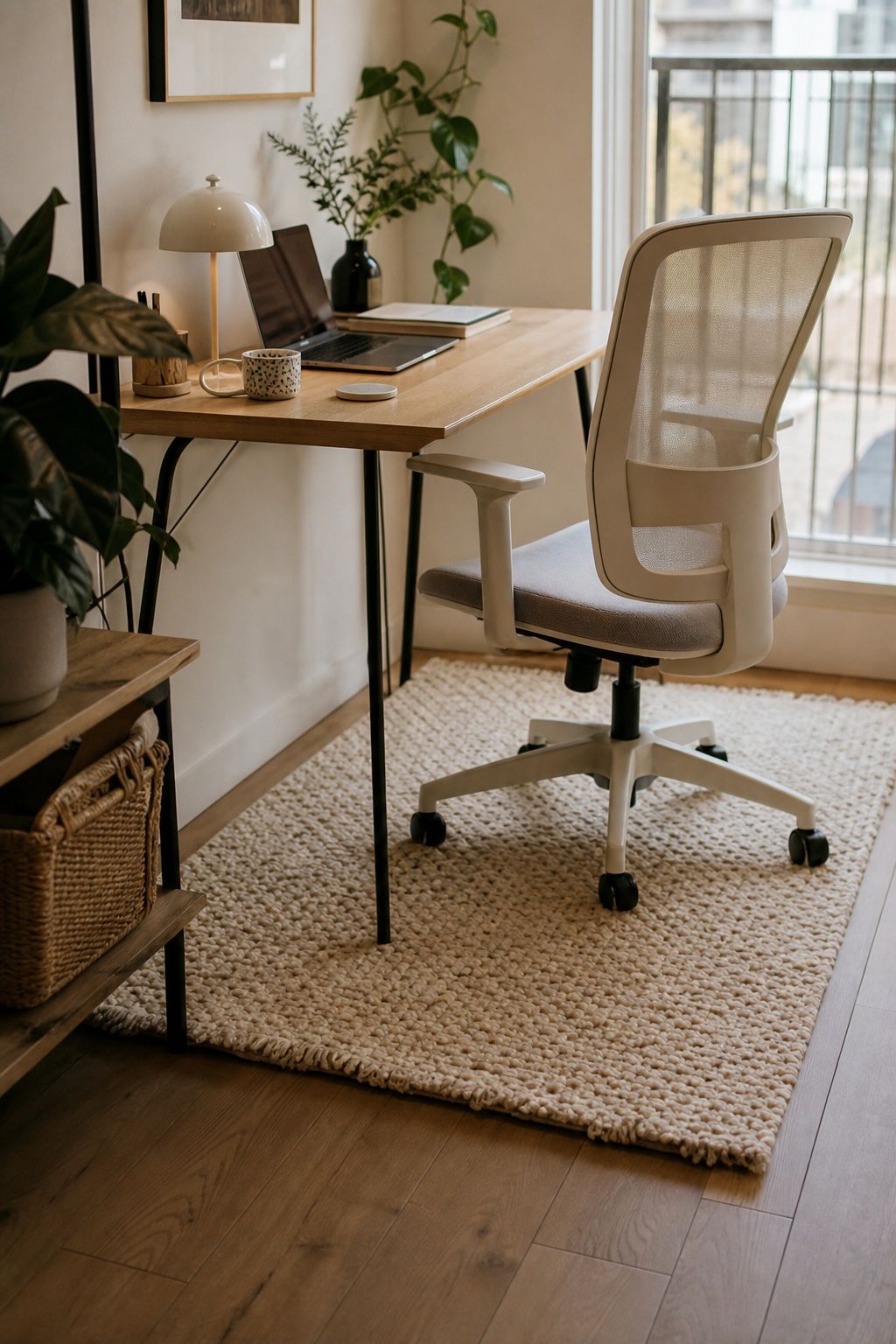


A rug grounds a zen office both visually and physically. Underfoot, a soft natural-fiber rug, wool, jute, cotton, warms a hard floor and gives the room a quiet sense of enclosure. Visually, it anchors the desk and chair into a defined zone.
Keep the rug in the neutral palette and a simple texture or pattern, nothing busy. A low-pile natural rug also adds another organic material to the room, reinforcing the connection to nature. The small comfort of a soft surface under your feet during a long work session is the kind of subtle detail a zen office is built on.
11. Bring in a Small Element of Water or Sound
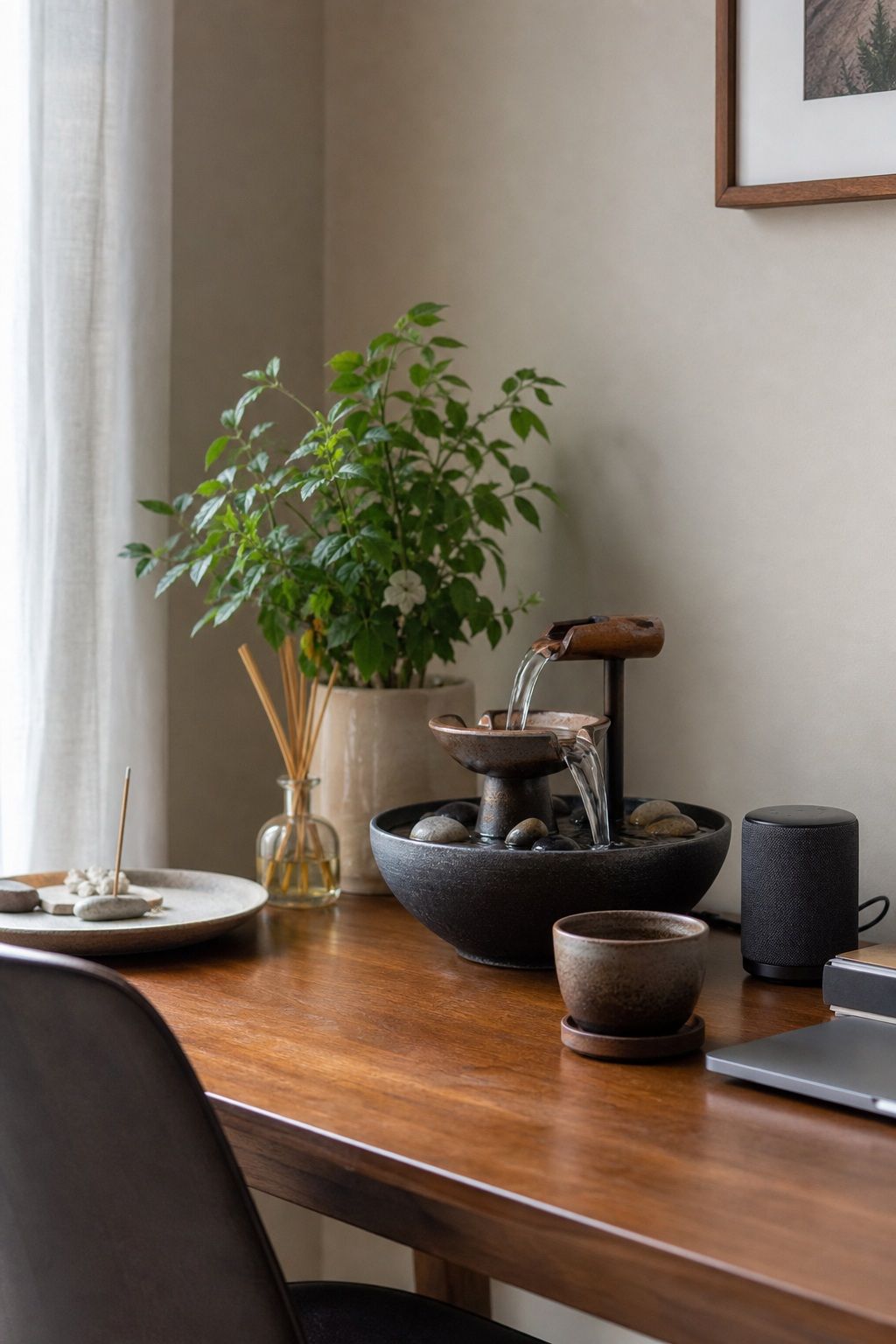


Sound shapes calm as much as anything you can see. A small tabletop water feature adds a gentle trickle that masks distracting noise and brings a meditative quality to the room. It is a quietly grounding presence on a shelf or windowsill.
If a water feature is not for you, a small sound machine with soft nature tones, or simply a habit of low ambient music, achieves a similar effect. The point is to give the room a soft, steady audio backdrop rather than silence punctuated by every outside noise. A zen office considers what you hear, not only what you see.
12. Keep the Desk Positioned With Intention
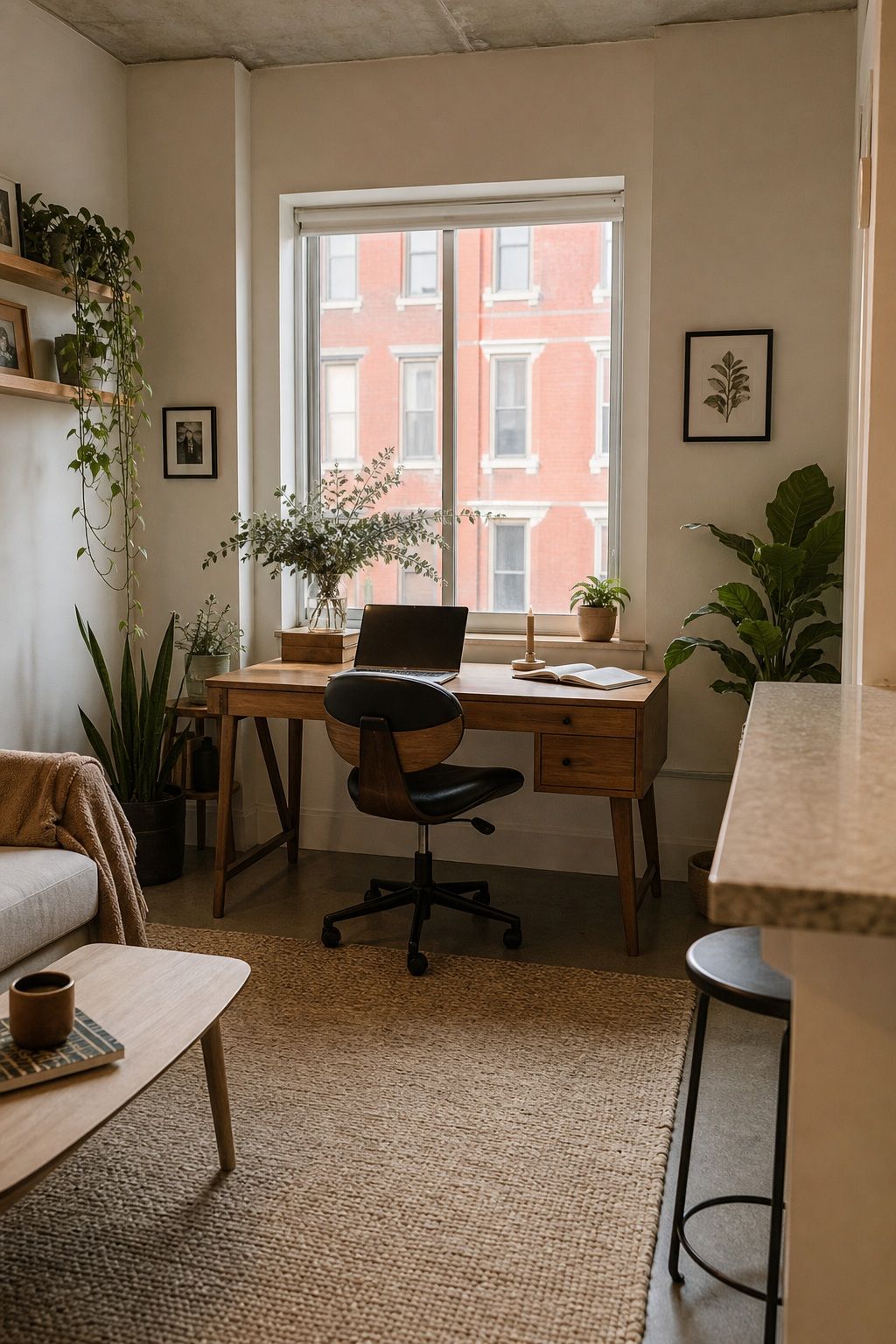


Where the desk sits changes how the room feels to work in. Many people find a sense of ease when the desk faces into the room with a wall behind the chair, a position that feels settled rather than exposed. Facing or near a window adds the benefit of natural light and a place for the eyes to rest.
Avoid backing the desk into a tight corner that feels cramped, or floating it in a way that leaves your back to the door. A little intention about placement, light on one side, a calm view ahead, a wall for grounding, makes the room work better before you have added a single decorative object.
13. Add a Comfortable, Supportive Chair
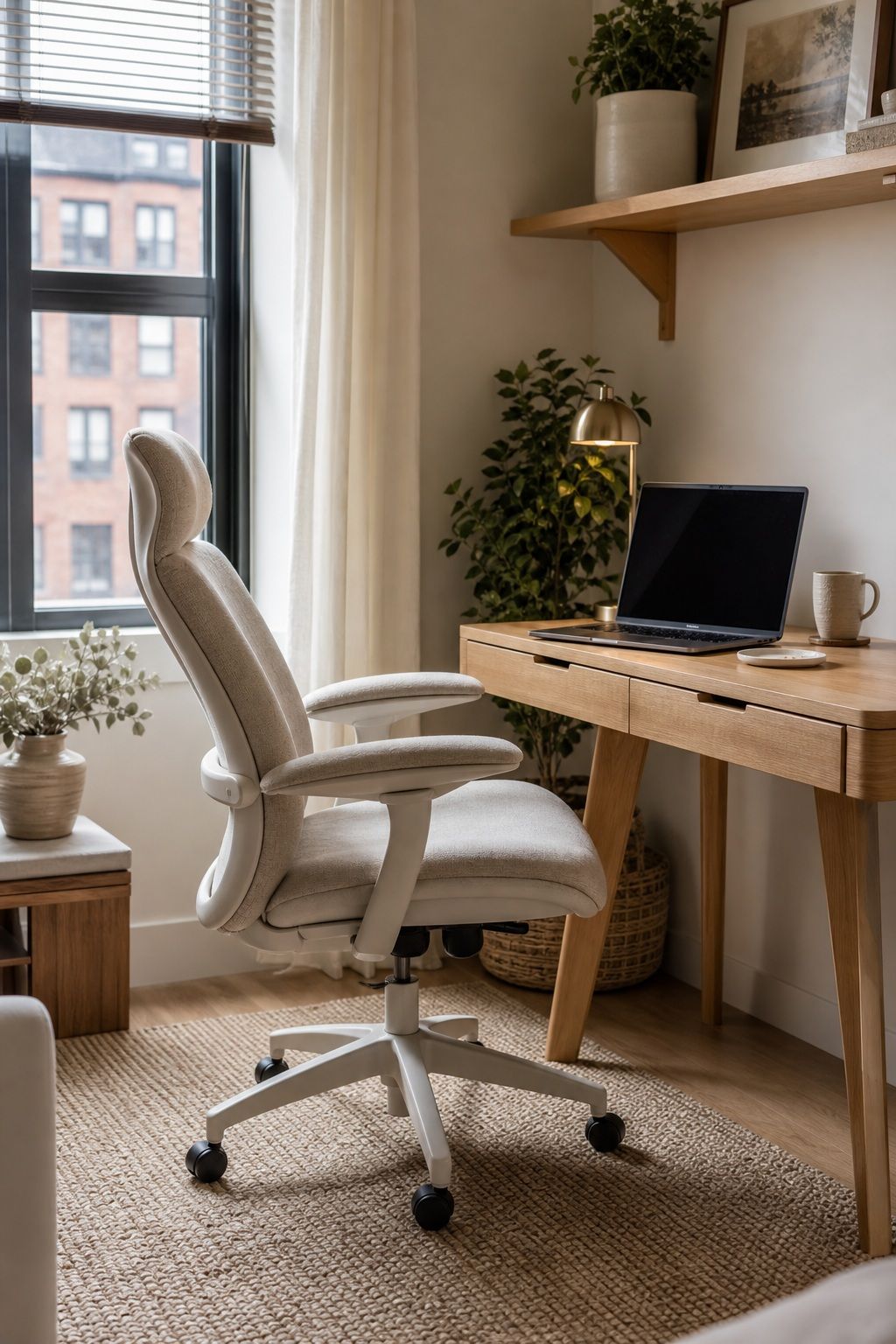


A zen office is about calm, and physical discomfort quietly undermines calm all day long. A supportive, comfortable chair is not a luxury here, it is part of the wellness design of the room. An aching back is its own form of clutter.
Choose a chair that supports good posture and suits long sitting, ideally in a material and tone that fits the neutral palette so it blends into the room rather than dominating it. A wood-framed chair with a soft cushion, or a clean-lined ergonomic one in a muted color, both work. Comfort and calm are the same project, and the chair is where they meet.
14. Create a Small Corner for Mindful Breaks
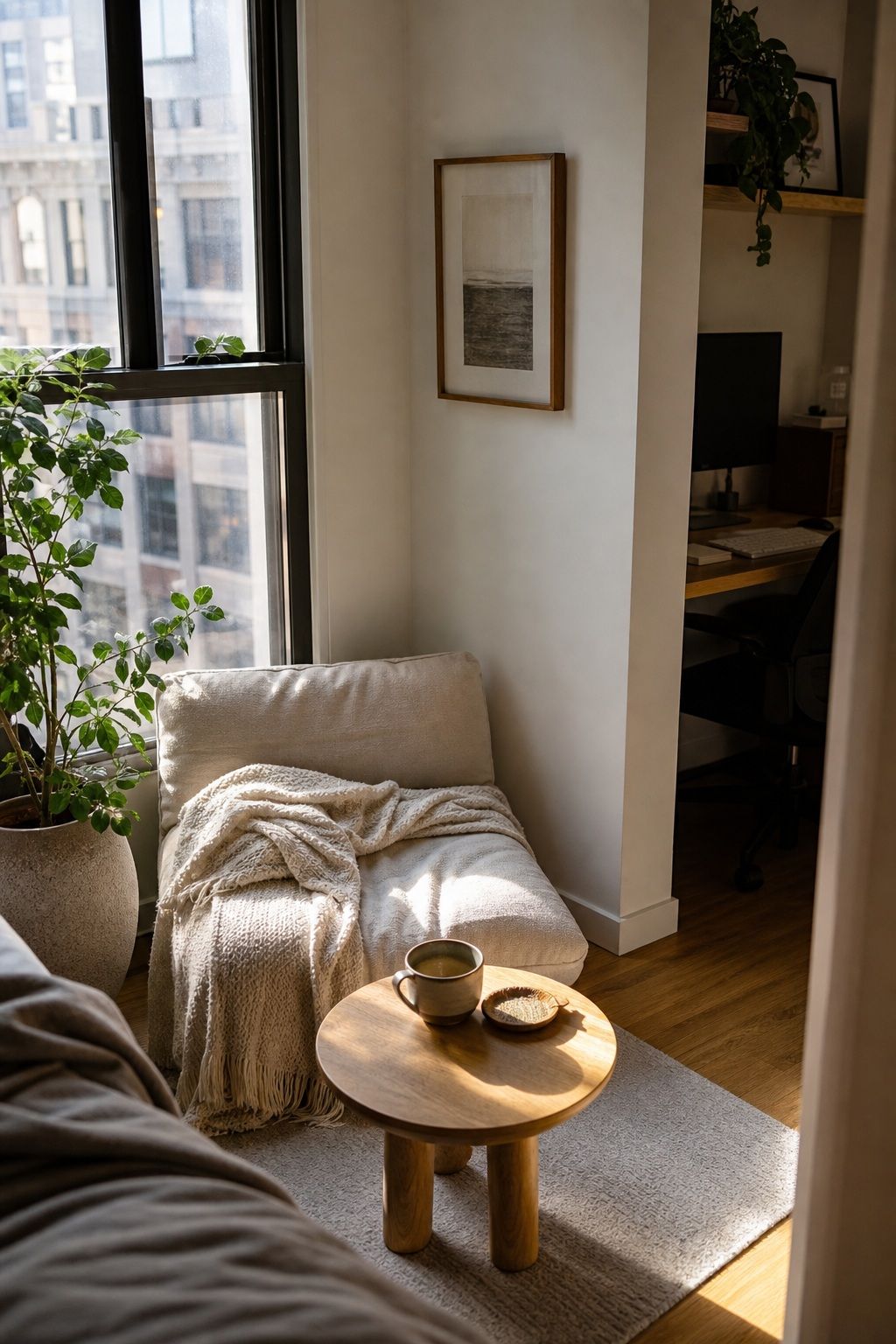


A zen office can hold more than the desk. If the room has space, set aside a small corner for stepping away, a floor cushion, a low chair, or a meditation mat where you can take a few minutes between tasks.
A break corner gives you somewhere to reset that is not your phone or the kitchen, and having it built into the room makes the pause more likely to actually happen. Keep it as spare as the rest of the office, a cushion, a plant, soft light. The same idea of a dedicated calm corner appears in zen bedroom decor, where rest is the whole purpose of the room.
15. Use Scent to Set a Calm, Focused Mood
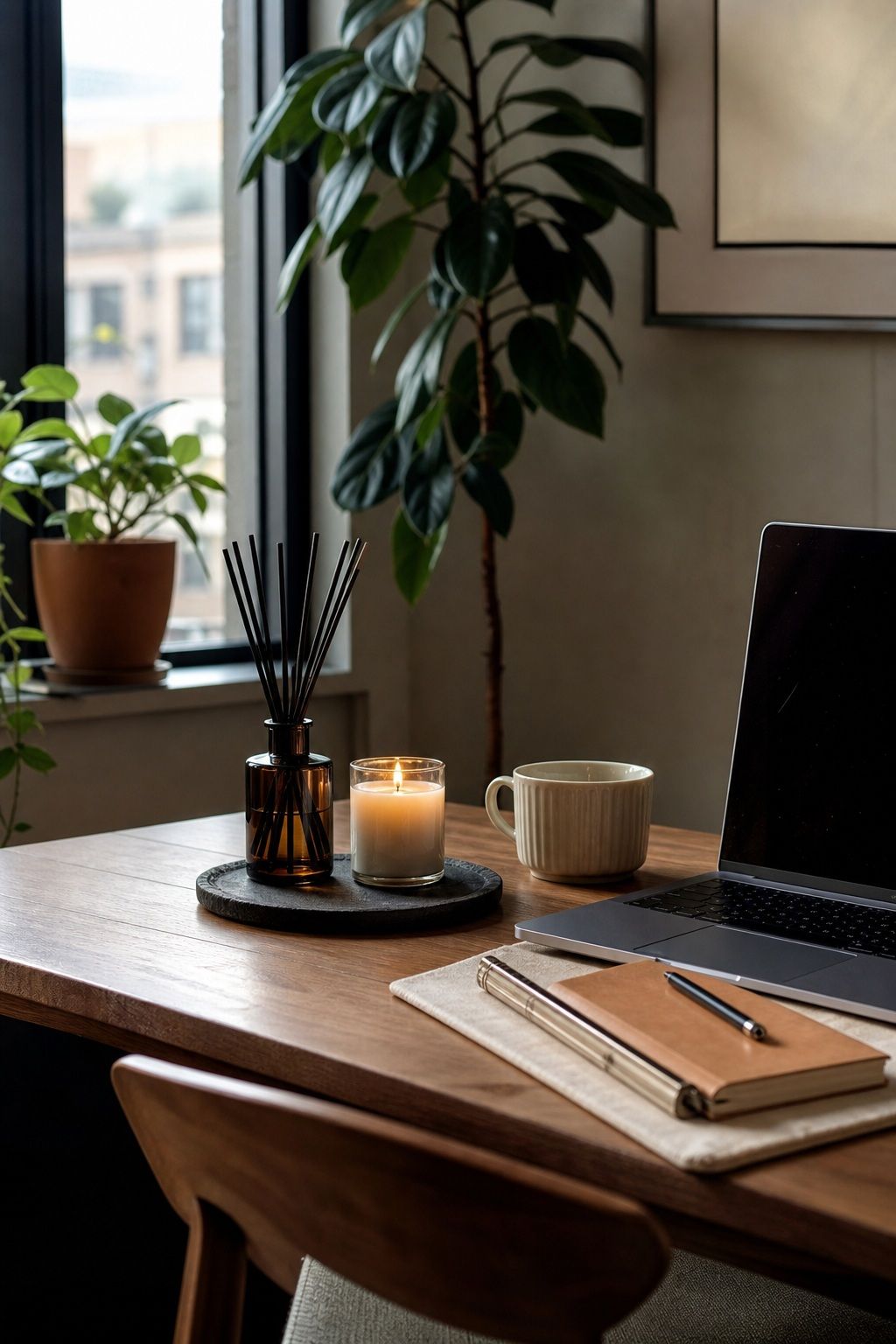


Scent shapes how a room feels as directly as light or color, and a zen office benefits from a calm, grounding fragrance. A reed diffuser, an essential oil diffuser, or an unscented-base candle in notes like cedar, sandalwood, eucalyptus, or green tea gives the room a steady, settling atmosphere.
Keep the scent subtle, just enough to notice when you walk in, not enough to distract. Avoid sweet or heavy fragrances that can feel cloying over a long work session. A consistent calm scent also becomes a quiet cue to your brain that it is time to focus, the same way a tidy desk does. It is a small layer with an outsized effect.
16. Edit Ruthlessly and Keep It That Way
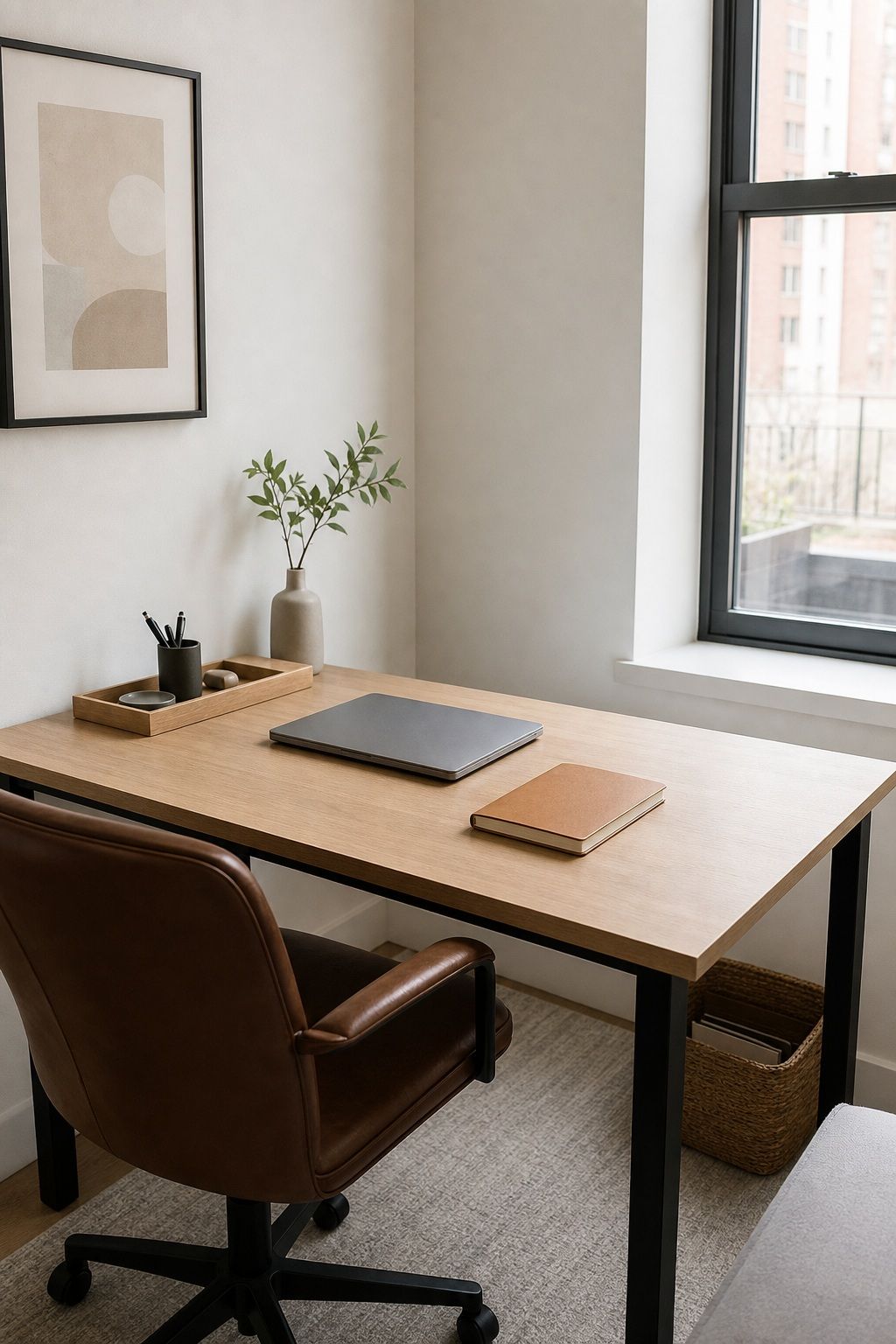


The hardest part of a zen office is not setting it up, it is keeping it pared back over time. Offices drift toward clutter, so a zen workspace needs a habit of regular editing, a quick reset at the end of each day and a deeper clear-out every few weeks.
Ask of every object whether it earns its place on the desk or shelf, and if the honest answer is no, give it a home out of sight or let it go. The same editing discipline that shapes a windowless office keeps any workspace calm. A zen office is a practice, not a one-time project, and the practice is simply ongoing restraint.
Quick Tips for a Calm, Focused Workspace
Clear the desk to three essentials before you add anything decorative. Hold a soft neutral palette and bring in natural wood and bamboo for warmth. Layer warm light from several sources instead of one overhead, and hide clutter and cables in closed storage. And keep editing, a zen office stays calm only with an ongoing habit of restraint.
Frequently Asked Questions
How do I create a zen home office?
Start by clearing the desk down to a few essentials, then soften the room with a neutral palette of whites, beiges, and muted green. Bring in natural materials like wood and bamboo, add a couple of low-maintenance plants, layer the lighting, and hide clutter in closed storage. The goal is a clutter-free room that feels calm to sit in.
What colors are best for a zen office?
Soft whites, warm beiges, and muted greys create the most serene base, since they do not overstimulate. A calming green works well as a single accent, as research links green to better focus and creativity. Avoid bright or neon colors, which raise the visual volume of the room.
Do plants really help a home office?
Yes, plants purify the air, soften the hard lines of furniture, and add a small grounding ritual of care. Low-maintenance options like snake plants, succulents, and peace lilies are ideal for a workspace. Two or three placed thoughtfully are plenty, crowding the room works against the calm.
How do I keep my zen office clutter-free?
Use closed storage, sleek cabinets, drawers, and lidded boxes, so loose items live out of sight. Manage cables with grommets, clips, or sleeves. Then build a habit of editing: a quick reset at the end of each day and a deeper clear-out every few weeks to stop clutter from creeping back.
What lighting works best in a zen office?
Layered, warm light works best. Combine a warm-toned desk lamp for task lighting, a floor lamp for soft ambient glow, and natural daylight from uncovered or softly-shaded windows. Avoid a single harsh overhead light and cool blue-white bulbs, which feel clinical and strain the eyes.
Does a calming workspace actually improve focus?
Workspace designers cite research showing a calming environment can reduce stress noticeably within about fifteen minutes. A clutter-free desk, soft color, natural materials, and gentle light all lower visual and mental load, which makes it easier to focus and sustain attention through the day.
Key Takeaways
- A zen office starts with subtraction: clear the desk to three essentials and store everything else out of sight.
- Hold a soft neutral palette of whites, beiges, and greys, with muted green as the single calming accent.
- Bring in natural wood, stone, and bamboo for warmth, and add two or three low-maintenance plants for living calm.
- Layer warm light from several sources, hide clutter and cables in closed storage, and choose one or two pieces of meaningful art.
- A zen office is an ongoing practice of restraint, edit regularly so the calm does not drift back into clutter.
Wrapping Up
A zen home office is not about owning less for its own sake. It is about building a room that helps you think, where nothing competes for your attention and sitting down feels like a small exhale. Clear the desk, soften the palette, bring in nature, and light it gently.
Start with the desk this week, clear it completely, then return only what truly belongs. Add the plants, the layered lighting, and the closed storage from there. A little restraint, kept up over time, gives you a workspace that is calm, focused, and genuinely a pleasure to spend your days in.
Last update on 2026-10-23 / Affiliate links / Images from Amazon Product Advertising API
