
Quick Answer: The best small deck furniture layout ideas start with a clear purpose, a simple palette, and practical pieces that make the space easier to use. Start with the biggest visual surface, then add lighting, texture, plants, or furniture only where they solve a real problem.
A small deck gets awkward fast when the furniture is chosen before the layout. The chairs seem cute online, the table looks harmless, and then suddenly the door barely opens and everyone has to shuffle sideways to sit down.
The best small deck layouts start with movement. Decide where people walk, where the door swings, where the sun hits, and what you actually do outside. Once that is clear, the furniture gets easier: fewer pieces, better scale, and one main use instead of five competing zones.
Your outdoor corner gets easier when the whole home has a plan. The Aesthetic Apartment Makeover Guide helps you choose colors, layouts, lighting, and styling details that make a small space feel intentional instead of pieced together.
Top 16 Small Deck Furniture Layout Ideas That Actually Work
Recommended blogs to read:
- Small outdoor patio ideas
- Covered outdoor patio ideas
- Boho outdoor patio ideas
- Small apartment patio ideas on a budget
- Summer patio decor ideas
1. Float Two Chairs Around a Tiny Table
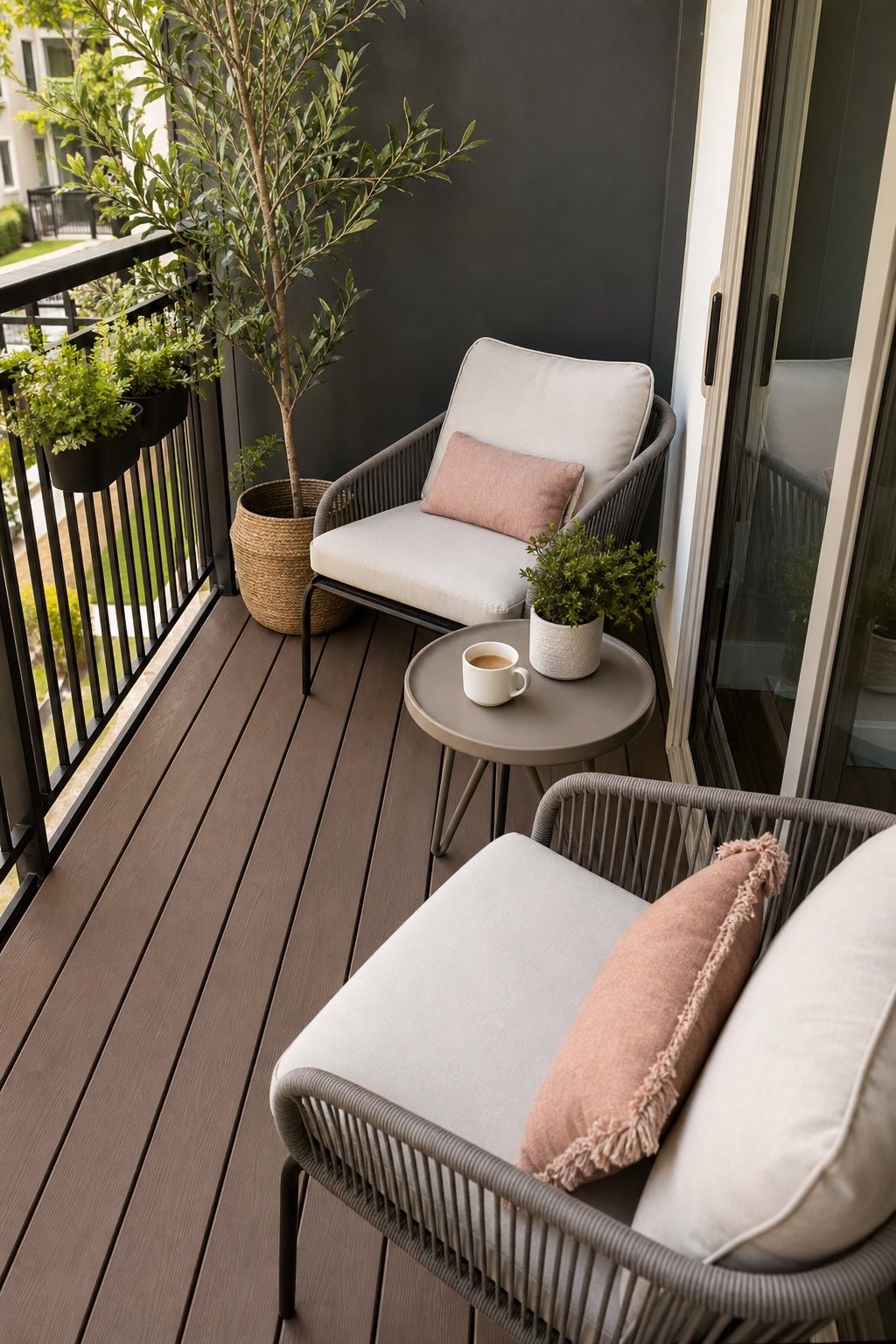


Two chairs and a tiny table is the cleanest layout for a narrow deck because it creates a real sitting zone without eating the entire floor. The table gives drinks, books, and breakfast plates a home, while the pair of chairs keeps the deck social without forcing a full dining set into the space.
Choose chairs with slim arms or no arms so the layout breathes. A round table between 18 and 24 inches wide is usually enough for daily use. Leave a clear path from the door to the stairs, especially if this deck also works as the way into the yard or a shared outdoor area.
On a small deck, every inch has to justify itself. Support the main use of the deck first, then choose the finish, cushion, or plant that makes the layout feel intentional.
2. Use a Bench Along the Longest Wall
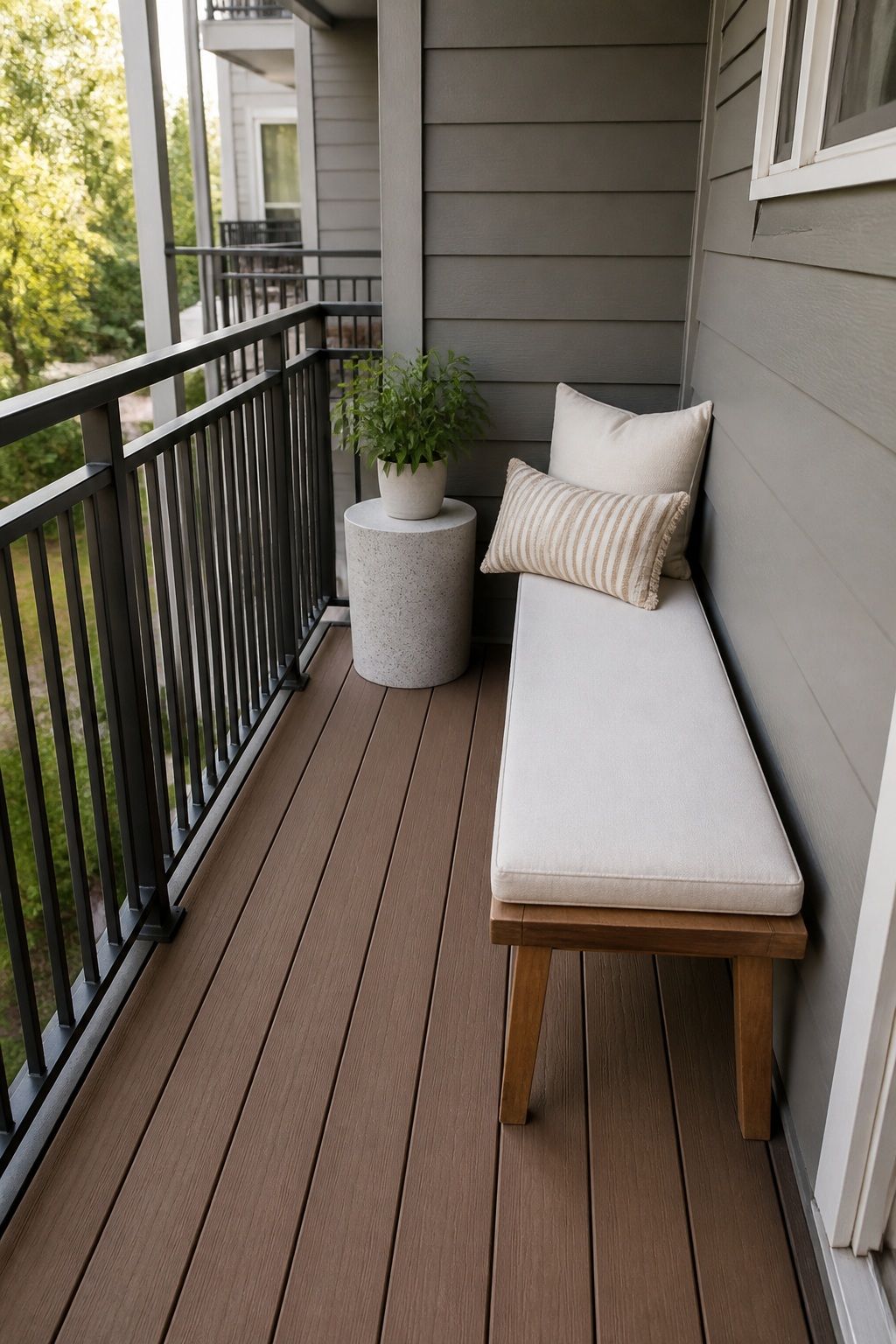


A bench along the longest wall is the small deck move that quietly solves a lot of problems. It creates seating without chair backs jutting into the walkway, and it gives the deck a built-in feeling even when the piece is freestanding. The wall becomes the anchor instead of wasted space.
Look for a narrow outdoor bench with a seat depth around 16 to 20 inches. Add one long cushion or two outdoor pillows if the deck needs softness, but keep the back clear enough for people to sit comfortably. This layout works especially well when you are trying to borrow ideas from small apartment balcony ideas without making the deck feel too packed.
3. Choose a Loveseat Instead of a Full Sofa
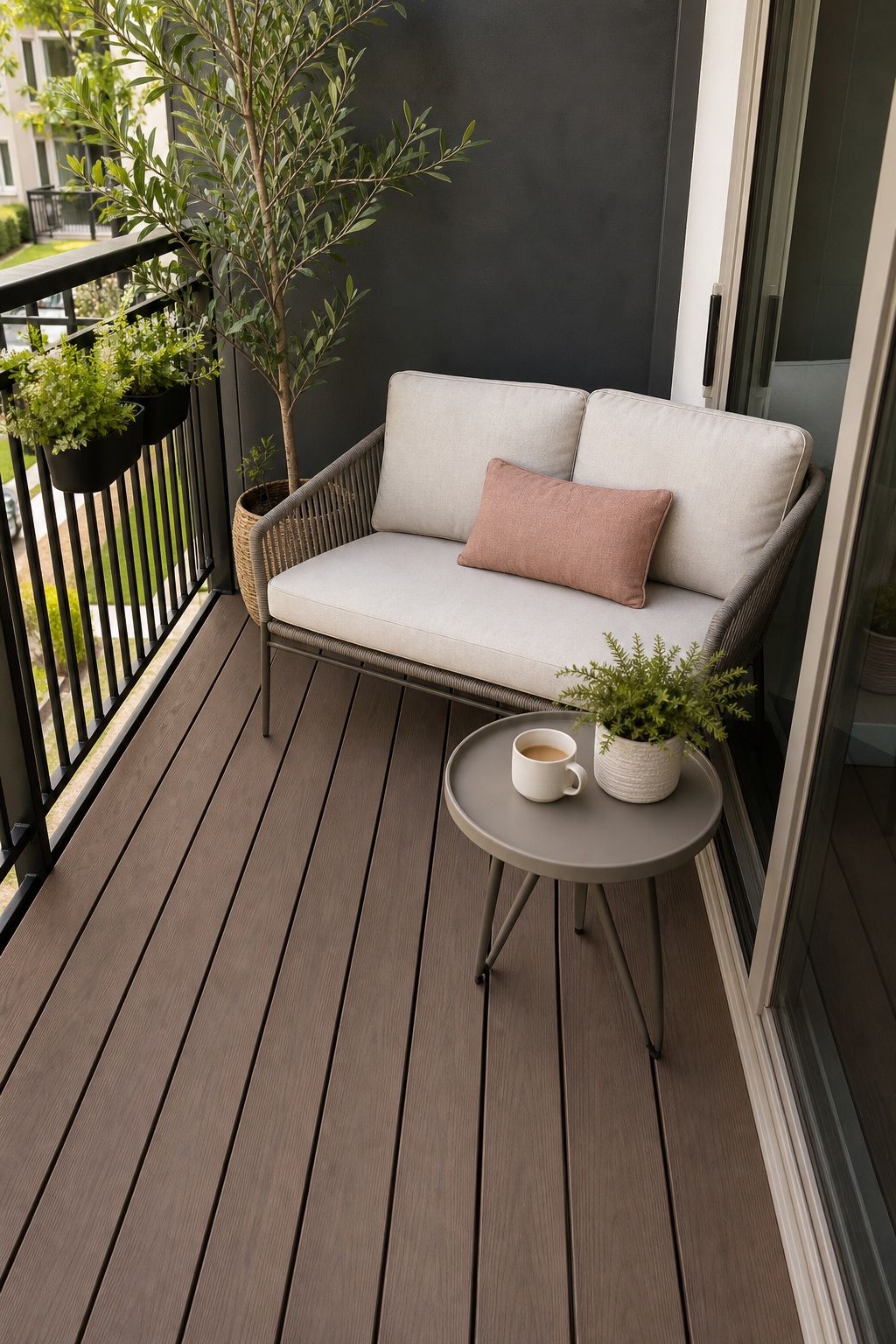


A loveseat can make a small deck feel like a tiny outdoor living room, but it needs to be scaled honestly. A full sofa usually overwhelms the deck, while a loveseat gives you the same relaxed posture in a footprint that still leaves room for a side table or planter.
Measure the deck width before shopping, then leave at least 24 to 30 inches for movement in front of the seat. A low-profile frame, open legs, and thinner cushions keep the piece from looking bulky. The best version feels cozy, not like indoor furniture got pushed outside in a panic.
A compact deck can still feel generous when the pieces share a visual language. Repeat one material, one accent color, and one plant shape so the layout feels calm from the doorway.
4. Put a Folding Bistro Set Near the Rail
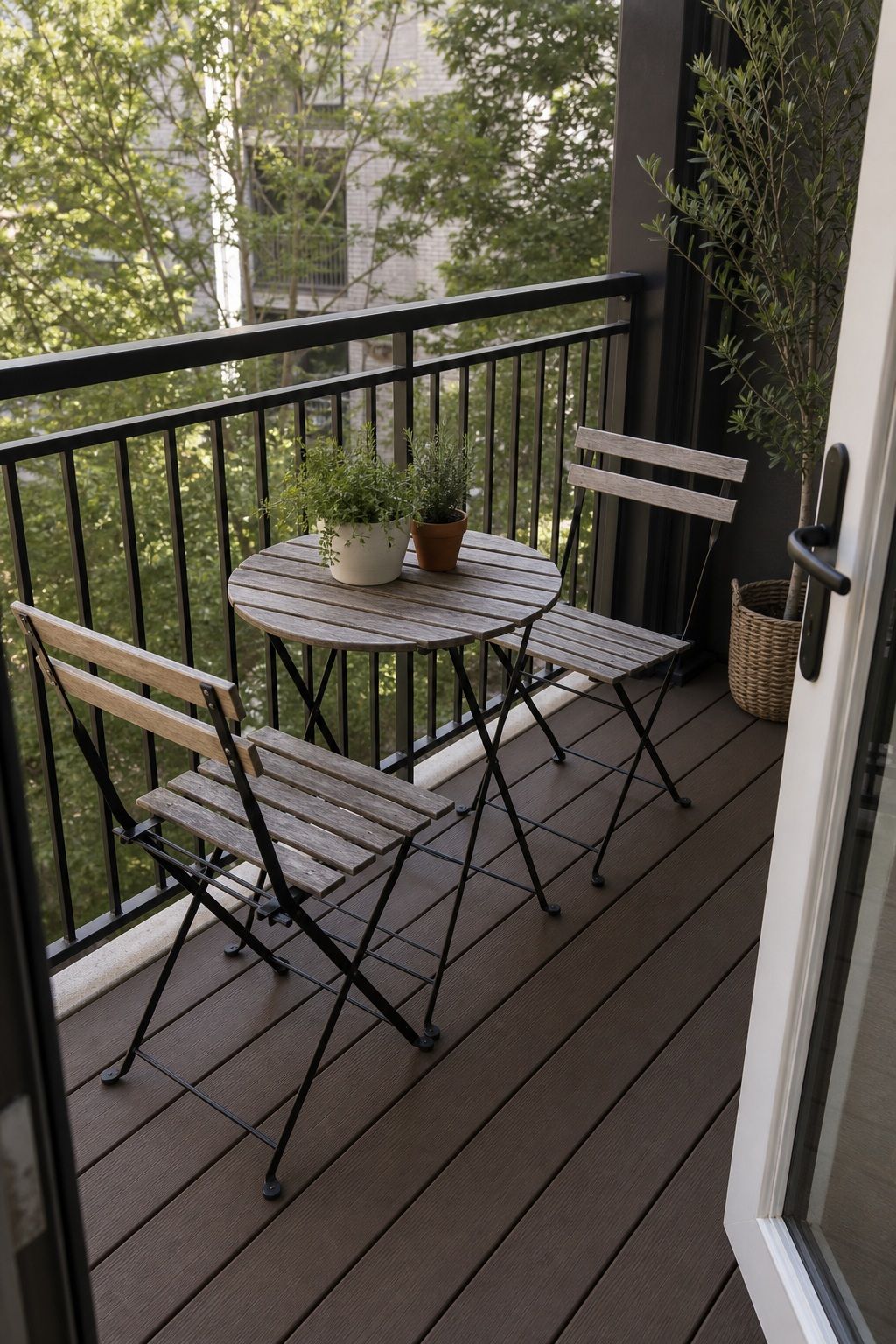


A folding bistro set is perfect when the deck needs to switch between coffee spot, dinner corner, and open floor. The furniture gives you a table when you want one, then folds flat when you need room for plants, cleaning, or extra guests. Flexibility is the whole point.
Place the set near the rail instead of directly in front of the door. That keeps the entrance clear and lets you face outward toward the view, street, garden, or yard. Metal bistro sets are classic, but wood or woven versions can look warmer if the rest of the deck has soft neutrals and natural textures.
On a small deck, every inch has to justify itself. Support the main use of the deck first, then choose the finish, cushion, or plant that makes the layout feel intentional.
5. Keep the Door Swing Completely Clear
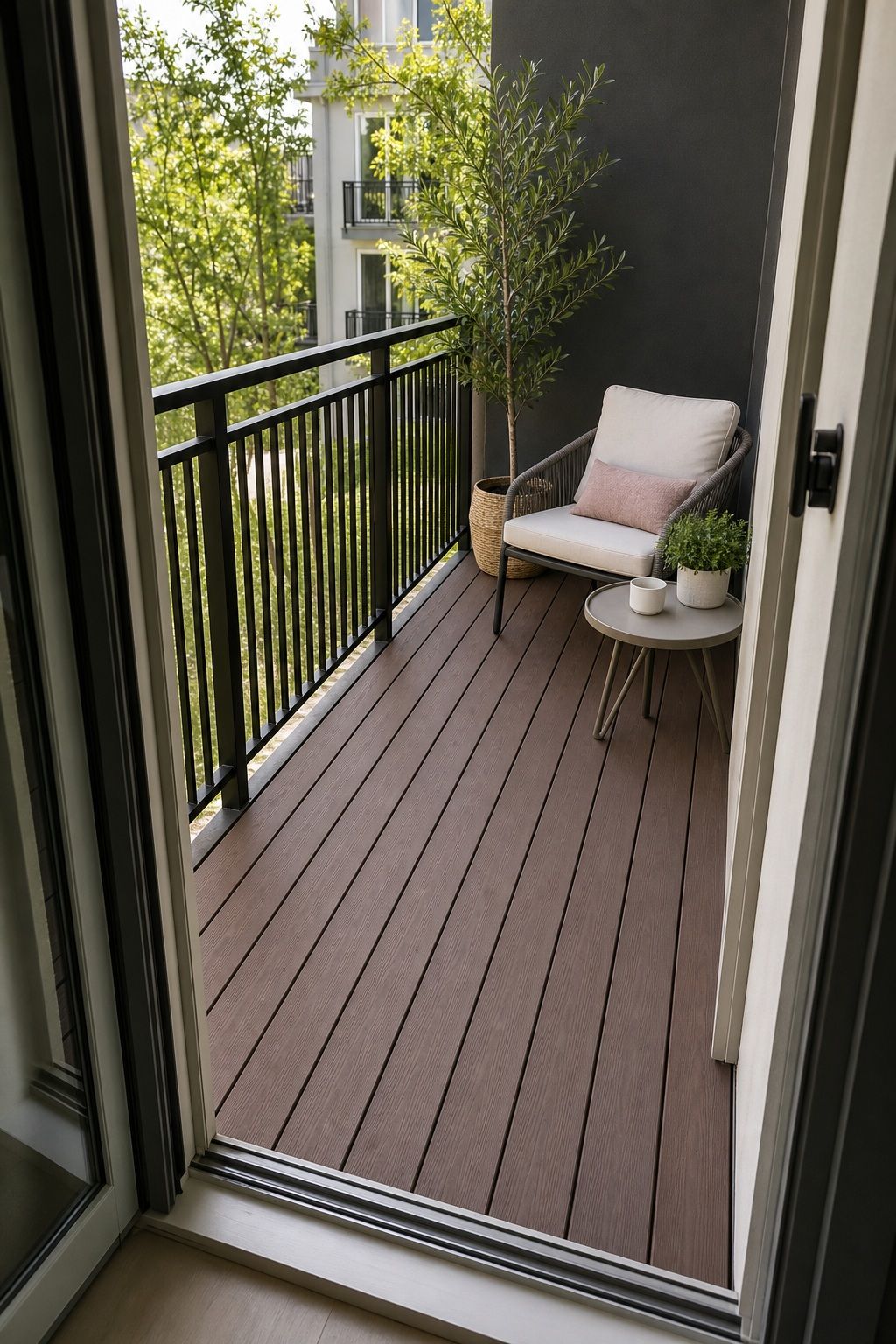


The door swing decides more than most people want to admit. If the door opens onto the deck, the layout has to respect that invisible arc. Furniture that blocks it makes the whole deck feel annoying, even if the pieces are technically beautiful.
Use painter’s tape to mark the swing on the floor before moving furniture around. Keep that area empty, then build the layout around the remaining usable zone. A deck that opens easily and lets you carry a tray outside without bumping a chair will always feel more polished than one filled with pieces that fight the architecture.
The best layout is the one you can walk through without thinking about it. Leave the path clear, keep surfaces close to the seats, and avoid furniture that needs constant shifting.
6. Use a Corner Chair With a Side Table
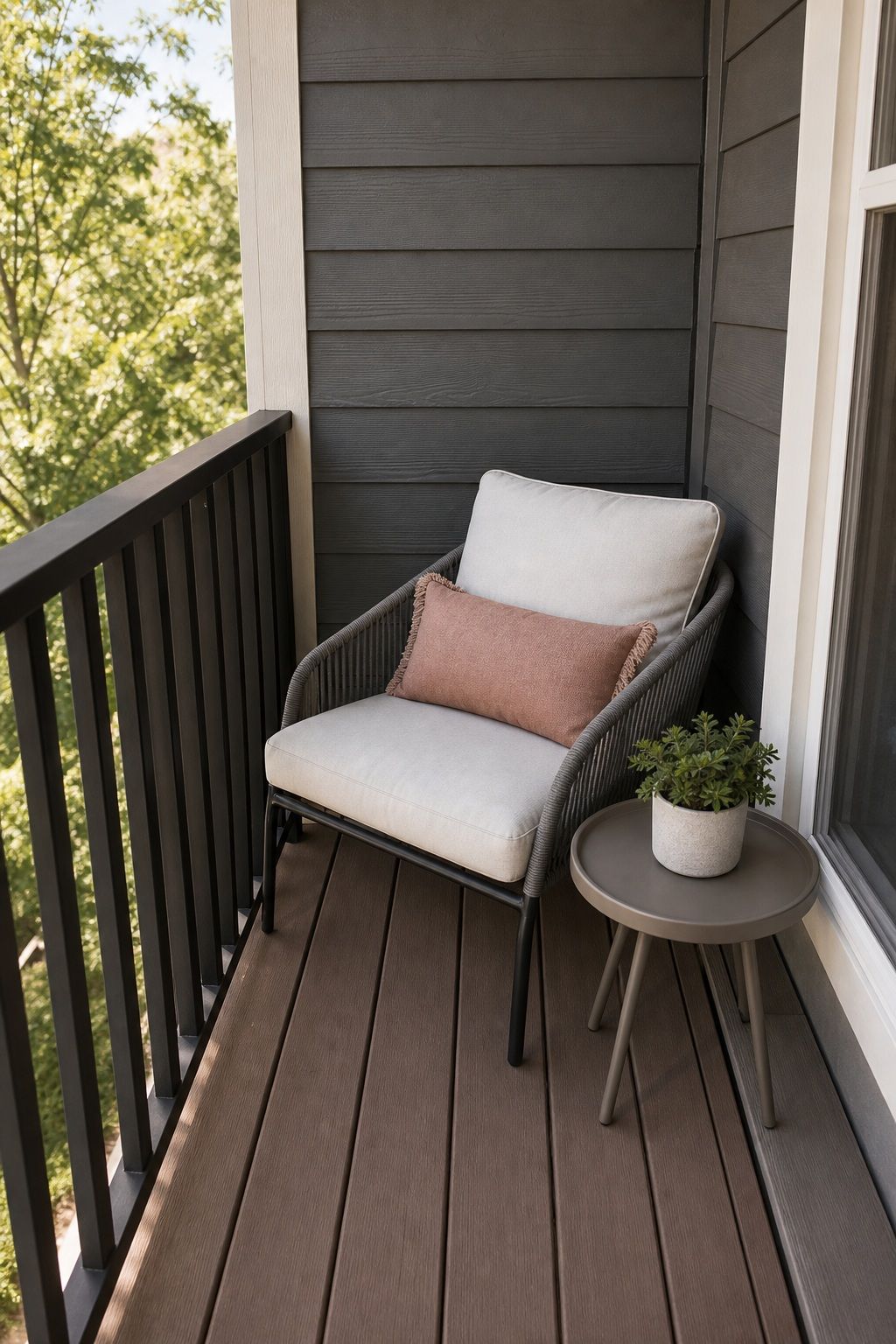


A corner chair with a side table works when the deck is too small for a full seating group but still deserves one comfortable destination. The chair claims the dead corner, and the side table gives the setup purpose. It becomes a reading spot, a coffee spot, or a tiny after-work reset.
Choose the corner that feels most protected from wind, direct afternoon sun, or neighbor sightlines. A compact lounge chair, sling chair, or Adirondack-style chair can work if the scale is right. Keep the side table light enough to move so the deck can flex when you need extra floor space.
A compact deck can still feel generous when the pieces share a visual language. Repeat one material, one accent color, and one plant shape so the layout feels calm from the doorway.
7. Try an L-Shaped Seating Layout
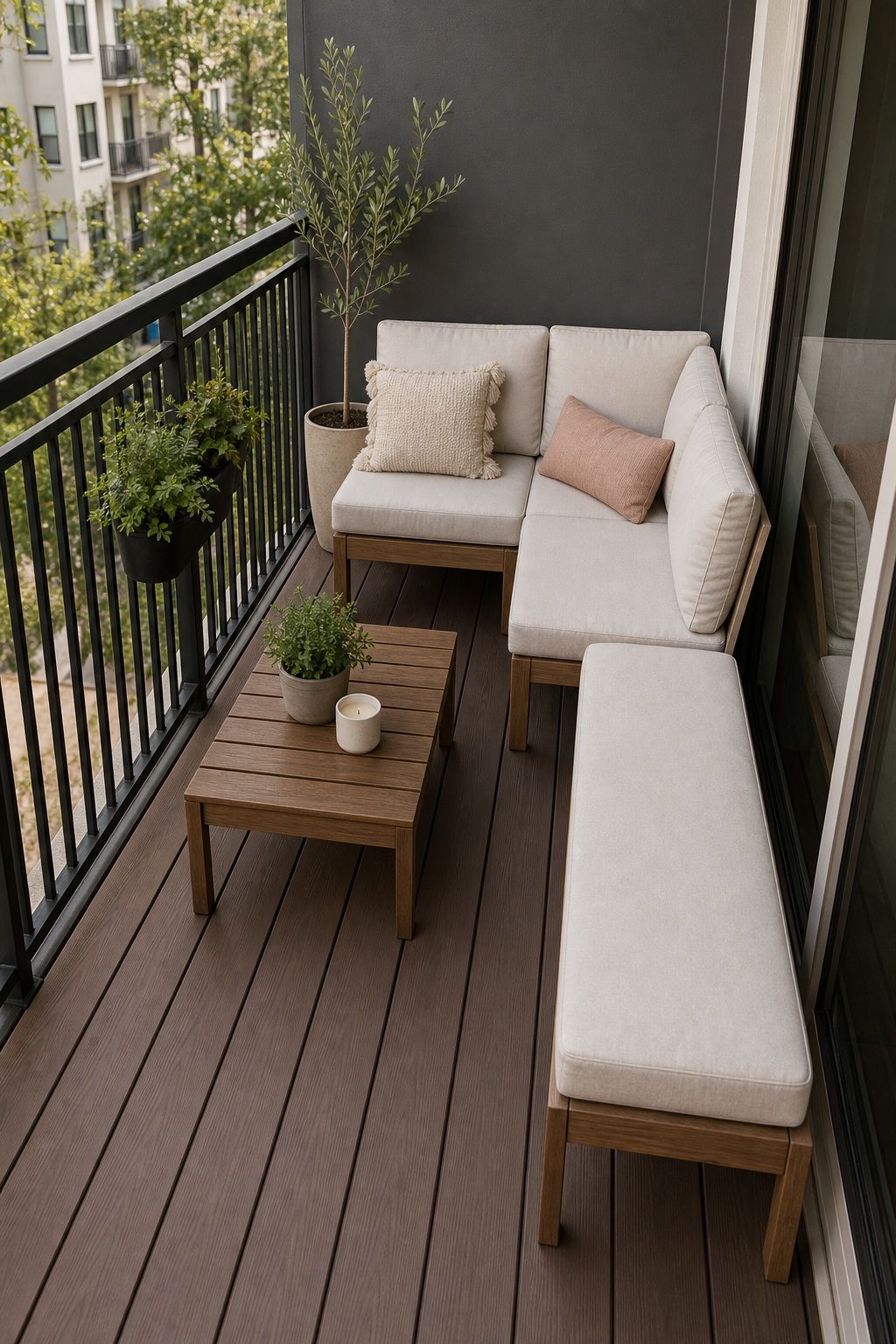


An L-shaped layout can work on a small deck when the furniture hugs two edges and leaves the center open. It gives more seating than scattered chairs, but it still keeps the traffic pattern simple. The key is using the deck edges instead of letting furniture float everywhere.
This can be a real modular outdoor sectional, two benches, or a bench paired with a chair. Keep the corner low and avoid bulky arms at both ends. The open middle can hold a small round table, a pouf, or nothing at all if you want the deck to feel cleaner.
On a small deck, every inch has to justify itself. Support the main use of the deck first, then choose the finish, cushion, or plant that makes the layout feel intentional.
8. Center a Round Table for Dining
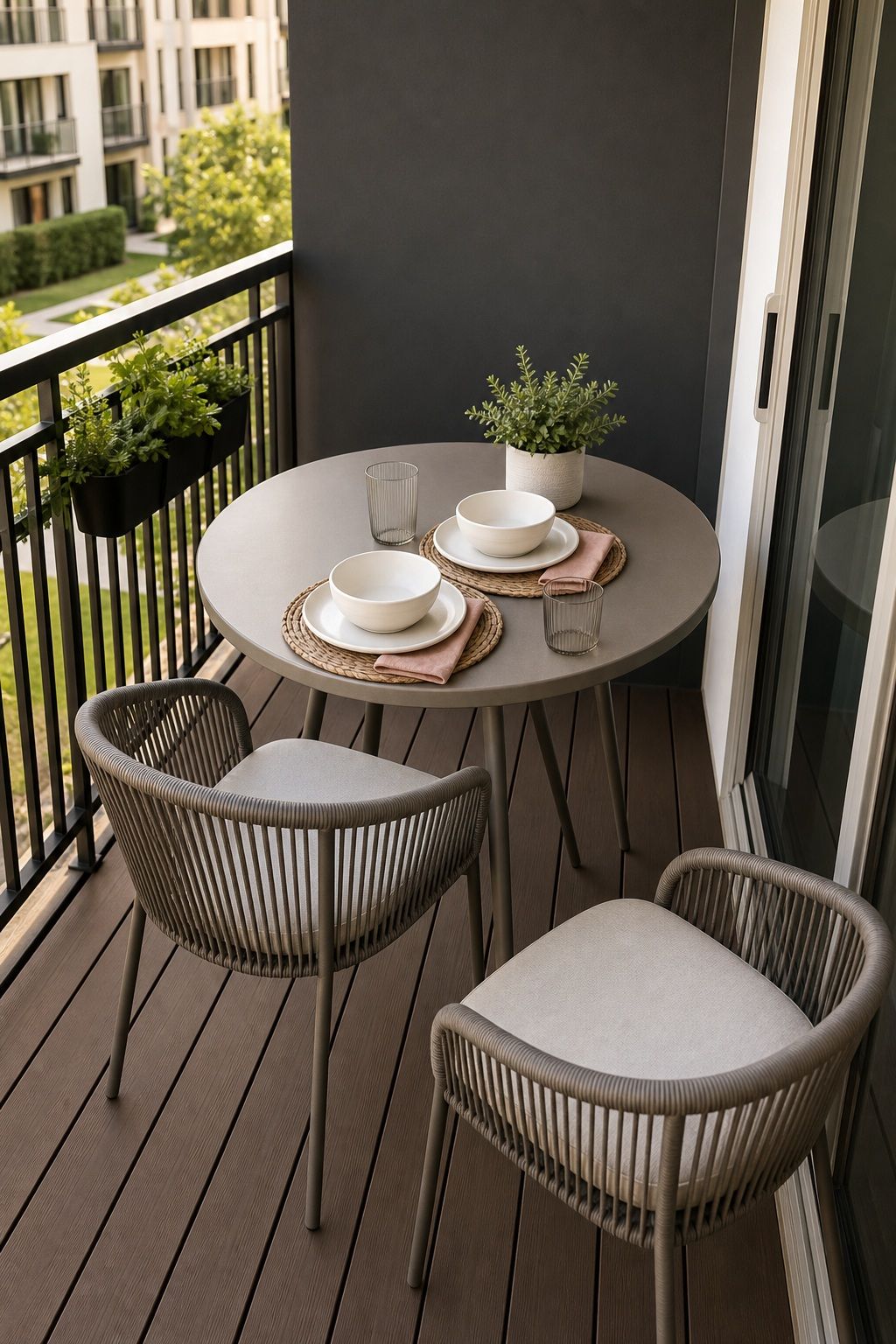


A round table is friendlier than a square one on a small deck because there are no sharp corners to squeeze past. It lets people pull chairs in and out more naturally, and it softens the grid of rails, siding, and deck boards. Dining outside starts to feel possible instead of cramped.
Keep the table diameter modest, usually 30 to 36 inches for two people and 36 to 42 inches for four if the deck can handle it. Use lightweight chairs that tuck in fully. If you host outside often, connect this layout to your outdoor entertaining ideas so the serving path from kitchen to deck stays easy.
The best layout is the one you can walk through without thinking about it. Leave the path clear, keep surfaces close to the seats, and avoid furniture that needs constant shifting.
9. Use Stools That Tuck Under the Table
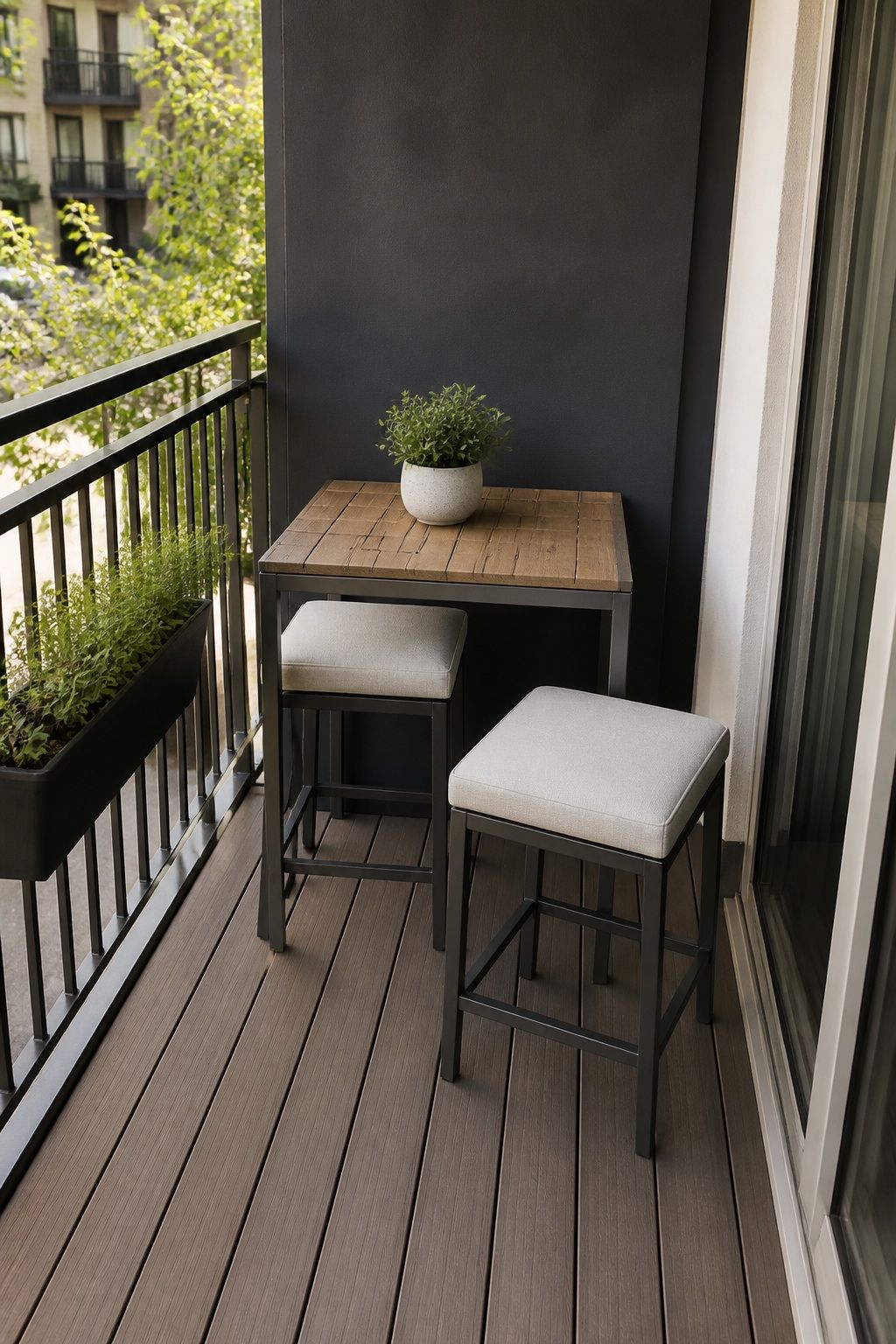


Stools are underrated on small decks because they disappear when they are not being used. Chairs need space behind them, while stools can slide under a table, bench, or console. That makes them useful for extra seating without making the layout feel permanently crowded.
Choose outdoor stools with a stable base and a height that matches the table. Backless stools are best for occasional use, not long dinners, so keep expectations honest. They are perfect when friends stop by, when kids need a perch, or when the deck doubles as a plant-working surface during the day.
A compact deck can still feel generous when the pieces share a visual language. Repeat one material, one accent color, and one plant shape so the layout feels calm from the doorway.
10. Place a Storage Bench by the Door
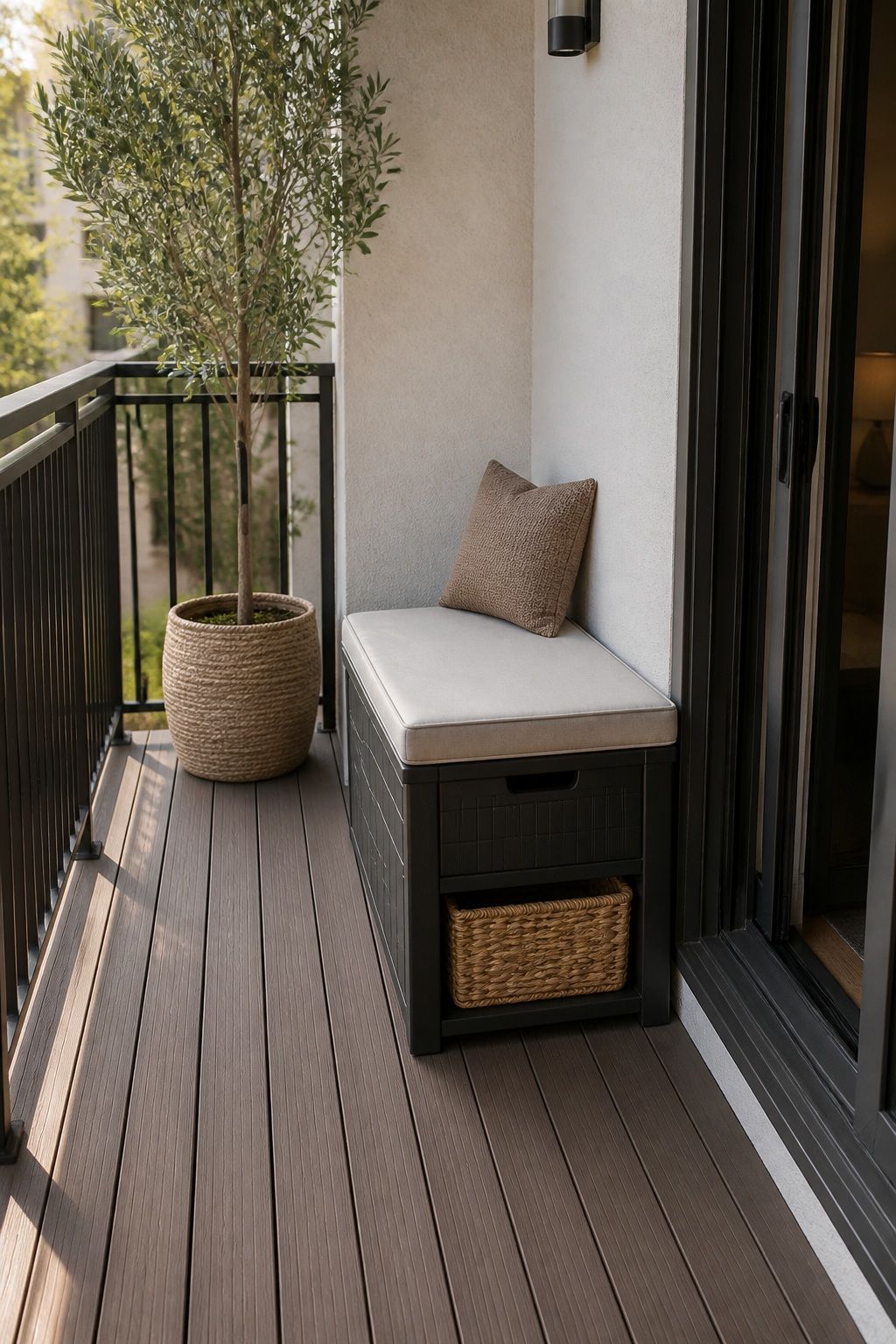
A storage bench by the door gives the deck seating and solves the pile problem at the same time. Outdoor cushions, small tools, citronella candles, and gardening gloves need somewhere to go. Without storage, they usually end up stacked in a corner looking messy.
Choose a bench with a hinged top and weather-resistant construction. Put it close enough to the door that you actually use it, but not so close that it blocks traffic. Add one washable cushion on top if the surface is hard. Storage furniture is not glamorous, but it is often what makes a small deck stay pretty after the first week.
On a small deck, every inch has to justify itself. Support the main use of the deck first, then choose the finish, cushion, or plant that makes the layout feel intentional.
11. Use Nesting Tables Instead of One Big Coffee Table
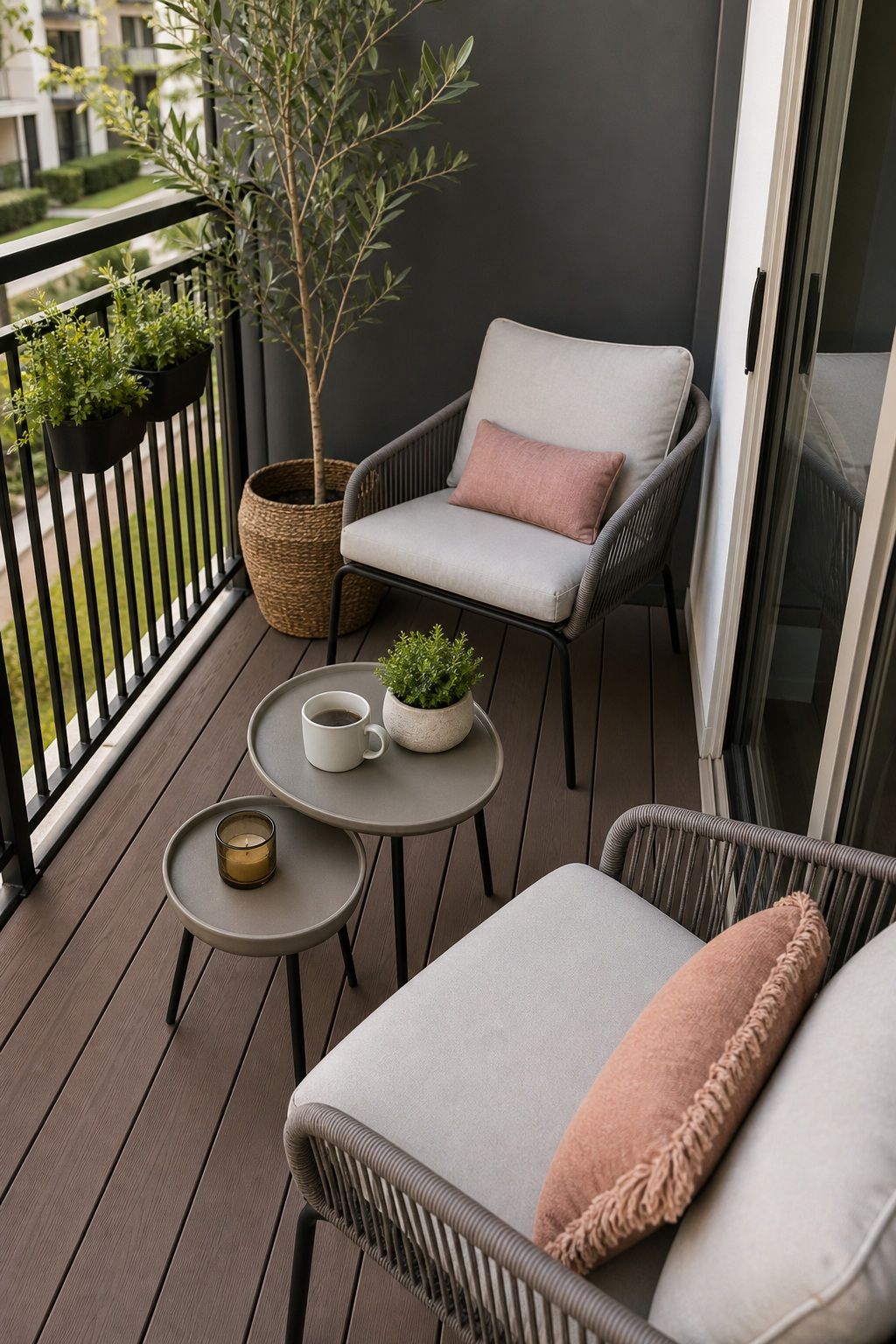


Nesting tables give a small deck more options than one bulky coffee table. You can pull one beside a chair, spread them out when guests arrive, or stack them when you need the floor clear. They create surface area only when the deck actually needs it.
Look for metal, teak, resin, or outdoor-safe ceramic tables with enough weight to stay steady in a breeze. Keep the shapes simple so they do not visually clutter the deck. This works beautifully with a loveseat, two chairs, or even a bench because the tables can move around the seating instead of dictating the whole layout.
The best layout is the one you can walk through without thinking about it. Leave the path clear, keep surfaces close to the seats, and avoid furniture that needs constant shifting.
12. Set Furniture on an Outdoor Rug
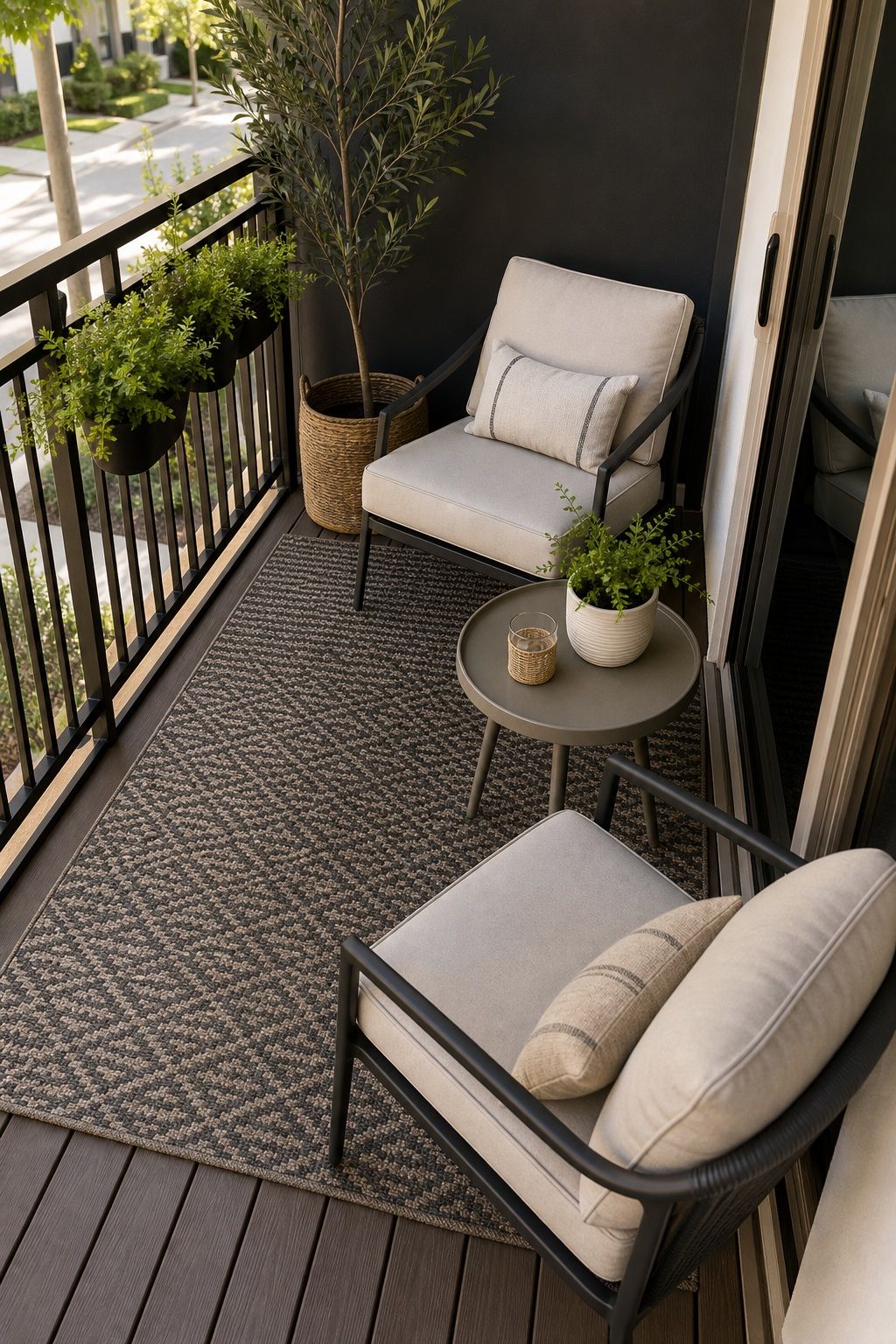


An outdoor rug helps a small deck layout feel deliberate because it draws a boundary around the furniture. Without it, chairs and tables can look like separate pieces sitting on boards. With it, the deck reads as one little outdoor room.
Pick a rug large enough to sit under the front legs of the main seating pieces. Flatweave, washable, and low-contrast patterns are easiest to live with outside. If the deck gets harsh sun, choose muted colors that will fade gracefully. A rug also lets you connect the deck palette to nearby summer outdoor decor ideas without buying a whole new furniture set.
A compact deck can still feel generous when the pieces share a visual language. Repeat one material, one accent color, and one plant shape so the layout feels calm from the doorway.
13. Use Planters as Layout Dividers
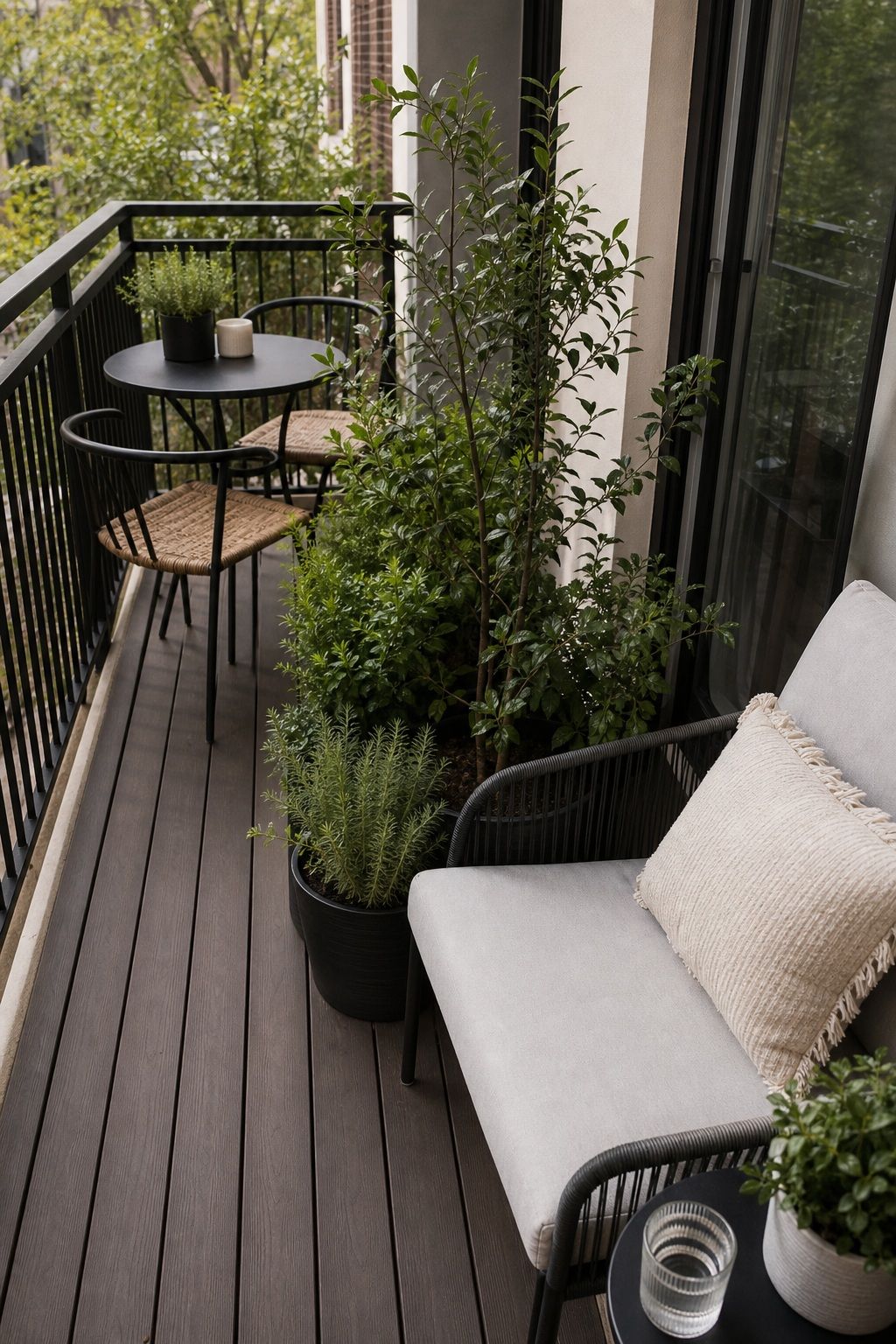


Planters can divide a small deck without adding a wall. A tall planter beside the seating zone, a trough along the rail, or a pair of pots near the stairs can tell the eye where one area ends and another begins. The deck feels designed without extra furniture.
Use plants with height or texture, like grasses, rosemary, boxwood, lavender, or trailing vines. Keep the planters out of the walking path and choose containers heavy enough to stay put. This is one of the easiest ways to make a furniture layout feel softer, especially if the deck has a lot of hard railing and siding. For a related styling angle, read our front porch garden ideas next.
14. Create a Low Lounge Setup With Floor Cushions
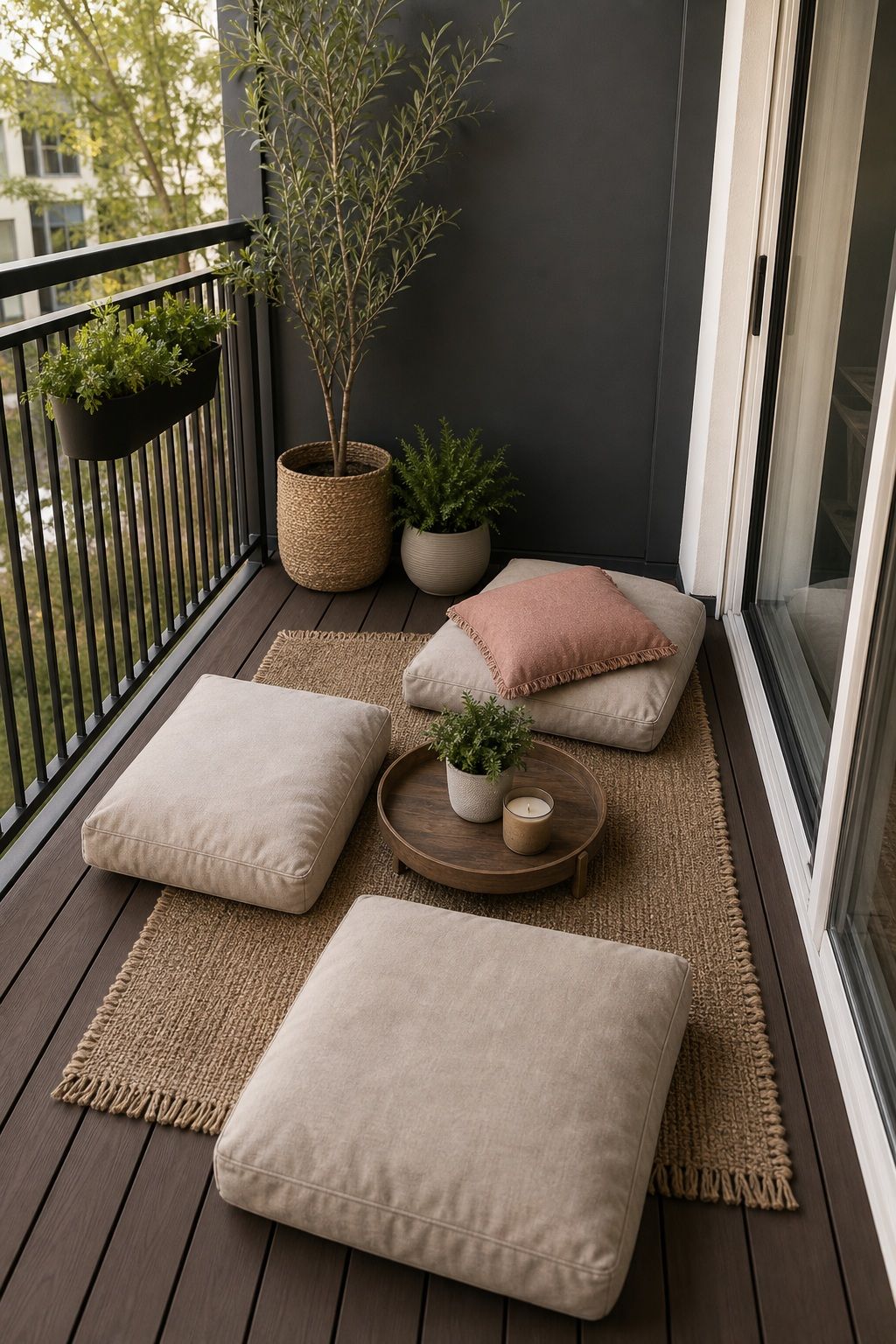


A low lounge setup works when the deck is more for relaxing than dining. Floor cushions, a low table, and a soft rug can make the space feel casual and flexible, especially on a protected deck where cushions can be brought inside during bad weather.
Use outdoor-rated cushions with removable covers, and keep a storage bin nearby so they do not get ruined. This layout is best for reading, drinks, and slow mornings, not formal meals. It can feel beautiful on a tiny deck because the low profile keeps sightlines open and the rail area from feeling blocked.
The best layout is the one you can walk through without thinking about it. Leave the path clear, keep surfaces close to the seats, and avoid furniture that needs constant shifting.
15. Angle One Chair Toward the View
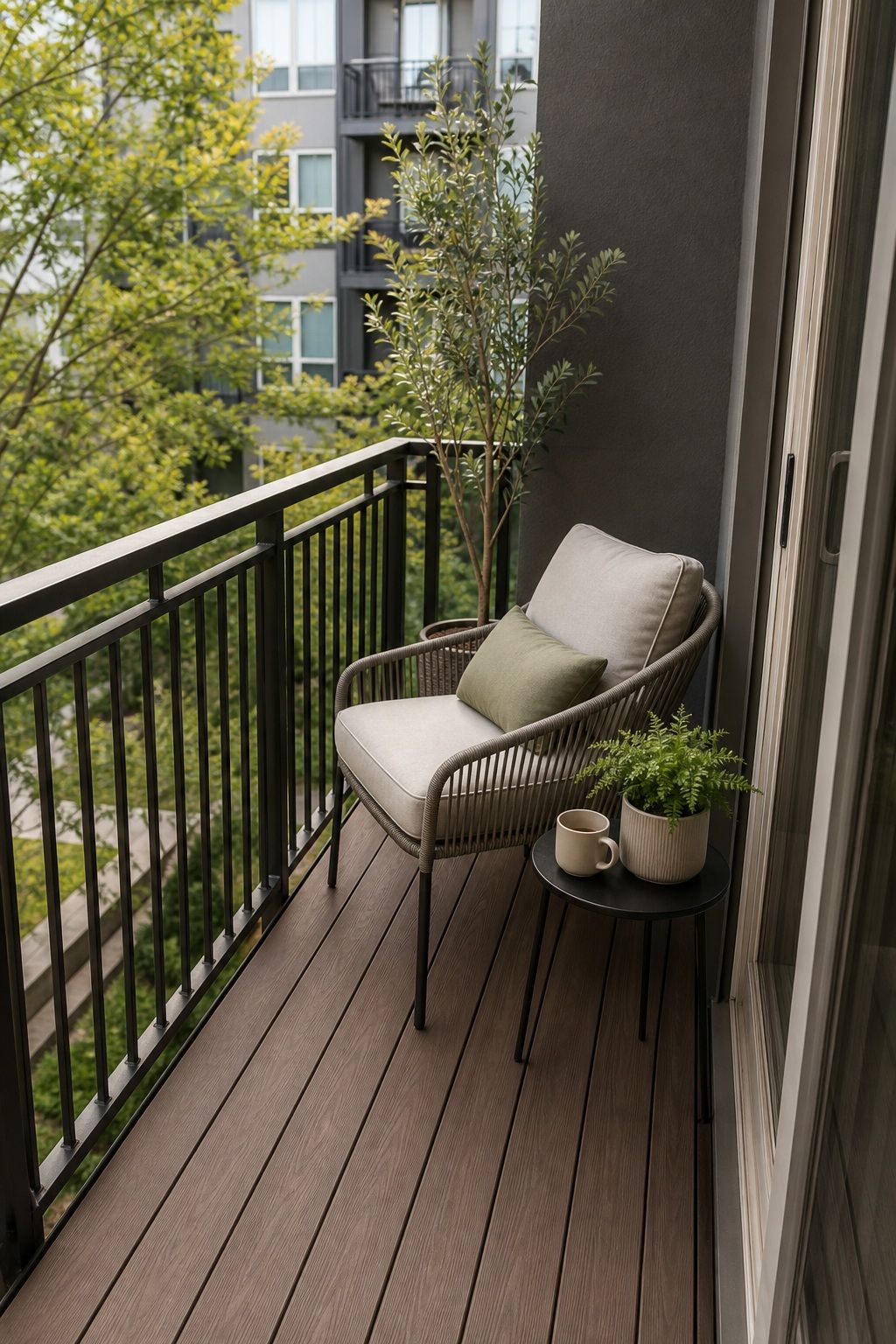


Sometimes the whole layout improves when one chair is angled slightly toward the best view. The view might be a garden, trees, sunset, or just the prettiest corner of the yard. Angling the chair makes the deck feel less rigid and more like a place someone actually uses.
Keep the angle subtle so the chair does not interrupt traffic. Pair it with a small drink table or planter so the placement feels intentional. If your deck gets seasonal use, this is an easy layout to shift with the weather, facing morning light in spring and warmer late-day sun when fall patio decor starts coming out.
A compact deck can still feel generous when the pieces share a visual language. Repeat one material, one accent color, and one plant shape so the layout feels calm from the doorway.
16. Edit Down to One Clear Purpose
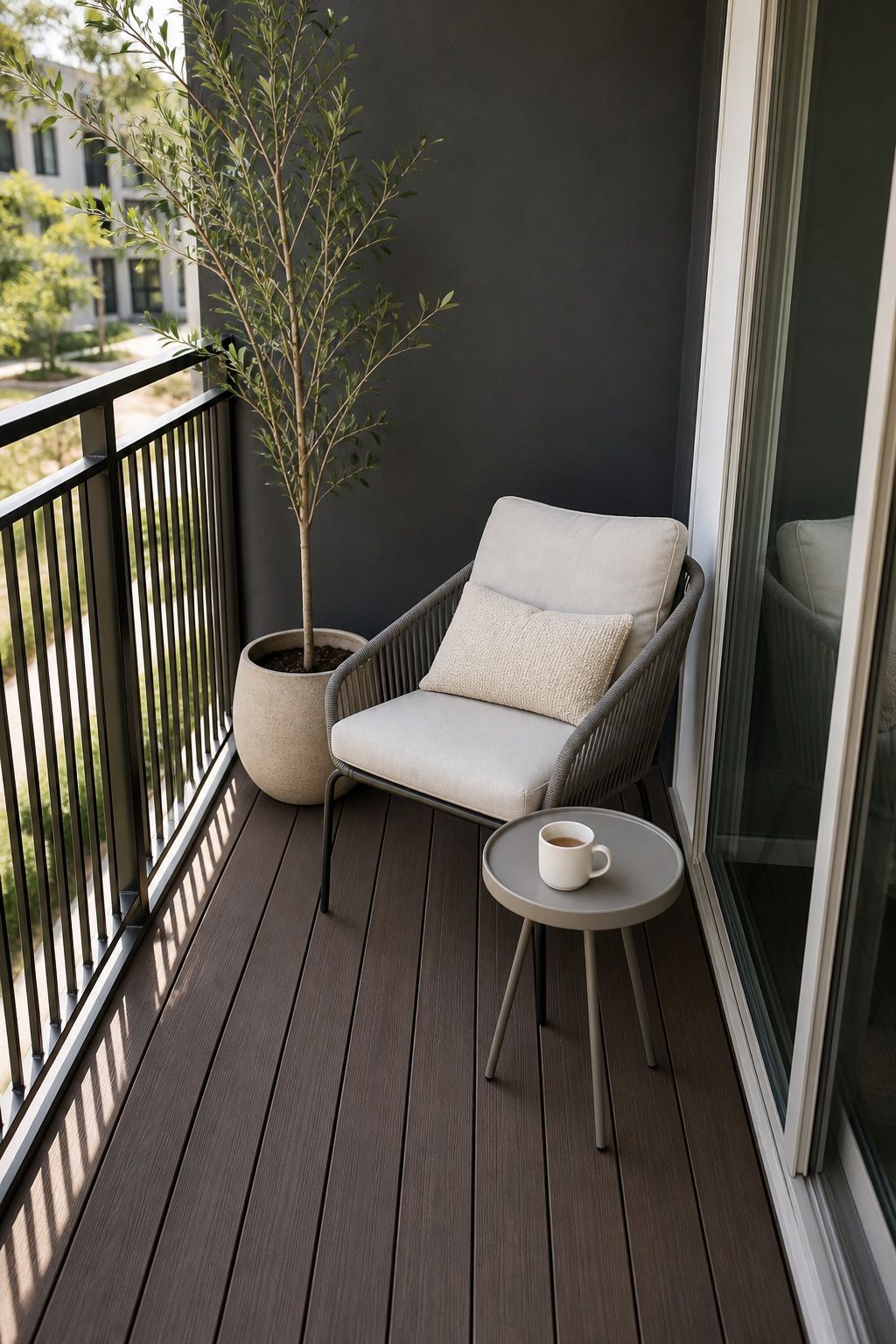
The most useful small deck furniture layout is the one that admits what the deck is for. A deck can be a coffee nook, a two-person dining spot, a plant corner, or a tiny lounge, but it usually cannot be all of those things at once without feeling crowded.
Choose the purpose you will use most, then let the furniture support that decision. If you eat outside, prioritize a table. If you read outside, prioritize one comfortable chair. If you garden, prioritize storage and planters. A deck with one clear purpose feels calmer, and it gets used more because nothing is in the way.
On a small deck, every inch has to justify itself. Support the main use of the deck first, then choose the finish, cushion, or plant that makes the layout feel intentional.
Before you buy another pretty thing for the entrance, make the plan simple. The Aesthetic Apartment Makeover Guide gives you a room-by-room styling framework so every porch, deck, or apartment corner feels connected.
Frequently Asked Questions
What is the best furniture layout for a small deck?
The best furniture layout for a small deck keeps the door swing and walking path clear, then builds one main zone around how you use the deck most. Two chairs and a small table, a bench along the wall, or a petite dining setup usually works best.
How much space do you need around deck furniture?
Leave at least 24 to 30 inches for a walking path around deck furniture whenever possible. If the deck is extremely small, prioritize the path from the door to the stairs and use folding or tucked-in pieces.
Is a round or square table better for a small deck?
A round table is usually better for a small deck because it has no sharp corners and is easier to walk around. Square tables can work against a wall, but round tables feel softer in tight layouts.
How do you make a small deck feel cozy?
Make a small deck feel cozy with warm lighting, one outdoor rug, comfortable seating, plants, and a tight color palette. Cozy does not mean crowded, so keep the pieces useful and scaled to the deck.
Key Takeaways
- Start every deck layout with the door swing and walking path.
- One clear purpose makes the furniture choices easier.
- Benches, stools, and folding bistro sets work especially well on small decks.
- Rugs, planters, and nesting tables help the layout feel finished without crowding it.
Final Thoughts
Small deck furniture layout ideas do not need to be complicated to be beautiful. Start with the idea that makes the space easier to use, keep the palette calm, and let the useful details carry the style.
Last update on 2026-09-18 / Affiliate links / Images from Amazon Product Advertising API
