

The best covered outdoor patio ideas combine the right roof structure (pergola, gazebo, awning, or full roof extension) with weather-appropriate add-ons (ceiling fans, heaters, curtains, integrated lighting). Pick a pergola with retractable canopy for flexibility, a screened-in porch for bug-free year-round use, or a roof extension from the house for the most permanent indoor-outdoor flow.
There was a stretch this past September where it rained for nine straight days, and you spent every one of those days watching your beautiful uncovered patio sit empty through the kitchen window. That is the experience a covered patio quietly fixes. Suddenly the rain is happening four feet from where you are eating dinner, and the patio is the best seat in the house.
A roof over the patio also opens up moves you cannot make on an open slab. You can hang a real chandelier instead of solar string lights. You can mount a ceiling fan that actually moves air on a humid August evening. You can leave the cushions out without checking the weather every time. The roof is the upgrade that makes everything else possible.
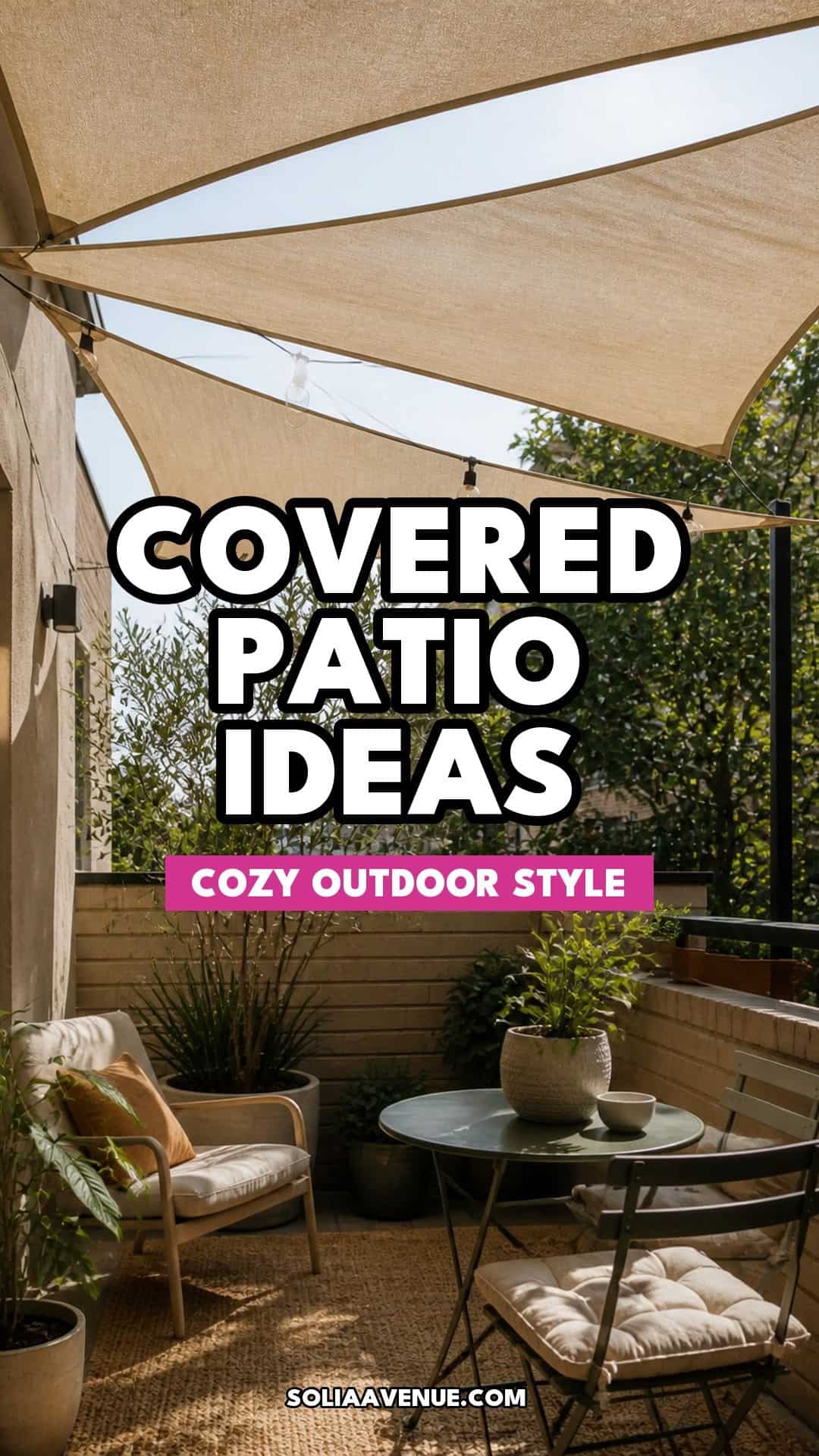
Recommended Covered Patio Essentials
The structural and styling pieces that anchor a covered patio, pergola or gazebo, ceiling fans, integrated lighting, curtains, and weatherproof furniture.


Recommended blogs to read:
- Boho outdoor patio ideas
- Small apartment patio ideas
- Summer front porch decorating ideas
- Fall patio decor ideas
- Small apartment balcony ideas
Permanent Roof Structures
1. Install a pergola with retractable fabric for adjustable shade


A pergola with a retractable canopy is the most flexible covered patio option. Wood pergolas (cedar, redwood, pressure-treated pine) in 10×12 or 12×14 footprints handle a six to ten person dining and lounging zone with room to spare.
The retractable fabric (Sunbrella, Outdura, or similar performance canvas) pulls across the top beams via a track system for full shade or retracts to let direct sun through. Motorized versions cost more but operate from a remote; manual crank versions save money and rarely fail.
The retract feature is what keeps a pergola useful all year, since you pull the canopy back for warmth on a cool spring day and slide it across for shade in the August heat. Retracting the fabric before a storm also protects it, since wind pressure on an extended canopy is what shortens a fabric roof’s life. A kit version is a realistic weekend build for a confident DIYer, which saves a significant chunk over a custom install.
Read more: Top 15 Small Outdoor Patio Ideas to Maximize Style and Comfort
2. Use a gazebo with curtains for privacy and weather protection
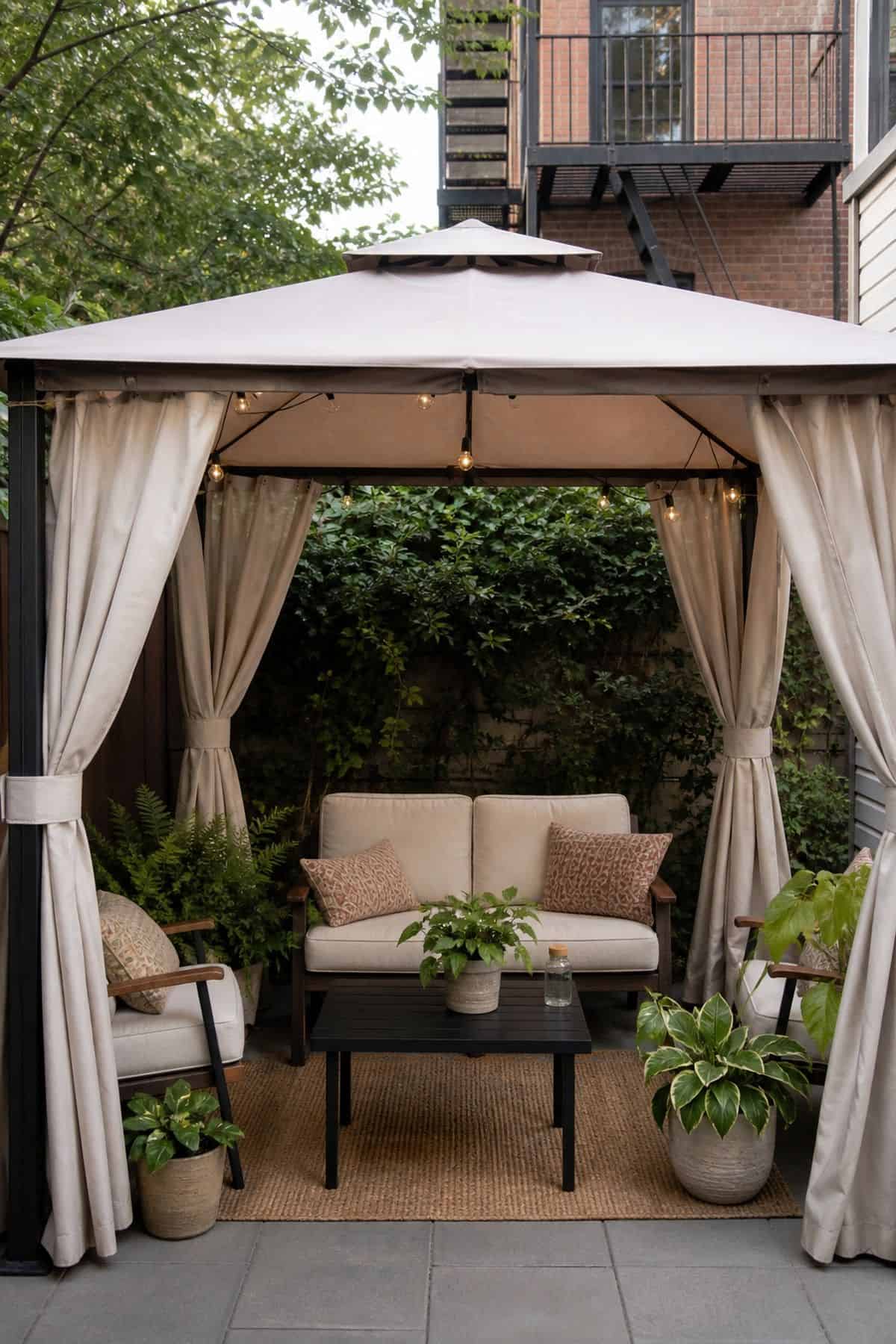


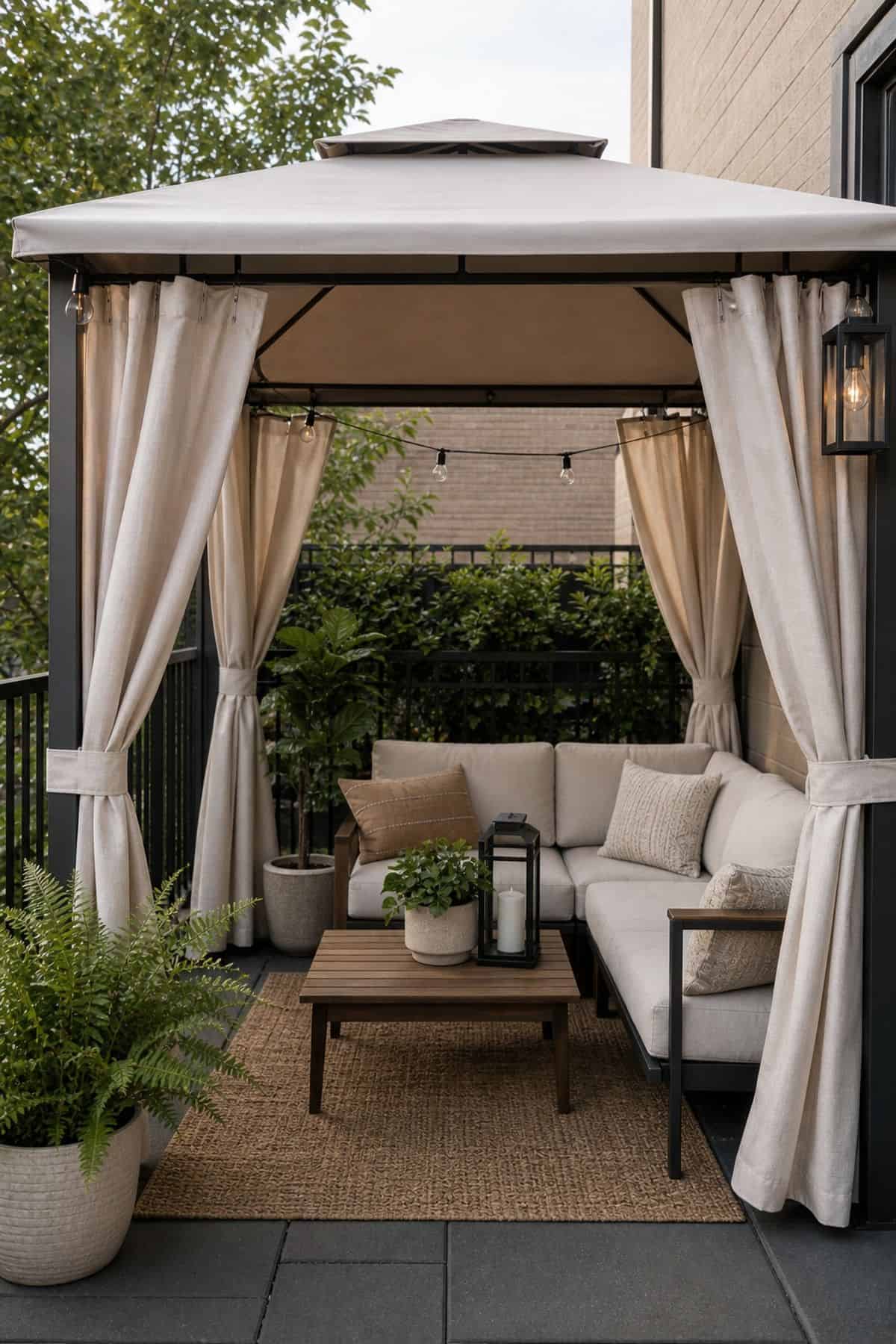
Gazebos offer a more enclosed feel than pergolas because the roof is solid (typically polycarbonate or aluminum) and the four-corner posts can support curtain panels for privacy and wind blocking. Hardtop gazebos in 10×12 or 12×16 sizes seat six to eight comfortably.
Add sheer outdoor curtains for daytime softness or heavier blackout-style panels for evening privacy. The hardtop roof handles rain and snow loads better than fabric, making this the right choice for climates with heavy precipitation.
The curtains do quiet practical work beyond privacy, blocking low-angle afternoon sun and cutting the wind so the gazebo stays comfortable on a breezy evening. A built-in screen kit on the openings lets the gazebo double as a bug-free dining spot in summer. Anchoring a freestanding gazebo to a deck or concrete pad is worth doing, since a hardtop catches wind and a stiff gust can shift an unsecured structure.
Read more: Top 16 Outdoor Patio Roof Ideas That Keep You Outside Rain or Shine
3. Add a covered deck with ceiling fans for comfort
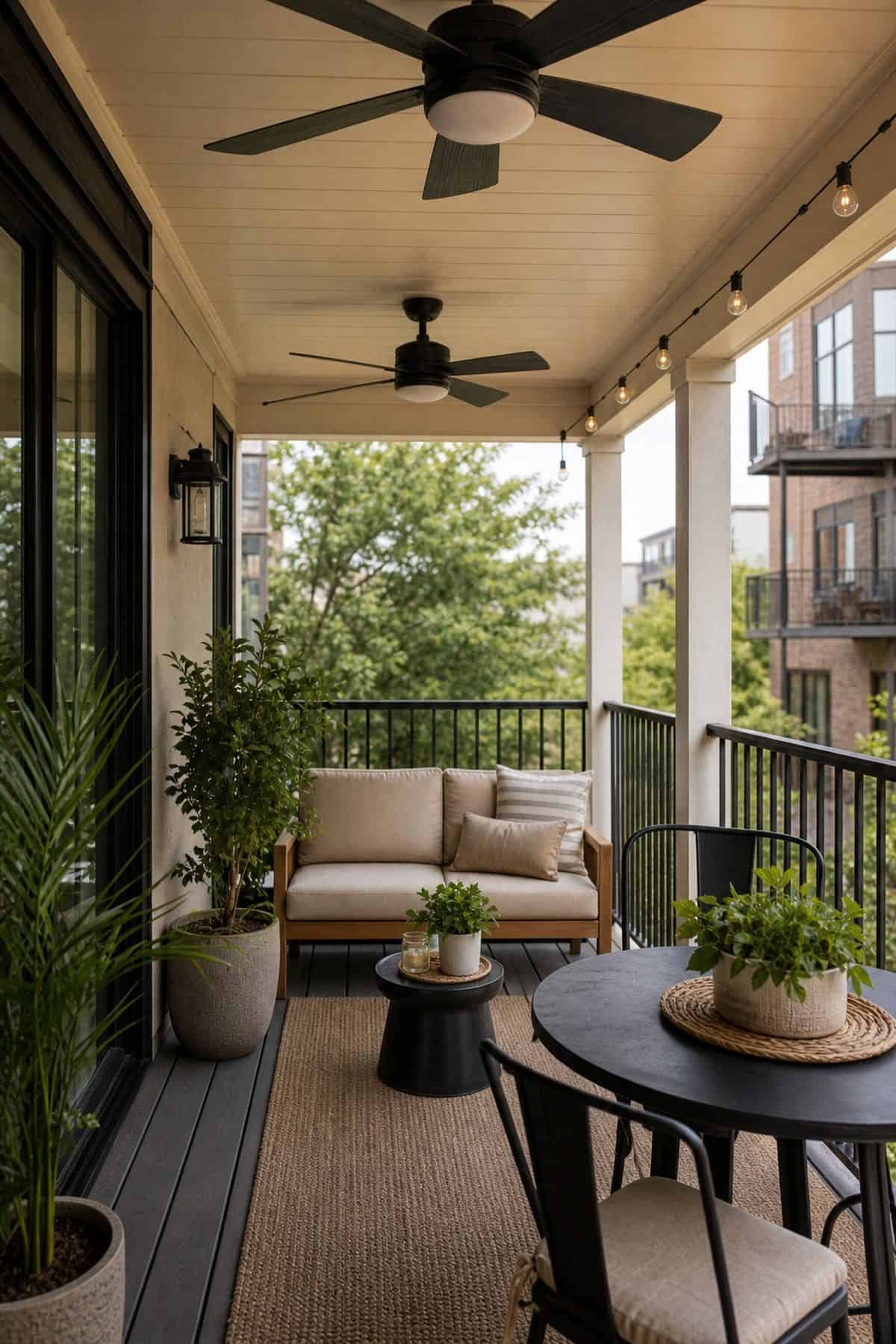


Covered decks with proper roofing turn the patio into a true extension of the house. Pair the roof with two or three outdoor-rated ceiling fans (52-60 inch blades, wet-rated for fully exposed areas, damp-rated for covered spaces) for summer airflow.
Fans rated for outdoor use have sealed motors that handle humidity without rusting. Brands like Hunter, Hampton Bay (Home Depot), and Big Ass Fans all carry outdoor-rated lines. Wire to a wall switch with speed control for easy adjustment.
Beyond the breeze, moving air keeps mosquitoes off, since they struggle to fly through a steady draft over the seating zone. Mount fans with at least seven feet of clearance below the blades and check the down-rod length so the fan sits at an effective height under the roof. A model with an integrated light fits two jobs into one ceiling box, which is handy on a patio with limited wiring.
4. Incorporate a roofed patio extension from the house
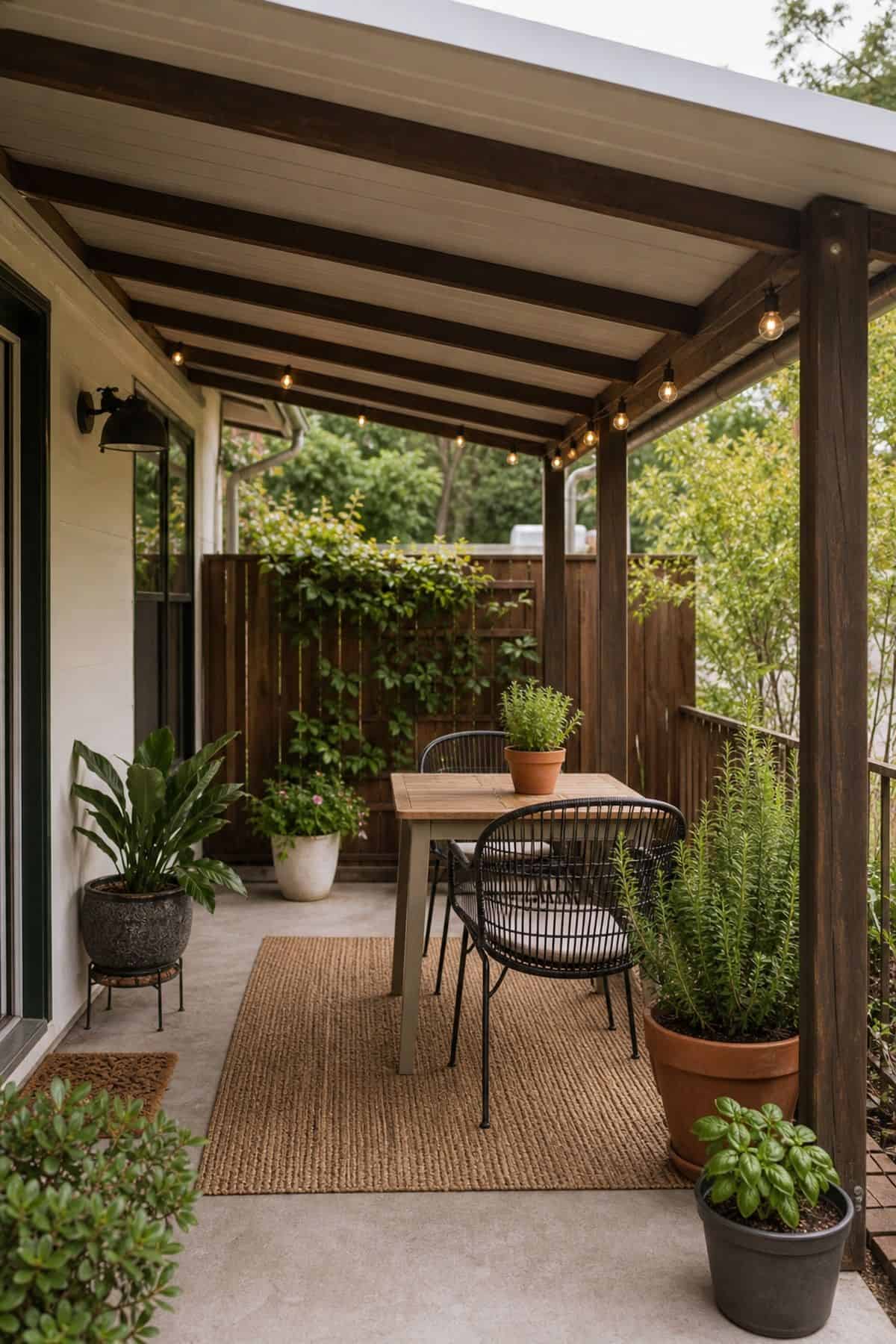


The most permanent covered patio option attaches the roof structure directly to the house, extending the indoor space into the outdoor zone. The roof matches or complements the house roof line (gable, shed, or flat extension), creating a smooth indoor-outdoor transition. Working with a smaller outdoor space? These small apartment patio ideas bring the same indoor-outdoor feeling to compact patios.
Insulated ceiling panels allow recessed lighting, ceiling fans, speakers, and even infrared heaters. The cost runs higher than freestanding structures (often $15,000-50,000 depending on size and finishes), but adds genuine home value and removes weather as a usage barrier entirely.
Matching the new roof’s pitch and materials to the existing house line is what makes the addition read as part of the home rather than something bolted on. A roof tied to the house also keeps rain off the adjacent doors and windows, which protects the interior threshold over time. This is firmly a permitted, contractor-built project, so factoring inspections and approvals into the timeline keeps the build on track.
Read more: Top 15 Outdoor Fireplace Patio Decor Ideas to Elevate Your Backyard
Flexible Shade Options
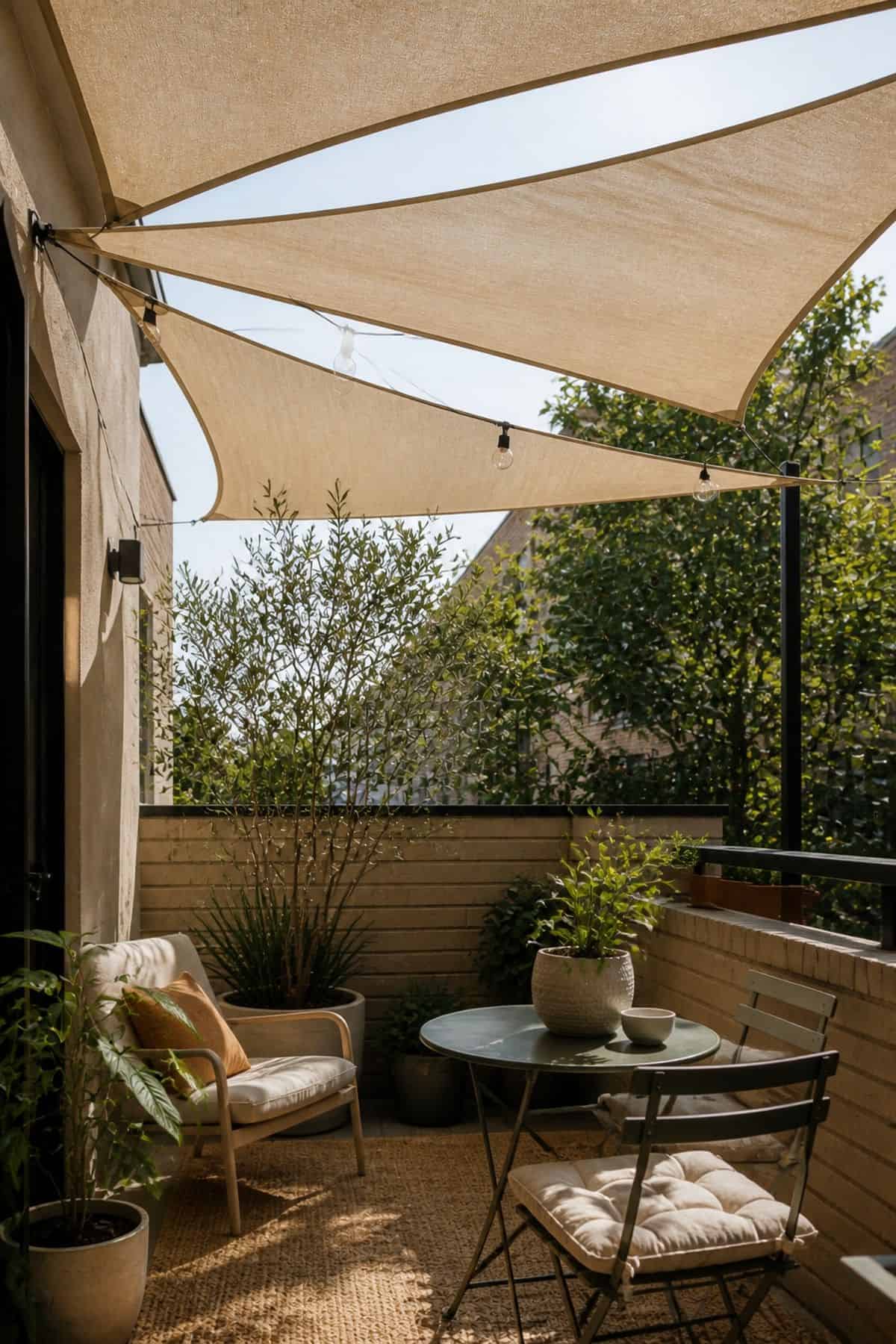
5. Use shade sails for a modern, airy cover
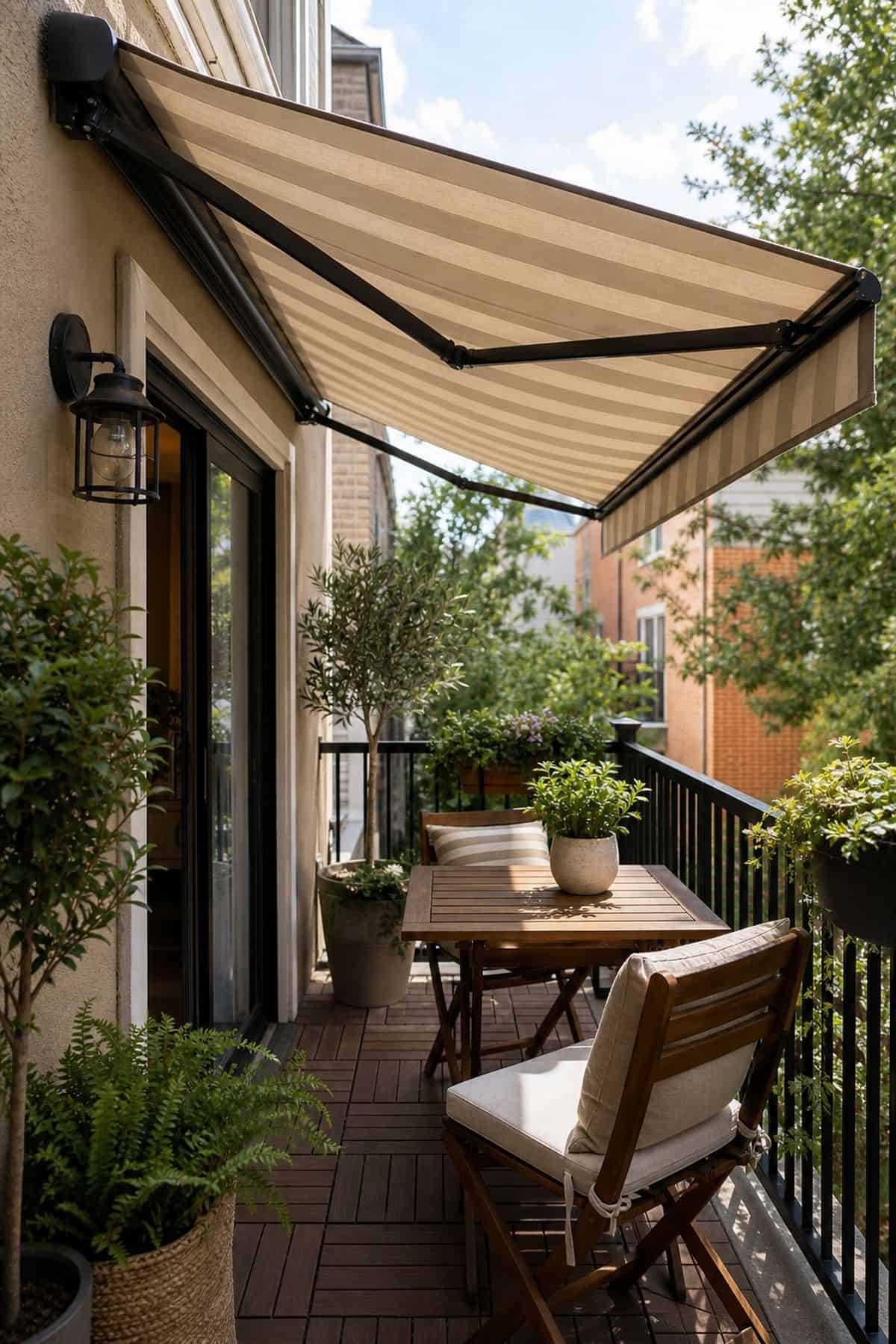


Triangular shade sails create geometric architectural shade without the visual weight of a solid roof. Single 10-13 foot triangular sails block 90-95 percent of UV when made from heavy-duty HDPE knitted fabric.
Mount to corner posts, the house eaves, or trees with stainless steel hardware rated for the wind load in your region. Sails come down for winter or storms to prevent damage, making them less permanent than a pergola or gazebo but more affordable per square foot of coverage.
Overlapping two or three sails at slightly different heights creates layered shade and a striking architectural look that a single flat panel cannot match. Set each mounting point at a different height so rain runs off cleanly rather than pooling in the middle of the fabric. Sails are also the friendliest covered option for a tight budget, since the materials cost a fraction of a built structure.
Read more: Top 15 Outdoor Kitchen Patio Decor Ideas to Enhance Your Backyard
6. Install a retractable awning for flexible coverage
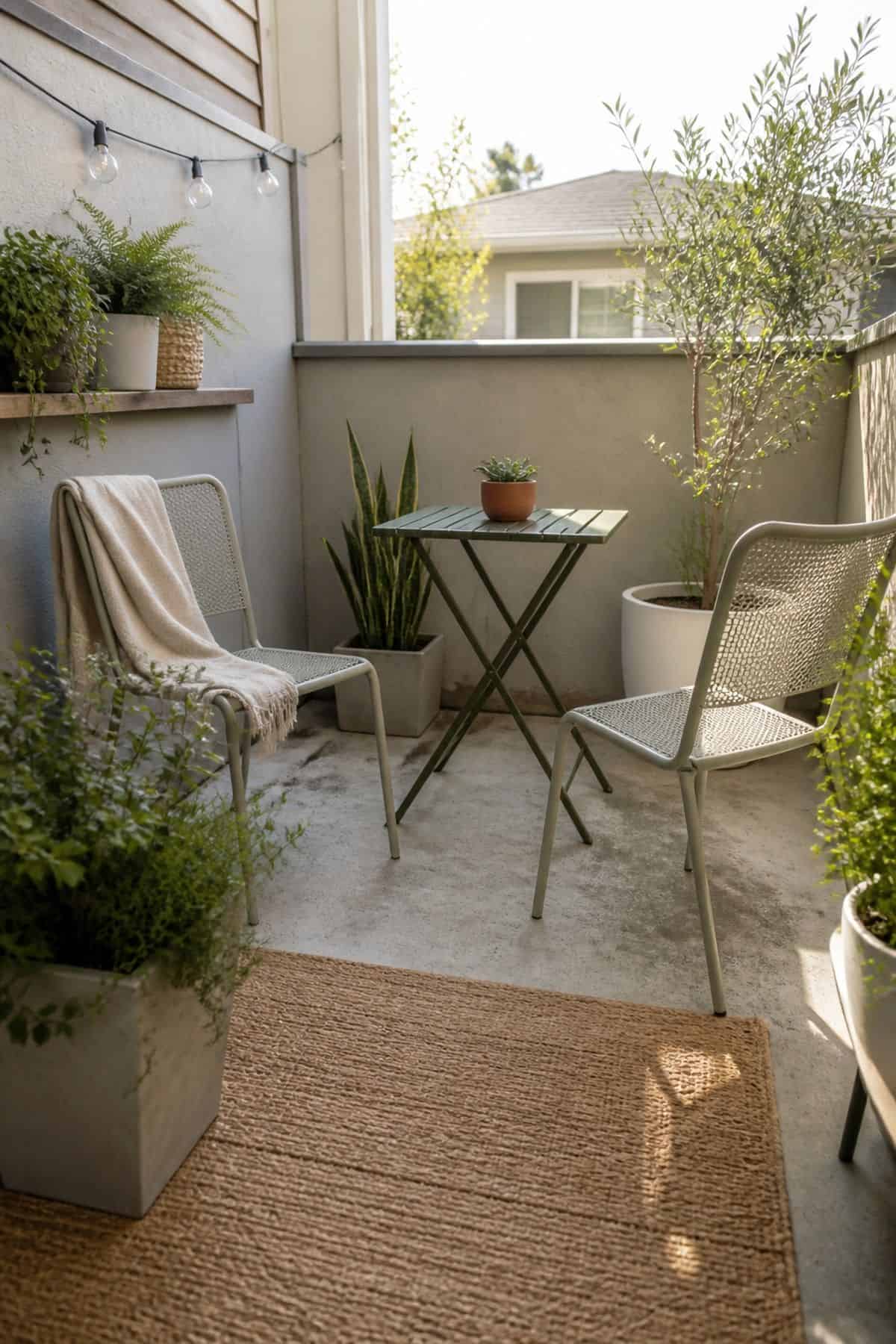


Retractable awnings mount to the house wall and extend out over the patio with a manual crank or motorized arm. SunSetter, Aleko, and Awntech all make residential-grade awnings in 10-16 foot widths that extend 8-13 feet from the wall.
Retract the awning during storms (heavy wind can damage extended fabric) and during winter to preserve the fabric. Motorized versions with wind sensors automatically retract when gusts hit a threshold, protecting the awning from damage.
An awning is the rare covered option that needs no posts on the patio floor, so the ground stays completely clear for furniture and planters. Pitching it on a slight downward angle lets rain sheet off rather than pooling on the fabric, which is what stretches and damages it over time. A model with an integrated LED light strip along the front bar adds soft evening lighting with no separate fixture.
Read more: Top 18 Small Apartment Patio Ideas on a Budget Under $200
7. Use bamboo or thatch roofing for a tropical vibe
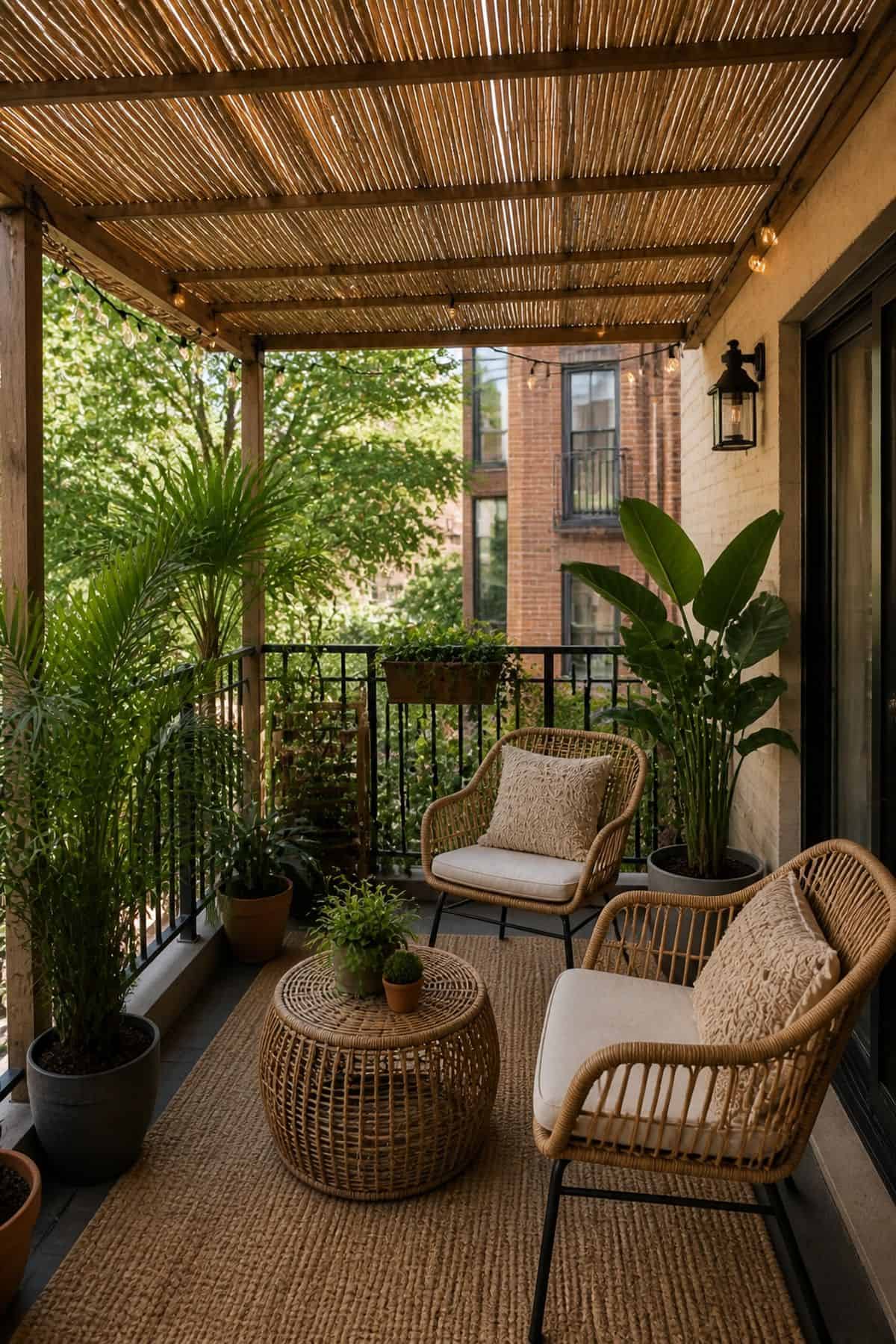


For a beachy or tropical-style patio, bamboo or thatch roofing panels over a wood frame deliver the right aesthetic. Bamboo poles laid horizontally across rafters give filtered light and a warm tropical glow.
Thatch panels (synthetic versions like Palmex are more weather-resistant than real palm thatch) handle moderate weather but should be replaced every 5-10 years. Best for warm-climate patios where you want vacation-resort feel.
The filtered, dappled light a bamboo or thatch roof throws is part of its charm, casting a warm, vacation-like glow rather than the flat shade of a solid panel. Synthetic thatch is the practical pick over the real thing, since it resists rot, fading, and fire far better. This style suits a hot-climate patio best, where a roof that breathes keeps the space airy rather than trapping heat underneath.
Read more: Cheap Backyard Ideas That Actually Look Expensive
Enclosed and Hybrid Options
8. Build a screened-in porch to keep bugs out
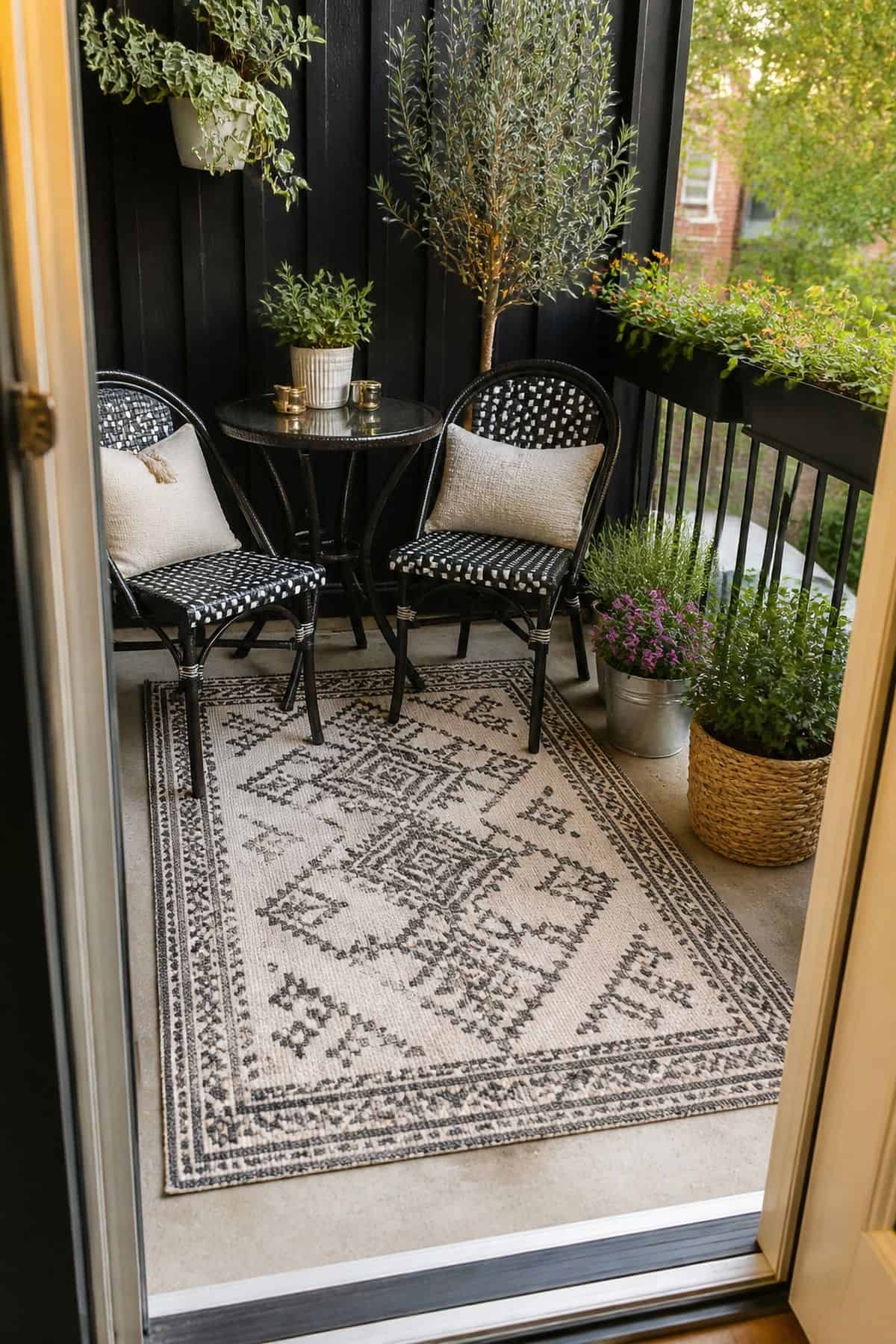


A screened-in porch combines the cover of a roof with insect-blocking mesh walls, the closest outdoor structure to indoor living comfort. Screens block mosquitoes, flies, and most bee species while still letting breeze through.
Screen materials range from fiberglass (most affordable) to charcoal aluminum (best visibility) to stainless steel mesh (most durable). Add motorized screen-down systems on the openings if you want the option to fully retract the screens for unobstructed views on calm-weather days.
A screened porch is the upgrade that finally makes summer evenings usable, since it shuts out mosquitoes at exactly the hours the patio is most pleasant. A pet-resistant screen mesh is worth choosing if dogs or cats share the space, since standard screen tears easily under claws. The roof above still keeps the porch dry, so pairing the screen with a solid cover gives you genuine three-season comfort.
9. Add a covered pergola with string lights for ambiance
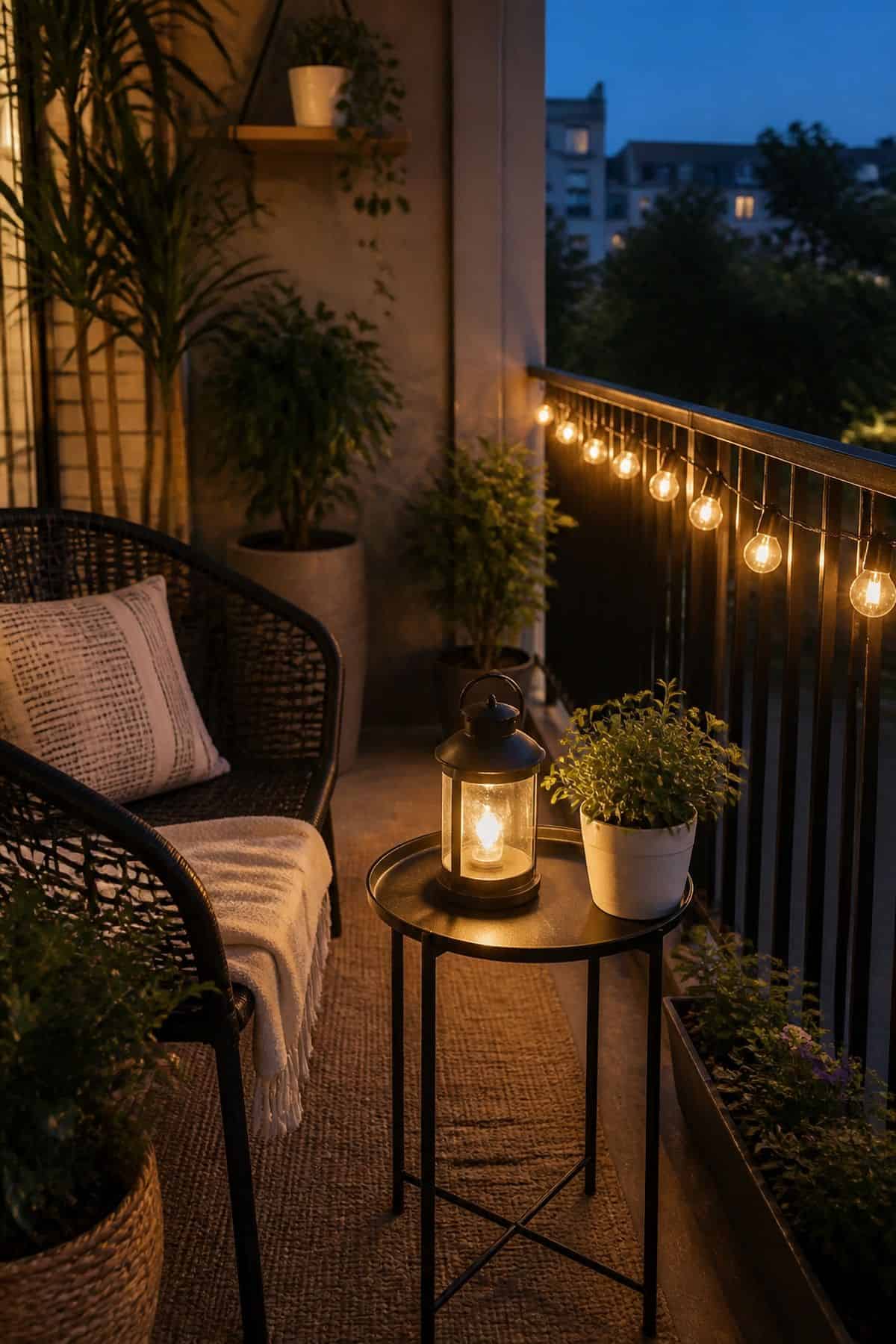


A pergola can do double duty as a structure and a lighting fixture. Drape warm-white string lights (2200K-2700K) across the top beams in a zigzag pattern, plug into an outdoor-rated outlet at the base of one post.
For a more refined look, install bistro lights with edison bulbs on a permanent rail along the underside of the cross-beams. Add a remote-controlled dimmer (Lutron makes outdoor-rated wireless dimmers) to set the mood with one button.
Stringing the lights in a zigzag or crisscross pattern overhead casts a soft glow across the whole seating zone rather than a single hard line. Shatterproof bulbs are the smart choice outdoors, since a glass bulb dropped on a paver is a mess no one wants to clean up. Putting the lights on a timer or smart plug means the patio simply lights itself at dusk with nothing to remember.
Read more: Top 19 Outdoor Halloween Decor Ideas to Transform Your Yard
10. Build a pavilion-style patio with open sides

Pavilion structures (a free-standing roof on four or more posts, no walls) give the most open feel while still providing rain and sun protection. The roof can match the house style or contrast as a deliberate architectural statement.
Hip roof and gable pavilions read more traditional; flat or shed-roof pavilions read modern. For larger pavilions (16×20 or bigger), add a central support post or two for structural stability under snow and wind loads.
The open sides are the appeal here, keeping the breeze and the yard view fully in play while the solid roof still handles sun and rain. Finishing the underside of the roof with stained wood planking or a tongue-and-groove ceiling turns the structure into a genuine architectural feature. A pavilion roof is also solid enough to mount a real ceiling fan or hanging light, which a fabric cover cannot support.
Read more: Top 15 Small Balcony Garden Ideas to Maximize Your Outdoor Space
Functional Add-Ons
11. Incorporate outdoor curtains for added privacy and sun control
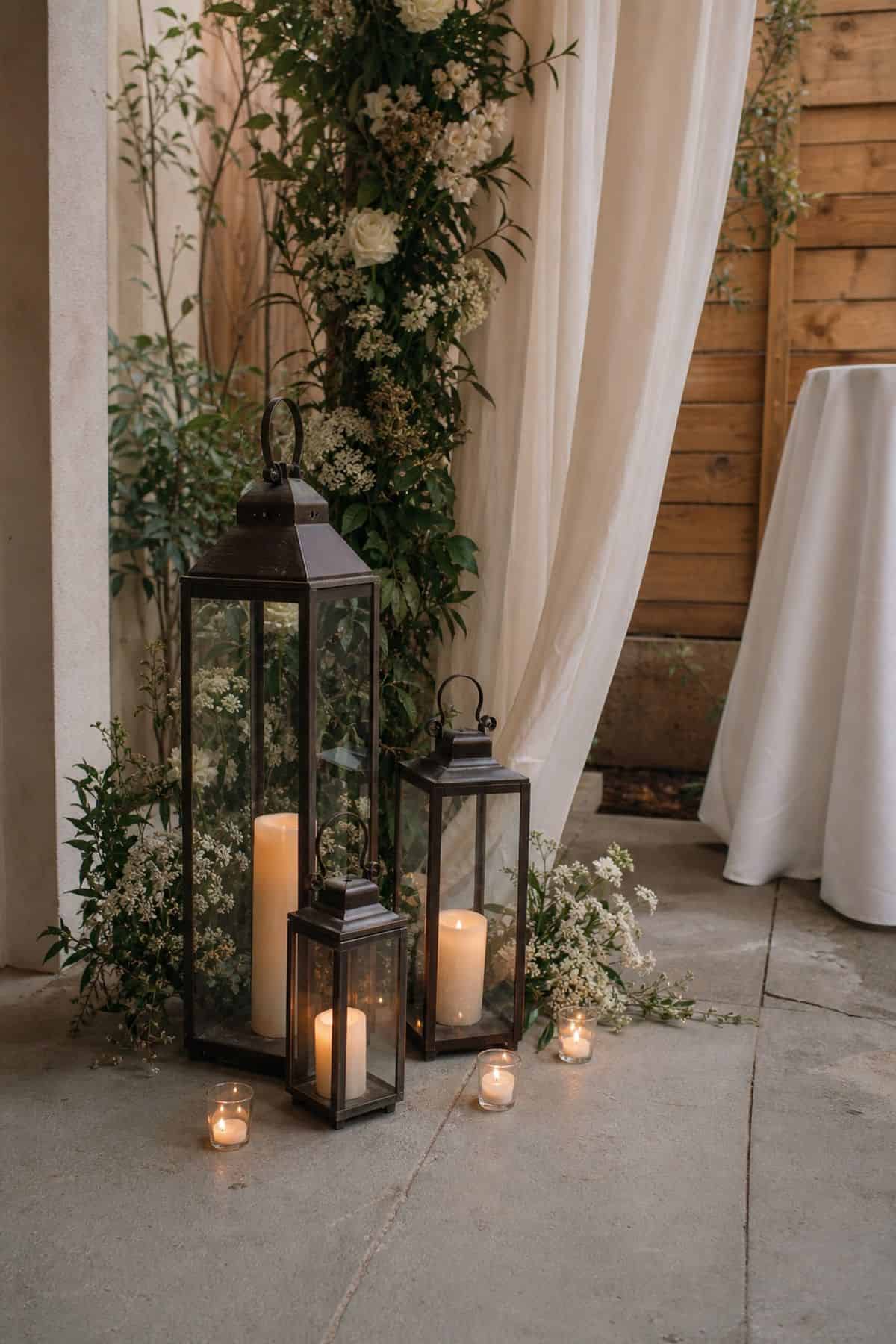


Curtains hung from a pergola, gazebo, or awning hardware add both privacy from neighbors and adjustable sun blocking. Outdoor curtain rods (galvanized steel or aluminum) handle weather, paired with grommeted panels in Sunbrella or Outdura fabric.
Sheer cream linen-look panels filter light gently for daytime use; heavier opaque panels block sun and provide privacy for evening dining or hot-tub zones. Tie back with rope or brass holdbacks when not in use to keep the patio open.
Drapery weights or a weighted hem keep the panels hanging straight rather than billowing every time a breeze passes through. Curtains also block the low afternoon sun that slips in sideways under a roof, exactly where shade structures usually fail. Because they slide open and closed in seconds, curtains let the same patio feel breezy and open one moment and private and enclosed the next.
Read more: Top 17 Fall Outdoor Decor Ideas for the Yard, Walkway, and Garden
12. Add skylights or translucent roofing panels for natural light
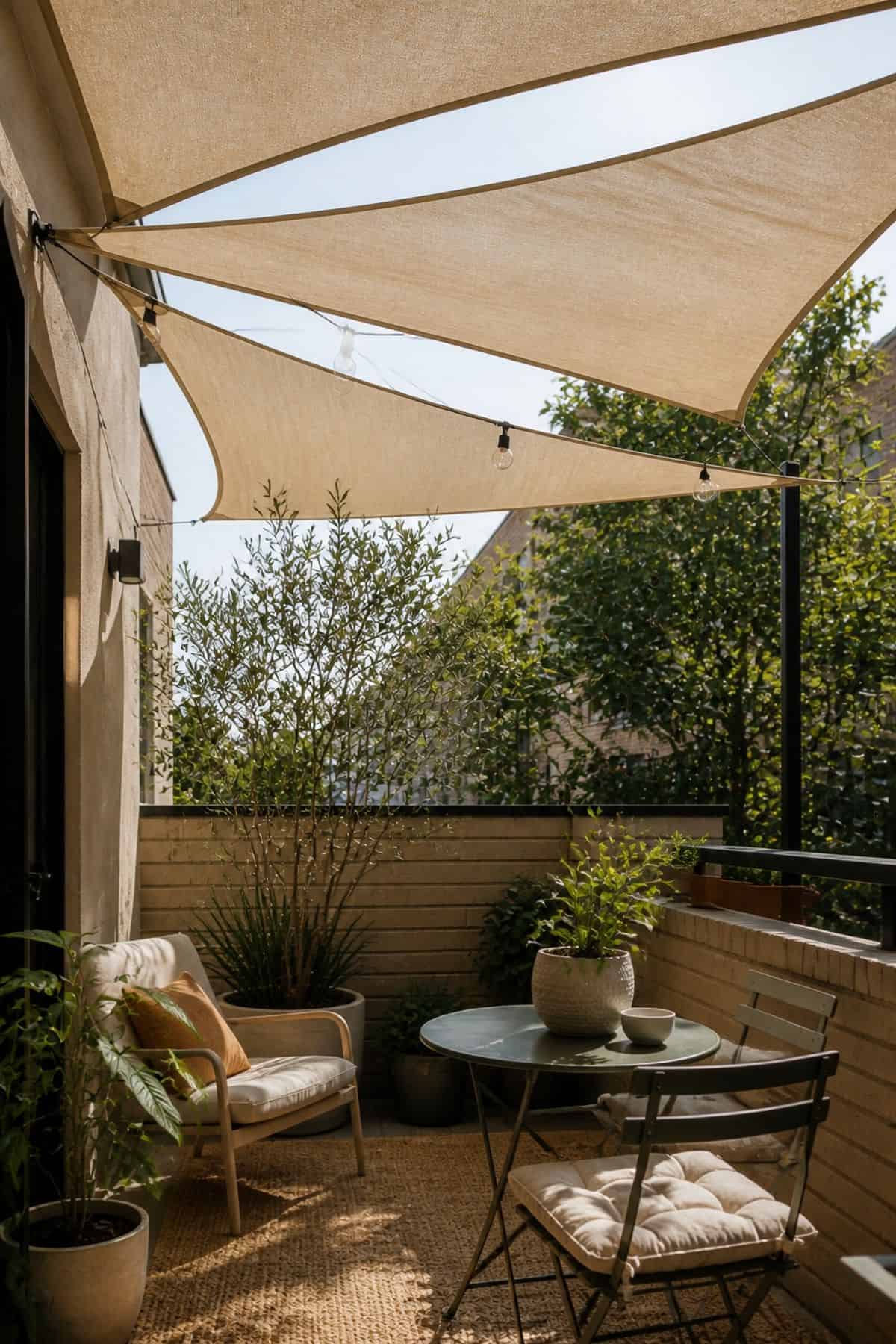


Translucent polycarbonate roofing panels let natural light through while blocking UV and rain, ideal for covered patios that would otherwise feel dim. Lexan and Suntuf both make corrugated panels in clear, white, or tinted finishes.
For more architectural appeal, mix solid roofing with two or three skylight cutouts that bring focused light to specific zones (over the dining table or seating area). Skylights also reduce daytime lighting needs significantly.
A tinted or opal panel cuts the harsh glare and heat that clear panels can let through on a hot afternoon. Polycarbonate also has the appeal of letting rain be heard and seen overhead while you stay completely dry beneath it. Run the panels with a slight slope so water sheets off cleanly and debris does not collect, which keeps the light coming through bright rather than grimy.
Read more: Top 16 Easter Outdoor Decoration Ideas for Every Part of Your Home
13. Use metal or wooden beams with climbing plants for shade
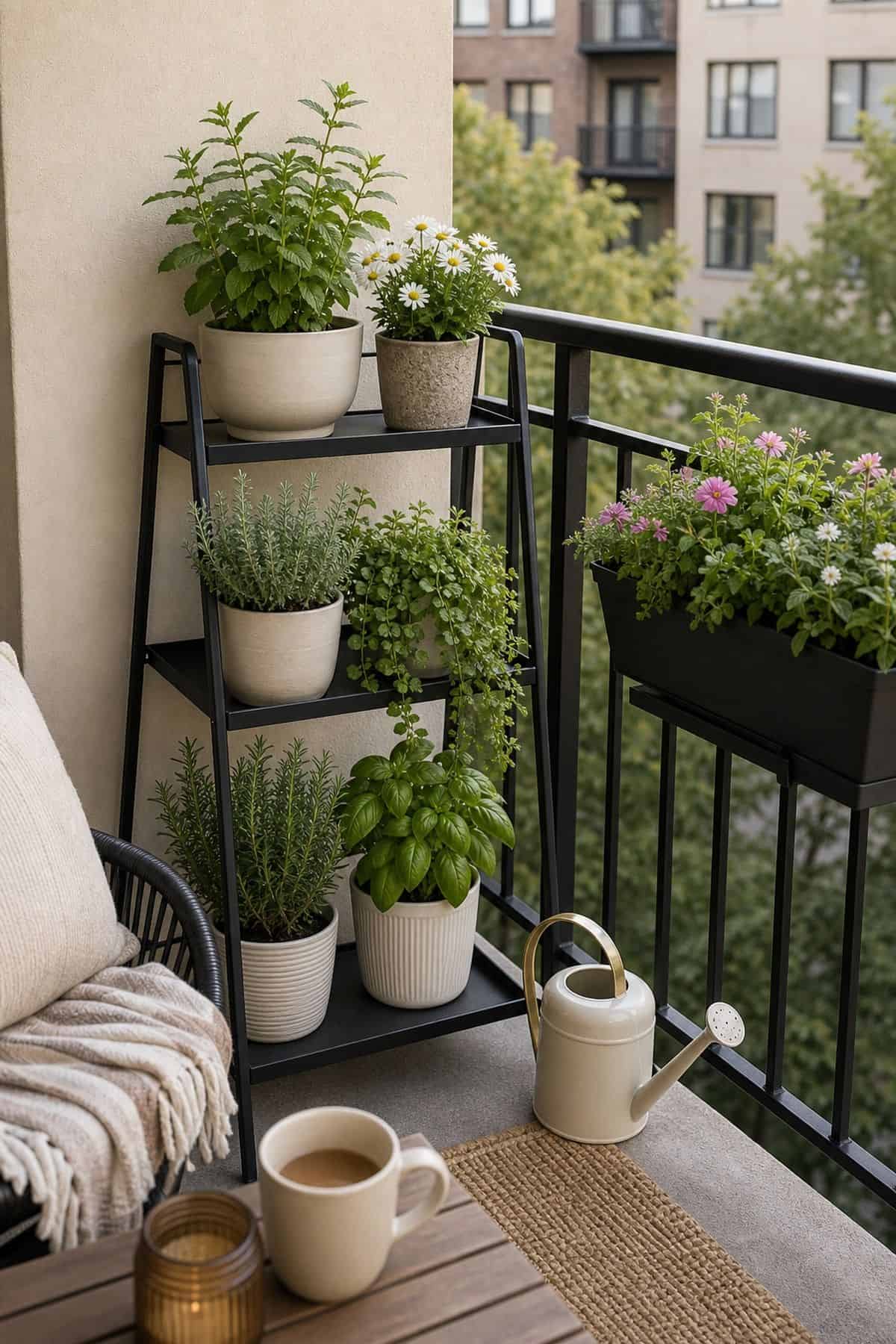


A pergola or open beam structure with climbing plants (wisteria, jasmine, climbing rose, grapes) becomes a living shade canopy as the plants mature. Plants take 2-3 years to fill in fully, so plan for temporary fabric or sail shade during the establishment phase.
Wisteria gives the most dramatic spring bloom but requires heavy pruning; jasmine adds fragrance and stays year-round green in mild climates. Train plants with garden ties or natural twine, encouraging horizontal coverage across the top beams.
A grapevine pulls a clever trick, leafing out for dense summer shade and dropping its leaves in winter to let the low sun warm the patio. Wisteria gets heavy and woody as it matures, so the supporting beams need to be genuinely sturdy, not a lightweight frame. While the vine fills in over its first couple of years, a temporary shade cloth across the top keeps the patio usable in the meantime.
14. Include built-in outdoor heaters under the cover for cooler nights
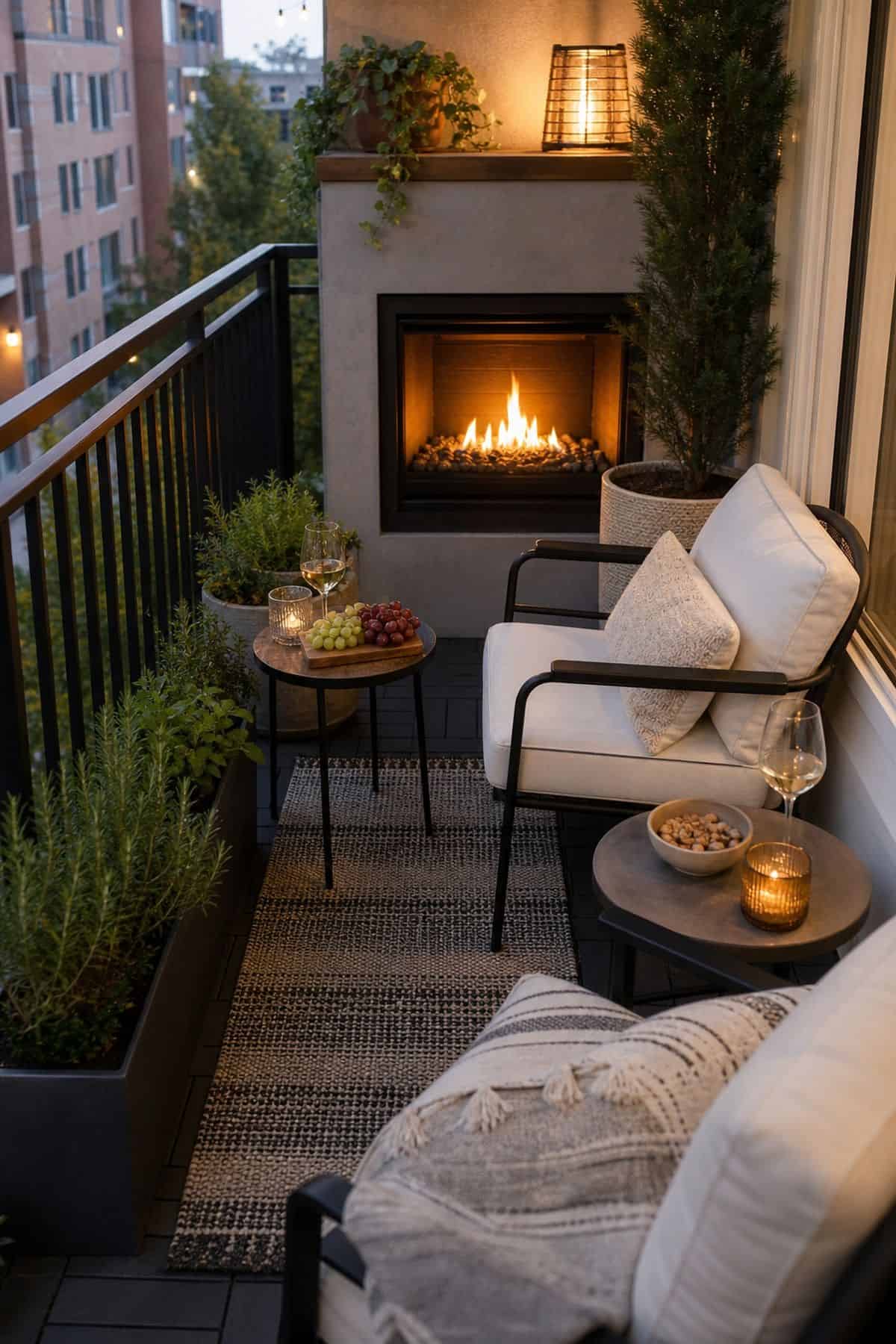


Ceiling-mounted or wall-mounted infrared heaters extend the patio’s usable season well into fall and early spring. Bromic Heating and Infratech both make residential-grade infrared heaters that mount overhead and warm people directly via radiant heat rather than warming the air (which is wasted in an open patio).
Wire the heaters to a wall switch or remote control, and pair with a ceiling fan for combined heating-cooling flexibility. Infrared heaters use far less energy than gas patio heaters for the same comfort level.
Mounting the heater overhead frees up the floor that a freestanding patio heater would eat into, which matters most on a smaller covered patio. Infrared warmth is also instant, with no warm-up wait, so the patio is comfortable the moment someone flips the switch. A heater that extends the season into fall and early spring genuinely doubles how many weeks of the year the patio gets used.
Read more: 18 Small Apartment Entryway Ideas When You Have No Foyer
15. Design a covered patio with integrated lighting and sound system
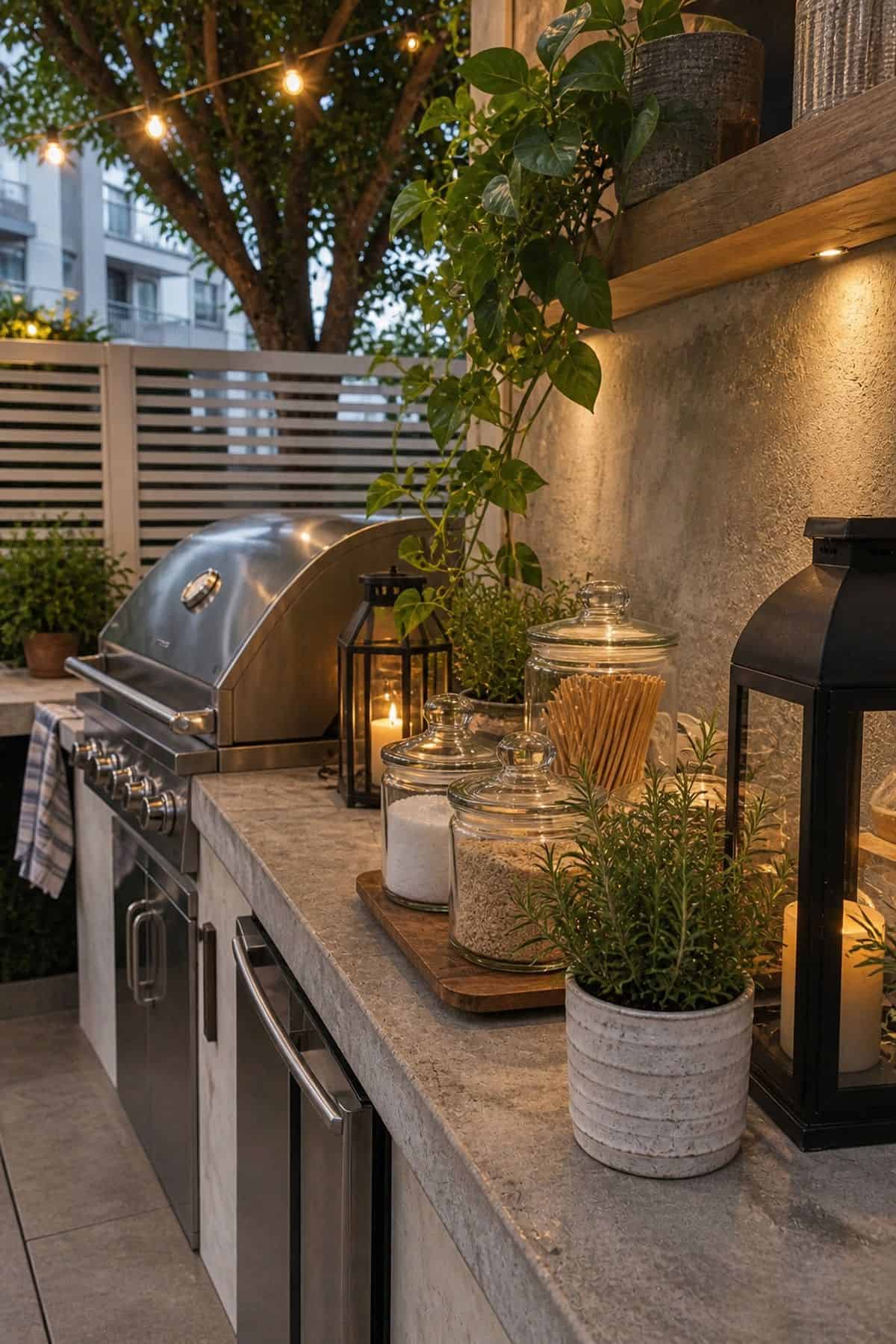


The most fully-finished covered patios include the same systems as the indoor living room. Recessed ceiling lights (LED, dimmable, warm-white), in-ceiling speakers (weatherproof, paired to a Sonos or AVR), and ceiling fans operating from a single smart switch or app.
Plan electrical during the cover construction phase, retrofitting through completed ceilings costs significantly more than wiring during build. Add outlets at multiple points along the perimeter for lamp lighting, beverage carts, and seasonal decor power needs.
Use weatherproof outlet covers and GFCI protection on every outdoor circuit, since exposed power and moisture do not mix. Putting the lights, fans, and speakers on separate zones or a smart switch lets you set a quiet, dim evening or a bright, lively gathering with one tap. A couple of extra outlets you cannot picture using yet always end up being the ones you reach for later. That same year-round thinking applies inside, and these small apartment entryway ideas help your door area work every season too.
Read more: Top 17 Landscaping With Large Rocks Ideas That Actually Look Natural
Frequently Asked Questions
What is the most affordable covered patio option?
Triangular shade sails ($300-800 for a sail plus mounting hardware) and retractable awnings ($600-2500 for a residential-grade unit) cost the least. DIY pergola kits run $1500-4000 for materials. Full roof extensions and screened-in porches are the most expensive at $10,000-50,000+ but add home value.
Do I need a permit for a covered patio?
In most US jurisdictions, yes, especially for permanent structures attached to the house or with electrical wiring. Freestanding pergolas and gazebos sometimes fall below permit thresholds depending on size, but check with your local building department before starting any structural project.
What pergola size is best for a 6-person patio?
A 10×12 or 12×14 pergola accommodates a 6-8 person dining table and seating area. For lounging-only patios, 10×10 works. Account for at least 3 feet of walking clearance on all sides outside the seating zone.
Can outdoor ceiling fans be used on uncovered patios?
Only fans rated for wet locations (sealed motors, UV-resistant blades) can be installed in exposed areas. Damp-rated fans (most outdoor-rated models) require partial cover like a pergola roof or eaves. Check the fan rating label before installation.
How long do shade sails last?
High-quality HDPE shade sails last 5-10 years in moderate climates if taken down during winter and severe storms. Cheaper polyester versions degrade in UV faster, often within 2-3 years. Stainless steel hardware extends the lifespan of the mounting system regardless of sail material.
Key Takeaways
- Pergolas offer flexibility, gazebos offer full coverage, screened porches add bug control.
- Retractable awnings and shade sails are the most affordable covered patio options.
- Outdoor ceiling fans rated wet or damp add airflow under any covered structure.
- Climbing plants (wisteria, jasmine, grapes) on pergola beams create a living canopy over 2-3 years.
- Infrared heaters mounted overhead extend the season into fall and early spring.
- Plan electrical during construction to support lighting, speakers, and ceiling fans without expensive retrofits.
Final Thoughts
A covered patio is the single feature that maximizes how often the backyard gets used. Pick the cover type that matches your weather priorities (filtered shade, full sun block, bug control, year-round use), wire in the support systems (fans, lights, heaters) during construction, and the patio earns its keep through every season instead of sitting unused half the year.
Last update on 2026-10-24 / Affiliate links / Images from Amazon Product Advertising API
