

After Christmas, keep what says winter and pack away what says Christmas. Leave up evergreen garlands, pinecones, bare branches and warm candlelight, remove the red, the ornaments and anything with Santa on it, and switch to creams, soft whites and wood. Add paperwhites and cozy throws, and the home feels calm instead of empty.
In Finland, Christmas doesn’t really end on December 26. It hangs on until Nuutinpäivä, January 13, the old day when the tree goes out and Christmas is officially over, and then you’re left with the darkest, quietest stretch of the whole winter and an apartment that suddenly looks very bare. After about twenty years of Finnish Januaries, I can tell you that’s exactly when a home needs a little warmth the most.
Think of these after Christmas winter decor ideas as an edit instead of a full redecorate. You keep the pieces that read as winter, pack away the ones that read as Christmas, and fill the gaps with branches, bulbs, candles and soft textures, room by room, so nothing ever looks stripped.

Recommended Winter Decor Products


Read this also:
- Winter Mantle Decor Ideas
- Winter Decor Ideas for the Home
- Winter Living Room Decor Ideas
- Winter Fireplace Decor Ideas
- Winter Farmhouse Decor Ideas
What Christmas Decor Can Stay Up After Christmas?
Anything that looks like winter instead of the holiday: greenery, pinecones, snowflakes, white candles and natural textures. The red, the ornaments and the Santa stuff go back in the box.
1. Shift to a Calm, Neutral Palette
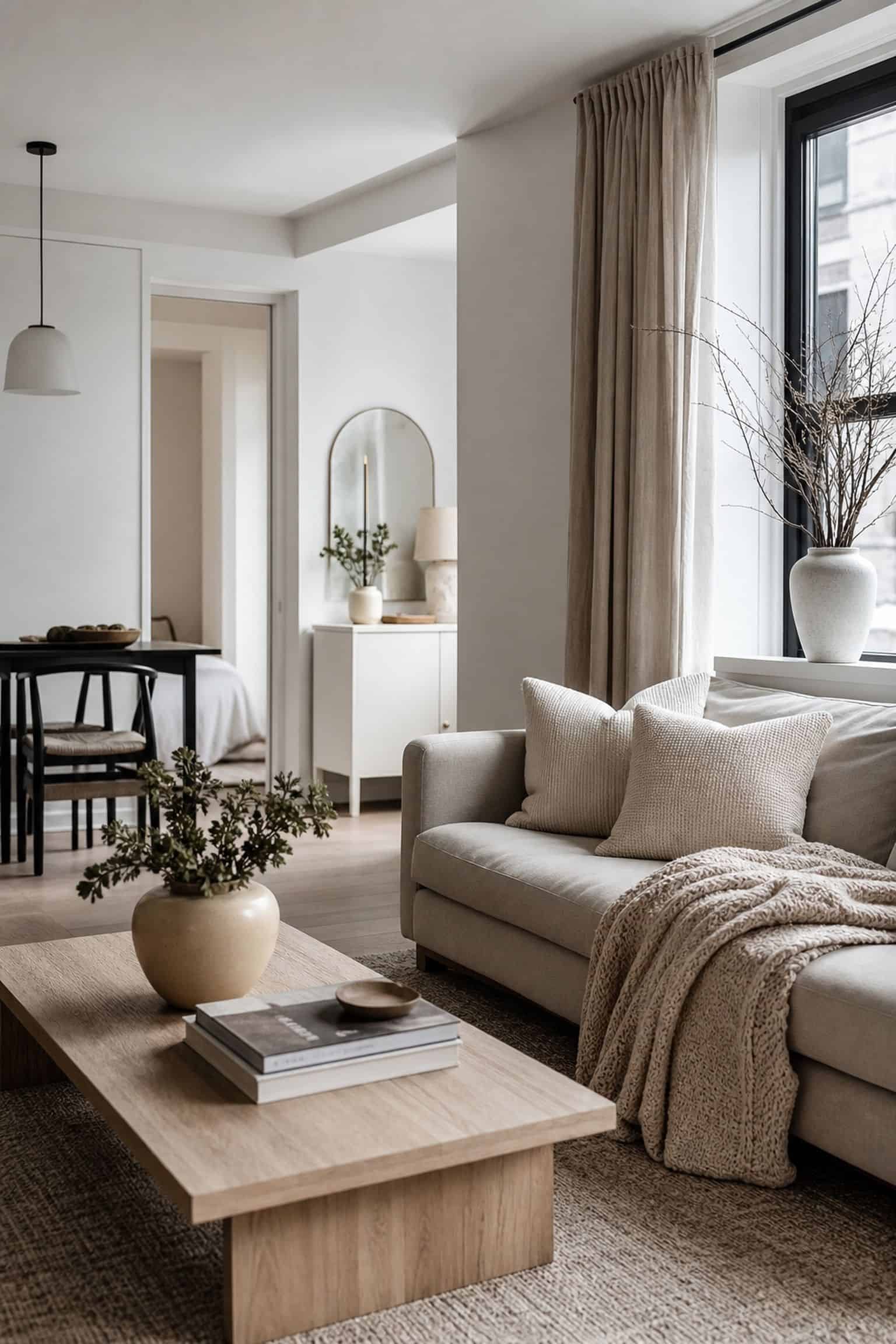


Start with color, because it’s the quickest way to tell the room the holidays are over without making it look empty.
A calm living room in creams and soft whites, with an oak coffee table, a cream sofa piled with knit throws and a vase of bare branches, still feels wintry and warm, just not festive. The trick is warm neutrals rather than cold gray, so think oatmeal, ivory, sand and honey-toned wood.
Swap the red pillow covers for cream or textured ones, fold the plaid throw away and bring out a chunky knit one instead. You don’t need to buy a whole new palette. Most of us own enough beige to get through January, and the rest of the ideas in this post simply build on it.
2. Keep the Evergreen Garlands and Wreaths
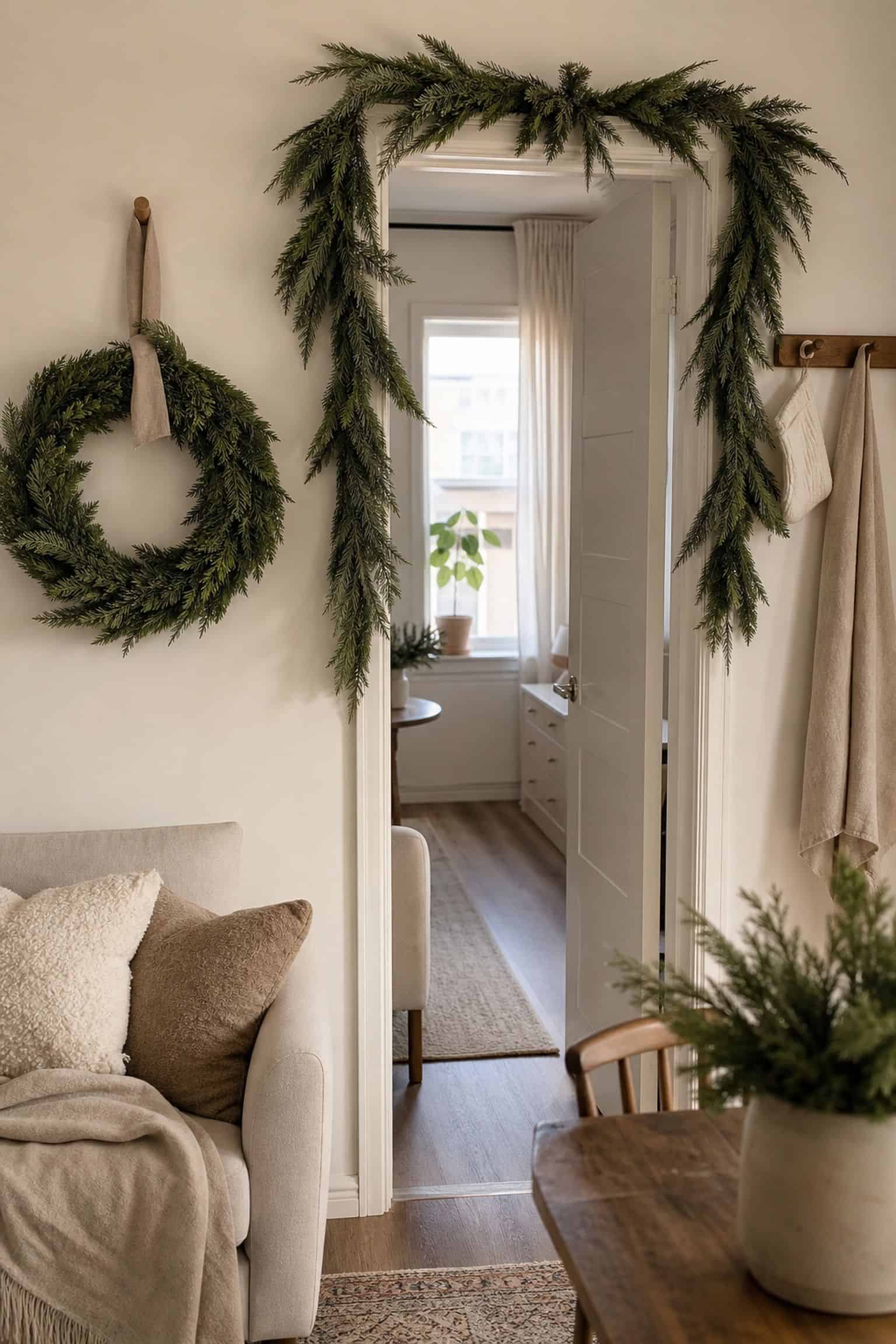


Here’s the good news: the greenery can stay. A green wreath on the wall and a garland draped over a doorway, with a potted pine on the floor nearby, look like winter, not Christmas, once the red bows and baubles come off. Take the ribbons off, untangle the ornaments, and leave the plain green where it is. Faux garlands can easily stay up until February, while real ones should come down once they start dropping needles all over the floor. Keeping the evergreens means the room never goes from full Christmas to completely bare overnight, which is the part that makes January feel so flat.
3. Remove Anything Red or Overtly Christmas
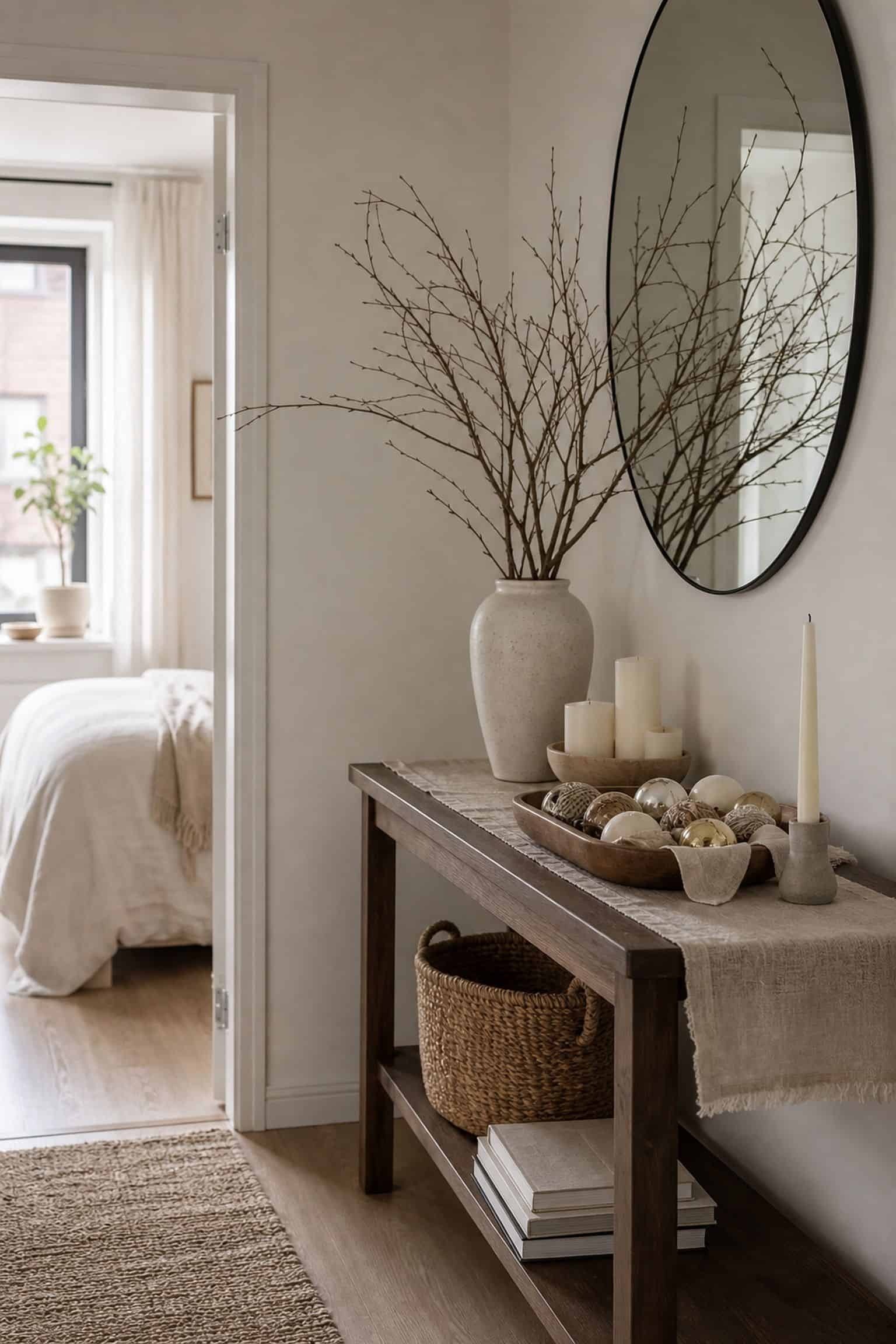


Pack away the red first, since it’s the color your brain links most to Christmas. A console with a tall vase of bare branches, a few white pillar candles and a bowl of white decorations under a round mirror shows how calm it looks once the red is gone. Here’s what to pack away:
- Red ribbons, red ornaments and red candles.
- Santa, reindeer and elf figures.
- Signs that say Merry Christmas or Noel.
- Candy cane stripes and anything with glitter all over it.
Plain white candles, glass and natural branches can stay. If you’re not sure about a piece, ask yourself if it would look odd in mid-January, and if yes, box it.
4. Keep Pinecones, Snowflakes, and Winter Motifs


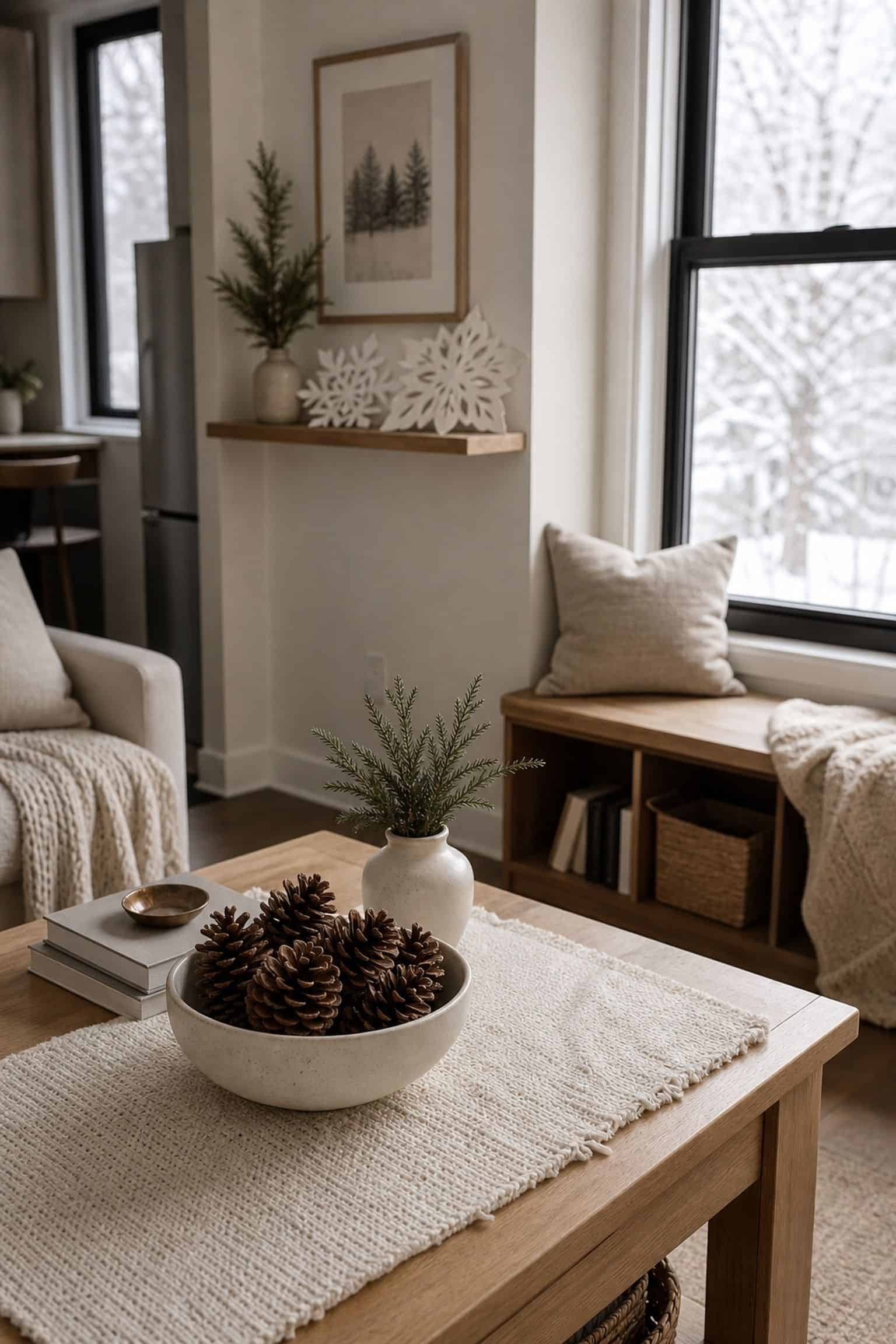
Pinecones, snowflakes and little winter animals look like the season, not the holiday, so they can stay right where they are. A wooden bowl of pinecones on a woven runner, a small potted pine and a snowy window behind them make a corner that feels like a cabin weekend without a single ornament in sight.
These are your bridge pieces, the ones that carry the cozy feeling from December into February. Gather a few in one spot instead of scattering them, so it looks like a decision. They also tie in nicely with winter decor ideas for the home, and the same pinecones and greenery work on the dining table too, like in these winter table decor ideas.
How Do You Fill the Empty Spots After the Tree Comes Down?
With something natural and a bit tall. Bare branches, paperwhites, fresh cedar and a pile of soft throws fill the space the tree and the ornaments leave behind, and they cost very little. If you’re already dreaming about next year, these small apartment Christmas tree ideas help you plan a tree that fits a small space.
5. Add Bare Branches for Sculptural Winter Height
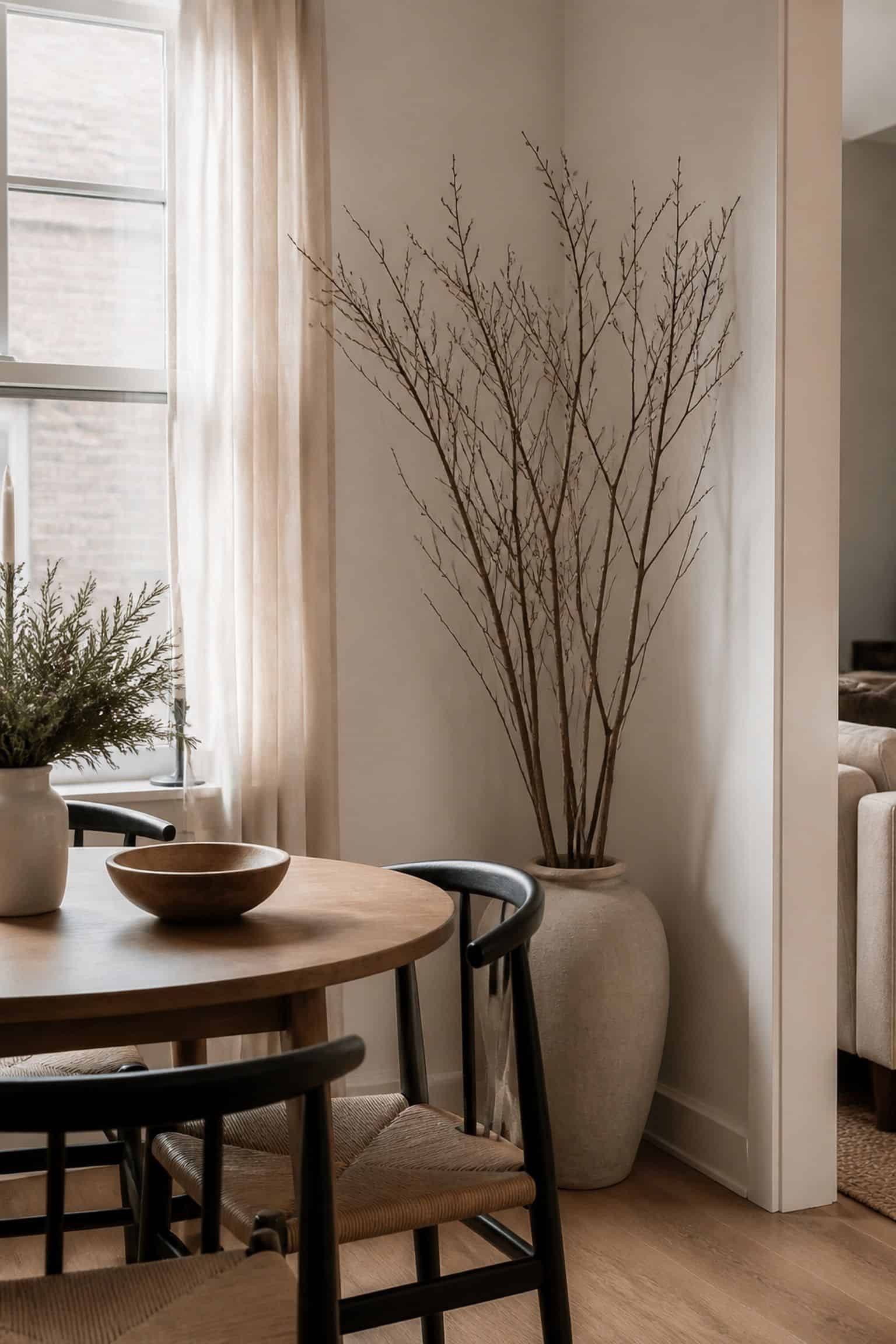


Bare branches are free, they’re tall and they look like winter in the best possible way, which is why they’re my favorite after-Christmas trick. A tall cream floor vase with a bunch of thin bare branches next to a small round dining table fills the empty corner where the tree used to stand, and it doesn’t take up any floor space to speak of. Pick them up on a walk (fallen ones, not off someone’s tree, please), give them a quick wipe and stand them in a heavy vase so they don’t tip over. Branches let light through, so even a big bunch never makes a small apartment feel crowded.
6. Start Paperwhite Bulbs for Fresh Growth
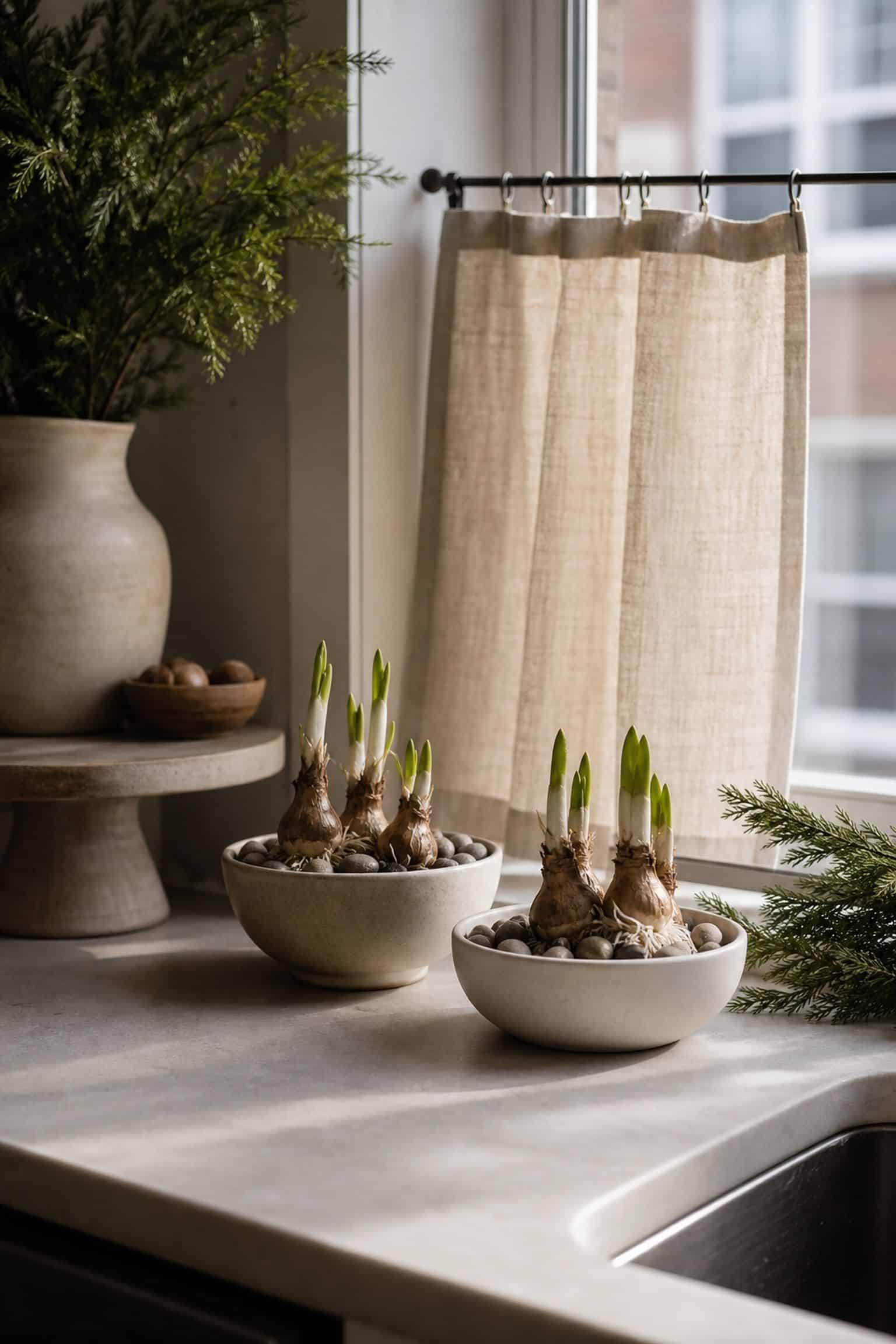


Paperwhites are the most hopeful thing you can grow in January, and they need almost no skill. Planted right after New Year’s, they usually bloom in about four to six weeks. Here’s the easy way:
- Fill a bowl with pebbles or small stones.
- Set the bulbs on top, pointy end up, close together.
- Pour in water until it barely reaches the base of the bulbs.
- Keep them in a bright spot and top up the water every few days.
The white bowls of sprouting bulbs on a kitchen counter next to a linen curtain are what week two looks like. Fair warning, the flowers have a strong smell that some people love and some really don’t, and keep them away from curious pets.
7. Bring in Winter Greenery Like Cedar and Pine
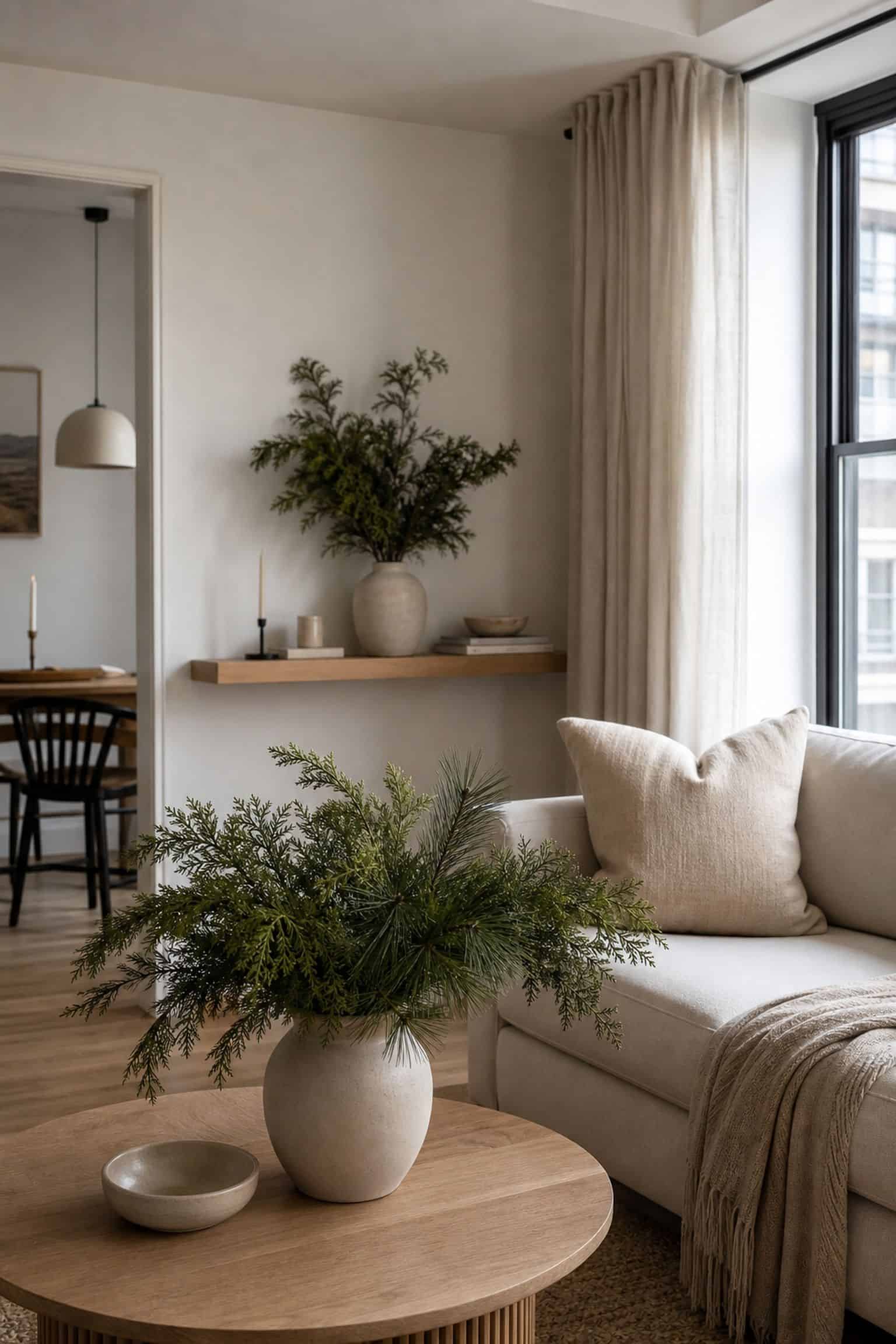


Fresh greenery keeps something alive in the home after the tree is gone, and cedar or pine branches feel wintry without saying Christmas.
A few stems in a white vase on the coffee table, plus another vase on a floating shelf, fill the gaps in a cream living room and bring a bit of green to a mostly neutral room. Ask at a flower shop or tree lot for leftover cuttings, as they’re cheap or even free after the holidays. Change the water every few days and the branches will last for weeks, giving the room a fresh forest smell when you walk in.
8. Layer in Cozy Texture and Plush Throws
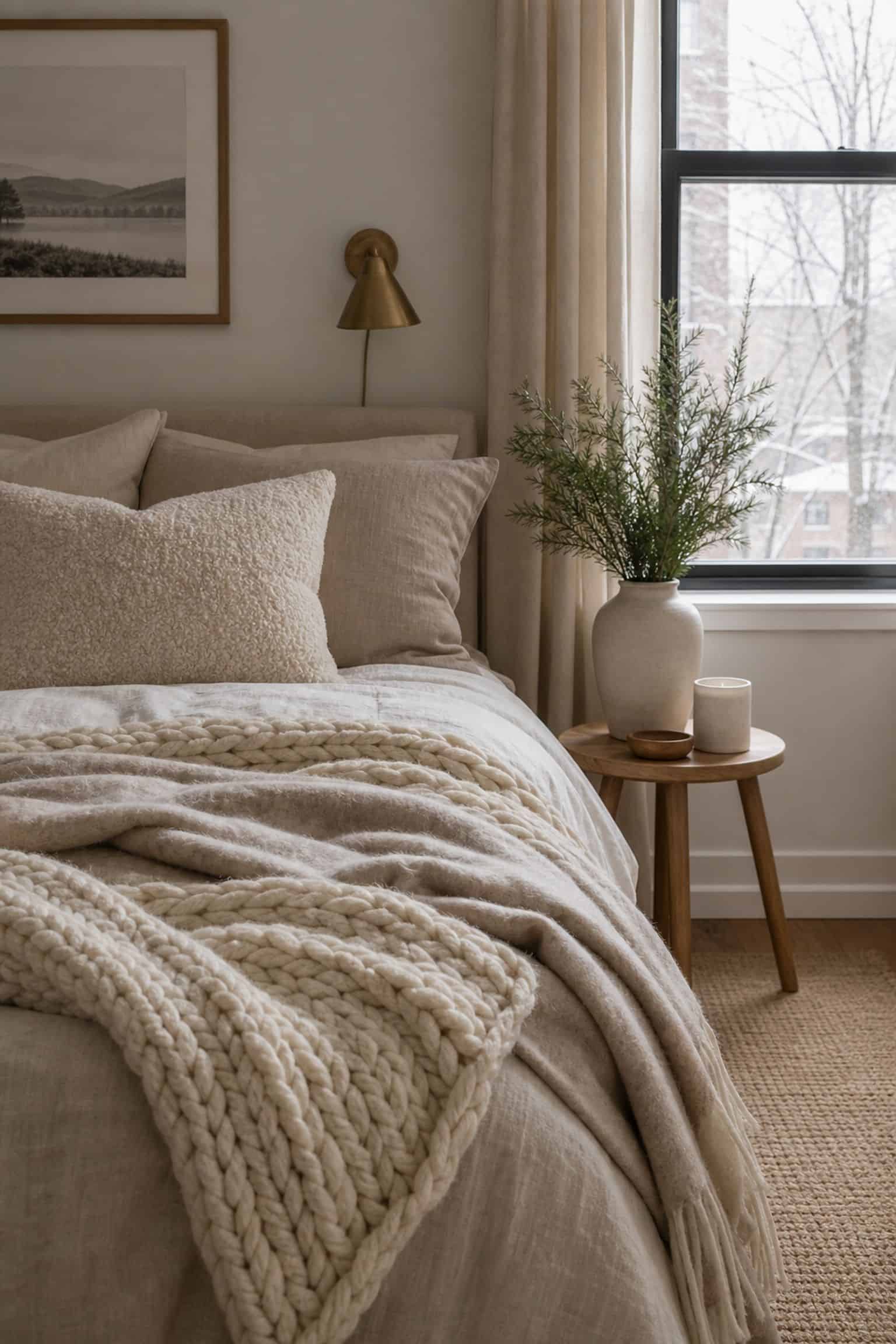


January is when soft textures earn their place, because it’s cold, dark and everyone wants to stay in bed a bit longer.
A chunky knit throw over a cream bed with a pile of textured pillows, and a small pine on a stool by the window, makes the bedroom look like the coziest room in the home, with zero holiday decor.
Layer what you already have: knit throws, faux sheepskin, a wool rug, linen bedding. Mix two or three textures in the same color family and it’ll look calm and expensive. Fold the Christmas plaids away for next year and bring out the fluffy, plain ones. These are the pieces you’ll use every evening until spring, so they’re worth the spot.
How Do You Keep a Home Cozy Once the Holiday Lights Come Down?
Keep the warm light.
9. Keep Warm Lighting and Candlelight
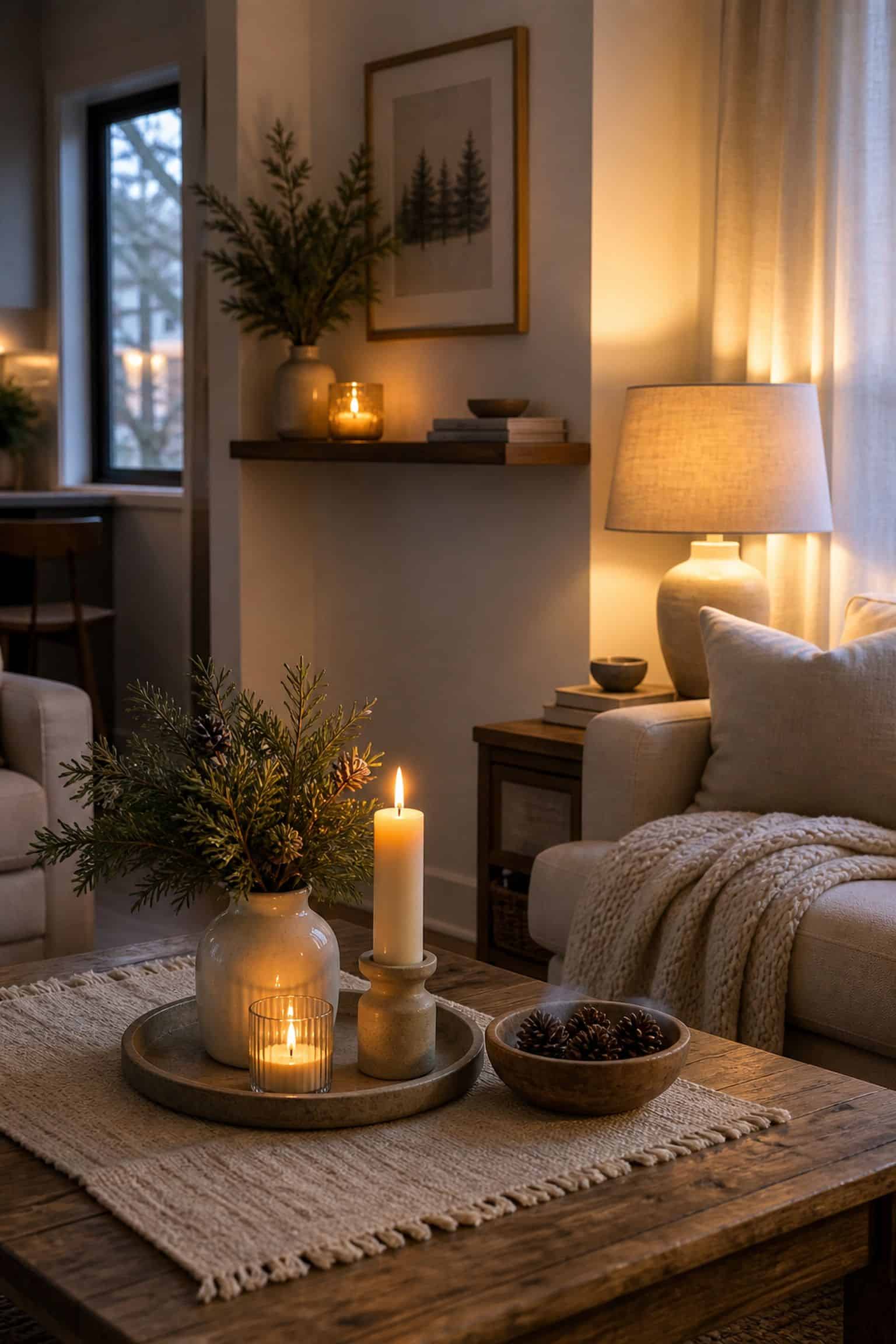


Keep the candles and the warm lights, because they belong to winter as much as to Christmas, and in a Finnish January the sun is down by mid-afternoon, so you’ll want them. A tray of pillar candles and a lantern, a glowing lamp in the corner and a small pine on the shelf above make a living room glow even when it’s pitch black outside at four. Swap any colored lights for warm white ones, keep a string of fairy lights along a window, and turn off the ceiling light in the evening. And keep candles away from dry greenery, since by now the branches from Christmas are probably more firewood than decor.
10. Add Brass and Warm Metal Accents
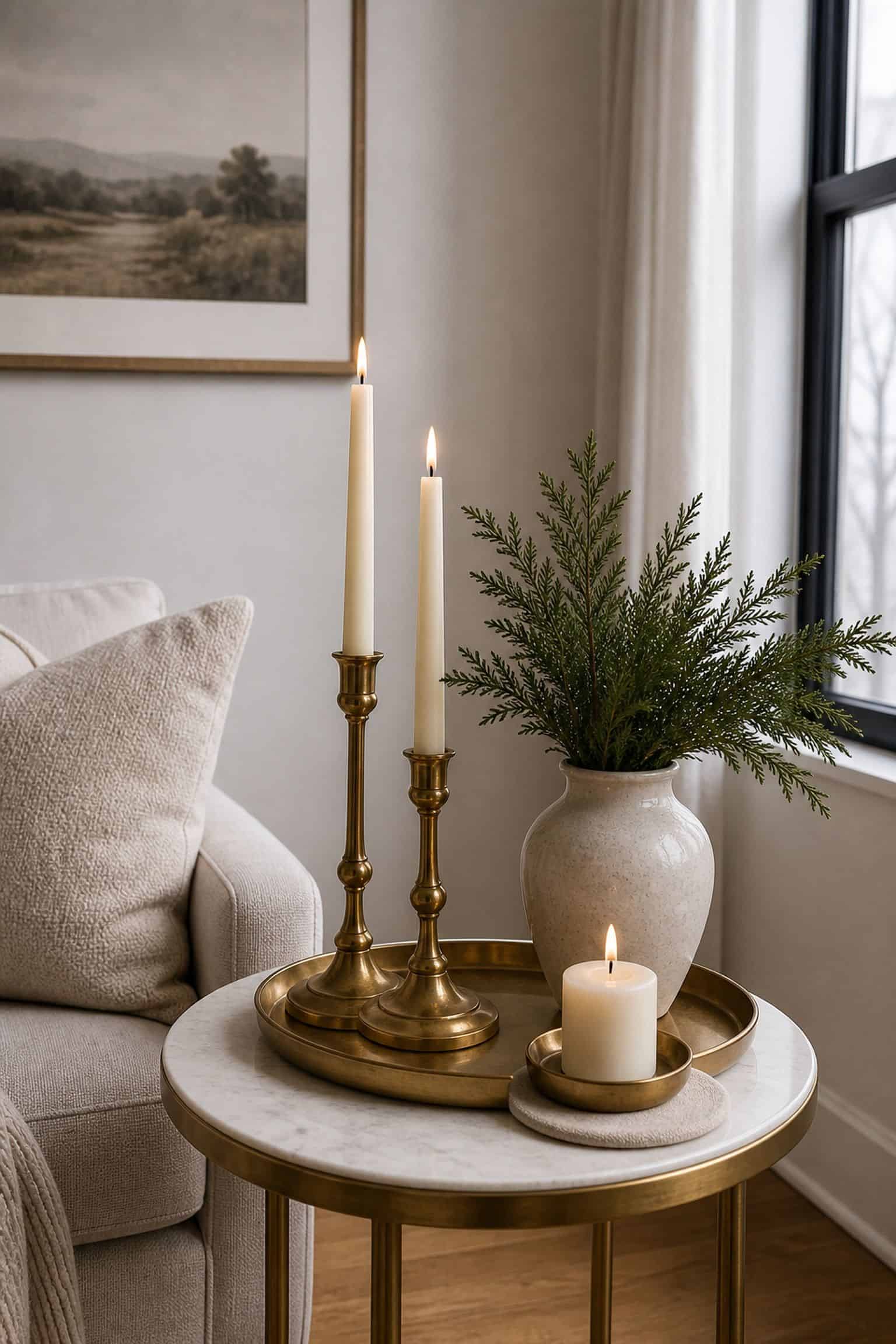


Brass and other golden metals add a little shine to a neutral room, and they don’t look festive the way gold tinsel does.
Two brass candlesticks with tall white candles on a marble side table, a white vase of greenery and a little brass tray, look elegant all winter. Gather the brass you already own, like candlesticks, a small tray or a frame, and group them on one surface so they catch the lamplight. A bit of shine is what stops a cream-and-white room from looking flat on a gray day.
How Do You Switch Each Room From Christmas to Winter?
Go one surface at a time, starting with the ones you see most: the mantel or main shelf, the coffee table, the entry, then the kitchen and bedroom. Each one gets the same edit, so take out the red and add something green, white or wooden.
11. Refresh the Mantle for Winter
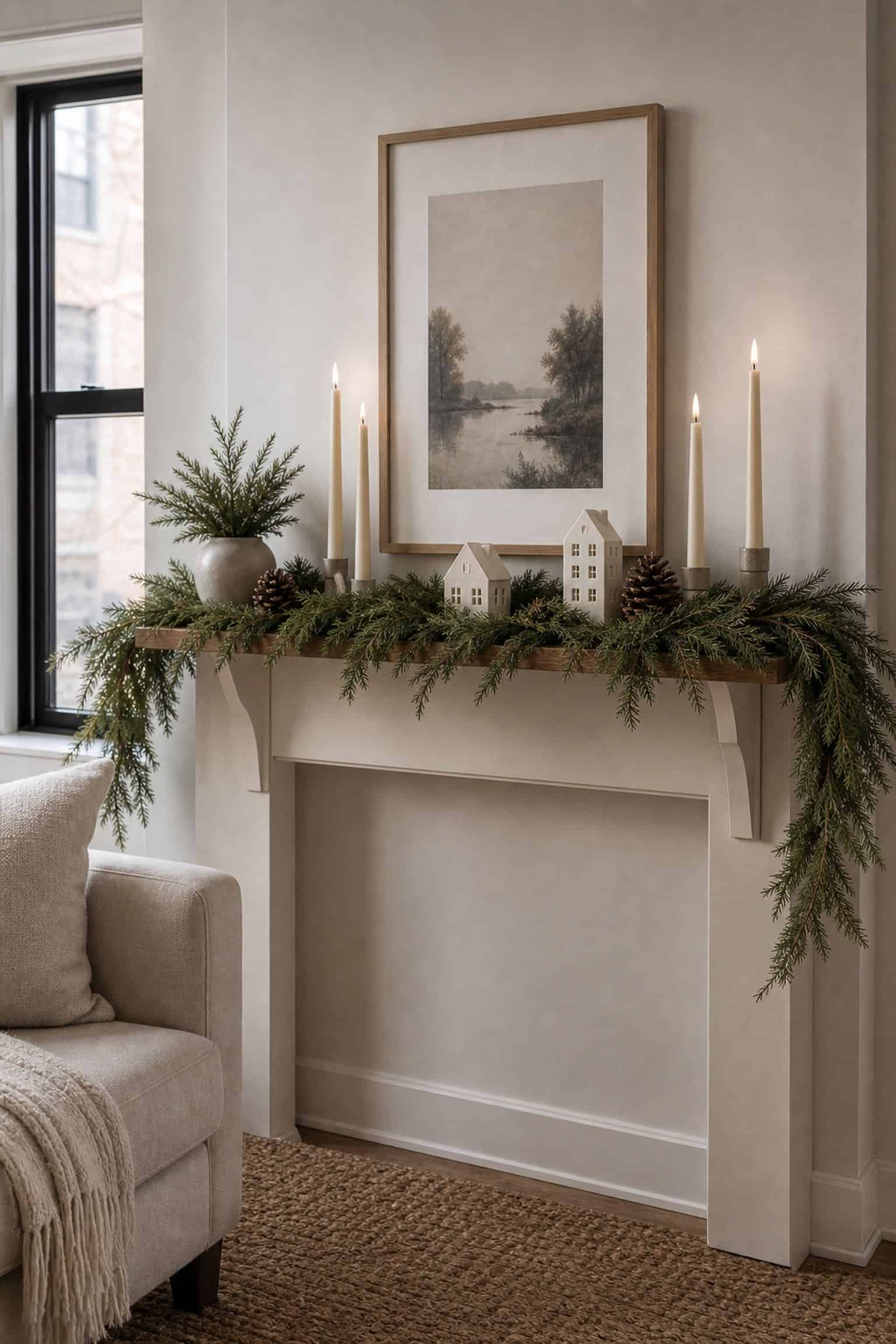
The mantel carries most of the Christmas decor in a lot of homes, so it’s the spot that changes the most. Here’s how to switch it over:
- Take down the stockings, the red ornaments and any lit signs.
- Keep the greenery garland and the white candles.
- Add a few small white ceramic houses or a snowy winter print.
A white mantel with a full green garland, tall white candles, little white houses and a soft snowy painting above it looks finished without a hint of red. If your home doesn’t have a fireplace, do the same on a shelf or a dresser. And the outdoor side of the edit, from wreath to welcome mat, is covered in these winter porch decor ideas.
12. Transition the Coffee Table and Side Tables
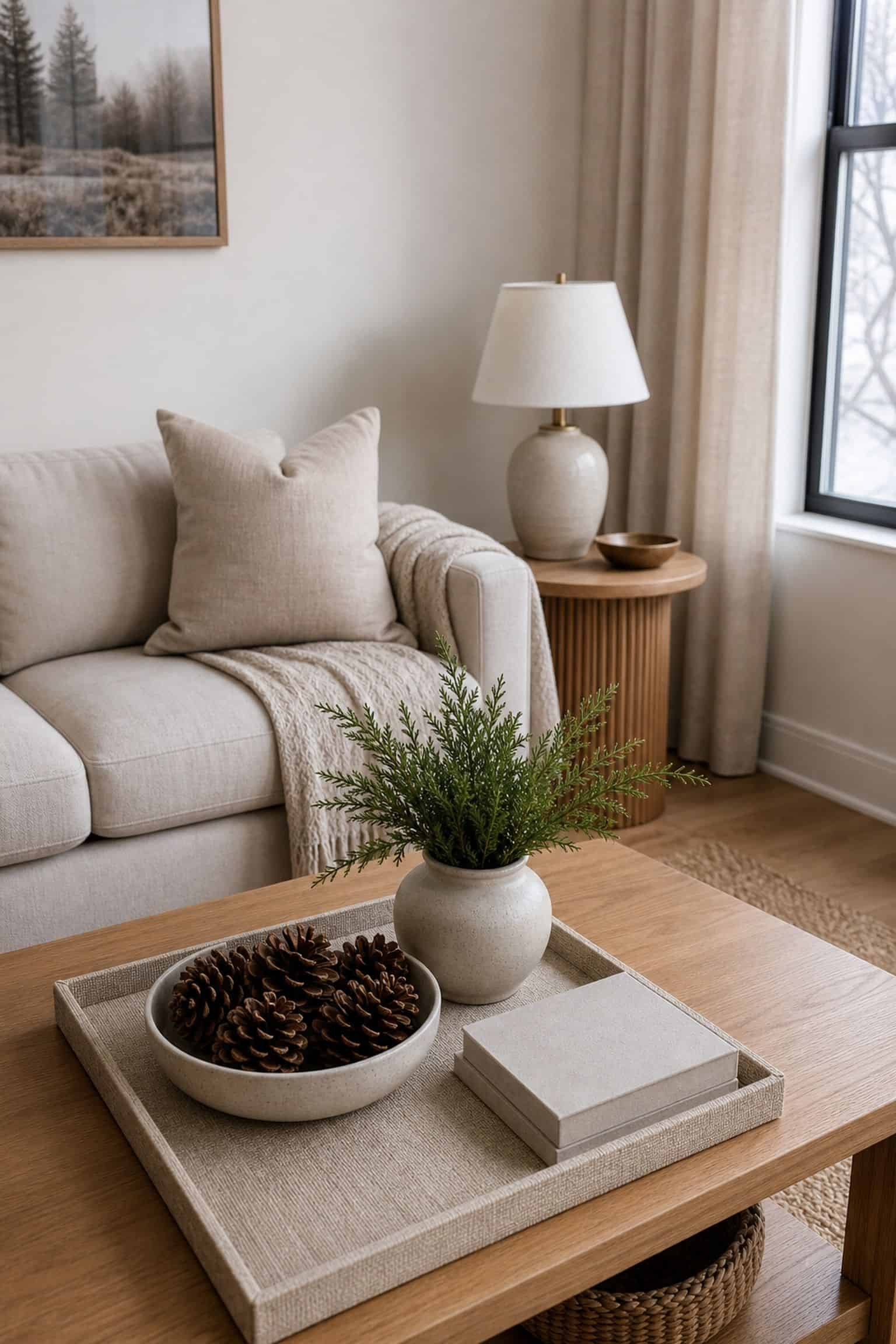


Since the coffee table sits in the middle of the living room, a calm winter setup there resets the whole room.
A big wood tray with a bowl of pinecones, a couple of books and a small vase of pine is the easiest after-Christmas swap there is. Take the Christmas candles and ornaments off the tray and put winter pieces back on it.
Keep it low and leave space for mugs, since January is a lot of tea on the sofa. If you’re after more styling ideas for this exact surface, these winter coffee table decor ideas go into it in detail.
13. Style the Entryway for Winter
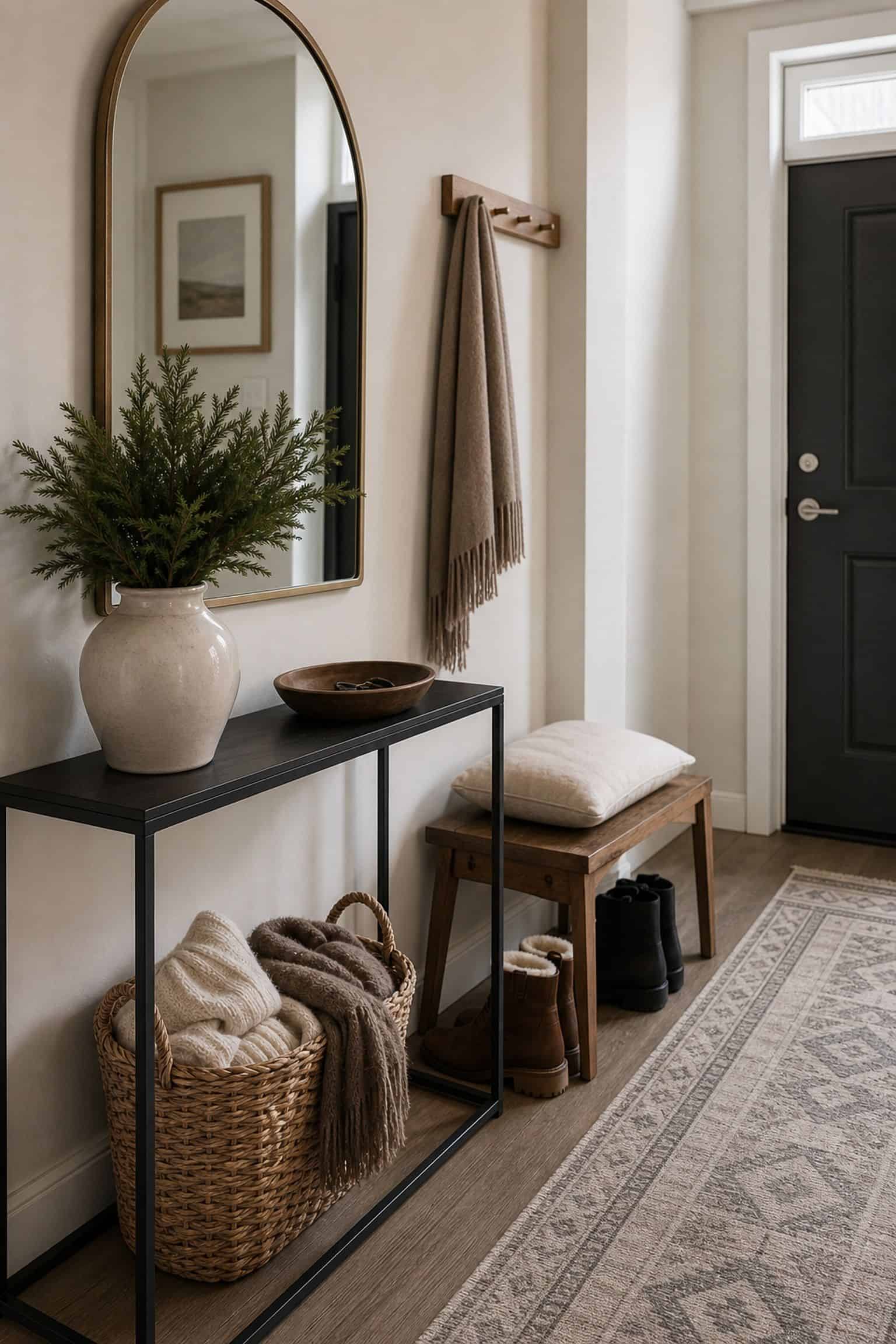


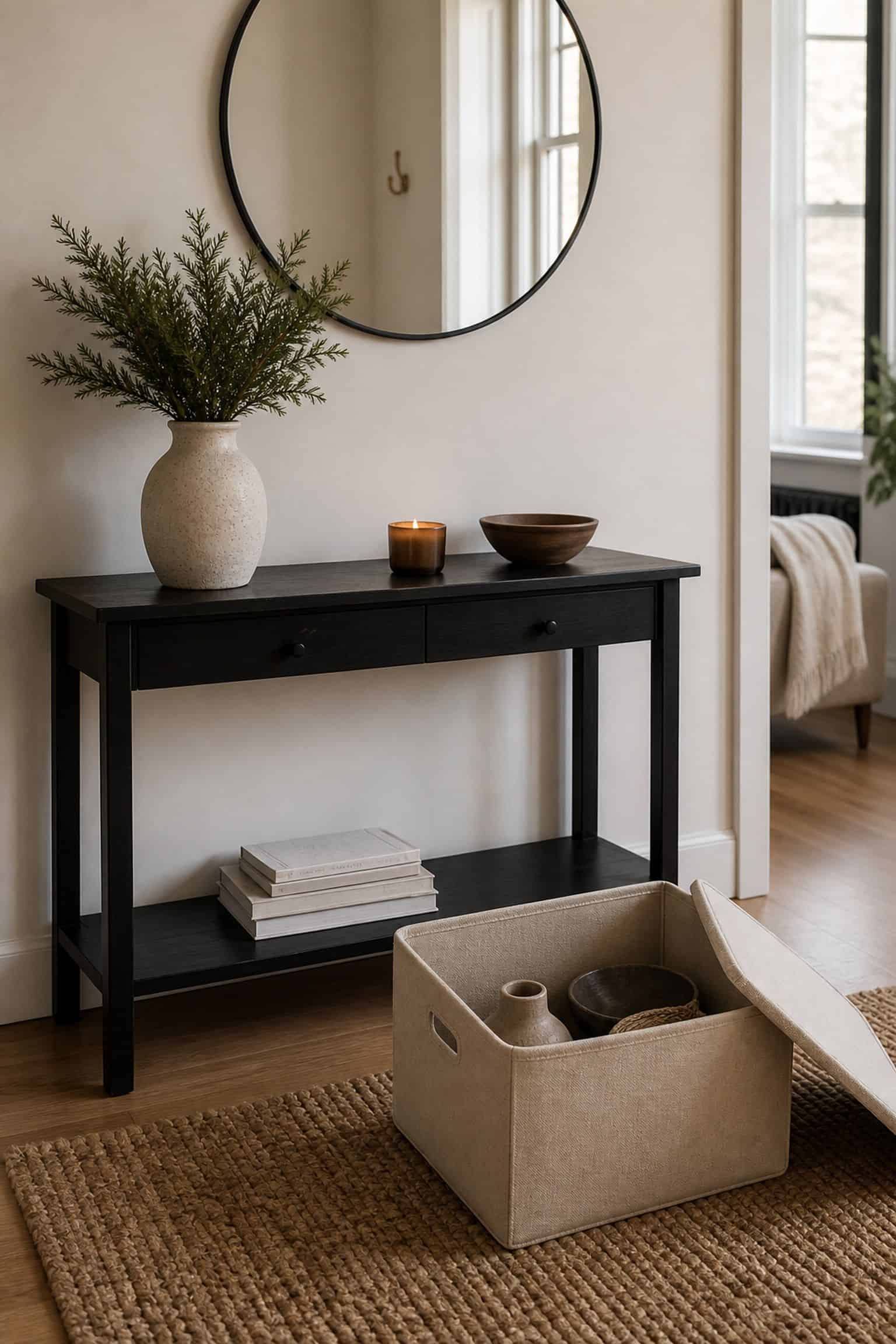
The entry is the first thing you see coming home from a dark, snowy walk, so make it feel welcoming instead of bare. A narrow black console with a vase of fresh pine and a wood bowl, a basket of throws underneath, a little bench with boots and an arched mirror on the wall is a calm winter entry with no holiday leftovers in sight.
Swap the Christmas wreath for a plain green one, set out a boot tray if you don’t have one, and keep a small basket for hats and gloves. In Finland everyone takes their shoes off at the door, so a spot to sit and a place for wet boots matter even more in winter. For the door itself, these winter front door decor ideas show what to hang after the holidays.
14. Carry the Transition Into the Kitchen
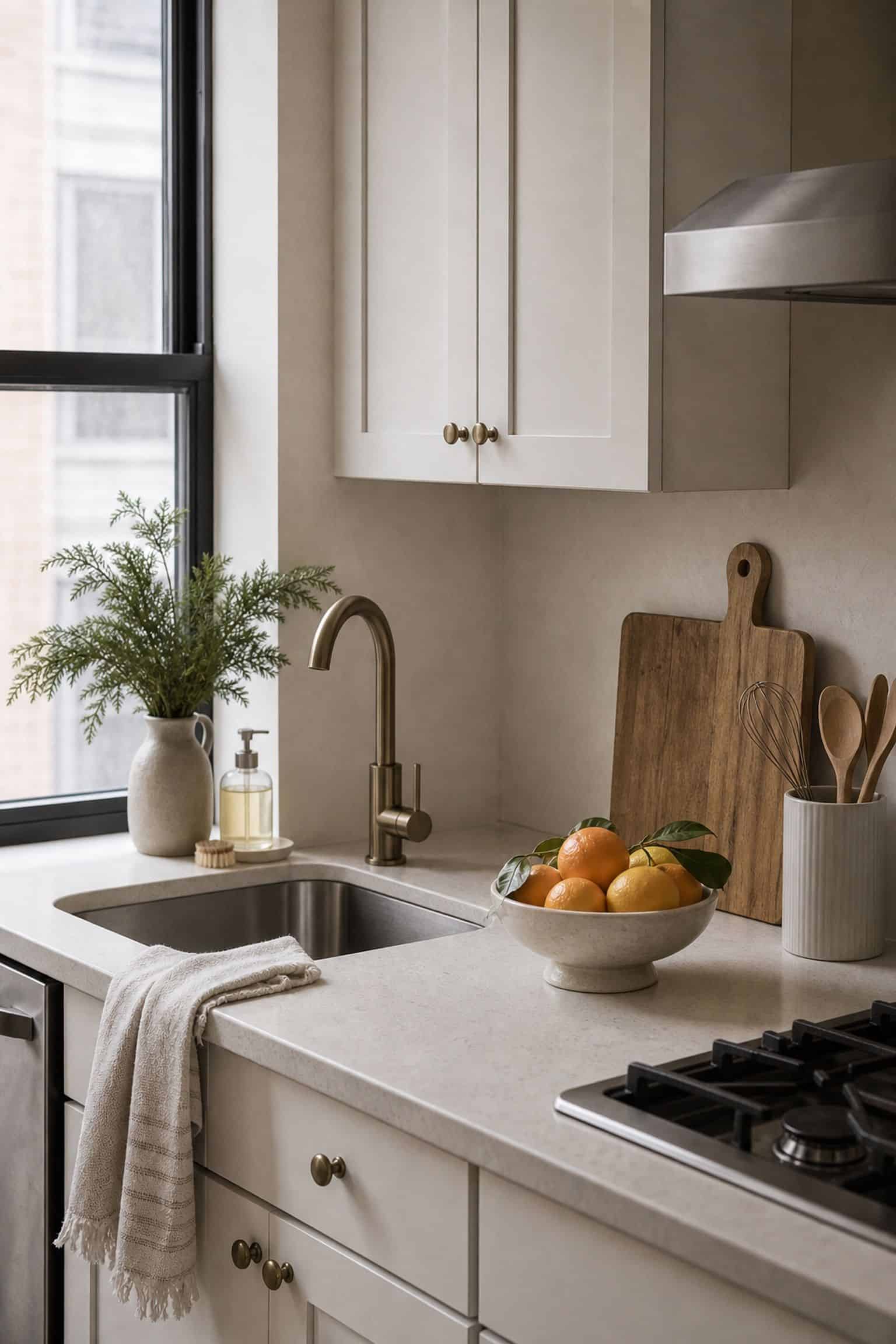


The kitchen needs only a tiny edit. A white counter with a vase of greenery by the window, a bowl of oranges and lemons, a wooden cutting board and a linen towel looks fresh and wintry, and the citrus adds a nice pop of color now that the red is gone. Swap the holiday tea towels for plain linen ones, put the Christmas mugs back in the cupboard and keep a bowl of fruit on the counter, which is decor you get to eat. If you want more ideas for this room, these winter kitchen decor ideas keep it simple.
15. Bring Winter Calm Into the Bedroom
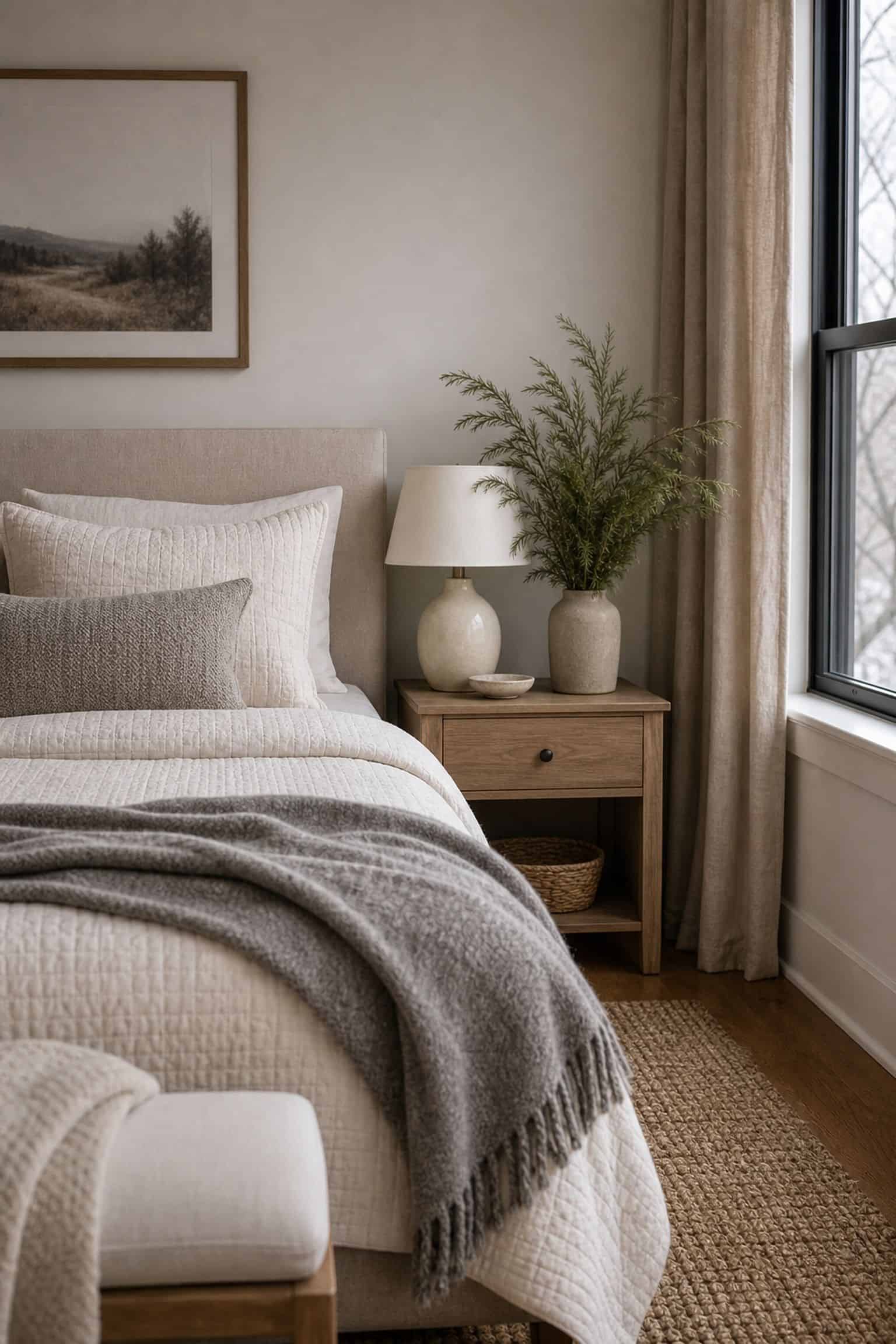


The bedroom should feel restful through the darkest weeks, so the edit here is mostly textiles.
A gray knit throw over cream bedding, a bedside lamp and a little potted pine on the nightstand give you a calm room that still feels like winter.
Swap any Christmas bedding for plain flannel or linen, keep one soft lamp by the bed and maybe a candle for the evenings (blown out before you sleep, of course). A small plant or a sprig of pine on the nightstand is enough decoration. January mornings are tough enough without waking up to a room full of leftover tinsel.
How Much Winter Decor Is Enough?
Less than you had at Christmas, and that’s the point. A few calm pieces per room, plenty of empty surface, and something alive to look at on a gray day.
16. Do Not Treat Winter as a Heavy Theme
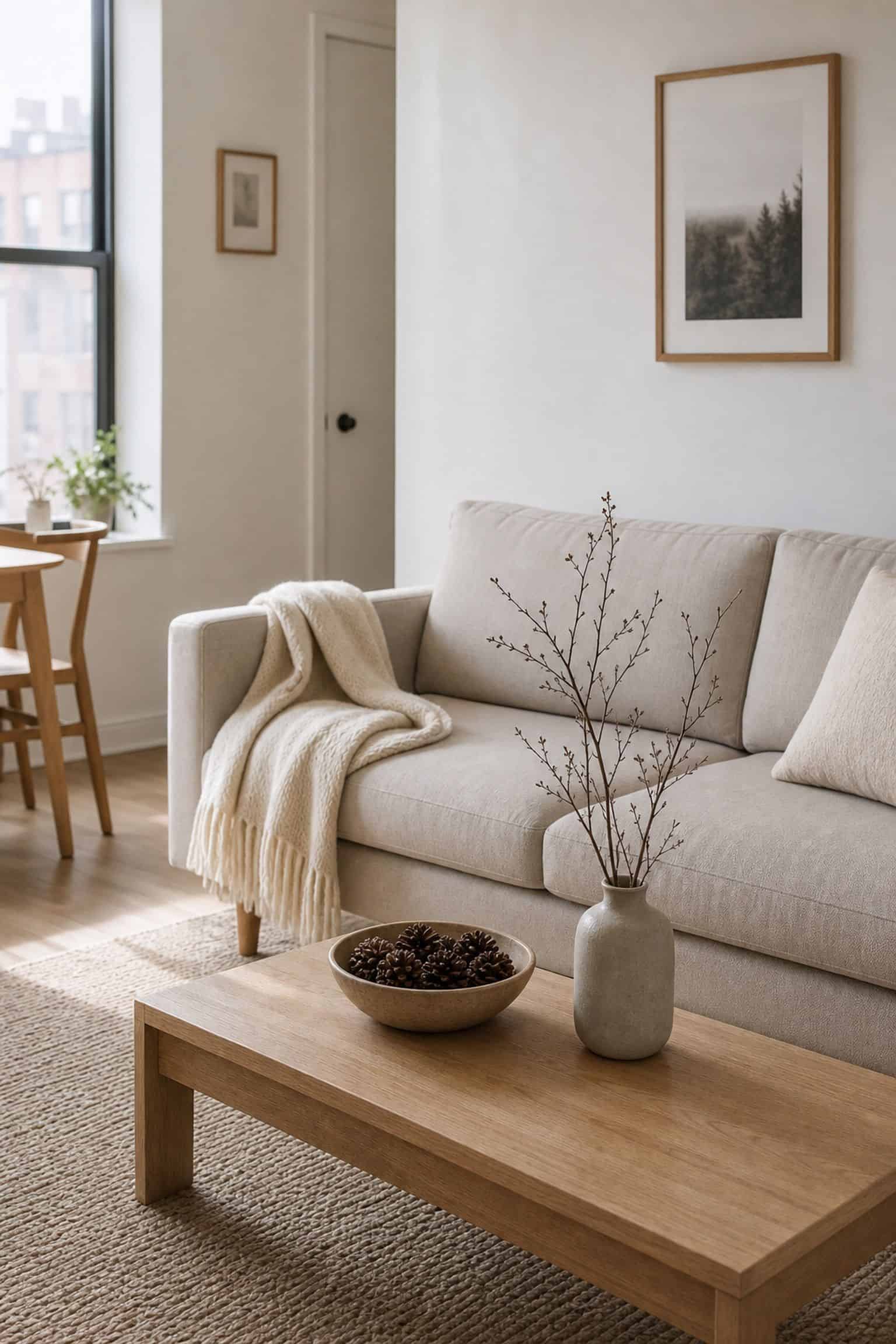
Winter decor works best when it doesn’t try too hard. A neutral sofa with a cream throw, a single bare twig in a white vase and a bowl of pinecones on a wooden coffee table say winter quietly, and that’s exactly the point.
No snowmen on every shelf, no themed signs, no fake snow sprayed on the windows. Just the same few things repeated around the home, like wood, greenery, white and warm light, so the whole place feels connected and calm. If a new piece doesn’t fit that short list, it can wait until next season, or until you find a spot where it really earns its place.
17. Edit Down to Less Than at Christmas
After the full-on decorating of December, your home might like a break, and an emptier room feels fresh in January.
A dark console with a vase of pine, a small bowl and a candle, plus a fabric storage box on the floor half packed with Christmas decorations, is what the edit looks like in real life. Here’s how to do it without getting overwhelmed:
- Pack away everything red or festive first, room by room.
- Put back only what you love and what looks like winter.
- Leave at least one surface per room completely empty.
Label the box by room before it goes in the closet, and next December you’ll thank yourself.
18. Add a Few Living, Hopeful Touches
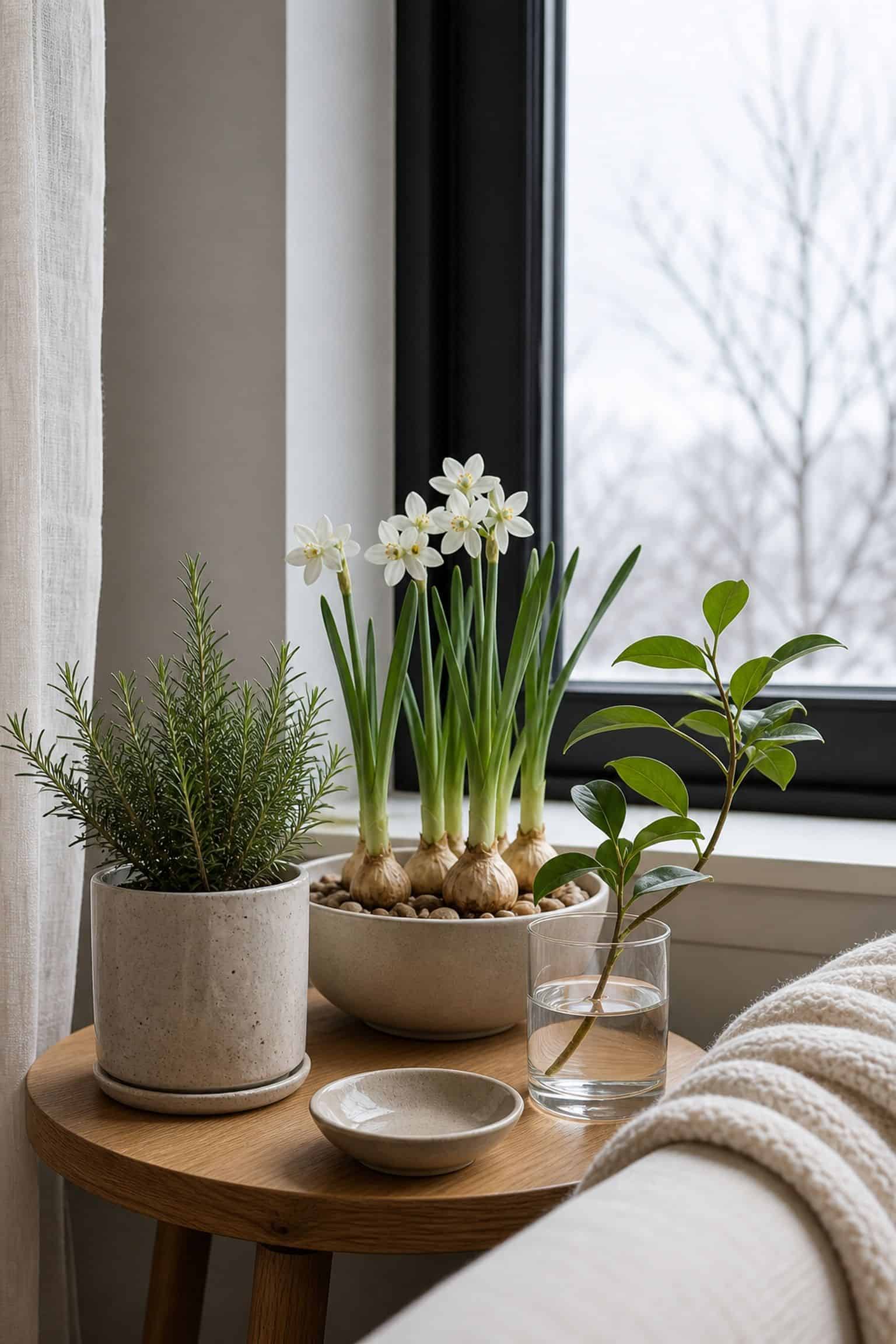


Something growing makes January feel less endless, and a few living touches are the best after-Christmas decor there is. A pot of paperwhites in full bloom, a little rosemary plant and a cutting in a glass of water, lined up on a side table by a snowy window, look like a small promise that spring is coming. Add an amaryllis, a pot of forced bulbs or one easy houseplant, and you’ll have something new to look at every few days. In a country where snow can hang around into April, I’m a big believer in a windowsill full of green things.
19. Transition Gradually, Room by Room


Don’t try to do the whole home in one afternoon, because that’s how you end up with three open boxes and a headache.
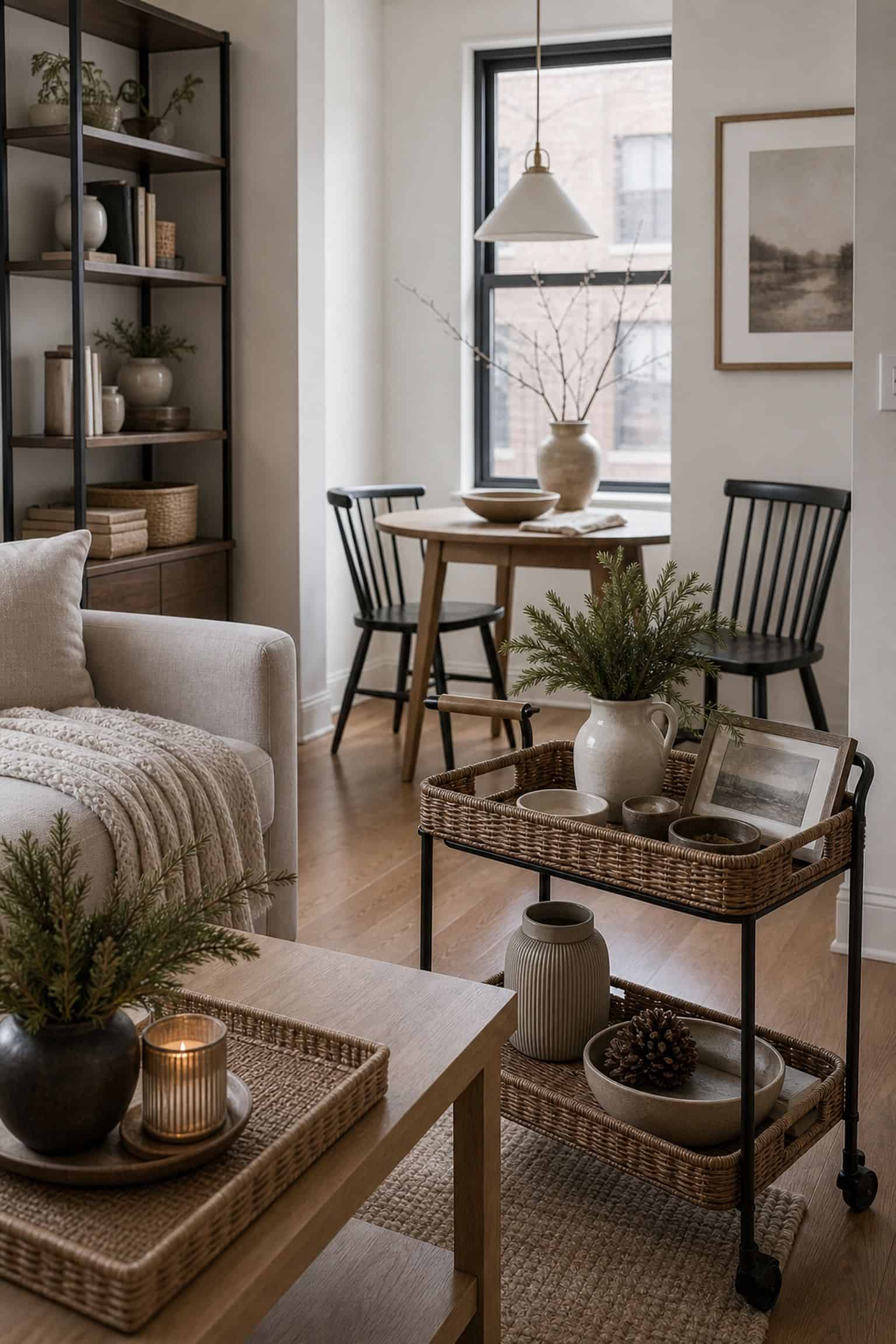
Start with the room you use most, usually the living room, and move through the rest over a few days. A small apartment with a dining nook, a wicker bar cart topped with a tray, a vase of pine and a bowl of pinecones, shows how well the edit works across one open space: the same few winter pieces repeated from corner to corner.
Do one room a day and the job feels small, and the home never sits completely bare. By the time the last box is in storage, the whole place feels calm and ready for the rest of winter.
When Should You Take Down Christmas Decorations?
Most people take them down sometime between New Year’s Day and early January, and a lot of families wait until Epiphany on January 6. In Finland the tradition is Nuutinpäivä on January 13, when Christmas is officially over. There’s no wrong answer, so do it when the decorations start to feel like clutter, and keep the winter pieces up for as long as it’s cold outside.
Frequently Asked Questions
What decorations can you leave up after Christmas?
Leave up anything that looks like winter: evergreen garlands and wreaths without red bows, pinecones, snowflakes, white candles, bare branches and warm string lights. Pack away red ornaments, Santa figures and Christmas signs.
How do I make my home cozy after Christmas?
Keep warm lamps and candles on in the evening, add soft throws and textured pillows in cream or white, and bring in something alive like paperwhites or fresh greenery. Those few things fill the gaps the Christmas decorations leave.
What colors should I decorate with in January?
Warm neutrals work best: cream, ivory, oatmeal, soft white and natural wood, with green from plants and a little brass for shine. Avoid cold gray, which can make a dark January feel even darker.
How do you decorate for winter without it looking like Christmas?
Use natural materials instead of festive ones, like branches, pinecones, wood and wool, and skip red entirely. Repeat a few calm pieces around the home instead of using themed decor.
Key Takeaways
- Keep what looks like winter and pack away what looks like Christmas.
- Red, ornaments, Santa figures and holiday signs go first.
- Bare branches, paperwhites and fresh cedar fill the empty spots for very little money.
- Warm lamps, candles and soft throws matter more in January than any decoration.
- Edit one room at a time, starting with the one you use most.
- Leave at least one surface per room empty after all the December decorating.
Pack Away the Red Before Mid-January
Nuutinpäivä comes around faster than you’d think, so pick a day before mid-January, put on a podcast and do the big edit in one room. Red and ornaments out, branches and candles in, one soft throw on the sofa. Then start a bowl of paperwhites on the kitchen counter, because by the time they bloom in February, you’ll be very happy to see something white and alive on a gray morning, and spring will finally be in sight.
Last update on 2026-10-23 / Affiliate links / Images from Amazon Product Advertising API
