

Winter porch decor works best when you keep everything from December that isn’t red: evergreens, lanterns, warm white lights and texture. Swap the holiday wreath for a plain mixed evergreen one, fill empty planters with cut branches and pinecones, and add one wool throw or a vintage sled so the porch still feels cared for until spring.
In December the porch gets all the attention, and in the first week of January it gets a garbage bag. Then it sits bare through the two darkest, coldest months of the year, which is exactly when coming home to a warm, glowing door matters most. After about twenty years of Finnish winters I’m firmly on team decorate-January, because here the dark lasts well into February and a lit doorway helps more than you’d think.
January asks for less color and more texture. Think evergreens without the berries, lantern light, wool and a bit of birch, the quiet version of a winter porch that can stay up until the first crocuses. All the photos below show one small apartment porch with a charcoal door and a black railing, so every idea fits a tight space.

Recommended Winter Porch Products
Five pieces handle most of the work: the lantern that glows from the street, a heavy wool throw for visual warmth, battery candles that run on timers, the garland that replaces the holiday one, and a jute mat that handles salt and slush.


Read this also:
- Top 18 Front Porch Christmas Decor Ideas
- Small Front Porch Ideas to Transform Your Entrance
- Top 16 Best Small Apartment Porch Ideas
- Top 18 Calm Sunroom Porch Ideas for Slow Mornings
- Winter Front Door Decor Ideas
How Do You Switch Porch Greenery From Christmas to Winter?
Keep the greenery and lose the red. Replace the holiday wreath and garland with plain evergreens or magnolia, and add birch for height once the front porch Christmas decor comes down. Inside, the same calm palette carries on with these winter decor ideas for the home, and for a really tiny entry, these small apartment porch ideas help you fit it all in.
1. Replace the Holiday Wreath with a Mixed Evergreen One
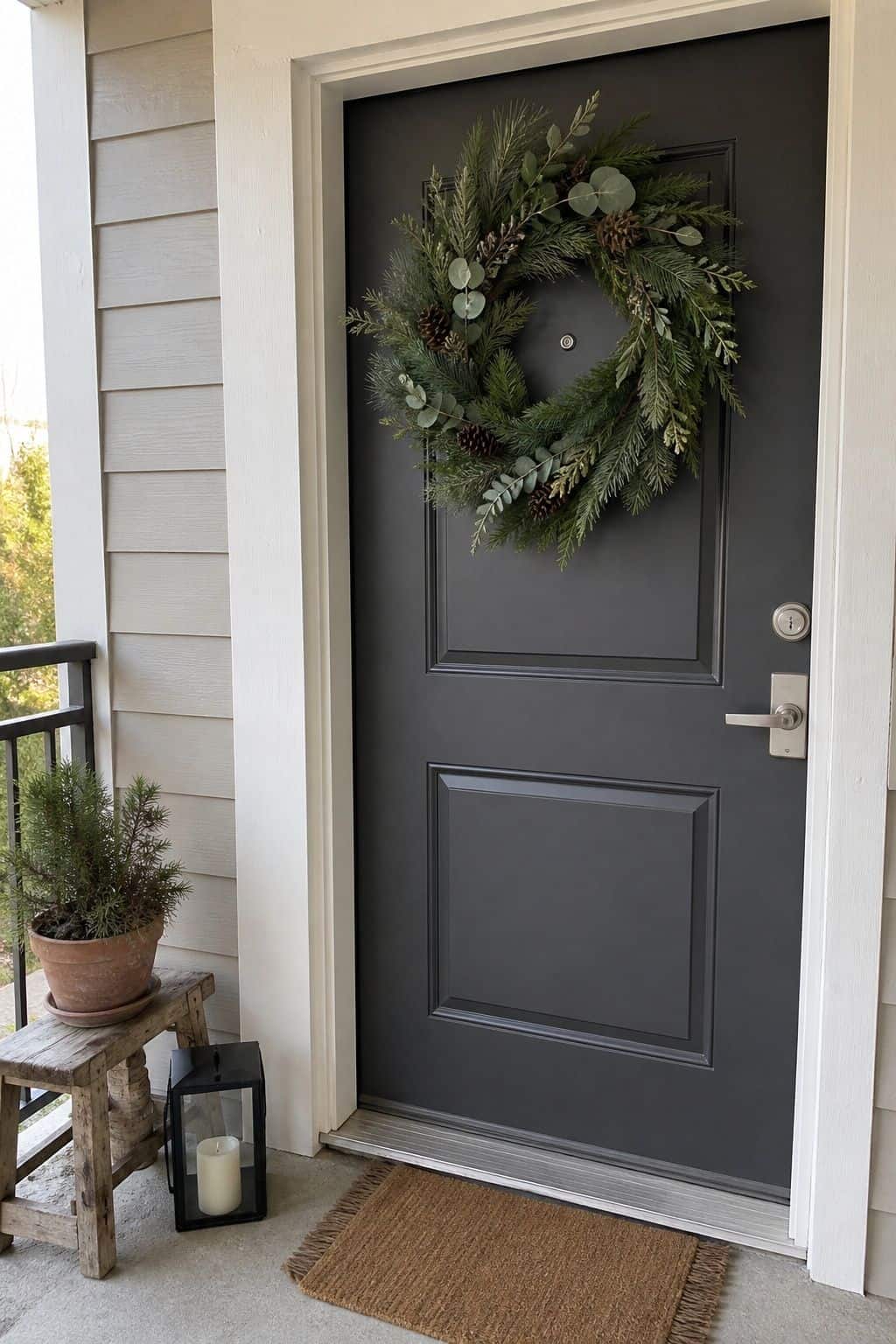


The holiday wreath is usually the first thing to come down, and an empty hook on the door is the loudest sign the party’s over. Hang a plain mixed evergreen wreath in its place, cedar and pine with a few eucalyptus stems and pinecones, and the door looks dressed again without saying Christmas.
What you leave off matters most. No red berries, no bows, no ornaments, just green and a little silver-gray from the eucalyptus, which reads as winter right through February. A small wooden stool with a potted pine next to the door repeats the greenery lower down and fills the corner nicely.
2. Swap Christmas Garland for Fresh Boxwood or Magnolia
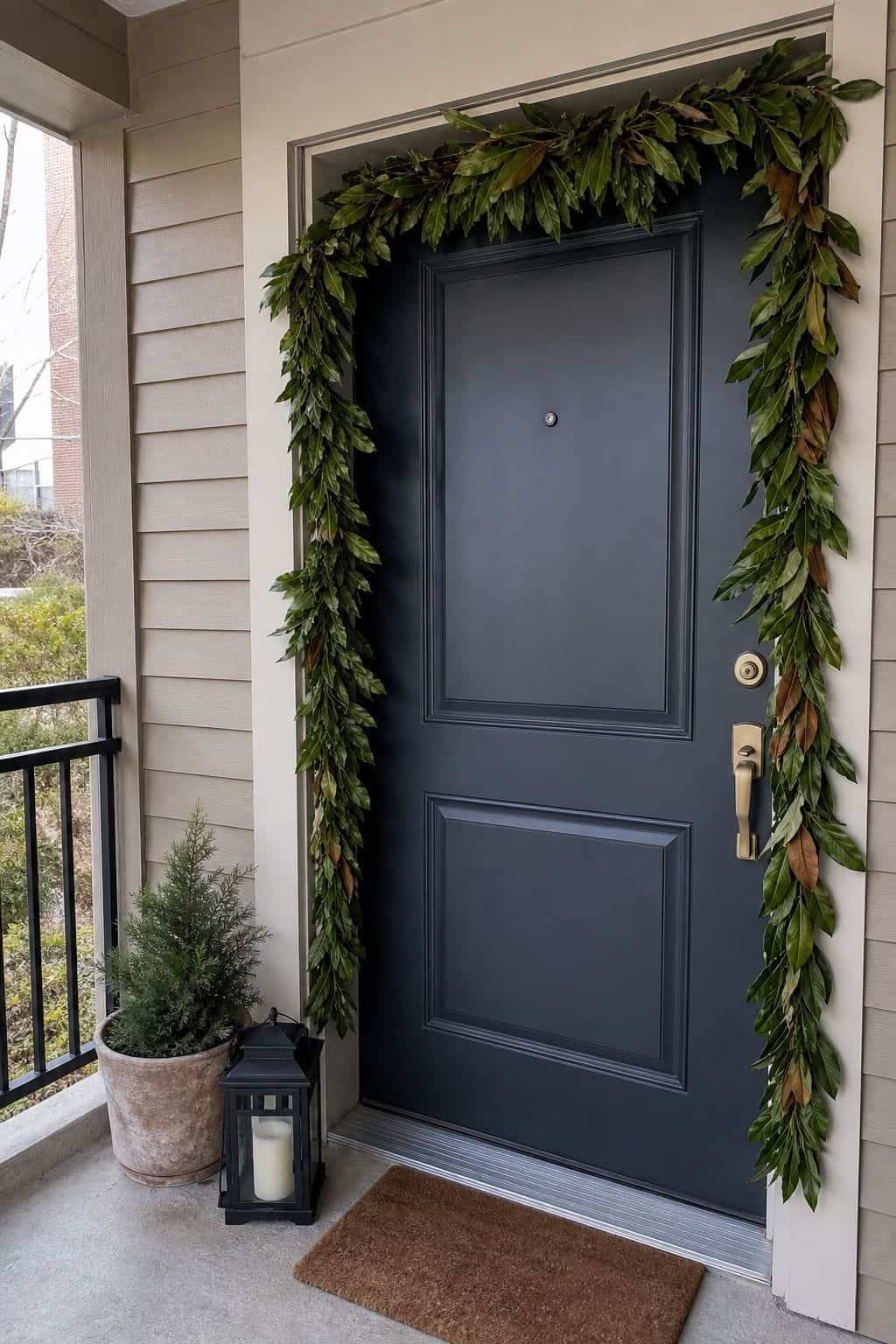


Christmas garland usually comes with lights, baubles and bows built in, so swap it for something plain that still frames the door. Magnolia leaf garland is my favorite for January, because the leaves are glossy green on top and soft brown underneath, which gives you two colors without adding any, and it looks calm and a bit grown-up around a dark door. Boxwood is the tidier option if you like a neat outline. Both hold their shape for weeks in the cold, and either one hangs on the same adhesive hooks the Christmas garland used.
3. Use Birch Branches in a Tall Planter
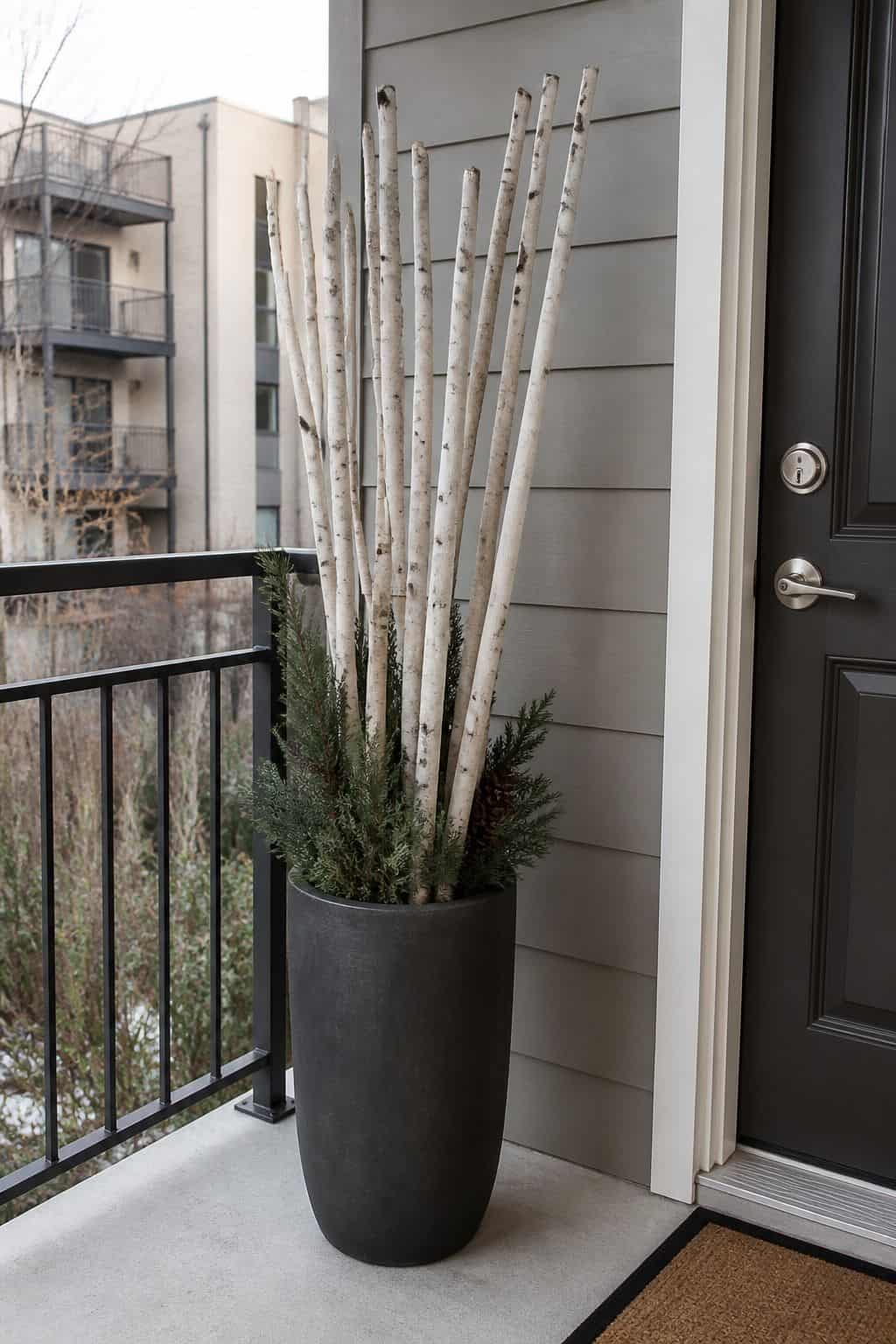


Birch poles are the cheapest way to add height to a porch in winter, and on a small apartment porch, height is free space. A tall black planter with a bundle of white birch standing in it reads clearly against siding, railings and even the gray apartment buildings across the way.
Push the poles into last summer’s soil or into a bucket of sand inside the planter, and wedge a few evergreen branches around the base so the bottom doesn’t look bare.
Birch is a very Finnish winter look, white trunks against snow are everywhere here, and maybe that’s why it feels calm rather than decorated. It also lasts until spring and goes straight back in the planter next year.
What Winter Porch Lighting Works for Long Dark Evenings?
Lanterns on the floor and one good light overhead, all on timers, so the porch glows from the moment it gets dark.
4. Use Two Oversized Floor Lanterns by the Door
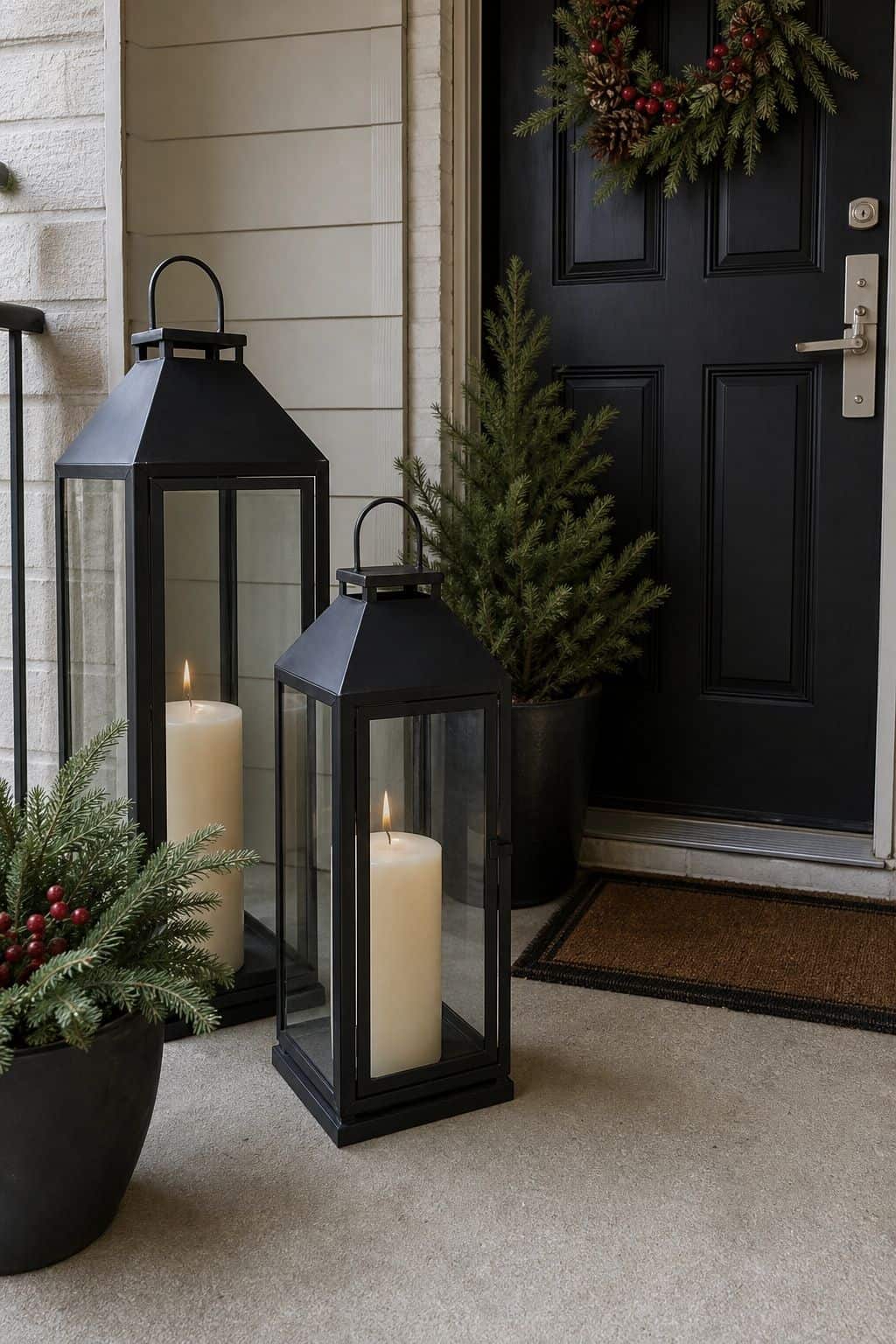


Two big lanterns by the door do more for a winter porch than anything else on this list, because in January it’s dark when you leave in the morning and dark again when you get home. Tall black lanterns with chunky pillar candles inside, one taller than the other, give the door a glow you can see from the parking lot.
Put battery pillars on a timer so they come on around four and switch off at bedtime, and you’ll never fiddle with them in the cold. A planter of greenery beside them finishes the corner, and a few berries left over from December are fine down there, since it’s the bows and baubles that should go.
5. Hang a Pendant Light or Glass Globe Over the Door
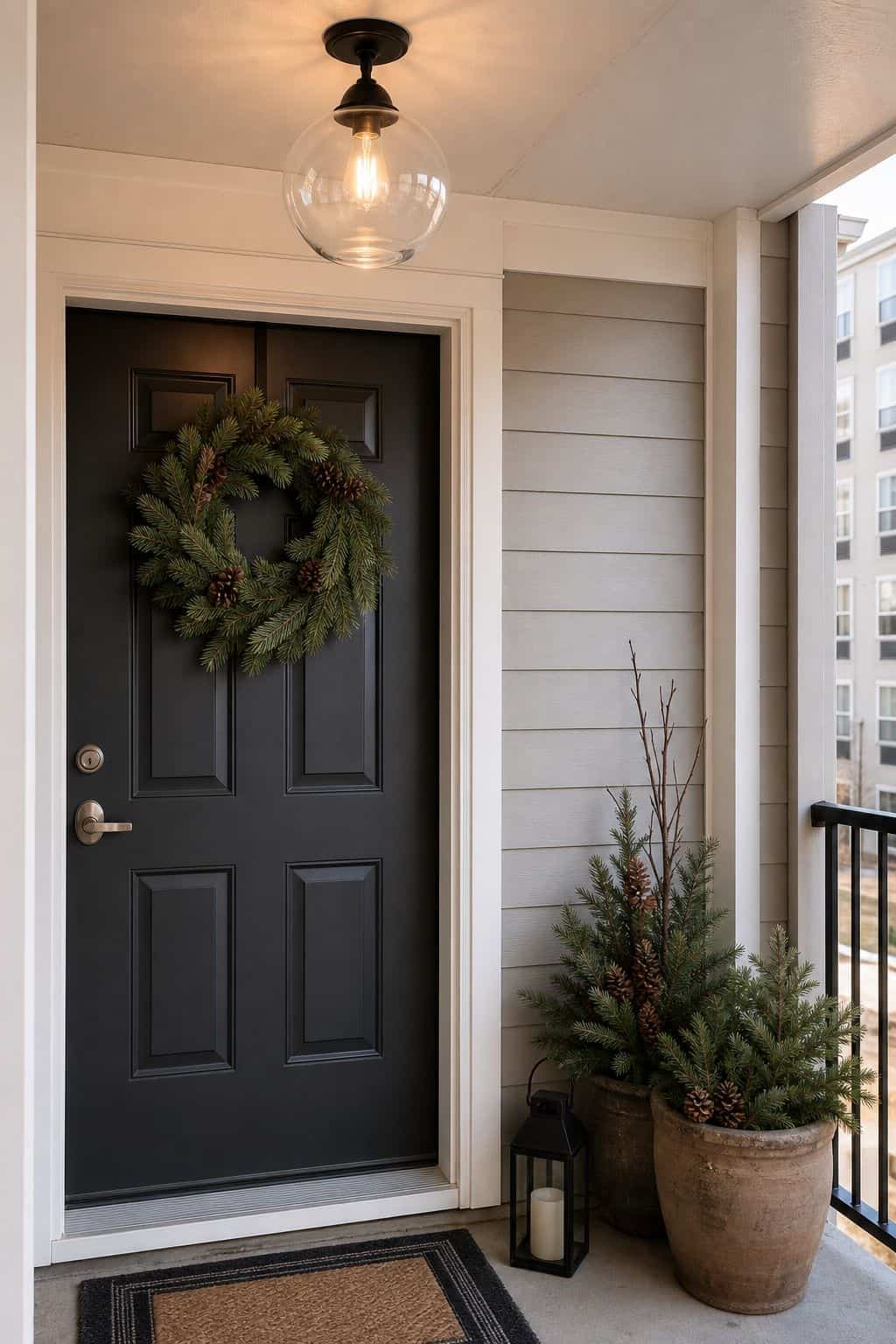


The light over the door is the one fixture everyone sees, and on a lot of apartment porches it’s a flat, dull dome. Swapping it for a clear glass globe on a black fitting makes the entry look a lot more expensive, and the warm bulb inside lights the wreath from above at night. If you rent, ask your landlord first, since this one involves wiring and is a job for an electrician or the building’s maintenance person. No luck? Put a warm white bulb in the existing fixture, which helps more than you’d expect.
6. Add One Hurricane Lantern on the Floor
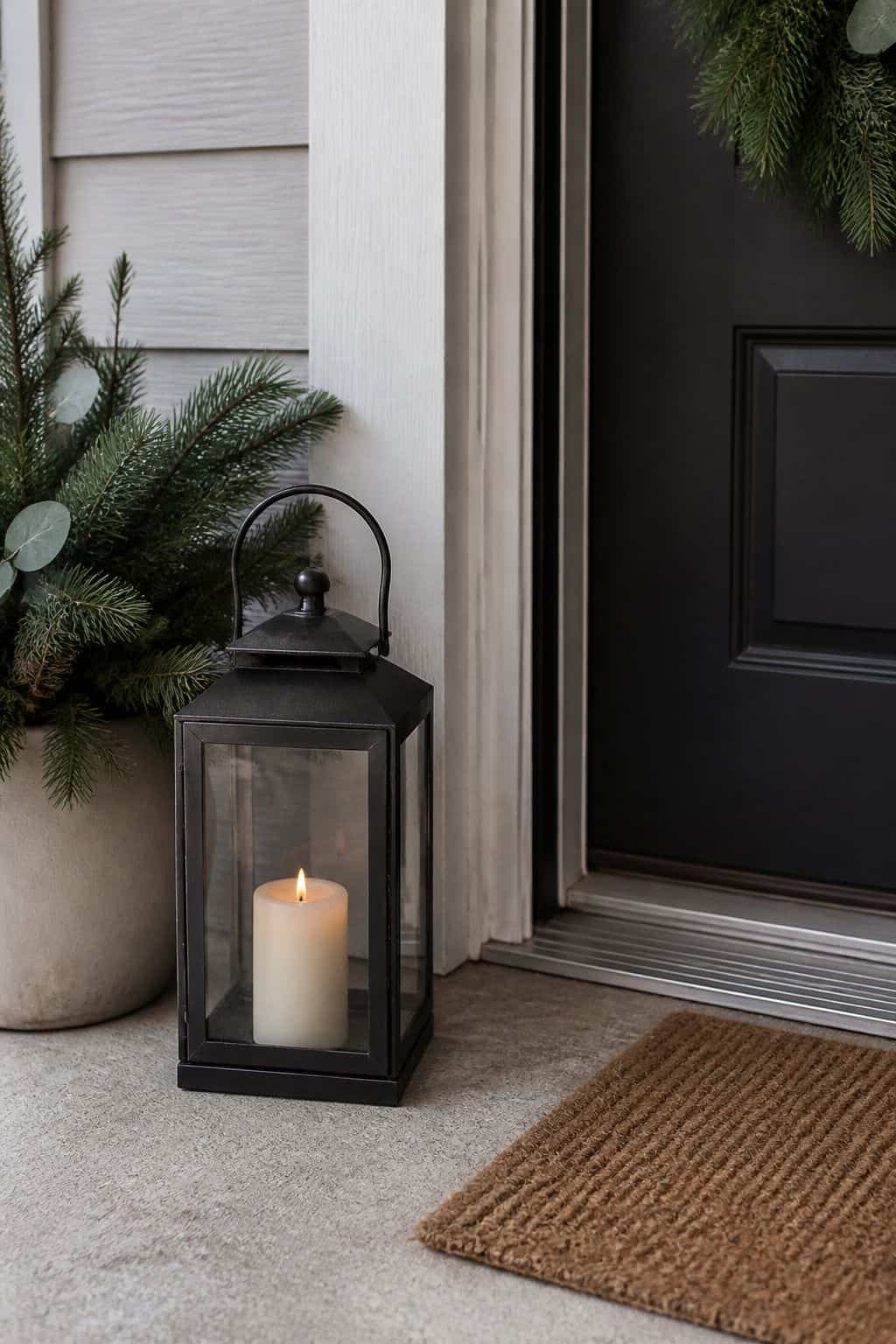


A single lantern on the floor, off to one side, looks more relaxed than a matched pair, and it’s the right size for a narrow apartment porch. To make it work:
- Set it next to a potted pine so it doesn’t look stranded.
- Use a fat pillar candle inside, battery or real, and real ones only in a closed lantern.
- Keep it out of the walking line between the door and the steps.
- Wipe the glass after a snowy day so the light shows through.
One lantern is also the easiest thing to carry inside on a stormy night.
Which Textures Make a Winter Porch Feel Warm?
Wool, jute and chunky knits, the same materials that make a living room cozy in winter.
7. Lay Down a Wool or Heavy Jute Doormat
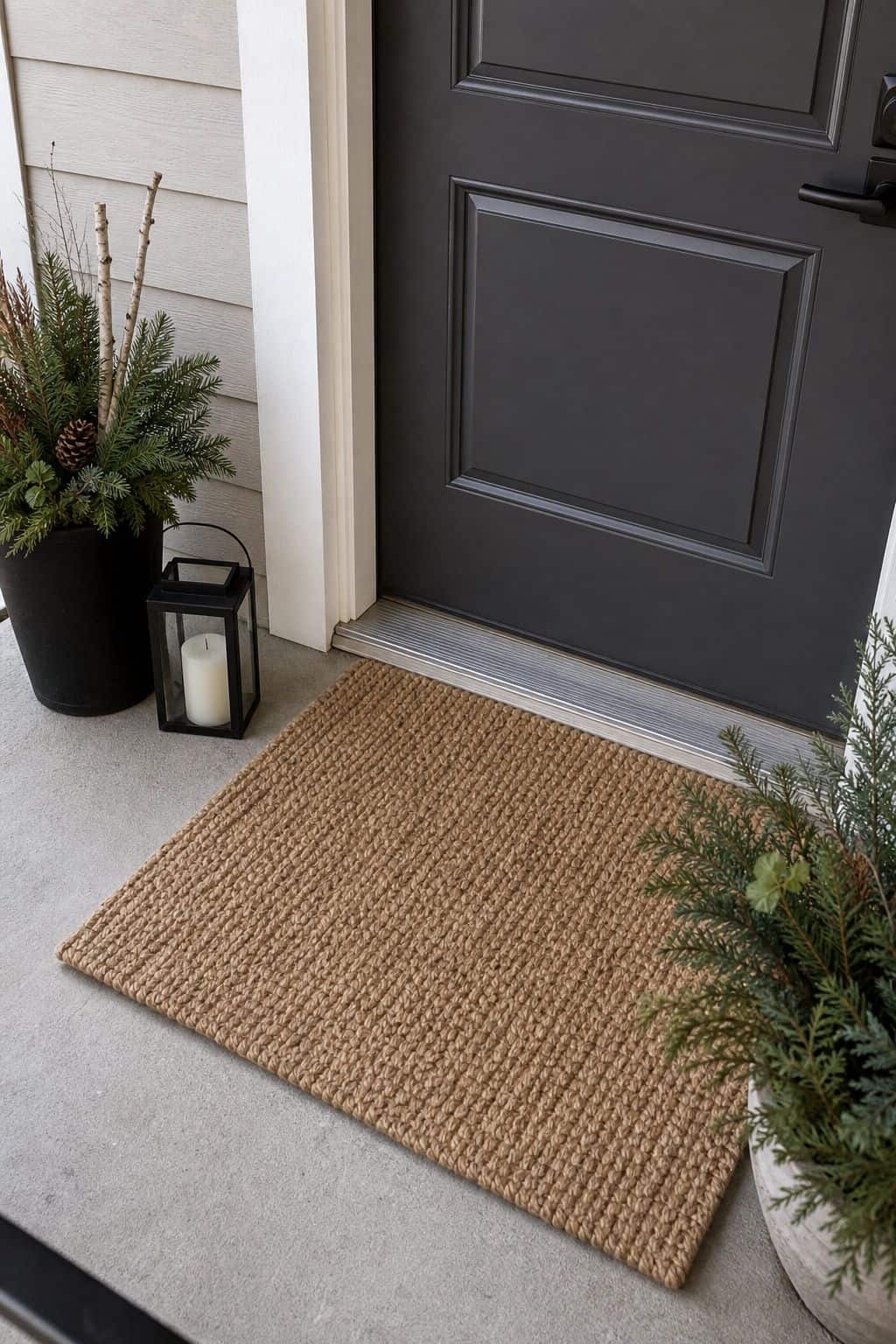


In January the doormat works harder than anything else on the porch, with snow, salt and slush coming through every day. A thick, chunky jute mat in natural tan scrapes boots well, looks warm against a dark door and doesn’t show dirt the way a pale mat does.
If you like the layered look, put a striped or checked outdoor rug underneath and the jute on top. Either way, shake it out every few days, because a mat packed with grit stops scraping anything and just moves the gravel into your hallway.
8. Drape a Wool Throw Over a Bench or Chair
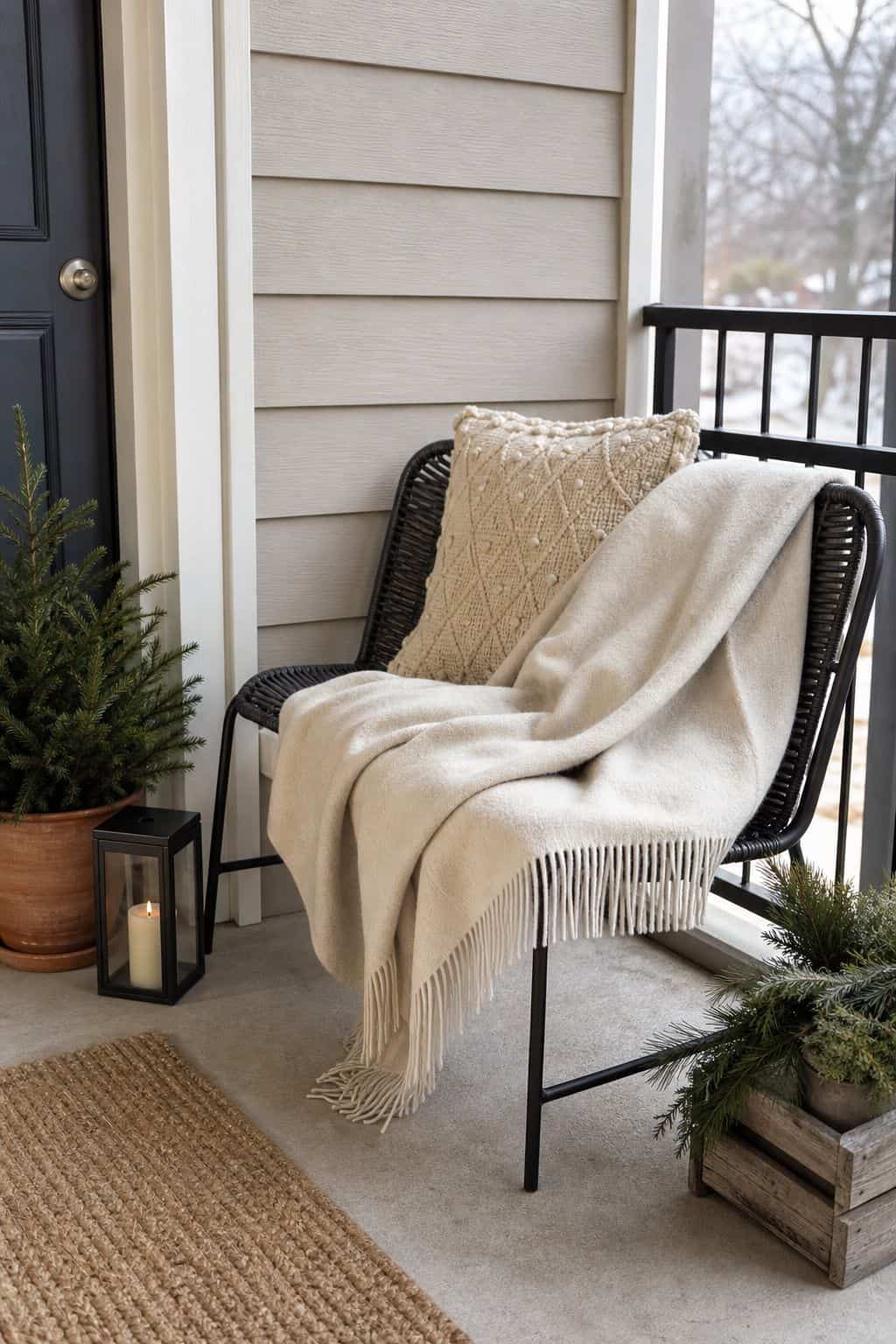


A cream wool throw draped over a black wicker chair makes a porch look warm even in freezing weather, and nobody has to sit there for it to work. It’s the little signal that someone lives here and likes it. Drape it loosely over the back and one arm, never folded into a sharp square, and add a chunky knit pillow for texture. On a covered porch it can stay out on dry days. When rain or heavy snow is coming, bring it in, because a wet wool throw takes about a week to dry.
9. Use a Buffalo Plaid or Solid Wool Pillow
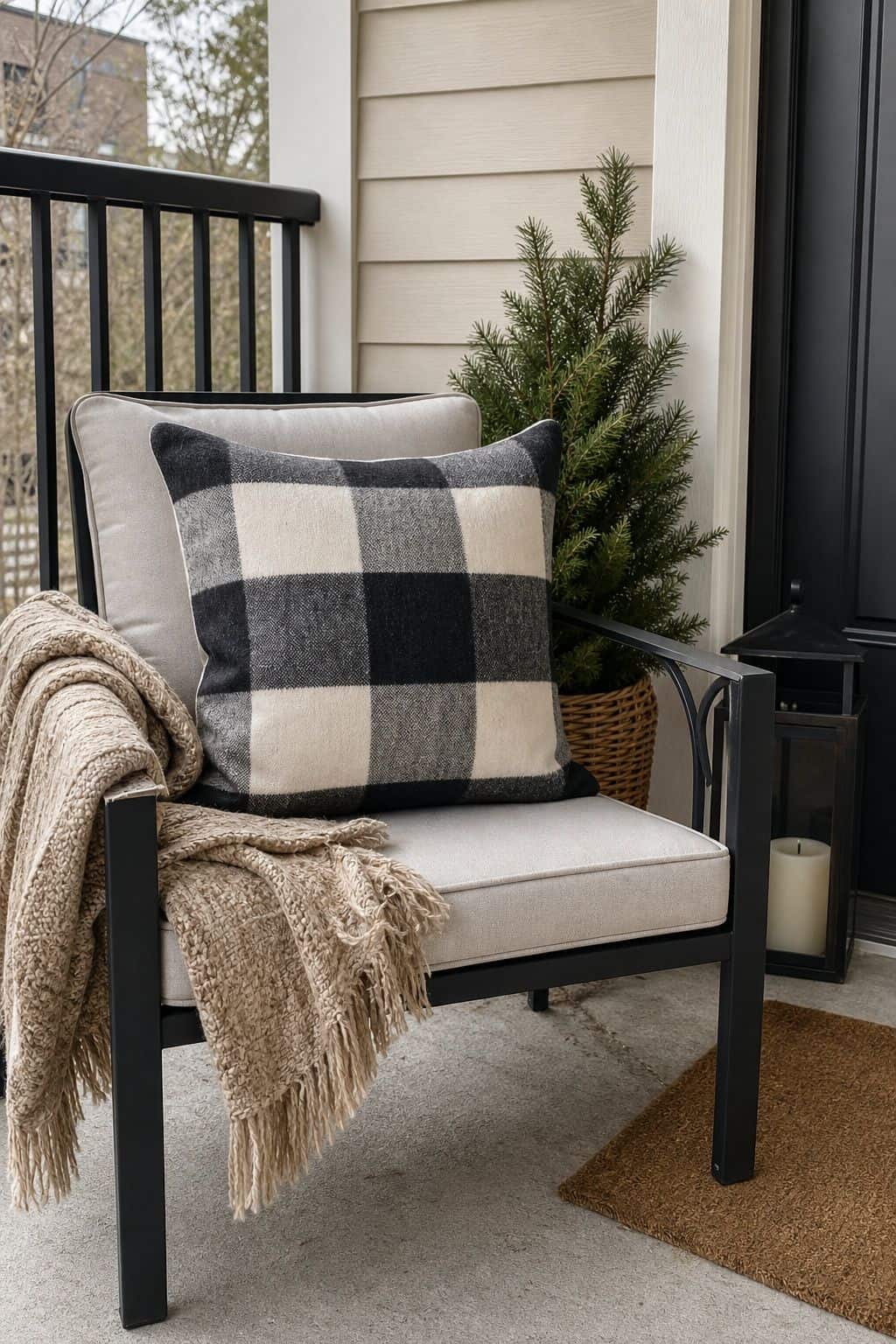


Buffalo check bridges Christmas and winter, as long as it’s black and white. The red and black version screams December, while black and cream looks like a cabin in January and still works in March.
One pillow is enough. Put it on the chair with an oat or cream throw and the porch picks up a bit of graphic contrast against all the soft greens and wood.
Outdoor fabric or a wool-blend cover in a sheltered spot both work, but bring it in when the weather turns wet. A soggy pillow on a frozen chair is the opposite of cozy.
What Can You Put in Empty Porch Planters in Winter?
Cut evergreens, pinecones and dried hydrangeas. They cost very little and none of them mind the frost.
10. Fill Empty Planters with Cut Evergreen Branches
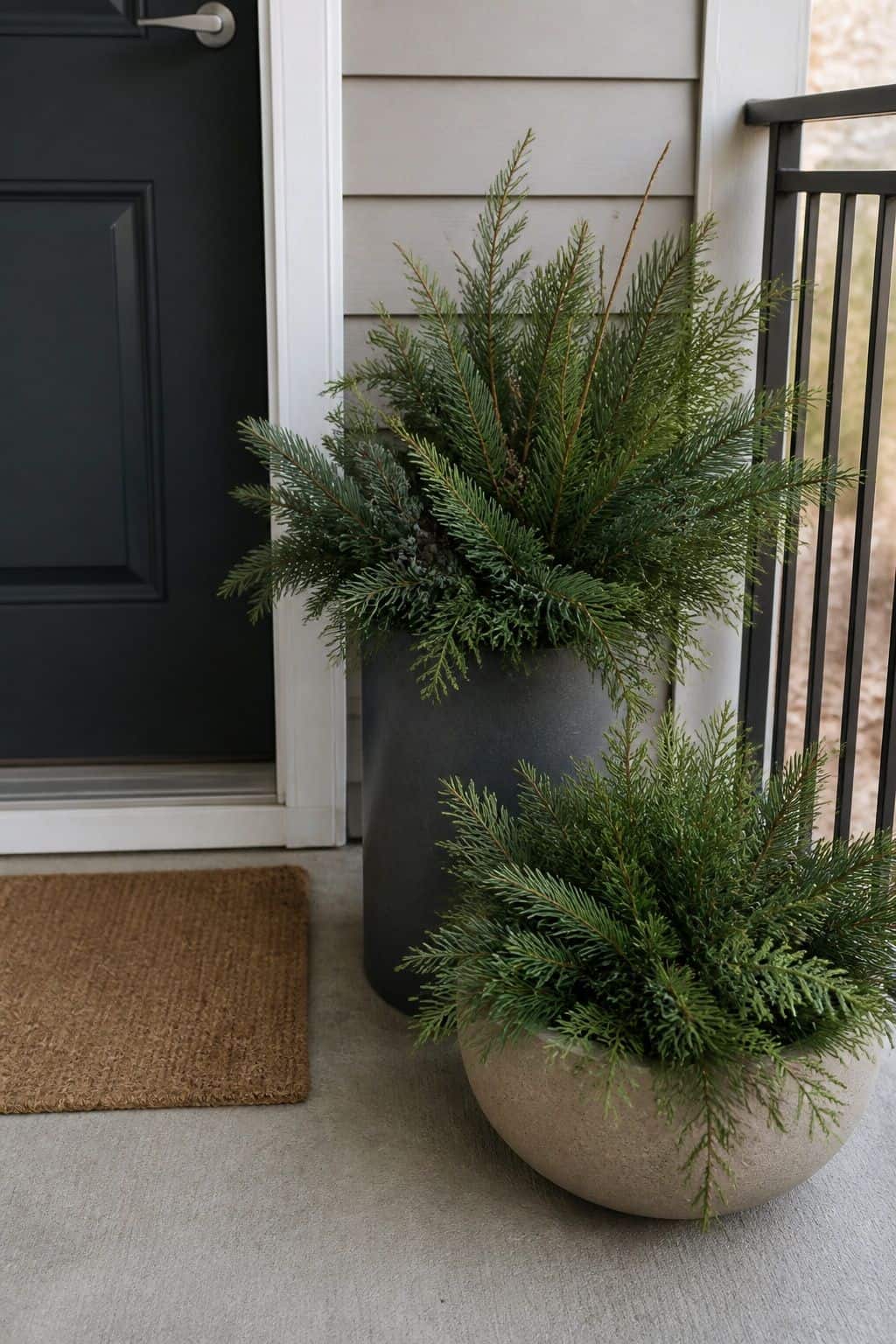


By January the summer flowers in your porch planters are long dead, and pots of frozen soil make a porch look abandoned faster than anything. Fill them with cut evergreens instead, cedar and pine work best, and pack the stems in tight so the arrangement looks full from every side.
This is also the most budget-friendly idea here. Christmas tree lots often give away trimmed branches, and the lower branches of your own tree work great once it comes down. Push the stems straight into the soil, or into a block of floral foam, and they stay green for weeks in the cold.
11. Add a Few Pinecones at the Base of Each Planter
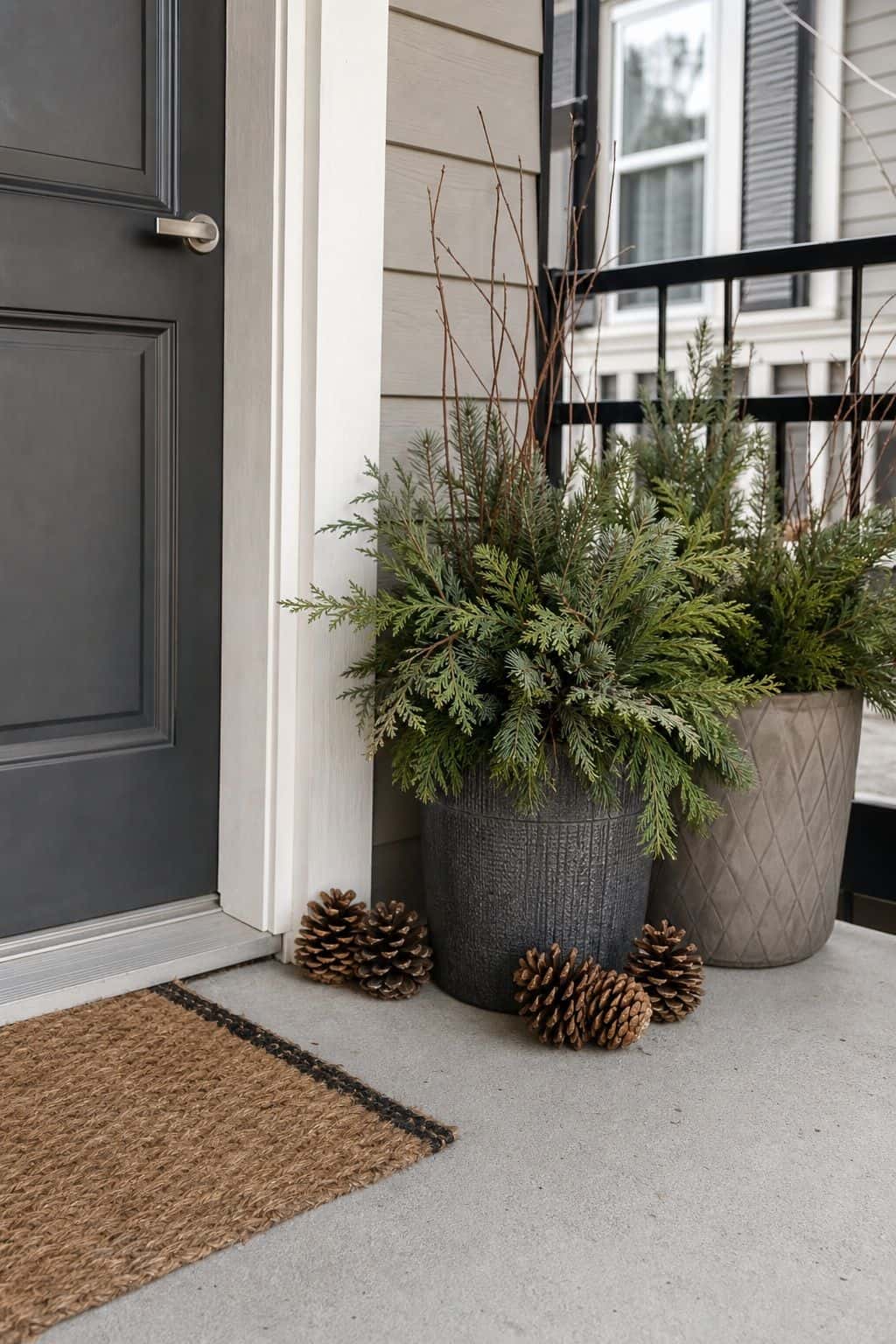


Pinecones around the bottom of a planter fill the gap between the pot and the floor, and they make the whole arrangement look like it grew there. A handful at the base of two planters and a few more tucked between the branches, and the corner looks finished. They’re free if you live anywhere near pine trees, and they last for years. Let them dry indoors on a tray for a few days before using them, so you’re not bringing home damp cones or tiny visitors, and store them in a paper bag in spring.
12. Use Dried Hydrangeas from Last Summer
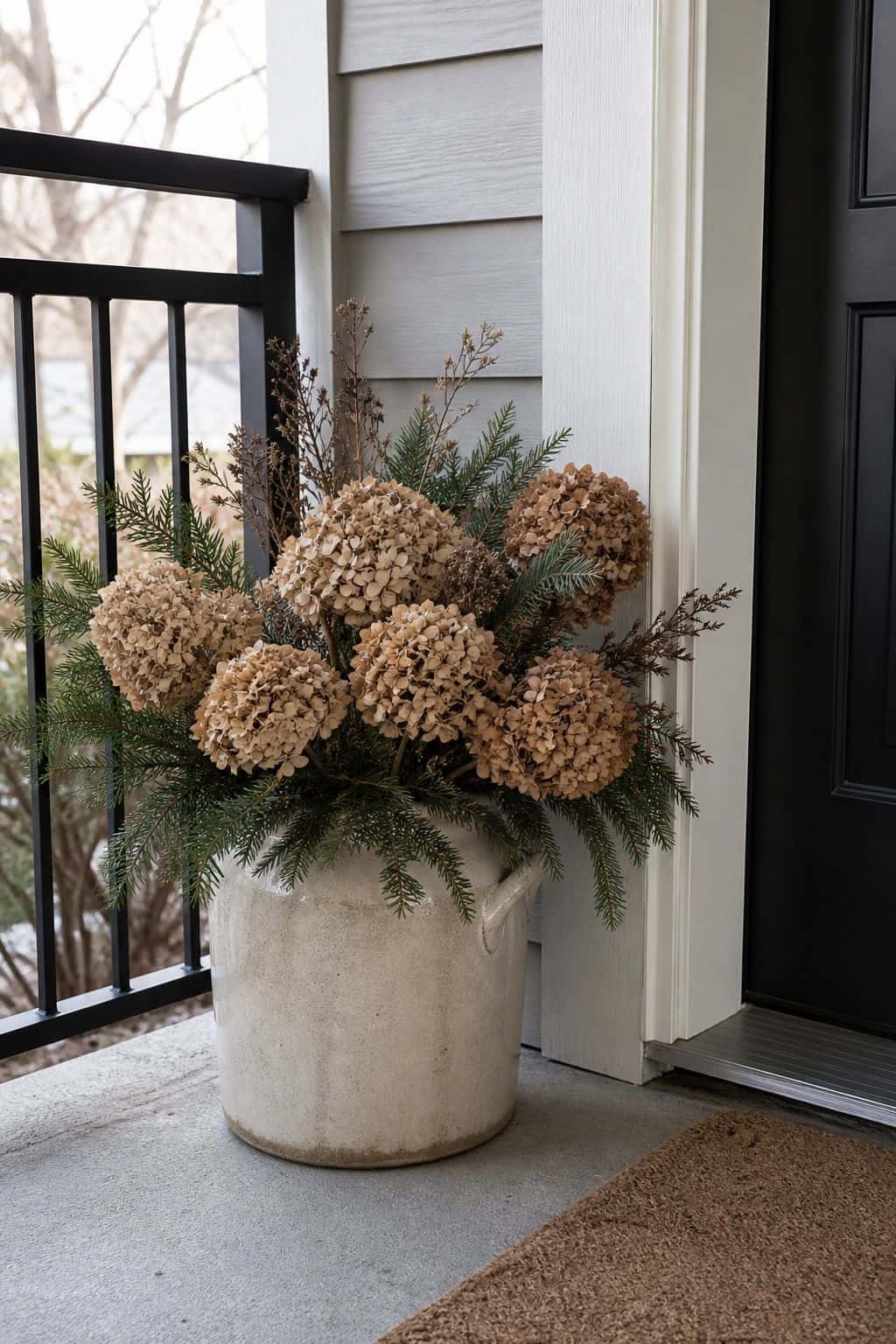


If you dried a few hydrangea heads at the end of summer, January is their moment. Those papery blooms in tan and dusty brown look lovely next to dark green branches, and they bring a soft color to a porch that’s otherwise mostly evergreen and black.
A cream stoneware crock or a big ceramic pot suits them better than plastic, and five or six heads grouped together look much more generous than one or two.
Dried hydrangeas don’t love wet weather, so this idea works best on a covered porch. If you’re planning ahead for next winter, our front porch garden ideas cover what to plant now so you have flowers to dry later.
Which Small Touches Make a Winter Porch Look Intentional?
One or two pieces with a story, like a bell, a sled or a stack of logs, plus white lights that stay up after the holidays.
13. Hang a Single Bell or Bird Feeder
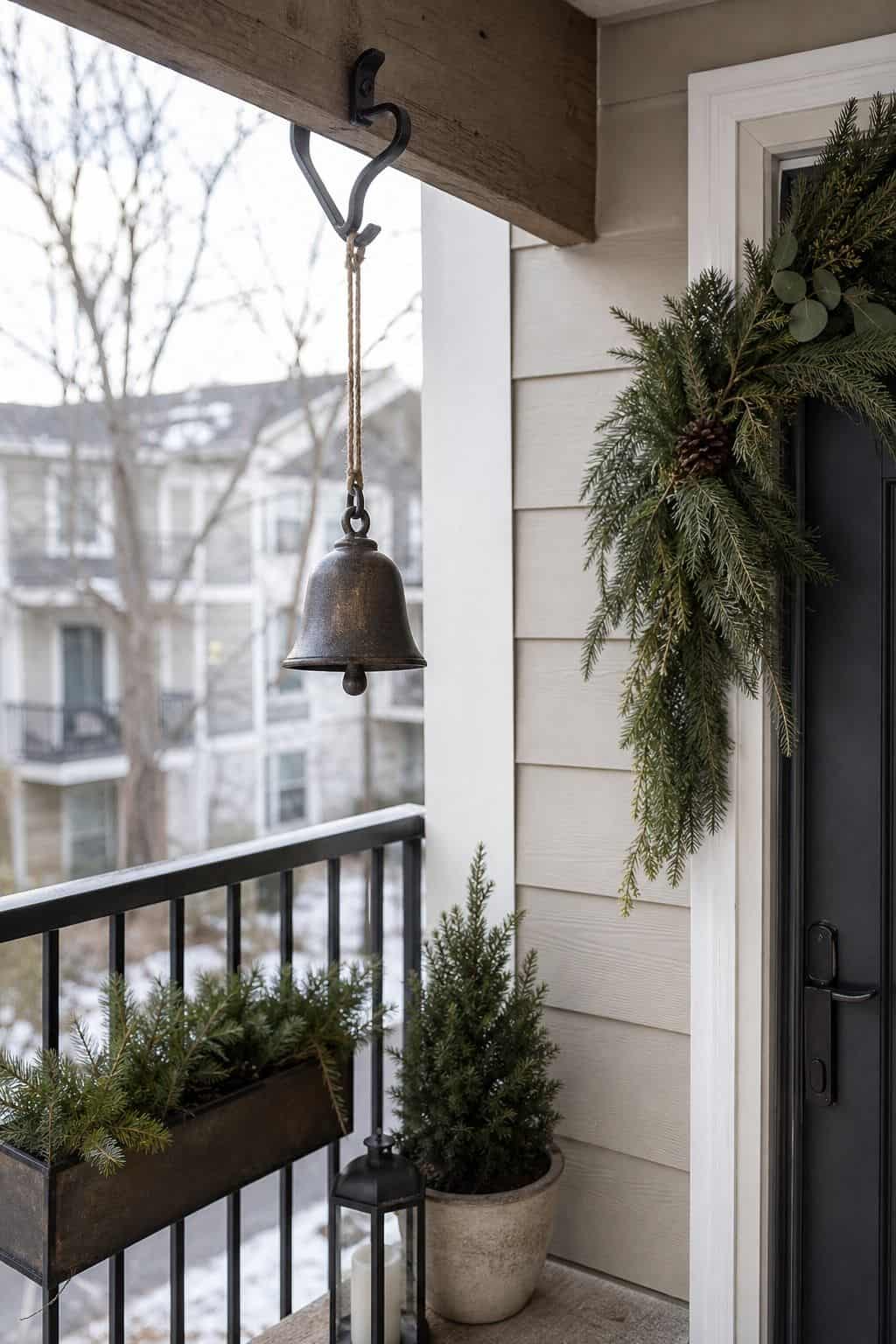


A small iron bell hanging from a hook on the porch beam is a lovely quiet detail, and it rings softly when the wind picks up, which somehow makes the porch feel lived in. Hang it on a rope or a leather strap so it can swing a little.
A bird feeder is the other option, and in winter the birds will actually use it, which gives you something to watch through the window on gray mornings. Pick one or the other, though. One hanging piece looks deliberate, while three start clattering into each other every time the door opens.
14. Set Out a Small Stack of Firewood, Even Decoratively
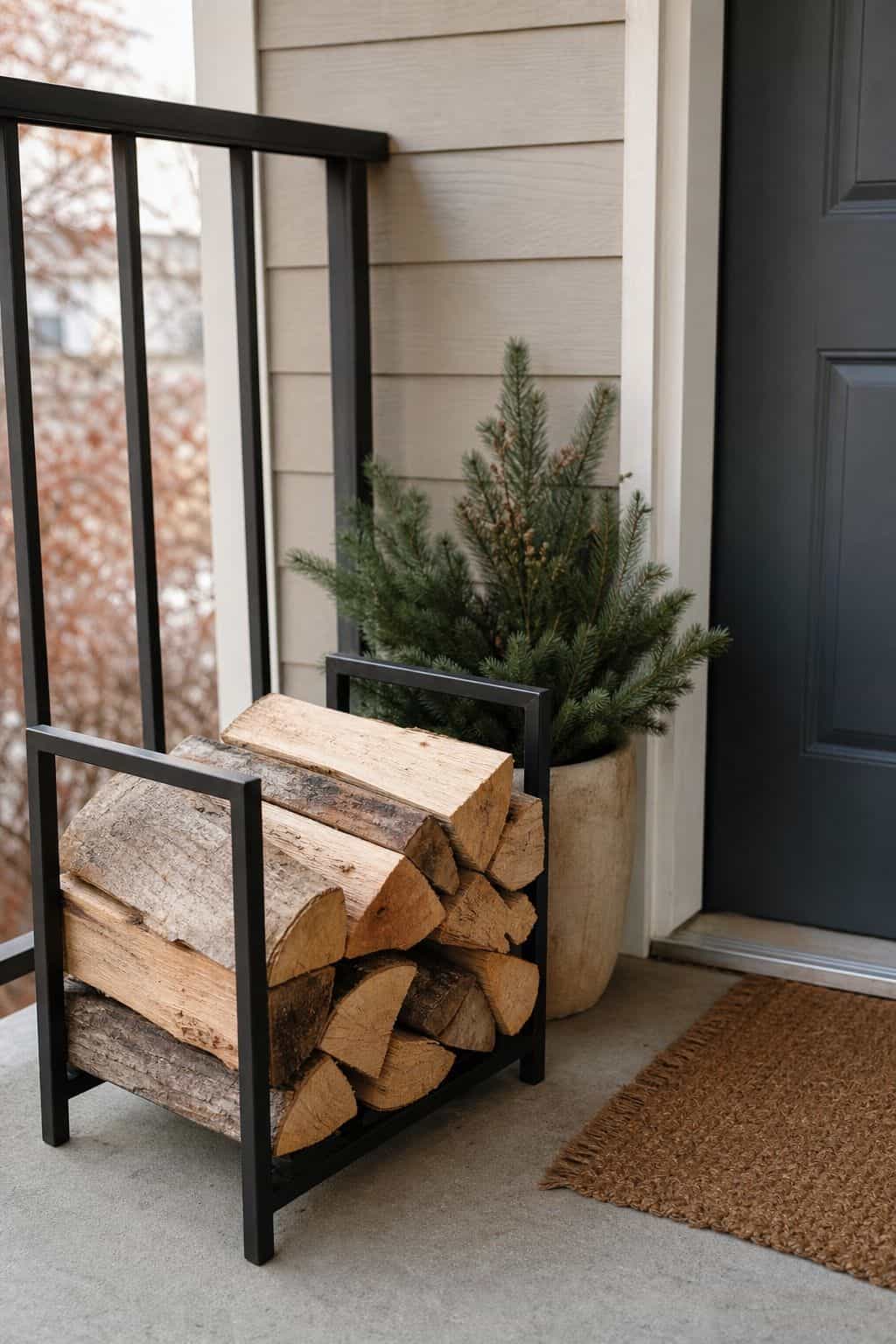


A small stack of firewood by the door says winter even if there’s no fireplace anywhere in the building. It adds warm wood color and texture right at floor level. To make it look tidy:
- Use a black metal log rack so the stack has clean edges.
- Face the cut ends outward, since they’re the prettiest part.
- Add a small potted pine beside it to tie it into the greenery.
- Keep it under cover so the wood stays dry and doesn’t stain the floor.
Birch logs look especially nice here, because the white bark matches the birch poles from earlier.
15. Add a Vintage Sled or Pair of Ice Skates


One vintage piece gives a winter porch a personality that no shop-bought decoration can. A wooden sled with worn red paint leaning against the wall, with a pair of old white ice skates set down beside it, tells a whole winter story without a single word. Look for them at flea markets and on secondhand sites, where old sleds turn up all season. Stick to one piece, though, and lean it off to the side rather than in the middle, so it looks found instead of staged. A matching craft-store set of mini skis and skates just doesn’t have the same charm.
16. Use White Twinkle Lights After January 6
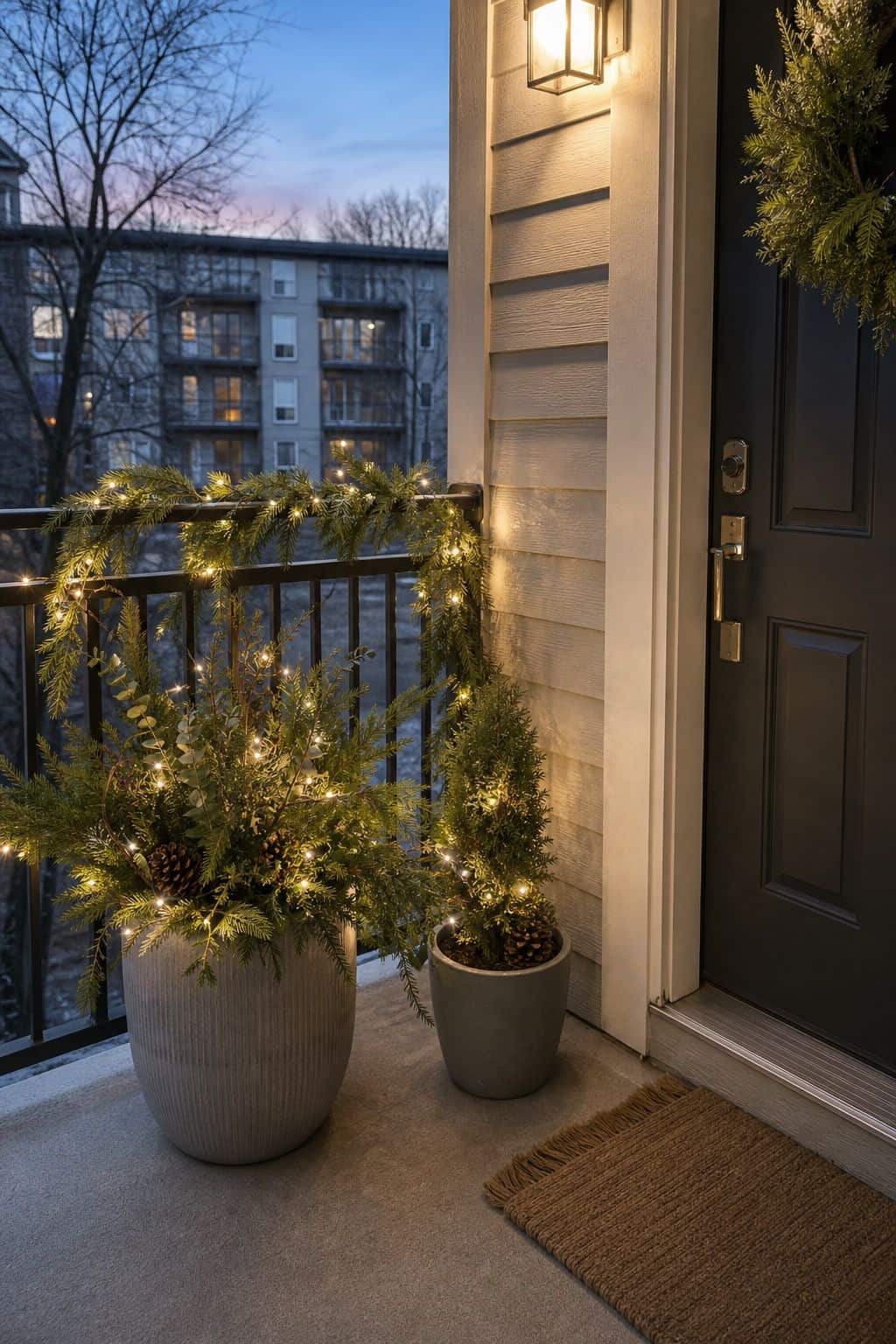


Most people pull every string of lights down with the tree, and that’s a shame, because January evenings are as dark as December ones and a lot less fun. Warm white twinkle lights wrapped through the railing garland and into the planters keep the porch glowing at dusk, and with no color in them they look wintry rather than festive.
Leave them up until the evenings get noticeably lighter, which up here in the north means somewhere around the end of February. Put them on the same timer as the lanterns so the whole porch switches on together, and you never have to step outside in your socks to plug anything in.
17. Add a Hand-Painted Botanical Sign
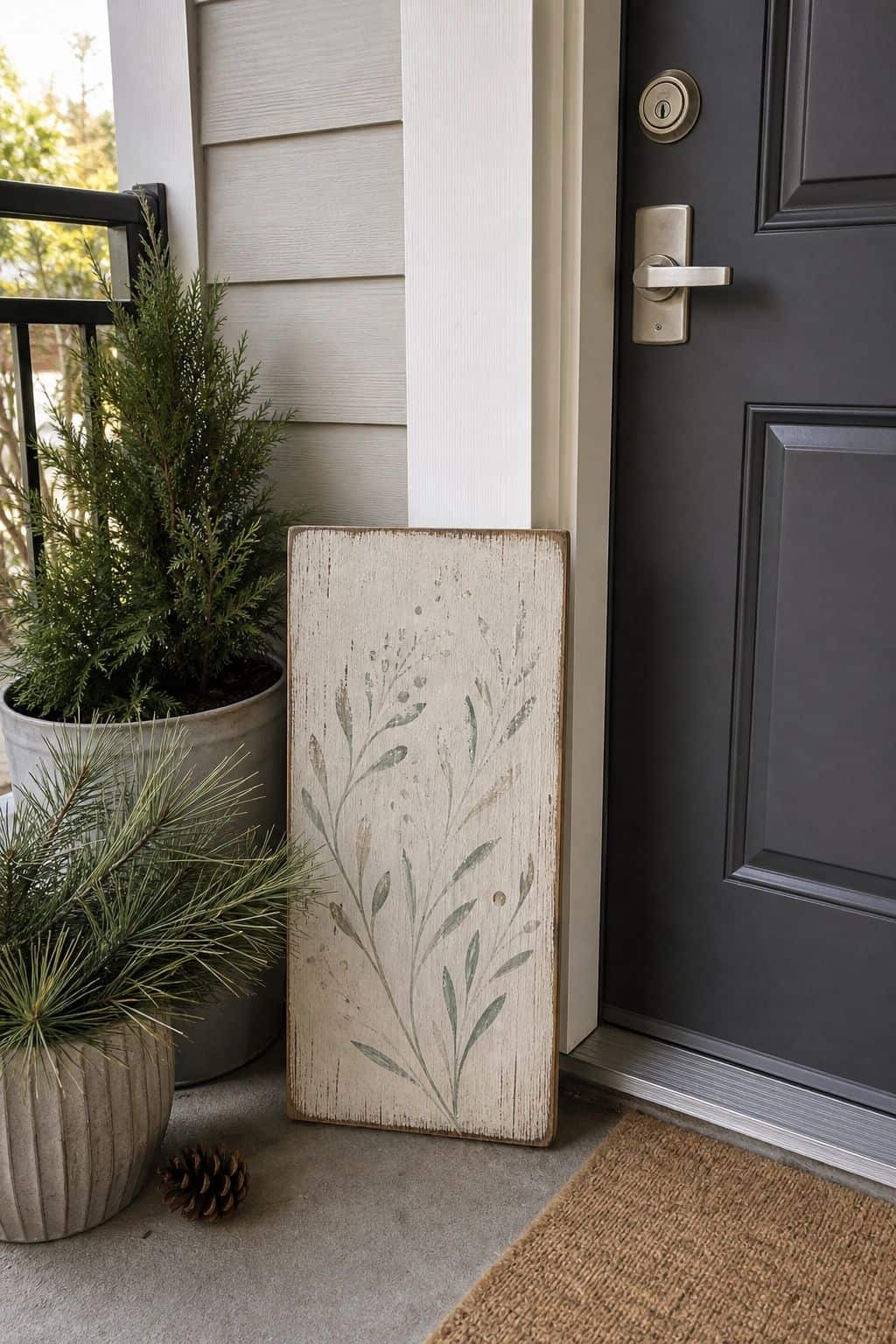


A hand-painted sign with one simple botanical branch in soft green, on a weathered white board, is a nice quiet piece for the season after Christmas. There are no words on it at all, and that’s what makes it work: it adds a little art to the porch without telling anyone to stay cozy.
Lean it against the wall beside the door, next to a planter of pine, rather than hanging it dead center. The casual lean looks relaxed, and it means no holes in the siding.
If you’re handy with a brush, this is a fun Sunday project. Grab an old board, rub a little white paint on and sand it back, then paint one leafy stem on top. It doesn’t need to be neat, the wobbly ones have more charm anyway.
How Do You Keep a Porch From Looking Bare After Christmas?
Swap each holiday piece for a winter one in the same spot. When the red bows and ornaments come down, put a plain evergreen wreath on the door hook, cut branches in the empty planters and warm white lights back on the railing. Then add one texture, like a wool throw or a jute mat, and the porch looks cared for instead of cleared out.
Small porches have an advantage here, by the way. With only a door, a railing and a couple of planters to dress, a January refresh takes about half an hour and a few armfuls of branches.
Frequently Asked Questions
What do you put on your porch after Christmas?
Plain evergreen wreaths and garland, lanterns with candles, cut branches and pinecones in the planters, and textures like a wool throw or a jute mat. Leave out the red, the gold and anything with Santa on it.
When should you take down Christmas porch decorations?
Most people take them down in the first week of January, often around Epiphany on January 6. Greenery, lanterns and white lights can stay up through February as winter decor.
Are real candles safe on a winter porch?
Only inside closed lanterns or hurricane glass, away from wreaths, garland and anything else that can catch. Battery candles with timers are the safer pick for an unattended porch, and the NFPA’s candle safety tips cover the basics.
Key Takeaways
- Keep the greenery and the light from December and lose the red.
- Swap the holiday wreath for a plain mixed evergreen one.
- Put lanterns and twinkle lights on timers for the dark afternoons.
- Fill empty planters with cut branches, pinecones or dried hydrangeas.
- Add one vintage or textured piece so the porch looks lived in.
January Deserves a Nice Porch Too
I’ll say it: January needs a decorated porch more than December does. December has lights on every balcony and a party most weekends, while January has gray mornings, slush and a long wait for spring. A plain evergreen wreath, a couple of lanterns and a wool throw on a chair won’t change the weather, but coming home to a glowing door after a dark afternoon makes the whole season a lot easier to like.
Last update on 2026-10-22 / Affiliate links / Images from Amazon Product Advertising API
