
Quick Answer: Winter table decor ideas for January and February swap holiday red and gold for a neutral palette of cream, taupe, and pale wood. Build the table on a linen runner, three heights of white or cream candles, a runner of cedar and eucalyptus, and matte stoneware plates. The table reads cozy but not Christmas. Perfect for the slow hosting months after the tree comes down.
The day after New Years, the holiday decor comes down, the tree goes out, and the house suddenly feels stripped. For the next eight weeks, January and February stretch out as the slowest hosting months of the year. Most people give up on the dining table entirely until spring.
Less red and gold, more cream and birch. Less candles in twos, more candles in fives. A winter table for the post-holiday months is the deliberate opposite of a holiday table, and the 16 ideas below carry the dining table through January and February without feeling abruptly seasonless.
Trying to keep the apartment styled through the slow winter months?
The Aesthetic Apartment Makeover Guide is a 60-page seasonal styling reference. Currently $17 before it returns to $27.
Recommended Winter Table Products

Five pieces handle every winter table need: birch holders for warmth, cream linen for the foundation, white pillars for height, matte stoneware for the everyday plates, and faux eucalyptus that survives eight weeks of styling.


Read this also:
- Top 16 Winter Mantle Decor Ideas
- Top 18 After-Christmas Winter Decor Ideas
- Top 17 Winter Porch Decor Ideas
- Winter Front Door Decor Ideas
- Top 17 Modern Fall Decor Ideas
The Base Layer
1. Cream or Oat Linen Runner Down the Center
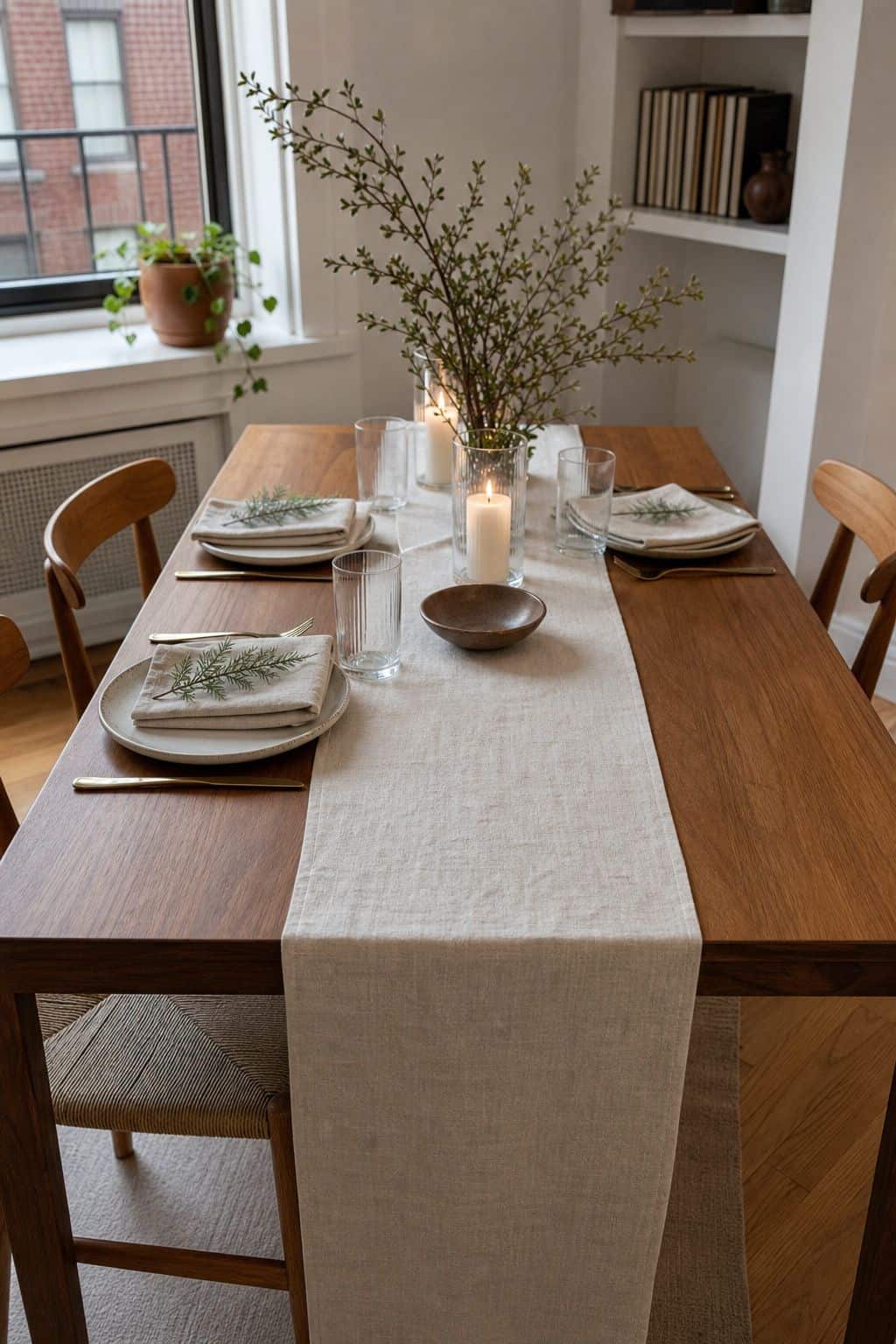


A natural linen runner in cream, oat, or undyed flax along the length of the table is the entire visual base for winter. The light neutral reads bright in the dark months without feeling cold.
Iron the runner lightly. The slight wrinkles communicate that the table is actually used, not styled for a magazine shoot.
Layer a second narrower jute or natural-fiber runner underneath for texture if the linen alone reads flat.
2. Matte Stoneware Plates in Cream or Taupe
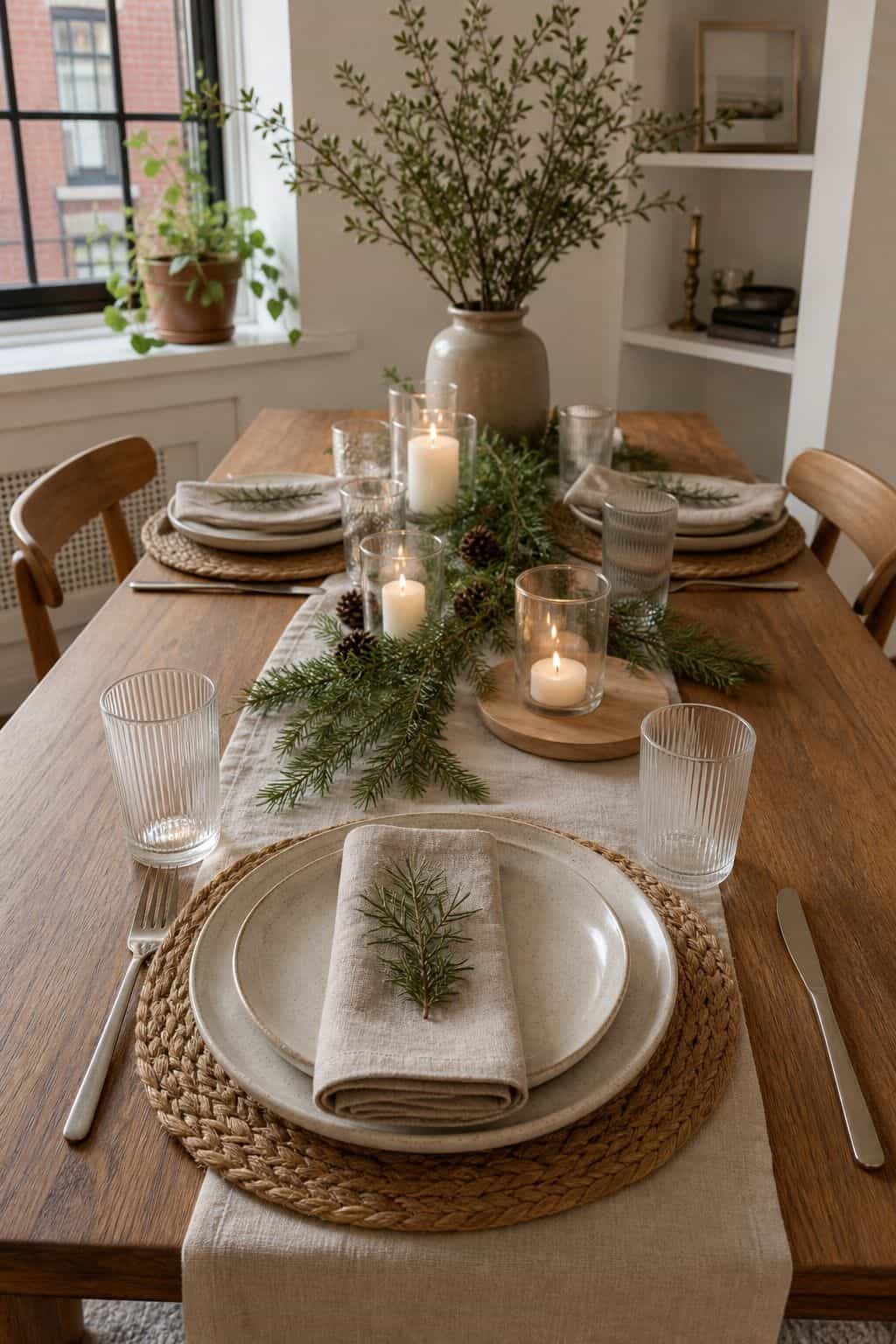


Skip white china for January and February. Matte stoneware in cream, oat, or warm taupe reads more textured and warmer through the dim light of winter.
Layer over a vintage wood or rattan charger for depth. The plate-on-charger combination is the same trick that worked for fall, just in a paler palette.
East Fork, Heath Ceramics, or West Elm all sell quality matte stoneware in this color family.
3. Skip the Tablecloth, Use Bare Wood as Anchor
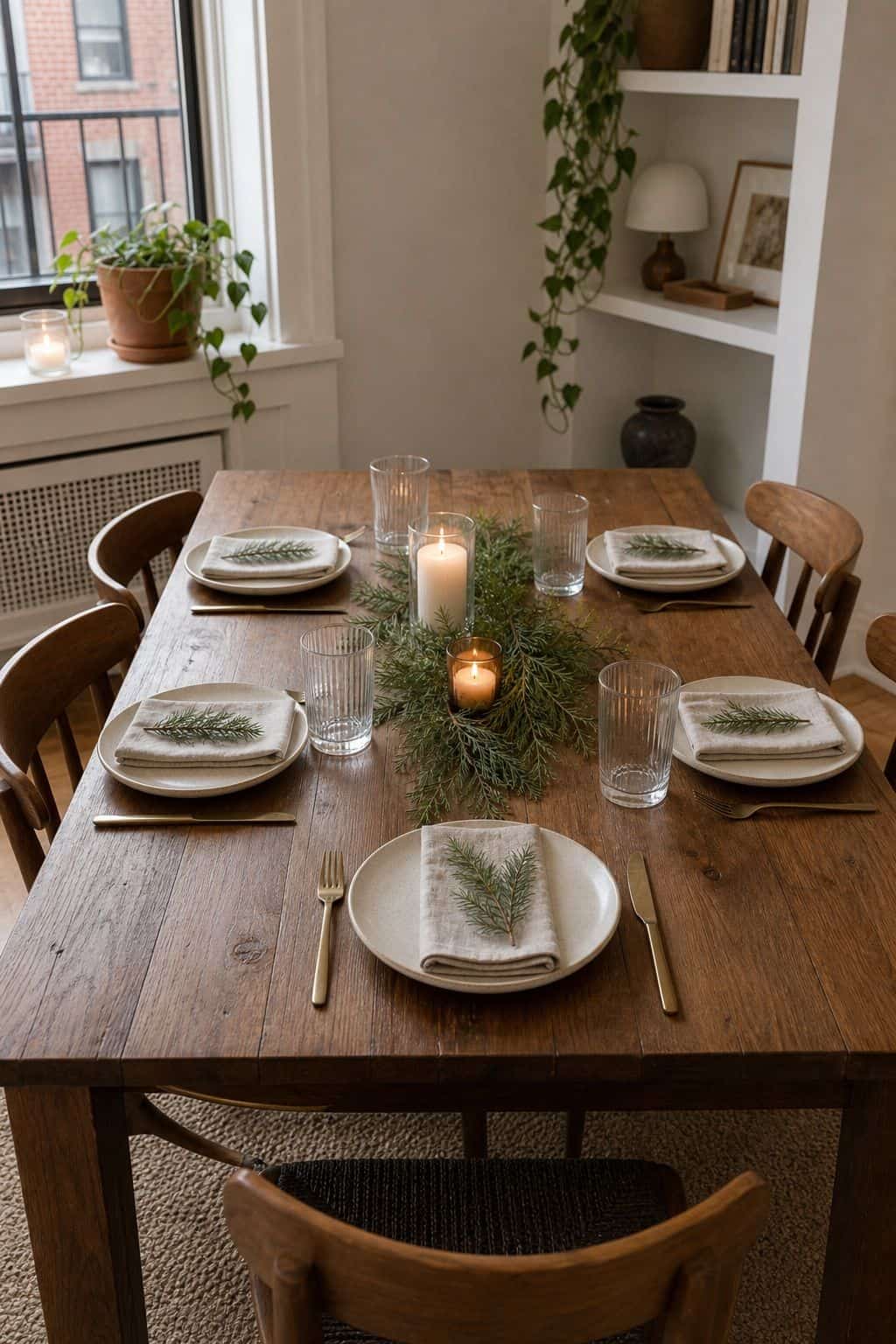


Bare wood under a single runner reads more sophisticated than a full tablecloth for casual winter meals. The contrast between the warm wood and the cool cream linen is the entire color story.
Save the tablecloth for big formal dinners. Most January meals do not need one.
If your table has scratches or watermarks, lean into it. The patina reads honest.
Build the Centerpiece in Neutral
4. Runner of Cedar and Eucalyptus
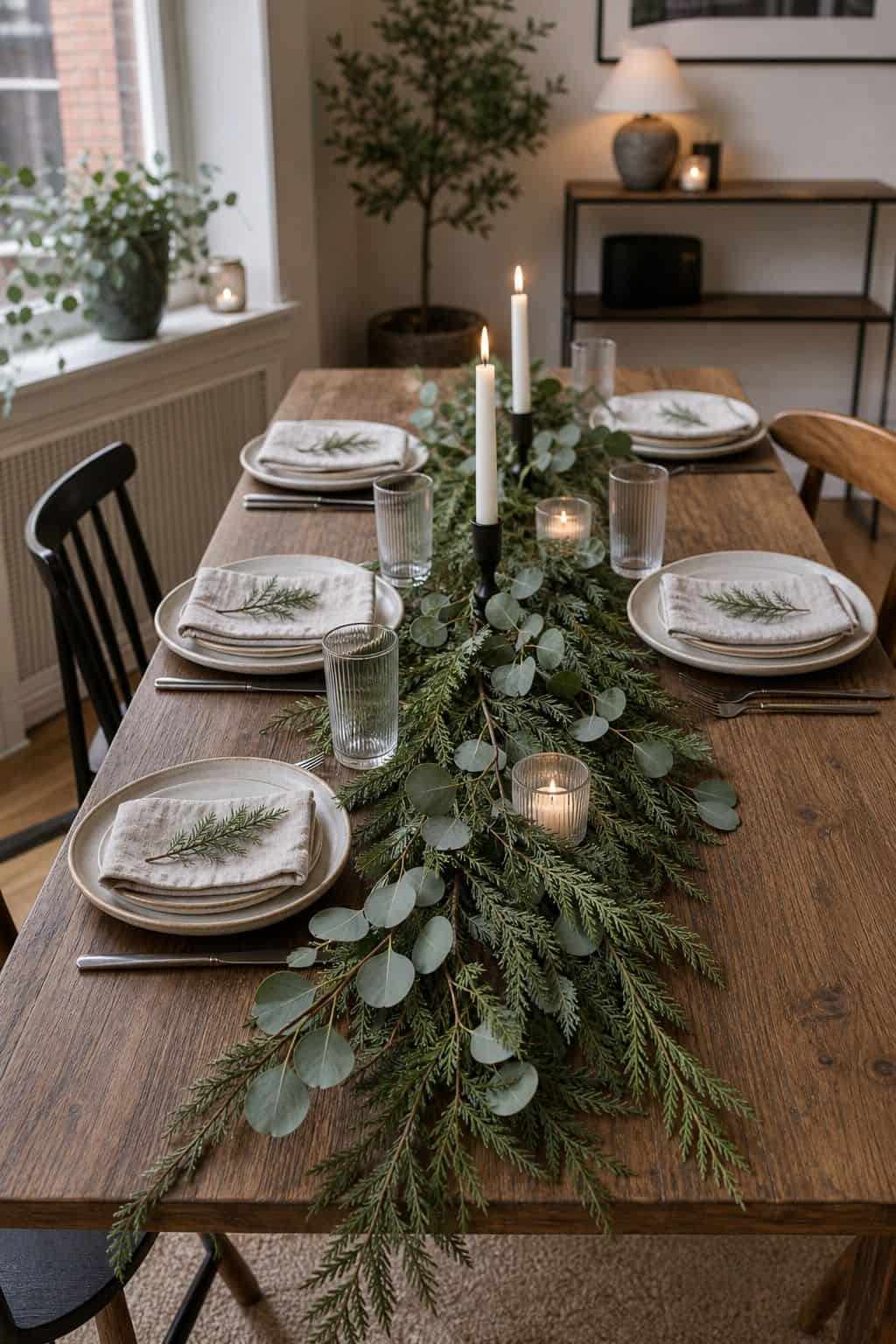


A long loose runner of fresh cedar branches mixed with eucalyptus down the center of the table. The pine-scented greens still feel slightly festive without saying Christmas.
Cut from your own yard if possible, or grab a bundle from a nearby tree lot in the first week of January for under $15.
Replace every 10 to 14 days as the branches dry out. The fresh swap keeps the table feeling alive.
5. Bare Birch Branches Standing in a Tall Vase


For more architectural centerpieces, stand three to five bare birch branches (3 to 5 feet tall) in a heavy ceramic vase. The vertical white branches against the table line are the only height the table needs.
Place the vase off-center so guests can still see each other across the table.
Add a few small white snowberries or dried baby’s breath branches for texture.
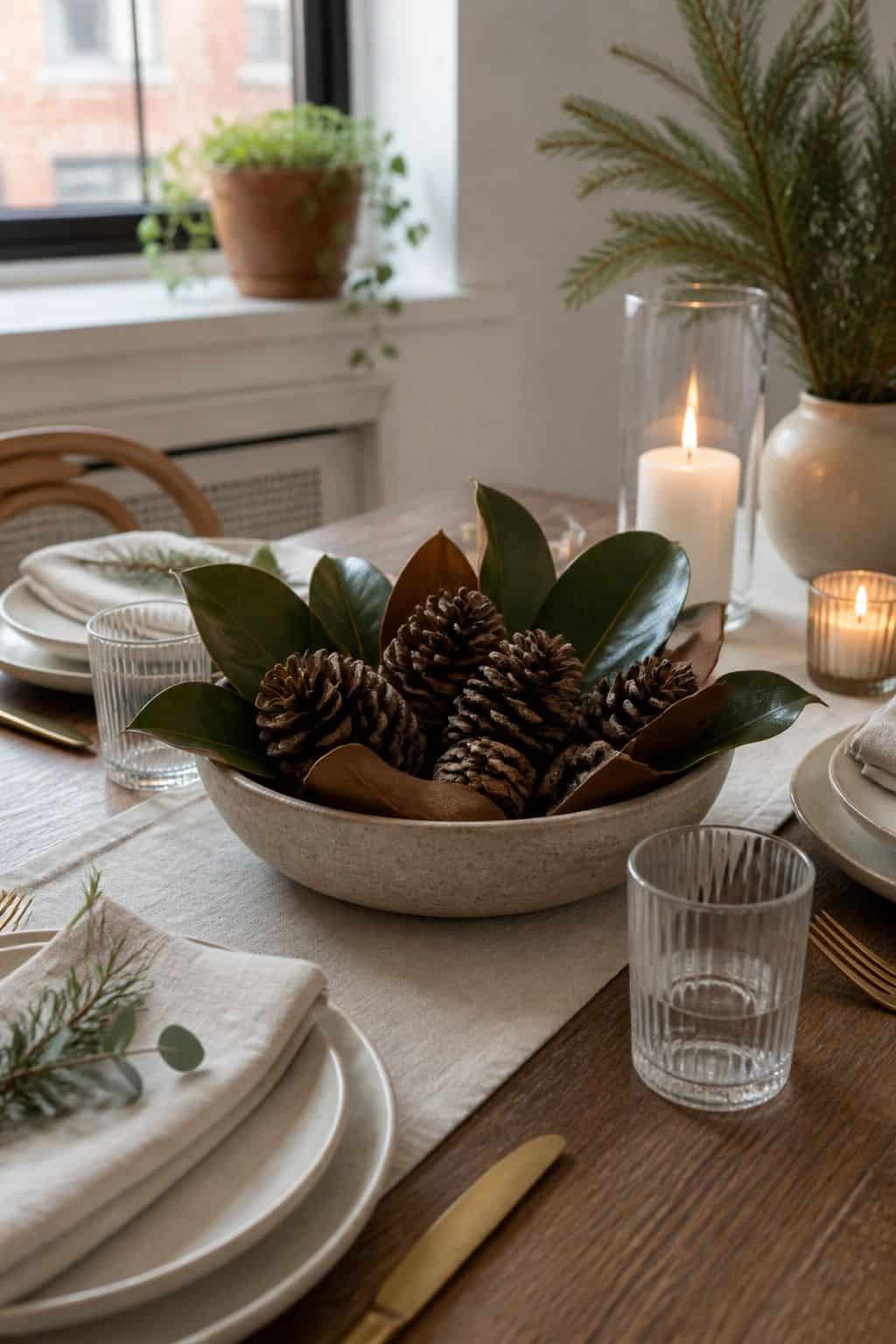
6. Low Bowl of Pinecones and Magnolia Leaves


A wide ceramic compote in cream or taupe filled with a mix of pinecones (cleaned and dried) and magnolia leaves (suede-brown side up). The bowl reads winter without being literal.
For a slight upgrade, spray paint a few pinecones matte white. Skip metallic gold or silver, they read holiday-craft.
This centerpiece holds for the entire winter season with zero refresh.
Layer the Candles
7. White Pillar Candles in Mixed Heights
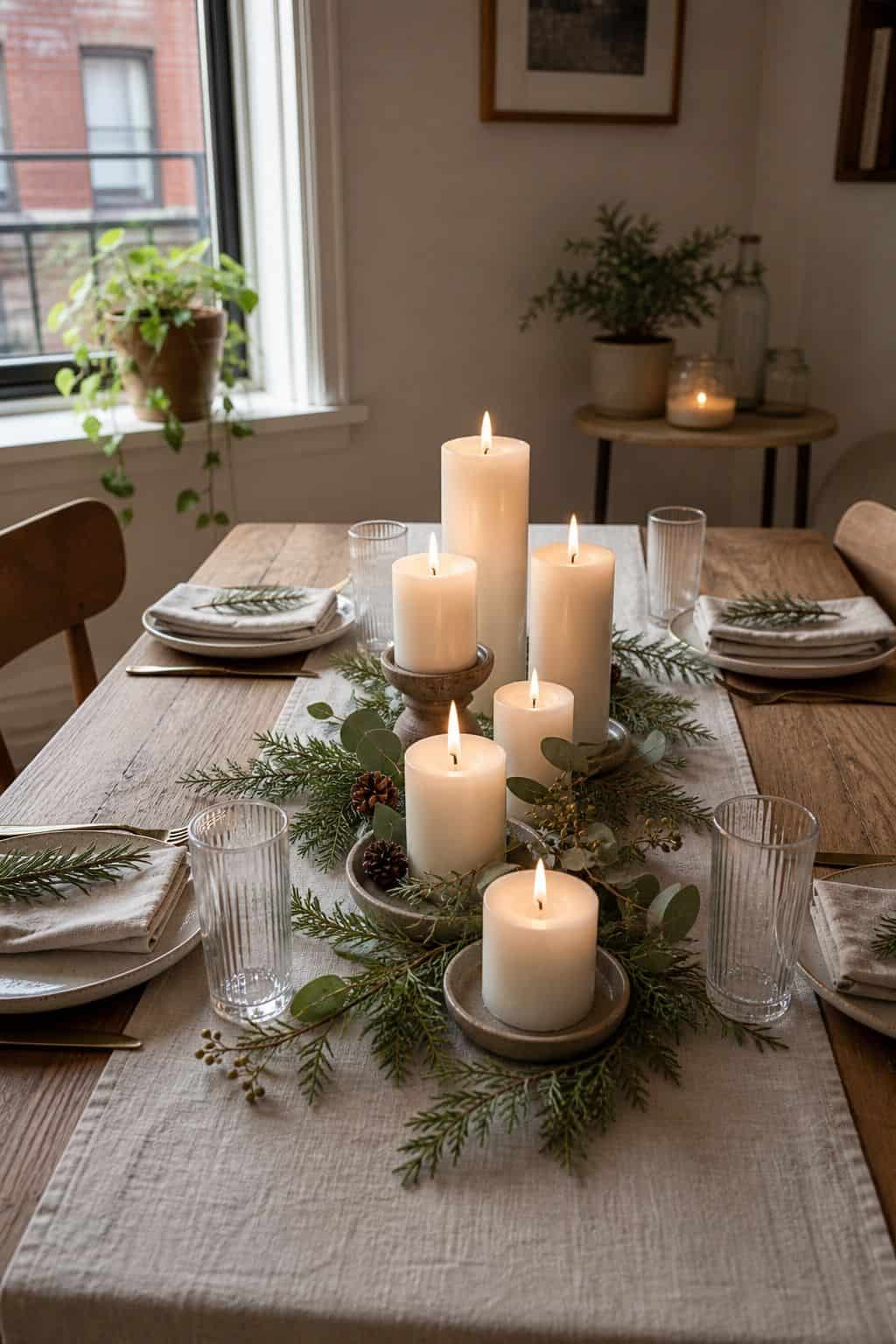


Three to five white pillar candles of varying heights (3, 5, 7, 5, 3 inches) clustered along the runner. White candles read winter without the holiday red.
Choose unscented pillars in pure cream or warm white, not bright white. Bright white reads cold in winter light.
Set the pillars on small ceramic saucers to catch wax.
8. Birch Candle Holders for Texture
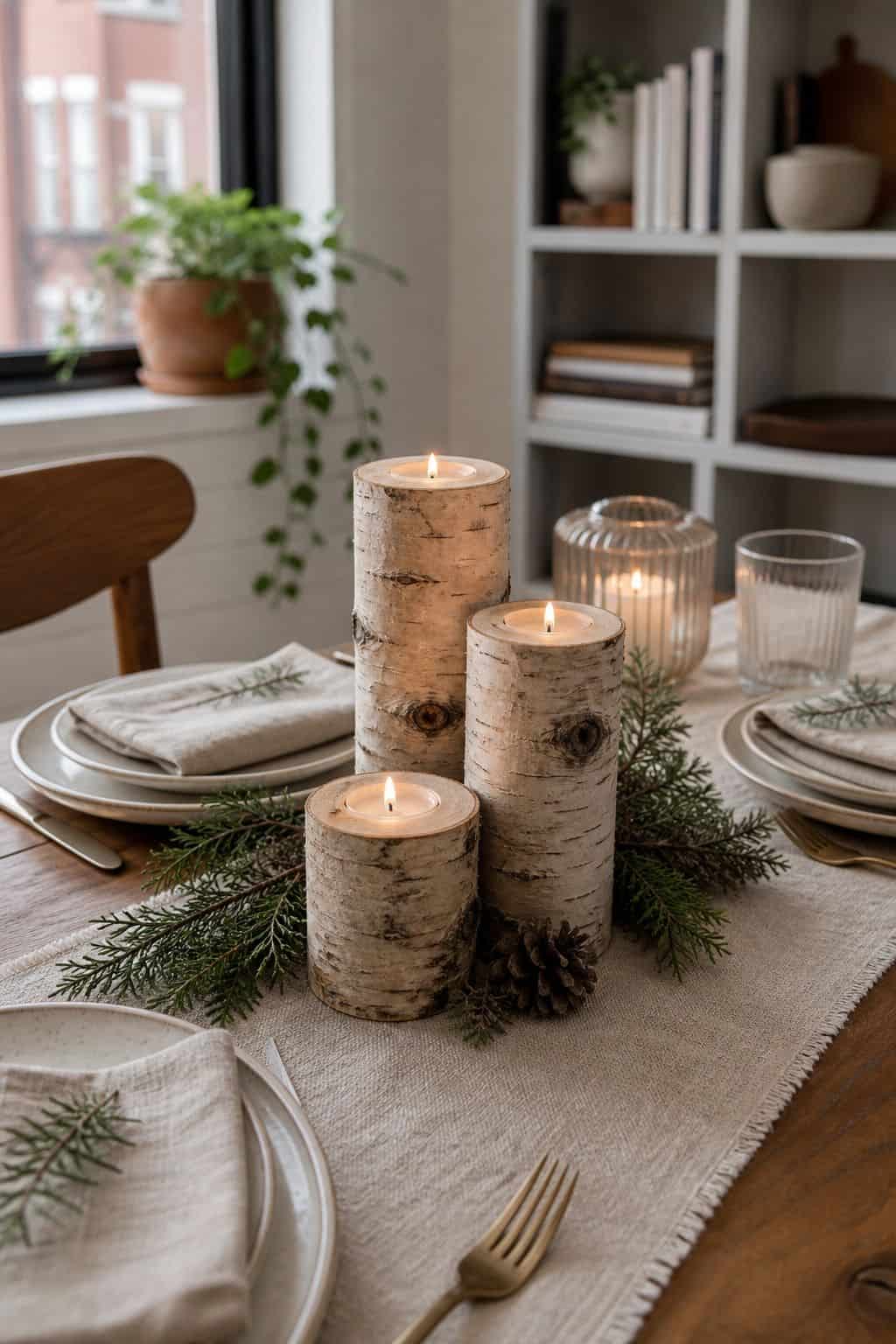


Birch bark candle holders with cream taper candles add a rustic-woodland quality to the table. Etsy and Amazon both sell quality birch holders in sets of 3 to 5.
Pair with the cedar runner for a cohesive woodland look.
Light the candles 20 minutes before guests arrive so the wicks are already burned in.
9. Amber Glass Votives for Warm Glow


A dozen amber glass votives scattered along the table, tucked between the cedar branches and the candleholders. The amber glow warms the cool palette.
Use battery operated LED votives if the table is unattended for any stretch. The quality ones from West Elm or Pottery Barn read identical to flame.
Set timers to come on at 4:30 pm in January so the table glows through the dark afternoon.
Place Settings That Read Quietly Elegant
10. Layer Plates with a Wood or Rattan Charger
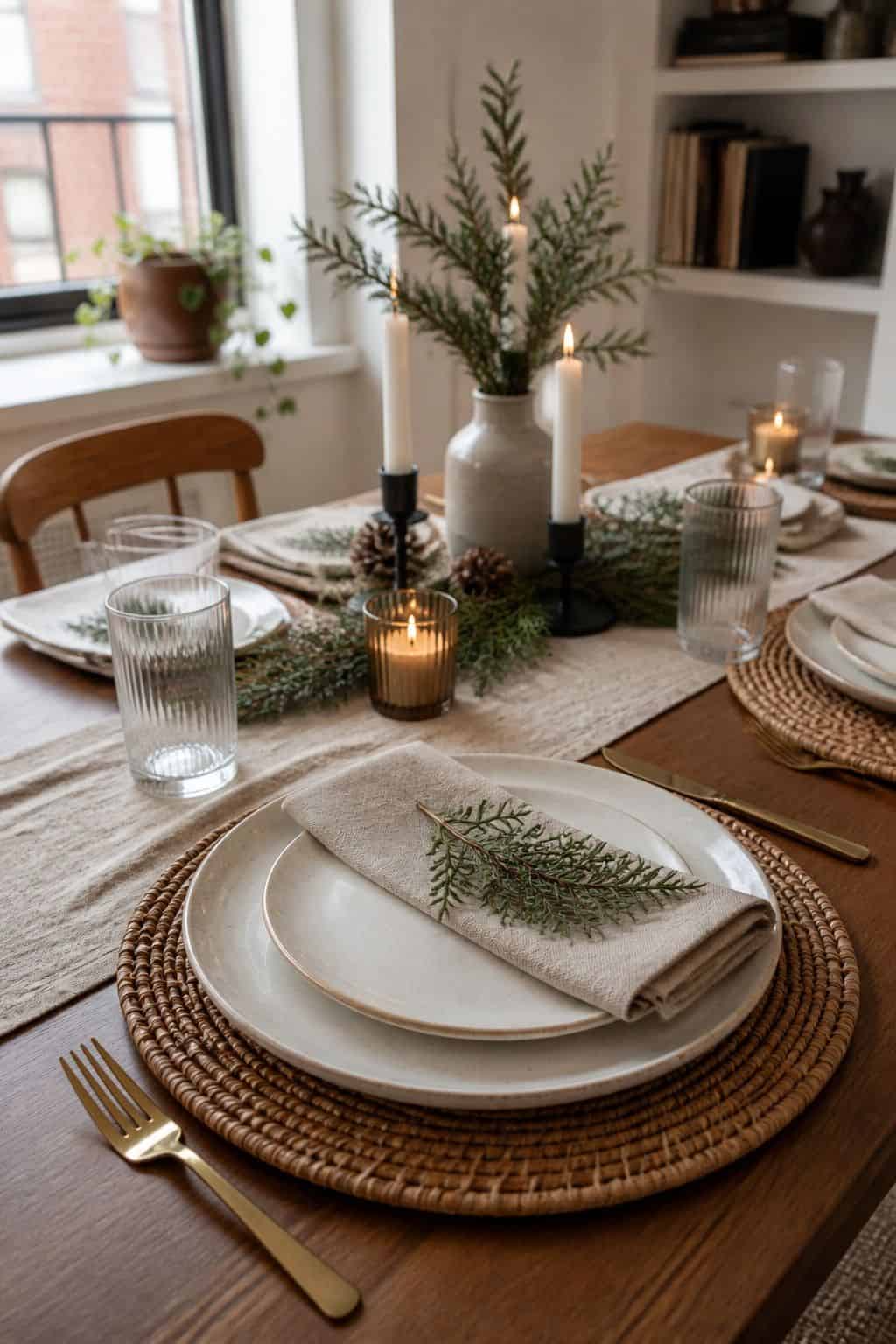


A wood, rattan, or natural-fiber charger plate under the stoneware reads warmer than a metallic or glass charger for January. The natural material grounds the cool palette.
Vintage wood chargers from estate sales work beautifully and cost under $5 each.
For renters with limited storage, woven natural-fiber placemats achieve the same look without the bulk.
11. Linen Napkins in Cream, Oat, or Soft Sage


![Utopia Home [24 Pack, White] Cloth Napkins 17x17 Inches, 100% Polyester](https://soliaavenue.com/wp-content/plugins/aawp/public/image.php?url=YUhSMGNITTZMeTl0TG0xbFpHbGhMV0Z0WVhwdmJpNWpiMjB2YVcxaFoyVnpMMGt2TXpGWmNXczNhMnRGUVV3dWFuQm58MTc4NzUxMDEzOA=)

Real cloth napkins folded simply and tied with twine, with a small sprig of fresh rosemary or a tiny dried eucalyptus stem tucked in. The sprig is the small detail that lifts everything.
Avoid paper napkins for any winter meal where guests will linger. Linen reads slow and intentional.
For a slight color pop, choose soft sage or pale blue napkins. Skip bright winter colors like cobalt or red.
12. Handwritten Place Cards on Vellum


Small vellum or cream cardstock place cards with names written in real handwriting (not calligraphy). Lean each one against a plate or tuck into a napkin.
Handwriting reads more personal than printed names. Imperfect handwriting reads even better than perfect.
For winter, tuck a tiny dried eucalyptus leaf under each place card for an extra textural detail.
Finishing Touches and Smaller Moves
13. Add a Small Bud Vase at Each Place Setting
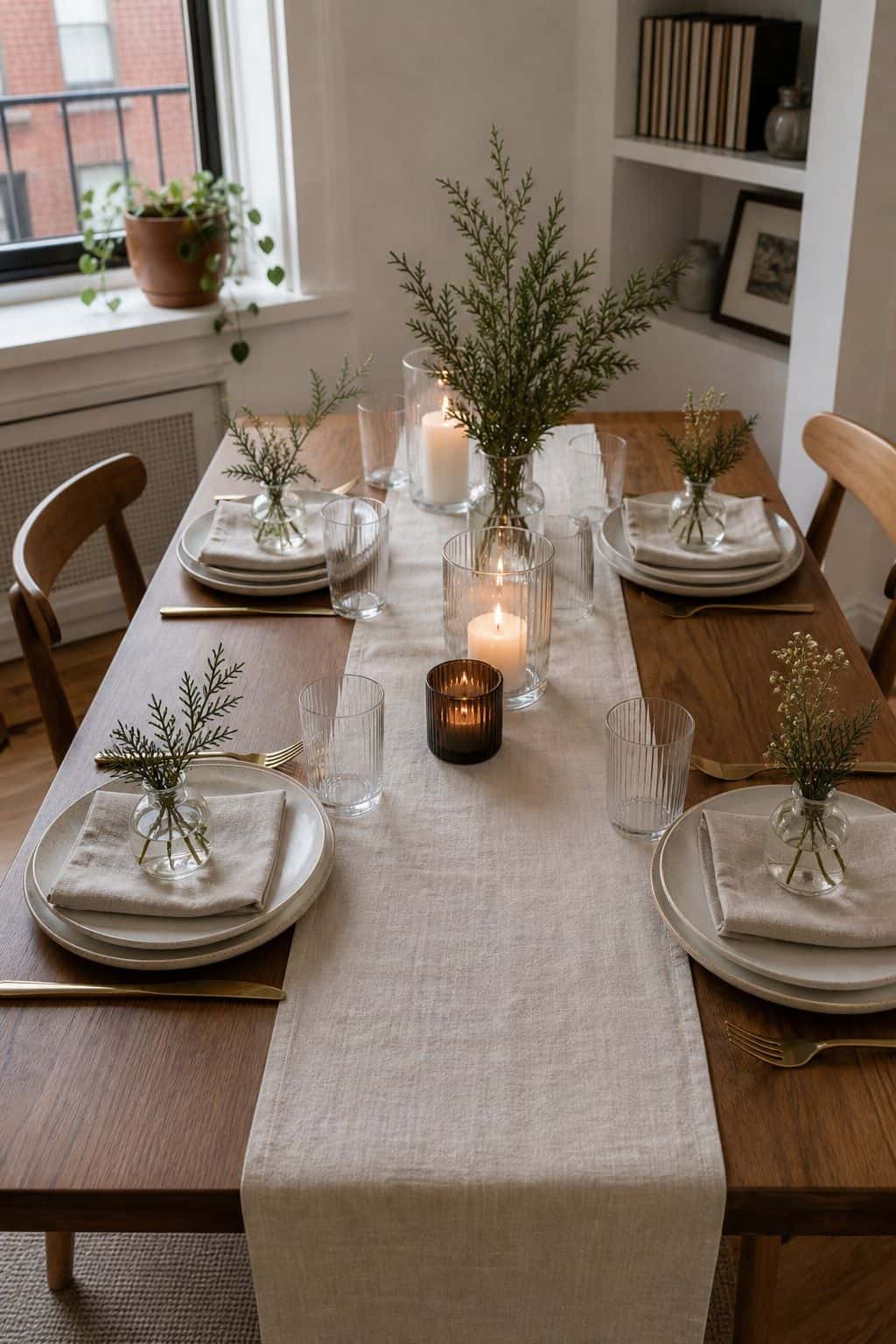


A tiny ceramic or glass bud vase at each setting with a single white snowberry stem, dried wheat, or eucalyptus. The mini repeats the centerpiece at each seat.
This is a small detail nobody specifically notices but everyone feels. Place settings with the mini repeat read more designed.
Choose matching mini vases for consistency.
14. Style the Bread and Butter into the Table
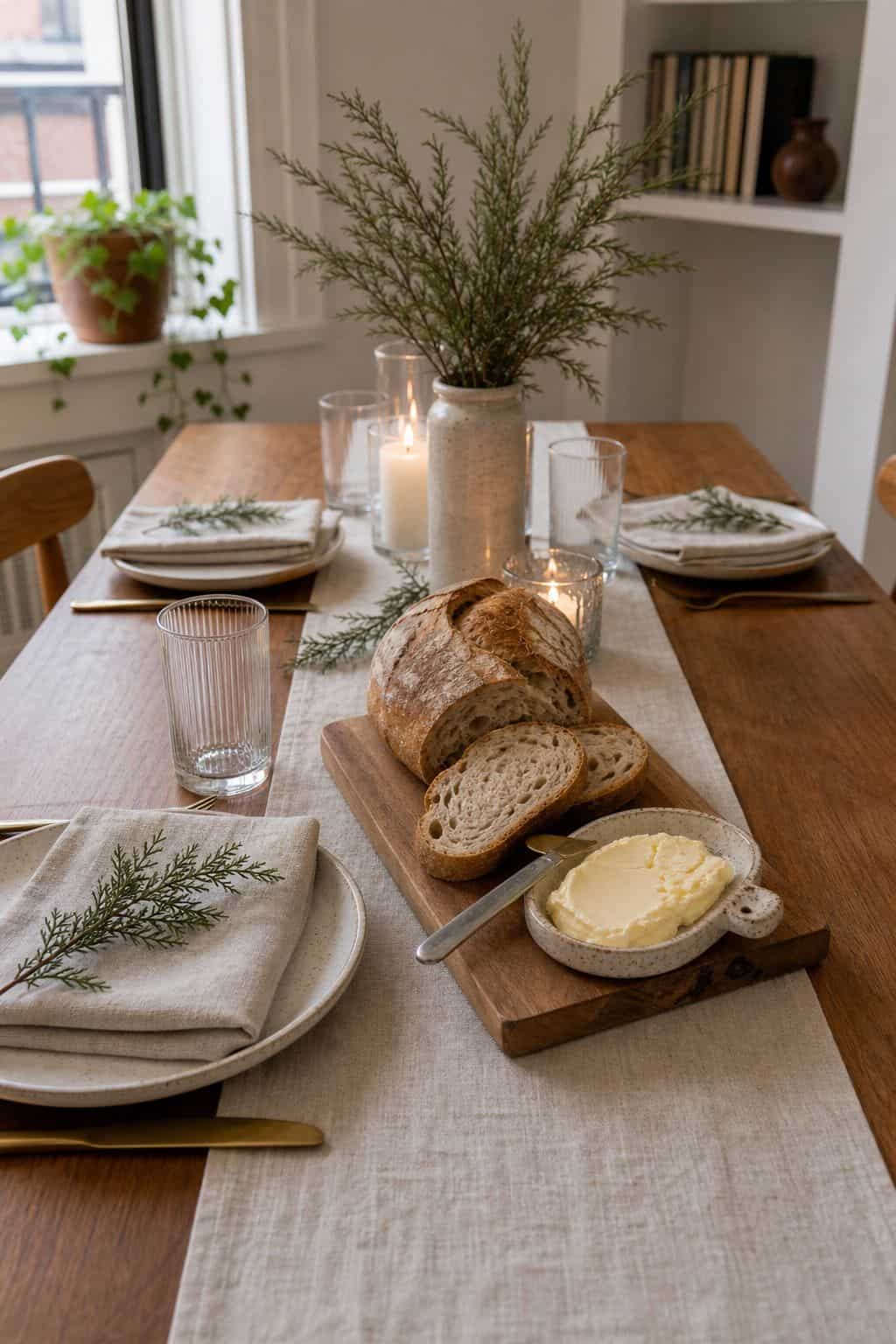
A small wood board with a loaf of warm bread and a dish of softened butter, placed near the centerpiece. Bread and butter become part of the visual.
This integrated approach reads more European than separating the bread basket from the centerpiece.
Replenish the bread throughout the meal so the board stays full.
15. Skip Anything Sparkly or Glittery

Glitter is what makes a winter table look like leftover Christmas decor. Skip glitter ornaments, metallic confetti, anything iridescent.
Stick to matte finishes, natural textures, and warm neutrals. The table should read quiet, not festive.
This single restraint move separates winter table decor from January-leftover-Christmas decor.
16. Dim the Overhead, Add a Side Lamp
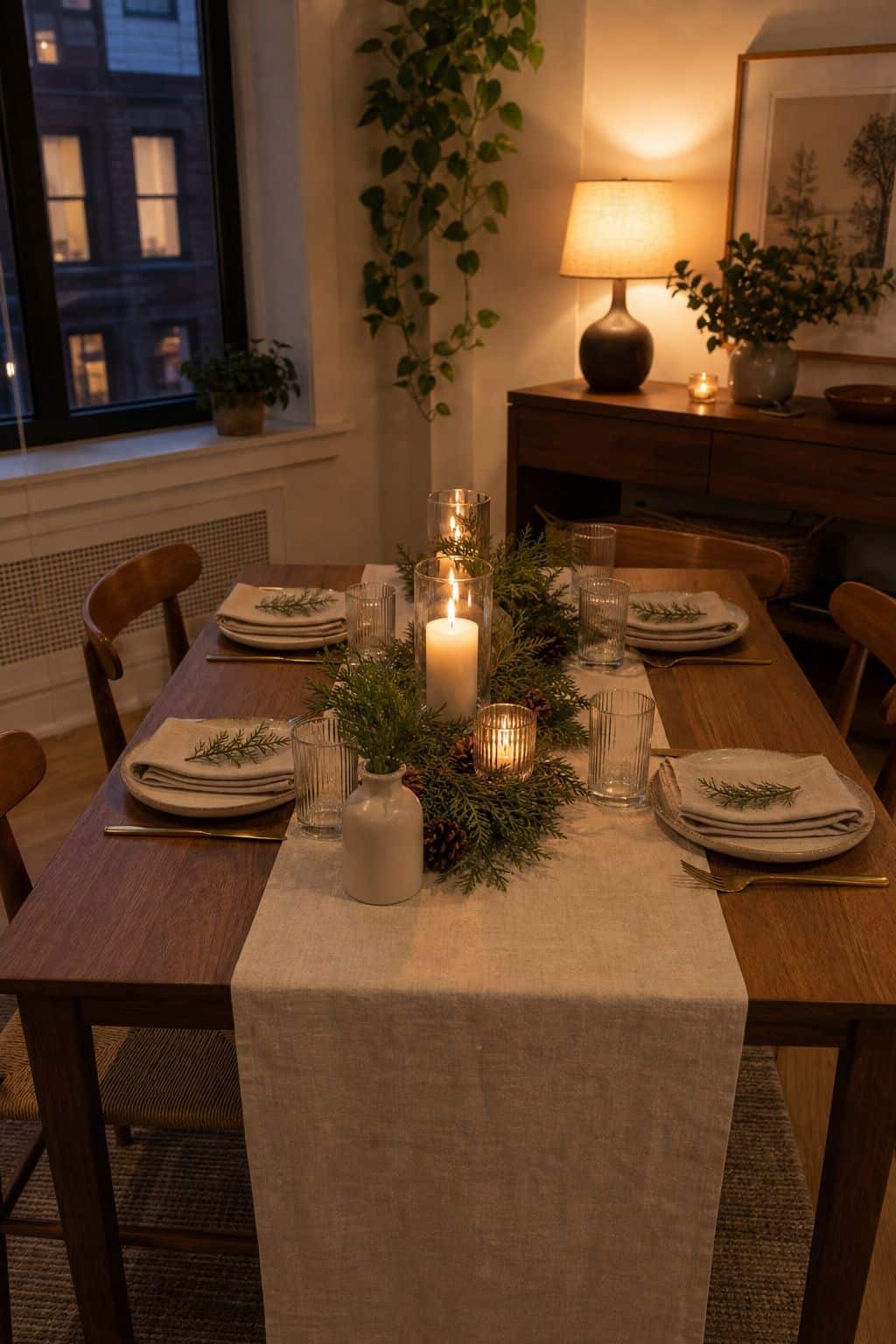


Turn the overhead light to 20 percent and bring in a side lamp from another room. The candles do the rest. Layered light beats overhead light for any winter meal.
In January and February, when daylight ends by 5 pm, the lamp-and-candle setup creates the slow, cinematic quality that defines great winter hosting. The same lighting approach works for our winter mantle decor too.
The Palette Shift From Holiday to Winter
December was red, gold, green, and metallic. January and February are cream, oat, taupe, soft sage, and pale wood. The palette shift signals the season change without redecorating.
Keep the candles and the linens you used in December if they fit the new palette. The runner can stay. The candleholders can stay. Only the festive accents come down.
The Cedar Refresh Schedule
Fresh cedar lasts about 10 to 14 days indoors before drying out. Plan to refresh once or twice through January and February.
Pre-cut cedar from a tree lot in early January costs $5 to $15 a bundle. Stock up after Christmas when prices drop.
When to Transition to Spring
Late February is when winter table decor starts to feel stale. Pivot to early spring by adding paperwhites in a small vase, hyacinths in a low bowl, or branches of forsythia.
The transition out of winter is gradual, just like the transition in. Don’t strip the cream linen overnight, just add fresh spring elements.
Plan one small winter dinner party for late January or early February. The styled table needs to actually get used, otherwise the seasonal effort is wasted. Invite four friends for an easy braise, light the candles, dim the overheads, and let the table do its work. The dinner that gets remembered is usually the one nobody expected.
Where Hosts Usually Go Wrong in January
The dining room overhead chandelier is too bright at 6 pm in January, even dimmed. Switch it off entirely for any dinner with candles. Lean on side lamps, the candles, and one small lamp on a console. Most winter tables look harsh because the host left the overhead chandelier on out of habit. Cut that one light and the table reads cinematic immediately.
Want to keep restyling the apartment through every quiet month?
The Aesthetic Apartment Makeover Guide is a complete small-space seasonal styling reference.
Frequently Asked Questions
What is the difference between winter and holiday table decor?
Holiday decor uses red, gold, green, metallics, and Christmas motifs. Winter table decor strips those out for a neutral palette of cream, oat, taupe, and pale wood with natural materials like cedar, birch, and pinecones. Winter reads cozy without being festive.
How do I keep my dining table styled through January and February?
Use a cream linen runner, three to five white pillar candles, fresh cedar branches, and matte stoneware plates. Refresh the cedar every 10 to 14 days. The setup carries the table through both months without redecorating.
What colors work for after-Christmas winter table decor?
Cream, oat, warm taupe, pale wood, soft sage, and pale blue. Skip bright white (reads cold), red (reads holiday), and any metallic except brass. The palette should feel quiet and slow.
Can I use the same candles from December for winter table decor?
Yes if they are unscented and in cream, white, or warm beige. Skip dyed red, green, or gold candles. The same brass or birch holders work for both seasons.
How do I make a winter table feel less stripped down?
Layer textures. Linen runner under a jute runner. Stoneware plates over wood chargers. Mix matte and natural materials. The texture layering is what makes the neutral palette feel rich rather than empty.
What is the easiest winter centerpiece for a small dining table?
A wide low ceramic bowl filled with cleaned dried pinecones and a few magnolia leaves. Takes 5 minutes to assemble, holds for the entire season without refresh, and reads winter without being literal.
Key Takeaways
- Cream and oat linen, matte stoneware, and natural materials replace red, gold, and metallics
- Three to five white pillar candles in mixed heights become the centerpiece anchor
- Fresh cedar and eucalyptus runners last 10 to 14 days and need replenishing through winter
- Skip anything glittery or sparkly to avoid the leftover-Christmas look
- Dim the overhead, layer in lamp light, let the candles carry the mood through January and February
Wrapping Up
Winter table decor for the after-holiday months is built on restraint. Cream linen, matte stoneware, white pillar candles, fresh cedar. Skip the red and gold from December, skip the sparkle from any holiday. The table that holds up through January and February is the one styled in materials and warm light, not in seasonal motifs. Hosting in the slow months becomes easier when the table is already styled and ready.
Last update on 2026-08-21 / Affiliate links / Images from Amazon Product Advertising API
