
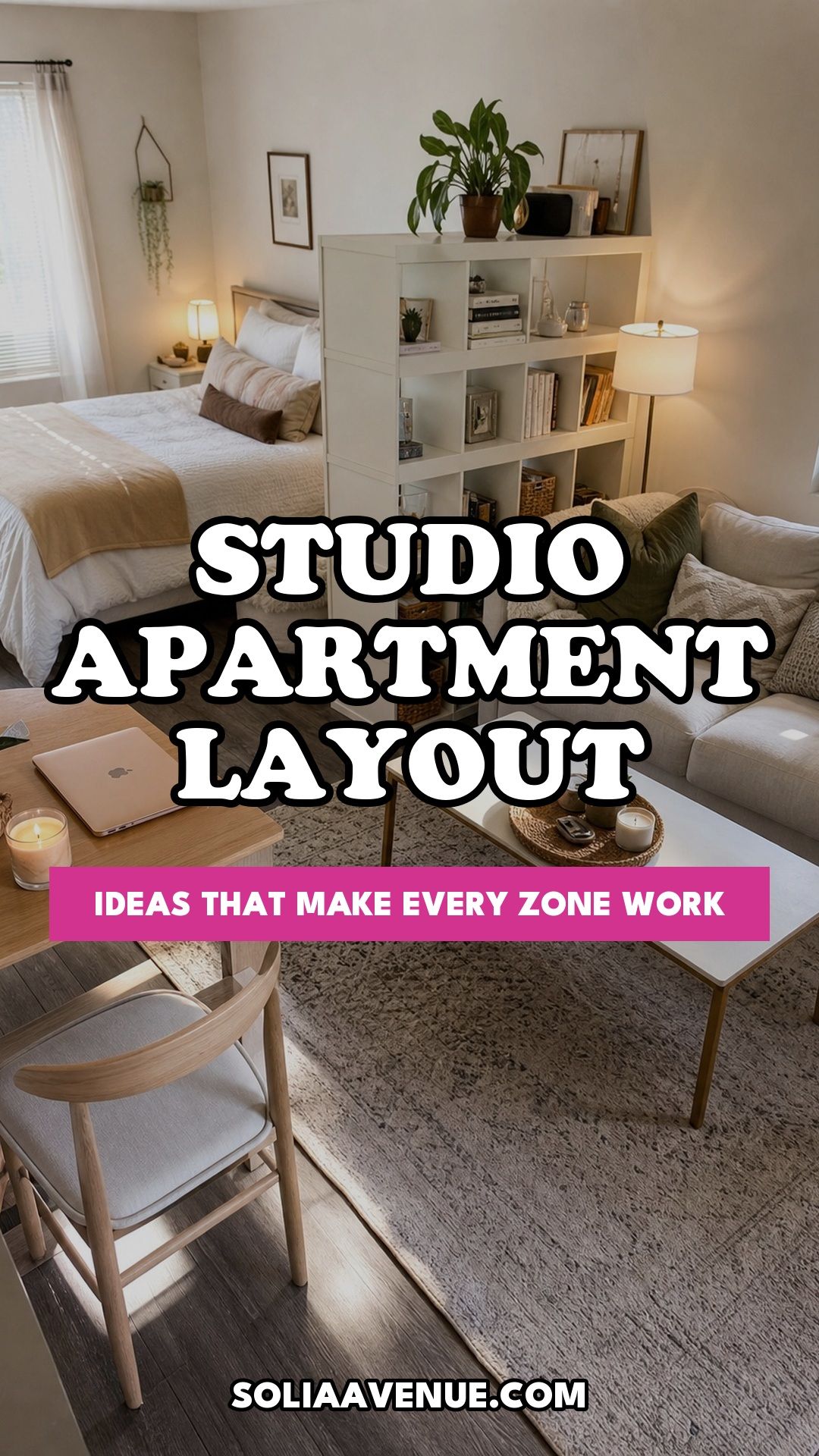
Every studio apartment needs three zones to function: a sleeping zone anchored against the farthest wall from the entry, a living zone defined by a large area rug, and a working zone positioned near a window or in a corner. These three zones create a home out of one room. No walls required.
A studio apartment is one room doing the work of an entire home. Every layout decision either supports that or fights it. And when it fights it, you feel it constantly: the bed visible the second you walk in, the desk too close to where you sleep, the living area that never quite feels like its own space.
Studio apartment layout is not about decorating. It is about zoning. About deciding deliberately what each part of the room is for, and then arranging everything to support those decisions. Once the zones are right, the decorating becomes easy. Until then, nothing quite works no matter how good the furniture is.
This guide covers layout by square footage, how to define zones without any walls, the mistakes that make studios feel permanently cramped, and the renter-friendly tools that make it all possible without a single permanent change.
Want a visual guide to styling every room in your studio apartment, not just the layout?
The Aesthetic Apartment Makeover Guide walks through every space with practical, budget-friendly ideas built for small footprints. Grab it now for just $17 before the price goes up to $27.
Recommended Studio Layout Products


Recommended blogs to read:
- Small Studio Apartment Ideas
- Small Apartment Space Saving Ideas
- Small Apartment Furniture Ideas
- Studio Small Apartment Floor Plans
- Small Apartment Living Room Ideas
The 3 Zones Every Studio Needs
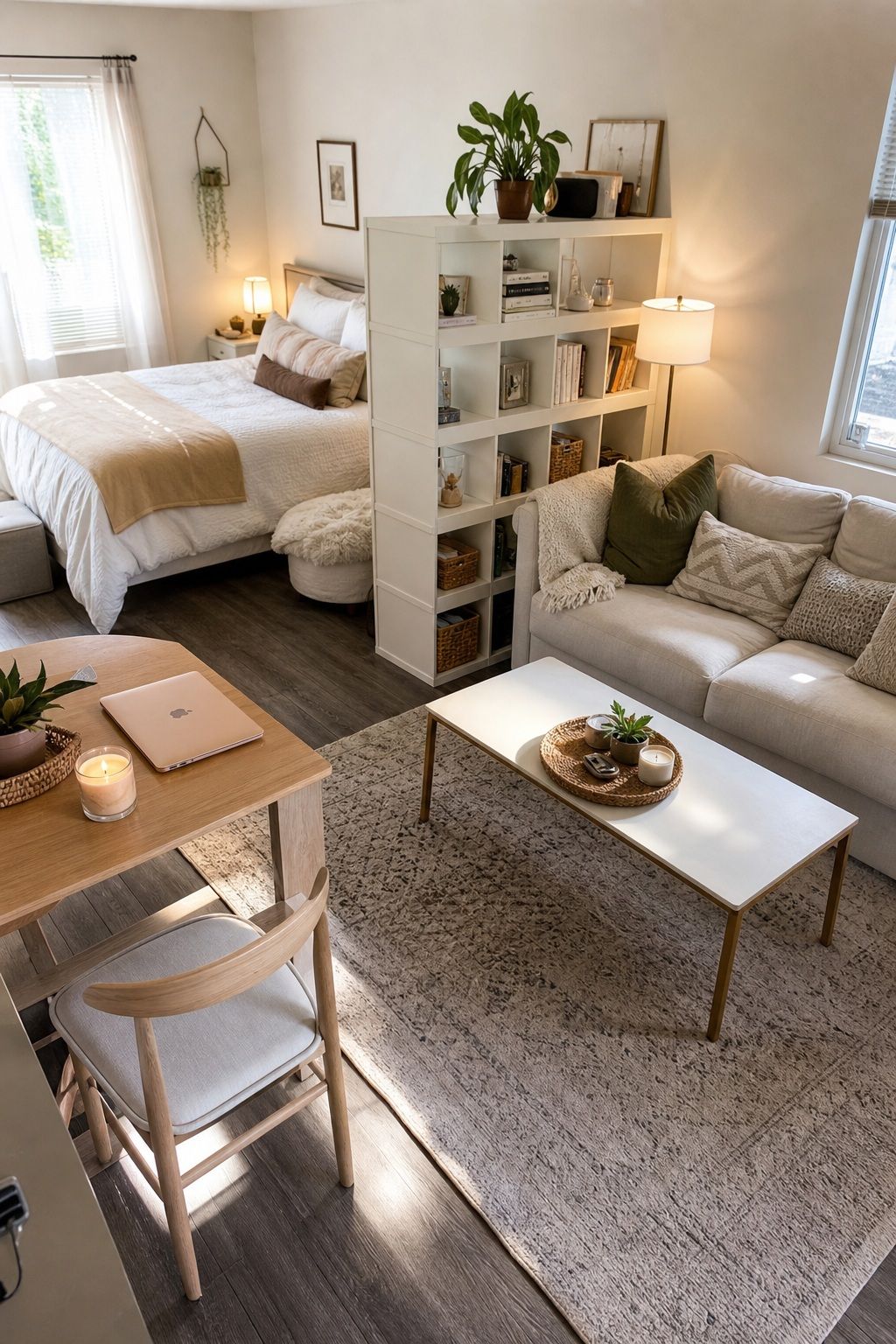


Every studio apartment needs three zones to function properly: a sleeping zone, a living zone, and a working zone. Not all three need to be large. But all three need to be defined. When zones are not defined, the studio feels like one undifferentiated room where nothing feels quite at home and everything feels like it is in the way.
The sleeping zone is almost always the anchor. The bed is the largest piece of furniture in the studio, so it defines the layout more than anything else. Place it against the longest wall that is farthest from the entry door. This keeps it out of the main sightline when you walk in, which matters more than most people realize. A bed that greets you the second you open the door makes the studio feel smaller and less intentional regardless of how well everything else is styled.
The living zone sits between the sleeping zone and the kitchen area. A sofa or loveseat facing slightly away from the bed creates a natural visual separation. An area rug anchors the living zone and signals where it begins and ends. This is the most important design element in a studio: the rug is doing the work that a wall would otherwise do. For ideas for your small apartment living room that work within these zone configurations, that guide covers furniture sizing and arrangement specifically.
The working zone is where most people compromise or skip entirely, and it is the zone that most affects daily quality of life. A dedicated desk gives you somewhere to work that is not the sofa or the bed. For specific ideas on setting up a functional workspace without sacrificing the rest of the room, the how to fit a home office in a small apartment guide covers setups for studios of every size.
Position the desk at the foot of the bed, near a window, or in a corner. What matters is that it is physically separate from both the sleeping and living zones, even if only by a few feet. That physical separation is what makes the zone feel real.
Layout by Square Footage

The right layout for a studio depends heavily on how many square feet you are working with. What works in a 600-square-foot studio will fail in a 300-square-foot one, and different approaches are needed for each range.
Under 400 Square Feet

The priority here is keeping the center of the room open. Push furniture against walls wherever possible. A loft bed, if ceiling height allows, opens the floor entirely and gives you a working and living zone beneath it. A sofa bed is the other strong option, but only if you are disciplined enough to convert it daily. Most people are not, which is why lofted or wall-separated sleeping zones tend to work better long-term.
Keep the furniture count low: one sofa, one rug, one desk, one dining surface that doubles as a workspace. Every piece needs to earn its square footage. For reference on how compact floor plans actually get configured, studio floor plan ideas shows real layouts at different square footages with dimensions included.
Read more: 20 Studio Apartment Must-Haves From Amazon That Maximize Every Inch
400 to 600 Square Feet

This range gives you enough room to have separate furniture for each zone without the living area feeling like a furniture showroom. A standard sofa works here, but skip the sectional. The traffic flow almost never survives one in a studio under 600 square feet. A proper desk separate from the dining table. A queen bed against a wall with nightstands on both sides if the width allows.
The goal in this range is definition: each zone should feel like it belongs to a different function, even though they share one room. For comparison, one-bedroom apartment layout ideas shows what the same square footage looks like with a true bedroom wall, which clarifies what you are approximating with zoning in a studio.
Read more: Top 18 Best Small Apartment Kitchen Tables & Breakfast Bar Ideas
600 Square Feet and Above

At this size you have genuine options. A sectional becomes viable if the footprint works. A separate dining area is possible. You can use a tall bookshelf as a room divider, which both stores things and creates real visual separation between zones. The main risk at this size is over-furnishing: having enough room to add more furniture than the space actually needs, which paradoxically makes it feel smaller because the center gets crowded.
Read more: Top 25 Apartment Organization Hacks That Actually Work
How to Define Zones Without Walls

The challenge of a studio is that it has one room and no way to add walls. The good news is that walls are overrated as zone-definers. You can create the same effect with four tools: rugs, furniture arrangement, curtains, and lighting.
Rugs

Rugs are the most powerful zoning tool available. A large area rug under the sofa and coffee table instantly defines the living zone as its own space. A smaller rug under the desk marks the working zone. The sleeping zone usually does not need a rug if the bed is clearly against a wall. The key rule: rugs should be large enough that at least the front legs of the sofa sit on them. An undersized rug floats in the middle of the zone and makes everything feel unanchored. For apartment-friendly furniture that works well in zoned studio layouts, that guide covers sizing and scale for sofas, chairs, and tables specifically.
Read more: How to Decorate a Small Studio Apartment: The Room-by-Room Guide
Furniture Arrangement

A sofa facing away from the sleeping zone (even slightly angled) creates a psychological separation between the two areas. A bookshelf placed at the foot of the bed works as a soft visual divider. A console table behind the sofa gives the living zone a back wall without any installation. None of this requires drilling, moving plumbing, or landlord approval. For apartment-sized couch ideas that work well within these arrangements without blocking sightlines, that roundup covers the models that keep traffic flow intact.
Read more: The Complete First Apartment Grocery List of 18 Pantry Essentials
Curtains

Curtains can divide a studio when hung from ceiling-mounted adhesive hooks or tension tracks. A sheer curtain drawn around the sleeping zone at night gives the visual separation of a bedroom without any permanent installation. During the day, the curtain pulls back and the studio stays open. This works especially well in compact studios where floor-based furniture dividers would eat too much space.
Read more: 25 Small Apartment Essentials From Amazon That Actually Make Small
Lighting

Lighting is the most underused zoning tool. Different light sources in different zones (a floor lamp by the sofa, a desk lamp at the workspace, bedside lamps or plug-in sconces at the sleeping zone) make each area feel distinct even when everything is in the same room. Overhead lighting treats the whole studio as one undifferentiated space. Layered zone-specific lighting makes each area feel like a separate room.
Read more: Top 15 Small Apartment Wall Art Ideas That Make Every Room Look
Layout Mistakes That Make Studios Feel Cramped


Most studio apartments feel cramped not because of their size, but because of layout decisions made without enough thought. These are the most common ones.
Centering the bed in the room is the biggest offender. When the bed is centered or placed at an angle, it consumes floor space on all sides and leaves none of the zones enough room to breathe. Push it against a wall, always. The floor space you gain on three sides makes the whole studio feel larger. For more quick wins like this, smart apartment living tips covers fast improvements that require no purchases.
Blocking natural traffic flow is the second most common mistake. The path from the front door to the kitchen, to the bathroom, and to the sleeping zone should stay unobstructed. When furniture blocks these paths even partially, the studio feels like an obstacle course. Sketch the paths first on paper, then place furniture around them.
Choosing furniture that is too large for the zone is a trap at every size. A king bed in a 350-square-foot studio, a full sectional in a 450-square-foot space, a dining table that seats six when the room barely fits four: these decisions sacrifice traffic flow and zone separation. The right furniture is sized for the function of the zone, not for the apartment you wish you had. For a broader perspective on how to live well in a small apartment, that piece covers the mindset shift that makes all these decisions feel intuitive rather than like deprivation.
Ignoring vertical space is the fourth mistake. Most studios have walls that go up much farther than the furniture does. Tall bookshelves, wall-mounted shelves, over-door organizers: these capture storage vertically without consuming any floor space at all.
Renter-Friendly Layout Tools

Most of the layout decisions that make the biggest difference in a studio require no permanent changes and no landlord permission. Here is what actually moves the needle.
Area rugs define zones without touching the floor permanently. Two or three well-chosen rugs in the right sizes can zone a studio completely. Buy larger than you think you need. The most common rug mistake in studios is undersizing, which makes zones feel unanchored and the room feel smaller.
Curtain rods on tension-mounted or adhesive-mount tracks let you hang room-dividing curtains anywhere in the studio. No ceiling drilling required. Combine a lightweight linen curtain with adhesive ceiling hooks rated for the weight and you have a soft bedroom door that pulls back during the day.
Freestanding bookshelves as dividers need no installation whatsoever. A tall unit placed at the foot of the bed creates a room-within-a-room effect without touching a single wall. Style the shelves facing the living zone and you get both storage and decor on one side, and a visual headboard alternative on the other.
For a complete set of no-damage apartment ideas that extend well beyond layout, that guide covers the full toolkit for renters who want a space that feels designed without risking their deposit. And for what every small apartment needs as a practical baseline before you start layering in personality, that list covers the fundamentals every studio should have in place first.
Ready to take your studio from functional to genuinely beautiful?
The Aesthetic Apartment Makeover Guide covers every room in a small space with visual, practical ideas you can actually use. Currently just $17 before the price goes up to $27.
Frequently Asked Questions
What is the best layout for a studio apartment?
The best studio layout keeps the bed against the farthest wall from the entry, anchors the living zone with a large area rug, and places the working zone near a window or in a corner. The goal is three distinct zones (sleep, live, and work), each defined by furniture placement and lighting rather than walls.
How do I make my studio apartment feel like separate rooms?
Use rugs to define each zone, position furniture so the living zone faces away from the sleeping zone, and use different light sources in each area. A bookshelf at the foot of the bed or a curtain on adhesive ceiling hooks can add more physical separation without any permanent installation.
Can you have a proper layout in a studio under 400 square feet?
Yes. The key is keeping the center of the room clear, limiting total furniture count to the essentials, and using a loft bed or sofa bed if ceiling height allows. Every piece of furniture needs to earn its square footage with storage, dual function, or visual openness.
What size rug works best in a studio apartment?
The living zone rug should be large enough that at least the front legs of the sofa sit on it, typically 8×10 or 9×12 depending on your sofa. A floating rug with nothing touching it makes the zone feel smaller and the room feel more disjointed. When in doubt, size up.
How do you separate a sleeping area from a living room in a studio?
Position the sofa so it faces away from the bed, use a bookshelf or console table to create a visual back wall behind the sofa, and hang a curtain from ceiling-mounted hooks around the sleeping zone for nighttime privacy. A properly sized rug under each zone does more zone-separation work than most people expect.
Key Takeaways
- Every studio needs three zones: sleep, live, and work, all defined even if compact
- The bed goes against the farthest wall from the entry, always
- Rugs do the zone-separation work that walls would otherwise do. Size up, not down
- Furniture arrangement, layered lighting, and curtains define zones with zero permanent changes
- The most common mistake is furniture that is too large for the zone, not the overall room
- Renter-friendly tools (rugs, freestanding shelves, adhesive-mount curtain tracks) can fully zone a studio
Final Thoughts
A studio apartment layout that works is not about having enough space. It is about being intentional with the space you have. Three zones, clearly defined, with furniture that fits the function and lighting that marks each area: that is what turns a single room into a home that actually works.
The layout work comes first. Get the zones right, keep the center clear, and size the furniture to the function. Everything else is decoration, and decoration is the easy part.
Last update on 2026-09-18 / Affiliate links / Images from Amazon Product Advertising API
