

Quick Answer: Your first apartment checklist must include a bed and mattress, basic pots and pans, toiletries, cleaning supplies, and working internet. Budget $500-$1,500 total, buy essentials on day one, and add comfort items gradually over the first month. You don’t need everything at once.
Getting your first apartment is one of those milestones that feels exciting and completely overwhelming at the same time. There are hundreds of things you could buy and a real question about which ones you actually need before you can function in the space. The answer is fewer than most lists will tell you, at least at first.
This checklist is organized the way a first apartment actually works: what you need before you move in, what you need on day one, what you need in the first week, and what can wait until month one and beyond. It also breaks down by room so you know exactly what each space requires to be functional versus comfortable. Budget guidance is included throughout, because the best first apartment setup is the one that doesn’t put you in debt before you’ve paid your first rent.
Recommended First Apartment Essentials
Recommended Blogs to Read
- First apartment essentials from Amazon
- Small apartment essentials
- Apartment organization hacks
- Home organization essentials
- How to pack up for moving
Before Move-In: 2 Weeks Prior
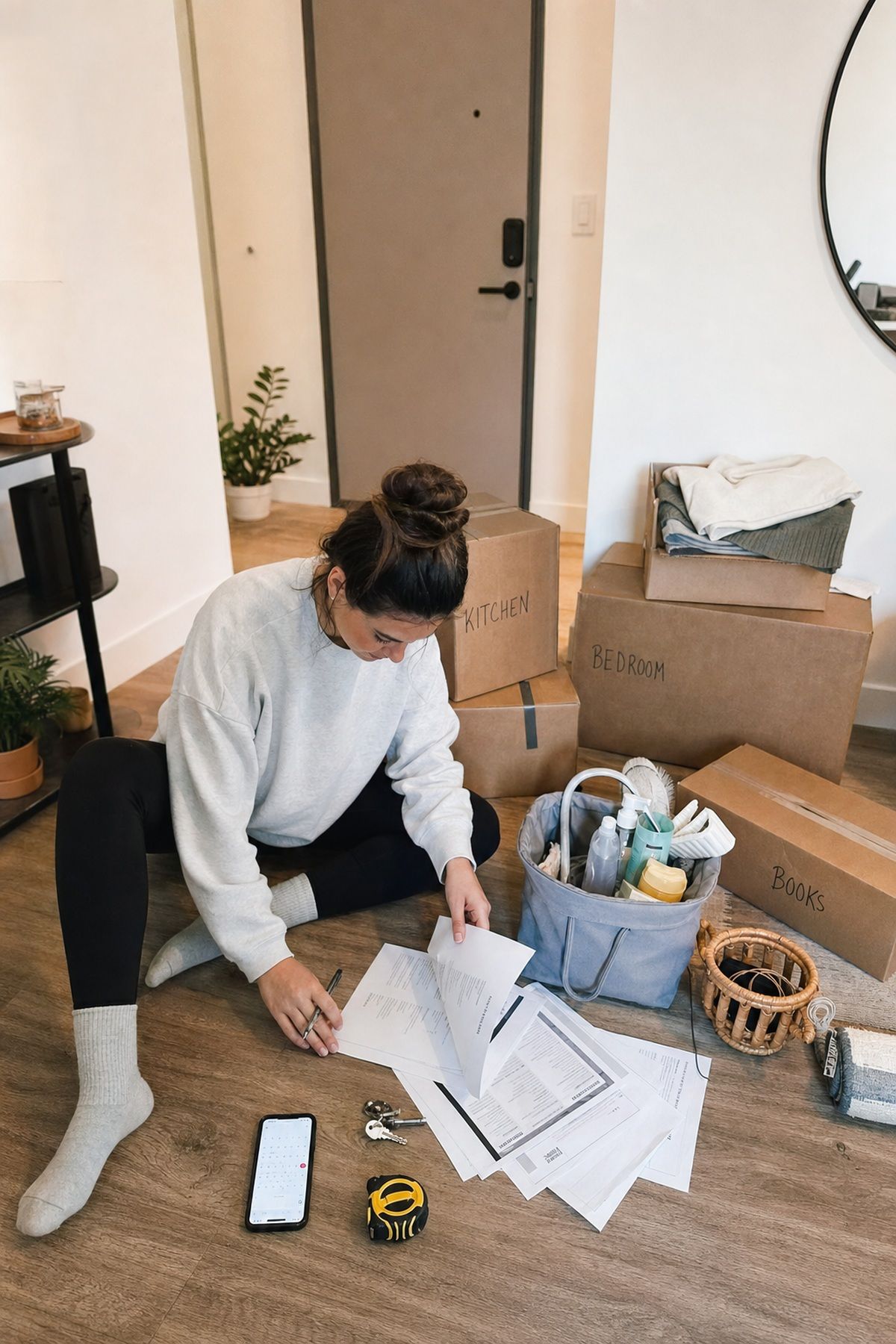


The two weeks before your move-in date are for admin, not shopping. Set up your utilities (electricity, gas, water, internet) before your first night so you’re not fumbling with it while carrying boxes. Change your address with the post office, your bank, and any subscriptions. Document the apartment’s existing condition with photos and video the moment you get the keys, this protects your security deposit at move-out.
Review your lease one more time and note anything about what you can and can’t hang on walls, what appliances are included, and what the maintenance process is. Know where the circuit breaker is, where the water shutoff is, and how to reach your landlord in an emergency. This takes 20 minutes and it will save you hours of stress at some point in the next 12 months.
Move-In Day Essentials: Your First Night
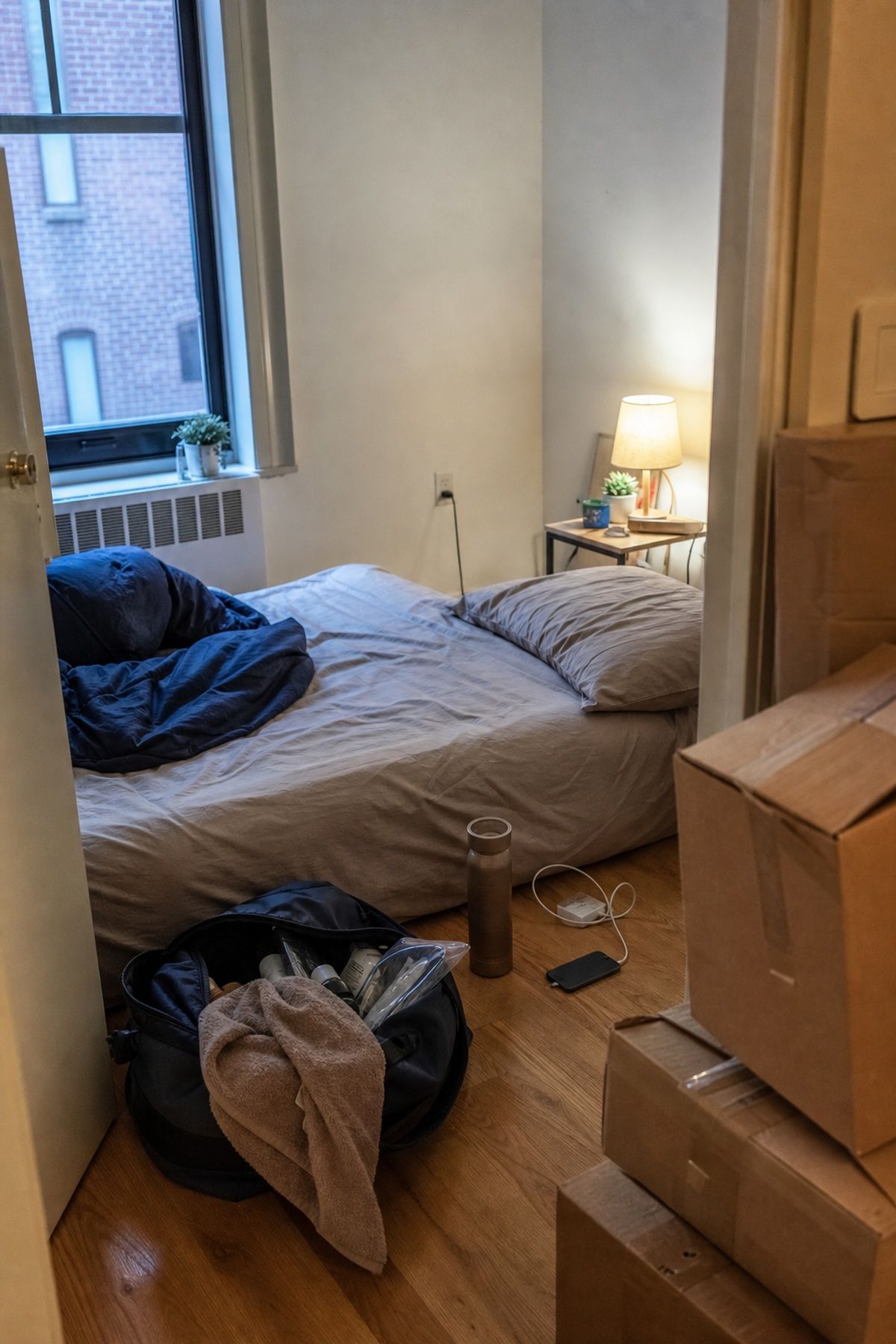
Budget around $150-$200 for first-night essentials and pack them in a clearly labeled box that comes off the truck first. You need: bedding (sheets, a pillow, a blanket or comforter), soap, shampoo, toilet paper, a towel, phone charger, a multi-purpose cleaner, paper towels, and one pot with basic cooking supplies or money for takeout. That’s it. Everything else can wait until tomorrow.
The mistake most first-time renters make is trying to set up the whole apartment on day one. Don’t. Move-in day is for getting your bed made, getting your bathroom functional, and getting a good night’s sleep in your own space. The apartment will feel chaotic for a few days and that’s normal. Your only job on day one is to be able to sleep and shower.
First Week Priorities: Days 2–7
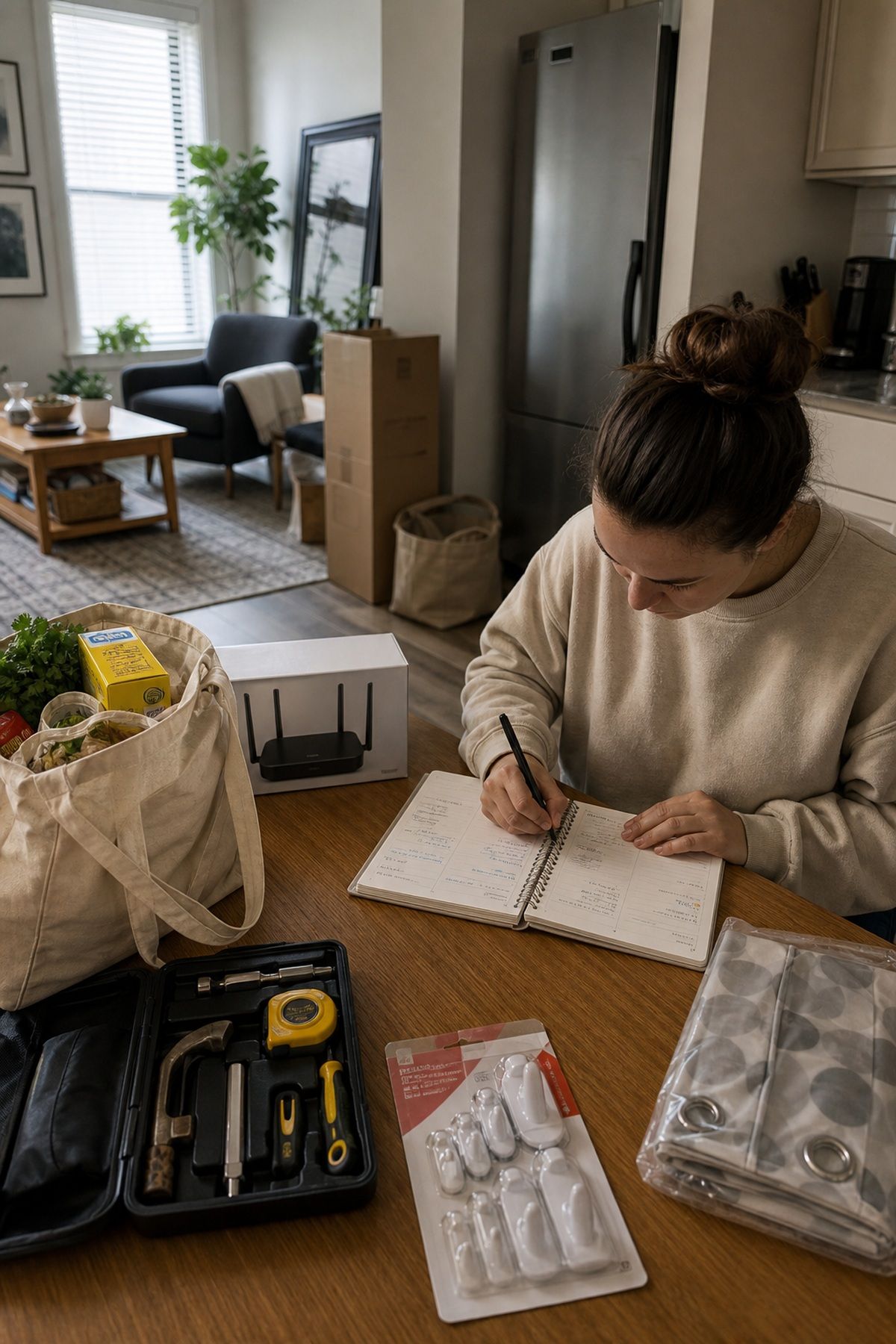


Days 2 through 7 are for making the apartment functional room by room. Budget $300-$500 for this phase. In the kitchen: at least one cutting board, a chef’s knife, a pot and a pan, a spatula, plates and bowls for however many people live there, glasses or mugs, and a can opener. In the bathroom: a shower curtain and liner (if not provided), a bath mat, and any storage you need for toiletries. In the bedroom: if you don’t have a bed frame yet, a mattress on the floor is fine for a week.
Internet should be active by day two or three at the latest. For cleaning, you need a broom or vacuum, a mop or floor cleaner, trash bags, and a multi-surface spray. These are the items that prevent a chaotic first week from becoming a health and sanitation problem. Check your small apartment essentials list against what you already own from your previous living situation, you may have more than you think.
First Month Build-Out: Weeks 2–4
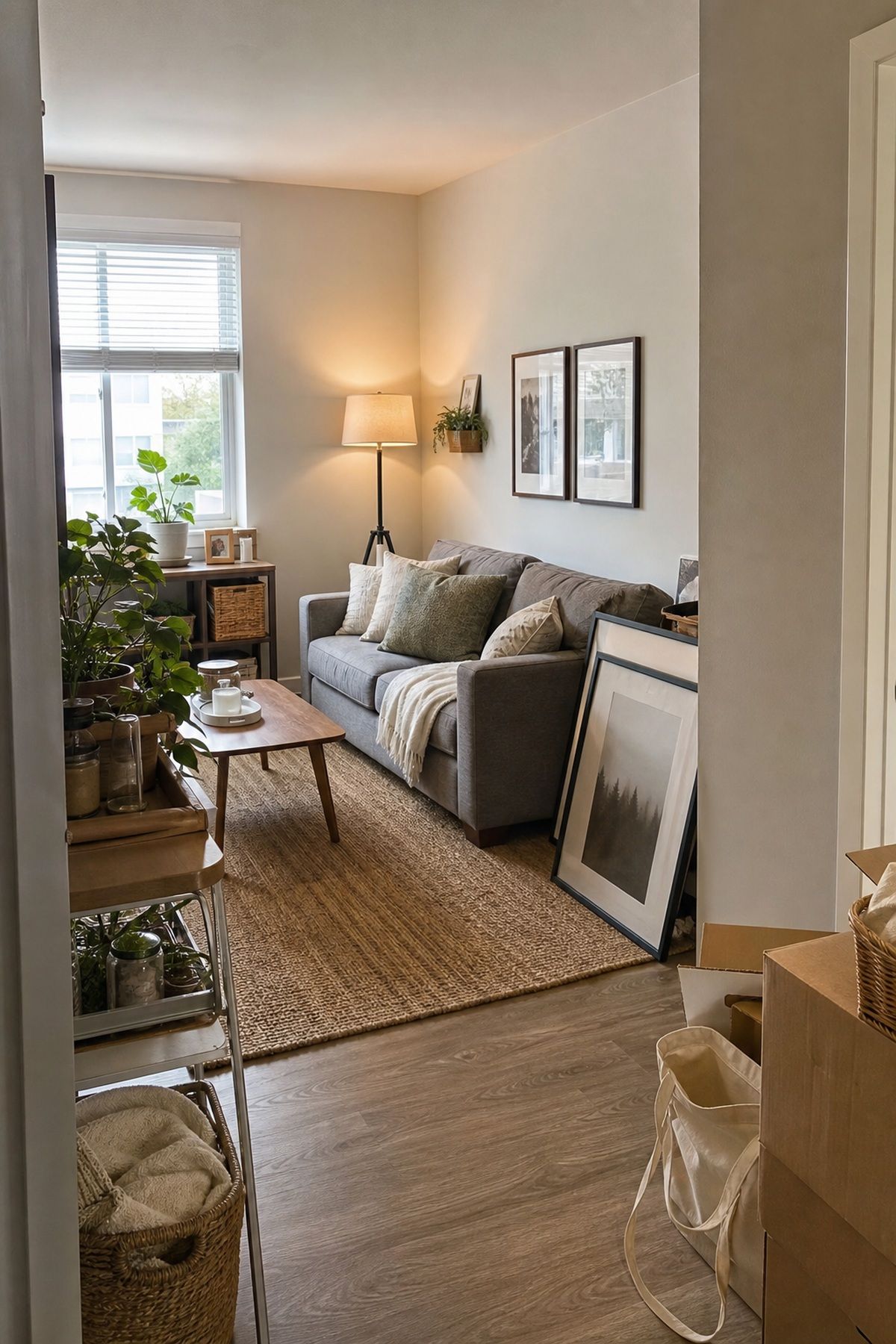
The first month is when you turn a functional apartment into a comfortable one. Budget $200-$500 for this phase depending on what you still need. This is when you add: a sofa or seating for the living area, a coffee table or side table, lamps (overhead lighting in apartments is rarely good enough on its own), a dining table if you need one, and extra kitchen items like a baking sheet, more dishes, or a coffee maker.
Resist the urge to buy everything at once. Living in your apartment for a few weeks before purchasing furniture lets you figure out what the space actually needs rather than guessing from a floor plan. You’ll realize you want a corner shelf you hadn’t thought of, or that the sofa you were planning to buy won’t fit the way you expected. Patience in month one saves money and regret. This is also the phase where apartment organization hacks start to matter: getting your storage systems right early makes everything easier going forward.
Bedroom Essentials
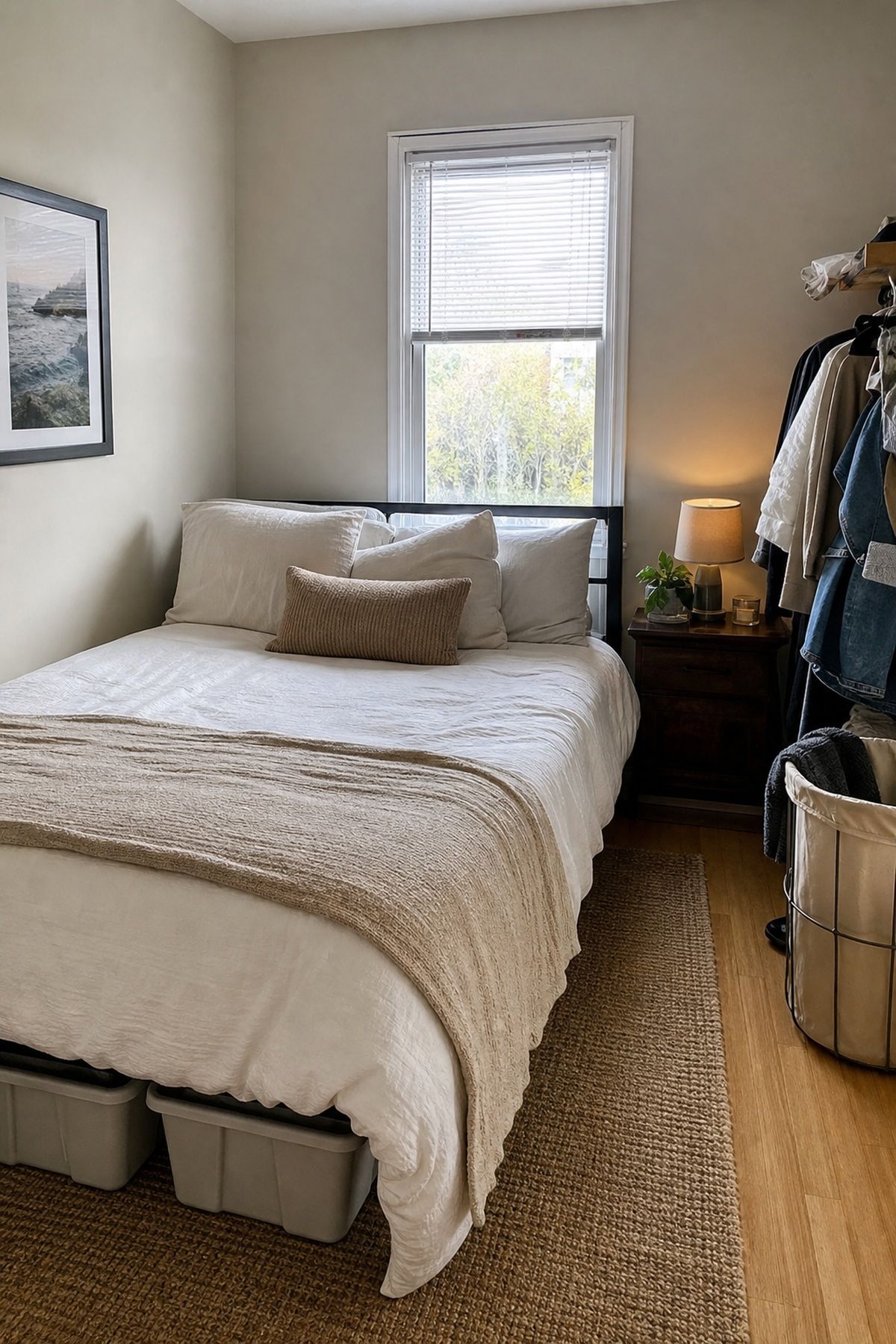


The bedroom checklist: mattress (buy this new if at all possible, you spend a third of your life on it), bed frame or platform base, fitted sheet and flat sheet (or duvet cover), a pillow, and a comforter or duvet. After that: at least one lamp since overhead bedroom lighting is almost always too bright for evening use, a nightstand or side table, a dresser or wardrobe for clothing, and hangers. That’s a functional bedroom.
The items that can wait: a second pillow, decorative throw pillows, a rug, a mirror, and wall art. All nice, none urgent. The mattress is where to spend real money in this room. Everything else can be basic, second-hand, or added gradually. A $200 bed frame from IKEA and a $400-$600 mid-range mattress will serve you better than a fancy bed frame and a budget mattress you’ll be replacing in two years.
Bathroom Must-Haves
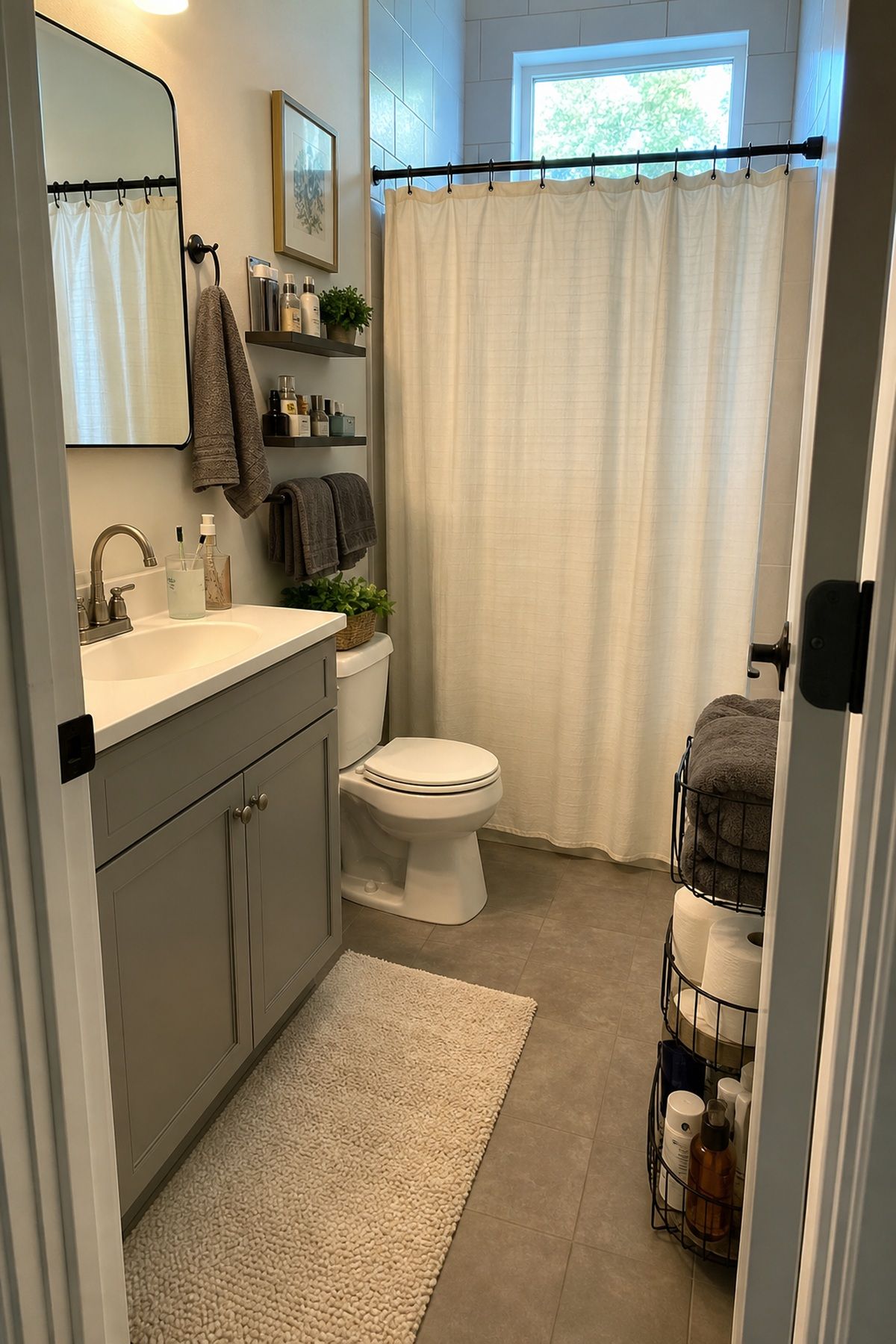


The bathroom checklist: toilet paper (more than you think you need), hand soap, body wash and shampoo, a bath towel and hand towel, a shower curtain and liner if not provided by the apartment, a bath mat, and a toilet brush. That’s the functional minimum. Add: a mirror with hooks or a medicine cabinet if the bathroom doesn’t have one, a small shelf or caddy for toiletry storage, and a trash can.
The bathroom is one room where the dollar store genuinely delivers. Cleaning supplies, extra toilet paper, a toilet brush, and basic bathroom organizers are all reasonable dollar store purchases. Towels, however, are worth buying with some care. A good set of two bath towels costs $20-$40 and will last years. Cheap towels lose their absorbency quickly and become a daily annoyance.
Kitchen Basics
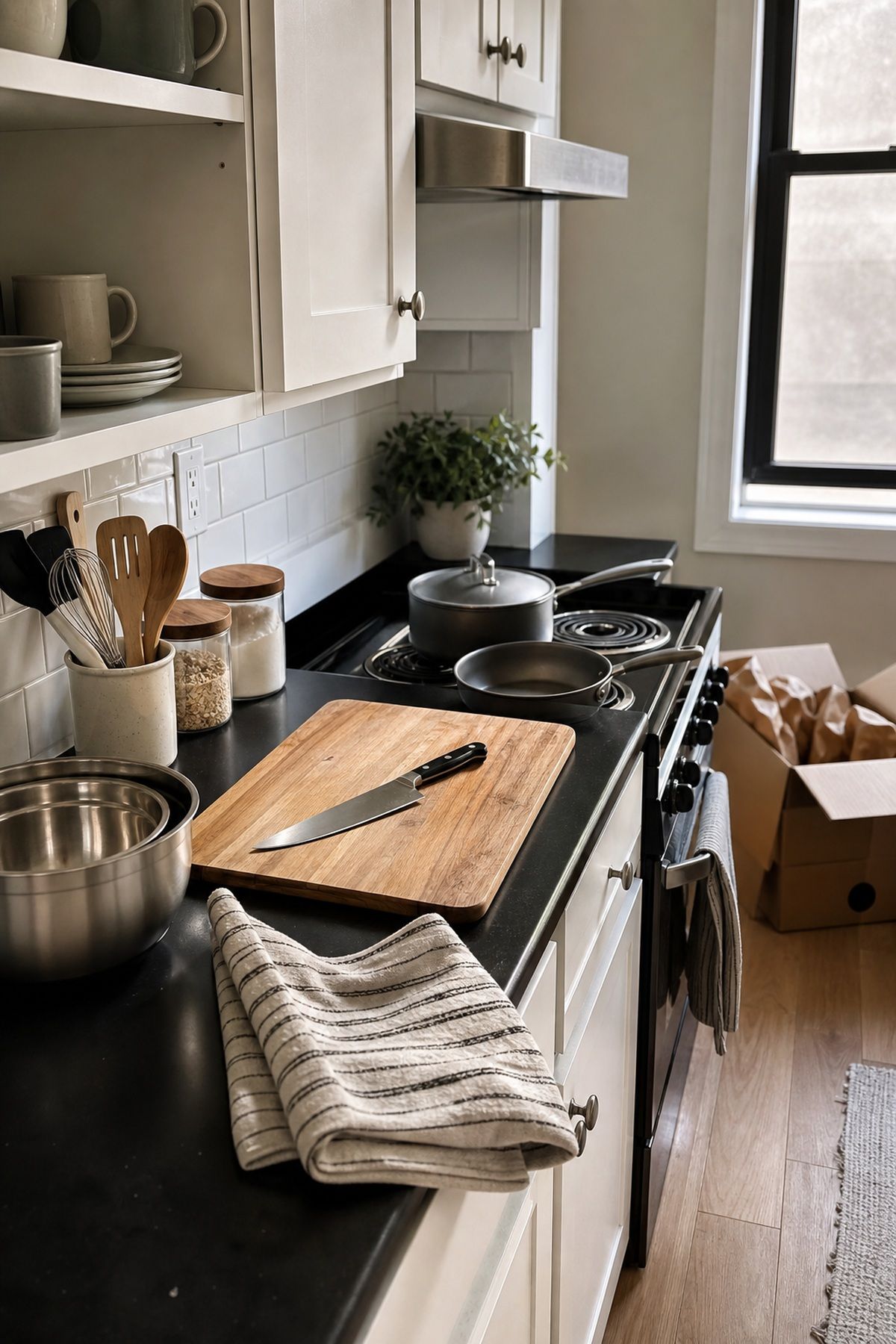


The kitchen checklist: one medium pot (for pasta, soups, boiling), one large frying pan or skillet, a spatula and wooden spoon, a chef’s knife and a cutting board, at least two plates and two bowls, two glasses or mugs, a can opener, and a colander. That’s a functional first kitchen. You can cook most meals with this list and nothing else.
Add in week two: a baking sheet, measuring cups and spoons, a peeler and a grater, a second pot, and basic pantry staples (salt, oil, pasta, rice). The first apartment essentials on Amazon that kitchen-equipment reviewers consistently recommend are the same starter set: a tri-ply stainless skillet, a basic chef’s knife, and a Dutch oven that covers both the pot and the baking dish function. Resist buying a full 12-piece cookware set in month one; most pieces will go unused and take up limited cabinet space.
Cleaning Supplies
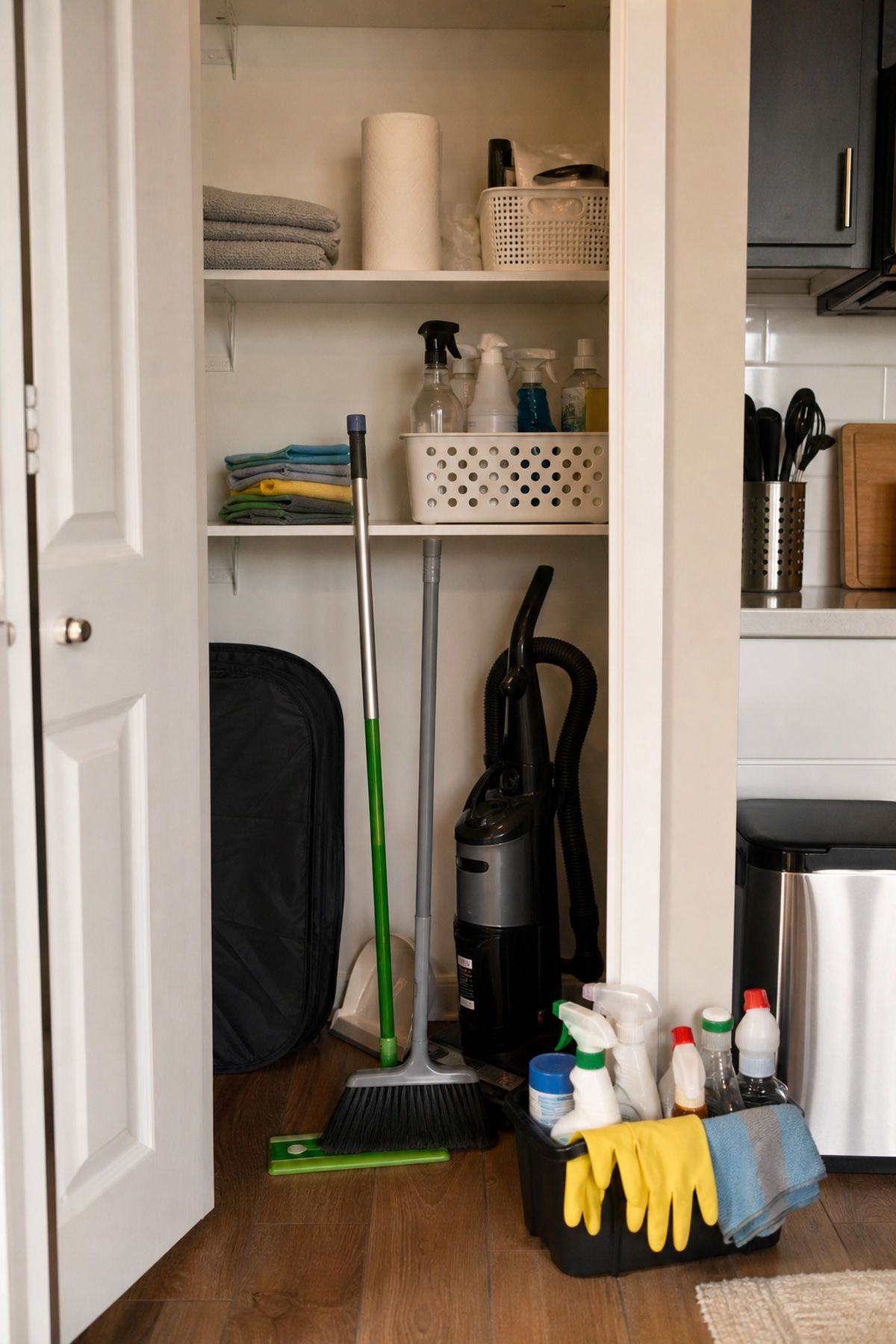


Cleaning supplies checklist: a broom and dustpan (or a vacuum if the apartment has carpet), a mop and bucket or a Swiffer, a multi-surface spray cleaner, dish soap, a sponge and a dish drying rack, a toilet bowl cleaner and brush, trash bags in the right size for your bins, and paper towels. This covers basic daily and weekly cleaning for every room in the apartment.
The home organization essentials that matter most in a first apartment are the ones that prevent clutter from accumulating: a small trash can in each room, drawer organizers in the kitchen, and hooks near the front door for keys and bags. These items cost almost nothing and they make daily life noticeably smoother from day one.
Living Room Setup
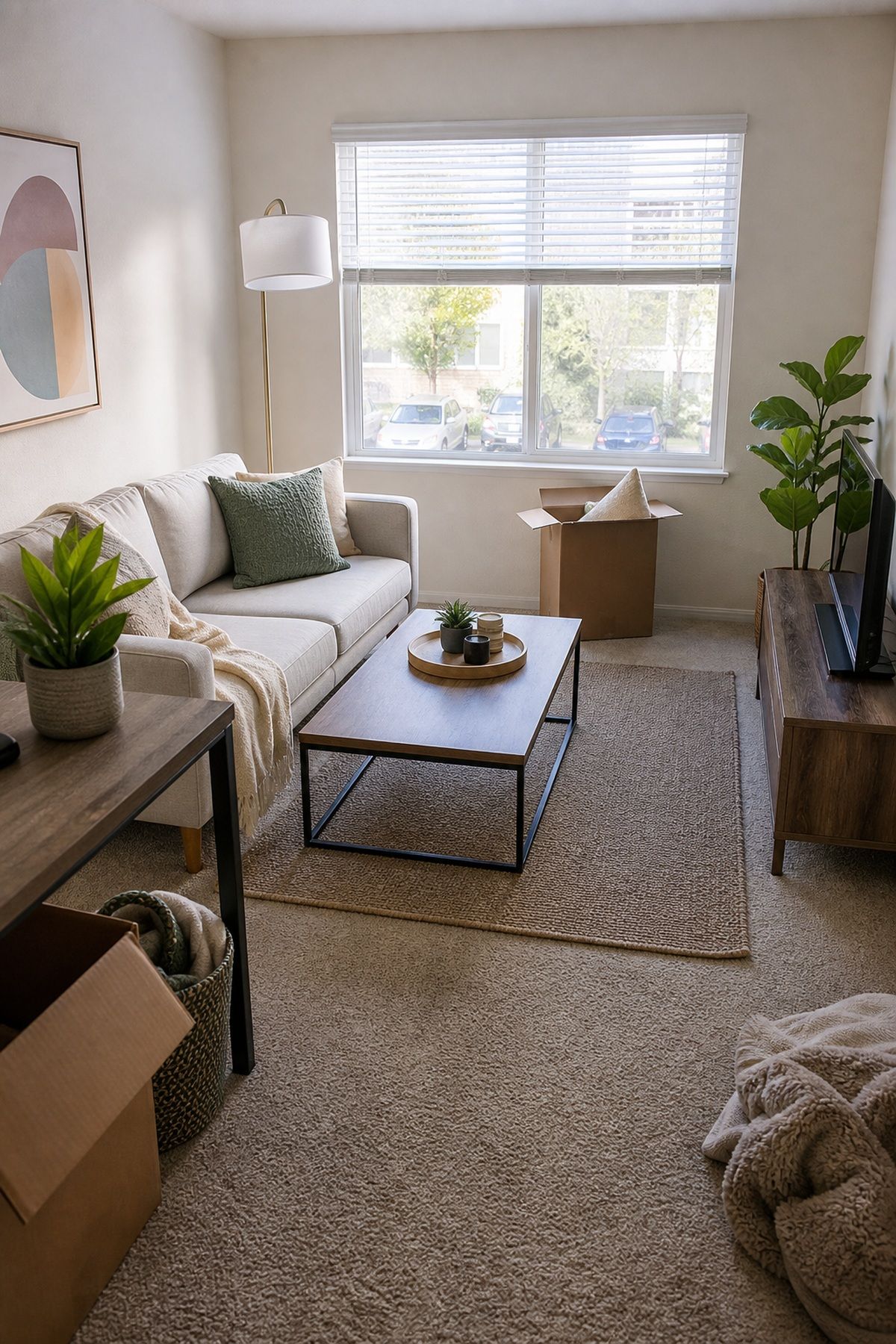


A functional living room needs: seating (a sofa, loveseat, or even a secondhand armchair to start), a surface to set things on (coffee table, side table, or a large ottoman), and a lamp. That’s it for function. Add a TV or monitor for entertainment if that’s part of your routine, but a living room without a TV and with good lighting and seating is a better space than one with a large TV and nowhere comfortable to sit.
Facebook Marketplace and Craigslist are the best places to find a first-apartment sofa. A clean, structurally sound used sofa costs $50-$200. The same sofa new costs $600-$1,500. The budget difference is significant enough that used is the smart move for a first apartment, especially since your taste and needs will evolve and you’ll likely replace it within a few years anyway.
Budget Strategy: Where to Save & Where to Splurge
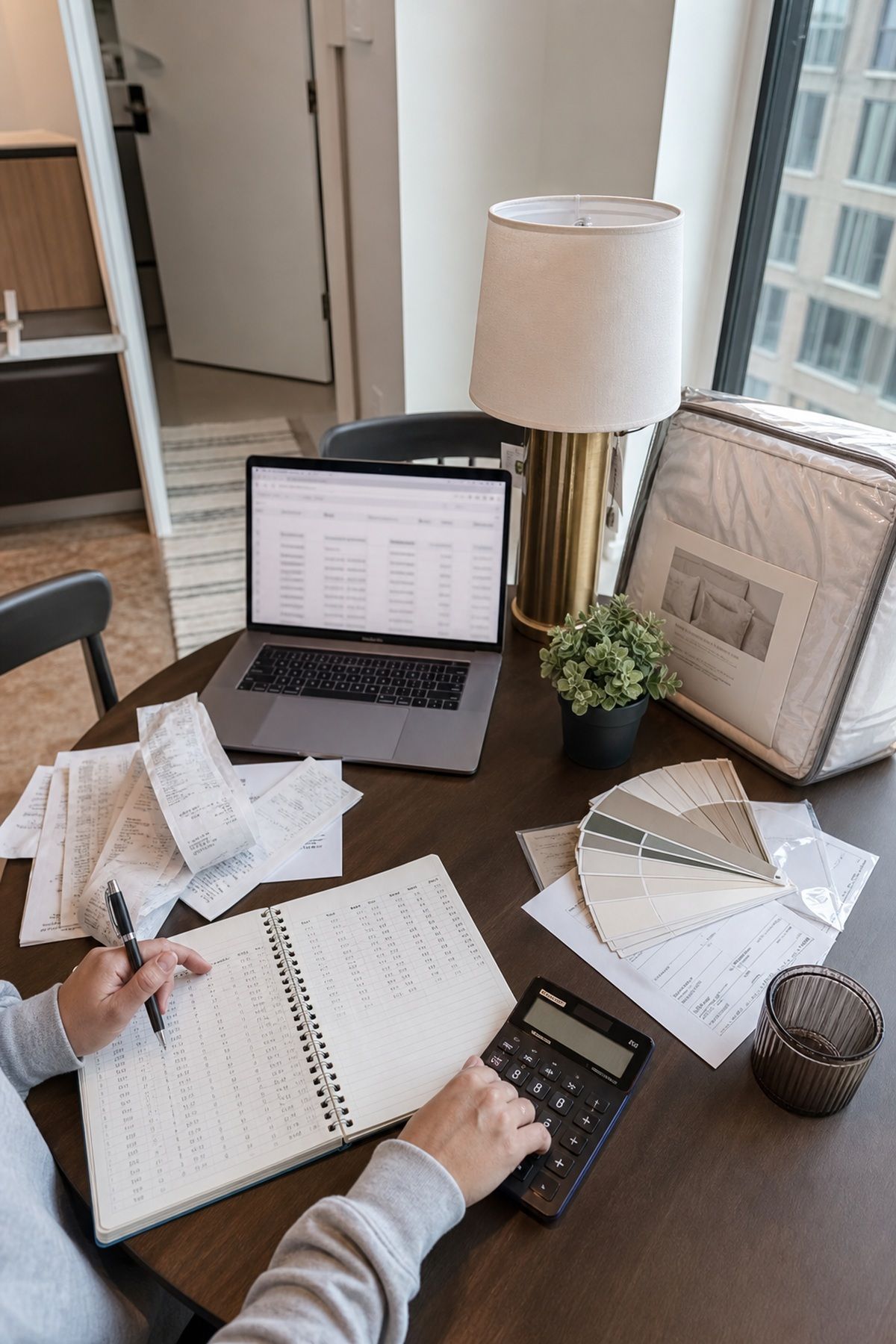


Splurge on: your mattress (sleep quality affects everything), a good chef’s knife (you’ll use it daily for years), and a quality set of bed sheets (cheap sheets pill quickly and become uncomfortable). These items have a direct daily impact and the quality difference between budget and mid-range is significant and noticeable every day.
Save on: furniture (thrift stores, Facebook Marketplace, and estate sales for sofas, dressers, and tables), decor (DIY and secondhand), extra kitchen items (buy only what you actually use), and anything decorative. Check the budget home decor essentials list for apartment-specific decor ideas that cost under $30 each. The goal in year one is a functional, clean apartment that you’re comfortable in. Style comes after you’ve lived in the space long enough to know what it actually needs.
Frequently Asked Questions
How much does it cost to furnish a first apartment?
Furnishing a first apartment costs between $500 and $3,000 depending on what you start with. A bare-minimum functional setup runs $500-$800. A comfortable setup with real furniture runs $1,500-$3,000. Buying second-hand for large items like sofas, bed frames, and dressers drops the cost significantly.
What’s the most important thing for a first apartment?
The most important items are a bed you can sleep in, working internet, at least one pot and pan, and toiletries. A good mattress matters more than any other purchase because it affects your sleep quality every single night.
Can I furnish a first apartment for under $1,000?
Yes, with second-hand furniture and a phased approach. Essentials (bed, kitchen basics, bathroom, cleaning supplies) run $400-$600 if you shop smart. Add a used sofa and basic living room setup and you’re around $800-$1,000. Skip decor entirely in month one.
Should I buy everything new or use second-hand?
Buy your mattress, sheets, and kitchen supplies new. Buy furniture second-hand wherever possible: sofas, dressers, bed frames, and tables cost 70-90% less used and hold up well. Facebook Marketplace and estate sales are the best sources for quality used furniture.
How long does it take to set up a first apartment?
Most people have their apartment functional within 2-4 days of moving in and comfortable within 2-4 weeks. Fully set up with decor and all furniture in place typically takes 1-3 months if you’re building gradually on a budget.
Key Takeaways
- Day-one essentials: bedding, toiletries, one pot, charger, toilet paper, and cleaning spray
- Spend the most on your mattress, it affects your sleep and wellbeing every single night
- Buy furniture second-hand (sofa, bed frame, dresser, table) and save 70-90% versus buying new
- Build in phases: day one ($150-$200), first week ($300-$500), first month ($200-$500)
- Skip decor and nice-to-haves in month one, live in the space first, then buy what it actually needs
- Document the apartment with photos on move-in day to protect your security deposit at move-out
Final Thoughts
Your first apartment doesn’t need to be perfect. It needs to be functional, safe, and comfortable enough that you can sleep well and live your actual life in it. Everything else gets added as you go. The renters who set up their first apartments best are the ones who resist the urge to do everything at once and instead build deliberately, one room at a time, over the first few months.
Start with the bed and the bathroom. Get the kitchen functional in week one. Add comfort in month one. Decorate when you know what the apartment actually needs. You’ll spend less, waste less, and end up with a space that feels more like yours because you took the time to figure out what that actually means.
Last update on 2026-10-07 / Affiliate links / Images from Amazon Product Advertising API
