

Friendsgiving food works best as a spread that still tastes good after an hour on the table: a grazing board and cold starters, one or two mains that slice well warm or at room temperature, sides that hold, grain salads and bars instead of fussy plated desserts. Make most of it ahead and share it as a potluck.
The most common Friendsgiving food mistake is choosing dishes that are only good for ten minutes, like crispy fries, soufflé-style sides or a gravy that skins over the moment it leaves the stove, and then serving them to friends who eat slowly, talk a lot and go back for seconds an hour later. Good Friendsgiving food ideas start from the opposite question: what still tastes great after sitting on the table for a while?
Banquet work drills that question into you fast, since a hotel buffet has to look and taste right from the first plate to the last, and the same thinking makes a home spread so much easier. Everything below is chosen to hold, from the board to the bars, and once the food is sorted, our fabulous Friendsgiving table setting ideas take care of how it’s served.

Recommended Friendsgiving Food and Serving Products


Recommended blogs to read:
- Friendsgiving dishes to impress your guests
- Friendsgiving side dishes
- Best Friendsgiving ideas
- Best hosting Friendsgiving ideas
- Top 18 Friendsgiving Ideas for a Cozy, Memorable Celebration
How Do You Plan Friendsgiving Food for a Crowd?
Sketch the spread by course, size it to your guest count and pick dishes that can sit out without suffering.
1. Build the Menu Course by Course
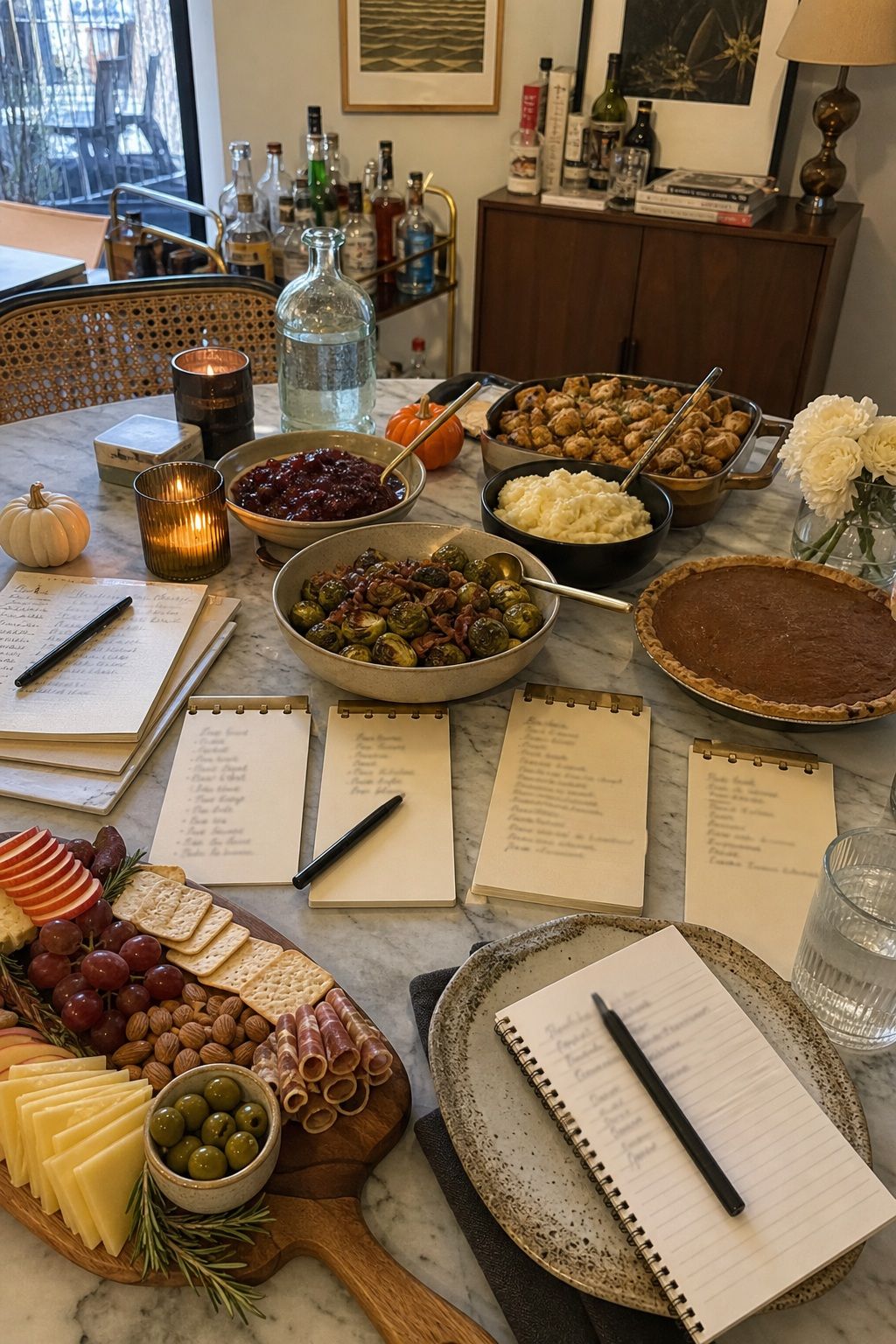


Before choosing a single dish, sketch the spread by course on a notepad, starters down to dessert, with a number next to each. Notepads scattered across a marble island next to a board, a bowl of sprouts and a pie is the normal mess of this stage.
Seeing the courses on paper shows the balance at a glance, so a spread with five starchy sides and no vegetable gets caught before anyone shops.
It also tells you which slots can go to guests and which ones you’ll keep. For a buffet that sits out, add one more note next to each dish: warm, room temperature or cold. A good spread has some of each, so the table still has plenty to eat when the warm dishes cool down.
Read more: Top 18 Friendsgiving Menu Ideas for a Crowd-Pleasing Spread
2. Scale the Quantity to Your Guest Count
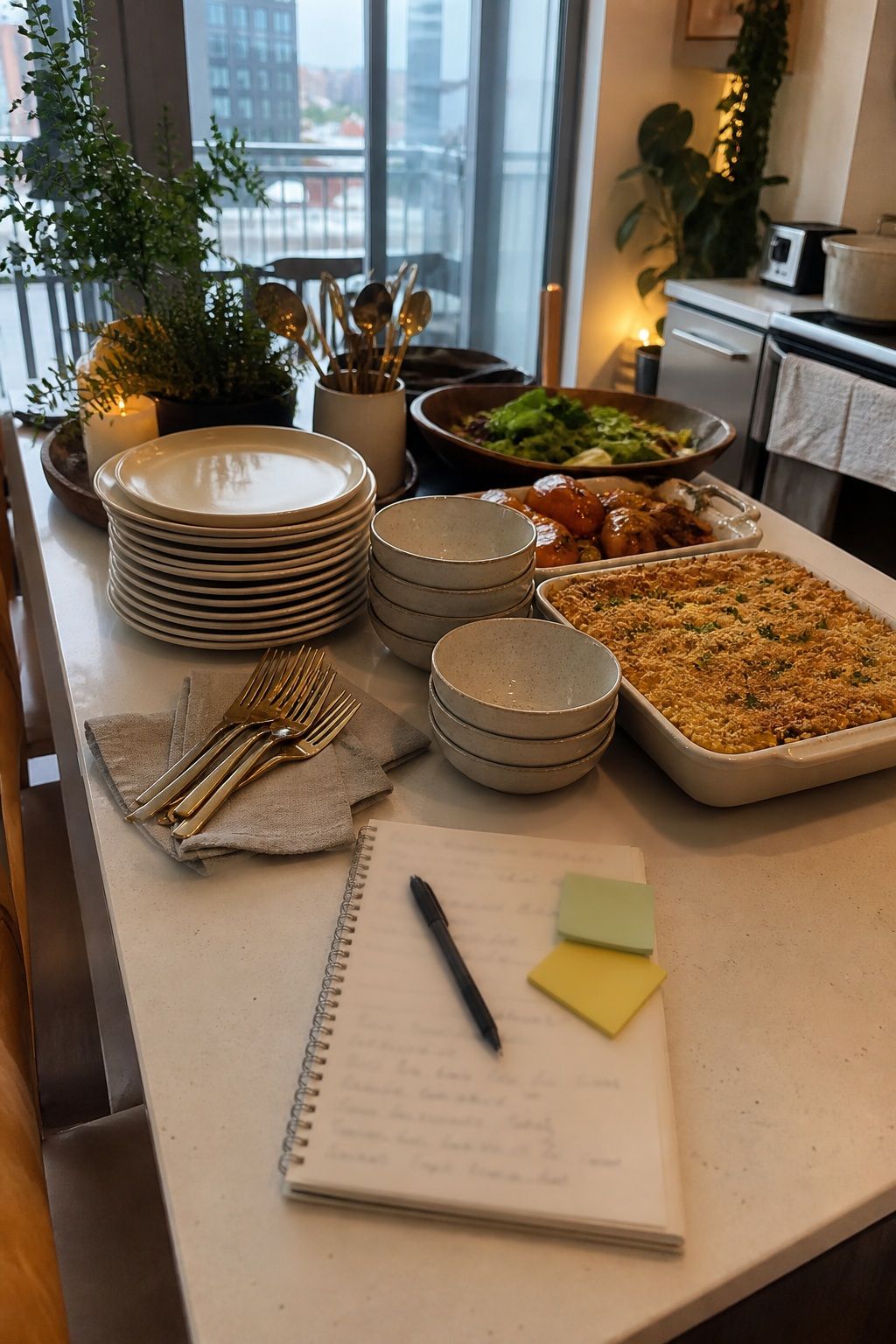


How much food do you need per person? Count on each guest eating a spoonful or two of nearly every dish, since guests take a little of everything rather than a full plate of one thing. For twelve people, that means each side feeds around fifteen spoonfuls, not twelve dinners.
The stack of plates, bowls and forks next to the notebook on that counter is a reminder to count serving gear too, since a spread with fifteen dishes needs fifteen serving spoons, and nobody ever has fifteen serving spoons. Borrow them, or ask guests to bring one with their dish.
3. Plan the Dietary Mix Across the Whole Table
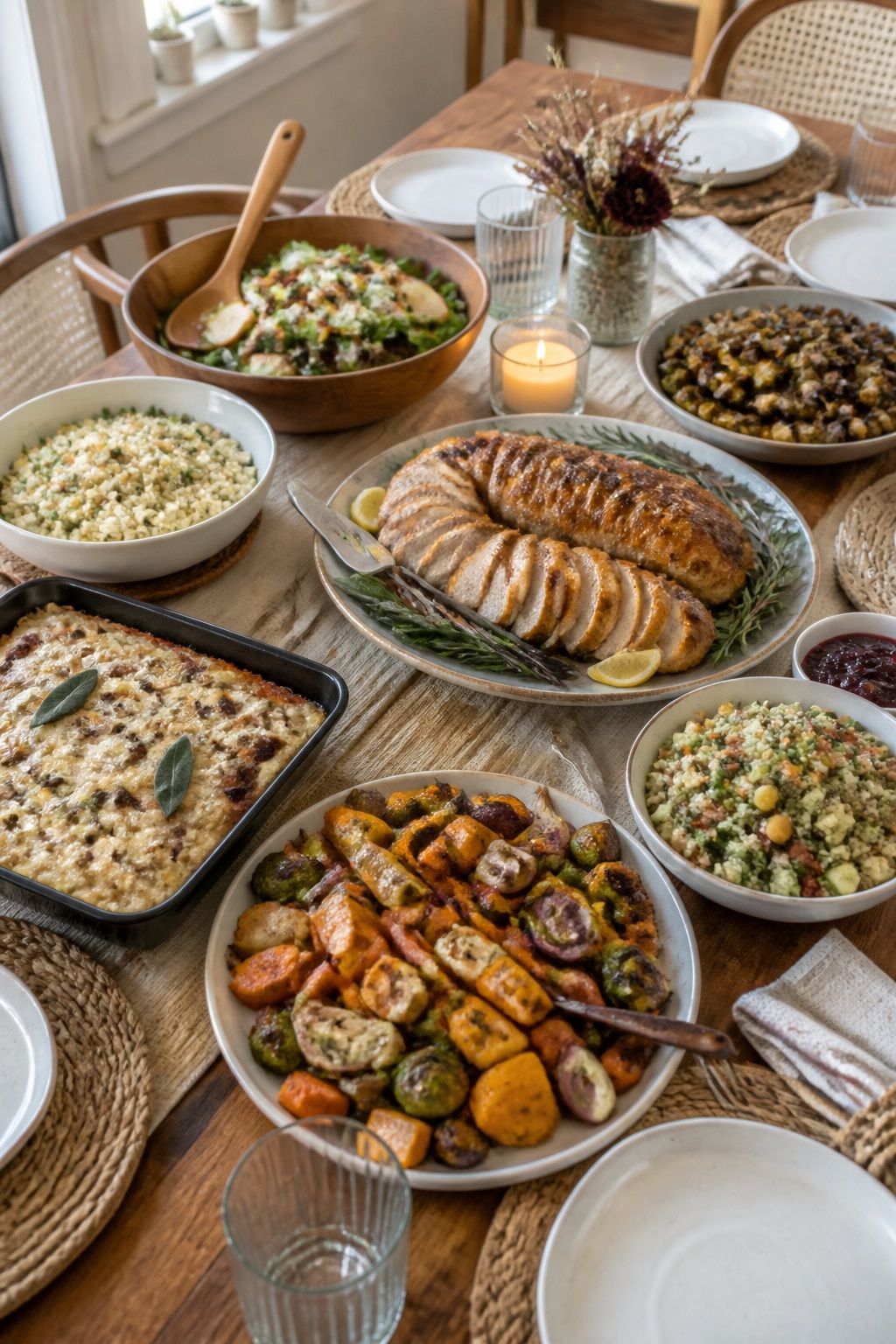


A shared spread is the easiest way to feed vegetarians, gluten-free guests and picky eaters without cooking separate meals, as long as you plan for them on purpose. A table with sliced turkey breast next to roasted vegetables, a few salads and a bowl of stuffing gives everyone something to build a plate from.
- At least two hearty dishes with no meat
- At least two sides with no gluten, like roasted vegetables or mash
- Dressings and gravies served on the side
- A small label on anything with nuts
Ask about allergies in the invitation, and you’ll never have to watch a guest eat only bread rolls all night.
Read more: Top 17 Friendsgiving Tablescape Ideas That Feel Warm and Personal
4. Lean Hard on Make-Ahead Dishes
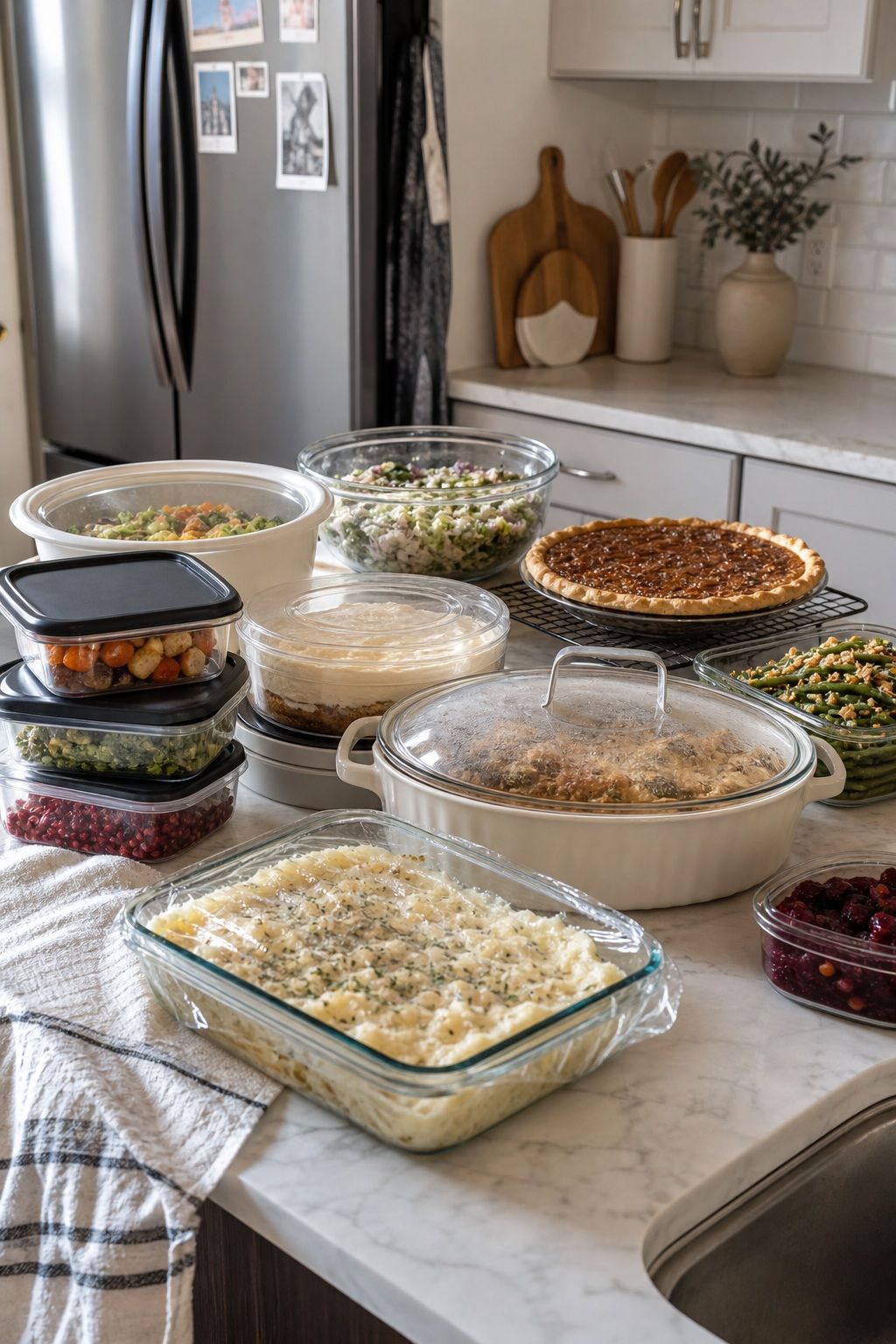


Want to sit down at your own party? Fill the fridge the day before with covered casseroles and a cooled pie, and the actual day becomes reheating and arranging instead of cooking from scratch. Most Friendsgiving staples handle a night in the fridge well, and stuffing and cranberry sauce even taste better the next day. Leave room in the fridge for this the week before (that means finally eating the mystery jar of pickles), and keep the day-of list to the main, the salad dressing and one or two quick reheats.
What Are Good Friendsgiving Starters?
A board, one warm bite, something fresh and a few dips. They should feed the first hour without filling everyone up.
5. Anchor the Start With a Grazing Board
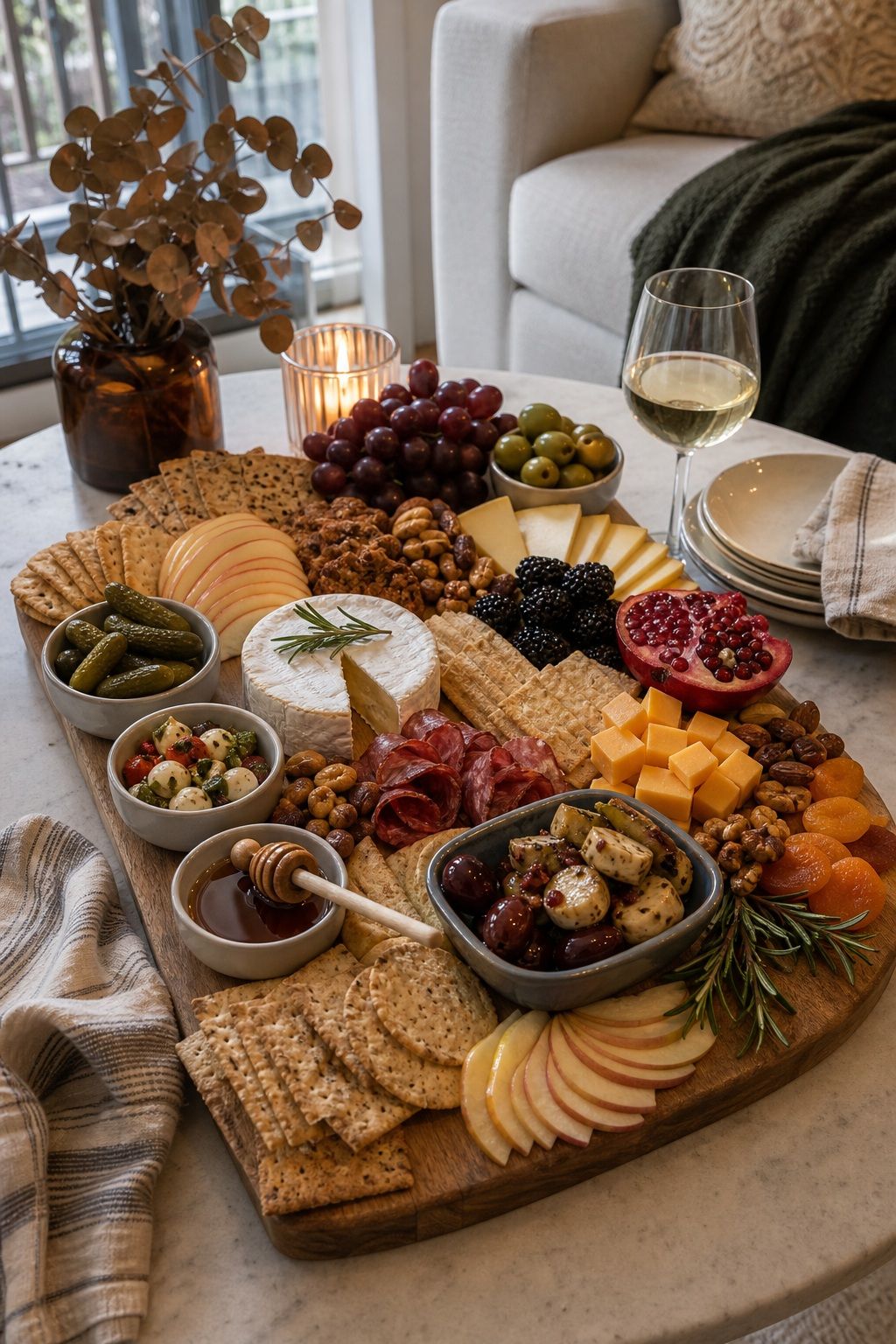


Start the spread with a grazing board, since it needs zero cooking and stays good for hours. Cheeses with a pot of honey and sliced apples cover sweet and salty at once, and early arrivals have something to do while you finish the main.
Build it about an hour before guests come and keep softer cheeses in the fridge until the last minute, since brie on a warm counter for three hours turns into a puddle.
Slice apples last and squeeze a little lemon over them so they don’t brown. If the board empties fast, refill from the fridge instead of building it huge from the start.
Read more: Top 18 Friendsgiving Potluck Ideas for an Easy, Organized Feast
6. Add One or Two Warm Appetizers
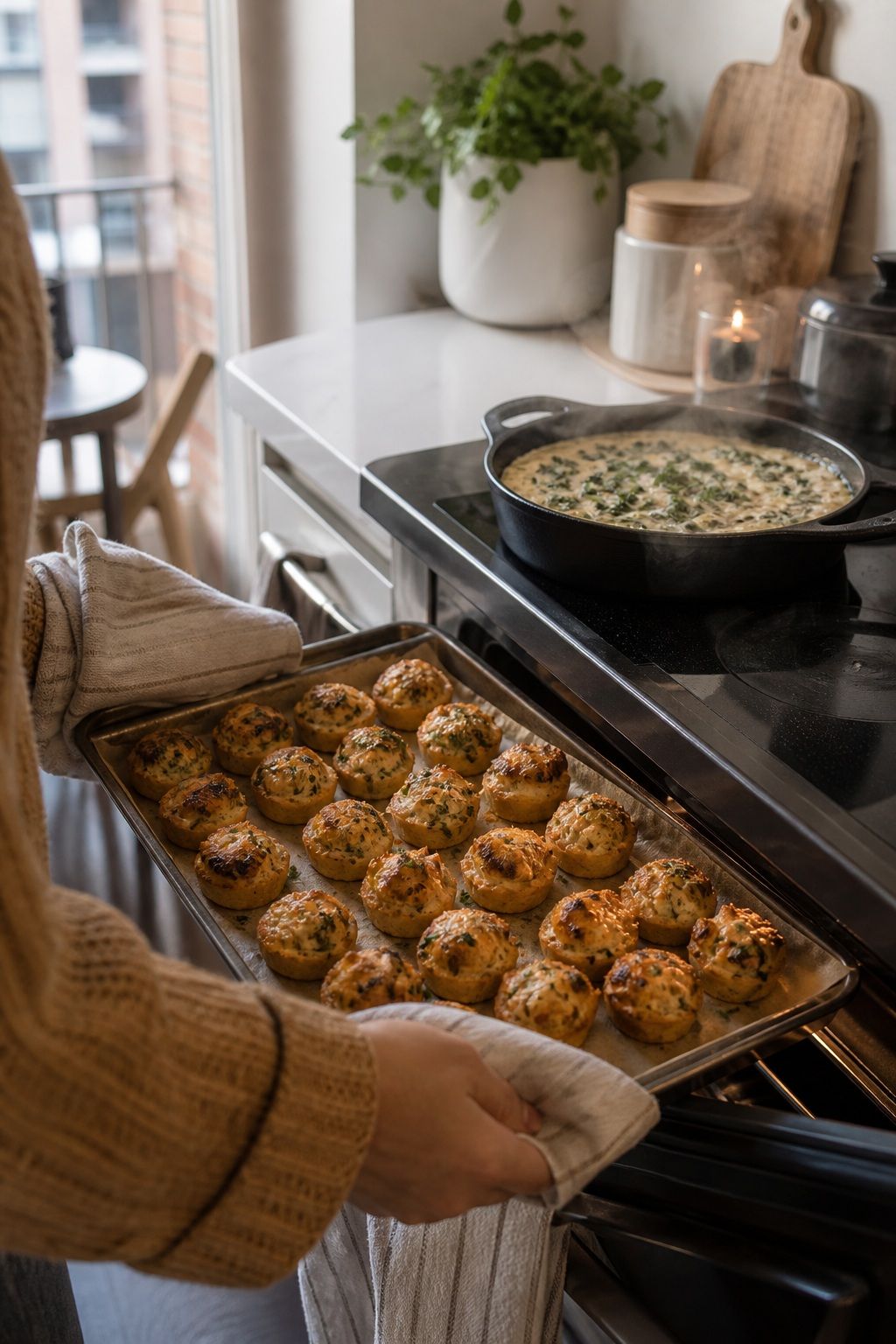


One warm starter makes the opening of the evening feel like a proper meal, and it smells amazing when the door opens. A tray of golden puff pastry bites pulled from the oven while a skillet of spinach dip bubbles on the stove is that moment exactly. Choose a warm starter you can assemble in the afternoon and bake just as guests arrive, then let it sit out, since puff pastry bites and baked dips taste good warm or just warm-ish. Skip anything that has to be eaten the second it leaves the pan, like fried bites, because by the time you’ve hung up the third coat they’re cold and sad.
Read more: Top 17 Hosting in a Small Apartment Tips That Actually Work
7. Include a Light, Fresh Starter
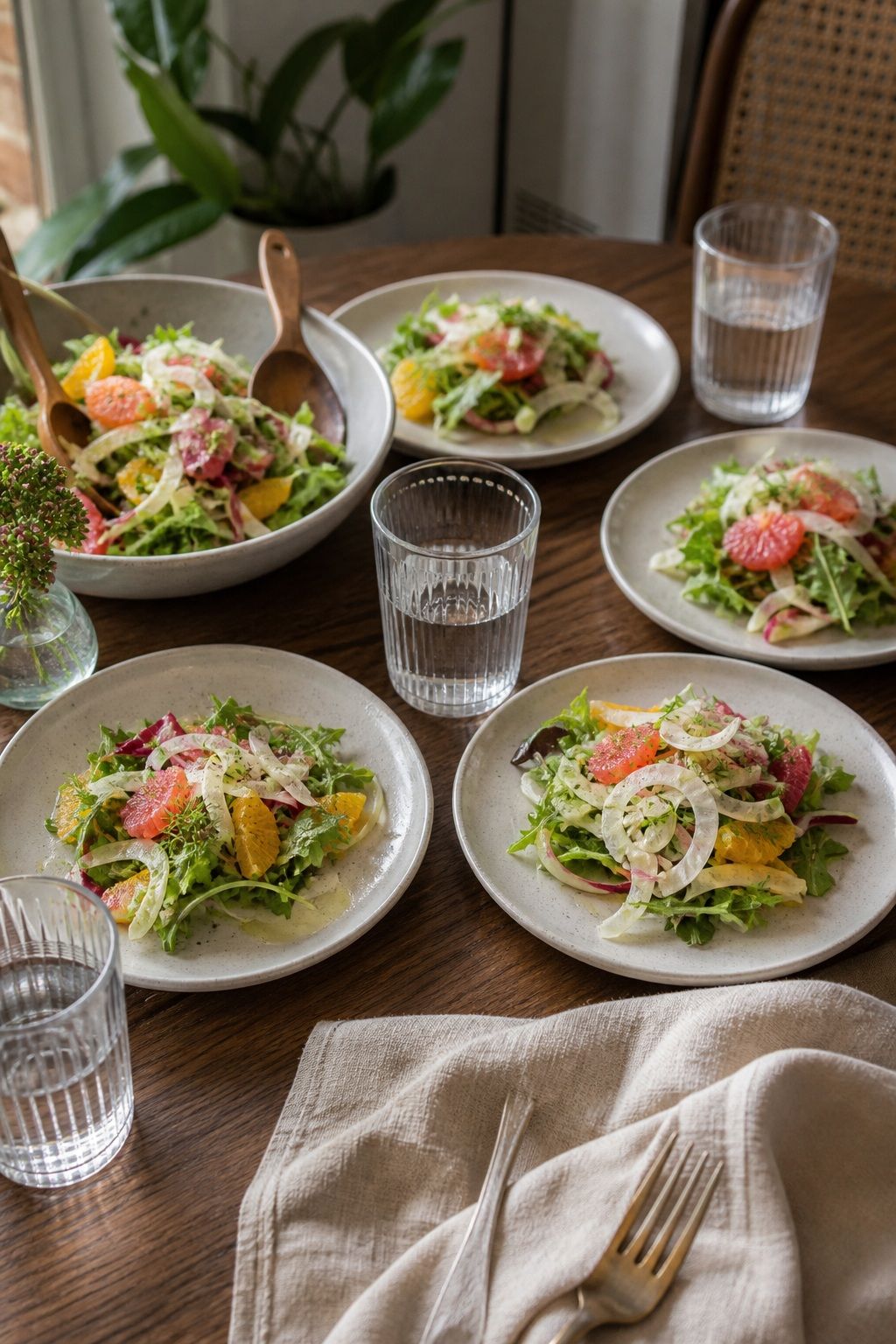


Friendsgiving food leans rich, so one fresh dish early on gives everyone’s appetite a reset. Plates of salad with citrus slices and shaved fennel look bright on a fall table and hold their crunch better than leafy greens alone.
Keep the dressing on the side until serving, or dress just one bowl at a time, since a dressed salad left out for an hour wilts into something nobody wants to scoop. A squeeze of orange juice into the dressing ties it to the citrus on top. Fennel, cabbage, kale and shaved carrots stay crisp much longer than lettuce, which makes them better buffet salads in general.
8. Plan Appetizers That Hold Without Attention
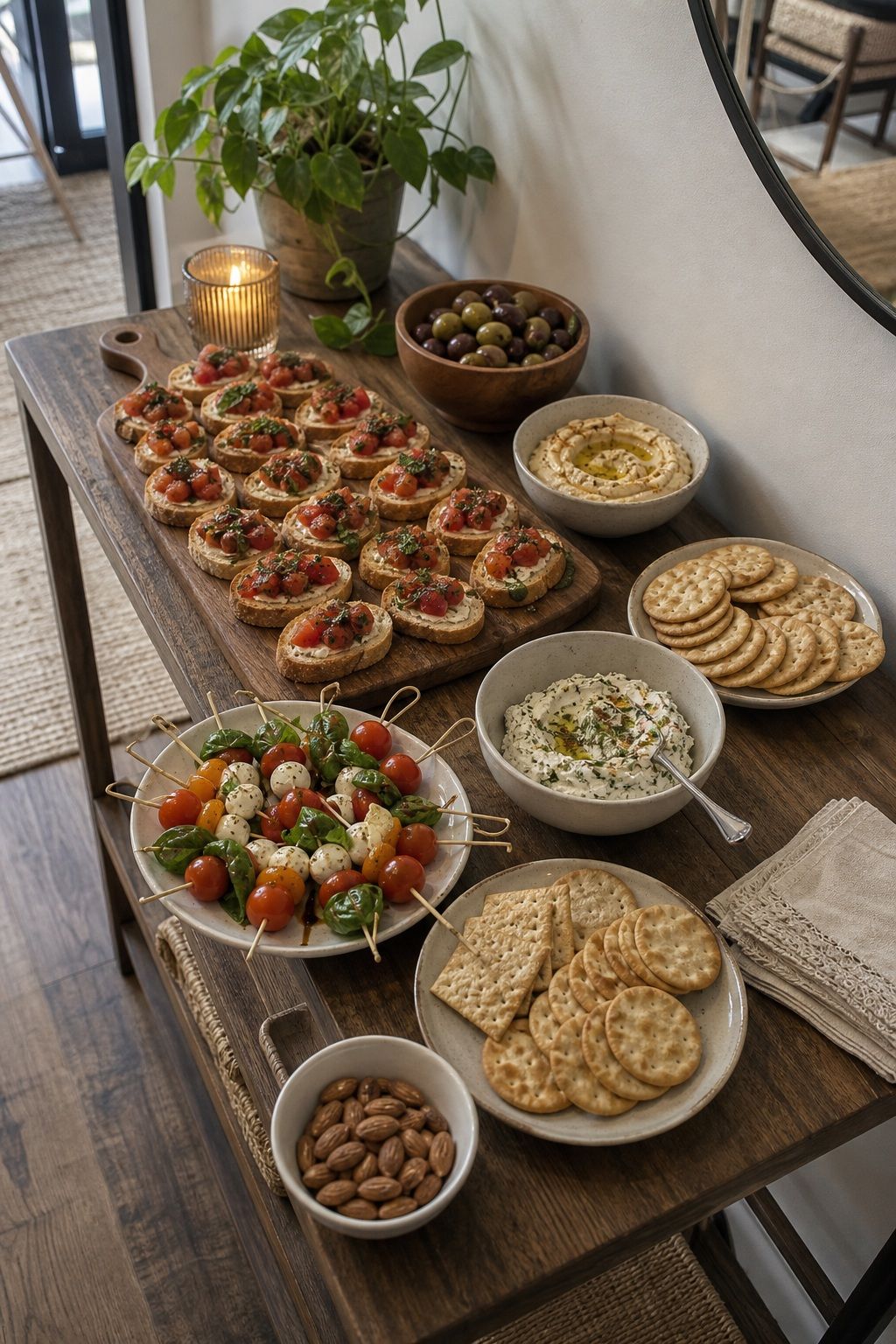
During the busiest part of the evening you want starters that look after themselves, especially the first half hour when coats are flying and the oven timer keeps beeping. Bruschetta and caprese skewers on one long tray with hummus and a bowl of almonds all sit happily at room temperature, and none of them needs a spoon from you.
Put the bruschetta toppings on just before guests arrive, so the bread stays crisp.
Everything else can go out early. If a dip has dairy in it, swap in a fresh bowl from the fridge halfway through the evening instead of leaving one bowl out for four hours.
Read more: Top 18 Friendsgiving Appetizer Ideas Your Guests Will Love
9. Set Up the Grazing Spread for Easy Flow
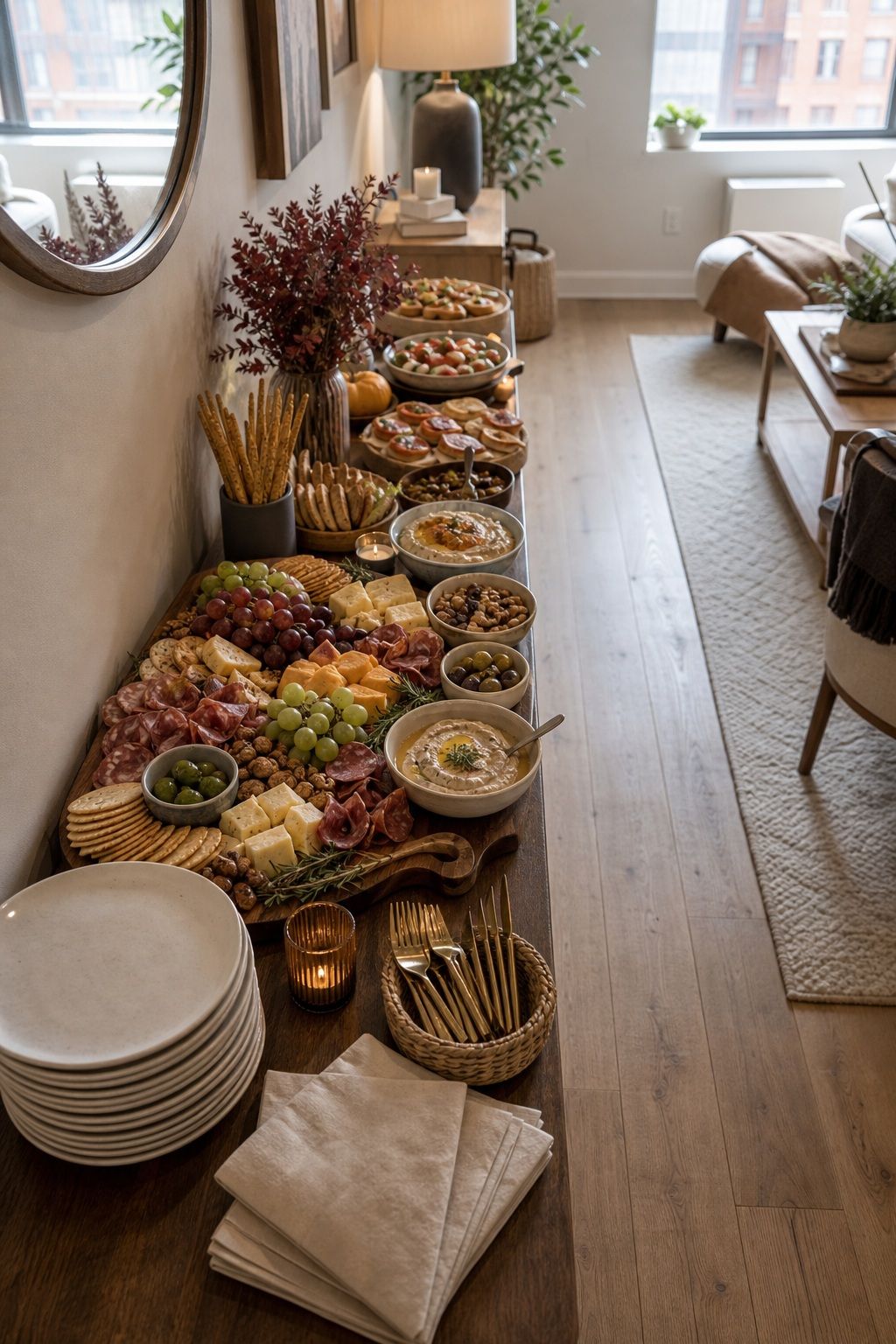
A grazing spread works best when it flows in one direction, plates first and napkins at the end, so people don’t double back and bump into each other in a small apartment. A long console in the hallway with boards laid out end to end and a stack of plates waiting at the start is a clever use of a space that’s usually just for shoes and keys. Put the spread against a wall, out of the path to the bathroom and the kitchen, and leave room on one side for people to stand and chat. Drinks belong somewhere else entirely, otherwise the whole party ends up queuing in one corner.
What Mains and Sides Hold Up on a Friendsgiving Spread?
Mains that slice well at room temperature and sides that stay good for an hour, like roasted vegetables, grain salads, stuffing and mash kept covered.
10. Choose One or Two Mains, Not Five
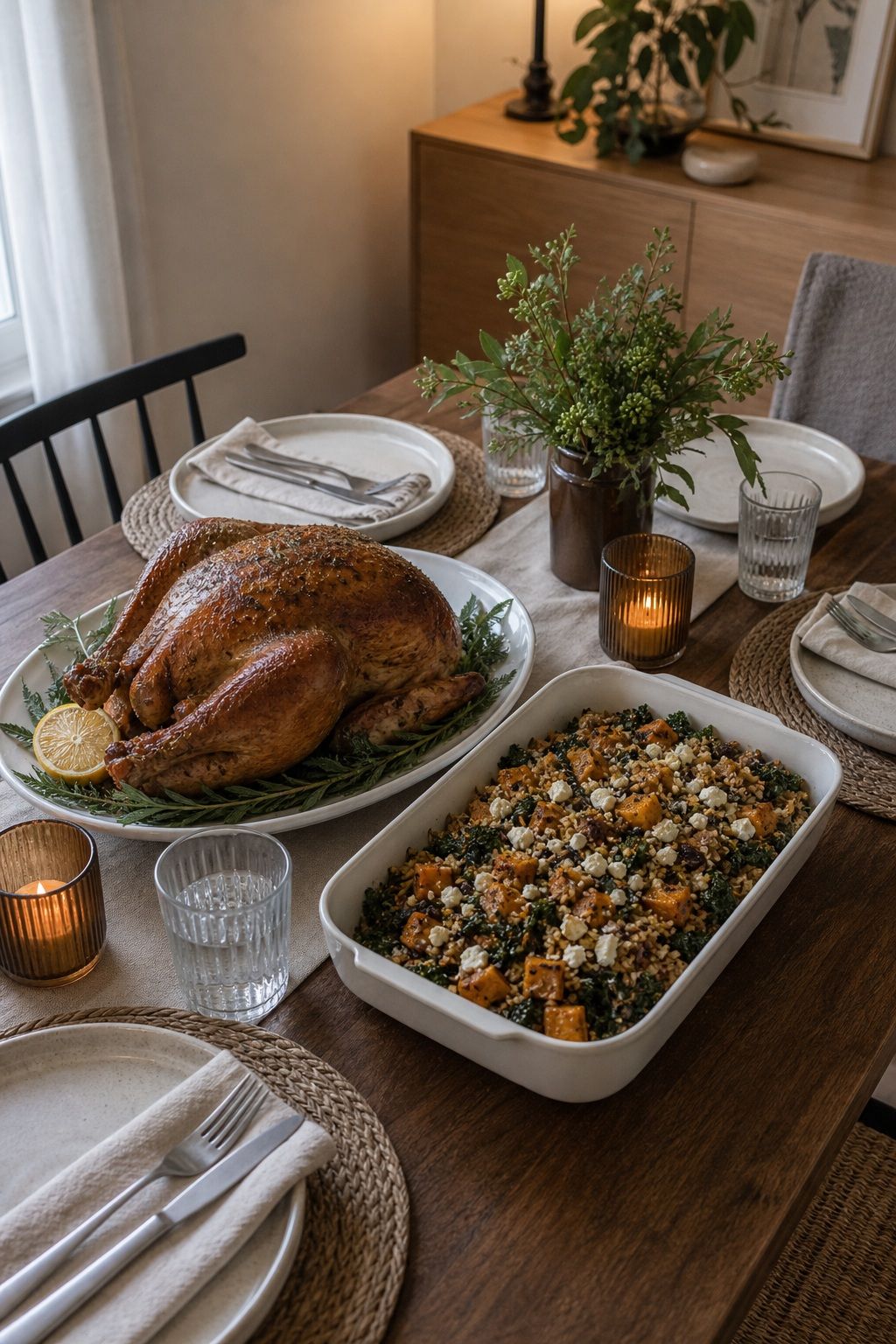


One or two mains is plenty for a Friendsgiving spread, since the sides do most of the feeding anyway. A roast turkey next to a vegetable bake with kale, squash and feta covers meat eaters and vegetarians in two dishes, which is about as efficient as a table gets.
For a spread that sits out, pick mains that slice well and taste good warm or at room temperature, like turkey breast, ham or a whole roasted salmon.
Slice the meat right before serving and pour a little warm broth over it so it stays juicy. For bigger showstopper mains, browse our Friendsgiving dinner party ideas if you want more drama.
Read more: Top 18 Friendsgiving Theme Ideas to Set the Perfect Mood
11. Build a Strong Lineup of Sides
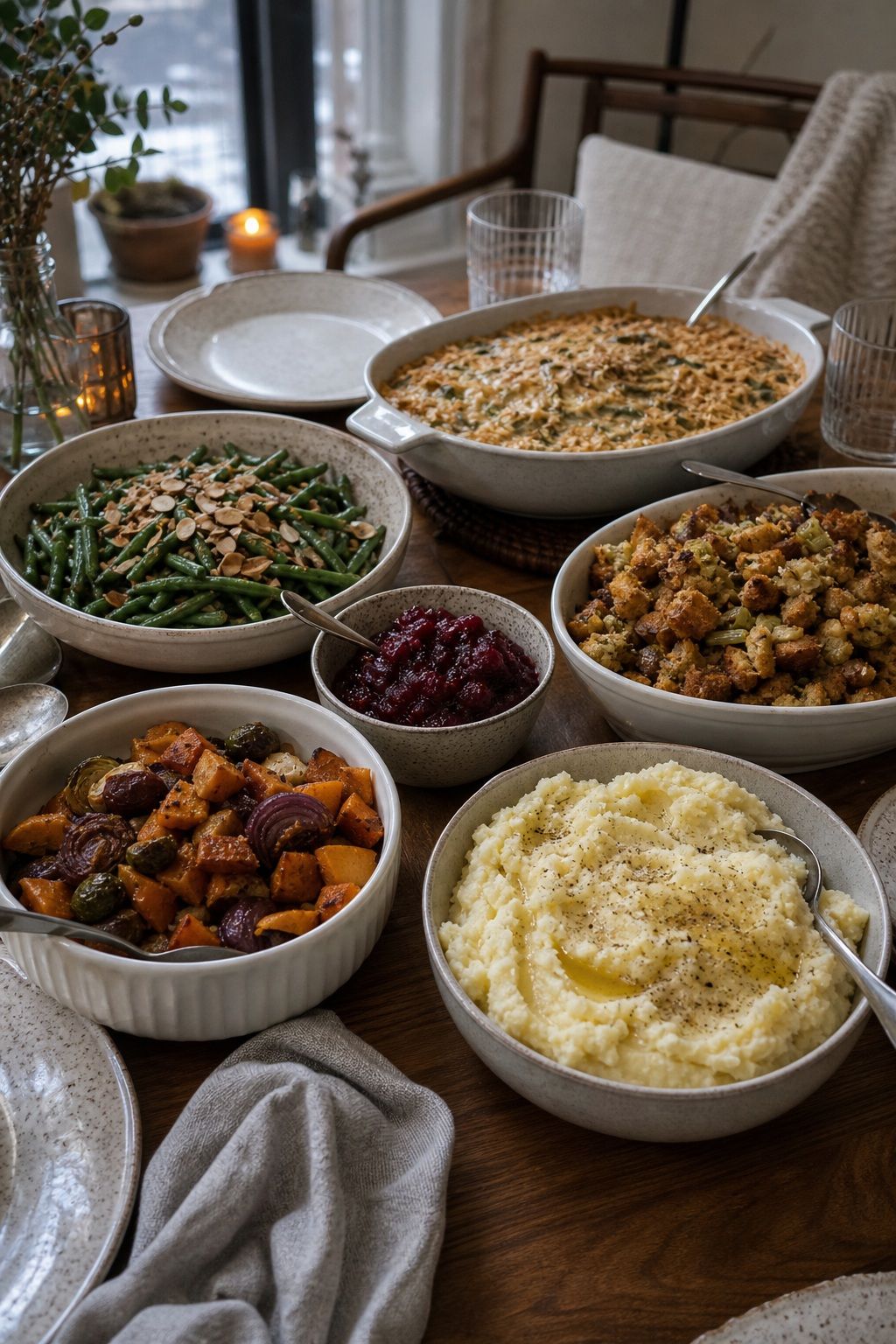
Ask anyone what they’re looking forward to and they’ll name a side dish, and luckily the classics hold best on a spread. Green beans with toasted almonds, a big bowl of stuffing, cranberry sauce, mashed potatoes and roasted root vegetables can all sit out for a while and still taste right.
- Keep mash covered with a lid or foil so it doesn’t form a skin.
- Serve stuffing in its baking dish so the edges stay crisp.
- Roast root vegetables a little darker than usual, since they soften as they sit.
- Put cranberry sauce out cold, it’s meant to be.
Four or five sides with different textures make every plate feel complete.
Read more: Top 18 Ideas for What to Bring to Friendsgiving as a Guest
12. Include One Naturally Crowd-Safe Dish
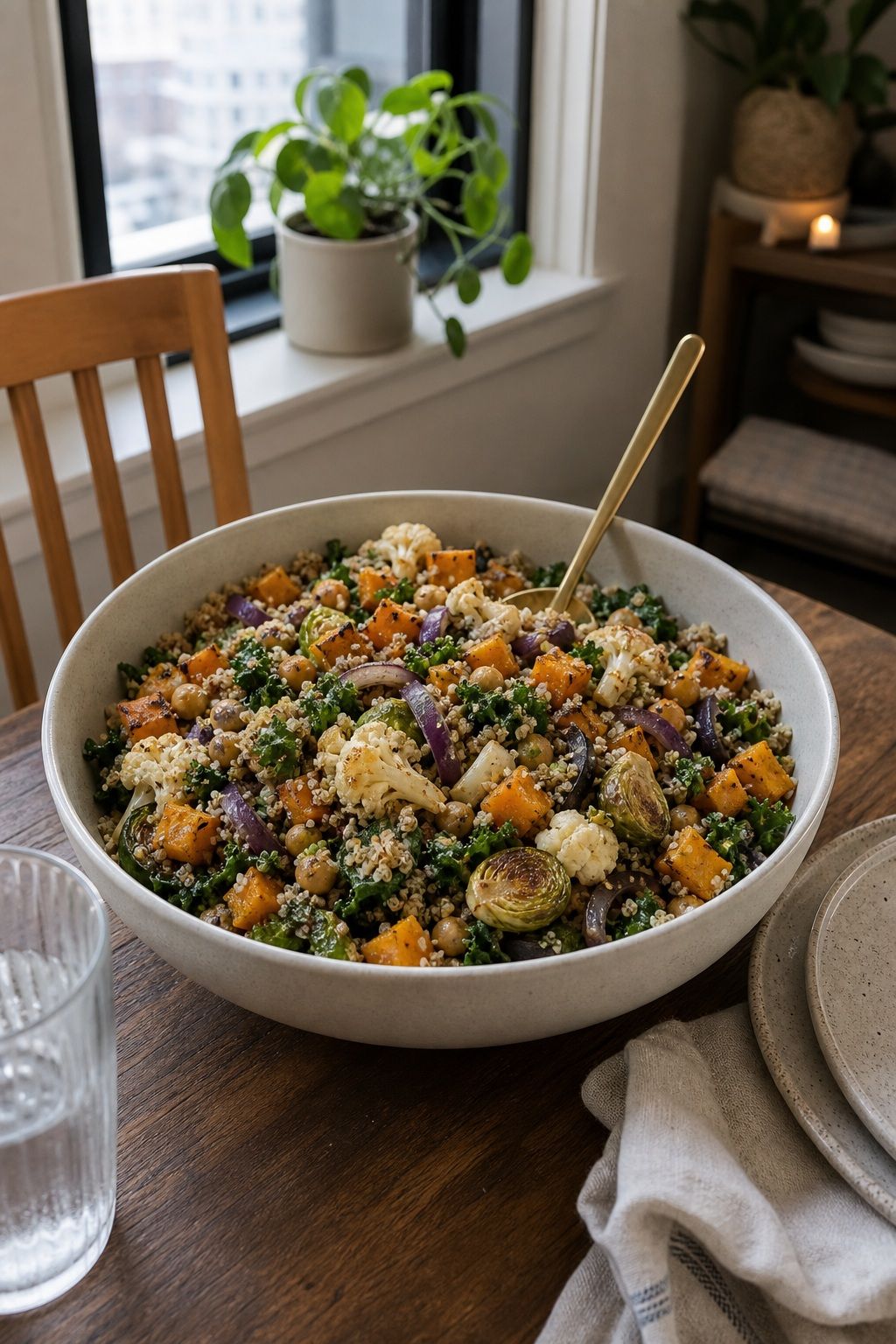


Nearly every guest can eat a grain salad, which is why one belongs on every spread. A big bowl of couscous or quinoa tossed with roasted squash, Brussels sprouts and herbs is naturally vegetarian, easy to make dairy-free and tastes even better at room temperature than hot. It’s also cheap, stretches to feed a crowd and can be made the day before, then brightened with a squeeze of lemon and fresh herbs right before serving. If someone asks what to bring and they’re not a confident cook, this is the dish to suggest, since it’s almost impossible to mess up and it travels well in any lidded bowl.
13. Honor a Guest’s Background With a Dish
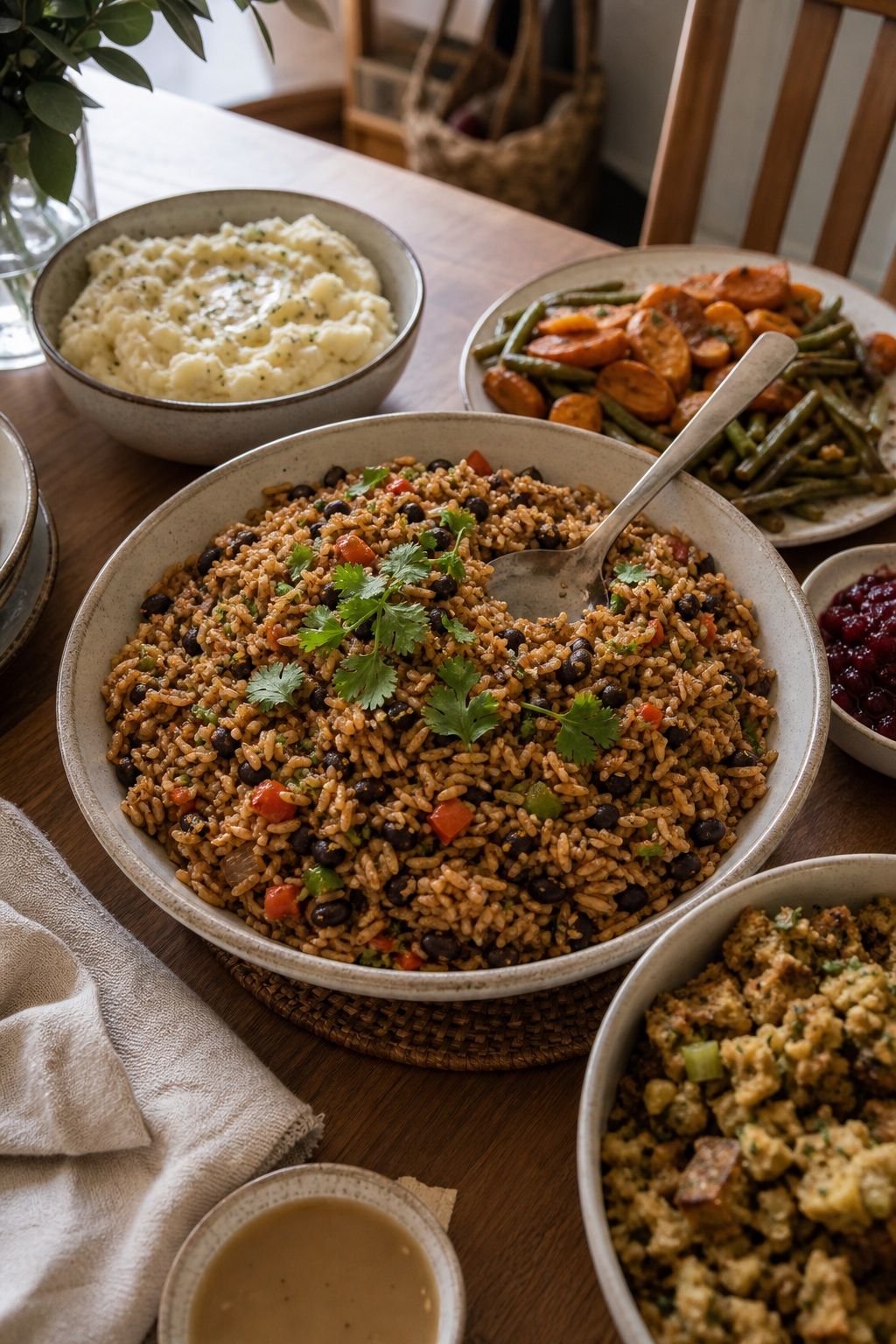


Friendsgiving is one of the few holiday meals where the food can look like the people around the table, so invite a guest to bring a dish from their own family. A spiced rice dish with fresh cilantro sitting next to the stuffing and mash is exactly that kind of mix, and it’s often the first bowl to empty, mostly because people are curious and the person who brought it is standing right there telling them to try it.
Filipino celebrations almost always have a plate of pancit on the table, noodles for a long life, and I can’t think of a better neighbor for a bowl of cranberry sauce.
Ask guests to add a line about their dish to the sign-up so it gets a proper label on the table, and let the stories happen over dinner.
Read more: Top 17 Friendsgiving Cocktails That Feel Effortless and a Little Fancy
14. Keep the Mains and Sides Make-Ahead Friendly
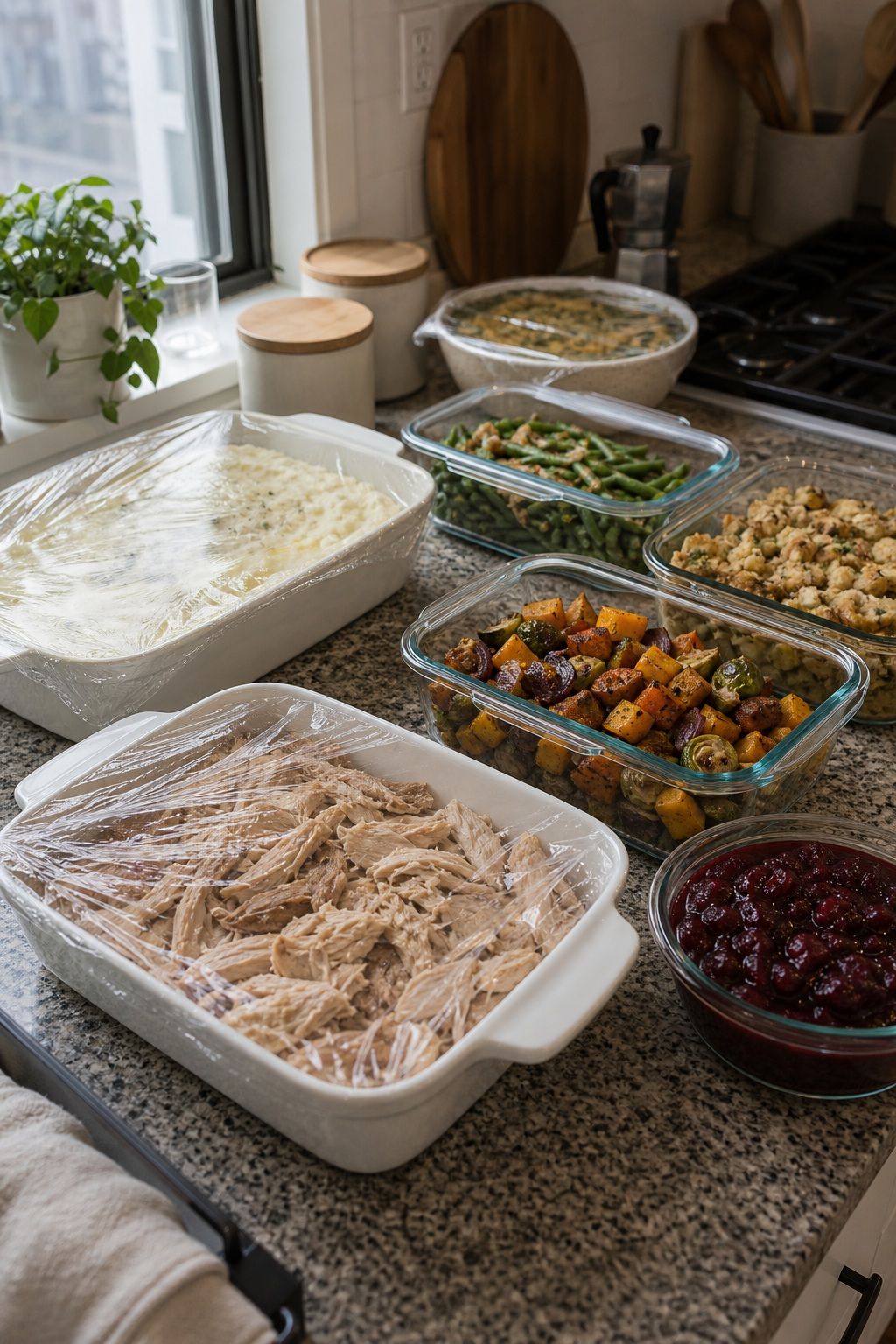
The heaviest part of the spread, mains and sides, is also the part that piles up on the day, so get as much of it done early as possible. Shredded turkey and roasted squash already cooked and waiting under plastic wrap is the calmest thing a host can see at three in the afternoon.
Cook and portion everything the day before where you can, then reheat in batches, warmest dishes last so they’re hot when people serve themselves.
Hot food going out onto a spread should be properly hot, and anything perishable shouldn’t sit out longer than about two hours, which FoodSafety.gov explains in its simple four-step guide. After that, cover it and move it to the fridge.
Read more: Top 18 Housewarming Party Food Ideas for an Easy Crowd-Pleasing Spread
Which Friendsgiving Foods Are Easiest to Share?
Pies, bars, sturdy salads and anything that travels in a lidded dish, which is why they make the best potluck picks.
15. Plan the Dessert Slot Without Overloading It
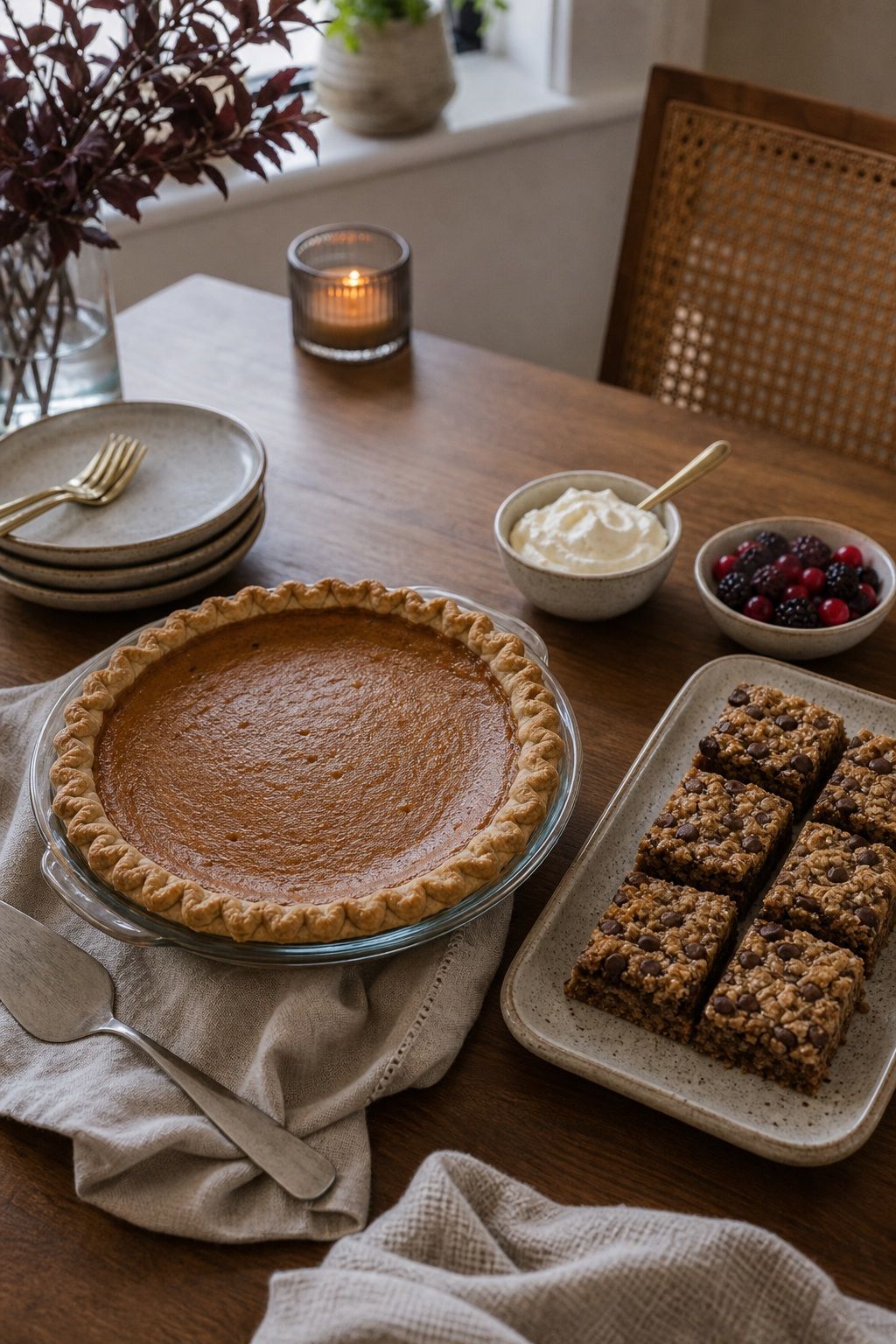


Dessert on a spread should be easy to cut, easy to grab and fine at room temperature. A pumpkin pie with a bowl of whipped cream and a tray of crumble bars cut into squares covers it, with a little bowl of cranberries for color.
Two desserts are plenty after a full plate, and pies and bars are the friendliest because they can be made a day ahead and sliced in advance. Cut the pie into wedges and the bars into small squares before guests arrive, so people can grab one without hunting for a knife. For more sweet ideas, our Friendsgiving dessert ideas go much deeper.
16. Divide the Whole Menu as a Potluck
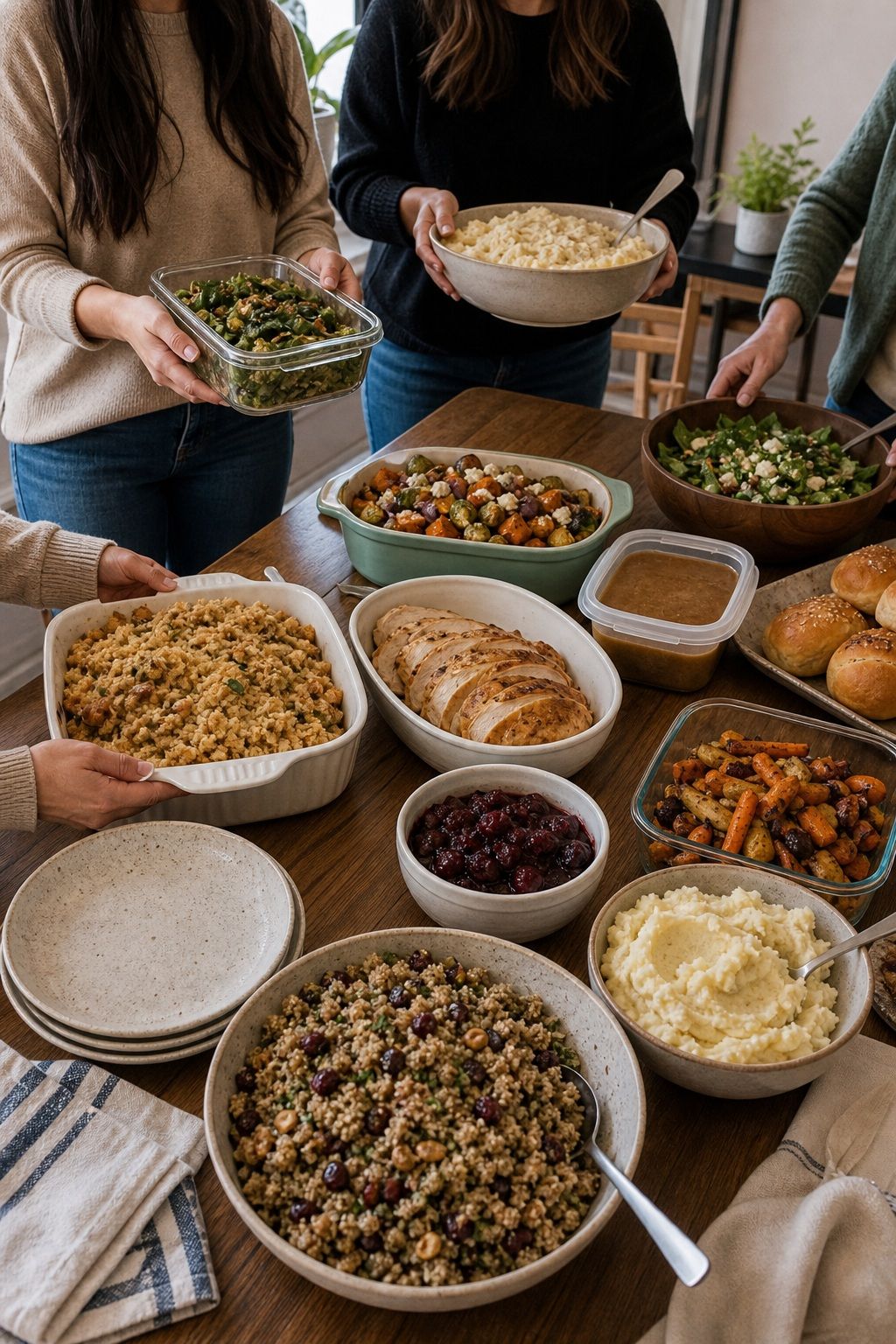
Splitting the spread as a potluck shares the work, the cost and the oven, and it’s the most Friendsgiving thing you can do. Friends arriving with dishes in their hands and finding a place for them on the table is what the evening is supposed to look like.
- The host keeps the main and the drinks
- Friends sign up for everything else
- One shared list shows what’s taken
- Desserts are capped at two or three
Send the list with the invitation, and check it now and then for three people bringing the same potatoes.
Read more: Top 20 Friendsgiving Dinner Party Food Ideas to Warm Your Heart and
17. Choose Travel-Friendly Dishes for Guests
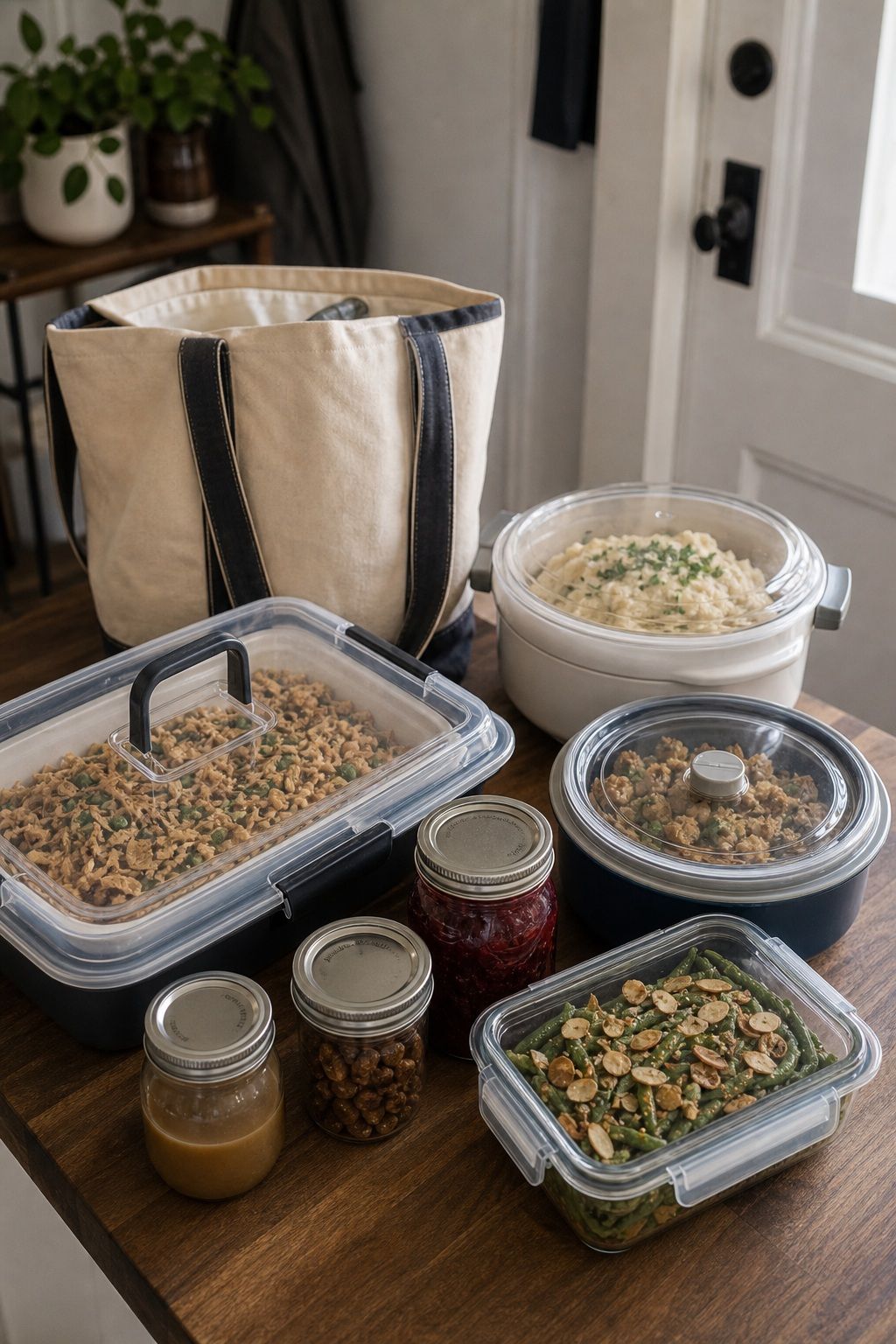


If guests bring food, steer them toward dishes that travel. A tote by the front door with lidded carriers, a slow cooker and a couple of jars of gravy and sauce is what a good potluck arrival looks like, nothing sliding, nothing spilling on the bus. Casseroles in their own dish, grain salads, dips, bars and slow-cooker mains all handle a trip. Plated desserts, fried food and anything that needs last-minute whipping do not, so keep those in your own kitchen. That small bit of guidance does a lot for how the spread looks, and it pairs nicely with the styling in our chic Friendsgiving decor ideas.
18. Pull the Spread Together With Easy Picks
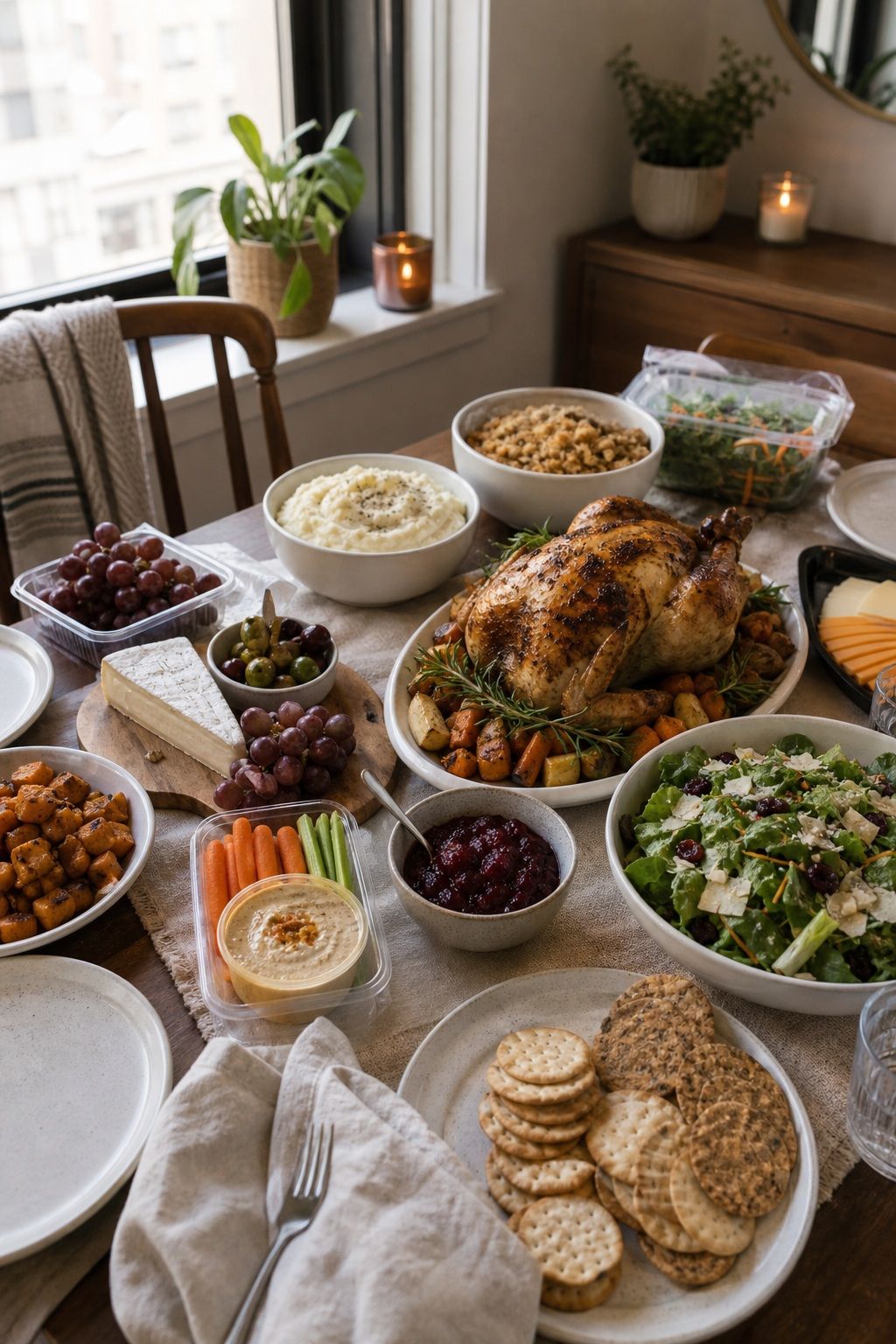


The last step is filling any gaps with easy picks that don’t need cooking. A spread with a roast chicken, a couple of salads, hummus with vegetable sticks, a wedge of cheese and crackers shows how far store-bought basics go next to a few homemade dishes.
Rolls from a good bakery, a bag of salad leaves dressed with something nice, olives and good butter all count, and nobody minds. For the drinks side, our Friendsgiving drink ideas has batchable options.
Once the food is handled, these Friendsgiving ideas cover the rest of the evening, and these small apartment hosting tips make a smaller home work for a big spread.
Read more: Top 19 Galentines Party Food Ideas Your Best Friends Will Devour
What Friendsgiving Foods Taste Good at Room Temperature?
Grain salads, roasted vegetables, sliced turkey or ham, stuffing, cranberry sauce, dips, cheese boards, pies and bars all taste good at room temperature, and some of them taste better that way. That’s why they work so well on a Friendsgiving spread where people eat slowly and go back for seconds. Keep only a couple of dishes truly hot, like the mash and the gravy, and let the rest sit out for up to about two hours.
Frequently Asked Questions
What food do you serve at Friendsgiving?
Serve a spread with a board and a few starters, a main or two, several sides, a fresh salad and two desserts. Choose dishes that still taste good after sitting on the table for a while.
What are easy Friendsgiving food ideas for a crowd?
Grazing boards, baked pasta, sheet-pan roasted vegetables, grain salads, slow-cooker mains and bars are all easy to scale up. Most of them can be made a day ahead.
How much food do you need per person at Friendsgiving?
Plan roughly 1.5 servings of every dish per guest, counted across the whole spread. Guests take a little of everything, so each dish doesn’t need to feed everyone fully.
How long can Friendsgiving food sit out?
Perishable food shouldn’t sit out longer than about two hours at room temperature. After that, cover it and move it to the fridge, and set out fresh bowls if the evening is still going.
Key Takeaways
- Pick dishes that still taste good after an hour on the table.
- Plan the spread by course and note which dishes are warm, room temperature or cold.
- Make most of it ahead and keep the day for reheating and arranging.
- Grain salads and roasted vegetables feed almost everyone.
- Split the spread as a potluck and steer guests to food that travels.
- Move perishables to the fridge after about two hours.
If You Only Make One Thing Ahead, Make the Sides
If your week is full and you can only get one part of the spread done early, make it the sides. They’re the biggest chunk of the table, they hold and reheat better than anything else, and with stuffing, mash and roasted vegetables already in the fridge, the day itself is only the main, a salad and setting out the board. Friendsgiving food doesn’t have to be fancy to feel generous, it just has to still be good when your slowest-eating friend goes back for seconds.
Last update on 2026-11-24 / Affiliate links / Images from Amazon Product Advertising API
