

Friendsgiving potluck ideas, for the host organizing one, come down to a coordination system: build a dish sign-up so everyone claims a category, assign by course so you do not end up with four pies and no vegetable, decide what you provide versus what guests bring, and steer everyone toward transport-friendly, make-ahead dishes. Set a fun theme like bring a childhood favorite, plan the staging for limited counter space, and the potluck runs itself. An organized potluck is the easiest way to host a Friendsgiving feast.
You are the one hosting, and you have decided to make it a potluck. Smart, a potluck Friendsgiving spreads the cooking, the cost, and the oven time across the whole group, which is the only sane way to feed a crowd from one apartment kitchen. But a potluck only works if someone organizes it, and that someone is you.
So this post is the host’s coordination playbook, not a recipe roundup and not a guide for guests deciding what to bring. It is the system: how to set up a dish sign-up, how to assign by category so the spread comes out balanced, how to avoid the four-people-bring-pie problem, what the host should provide versus the guests, and the transport-and-reheat logistics that keep everyone’s contributions actually edible on arrival. The 2026 direction helps, relaxed cocktail-buffet grazing over a formal seated meal, slow-cooker and make-ahead transport-friendly dishes, and fun themed assignments like bring a childhood favorite.
It also covers the part most potluck advice skips, the small-apartment reality of staging a dozen guests’ dishes with limited counter and oven space. The 18 ideas ahead move from planning the potluck like a host, to the crowd-pleasing dishes to assign, to small-space logistics, to making it feel special, so the feast is organized, generous, and genuinely easy on you, the kind of smooth gathering a good Friendsgiving dinner party ideas is built around.
Recommended Friendsgiving Potluck Products


Recommended blogs to read:
- Best hosting Friendsgiving ideas
- Friendsgiving menu ideas
- Friendsgiving side dishes
- Top 18 Friendsgiving Ideas for a Cozy, Memorable Celebration
- What to bring to Friendsgiving
Plan the Potluck Like a Host
1. Build a Dish Sign-Up Everyone Can See
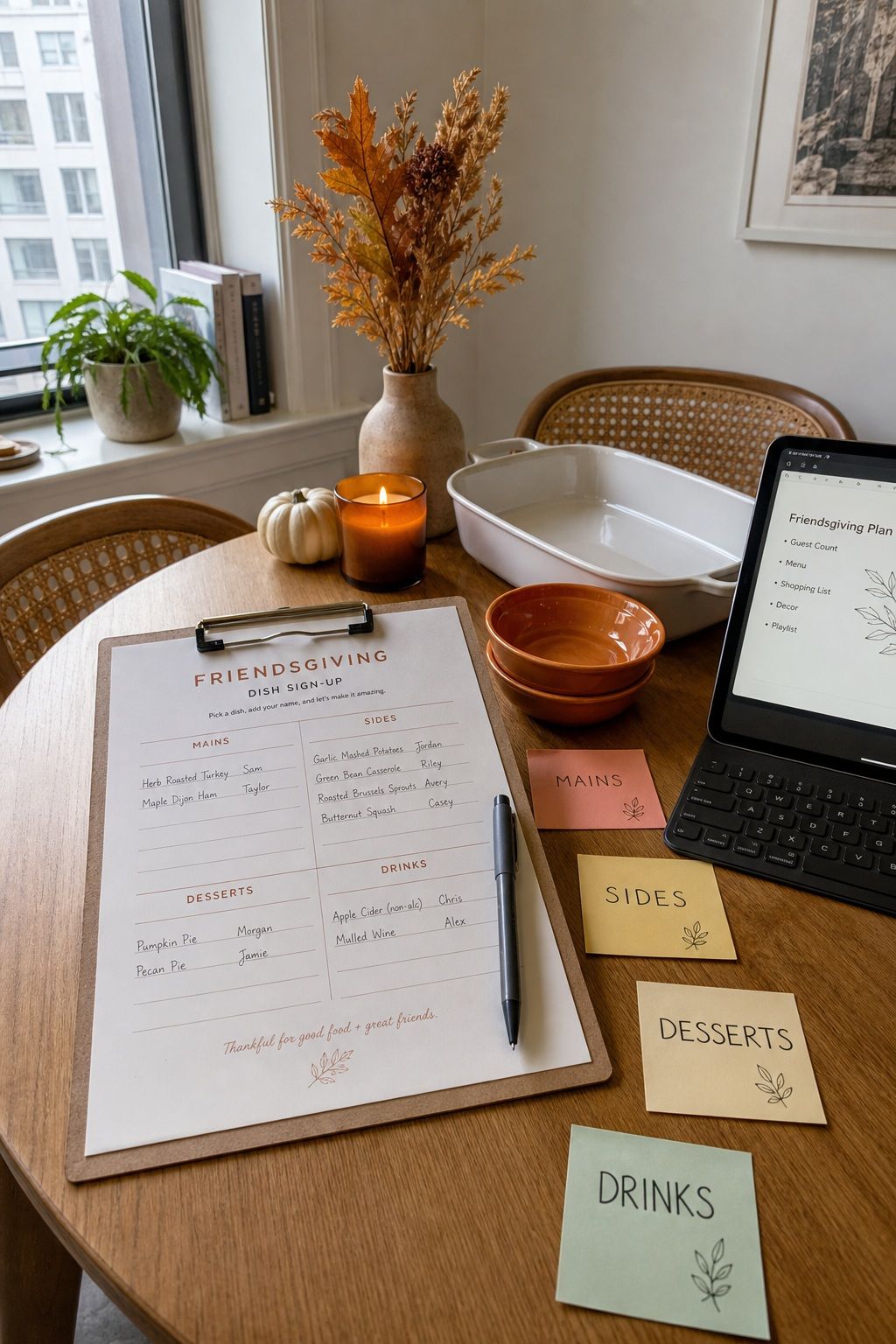


The single move that makes a potluck work is a visible, shared sign-up. A simple online list, a shared note, a group thread where guests claim what they are bringing, so everyone can see what is already covered before they decide.
Without a sign-up, a potluck is a guessing game that ends in five desserts and no bread. With one, the spread organizes itself. Set it up the moment you send the invitation, and keep it open so guests can see and update it. The shared sign-up is the backbone of the whole system, it is the difference between a coordinated feast and a pile of whatever everyone happened to grab, and it costs nothing but setting it up early.
Read more: Top 17 Friendsgiving Tablescape Ideas That Feel Warm and Personal
2. Assign Dishes by Category, Not by Name
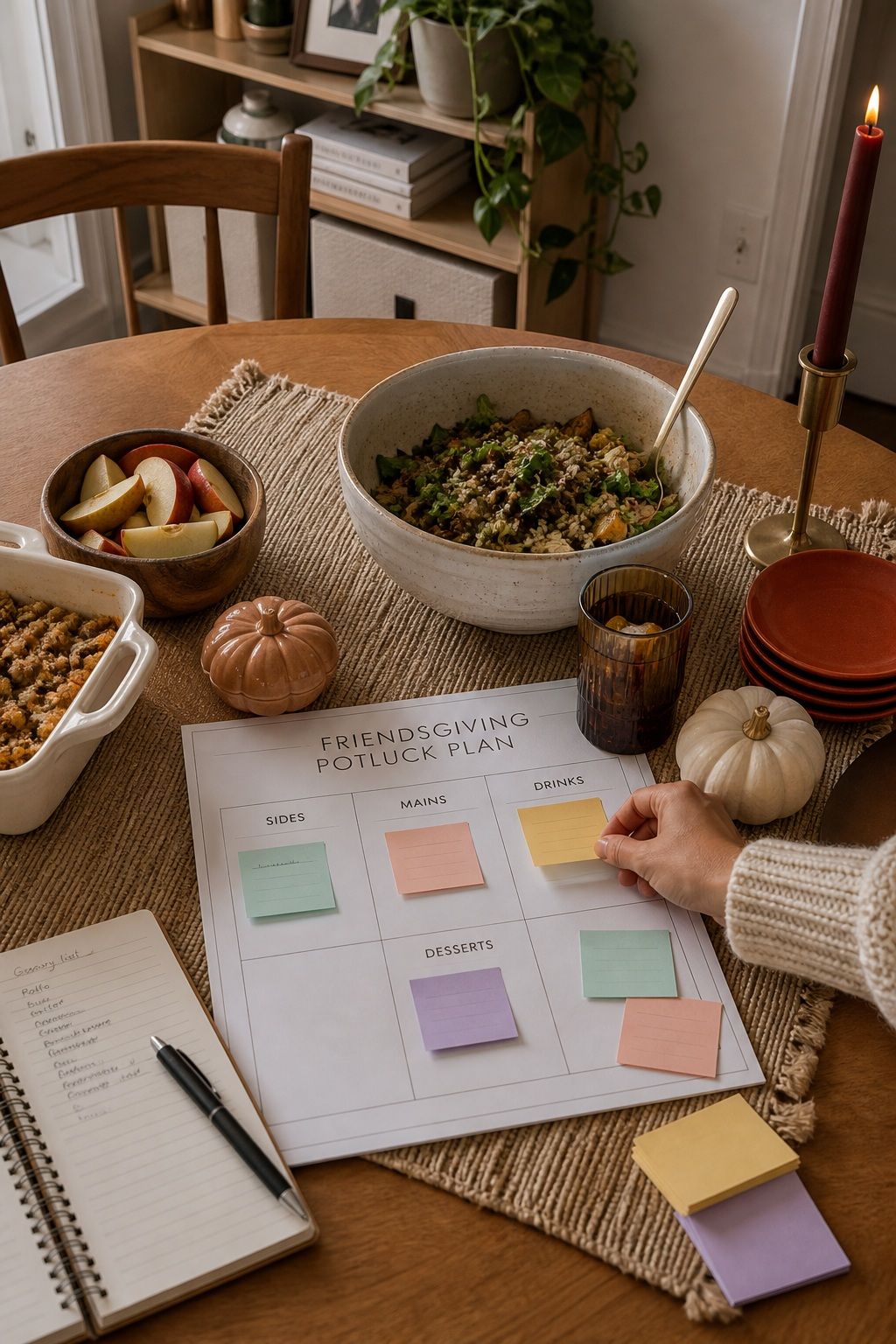


Do not just ask guests to bring something, assign by category, so the sign-up has slots: appetizers, mains, sides, breads, desserts, drinks. Decide how many of each the headcount needs, and let guests claim within those categories.
Category assignment is what guarantees a balanced spread, you control the structure, guests choose the specifics within it. It also makes claiming easy for guests, picking a side is less daunting than inventing a contribution from nothing. The full course structure of a balanced Friendsgiving is its own topic, the potluck job here is translating that structure into sign-up slots. Assigning by category is the planning decision that prevents a lopsided table before a single dish is cooked.
3. Avoid the Duplicate-Dish Problem
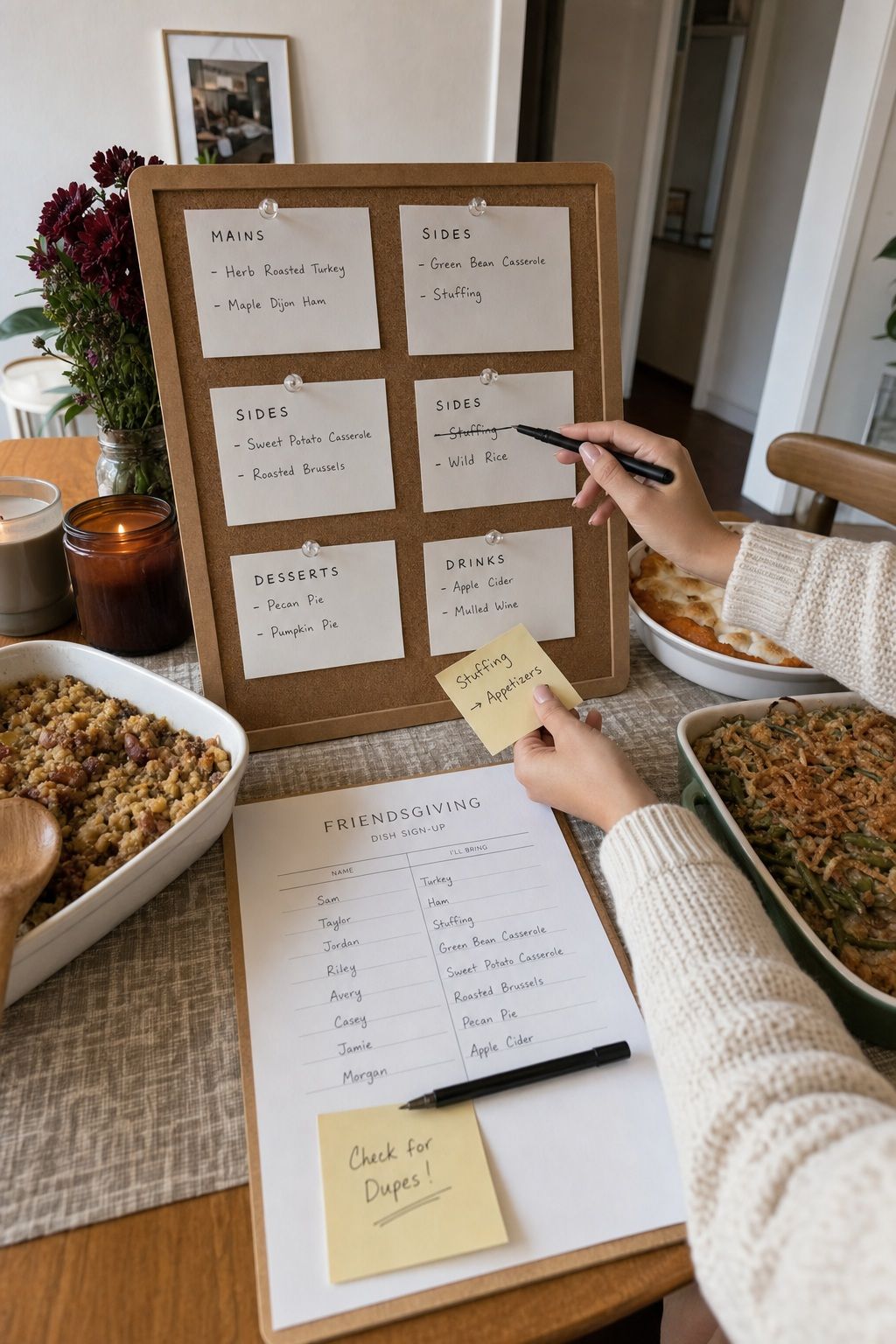


The classic potluck failure is duplication, three people bring mac and cheese, nobody brings a vegetable. The visible sign-up plus category assignment mostly prevents it, but the host should also actively watch the list and nudge.
As guests claim slots, scan for gaps and overlaps, and gently redirect, the vegetable category is still open if anyone wants it. A first-come-first-served structure within categories naturally limits duplicates. The host’s job is light-touch traffic control, not micromanaging, just enough oversight to catch the gaps. Avoiding duplicate dishes is the second half of why category assignment works, and it is what keeps the feast varied instead of three takes on the same casserole.
Read more: Top 17 Friendsgiving Drink Ideas Your Guests Will Love
4. Decide What the Host Provides
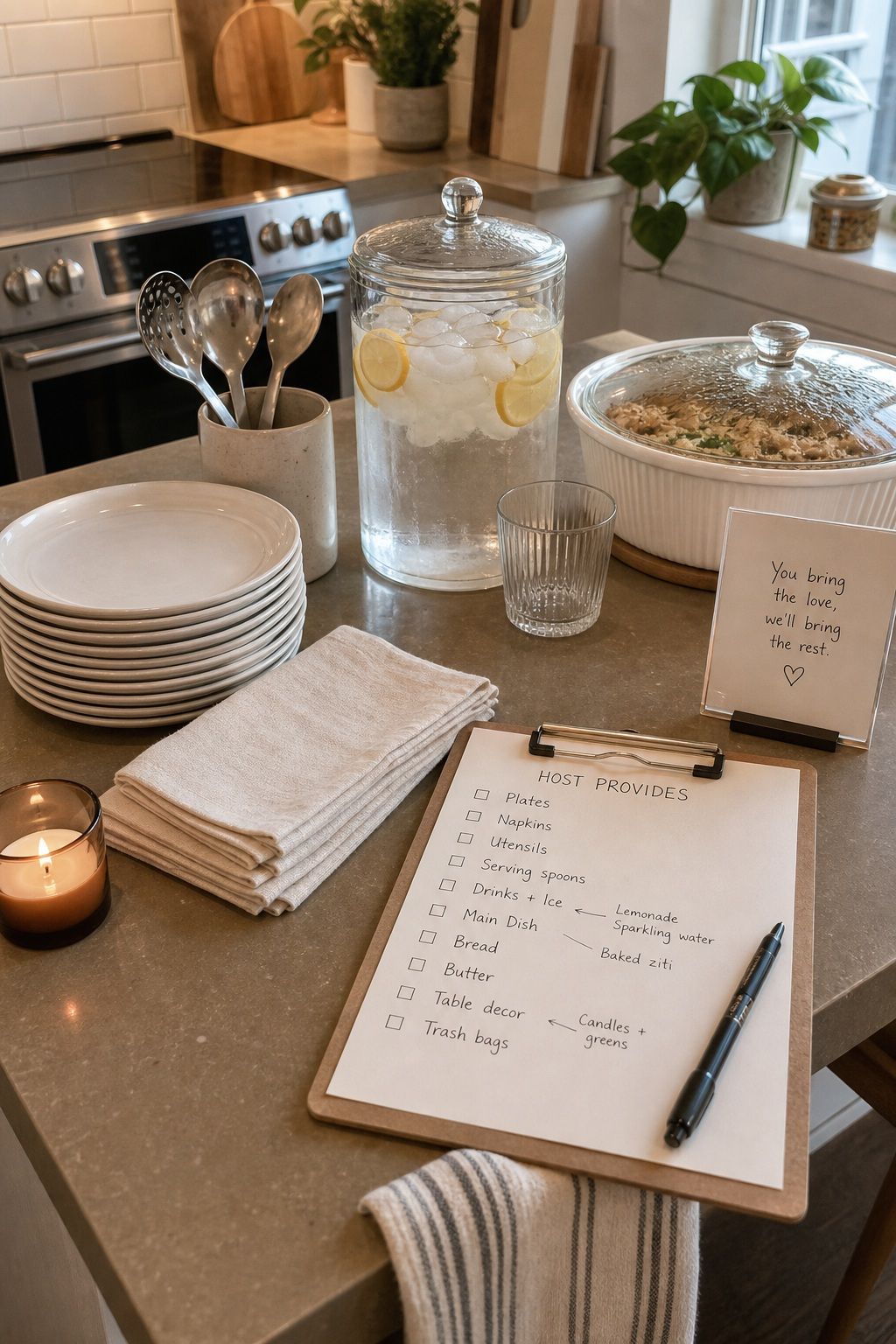


A potluck does not mean the host provides nothing, it means the host provides the foundation. Decide upfront what you cover: usually the centerpiece main, the drinks setup or a signature drink, the table and serveware, ice, and the basics like rolls or a salad if no one claims them.
Communicate this clearly on the sign-up so guests know what is already handled and what still needs claiming. The host providing the anchor and the infrastructure, while guests fill in the spread, is the fair, functional division. Deciding your role explicitly prevents both the host doing everything and the host doing nothing, and it is the clarity that keeps a potluck feeling like a shared effort rather than a vague free-for-all.
Read more: Top 17 Friendsgiving Dessert Ideas for a Sweet Celebration
5. Do the Headcount Math Before You Assign
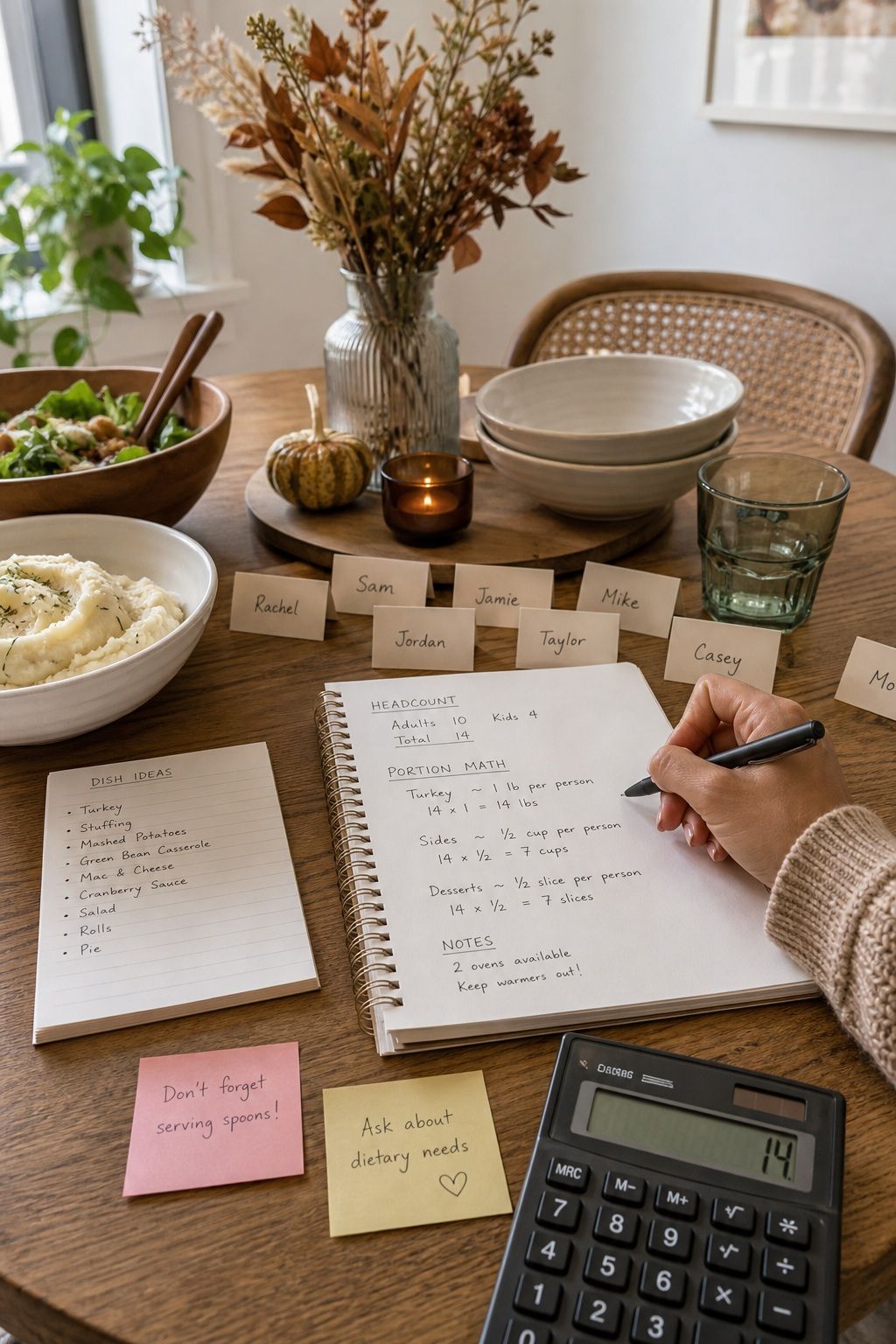


Before the sign-up goes out, do the quantity math: how many guests, how many of each category the spread needs, roughly how much each dish should serve. A potluck still needs to add up to enough food.
A workable rule is planning for about one and a half servings of each dish per guest across the whole spread, with several dishes on the table, no single one has to feed everyone fully. Use that math to decide how many side slots, how many dessert slots, how many appetizers to open on the sign-up. Doing the headcount math first means the assignments are sized right, and the feast is generous without anyone bringing a dish for forty when twelve are coming.
Crowd-Pleasing Potluck Dishes to Assign
6. Slow-Cooker Mains That Travel
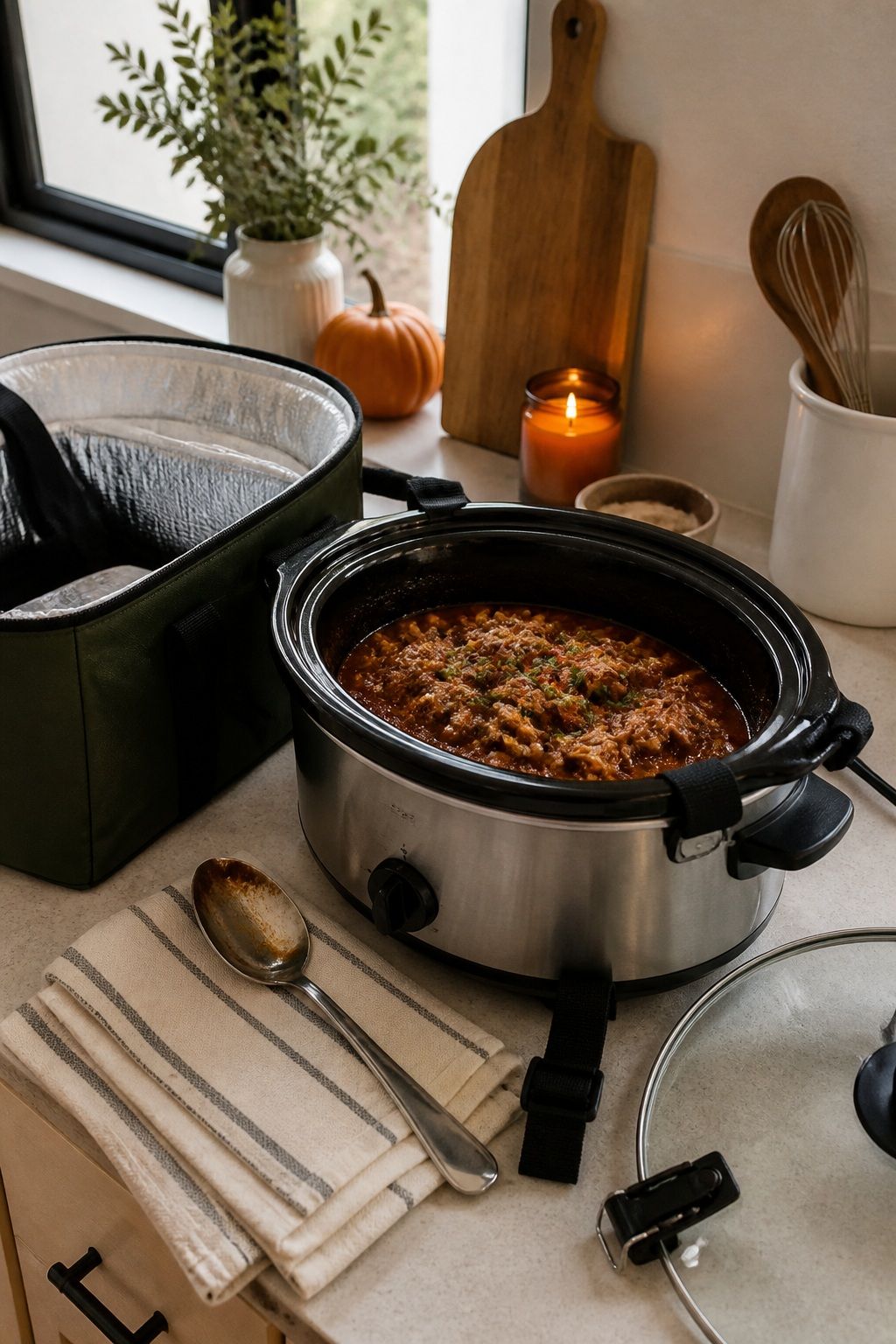


For the main slots, slow-cooker dishes are the potluck ideal, a guest can cook it at home, transport it in the crock, and plug it in to stay warm at the party. A pulled pork, a braised dish, a hearty stew, a slow-cooker turkey breast.
It solves the two hardest potluck problems at once, transport and reheating, the dish arrives warm and stays warm with no oven needed. Suggest slow-cooker mains specifically when assigning the main category. They also free your oven for the centerpiece you are providing. A slow-cooker main is the most potluck-friendly main format there is, and steering guests toward it makes the whole feast’s logistics easier.
Read more: Top 18 Friendsgiving Ideas for a Cozy, Memorable Celebration
7. Make-Ahead Sides That Hold
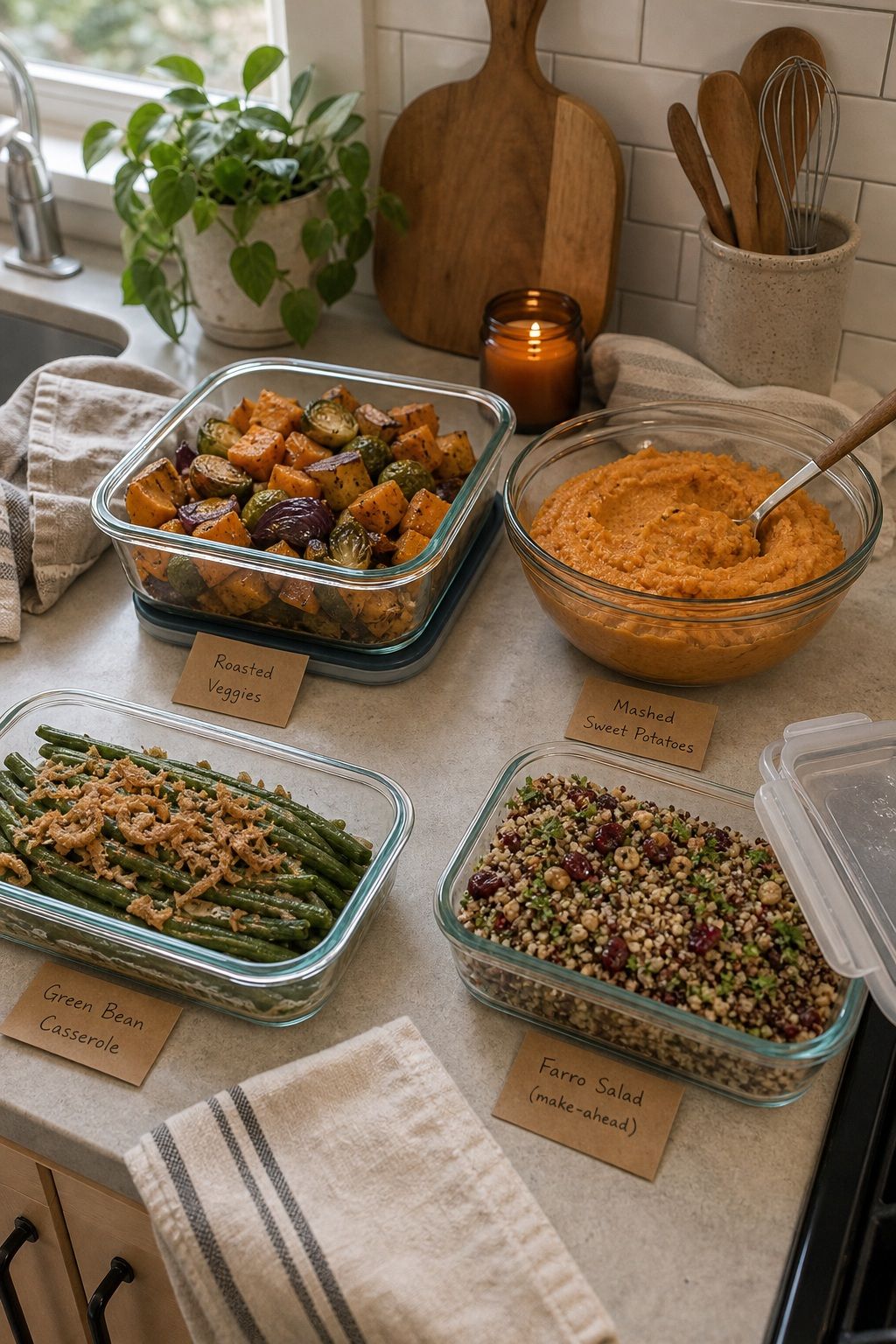


Sides are the bulk of a potluck spread, and the best ones to assign are the make-ahead dishes that hold, a casserole, a grain salad, a braised vegetable, a cranberry sauce, things finished the day before that survive a car ride and a wait.
When guests claim a side slot, suggest make-ahead options, it keeps the dish from depending on last-minute kitchen access they will not have. The deep side-dish recipe roundup is its own guide, the potluck job here is just steering guests toward sides that travel and hold. A spread of make-ahead sides is a spread that actually arrives intact and ready, which is what keeps the potluck feeling organized rather than chaotic at serving time.
Read more: Top 18 Friendsgiving Food Ideas for an Easy, Crowd-Pleasing Spread
8. Transport-Friendly Casseroles and Bakes
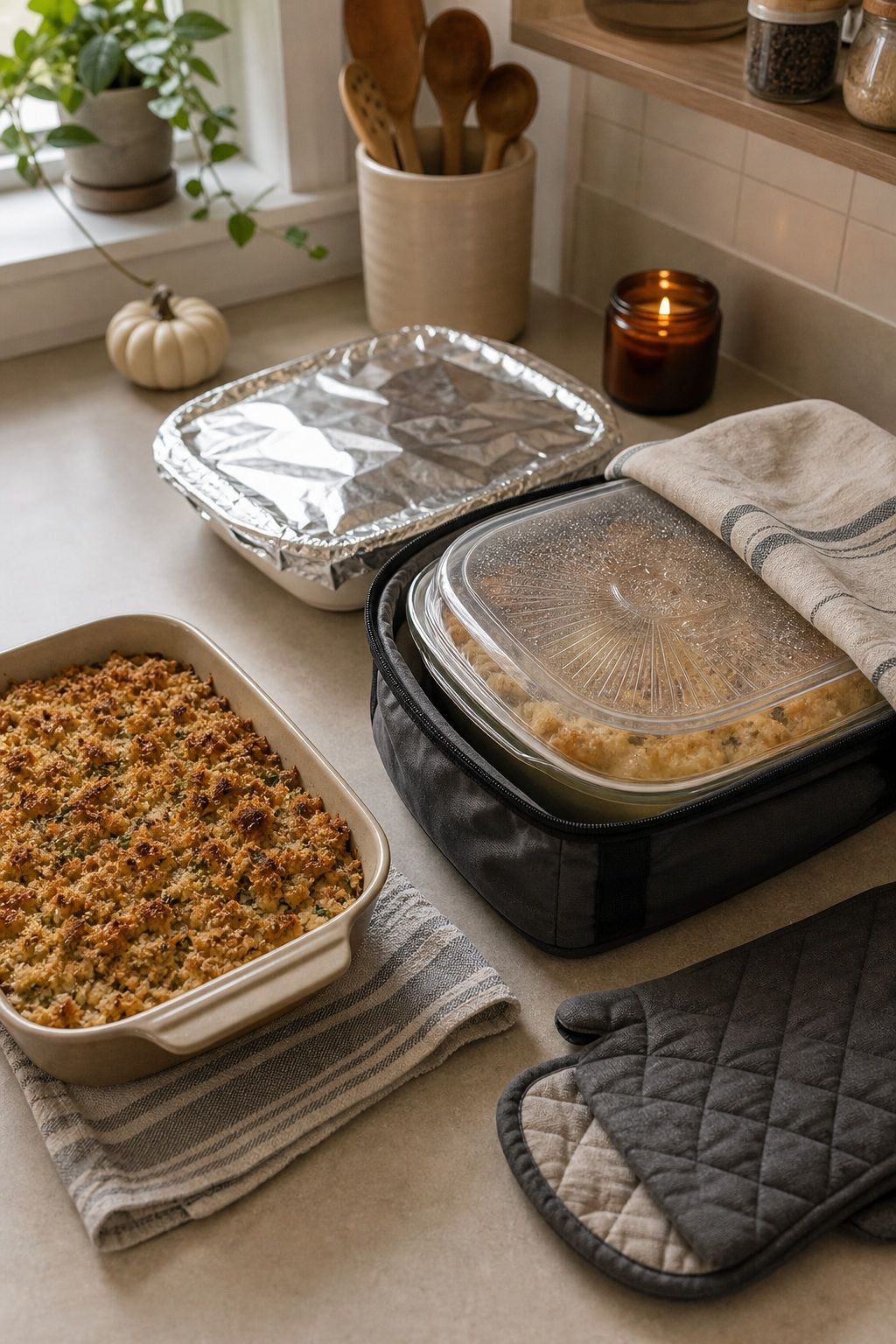


Casseroles are a potluck workhorse because they are sturdy, they hold, and they can be assembled ahead and baked off, but they need transport thought. A casserole carried in its dish with a secure lid, wrapped in towels to stay warm, is reliable.
Suggest guests bring casseroles fully baked and wrapped if your oven space is limited, or ready to bake if you can offer an oven slot. Either way, the casserole is a generous, crowd-feeding dish that fits the potluck format well. When assigning, just be clear about whether oven access is available, that one piece of communication decides whether the casserole arrives ready or needs a slot, and it keeps the kitchen timeline from jamming.
9. No-Reheat Salads and Cold Dishes
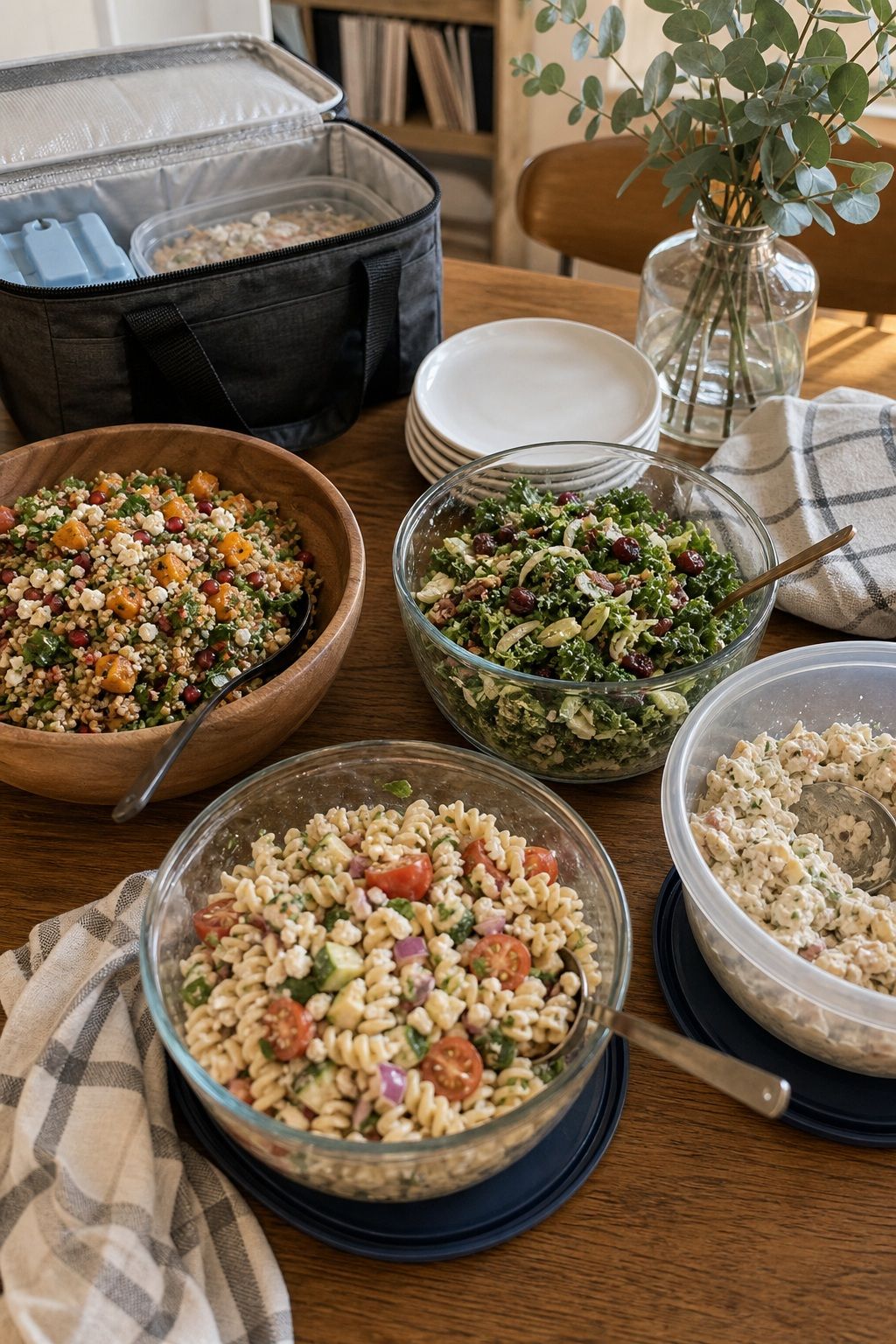


Every potluck needs a few dishes that need no heat at all, because the oven and the warming space are finite. Cold or room-temperature dishes, a fresh salad, a slaw, a marinated vegetable dish, a cold grain bowl, are the potluck’s pressure release.
They travel easily, they need no kitchen access on arrival, and they balance a spread that skews heavy and warm. Assign a couple of no-reheat dishes deliberately, especially the fresh salad the table needs. They are also the easiest slots for guests who are not confident cooks. No-reheat cold dishes are the logistically simplest part of any potluck, and a smart host opens a few of those slots on purpose.
Read more: Top 17 Hosting in a Small Apartment Tips That Actually Work
10. Breads and Easy Appetizers
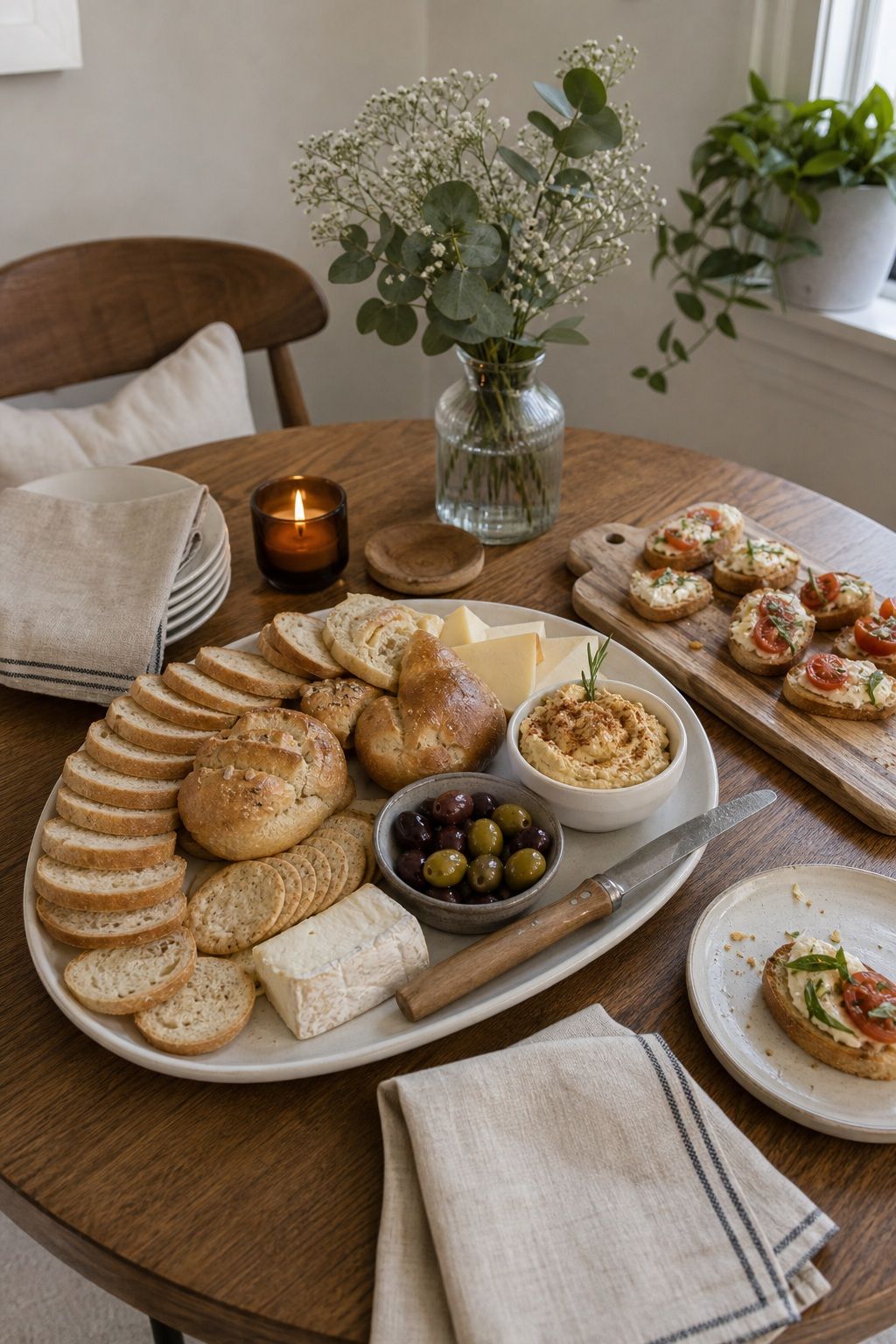


Breads and appetizers are the easy-claim slots, perfect for guests who do not want to commit to a complicated dish. A guest can bring good rolls, a loaf, a dip, a board, a simple bite, contributions that are low-stress to make or genuinely fine to buy.
Open a few of these slots on the sign-up as the approachable options. The appetizers in particular cover the arrival window before the meal, so they are useful as well as easy. The deep appetizer roundup is its own guide, the potluck job here is just to offer bread and appetizer slots as the low-barrier entry point, and to point guests toward our Friendsgiving appetizer ideas for the specifics. Easy slots keep every guest able to contribute.
Read more: Top 18 Friendsgiving Theme Ideas to Set the Perfect Mood
11. Make-Ahead and Travel-Safe Desserts
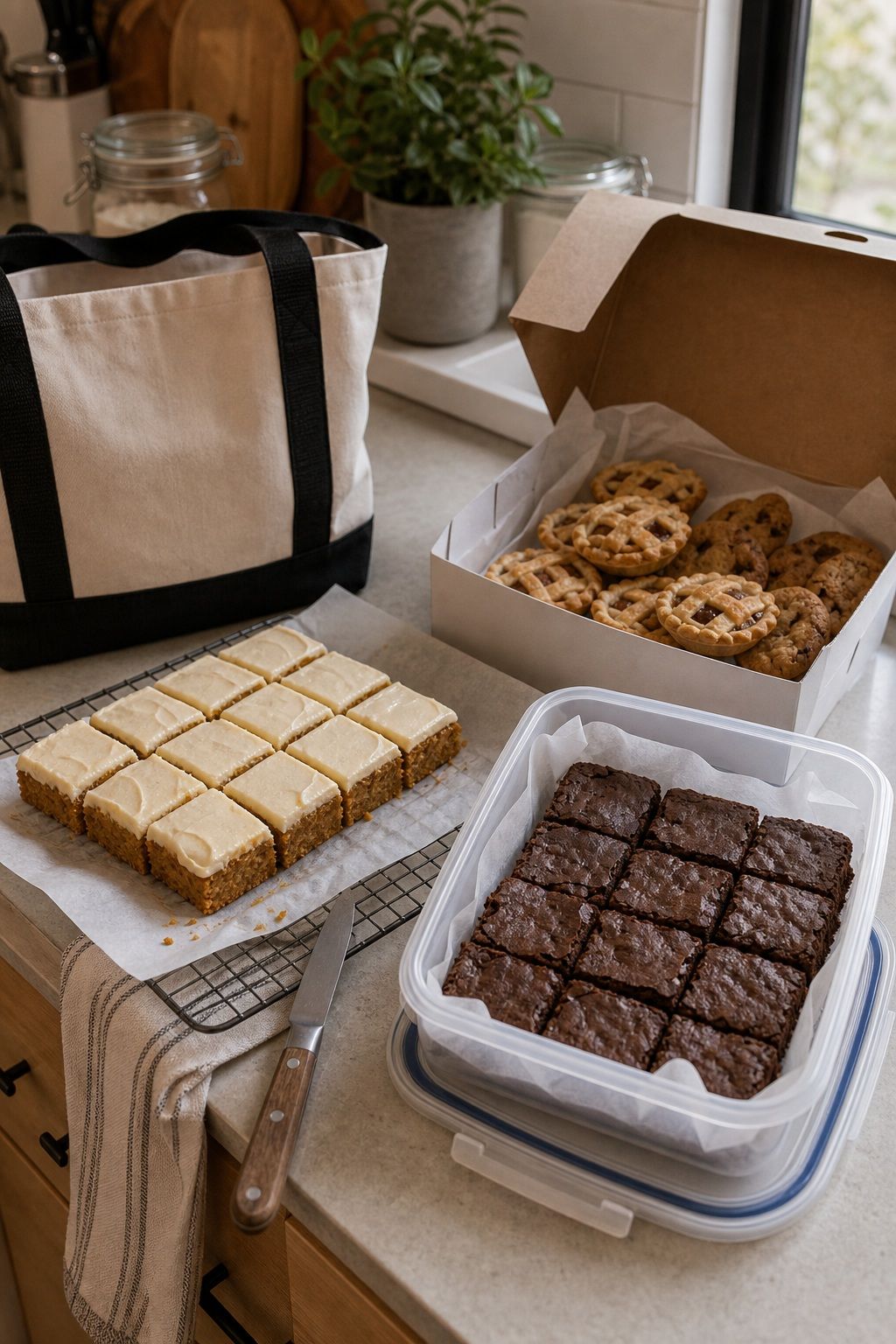


Dessert is the most over-claimed potluck category, so cap it, two or three dessert slots is plenty, and steer guests toward make-ahead, travel-safe sweets. Bars cut small, cookies, a pie, a no-bake dessert, things that survive a car ride.
Avoid assigning desserts that have to be served instantly or at a precise temperature. Limiting the dessert slots is the direct fix for the everyone-brings-pie problem, and steering toward travel-safe options means the desserts arrive in good shape. A controlled, make-ahead dessert lineup is a small piece of host coordination that prevents the most common potluck imbalance, and it leaves room on the sign-up for the savory dishes the spread actually needs.
Small-Space Potluck Logistics
12. Stage Dishes With Limited Counter Space
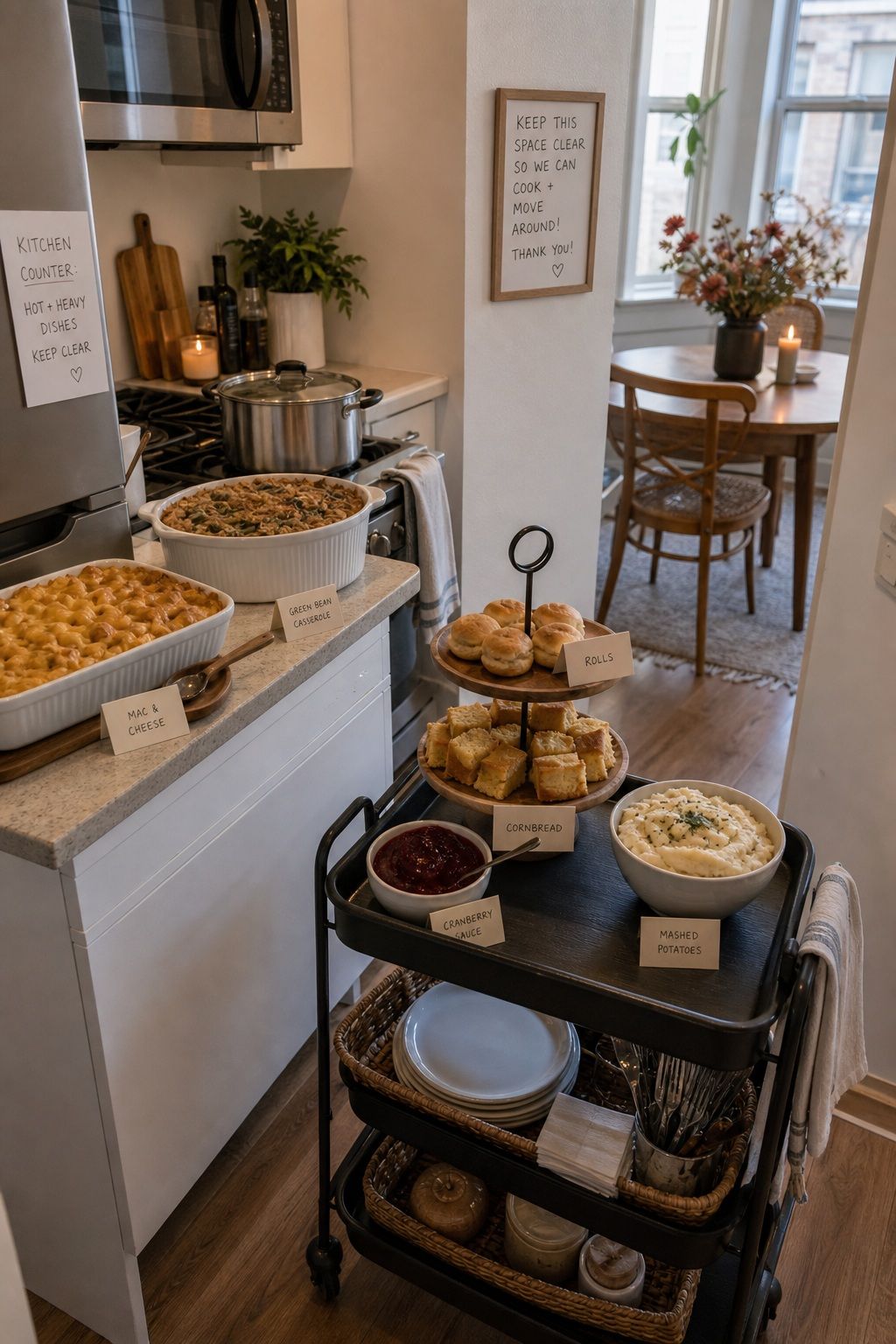


A dozen guests arriving with a dozen dishes will overwhelm a small apartment kitchen instantly unless you have a staging plan. Decide in advance where arriving dishes go, a cleared counter, a side table, the dining table itself, so the kitchen does not jam.
Clear every surface you can before guests arrive, and think about a logical flow from door, to staging surface, to the serving spread. In a small apartment, the staging plan is as important as the menu, because the bottleneck is space, not food. Good small apartment kitchen storage ideas help here, the more you have cleared and contained beforehand, the more room the incoming potluck dishes have to land.
Read more: Top 18 Friendsgiving Dishes to Impress Your Guests
13. Lean on Oven-Free Dishes
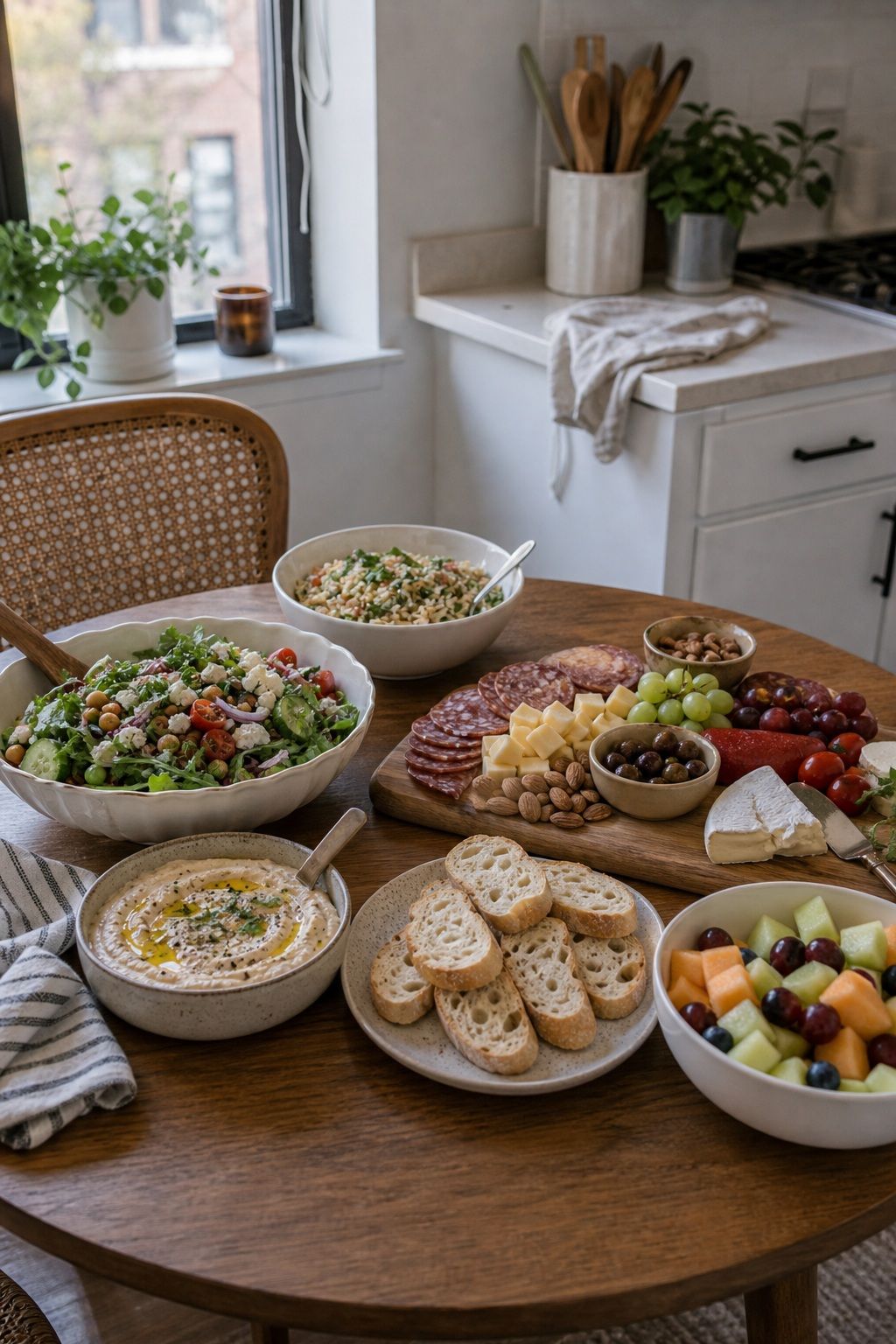


A small apartment has one oven, and a potluck cannot run a dozen dishes through it. The fix is built into the assignments: heavily favor oven-free dishes, slow-cooker mains, cold salads, room-temperature sides, no-bake desserts, and dishes guests bring already hot.
Reserve the oven for the one or two things that genuinely need it, usually your centerpiece main. When you build the sign-up, you are not just balancing flavors, you are balancing oven demand, and a small-apartment potluck has to keep that demand low. An oven-free-leaning spread is what makes a potluck physically possible in a small kitchen, and it is a host-side decision baked into how you assign the categories.
Read more: Top 17 Friendsgiving Cocktails That Feel Effortless and a Little Fancy
14. Set Up a Self-Serve Drink Station
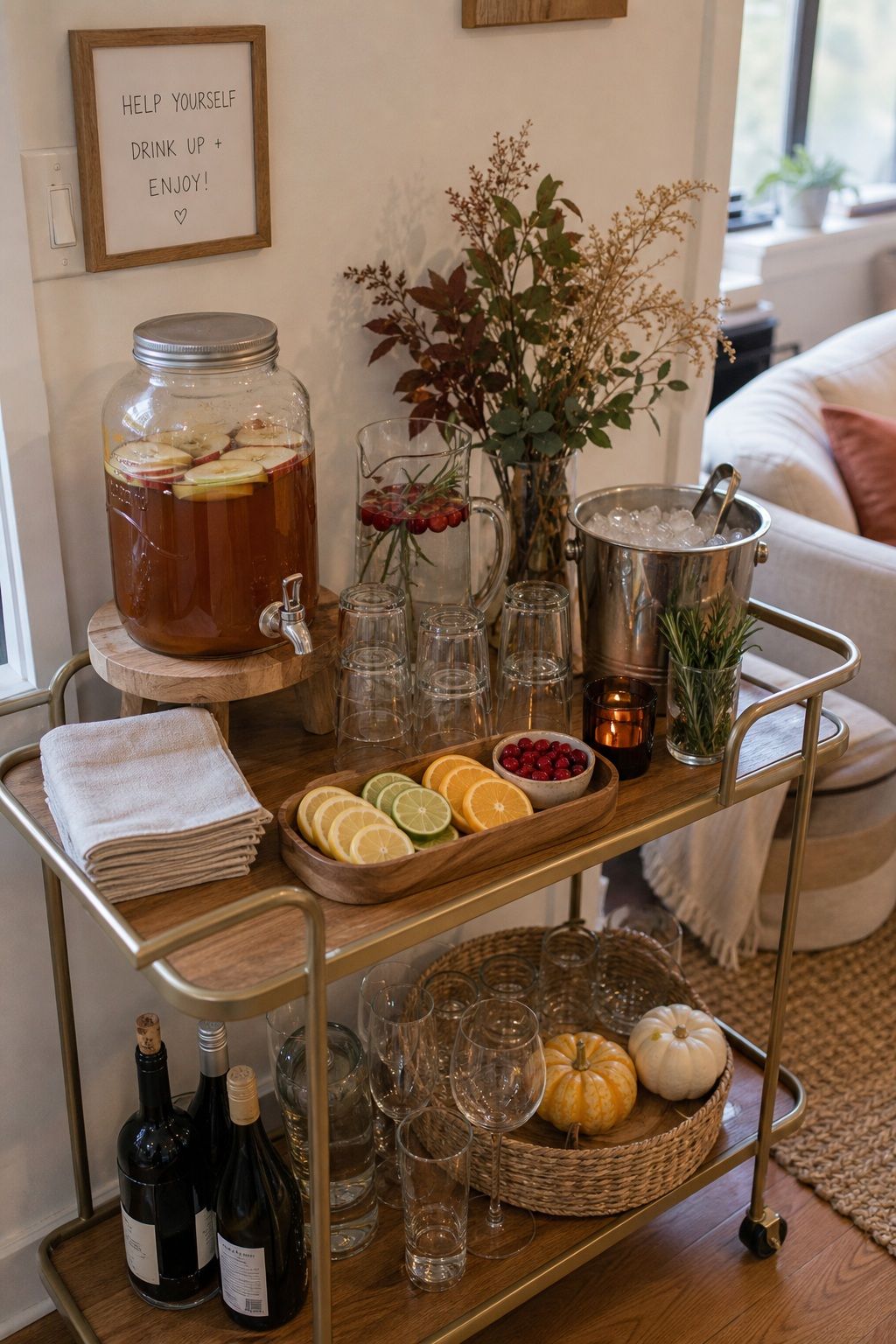


Drinks are usually the host’s department, and a self-serve drink station is how you handle them without bartending all night. Set it up against a wall, away from the food and the main traffic, with a batched drink or two, glasses, ice, and a non-alcoholic option.
Self-serve means guests pour their own and the host is freed, and a wall-side spot keeps it from becoming a traffic jam in a tight apartment. It also clearly marks the drinks as the host’s contribution, part of the foundation you provide. A self-serve drink station is the small infrastructure piece that keeps a potluck flowing, and setting it up well is one of the most useful things the host does.
15. Use Serveware Guests Can Leave Behind
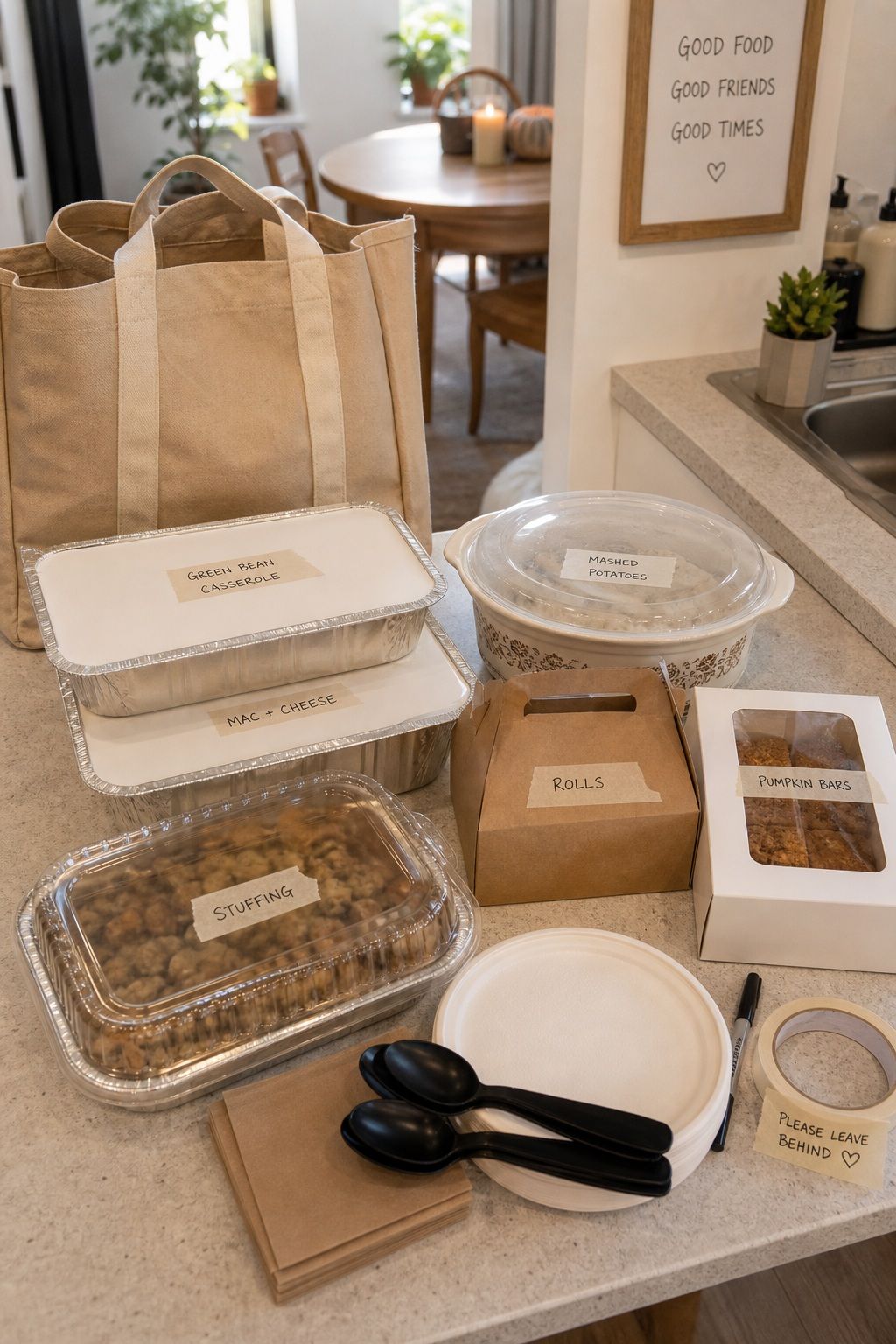


A potluck ends with everyone sorting out whose dish is whose, and the logistics get easier if some serveware is meant to be left behind. Disposable serving trays, inexpensive platters, dishes you do not need returned, both for what you provide and as a suggestion for guests.
It removes the awkward end-of-night dish-claiming shuffle and the follow-up to return things weeks later. Suggest guests bring dishes in containers they are fine parting with, or label everything clearly if they want it back. Leave-behind serveware is the unglamorous logistics detail that makes the end of a potluck as smooth as the start, and it is worth planning into what the host stocks.
Read more: Top 20 Friendsgiving Dinner Party Food Ideas to Warm Your Heart and
Make It Feel Special
16. Set a Fun, Easy Theme
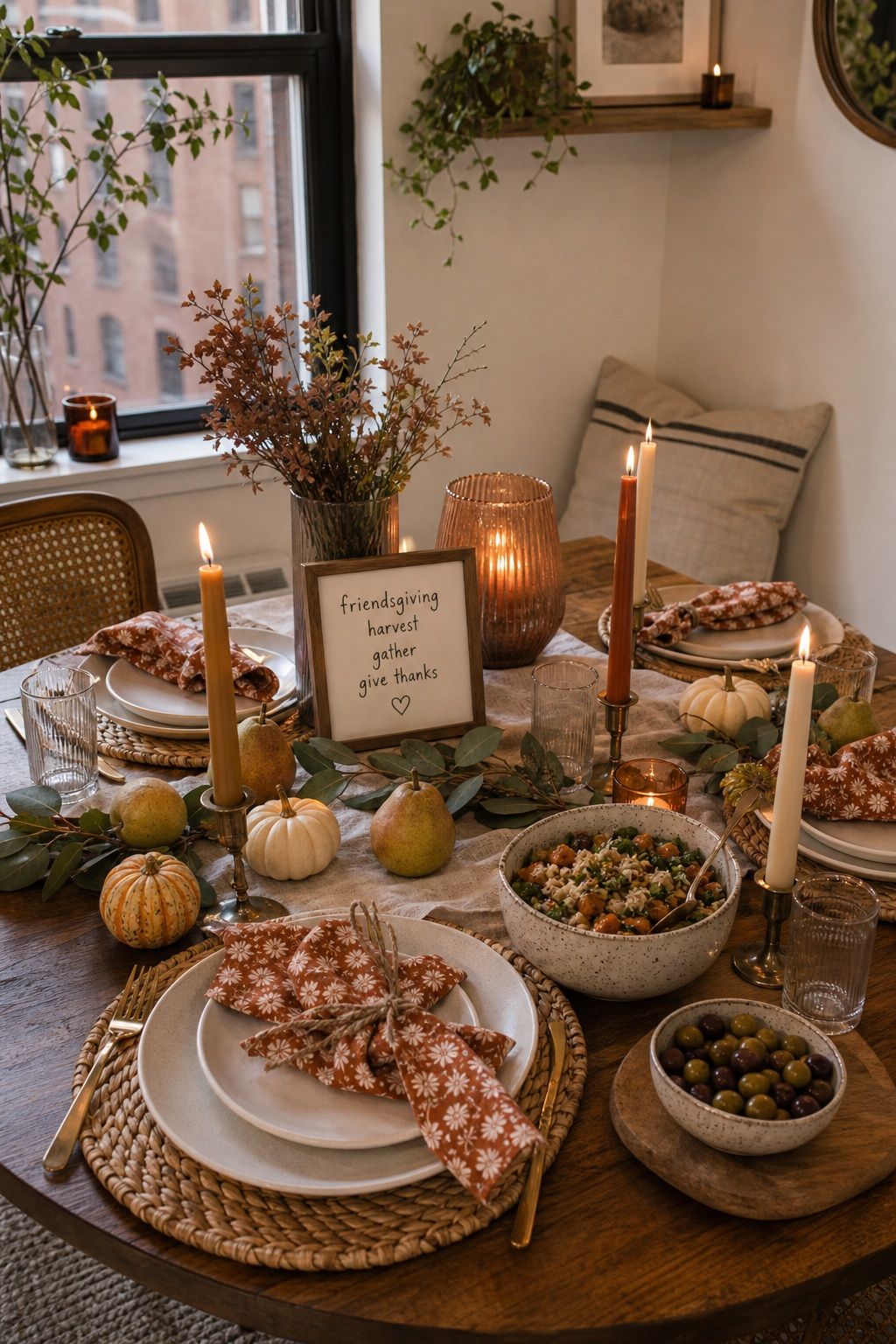


A theme turns a potluck from a logistics exercise into something with personality, and the 2026 favorite is the dish-based theme. Bring a childhood favorite, bring a dish from your heritage, bring your grandmother’s recipe, the assignment becomes a story, not a chore.
A theme also makes the spread more personal, the table ends up reflecting the actual people at it. Put the theme on the invitation and the sign-up so guests come ready. It costs nothing and it does not complicate the coordination, it just gives the assignments a warm frame. A fun, easy theme is the host touch that makes an organized potluck feel like a celebration rather than a well-run buffet.
Read more: Top 17 Friendsgiving Dinner Party Decor Ideas to Make Your
17. Create a Simple Grazing Layout
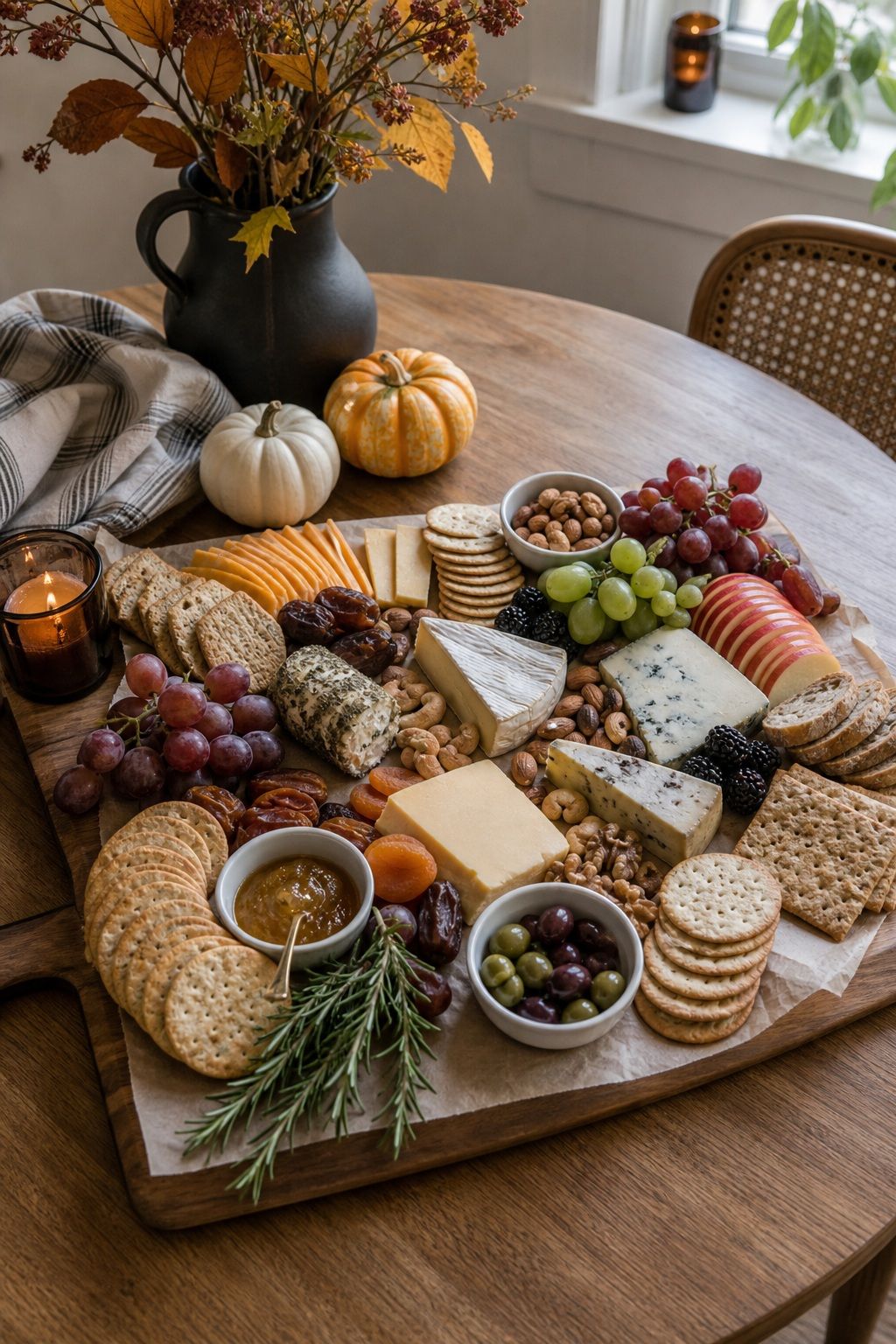


How the potluck dishes are arranged matters as much as the dishes themselves. Set up a simple grazing layout, a logical flow of plates and napkins at the start, then appetizers, mains, sides, breads, with dessert held separately for later.
The relaxed cocktail-buffet grazing style is the 2026 direction, and it suits a potluck perfectly since dishes arrive in waves anyway. Spread the layout across surfaces if one table is not enough, and keep the flow clear so guests are not backtracking. The deep styling of the spread is its own topic, our chic Friendsgiving decor ideas covers that, the potluck job is just an organized, walkable grazing flow.
18. Label the Dishes and Add a Gratitude Moment
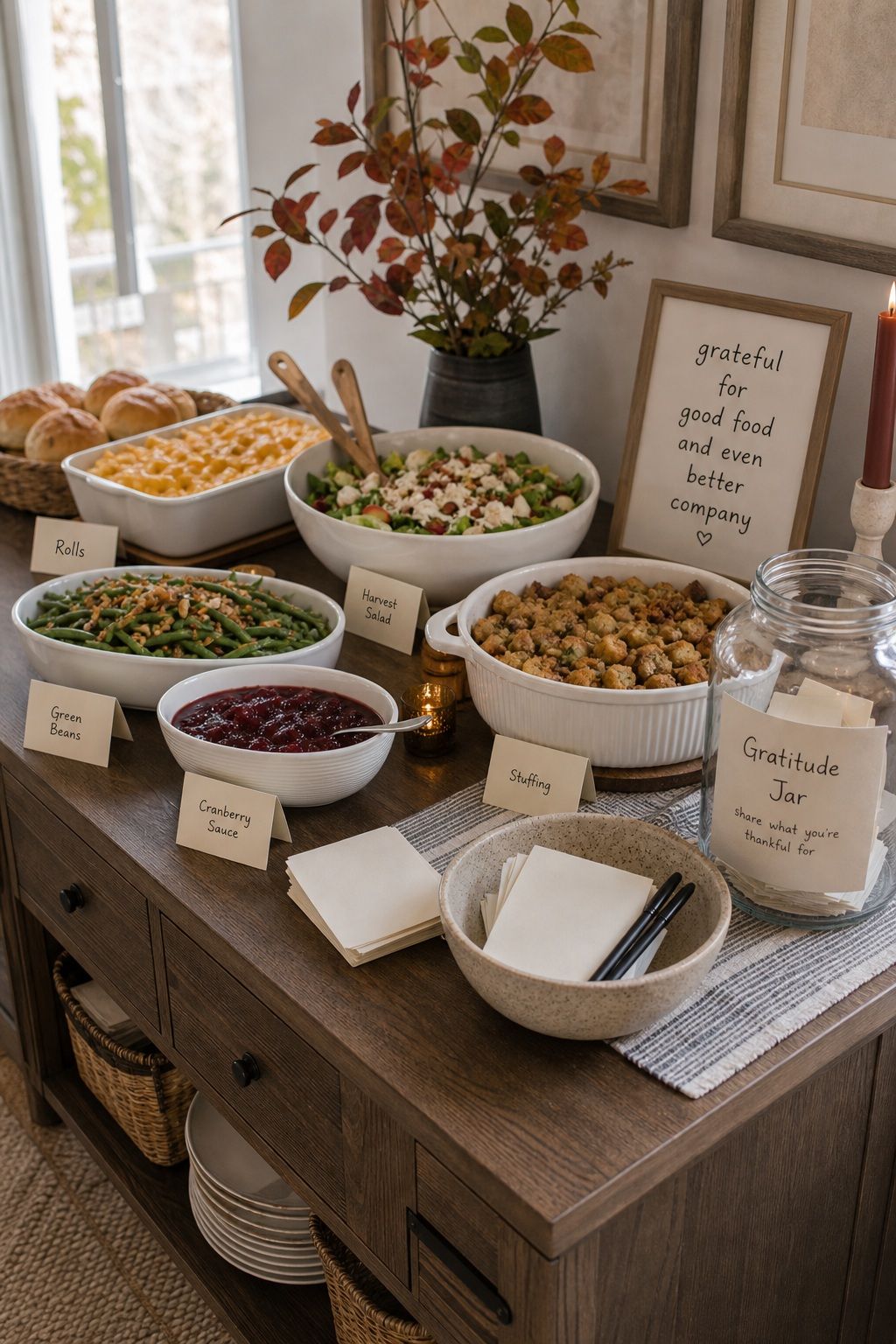


Two small finishing touches make a potluck feel considered. Label every dish, a little card with the name and any allergens, so guests can serve themselves confidently and the cooks get quiet credit. And build in a short gratitude moment, a go-around, a toast, before the meal.
The labels are practical and kind, especially for the dietary-mix at the table. The gratitude moment is the emotional center, the beat that makes it Friendsgiving rather than just a buffet, and a potluck, with everyone having contributed, is the perfect setup for it. These touches cost nothing and take minutes, and they are what turn a well-organized potluck into a warm one, the same finishing care a thought-through fabulous Friendsgiving table setting ideas brings to a hosted meal. Dishes sorted? The fun part is everything else, from themes to games, in these Friendsgiving ideas. And when the guest list outgrows your square footage, these small apartment hosting tips keep the night feeling relaxed.
Read more: Top 17 Thanksgiving Potluck Ideas That Travel Beautifully
Frequently Asked Questions
How do you organize a Friendsgiving potluck?
Organize a Friendsgiving potluck by building a visible shared sign-up, assigning dishes by category (appetizers, mains, sides, breads, desserts, drinks) so the spread comes out balanced, doing the headcount math first, and deciding what the host provides versus guests. Watch the list for duplicates and steer guests toward transport-friendly dishes.
What should the host provide at a potluck?
At a potluck, the host provides the foundation: usually the centerpiece main, the drinks setup or a signature drink, the table and serveware, ice, and basics like rolls or a salad if no one claims them. Communicate this clearly on the sign-up so guests know what is handled and what still needs claiming.
How do you assign dishes for a potluck?
Assign potluck dishes by category rather than by specific name: open slots for appetizers, mains, sides, breads, and desserts, decide how many of each the headcount needs, and let guests claim within those categories first-come-first-served. This guarantees a balanced spread while still letting guests choose their specifics.
How do you avoid duplicate dishes at a potluck?
Avoid duplicate potluck dishes with a visible shared sign-up plus category assignment, so guests see what is already covered before claiming. The host should also lightly watch the list, nudging guests toward open categories and capping over-claimed ones like dessert at two or three slots.
How do you host a potluck in a small apartment?
Host a small-apartment potluck by planning the logistics: heavily favor oven-free dishes since you have one oven, decide in advance where arriving dishes stage, clear every surface beforehand, set up a self-serve drink station against a wall, and use serveware guests can leave behind to smooth the end of the night.
Key Takeaways
- A potluck works on a coordination system, build a visible shared sign-up and assign dishes by category so the spread comes out balanced.
- Decide what the host provides (the centerpiece main, drinks, serveware, basics) versus what guests bring, and do the headcount math before you assign.
- Steer guests toward transport-friendly dishes, slow-cooker mains, make-ahead sides, no-reheat cold dishes, and cap the over-claimed dessert category.
- Plan the small-space logistics: favor oven-free dishes, decide where dishes stage, set up a self-serve drink station, and use leave-behind serveware.
- Make it special with a fun dish-based theme, a simple walkable grazing layout, labeled dishes, and a short gratitude moment.
Final Thoughts
A Friendsgiving potluck is the easiest way to feed a crowd from a small kitchen, but only if the host organizes it. The whole job is a system: a visible sign-up, category assignments, a clear sense of what you provide versus what guests bring, and transport-friendly dishes that actually arrive ready. Layer in the small-space logistics and a fun theme, and the feast runs itself. You are not cooking everything, you are coordinating it, and good coordination is what turns a dozen guests’ dishes into one organized, generous table. Set up the sign-up the day you send the invitation, and the rest follows.
Last update on 2026-10-24 / Affiliate links / Images from Amazon Product Advertising API
