
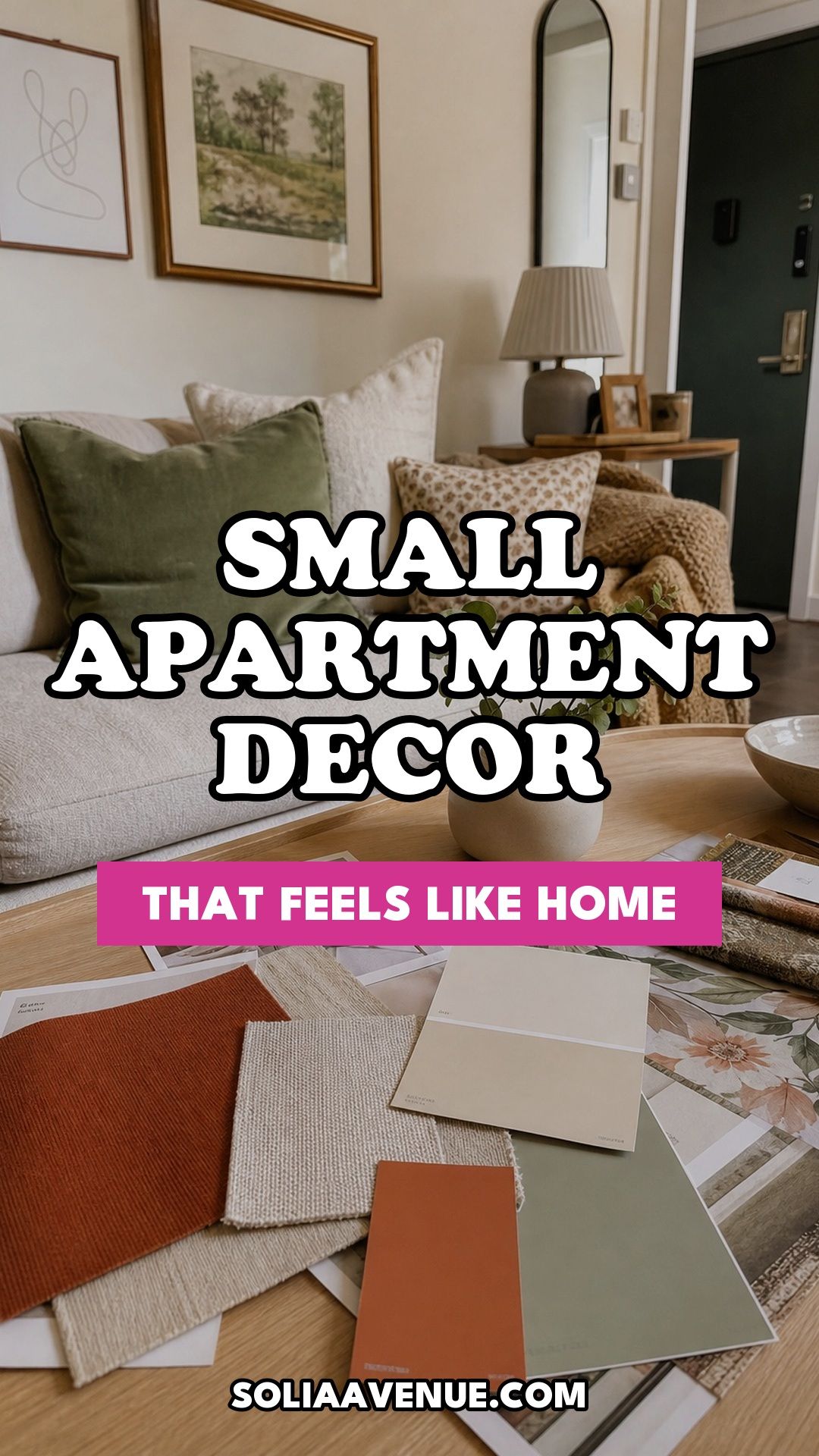
The easiest way to decorate a small apartment is to start with a floor plan before buying anything, choose a cohesive two-color palette, and invest in furniture that earns its footprint with storage or double function. Renter restrictions do not have to limit your style. Most of the best small apartment looks require zero permanent changes.
Every small apartment starts the same way. You move in with ideas, a few things you love, and the optimistic belief that it will all come together once you unpack. Then three weeks pass and it still looks like a holding zone between your old place and the apartment you actually want. The furniture does not quite work together. The walls feel bare but you are not sure what to put on them. Nothing feels intentional.
Learning how to decorate a small apartment is not really about picking the right throw pillows or finding the perfect rug. It is about having a system. A sequence that keeps you from buying the wrong things in the wrong order, and ends with a space that actually looks and feels like it was meant to be this way.
This guide walks through that system step by step, with the renter angle built in throughout.
Struggling to figure out where to start with your whole apartment, not just one room?
The Aesthetic Apartment Makeover Guide covers every room with practical, visual ideas for making small spaces feel beautiful and intentional. Grab it now for just $17 before the price goes up to $27.
Recommended Decorating Products


Recommended blogs to read:
- Small Apartment Decorating Ideas
- Small Apartment Interior Design Ideas
- Small Apartment Furniture Ideas
- Small Apartment Ideas
- Smart Apartment Living Tips
Start with a Layout Before Buying Anything


The most expensive decorating mistake you can make in a small apartment is buying furniture before you have a floor plan. A sofa that is two inches too wide, a coffee table that blocks the walkway, a dresser that makes the bedroom feel like a storage unit: all of it traces back to skipping this one step.
Start with a rough sketch of your space on paper. Proportional rectangles are enough. Mark windows, doors, outlets, and any fixed features like radiators or awkward corners. Then figure out traffic flow first (the paths people naturally take to get from one area to another) and arrange furniture so those paths stay clear.
For inspiration on how different configurations play out by square footage, the studio apartment layout ideas guide breaks down which arrangements work in tight footprints versus more generous ones.
In one-bedroom apartments, the bedroom layout usually matters more than the living room. The bed takes up so much floor space that everything else has to work around it. Place it against the wall that gives you the most clearance on both sides, even if that means it does not face the door the way you always imagined. Function beats aesthetics in the planning stage.
Once the furniture is arranged, at least in theory, make a list of everything you still need before you buy a single thing. Then shop from the list. That discipline is what separates apartments that look put-together from ones that look accumulated. For furniture picks for small spaces sorted by room and function, that roundup is a good place to start building your list.
Pick a Color Palette That Works for Small Spaces


The worst thing you can do in a small apartment is choose ten different colors across ten different areas and call it eclectic. What it actually creates is visual noise, and visual noise makes small spaces feel smaller and harder to live in.
Pick two main colors and one accent. The two main colors should be close enough in tone that they flow naturally from room to room: warm whites and warm taupes, cool greys and soft blues, earthy terracottas and warm creams. The accent color shows up in pillows, a throw, a vase, a plant pot. That is all it needs to do.
Modern decor for small apartments leans heavily on this principle. The restraint is what makes everything feel considered. Contrast that with apartments decorated without any palette in mind, where every piece is competing for attention and nothing quite lands.
For walls specifically: if you can paint, choose a warm neutral one shade deeper than you think you should. It photographs beautifully and makes the space feel more intentional than plain white. If you cannot paint (which applies to most renters), a statement piece of art, a removable wallpaper panel behind the sofa, or a large mirror with a strong frame does more work than any paint color.
For a deeper look at color cohesion as a design strategy, small apartment interior design ideas goes into how this principle applies room by room, not just as an aesthetic preference.
Choose Furniture That Earns Its Square Footage


Every piece of furniture in a small apartment should do at least one of three things: provide storage, serve more than one function, or create visual openness. Ideally two of the three.
Storage beds, ottomans with interior space, dining tables that fold against the wall, sofas with chaise storage. These are not compromises. They are the smartest buys you can make in a small space. If a piece of furniture just sits there looking nice without contributing anything functional, it needs to earn its keep or make way for something that does.
Visual openness matters as much as physical space. Furniture with legs (a sofa, dining chairs, a bed frame, side tables) lets light pass underneath, which makes the room feel more open than solid-base furniture does. Transparent pieces like acrylic side tables or glass coffee tables work the same way. You see through them, so the eye does not stop at them.
Think carefully before buying a sectional. It is the most-regretted furniture purchase in small apartments. The question is not whether you love it. The question is whether the traffic flow still works once it is in the room. Tape out the footprint on the floor before ordering. For a sense of what works and what does not, sofas that work in small apartments walks through the options that do not swallow a room.
And never let a rug be too small. An undersized rug is the single most common styling mistake in small apartments. It should be large enough that at least the front legs of the sofa sit on it. If the rug floats in the middle of the room with nothing touching it, it makes the space feel smaller and more disjointed, not larger.
For ideas on making every square foot work harder, that guide covers furniture choices alongside layout and storage strategies together.
Use Lighting to Add Depth and Warmth


Overhead lighting flattens a room. A single ceiling fixture makes every surface look equally lit and strips out any sense of depth or atmosphere. The apartments that photograph beautifully all have layered lighting: a floor lamp, a table lamp, a sconce or two, and maybe something hanging. The overhead light barely matters once the layers are in.
If you are renting and cannot add hardwired sconces, plug-in versions exist and work beautifully. Flush-mount ceiling lights can usually be swapped for something with more presence, like a semi-flush pendant or a globe, as long as you keep the original fixture and reinstall it when you leave.
For small apartment living room ideas that look designed rather than just decorated, the lighting layer is almost always the reason. A tall arc floor lamp behind the sofa changes the whole feeling of the room for roughly the same cost as a decent throw pillow set.
Warm bulbs throughout. 2700K is the sweet spot for residential spaces. 5000K makes apartments look like offices regardless of how good the furniture is.
Add Personality Without Adding Clutter

The difference between a space that looks curated and one that looks cluttered is the ratio of meaningful objects to space-filling ones. Both can have the same number of things in the room. The curated space just made better choices about which ones earned their spot.
Give yourself a rule: every decorative object has to be either beautiful, meaningful, or functional. Ideally two of those. A candle is functional and beautiful. A photo of someone you love is meaningful and can be beautiful. A random figurine that came with a gift basket hits none of those marks.
For apartment style ideas with a defined aesthetic (moody, minimalist, eclectic, or warm), the defining characteristic is almost always restraint in one category balanced by indulgence in another. A minimalist apartment might have plain furniture but incredible art. A warm eclectic space might have many objects, but all in the same color family.
Plants are the most forgiving way to add life to a small apartment. One large plant makes more impact than five small ones. A fiddle-leaf fig, a monstera, a large pothos in a beautiful pot: any of these changes the energy of a room without adding the visual weight that furniture does.
The bedroom is the easiest room to personalize in a small apartment because it is the most private. Go further there than you might in the living room. Small apartment bedroom ideas covers the full range from barely-there minimal to maximally cozy, with practical guidance throughout.
Renter Rules: What You Can and Cannot Change

Renting does not mean living in a space that does not feel like yours. It means being strategic about what you change and how you change it.
What you can almost always do without asking: hang things with command strips (including heavy art with the right strips), add removable wallpaper, swap light fixtures as long as you keep the originals, replace cabinet hardware as long as you keep the originals, add plug-in lighting, bring in your own furniture, use tension rods for curtains, and put down your own rugs.
What requires permission or should be avoided: painting (unless your lease allows it or you ask first), drilling into tile, changes to plumbing or electrical, and anything permanent in the kitchen or bathroom that could affect the next tenant.
For a full playbook on making a rental feel genuinely like home without risking your deposit, apartment tips for renters covers the most common situations with specific, practical solutions for each one.
The smartest thing a renter can do is ask before assuming the answer is no. Most landlords will say yes to painting if you offer to repaint when you leave. Most will allow minor drilling if you commit to patching the holes. The worst answer you will get is no, and you are no worse off than before you asked.
Want a room-by-room breakdown of exactly how to pull this all together?
The Aesthetic Apartment Makeover Guide is a 60-page visual guide built for small spaces. Currently just $17 before the price goes up to $27.
Frequently Asked Questions
Where do I start when decorating a small apartment?
Start with a floor plan. Sketch your space and decide on furniture placement before buying anything. Then settle on a two-color palette, shop from a list, and add personality last. Buying in the wrong order is the most common reason apartments never quite come together.
What colors make a small apartment look bigger?
Light warm neutrals like warm whites, creams, and soft taupes reflect light and make walls recede visually. But dark colors can also work if used intentionally: a rich accent wall or a deeply upholstered headboard can make a space feel deliberate and cozy rather than cramped.
How do I decorate a small apartment on a budget?
Focus your budget on the biggest visual anchors first: the sofa, the rug, and the bed. These pieces define the room. Accessories, art, and accent pieces can come from thrift stores, print-your-own art sites, or things you already own. A curated edit of fewer, better things always looks more intentional than a lot of cheap filler.
Can I decorate my apartment if I am renting?
Yes. Command strips, removable wallpaper, plug-in sconces, tension rod curtains, and your own furniture can completely transform a rental without damaging anything. Ask your landlord about painting. Most will allow it if you agree to repaint on the way out.
What furniture should I prioritize in a small apartment?
A sofa that fits the room, a bed with storage, and a rug large enough to anchor the space. After those three, everything else can be built slowly. Trying to furnish everything at once leads to mismatched decisions made in a rush.
Key Takeaways
- Start with a floor plan and a written furniture list before buying anything
- Use two main colors plus one accent consistently throughout the whole apartment
- Every furniture piece should store, double-function, or create visual openness
- Layer lighting because overhead alone flattens every room regardless of how good the furniture is
- Add personality through objects that are beautiful, meaningful, or functional
- Renting does not limit your decorating. It just changes which tools you use
Final Thoughts
Decorating a small apartment well comes down to sequence and restraint. Not restraint in the boring sense. You can absolutely have color, personality, and a space that feels genuinely yours. But restraint in the approach: plan the layout first, commit to a palette, buy from a list, and layer slowly.
The apartments that end up looking beautiful are not the ones with the most things. They are the ones where every decision was made on purpose. Start there and everything else follows naturally.
Last update on 2026-09-18 / Affiliate links / Images from Amazon Product Advertising API
