
Quick Answer: Small apartment shelf decor works best when it mixes three to five elements at varying heights, a plant, a book stack, a small object, a framed print, and a basket or box. The key is leaving empty space between groupings so shelves look curated rather than crammed. Matching all items to one color family keeps a styled shelf from reading as cluttered.
A styled shelf is one of the quickest ways to add personality to a small apartment, and also one of the easiest to get wrong. Too many items and it reads as clutter. Too few and it feels like you haven’t finished decorating. The difference between a shelf that looks intentional and one that looks like a storage overflow is almost entirely about grouping, height variation, and the editing-out of everything that doesn’t belong.
These small apartment shelf decor ideas cover how to style shelves in every room, living room, bedroom, kitchen, bathroom, and office, with specific arrangements and product types that create a pulled-together look in any space.
Want your whole apartment to look as styled as your best shelf?
The Aesthetic Apartment Makeover Guide covers room-by-room styling strategies, including exactly how to style shelves, surfaces, and walls in a small apartment. Grab it for just $17 before the price goes up to $27.
Recommended Shelf Decor Products


Recommended blogs to read:
- Small Apartment Ideas That Make Any Space Feel Bigger
- Small Apartment Wall Art Ideas for Every Room
- Modern Apartment Decor Ideas for a Stylish Small Space
- Small Apartment Storage Hacks That Actually Work
- Small Apartment Furniture Ideas That Work in Tight Spaces
Shelf Decor Fundamentals
1. Use the Rule of Three for Object Groups
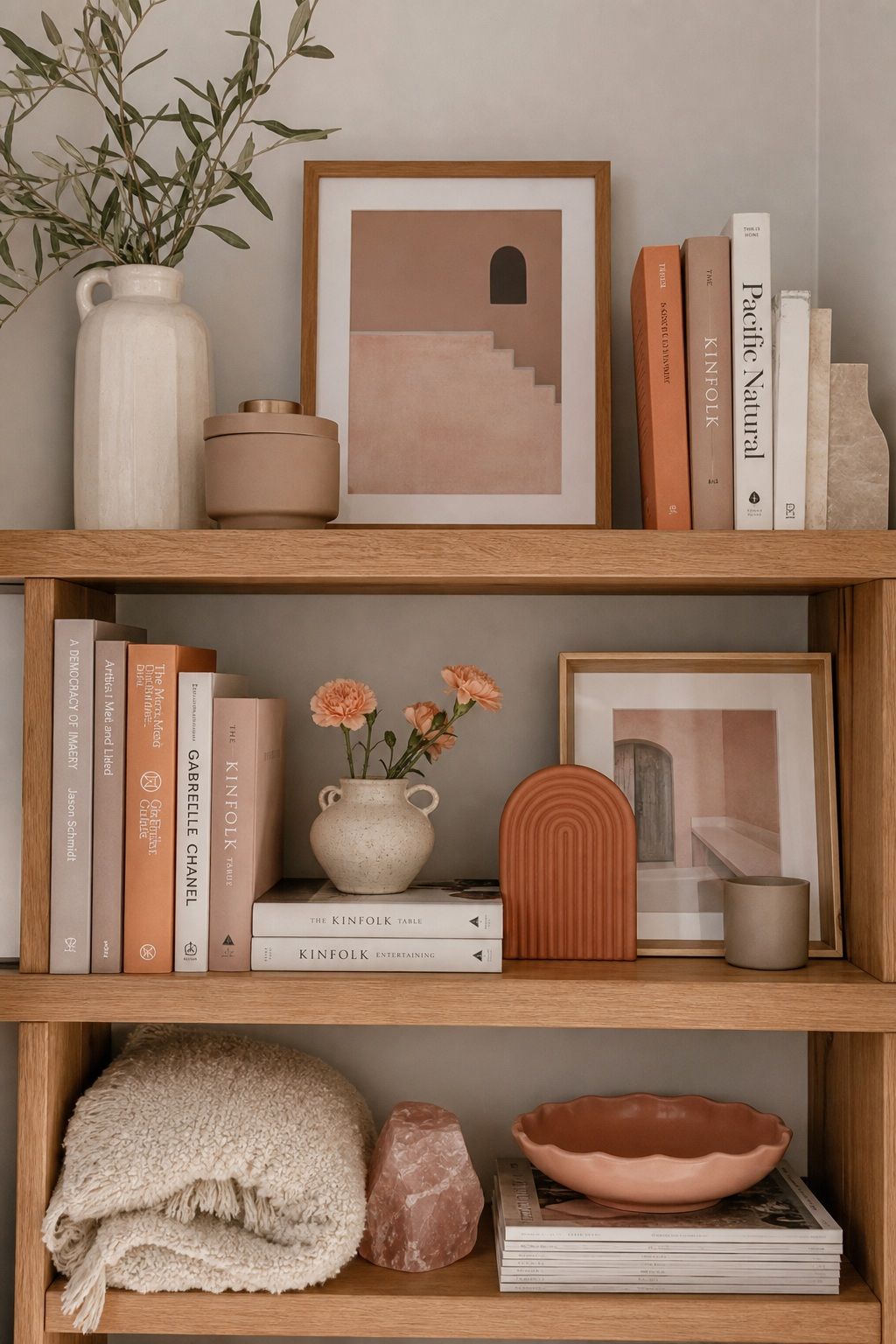


Grouping objects in threes creates visual balance that feels natural rather than rigid. On any shelf section, place one tall item, one medium item, and one low item together, the height variation creates rhythm that draws the eye across the shelf rather than stopping it in one place. Three objects in a triangle arrangement take up less visual space than three objects in a line, which is useful in smaller shelf sections.
The rule of three applies to the groupings on a shelf, not to the total number of items. A longer shelf might have two or three three-item groupings with empty space between them, the empty space is as important as the objects. It gives each grouping room to read as a distinct moment rather than blurring into one continuous clutter line.
Read more: Top 16 Best Living in a Small Apartment Tips
Read more: Top 18 Small Apartment Wall Decor Ideas That Make Every Wall Count
2. Vary Height Across the Whole Shelf
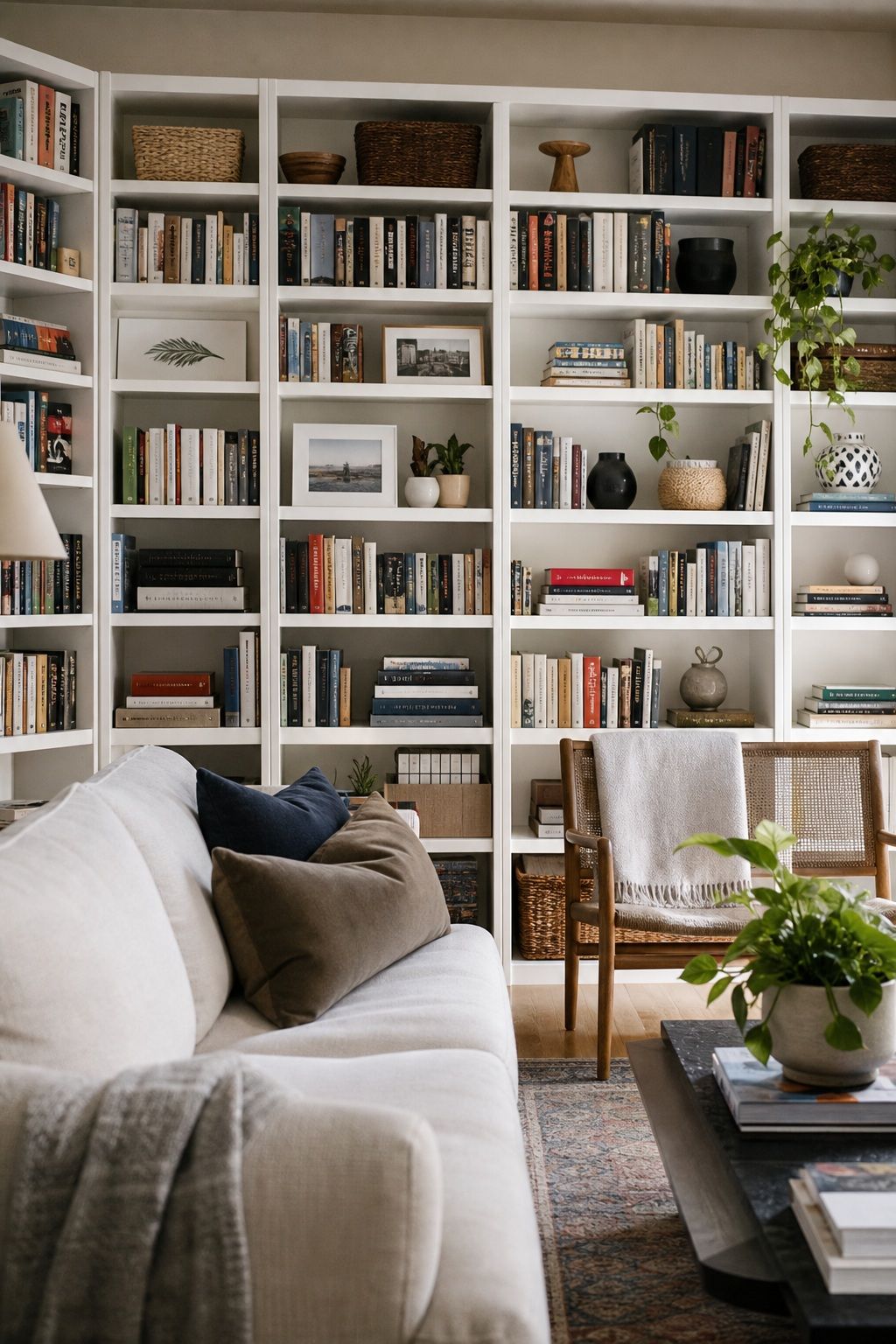


A shelf where every object is roughly the same height looks like a row of items rather than a styled arrangement. Introduce height variation by stacking books horizontally to create a platform for smaller objects, placing a tall vase beside short ceramic pieces, or setting a framed print at the back of a grouping with smaller items in front. The height differences create visual interest that flat rows of equal-sized objects can’t achieve.
Think in layers: tall items at the back, medium items in the middle, small items or plants at the front. This three-dimensional staging makes the shelf look considered from a distance in a way that single-file arrangements don’t. Apply this principle within each grouping and to the shelf as a whole.
Read more: Top 17 Small Apartment Closet Ideas That Actually Maximize Your Space
Read more: Top 20 Small Apartment Christmas Decor Ideas for a Cozy Holiday in
3. Edit Ruthlessly, Then Edit Again
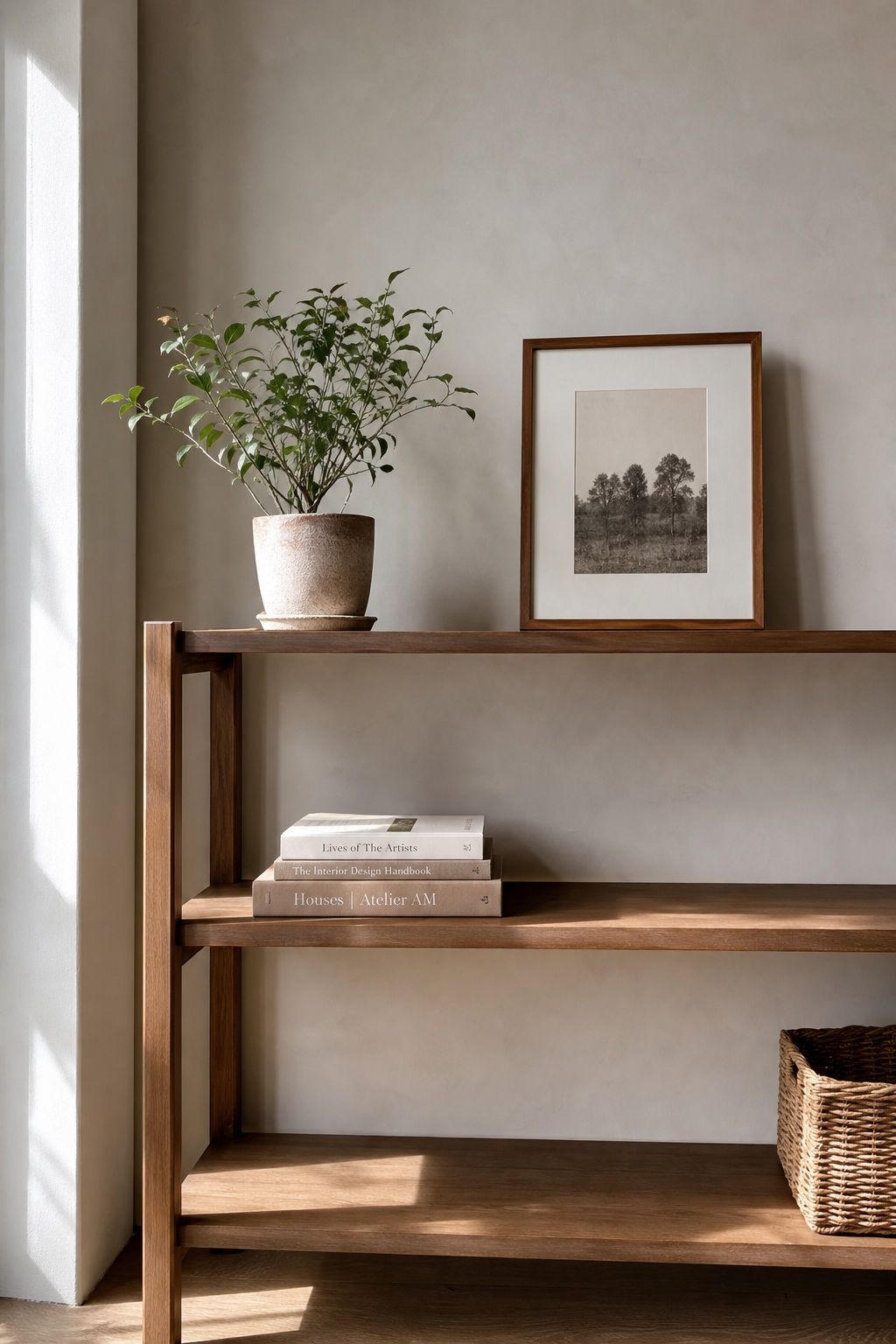


The difference between a styled shelf and a cluttered one is almost always the number of items. Remove everything from the shelf first, then add back pieces one by one with a specific purpose for each. When in doubt about an item, leave it off. A shelf with seven carefully chosen items looks better than a shelf with twelve. The empty space makes the chosen items look intentional.
Items that don’t have a reason to be on the shelf, random souvenirs, items that were placed “temporarily,” things with no relationship to anything else on the shelf, should be stored in a drawer or box rather than displayed. Every item visible on an open shelf is making a statement about the room’s character. Keep only the ones contributing to the statement you want to make.
Read more: Top 20 Best Rental Small Apartment Hacks
Read more: Top 16 Best Small Apartment Porch Ideas
Object Types That Work on Shelves
4. Books, Horizontal and Vertical
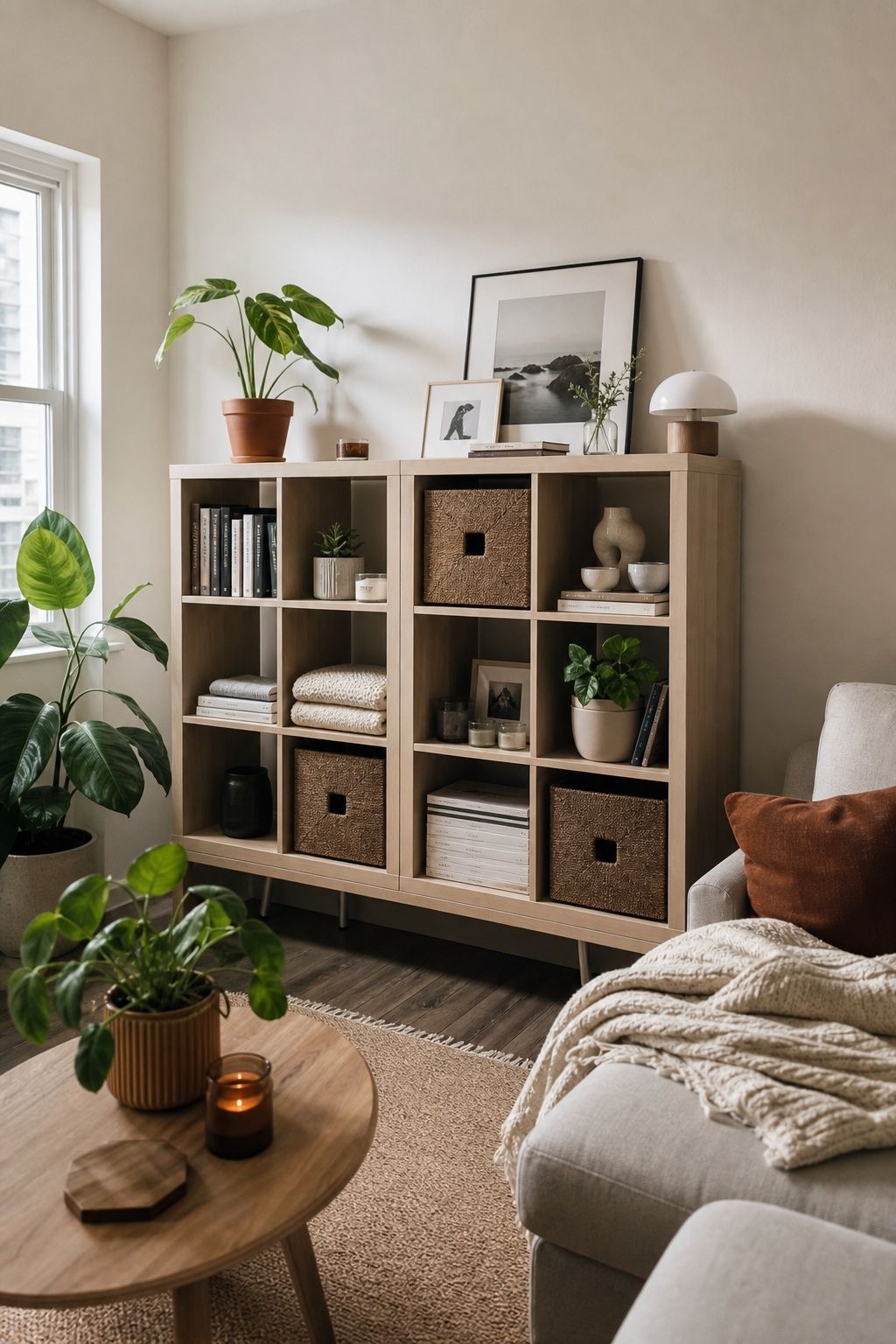


Books are the most useful shelf decor element because they’re tall, create texture through their spines, and double as a platform when stacked horizontally. A horizontal stack of three books with a small object on top, a candle, a small ceramic, a succulent, is the most commonly used and consistently effective shelf arrangement in apartment styling.
Choose books for shelves based on spine appearance, not just content. Solid-colored spines in one color family create a cleaner look than a random mix of typography styles. Removing dust jackets often reveals cleaner, more minimal spine designs underneath. Books with titles or authors you’re proud of add a layer of personal identity to the shelf that purely decorative objects can’t.
Read more: Top 16 Small Apartment Floor Plans That Actually Work for Real Life
Read more: Top 18 Apartment Summer Decor Ideas to Refresh Every Room
5. Plants, Real and Dried
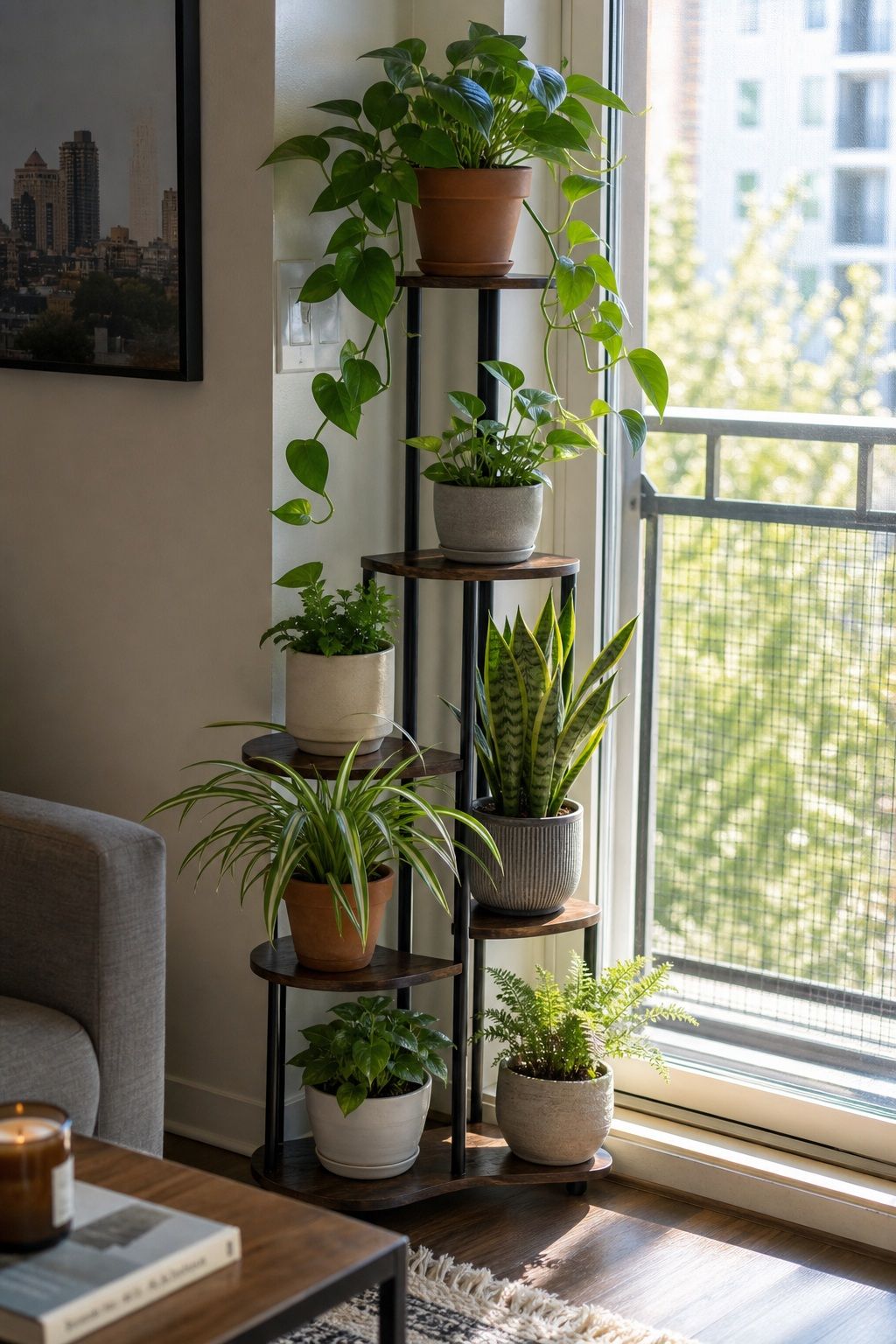


A small plant on a shelf adds life and organic texture that no ceramic or glass object replicates. Trailing plants like pothos or string of pearls hang over shelf edges and add movement. Upright plants like snake plants or small succulents stay within the shelf boundary. Dried botanical stems in a small vase, pampas grass, cotton stems, dried eucalyptus, require no maintenance and add the same warm, organic quality as live plants.
Keep plants to one per shelf section, two plants on the same section can start to look like you’re storing houseplants rather than decorating. A single plant with real visual presence (a trailing pothos draping over one side, or a stem arrangement in a distinctive vase) does more than multiple small succulents lined up in a row.
Read more: Top 18 Small Apartment Interior Design Ideas That Transform Your Space
6. Ceramic and Stone Objects
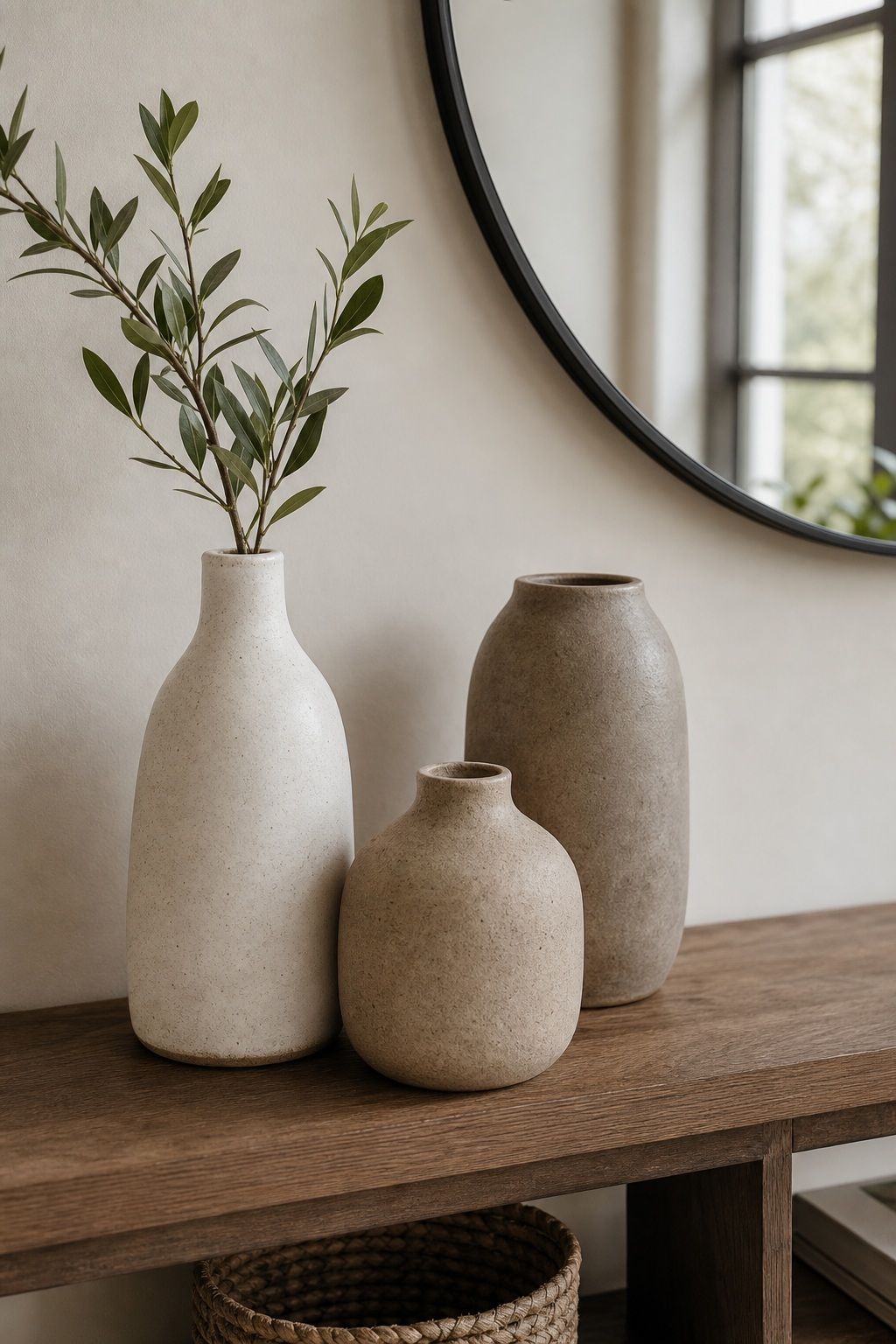

Small ceramic bowls, vases, figurines, and stone objects add weight and permanence to a shelf arrangement that lighter objects (frames, books) don’t provide. Their texture, matte, glazed, speckled, reads from across the room in a way that smooth plastic or glass objects often don’t. A single interesting ceramic piece justifies its shelf space in a way that a random glass votive does not.
Group ceramics by finish rather than color, matte glazed pieces together, speckled pieces together, smooth white pieces together. Mixed ceramic finishes in matching colors still look cohesive because the shared color overrides the finish variation. Mixed ceramics in different colors AND different finishes look like a garage sale, not a styled shelf.
Read more: Top 17 Small Apartment Design That Feels Spacious and Inviting
7. Framed Prints and Small Art
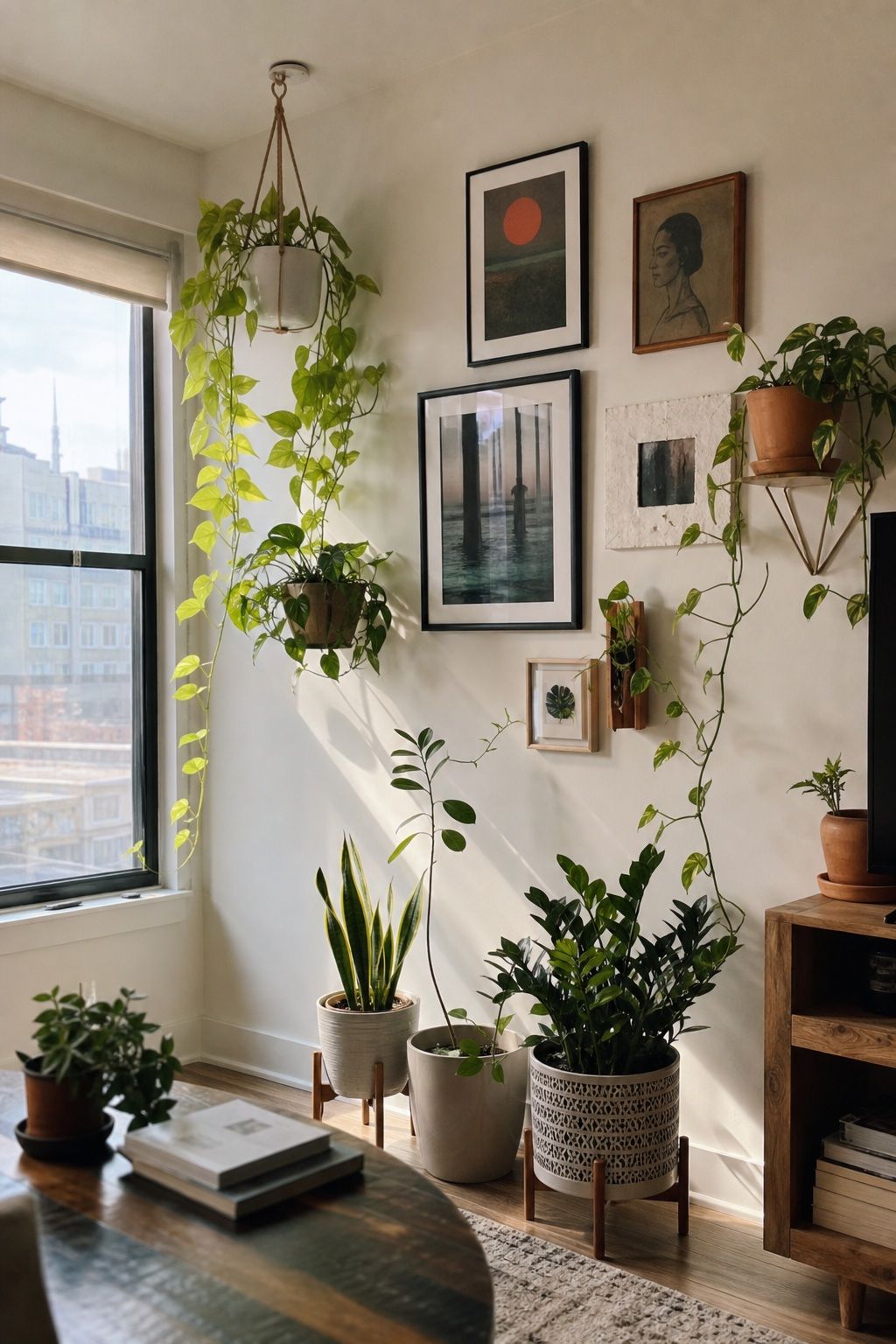


A small framed print leaning against the back of a shelf adds color, pattern, and personal expression without the commitment of hanging wall art. Lean it slightly forward so it’s visible and doesn’t get lost behind shelf items in front of it. A frame with a generous white mat makes even a small print look considered, the mat adds perceived size and a gallery feel.
Use one frame per shelf section, two frames in one section compete rather than complement. Matching frame finishes across multiple shelves creates visual continuity even when the prints themselves are different. If every frame on your bookcase is the same color (all black, all natural wood, all gold), the whole unit reads as a deliberate display rather than a random collection.
Read more: Top 20 Small Apartment Decorating Ideas That Work in Any Space
8. Baskets and Boxes for Concealed Storage
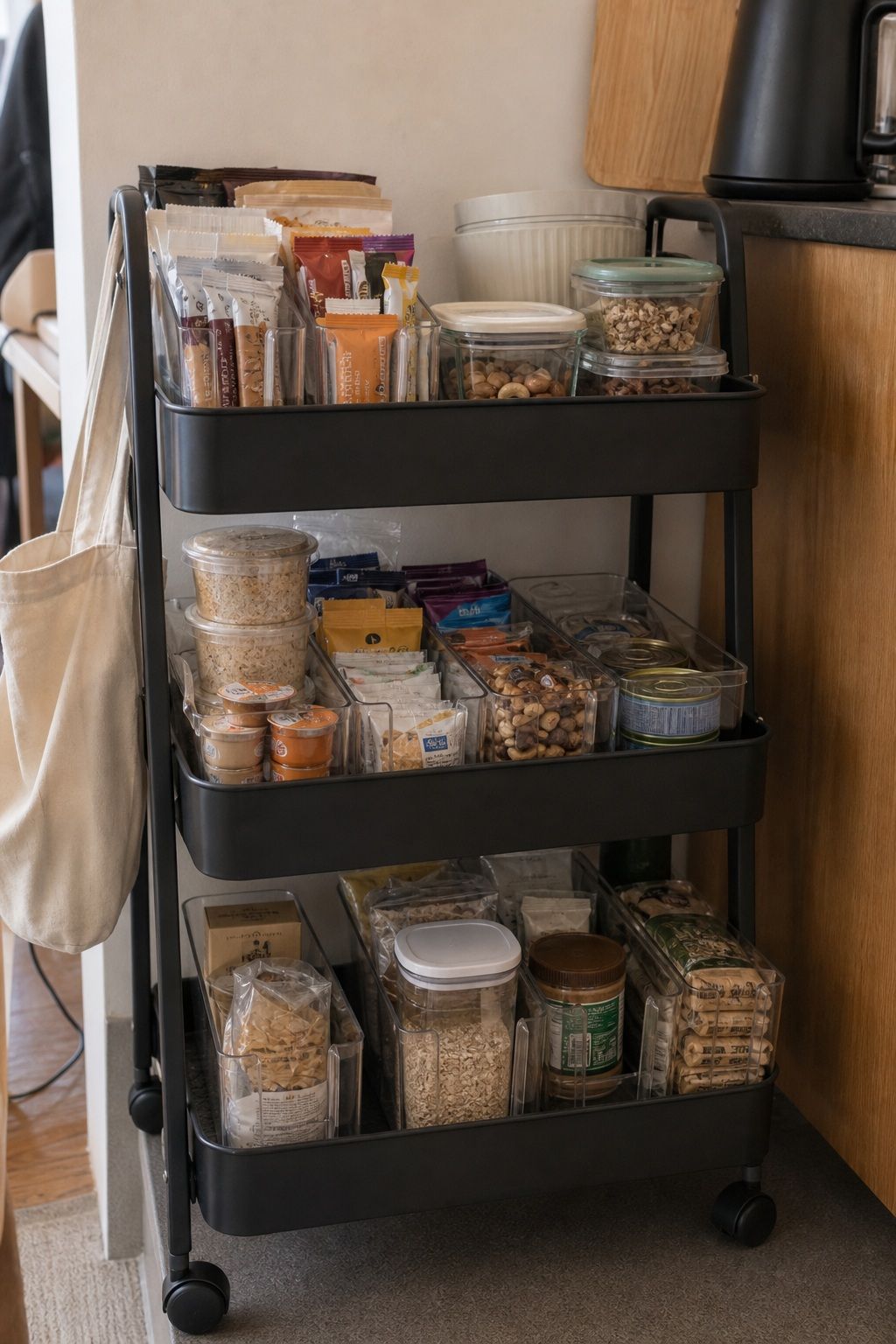


A woven basket or lidded box on a shelf hides the items you need accessible but don’t want visible, charger cables, remote controls, miscellaneous papers, small tools. The basket or box reads as a decor element while performing functional storage. This is the most practical shelf styling element for small apartments where every visible surface needs to justify its footprint.
Choose baskets that match the shelf’s other textures. A rattan basket pairs with warm wood shelf surfaces and natural-material objects. A fabric-covered box suits a softer, more minimal shelf. A wooden box with a lid suits modern, architectural shelf arrangements. The container’s exterior is what you’re actually displaying, the contents are invisible and irrelevant from a styling perspective.
Read more: Top 19 Must-Try Small Apartment Hacks for Comfortable Living
Read more: Top 15 Small Apartment Balcony Ideas for a Cozy Look
Shelf Styling by Room
9. Living Room Bookcase Shelf
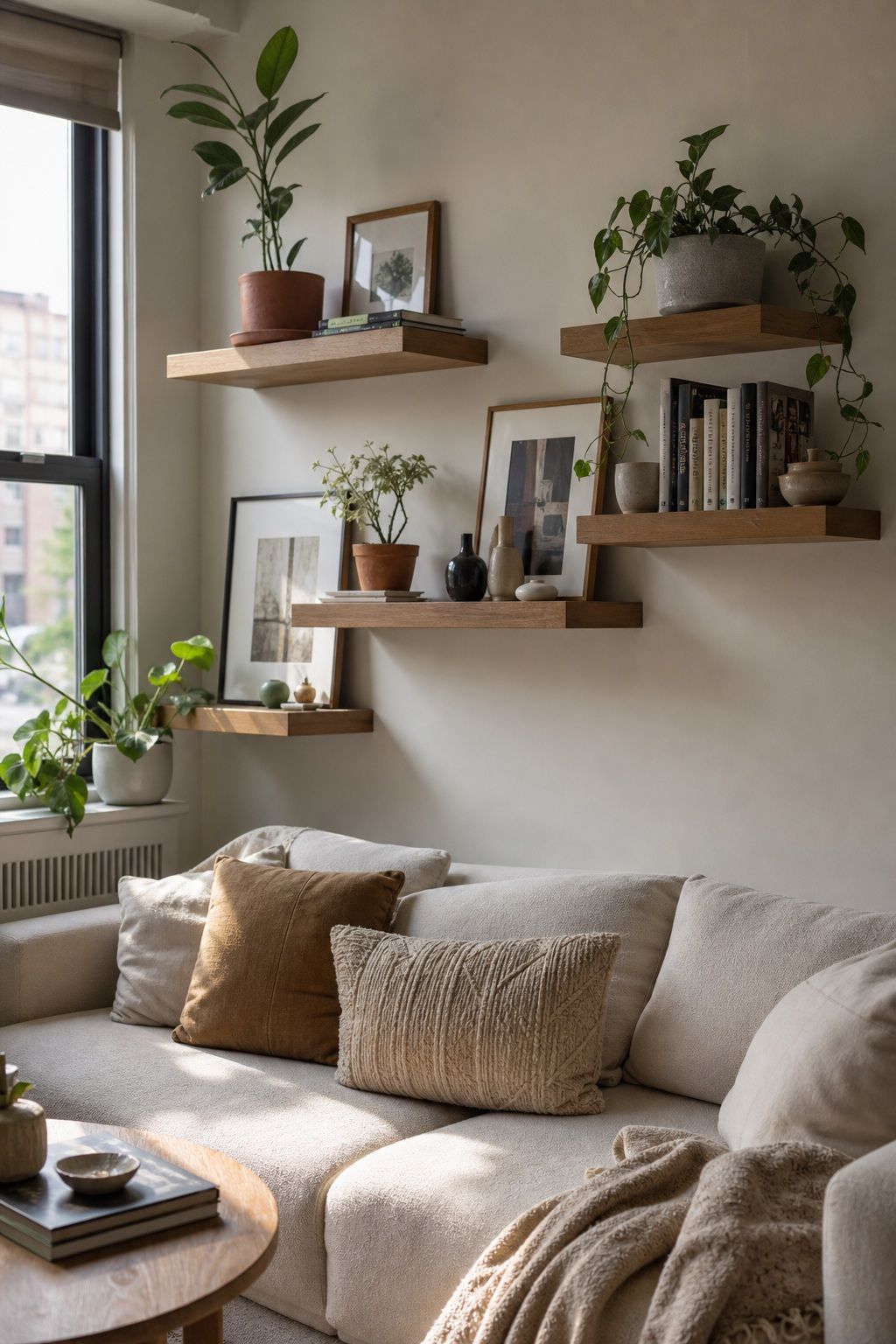

A living room bookcase shelf typically holds the most variety, books, objects, plants, baskets, because it’s the largest display surface in the room. Style it in zones: books-dominant sections alternate with object-dominant sections. Every three or four shelves should include at least one plant and one basket to break up the book rows and add texture variation.
Color-coding books by spine color, arranging them from light to dark or in a single color family on each shelf, is the most visually impactful thing you can do to a bookcase without changing a single item on it. The colored spines read as a deliberate palette choice rather than a random collection of reading material. This technique works on any bookcase regardless of size.
Read more: Top 18 Cozy Small Apartment Decorating Ideas for a Warm, Inviting Home
10. Bedroom Floating Shelf
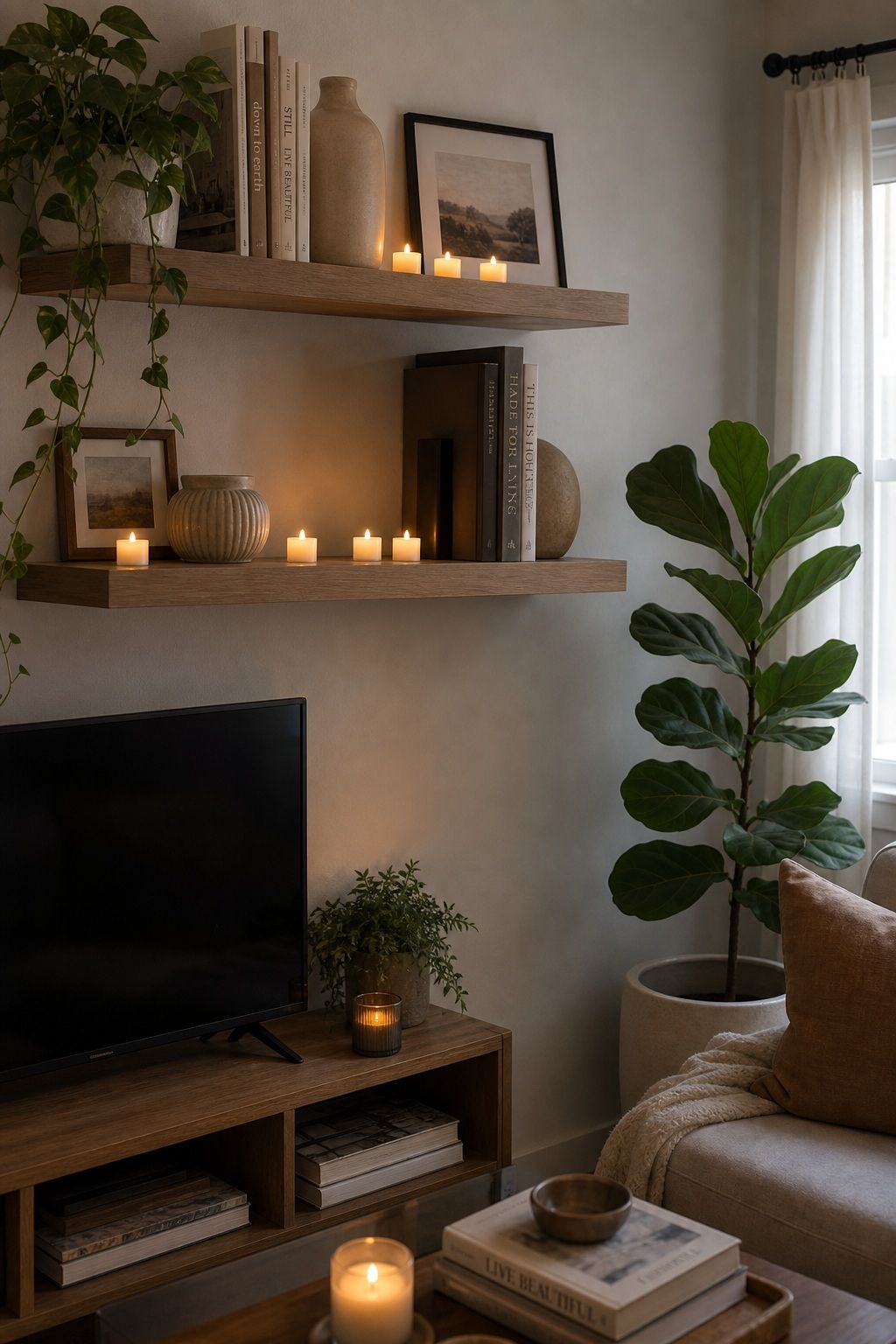


A bedroom floating shelf above the bed or beside a window is typically smaller than a living room bookcase, so fewer items make more impact. Three to five elements maximum: one plant, one small framed print or mirror, a small ceramic object, and one or two books. The bedroom shelf should feel personal and calm rather than styled for a showroom, it’s the shelf you see when you wake up.
Avoid shelves directly above the bed for safety, anything mounted above a sleeping area should be secured into studs, not just drywall, and should hold nothing heavy enough to be dangerous if it fell. Floating shelves beside the bed at nightstand height, or just above, are safer and equally visible from the sleeping position.
Read more: 25 Small Apartment Essentials From Amazon That Actually Make Small
11. Bathroom Shelf
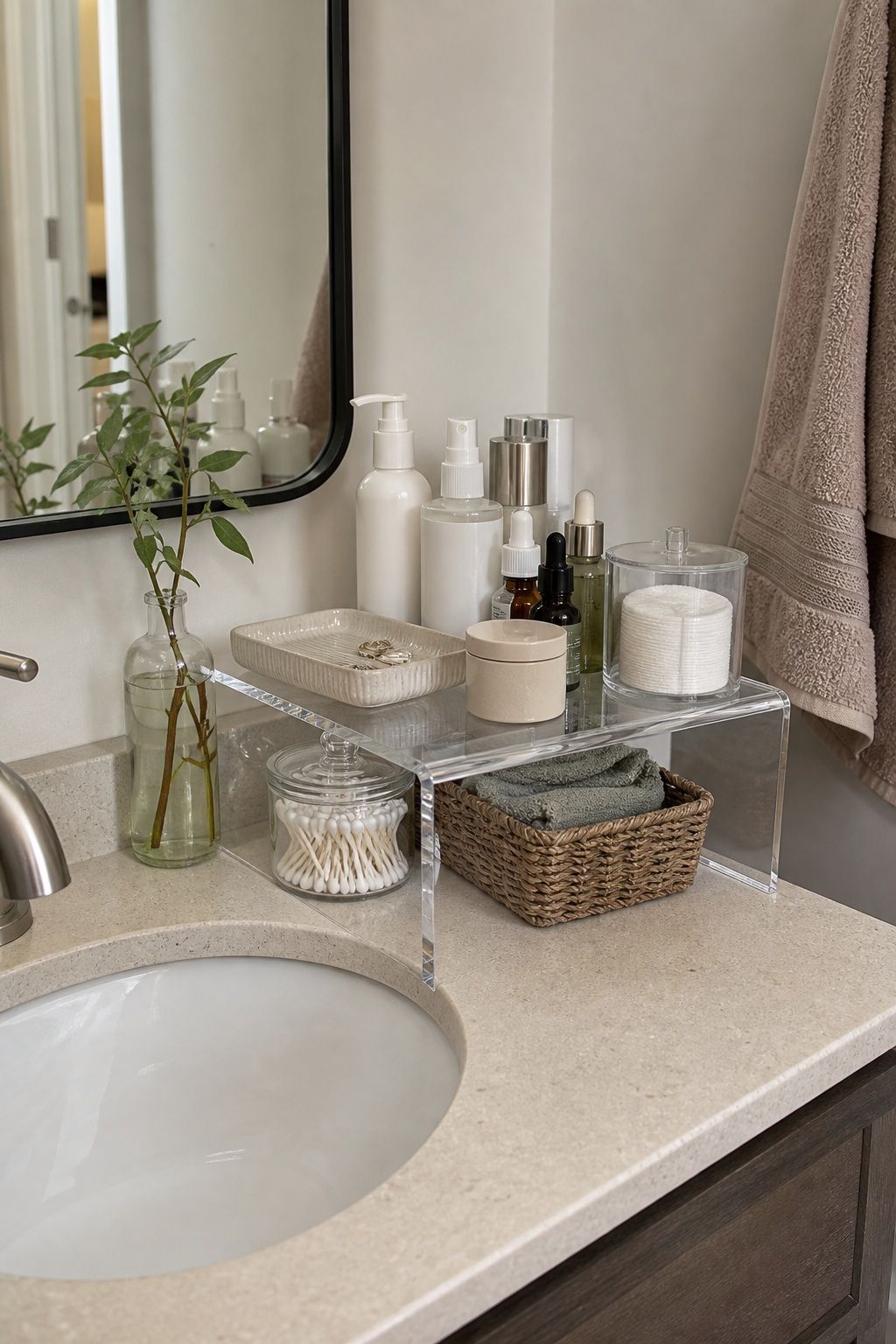

A bathroom shelf styled with matching containers, a soap dispenser, a small jar of cotton rounds, a candle, and one plant, creates a spa-like surface rather than a collection of product bottles. Remove products with prominent logos from the visible shelf and replace them with refillable ceramic or glass containers. The shelf above the toilet or beside the sink transforms from a supply area into a styled display in under an hour.
A small eucalyptus bundle hung from the shower head or placed in a slim vase on the shelf adds fragrance and organic texture. Real eucalyptus releases a light scent when steam hits it during showers, this is a low-effort way to make a bathroom feel more considered and spa-like without any permanent installation.
Read more: Top 18 Rental-Friendly Apartment Decor Ideas That Won’t Cost Your
12. Kitchen Open Shelf
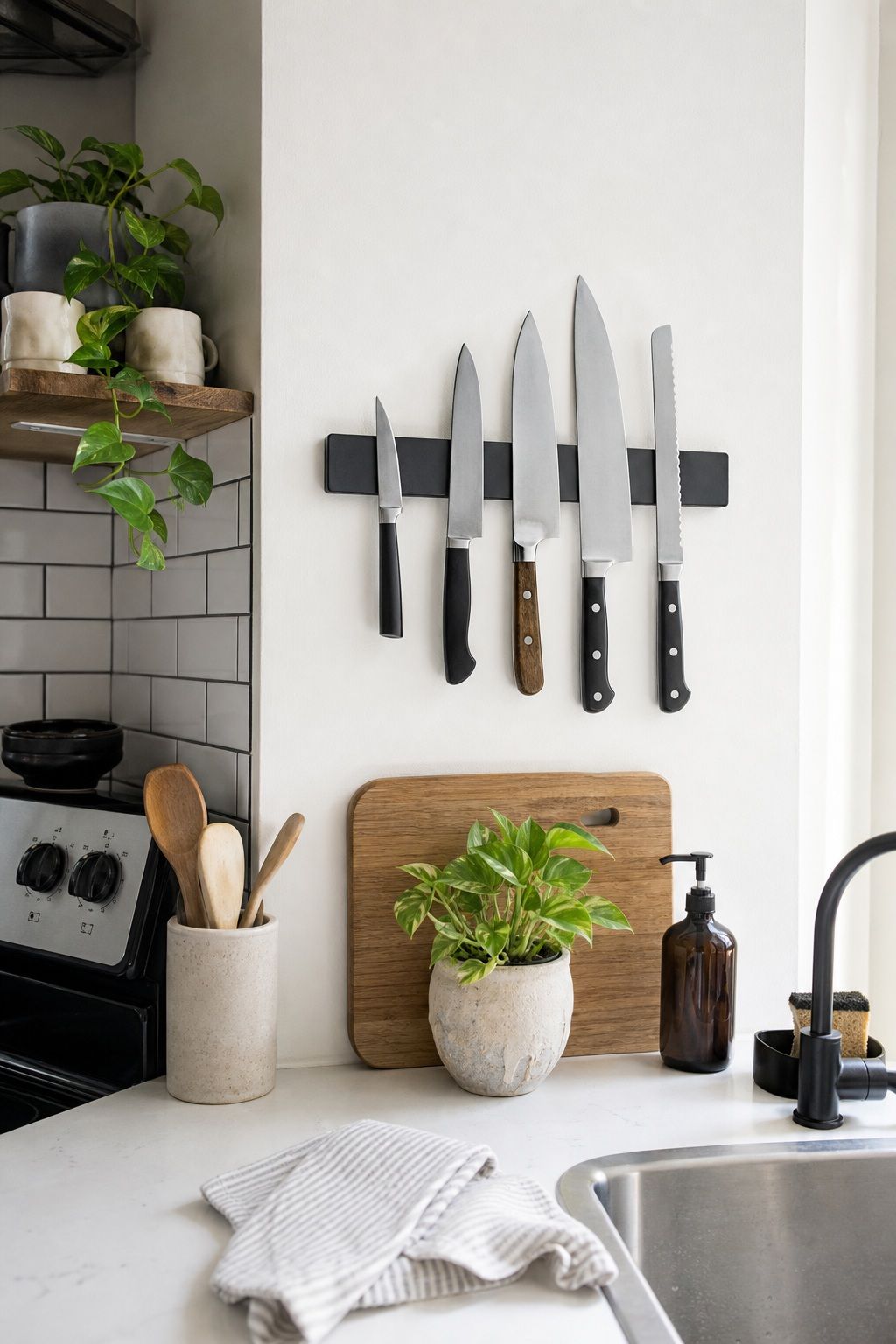


Kitchen open shelves are functional first and decorative second, which means the styling approach differs from other rooms. Display items that are both attractive and used regularly, stacked white bowls, a jar of pasta, matching mugs, a small plant in a terracotta pot. Items that look good but never get used belong somewhere more decorative than the kitchen.
Grouping dishes by type and keeping them consistent in color family is the kitchen equivalent of color-coding books. All white dishes, or all ceramics in a warm neutral, read as a curated set from across the room. Mixed vintage patterns look intentionally eclectic in the right kitchen but default to clutter in any kitchen that isn’t committing fully to that aesthetic.
Read more: Top 18 Small Apartment Modern Design Ideas That Make Every Inch Count
Color and Material Strategies
13. Match Shelf Objects to One Color Family
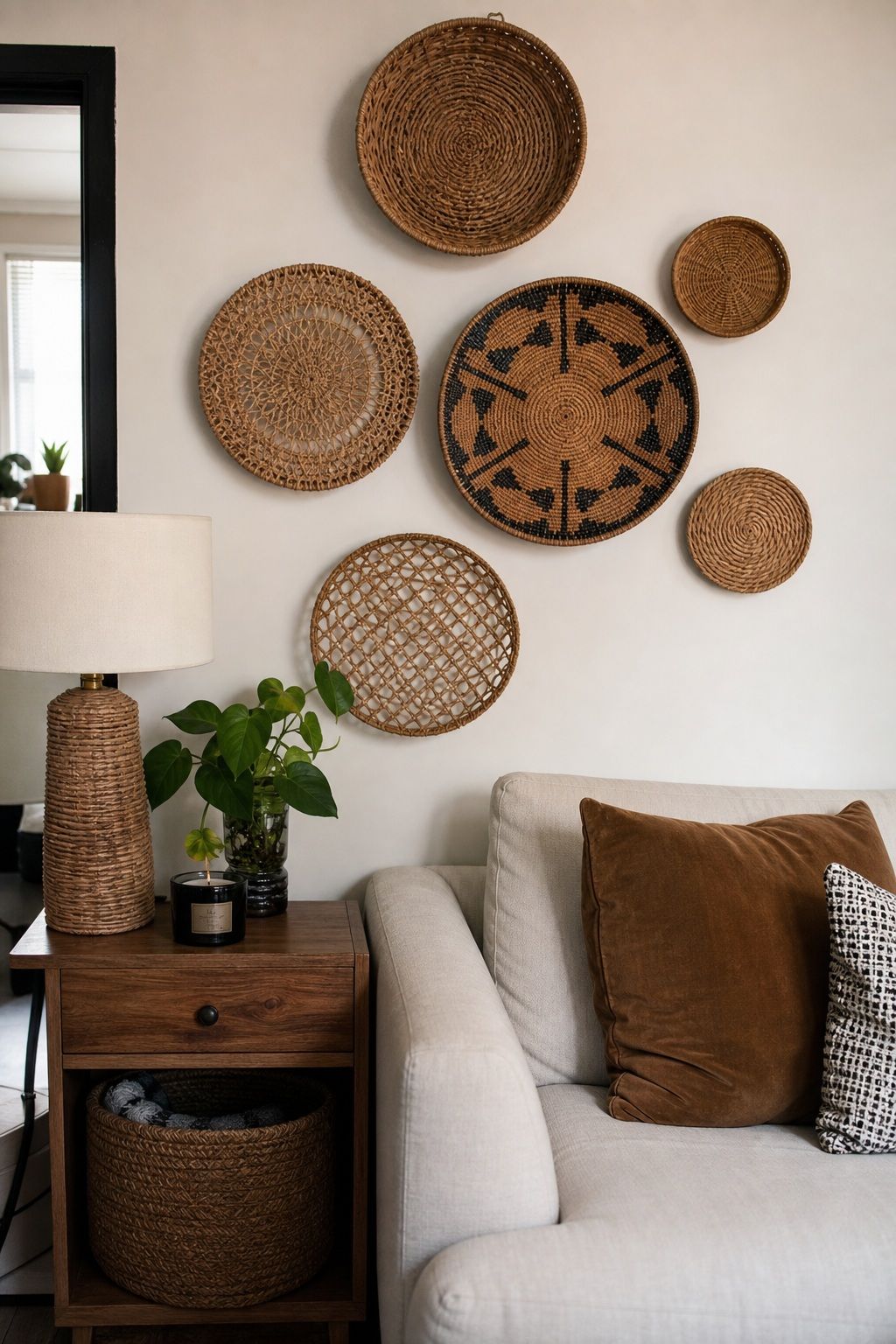
The simplest way to make a shelf look styled is to limit the object colors to one family, all neutrals (cream, beige, white, tan), all warm tones (terracotta, rust, mustard), or all cool tones (sage, dusty blue, gray). Objects in different color families compete for attention and make a shelf look random rather than chosen. One color family across all objects lets the variety of textures and heights provide the visual interest instead.
This doesn’t mean every item needs to be the same color, a cream shelf with cream ceramics, a natural wood book stack, a terracotta plant pot, and a beige basket all occupy the same warm neutral family. The variation within the family is what creates depth. Introduce a single accent color (one piece of dusty blue among all neutrals) as a focal point if the shelf reads as too flat.
14. Mix Three Materials Per Shelf
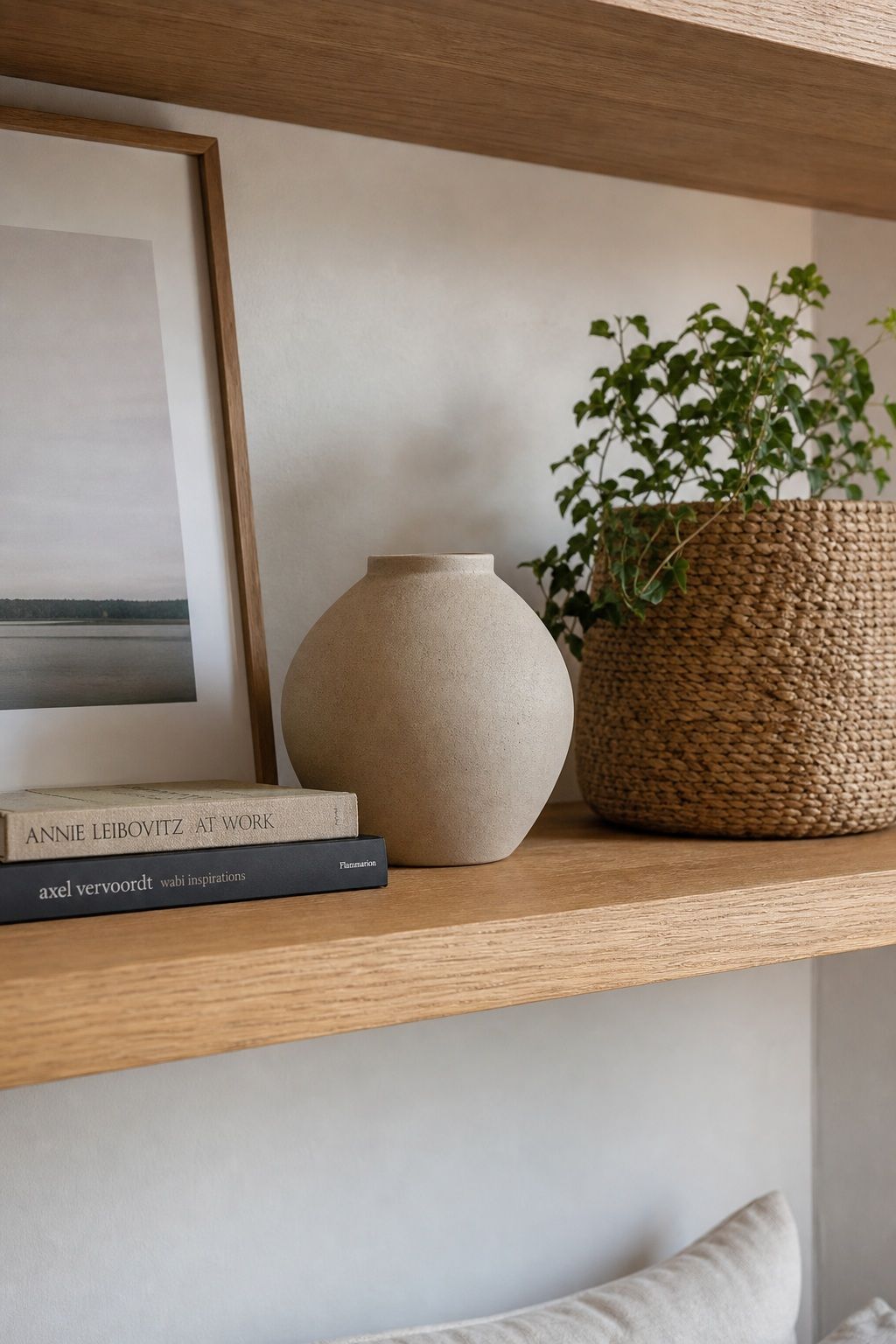


Three material types per shelf is the sweet spot between visual richness and visual noise. A shelf with only ceramic objects reads as flat; a shelf with seven different materials reads as chaotic. Three materials, for example, ceramic, rattan, and natural wood, create contrast and depth without competing. Apply this across the shelf as a whole, not just within one grouping.
Common material combinations that work together: ceramic with natural wood and linen fabric; glass with rattan and dried botanicals; stone with matte black metal and marble. Each combination has a built-in aesthetic direction, ceramic/wood/linen reads warm and Scandinavian; glass/rattan/botanical reads coastal and relaxed; stone/metal/marble reads modern and minimal.
Read more: Top 20 Small Apartment Essentials Every Renter Needs
15. Leave Intentional Empty Space
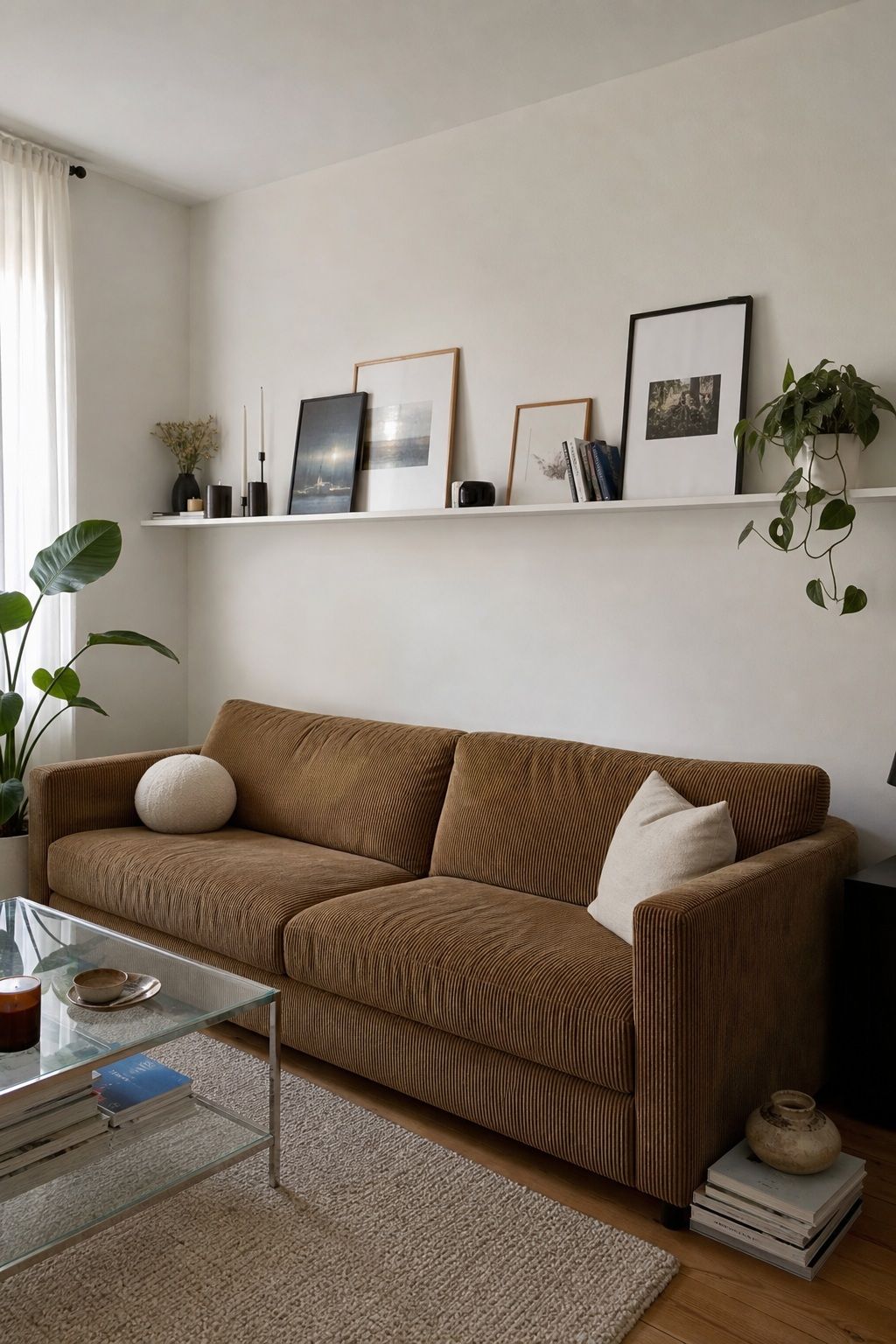


Empty shelf space, negative space, is not wasted space. It’s what makes the items on the shelf visible as individual objects rather than as a continuous mass. A shelf at 70% capacity looks styled; a shelf at 100% capacity looks full. If you can’t remove items from a shelf because you actually need to store everything on it, move purely decorative items to different locations and let the practical items stand on their own.
On a long shelf, divide the space into thirds and leave one third relatively sparse, either empty or holding only one low object. The sparse section gives the eye a place to rest and makes the fuller sections on either side look more deliberate by contrast. The spacing principle applies to all shelves regardless of size: when in doubt, remove one more item than feels necessary.
Read more: Top 15 Small Apartment Kitchen Decor Ideas That Make Tiny Counters
Want your whole small apartment to look as designed as your best shelf?
The Aesthetic Apartment Makeover Guide covers every surface, room, and styling decision, with specific guidance on what to keep, what to remove, and how to arrange what’s left. Just $17 now before the price increases.
FAQ
How do you style shelves in a small apartment?
Start by removing everything from the shelf. Add back a maximum of five to seven items per shelf section in a mix of heights, one tall item, one medium, one or two low. Include one plant, at least one basket or box for concealed storage, and one or two books with attractive spines. Keep objects in one color family and leave at least 30% of the shelf empty. Resist adding more until what’s there looks fully considered.
What should you put on shelves for decoration?
The most versatile shelf decor items are books (both upright and stacked horizontally as platforms), small plants or dried botanicals in simple vases, ceramic objects, small framed prints, woven baskets, and candles. Mix functional items, books you read, baskets that hold actual things, with purely decorative objects. The combination of useful and beautiful is what makes a shelf look styled rather than staged.
How do you make a shelf look less cluttered?
Remove at least a third of what’s on the shelf, more if it still feels busy. Group remaining items in loose triangles of three with space between groupings. Move any items without a clear visual purpose (objects stored “temporarily,” items with no connection to the other pieces on the shelf) to a drawer or cabinet. Clutter on a shelf is almost always an excess of items rather than a styling problem, editing is the solution.
Should you mix books and decor on shelves?
Yes, mixing books and decorative objects consistently produces better-looking shelves than using either alone. A shelf of only books looks like a library; a shelf of only objects looks like a display case. The combination of books (vertical, horizontal stacks), plants, ceramics, and baskets creates the mix of heights, textures, and purposes that makes a shelf feel like part of a lived-in, designed home rather than a single-purpose piece of furniture.
What color scheme works best for shelf decor?
One color family across all shelf objects creates the most cohesive result, all warm neutrals (cream, beige, tan, terracotta), all cool neutrals (white, gray, sage, dusty blue), or a single accent color against a neutral base. The color family doesn’t mean identical shades, variation within the family adds depth. Keeping all objects within the same general color temperature prevents the shelf from looking like a random collection of unrelated items.
Key Takeaways
- Group shelf objects in threes with height variation, one tall, one medium, one low, per section
- Edit ruthlessly: a shelf at 70% capacity looks styled; a shelf at 100% capacity looks cluttered
- Mix three materials per shelf, ceramic, rattan, and natural wood is one reliable combination
- Keep all objects in one color family so height and texture provide the visual interest
- Intentional empty space makes the items you do display look more deliberate and designed
Final Thoughts
Shelf styling is one of the most accessible and reversible forms of apartment decor, nothing is installed, nothing is permanent, and the changes can happen in under an hour. The principles are straightforward: fewer items, varying heights, one color family, intentional empty space. Apply them consistently to every shelf in your apartment and the cumulative effect is significant. A home where every shelf looks considered reads as a home that belongs to someone with a clear sense of what they like, which is exactly the impression a well-styled small apartment should make.
Last update on 2026-09-25 / Affiliate links / Images from Amazon Product Advertising API
