Cozy Sunroom Flooring Ideas for Warmth


Affiliate Disclaimer: This page may contain affiliate links which means, if you purchase something through it, I may earn a small commission at no extra cost to you. These are earnings which are used to run this site. Greatful for your support! - Solía Avenue

Discover the best sunroom flooring ideas to enhance the style, durability, and comfort of your space, from luxury vinyl to natural stone.

Choosing the right sunroom flooring is essential for creating a functional, stylish, and durable space that can withstand fluctuating temperatures, humidity, and heavy foot traffic. Whether your sunroom is an extension of your living area, a cozy retreat, or a plant-filled greenhouse, the flooring sets the foundation for the room’s overall aesthetic and usability.

From luxury vinyl plank (LVP) to natural stone, these sunroom flooring ideas will help you select the best material for your space while balancing durability, maintenance, and style.

Key takeaways:

  • Choose flooring that resists temperature changes and moisture to prevent warping and damage.
  • Consider maintenance and durability based on your sunroom’s use.
  • Incorporate stylish, high-quality materials that complement your overall decor.
  • Ensure comfort and insulation by selecting flooring that enhances warmth and underfoot feel.

Cozy Sunroom Flooring Ideas for Warmth

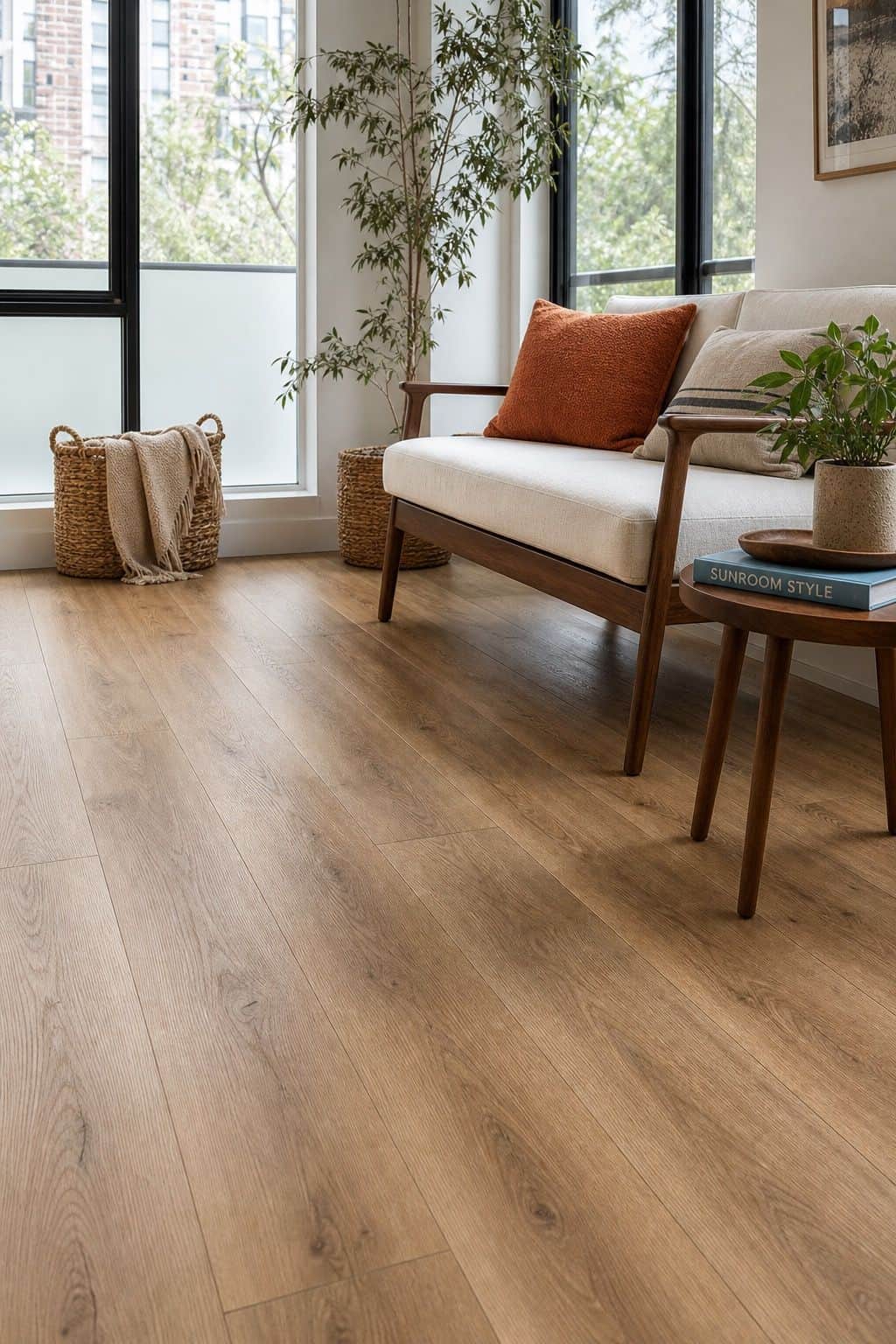
Luxury Vinyl Plank (LVP)

Discover the best sunroom flooring ideas to enhance the style, durability, and comfort of your space, from luxury vinyl to natural stone.

Luxury vinyl plank (LVP) has become a leading choice for sunrooms because it strikes a smart balance between aesthetic versatility and functional resilience. LVP’s printed layers faithfully mimic grain, knots, and texture found in real hardwood, yet it’s engineered from dense synthetic materials that shrug off moisture, temperature shifts, and heavy foot traffic. That makes it ideal for sunrooms that transition between seasons or connect directly to outdoor patios.

From a design standpoint, LVP comes in an enormous range of colors, widths, and textures—everything from wide-weathered planks for a farmhouse feel to narrow, smooth boards for a contemporary look. The top wear layer is where you get long-term performance: thicker wear layers resist scratches and sun fading better, and many LVP products feature UV-stable coatings specifically intended for sunlit spaces.

Installation is flexible: click-lock floating floors are popular because they accommodate minor subfloor movement, while fully adhered vinyl can be more stable in rooms with high thermal variation. Underlayment choices also affect comfort and insulation; choose a cushioned or acoustic underlay if the room is used for lounging, or add radiant heating compatibility if you want warmer floors in winter.

Maintenance is straightforward—regular sweeping and damp mopping keep LVP looking fresh—and the waterproof nature of quality LVP means occasional plant spills or tracked-in moisture are less of a worry. For best longevity, pick a product rated for residential or commercial use depending on traffic, and pair the floor with area rugs for extra warmth and texture.

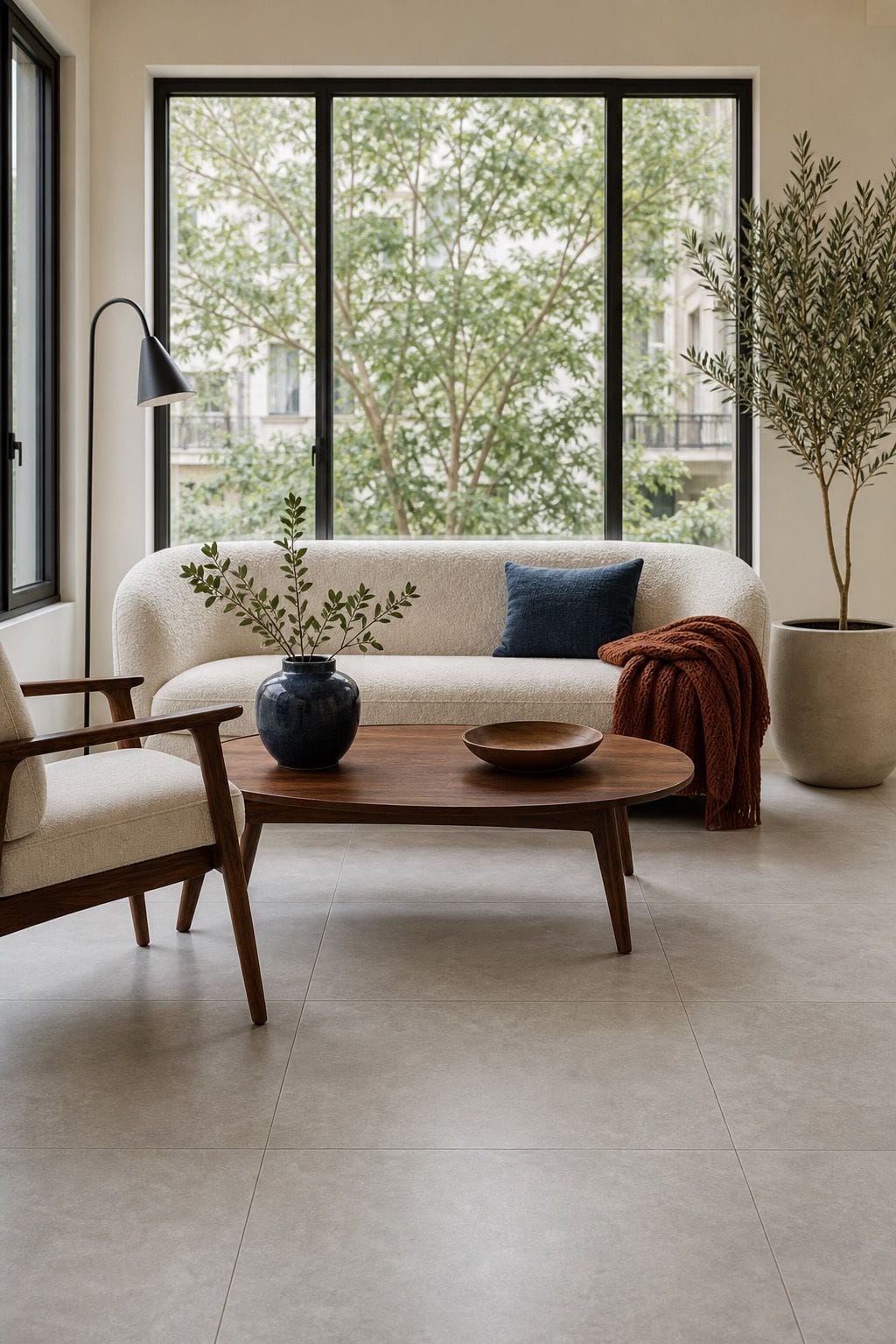
Porcelain Tile

Discover the best sunroom flooring ideas to enhance the style, durability, and comfort of your space, from luxury vinyl to natural stone.

Porcelain tile is a top-tier option when you want a combination of durability, low maintenance, and design flexibility. Made from dense, fired clay, porcelain resists moisture, staining, and fading from sunlight far better than many other materials, which makes it particularly suitable for sunrooms that get strong, direct light year-round.

Aesthetic possibilities are vast: porcelain can mimic natural stone, concrete, or wood with impressive realism, and it’s available in matte, polished, or textured finishes to suit different looks. Textured or matte surfaces improve traction—important in a room where plant watering or sprinkler runoff can make floors slippery—while polished tiles give a sleek, high-end feel.

Thermal performance is another advantage. Porcelain retains heat well when used with radiant floor heating and stays cool during hot months, creating seasonal comfort. Its durability also means it stands up to heavy furniture, high foot traffic, and moving planters without scratching or denting. Grout choices impact both look and maintenance; wide, sealed grout lines create a rustic look but require periodic resealing, whereas narrow grout lines with color-matched epoxy grout give a cleaner, nearly maintenance-free surface.

Installation costs are higher than some alternatives, and subfloor preparation must be meticulous to prevent cracking. But for homeowners who prioritize longevity, minimal upkeep, and a wide design palette, porcelain tile is hard to beat.

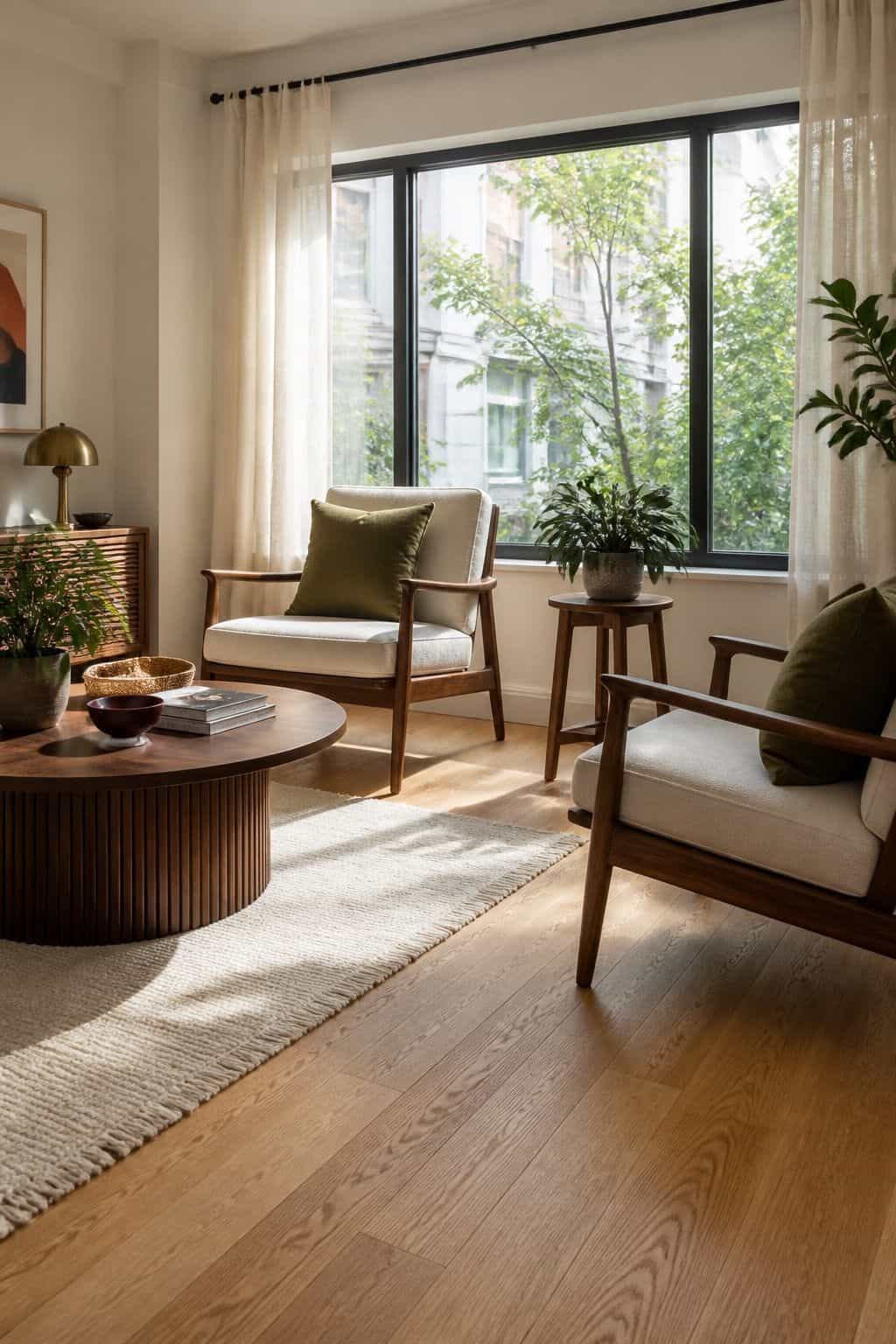
Engineered Hardwood

Discover the best sunroom flooring ideas to enhance the style, durability, and comfort of your space, from luxury vinyl to natural stone.

Engineered hardwood offers the warmth and visual richness of real wood while being far better suited to the temperature and humidity swings of a sunroom. Unlike solid hardwood, engineered planks are made of a thin, real-wood veneer layered over a stable core—typically plywood or high-density fiberboard—which resists cupping and warping when conditions change.

This construction allows you to enjoy authentic wood grain, natural knots, and rich stains with better dimensional stability. Engineered hardwood comes in a variety of species—oak, maple, walnut—and in finishes ranging from matte to gloss. Thicker veneers can be refinished once or twice over the lifespan of the floor, extending usable life, while thinner veneers offer cost savings.

To protect the floor from sun damage, choose UV-protected finishes and consider lighter stains or UV-stable topcoats that reduce visible fading. Proper underlayment is essential; use a moisture-resistant layer to buffer humidity and provide some thermal insulation. If your sunroom experiences significant temperature change or sits directly above an unheated space, consider pairing engineered hardwood with radiant heat systems that are compatible with the flooring.

Maintenance is moderate: regular sweeping and occasional manufacturer-recommended cleaners keep the surface in good shape. Avoid excessive moisture; while engineered is more resilient than solid hardwood, standing water and high humidity can still cause problems. For those who crave the authenticity of wood but need a more forgiving material, engineered hardwood strikes a stylish, practical middle ground.

Bamboo Flooring

Discover the best sunroom flooring ideas to enhance the style, durability, and comfort of your space, from luxury vinyl to natural stone.

Bamboo flooring is a refined, eco-conscious option for sunrooms that blends natural beauty with notable durability. Technically a grass, bamboo can be harvested and processed into planks that rival hardwood in hardness—especially strand-woven bamboo, which is compressed and laminated to create an extremely tough surface.

Aesthetically, bamboo offers clean, linear grain patterns and color variations from pale blonde to deep espresso. It furnishes sunrooms with a modern, organic vibe that works especially well with natural light and plant-heavy interiors. Because bamboo is more dimensionally stable than many hardwoods, it holds up better in environments with moderate humidity and temperature variation.

Select strand-woven products for high-traffic or pet-friendly spaces; they tend to resist dents and scratches better than traditional horizontal or vertical bamboo. Finishes matter: choose UV-resistant coatings to prevent sun bleaching, and prefer formaldehyde-free adhesives and low-VOC finishes for healthier indoor air quality.

Installation methods include click-lock floating floors and glued-down planks; choose the one matched to your subfloor and expected temperature swings. Routine care involves sweeping and damp mopping with minimal water exposure. Avoid excessive humidity and direct-sun scorching—place blinds or UV film on windows if your sunroom gets intense midday sun. With thoughtful selection and care, bamboo gives you a sustainable, stylish floor that ages gracefully.

Ceramic Tile

Discover the best sunroom flooring ideas to enhance the style, durability, and comfort of your space, from luxury vinyl to natural stone.

Ceramic tile is a classic, affordable choice for sunrooms that need water resistance, easy maintenance, and a wide range of design options. Made from fired clay and glazes, ceramic is less dense than porcelain but still durable enough for many sunroom applications—especially when paired with protective grout and proper sealing.

Design flexibility is one of ceramic’s biggest draws. You can choose bold patterns, intricate mosaics, or simple, neutral tiles to set the tone of the space. Ceramic also accepts glazes that mimic stone and wood, giving you versatile looks without the cost of natural materials. For sunrooms that double as dining or craft spaces, ceramic handles spills, pet accidents, and heavy use with minimal fuss.

Choose textured or matte finishes in areas prone to moisture or where shoes might track in water; textured surfaces improve traction and safety. While ceramic is more susceptible to cracking than porcelain if the subfloor is not perfectly prepared, careful installation and sufficient substrate support mitigate this risk.

Maintenance is straightforward: sweep or vacuum to remove grit, and mop with a mild cleaner. Grout lines can discolor over time, so consider sealed grout or darker grout colors for lower-maintenance appeal. If budget and variety are priorities, ceramic tile delivers performance and personality in equal measure.

Laminate Flooring

Discover the best sunroom flooring ideas to enhance the style, durability, and comfort of your space, from luxury vinyl to natural stone.

Laminate flooring is a budget-friendly alternative to hardwood and tile. It is easy to install, resistant to scratches and fading, and comes in a variety of wood and stone finishes.aLaminate flooring gives you the look of hardwood or tile at a friendlier price point, with easy installation and a surprising degree of durability. Modern laminate planks are built with a high-density fiberboard core and a photographic top layer protected by a wear layer; the result is a surface that mimics natural materials while resisting scratches, stains, and fading.

Historically laminate didn’t do well with moisture, but newer water-resistant and waterproof options have closed that gap, making laminate a viable choice for sunrooms with occasional humidity fluctuations. Still, it’s crucial to pick products explicitly rated for moisture-prone areas and to avoid standing water.

Design-wise, laminate offers crisp, repeatable patterns with consistent color and texture. Click-lock installation makes it a popular DIY option, and the rigid core varieties provide improved stability in rooms with temperature shifts. Underlayment choices affect sound absorption and warmth; add a thick underlay for a softer, warmer feel underfoot.

Care is simple—regular sweeping and a damp mop with manufacturer-approved cleaners—but be careful with steam cleaners and excessive moisture. For sunrooms where budget, ease of installation, and visual variety matter, water-resistant laminate is a sensible compromise between style and practicality.

Concrete Flooring

Discover the best sunroom flooring ideas to enhance the style, durability, and comfort of your space, from luxury vinyl to natural stone.

Concrete flooring gives sunrooms an industrial-chic baseline that’s both modern and forgiving. Polished concrete can be ground down and sealed to a satin or high-gloss finish, offering a sleek, reflective surface that amplifies natural light. You can also stain, dye, or stamp concrete to simulate stone, tile, or custom patterns.

From a durability standpoint, concrete is nearly unrivaled: it resists scratches, heavy loads, and UV exposure. It’s also an excellent thermal mass material—absorbing heat during the day and releasing it slowly—which can help stabilize temperature swings in a sunroom with good passive solar gain.

However, concrete is naturally hard and cold, which can be a downside for comfort. The solution is to layer softness and warmth: area rugs, cushions, and furniture soften the feel, while radiant floor heating can make the surface pleasant during cooler months.

Installation and finishing require skill—cracks can occur if the slab shifts or cures improperly—so proper reinforcement and joint planning are essential. For homeowners after a minimalist, highly durable floor that can be customized through color and texture, concrete is a compelling choice.

Cork Flooring

Discover the best sunroom flooring ideas to enhance the style, durability, and comfort of your space, from luxury vinyl to natural stone.

Cork flooring brings warmth, softness, and eco-cred to a sunroom. Harvested from the bark of cork oak trees without harming the tree, cork is renewable and biodegradable. Its cellular structure provides natural cushioning, thermal insulation, and sound absorption—making it comfortable underfoot and quieter than harder flooring options.

Cork is naturally resistant to mold and mildew, an advantage in plant-filled sunrooms where humidity levels can climb. It compresses slightly underfoot, which reduces fatigue when you’re standing to tend plants or entertain. The visual character of cork ranges from uniform, subtle patterns to more pronounced textures depending on processing.

To maintain cork in a sunroom, choose products with UV-stable finishes to prevent sun-induced fading, and apply protective sealants as recommended. Though cork is fairly durable, it can be dented by heavy furniture legs or sharp objects, so use felt pads and protective mats under heavy planters.

Cork performs best in rooms with moderate temperature swings; avoid prolonged exposure to standing water. With its combination of comfort, sustainability, and casual sophistication, cork makes a lovely choice for a relaxed, plant-forward sunroom.

Natural Stone Flooring

Discover the best sunroom flooring ideas to enhance the style, durability, and comfort of your space, from luxury vinyl to natural stone.

Natural stone—slate, travertine, limestone, marble—brings timeless luxury to a sunroom. Stone’s inherent variations in color, veining, and texture give each floor a unique character. It’s extremely durable, stands up to heavy use, and resists fading in direct sunlight, making it a superb long-term investment.

Stone is thermally efficient: it stays cool in summer and pairs beautifully with radiant floor heating to deliver cozy warmth in winter. Textured or honed finishes improve slip resistance and are ideal for rooms with plant watering or high humidity. Because natural stone is porous to varying degrees, proper sealing is essential to guard against staining and mineral deposits, especially in light-colored stones.

Installation is labor-intensive and requires a well-prepared substrate to prevent cracking; tiles should be set on a stable mortar bed with appropriate grout and sealing. Costs run higher than many manufactured materials, but the aesthetic payoff and longevity often justify the expense.

For a cohesive look, match stone tones to your sunroom’s furniture and plant palette. Plush rugs and layered textiles soften the coolness and add instant comfort. Natural stone is a top pick when you want a high-end, durable surface that ages gracefully.

Sheet Vinyl Flooring

Discover the best sunroom flooring ideas to enhance the style, durability, and comfort of your space, from luxury vinyl to natural stone.

Sheet vinyl offers a seamless, cost-effective solution for sunrooms that need waterproof performance and easy upkeep. Available in large rolls, sheet vinyl creates a continuous surface with no seams in smaller rooms, which reduces places where water and dirt can accumulate.

Modern sheet vinyl comes in a wide array of patterns and textures, from convincing wood and stone visuals to bold graphic designs. Cushioned vinyl adds extra softness underfoot—useful if the room serves as a play space or active hangout. The material resists stains and water, making cleanup simple: sweep and mop, and spills wipe away.

Durability varies with quality; thicker, high-wear vinyl holds up best to heavy use. UV-resistant coatings are important if the sunroom gets direct light to prevent fading. Installation ranges from glue-down to loose-lay systems; proper subfloor preparation ensures a smooth, long-lasting result.

For homeowners on a budget who still want moisture resistance and design flexibility, sheet vinyl is a practical, low-fuss option that keeps maintenance minimal without sacrificing style.

Conclusion

With these sunroom flooring ideas, you can choose the best option that fits your style, budget, and functionality needs. Whether you prefer the warmth of engineered hardwood, the durability of porcelain tile, or the eco-friendliness of cork, there’s a perfect flooring choice for every sunroom.

By selecting moisture-resistant, durable, and stylish flooring, your sunroom will remain comfortable, beautiful, and functional year-round—an inviting retreat for relaxation, entertainment, or enjoying the natural light indoors.

I’m Evan Kristine, a Finland-based founder of Solia Avenue, where I share realistic home décor ideas for small apartments. My goal is to make decorating feel easy, cozy, and doable – so you can love your space without needing a bigger one.

Leave a Comment