
Quick Answer: The best valentines day decorating ideas skip the drugstore red and hearts for a softer palette of burgundy, dusty rose, and cream with natural textures, dried florals, and warm candlelight. Work room by room across the entryway, living room, dining area, and bedroom, lean on reusable and renter-friendly pieces, and the whole home reads cozy and romantic rather than seasonal-aisle.
Valentine’s decorating gets a bad rap, and honestly, the foil-heart, hot-pink, cellophane version earns it. But that is not the only way to do it.
February is the coldest, darkest stretch of the whole year, and a home that leans into soft, cozy romance for a couple of weeks is genuinely worth the small effort. Swap the drugstore look for a softer palette, natural linen, dried florals, wooden bead garlands, and warm candlelight, and the whole place starts to feel like a quiet retreat.
This list works room by room from the entryway to the bedroom, and nearly everything reuses year after year. For the table specifically, our spring table decor ideas share the same soft, natural approach if you want to carry the mood past February.
Decorating your home for Valentine’s and want it cozy rather than drugstore-cheesy?
The Ultimate Budget Planner helps map the decorating budget and the reusable-piece strategy so the whole home reads romantic affordably. Currently just $4.99 before it goes up to $19.99.

Recommended Valentines Day Decor Products


Recommended blogs to read:
- Valentines dinner table decor ideas
- Galentines party table decor ideas
- Winter decor ideas for the home
- Best new year decoration ideas
- Galentines party food ideas
Entryway and Door
1. Hang a Dried Floral Wreath on the Door
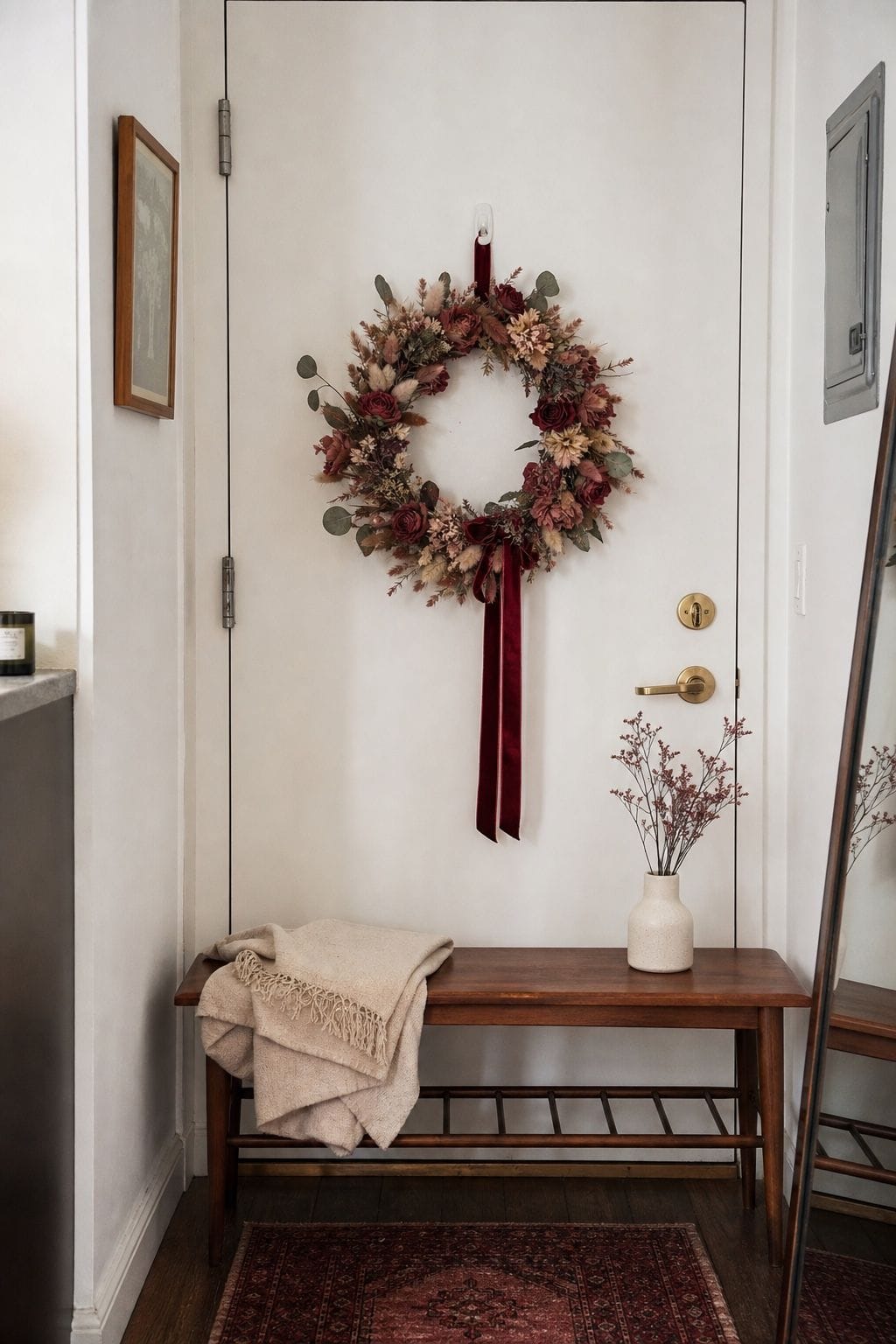


The entry sets the tone, and a dried floral wreath in soft pinks, burgundy, and cream signals the elevated, non-drugstore direction immediately. Dried roses, bunny tails, eucalyptus, and preserved blooms in 14 to 18 inches read as romantic and sophisticated rather than seasonal-aisle. Hang it with a wreath hanger or a 3M command hook for renter-friendly mounting.
A dried wreath also lasts the whole season and stores for years, unlike a fresh one. Tie a velvet ribbon in burgundy or dusty rose around the bottom for a soft accent. The dried floral wreath is the entry’s anchor and the first signal that this home leaned into the softer 2026 Valentine’s direction.
Read more: Top 17 Romantic Valentines Dinner Table Decor Ideas to Set the Mood
2. Style the Entry Console With a Romantic Vignette
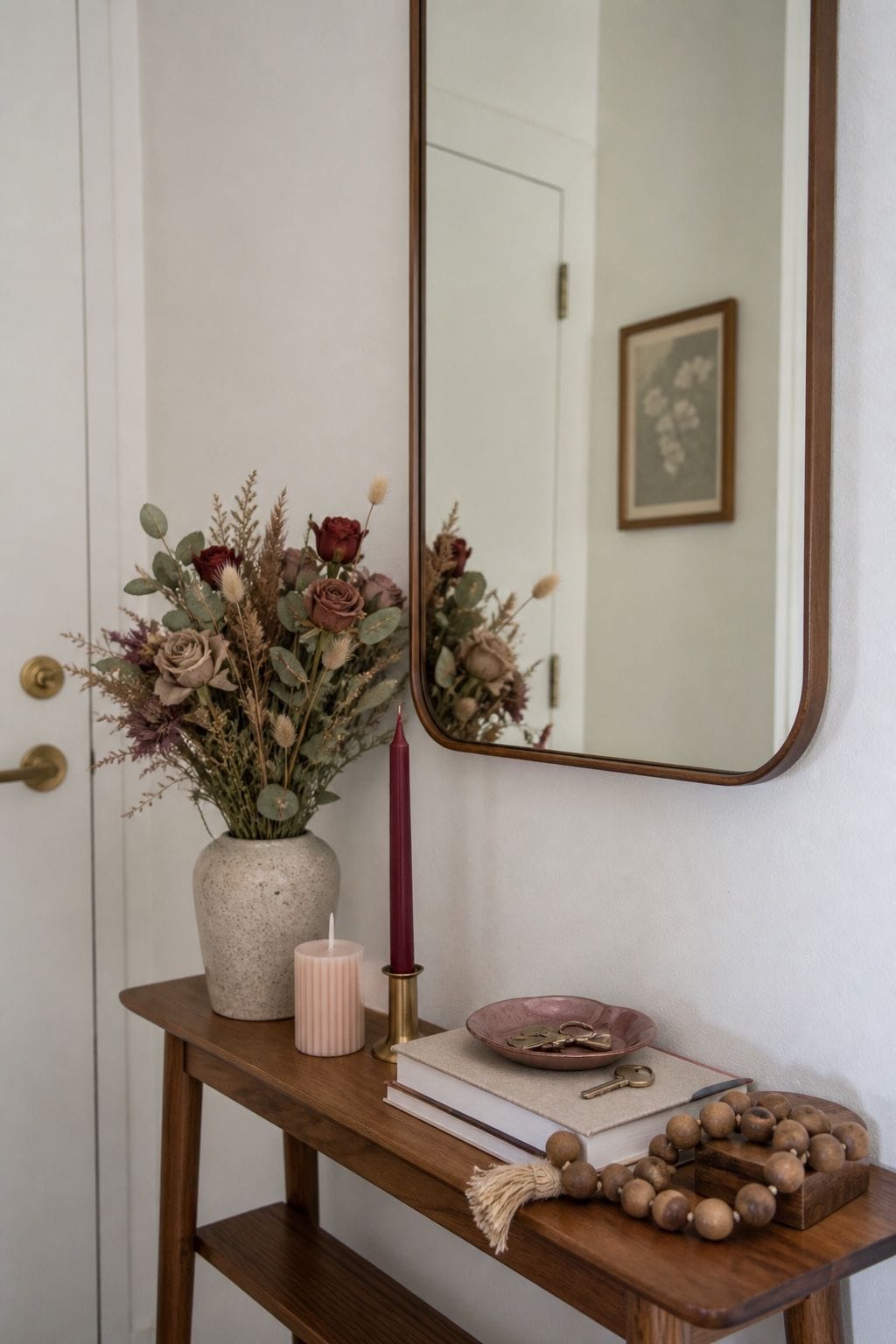


The entry console gets a soft Valentine’s vignette: a dried rose arrangement in a ceramic vase, a cluster of blush and cream candles, a small stack of books, and a tray for keys. The vignette greets the household and any guests with the cozy romantic palette before they have taken off their coats.
Keep the console vignette compact so there is still room to set down bags. Add a small framed print or a wooden bead garland draped along the console edge. This is the same room-by-room styling logic that runs through our Easter living room decor, just shifted into the Valentine’s palette.
3. Add a Layered Doormat in Soft Tones
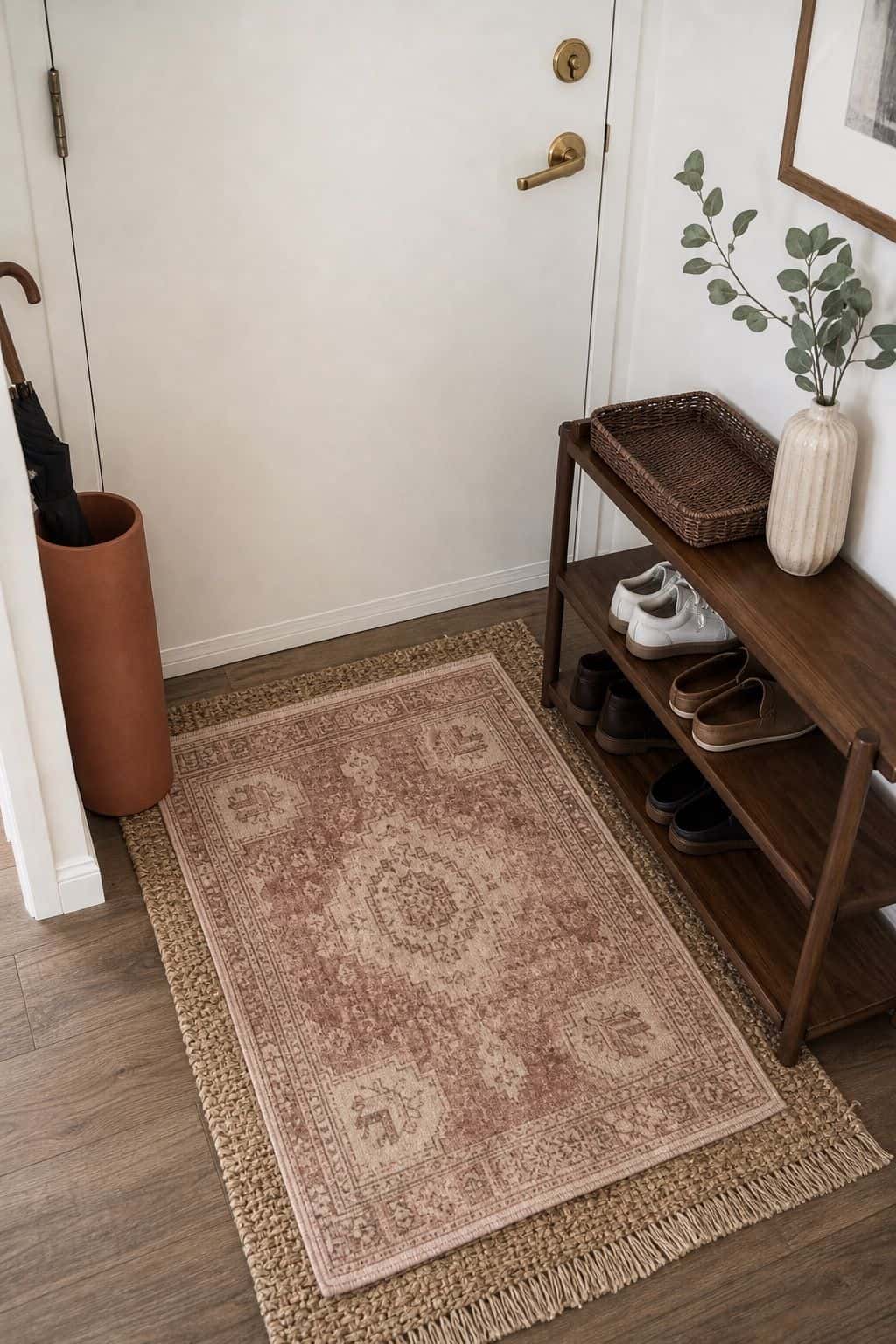


Layer a soft-toned doormat over a natural fiber runner for double textile impact at the entry. Pick a top mat in dusty rose, cream, or a subtle heart pattern in muted tones rather than a bright cartoon design. The natural jute or coir base adds texture and grounds the entry.
The layered mat does functional work catching winter mess and styling work setting the cozy tone. Standard sizes are 24 by 36 inches for the base and 18 by 30 inches for the top. Swap just the top mat for the season and the natural base stays year-round, which keeps the look both cheap and low-effort.
Read more: Top 16 Easter Decorating Ideas for Every Room of Your Home
4. Drape a Wooden Bead or Floral Garland
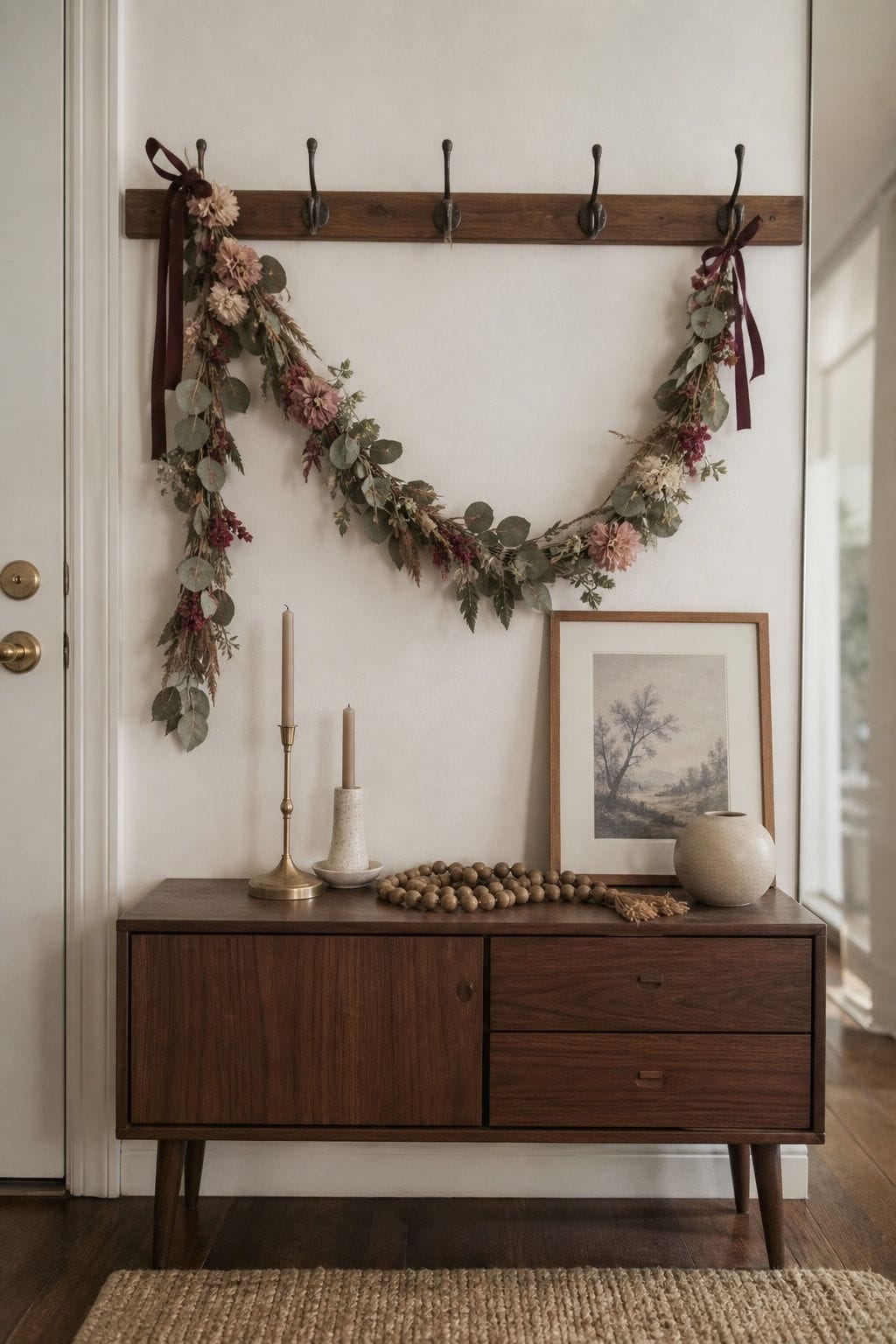


A wooden bead garland or a soft dried floral garland draped along the entry console, a doorway, or a stair rail adds the elevated 2026 Valentine’s texture. Wooden bead garlands in natural or blush tones read as sustainable and crafted rather than foil-and-cellophane party decor.
Drape the garland with a loose natural dip rather than pulling it taut. A dried floral garland of preserved roses and eucalyptus works the same way. These garland styles reuse year after year and read as the sophisticated alternative to the standard heart-and-foil banners, setting the tone for the whole home’s decorating.
Read more: Top 16 Summer Mantel Decorating Ideas for a Light Coastal Fireplace
Living Room and Mantel
5. Swap Couch Pillows to the Valentine’s Palette
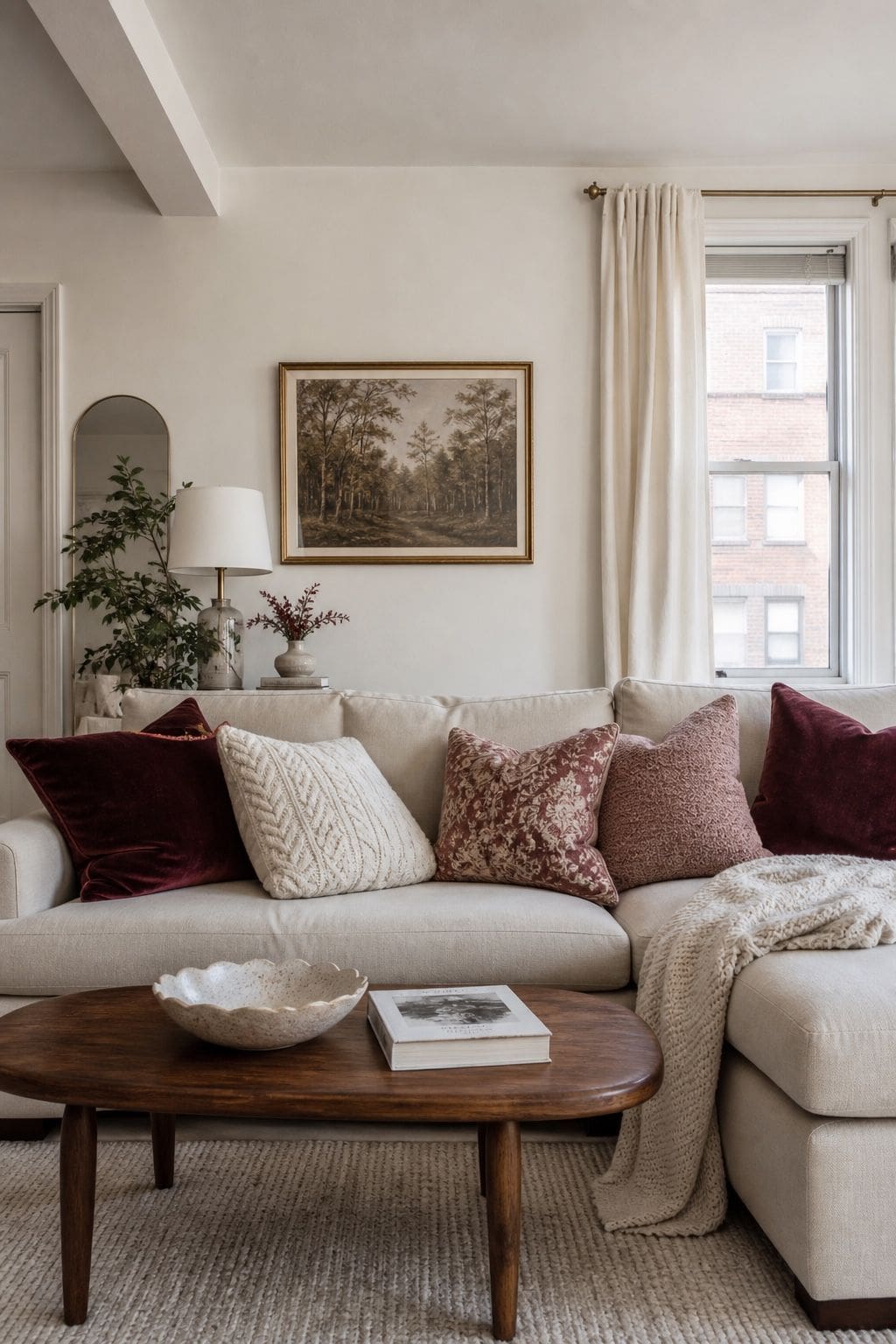


Swap two or three couch pillow covers for the soft Valentine’s palette: burgundy velvet, dusty rose boucle, cream knit, with maybe a single subtle heart-detail pillow. The swap takes ten minutes and shifts the whole living room into the romantic palette without committing to permanent change.
Follow the rule of three: one solid, one subtle pattern, one textural, all in the same soft family. Keep the inserts and only change the covers, which makes it a $40 to $80 project. The pillow swap is the highest-impact, lowest-effort living room move, and the covers store flat for next year.
6. Style the Mantel With Soft Romance
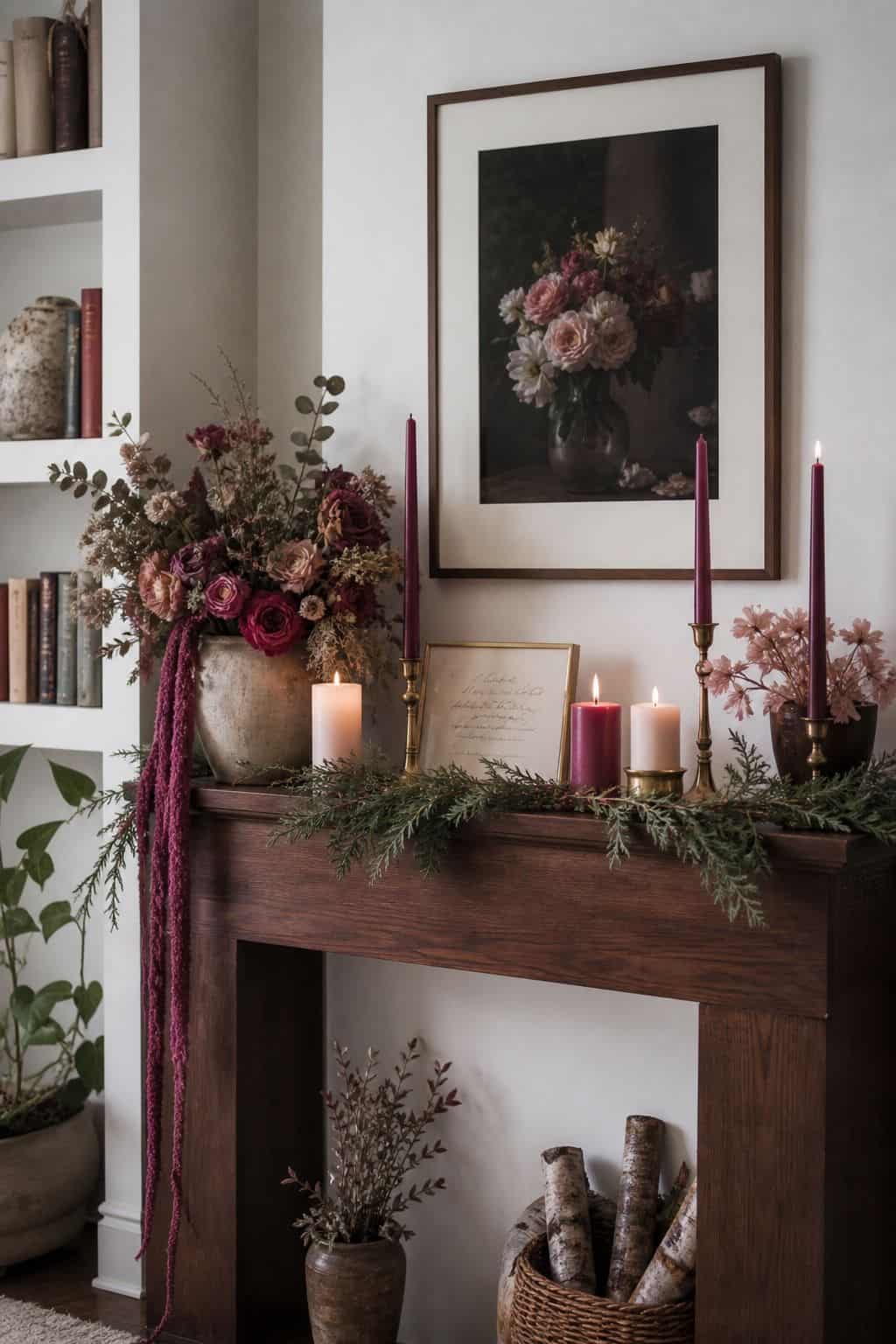


The mantel transitions from winter to Valentine’s with a swap of accents: dried rose arrangements, blush and burgundy candles, a soft garland, and maybe a small framed love note or a subtle heart accent. Keep the winter greenery base and layer the romantic elements on top.
Layer the mantel with the same three-height logic as any styled ledge, a tall dried arrangement on one end, a candle cluster on the other, low textural pieces bridging them. The mantel becomes the living room’s romantic focal point, and the transition approach means it builds on what is already there from winter.
Read more: Top 20 Mother’s Day Gift Basket Ideas She Will Actually Use and Love
7. Add Dried Rose Arrangements Around the Room
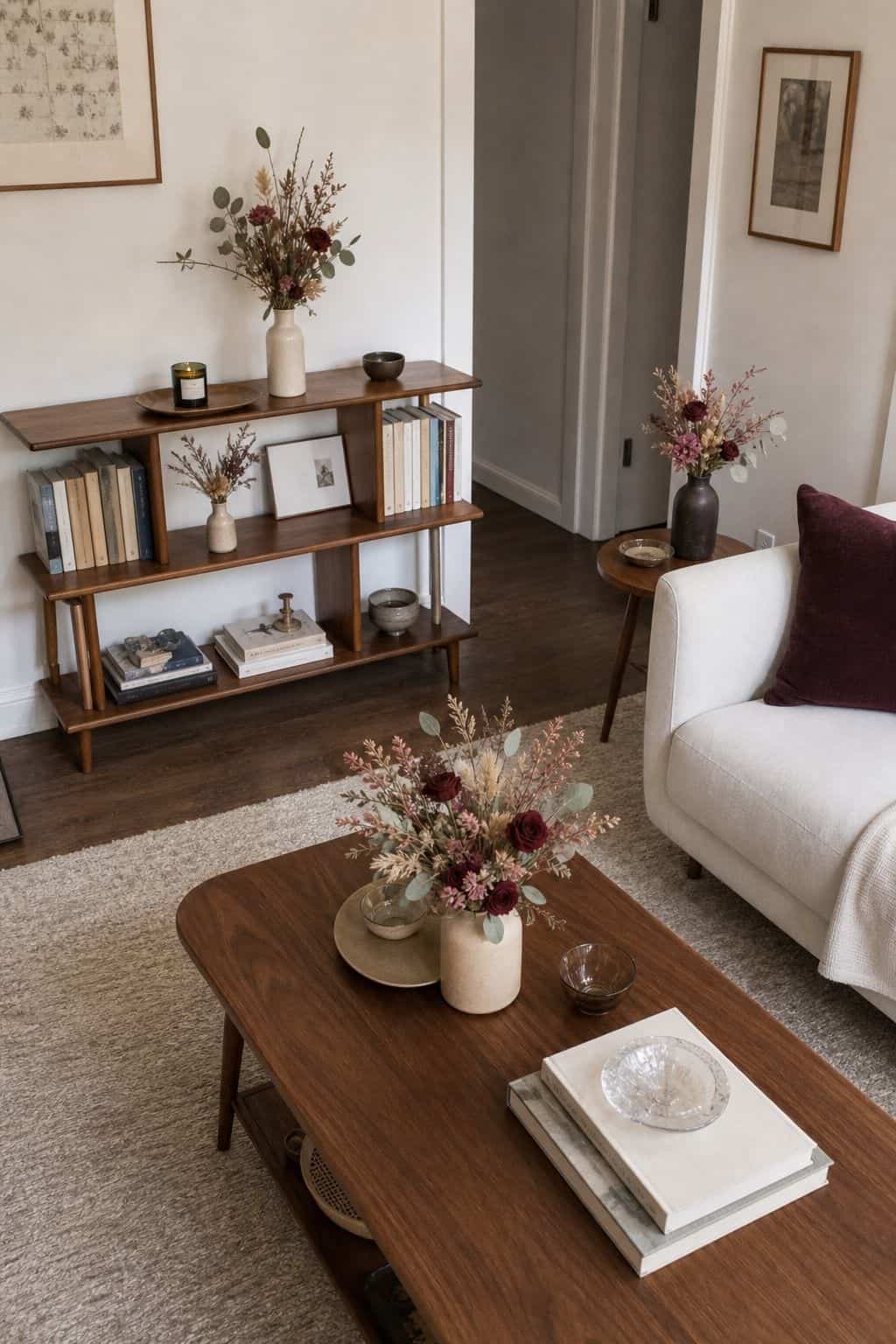


Small dried rose arrangements distributed around the living room, on the coffee table, a side table, a bookshelf, carry the romantic palette throughout the space. Dried roses in soft pinks, burgundy, and cream hold their look the whole season and read as far more elevated than a cellophane-wrapped fresh bouquet.
Use ceramic, glass, or stoneware vessels in neutral or palette tones. A few small arrangements spread around the room create more cohesion than one large bouquet in a single spot. The dried roses are the recurring element that ties the whole living room into the Valentine’s palette.
Read more: Top 17 Father’s Day Decoration Ideas for a Celebration He’ll Love
8. Layer Throws in Burgundy and Blush
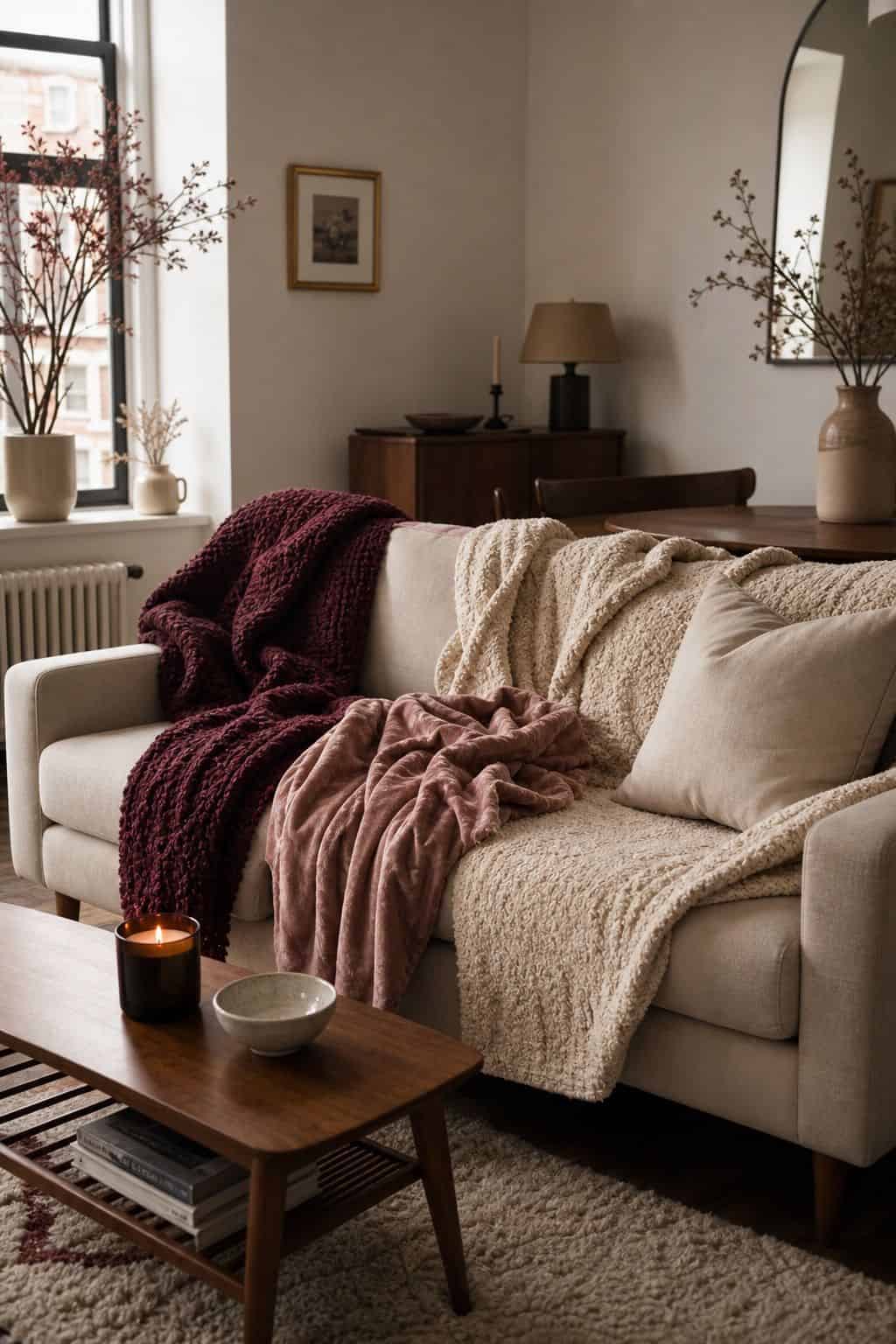


Layer throw blankets in burgundy, dusty rose, and cream across the living room seating. The textiles add warmth for the coldest stretch of February and reinforce the romantic palette. Mix textures, a chunky knit, a boucle, a velvet, so the throws read as cozy rather than matchy.
Fold each throw in a loose casual heap rather than a tight square. The throws do double duty as genuine warmth for February evenings and as palette-setting decor. Most of these can carry over from the winter styling with just the addition of a burgundy or blush option, keeping the cost low.
9. Add Warm Candlelight Throughout the Room
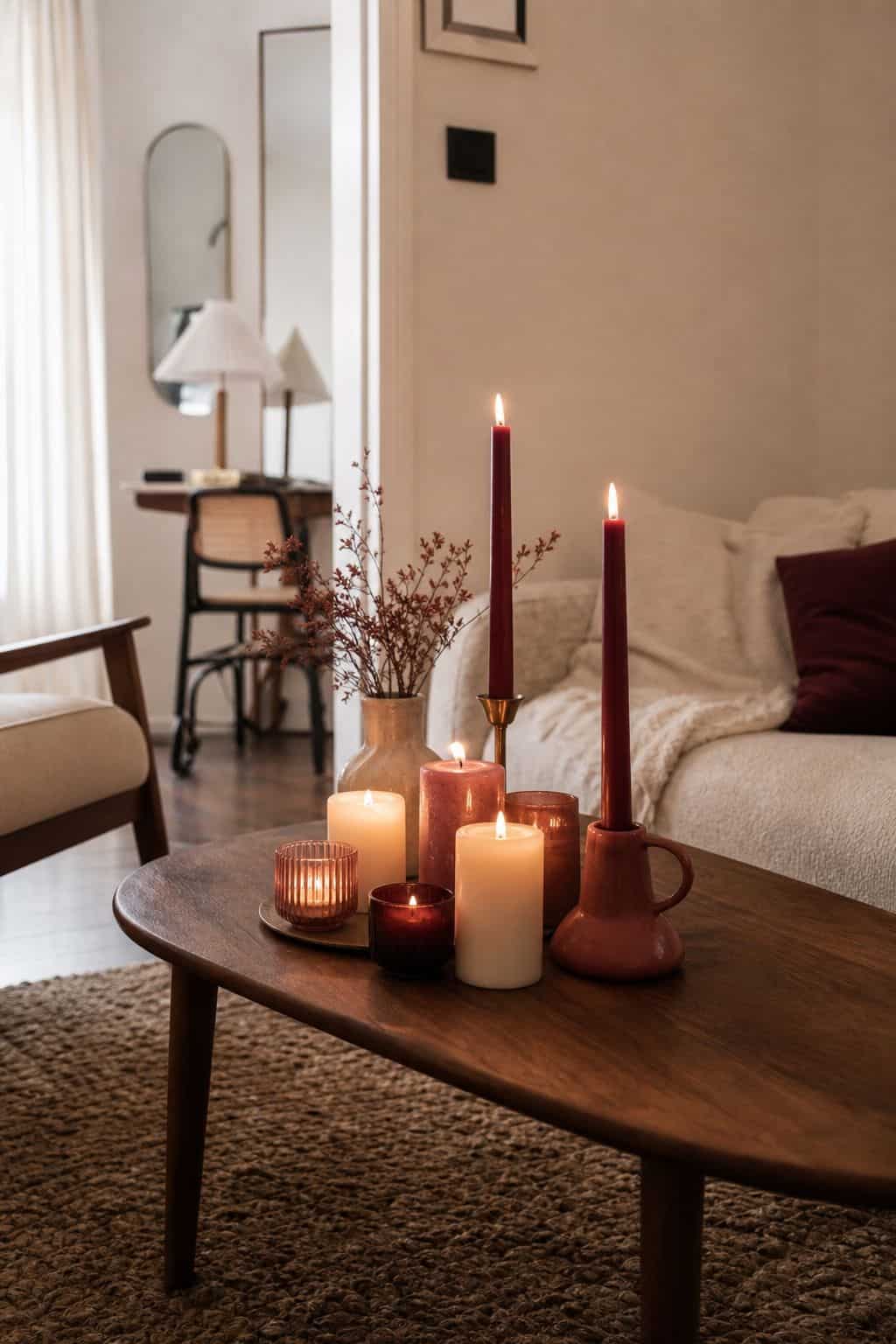


Candlelight is the entire engine of a cozy romantic home. Cluster candles in blush, burgundy, and cream on the coffee table, the mantel, side tables, and any open surface. Mix tapers, pillars, and votives in varied heights, and use flameless LED versions on timers for safety and consistency.
Switch off the harsh overhead light in the evening and let the candle clusters carry the room. The warm low lighting is what makes a living room feel romantic rather than just decorated, the same principle that runs through our spring decor ideas.
Read more: Top 20 Creative Graduation Cap Designs to Celebrate Your Big Day
10. Hang Soft Wall Decor or a Framed Print
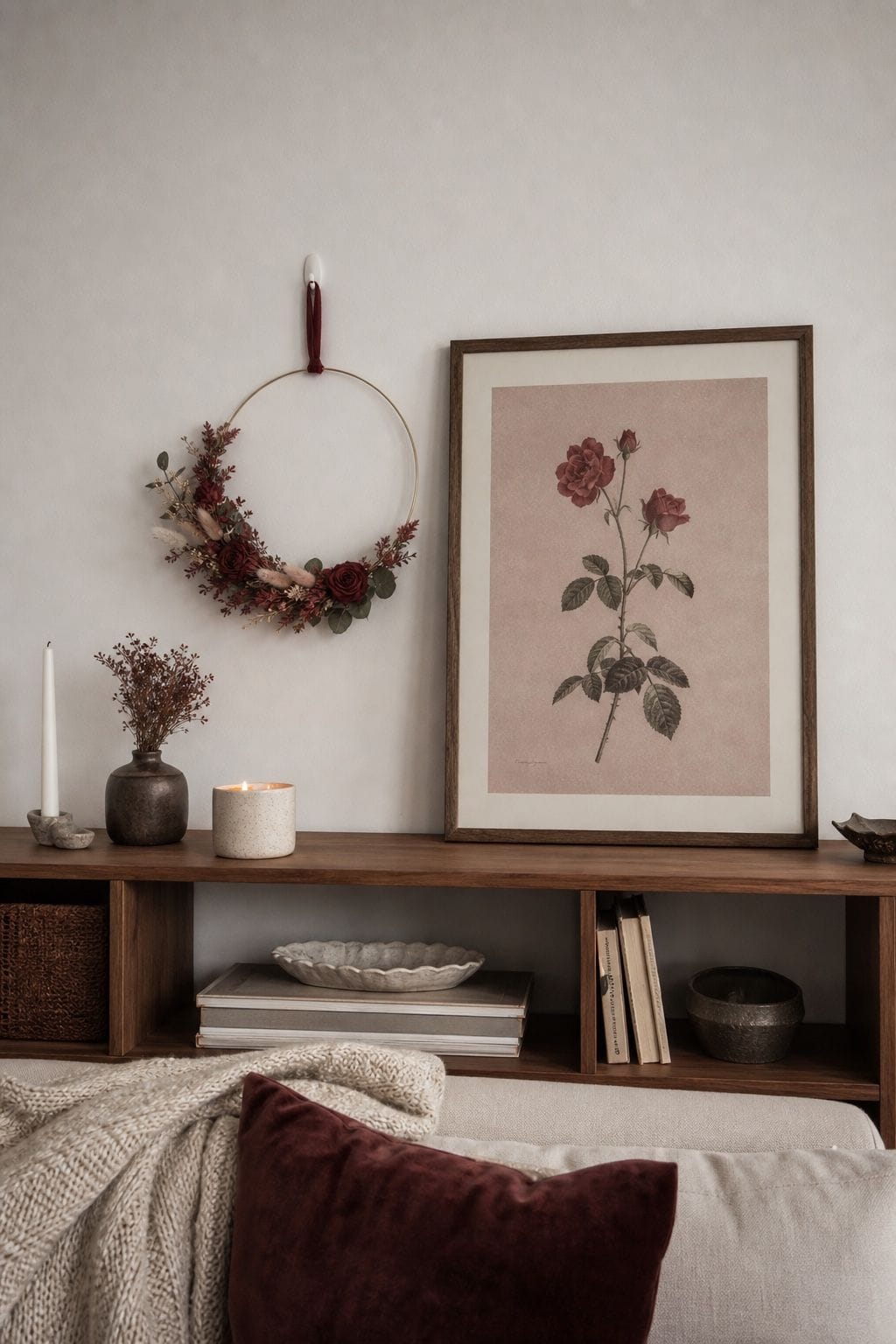


A piece of soft Valentine’s wall decor, a framed botanical print, a love-themed art piece in muted tones, a small dried floral hoop, gives the living room a wall element without a permanent change. Pick pieces in the burgundy-rose-cream palette rather than bright red so they coordinate with the rest of the room.
Hang it with a 3M command hook or lean it on the mantel or a shelf for a no-mounting option. The wall decor is the finishing layer that completes the living room’s romantic styling, and pieces in a muted palette can sometimes stay up well past February.
Read more: Top 15 Mother’s Day Wreath Ideas for Your Front Door
Dining and Table
11. Style the Dining Table for Everyday Romance
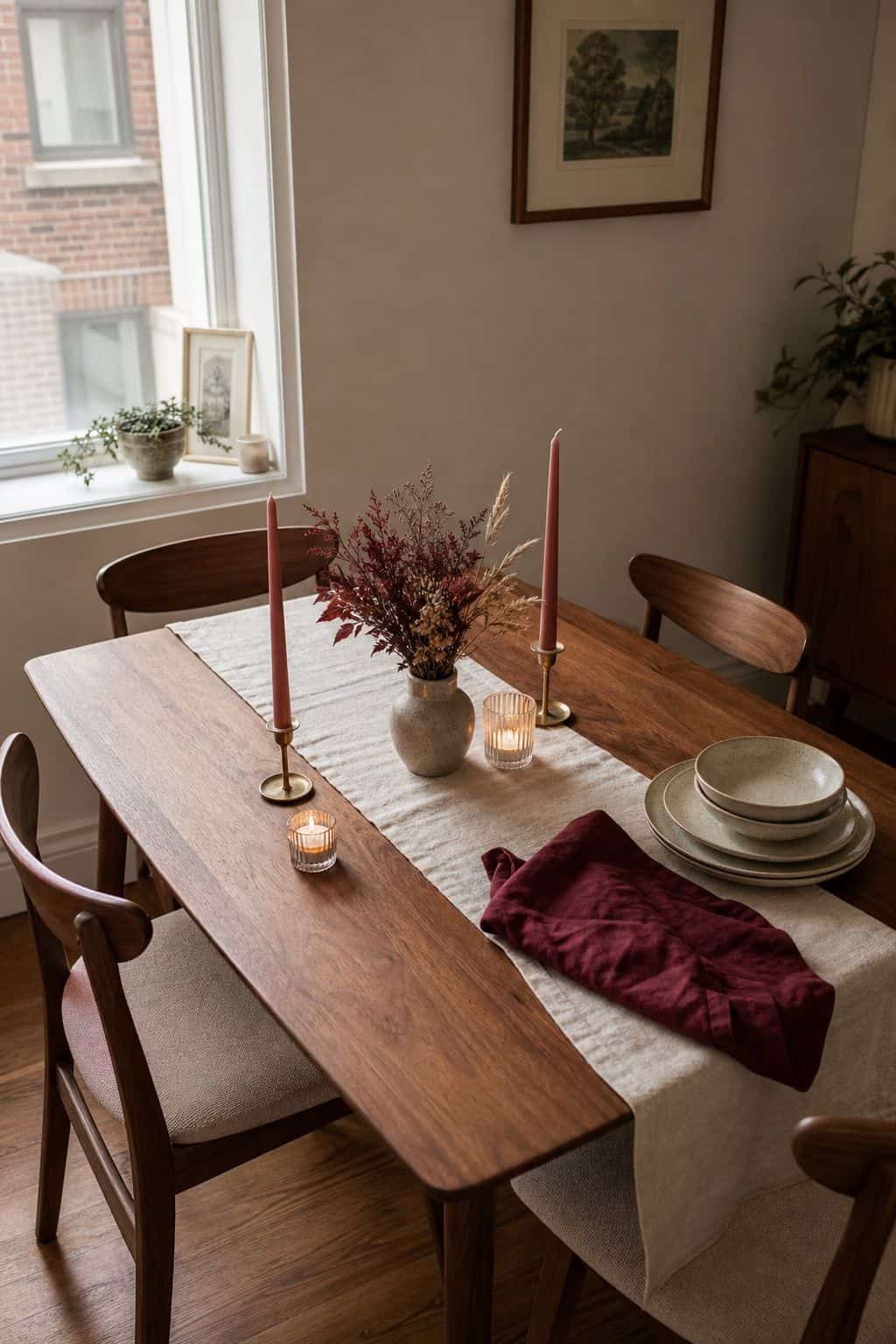


The dining table can carry a low-key Valentine’s styling for the whole season, not just for a single dinner. A natural linen runner, a small dried floral centerpiece, and a few candles keep the table romantic for everyday meals leading up to the holiday.
For the actual Valentine’s dinner, the styling scales up, and the full build is covered in our chic Galentine’s party decor ideas. But even the everyday version, a runner and a small arrangement, keeps the dining area part of the cozy romantic home rather than the one unstyled room.
12. Add a Dried Floral Centerpiece
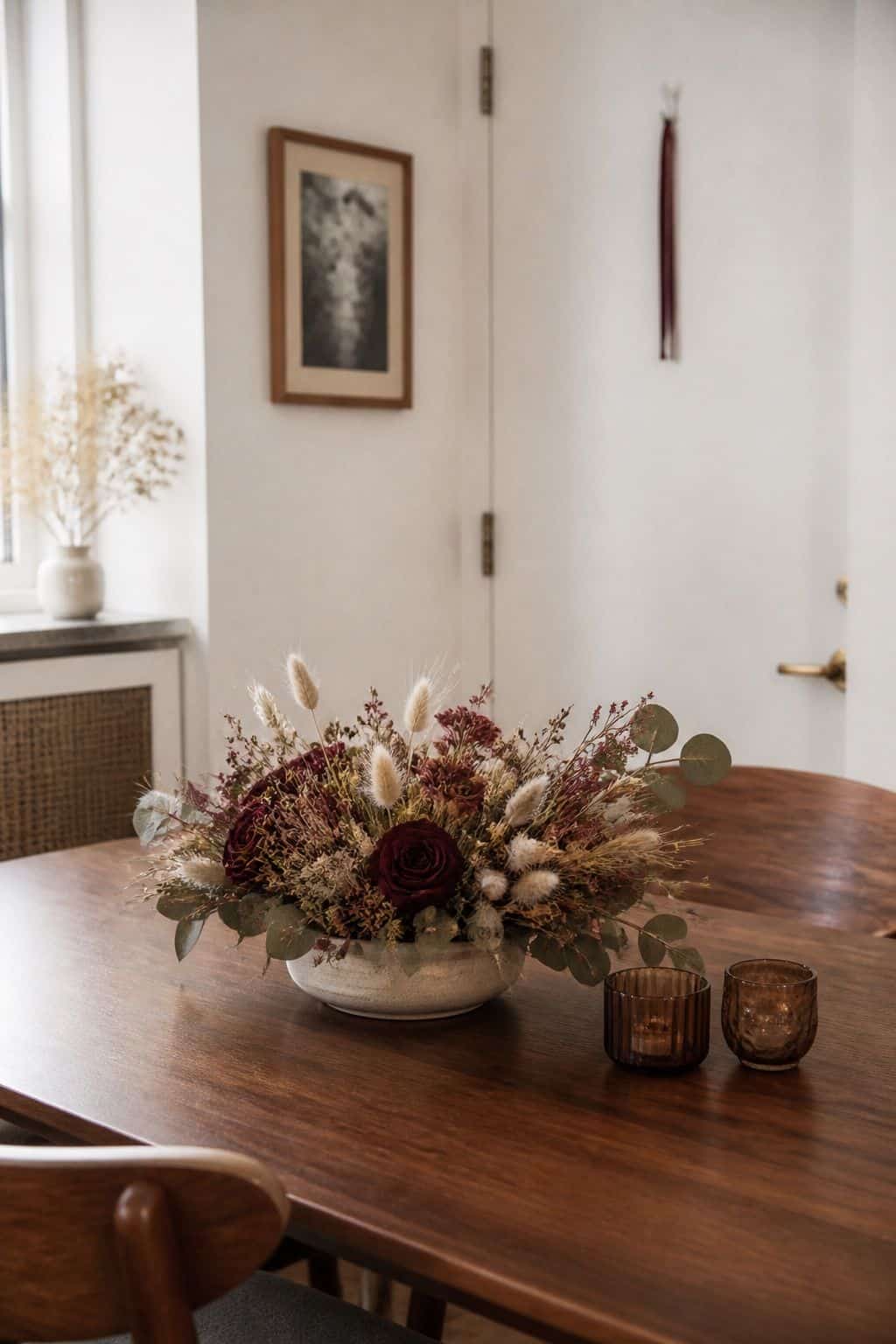


A low dried floral centerpiece in the burgundy-rose-cream palette anchors the dining table for the season. Dried roses, bunny tails, preserved eucalyptus, and dried wheat in a low vessel hold their look for weeks and read as the elevated 2026 direction. Keep it under twelve inches so it works for actual meals.
The dried centerpiece is also the most practical choice since it does not wilt and can be styled once for the whole season. Add a couple of small candle holders alongside it for warmth. This is the dining table’s recurring romantic element that requires no upkeep through February.
Read more: Top 16 Mother’s Day Bouquet Ideas for a Beautiful Gift
13. Set Up a Sweet Treats or Coffee Station
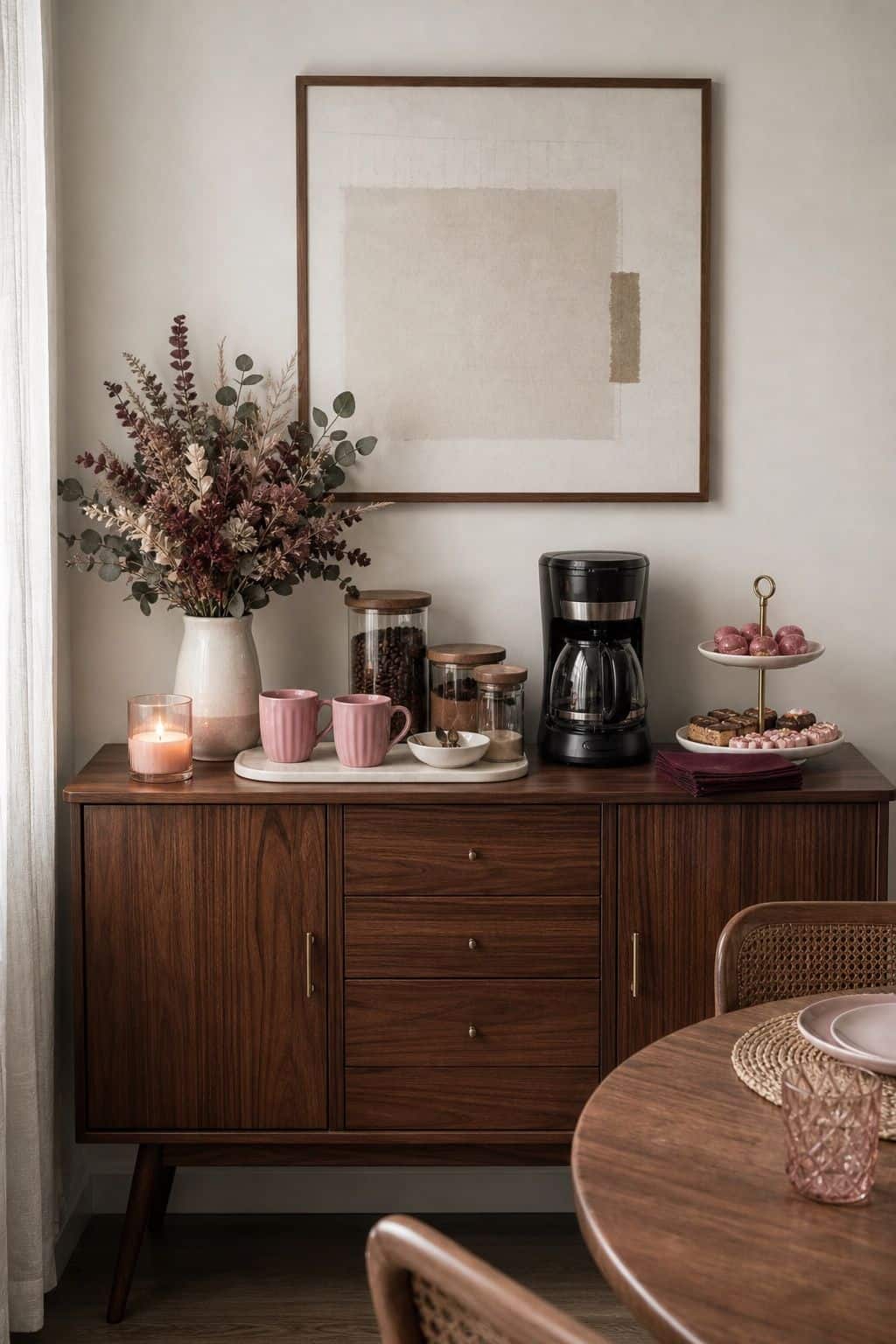


A small styled treats or coffee station, on a sideboard, a bar cart, or a console, gives the dining area a cozy functional feature. A tiered tray of pink-frosted treats, a styled coffee or hot chocolate setup with mugs and toppings, or a small dessert display all work.
Style the station with the soft palette: blush mugs, a dried floral accent, a candle. The treats station reads as both decor and a genuinely usable feature, and it gives the home a warm gathering spot. It is the same multi-zone hosting logic as our spring Easter decor ideas, scaled to everyday use.
Read more: Top 15 Mother’s Day Decoration Ideas for a Beautiful Celebration at
14. Add Soft Touches to Open Shelving
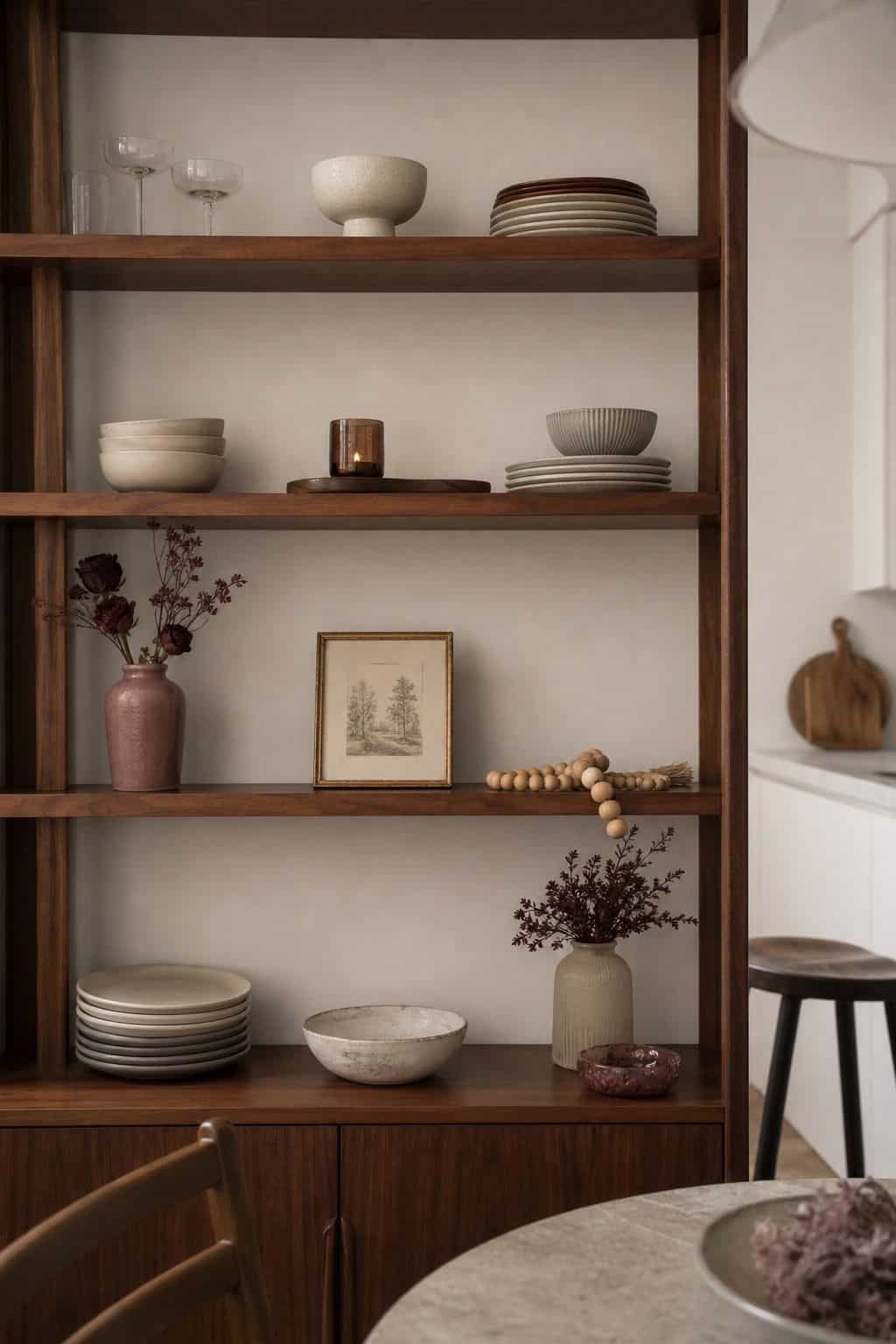


Open shelving in the dining area or kitchen gets small Valentine’s touches: a few dried rose stems in a bud vase, a small framed print, a wooden bead garland draped along a shelf edge, a candle. The shelving styling carries the palette into a spot that is easy to overlook.
Keep the shelf styling restrained, two or three small elements per shelf, so it reads as intentional rather than cluttered. The open shelving touches are a small detail, but they keep the dining and kitchen area from being the one room that missed the romantic styling.
Bedroom and Cozy Corners
15. Layer the Bed in Soft Romantic Tones
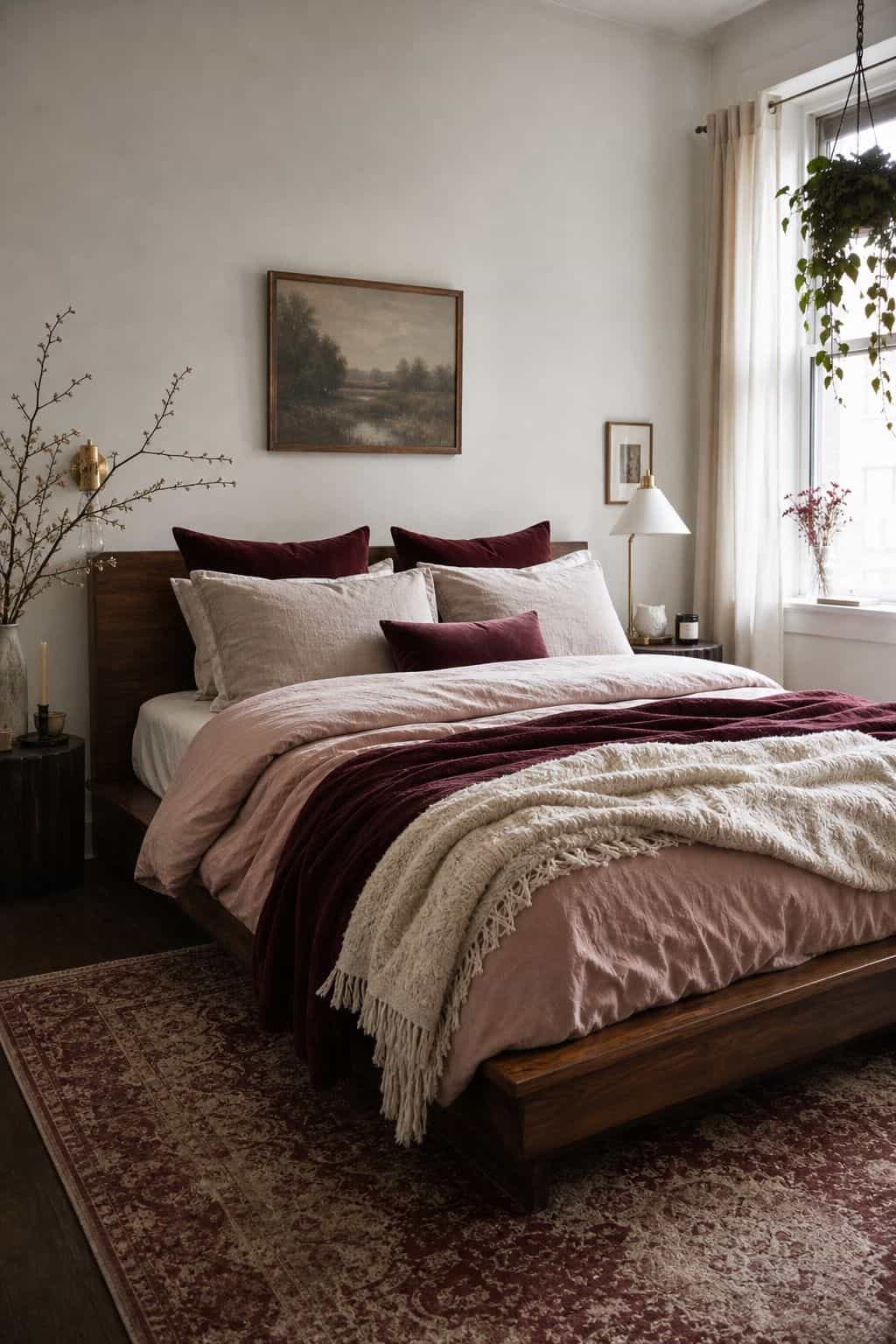


The bedroom is the most naturally romantic room, and a few swaps lean into it. Layer the bed with a duvet or throw in dusty rose, burgundy, or cream, add a couple of textured euro pillows, and drape a soft throw across the foot. The layered bed reads as a cozy romantic retreat for the season.
Mix textures, a velvet euro sham, a chunky knit throw, linen pillowcases, so the bed looks styled rather than matchy. This is the same layered-bed logic as winter styling, just shifted into the Valentine’s palette. The bedroom swap is simple and makes the most personal room in the home feel intentional.
Read more: Top 18 Best Mother’s Day Gift Ideas She’ll Actually Use
16. Add Candles and Fairy Lights to the Bedroom
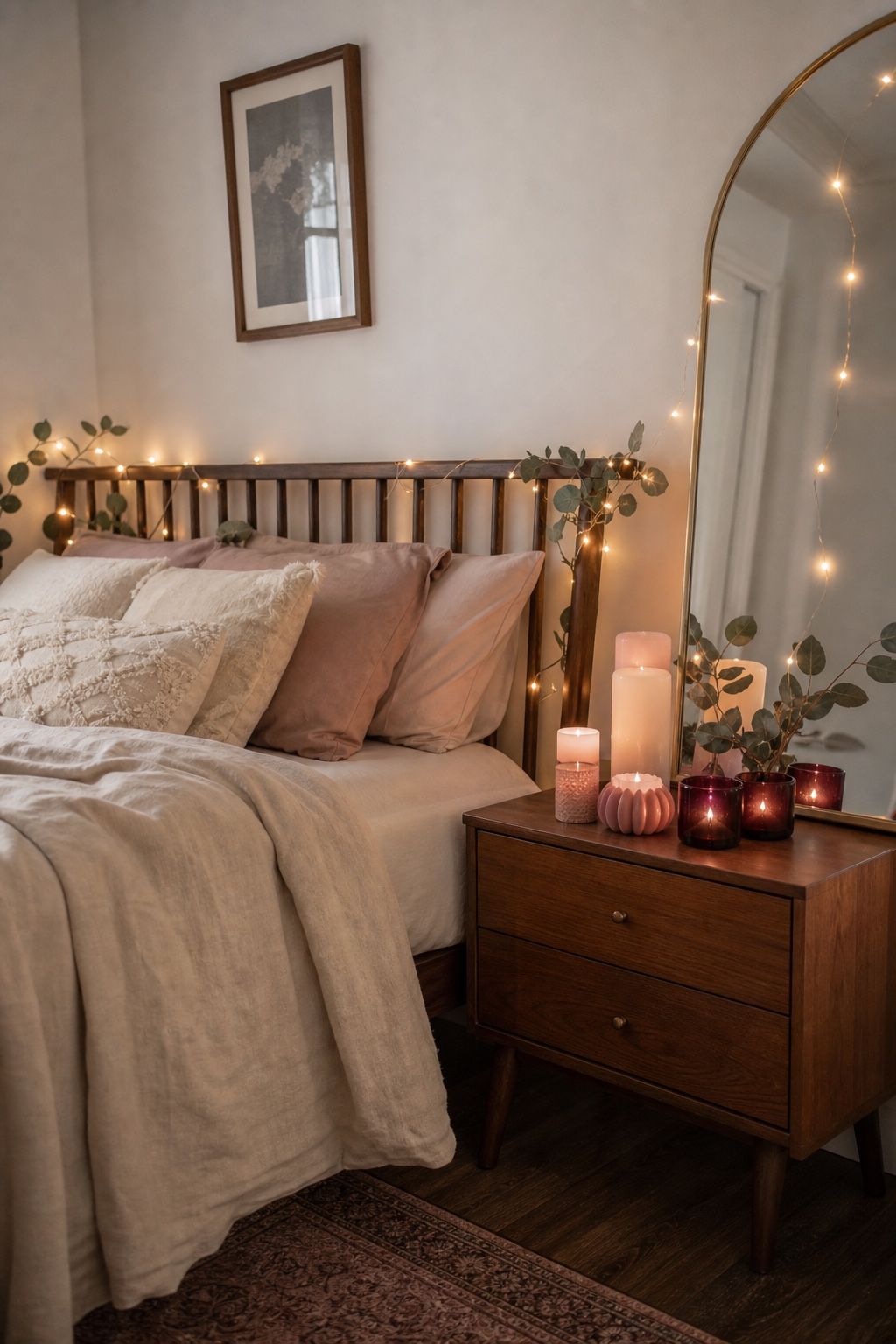


Warm candlelight and fairy lights make the bedroom feel romantic for the season. Cluster blush and cream candles on the nightstand and dresser, and weave a strand of warm fairy lights along a headboard, a mirror, or a shelf. Use flameless candles on the nightstand for safety.
Set the fairy lights on a timer so they switch on at dusk. The combination of soft candlelight and fairy lights turns the bedroom into the coziest room in the home for February, and it costs almost nothing beyond a few candles and a single light strand.
Read more: Top 17 Galentines Day Party Ideas That Celebrate Sisterhood and Soft
17. Style a Reading or Coffee Nook
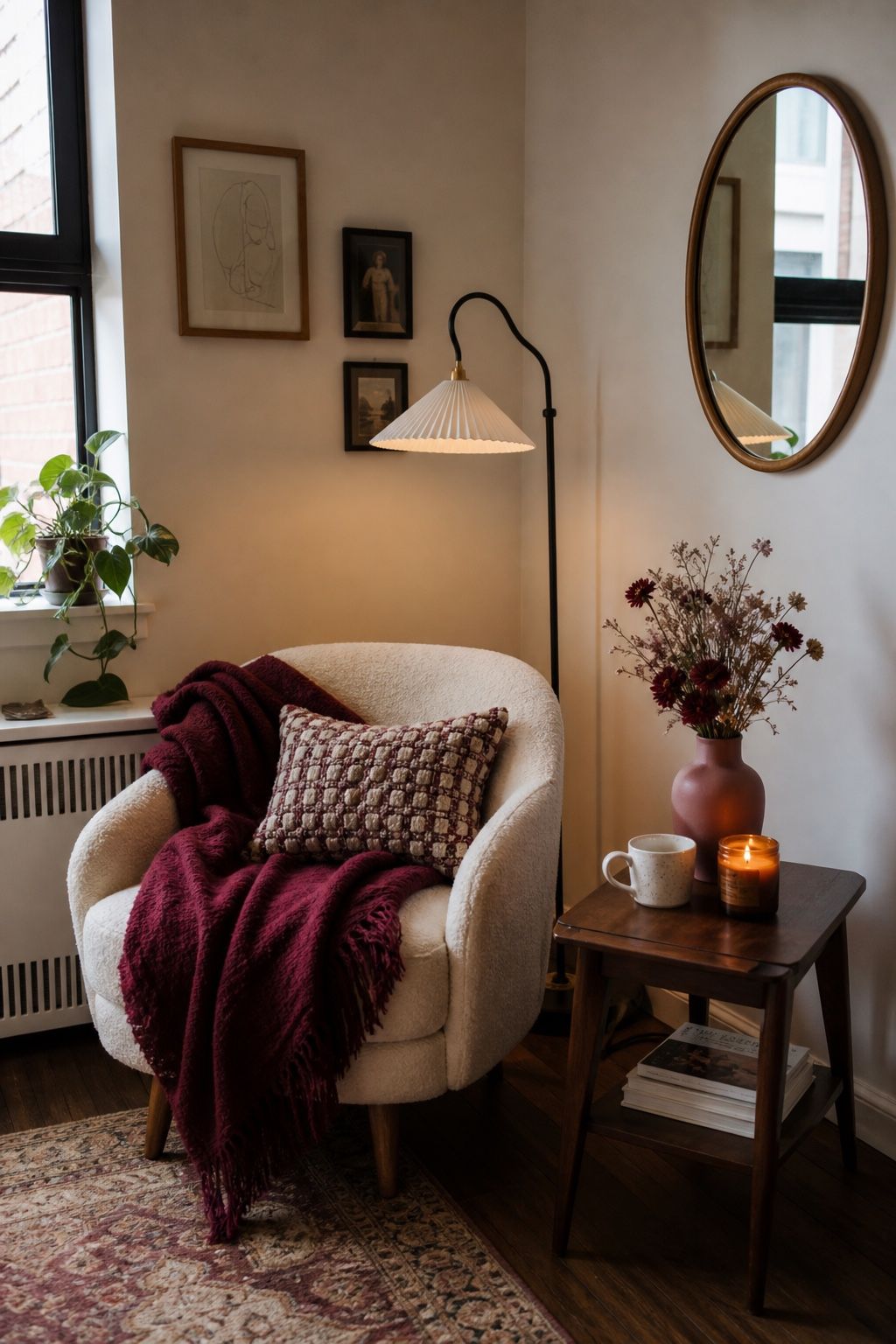


A small reading or coffee nook, an armchair, a soft throw, a side table with a candle and a dried floral arrangement, gives the home a dedicated cozy corner for the season. The nook does not need much space, just a chair, a warm lamp, and a few styled touches.
Layer the chair with a burgundy or blush throw and a textured pillow. The reading nook becomes a destination spot for the coldest weeks of February, and it carries the romantic palette into a corner that would otherwise be dead space. It is one of the highest-return cozy-home moves there is.
18. Add a Romantic Scent Throughout the Home
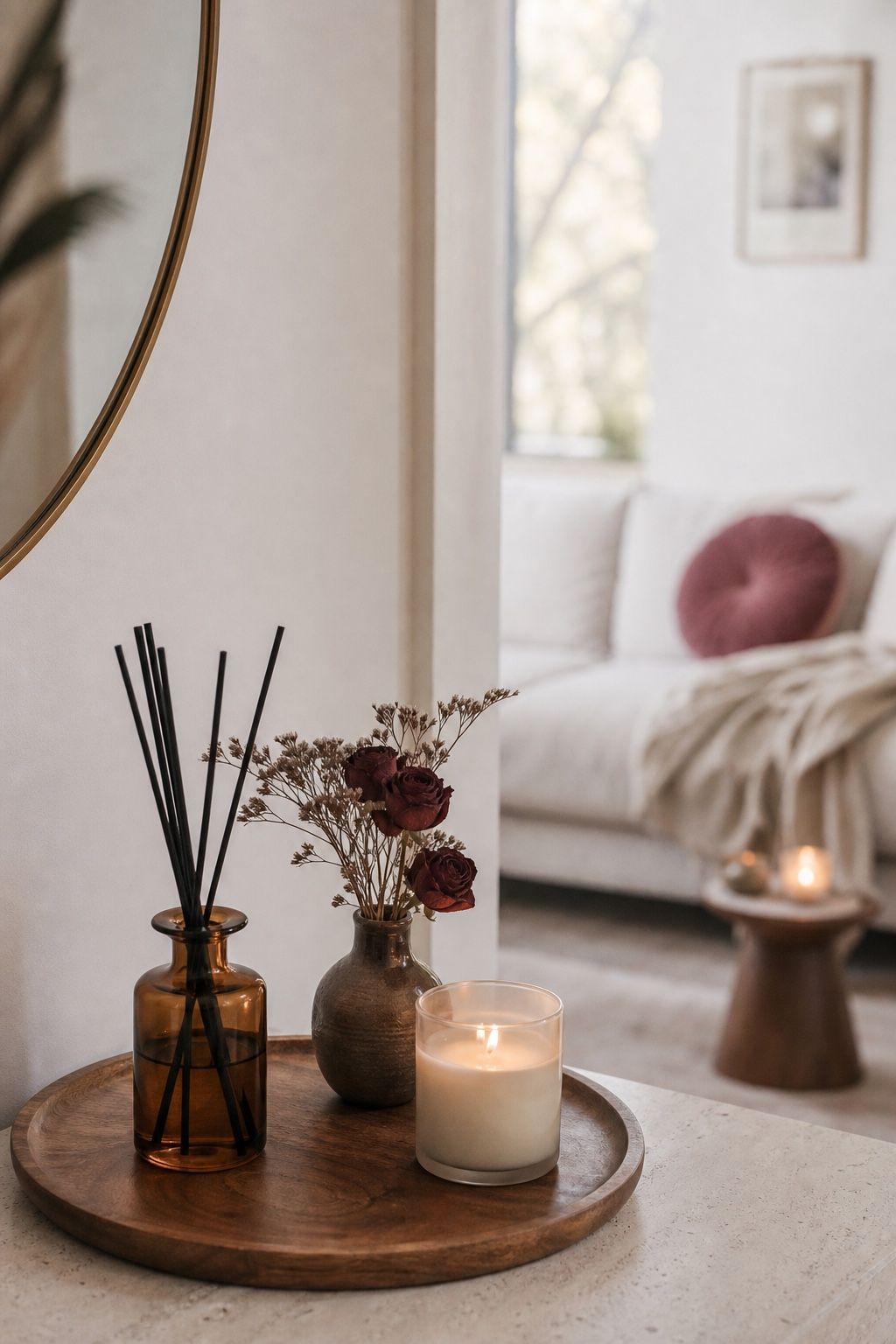


Scent completes a cozy romantic home and is the easiest layer to skip. A reed diffuser or a lightly scented candle in rose, jasmine, vanilla, amber, or sandalwood in the entry, living room, and bedroom wraps the whole home in a subtle romantic atmosphere.
Keep the scent subtle, noticeable but not overpowering, and place a diffuser in each main room so the scent greets the household everywhere. The scent layer is the finishing touch that turns a styled-looking home into one that genuinely feels cozy and romantic the moment you walk in, completing the room-by-room decorating.
Read more: Top 20 Sunroom Decorating Ideas for a Bright Year-Round Apartment
Want your whole home to feel cozy and romantic for February without a big spend?
The Ultimate Budget Planner breaks down the room-by-room decorating budget and the reusable-piece strategy so the home comes together affordably. Currently $4.99 before the price goes up to $19.99.
Frequently Asked Questions
How do I decorate my home for Valentine’s Day?
Work room by room with a soft palette of burgundy, dusty rose, and cream rather than bright red. Hang a dried floral wreath at the entry, swap couch pillows and add dried roses in the living room, style the dining table with a linen runner and dried centerpiece, and layer the bedroom in soft romantic tones. Add warm candlelight throughout.
What are the Valentine’s decor colors for 2026?
The 2026 direction moved away from hyper-saturated red toward softer, more grounded tones: burgundy, dusty rose, mauve, and cream. Natural linen, dried florals, and wooden bead accents replaced the foil-and-cellophane look. There is also a moodier vamp romanticism direction in oxblood, plum, and black.
How do I decorate for Valentine’s without it looking cheesy?
Skip the foil hearts, cellophane garlands, and hot-pink everything. Use a soft or moody palette, natural linen, dried florals, wooden bead garlands, and warm candlelight. The cozy romance comes from texture, warm light, and a restrained palette, not from drugstore Valentine’s products.
Can I decorate for Valentine’s on a budget?
Yes. Most of the effect is reusable and low-cost: dried floral wreaths and arrangements that last for years, pillow covers that store flat, candlelight from candles you may already own, and wooden bead garlands that reuse annually. Carry over winter throws and greenery as a base to keep costs down.
How can renters decorate for Valentine’s without damage?
Use 3M command hooks for wreaths, garlands, and wall decor. Most of the styling, pillow swaps, dried arrangements, candle clusters, layered mats, and bed layering, needs no mounting at all. The whole cozy romantic look can be achieved with zero holes or landlord conversations.
Key Takeaways
- Work room by room with a soft burgundy, dusty rose, and cream palette over bright red.
- Hang a dried floral wreath at the entry as the first elevated signal.
- Swap couch pillows and add dried rose arrangements around the living room.
- Style the dining table with a linen runner and a low dried floral centerpiece.
- Layer the bedroom in soft romantic tones with candles and fairy lights.
- Add warm candlelight throughout and switch off harsh overhead light in the evening.
- Lean on reusable dried florals and 3M command hooks so the look stays cheap and renter-friendly.
Final Thoughts
Valentine’s decorating gets skipped because the drugstore version reads as cheesy, but the holiday lands in the coldest, darkest stretch of February, which is exactly when a cozy romantic home is worth the effort. Pick six or seven ideas from this list, commit to the soft 2026 palette over the foil-and-cellophane look, and work through the home room by room. Most of these pieces reuse year after year and mount with zero damage, so the cozy romantic home stays affordable and renter-friendly.
Last update on 2026-09-18 / Affiliate links / Images from Amazon Product Advertising API
