
Quick Answer: Living in a small apartment comes down to three habits: using vertical space instead of floor space, choosing furniture that does more than one thing, and decluttering consistently so the space doesn’t accumulate more than it can hold. The best small apartment living tips are mostly about changing how you think about your space, not just what you put in it.
Living in a small apartment presents a set of challenges that only people who’ve done it really understand. It’s not just about having less storage or less square footage – it’s about how the space makes you feel when it’s working and how exhausting it becomes when it isn’t. A small apartment that’s organized and thoughtfully arranged can feel genuinely comfortable and even cozy. The same apartment without a system feels chaotic in a way that larger spaces just don’t.
The best tips for living in a small apartment aren’t about extreme minimalism or aesthetic sacrifice. They’re practical strategies for making the space work harder so you can live comfortably in it. Most of them cost nothing to implement – they’re habits and approaches more than products.
Whether you’re newly moved into a small space or you’ve been living in one for years and want to get more out of it, these tips cover the areas that make the biggest difference.
Getting genuinely organized, not just tidied, is what separates a small apartment that works from one that constantly feels like too much, how to organize a small apartment room by room walks through the process zone by zone.
Ready to transform your small apartment from the inside out? The Aesthetic Apartment Makeover Guide is a 60-page room-by-room guide built for small apartment living – storage solutions, styling tips, and layout strategies that actually work.
Recommended Products
No products found.
No products found.
No products found.
No products found.
No products found.
No products found.
Living well in a small apartment is not about tolerating the limitations. It is about learning the specific habits, systems, and mindset shifts that make tight spaces genuinely pleasant to inhabit. People who thrive in small apartments are not living in deprivation; they have simply figured out what actually matters and organized their space around it. These 16 tips cover both the practical and the psychological side of small-space living, because both matter in equal measure.
Read this also:
- Must-Try Small Apartment Hacks
- How to Organize a Small Apartment
- Rental Small Apartment Hacks
- Small Apartment Design Ideas
Mindset and Daily Habits
1. Adopt the “Touch It Once” Rule
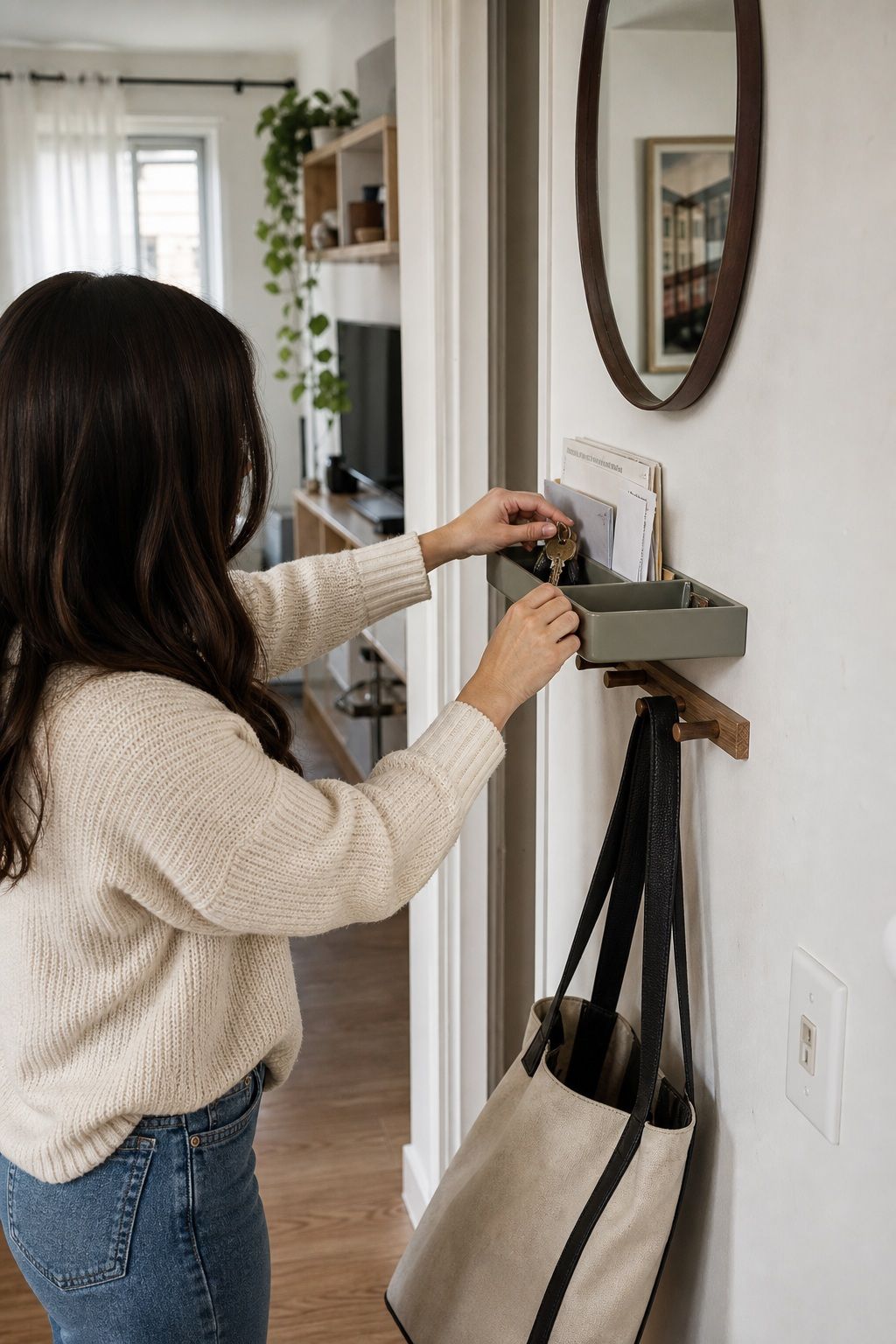


The “touch it once” rule, popularized by small-space advocates at Apartment Therapy, means that when you pick something up, you put it directly in its permanent home rather than setting it down on the nearest surface to be dealt with later. In a large home, setting things down temporarily is manageable because the visual spread is distributed across more space. In a small apartment, every item that lands in the wrong place is immediately visible and adds to the sense of clutter. The habit takes a few weeks to feel automatic, but once it does, the apartment stays at a consistently manageable baseline without requiring dedicated cleaning sessions.
Read more: Top 17 Hosting in a Small Apartment Tips That Actually Work
2. Make the Bed Every Morning
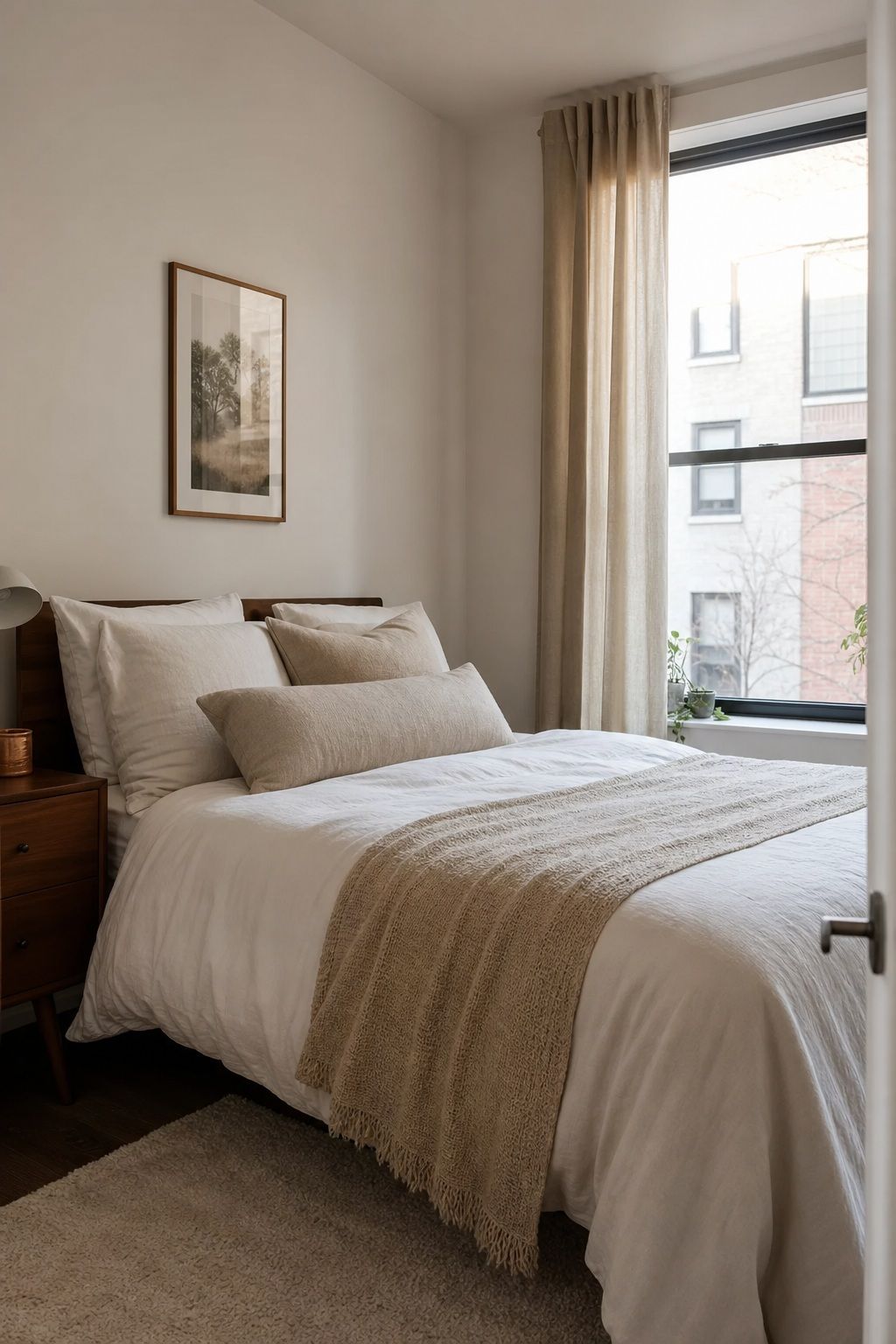


In a small apartment, especially a studio, the bed is one of the largest visual elements in the entire space. An unmade bed makes the entire apartment feel messy regardless of how organized everything else is. Making the bed takes about 90 seconds and changes the visual register of the space completely. In studios where the bed is visible from the living area, this one habit has a larger impact on the overall feel of the apartment than any furniture purchase or organizational system. The psychological effect is also well-documented: starting the morning with one completed task creates a sense of order that carries into the rest of the day.
3. Do a Daily 10-Minute Reset


A daily 10-minute reset at the same time each day, typically in the evening before bed or after getting home, keeps a small apartment at a consistently livable baseline without ever requiring a major cleaning session. The reset involves returning everything to its designated place, clearing flat surfaces of accumulated items, wiping the kitchen counter, and collecting any laundry that ended up on furniture. The key is consistency, not duration. Ten minutes every day is dramatically more effective than a two-hour clean on weekends, because the space never gets far enough from baseline to require the longer session. This is the single most consistently recommended habit among people who live contentedly in small apartments long-term.
Read more: How to Fit a Dining Table in a Small Living Room
4. Stop Buying Things That Have Nowhere to Go


The most common source of small-apartment overwhelm is not inadequate storage but the gradual accumulation of items that never had a designated place in the first place. Before purchasing anything that will live in the apartment, whether a kitchen gadget, a piece of decor, or a clothing item, the useful question is: where exactly will this go? If there is not a clear and specific answer, the item does not come in. This is not about restriction but about maintaining the functional density of the space. A small apartment that is 80 percent full with intentional, designated items feels comfortable and organized. The same apartment at 100 percent capacity with random accumulated items feels suffocating.
Read more: How to Decorate a Small Apartment That Actually Feels Like Home
5. Rethink What You Actually Need to Own


Living in a small apartment is a natural filter for reassessing what is actually worth owning versus what was simply accumulated. Most people who have lived in small apartments for several years report that they use a much smaller percentage of what they own than they expected, and that removing unused items consistently produces more relief than loss. The practical question to apply to any item is whether it has been used in the past year. Items that have not been used in 12 months are candidates for donation regardless of their theoretical utility. The smaller the apartment, the higher the cost of keeping things that are not genuinely in use, because every cubic foot of storage is at a premium.
Read more: Top 20 Small Apartment Living Room Ideas That Actually Make Your
Making the Space Work Better
6. Define Zones Even Without Walls


In a studio or open-plan apartment, the absence of walls between sleeping, working, and living zones creates a psychological blurring that can make the space feel both smaller and less restful. Defining zones through rugs, lighting, and furniture placement, rather than walls, creates the cognitive separation that helps different activities feel distinct. A rug under the living furniture anchors the sitting area. A different light source defines the sleeping area. A room divider shelf separates the work zone. The result is that the apartment functions as multiple rooms even though it technically is one, which is the practical goal of studio apartment design in every resource that addresses it seriously.
7. Keep the Kitchen Counter Clear


The kitchen counter in a small apartment is the most contested surface in the space. It serves as a work area, a landing zone for mail and bags, a display surface, and a food prep space simultaneously, which means it gets cluttered faster than any other area. Keeping it consistently clear requires storing appliances that are not used daily in cabinets rather than leaving them on the counter, having a designated spot away from the counter for mail and keys, and wiping it down as part of the daily reset. A clear kitchen counter makes the entire apartment feel more organized because it is visible from most areas of the space and sets the visual tone for the whole room.
Read more: Top 17 Small Apartment Closet Organization Tips That Maximize Every
8. Use Every Vertical Inch


Floor space is the scarcest resource in a small apartment, and most people underuse the vertical dimension significantly. Shelving installed close to the ceiling, tall furniture that reaches ceiling height, and wall-mounted storage in every room move the storage load off the floor and onto walls. The visual effect is that the floor reads as more open and the room as more spacious, even when the total storage capacity has increased. A room with most of its storage at floor level feels more cluttered than a room with the same amount of storage organized vertically. Interior designers working in small spaces consistently prioritize vertical organization because the floor-level visual remains clean.
Read more: Top 18 Small Apartment Patio Ideas on a Budget Under $200
9. Invest in Lighting Beyond the Overhead Fixture


The overhead light that comes with a rental apartment is almost never sufficient to make the space feel comfortable in the evening. A single overhead source creates flat, institutional lighting that flattens the space and makes it feel smaller. Adding a floor lamp in one corner, a table lamp on the nightstand, and potentially LED strip lights under cabinets or behind a TV creates layered lighting that makes the same room feel significantly warmer and more dimensional after sunset. The switch from overhead-only to layered lighting is the most reliably effective atmosphere upgrade available in a small apartment, and it requires no electrical work: all of these additions are plug-in.
Read more: How to Decorate a Small Studio Apartment: The Room-by-Room Guide
10. Open the Windows Daily


Fresh air circulation matters more in a small apartment than in a larger one because the same air is recirculated more frequently in a smaller volume. Opening windows for 10 to 20 minutes each morning flushes stale air, reduces indoor pollutant buildup from cooking and cleaning products, and creates a sensory reset for the space. This is documented in indoor air quality research, which consistently shows that small-volume spaces benefit more from regular ventilation than larger ones. The practical effect in daily life is that the apartment smells fresher and feels more energizing, which is the kind of quality-of-life detail that compounds over the long term of living in a small space.
Read more: 25 Small Apartment Essentials From Amazon That Actually Make Small
Social Life and Guests in a Small Space
11. Host Small, Not Never


One of the most common ways people limit themselves in small apartments is deciding they cannot host until they have more space. The reality is that a well-organized small apartment hosting four to six people is a warmer, more intimate experience than a half-empty large space hosting the same group. The practical requirement is not square footage but preparation: extra seating from folding chairs, cleared surfaces, and a menu that does not require the kitchen to be a production zone during the gathering. Small dinner parties and lunch gatherings in small apartments consistently get described by guests as cozy and personal, which is precisely the quality that large venues struggle to produce.
12. Set Up a Dedicated Guest Sleeping Solution


A small apartment can accommodate overnight guests without a dedicated guest room if a reliable sleeping solution is in place. A quality air mattress stored in a closet or under the bed deploys in about five minutes and provides a genuinely comfortable sleeping surface for one to two nights. A sofa bed or daybed in the living area is the more permanent solution if guests are frequent. A Japanese-style floor futon stored in the closet when not in use is thin enough to store flat and functions well as a temporary sleeping surface. The key is having the solution ready and stored properly so it can be deployed with minimal effort and without reconfiguring the apartment significantly.
Read more: Top 15 Small Apartment Wall Art Ideas That Make Every Room Look
13. Create a Visual Focal Point in Every Room


A room without a clear visual focal point feels undefined and slightly disorienting, which is especially noticeable in small spaces where the absence of clear structure makes the room feel more cramped. A focal point can be a gallery wall, a large mirror, a piece of statement furniture, a boldly styled bookcase, or even a large plant in a distinctive planter. The focal point gives the eye somewhere to land and the room a sense of intention. Interior designers consistently identify the lack of a focal point as one of the main reasons small rooms do not photograph well and do not feel as comfortable as they could. Establishing one focal point per zone costs nothing beyond a decision about what deserves emphasis.
Read more: Top 15 Small Apartment Shelf Decor Ideas That Look Styled, Not
Long-Term Quality of Life
14. Rotate Decor Seasonally Instead of Accumulating More


Instead of adding new decorative items as preferences change and seasons shift, rotating from a core collection keeps the apartment fresh without increasing the total volume of things owned. A set of throw pillow covers for summer and a different set for winter, a few seasonal plants or branches, and one or two rotated art pieces or prints keep the space visually evolving without requiring additional storage. This approach is used consistently by interior designers who work with small-space clients because it addresses the desire for variety without the accumulation that small spaces cannot absorb. Store the off-season items in a labeled bin that takes up one shelf or part of a closet shelf.
Read more: Top 15 Small Apartment Kitchen Decor Ideas That Make Tiny Counters
15. Go Outside Intentionally and Regularly


One of the practical realities of small-apartment living that rarely gets addressed directly is that the space will occasionally feel constraining regardless of how well it is organized. The reliable solution is not redesigning the apartment but using the outside world as an extension of living space. A walk to a coffee shop, time in a nearby park, a library visit, or an errand on foot shifts the psychological experience of living in the apartment from confinement to a deliberate choice. People who report the highest satisfaction with small-space living consistently cite using their neighborhood actively as a key component of why the apartment feels sufficient. The apartment needs to be a retreat, not the entirety of your experience of space.
16. Accept That a Small Apartment Requires More Intention, Not More Space


The fundamental truth about small-apartment living is that it requires more active decision-making than larger spaces do. Every item, every piece of furniture, and every organizational system exists by choice rather than by default because the space does not absorb excess the way a larger home does. This is not a disadvantage in disguise: it is simply a different relationship with space that produces a different set of habits and a different quality of attention to how you live. People who approach small apartments with intention consistently report that they feel more comfortable and more genuinely at home than people who approach them as temporary situations to be endured until something better comes along. The space is not the obstacle. The approach to it is what makes the difference.
Read more: Top 15 Small Apartment Murphy Bed Ideas That Give You a Room Back
Frequently Asked Questions
How do you live comfortably in a small apartment?
Comfortable small apartment living comes from having a place for everything, keeping only what the space can hold, and making deliberate styling choices so the space feels intentional rather than cramped. The most important habits are using vertical space for storage, choosing furniture that does more than one job, decluttering consistently, and keeping surfaces clear. A small apartment that’s organized and thoughtfully arranged can feel genuinely cozy rather than limiting.
What is the hardest part of living in a small apartment?
The hardest part is the constant management it requires. A small apartment has almost no buffer for clutter – mail left on the counter, clothes on the chair, dishes in the sink all register immediately in a way that they might not in a larger space. The solution is building habits rather than relying on willpower: a specific place for mail, a specific place for bags and keys, a rule about dishes. Once the systems are in place, the management becomes automatic.
How do you make a small apartment feel less claustrophobic?
The most effective ways to make a small apartment feel less claustrophobic are maximizing natural light (keeping windows unobstructed, using sheer curtains rather than blackout), adding a large mirror to reflect light and create visual depth, keeping floors as clear as possible, using furniture with legs so you can see floor underneath them, and sticking to a lighter color palette on walls and large furniture pieces. Decluttering consistently also makes an immediate difference – visual clutter is the primary driver of feeling cramped.
How do you store things in a small apartment with no storage?
When built-in storage is minimal, the approach is to create storage from furniture and vertical space. A bed with built-in drawers, storage ottomans, benches with lift-top lids, and bookcases that reach toward the ceiling all add storage capacity without a construction project. Under-bed storage with bed risers adds a significant volume. Over-door organizers use the backs of every door. The key insight is that unused vertical wall space and behind-door space are the most available storage resources in most small apartments.
Is it worth decorating a small apartment?
Absolutely. How your space looks directly affects how it feels to be in it, and how it feels to be in it affects your mood and quality of life. You don’t need to spend a lot to decorate a small apartment well – a few plants, some warm lighting, a rug in the right size, and thoughtful arrangement of what you already have can transform the feel of the space. The goal is to make the apartment feel chosen and comfortable, not temporary and provisional, even if it’s a rental.
Key Takeaways
The best tips for living in a small apartment are about habits as much as furniture. Use vertical space – walls above waist height, backs of doors, space above cabinets. Choose multifunctional furniture. Declutter consistently using the one-in-one-out rule. Rotate seasonal items to double effective storage. Make deliberate styling choices so the space feels intentional. Warm lighting, a well-sized rug, and a mirror do more to improve the feel of a small apartment than almost any furniture purchase.
Conclusion
Living in a small apartment well is a skill that develops over time, and the tips that make the biggest difference are the ones that become habits rather than one-time fixes. Vertical storage, multifunctional furniture, consistent decluttering, and intentional styling aren’t things you do once and forget – they’re an ongoing relationship with the space that gets easier and more intuitive over time.
A small apartment can be one of the most comfortable places to live when it’s working. The goal isn’t to make it feel like a bigger space – it’s to make it feel like a good space.
Last update on 2026-09-07 / Affiliate links / Images from Amazon Product Advertising API
