

Quick Answer: The best winter tiered tray decor follows a tier-by-tier hierarchy: the bottom tier holds the largest anchor pieces, the middle tier holds medium accents and a small candle, and the top tier holds one small focal element. Fill each tier with winter textures (mini pinecones, faux snow picks, small evergreen sprigs, flameless tea lights) and the tray reads as cozy and curated on a kitchen counter, entry console, or coffee table.
If there is one styling project that delivers more than the effort it takes, it is a winter tiered tray. The tiers do the hard part for you, creating the varied heights that make a vignette look pulled-together, so all that is left is the fun part: deciding what goes where.
Picture a little cluster of mini pinecones, a flickering candle, a sprig of evergreen, all glowing softly on a kitchen counter or an entry console. That is a ten-minute project, and this list breaks down exactly how to build it, tier by tier, plus the seasonal swaps that keep it fresh from December all the way into February.
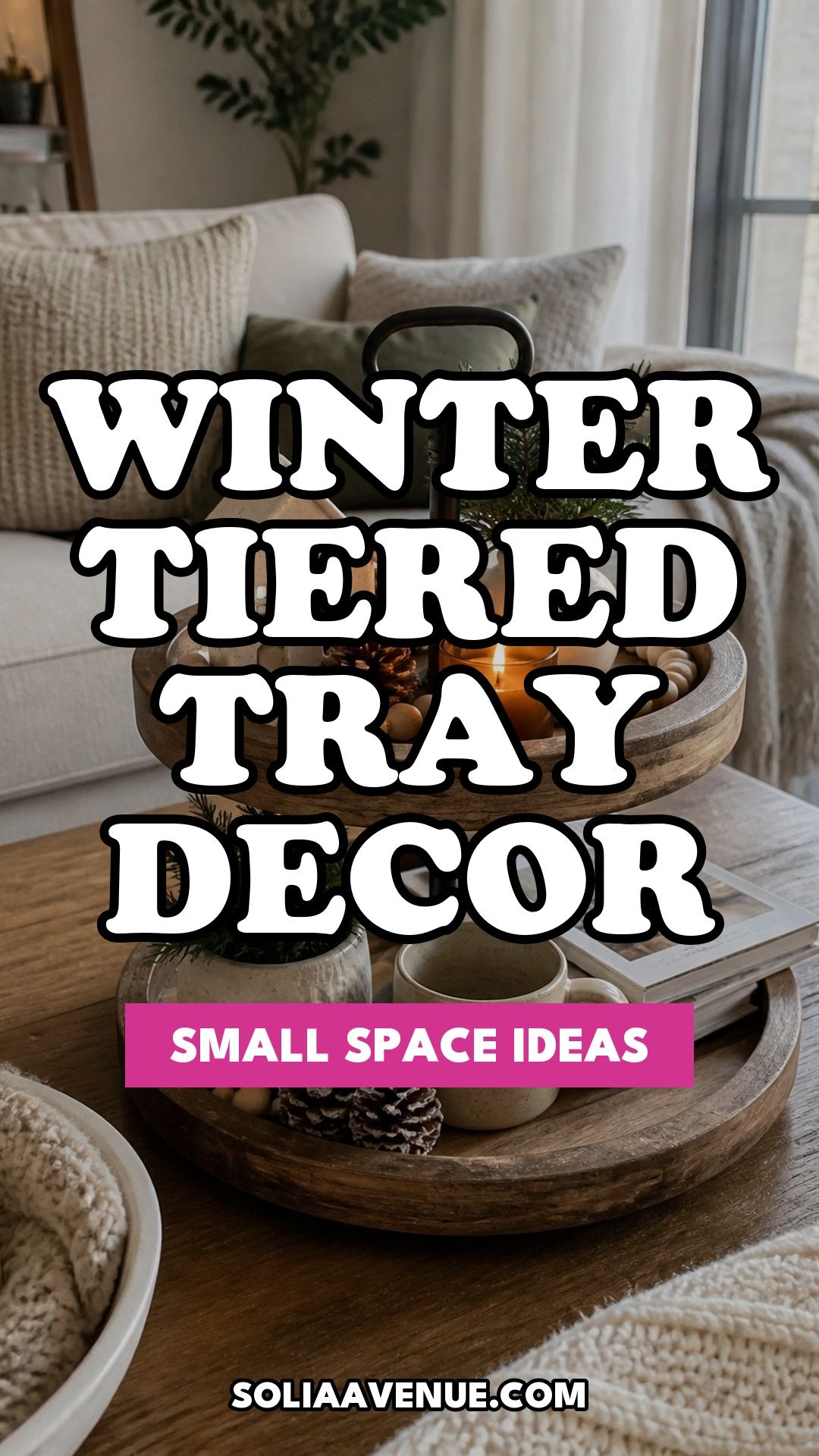
Recommended Winter Tiered Tray Products


Recommended blogs to read:
- Winter tray decor ideas
- Winter decor ideas for the home
- Winter coffee table decor ideas
- Winter fireplace decor ideas
- Winter farmhouse decor ideas
Which Tray Is Best for Winter Tiered Tray Decor?
A wooden tiered tray in walnut, oak, or acacia is the most versatile winter base because the warm wood grounds the composition and works on any surface. Galvanized metal suits farmhouse style, white ceramic looks bright, and a stacked cake stand works as an alternative.
1. Choose a Wooden Tiered Tray for Warmth
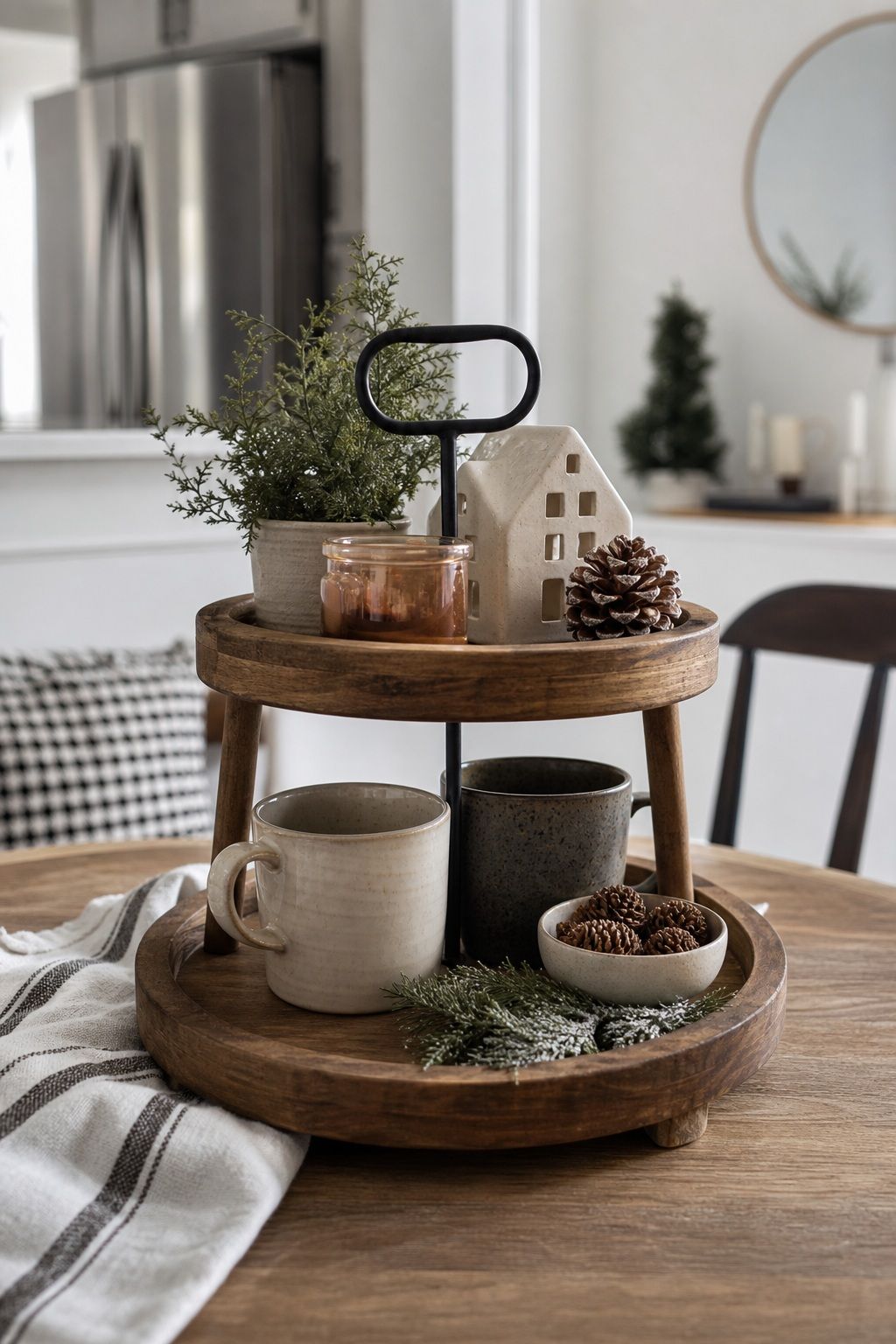


A wooden tiered tray in walnut, oak, or acacia is the most versatile winter base because the warm wood tone grounds the whole composition and works on any surface in the home. Pick a two-tier or three-tier stand 12 to 18 inches tall, with the bottom tier wide enough to hold a few substantial pieces. Real wood reads warmer than metal or wire stands for winter styling specifically.
Two-tier trays suit smaller surfaces like a bathroom counter or a narrow console; three-tier trays suit a kitchen island or a wide coffee table. The wooden tray stays useful year-round across multiple seasonal styling rotations, which makes it a worthwhile $25 to $50 investment rather than a single-season buy. Source from craft stores, Target, or local home goods shops.
Read more: Top 16 Winter Tray Decor Ideas That Feel Cozy Curated and Completely
2. Use a Galvanized Metal Tray for Farmhouse Charm
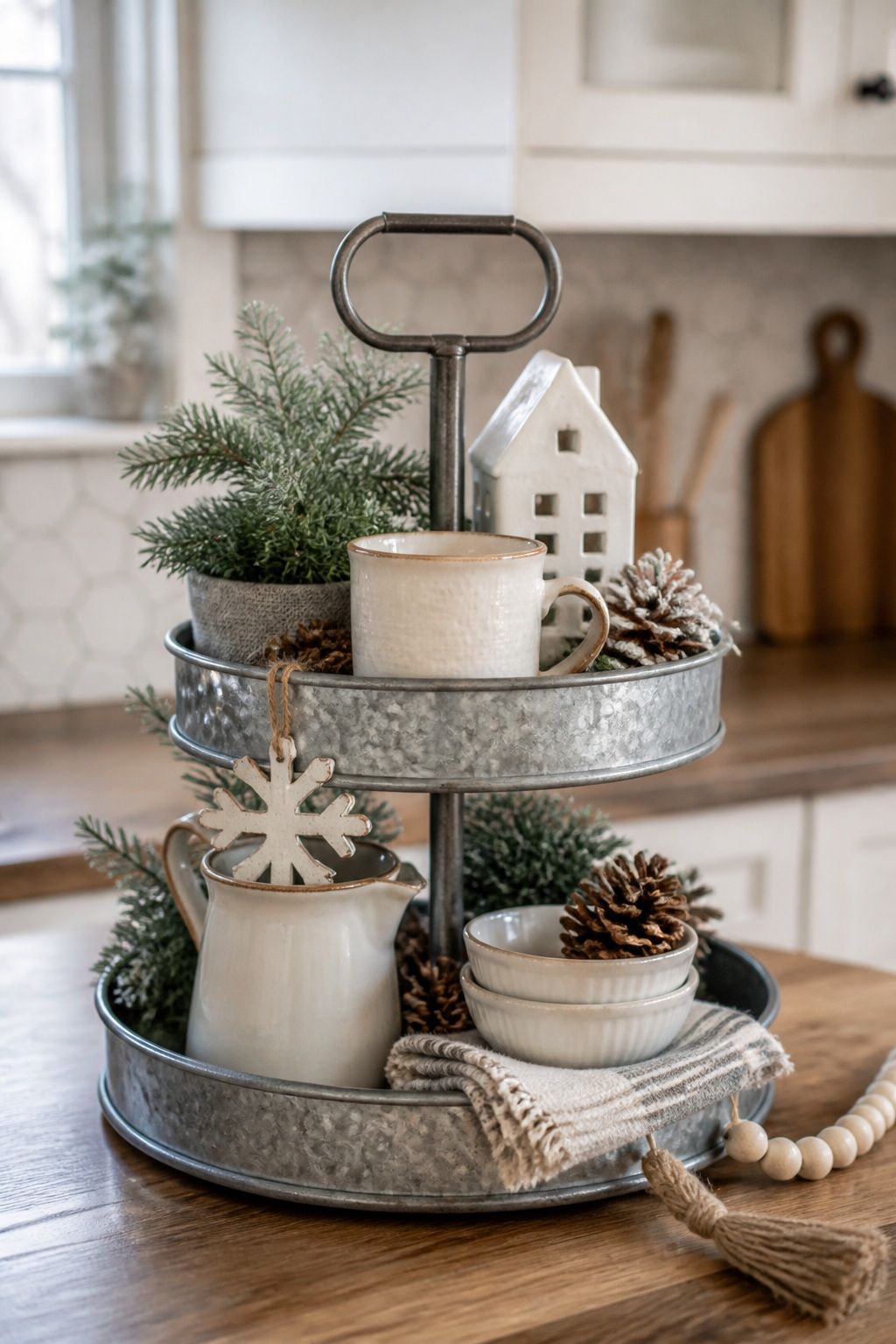


A galvanized metal tiered tray brings a slightly farmhouse, weathered character that pairs beautifully with the natural winter textures. The silvery-grey finish reads as cool-toned winter and contrasts nicely against warm wood surfaces and cream styling elements. Pick a two-tier or three-tier galvanized stand 14 to 20 inches tall.
Galvanized trays work especially well in kitchens and entryways where the slightly industrial finish fits the room’s existing materials. The metal is also easy to wipe clean, which matters for a kitchen counter tray that lives near cooking. Source galvanized tiered trays from World Market, Hobby Lobby, or farmhouse-leaning home stores for $20 to $45.
3. Pick a White Ceramic Tray for a Bright Winter Look
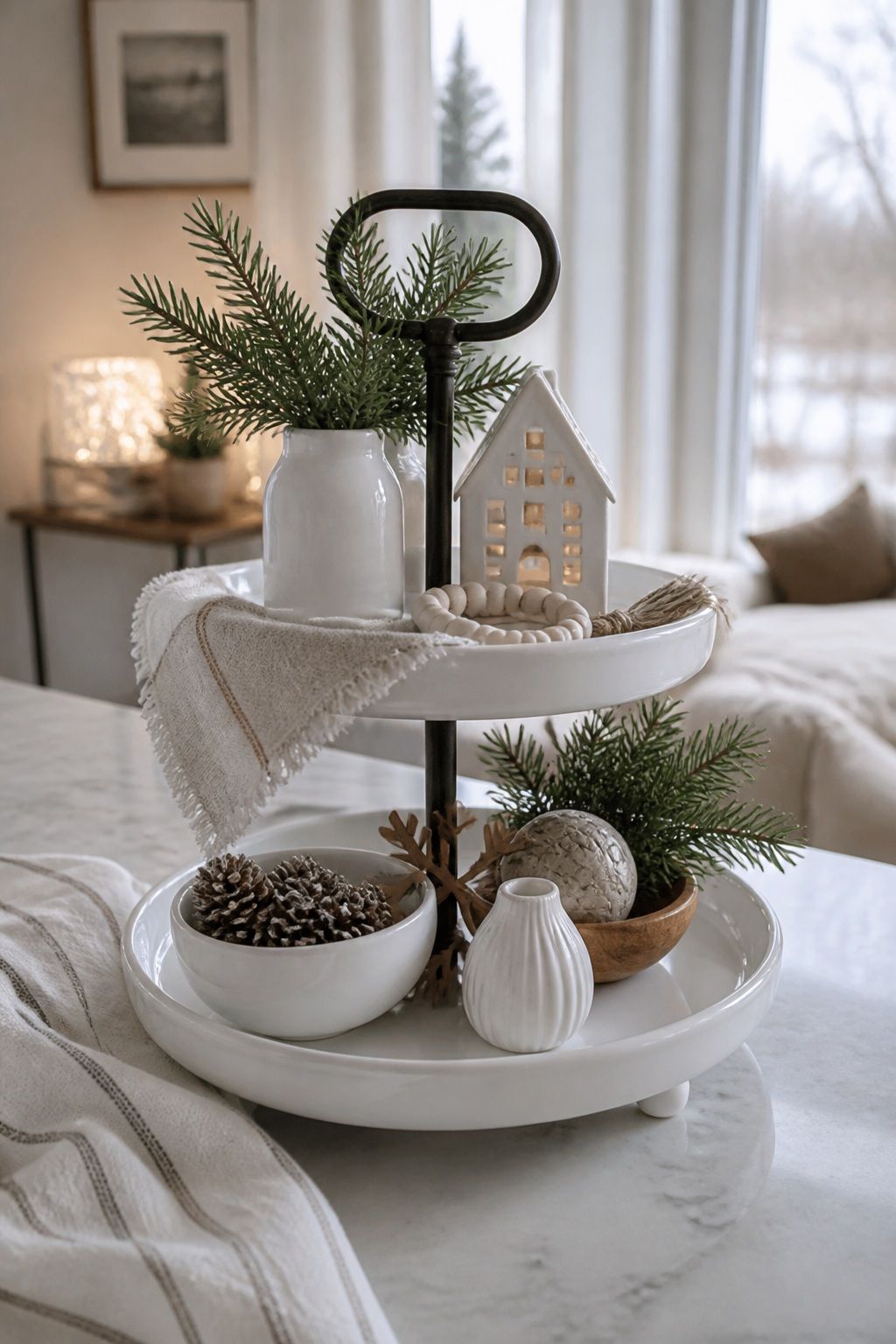


A white or cream ceramic tiered tray reads as bright, clean winter and works as a neutral backdrop that lets the styling elements on each tier become the focal point. The white base photographs particularly well and suits modern apartments where the warm wood or galvanized options feel too rustic.
White ceramic trays pair beautifully with all-white or all-cream winter styling (faux snow, white pinecones, cream candles) for a soft monochrome look, or with a single pop of color like burgundy or sage. The ceramic is more delicate than wood or metal, so it suits a low-traffic surface like a guest bathroom or a bedroom dresser rather than a busy kitchen counter.
Read more: Top 16 Winter Table Decor Ideas for After-Holiday Hosting
4. Repurpose a Cake Stand Stack as a Tray Alternative
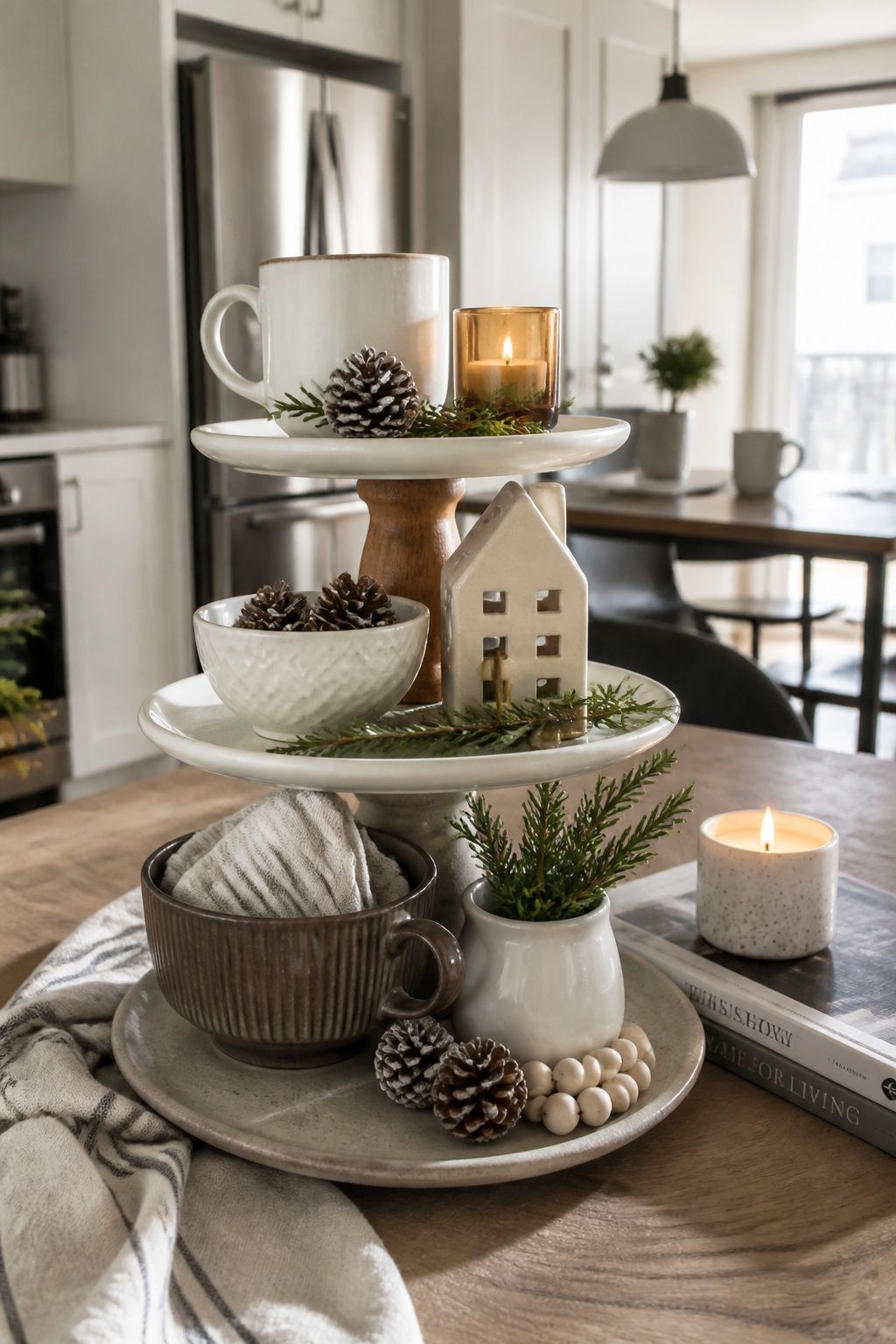


No dedicated tiered tray on hand? Stack two cake stands of different heights to create the same tiered effect. A taller pedestal cake stand on the bottom and a shorter one set beside or on it mimics the varied-height composition that makes tiered trays work. This is the zero-cost option for anyone who already owns cake stands.
The cake stand approach also gives more flexibility in proportions since the two stands can be arranged at whatever spacing the surface allows. Use cake stands in coordinating finishes (two white, two wood, two glass) so the stack reads as intentional rather than improvised. The styling logic for each level stays exactly the same as a dedicated tiered tray.
Read more: Top 18 After-Christmas Winter Decor Ideas to Transition Your Home
How Do You Style Each Tier of a Winter Tiered Tray?
Anchor the bottom tier with the largest pieces, like a small evergreen arrangement, a chunky pillar candle, or a stack of winter books. Fill the middle tier with medium accents and light, top it with one small focal element, and keep the palette to three tones.
5. Anchor the Bottom Tier With Larger Pieces
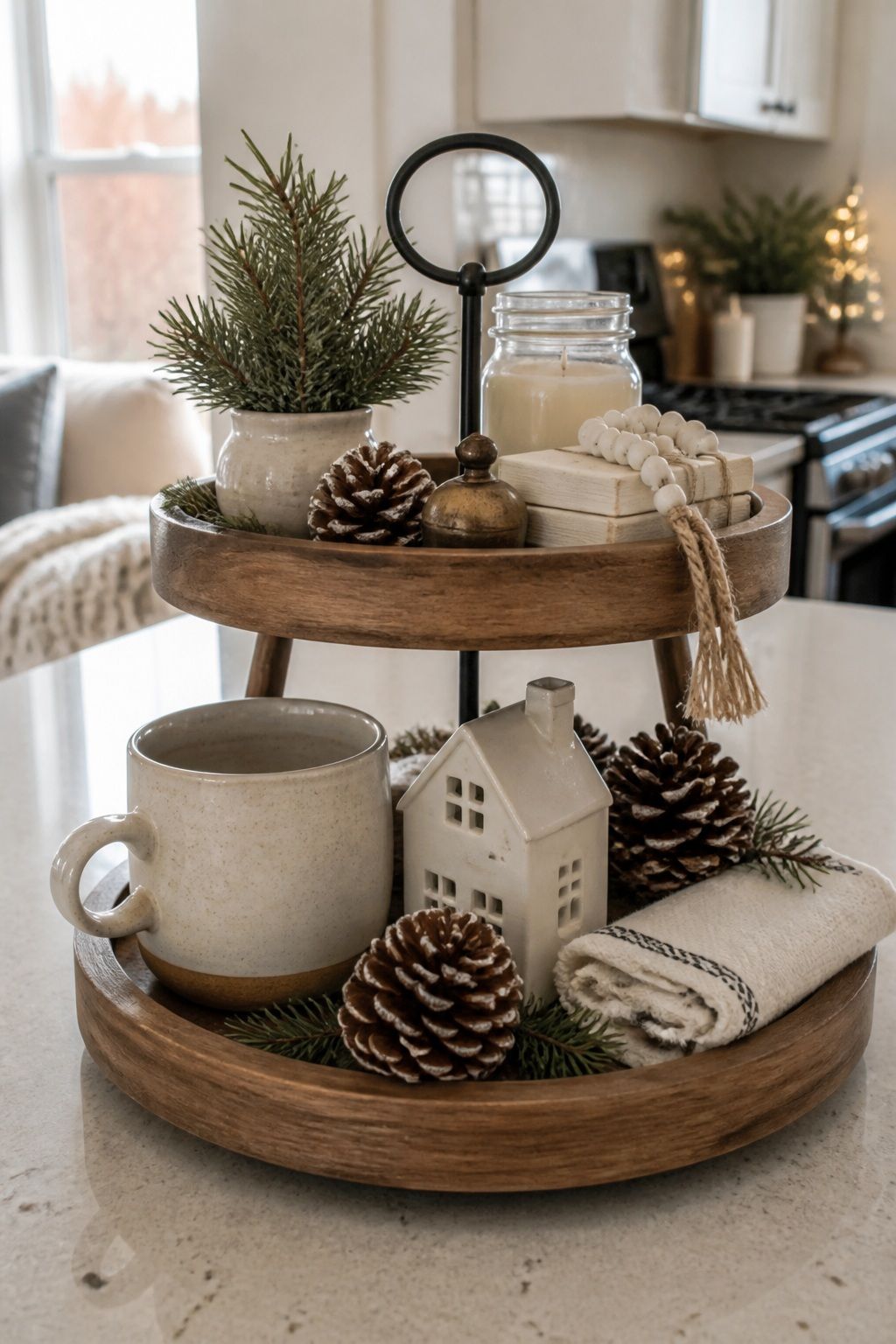


The bottom tier carries the most visual weight, so it holds the largest anchor pieces. A small evergreen arrangement in a low vessel, a chunky pillar candle, a small stack of winter-themed books, or a wooden bowl filled with pinecones all work as bottom-tier anchors. Use two or three pieces here, not more, since the bottom tier sets the visual foundation for everything above.
Vary the shapes on the bottom tier: something round (a bowl or a ball ornament cluster), something with height (a small candle or a short vase of stems), something flat (a stack of books or a small wood slice). The shape variety on the foundational tier is what keeps the whole tray from reading as a uniform pile. Keep the color palette tight, two or three winter tones maximum.
Read more: Top 16 Winter Mantle Decor Ideas for the After-Christmas Months
6. Fill the Middle Tier With Medium Accents and Light
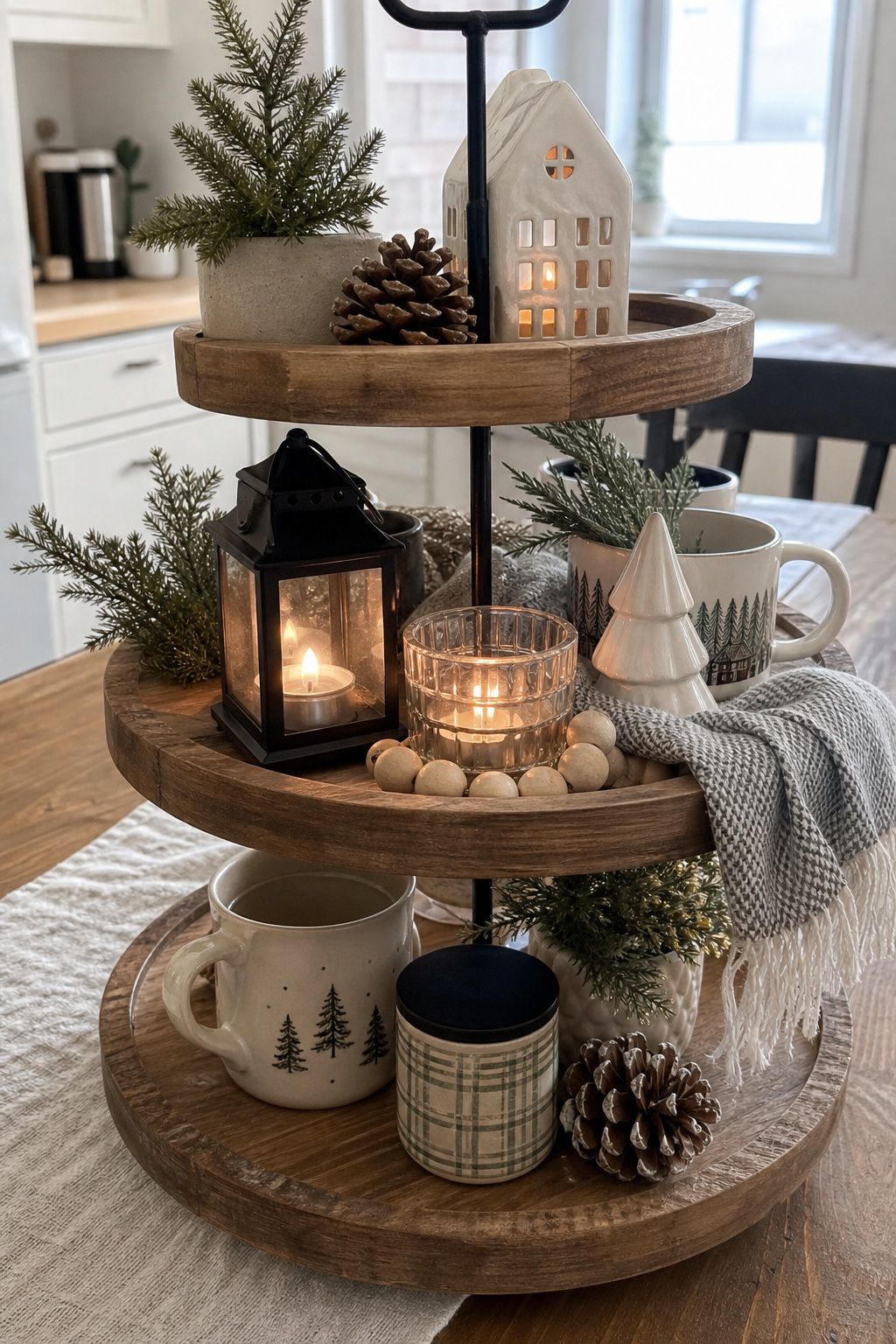


The middle tier holds medium-sized accents plus the tray’s light source. A small flameless candle or a cluster of tea lights belongs here, where the glow is visible but not blocked by the bottom tier pieces. Add a small ceramic figurine, a mini wreath, a few cinnamon stick bundles tied with twine, or a small dish of faux snow with mini pinecones.
The middle tier is where most of the cozy charm lives because it sits at natural eye level when the tray is on a counter or console. Keep it to three or four small pieces so it reads as styled rather than crowded. The light source on this tier is what makes the whole tray glow softly in the evening, which is the single detail that turns a styled tray into a cozy one.
Read also: summer kitchen tray decor ideas
7. Top the Tray With One Small Focal Element
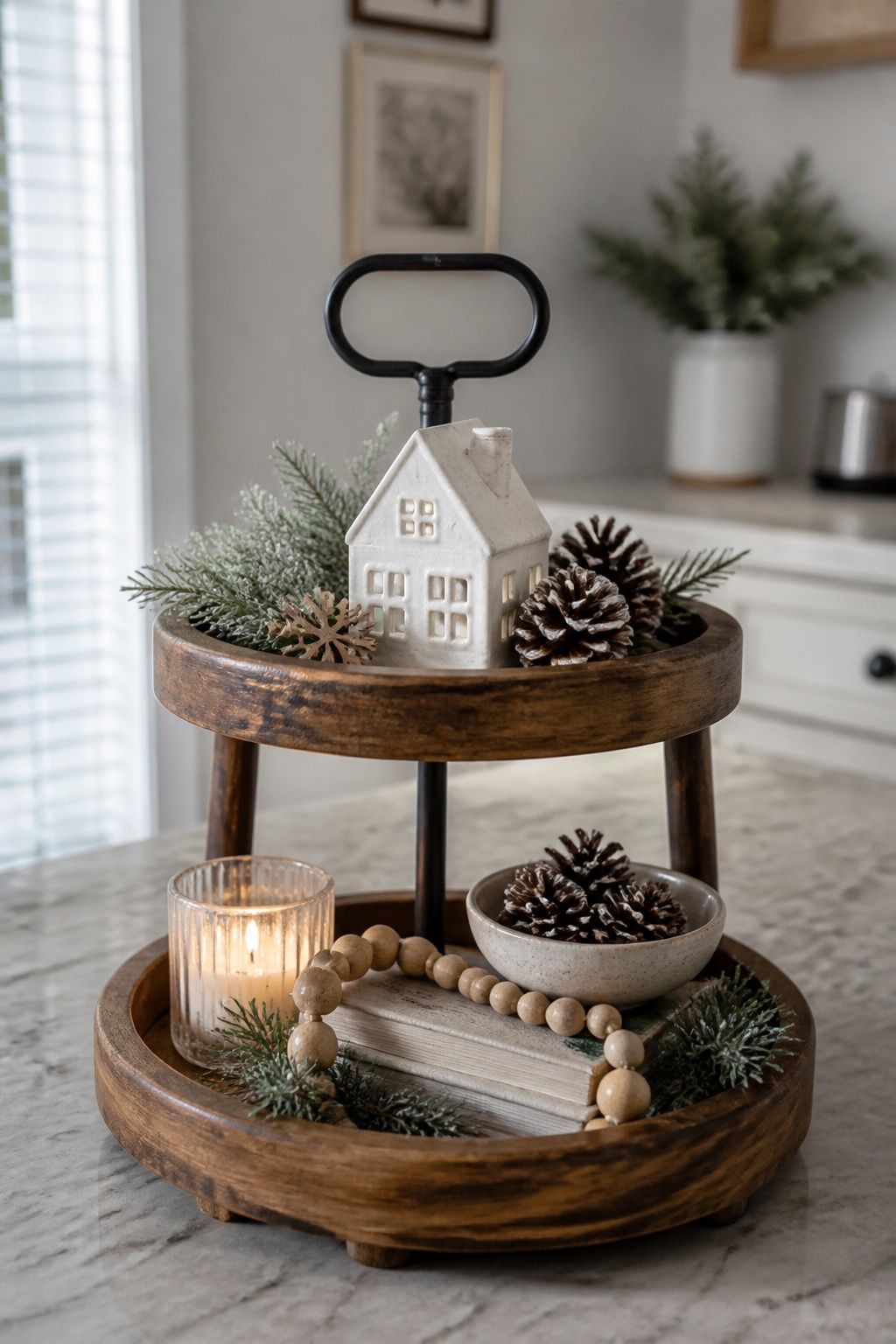
The top tier holds a single small focal element, nothing more. A tiny evergreen sprig in a bud vase, a small ornament, a mini snow globe, a single faux snow pick, or a small ceramic house. The restraint on the top tier is what makes the whole tray look professionally styled rather than randomly filled to capacity.
The top piece should be the smallest object on the tray, which reinforces the natural pyramid shape that the eye reads as balanced. Resist the urge to add a second item up top. One focal element, clearly the smallest and most precious-looking piece, completes the composition. If the top tier feels too bare, the piece is too small, not too few.
Read more: Top 17 Winter Front Door Decor Ideas That Feel Warm Stylish and
8. Add a Small Light Source to Every Tray
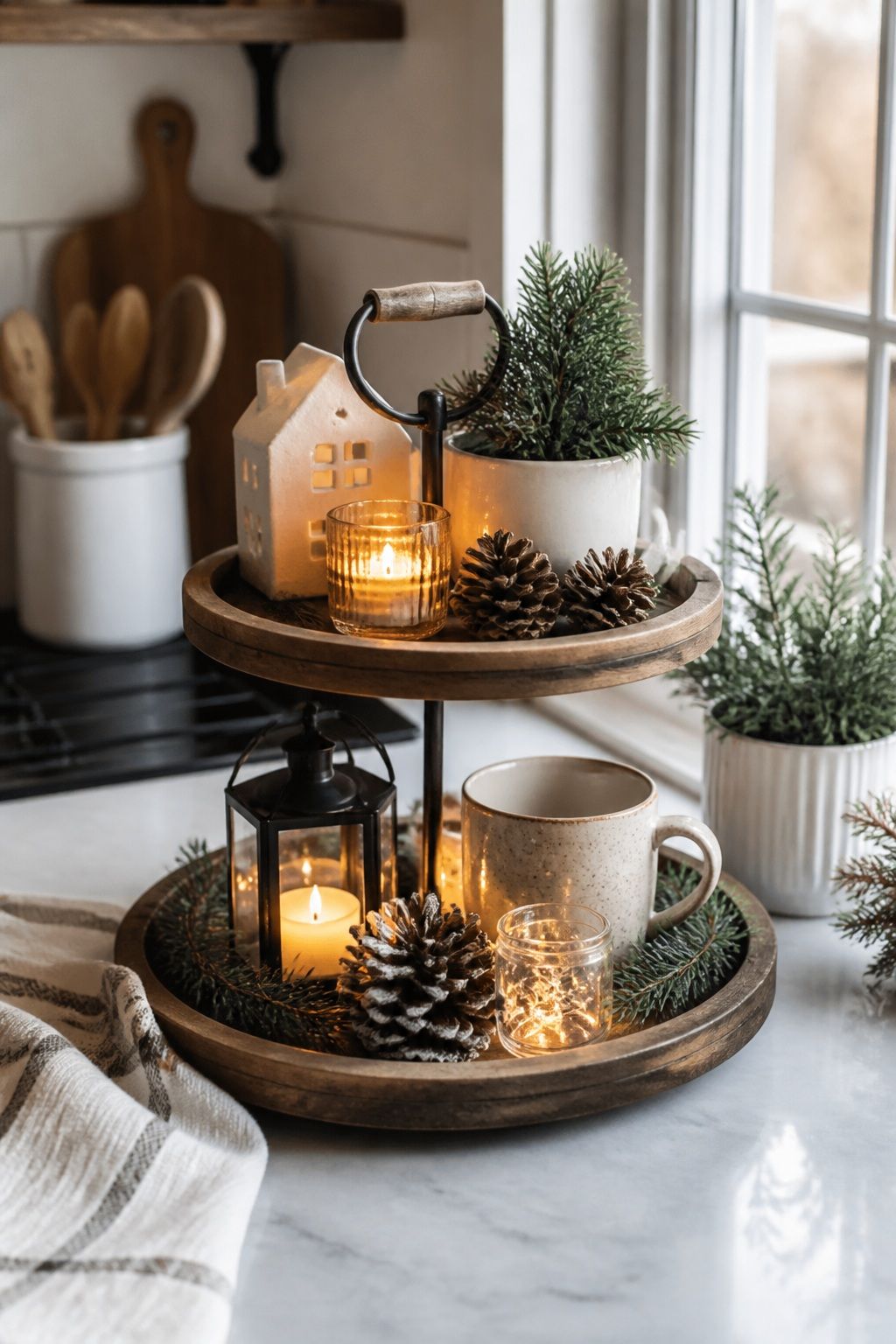


The single non-negotiable winter tiered tray element is a light source. A flameless tea light, a small LED pillar candle, or a tiny string of battery fairy lights woven through one tier turns the tray from a daytime styling object into an evening cozy moment. Use flameless versions exclusively since the tiers put candles close to other flammable styling elements.
Set the light on a timer so it switches on at dusk automatically. The small glow is what makes the tray whisper cozy charm rather than just looking decorated. A tray with perfect composition but no light reads as static; the same tray with a soft flickering glow reads as warm and inviting. This is the detail most people skip and the one that matters most.
Read more: Top 18 Winter Farmhouse Decor Ideas That Feel Cozy and Collected
9. Layer in Natural Winter Textures
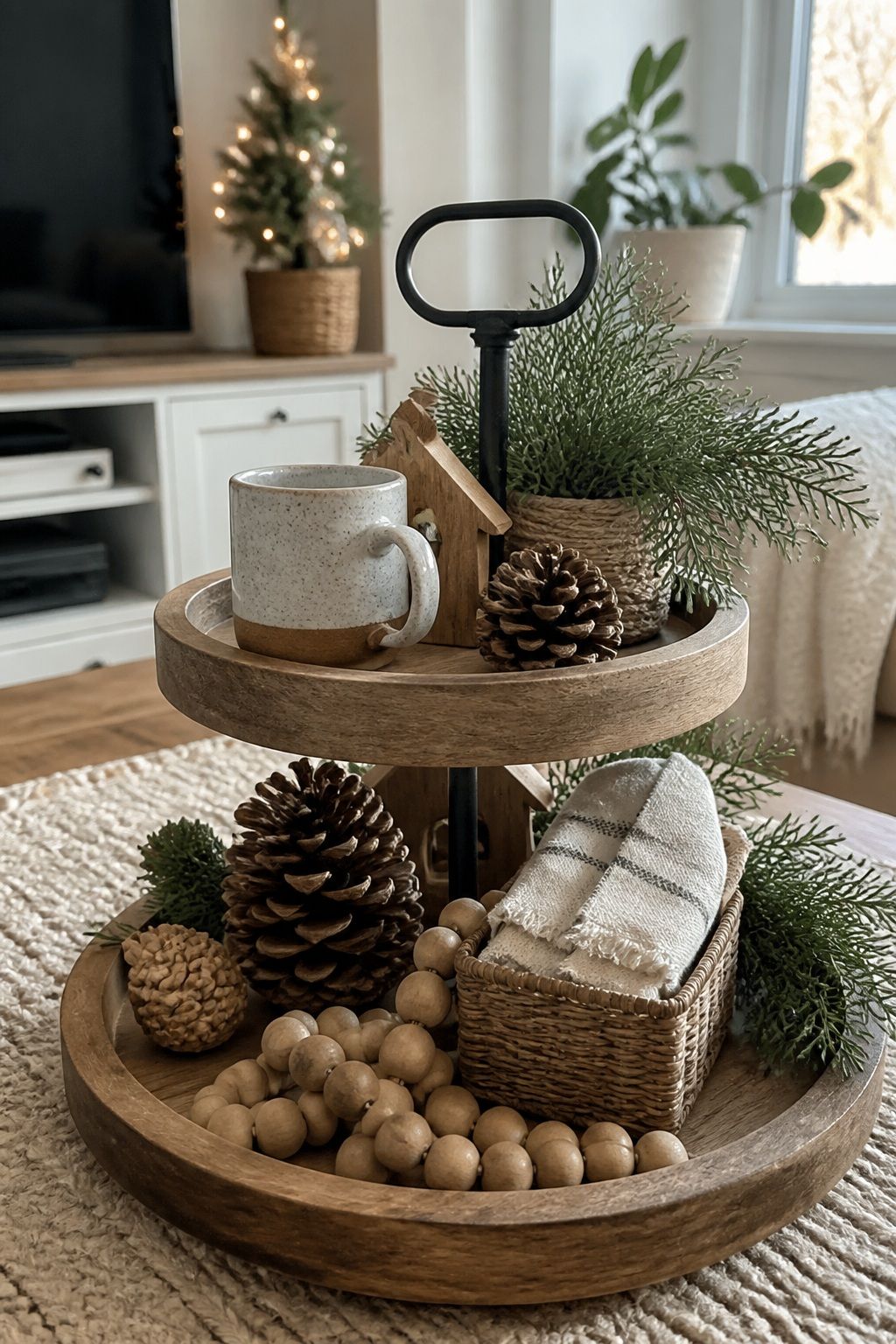


Winter tiered trays read as the season through natural texture, not through holiday ornaments. Mini pinecones, faux snow picks, small evergreen and eucalyptus sprigs, cinnamon stick bundles, dried orange slices, wood slice coasters, and small bundles of dried wheat all add the foraged winter character. Tuck these textural elements into the gaps on each tier.
The natural textures are what make the tray read as winter broadly rather than Christmas specifically, which means the same tray carries from December through February with no changes. Source these elements from craft stores in small quantities, or forage pinecones and evergreen sprigs from the yard for free. A little goes a long way; the textures fill gaps rather than dominating tiers.
Read more: Top 18 Winter Decor Ideas for the Home That Feel Warm Without Trying
10. Keep the Color Palette to Three Tones
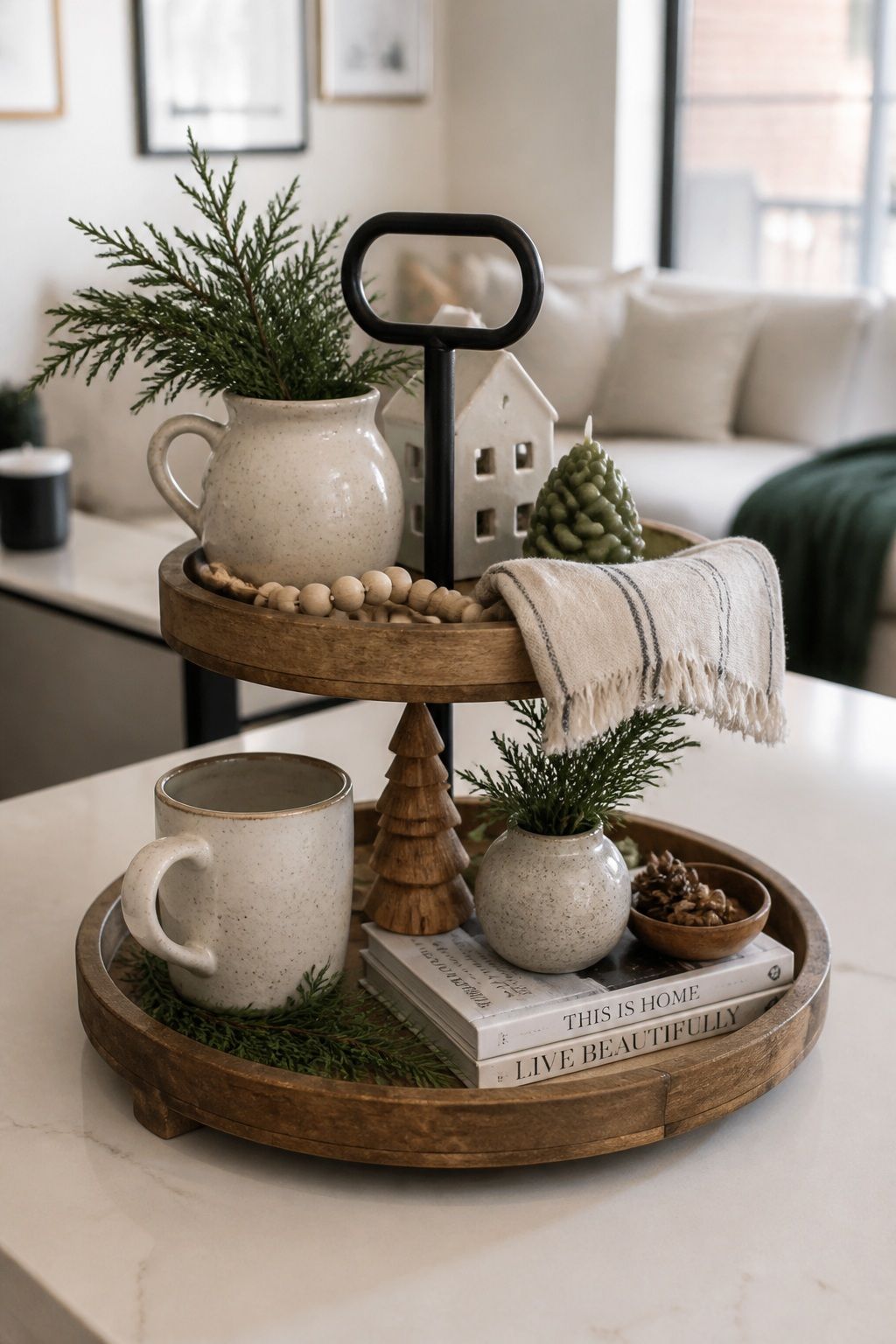


The fastest way a tiered tray reads as cluttered is too many colors competing across the tiers. Lock the palette to three winter tones maximum: a neutral base (cream, white, natural wood), a deeper anchor (burgundy, hunter green, navy), and a metallic or natural accent (brass, gold, or the silvery grey of galvanized metal and pinecones).
Every piece on the tray should fall within those three tones. This single rule does more for a cohesive, curated look than any amount of careful arrangement. A tray with perfect composition but a chaotic rainbow of colors still reads as cluttered; a tray with simple composition in three tight tones reads as intentionally styled. Edit out anything that fights the palette.
Read more: Top 16 Winter Coffee Table Decor Ideas That Look Styled Without Trying
What Seasonal Winter Tiered Tray Ideas Can You Try?
Turn the tray into a hot cocoa station, with mugs and cocoa mix on the bottom tier and marshmallows and cinnamon sticks in the middle. Follow it with a January tray or a Valentine’s tray for February, or start in December with these Christmas tiered tray ideas.
11. Build a Hot Cocoa Tiered Tray for the Kitchen
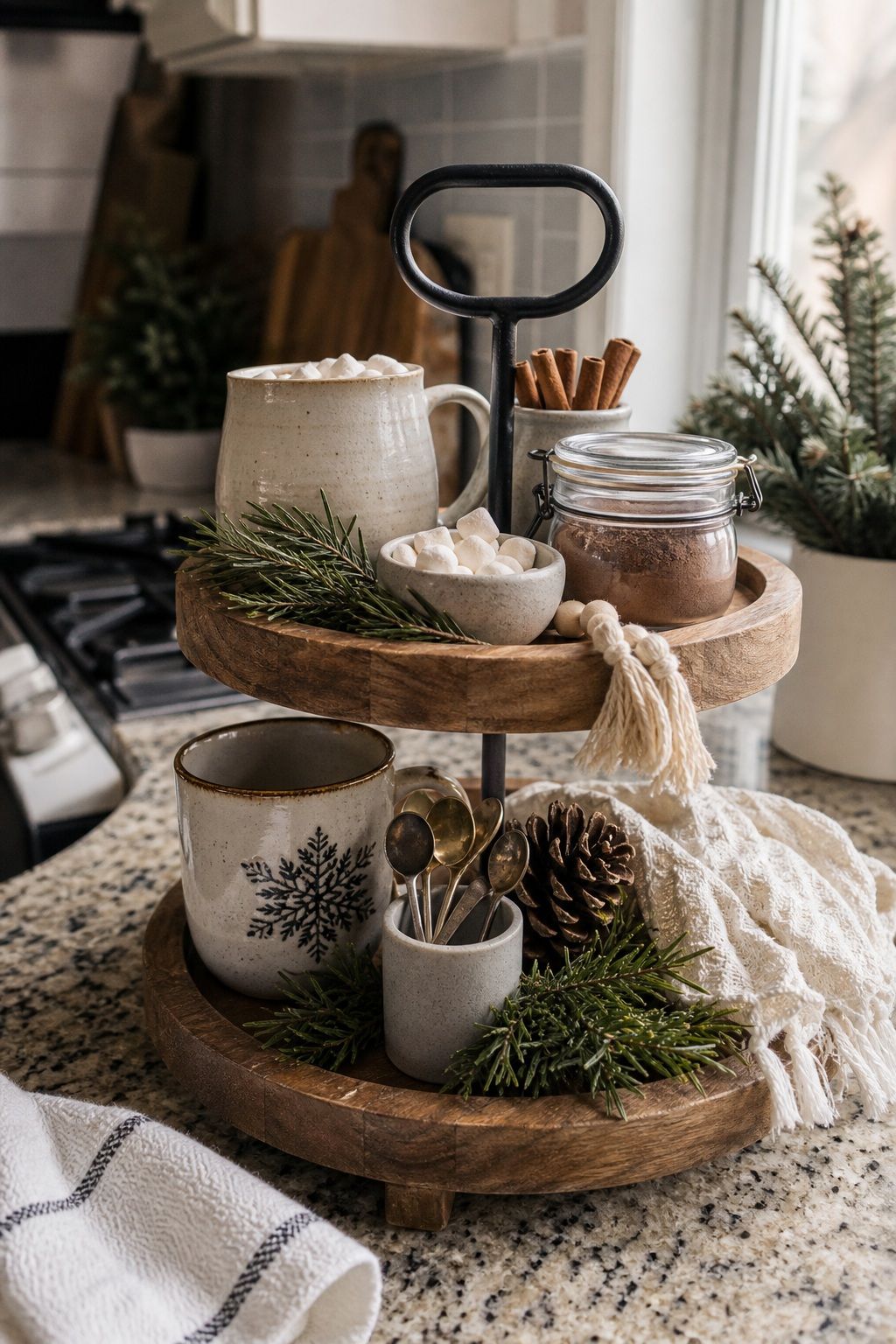
A functional twist on the winter tiered tray turns it into a hot cocoa station. The bottom tier holds mugs and a small jar of cocoa mix, the middle tier holds marshmallows, a small jar of cinnamon sticks, and a candle, and the top tier holds a single small decorative element like a mini evergreen sprig. The tray is both styled decor and a genuinely useful kitchen station.
This works beautifully on a kitchen counter or a coffee bar area where the tray earns its surface space by being functional. Restock the consumable elements through the season. The hot cocoa tray is one of the most-loved winter styling ideas because it combines the cozy aesthetic with an actual purpose that the whole household uses.
12. Create a Post-Holiday January Tray
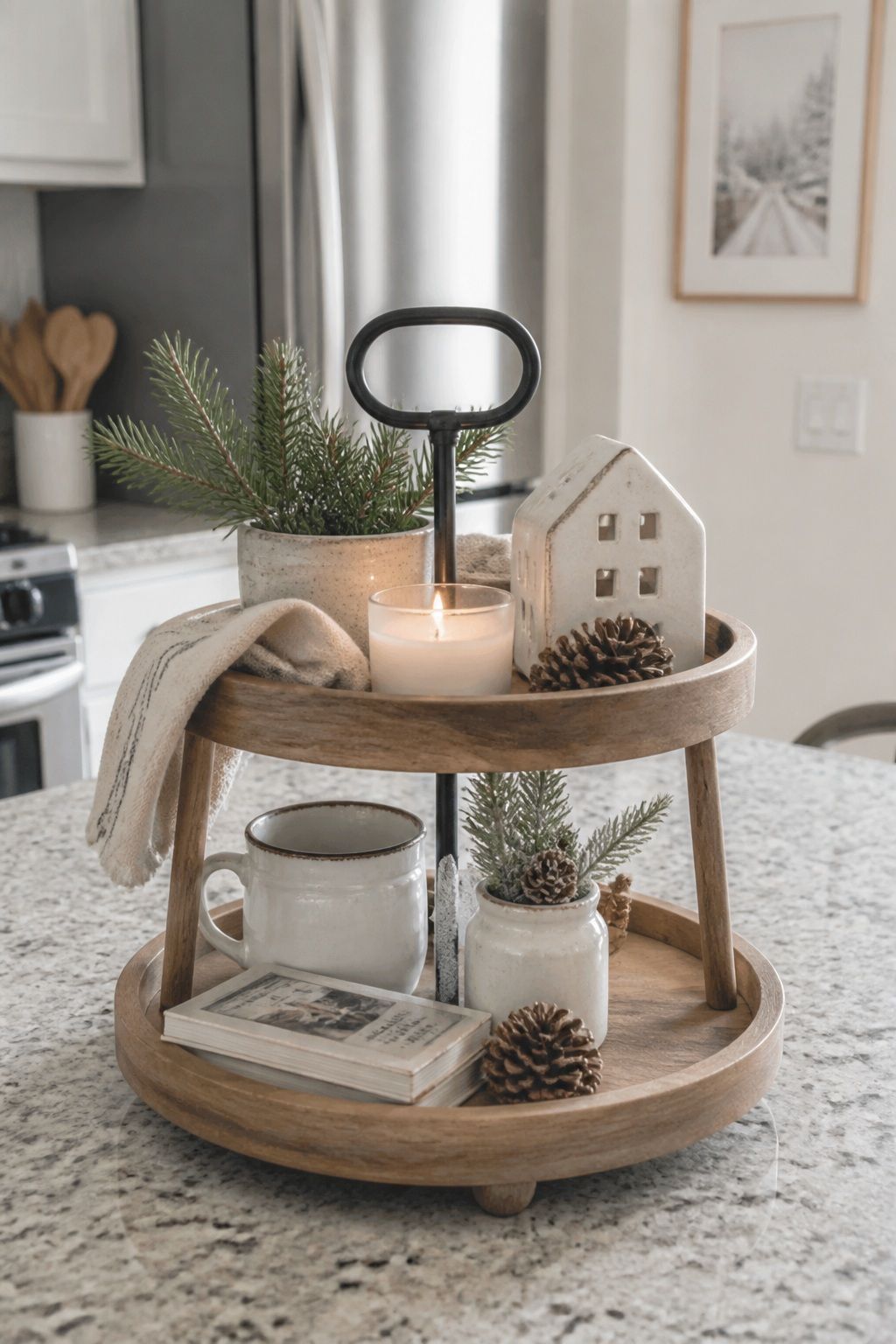


When the Christmas-specific elements come down, the tiered tray transitions to pure winter. Swap out any red-and-green or ornament-heavy pieces for all-white and natural styling: white pinecones, faux snow, cream candles, white ceramic figurines, evergreen and eucalyptus sprigs. The all-white January tray reads as fresh, snowy winter, a clean reset from the layered look of festive Christmas table settings.
This post-holiday version is exactly why winter tiered trays built on natural texture rather than holiday ornaments are worth the effort. The same tray base and the same composition logic carry straight through January and February with just a swap of the small elements. The January tray feels like a clean reset rather than the leftover remnants of holiday decor.
Read more: Top 17 Winter Porch Decor Ideas for January and February
13. Style a Valentine’s Transition Tray for February
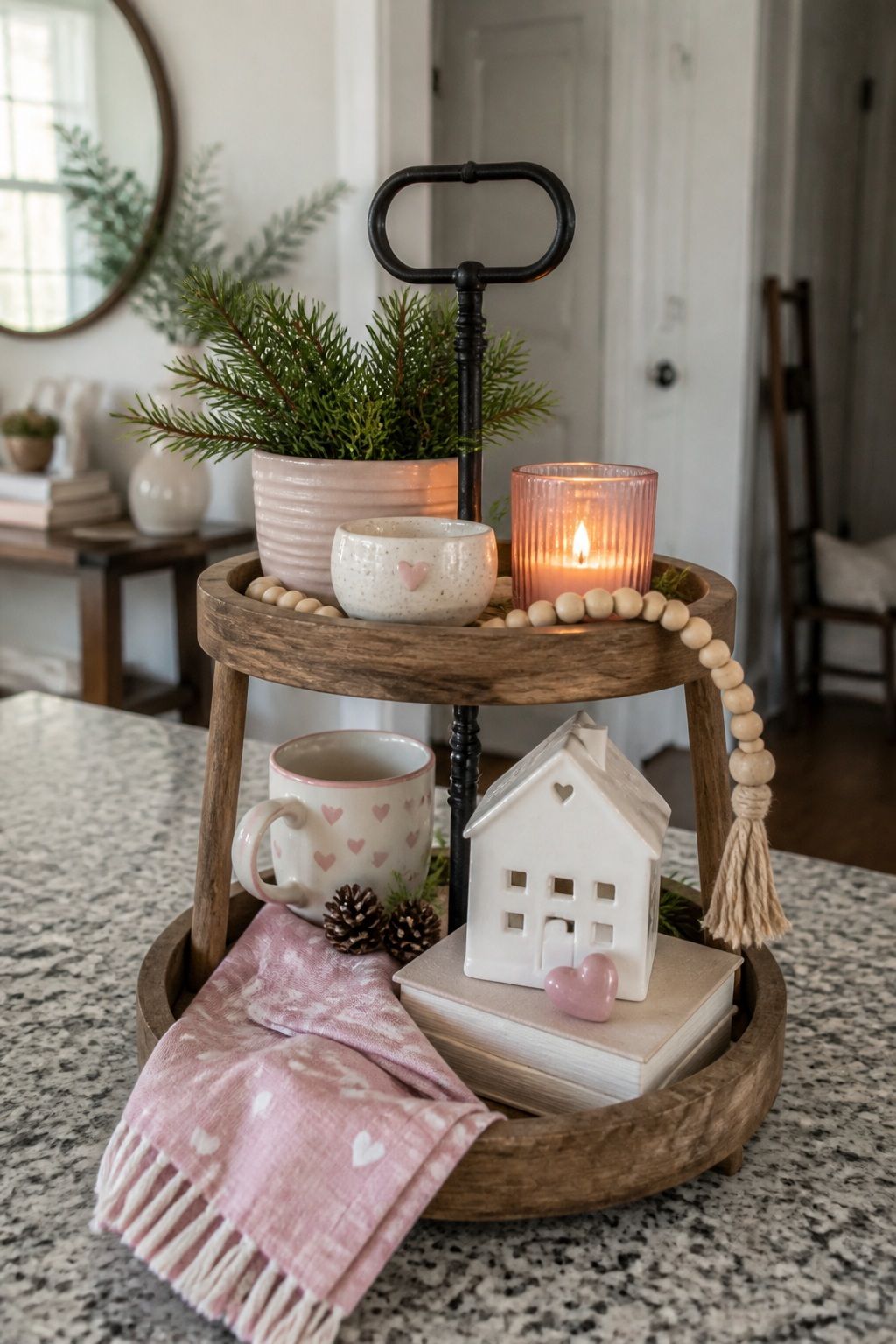


As February arrives, the winter tiered tray transitions toward Valentine’s with a few small swaps. Add a small bundle of dried roses, a few heart-shaped elements in muted dusty rose rather than bright red, a small pink or burgundy candle, and keep the natural winter textures as the grounding base. The result reads as elevated late-winter romance rather than drugstore Valentine’s kitsch.
Following the 2026 softer direction in our Valentine’s Day decorating ideas, lean into dusty rose, burgundy, cream, and natural textures rather than hyper-saturated red and pink. The tiered tray carries from pure winter into the Valentine’s season with the same base and composition, just a few swapped small elements. This keeps one styled surface relevant across the entire December-through-February stretch.
Read more: Top 18 Winter Living Room Decor Ideas That Make Every Evening Feel
Where Should You Put a Winter Tiered Tray?
The kitchen counter is the most natural spot, since the kitchen is the most-used room in winter and the one most often skipped for decor. A tiered tray also works well on the entry console or as a coffee table centerpiece.
14. Place a Tiered Tray on the Kitchen Counter
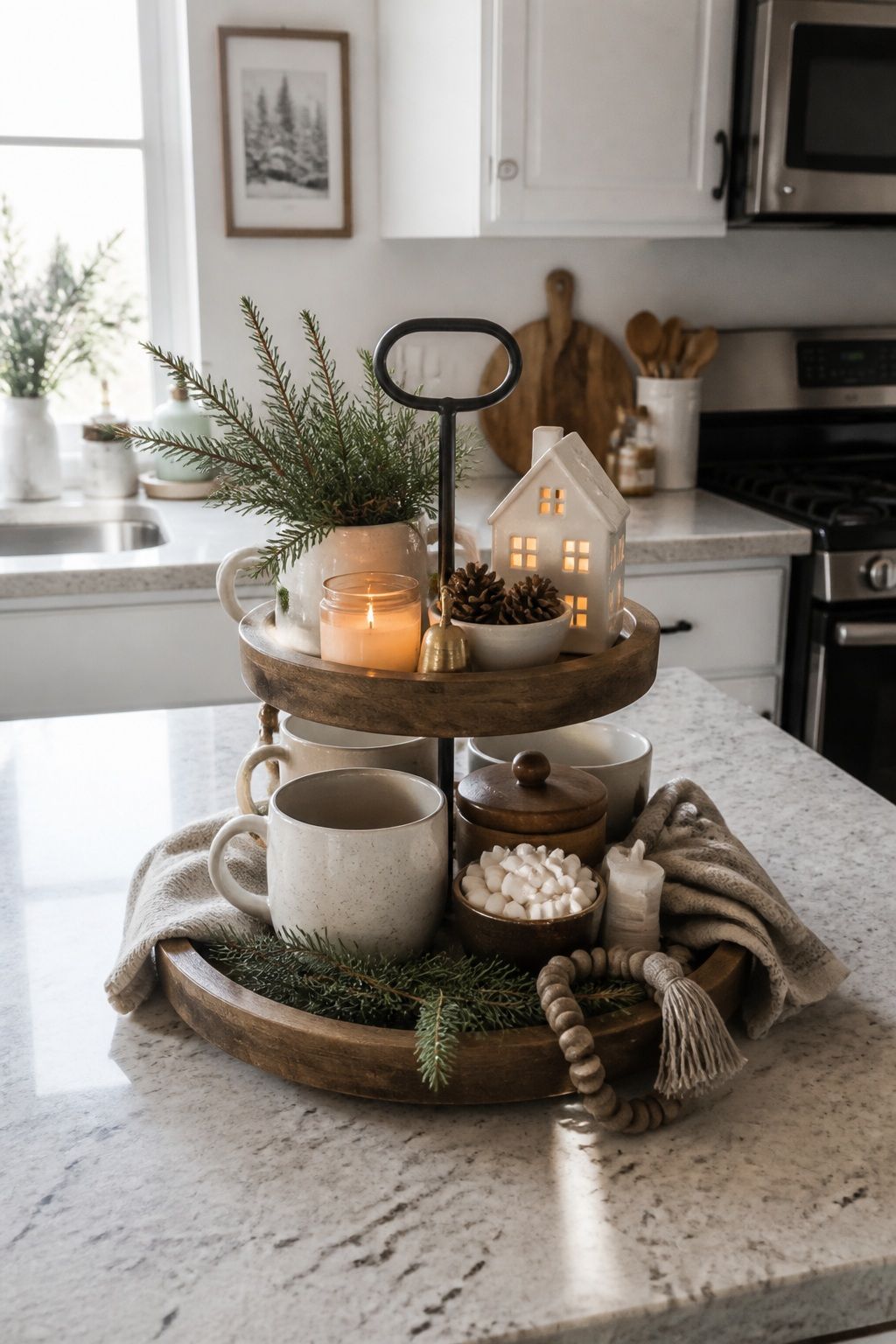
The kitchen counter is the most natural home for a winter tiered tray since the kitchen is the most-used room in winter and the one most often skipped for decor. A tiered tray adds a styled focal point without taking up much counter space, and a galvanized or wooden tray suits the kitchen’s existing materials, one piece of the bigger picture in our winter bathroom decor ideas. Position it in a corner away from the active cooking and prep zone.
The kitchen tray works best with a slightly functional lean: a hot cocoa station, a coffee accessory tray, or a tray holding the everyday salt, pepper, and oil styled among winter textures. The tray earns its counter space by being both styling and lightly useful, which is the right balance for a hardworking room.
Read more: Top 17 Winter Fireplace Decor Ideas That Make the Whole Room Glow
15. Style a Tiered Tray on the Entry Console
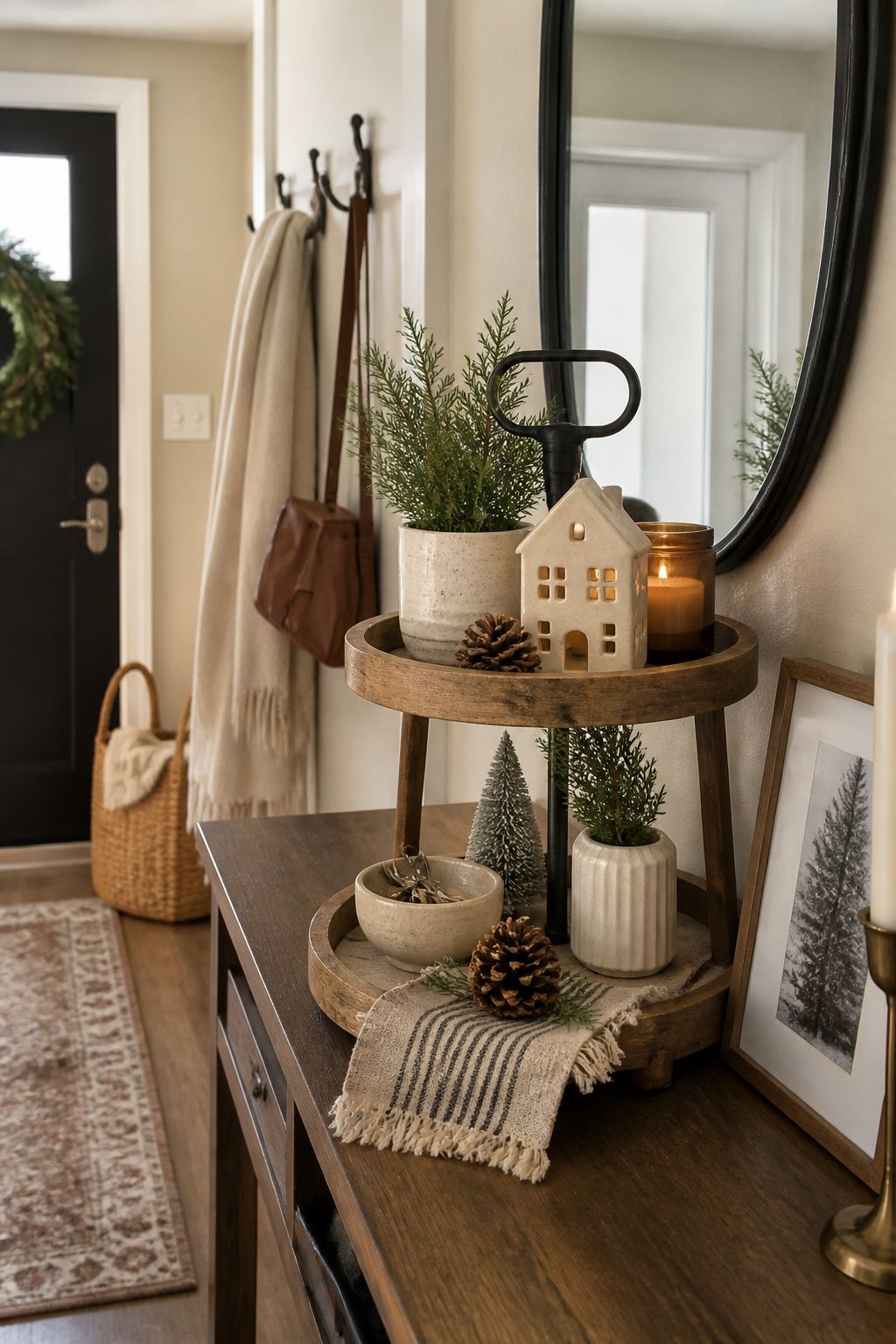
On an entry console, a tiered tray turns the daily keys-and-mail drop zone into a styled winter vignette. The bottom tier can hold a small dish for keys, the middle tier holds a candle and winter textures, and the top tier holds a single focal element. The tray defines where the daily items go, which keeps the rest of the console from becoming a clutter dump.
Position the tray to one side of the console so there is still open surface for setting down bags or packages on arrival. The entry tiered tray, much like our autumn decor for the entryway, greets the household every time they walk in and sets the cozy winter tone before they have taken their coat off. Refresh the styling every few weeks to keep the entry feeling intentional.
Read also: kitchen counter decor ideas
16. Use a Tiered Tray as a Coffee Table Centerpiece
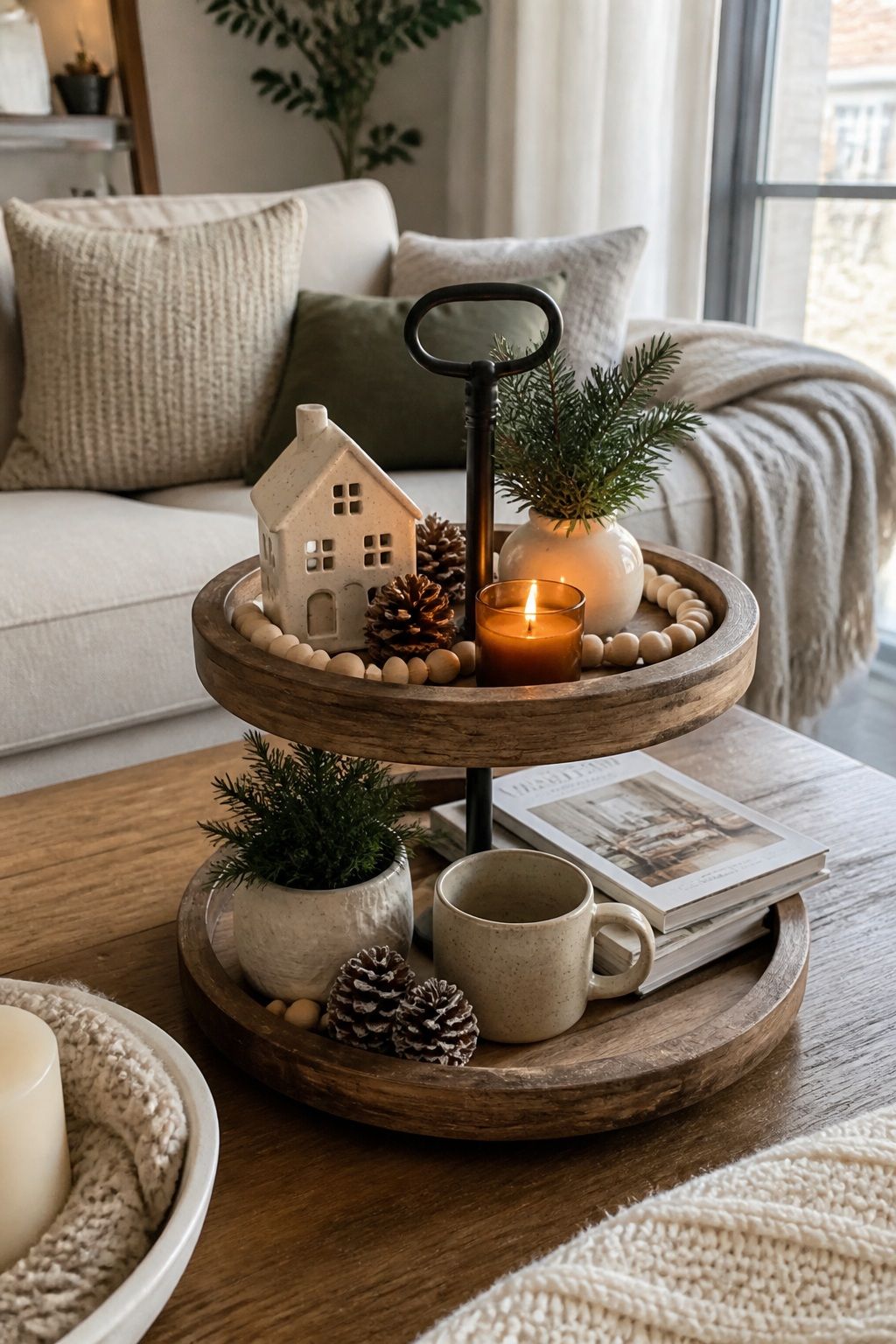
On a coffee table, a tiered tray works as a vertical centerpiece that adds height to an otherwise flat surface. The tiers draw the eye up and create a composed focal point in the center of the living room seating zone. Pick a tray scaled to the coffee table, roughly one-third of the table’s width, so it anchors without overwhelming the surface.
The coffee table tiered tray, a natural fit alongside the broader winter living room decor, should lean more decorative than functional since the coffee table is a styling-forward surface. Build it with the full winter texture story and a flameless candle on the middle tier for evening glow. Keep coasters and any functional items on the open table surface around the tray rather than on the tiers themselves.
Read more: Top 18 Winter Bathroom Decor Ideas That Turn Your Routine Into a
Frequently Asked Questions
How do you style a winter tiered tray?
Treat each tier as its own small composition: the bottom tier holds larger anchor pieces, the middle tier holds medium accents and a small light source, and the top tier holds a single small focal element. Fill the gaps with natural winter textures like mini pinecones and evergreen sprigs, and keep the color palette to three tones.
What goes on a winter tiered tray?
A small evergreen arrangement or pillar candle on the bottom, a flameless candle plus medium accents like cinnamon bundles or mini wreaths on the middle, and one small focal element like a bud vase sprig or mini ornament on top. Layer in mini pinecones, faux snow picks, and small evergreen sprigs across all tiers for texture.
Where should I put a tiered tray in winter?
The kitchen counter, the entry console, and the coffee table are the three best spots. The kitchen tray works best with a slightly functional lean like a hot cocoa station, the entry tray turns the keys-and-mail zone into a styled vignette, and the coffee table tray works as a vertical centerpiece.
How do I keep a tiered tray from looking cluttered?
Lock the color palette to three winter tones, give each tier a clear job rather than piling randomly, keep the top tier to a single small element, and edit out anything that fights the palette. The tiers themselves create the varied heights, so the styling just needs restraint, not complexity.
Can a winter tiered tray work after Christmas?
Yes, which is the main reason to build it from natural texture rather than holiday ornaments. Swap any red-and-green or ornament-heavy pieces for all-white and natural styling (white pinecones, faux snow, cream candles, evergreen sprigs) and the same tray carries straight through January and February.
Key Takeaways
- Give each tier a clear job: bottom for anchors, middle for accents and light, top for one focal element.
- Add a flameless light source to every tray for the evening glow that whispers cozy charm.
- Layer in natural winter textures like mini pinecones, faux snow, and evergreen sprigs.
- Lock the color palette to three winter tones maximum to avoid a cluttered look.
- Keep the top tier to a single small element, the smallest object on the tray.
- Place the tray on the kitchen counter, entry console, or coffee table for the best impact.
- Build it from natural texture so it carries from December through February with simple swaps.
Final Thoughts
A winter tiered tray is the easiest styled surface in the home because the tiers do the composition work, leaving you only to fill each level with the right small objects in a tight three-tone palette. Pick a tray base, give each tier its job, add a flameless light source, and the tray whispers cozy charm on any surface in the apartment. The whole project takes under $60 and ten minutes to assemble, and built from natural texture it carries straight through the full winter season.
Last update on 2026-10-09 / Affiliate links / Images from Amazon Product Advertising API
