
Quick Answer: Breakfast hosting ideas work best when you build the menu around overnight bakes (egg casserole, French toast, baked oatmeal) and self-serve stations (yogurt bar, breakfast board, pancake bar), so the host is not standing at the stove when the first guest comes down the stairs. Plan two large mains for groups over four, plus a coffee carafe, juice pitcher, and a side of fresh fruit. The early-morning energy comes from doing the prep the night before.
The coffee maker hisses at 7:14, your guests are still asleep in the spare room, and you are standing in pajamas turning the oven on for a casserole that mostly cooked itself overnight. The kitchen is quiet, the dishes from last night are already done, and you have twenty minutes before anyone else wakes up. Breakfast hosting at home, when it goes well, is exactly this kind of unhurried morning, the opposite of brunch which has invitations and a timeline and a drinks station, just a soft slow start to the day for the people staying with you.
Breakfast hosting is the most forgiving kind of entertaining because guests stagger their wake-up times and almost every breakfast dish reheats. An egg casserole that cooked the night before, a French-toast bake, a baked oatmeal, a fruit salad, and a coffee setup with a kettle of hot water on the side, that is the whole menu. Done by 9 a.m., everyone fed by 10, and the rest of the day is yours.
Want overnight-guest breakfasts that feel generous without watching your grocery budget spiral?
The Ultimate Budget Planner breaks down the grocery, the small upgrades, and the staple-buying math that keeps overnight hosting affordable. Currently just $4.99 before the price climbs to $19.99.
Recommended Breakfast Hosting Essentials
The pieces every overnight-guest host eventually needs, kept together in one cabinet so the morning of is fast assembly.


Recommended blogs to read:
- Holiday hosting top tips
- Guide to hosting brunch at home
- Hosting lunch ideas
- Hosting appetizers
- Dinner hosting ideas
The Make-Ahead Backbone
1. The Overnight French-Toast Bake
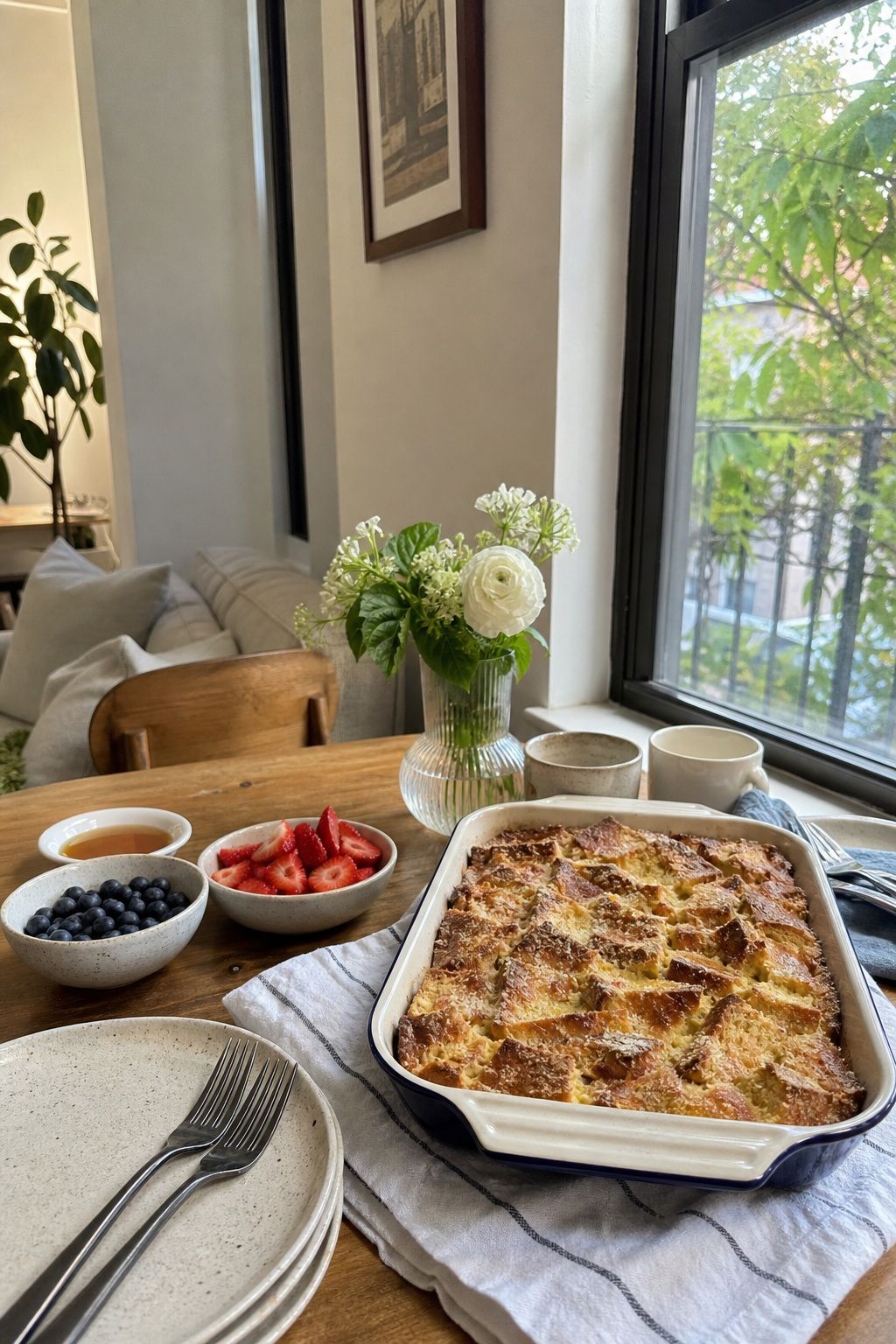


The overnight French-toast bake is the single most forgiving breakfast hosting dish, because almost every part of it happens the night before. Cut a loaf of brioche or challah into cubes, layer in a 9-by-13 baking dish, pour an egg-milk-vanilla custard over the top, cover and refrigerate. In the morning, bake at 350 for 45 minutes while you make the coffee and slice the fruit. It comes out of the oven set on top with a custardy center, and it serves twelve out of one pan.
Variations swap the bread, sourdough for nuttier, croissants for richer, cinnamon-raisin for sweeter. Top with a streusel before baking for crunch, or with a maple glaze after for breakfast-dessert energy. See Mother’s Day brunch ideas for a similar make-ahead-heavy approach scaled up for a more formal morning.
Read more: Top 17 Thanksgiving Breakfast Ideas for a Make-Ahead Morning
2. The Egg-and-Cheese Casserole
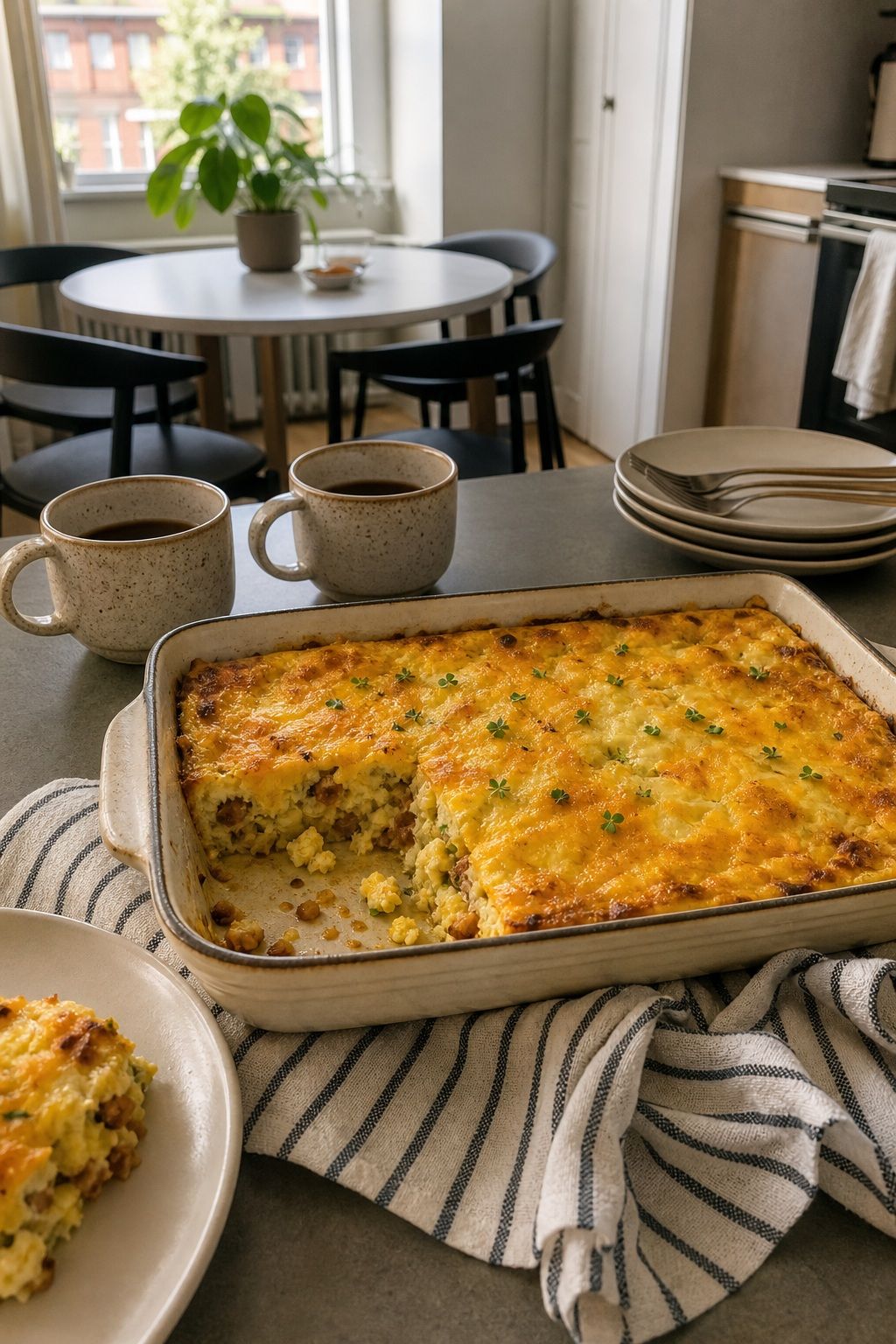
The egg-and-cheese casserole is the savory counterpart to the French toast, and the same overnight logic applies. Layer torn bread, cooked sausage or bacon (if using), shredded cheese, sauteed onions and peppers in a baking dish, pour an egg-milk mixture over the top, cover and refrigerate. In the morning it bakes at 375 for 50 minutes and comes out as a complete protein-heavy breakfast that feeds eight to ten.
The vegetarian version subs in mushrooms, spinach, and roasted tomatoes for the meat. The dairy-free version uses oat milk and a vegan cheese shred. A breakfast hosting menu with one casserole, one French-toast bake, fruit, and bacon will feed any group of six to twelve without anyone going hungry.
3. The Baked Oatmeal
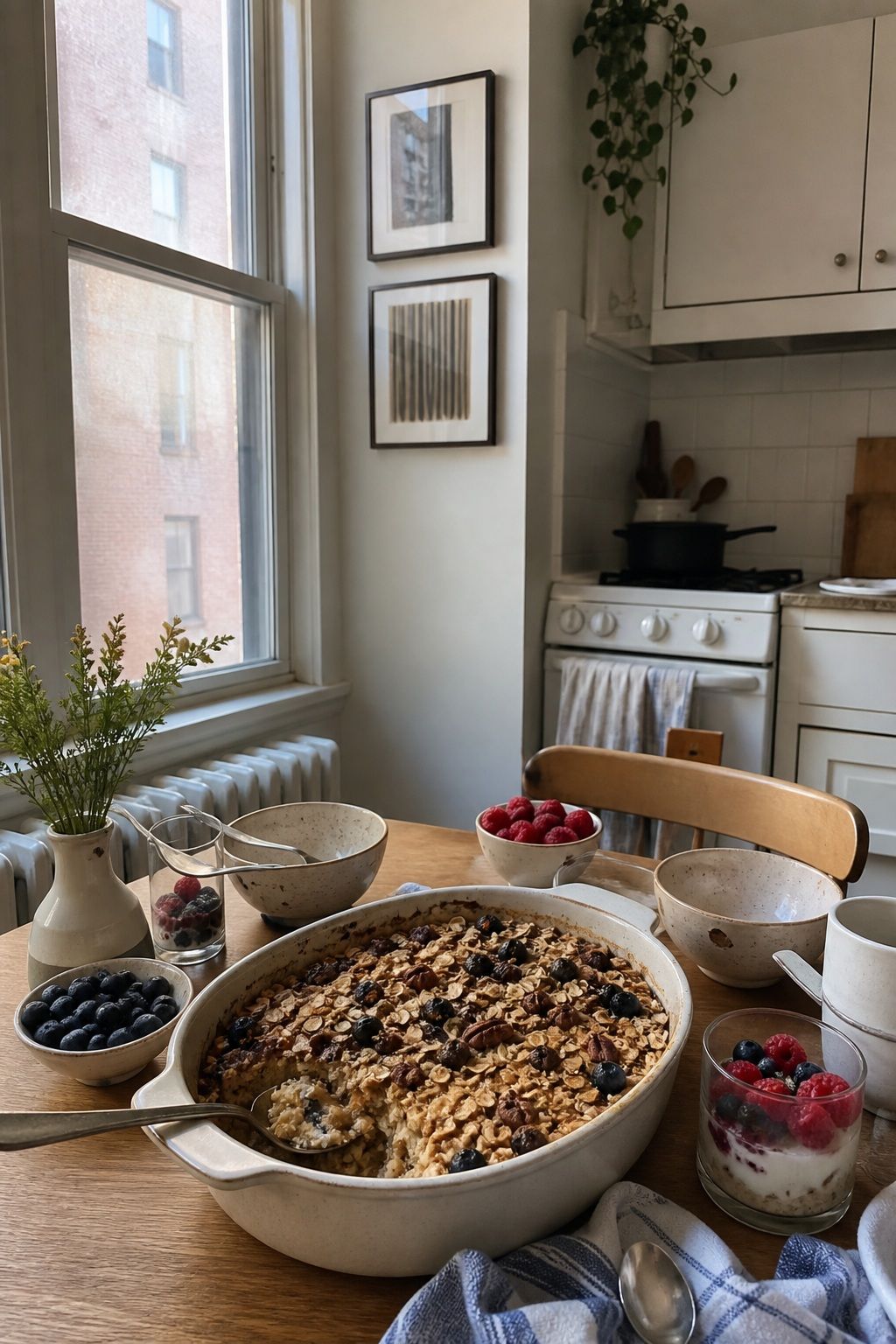
Baked oatmeal is the third leg of the overnight-bake stool, and it is the breakfast hosting dish for the guest who does not want eggs or anything bread-heavy. Mix old-fashioned oats with milk, maple syrup, a banana, eggs, and cinnamon, fold in berries or apples, and bake at 375 for 35 minutes. It is dense and substantial and dairy-free with the right milk substitute.
It also reheats from cold for late-rising guests, which is the thing that overnight hosting absolutely demands. A guest who comes downstairs at 10:30 should still have something hot to eat, and baked oatmeal is the answer that does not require the host to be back in the kitchen.
Read more: Top 15 Breakfast Nook Ideas for a Cozy Morning Corner
4. The Savory Frittata
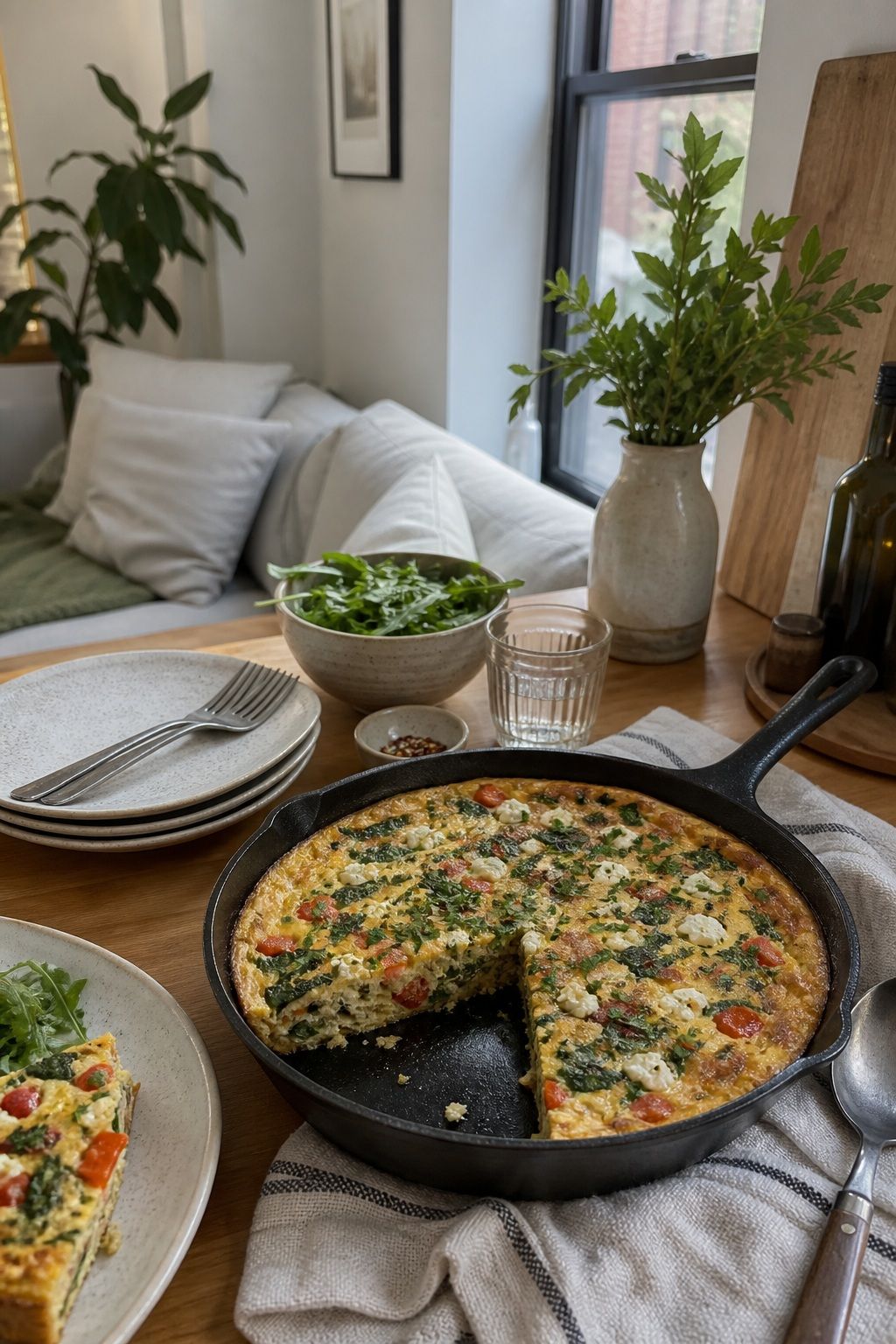


A savory frittata is the alternative to the egg casserole for hosts who prefer a single-pan stovetop-and-broiler approach. Beat eight eggs with a splash of milk, pour into a hot cast-iron pan with sauteed vegetables and crumbled goat cheese, cook on the stove until set on the edges, then run under the broiler for two minutes to puff the top. It serves six to eight and looks beautiful sliced into wedges on a wood board.
Frittatas are also the most flexible canvas for whatever vegetables are in your fridge, which makes them the go-to for the Sunday-morning breakfast hosting where you did not plan a specific menu in advance. See Friendsgiving brunch for a related savory-leaning morning menu.
Read more: Top 17 Sunroom Breakfast Nook Ideas to Maximize Light and Seating
The Buffet Build
5. The Two-Mains Rule for Groups Over Four
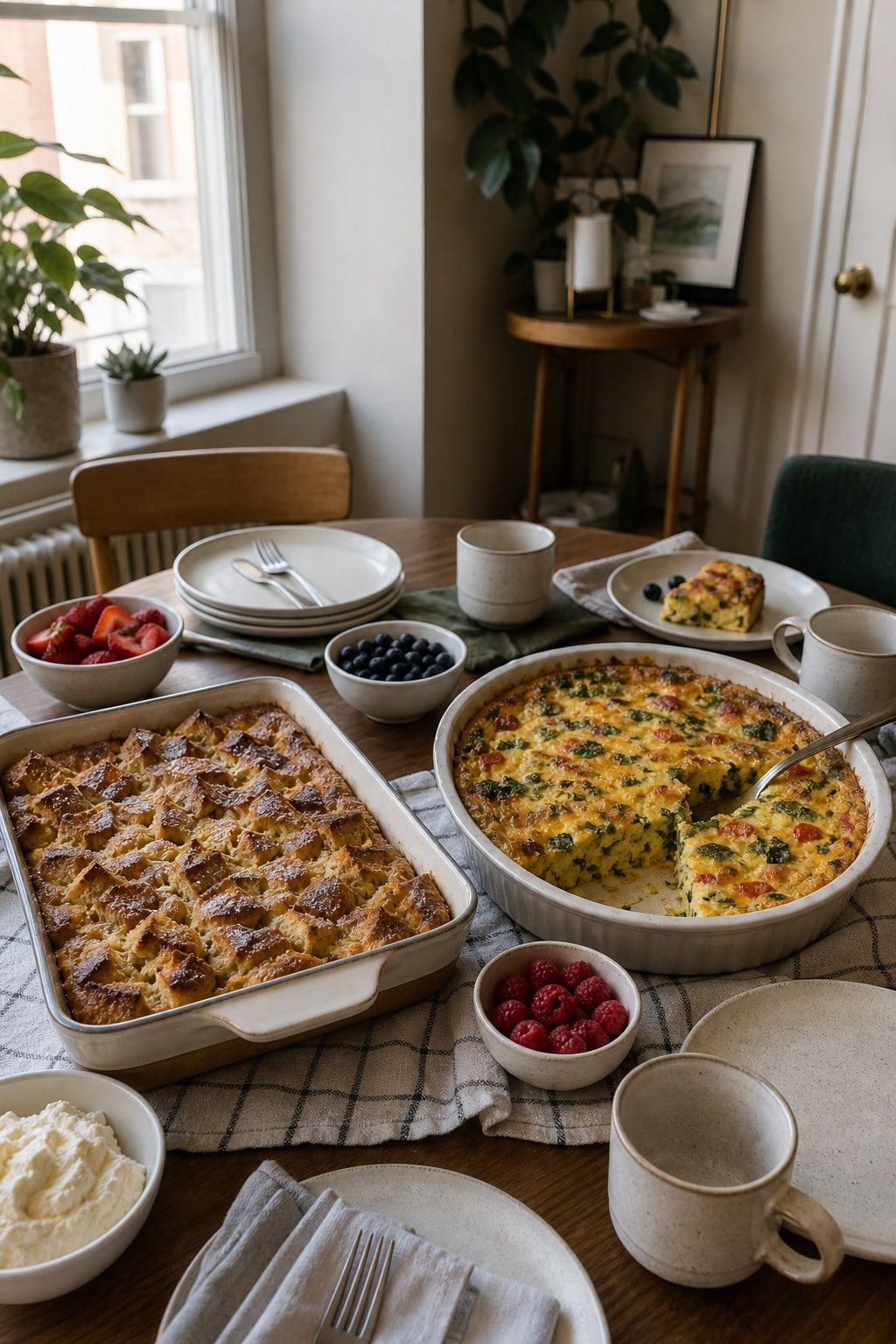


For breakfast hosting with more than four guests, plan two large mains rather than one, because a single casserole runs out before everyone is full and a single batch of pancakes means the host is cooking instead of sitting. Pair one sweet (the French-toast bake) with one savory (the egg casserole), and the menu balances itself without anyone reaching for seconds and finding the pan empty.
The math is roughly 1.5 servings per person of each main, because some guests will skip the sweet and some will skip the savory, and the doubling-up keeps everyone genuinely full. Extra leftovers reheat well for the host’s Monday breakfast, which is its own quiet bonus.
Read more: Top 17 Breakfast Counter in Kitchen Ideas for a Welcoming Eat-In Space
6. The Three-Sides Math
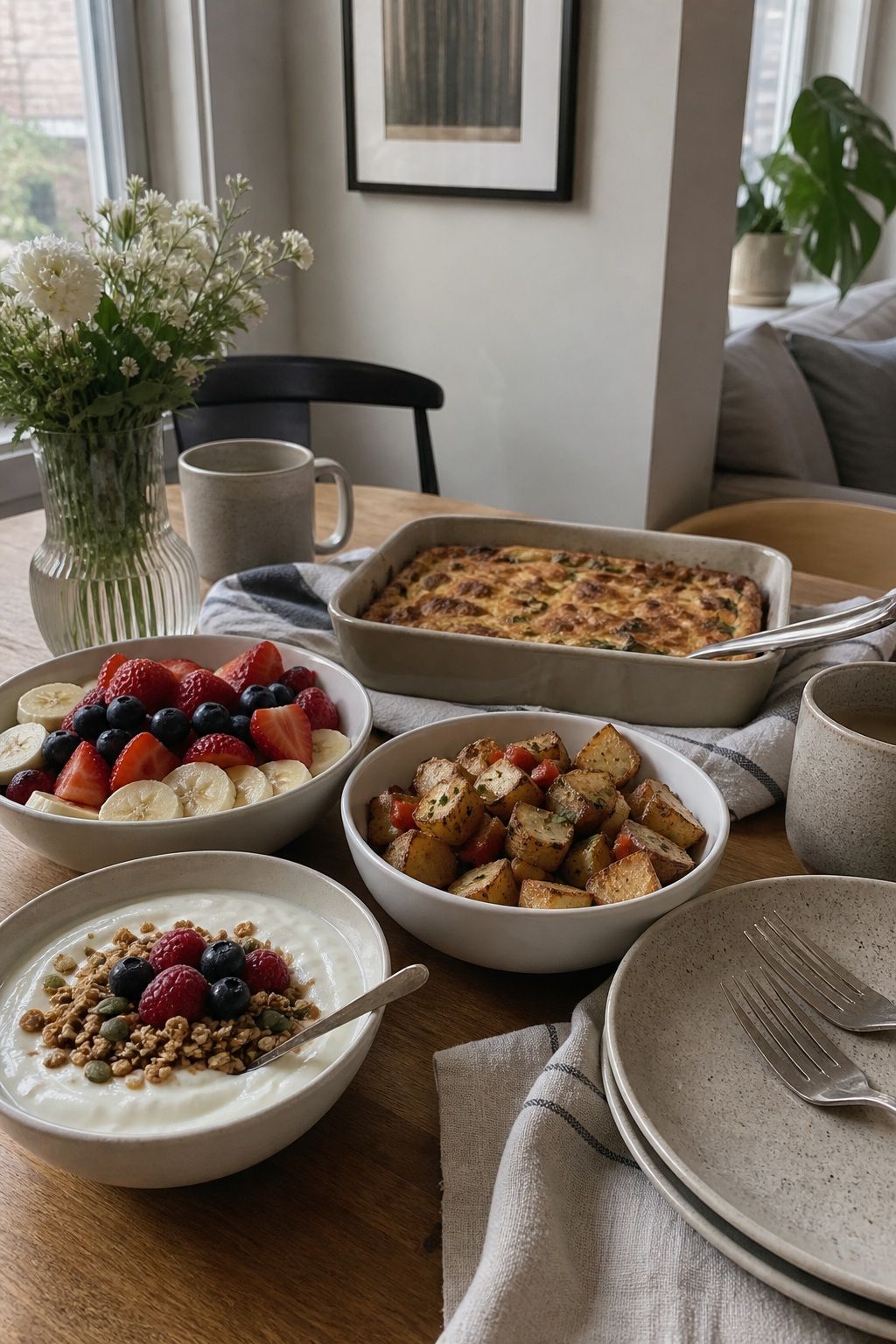


The standard breakfast hosting buffet runs the two mains plus three sides, one fresh (fruit salad or a sliced-fruit platter), one yogurt-and-granola (in small bowls or a parfait jar), and one pastry (croissants, muffins, scones from the bakery). These three sides cover every dietary lane and give late-rising guests something to eat without reheating anything.
The fruit gets prepped the night before, the yogurt comes out of the fridge in its container with a bowl of granola next to it, the pastries get arranged on a wooden board. Total morning-of work for all three sides: about eight minutes.
7. The Toast Situation
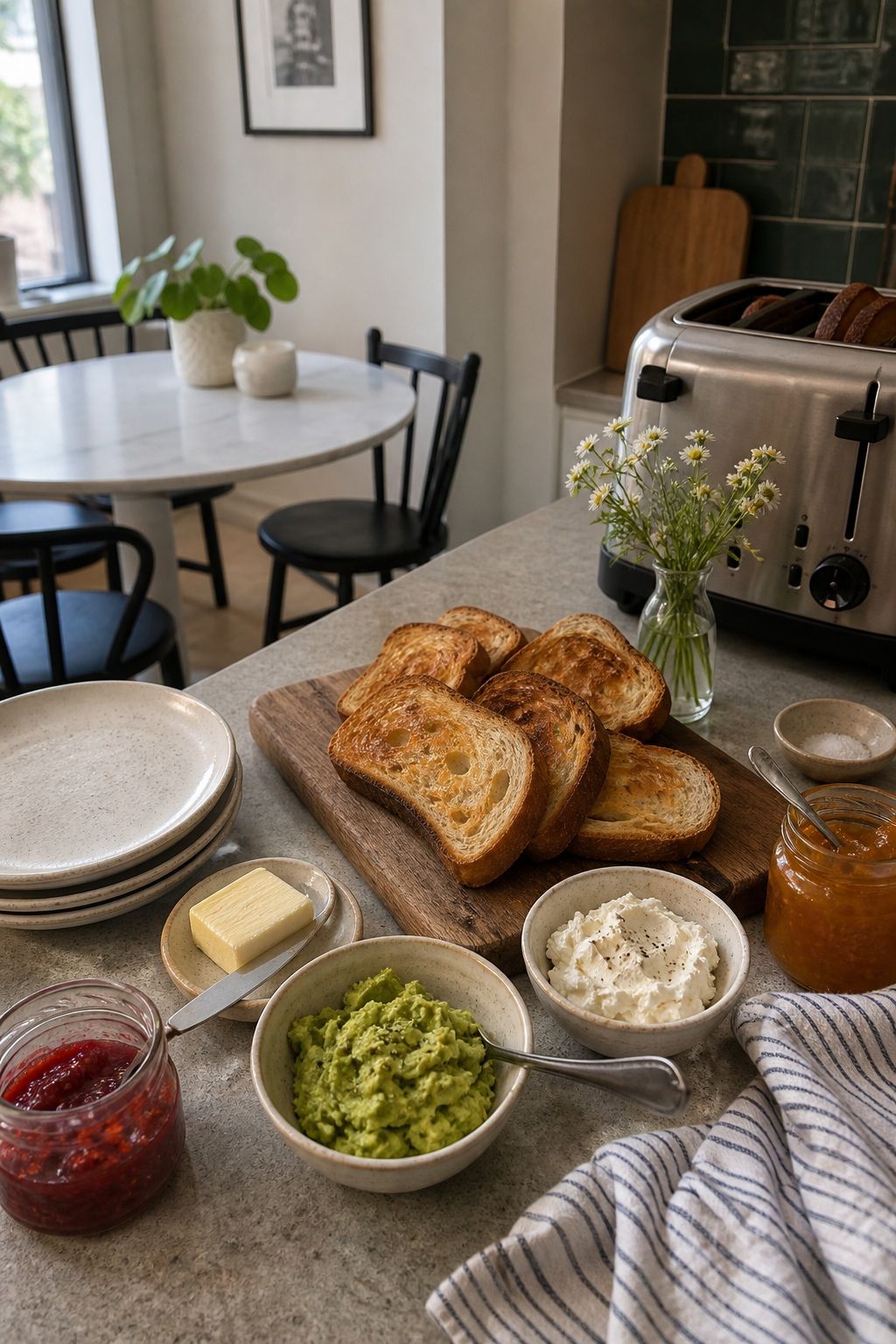


Toast is the underrated breakfast hosting side that nobody plans for, and it is what fills the gap between the casserole running low and the next person sitting down. A pre-sliced sourdough loaf next to the toaster, a small dish of butter, a small dish of jam, and guests handle it themselves. The host does not toast bread for guests, the host puts the bread next to the toaster.
Toast also doubles as the late-arrival rescue, because the casserole and the French toast might be gone by 10:30 but a slice of sourdough with butter and jam is still a real breakfast.
Read more: Top 17 Hosting Outfit Ideas That Look Pulled-Together and Feel Easy
8. The Eggs-to-Order Question
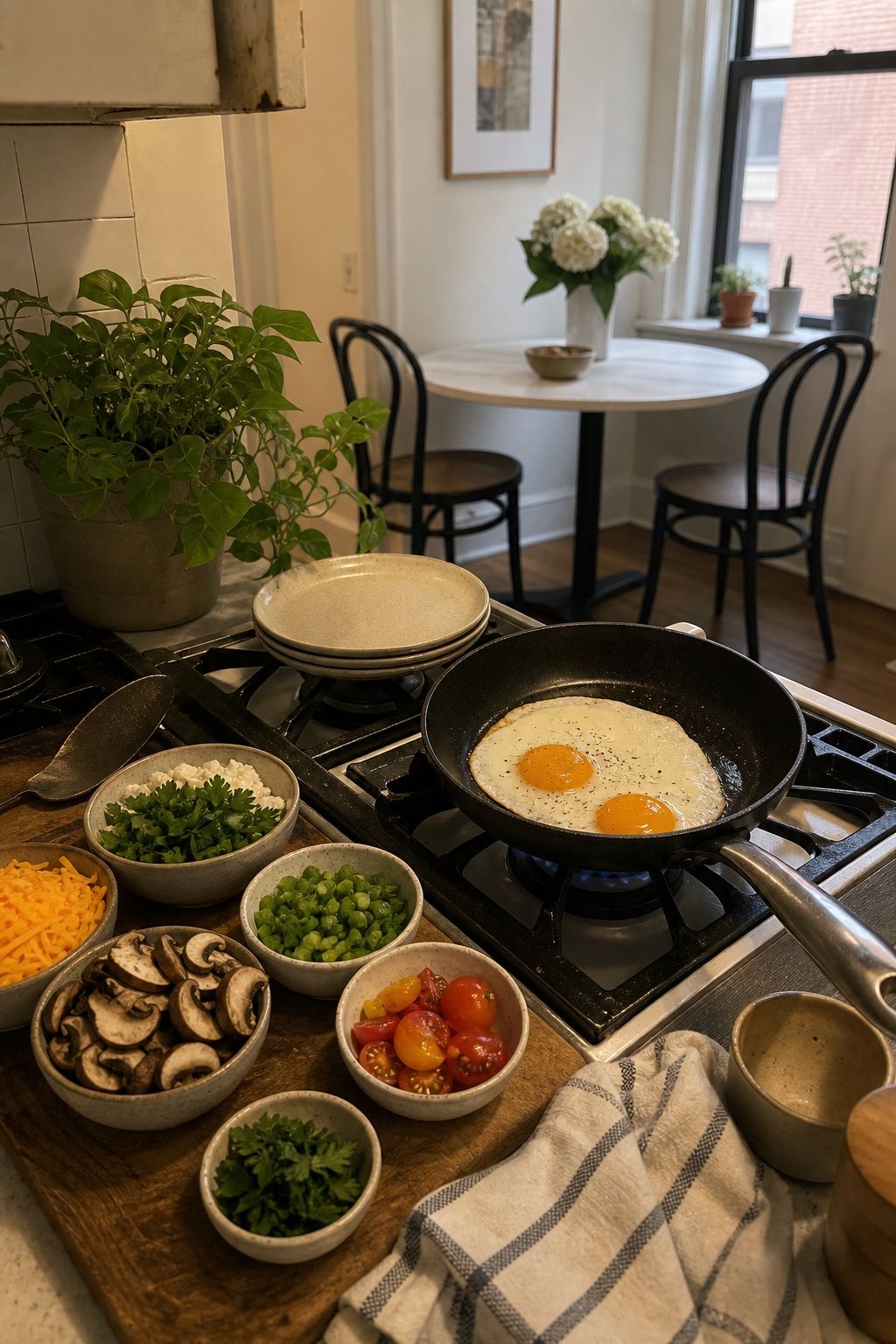


Skip eggs-to-order at breakfast hosting unless you have a very small group (three or fewer guests) and a very calm host. Standing at the stove cooking individual eggs for each guest is the exact opposite of the calm-host energy that overnight breakfast hosting should have. The egg casserole and the frittata cover the egg craving without the host playing short-order cook.
If a guest specifically asks for an over-easy egg, make one, that is fine. But do not offer it as a default option, because the moment you do, every guest wants something different and the buffet stops being a buffet.
Read more: Top 18 Thoughtful Thanksgiving Hosting Ideas to Make Your Celebration
Interactive Breakfast Stations
9. The Yogurt-Parfait Bar
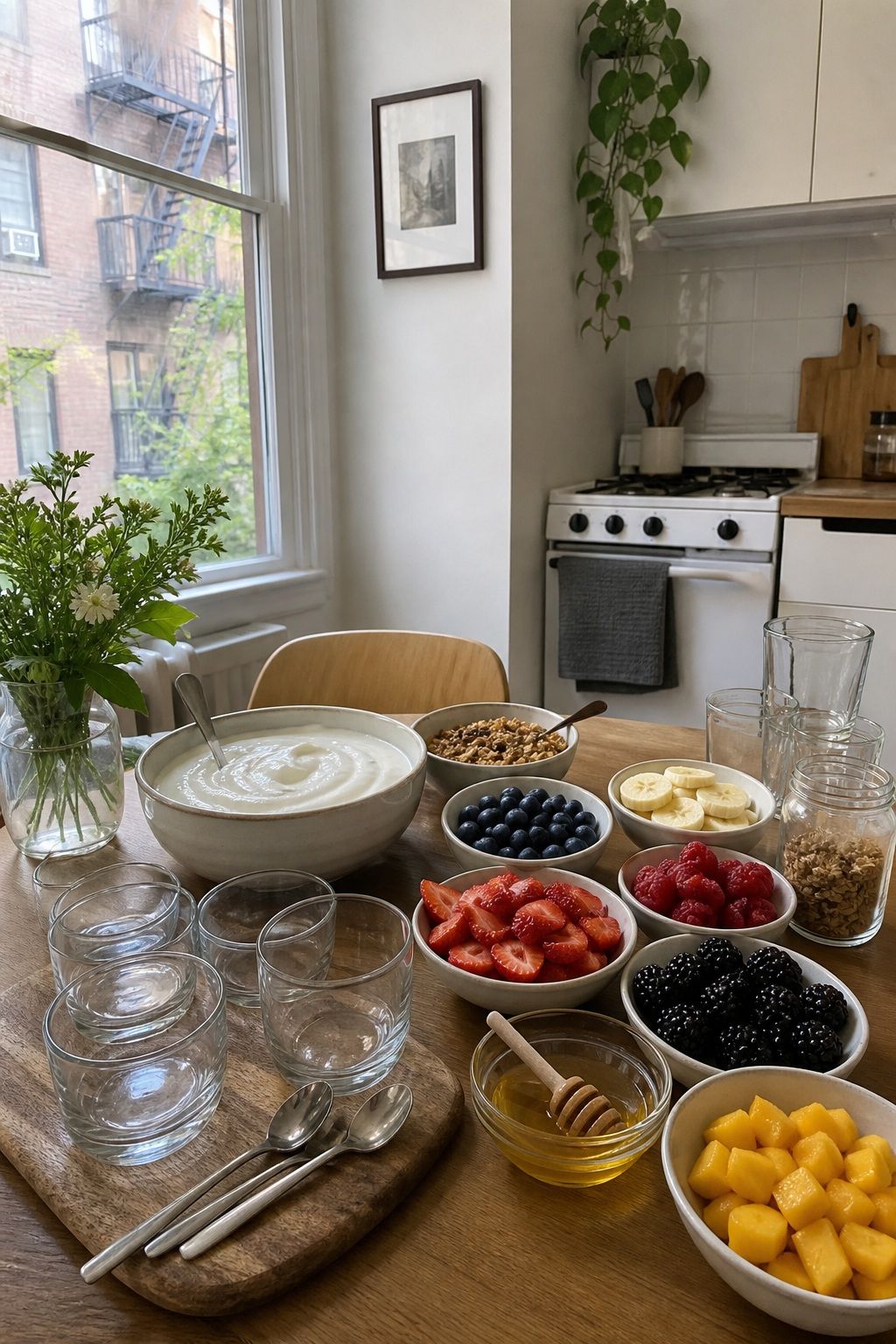


A yogurt-parfait bar is the lightest breakfast hosting station and the one that works for almost every dietary restriction. Set out one large bowl of plain Greek yogurt and one of vanilla, then arrange small ramekins of granola, berries, sliced bananas, honey, chia seeds, almond butter, and toasted coconut. Glass parfait jars or small bowls let guests build their own.
The whole station fits on a small cart or a single counter section, and it takes about ten minutes to set up the morning of (the yogurts go from fridge to bowl, the toppings get poured into ramekins). It is also the most photogenic part of any breakfast hosting setup, the kind of thing guests tend to post.
10. The Pancake-Bar Setup
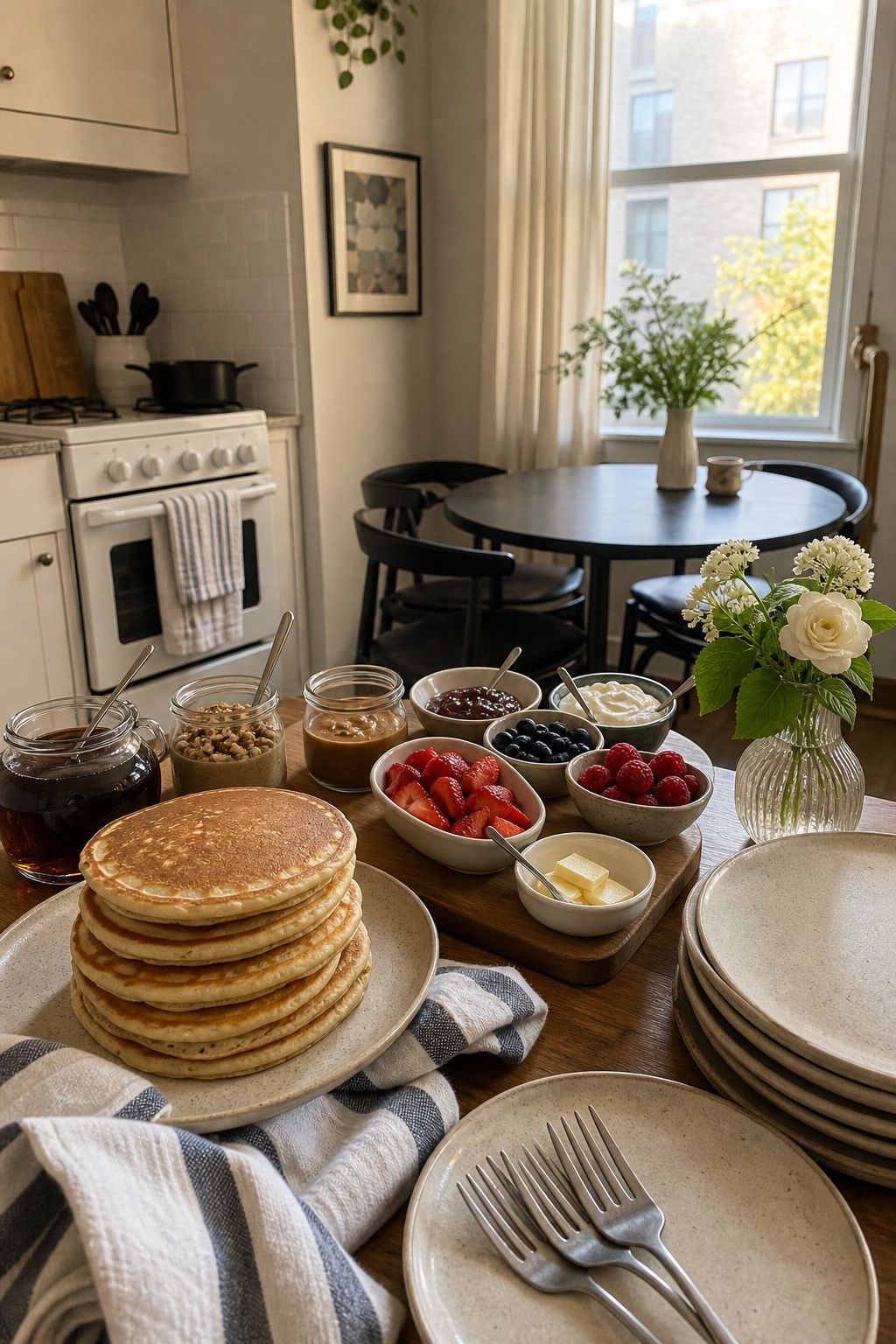


A pancake bar is the breakfast hosting station for a slightly more involved morning, and the host needs to commit to actually flipping pancakes for thirty minutes. The setup is one large bowl of batter, one griddle or pan, and four to six small ramekins of toppings (chocolate chips, blueberries, sliced bananas, pecans, maple syrup, whipped cream). Guests order the version they want, the host flips a fresh stack.
This format works best for casual breakfast hosting with four to six guests, because the host can flip and chat without losing the room. Above six guests it becomes a job, and the egg-casserole approach is the better call.
Read more: Top 20 Hosting Friendsgiving Ideas to Create a Cozy and Stylish
11. The Smoothie-Bowl Bar
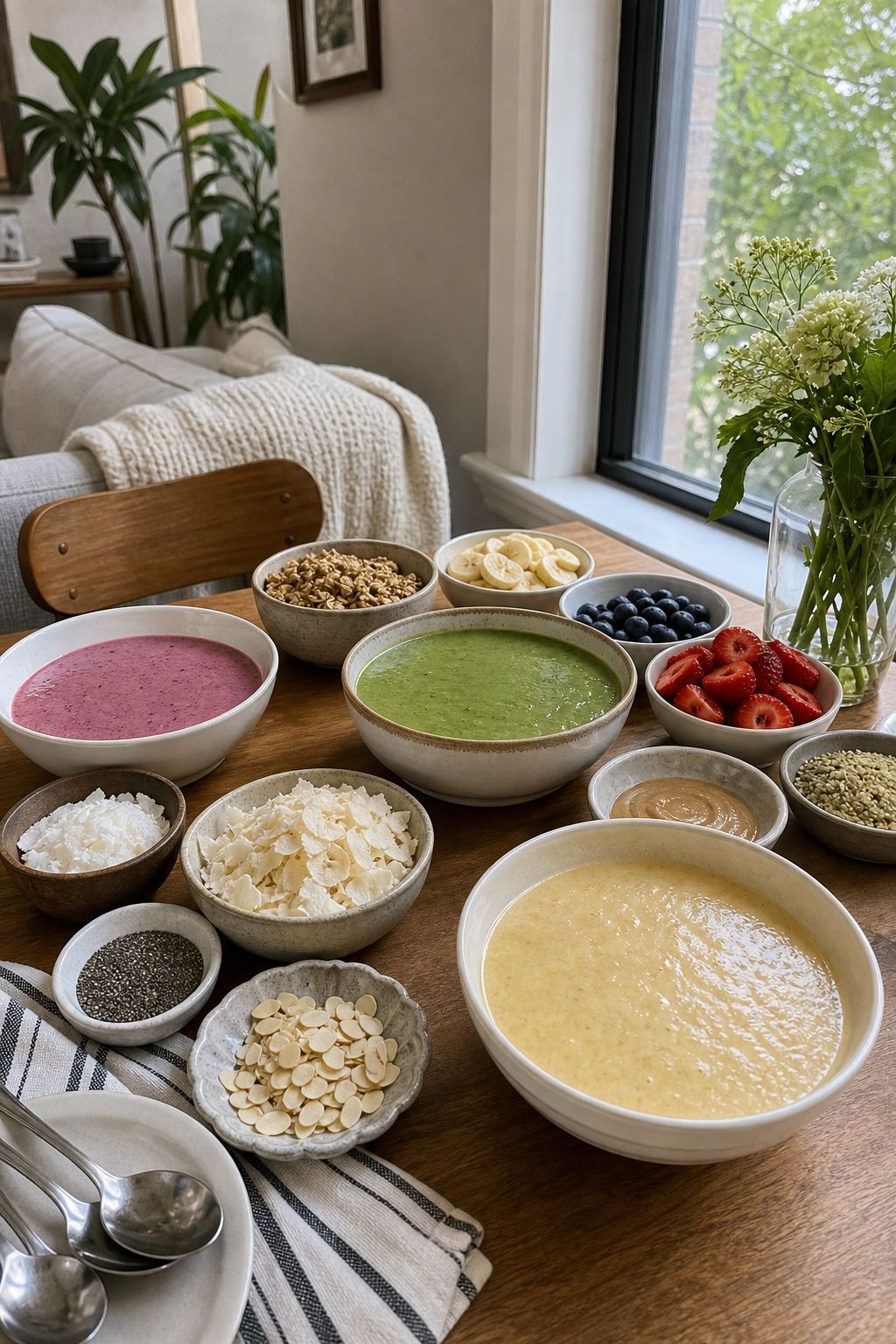


The smoothie-bowl bar is the warm-weather alternative to the parfait bar and the lightest breakfast hosting option for a summer morning. Pre-blend three smoothie bases the night before (berry, green, tropical), refrigerate in mason jars, and set out the same kind of topping array as the parfait bar. Guests pour their base into a wide bowl and load it up with toppings.
Smoothie bowls also work as the late-morning option for the guest who came down at 11 and does not want a heavy bake. The bases hold for 12 hours in the fridge without separating, which is enough runway for any overnight-guest hosting.
Read more: Top 15 Open Cabinet Kitchen Decor Ideas to Style Your Shelves
12. The Breakfast Board
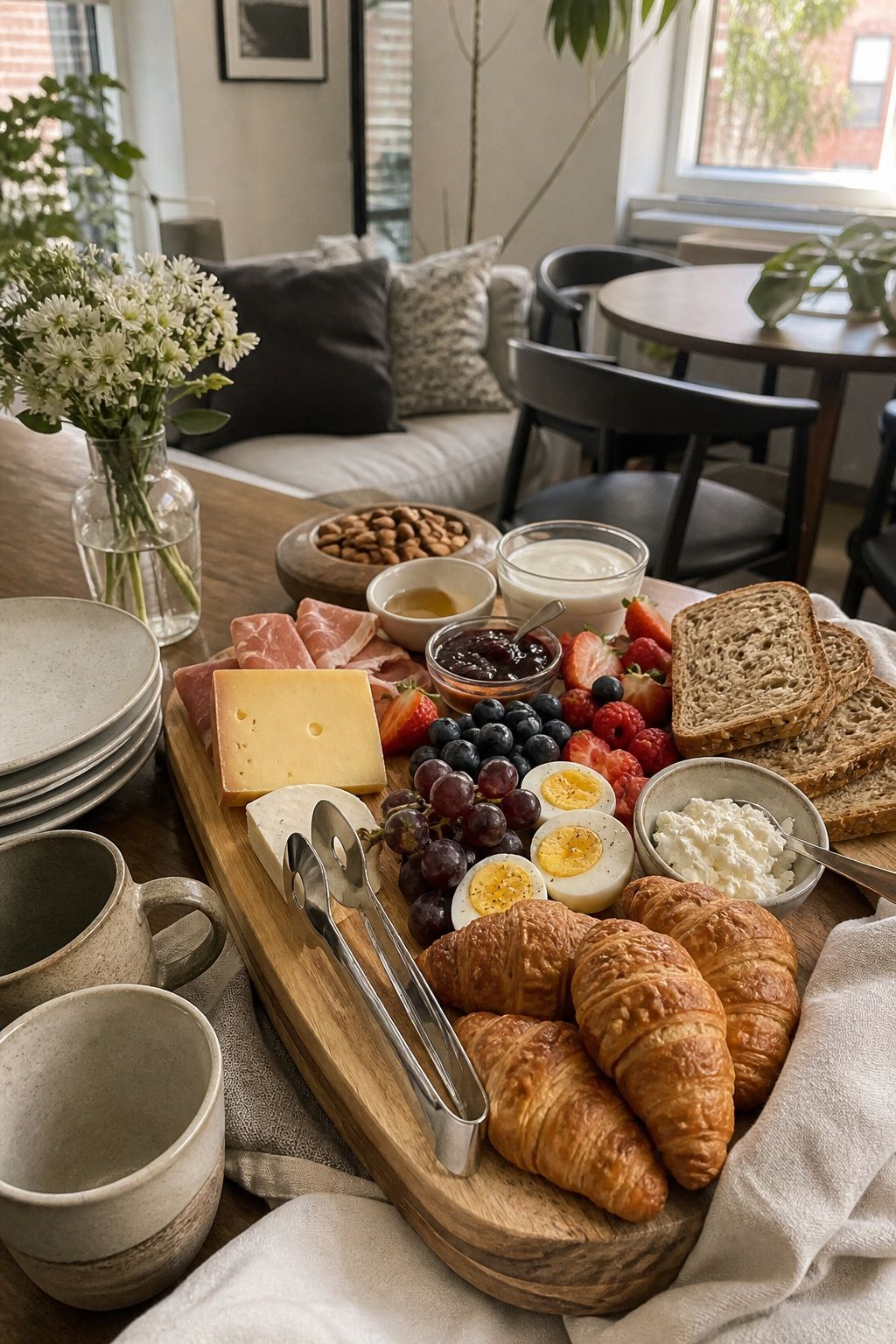


A breakfast board is the lowest-effort breakfast hosting station and the one that works for hosts who genuinely do not want to cook. On a large wooden cutting board, arrange small piles of cooked bacon, hard-boiled eggs cut in halves, sliced fruit, croissants, small dishes of jam and butter, granola in a small bowl, a wedge of cheese, and a few pieces of dark chocolate. Put it in the middle of the table, set down small plates and forks, and let guests build a small plate of whatever calls to them.
Breakfast boards photograph beautifully and they serve six to eight from a single board, which makes them genuinely the easiest format for a Saturday-morning friend-group breakfast hosting situation. The composed-board logic shows up in autumn dinner party table settings too, where a single shared centerpiece holds the visual weight of the entire meal.
The Coffee and Drinks Mini-Bar
13. Drip Coffee for the Crowd
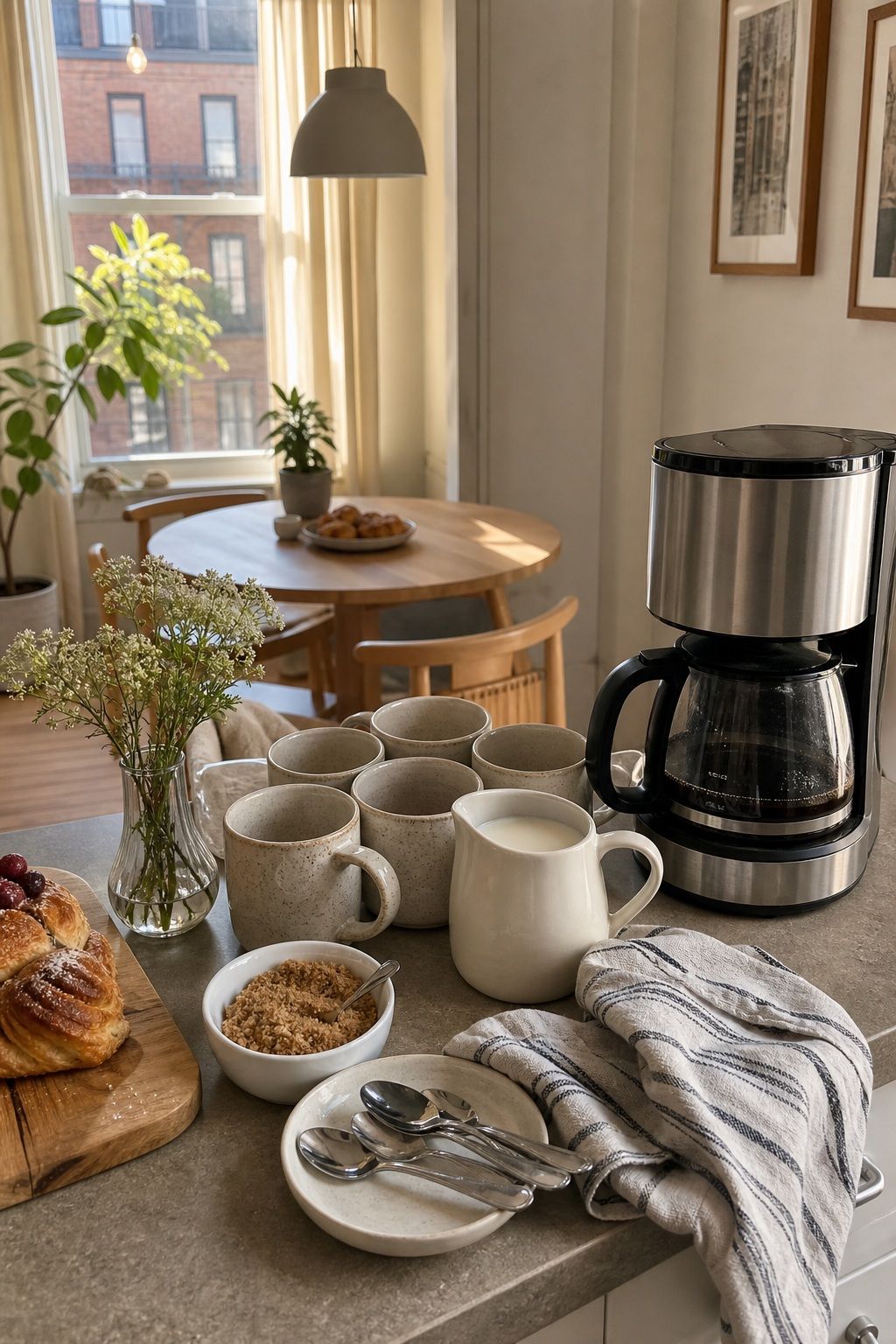


Standard drip coffee, brewed in advance and kept warm in a thermal carafe, is the right call for any breakfast hosting group over four. A 12-cup pot brews while you are getting dressed, transfers to a carafe, and stays hot for two hours, which covers every guest waking up between 7 and 10. A small pitcher of milk or cream and a small dish of sugar next to the carafe handles the customization without the host pouring for anyone.
Avoid the single-cup pod machine for breakfast hosting more than three guests, because the cycle time of one cup at a time bottlenecks the room and the host ends up coordinating the queue.
Read more: Top 15 Kitchen Corner Cabinet Ideas to Maximize Every Inch
14. The Espresso Option for Smaller Mornings
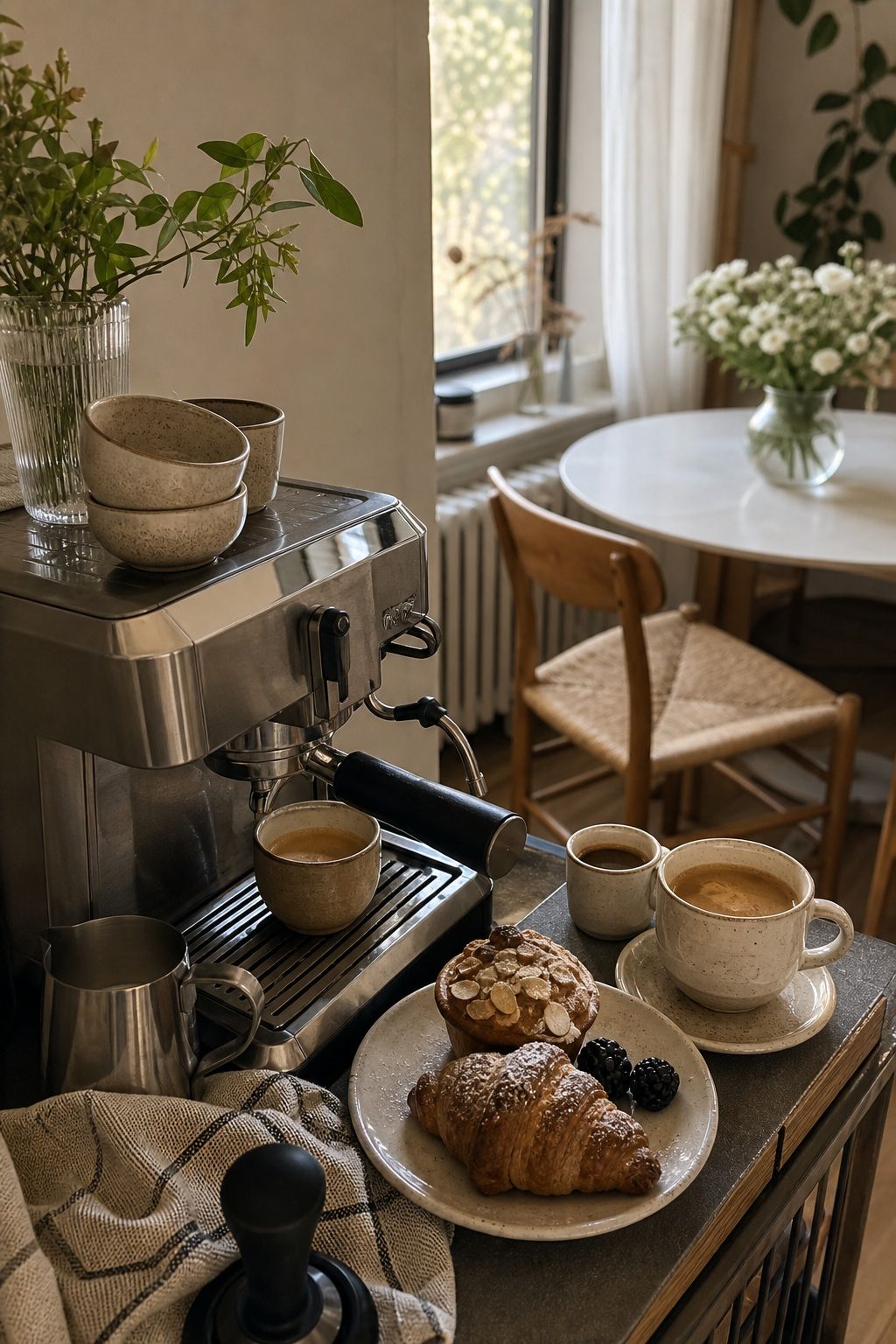


For breakfast hosting with three guests or fewer, an espresso machine becomes a charming centerpiece rather than a logistical headache. The host can pull a real espresso for each guest, foam milk for a few cappuccinos, and the morning has a Italian-cafe energy that drip coffee cannot replicate.
Above three guests the math breaks down, because espresso pulls take 30 to 45 seconds each plus milk-steaming time, and a group of six wants their coffee within the first ten minutes of waking up. If you do go the espresso route for a small group, pull the first shot for yourself before guests come down, so the bar feels active rather than reluctant.
Read more: Top 15 Kitchen Cabinet Organization Ideas for a Streamlined Kitchen
15. The Kettle for Tea Drinkers
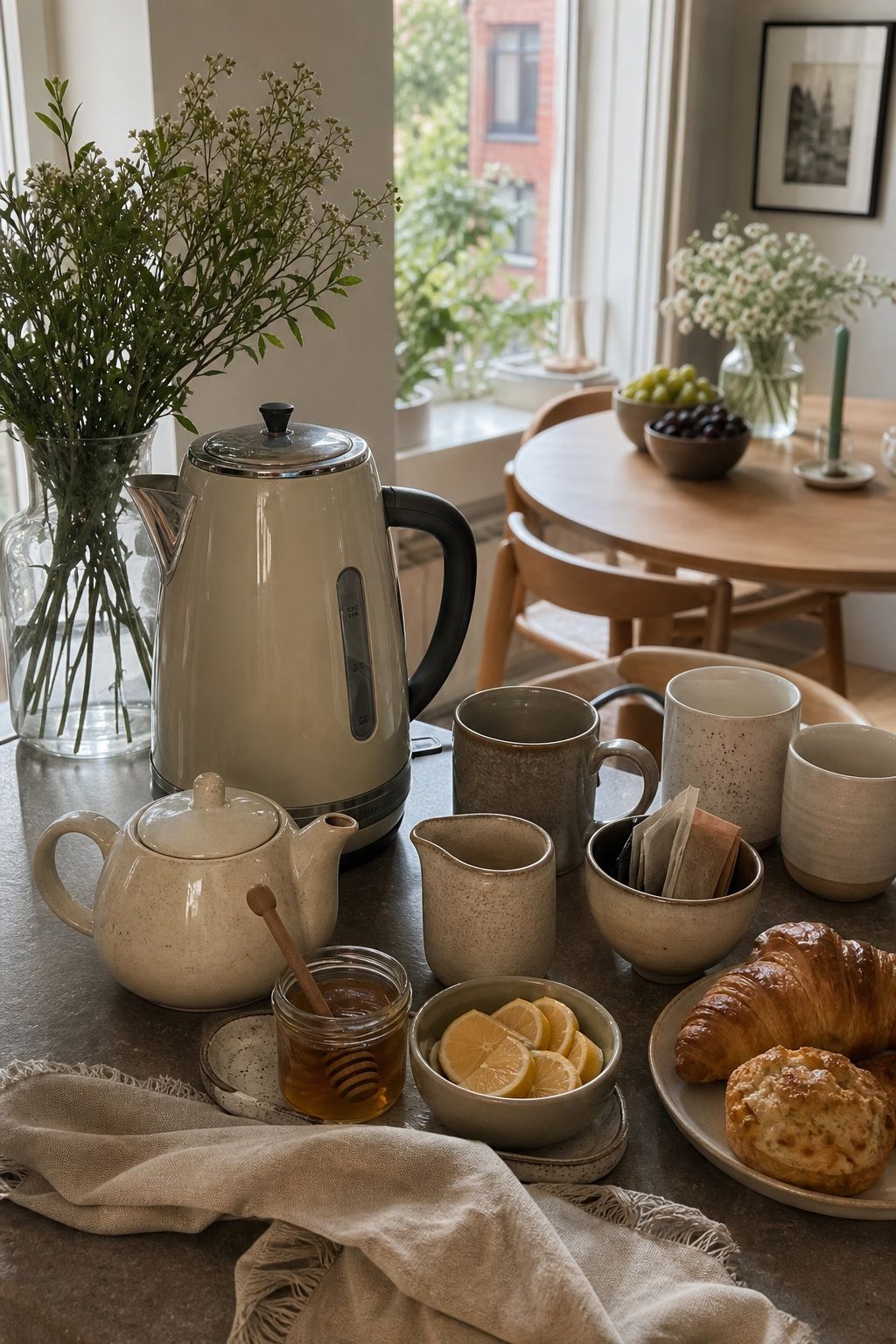


Keep an electric kettle on the counter next to the coffee carafe with three tea options in a small bowl beside it, English breakfast, Earl Grey, and a herbal (chamomile or peppermint). Tea drinkers are the most often-forgotten guests at breakfast hosting because the host is focused on the coffee, and offering them a real kettle and a real cup is the kind of detail that overnight-hosting guests remember.
A small pitcher of milk beside the kettle covers the English-breakfast crowd, and a small honey jar covers the herbal-tea side. A lemon wedge on a small plate is the finishing touch that makes the tea station feel intentional rather than tacked on, especially for the guest who orders Earl Grey with a slice of lemon. Check our Friendsgiving menu ideas for a parallel approach to the after-meal coffee and tea service.
Read more: Top 15 Outdoor Kitchen Patio Decor Ideas to Enhance Your Backyard
16. The Juice Carafe Trio
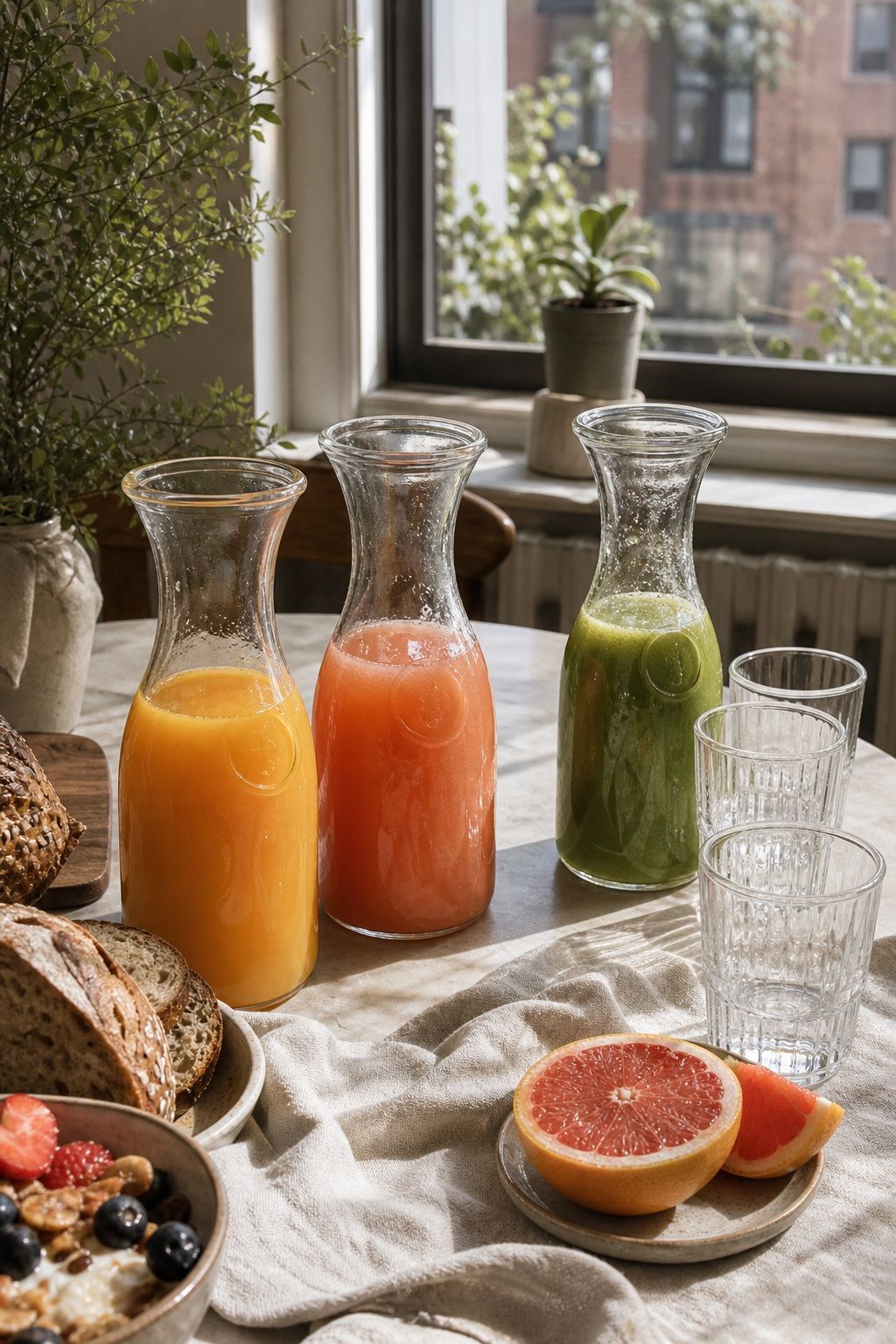


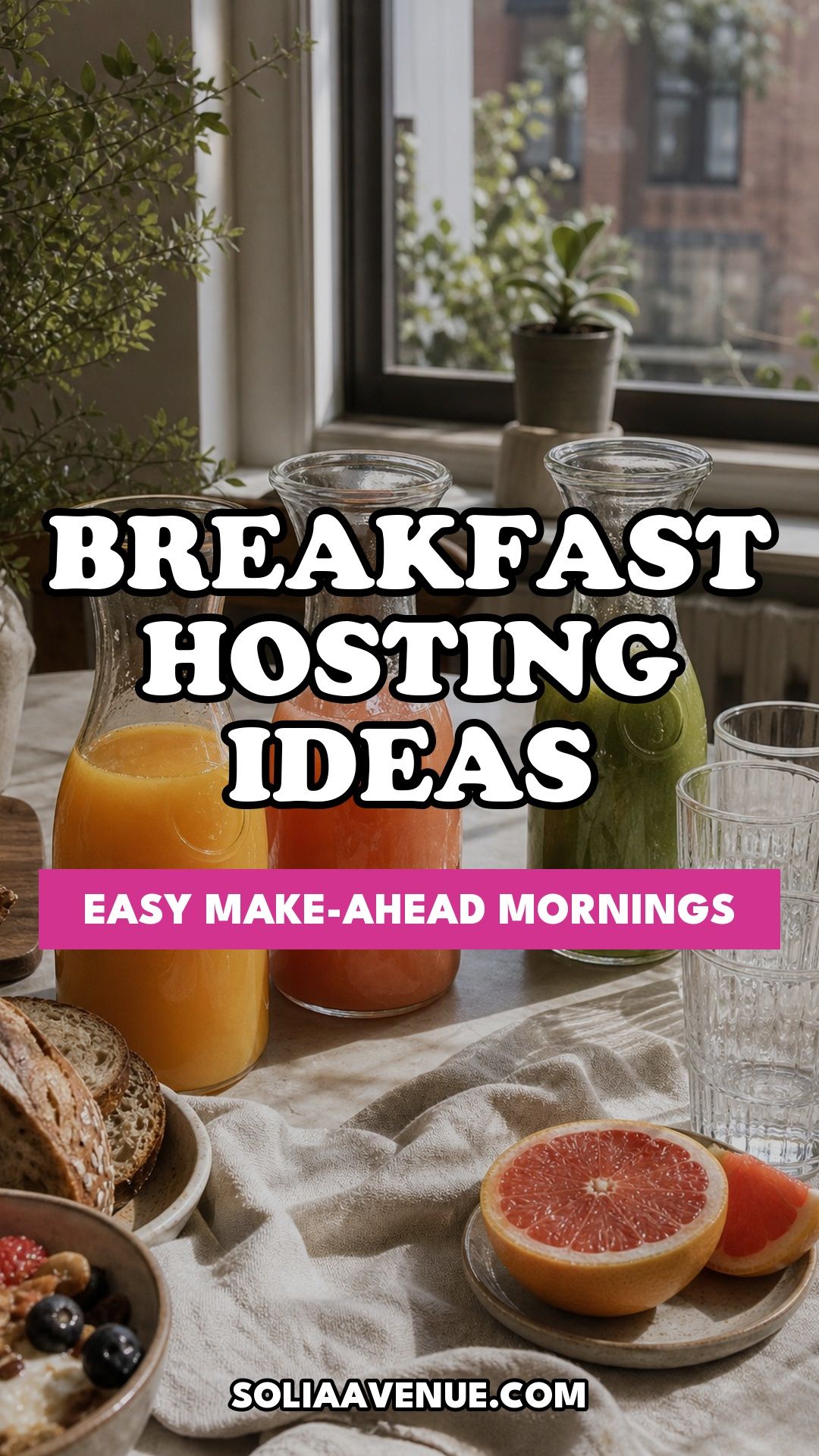
Three juices in three glass carafes is the most generous-looking breakfast hosting drink upgrade, and it costs almost nothing. Orange juice, a fresh-pressed cold-pressed something (green or beet), and a sparkling-water option with citrus slices. Glass carafes are the trick here, because cardboard cartons or plastic bottles on the counter ruin the styling.
Set them out at the start of breakfast hosting and let guests pour their own. A small ice bucket beside the carafes lets the cold-pressed stay cold for the second hour, and a small dish of orange and lemon wedges doubles as garnish for the sparkling water without adding any prep time.
17. The No-Mimosa Breakfast Choice
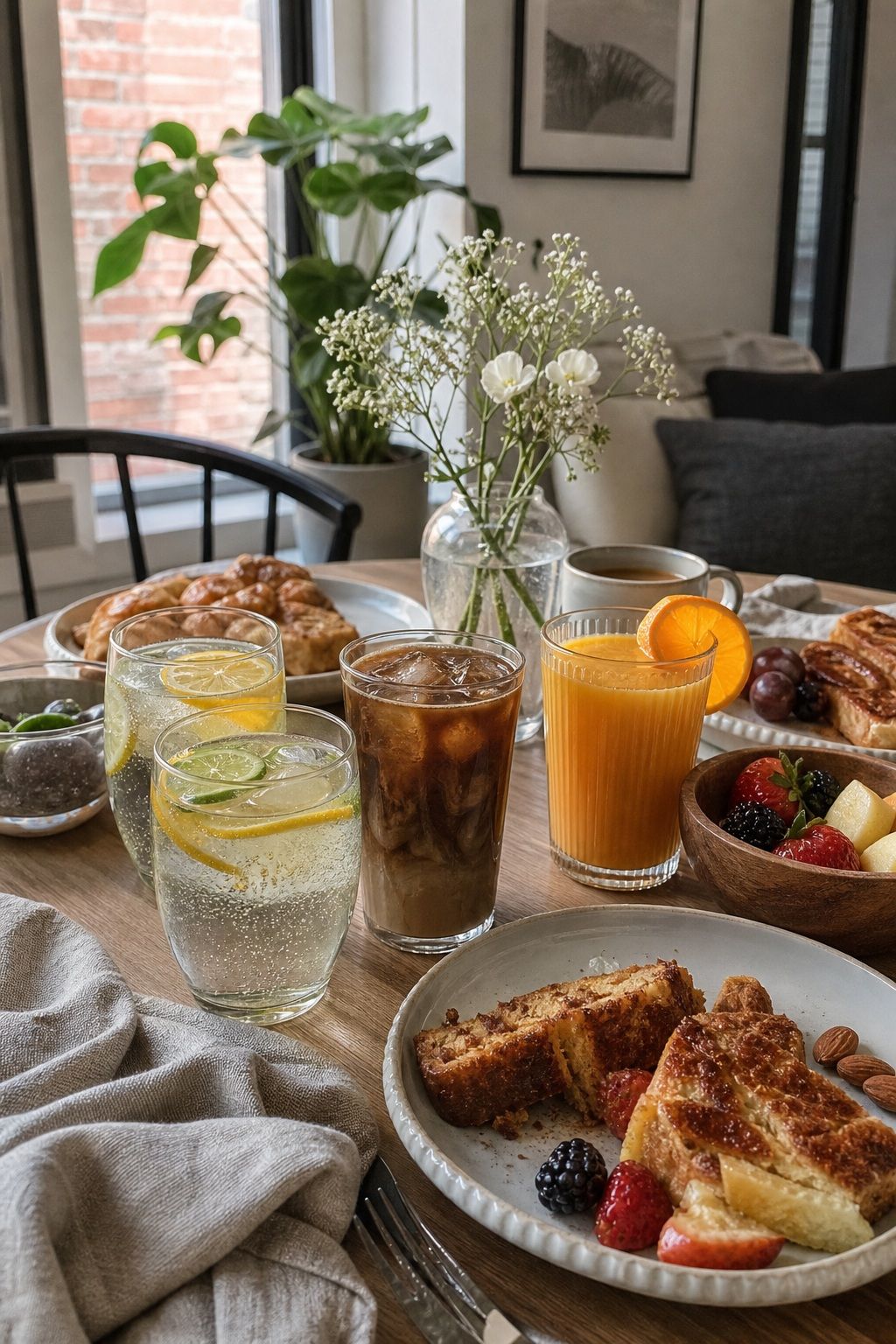
Breakfast hosting is its own format, distinct from brunch, and the easiest way to signal that is to skip the mimosas. Mimosas belong to brunch, breakfast belongs to coffee and juice and tea, and the difference between the two formats lives almost entirely in the drinks station. A breakfast hosting morning with mimosas is just brunch with eggs, which is a different event with different timing.
If your overnight guests genuinely want a mimosa at 9 a.m., open the prosecco, that is fine, but do not offer it by default. You can find the brunch-versus-breakfast distinction worked through in our hosting in a small apartment notes, where the format choice drives every other decision.
Read more: Top 17 Kitchen Cabinet Color Ideas to Refresh Your Space
Hosting overnight guests and the grocery list is somehow $180?
The Ultimate Budget Planner gives you the food-and-staples math for every overnight breakfast, so the morning feels generous without the cart looking ridiculous. $4.99 now, $19.99 soon.
Frequently Asked Questions
What is the difference between breakfast hosting and brunch hosting?
Breakfast hosting is early-morning (typically 7 to 10 a.m.) for overnight guests, with coffee and juice and a buffet of make-ahead bakes. Brunch hosting is mid-to-late morning (10 a.m. to 1 p.m.) as a planned event with invitations, a more formal menu, and mimosa-style drinks. The clearest signal of the difference is the drink station and the time on the invitation.
What should I serve for breakfast hosting overnight guests?
Two large mains (one sweet like an overnight French-toast bake, one savory like an egg casserole), three sides (fresh fruit, yogurt with granola, bakery pastries), and a coffee setup with juice and tea. Almost everything except the fruit can be made the night before, which is what makes breakfast hosting the most forgiving format.
How do I host breakfast for overnight guests without cooking all morning?
Build the menu entirely around overnight bakes (French-toast bake, egg casserole, baked oatmeal) that go in the fridge the night before and bake in the morning while you make the coffee. Skip eggs-to-order, skip pancake-bar setups for groups over six, and lean on self-serve stations. The host should not be at the stove when the first guest comes downstairs.
What is the best coffee setup for breakfast hosting?
Drip coffee brewed in a 12-cup pot and transferred to a thermal carafe, kept on the counter with a small pitcher of milk and a small dish of sugar. The carafe stays hot for two hours, which covers every guest waking up across that window. Skip the pod machine for groups over three because the one-at-a-time cycle bottlenecks the morning.
How early should breakfast hosting start?
Set out the coffee and one side (the fruit or the pastries) by 7 a.m. for the early risers, and pull the first overnight bake out of the oven around 8. The casserole or French toast stays warm in the pan on the counter or in a low oven (200 degrees) until everyone has come down, which usually wraps by 10. The buffet stays out until 10:30 for any late-rising guests.
Do I need to make eggs-to-order for breakfast hosting?
No, and you actively should not for any group over three guests. Standing at the stove cooking individual eggs is the opposite of calm overnight-host energy. The egg casserole and the frittata cover the egg craving for any group size without the host playing short-order cook. If one guest specifically asks for an over-easy egg, make one, but never offer it by default.
Key Takeaways
- Build the menu around overnight bakes, French-toast bake, egg casserole, baked oatmeal.
- Plan two large mains plus three sides for any breakfast hosting group over four.
- Self-serve stations beat eggs-to-order, yogurt parfait bar, breakfast board, smoothie bowls.
- Drip coffee in a thermal carafe covers every guest waking up across a two-hour window.
- Skip mimosas for breakfast hosting, coffee and juice and tea is the format-defining drink station.
- The host does not stand at the stove, the make-ahead bakes are the whole point.
Final Thoughts
Breakfast hosting at home is the most forgiving format in entertaining when you stop trying to cook for each guest and start trusting the overnight bake. A casserole that came out of the fridge already assembled, a coffee carafe, a fruit platter, and a few self-serve stations is enough generosity for any overnight guest. The hosts who do breakfast well are sitting at the counter with their own coffee when the first guest comes down the stairs, not flipping eggs for them.
Last update on 2026-08-25 / Affiliate links / Images from Amazon Product Advertising API
