

Quick Answer: Zen yoga room home decor builds a calm, single-purpose space for practice, whether that is a whole spare room or a quiet corner of one. The essentials are clear floor space for movement, a warm neutral palette, soft layered lighting from a salt lamp or warm bulbs, a real storage plan for mats and props so the space stays uncluttered, and a sensory layer of scent and gentle sound. The goal is a space that feels calm the moment you step onto the mat, and stays that way because nothing is in the way.
A yoga practice at home lives or dies on one thing: whether you can actually roll out the mat without moving furniture first. The spare-room studios you see online look beautiful, but most people are working with a corner, a shared room, or a strip of floor they have to clear every time. A calm practice space has to solve that, not ignore it.
This post is about a dedicated practice space specifically, the room or corner whose job is calm and movement, distinct from a living room you also do a stretch in. The 2026 zen direction shapes it well, warm zen over cold minimalism, natural materials like cork and wood and linen, negative space kept open for movement, and a layered sensory calm from salt lamps, diffusers, and soft sound. The thread through all of it is that a practice space is felt as much as seen.
Whether you have a whole room or are carving a yoga corner out of a shared space, the same principles scale. The 16 ideas ahead build it in four layers: the calm foundations of layout and color, the lighting and sensory atmosphere, the plants and natural decor, and a real storage plan, including how to make a yoga corner work when there is no spare room at all, the same small-space thinking behind a good small apartment reading nook ideas.
Recommended Yoga Room Decor Products


Recommended blogs to read:
- Zen modern home decor
- Bedroom zen home decor
- Living room zen home decor
- Entryway zen home decor
- Japanese zen home decor
Calm Foundations: Layout and Color
1. Protect Clear Floor Space for Movement


Everything about a yoga room starts with the floor, because the floor is where the practice happens. The single non-negotiable is enough clear, flat space to move through a full range of motion without hitting furniture, a wall, or a lamp.
Plan the room around the mat zone, not the other way around. A full mat needs roughly six by two and a half feet, plus arm-span clearance on every side. Push furniture to the perimeter, choose pieces that fold or move easily, and resist filling the open center back up. That clear floor is not empty space, it is the most important feature in the room. Everything else, the color, the light, the decor, is in service of a floor you can actually practice on.
Read more: Top 17 Zen Chic Home Decor Ideas for a Refined Minimalist Home
2. Choose a Warm, Grounding Palette


The color of a practice space affects how calm it feels before you have done a single breath. Skip the cold all-white that used to define yoga studios, the 2026 direction is warm and grounding, soft beige, warm greige, oat, muted clay, sage.
Warm tones lower the visual temperature of the room and make it feel restful rather than clinical. If you can paint, a warm neutral wall does a lot. If you cannot, the palette lives in the mat, the cushions, the curtains, the storage. Keep everything in a tight, low-contrast warm range so the eye is not pulled around the room while you are trying to settle. A grounding palette is the quiet foundation a calm practice sits on.
3. Keep the Walls Mostly Calm and Open
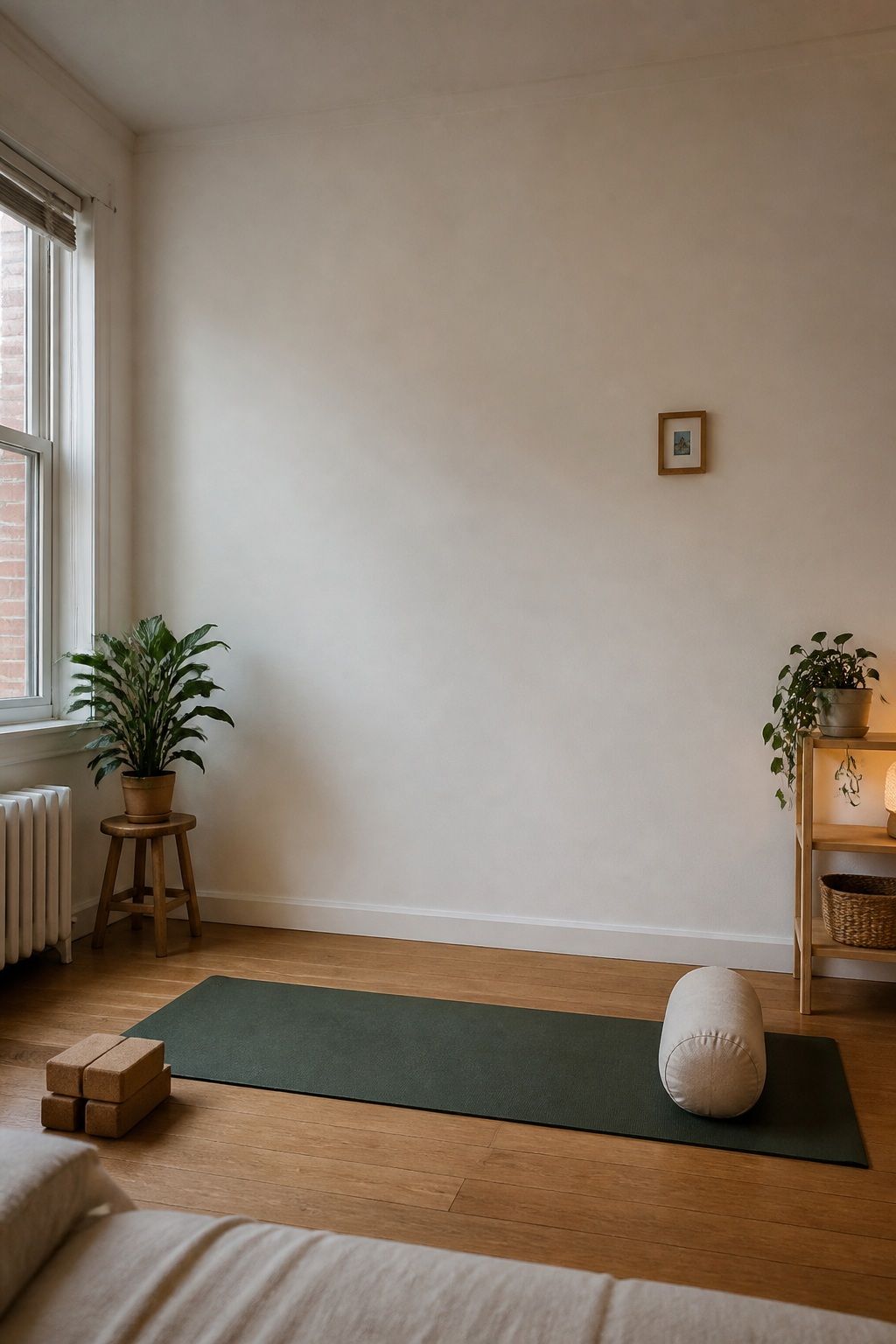


A practice space does not need a gallery wall, and in fact a busy wall works against the calm. The eye should be able to rest. Keep most of the wall open, with one or two quiet, intentional pieces at most.
A single calming piece of art in the room’s palette, a simple textile, a small shelf with one or two natural objects, that is plenty. Bare wall is not unfinished here, it is part of the design, it gives the mind somewhere soft to land between poses. If you want a focal point, make it one deliberate thing rather than many. A mostly open wall keeps the room feeling spacious and still, which is exactly what a practice space is for.
Read more: Top 16 Zen Home Office Decor Ideas for a Focused Calming Workspace
4. Use a Mirror Thoughtfully, Not by Default


Studio yoga rooms have mirrored walls, but a home practice space is a different thing, and a mirror is a choice, not a requirement. Decide based on your practice: a mirror helps with alignment and form, but for a meditation-leaning or restorative practice it can pull focus.
If you do want one, a single leaning floor mirror is enough, and it doubles by bouncing light and making a small room feel larger. Position it where you can glance at form without it dominating the space. If your practice is more about breath and stillness than alignment, skip the mirror entirely and keep that wall calm. The point is to choose deliberately rather than installing a mirror because studios have them.
Read more: Top 17 Zen Boho Home Decor Ideas for Calm Bohemian Living
Lighting and Sensory Atmosphere
5. Layer Soft, Warm Lighting


One bright overhead light makes a practice space feel like a gym, which is the opposite of the goal. A calm yoga room layers light, soft sources you can adjust to the time of day and the kind of practice.
Swap any cool bulbs for warm 2700K, add a floor lamp or a small table lamp for a soft pool of light, and keep the bright overhead as an option you rarely use. Dimmable is ideal, an energizing morning flow and a restorative evening practice want very different light. Layered, warm, adjustable lighting lets the room shift with you, and it is one of the most effective and cheapest changes you can make to how a practice space feels.
Read more: Top 16 Zen Home Entrance Decor Ideas for a Welcoming First Impression
6. Add a Salt Lamp or Warm Glow Source


Beyond the practical lighting, a practice space benefits from one warm, ambient glow source that is more about atmosphere than illumination. A Himalayan salt lamp is the classic choice for exactly this reason, a soft amber light that reads as warm and grounding.
Set it in a corner or on a low shelf where its glow fills the room softly. A salt lamp, a small warm-light pillar, or a cluster of LED candles all do the same job, giving the space a gentle ambient warmth for the quiet parts of a practice. It is a small object with an outsized effect on mood, and it is one of the signature elements of a 2026 zen practice space, warm light as atmosphere, not just function.
7. Bring in Calming Scent
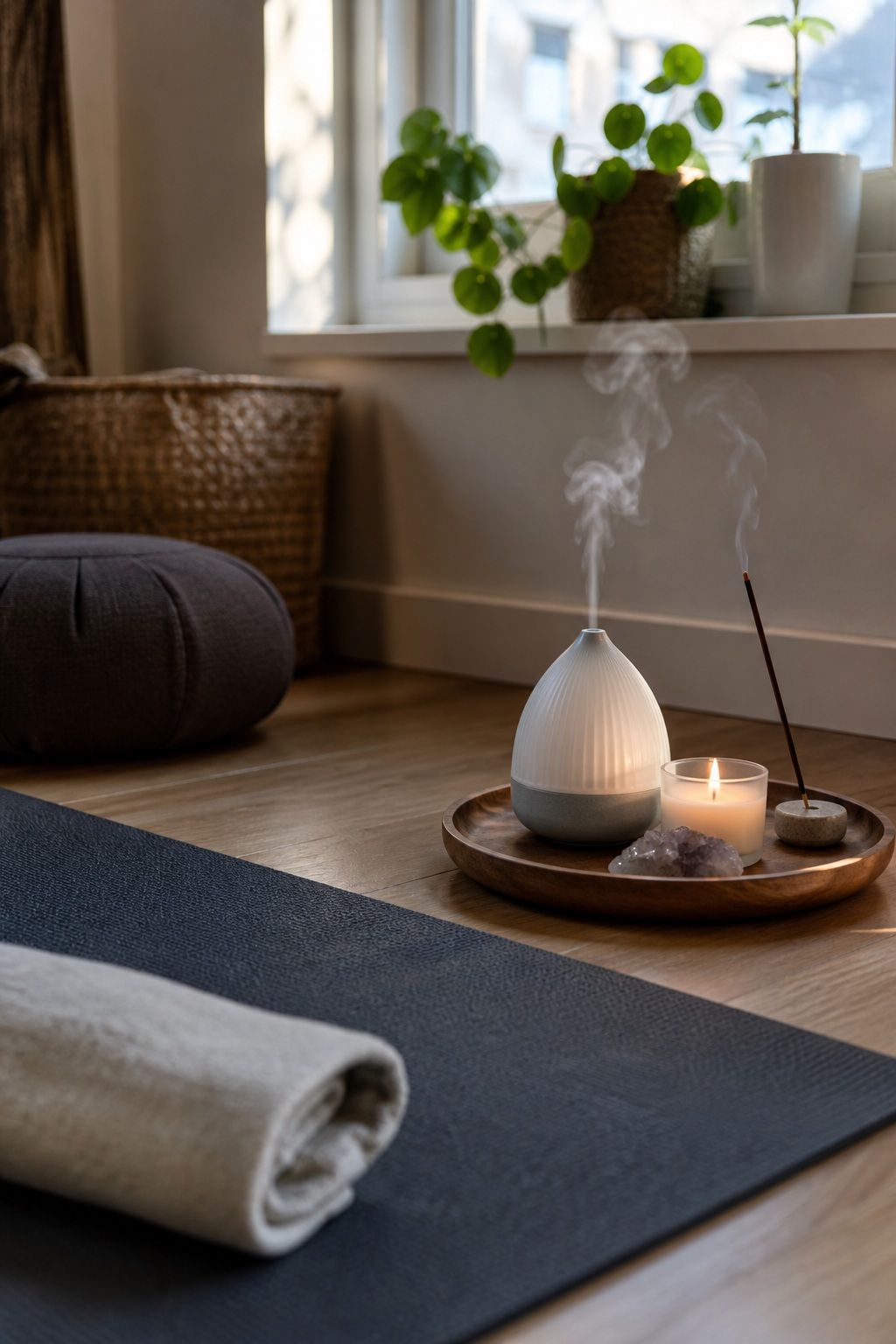


Scent is a powerful, fast cue, and a practice space is the right place to use it on purpose. A consistent calming scent, lavender, sandalwood, eucalyptus, soft cedar, becomes a signal to your nervous system that it is time to settle.
An essential oil diffuser is the cleanest option, it adds gentle scent plus a soft sound and a little visual calm from the mist. A reed diffuser or a quiet candle works too. Keep the scent subtle and consistent, the same one each time, so the association builds. Over weeks, the scent alone starts to shift you toward calm before you have unrolled the mat. Scent is the sensory layer most home practice spaces skip, and one of the most effective.
Read more: Top 16 Zen Curtain Ideas for a Calm, Serene Home
8. Add Soft, Intentional Sound
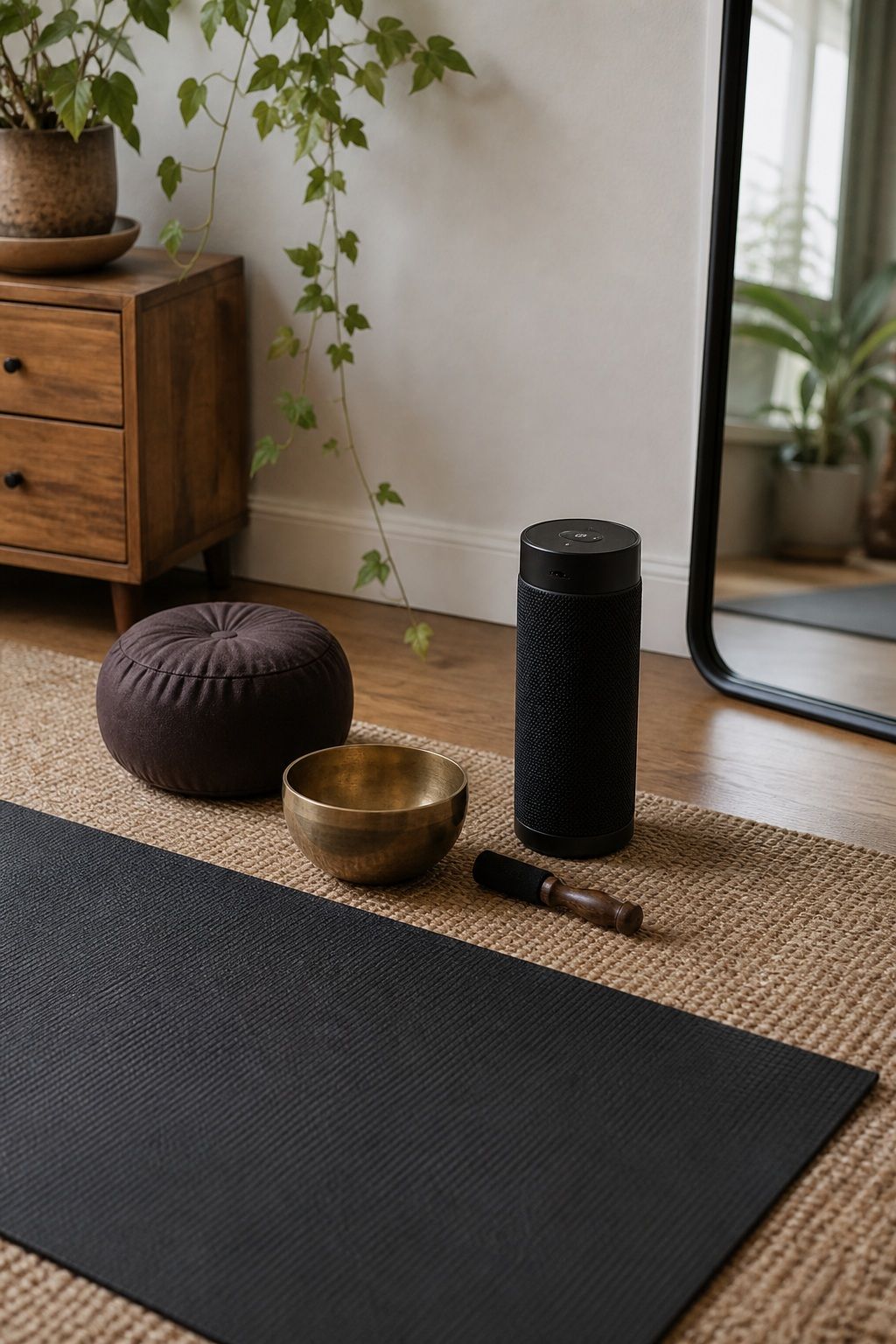


Sound shapes a practice space as much as light does. The goal is not silence necessarily, it is intentional, calming sound, the soft mist of a diffuser, a small tabletop water feature, a gentle wind chime, or simply a good speaker for quiet music.
Soft natural sound covers the noise of the outside world and gives the mind something calm to rest on. A small water feature in particular suits a practice space, its continuous gentle trickle is grounding. Choose one sound element rather than layering many. The sensory layers together, the warm light, the scent, the soft sound, are what make a practice space feel like a practice space, the same way they ground a calming bathroom zen home decor.
Read more: Top 16 Zen Home Gym Decor Ideas for a Calm Workout Space
Plants and Natural Decor
9. Bring in a Few Calming Plants
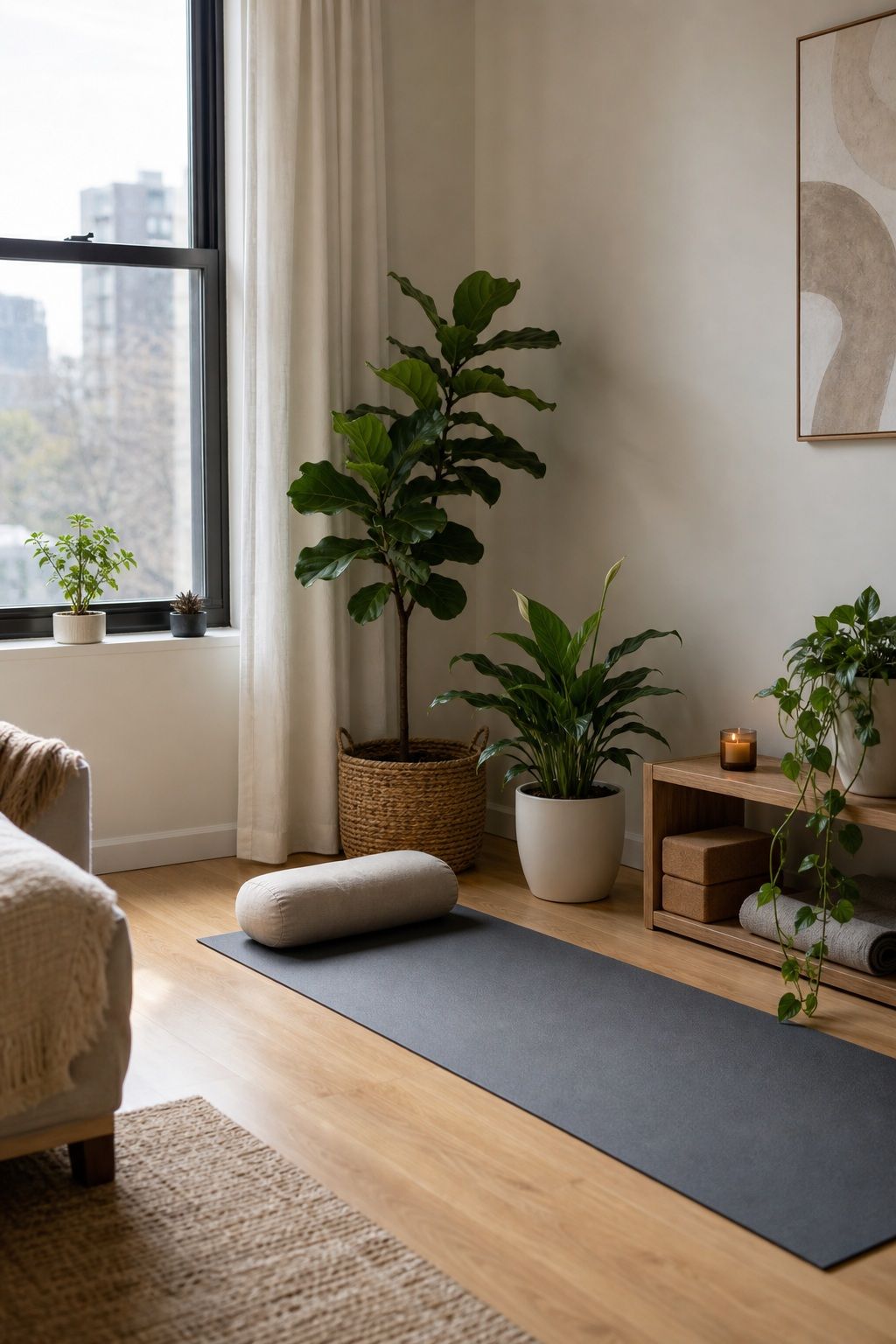


Plants belong in a practice space, they bring life, a connection to nature, and a soft visual calm. A few hardy, low-maintenance plants, a snake plant, a pothos, a peace lily, depending on the room’s light, are enough.
Place them at the perimeter where they will not be in the movement zone, on a shelf, a stand, the floor in a corner. Natural pots, terracotta or stoneware or woven covers, keep them inside the zen palette. Do not overdo the count, a few healthy plants do more than a crowded jungle, and a practice space wants calm, not clutter. The greenery is what keeps the room feeling alive and tended rather than sparse, while staying well clear of the mat.
Read more: Top 17 Zen Porch Home Decor Ideas for a Calm Outdoor Retreat
10. Choose Natural Materials Throughout
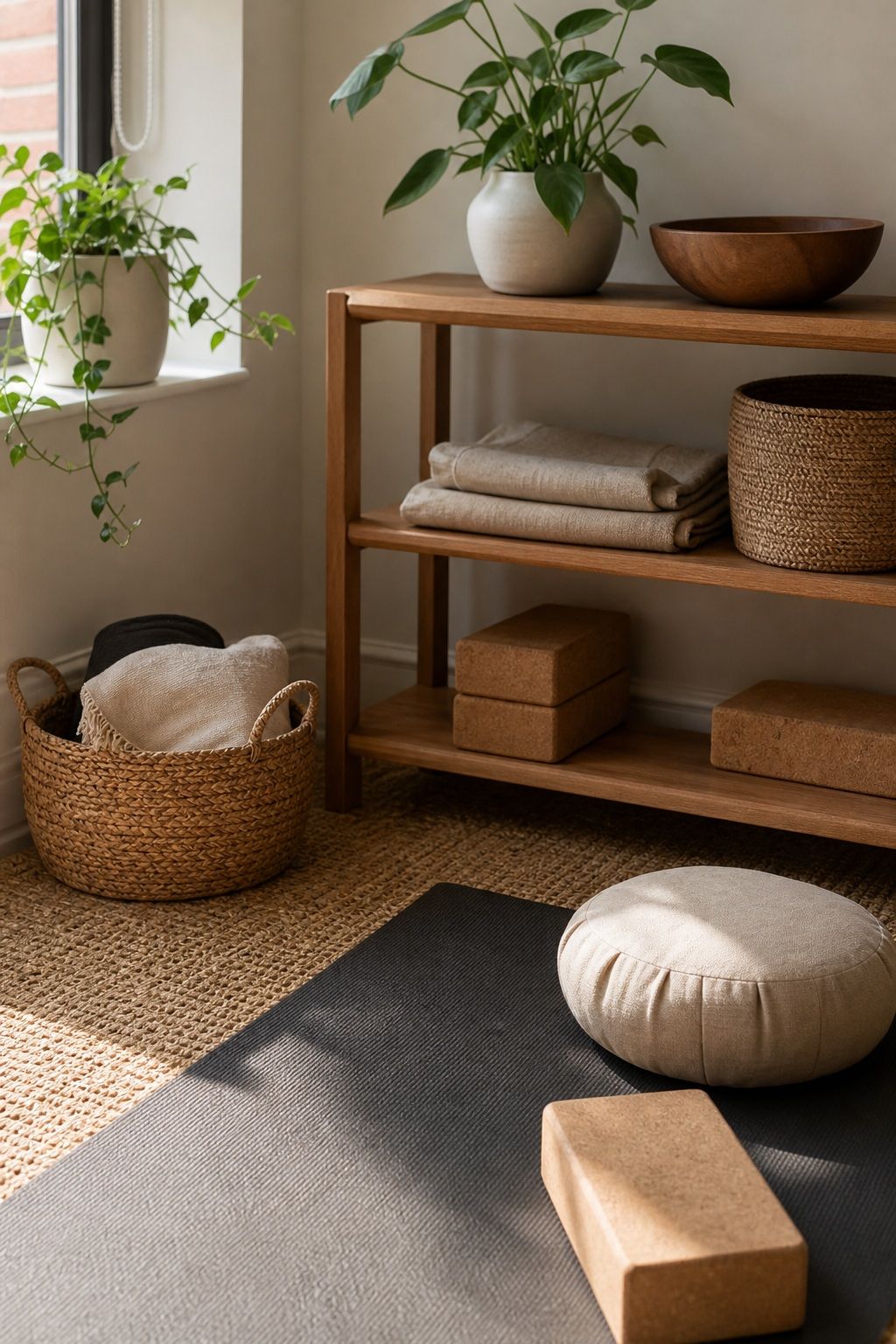


Every material in a practice space should feel grounding, and natural materials do that instinctively. A cork or natural-fiber mat, a wood stool or low shelf, linen cushion covers, a woven basket, stone or ceramic objects.
Natural materials read as warm and calm, they age gracefully, and they connect the space to the outdoors, which suits a practice rooted in breath and grounding. Stick to a couple of materials repeated, cork and wood and linen, rather than a dozen different ones, so the room reads as intentional. Synthetic, slick surfaces work against the calm. Choosing natural throughout is a quiet decision that shapes how grounded the whole space feels.
Read more: Top 16 Zen Fireplace Mantel Home Decor Ideas for a Quietly Beautiful
11. Add One Sculptural Natural Element


Beyond the plants, one sculptural natural element gives a practice space a focal point for the eye and the mind. A small tabletop zen garden you can rake by hand, a smooth large stone, a piece of driftwood, a single sculptural branch in a vessel.
These objects are not decoration for its own sake, they are something to rest attention on, a quiet anchor in the room. A tabletop zen garden in particular suits a practice space, the act of raking it is itself a small meditative ritual. Keep it to one such element and give it space. It is the natural focal point that turns a calm room into a contemplative one, the same instinct that anchors a good small apartment ideas, one deliberate focal piece over many small ones.
12. Layer in Soft, Natural Textiles


A practice space needs softness, both for comfort and for the calm a tactile room provides. Natural-fiber textiles do this, a soft rug under or beside the mat zone, linen cushion covers, a folded blanket for restorative poses, a bolster.
Keep them in the warm neutral palette and let the textures vary, a chunky knit, a smooth linen, a woven cotton. These pieces also do double duty as props, a folded blanket and a bolster support restorative practice. Soft textiles make the room feel cared-for and comfortable to be still in, which matters as much as the floor space for movement. They are the warm, tactile layer that keeps a practice space from feeling spare or cold.
Read more: Top 17 Zen Garden Home Decor Ideas for a Calm, Serene Space
Smart Storage and Small-Space Yoga Corners
13. Build a Real Storage Plan for Props
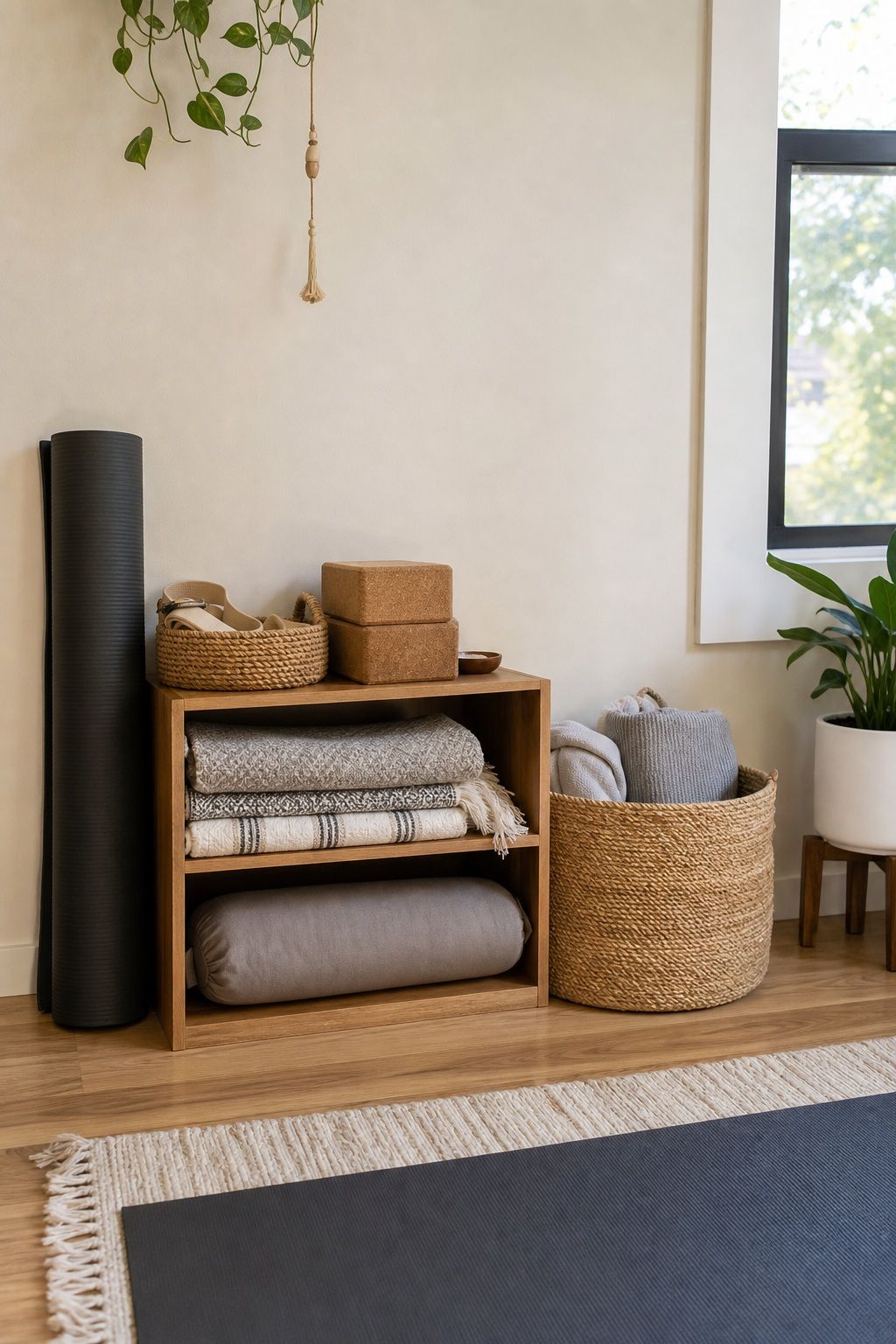


Yoga gear, mats, blocks, straps, bolsters, blankets, a wheel, multiplies fast, and a practice space buried in loose props is not calm. A real storage plan is what keeps the space serene instead of cluttered.
A storage ottoman, a closed cabinet, a few lidded baskets, a wall rack for mats, give every prop a defined home so the floor and surfaces stay clear between practices. Choose storage in the room’s natural materials and warm tones so it disappears into the design. Closed over open storage, so the props are out of sight when you are not using them. This is the unglamorous backbone of a calm practice space, and it is the difference between a room that stays serene and one that slowly fills with gear.
Read more: Top 17 Kitchen Zen Home Decor Ideas for a Calm, Clutter-Free Space
14. Carve a Yoga Corner From a Shared Room
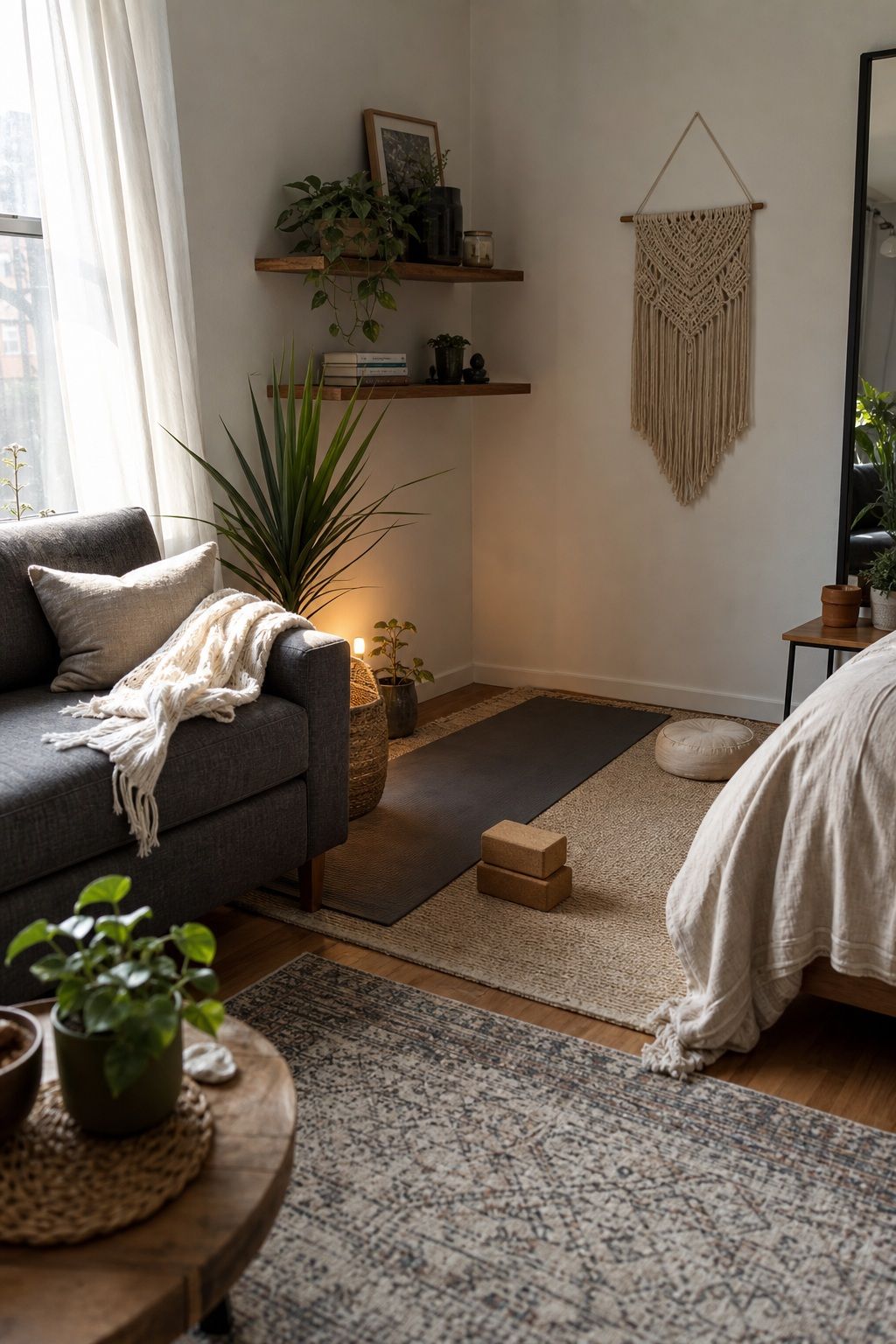


Most people do not have a spare room, and a yoga corner in a shared space works genuinely well when it is defined on purpose. Pick a corner, a shared room with the bedroom or the office, and give it a clear identity.
A small rug marks the zone. A floor cushion, a low shelf with a salt lamp and a plant, a basket of props, and a calm piece of art on the wall above it tell your eye and your habits that this corner is the practice space. The mat rolls out into the rug zone and rolls away into the basket. A defined corner beats a vague intention, it is the same principle as giving a small apartment office ideas a real boundary inside a shared room.
Read more: 18 Neutral Home Decor Essentials From Amazon That Work in Any Space
15. Make a Shared-Use Room Work


Sometimes the practice space has to share the room’s whole purpose, yoga plus guest room, yoga plus office. This works if the yoga function is designed in rather than squeezed around the edges.
Choose furniture that moves or folds easily so the floor can clear quickly, a daybed instead of a fixed guest bed, a desk that is not in the mat zone. Keep the props in one contained, accessible spot so setup takes a minute, not ten. The calm, warm palette and the sensory layers, the light, the scent, the plants, can serve both functions at once. A shared-use room can still be a real practice space, the key is that clearing it for the mat is fast and frictionless, the same flexible thinking behind any good small apartment essentials.
16. Keep Setup Friction Near Zero
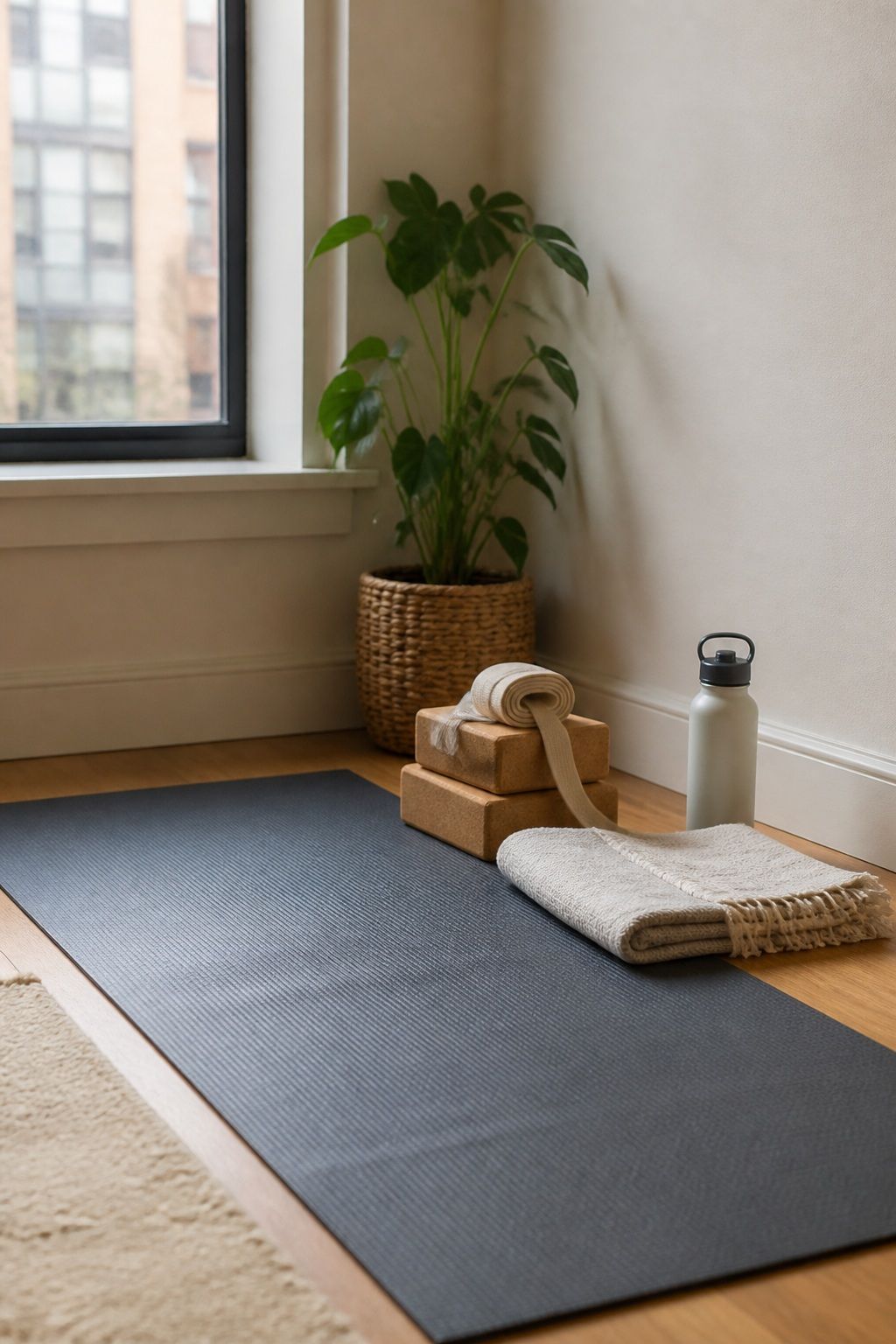


The last idea is the one that decides whether the space gets used at all. A practice space, whole room or corner, only works if rolling out the mat and starting takes seconds, not a chore of clearing and rearranging.
Store the mat where it is grabbed in one motion. Keep the props in one accessible basket. Make sure the floor zone is genuinely clear so there is nothing to move first. Every bit of friction between deciding to practice and starting is a reason to skip it. A calm, beautiful yoga room that is annoying to set up will go unused, a plain corner that is ready in ten seconds will get used daily. Low friction is the real measure of a practice space that works, everything else is in service of that.
Read more: Top 17 Living Room Wall Decor Ideas Above Couch for a Real Focal Point
Frequently Asked Questions
How do you decorate a yoga room?
Decorate a yoga room by protecting clear floor space for movement first, then building a warm grounding palette, soft layered lighting, a sensory layer of scent and gentle sound, and a few calming plants. Add a real storage plan so props stay out of sight, and keep the walls mostly open so the eye can rest.
What do you need for a home yoga space?
A home yoga space needs clear flat floor space for a full mat plus arm-span clearance, a natural-fiber mat, props with a defined storage home, soft warm lighting, and a calming sensory layer, scent from a diffuser, gentle sound, a salt lamp. Everything else, plants and textiles and decor, supports the calm but the clear floor comes first.
How do you create a meditation corner in a small apartment?
Create a meditation or yoga corner in a small apartment by picking a corner of a shared room and giving it a clear identity: a small rug to mark the zone, a floor cushion, a low shelf with a salt lamp and a plant, a basket of props, and one calm piece of art above it. A defined corner with low setup friction beats a vague intention.
What colors are best for a yoga room?
The best yoga room colors are warm, grounding, low-contrast neutrals: soft beige, warm greige, oat, muted clay, and sage. The 2026 direction moves away from the cold all-white of old studios toward warm earthy tones that feel restful and help the space read as calm before you have taken a breath.
How do you make a shared room work as a yoga space?
Make a shared room work by designing the yoga function in rather than squeezing it around the edges: choose furniture that moves or folds so the floor clears fast, keep props in one contained accessible spot, and make sure the mat zone is genuinely clear. The warm palette and sensory layers can serve both purposes at once.
Key Takeaways
- Protect clear, flat floor space for a full mat plus arm-span clearance first, that is the non-negotiable feature of any practice space.
- Build a warm grounding palette, keep the walls mostly open, and choose a mirror deliberately rather than by default.
- Layer soft warm lighting and a salt lamp, and add a consistent calming scent and gentle sound, a practice space is felt as much as seen.
- Use natural materials and a few calming plants, plus one sculptural natural element like a small tabletop zen garden as a focal point.
- Build a real closed-storage plan for props, and keep setup friction near zero, a corner ready in ten seconds beats a beautiful room that is a chore to set up.
Final Thoughts
A zen yoga room is not about having a spare room to spare, it is about building a space, whole room or quiet corner, whose whole job is calm and movement. Start with the clear floor, because the practice depends on it, then layer in the warm palette, the soft light, the scent and sound, the plants, and a real storage plan so the calm holds. Above all, keep the friction near zero, because the best practice space is the one you actually use. None of it needs a renovation or a big budget. Start with the floor and one warm light, and let the space grow into a calm you return to.
Last update on 2026-10-04 / Affiliate links / Images from Amazon Product Advertising API
