

Quick Answer: The best zen garden home decor starts with a simple foundation of sand, gravel, or smooth stone, adds a few intentional natural elements like moss or a single sculptural plant, and keeps the layout minimal and uncluttered. For apartments, a tabletop or tray version delivers the same calm in a corner. Restraint is the whole point, fewer pieces, placed with care, read as serene.
A zen garden is less a decorating project and more a small daily practice you can see from the couch. The raked lines, the few careful stones, the empty space, it is a corner of the home that asks you to slow down a little every time you look at it.
The catch in most zen garden advice is scale. It assumes a backyard, a big install, a budget. The truth is the calm comes from restraint, not square footage, which means a shallow tray on a desk or a quiet corner of a room delivers the same thing as a full garden. Fewer pieces, placed with intention, is the entire method.
Seventeen ideas follow, organized by the sand-and-stone foundation, the greenery and natural elements, the indoor and tabletop versions, and the calm finishing touches. Full room corner or a desk tray, the principle holds. For a whole space built on this same quiet, our zen yoga room home decor applies it at full scale.

Recommended Zen Garden Decor Products


Recommended blogs to read:
- Japanese zen home decor
- Zen modern home decor
- Living room zen home decor
- Zen home entrance decor
- Sunroom garden ideas
The Foundation: Sand, Gravel, and Stone
1. Start With a Simple Sand or Gravel Base
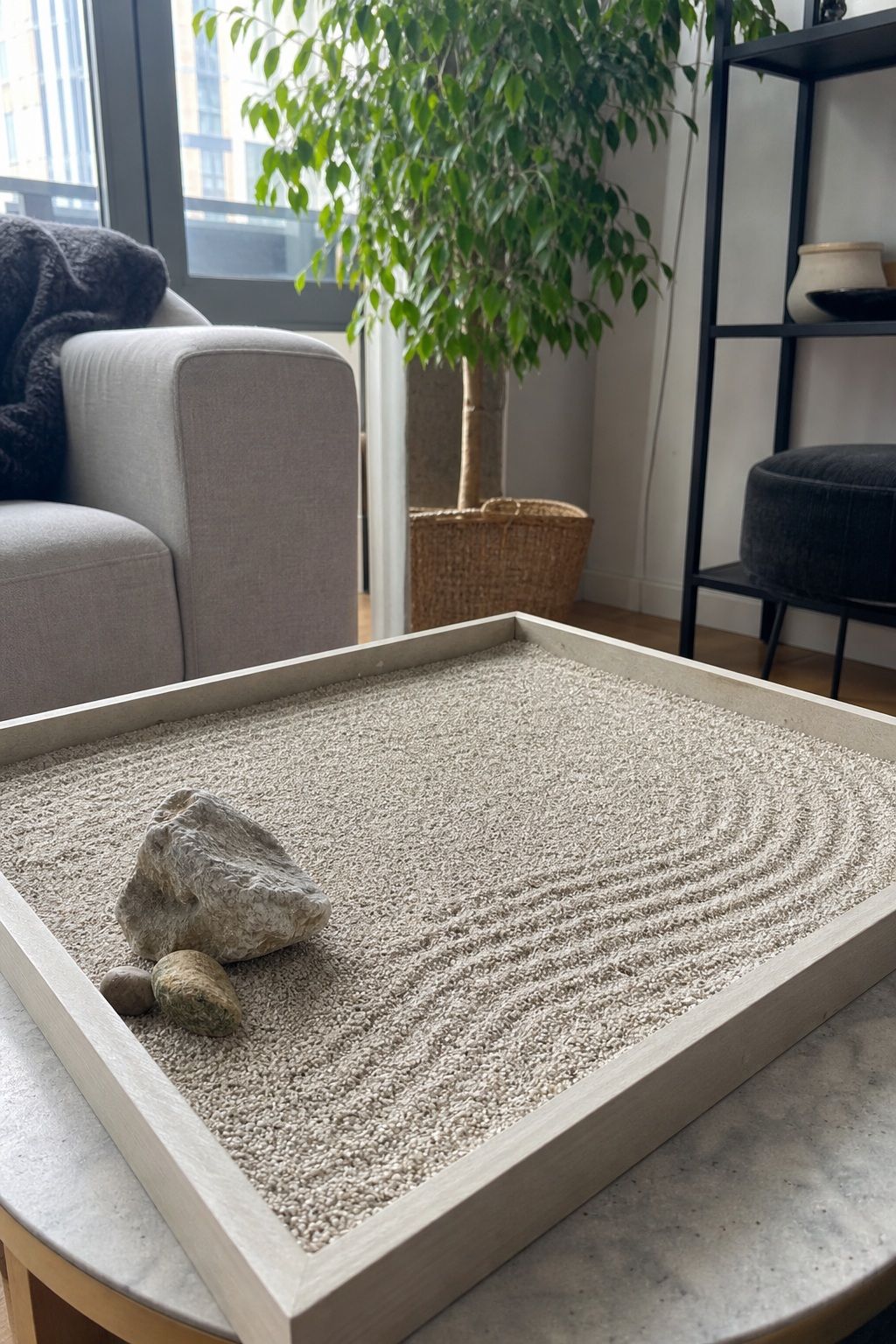


The base layer is what makes a zen garden a zen garden, and it is also the easiest place to start. Fine sand or small smooth gravel, spread evenly in a defined area, gives you the surface that everything else rests on and the surface you rake into calming lines.
For a full corner garden, a low wooden frame or a shallow planter box holds the sand cleanly, $20 to $40 in materials. For a desk, a shallow tray does the job. Choose a pale, neutral sand, white, soft grey, warm beige, since the calm comes partly from that quiet, uniform color underfoot.
Read more: Top 18 Garden Summer Decor Ideas to Transform Your Outdoor Space
2. Add a Rake for the Raked-Line Pattern
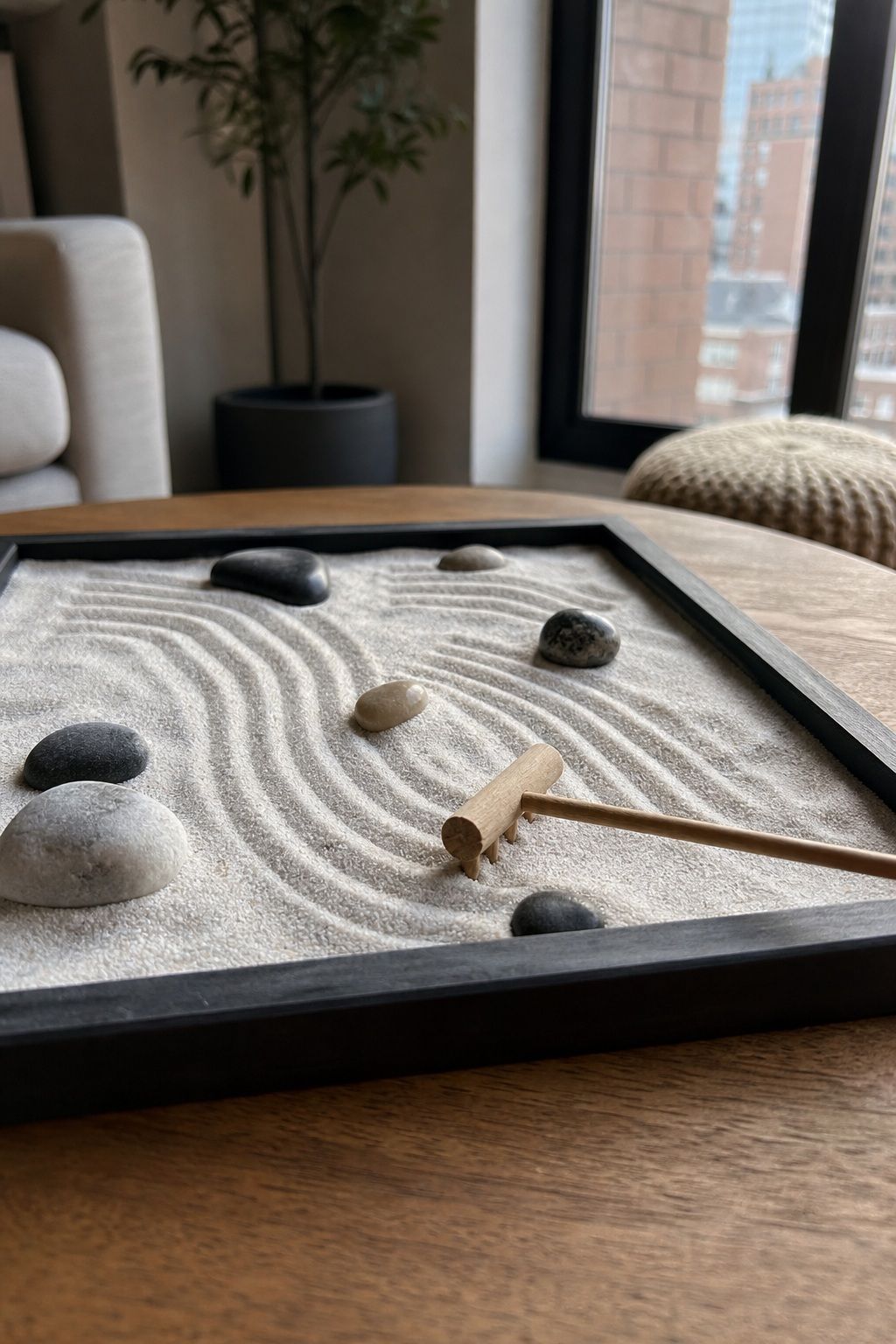


The raked lines are the signature of a zen garden, and the small wooden or metal rake that makes them is both a tool and a daily ritual. Drawing the lines, straight rows, gentle curves, circles around a stone, is a two-minute practice that resets the space and, a little, resets you.
A small rake comes with most tabletop kits or costs a few dollars on its own. The pattern is meant to be redrawn often, so the maintenance is the point rather than a chore. This is the part competitors skip mentioning: raked sand needs upkeep, but the upkeep is the calm, not a burden.
3. Place a Few Anchor Stones With Intention
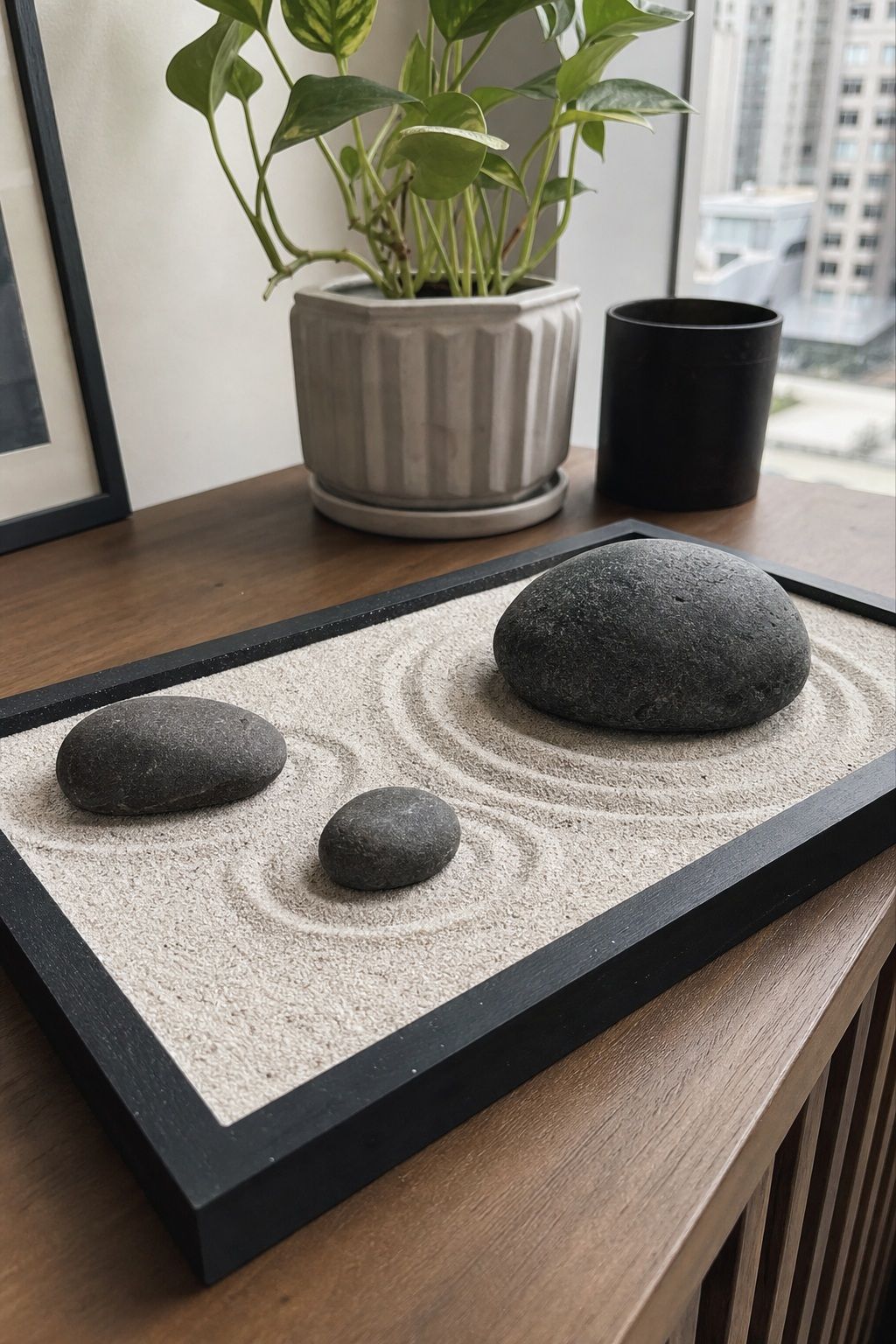


A handful of carefully chosen stones is what turns a tray of sand into a garden. The traditional approach uses odd numbers, three or five, set in a loose, asymmetrical arrangement rather than a neat line, so the eye moves naturally across the space.
Choose stones with character, a little weathered, varied in size, and bury each slightly into the sand so it looks settled rather than placed on top. Stones cost nothing if foraged. Set the largest first as the anchor, then arrange the rest around it, the same first-the-big-rocks logic in our landscaping with large rocks ideas. Leave one stone slightly apart from the group, that bit of separation is what keeps the arrangement from looking arranged.
Read more: Top 15 Front Porch Garden Ideas to Brighten Your Entryway
4. Use Smooth River Pebbles for Contrast
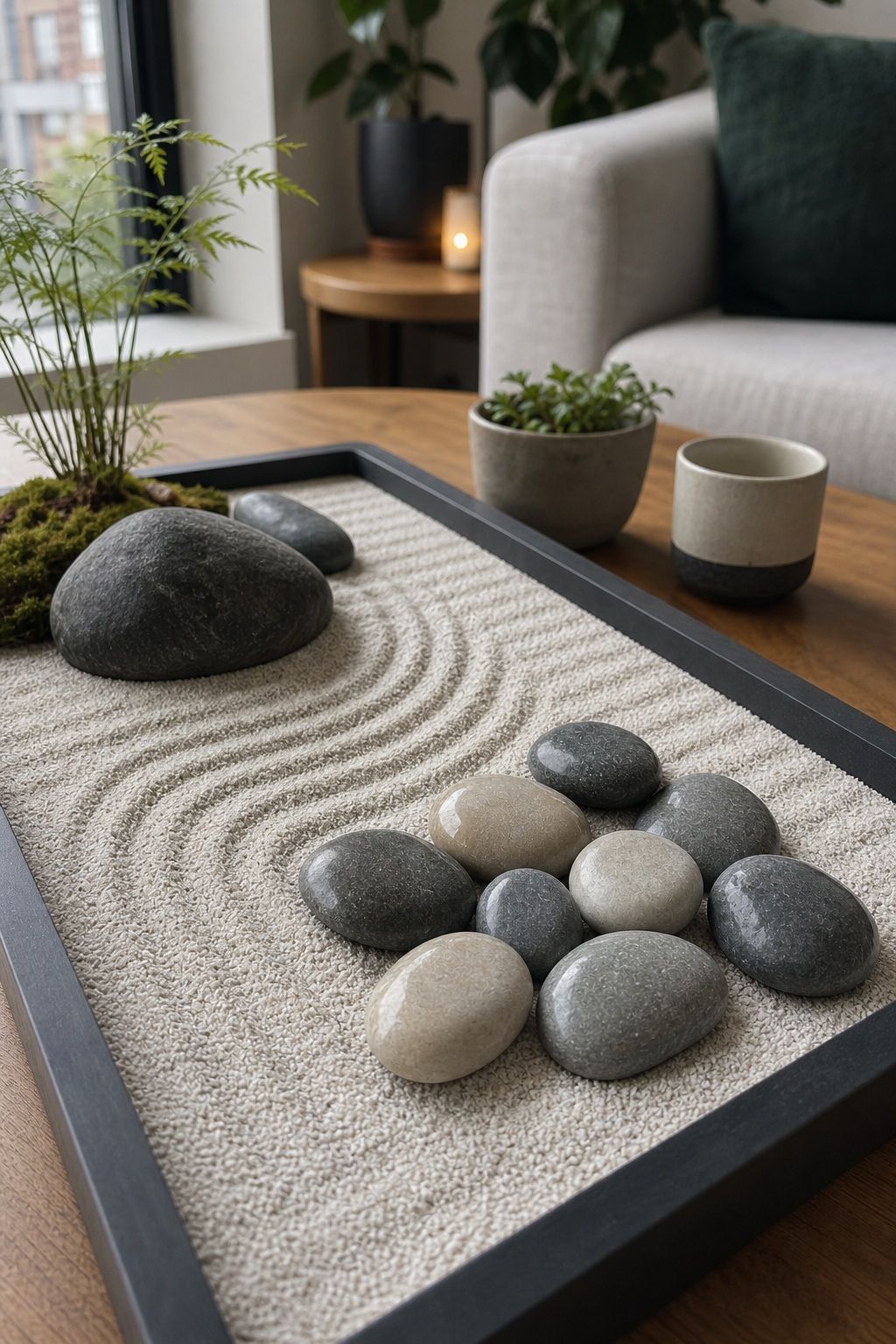


Where the raked sand is fine and uniform, a small area of smooth river pebbles adds a different texture that keeps the garden from reading flat. A shallow channel of pebbles, or a small pool of them around a stone, suggests water without any water at all.
White or pale grey river pebbles run $10 to $20 a bag and a little goes a long way. Keep the pebble area contained and deliberate, a defined patch rather than scattered, so it reads as an intentional element. The contrast between fine sand and smooth stone is quiet, but it gives the garden depth.
Read more: Raised Garden Bed Ideas That Turn Any Outdoor Space Into Something
5. Define the Edges Cleanly
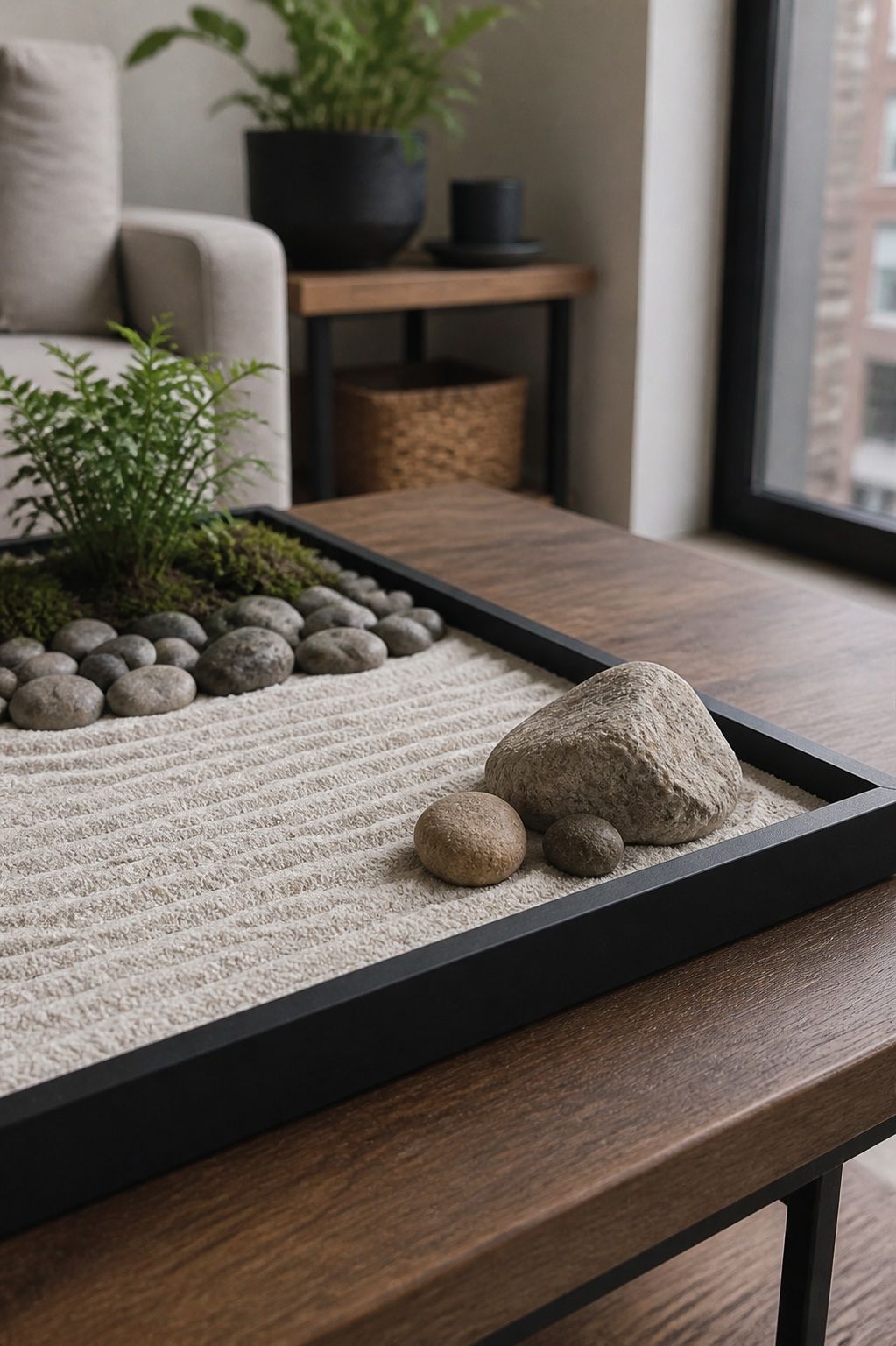


A zen garden needs a clear edge, since the calm depends on the space feeling contained and intentional rather than spilling into the room. A low wooden frame, a shallow box, a tray, or even a defined border of larger stones gives the garden a clean boundary.
The edge does practical work too, holding the sand in place, but mostly it signals that this is a considered space with a beginning and an end. Keep the frame simple and natural, unfinished wood, dark stained wood, plain ceramic, so the boundary itself stays quiet and does not compete with what is inside it.
Read more: Top 17 Zen Porch Home Decor Ideas for a Calm Outdoor Retreat
Greenery and Natural Elements
6. Add a Single Sculptural Plant
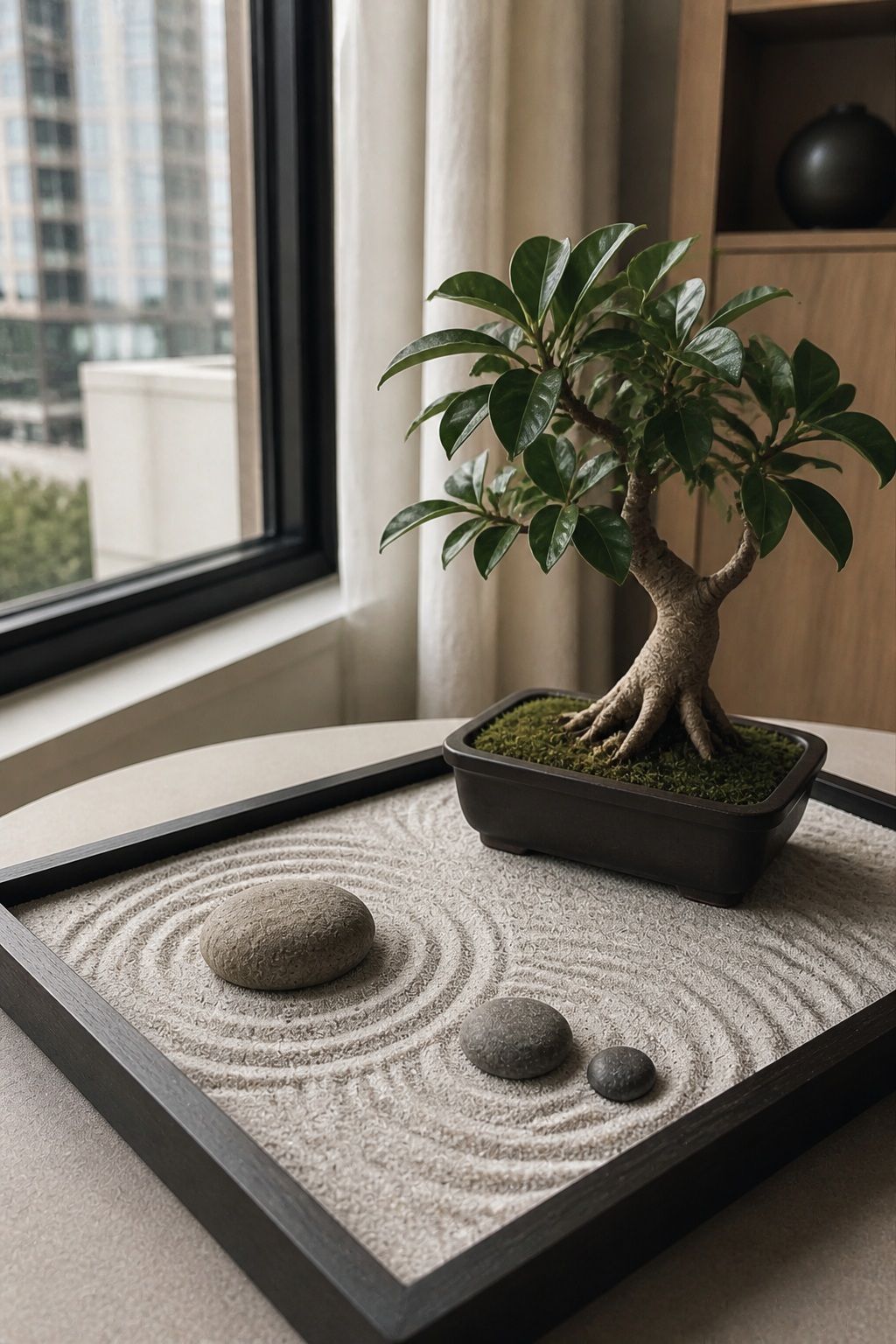


Greenery in a zen garden is about one well-chosen plant, not a collection. A single sculptural plant, a bonsai or bonsai-style tree, a small architectural succulent, a sculptural branch, becomes the green focal point and does more than a cluster of pots ever could.
The 2026 approach treats this plant as living architecture, given room and prominence rather than crowded in. A real bonsai needs genuine care, but a quality artificial one delivers the same calm shape with none of the upkeep, $20 to $50. Whichever you choose, let it stand alone with empty space around it so it reads as deliberate.
7. Introduce Moss for Soft Green Texture
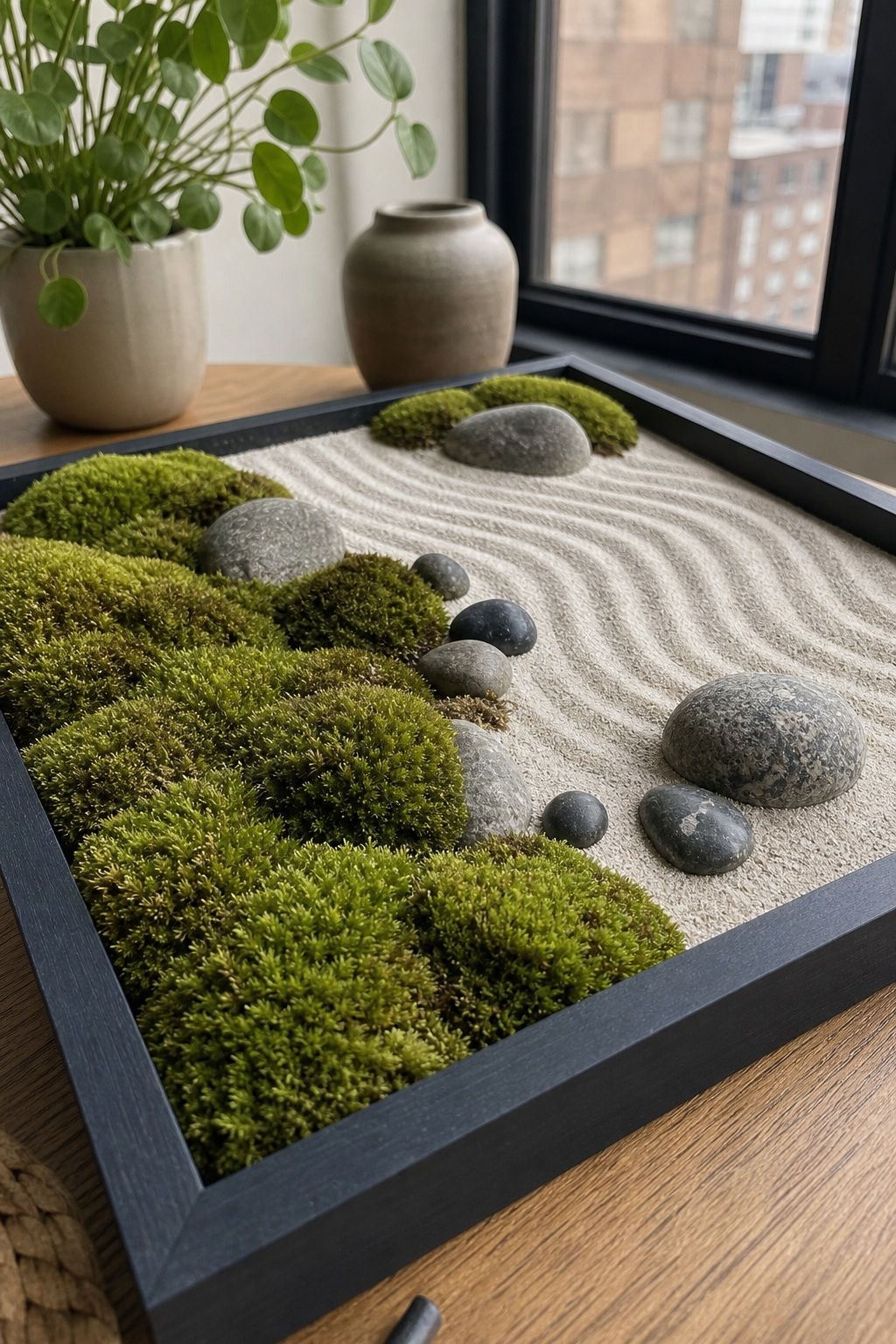


Moss is the softest element a zen garden can hold, and a small patch of it brings a gentle, living green texture against all the sand and stone. It suggests age and stillness, the quiet feeling of a garden that has been there a long time.
Preserved moss needs no light or water and works anywhere, $10 to $20 for a generous piece, while live moss needs humidity and indirect light. Keep the moss in a defined patch, tucked beside a stone or framing the base of the plant, rather than spread thin. A little moss, placed well, does a lot of quiet work.
Read more: Top 16 Zen Fireplace Mantel Home Decor Ideas for a Quietly Beautiful
8. Keep Plant Choices Low-Care and Minimal
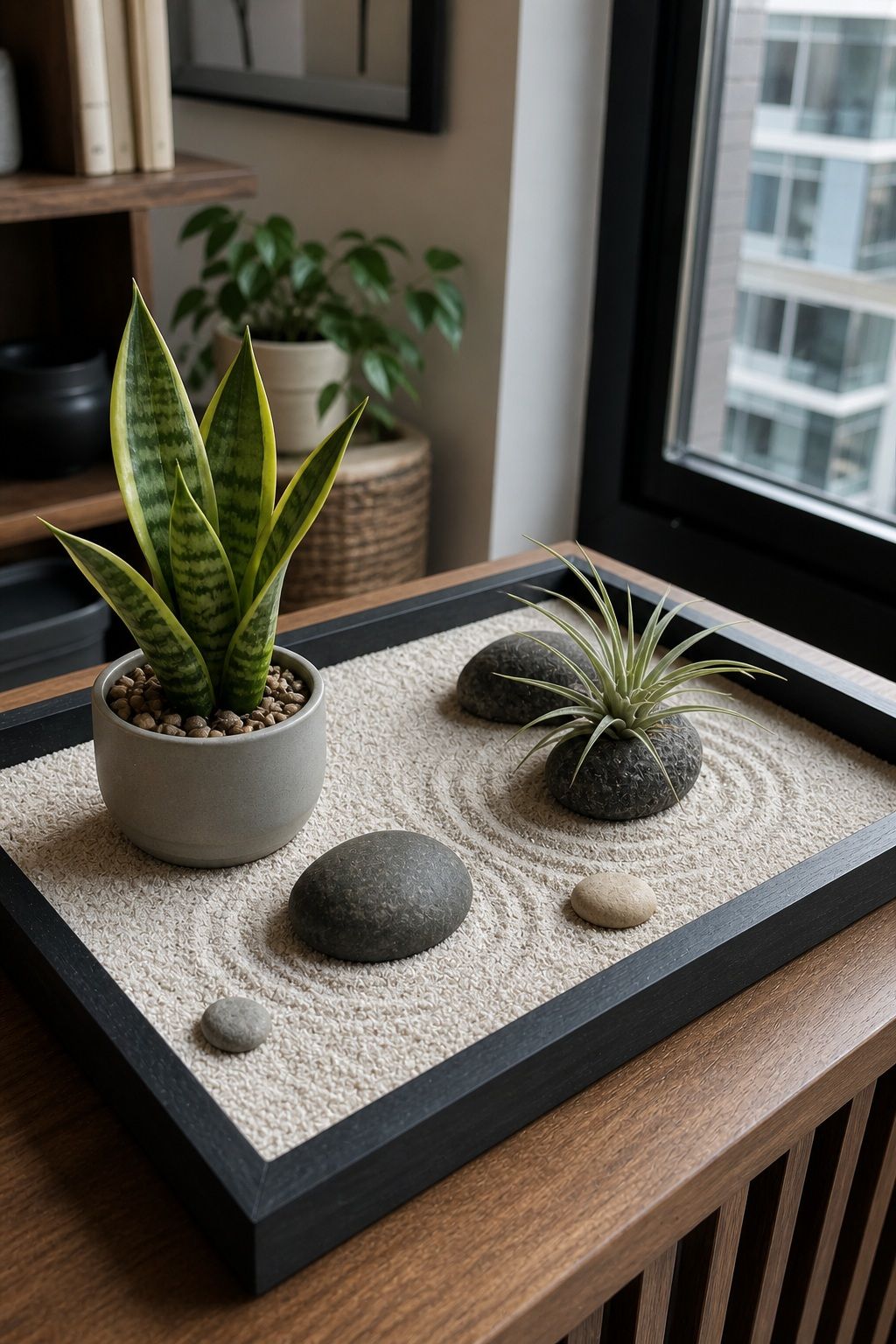
A zen garden should lower your stress, not add a watering schedule to it, so the planting stays minimal and low-care by design. Succulents, air plants, preserved moss, and quality artificial pieces all deliver the look without demanding much, which suits both the philosophy and a real life.
Resist the urge to add more plants over time, the restraint is the design. One sculptural plant and a patch of moss is a complete planting for most zen gardens. If you want a slightly fuller green corner, our plants for a sunroom guide covers easy-care options that hold the same calm.
Read more: Top 17 Zen Chic Home Decor Ideas for a Refined Minimalist Home
9. Add Natural Wood and Bamboo Accents
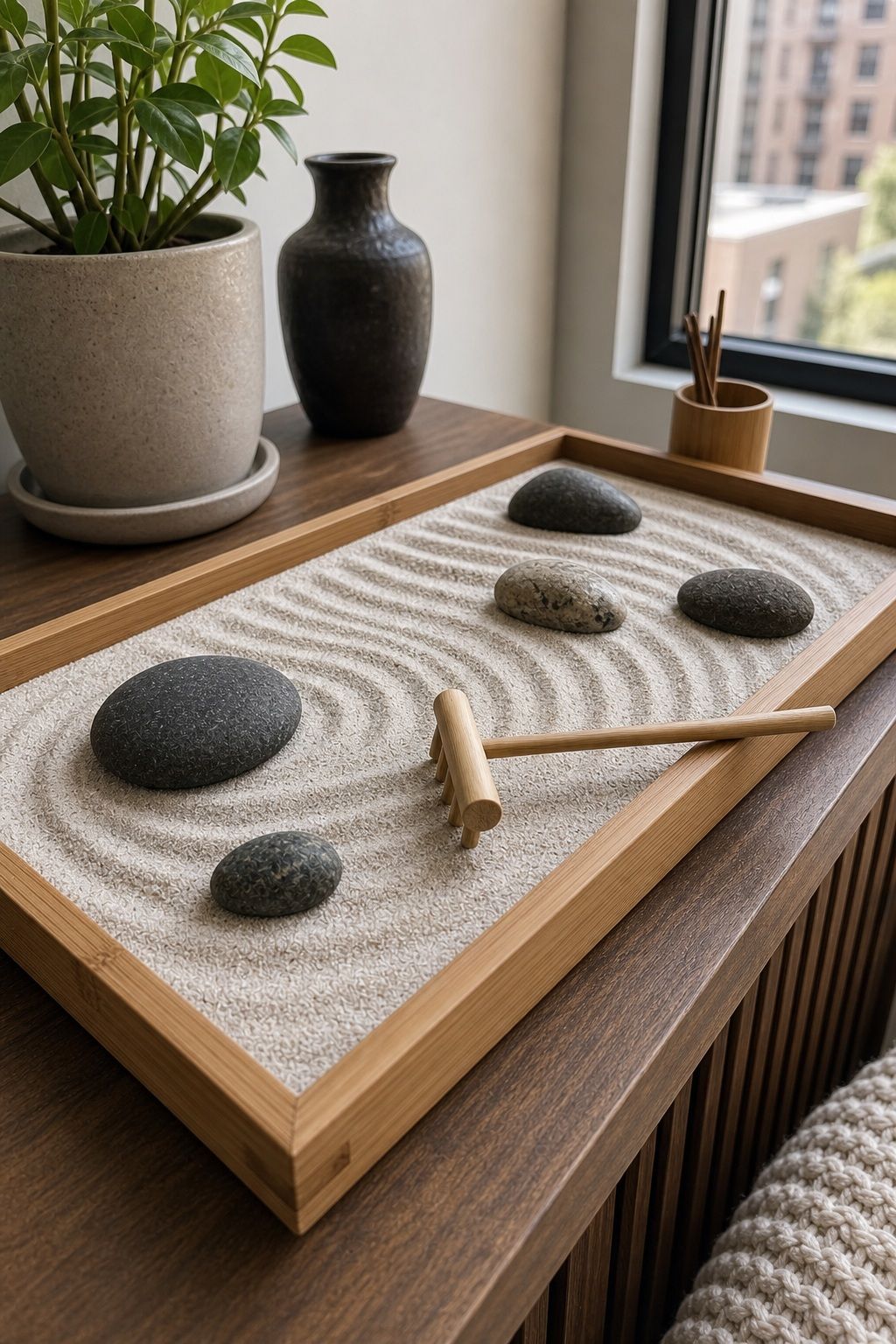


Wood and bamboo are the warm natural materials that keep a zen garden from feeling cold or stark. A small wooden bridge over the pebble channel, a bamboo edge, a piece of driftwood, or a simple wood stand under a tabletop garden adds organic warmth and a handmade quality.
Keep these accents minimal and unfinished, raw or lightly oiled wood, natural bamboo, so they read as part of the calm rather than decoration on top of it. One or two wood elements is plenty. The natural material is what bridges the garden to the rest of a warm, lived-in home.
Indoor and Tabletop Zen Gardens
10. Start With a Tabletop Tray Garden
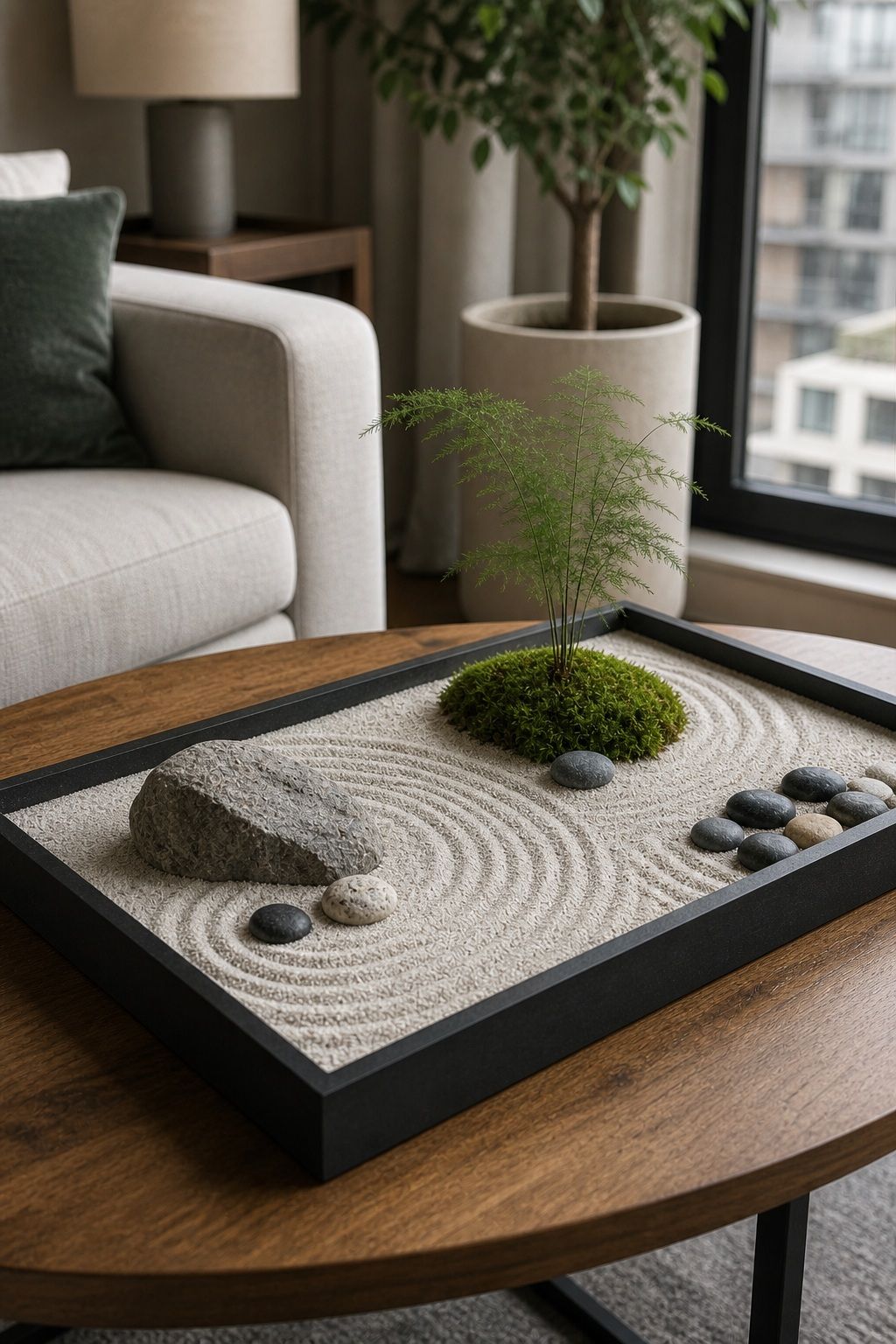


For an apartment, a renter, or anyone short on space, the tabletop tray garden is the honest answer, and it delivers the full calm in a footprint the size of a placemat. A shallow tray, fine sand, a few stones, a small rake, and one tiny plant is a complete zen garden on a coffee table or shelf.
Pre-made tabletop kits run $15 to $35 and include everything, or assembling your own from a tray and foraged stones costs almost nothing. It is the best beginner entry point, since it is low cost, low risk, and teaches the raking and arranging that the larger versions need. Start here if you start anywhere.
Read more: Top 17 Zen Boho Home Decor Ideas for Calm Bohemian Living
11. Make a Desk Mini-Garden for Daily Calm



A desk mini-garden puts the calm exactly where the stress usually is. A very small tray garden beside the keyboard becomes a two-minute reset between tasks, rake a few lines, breathe, look at the empty space, and the workday has a built-in pause in it.
Keep a desk version genuinely tiny so it does not crowd the workspace, and keep it simple, sand, two or three small stones, a tiny rake, maybe a single air plant. It is the lowest-effort, highest-frequency way to get the practice into a real day, and that frequency is where the benefit actually lives. Keep it on the side of the desk you reach toward, not behind the monitor, so it stays in view and gets used.
Read more: Top 16 Zen Curtain Ideas for a Calm, Serene Home
12. Style a Quiet Corner as a Zen Nook
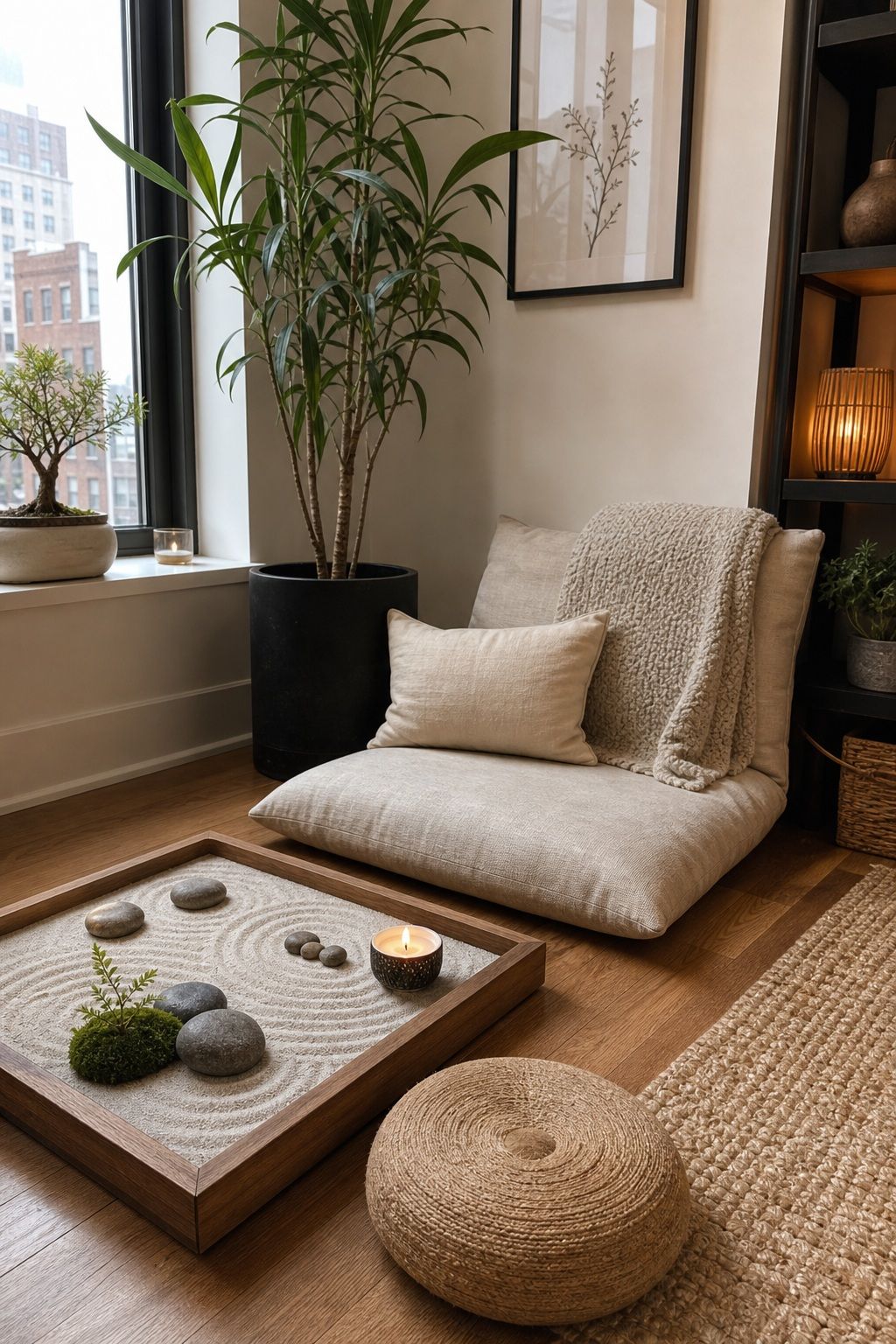


If there is a spare corner, a low zen garden on the floor or a low table turns it into a deliberate calm nook. Pair the garden with a floor cushion or a low stool, keep the surrounding wall bare or nearly so, and the corner becomes a place to actually sit with the stillness.
The corner does not need much, the garden, a place to sit, restraint everywhere else, but giving the practice its own dedicated spot makes it more likely to happen. An entry corner works well too, where it sets a calm tone the moment you walk in, the same idea as our bedroom zen home decor.
13. Add a Small Indoor Water Element
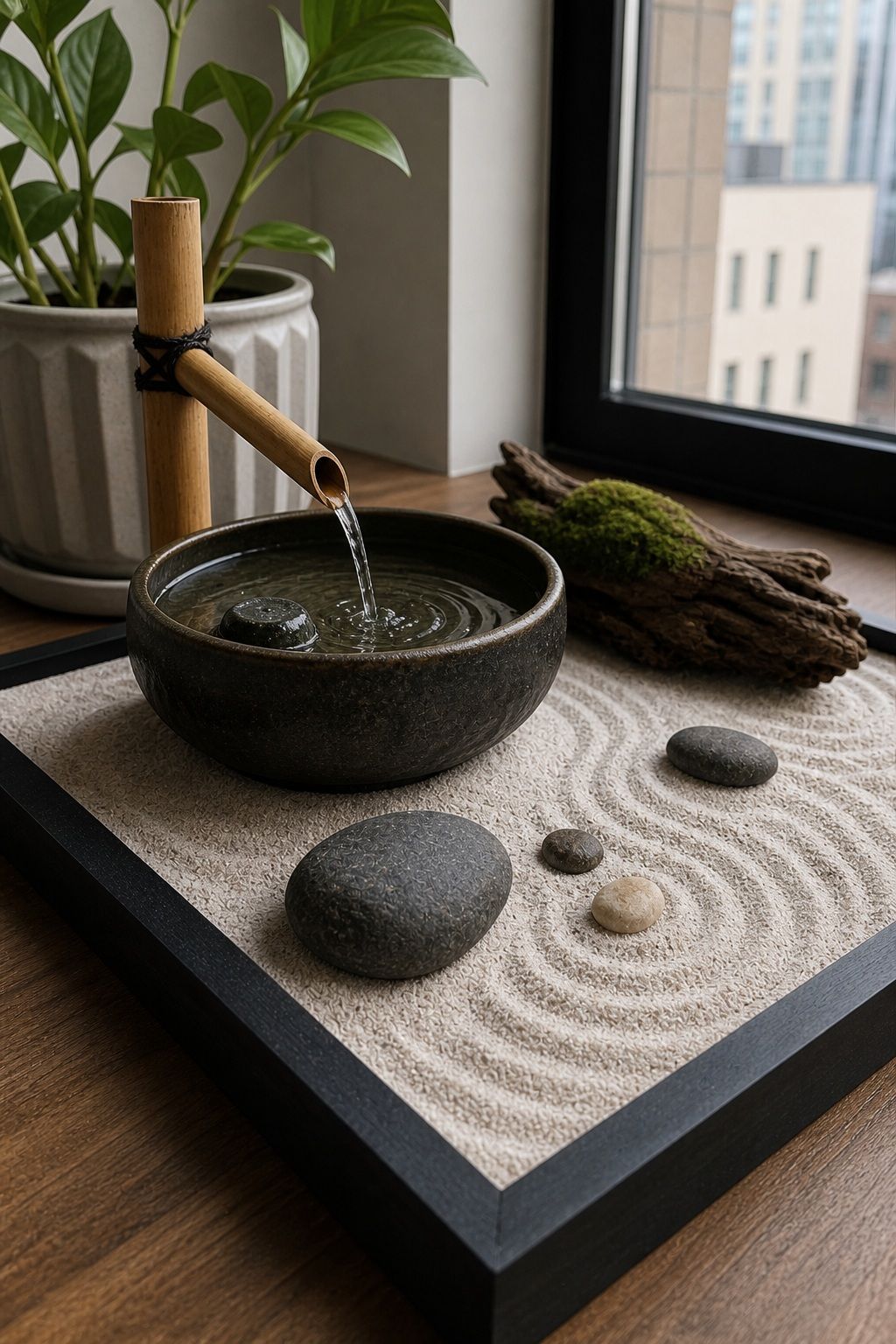


Sound is the sense a sand-and-stone garden cannot reach on its own, and a small indoor water feature fills it. A compact bamboo fountain or a simple tabletop water bowl beside the zen garden adds a gentle trickle that deepens the calm and softens background noise.
Compact indoor fountains run $25 to $50 and need only an outlet and occasional topping up. Keep it small and quiet, the point is a soft background sound, not a feature. Placed beside a tabletop or corner garden, the water element completes the sensory picture, sight, texture, and now sound, all pulling toward stillness.
Read more: Top 16 Zen Home Gym Decor Ideas for a Calm Workout Space
Calm Final Touches
14. Keep the Palette Quiet and Neutral
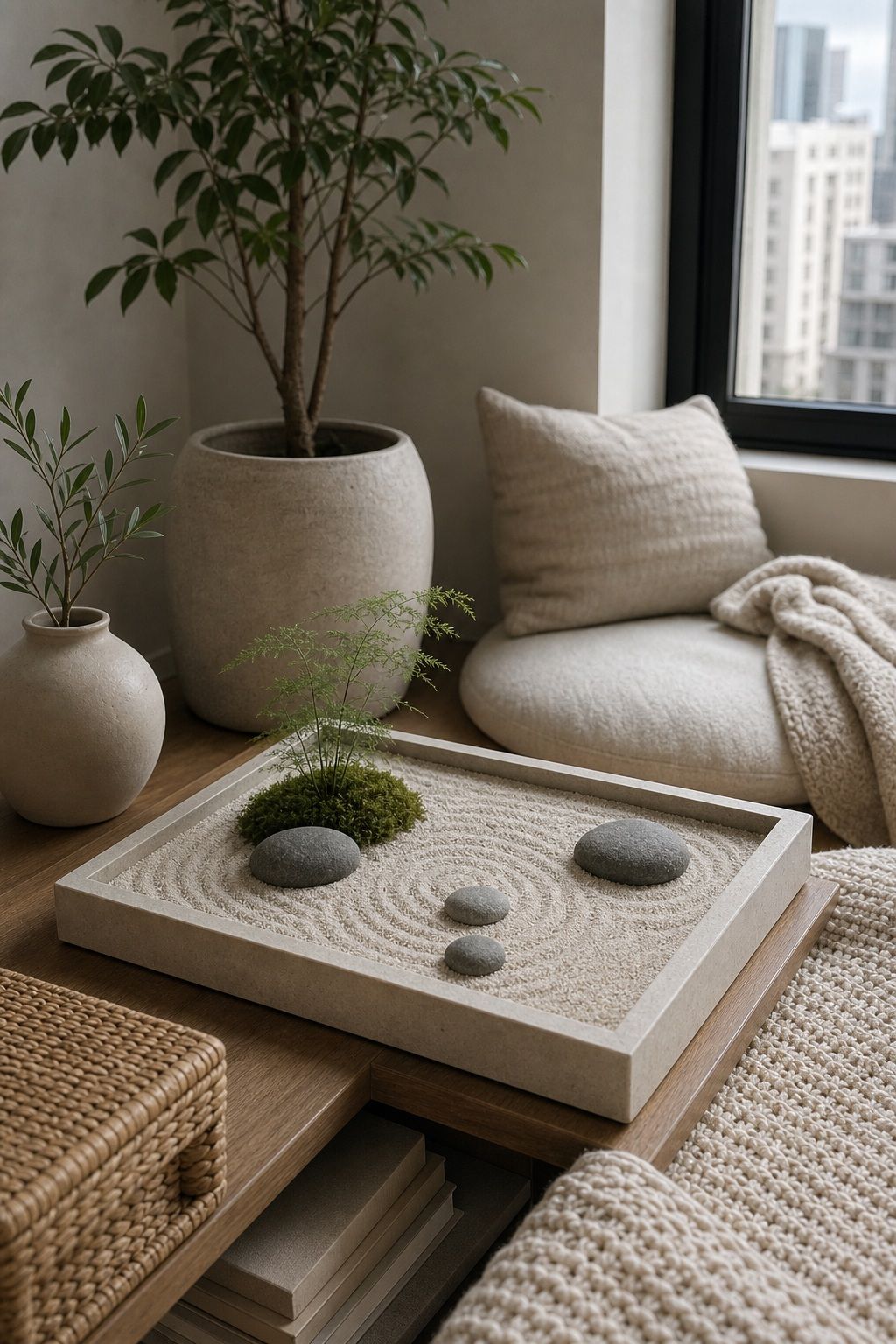
The calm of a zen garden depends heavily on a restrained palette. Soft sand tones, pale grey stone, natural wood, muted green, and nothing loud or saturated anywhere near it. The color story should be barely-there, so the eye relaxes rather than catching on anything.
This extends to the area around the garden too, a bright, busy backdrop undoes the calm the garden builds. Keep the nearby wall and surfaces neutral and uncluttered. The quiet palette costs nothing, it is a discipline rather than a purchase, and it is one of the biggest factors in whether the space actually feels serene.
Read more: Top 15 Small Balcony Garden Ideas to Maximize Your Outdoor Space
15. Leave Generous Empty Space
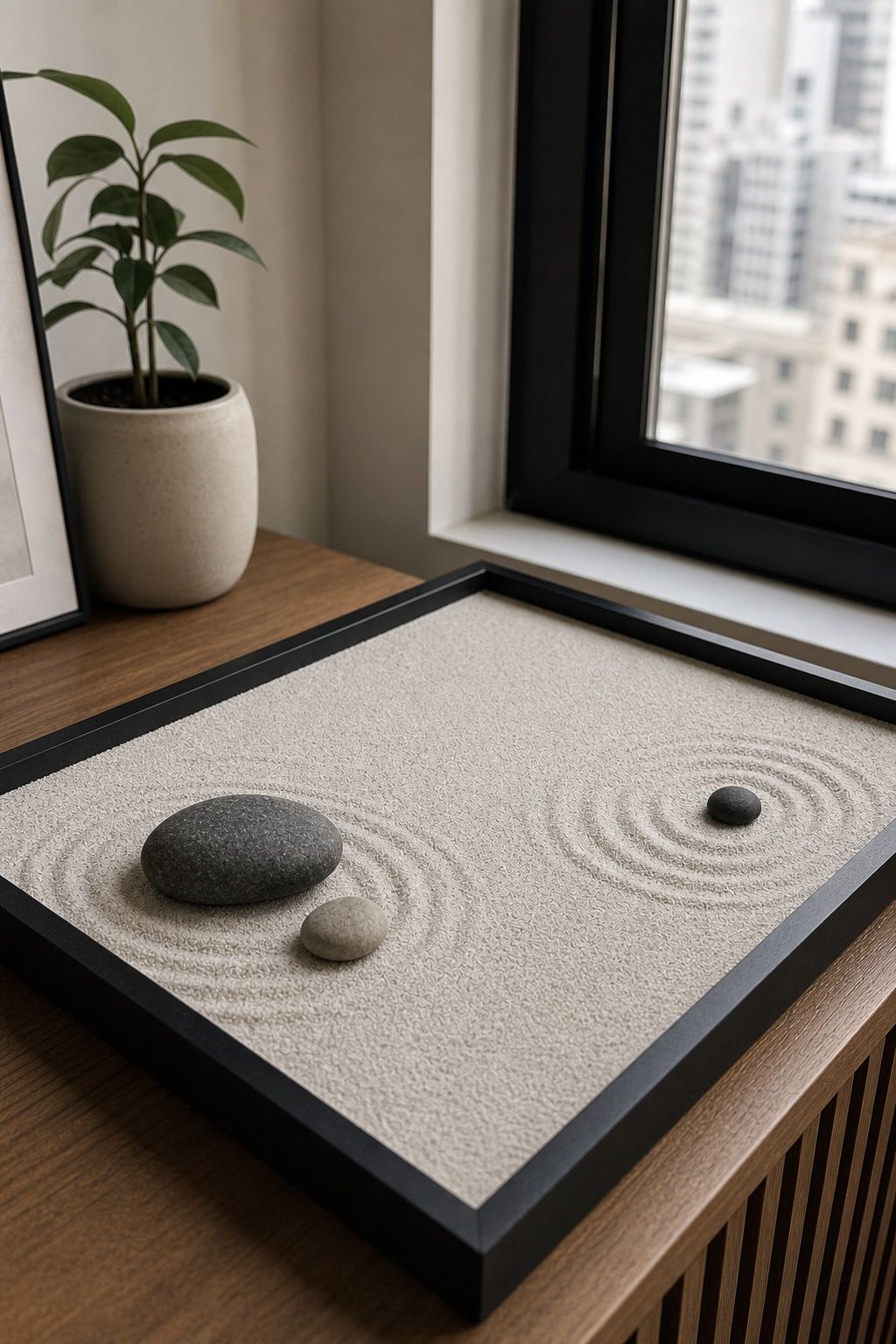
Empty space is not the absence of design in a zen garden, it is the design. The raked sand with nothing on it, the bare area around the single plant, the uncrowded edges, all of that openness is what gives the eye somewhere to rest and the mind room to settle.
The instinct to fill space is exactly the instinct to resist here. A zen garden with three intentional elements and a lot of open sand reads as far calmer than one packed with stones, plants, and accents. Empty space is free, and it is doing more work than anything you could add.
Read more: Top 17 Fall Outdoor Decor Ideas for the Yard, Walkway, and Garden
16. Add Soft, Indirect Lighting
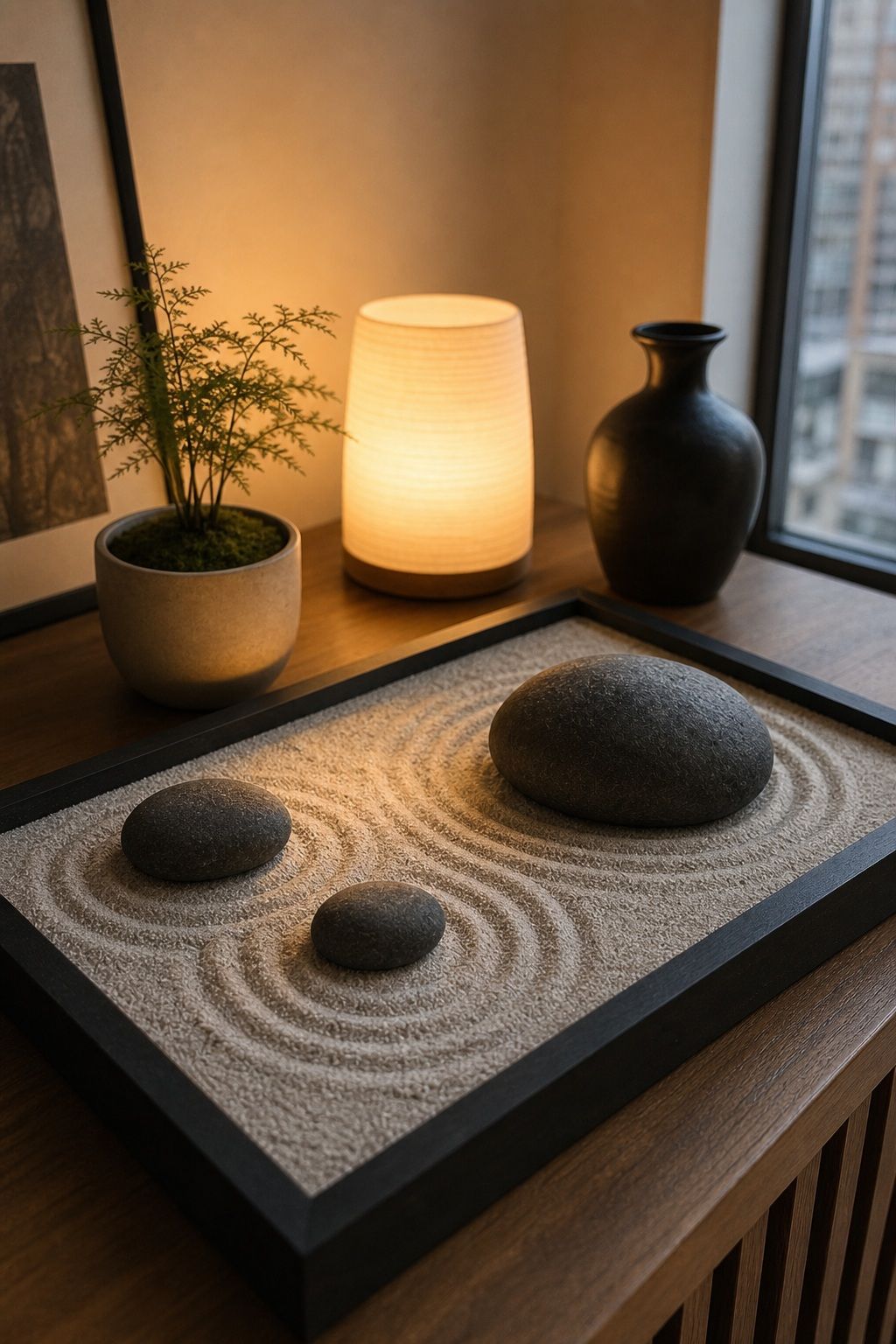


Harsh overhead light flattens a zen garden and works against the calm. Soft, indirect lighting, a low warm lamp nearby, a small light angled to graze across the raked sand, gentle natural daylight, brings out the texture and keeps the mood quiet.
Warm bulbs around 2700K are the right tone, and a lamp on a dimmer lets the corner shift gently from day to evening. The raked lines and the stones cast subtle shadows under low side light, which is part of their quiet appeal. Lighting the garden softly is what carries the calm into the evening hours. Position the light low and to one side rather than straight above, since the long shadows it casts across the sand are part of what makes the garden feel still.
17. Treat Upkeep as Part of the Practice
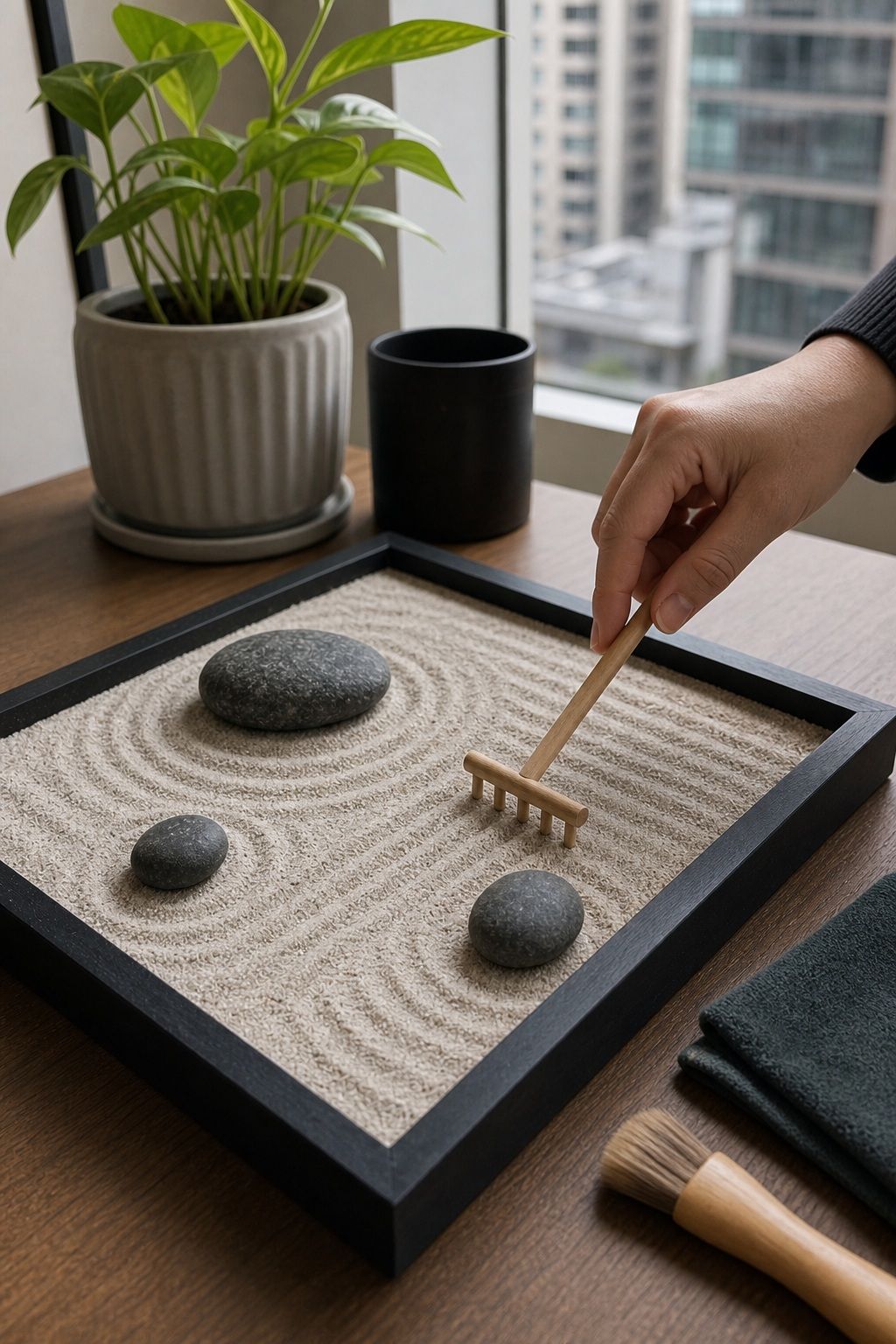
The honest truth most zen garden guides leave out: the sand needs re-raking, the moss needs occasional misting, the stones drift and need resetting. But that upkeep is not a maintenance burden, it is the practice itself, the small regular act of tending that the whole thing is for.
Build it into a rhythm, a minute of raking in the morning, a reset when the lines blur. A zen garden that is tended is a zen garden that works, and the tending is the point rather than the price. Done that way, the upkeep stops being a chore and becomes the calmest two minutes of the day.
Read more: Top 16 Zen Home Office Decor Ideas for a Focused Calming Workspace
Zen Garden Home Decor FAQ
How do you make a zen garden at home?
Start with a simple foundation, fine sand or gravel in a defined frame or tray, then add a small rake for the lined pattern and a few anchor stones in an odd-numbered, asymmetrical arrangement. Add one sculptural plant and a patch of moss, keep the layout minimal and the edges clean, and leave generous empty space.
What do you put in a zen garden?
The core elements are fine sand or gravel, a few intentional stones, and a rake for the pattern. From there, a single sculptural plant or bonsai, a patch of moss, smooth river pebbles for contrast, and natural wood or bamboo accents. A small water feature adds gentle sound. Restraint matters more than any single piece.
Can you have a zen garden indoors?
Yes, and for apartments a tabletop or tray version is the best route. A shallow tray with sand, a few stones, a small rake, and one tiny plant delivers the same calm in the footprint of a placemat. It works on a coffee table, a shelf, or a desk, and needs no special light if you use preserved moss and artificial or low-care plants.
How do you make a small zen garden?
Use a shallow tray as the base, fill it with fine sand, and add two or three small stones in a loose asymmetrical arrangement. Include a tiny rake for the lines and keep the planting to one small element, an air plant or a patch of preserved moss. Keep it genuinely small and leave plenty of open sand.
How much upkeep does a zen garden need?
Less than people expect, and the upkeep is part of the appeal. The sand needs occasional re-raking, moss needs light misting if it is live, and stones drift and need resetting now and then. Built into a daily rhythm, a minute or two of raking, the maintenance becomes the calming practice rather than a chore.
Key Takeaways
- Start with a simple foundation of fine sand or gravel in a defined frame or tray, with a rake for the signature lined pattern.
- Place a few anchor stones in odd numbers and an asymmetrical arrangement, and add just one sculptural plant and a patch of moss.
- For apartments and renters, a tabletop, desk, or corner version delivers the same calm in a tiny footprint, start here.
- Keep the palette quiet, the planting low-care, and leave generous empty space, restraint is the design, not a shortcut.
- Treat the re-raking and resetting as the daily practice the garden is for, not as upkeep, that rhythm is where the calm lives.
Final Thoughts
A zen garden is one of the few pieces of home decor that asks something small of you every day, and gives something back each time. Start with a simple sand base, place a few stones with care, add one plant, and leave the rest open. Scale it to whatever space you have, a corner, a coffee table, a desk, and keep it minimal on purpose. Then tend it, lightly and often, and the calmest two minutes of the day will already be built into your home.
Last update on 2026-10-04 / Affiliate links / Images from Amazon Product Advertising API
