

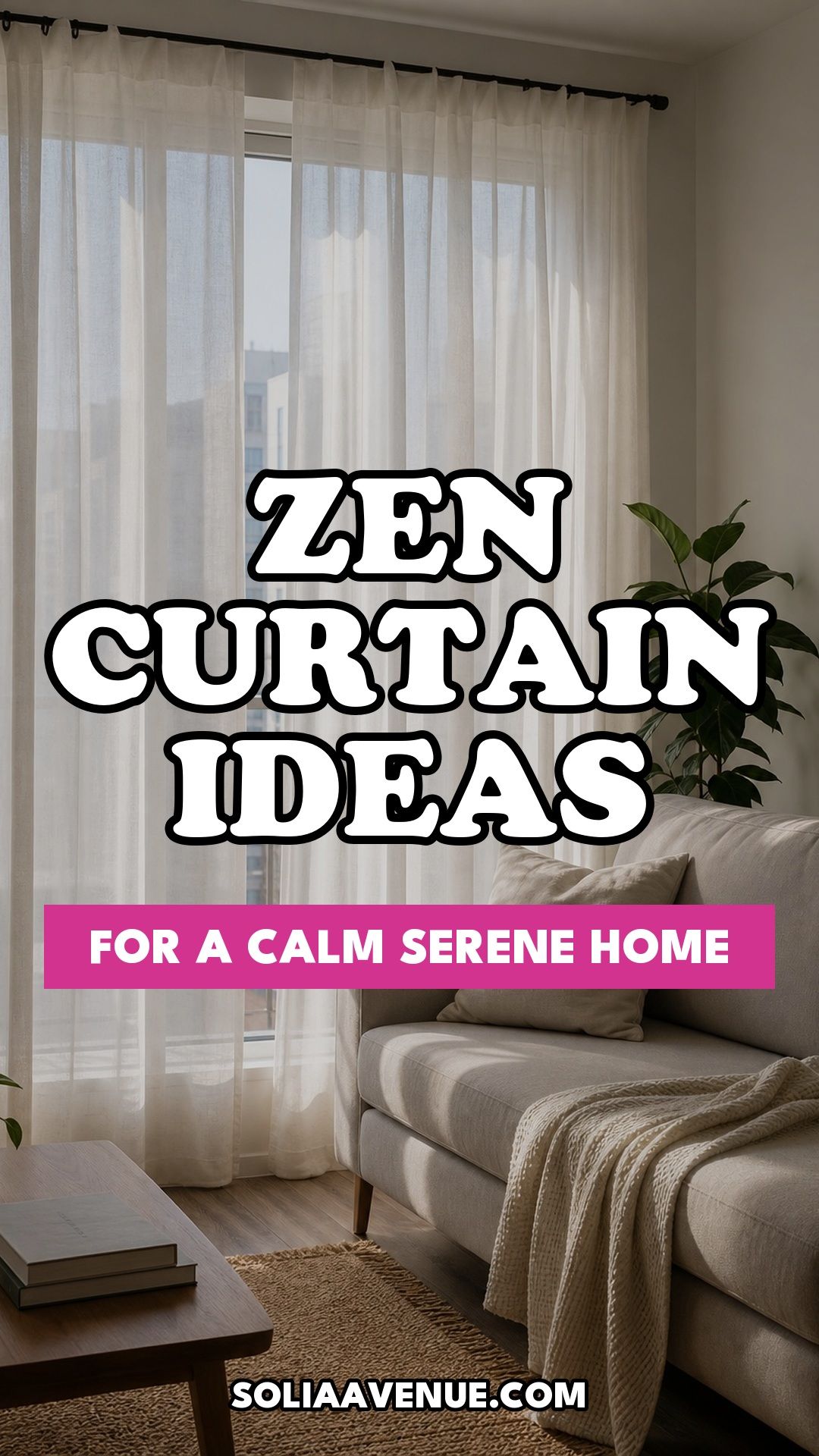
Zen curtains create calm through one job done well: softening the light. The move is natural-fiber panels, linen, cotton, in a soft, low-contrast palette, hung to filter daylight into a gentle glow rather than block it or let it glare. The 2026 direction is sheer linen in soft white and earthy tones, light wood rods, and low-contrast layering. Hang them high and to the floor, keep the hardware quiet, and the right curtains make any room feel serene.
Curtains are the most overlooked calm in a room. People agonize over the sofa and the paint and leave the windows with whatever came with the place, or a stiff blind, or nothing, and then wonder why the room never quite feels serene. The window is doing half the work, or half the damage.
So this post is curtains, only curtains, the one element, looked at closely. How the fabric choice changes a room, how color and light diffusion create calm, how to layer sheers, how to hang and style the rod, the renter-friendly options. Not the furniture, not the layout, not the whole-room zen approach, just the window treatment, because it deserves its own attention. The 2026 direction is squarely zen-friendly, sheer natural-fiber panels in soft white and earthy tones, light wood rods, low-contrast layering, the quiet-luxury look.
Curtains are also the rare element that cuts across every room, so this post stays focused on the window treatment itself and points to the room guides for the rest, the living room, the bedroom, the bathroom each have their own deep dives. The 16 ideas ahead move from choosing the right zen curtains, to the looks by room, to styling and hanging, to the renter-friendly and budget options, so the windows finally do their share of the calm, the same considered detail a good small apartment curtain ideas brings to a small space.
Recommended Zen Curtain Products


Recommended blogs to read:
- Japanese zen home decor
- Living room zen home decor
- Bedroom zen home decor
- Zen and serene home gym decor
- Bathroom zen home decor
Choosing the Right Zen Curtains
1. Start With Natural-Fiber Fabrics
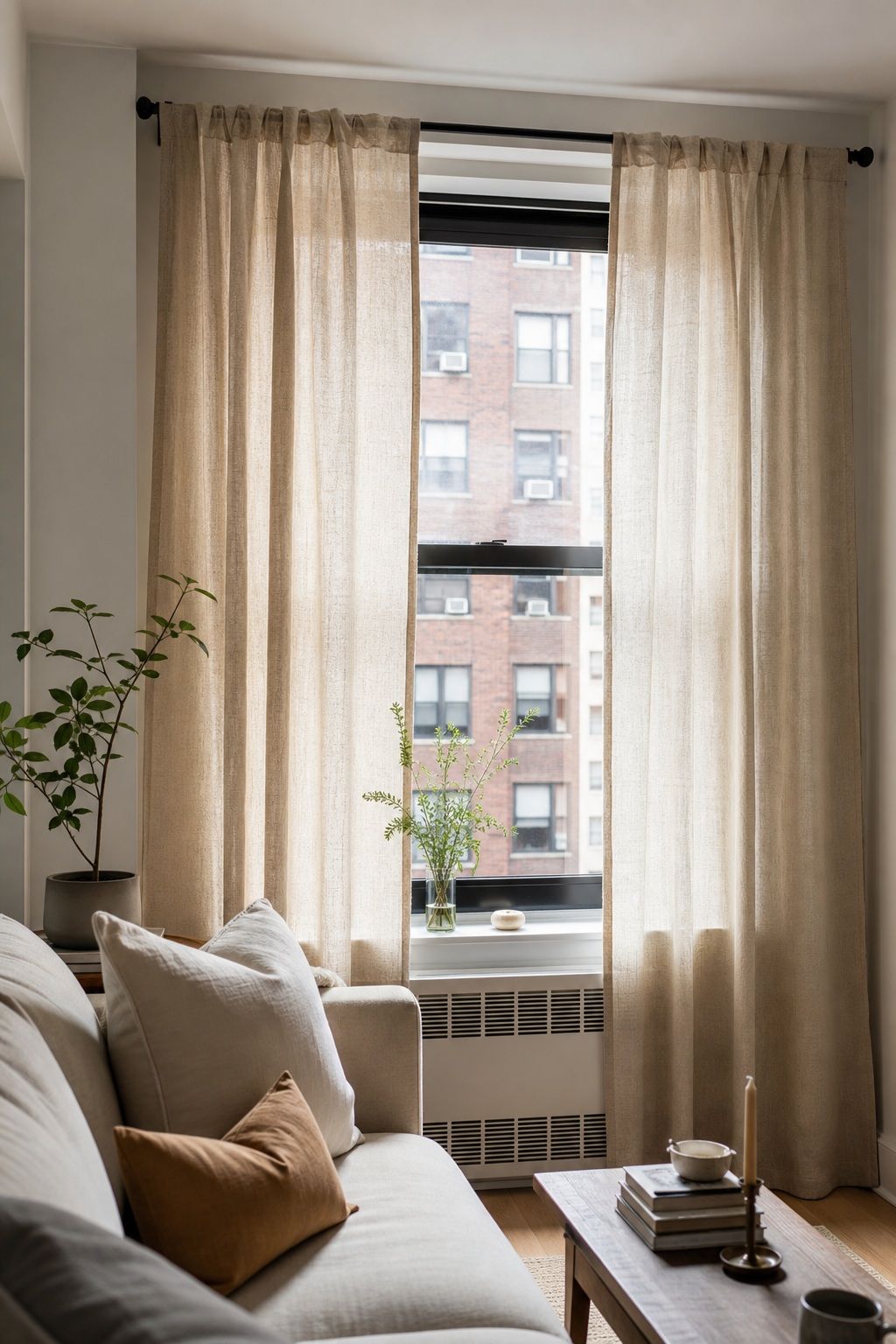


The single most important zen curtain decision is the fabric, and the answer is natural fibers, linen and cotton above all. They have a soft, breathable, slightly imperfect quality that synthetic curtains, with their flat sheen, never match.
Linen is the zen curtain fabric, it drapes softly, it filters light beautifully, and it ages gracefully, getting better rather than worse with time, which is the heart of the wabi-sabi spirit. Cotton is the lighter, more affordable cousin and works just as well. Skip the polyester and the heavy synthetic blends, they read as slick and lifeless. Starting with natural-fiber fabric is the foundation decision, it is what makes a curtain feel calm before color or styling enters the picture.
Read more: Top 17 Zen Chic Home Decor Ideas for a Refined Minimalist Home
2. Decide Between Sheer and Lined
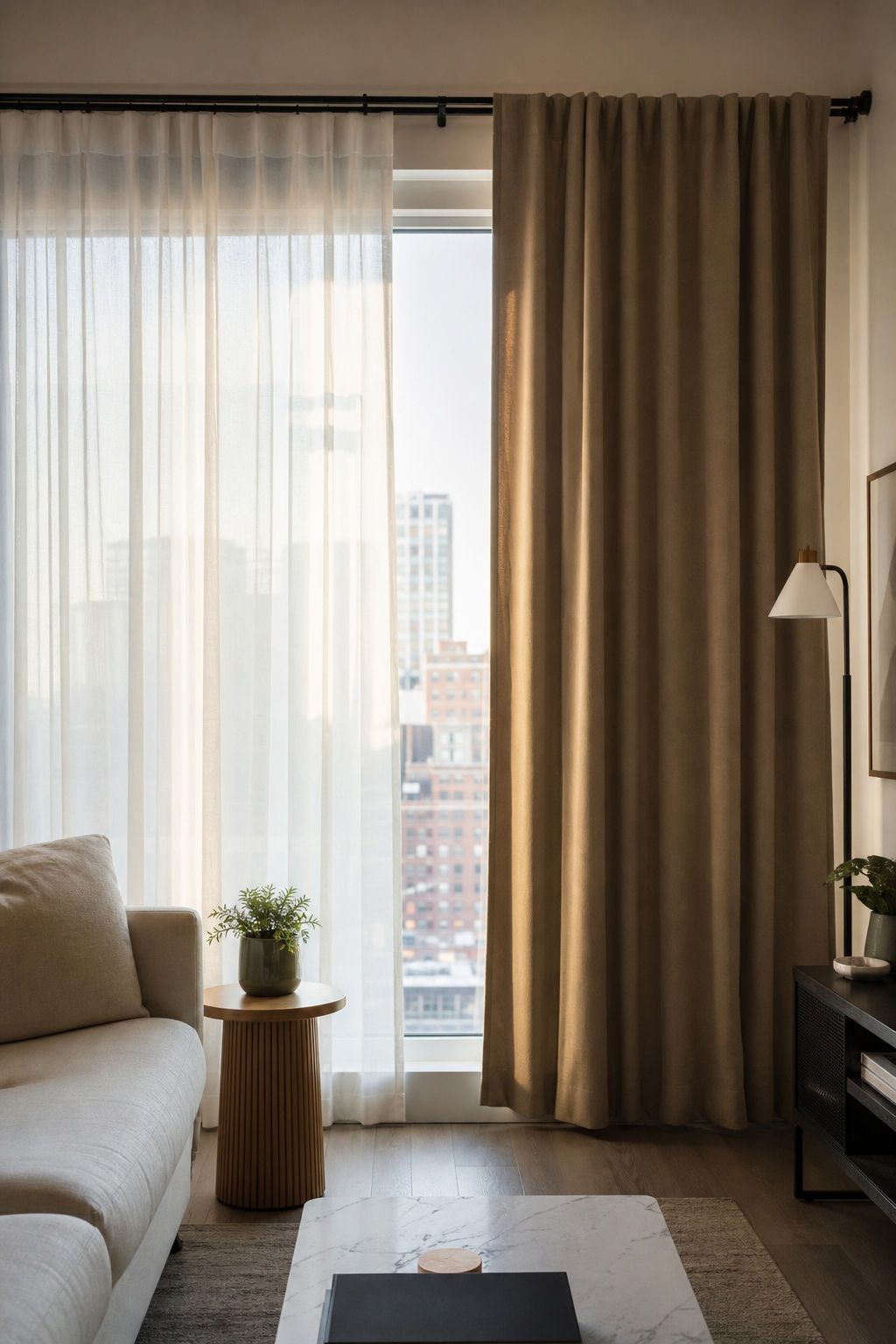


Zen curtains come down to a choice, sheer or lined, and the choice depends on what the room needs. Sheer panels filter daylight into a soft, glowing diffusion, which is the most purely zen effect, perfect for a living room or any space where light is welcome.
Lined or layered curtains add privacy and the option to darken a room, which a bedroom needs. The most flexible answer is often both, a sheer panel for the daytime glow plus a heavier layer to draw when you need dark or private. Decide per room based on the light and the privacy that room actually needs. The sheer-versus-lined decision is the second foundational choice, and getting it right per room is what makes the curtains functional as well as calm.
3. Choose the Calming Color Palette
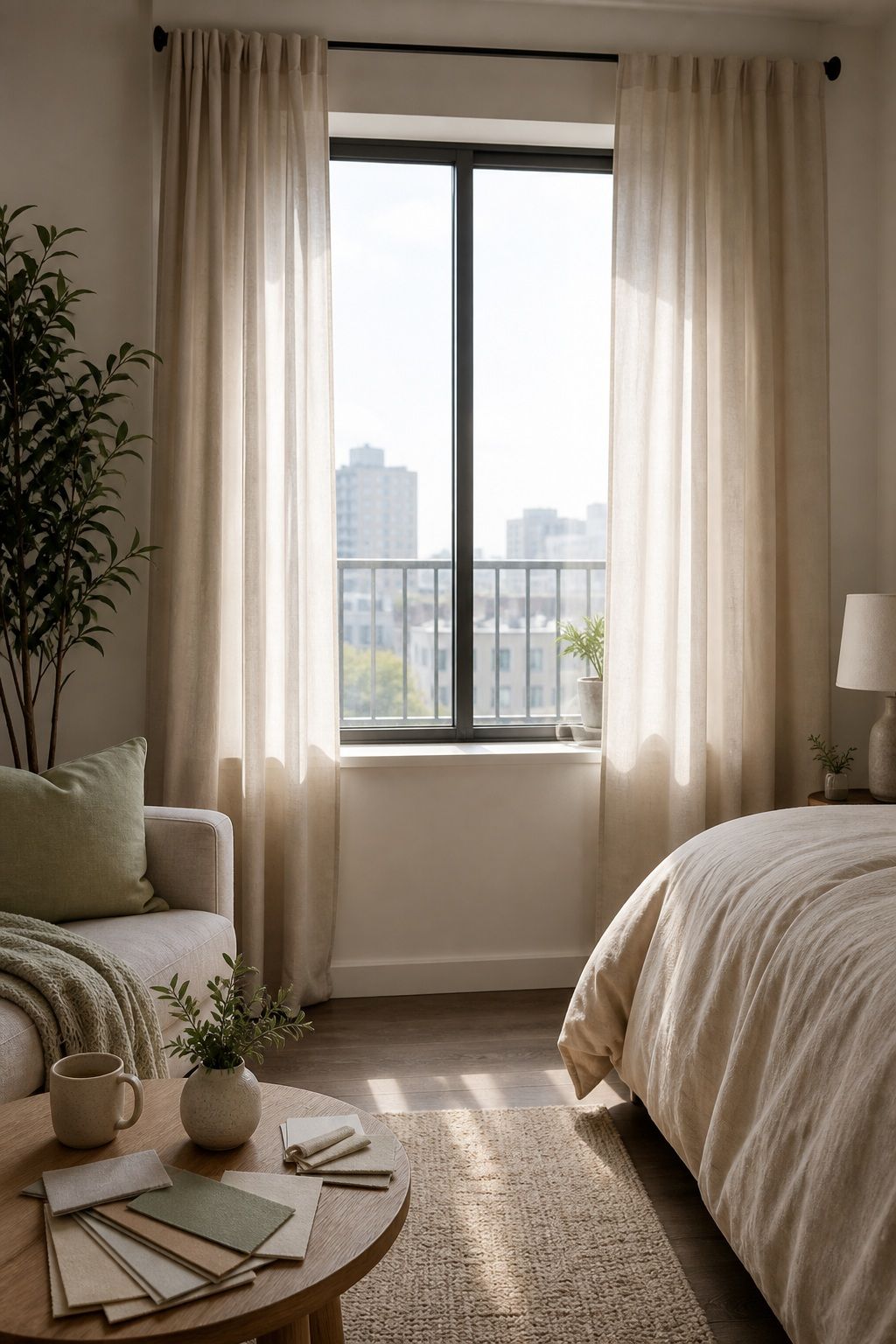


Zen curtains live in a soft, low-contrast, calming color palette, soft white, warm cream, oat, sand, muted earthy tones. The 2026 direction names it precisely, soft white and earthy neutrals, the quiet-luxury palette.
The colors should recede, not announce themselves, the calm comes from the curtain blending into the wall and the light rather than standing out as a feature. Avoid bold colors, busy patterns, and high-contrast prints, they pull the eye and break the serenity. Match the curtain tone closely to the wall for the most continuous, expansive effect. The calming color palette is the third foundational choice, and a soft, recessive curtain color is what lets the window dissolve into the room’s overall calm.
Read more: Top 16 Zen Home Office Decor Ideas for a Focused Calming Workspace
4. Prioritize Light Diffusion
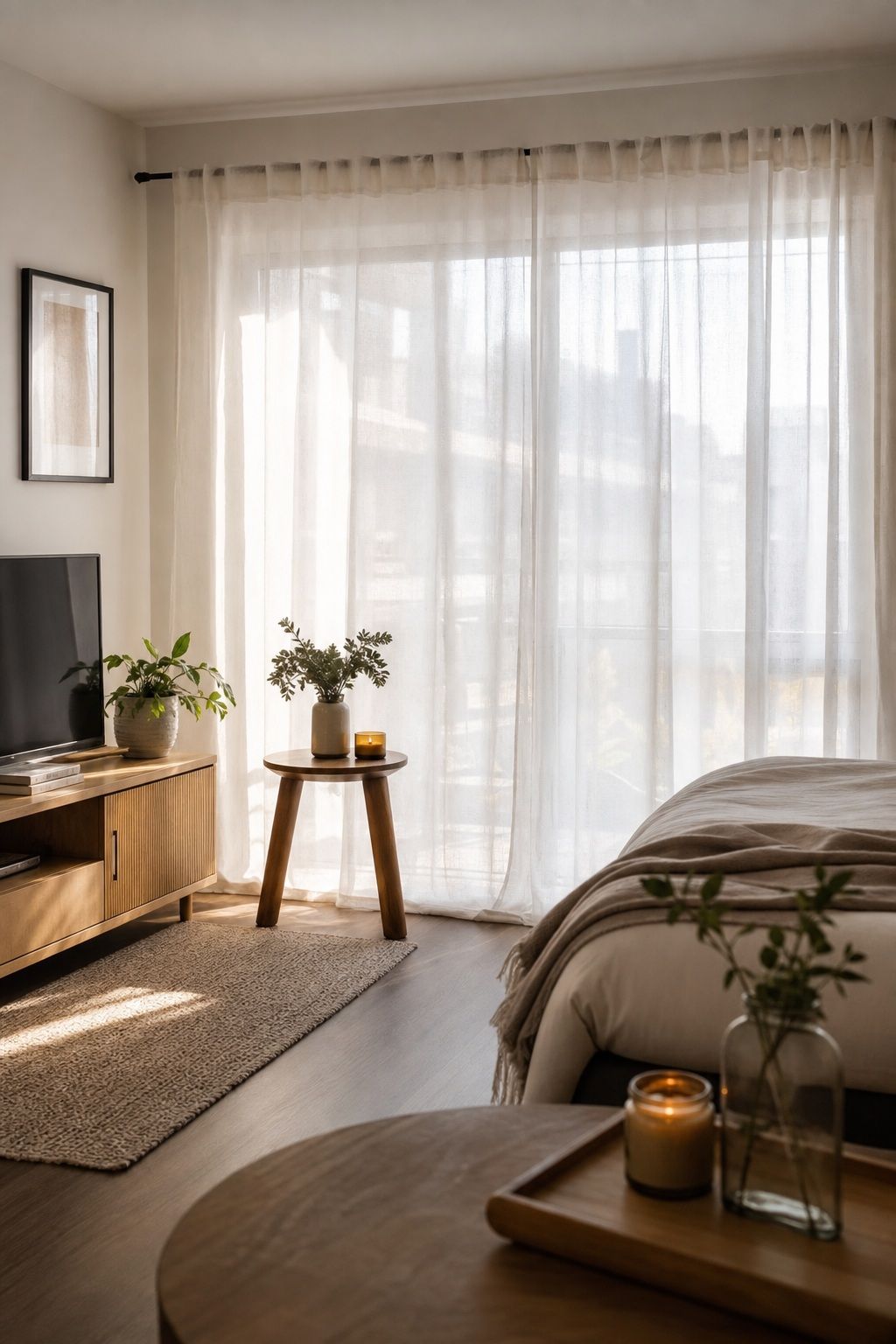

Above everything else, zen curtains exist to manage light, and the goal is diffusion, turning harsh, direct, glaring daylight into a soft, even, gentle glow. That transformation of the light is the single biggest thing curtains do for a room’s calm.
Sheer natural-fiber panels are the diffusion workhorse, they soften the light without killing it, so the room stays bright but never harsh. Test it, look at a window with a bare pane and the same window behind a sheer linen panel, the difference in how the whole room feels is immediate. Prioritizing light diffusion is the principle that ties all the other curtain choices together, the fabric, the sheerness, the color all serve this one job, softening the light into calm.
Read more: Top 17 Zen Boho Home Decor Ideas for Calm Bohemian Living
Zen Curtain Looks by Room
5. Living Room: Sheer Panels for a Soft Glow
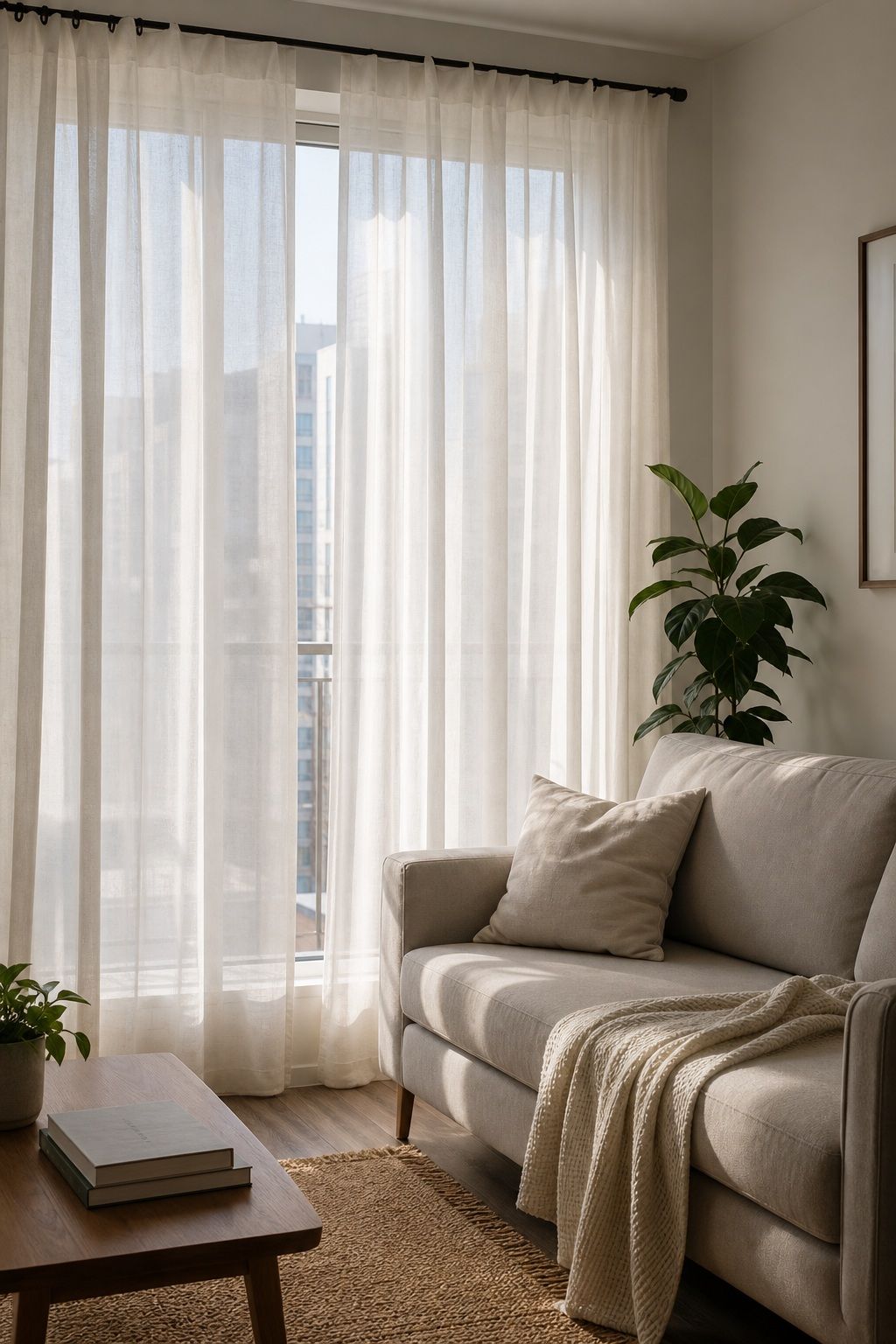

In the living room, the zen curtain move is sheer natural-fiber panels that flood the space with soft, diffused daylight. The living room is usually where you want the most light, so the curtains should filter rather than block it.
Floor-length sheer linen in a soft white or oat tone, hung high and wide, makes a living room feel bright, calm, and a little larger. If the room also needs evening privacy, layer a heavier panel behind the sheer to draw at night. The sheer panel is the living room’s default zen curtain, it delivers the glowing diffused light the room wants, and the deeper living-room styling has its own dedicated guide if you want the full picture.
Read more: Top 16 Zen Yoga Room Home Decor Ideas for a Calm Practice Space
6. Bedroom: Layered Sheers and Room-Darkening Panels
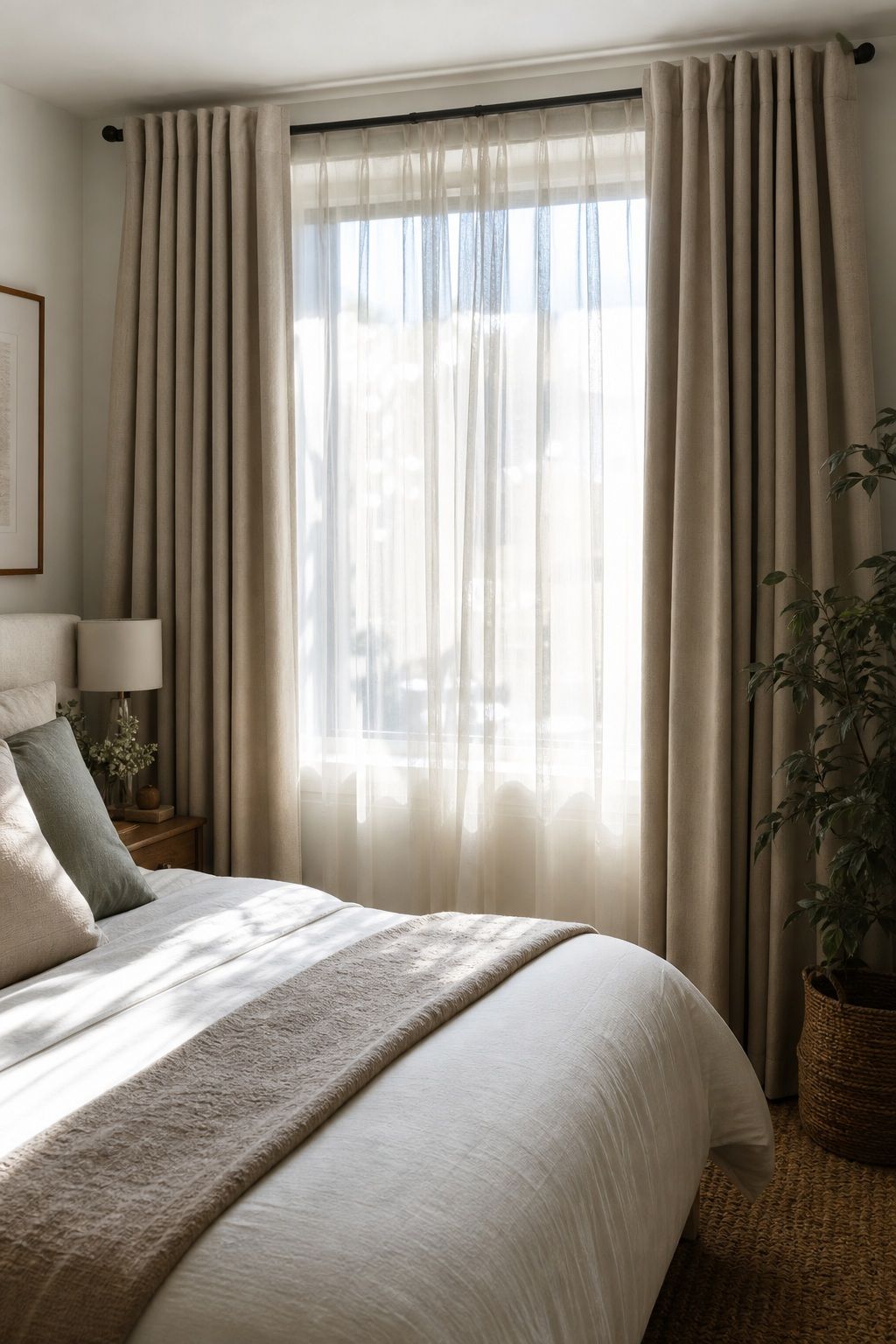


The bedroom has a different curtain need, it wants the soft daytime glow and the option of real darkness for sleep, so the zen answer is layering. A sheer natural-fiber panel for the daytime, plus a room-darkening or blackout layer to draw at night.
Keep both layers in the soft calming palette so the layering reads as serene rather than heavy, a soft-white sheer with an oat or sand-toned darkening panel. The layered approach gives the bedroom the full range, glowing and open by day, dark and restful by night, without ever breaking the calm. Layered sheers and darkening panels are the bedroom’s zen curtain solution, and they suit a cozy bedroom ideas for apartments especially well.
7. Gym or Yoga Corner: Light, Airy Panels
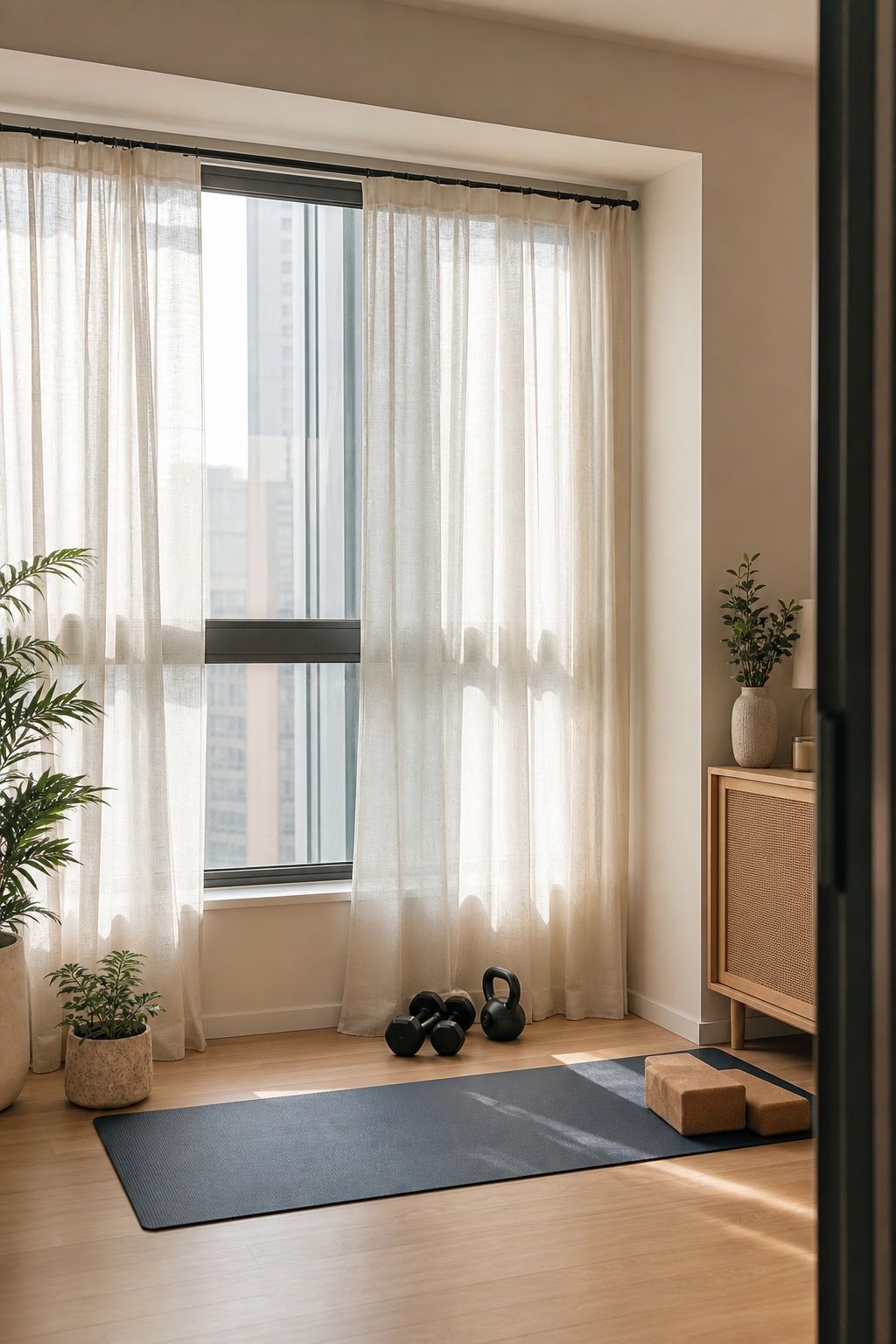


A home gym or yoga corner wants curtains that keep it feeling bright, open, and airy, movement spaces feel better with light and air, not heavy fabric closing them in. Light, sheer natural-fiber panels are the call.
They soften the light for a calmer practice without darkening the space, and the airy drape keeps the corner feeling open rather than enclosed. If the space doubles, a gym that is also a guest room, a layered option adds flexibility, but the default for a movement space leans light. Light, airy panels are the zen curtain choice for a gym or yoga corner, and the full styling of a calm workout space has its own dedicated guide.
Read more: Top 16 Zen Home Entrance Decor Ideas for a Welcoming First Impression
8. Bathroom: Privacy Without Heaviness
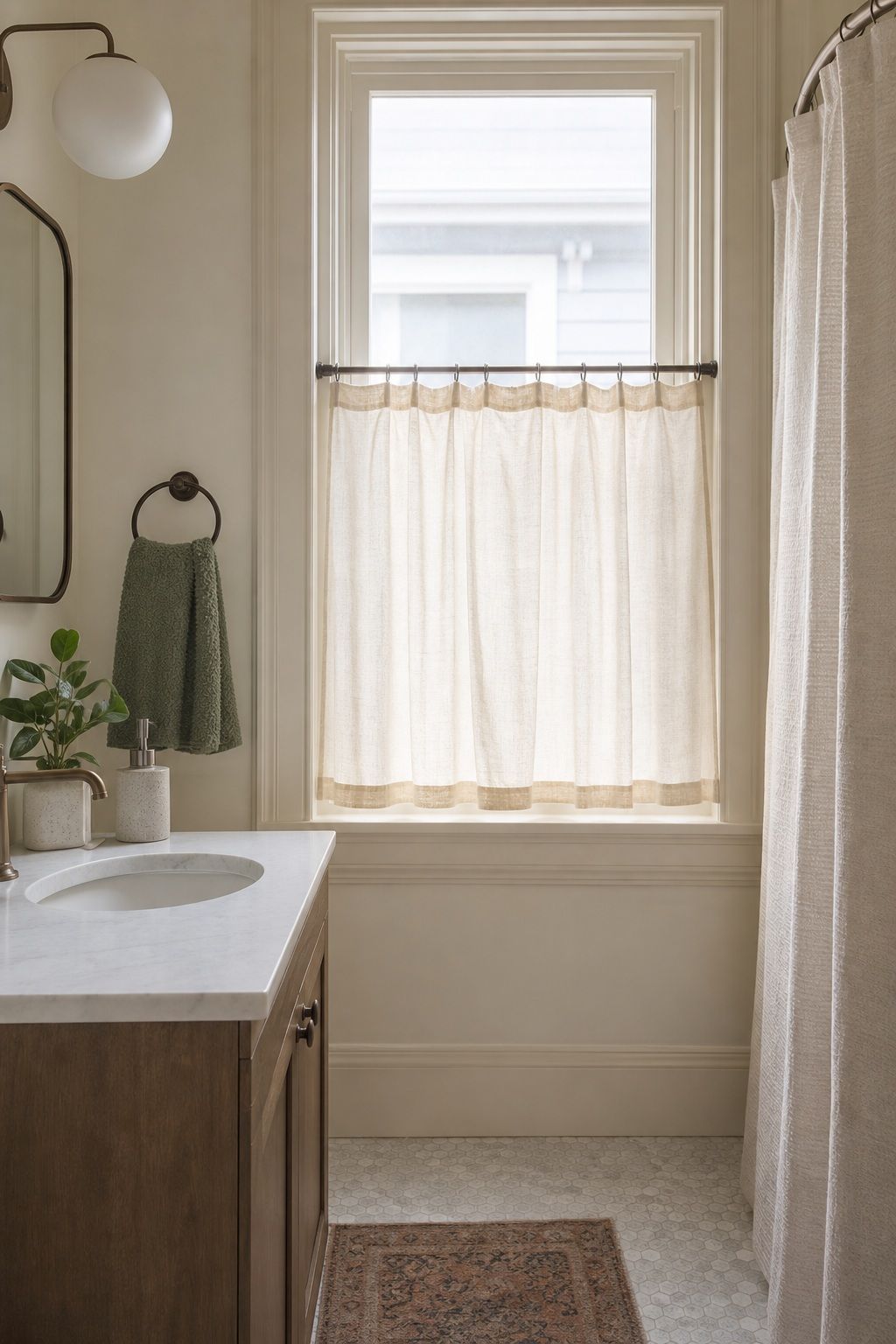


The bathroom curtain has a specific brief, privacy, but achieved without the heavy, dark, closed-in feeling that works against a calm bathroom. The zen answer is a light privacy layer that still lets diffused light through.
A frosted-effect sheer, a bamboo blind, a cafe-style panel covering just the lower half of the window, all give privacy while keeping the space bright and serene. Natural fibers and the soft palette still apply. The bathroom needs the privacy a living room does not, but it should not pay for that privacy with heaviness. Privacy without heaviness is the bathroom’s zen curtain balance, and the deeper bathroom styling has its own guide if you want to take the calm further.
Read more: Top 17 Cozy Zen Modern Home Decor Ideas for a Calm Home
9. Kitchen: Simple, Functional, Calm
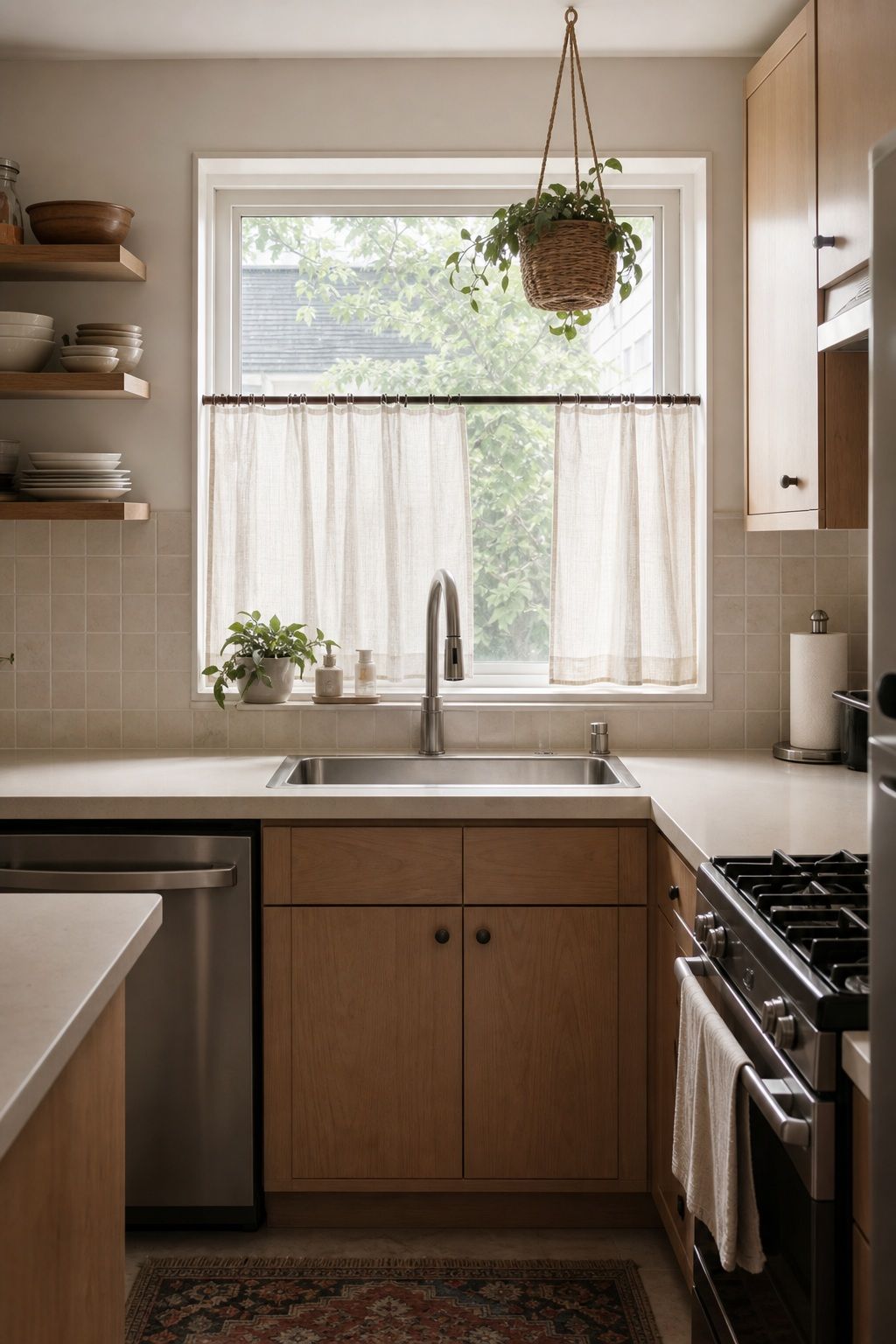


The kitchen curtain should be simple, functional, and easy to keep clean, a kitchen is a working room, so the zen curtain there is practical above all, while still calm. A short cafe curtain, a simple roller in a natural tone, a light linen panel where there is room.
It should soften the light and add a little warmth without getting in the way of the work, and a washable natural-fiber fabric handles the realities of a kitchen. Keep it in the soft palette like everywhere else so the kitchen window stays consistent with the rest of the home. Simple, functional, calm is the kitchen’s zen curtain approach, and our kitchen zen home decor covers the rest of that room.
Read more: Top 17 Zen Porch Home Decor Ideas for a Calm Outdoor Retreat
Styling and Hanging Tips
10. Hang the Rod High
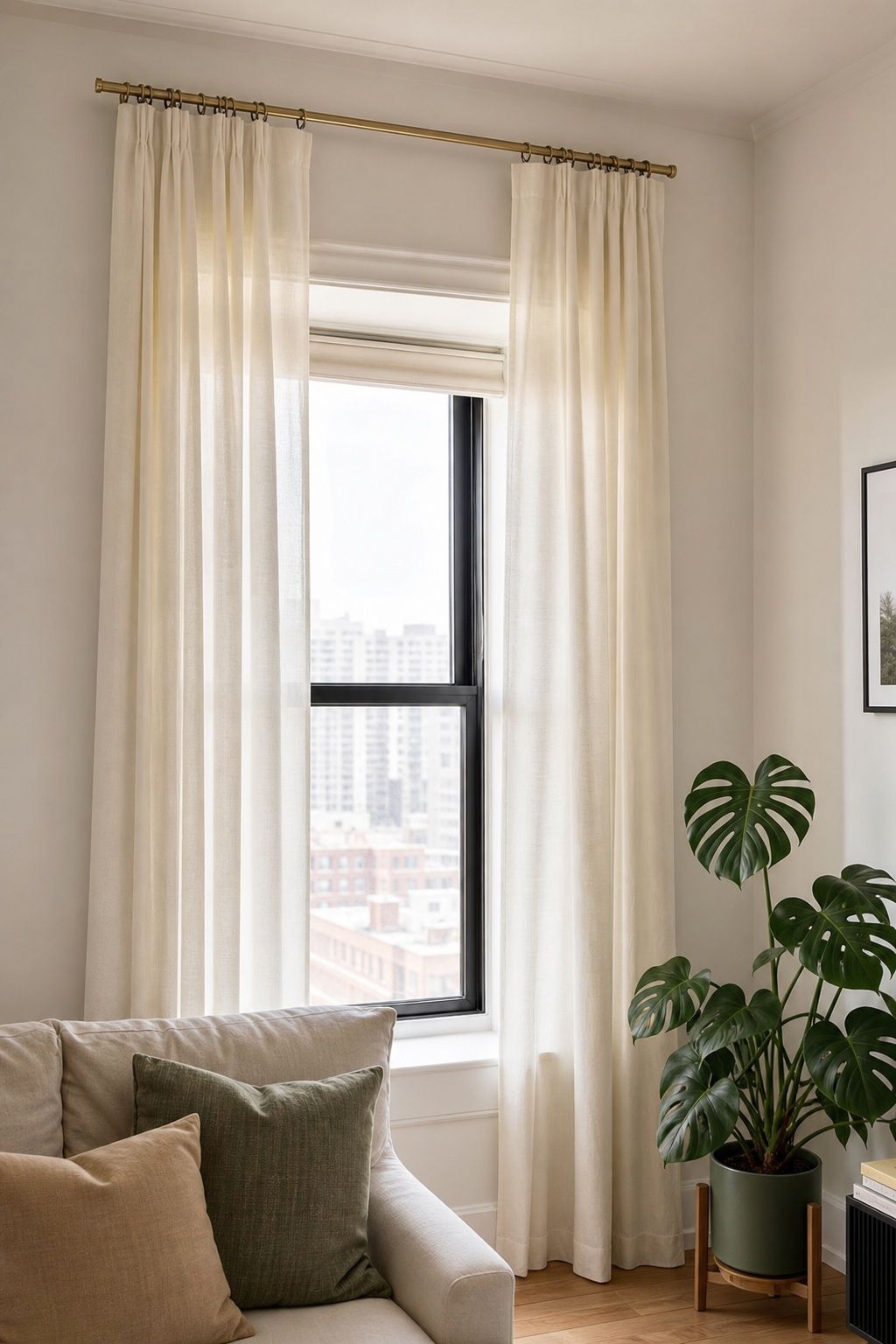


Where you hang the curtain rod changes the whole room, and the zen move is high, well above the window frame, often close to the ceiling. A high rod draws the eye up, makes the ceiling feel taller, and makes the window itself read as larger and grander.
Hanging the rod right at the top of the window frame, the default mistake, makes the window and the room feel shorter. The higher rod is one of the simplest, highest-impact styling moves there is, and it costs nothing extra, you are just mounting the same rod higher. Hanging the rod high is the first styling rule of zen curtains, it gives a room a sense of height and calm proportion before the fabric even hangs.
Read more: Top 16 Zen Fireplace Mantel Home Decor Ideas for a Quietly Beautiful
11. Let the Curtains Reach the Floor
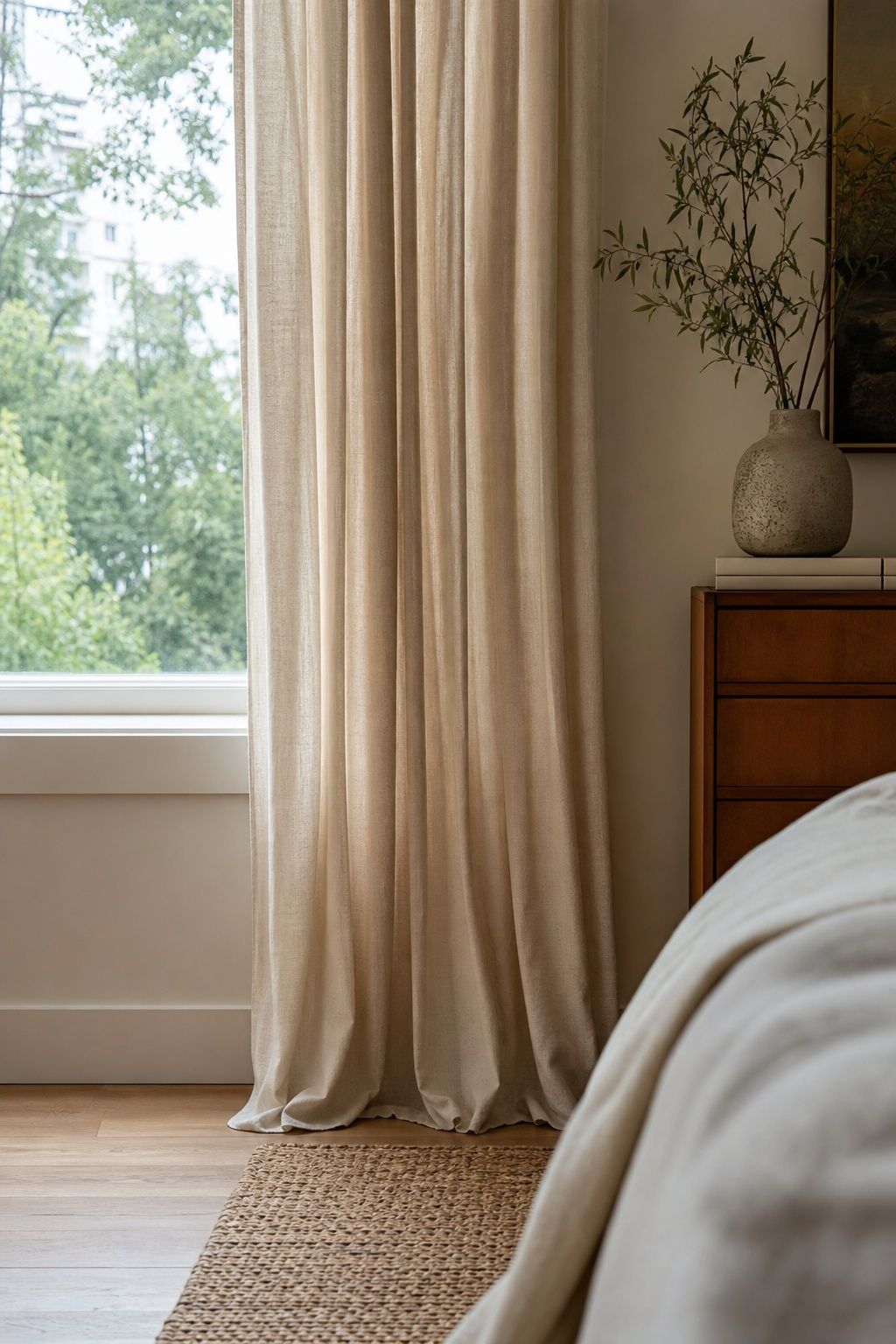

Zen curtains reach the floor, length is part of what makes them read as calm and intentional. Curtains that stop short, hovering above the floor or hitting the windowsill, look unfinished and a little awkward, like pants that are too short.
Aim for the panels to just kiss the floor, or to break very slightly with a small pool of fabric for a softer look. The full-length drape is what gives the window its graceful, considered presence. Combined with the high rod, floor-length panels make a window look tall, elegant, and deliberately styled. Letting the curtains reach the floor is the second styling rule, and together with the high rod it is most of what separates styled zen curtains from default ones.
12. Layer Sheers for Depth and Flexibility
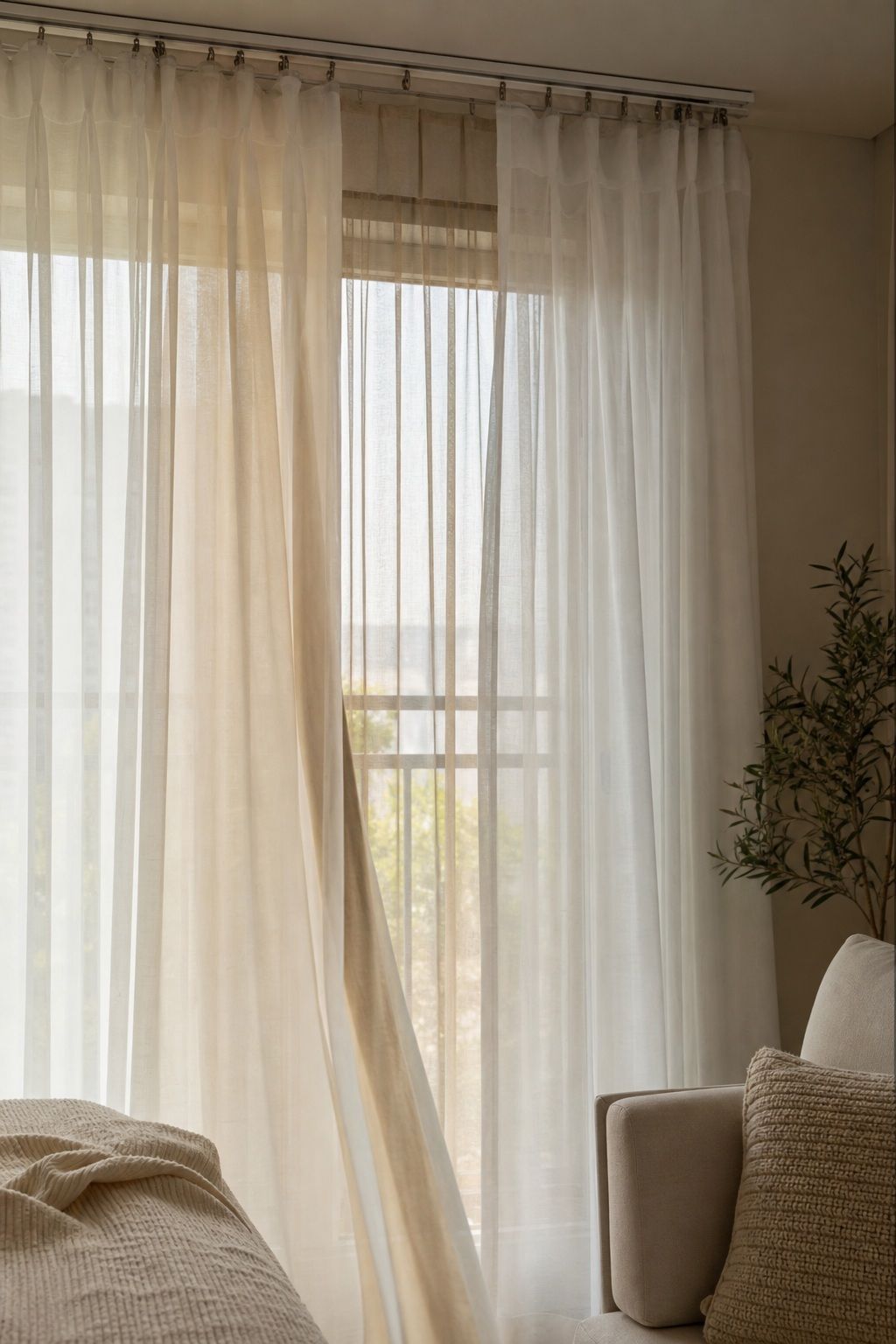

Layering is the zen curtain move that adds both depth and function, a sheer natural-fiber panel layered with a heavier or darkening one. The two layers give a window dimension, and they give the room flexibility, sheer alone for the daytime glow, both drawn for privacy or dark.
Keep both layers in the soft, low-contrast palette so the layering reads as serene rather than busy, the depth should come from texture and translucency, not contrast. Layered curtains let a single window do everything a room needs across the day. Layering sheers for depth and flexibility is the styling move that makes zen curtains genuinely functional, and it is the reason a layered window never feels like a compromise between light and privacy, the same intentional thinking behind a good small apartment modern design.
Read more: Top 16 Entryway Zen Home Decor Ideas for a Calm Landing Spot
13. Keep the Hardware Low-Contrast and Quiet
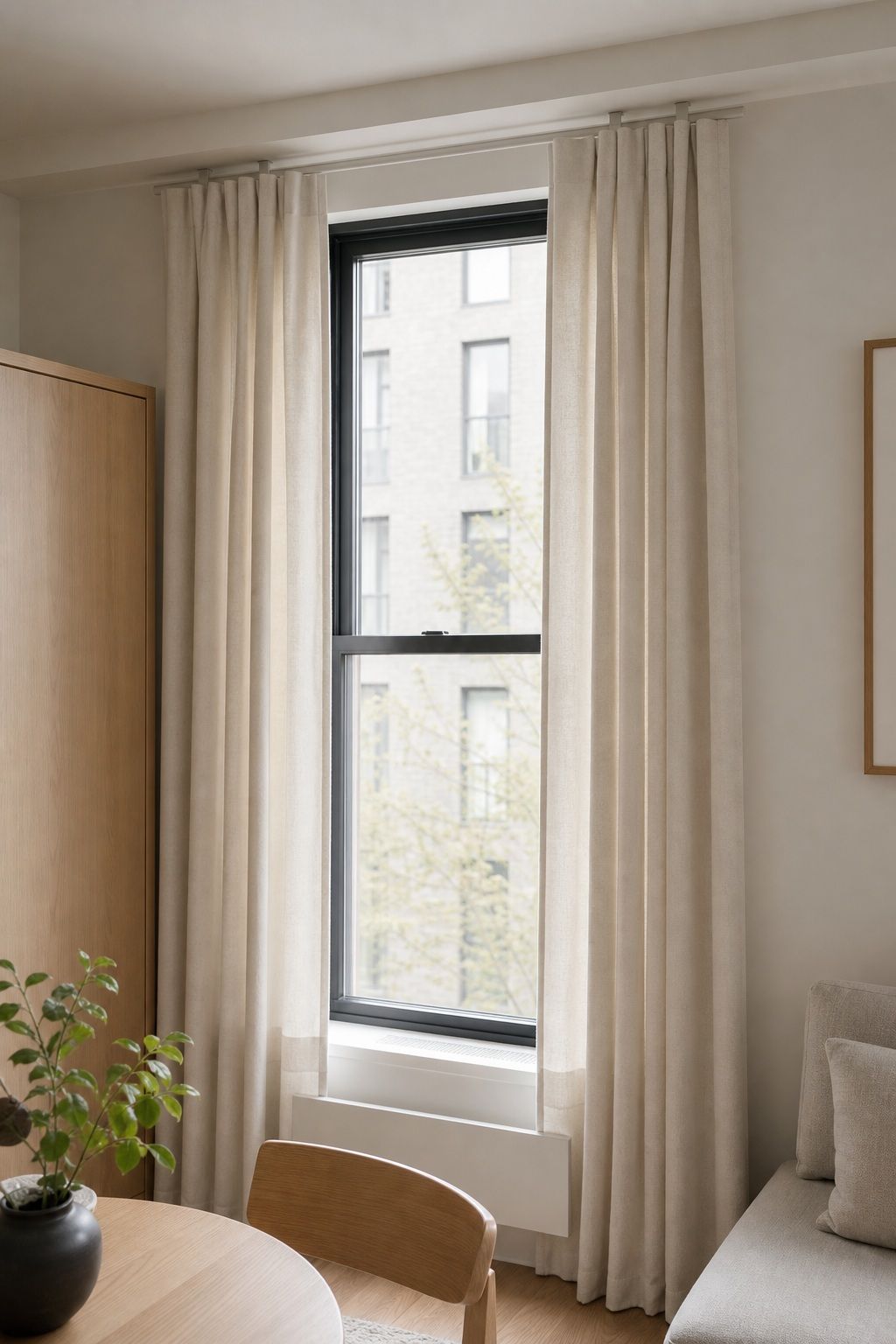


The curtain hardware, the rod, the rings, the brackets, should be quiet, not a feature. The zen direction favors light wood rods or simple low-contrast metal in a soft finish, hardware that disappears rather than announces itself.
An ornate, dark, or shiny rod pulls the eye and breaks the calm the curtains are creating. Light wood in particular suits the Japandi-warm 2026 zen look, and it ties the curtains to the natural materials elsewhere in the room. The hardware is a small detail, but a loud rod can undo a soft curtain. Keeping the hardware low-contrast and quiet is the finishing styling rule, it lets the curtain itself, and the soft light it creates, stay the focus.
Read more: Top 17 Zen Garden Home Decor Ideas for a Calm, Serene Space
Renter-Friendly and Budget Options
14. Use No-Drill Rods and Tension Solutions


Renters can have zen curtains without touching the walls, the trick is no-drill mounting. Tension rods inside the window frame, adhesive-mounted rod brackets, and command-style hardware all hang curtains with no holes and come down clean at lease-end.
Tension rods work especially well for inside-mount sheers and for cafe-style panels. For a floor-length look, adhesive bracket systems can hold a lightweight linen panel. The renter-friendly hardware does mean keeping the curtains light, which suits the sheer, airy zen direction anyway. No-drill rods and tension solutions are what make zen curtains available to every renter, and they prove the calm of a good window treatment is not something you have to own your home to get.
Read more: Top 16 Zen Home Entrance Decor Ideas for Small Apartments
15. Choose Affordable Linen-Look Panels
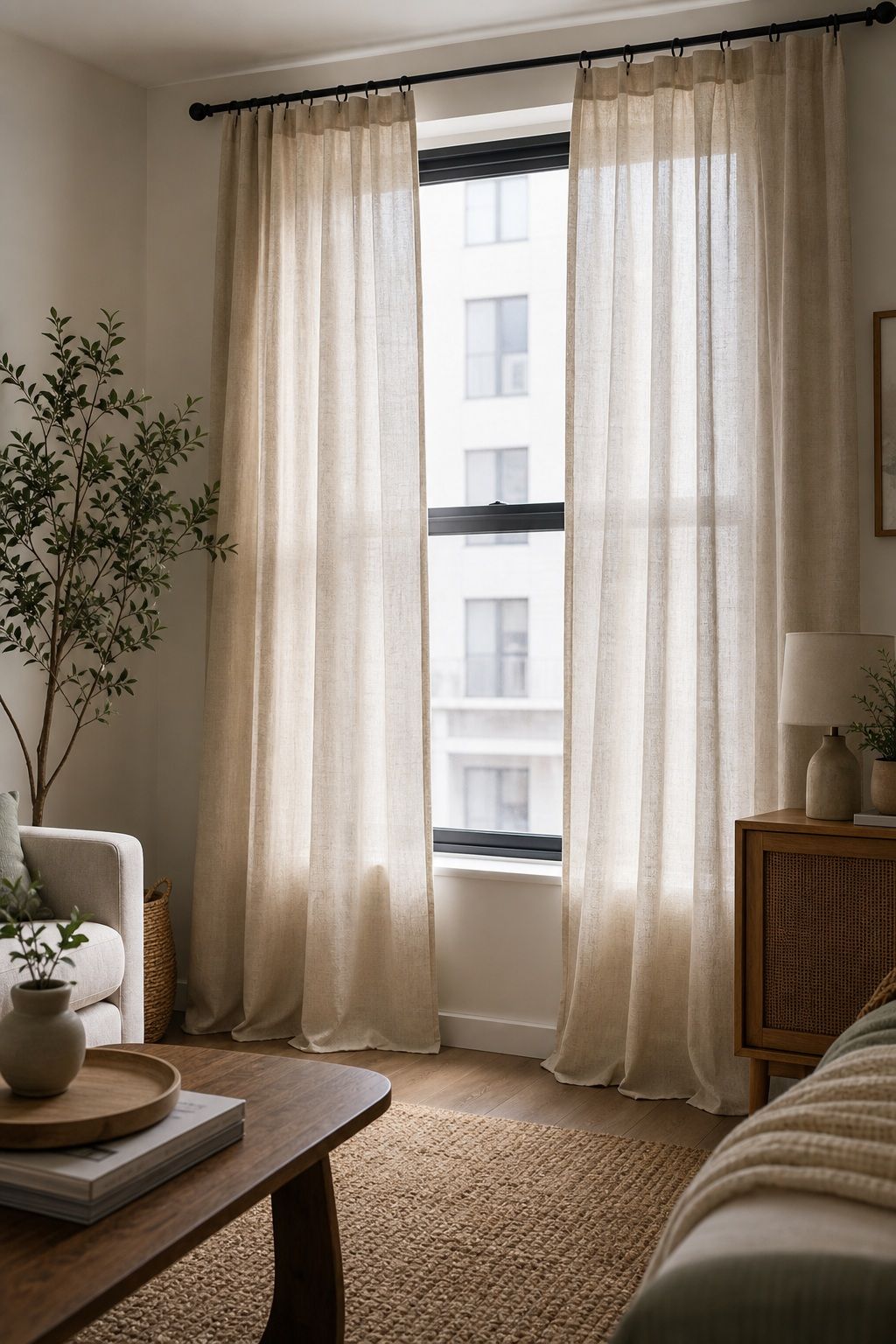

Real linen can be expensive, but the zen curtain look does not require it, affordable linen-look panels get most of the way there. Cotton-linen blends, textured cotton, and well-made linen-look synthetics all drape softly and filter light in the zen way at a fraction of the cost.
The things to check on a budget panel are the drape, does it fall softly, the texture, does it have a natural slubby quality, and the color, is it in the soft calming palette. Get those right and the price tag does not show. Affordable linen-look panels are the budget-friendly path to zen curtains, and they mean the calm of soft, diffused light is within reach on any budget, the same accessible approach behind good modern apartment decor ideas.
16. Make Easy Swaps With What You Have
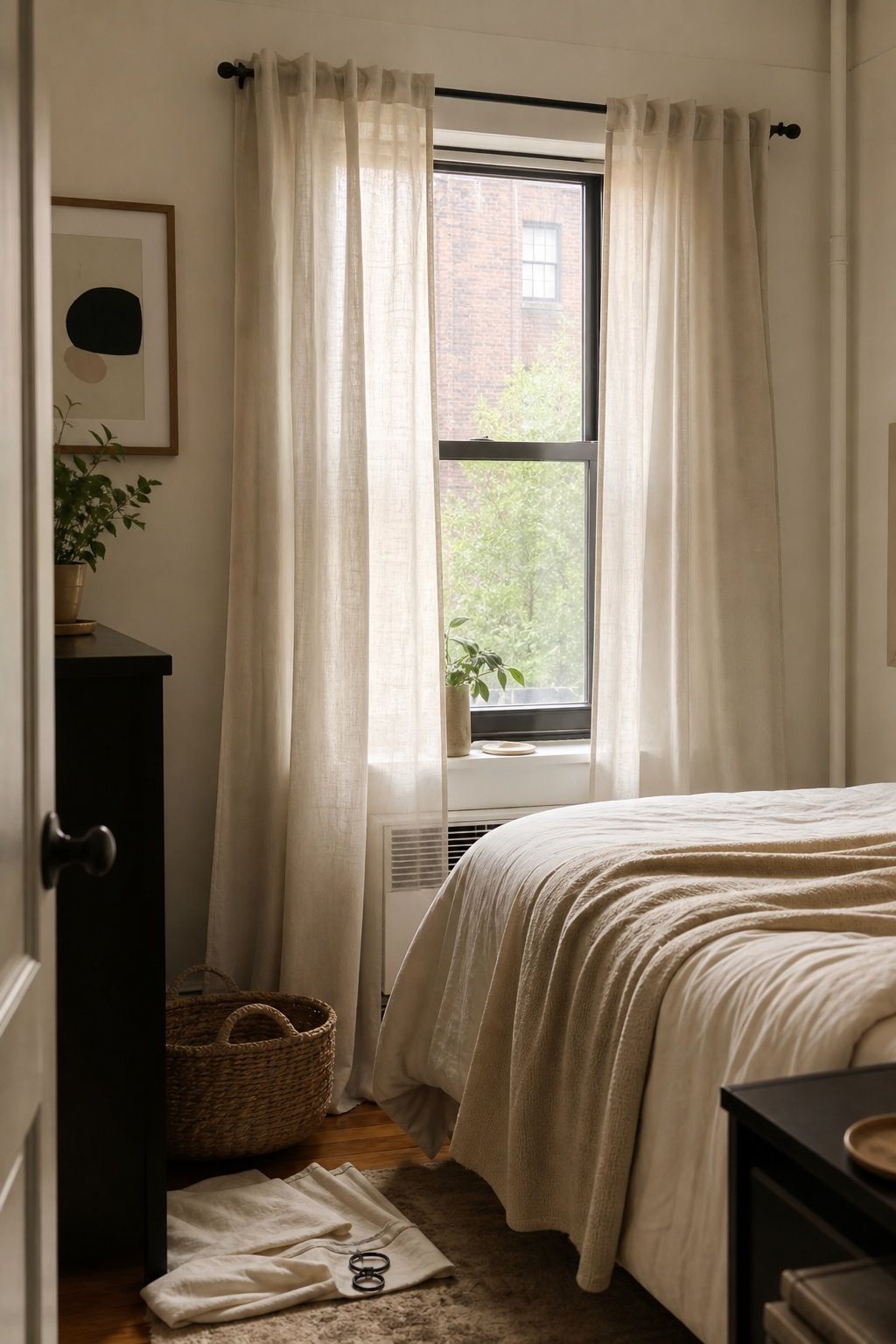


The last renter-and-budget idea is the simplest, you can often get closer to zen curtains by swapping and adjusting what you already own. Take down a heavy or dark existing panel and replace just it with an inexpensive sheer. Rehang an existing rod higher. Add a bamboo blind behind plain curtains for texture and light control.
Even small adjustments, hanging higher, adding length with a longer affordable panel, swapping a loud rod for a quiet one, move a window noticeably toward calm. You do not have to replace everything at once. Making easy swaps with what you have is the lowest-barrier way into zen curtains, it proves the serene window is mostly about a few right choices, not a full replacement, and it is where most people should start.
Read more: Top 18 Small Apartment Modern Design Ideas That Make Every Inch Count
Frequently Asked Questions
What curtains make a room feel calm?
Curtains make a room feel calm when they soften the light: natural-fiber panels in linen or cotton, in a soft low-contrast palette, hung to diffuse daylight into a gentle glow rather than block it or let it glare. Hang the rod high, let the panels reach the floor, and keep the hardware quiet.
What color curtains are most relaxing?
The most relaxing curtain colors are soft, low-contrast neutrals, soft white, warm cream, oat, sand, and muted earthy tones. The 2026 zen direction favors soft white and earthy neutrals specifically. The color should recede and blend into the wall and light rather than stand out as a bold feature.
Are sheer curtains good for a zen room?
Yes, sheer natural-fiber curtains are ideal for a zen room because they filter daylight into a soft, even, gentle glow, which is the most purely zen lighting effect. For rooms that also need privacy or darkness, like a bedroom, layer a sheer panel with a heavier or darkening one.
What fabric is best for zen curtains?
Linen is the best fabric for zen curtains, it drapes softly, filters light beautifully, and ages gracefully, which suits the wabi-sabi spirit. Cotton is a lighter, more affordable alternative that works just as well. Avoid polyester and heavy synthetic blends, which read as slick and lifeless.
How do you hang curtains to make a room feel bigger and calmer?
Hang the curtain rod high, well above the window frame and often close to the ceiling, and let the panels reach the floor. The high rod draws the eye up and makes the window and ceiling feel taller; the floor-length drape looks finished and graceful. Together they make a window feel larger and the room calmer.
Key Takeaways
- Zen curtains create calm by softening the light, start with natural-fiber fabrics like linen and cotton, never slick synthetics.
- Decide sheer versus lined per room, sheer for the daytime glow, layered with a darkening panel where you need privacy or dark, like the bedroom.
- Choose a soft, low-contrast, recessive palette, soft white, cream, oat, earthy tones, so the curtain blends into the wall and light.
- Hang the rod high and let the panels reach the floor, the two styling moves that make a window look taller, calmer, and intentional.
- Renters and budgets are covered, no-drill tension rods, affordable linen-look panels, and easy swaps with what you already own all get the zen look.
Final Thoughts
Curtains are the quiet half of a calm room, and getting them right is mostly a few clear choices: natural-fiber fabric, sheer or layered to suit the room, a soft recessive palette, and the discipline to hang the rod high and the panels to the floor. The whole job of zen curtains is softening harsh light into a gentle glow, and once you see what that does to a room, you cannot unsee it. None of it requires owning your home or a big budget, no-drill rods and affordable linen-look panels get there too. Start by swapping one heavy panel for a sheer and hanging the rod higher, and watch the window finally do its share of the calm.
Last update on 2026-10-23 / Affiliate links / Images from Amazon Product Advertising API
